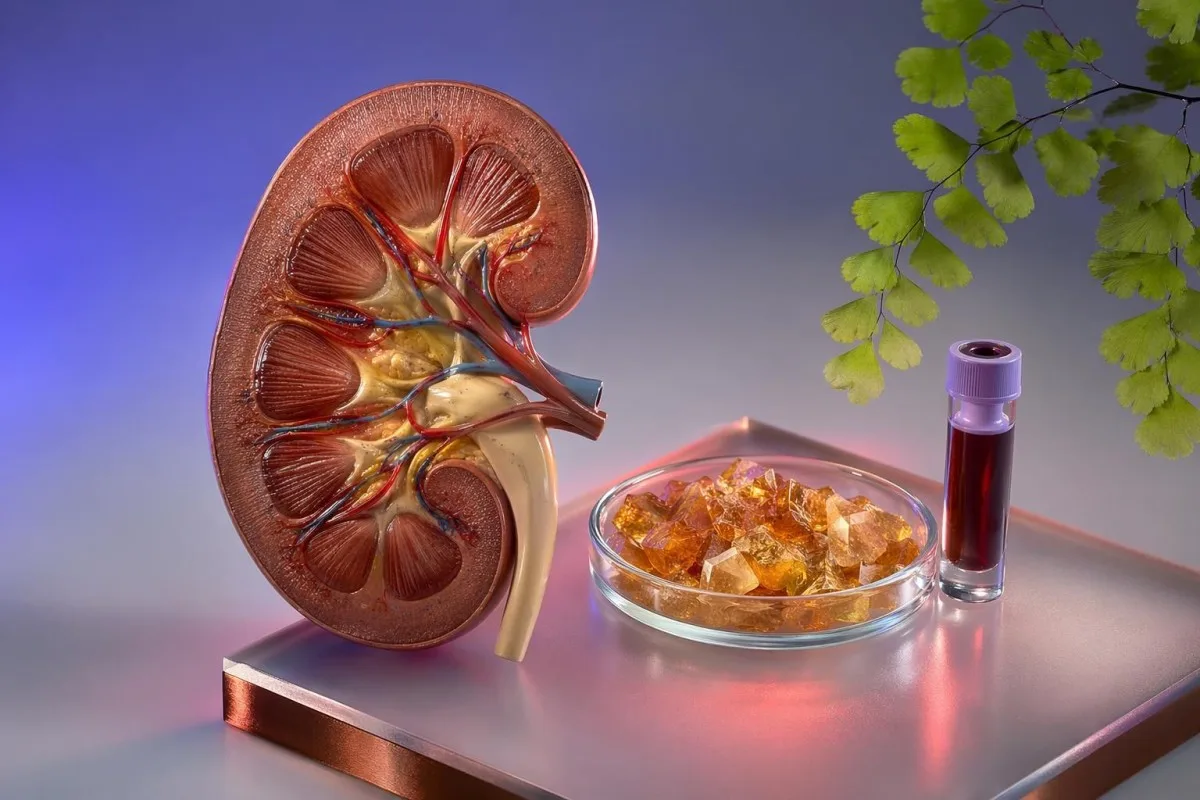
A high uric acid result is not a gout diagnosis by itself. More often, it is a clue about kidney stone risk, hydration, metabolism, kidney clearance, or a test that simply needs repeating.


- 6.8 mg/dL threshold is the approximate saturation point where urate crystals become more likely, even if you have no joint pain.
- Typical adult range is about 2.4-6.0 mg/dL in women and 3.4-7.0 mg/dL in men, but labs vary.
- Urine pH below 5.5 raises the chance of uric acid stone formation, especially when urine volume is low.
- Mild isolated elevations around 7.1-8.0 mg/dL often deserve a repeat test before treatment decisions.
- eGFR below 60 mL/min/1.73 m² changes the interpretation because reduced kidney clearance can drive uric acid up.
- Triglycerides above 150 mg/dL plus high uric acid often point toward insulin resistance rather than gout alone.
- Thiazide and loop diuretics commonly raise uric acid by reducing renal excretion.
- Repeat timing is usually 2-4 weeks after dehydration, illness, fasting, or medication changes resolve.
What a high uric acid result means when you have no gout symptoms
High uric acid without gout usually means your body is making more urate than it can clear, or your kidneys are clearing less of it. A value above 6.8 mg/dL sits above the usual saturation point for monosodium urate, but many people with a high result never develop gout; on Kantesti AI we use it more as a clue to stone risk, hydration status, metabolic health, and medication effects than as a diagnosis by itself.
A uric acid blood test high at 7.2 mg/dL after a half-marathon and poor fluid intake does not carry the same meaning as 9.4 mg/dL with eGFR 52, urine pH 5.3, and prior stones. When we review panels on our platform, the number only becomes clinically sharp after we compare it with creatinine, glucose, triglycerides, urine findings, and the trend over time.
As of May 19, 2026, the overlooked issue is not just gout. In my clinic, and in the physician-reviewed cases Thomas Klein, MD discusses with our team, asymptomatic high uric acid more often leads us to ask about kidney stones, dehydration, fasting, alcohol binges, diuretics, metabolic syndrome, or a lab drawn during acute illness.
Bottom line early: a single mild elevation often needs context and a repeat, while repeated values above 9.0 mg/dL or any high value paired with flank pain, falling eGFR, or hematuria deserves faster follow-up. If you want baseline cutoffs first, our uric acid range guide is the best companion.
Why the number alone can mislead
A lab flag is a starting point, not a verdict. The same uric acid level can be benign in one patient and clinically meaningful in another because kidney clearance, urine acidity, medications, and metabolic markers change the story.
How high is high on a uric acid blood test?
Typical adult serum uric acid is about 2.4-6.0 mg/dL in women and 3.4-7.0 mg/dL in men, although labs vary and some report µmol/L instead. Kantesti AI maps the value against the report’s reference interval, the unit system, and the saturation threshold rather than the red flag alone; our 15,000+ biomarker guide and unit conversion explainer help if your lab switches formats.
The 6.8 mg/dL threshold matters because that is close to the concentration at which urate becomes less soluble in body fluids at physiologic pH and temperature. That threshold explains crystal risk better than a lab’s high flag, which may be set at 7.0 mg/dL, 7.2 mg/dL, or a different number depending on the analyzer and population.
Some European labs use an upper limit closer to 360 µmol/L for women and 420 µmol/L for men, which is roughly 6.0 mg/dL and 7.1 mg/dL. Patients get understandably confused when one report says normal and another says high even though the underlying value barely changed.
Here is the practical distinction: reference ranges describe what is common in a lab population, while clinical thresholds try to describe when risk begins to change. That is why a value of 6.9 mg/dL can be only slightly above range yet still worth tracking over time.
Why 6.8 mg/dL keeps coming up
That number is not arbitrary. It comes from urate solubility, which is why clinicians pay attention to it even when the lab’s printed upper limit looks a little higher or lower.
Why kidney stone risk matters more than many patients realize
High serum uric acid without gout can matter because it tracks with uric acid kidney stone risk, especially when urine is acidic. Stone formation becomes more likely when urine pH stays below 5.5, urine volume is low, or there is prior stone history.
The reason we worry about high uric acid plus low urine pH is that together they suggest crystal precipitation in the urinary tract, whereas high serum urate alone is often just a clue. Maalouf et al. (2007) linked low urine pH to metabolic syndrome, which helps explain why stones can appear in people who have never had classic gout.
Patients often assume stones always announce themselves with dramatic pain. Not true: small stones can be silent, and people with a first abnormal uric acid test sometimes also have microhematuria or albumin on a urine ACR assessment that changes the workup.
If you have prior stones, clinicians may add urinalysis, urine pH, and sometimes a 24-hour urine study measuring uric acid, citrate, calcium, oxalate, sodium, and volume. A serum uric acid of 8.5 mg/dL with urine pH 5.2 means more to a nephrologist or urologist than 8.5 mg/dL alone.
Can dehydration, fasting, or heavy exercise raise uric acid temporarily?
Yes — dehydration, fasting, intense exercise, vomiting, diarrhea, and short-term ketosis can raise uric acid temporarily by concentrating serum and reducing renal excretion. If the same panel also shows high albumin, high sodium, or a high BUN/creatinine ratio, review our piece on dehydration-related false highs before you panic.
Hard exercise adds another twist because lactate competes with urate for kidney excretion. That is why a runner can show 7.6 mg/dL on Monday and 6.1 mg/dL the next week without any disease progression at all.
I see this pattern after summer races, religious fasts, ketogenic diet starts, and long travel days. A patient can feel well, have no joint pain, and still look mildly hyperuricemic on a lab drawn after 12 hours with little fluid.
The practical move is simple: hydrate normally for several days, avoid all-out exercise for 24-48 hours, skip crash dieting, and then repeat the test. That recheck is often more informative than a one-off result.
The hidden link with metabolic syndrome and insulin resistance
High uric acid without gout often points toward insulin resistance and metabolic syndrome because insulin reduces renal urate clearance. When our AI sees uric acid above 7.0 mg/dL alongside triglycerides over 150 mg/dL or an A1c in the 5.7-6.4% range, we also look at insulin resistance despite a normal A1c and high triglyceride patterns.
Facchini et al. (1991) showed that resistance to insulin-mediated glucose uptake is linked to lower uric acid clearance. Clinically, that means elevated uric acid can be an early metabolic clue rather than a joint disease story.
A pattern we see often looks like this: uric acid 7.8 mg/dL, triglycerides 265 mg/dL, HDL 37 mg/dL, fasting glucose 108 mg/dL, blood pressure 138/86, and waist gain over the last year. That patient may have no swollen toe and still be moving toward fatty liver, prediabetes, or both.
Uric acid is not part of the formal metabolic syndrome criteria, so some clinicians underplay it. I think that misses useful information, because the number often rises before patients fully understand how much insulin resistance is changing their kidney handling of urate.
When kidney function changes are the real story
Kidney function can be the real explanation because the kidneys handle most urate excretion. A uric acid value that looks only mildly high becomes more meaningful when paired with GFR reference ranges or a falling eGFR trend.
An eGFR below 60 mL/min/1.73 m² changes interpretation immediately. A urine albumin-creatinine ratio above 30 mg/g adds evidence of kidney stress, and a creatinine rise from 0.9 to 1.3 mg/dL over time should never be dismissed just because there is no gout.
The reason we worry about high uric acid plus low eGFR is that together they suggest reduced clearance, whereas high uric acid with normal kidney markers is more often transient or metabolic. A level of 8.0 mg/dL with creatinine 0.8 mg/dL is a different conversation from 8.0 mg/dL with creatinine 1.5 mg/dL.
Some labs hide the signal by flagging only creatinine or only uric acid. In practice, blood pressure, diabetes status, NSAID use, and a recent kidney insult matter just as much as the number on the report.
Why the kidney panel belongs in the same conversation
Serum uric acid is partly a clearance test in disguise. When the kidney story changes, the uric acid story usually changes with it.
Which medications and supplements can push uric acid up?
Several common medications raise uric acid by reducing kidney excretion or shifting fluid balance. The usual list includes thiazide diuretics, loop diuretics, low-dose aspirin, cyclosporine, tacrolimus, pyrazinamide, ethambutol, and niacin; our medication monitoring timeline guide helps you time the recheck.
Hydrochlorothiazide and chlorthalidone are classic culprits. Even an 81 mg aspirin can nudge urate retention in some patients, although the cardiovascular reason for taking it often matters more than the lab effect.
Here is where nuance matters. Do not stop a prescribed drug on your own because a lab flag looks scary; ask whether the medication, dose, and test timing explain the result better than disease does.
Supplements are usually less dramatic, but dehydration from stimulant fat burners, sauna-heavy routines, or nausea from new medications can still push results up. When I review a panel showing uric acid 7.9 mg/dL, I always ask for the medication list before I ask about gout.
Food matters, but it is rarely the whole explanation
Diet affects uric acid, but high uric acid without gout is rarely caused by one food alone. Fructose-sweetened drinks, organ meats, and some seafood can raise urate production, while fasting and early ketosis can transiently reduce urate excretion; see our keto lab guide and diet guide for high uric acid if your result changed after a new eating plan.
The biggest nutrition trap is not steak once a week. It is repeated dehydration, sweetened drinks, large fructose loads, and crash dieting layered on top of insulin resistance.
A short ketogenic phase can raise uric acid during the first 1-3 weeks because ketones compete for renal excretion. That does not mean keto is always unsafe, but it does mean the timing of the blood draw matters.
Coffee, low-fat dairy, and steady weight loss look more favorable than sugary drinks and rapid weight cuts in many datasets. I tell patients to think patterns, not food villains.
When should you repeat a high uric acid test?
Repeat testing matters because a single mild result often overstates risk. Most adults with an isolated value around 7.1-8.0 mg/dL and no symptoms should discuss a repeat in 2-4 weeks, using the same lab if possible; our guides on when to repeat abnormal labs and lab variability explain why that window works.
Retest sooner if the first sample followed dehydration, illness, fasting, a vacation with heavy alcohol, or a new diuretic. Retest later — often around 8-12 weeks — if you are checking whether sustained diet or weight changes actually moved the number.
As Thomas Klein, MD, I tell patients that consistency beats intensity here. Same morning, similar hydration, no hard workout the day before, and no last-minute fasting tricks give the cleanest comparison.
A rise from 7.3 to 7.5 mg/dL may be noise. A trend from 7.3 to 8.4 to 9.1 mg/dL over several visits is different, even if you still have no gout symptoms.
Do you need treatment if you feel fine?
Most people with asymptomatic high uric acid do not need medication right away. The 2020 American College of Rheumatology guideline recommends against starting urate-lowering therapy for most adults with asymptomatic hyperuricemia, because the benefit is uncertain and many never develop gout (FitzGerald et al., 2020); start with the basics in our before-retest action plan.
That said, this is one of those areas where context matters more than the number. Persistent levels above 9-10 mg/dL, recurrent uric acid stones, chronic kidney disease, chemotherapy-related hyperuricemia, or transplant medicine can prompt a different conversation.
Some European and Japanese clinicians are more willing to discuss treatment thresholds below what many U.S. clinicians use. The evidence here is honestly mixed, especially when the goal is kidney protection rather than gout prevention.
If your uric acid is mildly high and you feel fine, the usual first move is not allopurinol. It is reviewing hydration, weight trend, glucose markers, kidney function, and medications.
When treatment does come up
Treatment becomes more likely when the number is repeatedly high, symptoms appear, or kidney stone and kidney disease risk move into the foreground. The same uric acid value means less if it is isolated and stable than if it is rising alongside renal decline.
What follow-up tests add real value after a high uric acid result?
The best follow-up tests after a high uric acid result are creatinine, eGFR, BUN, urinalysis with pH, urine ACR, fasting glucose or HbA1c, and a lipid panel. A single uric acid number is blunt, while a pattern-based read is sharp; our guide to reading blood test patterns shows why.
Urine pH below 5.5 raises concern for uric acid stone formation. A urine ACR above 30 mg/g suggests kidney injury, and triglycerides above 150 mg/dL shift attention toward metabolic syndrome.
If you already form stones, clinicians may add a 24-hour urine collection for volume, uric acid, calcium, citrate, oxalate, and sodium. If fatty liver or alcohol use is on the table, ALT and AST add useful context.
The useful question is not just, 'Is my uric acid high?' It is, 'What pattern explains this result?' That question usually leads to better medicine than asking, 'Do I have gout or not?'
A practical follow-up panel
For many patients, the next panel is small but powerful: kidney function, urine studies, glucose markers, and lipids. That combination usually identifies whether the problem is clearance, dehydration, insulin resistance, or a one-off lab condition.
Red flags that should not wait for a routine recheck
Do not wait for a routine recheck if high uric acid comes with flank pain, visible blood in urine, fever, persistent vomiting, a hot swollen joint, or rapid kidney function decline. Patients with cancer treatment, a transplant history, or very high levels above 10-12 mg/dL deserve quicker medical review; our physician team and Medical Advisory Board use those combinations as escalation flags.
A first gout attack can still happen after months of silent hyperuricemia. And a stone can mimic back pain until the pain becomes severe, which is why a symptom check always outranks internet reassurance.
Rarely, very high uric acid is part of tumor lysis syndrome, which is a medical emergency because uric acid can rise fast and injure the kidneys. That is not the usual scenario in a healthy outpatient, but it is why recent oncology history matters.
One sharp rule: symptoms change the urgency. A quiet lab flag and a symptomatic patient are not the same clinical problem.
How Kantesti interprets asymptomatic high uric acid in context
Kantesti AI interprets high uric acid by reading it beside kidney markers, metabolic markers, hydration clues, medications, and trends rather than treating it as a standalone gout label. Our approach is detailed in our medical validation standards, and patients can upload a report using our guide to secure PDF lab reading.
On our platform, a uric acid of 7.8 mg/dL triggers a different narrative if eGFR is 102, urine pH is unknown, triglycerides are 280 mg/dL, and albumin is high than if eGFR is 48 with a stone history. That contextual reading is why Kantesti serves users in more than 127 countries and 75+ languages, with AI interpretation in about 60 seconds.
As Thomas Klein, MD, I care far less about a lone red flag than about the story around it. You can read more about us at About Kantesti, but the short version is simple: our AI was built to reduce false panic and surface the combinations that actually deserve follow-up.
For readers who want the methods, our team has published a pre-registered validation study and related work on multilingual clinical decision support. Those papers are not about uric acid alone, yet they explain why contextual lab interpretation works better than single-marker guessing.
Bottom line: what to do next with high uric acid without gout
Bottom line: what does high uric acid mean if you do not have gout? Usually it means one of five things — reduced kidney clearance, dehydration, metabolic syndrome, medication effects, or a transient result that needs repeating — and our AI-powered blood test interpretation can help you sort those paths before you guess.
If the value is only mildly high, start with hydration, medication review, and repeat testing under better conditions. If the number is persistent, above 9.0 mg/dL, or paired with kidney findings or stone symptoms, move the evaluation forward.
Use the next step that matches the pattern, not the internet’s loudest fear. Upload your results to our free blood test demo if you want a fast second look with trend analysis, nutrition clues, and family risk context.
Most patients do best when they treat uric acid as a clue, not a verdict. That shift usually turns a confusing lab flag into a manageable plan.
Frequently Asked Questions
Can high uric acid go back to normal without treatment?
Yes, mild high uric acid can return to normal without medication if dehydration, fasting, acute illness, hard exercise, or a new medication caused the result. A repeat after about 2-4 weeks under stable conditions is reasonable when the value is around 7.1-8.0 mg/dL and kidney tests are otherwise normal. Many patients with one isolated abnormal result do not go on to develop gout. Persistently repeated values above 9.0 mg/dL deserve more evaluation even if you feel fine.
What uric acid level is concerning if I do not have gout?
A uric acid level above 6.8 mg/dL is clinically meaningful because it sits near the saturation point where urate crystals become more likely. Persistent results above 9.0 mg/dL are more concerning, especially if eGFR is low, urine pH is below 5.5, or there is a history of kidney stones. Levels above 10-12 mg/dL usually merit prompt clinician review, particularly if symptoms or cancer treatment are present. The number matters most when it is repeated and interpreted with kidney and metabolic markers.
Can dehydration make a uric acid blood test high?
Yes, dehydration can raise uric acid by concentrating the laboratory sample and reducing renal urate excretion. The effect is more common after vomiting, diarrhea, sauna use, long travel, heavy exercise, or fasting. A patient can move from 6.1 mg/dL to 7.6 mg/dL temporarily under those conditions and then normalize after rehydration. That is why repeat testing under usual hydration is often the smartest next step.
Does high uric acid without gout mean I have kidney disease?
No, high uric acid without gout does not automatically mean kidney disease. It can reflect dehydration, insulin resistance, medication effects, or a transient dietary state, but kidney clearance still needs checking. The result becomes more concerning when eGFR falls below 60 mL/min/1.73 m², creatinine rises over time, or urine albumin-creatinine ratio exceeds 30 mg/g. In that setting, uric acid acts more like a kidney context marker than a gout marker.
Should I take allopurinol if my uric acid is high but I have no symptoms?
Usually not at the first abnormal result. The 2020 American College of Rheumatology guideline recommends against routine urate-lowering therapy for most adults with asymptomatic hyperuricemia because many never develop gout and the benefit is uncertain. Medication may still be discussed when uric acid is persistently above about 9-10 mg/dL, when recurrent uric acid stones are present, or when chemotherapy or transplant-related risk changes the picture. This decision should be individualized rather than based on one number.
What tests should I ask for after a high uric acid result?
The most useful follow-up tests are creatinine, eGFR, BUN, urinalysis with urine pH, urine albumin-creatinine ratio, fasting glucose or HbA1c, and a lipid panel. Urine pH below 5.5 suggests higher uric acid stone risk, while ACR above 30 mg/g suggests kidney injury. Triglycerides above 150 mg/dL and A1c in the 5.7-6.4% range shift attention toward insulin resistance. If you already form stones, a 24-hour urine collection can add major value.
Get AI-Powered Blood Test Analysis Today
Join over 2 million users worldwide who trust Kantesti for instant, accurate lab test analysis. Upload your blood test results and receive comprehensive interpretation of 15,000+ biomarkers in seconds.
📚 Referenced Research Publications
Klein, T., Mitchell, S., & Weber, H. (2026). Multilingual AI Assisted Clinical Decision Support for Early Hantavirus Triage: Design, Engineering Validation, and Real-World Deployment Across 50,000 Interpreted Blood Test Reports. Kantesti AI Medical Research.
Klein, T., Mitchell, S., & Weber, H. (2026). BUN/Creatinine Ratio Explained: Kidney Function Test Guide. Kantesti AI Medical Research.
📖 External Medical References
Facchini F et al. (1991). Relationship between resistance to insulin-mediated glucose uptake, urinary uric acid clearance, and plasma uric acid concentration. JAMA.
Maalouf NM et al. (2007). Low urine pH: A novel feature of the metabolic syndrome. Clinical Journal of the American Society of Nephrology.
⚕️ Medical Disclaimer
This article is for educational purposes only and does not constitute medical advice. Always consult a qualified healthcare provider for diagnosis and treatment decisions.
E-E-A-T Trust Signals
Experience
Physician-led clinical review of lab interpretation workflows.
Expertise
Laboratory medicine focus on how biomarkers behave in clinical context.
Authoritativeness
Written by Dr. Thomas Klein with review by Dr. Sarah Mitchell and Prof. Dr. Hans Weber.
Trustworthiness
Evidence-based interpretation with clear follow-up pathways to reduce alarm.