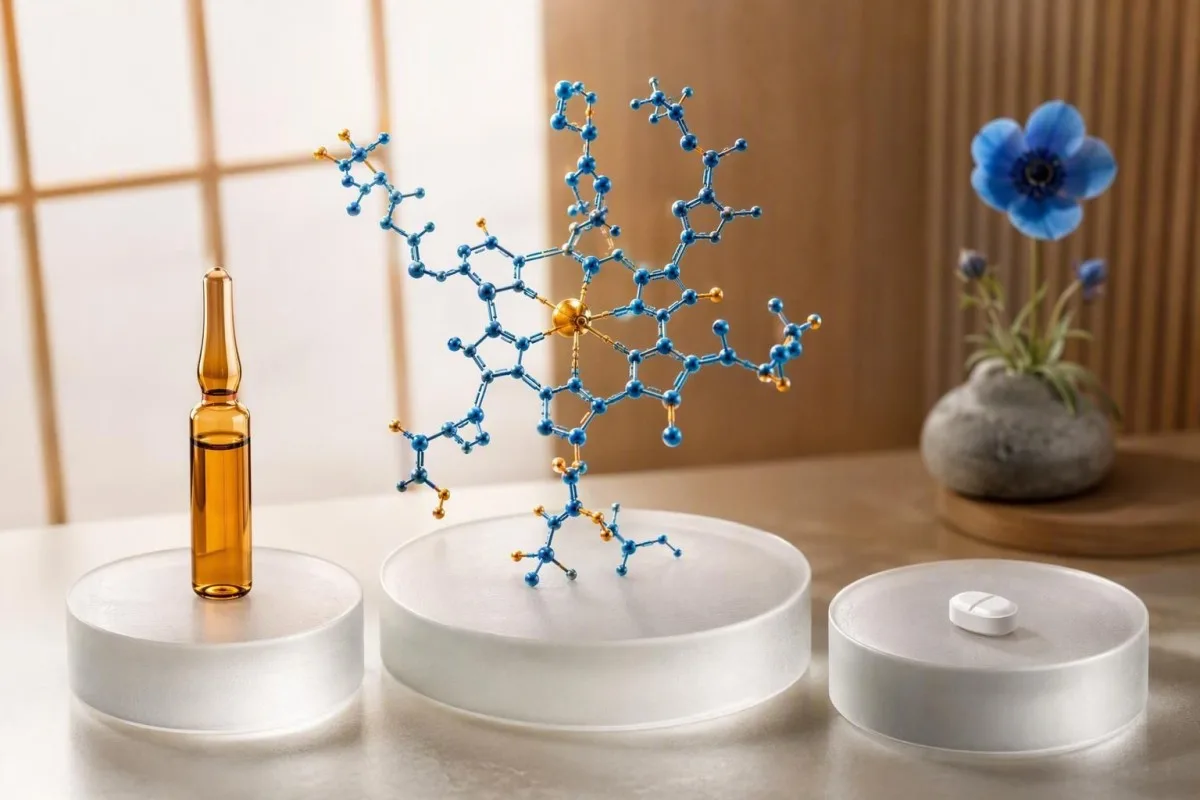
In'yeksiyalar zardobning darhol cho'qqisini hosil qiladi, ammo yuqori dozali og'iz orqali yuboriladigan B12 ko'pincha haftalar davomida etishmovchilikni teng darajada samarali ravishda tuzatadi. Hal qiluvchi omil odatda etishmovchilikning sababi va og'irligi hisoblanadi — nafaqat afzallik.


- Eng tez zardob ko'tarilishi: 1000 mikrogramm mushak ichiga yuboriladigan B12 in'yeksiyasi bir necha soat ichida qonda aylanib yuruvchi B12 ni ko'paytiradi, planshetlar esa bir necha kun ichida asta-sekin ko'tariladi.
- Taqqoslanadigan almashtirish: Har kuni 1000-2000 mikrogramm og'iz orqali cyanocobalamin ko'p yosh kattalar uchun mushak ichiga yuboriladigan terapiyaga o'xshash qisqa muddatli qon va alomatlar natijalariga erishishi mumkin.
- In'yeksiya ko'rsatkichi: Jiddiy nevrologik alomatlar, chuqur anemiya, planshetlarni qabul qila olmaslik yoki ishonchsiz so'rilish odatda shifokor boshchiligidagi in'yeksiyalarni oqlaydi.
- Chegaraviy natija: Zardob B12 ning 180 pg/ml (133 pmol/l) dan past bo'lishi ko'pincha etishmovchilik deb hisoblanadi; 180-350 pg/ml ko'pincha MMA yoki homocysteine tasdiqlashni talab qiladi.
- Passiv assimilyatsiya: Katta og'iz orqali B12 dozaning taxminan 1% passiv diffuziya orqali kiradi, shuning uchun 1000 mikrogramm planshet ichki omil buzilgan bo'lsa ham ishlashi mumkin.
- Qayta tekshiruv vaqti: B12 darajasi va klinik javob odatda davolashdan darhol keyin olingan B12 darajasidan ko'ra 4-8 haftada ko'proq foydalidir.
- Xavfsizlik nuqtasi: Sababi tushunilmagan uyquchanlikni faqat foliy kislotasi bilan davolamang; folat anemiyani yaxshilashi mumkin, B12 bilan bog'liq nerv shikastlanishi esa rivojlanadi.
- Sababi muhim: Metformin, proton nasos inhibitorlari, vegan parhezlari, seliakiy kasallik, oshqozon jarrohliklari va pernicious anemiya har xil kuzatuv rejalarini talab qiladi.
Qaysi variant B12 vitaminini tezroq oshiradi?
B12 in'ektsiyalari organizmning ichaklarini chetlab o'tgani uchun, odatda bir necha soat ichida, o'lchangan sarum darajasini tezroq ko'taradi. Tasdiqlangan etishmovchilikka ega bo'lgan ko'pgina barqaror kattalar uchun, ammo, har kuni 1000-2000 mikrogramm og'iz orqali yuboriladigan doz organizm zaxiralarini to'ldirishi va bir necha hafta davomida klinik jihatdan o'xshash tezlikda qon sonini yaxshilashi mumkin.
In'ektsiya keskin erta cho'qqini yaratadi, chunki gidroksokobalamin yoki sianokobalamin to'g'ridan-to'g'ri mushaklarga va keyin qon aylanishiga yuboriladi. Bu laboratoriya cho'qqisi tiklangan to'qimalar zaxiralari yoki tuzatilgan nerv funktsiyasi bilan bir xil narsa emas; mening amaliyotimda alomatlarni tiklash bir kechada emas, balki bir necha hafta yoki oylarda o'lchanadi.
Amaliy taqqoslash ko'pincha sarum konsentratsiyasi uchun soatlar va kunlar, lekin taxminan har qanday etarli usul bilan ma'noli gematologik javob uchun 4-8 hafta . Retikulotsitlar odatda 3-5 kunga kelib ko'tariladi, gemoglobin taxminan 1-2 haftadan keyin yaxshilana boshlaydi va makrotsitoz 8 haftagacha davom etishi mumkin.
Kantesti - bu AI qon testi analizatori bu B12 ni MCV, gemoglobin, folat, kreatinin va avvalgi natijalar yoniga qo'yadi, buning o'rniga asosiy muammo hal bo'lganligini isbotlash uchun davolashdan keyingi B12 spikeini davolashdan ko'ra. O'quvchilar o'z natijalarini bizning B12 malakasini aniqlash bo'yicha qo'llanmadan foydalaning.
“Tezroq” haqiqatda nimani anglatishini
In'ektsiyadan keyin yuqori natija yaqinda ta'sirni tasdiqlaydi, nafas olish hujayralariga etarli darajada etkazilganligini bildirmaydi. O'ziga xos diagnostika noaniq bo'lganida metilmalonik kislota, nevrologik topilmalar va CBC tendentsiyasi ko'proq ma'lumot beradi.
Ichki omil past bo'lganda og'iz orqali B12 so'rilishi qanday ishlaydi
Yuqori dozli og'iz orqali B12 ichki omilning so'rilishi buzilgan bo'lsa ham ishlay oladi, chunki kichik bir qismi passiv diffuziya orqali kiradi. Taxminan 1000 mikrogramm dozaning taxminan 1 foizi passiv ravishda so'rilishi mumkin, bu taxminan 10 mikrogrammni beradi - kattalar uchun o'rtacha kunlik talab bo'lgan 2,4 mikrogrammdan ancha yuqori.
Oziq-ovqat bilan bog'liq normal B12 oshqozon kislotasi tomonidan chiqarilishi, ichki omil bilan bog'lanishi va terminal ileumda qabul qilinishi kerak. Ushbu ko'p bosqichli tizim uzoq muddatli kislota bostirilishi, autoimmune gastrit, ileal kasallik va bariatrik jarrohliklar etishmovchilikka olib kelishi mumkinligini tushuntiradi; shuningdek, standart ko'p vitaminli vitamin davolash uchun ko'pincha juda kichik doz ekanligini tushuntiradi.
Og'iz orqali B12 ning so'rilishi dozaga bog'liq, ammo chiziqli emas. Ichki omil yo'li ovqatning har bir porsiyasi uchun taxminan 1,5-2 mikrogrammda to'yingan bo'lsa, passiv diffuziya faqat milligramm oralig'idagi tabletkalarda klinik jihatdan foydali bo'ladi. 50 mikrogramm qo'shimcha ba'zi odamlar uchun oqilona profilaktika hisoblanadi, ammo bu aniqlangan etishmovchilik uchun 1000 mikrogrammga teng emas.
Omeprazol, pantoprazol yoki boshqa PPIni ishlatadigan bemorlar uchun men dorini butun hikoya deb hisoblamasdan, kengroq naqshni - parhez, yosh, anemiya va foydalanish muddatini tekshiraman. Bizning uzoq muddatli PPI laboratoriya monitoringini ko'rib chiqishimiz, magniy va temir ham muhim bo'lishi mumkinligini tushuntiradi.
Klinik tadqiqotlar planshetlar va in'yeksiyalar haqida nimani ko'rsatadi
Randomizatsiyalangan dalillar shuni ko'rsatadiki, kuniga 1000-2000 mikrogramm og'iz orqali B12 vitaminini ko'pchilik etishmovchilikka uchragan odamlar uchun mushak ichiga yuboriladigan B12 vitamini kabi samarali bo'lishi mumkin. Dalillar bazasi katta emas va u shifokorlar istaganidan ko'ra kamroq bemorlarda og'ir nevrologik kasalliklarga ega.
Vang va hamkasblarining Koxran sharhida shuni aniqladiki, yuqori dozali og'iz orqali B12 vitamini mavjud kichik randomizatsiyalangan sinovlarda mushak ichiga yuboriladigan davolash bilan bir xil B12 qon darajasi javoblarini bergan (Vang va boshqalar, 2018). Bir tadqiqotda kuniga 2000 mikrogramm og'iz orqali ishlatilgan; boshqasida dastlabki jadvaldan keyin har kuni 1000 mikrogramm og'iz orqali ishlatilgan, shuning uchun “og'iz orqali davolash” supermarketning kam dozali mahsuloti degani emas.
Kuzminskiy va boshqalarning oldingi sinovidan 1000 mikrogramm in'ektsiya rejimiga nisbatan 2000 mikrogramm og'iz orqali cyanocobalamin bilan yuqori B12 kontsentratsiyasini xabar qilingan, ammo klinik natijalar muhim savol edi (Kuzminskiy va boshqalar, 1998). Ideal protokol bo'yicha dalillar rostgo'y aralash, chunki sinovlarda turli in'ektsiya intervallari va kuzatuv davrlari ishlatilgan.
planshet faqat qabul qilinganda ishlaydi. Kunlik dozalarni o'tkazib yuborish, ayniqsa zaif kattalar yoki murakkab dori-darmonlar jadvaliga ega bo'lgan odamlar uchun har 2-3 oyda yuboriladigan in'ektsiyani haqiqiy hayotda yanada ishonchliroq qilish mumkin. Bizning qon tekshiruvi vaqti noto'g'ri vaqtda qayta tekshirishdan haqiqiy davolash o'zgarishini farqlashga yordam beradi.
Qachon B12 in'yeksiyalari tibbiy jihatdan zarur bo'ladi
B12 in'ektsiyalari odatda etishmovchilik og'ir bo'lsa, nevrologik alomatlar mavjud bo'lsa, og'iz orqali qabul qilish mumkin bo'lmasa yoki assimilyatsiya va rioyalikka ishonish mumkin bo'lmasa, tibbiy jihatdan zarurdir. Agar xavfli anemiya shubha ostiga olinsa, yuqori dozali og'iz orqali davolash va kuzatuv amalga oshirilsa, ular avtomatik ravishda majburiy emas.
Yangi yurish muvozanati, progressiv uyquchanlik, zaiflik, chalkashlik, ko'rish o'zgarishi, belgilangan anemiya yoki homiladorlikning sezilarli etishmovchiligi uchun shoshilinch shifokor baholashi tegishlidir. Nevrologik B12 shikastlanishi qisman qaytarilmas bo'lishi mumkin; bu sharoitda men qulaylikni muhokama qilish vaqtida parenteral terapiyani kechiktirmayman.
NICE guideline NG239 malabsorbtsiya shubha ostiga olinsa yoki tasdiqlangan bo'lsa, mushak ichiga yuboriladigan davolashni tavsiya etadi va ko'pgina hollarda autoimmune gastrit uchun umrbod mushak ichiga yuboriladigan almashtirishni tavsiya etadi (NICE, 2024). Xalqaro amaliyot farq qiladi: ba'zi shifokorlar ishonchli bemorlarda xavfli anemiya bilan kuniga 1-2 mg og'iz orqali ishlatadilar, boshqalari esa in'ektsiyalarni afzal ko'radilar, chunki qoidani buzish oqibatlari yuqori.
Gemoglobin 80 g/l dan past, simptomatik nafas qisishi, taxikardiya yoki spinal kordning potentsial ishtiroki o'z-o'zini davolashdan ko'ra tez tibbiy ko'rikni talab qiladi. Anemiya namunalarining muntazam testlarda qanday paydo bo'lishini tushunish uchun qarang to'liq qon rasmini nimalar o'z ichiga oladi.
Shifokorlar aslida foydalanadigan B12 etishmovchiligini davolash dozalari
Umumiy og'iz orqali davolash dozalari kuniga 1000-2000 mikrogramm, umumiy mushak ichiga yuboriladigan rejalar esa boshlang'ich yuklash bosqichi bilan dozaga 1000 mikrogramm ishlatadi. Mahsulot, milliy yo'riqnoma va etishmovchilikning sababi aniq jadvalni belgilaydi.
Buyuk Britaniya amaliyotida, agar nevrologik ishtirok bo'lmasa, gidroksokobalamin 1000 mikrogramm mushak ichiga, odatda haftada uch marta 2 hafta davomida yuboriladi, keyin har 2-3 oyda parvarishlash uchun; protokollar mahalliy xizmatga qarab farq qiladi. Nevrologik xususiyatlar bilan, dastlabki dozalar odatda har kuni kechqurun yaxshilanish bo'lmaguncha beriladi, keyin parvarishlash mutaxassis maslahatiga amal qiladi.
Oddiy og'iz orqali reja 8-12 hafta davomida kuniga 1000 mikrogramm cyanocobalamin, so'ngra kuniga 1000 mikrogramm yoki parhez yagona sabab bo'lgan taqdirda pastroq parvarishlash jadvali. Pastki mahsulotlar yutish tabletkalardan ustunligi isbotlanmagan; erigandan so'ng, ko'p qismi qanday bo'lsa ham yutib yuboriladi.
Ijtimoiy tarmoq maslahatidan yuklash rejimini o'zingizcha tuzmang. metillangan B12 vitaminiga qarshi cyanocobalamin taqqoslanishi dozani va izchillikni marketing da'volaridan ko'ra ko'proq muhimligini tushuntiradi.
Kam yoki chegaraviy B12 natijasini qanday talqin qilish kerak
180 pg/mL (133 pmol/L) dan past bo'lgan serum B12 odatda etishmovchilikni qo'llab-quvvatlaydi, taxminan 180-350 pg/mL qiymatlari esa MMA yoki homosistein hujayra etishmovchiligini aniqlashi mumkin bo'lgan belgilangan zona hisoblanadi. Individual laboratoriya intervallari farq qiladi va normal serum qiymati yaqinda qo'shimcha qabul qilinganidan keyin etishmovchilikni to'liq istisno qilmaydi.
Metilmalonat kislotasi B12ga bog'liq metabolizm buzilganda ko'payadi, ammo buyrak faoliyatining pasayishi MMAni mustaqil ravishda oshirishi mumkin. Homotsistein B12 etishmovchiligi, foliy kislotasi etishmovchiligi, B6 vitamini etishmovchiligi, gipoterioz va buyrak shikastlanishi bilan ko'payishi mumkin, shuning uchun hech qanday tasdiqlovchi test yolg'iz o'qilmasligi kerak.
Makrotsitoz qo'llab-quvvatlovchi, ammo talab qilinmaydi. 100 fL dan yuqori o'rtacha eritrotsit hajmi B12 yoki foliy kislotasi etishmovchiligi, alkogol ta'siri, jigar kasalligi, gipoterioz, suyak iligi kasalliklari yoki dori vositalari ta'siriga shubha tug'diradi; simptomatik B12 etishmovchiligi bo'lgan bemorlarning taxminan to'rtdan biri normal MCVga ega bo'lishi mumkin.
Kantesti AI quyidagilarni tekshirish orqali B12 natijalarini talqin qiladi naqshni o'qishdir. MCV, RDW, gemoglobin, foliy kislotasi va tarixiy qiymatlar, shu jumladan foliy kislotasi qo'shimchasi makrotsitozni niqoblashi mumkin bo'lgan ko'rsatkichlar. Bizning maqolamiz yuqori MCV kuzatuvi umumiy muqobillarni qamrab oladi.
Zararli anemiya uzoq muddatli rejani o'zgartiradi, har doim ham yo'lni emas
Pernitsioz anemiya - bu ichki faktor funksiyasining autoimmune yo'qolishi va tashxis qo'yilgandan so'ng umrbod B12 o'rnini bosishni talab qiladi. In'ektsiyalar ishonchli yetkazib berishni taklif qiladi, ammo yuqori dozali og'iz orqali terapiya hali ham tanlangan, yaqindan kuzatuv ostidagi kattalarda etarli darajani saqlab qolishi mumkin.
Eng ko'p ishlatiladigan testlar - bu ichki faktor antitelalari va parietal hujayra antitelalari, shuningdek B12, CBC va ba'zan gastrin. Ichki faktor antitelalarining ijobiy natijasi juda aniq, ammo unchalik sezgir emas, shuning uchun salbiy natija kasallikni istisno qilmaydi; bu antitelalardan biridan ko'ra kontekst muhimroq bo'lgan sohalardan biridir.
Pernitsioz anemiya - bu shunchaki so'rilish muammosidan ko'proqdir. Autoimmune gastrit temir tanqisligi bilan birga B12 etishmovchiligi aniq bo'lishidan oldin mavjud bo'lishi mumkin va uzoq muddatli kasallik oshqozon nazorati bilan bog'liq muammolarni keltirib chiqaradi, ular davolovchi shifokor bilan muhokama qilinishi kerak. Bizning pernisioz anemiya test qilish qo'llanmasi diagnostika ketma-ketligini batafsil bayon qiladi.
Kantesti - bu AI qon tahlili natijalari platformasi 127+ mamlakatlarida qo'llaniladi, ammo AI talqini autoimmune gastritni tashxis qila olmaydi yoki umrbod in'ektsiya oralig'ini tanlay olmaydi. Shifokor simptomlarni, antitelalarni, endoskopik tarixni va laboratoriya modelini bog'lashi kerak.
Nega nevrologik alomatlar tezroq klinik harakatni talab qiladi
B12 kamayganda uchraydigan uchqunlar, tebranish hissini yo'qotish, beqaror yurish, kognitiv o'zgarishlar yoki kuchsizlik tezkor shaxsiy baholashni va odatda in'ektsiya bilan davolashni talab qiladi. Nervlarning tiklanishi anemiya tiklanishiga qaraganda kamroq prognoz qilinadi va bir necha oylik etishmovchilikdan keyin ham to'liq bo'lmasligi mumkin.
Orqa ustunlar va periferik nervlar B12 etishmovchiligiga moyil bo'lib, ilg'or holatlarda shifokorlar tomonidan "subakut birikkan degeneratsiya" deb nomlanuvchi bir modelni hosil qiladi. Normal gemoglobin bunga qarshi himoya qilmaydi; Men oyoqlari uchqunlab, tebranish hissi ancha oldin aniq anemiya paydo bo'lishidan oldin paydo bo'lgan bemorlarni ko'rganman.
Yaxshilanish ko'pincha samarali terapiyadan 1 hafta ichida boshlanadi, ammo sezgi simptomlari 3-12 oy davom etishi mumkin va to'liq yo'qolmasligi mumkin. Eng xavfsiz yondashuv - bu bazaviy funksiyani - yurish masofasi, yiqilishlar, qo'lning mahorati, tebranish hissini yozib olishdir, chunki faqat B12 darajasining ko'tarilishi tiklanish ko'rsatkichi emas.
Neyropatiyaning ko'plab mimiklari ham mavjud, shu jumladan diabet, alkogol bilan bog'liq nerv shikastlanishi, tiroid kasalligi, B6 vitaminining ko'pligi va ba'zi dorilar. Uchqunlar bilan og'rigan bemorlar bizning B6 vitamini nerv-simptom qo'llanmasidan yaxshiroq savollar berish uchun foydalanishlari mumkin, ammo kuchayib borayotgan kuchsizlik hozirda tibbiy yordamni talab qiladi.
Parhez B12 etishmovchiligi uchun qachon planshetlar etarli bo'ladi
Agar past B12 natijasi etarli bo'lmagan iste'mol natijasida yuzaga kelsa va ichaklar qo'shimchalarni so'ra oladi, odatda planshetlar etarli. Veganlar, hayvonot mahsulotlarini juda kam iste'mol qiladiganlar va vaqtinchalik parhez cheklovlari bo'lgan kattalar odatda kuniga 1000 mikrogramm og'iz orqali cyanocobalamin bilan yaxshi javob berishadi.
Vitamin B12 tabiiy ravishda hayvonot va boyitilgan oziq-ovqatlarda to'plangan, shuning uchun qat'iy vegan parhez uchun ishonchli boyitilgan oziq-ovqat yoki qo'shimcha strategiya kerak. Tabiiy B12 manbalari sifatida sotiladigan o'simlik mahsulotlari nomuvofiqdir; dengiz o'tlari va fermentlangan oziq-ovqatlar faol bo'lmagan analoglarni o'z ichiga olishi mumkin, ular ishonchli davolash emas.
Parhez bilan bog'liq yetishmovchilik hali ham qisqa tarixni talab qilishi kerak. 142 pg/mL B12ga ega 23 yoshli vegan, davolashdan keyin normal MMA va ichak bilan bog'liq belgilari bo'lmagan bemor, vazn yo'qotish va temir tanqisligi bilan 68 yoshli bemordan farq qiladi. Yosh, dori-darmonlar va oshqozon-ichak belgilari tekshiruvni o'zgartiradi.
Oziq-ovqatni rejalashtirish uchun bizning suvda eriydigan vitaminlar bo'yicha qo'llanmamiz oldini olish dozasini yetishmovchilikni davolashdan ajratadi. Neyrologik belgilar tezda tuzalib ketadi deb oziq-ovqat bilan bog'liq deb o'ylamang.
Dori-darmonlar va ichak kasalliklari B12 davolash tanlovini o'zgartiradi
Metformin, kislota surgi dori vositalari, seliakiy kasallik, yonboshni o'z ichiga olgan Kron kasalligi, oshqozon osti bezi yetishmovchiligi va oshqozon jarrohligi B12 mavjudligini kamaytirishi mumkin. Ba'zi hollarda planshet sinovi o'rinli bo'lishi mumkin, ammo so'rilishi noaniq yoki belgilari muhim bo'lsa, in'ektsiyalar ko'pincha tanlanadi.
Metformin bilan bog'liq B12 tanqisligi keng tarqalganligi sababli, regulyatorlar neyropatiya, kamqonlik yoki boshqa xavf omillari bo'lgan bemorlarda, ayniqsa yuqori dozalarda yoki uzoq vaqt davomida qo'llanilganda darajalarni tekshirishni tavsiya etadilar. Mexanizm ehtimol yonboshda B12-ichki faktor kompleksining kaltsiyga bog'liq bo'lgan so'rilishini o'z ichiga oladi, nafaqat noto'g'ri ovqatlanish.
Sleeve gastrektomiya yoki oshqozon bypassidan keyin, davolash qarorlari bariatrik guruhning protokoli bo'yicha qabul qilinishi kerak, chunki temir, folat, tiamin, D vitamini va mis birgalikda ta'sir qilishi mumkin. Haddan tashqari ko'p suyuqliklar, past albumin, sababsiz vazn yo'qotish yoki yog'li najaslar cheksiz qo'shimcha o'zgarishlar o'rniga tekshiruvni talab qilishi kerak.
Past mis ham kamqonlik va B12 tanqisligi bilan o'xshash nevrologik belgilarni keltirib chiqarishi mumkin, ayniqsa bariatrik operatsiyadan keyin yoki haddan tashqari ko'p rux qabul qilinganda. Bizning past mis klinik belgilarimiz faqat B12 ni tekshirish haqiqiy sababni qanday o'tkazib yuborishi mumkinligini tushuntiradi.
B12 davolashdan keyin qancha vaqtda qayta tekshirish kerak
Muntazam ravishda qon tahlili (CBC) va belgilarni 4-8 hafta ichida tekshirish, in'ektsiya yoki planshet kursidan so'ng darhol B12 darajasini takrorlashdan ko'ra foydaliroqdir. Davolashdan so'ng darhol juda yuqori B12 natijasi asosan qabul qilingan dozani aks ettiradi.
Taxminan 3-5 kun ichida retikulotsitlar javobi suyak iligining tiklanayotganligini ko'rsatadi, shu bilan birga gemoglobin B12 tanqisligi asosiy sabab bo'lgan bo'lsa, keyingi haftalarda ko'tarilishi kerak. Yaxshilanishning yo'qligi differentsialni qayta ochishi kerak: temir tanqisligi, davom etayotgan qon ketishi, folat tanqisligi, yallig'lanish, buyrak kasalligi yoki noto'g'ri tashxis.
Oddiy parhez kamchiliklari uchun men ko'pincha 8-12 hafta ichida CBC va B12 ni qayta tekshiraman, keyin barqaror parvarishlash rejasini tasdiqlayman. Neyrologik kasalliklar, otoimmün gastrit, homiladorlik, buyrak yetishmovchiligi yoki ko'plab kamchiliklar uchun kuzatuv individual ravishda amalga oshirilishi va ko'pincha erta boshlanishi kerak.
Kantesti’s AI asosidagi qon tahlili analiz vositasi ketma-ket B12, MCV, RDW va gemoglobin natijalarini har bir namuna olishni alohida hodisa sifatida ko'rsatish o'rniga solishtirishi mumkin. yonma-yon laboratoriya taqqoslash bo‘yicha qo‘llanmamiz testlar orasida nimani yozib qo'yish kerakligini ko'rsatadi.
Nega davolashdan keyin yuqori B12 natijasi har doim ham ishontirmaydi
In'ektsiya yoki yuqori dozali planshetdan keyin yuqori B12 darajasi ko'pincha qo'shimchani aks ettiradi va belgilarning boshqa sababi borligini isbotlamaydi. Aksincha, qo'shimchalarsiz tushunarsiz doimiy B12 ko'tarilishi klinik ko'rib chiqishga loyiqdir, ayniqsa jigar, buyrak yoki qon sonining anormalliklari mavjud bo'lsa.
Davolashdan keyin serum B12 laboratoriya yuqori chegarasidan taxminan 900-1000 pg/mL gacha oshishi mumkin, bu analiz va vaqtga bog'liq. Bu kutilgan va odatda toksik emas; sog'lom kattalarda B12 uchun hech qanday aniqlangan yuqori iste'mol darajasi yo'q, chunki ortiqcha qismi chiqariladi, garchi kam sonli odamlarda akne shaklidagi toshmalar paydo bo'lishi mumkin.
Men beradigan savol oddiy: namuna qo'shimcha, in'ektsiya, multivitamin, energiya ichimligi yoki mustahkamlangan mahsulotdan keyin olindimi? Agar yo'q bo'lsa, ko'tarilgan B12 jigar kasalligi, buyrak klirensining pasayishi, yallig'lanish yoki ma'lum gematologik kasalliklar bilan birga bo'lishi mumkin va u qo'rquv o'rniga kontekstni talab qiladi.
Bizning yuqori B12 vitamini bo'yicha qo'llanma kutilayotgan qo'shimchalar bilan bog'liq ko'tarilish va tasdiqlanmagan laboratoriya ko'rsatkichi o'rtasidagi farqni tushuntiradi.
Tiklanishni kechiktiradigan keng tarqalgan B12 davolash xatolari
Eng katta xato - B12 tanqisligi istisno qilinmagan holda faqat foliy kislotasini qabul qilishdir. Foliy kislotasi kamqonlikni normallashtirishi mumkin, shu bilan birga B12 bilan bog'liq asab shikastlanishining rivojlanishiga yo'l qo'yadi, ayniqsa dozalar odatiy ovqatlanish diapazonidan oshib ketganda.
In'ektsiyalar va planshetlar o'rtasida qaror qabul qilish uchun faqat alomatlardan foydalanmang. Charchoq, miya tumanligi va kayfiyatning pasayishi haqiqiy, ammo nospecifik; uyqu buzilishi, qalqonsimon bez kasalligi, temir tanqisligi, depressiya, diabet va dori vositalarining ta'siri shunga o'xshash shikoyatlarni keltirib chiqarishi mumkin. 250 pg/mL ga yaqin B12 natijasi avtomatik in'ektsiyadan ko'ra ko'proq tasdiqlashni talab qiladi.
Yana bir xato - bu imkon bo'lganida qo'shimchalarni qabul qilishdan oldin testni kechiktirishdir. Kuniga hatto 50-500 mikrogramm ham B12 darajasini diagnostikani murakkablashtiradigan darajada o'zgartirishi mumkin, ammo shoshilinch neyrologik alomatlar har doim birinchi o'rinda turishi kerak. yuqori folat va yashirin B12 muammosi ayniqsa homiladorlik yoki energiya qo'shimchalarini qabul qiladigan odamlar uchun tegishli.
2026-yil 27-avgust holatiga ko'ra, doktor Tomas Kleyndan mening maslahatim - tibbiy jihatdan ishonchli bo'lgan eng kam yuk tashuvchi yo'lni tanlash, keyin esa alomatlar va tendentsiyalar bilan tiklanishni tasdiqlashdir. In'ektsiya bilan davolash ko'rsatilganda ajoyib dori; har bir past natija uchun bu har doim ham kuchliroq dori emas.
B12 in'yeksiyalari yoki planshetlari uchun amaliy qaror qabul qilish tizimi
Xavf yuqori bo'lsa yoki og'iz orqali yuborish ishonchli bo'lmasa, in'ektsiyalarni tanlang; etishmovchilik engil-o'rtacha bo'lsa, iste'mol asosiy muammo bo'lsa va kuzatuv ishonchli bo'lsa, yuqori dozali planshetlarni tanlang. Eng yaxshi yo'l - bu uning sababini tekshirishni kechiktirmasdan tanqislikni bartaraf etadigan yo'ldir.
Agar B12 ovqatlanishdan past bo'lsa, neyrologik belgilar bo'lmasa, yutish xavfsiz bo'lsa va odam kuniga 1000-2000 mikrogrammni doimiy ravishda qabul qila olsa, planshetlar eng mos keladi. In'ektsiyalar neyrologik topilmalar, og'ir simptomatik kamqonlik, qusish, katta so'rilish buzilishi, operatsiyadan keyingi anatomiya yoki noma'lum rioya qilish bilan eng yaxshi mos keladi.
Uchrashuvga to'rtta narsani olib keling: asl B12 natijasi birliklari bilan, CBC, har bir qo'shimcha va dori dozasi va alomatlar vaqt jadvali. Doktor Tomas Kleyndan klinik qoidasi shundaki, xavfsiz bajarilishi mumkin bo'lgan har qanday vaqtda parvarishlashni cheksiz qilishdan oldin sababi nomlanishi kerak.
Kantesti AI bu AI lab test interpretatsiya xizmati bemorlar va shifokorlar uchun laboratoriya kontekstini tashkil qilish uchun mo'ljallangan, yakuniy tashxis va buyurtma berish esa klinik qarorlar bo'lib qoladi. Bizning Tibbiy maslahat kengashi va klinik validatsiya yondashuvimiz chegara ortidagi tibbiy nazoratni tasvirlaydi.
Tez-tez so'raladigan savollar
B12 in'yeksiyalari planshetlarga qaraganda tezroq ishlaydimi?
B12 in'yeksiyalari tabletkalarga qaraganda tezroq qon zardobidagi B12 darajasini oshiradi, chunki 1000 mikrogramm mushak ichiga yuborilgan doza ichakning so'rilishini chetlab o'tadi va bir necha soat ichida qon aylanishidagi darajalarni oshirishi mumkin. Yuqori dozali og'iz orqali qabul qilinadigan B12, odatda kuniga 1000-2000 mikrogramm, ko'pchilik kattalarda bir necha hafta davomida etishmovchilikni samarali ravishda tuzatishi mumkin. Ma'noli yakuniy nuqtalar - bu darhol qon zardobidagi eng yuqori cho'qqini emas, balki belgilarni yaxshilash, 3-5 kunga kelib retikulotsitlar va taxminan 4-8 hafta ichida CBC tiklanishi. Neyrologik belgilar, og'ir kamqonlik yoki ishonchsiz so'rilish mavjud bo'lganda in'yeksiyalar afzal ko'riladi.
Og'zaki B12 yordam beradimi agar menga pernicious anemiya bo'lsa?
Yuqori dozadagi og'iz orqali yuboriladigan B12 ning intrik-faktor bo'lmaganida pasayish orqali so'rilishining taxminan 1% tufayli pernitsioz anemiya bilan og'rigan ba'zi odamlarda samarali bo'lishi mumkin. Shu sababli, kuniga 1000-2000 mikrogramm dozani og'iz orqali qabul qilish kuniga 10-20 mikrogramm B12 ni so'rilishini ta'minlashi mumkin, bu kattalar uchun kunlik 2,4 mikrogramm talabidan oshadi. NICE ko'rsatmalari ko'pincha autoimmune gastrit uchun umrbod mushak ichiga almashtirishni qo'llab-quvvatlaydi, ayniqsa ishonchliligi noaniq bo'lgan hollarda. Ushbu yo'nalish diagnostikani boshqaruvchi shifokor bilan kelishib olinishi va simptomlar va CBC bilan kuzatilishi kerak.
Bir in'yeksiya uchun nechta B12 tabletkasi kerak bo'ladi?
planshetni in'ektsiyaga aniq konversiyasi yo'q, chunki in'ektsiyalar deyarli to'liq tizimli mavjudlikni hosil qiladi, og'iz orqali yutilishi esa dozaga bog'liq va qisman to'yingan. Kuniga 1000 mikrogramm in'ektsiya va 1000-2000 mikrogramm og'iz orqali yuborish ham umumiy davolash dozalari, lekin ular dozadan-dozaga farmakologik jihatdan almashtirilmaydi. Og'iz orqali yuboriladigan 1000 mikrogramm dozaning taxminan 1% passiv diffuziya orqali kirishi mumkin, qo'shimcha assimilyatsiya esa ushbu yo'l ishlayotganida ichki omil orqali sodir bo'ladi. Davolashga javob va etishmovchilik sababi har qanday o'tishni yo'naltirmog'i kerak.
B12 in'yeksiyalari charchoqni yaxshilash uchun qancha vaqt ketadi?
B12 in'yeksiyalari charchoqning haqiqiy sababi vitamin B12 etishmovchiligi bo'lsa, bir necha kun ichida yoki bir necha hafta ichida energiyani yaxshilashi mumkin, ammo bu muddat har xil bo'lishi mumkin. Retikulotsitlar ishlab chiqarilishi ko'pincha 3-5-kuni ko'tariladi, gemoglobin odatda 1-2 hafta o'tgach ko'tarila boshlaydi va makrotsitozning to'liq tuzalishi 8 haftagacha davom etishi mumkin. Ko'p o'tmay, hissiyatsizlik, muvozanat muammolari va kognitiv alomatlar ko'pincha 3-12 oy davom etadi va etishmovchilik uzoq davom etgan bo'lsa, to'liq bo'lmasligi mumkin. Normal CBCdan keyin charchoqning davom etishi temir etishmovchiligi, qalqonsimon bez kasalliklari, uyqu muammolari va boshqa sabablarni ko'rib chiqishga undashi kerak.
Qon tahlilidan oldin B12 tabletkalarini qabul qilishim kerakmi?
Agar sinchli B12 tanqisligini tashxislash uchun tekshiruv rejalashtirilgan bo'lsa va siz klinik jihatdan barqaror bo'lsangiz, namuna olinguncha qo'shimchalarni qabul qilishni boshlamang, chunki hatto kuniga 50-500 mikrogram ham B12 sarumini o'zgartirishi mumkin. Laboratoriyalar va dozalar farq qilishi mumkinligi sababli universal yuvish oralig'i yo'q, shuning uchun shifokor yoki laboratoriyadan tayyorgarlik bo'yicha maslahat so'rang. Agar sizda nevrologik alomatlar, jiddiy kamqonlik, homiladorlik bilan bog'liq xavotirlar yoki sezilarli klinik yomonlashuv bo'lsa, mukammal asosiy ko'rsatkichni olish uchun davolashni kechiktirmang. Dozani va boshlanish sanasini hujjatlang, shunda natijani to'g'ri talqin qilish mumkin.
B12 darajasi 200 pg/mL ukol qilish uchun yetarlimi?
B12 darajasi 200 pg/ml chegarada past va bu in'ektsiyalar zarurligini o'z boshimcha hal qilmaydi. Ko'pgina laboratoriyalar 180 pg/ml dan past qiymatlarni aniq etishmovchilik deb hisoblaydi, taxminan 180-350 pg/ml gacha bo'lgan qiymatlar metilmalonik kislota, homosistein, CBC natijalari va simptomlarni ko'rib chiqishni talab qilishi mumkin. Neyrologik belgilar, kamqonlik, malabsorbsiya, homiladorlik yoki og'zaki terapiya qabul qila olmaslik holatlari mavjud bo'lsa, 200 pg/ml da in'ektsiyalar maqbuldir. Parhez xavfi bo'lgan va neyrologik belgilari bo'lmagan barqaror shaxs kuniga 1000-2000 mikrogramm og'zaki B12 bilan davolanishga yaxshi javob berishi mumkin, rejalashtirilgan kuzatuv bilan.
Bugun AI asosidagi qon tahlilini tahlil qilishni oling
Kantesti’ga tezkor va aniq laboratoriya tahlili uchun ishonadigan butun dunyo bo‘ylab 2 milliondan ortiq foydalanuvchiga qo‘shiling. Qon tahlili natijalaringizni yuklang va soniyalar ichida 15,000+ biomarkerlarining to‘liq talqinini oling.
📚 Havola qilingan ilmiy tadqiqot nashrlari
Klein, T., Mitchell, S., & Weber, H. (2026). Kantesti LTD. (2026). 100,000 ta sintetik test holatlarida Kantesti Blood-Test Interpretation Engine uchun oldindan ro‘yxatdan o‘tkazilgan, rubrikaga asoslangan avtomatlashtirilgan texnik benchmark. Figshare.. Kantesti AI tibbiy tadqiqoti.
Klein, T., Mitchell, S., & Weber, H. (2026). Kantesti LTD. (2026). Klinik tasdiqlash tizimi v2.0 (Tibbiy tasdiqlash sahifasi). Zenodo.. Kantesti AI tibbiy tadqiqoti.
📖 Tashqi tibbiy manbalar
NICE (2024). 16 yoshdan katta insonlarda vitamin B12 yetishmovchiligi: tashxis va boshqaruv. NICE yo‘riqnomasi NG239.
⚕️ Tibbiy ogohlantirish
Ushbu maqola faqat ta’lim maqsadlari uchun mo‘ljallangan va tibbiy maslahatni anglatmaydi. Tashxis va davolash bo‘yicha qarorlar uchun har doim malakali sog‘liqni saqlash mutaxassisiga murojaat qiling.
E-E-A-T ishonch signallari
Tajriba
Shifokor boshchiligidagi laboratoriya talqin qilish ish jarayonlarini klinik ko‘rib chiqish.
Tajriba
Laboratoriya tibbiyoti biomarkerlarning klinik kontekstda qanday o‘zini tutishini yoritadi.
Vakolatlilik
Dr. Tomas Klein tomonidan yozilgan, Dr. Sarah Mitchell va Prof. Dr. Hans Weber tomonidan ko‘rib chiqilgan.
Ishonchlilik
Xavotirni kamaytirish uchun aniq keyingi qadamlar yo‘nalishlari bilan dalillarga asoslangan talqin.