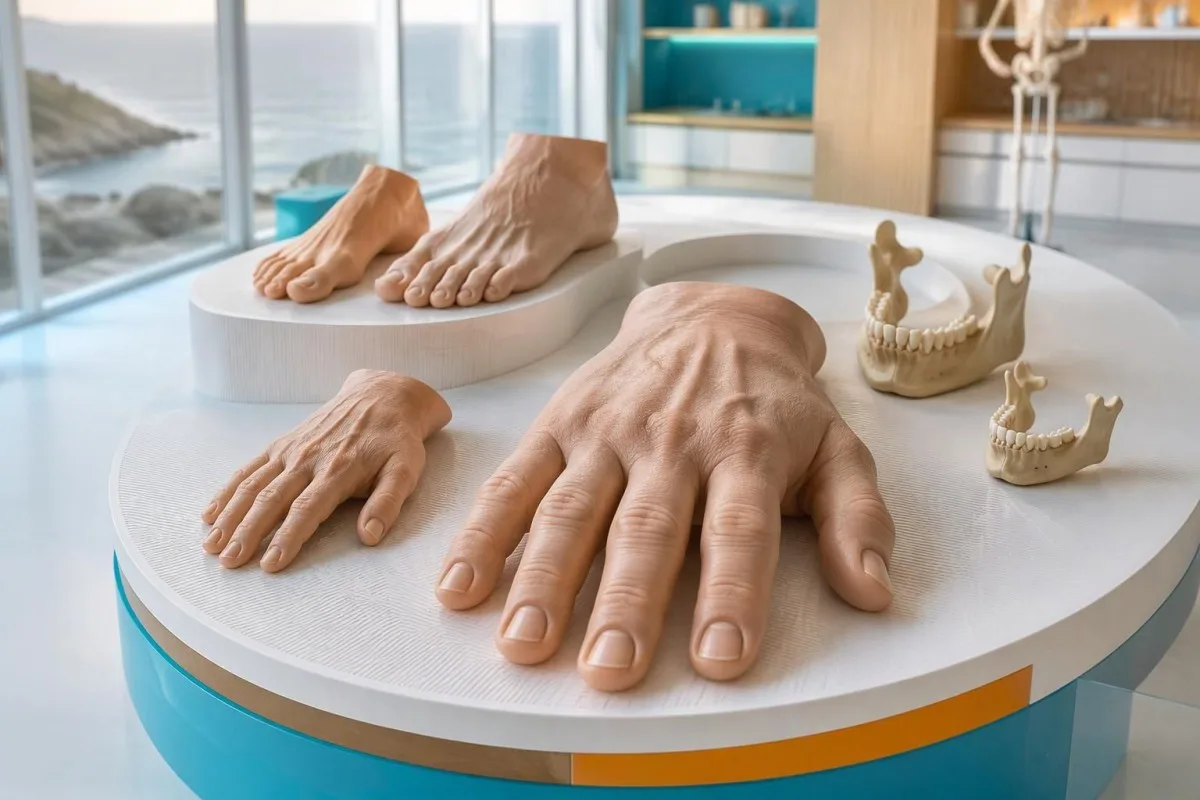
Maaaring magpahiwatig ng acromegaly ang unti-unting paglaki ng mga kamay o paa, pagbabago ng panga, paglawak ng pagitan ng mga ngipin, pagdami ng pagpapawis at sleep apnea—lalo na kapag sabay-sabay na lumilitaw ang ilang pagbabago. Hindi ito makukumpirma ng mga sintomas; kailangan ang klinikal na pagtatasa at pagsusuri ng dugo para sa IGF-1 na iniayon sa edad.

Mahahalagang punto
- Paglala mas mahalaga kaysa sa iisang sintomas: nararapat na sumailalim sa klinikal na pagsusuri ang pagtaas ng sukat ng singsing kasabay ng pagbabago sa pagkakagat sa loob ng ilang taon, kahit walang kapansin-pansing pagbabago sa mukha.
- Mga kamay at paa ay maaaring lumapad matapos huminto ang pagtaas ng tangkad ng isang nasa hustong gulang; walang napatunayang bilang ng mga sukat ng singsing o sapatos na makapagtuturo ng acromegaly.
- Mga pagbabago sa mukha maaaring kabilang dito ang higit na nakausling ibabang panga, mas malapad na ilong, mas makakapal na labi at bagong mga puwang sa pagitan ng mga ngipin; makatutulong ang paghahambing ng 2 larawang may petsa upang luminaw ang takbo ng mga pagbabago.
- Sleep apnea kapag kasabay ng paglaki ng mga kamay, paa o panga, mas tumitibay ang dahilan upang magpasuri kung sobra ang growth hormone; hindi tiyak na palatandaan ang hilik lamang.
- IGF-1 ang karaniwang unang pagsusuring biokemikal, at dapat tumugma ang reference interval nito sa edad ng tao at sa assay ng laboratoryo.
- Ang threshold na 1.3× ay mula sa pinagkasunduan tungkol sa acromegaly noong 2024: maaaring makumpirma ang diagnosis kapag higit sa 1.3 beses ng itaas na limitasyong iniayon sa edad ang IGF-1 at naroroon ang mga katangiang klinikal na palatandaan.
- Pagsusuri ng glucose suppression kung minsan ay nilulutas ang kawalang-katiyakan: maaaring gumamit ang isang clinician ng 75 g na iniinom na glucose at sunod-sunod na pagsukat ng growth hormone sa halip na umasa sa isang biglaang resulta ng growth hormone.
- Mga sintomas ng emergency kabilang dito ang biglaang matinding sakit ng ulo na may bagong problema sa paningin, pagsusuka o paghina ng pagiging alerto; humingi ng emerhensiyang pangangalaga sa halip na maghintay ng appointment tungkol sa hormone.
Aling mga sintomas ng acromegaly ang dapat bigyang-pansin?
Nakababahala ang mga sintomas ng acromegaly kapag lumalaki ang mga kamay, paa o mukha kasabay ng mga pagbabagong gaya ng pagpapawis, paghilik o pagbabago ng pagkakagat. Karaniwang walang tiyak na kahulugan ang isang masikip na singsing; mas matibay na dahilan para sa klinikal na pagsusuri ang 2 magkakahiwalay na pagbabagong sabay na nagkakaroon, bagaman walang listahan ng mga sintomas ang makapagtitiyak ng diagnosis.

Nagmumula ang acromegaly sa sobrang growth hormone matapos magsara ang mga growth plate. Pinasisigla ng growth hormone ang paggawa ng insulin-like growth factor 1, o IGF-1, na nagtataguyod ng paglaki ng malalambot na tisyu at ilang buto; karamihan sa mga kaso ay nagmumula sa hindi kanser na pituitary adenoma, hindi sa problema sa diyeta.
Mas mahirap mapansin ang unti-unting pagbabago kaysa sa biglaang sintomas. Maaaring makita sa paghahambing ng kasalukuyan mong hitsura at mga litrato mula 3–5 taon na ang nakalipas ang pagbabago sa noo, panga o ilong na hindi napapansin sa araw-araw na pagtingin sa salamin; praktikal na panahon ito para sa paghahambing, hindi kinakailangang panahon ng paghihintay.
Halimbawa, isipin ang isang 46-taong-gulang na dalawang beses nang nagpalaki ng sukat ng singsing sa kasal, lumapad na ang mga sapatos at may dokumentadong pagbabago sa pagkakagat ayon sa dentista. Dahil nanatiling matatag ang timbang ng katawan, hindi gaanong sapat na paliwanag ang simpleng pagbigat, ngunit kailangan pa rin ng pagsusuri at mga test sa hormone bago tawagin itong acromegaly.
Kantesti ay isang AI blood test analyzer na makatutulong magpaliwanag ng ulat sa IGF-1 nang hindi itinuturing na diagnosis ang listahan ng mga sintomas. Ang aming organization and purpose ipaliwanag ang aming papel: sinusuportahan namin ang pag-unawa sa mga dati nang resulta, habang sinusuri ng clinician ang mga pisikal na pagbabago at nagpapasya kung nararapat ang pagsusuri ng espesyalista.
Paano binabago ng acromegaly ang mga kamay at sukat ng singsing
Maaaring lumapad at kumapal ang mga kamay ng nasa hustong gulang dahil sa acromegaly, kaya unti-unting hindi na kasya ang mga singsing sa halip na sumikip lamang kapag mainit ang panahon. Mas nagpapahiwatig ang paglawak ng magkabilang kamay sa paglipas ng panahon kaysa sa pamamaga ng 1 daliri lamang, lalo na kapag nagbabago rin ang kasya ng sapatos, hugis ng mukha o pagpapawis.
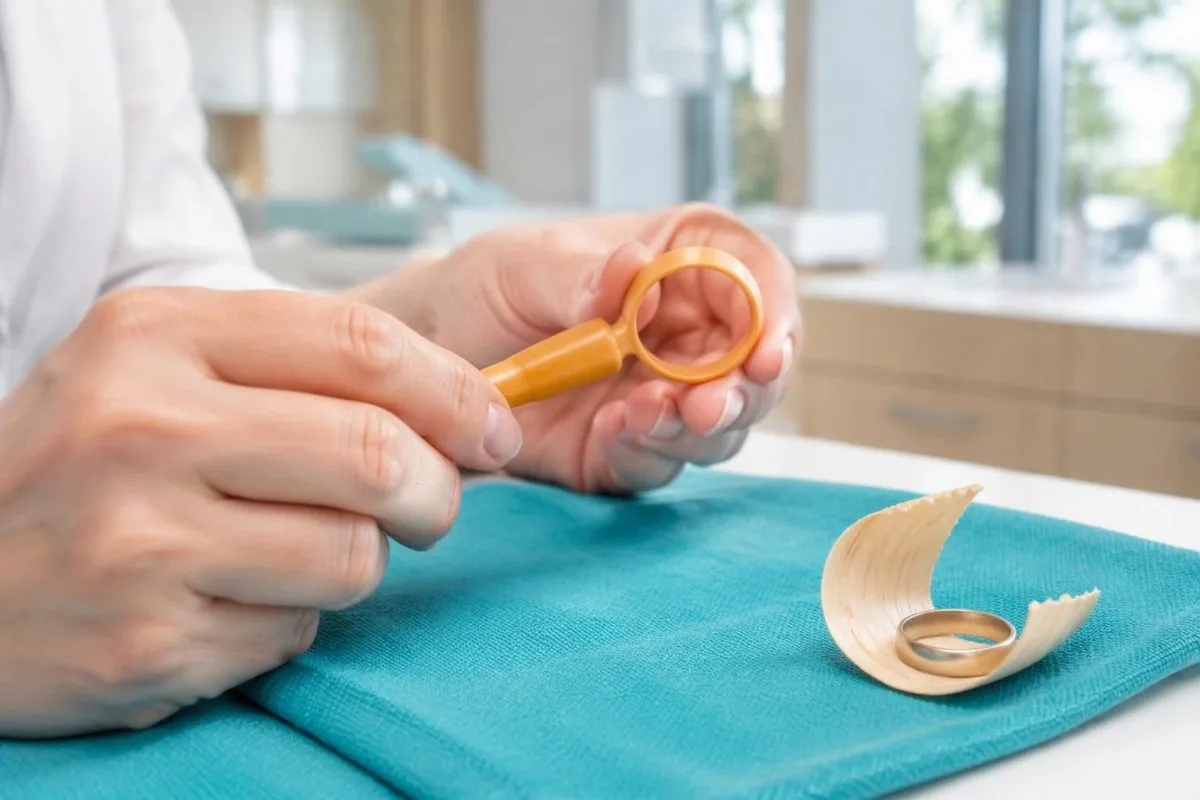
Sukat ng palibot, hindi sanhi ng paglaki, ang sinusukat ng sukat ng singsing. Maaaring dulot ng pagbigat, arthritis, pagpapanatili ng likido o magkakaibang sistema ng pagsukat ang pagbabago ng 1 sukat ng singsing; nagiging konsiderasyon ang acromegaly kapag nagpapatuloy ang pagbabago at may kasabay na pagkapal ng mga palad o iba pang katangiang palatandaan.
Naiiba ang pansamantalang pamamaga sa progresibong paglaki ng tisyu. Makikita kung pabagu-bago ang kasya ng parehong singsing sa umaga at gabi sa loob ng 1 linggo, ngunit hindi maaalis ng obserbasyong ito sa bahay ang posibilidad ng acromegaly; iwasang pilit na isuot nang paulit-ulit ang masikip na singsing sa namamagang kasukasuan.
Maaaring magmukhang namamaga ang mga kamay dahil sa pagpapanatili ng likidong may kaugnayan sa thyroid nang hindi ipinakikita ang buong padron ng acromegaly. Ang paliwanag namin tungkol sa bahagyang paghina ng paggana ng thyroid ay tumutulong na maihiwalay ang mga pagbabagong natukoy sa laboratoryo sa mga pisikal na paglaki; hindi dapat awtomatikong ipaliwanag ng bahagyang abnormal na TSH lamang ang pagbabagong naganap sa loob ng ilang taon sa laki ng kamay at panga.
Mainam na paghiwalayin sa tala para sa appointment ang 2 obserbasyon: pangkalahatang paglawak ng kamay at paglaki na nakasentro sa mga partikular na kasukasuan. Itala ang tinatayang mga petsa ng pagpapalit ng sukat ng singsing at kung alin ang nauna—pananakit ng buko, paninigas sa umaga o pagkapal ng palad; nakatutulong ang mga detalyeng ito sa clinician na maihiwalay ang paglaki ng tisyu sa sakit ng kasukasuan o paminsan-minsang pamamaga.
Kailan maagang pahiwatig ang pagtaas ng sukat ng sapatos
Maaaring maagang palatandaan ng acromegaly ang unti-unting paglaki o paglapad ng mga paa sa hustong gulang, lalo na kung nagbabago rin ang laki ng mga kamay. Hindi sapat na batayan para sa diagnosis ang minsanang pagpapalit ng sapatos: maaari ring magbago ang kasya dahil sa pagkakaiba ng mga tatak, pagbabago sa paa na nauugnay sa pagbubuntis, pagbigat, bunion at paglapad ng arko ng paa nang walang sobrang growth hormone.
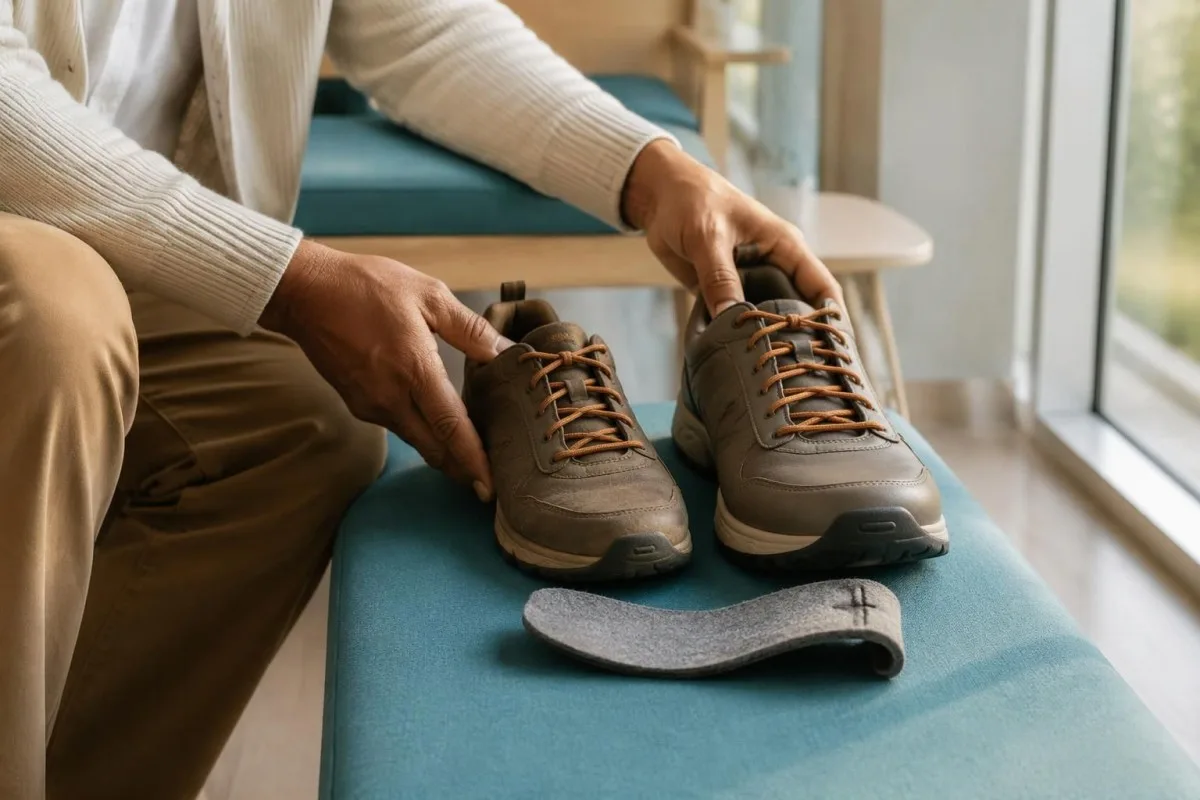
Kung minsan ay nagbabago muna ang lapad ng paa bago ang nakasaad na sukat ng sapatos. Kung magkasinghaba ang mga sapatos na binili nang may pagitan na 3 taon ngunit kailangan ng mas maluwag na bahagi sa daliri ng paa, itala ang detalyeng iyon; maaaring magkasabay ang pagkapal ng malalambot na tisyu at mga pagbabagong mekanikal sa paa, kaya hindi sapat na sukat ang haba lamang.
Karaniwang unti-unti ang paglaki ng paa na may kaugnayan sa acromegaly at naaapektuhan nito ang magkabilang paa. Nangangailangan ng ibang pagsusuri ang biglaang pamamaga ng 1 binti o paa, lalo na kung may pananakit o init sa binti; ang aming gabay tungkol sa urgent one-sided leg swelling explains why that pattern should not be attributed to a slow hormonal disorder.
For a hypothetical 51-year-old, moving from the same manufacturer's size 8 to size 10 over several years would be more informative than comparing unrelated brands. The observation becomes more meaningful if a ring has also needed resizing, but there is no validated shoe-size increase that confirms acromegaly.
Bring 2 pairs of dated shoes or purchase records if available, rather than buying measuring equipment. A clinician can assess edema, arches, joints and soft tissues together; foot photographs should be taken in comparable positions because perspective can make a stable foot appear larger.
Ano ang maaaring ipahiwatig ng mga pagbabago sa panga at ngipin
Acromegaly facial changes can include a more prominent lower jaw, broader nose, thicker lips and wider spacing between teeth. A changing bite documented on 2 dental visits can be more useful than a subjective impression of looking different, because jaw growth and ordinary weight gain affect appearance differently.
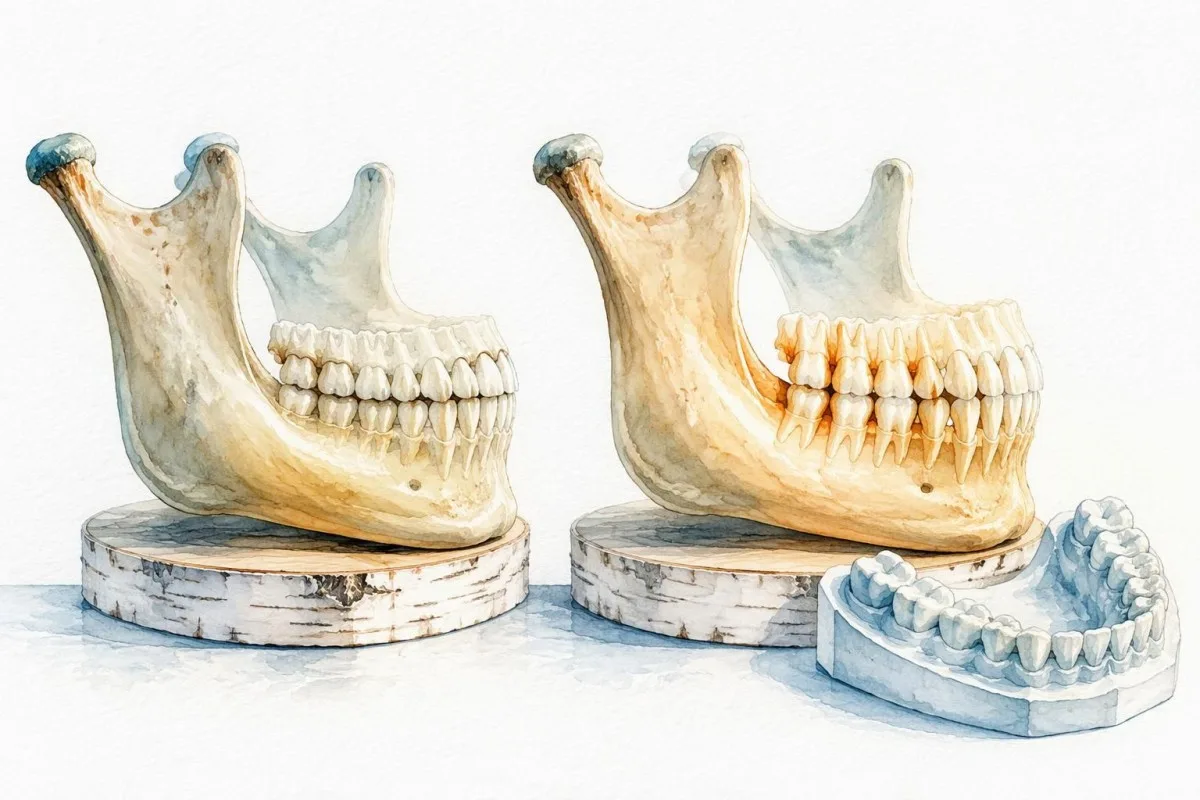
New tooth spacing does not necessarily mean the teeth themselves have enlarged. Enlargement of the jaw can change their positions relative to one another, while gum disease, missing teeth and orthodontic movement can also produce gaps; comparing dental records from 2 dates helps identify which process is more plausible.
Photographs are most useful when lighting, camera distance and head position are similar. Choose 1 older front-view photograph and 1 side view if possible; wide-angle phone lenses can exaggerate the nose and jaw, so apparent enlargement in a close selfie is not reliable evidence of hormone excess.
Bone disorders can also change skull or jaw shape, but usually require a different diagnostic pathway. Our explanation of Paget disease testing describes one alternative; an ALP result, whether normal or raised, cannot replace IGF-1 testing when the broader pattern suggests acromegaly.
Ask a dentist whether 2 findings are documented: a progressive bite change and new spacing not explained by gum or orthodontic disease. A dentist may recognize the physical pattern, but photographs, bite impressions and dental imaging cannot confirm acromegaly without an endocrine assessment.
Bakit mahalaga ang pagpapawis lamang kapag bahagi ito ng mas malawak na padron
Increased sweating and oily or thicker skin can accompany acromegaly, but sweating alone is a weak diagnostic clue. Persistent sweating becomes more relevant when it develops alongside at least 1 structural change, such as broader hands or a changing jaw; the combination guides evaluation rather than proving a hormonal cause.
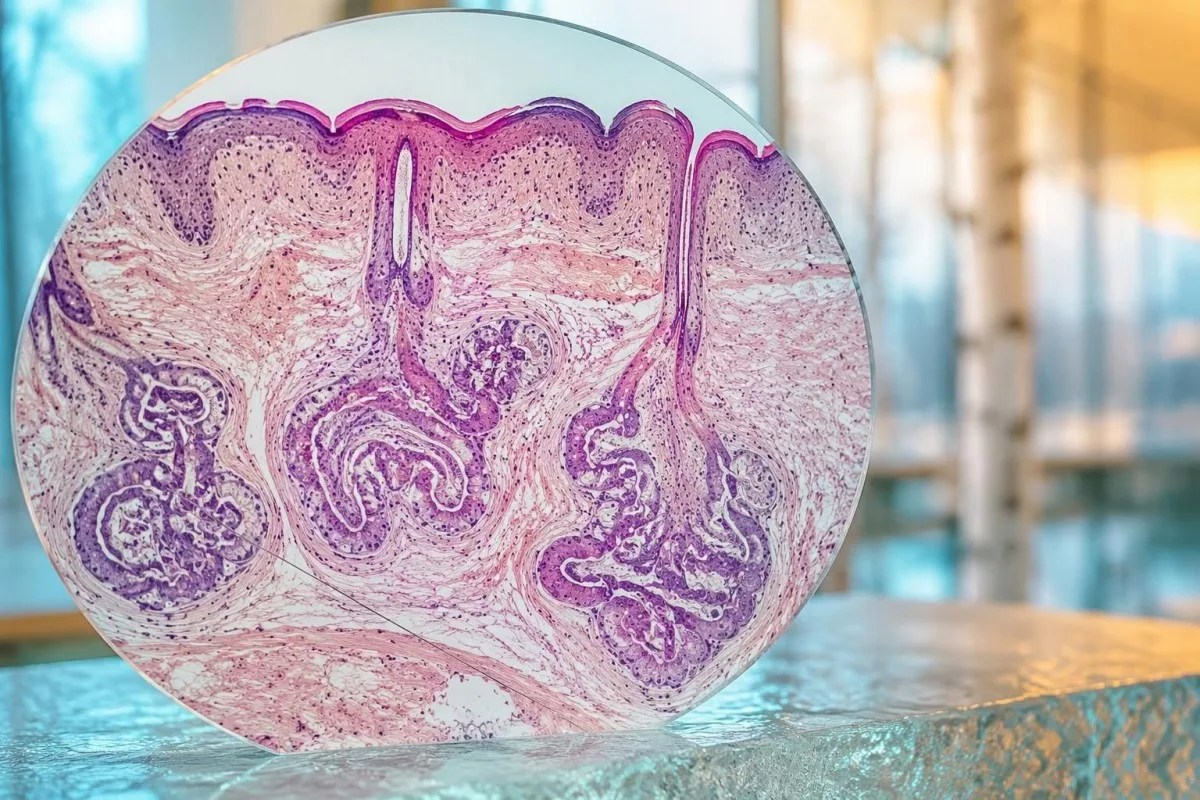
A useful sweating history distinguishes persistent excess perspiration from brief episodes. Recording triggers and timing for 7 days can reveal links to exercise, medicines, meals or hot flashes; acromegaly does not have a distinctive sweat odor or a validated sweating frequency that separates it from other causes.
Episodic sweating with pounding headaches, palpitations and marked blood-pressure swings suggests a different endocrine question. Our guide to adrenal hormone warning patterns explains when metanephrine testing may be considered; that test and IGF-1 answer different questions, even when 2 conditions share sweating as a symptom.
Hot flashes can coincide with the age at which acromegaly becomes noticeable, creating an easy attribution error. The discussion of fluctuating menopause hormone results explains why 1 estradiol measurement is not a complete explanation for sweating, especially if ring fit and facial shape are also changing.
Skin tags are common and are not an acromegaly screening test. In a hypothetical 48-year-old with new sweating and several skin tags, we would distinguish metabolic or medication-related explanations from the much more specific observation of progressive hand and jaw enlargement; counting skin tags does not resolve that distinction.
Paano nauugnay ang sleep apnea sa paglaki ng mga tisyu
Acromegaly can contribute to obstructive sleep apnea through enlargement of the tongue and other upper-airway tissues. Loud snoring, witnessed breathing pauses and daytime sleepiness warrant sleep evaluation; when these occur with progressive hand or jaw enlargement, an IGF-1 test may also be appropriate rather than assuming 1 diagnosis explains everything.
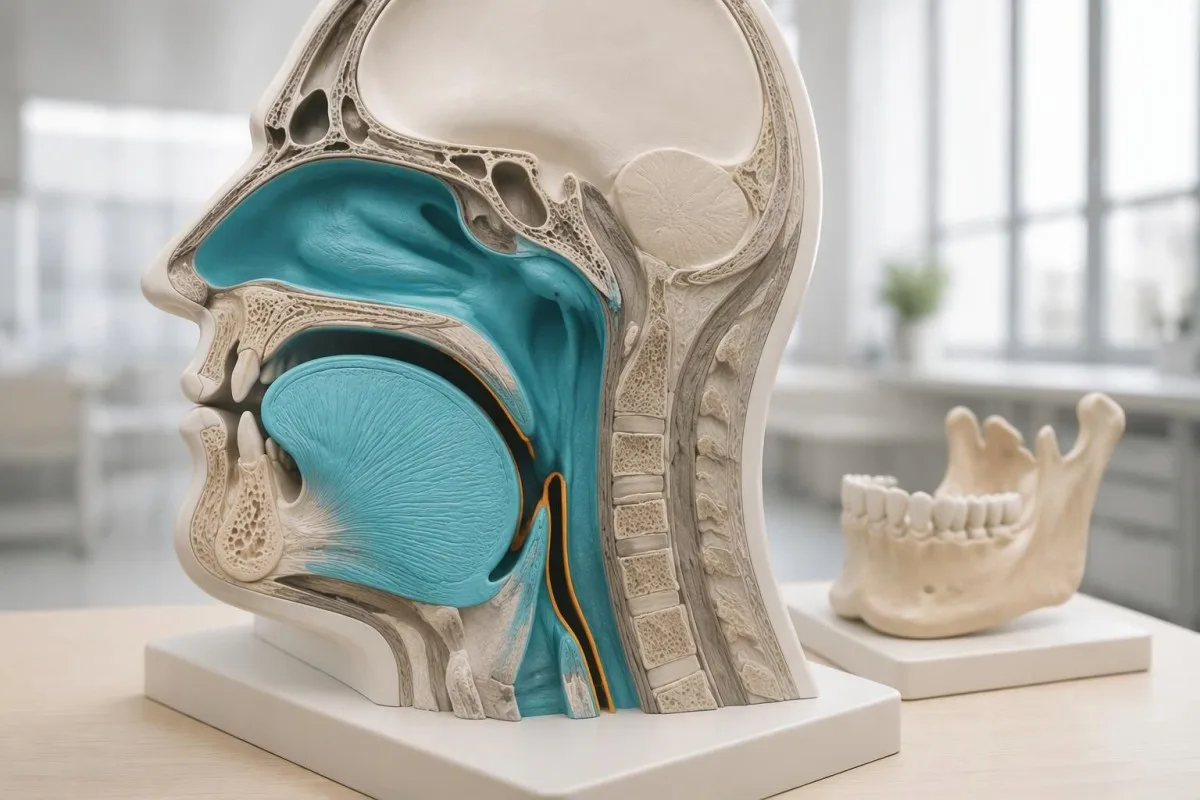
Obstructive sleep apnea is assessed using respiratory events during sleep, not facial appearance. An apnea–hypopnea index of at least 5 events/hour with relevant symptoms or comorbidities, or at least 15 events/hour regardless of symptoms, commonly supports adult diagnosis; neither threshold identifies the underlying cause as acromegaly.
Sleep studies answer a different question from a daytime sleepiness test. Our explanation of sleep-study test selection distinguishes overnight respiratory assessment from testing for narcolepsy; a normal or abnormal multiple sleep latency test does not assess growth hormone excess.
The Endocrine Society guideline recommends considering IGF-1 testing when several associated conditions occur together, including sleep apnea, diabetes, arthritis, carpal tunnel syndrome, excessive sweating and hypertension (Katznelson et al., 2014). Having 1 of these common conditions does not justify assuming acromegaly, but their coexistence can lower the threshold for discussing testing.
Treating hormone excess does not guarantee that sleep apnea disappears. If a person already uses positive-airway-pressure treatment, 1 improved night of sleep is not evidence that it can be stopped; residual airway anatomy and weight-related factors may persist, and any treatment change requires reassessment by the sleep team.
Pamamanhid ng kamay at pananakit ng kasukasuan: mga pantulong na pahiwatig
Carpal tunnel syndrome and joint discomfort can accompany acromegaly because tissue enlargement affects nerves, cartilage and joint mechanics. Numbness in the thumb, index and middle fingers is more consistent with median-nerve compression than numbness involving all 5 fingers equally, but the nerve pattern does not establish a hormonal cause.
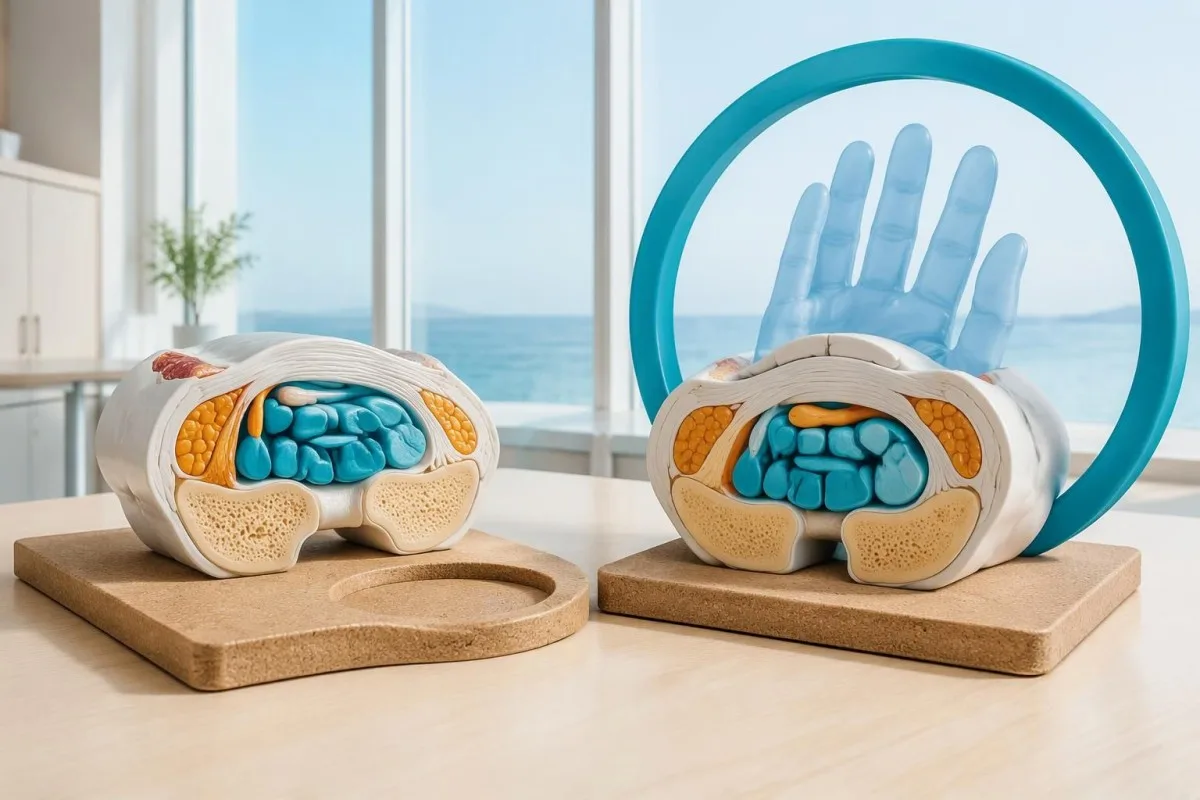
Bilateral symptoms are useful context, not proof of acromegaly. Nighttime tingling in both hands plus 2 ring resizings and a changing bite deserves a different discussion from isolated tingling after repetitive wrist use; the associated structural changes explain why an endocrine cause might enter the differential.
The fingers involved help localize the problem before choosing tests. Our guide to median-nerve symptom patterns explains why little-finger numbness may point elsewhere; an abnormal nerve-conduction study can confirm nerve dysfunction without answering whether IGF-1 excess contributed.
Joint symptoms can outlast successful control of growth hormone excess. After years of altered cartilage and bone mechanics, correcting 1 hormone pathway does not necessarily reverse established degenerative changes; this is why early recognition matters even when pain has been labeled ordinary arthritis.
Kantesti can help organize an IGF-1 result alongside glucose or thyroid findings, but nerve symptoms still require clinical localization. For a hypothetical 55-year-old, distinguishing 2 problems—median-nerve compression and progressive tissue enlargement—avoids interpreting every abnormal laboratory value as the cause of hand numbness.
Iba pang pahiwatig: mga pagbabago sa glucose, presyon ng dugo at mga hormone
Growth hormone excess can contribute to insulin resistance, high blood pressure and changes in other pituitary hormone functions. These findings are common outside acromegaly; concern rises when at least 2 metabolic or hormonal problems develop alongside progressive hand, foot or facial enlargement, rather than when a single routine result is abnormal.
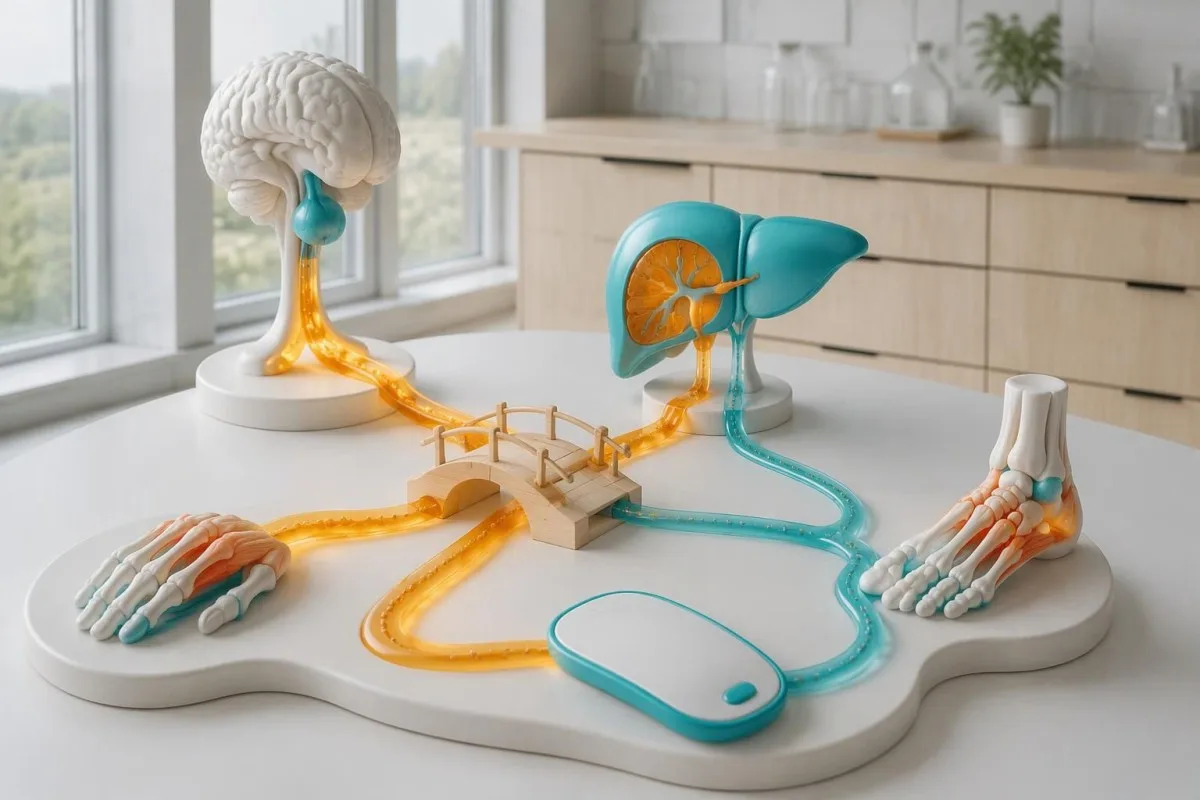
Diabetes is a possible associated condition, not a diagnostic shortcut. An HbA1c of at least 6.5% or fasting plasma glucose of at least 126 mg/dL, equivalent to 7.0 mmol/L, meets commonly used diabetes thresholds when confirmation requirements are satisfied; neither value identifies growth hormone excess as the cause.
Thirst and blurred vision may therefore need evaluation independently of changes in appearance. Our guide to ang mga babalang sintomas ng mataas na glucose explains why a hypothetical glucose result of 280 mg/dL with symptoms deserves prompt clinical attention, even while a separate acromegaly assessment is being arranged.
Pituitary dysfunction can alter menstrual cycles, sexual function or fertility, but these symptoms have many causes. Our women's hormonal symptom guide discusses relevant alternatives; missing 2 periods alongside progressive jaw and hand changes deserves a broader review than assuming a single age-related explanation.
At Kantesti, we distinguish a complication marker from a disease-specific test: 1 abnormal HbA1c cannot substitute for age-adjusted IGF-1. Bring blood-pressure readings, medication names and the timing of hormonal symptoms, because a clinician may need to assess associated conditions and pituitary function in parallel.
Ano pa ang maaaring magdulot ng katulad na mga pisikal na pagbabago?
Weight gain, fluid retention, thyroid disease, arthritis and dental problems can resemble parts of the acromegaly pattern. The distinction depends on the distribution and progression of change: enlargement affecting hands, feet and jaw over several years is harder to explain with 1 localized joint or dental problem.
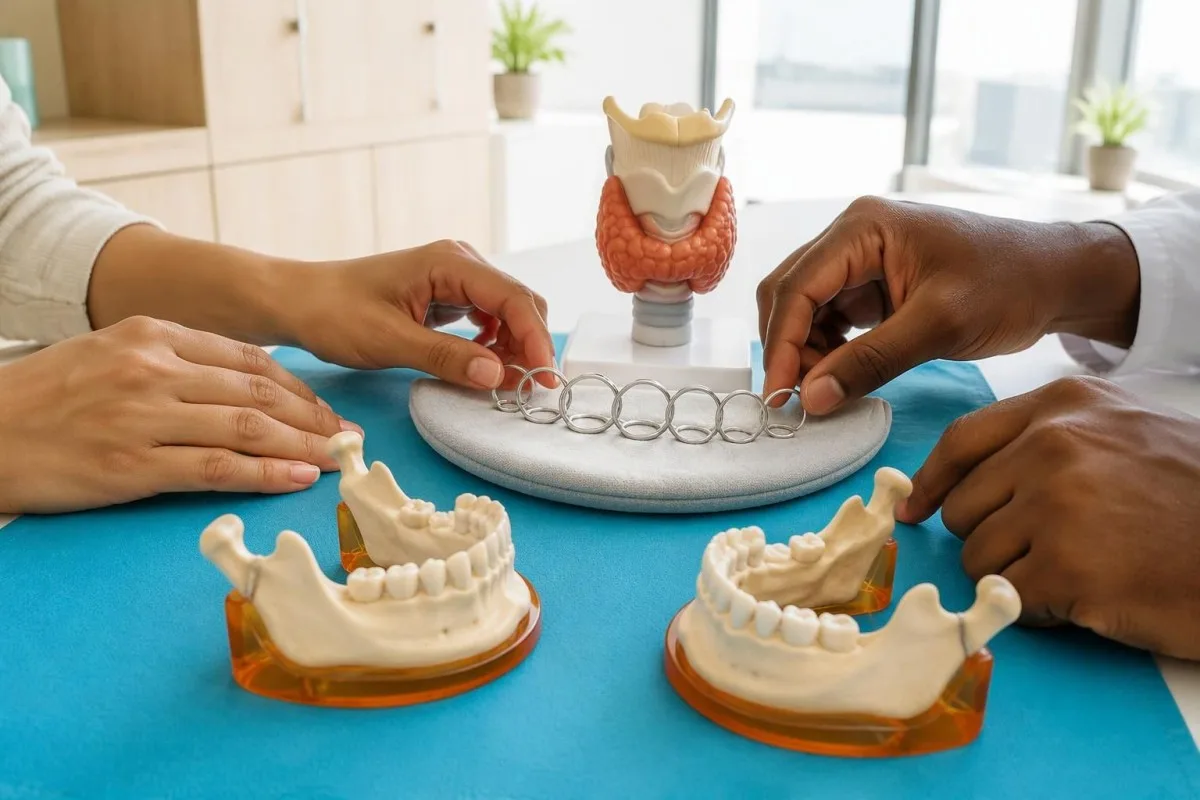
Weight gain often changes facial fullness without producing the same progressive mandibular prominence or dental spacing. In a hypothetical 50-year-old whose weight rose by 12 kg, tighter rings may have an ordinary explanation; a dentist-confirmed change in jaw relationship still deserves separate attention rather than dismissal.
Cushing syndrome can cause facial rounding, metabolic problems and muscle weakness, but its testing pathway differs from acromegaly. Our guide to cortisol screening and confirmation explains why 1 random cortisol result does not establish Cushing syndrome, just as a random growth hormone result does not establish acromegaly.
A pituitary problem can sometimes produce low free T4 without an appropriately elevated TSH. Our explanation of low T4 with normal TSH helps clarify why those 2 measurements must be interpreted together; a normal TSH alone is not a complete assessment of pituitary-related thyroid function.
Childhood growth and adult tissue enlargement should not be confused. Excess growth hormone before growth-plate closure can cause gigantism, whereas adult acromegaly does not usually increase height; a naturally large shoe size that has remained unchanged for 20 years is not equivalent to progressive adult enlargement.
Bakit karaniwang IGF-1 ang unang pagsusuri ng dugo
Age-adjusted IGF-1 is usually the first biochemical test when acromegaly is suspected because it reflects growth hormone activity more consistently than a single growth hormone measurement. The 2024 consensus states that characteristic clinical features plus IGF-1 above 1.3 times the age-adjusted upper limit can confirm the diagnosis (Giustina et al., 2024).
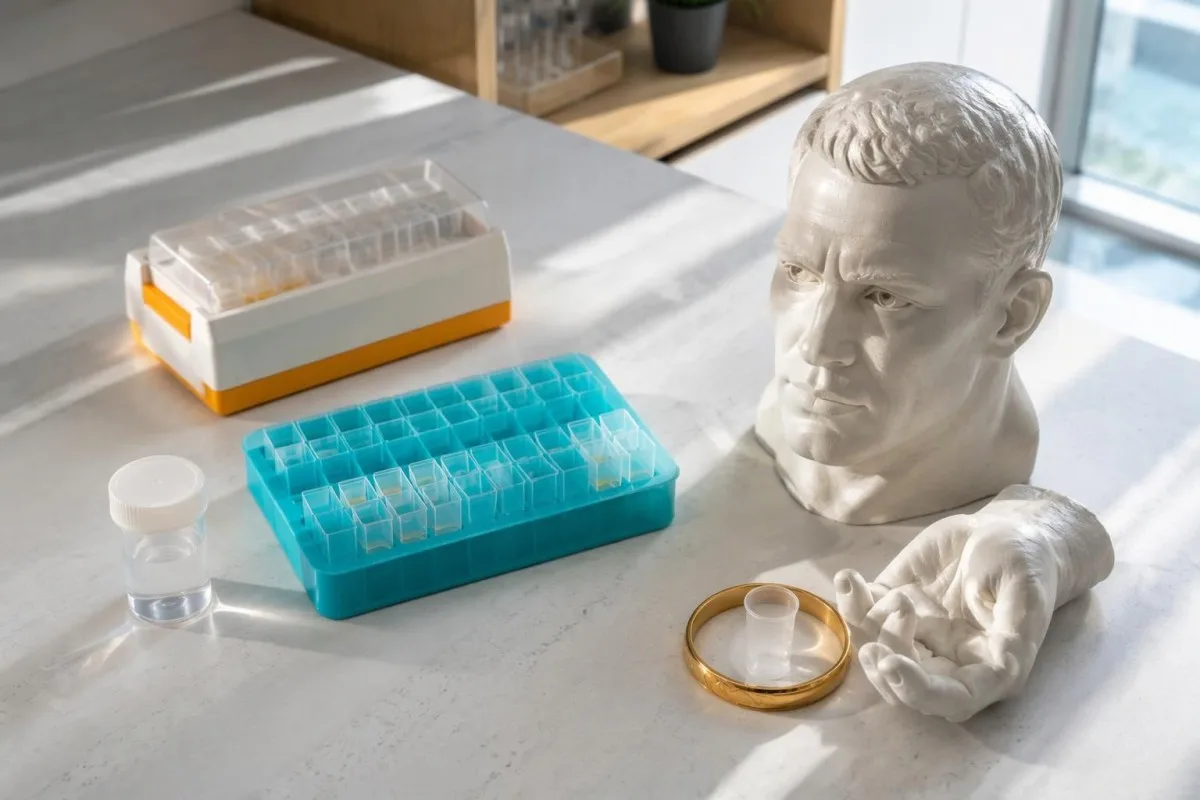
IGF-1 has no single normal adult range that applies to every age and assay. For example, if a hypothetical laboratory upper limit is 250 ng/mL and the result is 340 ng/mL, the result is 1.36 times that upper limit; using another laboratory's range could change the interpretation incorrectly.
A normal IGF-1 usually argues against acromegaly, but confounders can reduce its reliability. Poorly controlled diabetes, significant liver disease, undernutrition and oral estrogen can affect results; 1 normal measurement should be reviewed in context when physical features are compelling, rather than overridden or accepted automatically.
Kantesti is an AI blood test interpretation platform that can explain an IGF-1 value relative to the reference interval printed on the report. Ang aming gabay sa interpretasyon ng biomarker provides laboratory context, but identifying the assay, age range and clinical reason for testing remains part of clinician-led assessment.
Liver and nutritional status matter because IGF-1 production is closely linked to hepatic function and systemic health. Our gabay sa interpretasyon ng serum protein explains relevant background markers; 1 albumin result cannot validate or invalidate IGF-1, but it may prompt a closer review of illness or nutrition.
| Antas | Saklaw | Kahulugan |
|---|---|---|
| Sa loob ng agwat ng laboratoryo | At or below the age-adjusted upper limit | Usually argues against acromegaly; consider confounders if clinical suspicion remains strong. |
| Bahagyang pagtaas (borderline) | >1.0–1.3× the age-adjusted upper limit | Requires clinical review; repeat testing and sometimes glucose suppression testing resolve uncertainty. |
| Above the consensus diagnostic threshold | >1.3× the age-adjusted upper limit | Can confirm acromegaly when characteristic clinical features are present; specialist interpretation is needed. |
Kailan kapaki-pakinabang ang pagsusuri sa pagsupil sa growth hormone
A glucose suppression test may help when IGF-1 results and clinical findings are equivocal. The test commonly uses 75 g oral glucose followed by serial growth hormone measurements; it assesses whether growth hormone suppresses appropriately, rather than treating one high random growth hormone value as diagnostic.
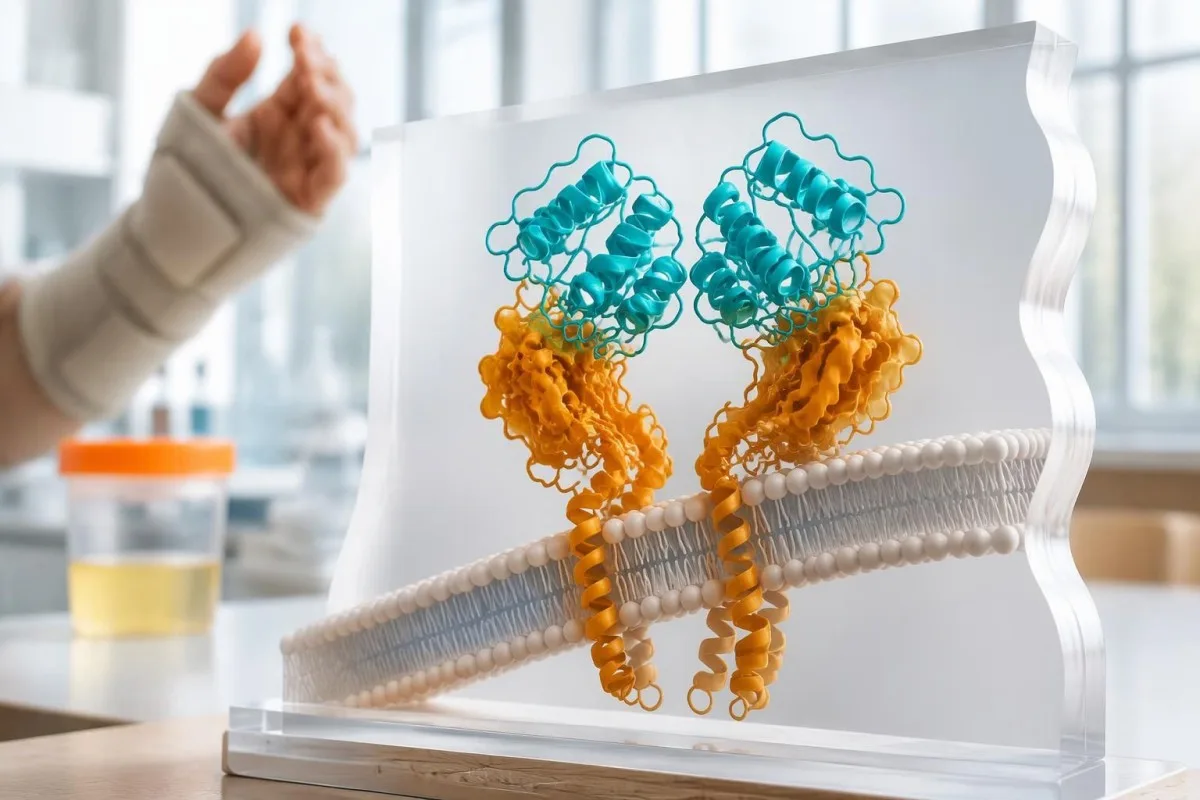
Growth hormone is released in pulses and can rise with sleep, exercise and physiological stress. That is why 1 random value, whether high or low, is unreliable for establishing or excluding acromegaly; an isolated result should not trigger a diagnosis based solely on a generic laboratory range.
Diagnostic cutoffs have changed with assay sensitivity. The Endocrine Society guideline used suppression below 1 ng/mL after glucose to exclude acromegaly in the appropriate testing context (Katznelson et al., 2014); specialist practice may use lower assay-dependent thresholds, including 0.4 ng/mL, rather than one universal cutoff.
For example, a hypothetical IGF-1 of 275 ng/mL against an upper limit of 250 ng/mL equals 1.10 times the upper limit. If growth hormone falls to 0.7 ng/mL, interpretation may differ by assay and clinical context; repeating IGF-1 and reviewing confounders is safer than selecting whichever cutoff gives a preferred answer.
Kantesti does not independently validate an acromegaly diagnosis or choose a glucose-test cutoff. Our pamamaraang klinikal at mga limitasyon explain why interpretation must remain tied to the source report; our separate guide to mga makabuluhang pagbabago sa laboratoryo explains why 2 results are not automatically comparable.
Kailan magpa-iskedyul ng konsultasyon—at kailan agarang kailangan ang tulong dahil sa mga sintomas
Book a clinical review for unexplained progressive enlargement of hands, feet or jaw, especially when sweating, sleep apnea or a changing bite accompanies it. There is no minimum duration you must wait; a sudden severe headache with new visual symptoms is a separate emergency, not something to observe for 2 weeks.
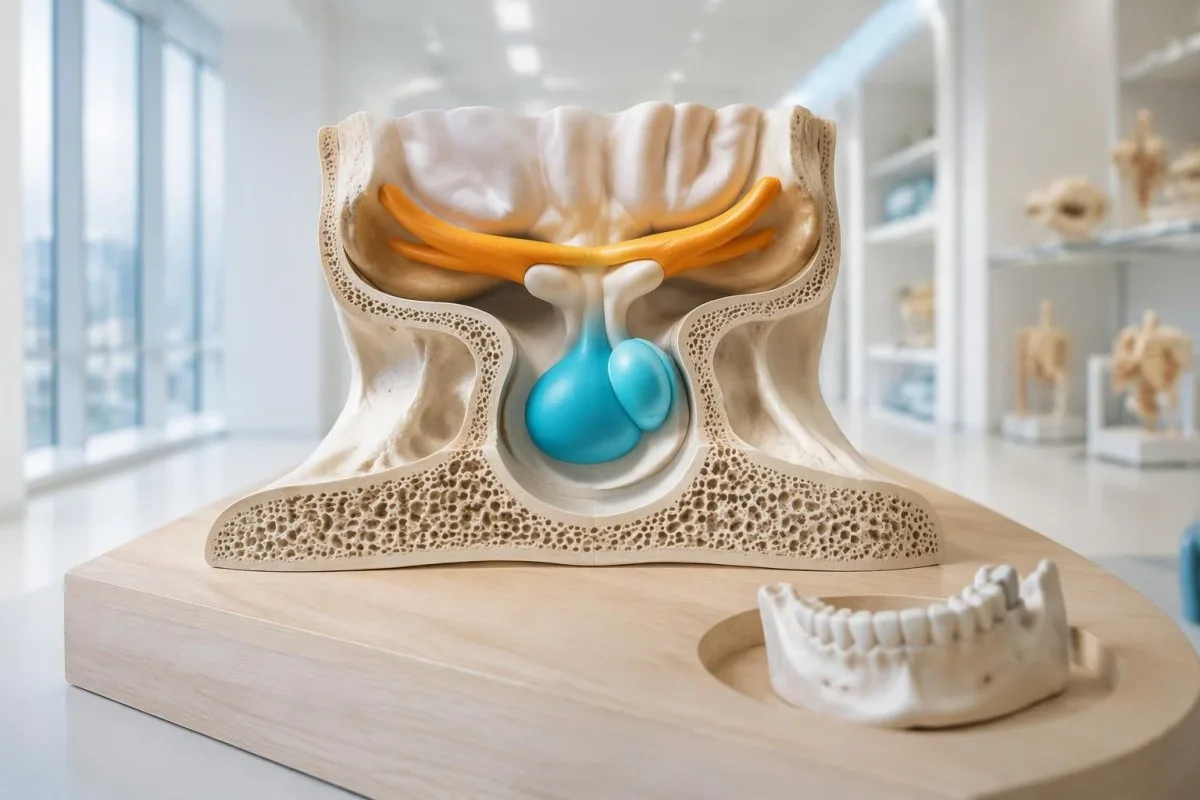
A pituitary growth can affect nearby visual pathways, sometimes causing loss of peripheral vision. New difficulty noticing objects on either side, double vision or a substantial visual change warrants prompt assessment; involvement of 1 or both eyes does not reliably determine whether the cause is pituitary, retinal or neurological.
Sudden severe headache with vomiting, double vision, reduced alertness or visual loss can indicate pituitary apoplexy or another neurological emergency. Seek emergency care immediately rather than waiting for an IGF-1 result; even 1 abrupt neurological warning symptom can justify urgent assessment when severe or unexplained.
Pituitary adenomas are usually noncancerous, but noncancerous does not mean harmless when a growth produces excess hormones or presses on nearby structures. Our guide to neurological warning symptoms explains why progressive and sudden symptoms follow different routes; a 5-year appearance change and an abrupt visual deficit should not receive the same triage.
For gradual changes without emergency features, prepare 3 categories of evidence: appearance or sizing changes, associated symptoms and existing results. Ask whether an age-adjusted IGF-1 test and endocrine referral are appropriate; avoid arriving with a self-confirmed diagnosis or postponing care until every possible symptom appears.
Ano ang nangyayari pagkatapos ng abnormal na resulta ng pagsusuri sa hormone?
After biochemical confirmation or strong specialist-supported suspicion, pituitary MRI usually identifies the source and its relationship to surrounding structures. Imaging alone cannot confirm acromegaly: a pituitary finding may be incidental, and the 10 mm size boundary between microadenoma and macroadenoma describes size rather than hormone secretion.
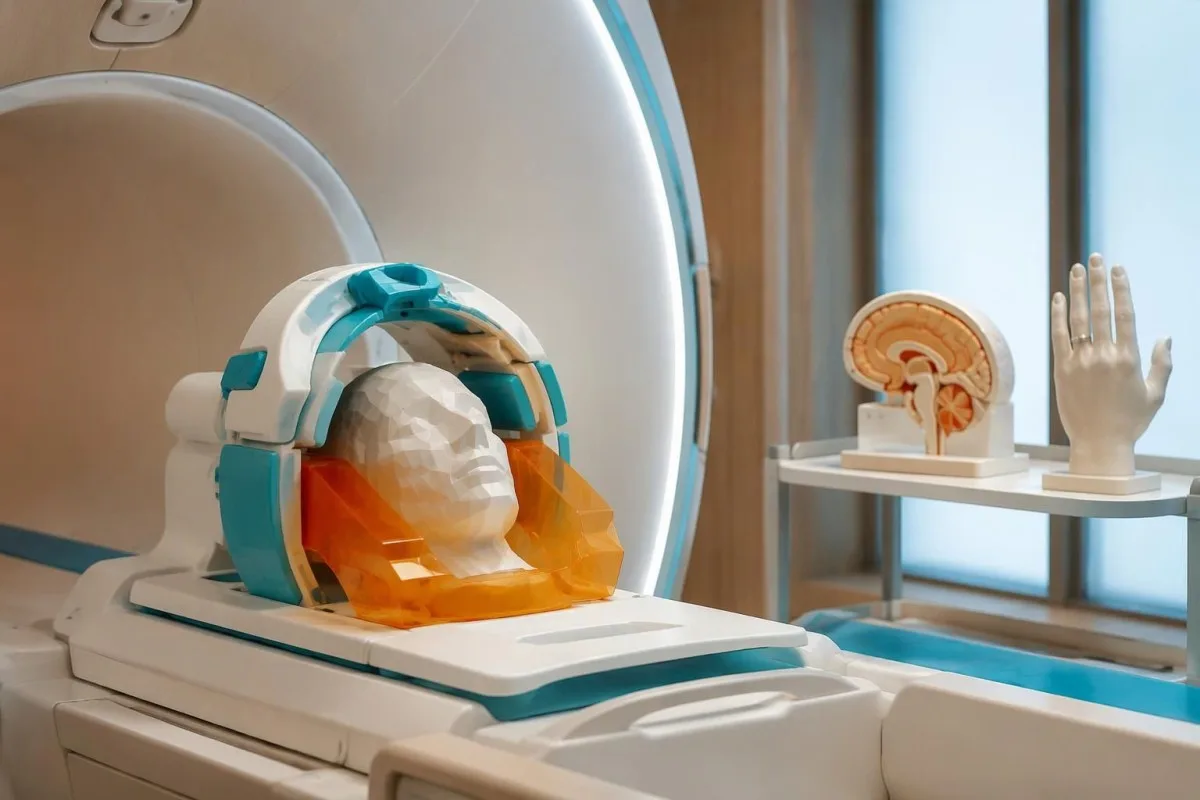
A pituitary microadenoma measures less than 10 mm, while a macroadenoma measures at least 10 mm. A smaller growth can still secrete clinically significant growth hormone; conversely, a larger nonfunctioning growth may not cause acromegaly, so dimensions and biochemical activity answer different questions.
An endocrine team may assess prolactin, thyroid function, adrenal function and reproductive hormone pathways as well as IGF-1. Our guide to bahagyang pagtaas ng prolactin explains why 1 raised prolactin result can have several causes; it does not prove that a pituitary growth is secreting multiple hormones.
Visual-field testing may be needed when MRI shows proximity to the optic chiasm or when vision is affected. A reassuring ability to read a phone screen at 30 cm does not exclude peripheral field loss; formal testing assesses a different part of vision from everyday reading.
Kantesti AI cannot infer pituitary growth size from an IGF-1 concentration. If the pituitary MRI does not explain convincing biochemical findings, a specialist may review imaging quality, assay issues and rare alternative sources; a negative scan should not be converted into an unsupported claim that 1 hormone result was necessarily wrong.
Paghahanda para sa iyong appointment at pagsuri sa aming mga sanggunian
The most useful next step is a short timeline connecting physical changes, associated symptoms and existing laboratory results. Bring 2 dated photographs if available, ring or shoe history and the full IGF-1 report; these support a focused clinical discussion without turning home observations into a diagnostic score.
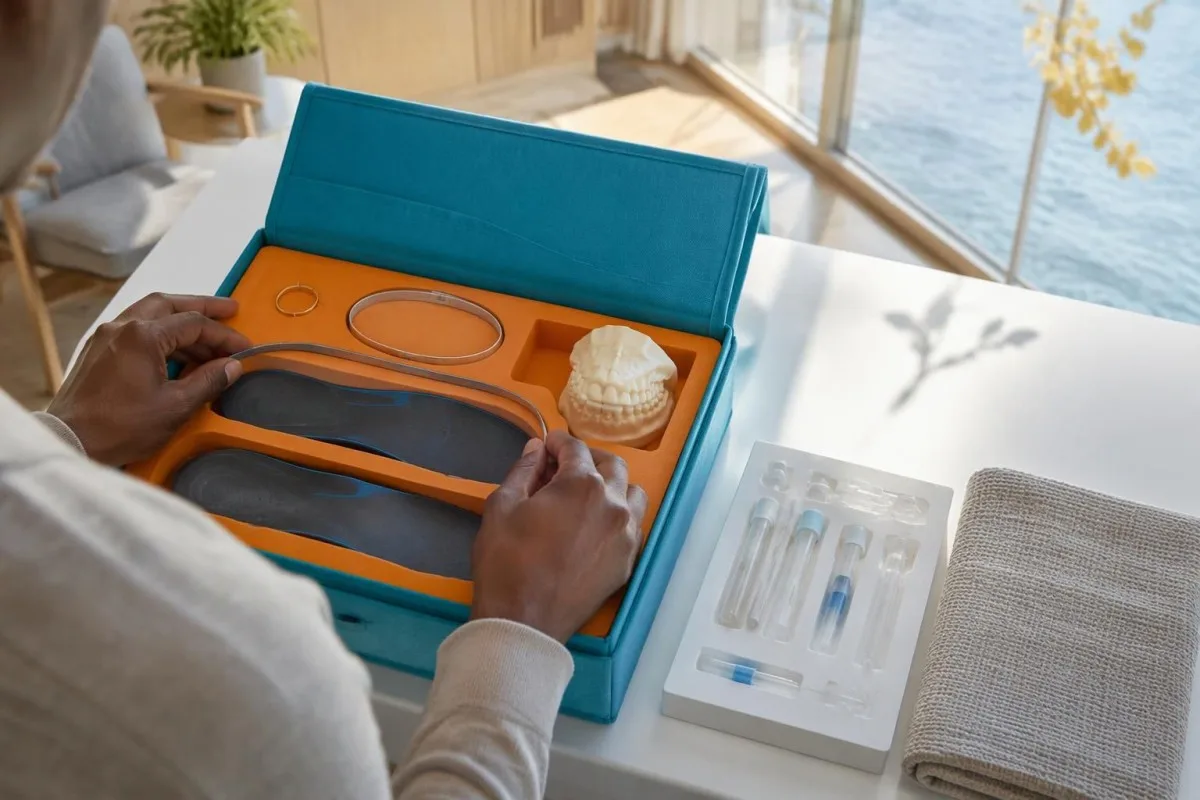
Write down when each change began and whether it has continued, fluctuated or stopped. A 1-page record is usually more useful than dozens of unlabeled photographs: include weight changes, dental observations, sleep-apnea treatment and medication or supplement use, especially prescribed hormones that could influence laboratory interpretation.
Kantesti is an AI-powered blood test analysis tool that can help explain an existing IGF-1 report and organize questions for your clinician. Ang aming gabay sa pagsuri sa mga paliwanag ng ulat mula sa AI describes source verification; an explanation cannot replace examination, and a normal metabolic panel does not mean IGF-1 was tested.
Protect identifying information when sharing laboratory reports or old photographs. Kantesti's gabay sa privacy at datos explains our data approach; use only the materials needed for the question, and obtain permission before sharing another person's results or images, even when comparing 2 family members.
The clinical recommendations here draw on the Endocrine Society's 2014 guideline and the 2024 diagnostic consensus, listed below. The 2 accompanying Figshare publications concern gastrointestinal and women's hormonal health; they are related educational resources, not evidence for acromegaly diagnosis, and a repository DOI does not by itself establish peer review.
Mga Madalas Itanong
Ano ang mga unang palatandaan ng acromegaly?
Maaaring kabilang sa mga unang palatandaan ng acromegaly ang unti-unting pagsikip ng mga singsing, paglawak ng sukat ng sapatos, pagdami ng pagpapawis, mga bagong sintomas ng carpal tunnel at pagbabago sa pagkakakagat ng mga ngipin. Maaaring makita sa paghahambing ng 2 larawang may petsa o mga rekord ng ngipin ang mga pagbabagong mahirap mapansin sa araw-araw. Walang partikular na pagtaas sa sukat ng singsing o bilang ng mga sintomas na makapagkukumpirma ng acromegaly. Dapat humantong sa klinikal na pagsusuri at pagsusuri sa IGF-1 na iniakma sa edad ang hindi maipaliwanag na paglala.
Nangangahulugan ba ang paglaki ng sukat ng singsing o sapatos na mayroon akong akromegaliya?
Ang pagtaas ng sukat ng singsing o sapatos ay hindi nangangahulugang mayroon kang acromegaly. Maaari ring magbago ang sukat dahil sa pagdagdag ng timbang, pamamanas, arthritis, mga pagbabago sa paa kaugnay ng pagbubuntis, at pagkakaiba sa uri ng sapatos. Walang napatunayang kahulugang diagnostic ang pagbabago ng isang sukat ng sapatos, ngunit dapat magpasuri kung patuloy na lumalaki ang mga ito kasabay ng mga pagbabago sa panga, pagpapawis o sleep apnea. Nakabatay ang diagnosis sa mga klinikal na palatandaan at naaangkop na pagsusuri sa hormone.
Mababago ba ng acromegaly ang iyong mukha o magdudulot ito ng mga puwang sa pagitan ng mga ngipin?
Maaaring gawing mas prominente ng acromegaly ang ibabang panga at palaparin ang pagitan ng mga ngipin habang nagbabago ang sukat ng panga. Maaari rin nitong palaparin ang ilong at pakapalin ang mga labi, ngunit maaaring magdulot ng magkakatulad na palatandaan ang sakit sa gilagid, paggalaw ng ngipin dahil sa orthodontics, at karaniwang mga pagbabago sa mukha. Makakatulong ang paghahambing ng mga rekord sa ngipin mula sa 2 petsa upang matukoy kung lumala ang pagkakagat o lumawak ang pagitan ng mga ngipin. Hindi makukumpirma ng mga litrato ng mukha at mga natuklasan sa ngipin ang acromegaly nang walang pagsusuring biyokemikal.
Anong pagsusuri sa dugo ang tumitingin kung may akromegaliya?
Karaniwang unang pagsusuri ng dugo na ginagamit kapag pinaghihinalaang may akromegaliya ang IGF-1 na iniakma sa edad. Ayon sa konsensus noong 2024, makukumpirma ang akromegaliya kung lampas sa 1.3 beses ng pinakamataas na limitasyong iniakma sa edad ang IGF-1 at taglay ng pasyente ang mga katangi-tanging klinikal na palatandaan. Maaaring kailanganing ulitin ang pagsusuri at magsagawa ng pagsusuri sa pagsupil ng glucose sa ilalim ng pangangasiwa ng doktor kung malapit sa hangganan o magkasalungat ang mga resulta. Hindi maaasahang pamalit sa pagsusuri ang iisang random na sukat ng growth hormone.
Maaari ka bang magkaroon ng acromegaly kahit normal ang resulta ng IGF-1?
Ang mapagkakatiwalaang nasukat na IGF-1 na normal at iniakma sa edad ay karaniwang nagpapahiwatig na walang hindi nagagamot na acromegaly. Gayunman, maaaring makaapekto sa IGF-1 at magpahirap sa interpretasyon ang diabetes na hindi mahusay ang pagkontrol, malubhang sakit sa atay, malnutrisyon at estrogen na iniinom. Kung nagpapatuloy ang mga katangiang pisikal na pagbabago sa kabila ng 1 normal na resulta, dapat suriin ng clinician ang pagsusuri, saklaw ng reperensiya at mga posibleng salik na nakalilito sa interpretasyon. Maaaring angkop ang muling pagsusuri o pagtatasa ng espesyalista, sa halip na ipagpalagay na pinatutunayan ng mga sintomas ang diagnosis o na walang epekto kailanman ang konteksto.
Kailan dapat ituring na emerhensiya ang mga posibleng sintomas ng akromegaliya?
Ang unti-unting paglaki ng mga kamay, paa o mukha ay karaniwang nangangailangan ng nakatakdang pagsusuri sa klinika sa halip na emerhensiyang pangangalaga. Ang biglaang matinding sakit ng ulo na may bagong pagkawala ng paningin, dobleng paningin, pagsusuka o paghina ng pagkaalerto ay nangangailangan ng emerhensiyang pagsusuri dahil posibleng may apoplexy ng pituitary o iba pang emerhensiyang neurological. Huwag maghintay ng 24 na oras para sa karaniwang resulta ng pagsusuri sa hormone kapag lumitaw ang mga babalang palatandaang ito. Nangangailangan din ng agarang klinikal na pagsusuri ang mga bago o lumalala na problema sa paningin, kahit walang kapansin-pansing pagbabago sa hitsura.
Ipaliwanag sa iyo ang resulta ng blood test
I-upload ang iyong ulat sa laboratoryo at ipapaliwanag ng AI ng Kantesti ang bawat biomarker sa payak na pananalita sa loob ng ilang segundo. Ginagamit ng mahigit 2 milyong tao sa buong mundo.
Mga Sanggunian
- Klein, T., Mitchell, S., & Weber, H. (2026). Pagtatae Pagkatapos Mag-ayuno, Maiitim na Tuldok sa Dumi at Gabay sa GI 2026. Kantesti AI Medical Research. DOI
- Klein, T., Mitchell, S., & Weber, H. (2026). Gabay sa Kalusugan ng Kababaihan: Obulasyon, Menopause at mga Sintomang Hormonal. Kantesti AI Medical Research. DOI
- Katznelson L et al. (2014). Acromegaly: An Endocrine Society Clinical Practice Guideline. The Journal of Clinical Endocrinology & Metabolism. DOI
- Giustina A et al. (2024). Consensus on criteria for acromegaly diagnosis and remission. Pituitary. DOI
- 2M+Mga sinuring pagsusuri
- 127+Mga bansa
- 100+Mga wika
Tungkol sa pangkat medikal


Mga Signal ng Tiwala ng E-E-A-T
Karanasan
Pinamumunuan ng manggagamot na klinikal na pagsusuri ng mga daloy ng interpretasyon ng mga pagsusuri sa laboratoryo.
Kadalubhasaan
Pokus sa laboratoryong medisina kung paano kumikilos ang mga biomarker sa kontekstong klinikal.
Pagka-awtoridad
Sinuri sa medikal na aspeto ni Dr. Thomas Klein, kasama ang mga kontribusyon nina Dr. Sarah Mitchell at Prof. Dr. Hans Weber.
Pagiging Mapagkakatiwalaan
Interpretasyong nakabatay sa ebidensya na may malinaw na mga susunod na hakbang upang mabawasan ang pag-aalarma.




Paunawang medikal
Ang artikulong ito ay para sa mga layuning pang-edukasyon lamang at hindi ito bumubuo ng medikal na payo. Palaging kumonsulta sa isang kwalipikadong tagapagbigay ng pangangalagang pangkalusugan para sa mga desisyon sa diagnosis at paggamot.
Inilathala · Makipag-ugnayan sa pangkat ng editoryal
Inilathala ng Kantesti Ltd, nakarehistro sa England at Wales, numero ng kumpanya. 17090423, London, United Kingdom.
