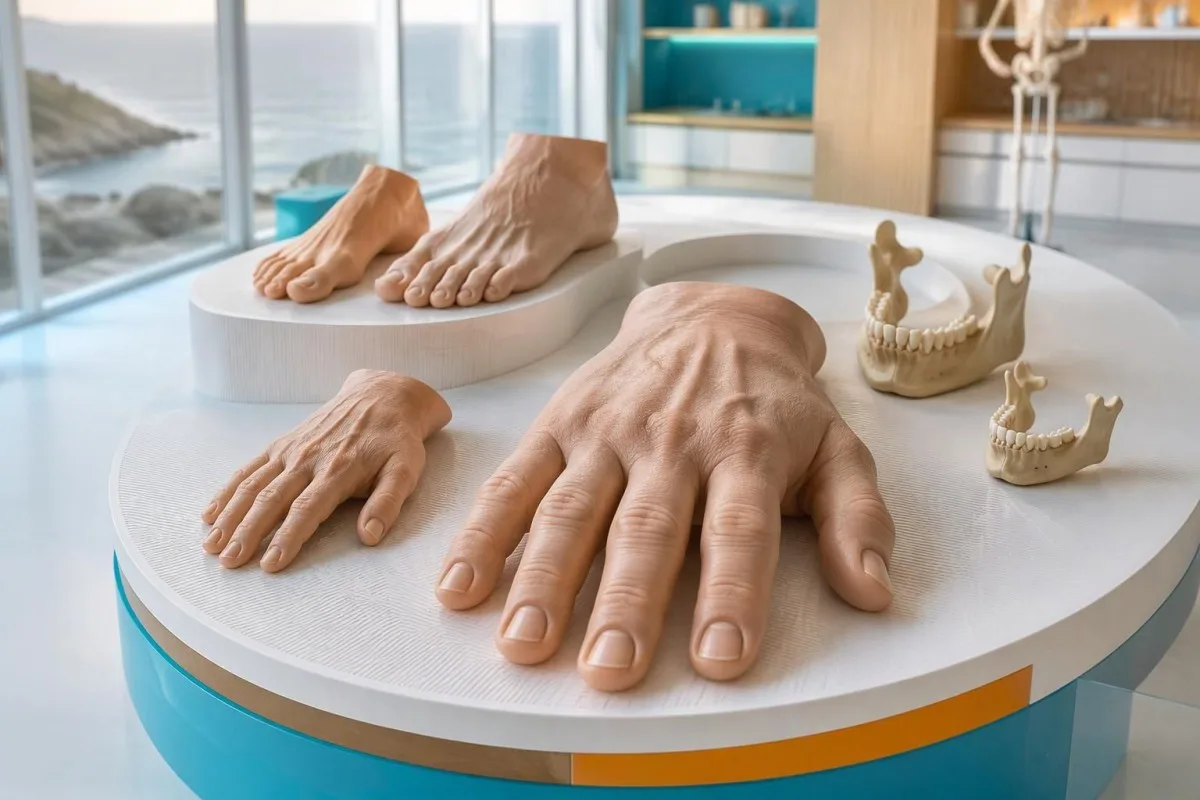
Palaipsniui didėjančios plaštakos ar pėdos, besikeičiantis žandikaulis, didėjantys tarpai tarp dantų, sustiprėjęs prakaitavimas ir miego apnėja gali kelti įtarimą dėl akromegalijos, ypač kai keli pokyčiai atsiranda kartu. Vien simptomai diagnozės patvirtinti negali; reikalingas klinikinis įvertinimas ir pagal amžių koreguotas IGF-1 kraujo tyrimas.

Svarbiausios išvados
- Progresavimas yra svarbiau nei pavienis simptomas: per kelerius metus didėjantis žiedo dydis ir besikeičiantis sąkandis yra priežastis kreiptis į gydytoją, net jei veido pokyčiai nėra ryškūs.
- Plaštakos ir pėdos gali platėti nustojus augti ūgiui; nėra patvirtinto žiedų ar batų dydžių skaičiaus, pagal kurį būtų diagnozuojama akromegalija.
- Veido pokyčiai gali apimti labiau atsikišusį apatinį žandikaulį, platesnę nosį, storesnes lūpas ir naujus tarpus tarp dantų; palyginus 2 datuotas nuotraukas, galima aiškiau nustatyti pokyčių eigą.
- Miego apnėja kartu su plaštakų, pėdų ar žandikaulio padidėjimu suteikia daugiau pagrindo tirti dėl augimo hormono pertekliaus; vien knarkimas nėra specifinis požymis.
- IGF-1 yra įprastas pirmasis biocheminis tyrimas, o jo normos intervalas turi atitikti asmens amžių ir laboratorijoje naudojamą tyrimo metodą.
- 1,3× riba nustatyta 2024 m. akromegalijos konsensuse: IGF-1 rodiklis, viršijantis 1,3 karto pagal amžių koreguotą viršutinę normos ribą, gali patvirtinti diagnozę, kai yra būdingų klinikinių požymių.
- Gliukozės slopinimo tyrimas kartais padeda pašalinti neaiškumus: gydytojas gali skirti išgerti 75 g gliukozės ir kelis kartus išmatuoti augimo hormono koncentraciją, užuot rėmęsis vienu atsitiktiniu augimo hormono tyrimo rezultatu.
- Skubūs simptomai staigų stiprų galvos skausmą, atsiradus naujų regėjimo sutrikimų, vemiant arba sumažėjus budrumui; kreipkitės skubiosios pagalbos, o ne laukite vizito pas hormonų specialistą.
Kuriems akromegalijos simptomams reikėtų skirti dėmesio?
Akromegalijos simptomai kelia susirūpinimą, kai didėjančias plaštakas, pėdas ar veidą lydi tokie pokyčiai kaip prakaitavimas, knarkimas ar pakitęs sąkandis. Vienas ankštas žiedas paprastai nėra specifinis požymis; 2 kartu atsirandantys nepriklausomi pokyčiai yra svaresnė priežastis kreiptis į gydytoją, nors joks simptomų sąrašas negali patvirtinti diagnozės.
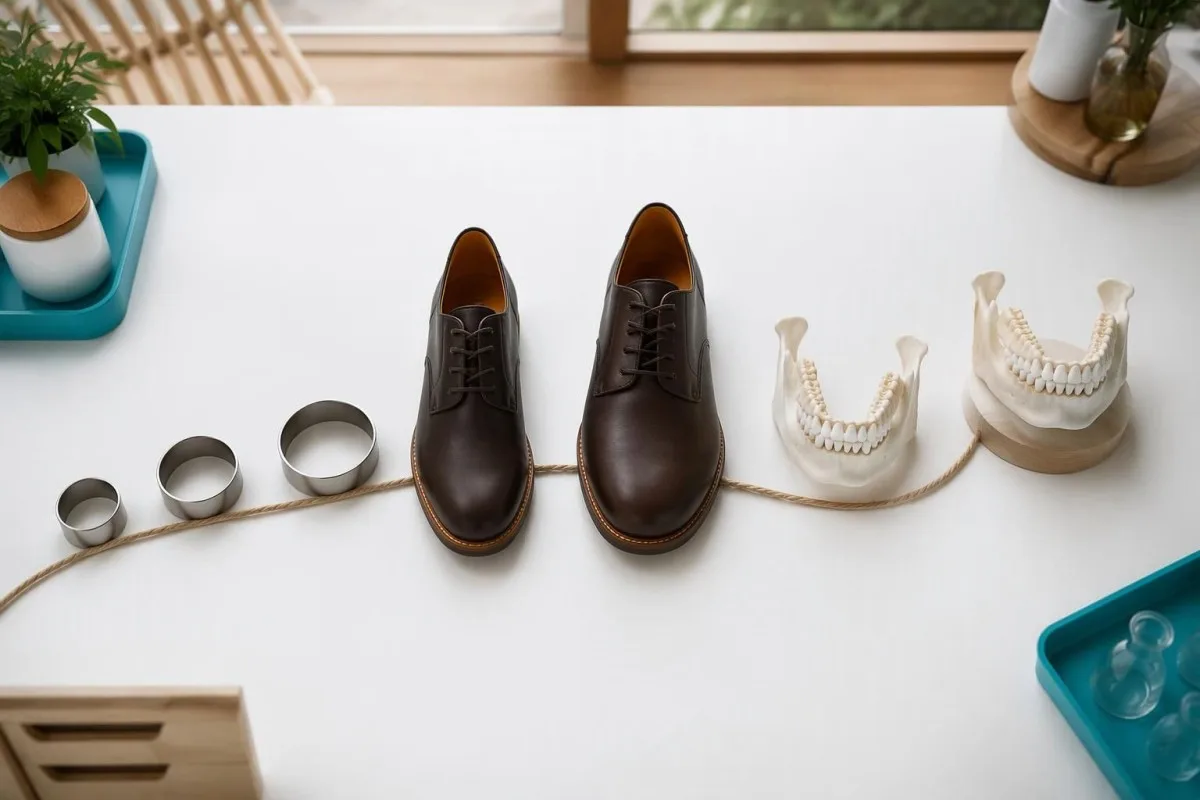
Akromegaliją sukelia augimo hormono perteklius po to, kai užsidaro augimo plokštelės. Augimo hormonas skatina į insuliną panašaus augimo faktoriaus 1, arba IGF-1, gamybą; jis skatina minkštųjų audinių ir kai kurių kaulų didėjimą. Daugumą atvejų sukelia nepiktybinė hipofizės adenoma, o ne mitybos sutrikimas.
Laipsniškus pokyčius gali būti sunkiau pastebėti nei staigų simptomą. Palyginus dabartinę išvaizdą su 3–5 metų senumo nuotraukomis, gali išryškėti besikeičianti kakta, žandikaulis ar nosis, kurių nepastebite kasdien žiūrėdami į veidrodį; toks laikotarpis yra praktiškas palyginimo intervalas, o ne privalomas laukimo laikotarpis.
Pavyzdžiui, įsivaizduokite 46 metų žmogų, kurio vestuvinio žiedo dydis buvo pakeistas du kartus, batai tapo platesni, o odontologas užfiksavo besikeičiantį sąkandį. Jei kūno svoris nekinta, paprastas svorio padidėjimas nėra toks išsamus paaiškinimas, tačiau prieš diagnozuojant akromegaliją vis tiek reikia atlikti apžiūrą ir hormonų tyrimus.
Kantesti yra dirbtinio intelekto kraujo tyrimų analizatorius, galintis padėti paaiškinti IGF-1 tyrimo atsakymą, nelaikant simptomų sąrašo diagnoze. Mūsų organizacija ir tikslas paaiškinti mūsų vaidmenį: padedame suprasti jau gautus tyrimų rezultatus, o gydytojas įvertina fizinius pokyčius ir nusprendžia, ar tikslingi specialisto atliekami tyrimai.
Kaip akromegalija keičia plaštakas ir žiedų dydį
Dėl akromegalijos suaugusiųjų plaštakos gali platėti ir storėti, todėl žiedai pamažu nebetinka, o ne tik karštu oru. Laikui bėgant didėjančios abi plaštakos kelia daugiau įtarimų nei vieno piršto patinimas, ypač jei keičiasi ir batų tinkamumas, veido forma ar prakaitavimas.
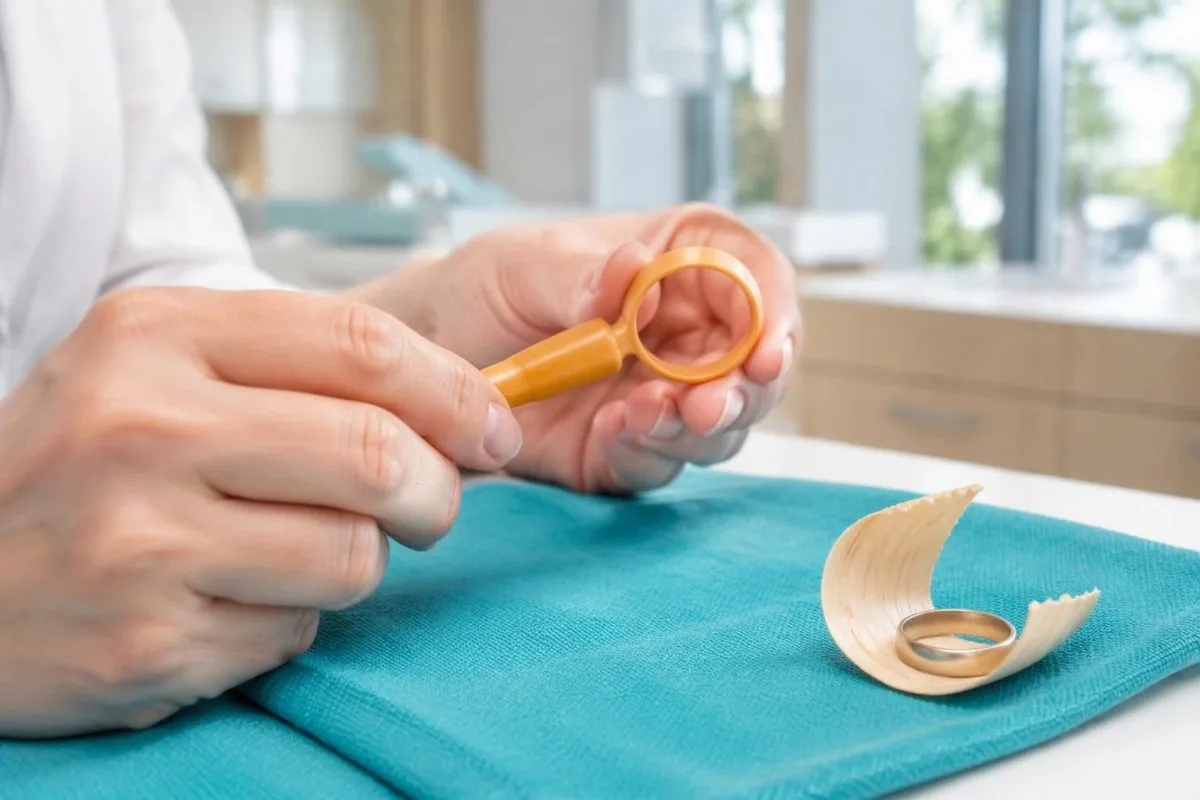
Žiedo dydis matuoja apimtį, o ne padidėjimo priežastį. Vieno žiedo dydžio pokytį gali lemti svorio padidėjimas, artritas, skysčių susilaikymas arba skirtingos dydžių sistemos; apie akromegaliją galima pagalvoti, kai pokytis yra nuolatinis ir jį lydi delnų storėjimas ar kiti būdingi požymiai.
Laikinas patinimas skiriasi nuo progresuojančio audinių didėjimo. Savaitę tikrinant, ar tas pats žiedas tinka ryte ir vakare, galima nustatyti svyravimus, tačiau toks stebėjimas namuose neatmeta akromegalijos; stenkitės pakartotinai nebrukti ankšto žiedo per patinusį sąnarį.
Dėl skydliaukės sutrikimų susilaikantys skysčiai gali priminti plaštakų paburkimą, tačiau nepasireiškia visas akromegalijai būdingas požymių derinys. Mūsų paaiškinimas apie lengvą skydliaukės funkcijos susilpnėjimą padeda atskirti laboratoriniais tyrimais nustatomus skydliaukės pokyčius nuo fizinio padidėjimo; vien nežymiai pakitęs TSH neturėtų automatiškai paaiškinti kelerius metus trunkančių plaštakų ir žandikaulio dydžio pokyčių.
Per vizitą naudinga atskirai aptarti 2 pastebėjimus: bendrą plaštakų platėjimą ir padidėjimą, susitelkusį ties tam tikrais sąnariais. Nurodykite apytiksles žiedo dydžio keitimo datas ir pažymėkite, ar pirmiau atsirado krumplių skausmas, rytinis sustingimas, ar delnų storėjimas; ši informacija padeda gydytojui atskirti audinių augimą nuo sąnarių ligos ar protarpinio patinimo.
Kada didėjantis batų dydis yra ankstyvas požymis
Suaugusiųjų pėdų laipsniškas platėjimas ar didėjimas gali būti ankstyvas akromegalijos požymis, ypač jei pakinta ir plaštakų dydis. Vieną kartą pakeitus batus diagnozės nustatyti negalima: tinkamumą taip pat gali pakeisti skirtingi prekių ženklai, su nėštumu susiję pėdų pokyčiai, svorio padidėjimas, iššokę pėdos kauliukai ir nusileidę pėdų skliautai, net jei augimo hormono perteklius nepasireiškia.
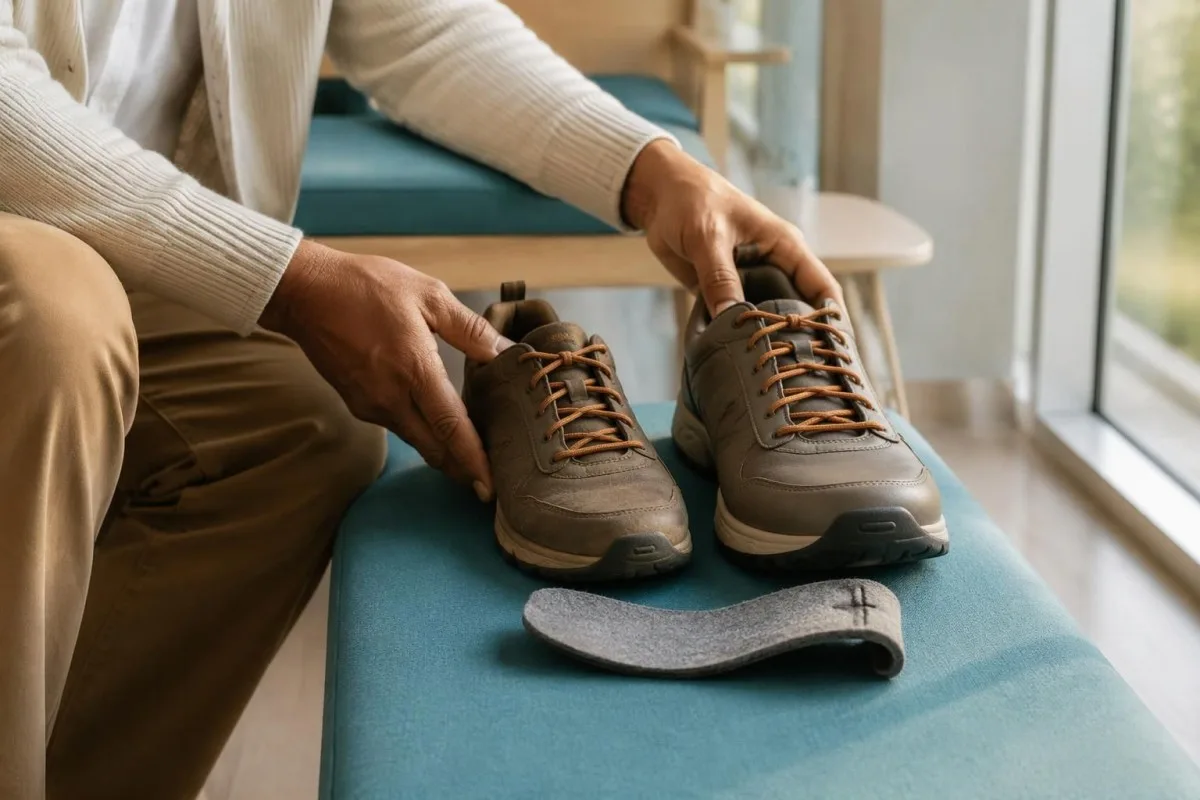
Pėdos plotis kartais pakinta anksčiau nei nurodomas batų dydis. Jei batai, pirkti kas 3 metus, yra tokio pat ilgio, bet reikia vis platesnių priekinių jų dalių, užsirašykite šią detalę; minkštųjų audinių sustorėjimas ir mechaniniai pėdų pokyčiai gali pasireikšti kartu, todėl vien ilgio matavimas nėra išsamus.
Su akromegalija susijęs padidėjimas paprastai vystosi palaipsniui ir paveikia abi pėdas. Staigus vienos kojos ar pėdos patinimas, ypač jei skauda ar jaučiama šiluma blauzdoje, reikalauja kitokio įvertinimo; mūsų vadovas apie urgent one-sided leg swelling explains why that pattern should not be attributed to a slow hormonal disorder.
For a hypothetical 51-year-old, moving from the same manufacturer's size 8 to size 10 over several years would be more informative than comparing unrelated brands. The observation becomes more meaningful if a ring has also needed resizing, but there is no validated shoe-size increase that confirms acromegaly.
Bring 2 pairs of dated shoes or purchase records if available, rather than buying measuring equipment. A clinician can assess edema, arches, joints and soft tissues together; foot photographs should be taken in comparable positions because perspective can make a stable foot appear larger.
Ką gali atskleisti žandikaulio ir dantų pokyčiai
Acromegaly facial changes can include a more prominent lower jaw, broader nose, thicker lips and wider spacing between teeth. A changing bite documented on 2 dental visits can be more useful than a subjective impression of looking different, because jaw growth and ordinary weight gain affect appearance differently.
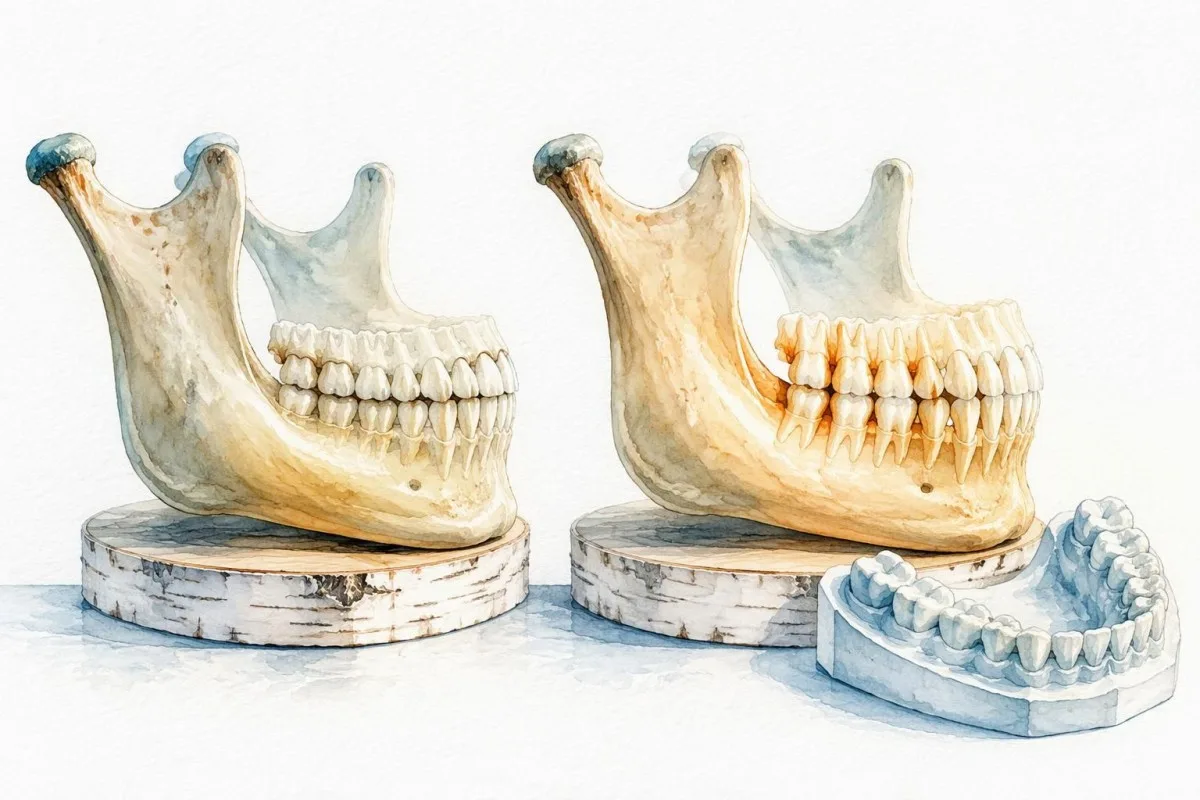
New tooth spacing does not necessarily mean the teeth themselves have enlarged. Enlargement of the jaw can change their positions relative to one another, while gum disease, missing teeth and orthodontic movement can also produce gaps; comparing dental records from 2 dates helps identify which process is more plausible.
Photographs are most useful when lighting, camera distance and head position are similar. Choose 1 older front-view photograph and 1 side view if possible; wide-angle phone lenses can exaggerate the nose and jaw, so apparent enlargement in a close selfie is not reliable evidence of hormone excess.
Bone disorders can also change skull or jaw shape, but usually require a different diagnostic pathway. Our explanation of Paget disease testing describes one alternative; an ALP result, whether normal or raised, cannot replace IGF-1 testing when the broader pattern suggests acromegaly.
Ask a dentist whether 2 findings are documented: a progressive bite change and new spacing not explained by gum or orthodontic disease. A dentist may recognize the physical pattern, but photographs, bite impressions and dental imaging cannot confirm acromegaly without an endocrine assessment.
Kodėl prakaitavimas svarbus tik vertinant platesnį požymių derinį
Increased sweating and oily or thicker skin can accompany acromegaly, but sweating alone is a weak diagnostic clue. Persistent sweating becomes more relevant when it develops alongside at least 1 structural change, such as broader hands or a changing jaw; the combination guides evaluation rather than proving a hormonal cause.
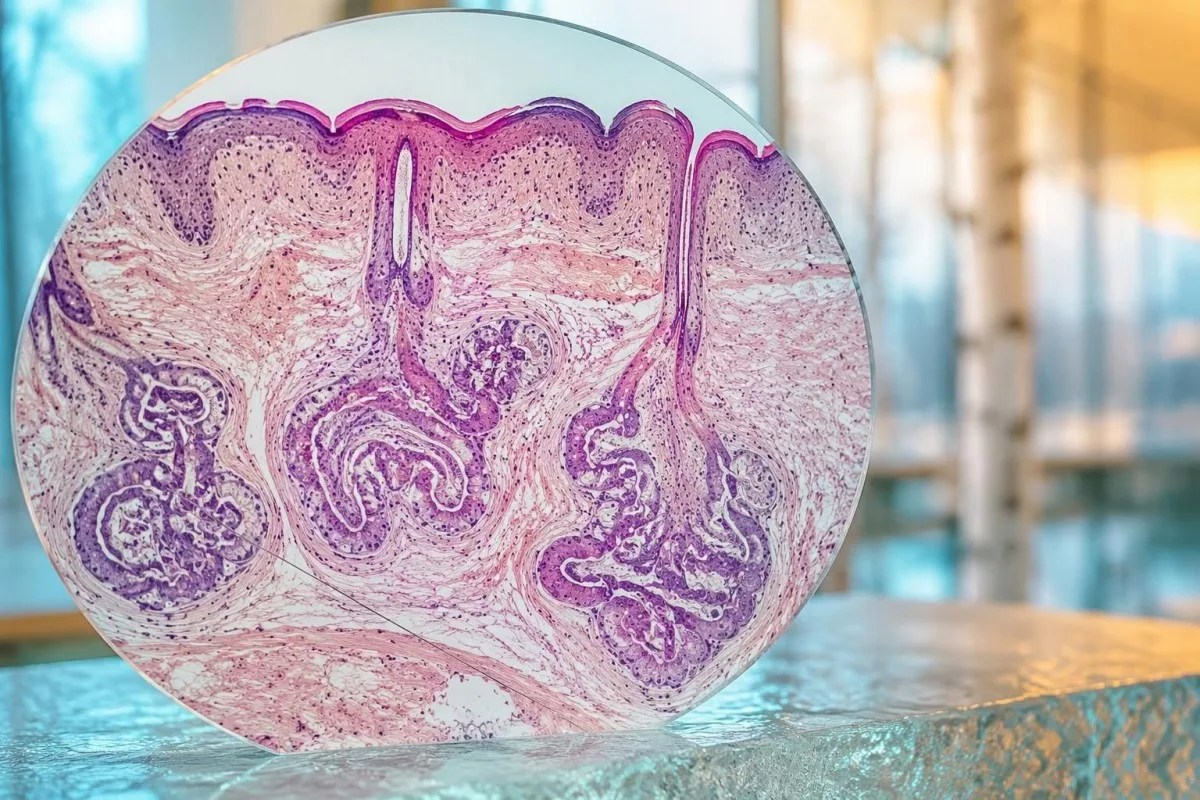
A useful sweating history distinguishes persistent excess perspiration from brief episodes. Recording triggers and timing for 7 days can reveal links to exercise, medicines, meals or hot flashes; acromegaly does not have a distinctive sweat odor or a validated sweating frequency that separates it from other causes.
Episodic sweating with pounding headaches, palpitations and marked blood-pressure swings suggests a different endocrine question. Our guide to adrenal hormone warning patterns explains when metanephrine testing may be considered; that test and IGF-1 answer different questions, even when 2 conditions share sweating as a symptom.
Hot flashes can coincide with the age at which acromegaly becomes noticeable, creating an easy attribution error. The discussion of fluctuating menopause hormone results explains why 1 estradiol measurement is not a complete explanation for sweating, especially if ring fit and facial shape are also changing.
Skin tags are common and are not an acromegaly screening test. In a hypothetical 48-year-old with new sweating and several skin tags, we would distinguish metabolic or medication-related explanations from the much more specific observation of progressive hand and jaw enlargement; counting skin tags does not resolve that distinction.
Kaip miego apnėja susijusi su audinių padidėjimu
Acromegaly can contribute to obstructive sleep apnea through enlargement of the tongue and other upper-airway tissues. Loud snoring, witnessed breathing pauses and daytime sleepiness warrant sleep evaluation; when these occur with progressive hand or jaw enlargement, an IGF-1 test may also be appropriate rather than assuming 1 diagnosis explains everything.
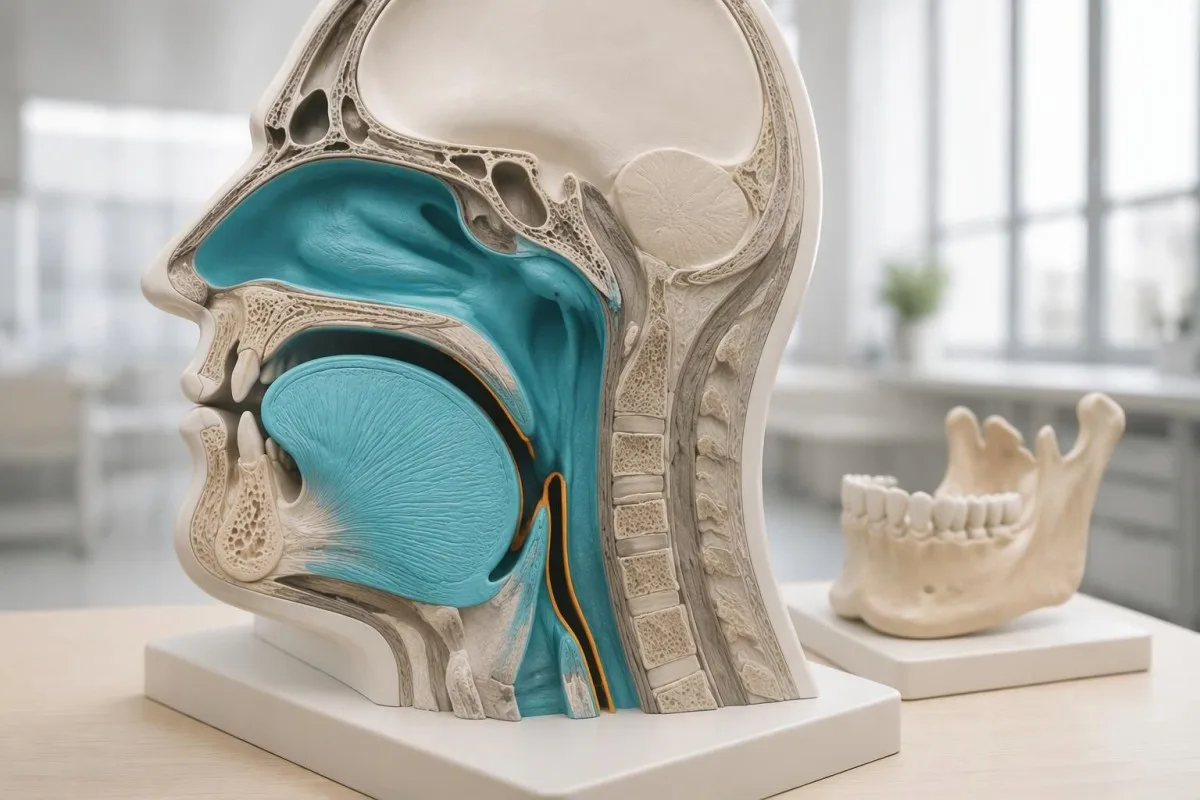
Obstructive sleep apnea is assessed using respiratory events during sleep, not facial appearance. An apnea–hypopnea index of at least 5 events/hour with relevant symptoms or comorbidities, or at least 15 events/hour regardless of symptoms, commonly supports adult diagnosis; neither threshold identifies the underlying cause as acromegaly.
Sleep studies answer a different question from a daytime sleepiness test. Our explanation of sleep-study test selection distinguishes overnight respiratory assessment from testing for narcolepsy; a normal or abnormal multiple sleep latency test does not assess growth hormone excess.
The Endocrine Society guideline recommends considering IGF-1 testing when several associated conditions occur together, including sleep apnea, diabetes, arthritis, carpal tunnel syndrome, excessive sweating and hypertension (Katznelson et al., 2014). Having 1 of these common conditions does not justify assuming acromegaly, but their coexistence can lower the threshold for discussing testing.
Treating hormone excess does not guarantee that sleep apnea disappears. If a person already uses positive-airway-pressure treatment, 1 improved night of sleep is not evidence that it can be stopped; residual airway anatomy and weight-related factors may persist, and any treatment change requires reassessment by the sleep team.
Plaštakų tirpimas ir sąnarių skausmas: papildomi požymiai
Carpal tunnel syndrome and joint discomfort can accompany acromegaly because tissue enlargement affects nerves, cartilage and joint mechanics. Numbness in the thumb, index and middle fingers is more consistent with median-nerve compression than numbness involving all 5 fingers equally, but the nerve pattern does not establish a hormonal cause.
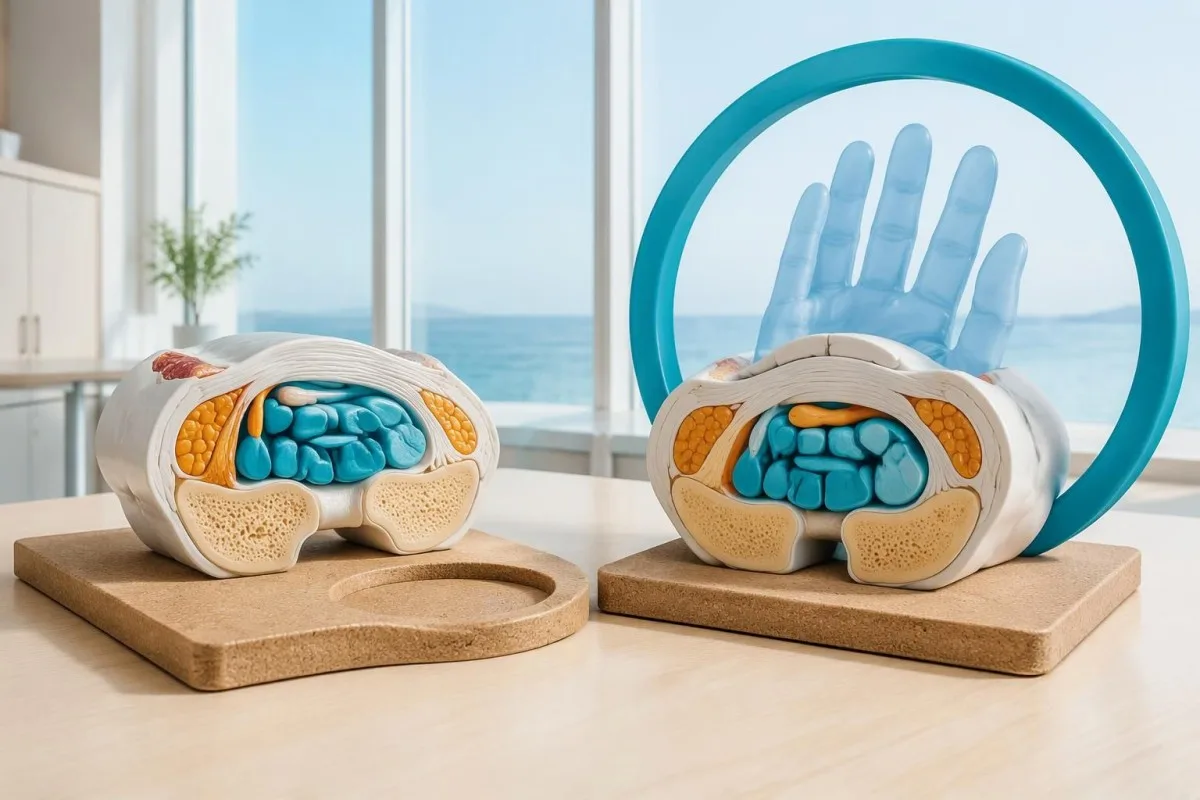
Bilateral symptoms are useful context, not proof of acromegaly. Nighttime tingling in both hands plus 2 ring resizings and a changing bite deserves a different discussion from isolated tingling after repetitive wrist use; the associated structural changes explain why an endocrine cause might enter the differential.
The fingers involved help localize the problem before choosing tests. Our guide to median-nerve symptom patterns explains why little-finger numbness may point elsewhere; an abnormal nerve-conduction study can confirm nerve dysfunction without answering whether IGF-1 excess contributed.
Joint symptoms can outlast successful control of growth hormone excess. After years of altered cartilage and bone mechanics, correcting 1 hormone pathway does not necessarily reverse established degenerative changes; this is why early recognition matters even when pain has been labeled ordinary arthritis.
Kantesti can help organize an IGF-1 result alongside glucose or thyroid findings, but nerve symptoms still require clinical localization. For a hypothetical 55-year-old, distinguishing 2 problems—median-nerve compression and progressive tissue enlargement—avoids interpreting every abnormal laboratory value as the cause of hand numbness.
Kiti požymiai: gliukozės, kraujospūdžio ir hormonų pokyčiai
Growth hormone excess can contribute to insulin resistance, high blood pressure and changes in other pituitary hormone functions. These findings are common outside acromegaly; concern rises when at least 2 metabolic or hormonal problems develop alongside progressive hand, foot or facial enlargement, rather than when a single routine result is abnormal.
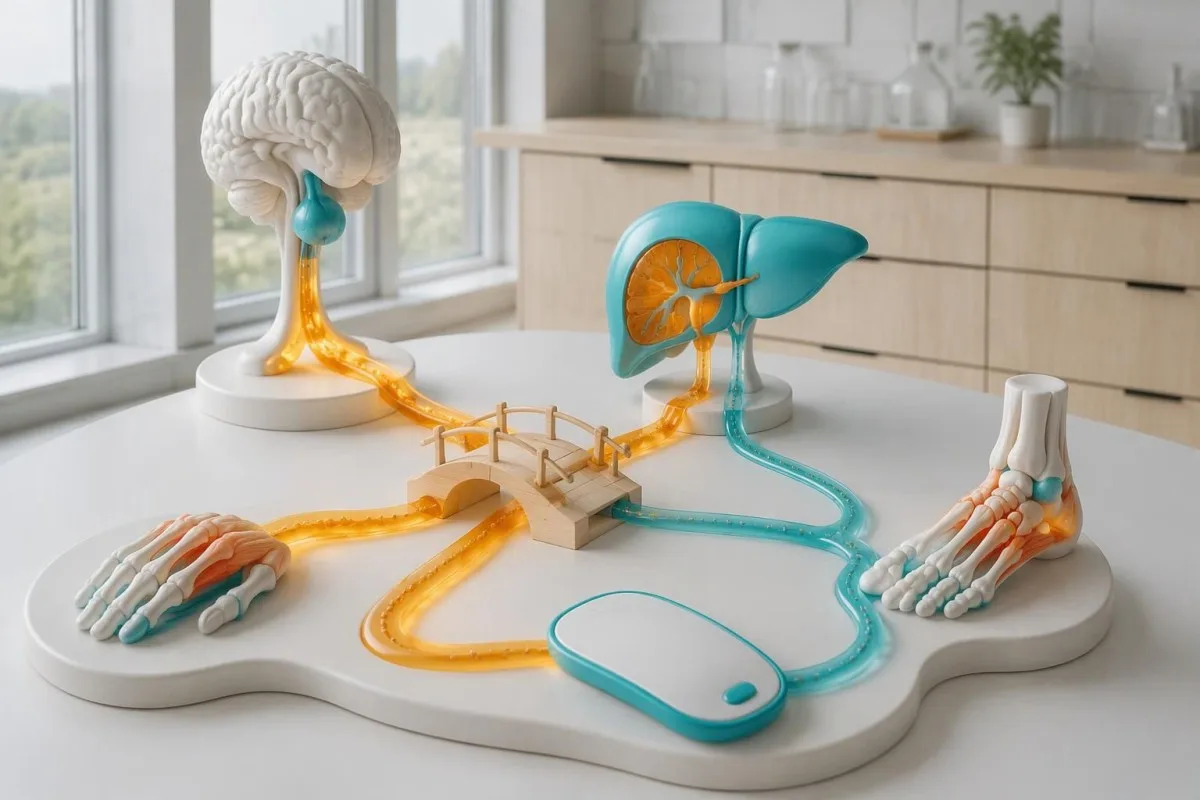
Diabetes is a possible associated condition, not a diagnostic shortcut. An HbA1c of at least 6.5% or fasting plasma glucose of at least 126 mg/dL, equivalent to 7.0 mmol/L, meets commonly used diabetes thresholds when confirmation requirements are satisfied; neither value identifies growth hormone excess as the cause.
Thirst and blurred vision may therefore need evaluation independently of changes in appearance. Our guide to didelio gliukozės kiekio įspėjamuosius simptomus explains why a hypothetical glucose result of 280 mg/dL with symptoms deserves prompt clinical attention, even while a separate acromegaly assessment is being arranged.
Pituitary dysfunction can alter menstrual cycles, sexual function or fertility, but these symptoms have many causes. Our women's hormonal symptom guide discusses relevant alternatives; missing 2 periods alongside progressive jaw and hand changes deserves a broader review than assuming a single age-related explanation.
At Kantesti, we distinguish a complication marker from a disease-specific test: 1 abnormal HbA1c cannot substitute for age-adjusted IGF-1. Bring blood-pressure readings, medication names and the timing of hormonal symptoms, because a clinician may need to assess associated conditions and pituitary function in parallel.
Kas dar gali sukelti panašių fizinių pokyčių?
Weight gain, fluid retention, thyroid disease, arthritis and dental problems can resemble parts of the acromegaly pattern. The distinction depends on the distribution and progression of change: enlargement affecting hands, feet and jaw over several years is harder to explain with 1 localized joint or dental problem.
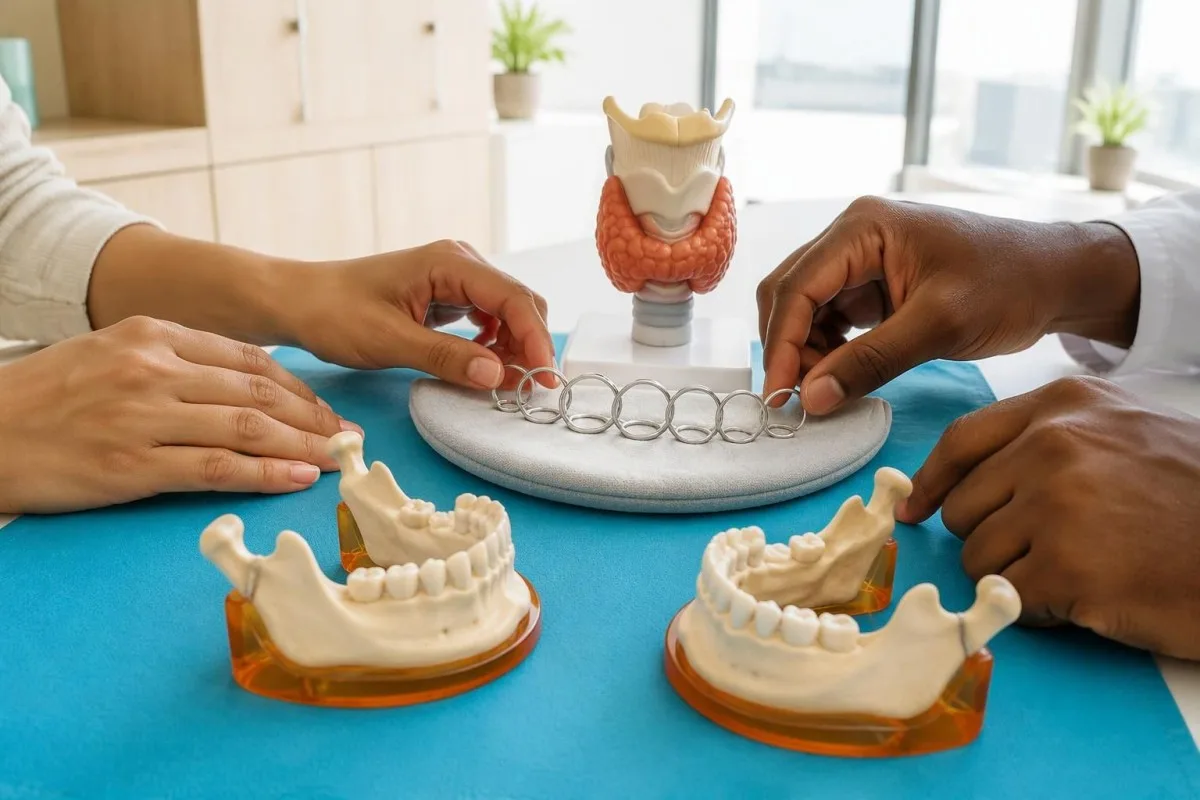
Weight gain often changes facial fullness without producing the same progressive mandibular prominence or dental spacing. In a hypothetical 50-year-old whose weight rose by 12 kg, tighter rings may have an ordinary explanation; a dentist-confirmed change in jaw relationship still deserves separate attention rather than dismissal.
Cushing syndrome can cause facial rounding, metabolic problems and muscle weakness, but its testing pathway differs from acromegaly. Our guide to cortisol screening and confirmation explains why 1 random cortisol result does not establish Cushing syndrome, just as a random growth hormone result does not establish acromegaly.
A pituitary problem can sometimes produce low free T4 without an appropriately elevated TSH. Our explanation of low T4 with normal TSH helps clarify why those 2 measurements must be interpreted together; a normal TSH alone is not a complete assessment of pituitary-related thyroid function.
Childhood growth and adult tissue enlargement should not be confused. Excess growth hormone before growth-plate closure can cause gigantism, whereas adult acromegaly does not usually increase height; a naturally large shoe size that has remained unchanged for 20 years is not equivalent to progressive adult enlargement.
Kodėl IGF-1 paprastai yra pirmasis kraujo tyrimas
Age-adjusted IGF-1 is usually the first biochemical test when acromegaly is suspected because it reflects growth hormone activity more consistently than a single growth hormone measurement. The 2024 consensus states that characteristic clinical features plus IGF-1 above 1.3 times the age-adjusted upper limit can confirm the diagnosis (Giustina et al., 2024).
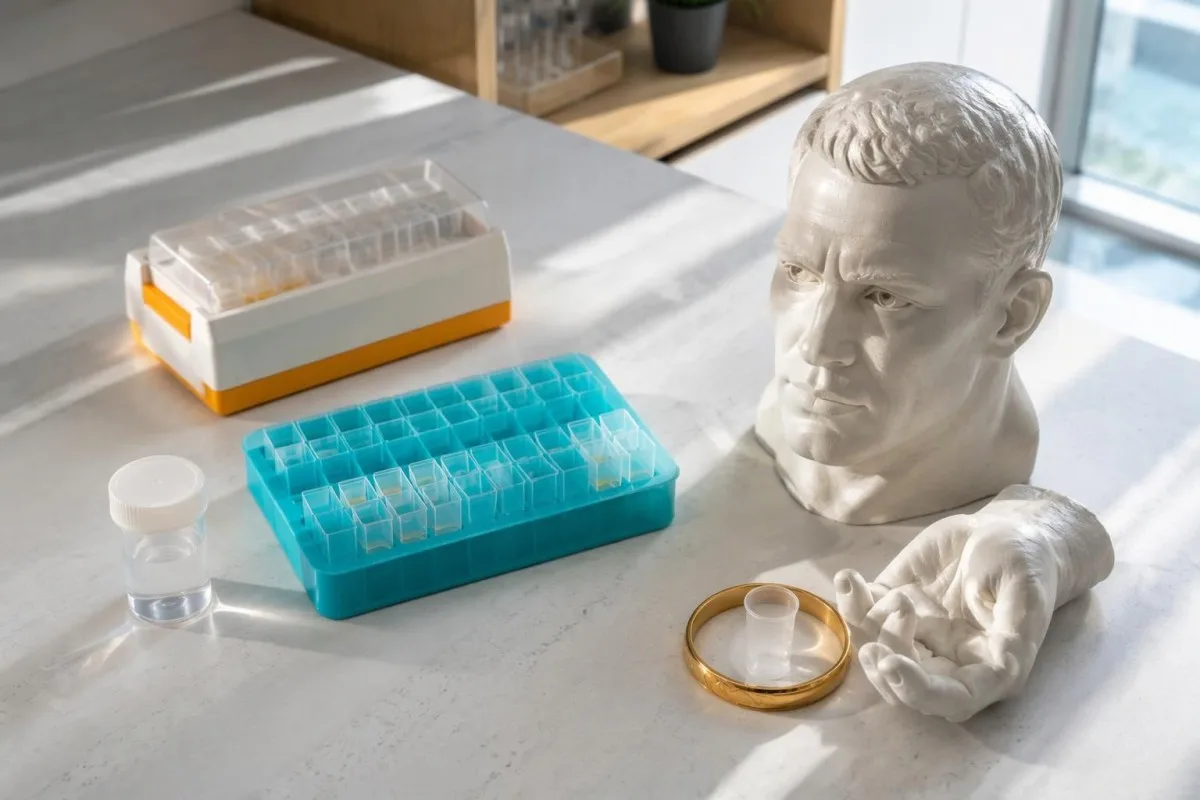
IGF-1 has no single normal adult range that applies to every age and assay. For example, if a hypothetical laboratory upper limit is 250 ng/mL and the result is 340 ng/mL, the result is 1.36 times that upper limit; using another laboratory's range could change the interpretation incorrectly.
A normal IGF-1 usually argues against acromegaly, but confounders can reduce its reliability. Poorly controlled diabetes, significant liver disease, undernutrition and oral estrogen can affect results; 1 normal measurement should be reviewed in context when physical features are compelling, rather than overridden or accepted automatically.
Kantesti is an AI blood test interpretation platform that can explain an IGF-1 value relative to the reference interval printed on the report. Mūsų bižymeklio interpretavimo vadovas provides laboratory context, but identifying the assay, age range and clinical reason for testing remains part of clinician-led assessment.
Liver and nutritional status matter because IGF-1 production is closely linked to hepatic function and systemic health. Our serumo baltymų interpretacijos vadovas explains relevant background markers; 1 albumin result cannot validate or invalidate IGF-1, but it may prompt a closer review of illness or nutrition.
| Lygis | Diapazonas | Ką tai reiškia |
|---|---|---|
| Laboratoriniame intervale | At or below the age-adjusted upper limit | Usually argues against acromegaly; consider confounders if clinical suspicion remains strong. |
| Ribinis padidėjimas | >1.0–1.3× the age-adjusted upper limit | Requires clinical review; repeat testing and sometimes glucose suppression testing resolve uncertainty. |
| Above the consensus diagnostic threshold | >1.3× the age-adjusted upper limit | Can confirm acromegaly when characteristic clinical features are present; specialist interpretation is needed. |
Kada naudingas augimo hormono slopinimo mėginys
A glucose suppression test may help when IGF-1 results and clinical findings are equivocal. The test commonly uses 75 g oral glucose followed by serial growth hormone measurements; it assesses whether growth hormone suppresses appropriately, rather than treating one high random growth hormone value as diagnostic.
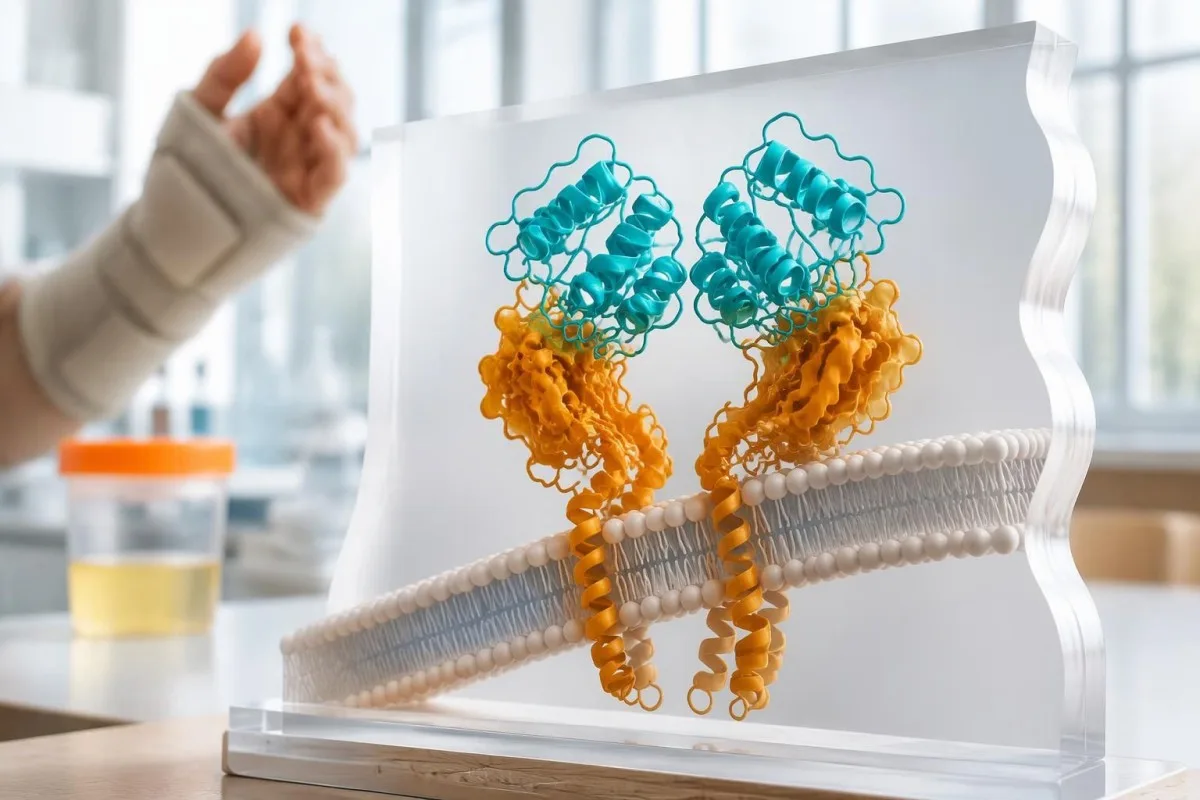
Growth hormone is released in pulses and can rise with sleep, exercise and physiological stress. That is why 1 random value, whether high or low, is unreliable for establishing or excluding acromegaly; an isolated result should not trigger a diagnosis based solely on a generic laboratory range.
Diagnostic cutoffs have changed with assay sensitivity. The Endocrine Society guideline used suppression below 1 ng/mL after glucose to exclude acromegaly in the appropriate testing context (Katznelson et al., 2014); specialist practice may use lower assay-dependent thresholds, including 0.4 ng/mL, rather than one universal cutoff.
For example, a hypothetical IGF-1 of 275 ng/mL against an upper limit of 250 ng/mL equals 1.10 times the upper limit. If growth hormone falls to 0.7 ng/mL, interpretation may differ by assay and clinical context; repeating IGF-1 and reviewing confounders is safer than selecting whichever cutoff gives a preferred answer.
Kantesti does not independently validate an acromegaly diagnosis or choose a glucose-test cutoff. Our klinikinė metodologija ir apribojimai explain why interpretation must remain tied to the source report; our separate guide to kliniškai reikšmingus laboratorinių rodiklių pokyčius explains why 2 results are not automatically comparable.
Kada užsiregistruoti apžiūrai ir kada simptomai reikalauja skubios pagalbos
Book a clinical review for unexplained progressive enlargement of hands, feet or jaw, especially when sweating, sleep apnea or a changing bite accompanies it. There is no minimum duration you must wait; a sudden severe headache with new visual symptoms is a separate emergency, not something to observe for 2 weeks.
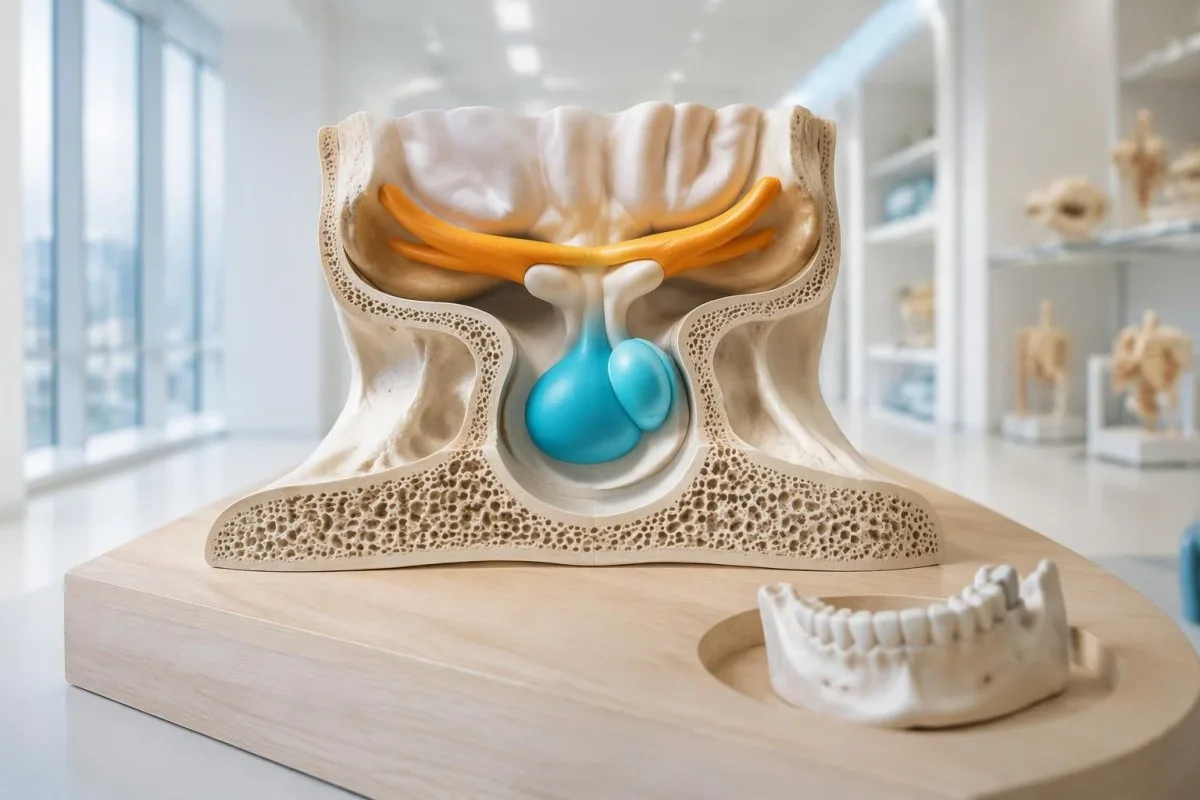
A pituitary growth can affect nearby visual pathways, sometimes causing loss of peripheral vision. New difficulty noticing objects on either side, double vision or a substantial visual change warrants prompt assessment; involvement of 1 or both eyes does not reliably determine whether the cause is pituitary, retinal or neurological.
Sudden severe headache with vomiting, double vision, reduced alertness or visual loss can indicate pituitary apoplexy or another neurological emergency. Seek emergency care immediately rather than waiting for an IGF-1 result; even 1 abrupt neurological warning symptom can justify urgent assessment when severe or unexplained.
Pituitary adenomas are usually noncancerous, but noncancerous does not mean harmless when a growth produces excess hormones or presses on nearby structures. Our guide to neurological warning symptoms explains why progressive and sudden symptoms follow different routes; a 5-year appearance change and an abrupt visual deficit should not receive the same triage.
For gradual changes without emergency features, prepare 3 categories of evidence: appearance or sizing changes, associated symptoms and existing results. Ask whether an age-adjusted IGF-1 test and endocrine referral are appropriate; avoid arriving with a self-confirmed diagnosis or postponing care until every possible symptom appears.
Kas vyksta, kai hormonų tyrimo rezultatas būna nenormalus?
After biochemical confirmation or strong specialist-supported suspicion, pituitary MRI usually identifies the source and its relationship to surrounding structures. Imaging alone cannot confirm acromegaly: a pituitary finding may be incidental, and the 10 mm size boundary between microadenoma and macroadenoma describes size rather than hormone secretion.
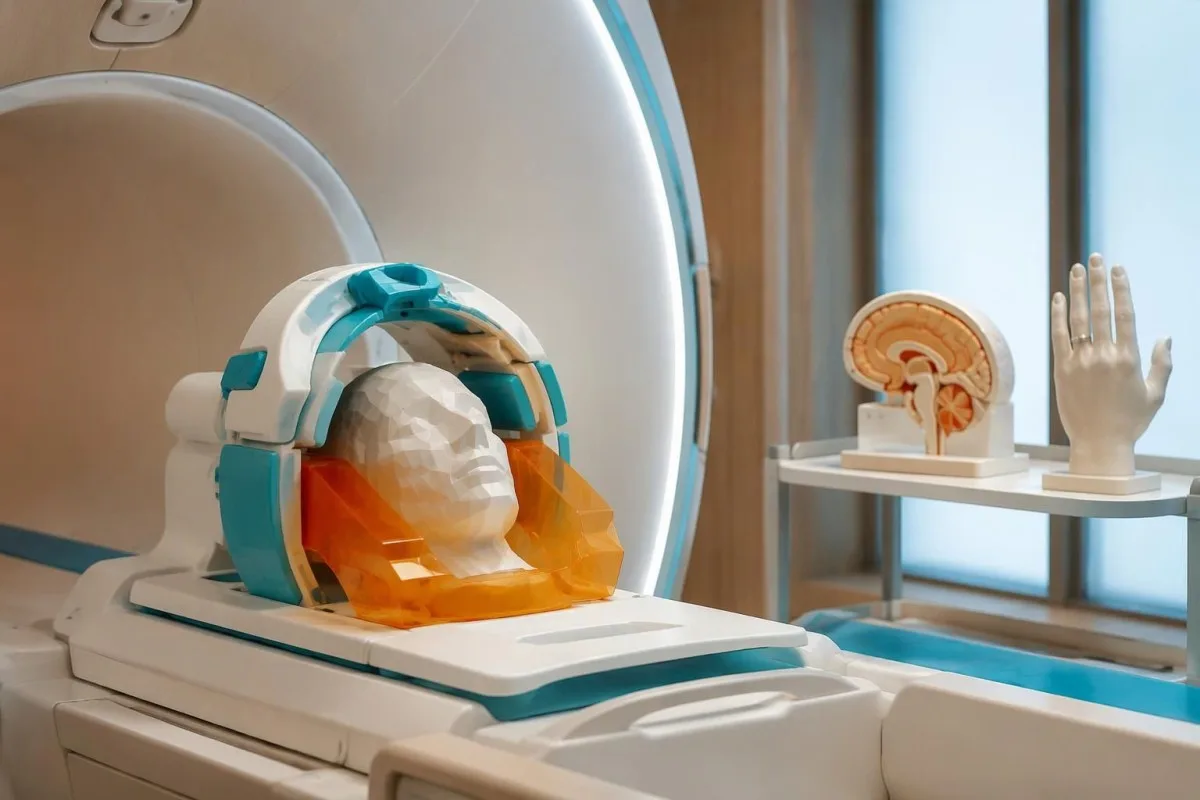
A pituitary microadenoma measures less than 10 mm, while a macroadenoma measures at least 10 mm. A smaller growth can still secrete clinically significant growth hormone; conversely, a larger nonfunctioning growth may not cause acromegaly, so dimensions and biochemical activity answer different questions.
An endocrine team may assess prolactin, thyroid function, adrenal function and reproductive hormone pathways as well as IGF-1. Our guide to lengvus prolaktino padidėjimus explains why 1 raised prolactin result can have several causes; it does not prove that a pituitary growth is secreting multiple hormones.
Visual-field testing may be needed when MRI shows proximity to the optic chiasm or when vision is affected. A reassuring ability to read a phone screen at 30 cm does not exclude peripheral field loss; formal testing assesses a different part of vision from everyday reading.
Kantesti AI cannot infer pituitary growth size from an IGF-1 concentration. If the pituitary MRI does not explain convincing biochemical findings, a specialist may review imaging quality, assay issues and rare alternative sources; a negative scan should not be converted into an unsupported claim that 1 hormone result was necessarily wrong.
Pasiruošimas vizitui ir mūsų šaltinių tikrinimas
The most useful next step is a short timeline connecting physical changes, associated symptoms and existing laboratory results. Bring 2 dated photographs if available, ring or shoe history and the full IGF-1 report; these support a focused clinical discussion without turning home observations into a diagnostic score.
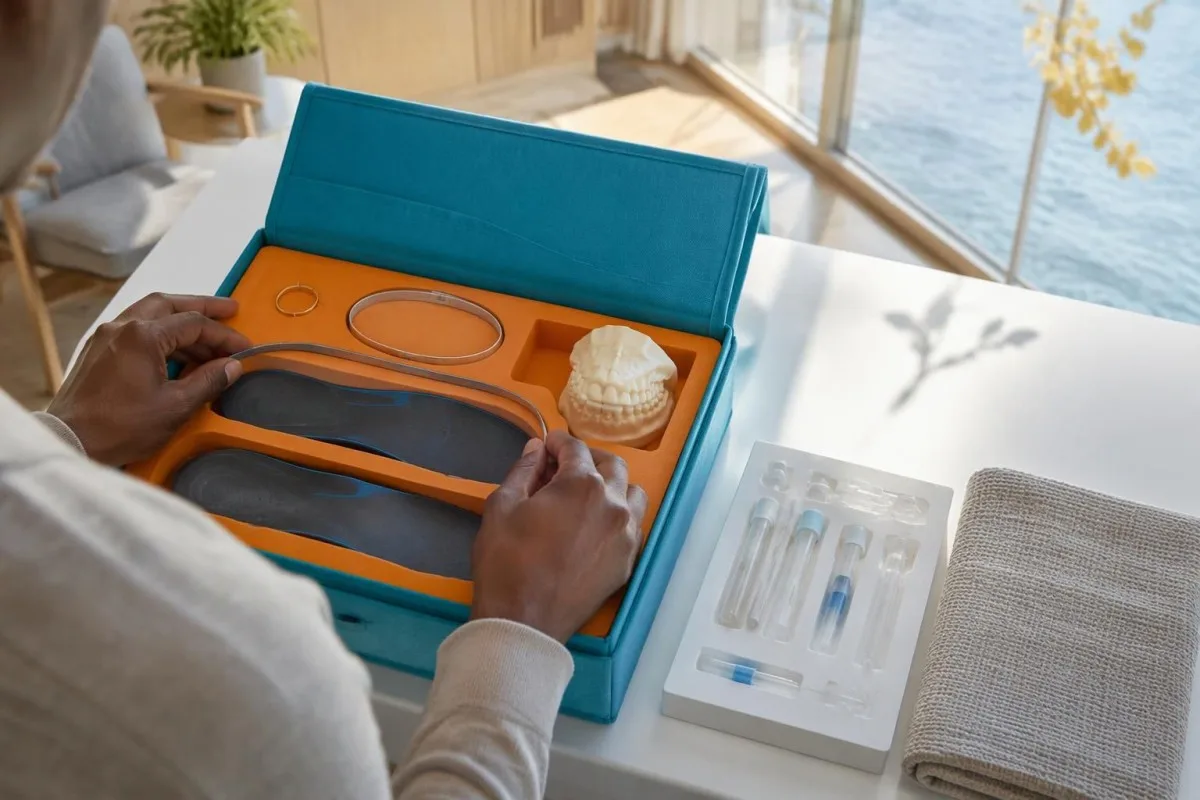
Write down when each change began and whether it has continued, fluctuated or stopped. A 1-page record is usually more useful than dozens of unlabeled photographs: include weight changes, dental observations, sleep-apnea treatment and medication or supplement use, especially prescribed hormones that could influence laboratory interpretation.
Kantesti is an AI-powered blood test analysis tool that can help explain an existing IGF-1 report and organize questions for your clinician. Mūsų gidas, kaip dirbtinio intelekto pateiktų ataskaitų paaiškinimų tikrinimą describes source verification; an explanation cannot replace examination, and a normal metabolic panel does not mean IGF-1 was tested.
Protect identifying information when sharing laboratory reports or old photographs. Kantesti's privatumo ir duomenų tvarkymo gairėse explains our data approach; use only the materials needed for the question, and obtain permission before sharing another person's results or images, even when comparing 2 family members.
The clinical recommendations here draw on the Endocrine Society's 2014 guideline and the 2024 diagnostic consensus, listed below. The 2 accompanying Figshare publications concern gastrointestinal and women's hormonal health; they are related educational resources, not evidence for acromegaly diagnosis, and a repository DOI does not by itself establish peer review.
Dažnai užduodami klausimai
Kokie yra ankstyvieji akromegalijos požymiai?
Ankstyvieji akromegalijos požymiai gali būti vis labiau spaudžiantys žiedai, didesnio dydžio batai, gausesnis prakaitavimas, nauji riešo kanalo sindromo simptomai ir pakitęs dantų sąkandis. Palyginus 2 nuotraukas, padarytas skirtingomis datomis, arba odontologinius įrašus, galima pastebėti pokyčius, kuriuos sunku įžvelgti kasdien. Nei konkretus žiedo dydžio padidėjimas, nei simptomų skaičius nepatvirtina akromegalijos. Nepaaiškinamai progresuojantys pokyčiai turėtų paskatinti kreiptis į gydytoją ir atlikti pagal amžių koreguoto IGF-1 tyrimą.
Ar didėjantis žiedo ar batų dydis reiškia, kad sergu akromegalija?
Padidėjęs žiedo ar batų dydis savaime nereiškia, kad sergate akromegalija. Priaugtas svoris, skysčių susilaikymas, artritas, su nėštumu susiję pėdų pokyčiai ir skirtinga avalynė taip pat gali turėti įtakos tam, kaip jie tinka. Vieno batų dydžio padidėjimas neturi patvirtintos diagnostinės reikšmės, tačiau išliekantis padidėjimas kartu su žandikaulio pokyčiais, prakaitavimu ar miego apnėja turėtų būti įvertintas. Diagnozė nustatoma remiantis klinikiniais požymiais ir tinkamais hormonų tyrimais.
Ar akromegalija gali pakeisti veidą arba sukelti tarpelius tarp dantų?
Akromegalija gali išryškinti apatinį žandikaulį ir padidinti tarpus tarp dantų, nes keičiasi žandikaulio matmenys. Ji taip pat gali paplatinti nosį ir pastorinti lūpas, tačiau panašių požymių gali sukelti ir dantenų ligos, ortodontinis dantų judinimas bei įprasti veido pokyčiai. Palyginus dviejų datų odontologinius įrašus galima nustatyti, ar sąkandis arba tarpai tarp dantų pakito. Veido nuotraukos ir odontologiniai požymiai negali patvirtinti akromegalijos be biocheminio ištyrimo.
Kokiu kraujo tyrimu nustatoma akromegalija?
Pagal amžių pakoreguotas IGF-1 paprastai yra pirmasis kraujo tyrimas, atliekamas įtarus akromegaliją. 2024 m. konsensuse teigiama, kad IGF-1 rodiklis, viršijantis pagal amžių pakoreguotą viršutinę normos ribą daugiau nei 1,3 karto, gali patvirtinti akromegaliją, kai pasireiškia būdingi klinikiniai požymiai. Esant ribiniams ar prieštaringiems rezultatams, gali prireikti pakartotinių tyrimų ir gydytojo prižiūrimo gliukozės slopinimo mėginio. Vienkartinis atsitiktinai išmatuotas augimo hormono kiekis nėra patikimas diagnostinis pakaitalas.
Ar galima sirgti akromegalija, kai IGF-1 tyrimo rezultatas normalus?
Patikimai išmatuotas, pagal amžių pakoreguotas normalus IGF-1 kiekis paprastai leidžia manyti, kad negydoma akromegalija mažai tikėtina. Tačiau blogai kontroliuojamas diabetas, sunki kepenų liga, nepakankama mityba ir geriamieji estrogenai gali veikti IGF-1 kiekį ir apsunkinti rezultatų vertinimą. Jei būdingi fiziniai pokyčiai išlieka nepaisant 1 normalaus rezultato, gydytojas turėtų peržiūrėti tyrimo metodą, referencinį intervalą ir galimus klaidinamuosius veiksnius. Gali būti tikslinga pakartoti tyrimą arba kreiptis į specialistą, užuot darant prielaidą, kad simptomai patvirtina diagnozę arba kad aplinkybės niekada neturi reikšmės.
Kada galimus akromegalijos simptomus reikėtų laikyti skubiosios pagalbos reikalaujančia būkle?
Laipsniškai didėjant plaštakoms, pėdoms ar veidui, paprastai reikėtų suplanuoti klinikinę apžiūrą, o ne kreiptis skubios pagalbos. Staiga prasidėjus stipriam galvos skausmui, kartu atsiradus regos sutrikimui, dvejinimuisi akyse, vėmimui ar sumažėjus budrumui, būtina skubi apžiūra, nes galima hipofizės apopleksija ar kita neurologinė būklė, dėl kurios reikia skubios pagalbos. Atsiradus šiems įspėjamiesiems požymiams, nelaukite 24 valandų, kol bus gautas įprastas hormonų tyrimo rezultatas. Nauji ar progresuojantys regos sutrikimai taip pat turi būti nedelsiant įvertinti gydytojo, net jei išvaizda akivaizdžiai nepasikeitė.
Sužinokite, kaip skaityti kraujo tyrimo rezultatus
Įkelkite laboratorinio tyrimo ataskaitą ir Kantesti AI per kelias sekundes paprasta kalba paaiškins kiekvieną biomarkerį. Juo naudojasi daugiau nei 2 milijonai žmonių visame pasaulyje.
Nuorodos
- Klein, T., Mitchell, S., & Weber, H. (2026). Viduriavimas po badavimo, juodi taškeliai išmatose ir GI vadovas, 2026 m. Kantesti AI medicininiai tyrimai. DOI
- Klein, T., Mitchell, S., & Weber, H. (2026). Moterų sveikatos vadovas: ovuliacija, menopauzė ir hormoniniai simptomai. Kantesti AI medicininiai tyrimai. DOI
- Katznelson L et al. (2014). Acromegaly: An Endocrine Society Clinical Practice Guideline. The Journal of Clinical Endocrinology & Metabolism. DOI
- Giustina A et al. (2024). Consensus on criteria for acromegaly diagnosis and remission. Pituitary. DOI
- 2M+Ištirti tyrimai
- 127+Šalys
- 100+Kalbos
Apie medicinos komandą


E-E-A-T patikimumo signalai
Patirtis
Gydytojo vadovaujama klinikinė laboratorinių tyrimų interpretavimo darbo eigų peržiūra.
Ekspertizė
Laboratorinės medicinos dėmesys tam, kaip biomarkeriai elgiasi klinikiniame kontekste.
Autoritetas
Mediciniškai peržiūrėjo dr. Thomas Klein, prisidėjo dr. Sarah Mitchell ir prof. dr. Hans Weber.
Patikimumas
Įrodymais pagrįsta interpretacija su aiškiais tolesnių veiksmų keliais, siekiant sumažinti nerimą.




Medicininė atsakomybės ribojimo nuostata
Šis straipsnis skirtas tik mokymo tikslais ir nesudaro medicininės konsultacijos. Visada kreipkitės į kvalifikuotą sveikatos priežiūros specialistą dėl diagnozės ir gydymo sprendimų.
Paskelbta · Susisiekite su redakcine komanda
Išleido Kantesti Ltd, registruota Anglijoje ir Velse, įmonės Nr. 17090423, Londonas, Jungtinė Karalystė.
