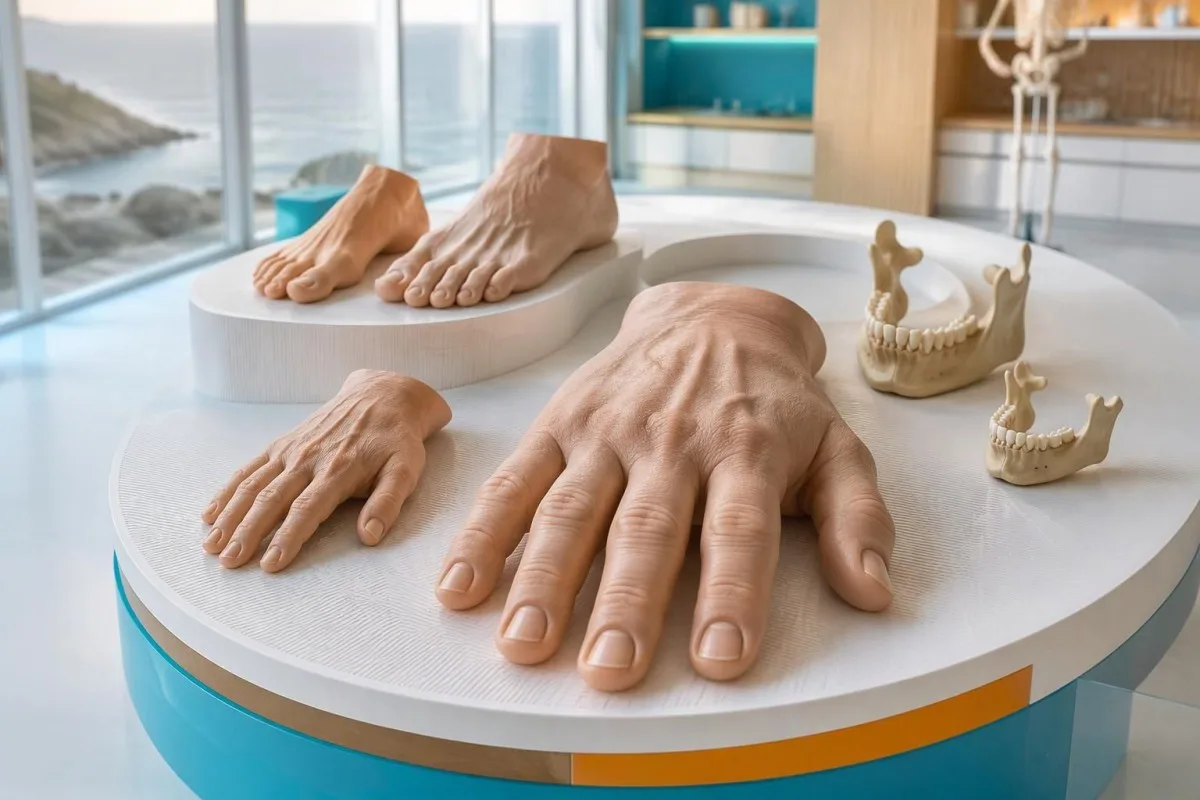
手或脚逐渐变大、下颌发生变化、牙齿间距变宽、出汗增多以及睡眠呼吸暂停都可能提示肢端肥大症——尤其是多种变化同时出现时。症状无法确诊;需要进行临床评估和年龄校正的 IGF-1 血液检测。

要点
- 进展 比单一症状更重要:数年来戒指尺寸增大并且咬合发生变化,即使面部没有明显变化,也值得接受临床评估。
- 手和脚 在成年身高停止增长后,手和脚仍可能变宽;戒指或鞋码增加多少并没有经过验证的标准可用于诊断肢端肥大症。
- 面部变化 可能包括下颌更加突出、鼻子变宽、嘴唇增厚以及牙齿间出现新的缝隙;对比 2 张标有日期的照片有助于理清变化的时间线。
- 睡眠呼吸暂停 若同时出现手、脚或下颌增大,就更有理由检查是否存在生长激素过多;单独打鼾并不具有特异性。
- IGF-1 是通常首选的生化检测,其参考范围必须符合患者年龄和实验室所用的检测方法。
- 1.3× 阈值 源自 2024 年肢端肥大症共识:如果存在典型临床特征,IGF-1 高于年龄校正上限的 1.3 倍即可确诊。
- 葡萄糖抑制试验 有时可用于消除不确定性:临床医生可能会采用 75 g 口服葡萄糖并连续测量生长激素,而不是依赖一次随机生长激素检测结果。
- 紧急症状 包括突发的剧烈头痛并伴有新出现的视力问题、呕吐或警觉性下降;应寻求急诊护理,而不是等待激素科门诊预约。
哪些肢端肥大症症状值得关注?
当手、脚或面部逐渐变大,同时出现出汗、打鼾或咬合变化等情况时,肢端肥大症症状值得关注。 仅有一枚戒指变紧通常不具特异性;同时出现 2 项相互独立的变化,更有理由进行临床评估,不过任何症状清单都无法确诊。

肢端肥大症是生长板闭合后生长激素过多所致。 生长激素会刺激胰岛素样生长因子 1(IGF-1)的生成,从而促进软组织和部分骨骼增大;大多数病例源于非癌性垂体腺瘤,而非饮食问题。
渐进性变化可能比突发症状更难察觉。将目前的外貌与 3–5 年前的照片对比,或许能发现日常照镜子时不易注意到的眉弓、下颌或鼻部变化;这个时间间隔只是实用的对比范围,并非必须等待的期限。
例如,设想一位 46 岁的人,婚戒已经改过两次尺寸,鞋子也变宽了,牙医还记录了其咬合变化。体重稳定,使单纯体重增加这一解释显得不够充分,但在将其判断为肢端肥大症之前,仍需进行检查和激素检测。
Kantesti 是一款 AI 验血分析工具,可帮助解读 IGF-1 报告,但不会将症状清单当作诊断。 我们的 组织和目的 说明我们的作用:我们帮助理解已有的检测结果,而临床医生会评估身体变化,并判断是否适合进行专科检查。
肢端肥大症如何改变手部和戒指尺寸
肢端肥大症可能使成年人的手变得更宽、更厚,导致戒指逐渐不合手,而不只是天气炎热时才戴不进去。 随时间推移双手都变大,比仅有 1 根手指肿胀更值得关注,尤其是鞋子合脚情况、面部轮廓或出汗情况也发生变化时。
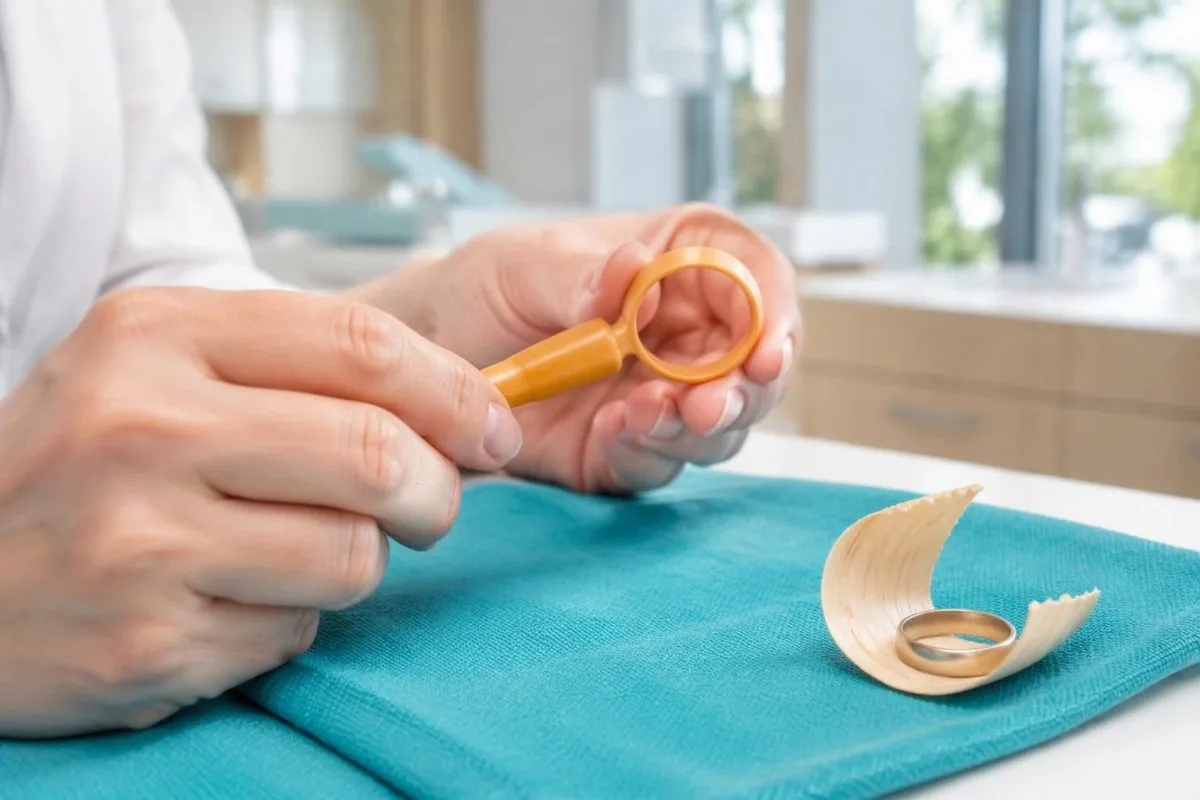
戒指尺寸测量的是周长,而不是变大的原因。戒指尺寸增加 1 号,可能是体重增加、关节炎、体液潴留或尺寸标准不同所致;如果变化持续存在,并伴有手掌增厚或其他特征性发现,则会考虑肢端肥大症。
暂时性肿胀与渐进性组织增大表现不同。连续 1 周检查同一枚戒指在早晚是否合手,有助于发现波动,但这种居家观察无法排除肢端肥大症;如果关节肿胀,不要反复强行将紧戒指往上推。
甲状腺相关的体液潴留可能看起来像手部浮肿,但不会呈现完整的肢端肥大症特征。我们对 轻度甲状腺功能减退 的说明有助于区分实验室检测所界定的甲状腺变化与身体增大;仅有轻微异常的 TSH,不应被自动视为手和下颌尺寸数年来发生变化的原因。
有用的就诊记录应将 2 项观察分开记录:手部整体变宽,以及以特定关节为中心的增大。提供戒指改尺寸的大致日期,并记录指关节疼痛、晨僵或手掌增厚哪种情况先出现;这些细节有助于临床医生区分组织生长、关节疾病或间歇性肿胀。
鞋码增大何时可能是早期线索
成年后双脚逐渐变宽或变大可能是肢端肥大症的早期征兆,尤其是手的尺寸也发生变化时。 只换过 1 次鞋并不能作为诊断依据:品牌差异、妊娠相关的足部变化、体重增加、拇囊炎和足弓塌陷也可能改变鞋子的合脚程度,而无需存在生长激素过多。
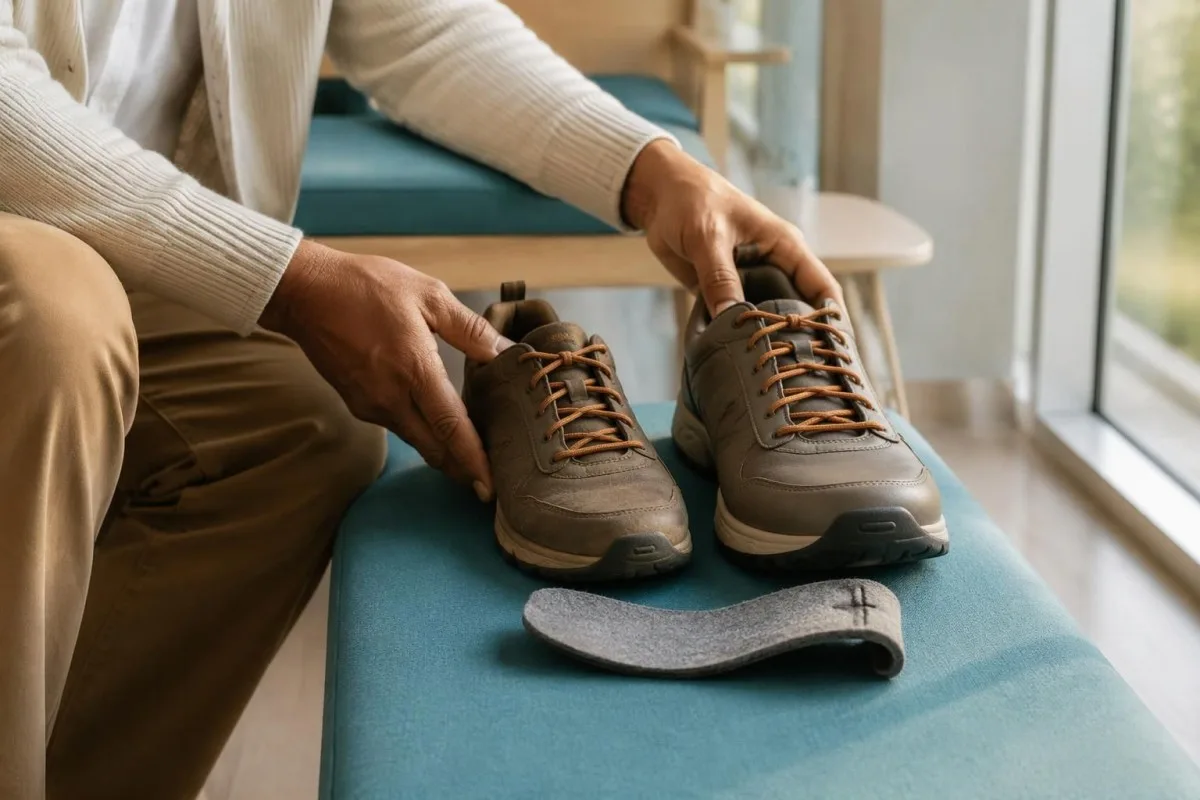
足部宽度有时会在标注的鞋码变化之前发生变化。如果相隔 3 年购买的鞋子长度相同,但需要更宽松的鞋头空间,请记录这一点;软组织增厚和足部力学变化可能同时存在,因此仅测量长度并不全面。
肢端肥大症相关的增大通常逐渐发生,并累及双脚。单侧腿或脚突然肿胀,尤其伴有小腿不适或发热时,需要采用不同的评估方式;我们的指南介绍了 urgent one-sided leg swelling explains why that pattern should not be attributed to a slow hormonal disorder.
For a hypothetical 51-year-old, moving from the same manufacturer's size 8 to size 10 over several years would be more informative than comparing unrelated brands. The observation becomes more meaningful if a ring has also needed resizing, but there is no validated shoe-size increase that confirms acromegaly.
Bring 2 pairs of dated shoes or purchase records if available, rather than buying measuring equipment. A clinician can assess edema, arches, joints and soft tissues together; foot photographs should be taken in comparable positions because perspective can make a stable foot appear larger.
下颌和牙齿变化可能揭示什么
Acromegaly facial changes can include a more prominent lower jaw, broader nose, thicker lips and wider spacing between teeth. A changing bite documented on 2 dental visits can be more useful than a subjective impression of looking different, because jaw growth and ordinary weight gain affect appearance differently.
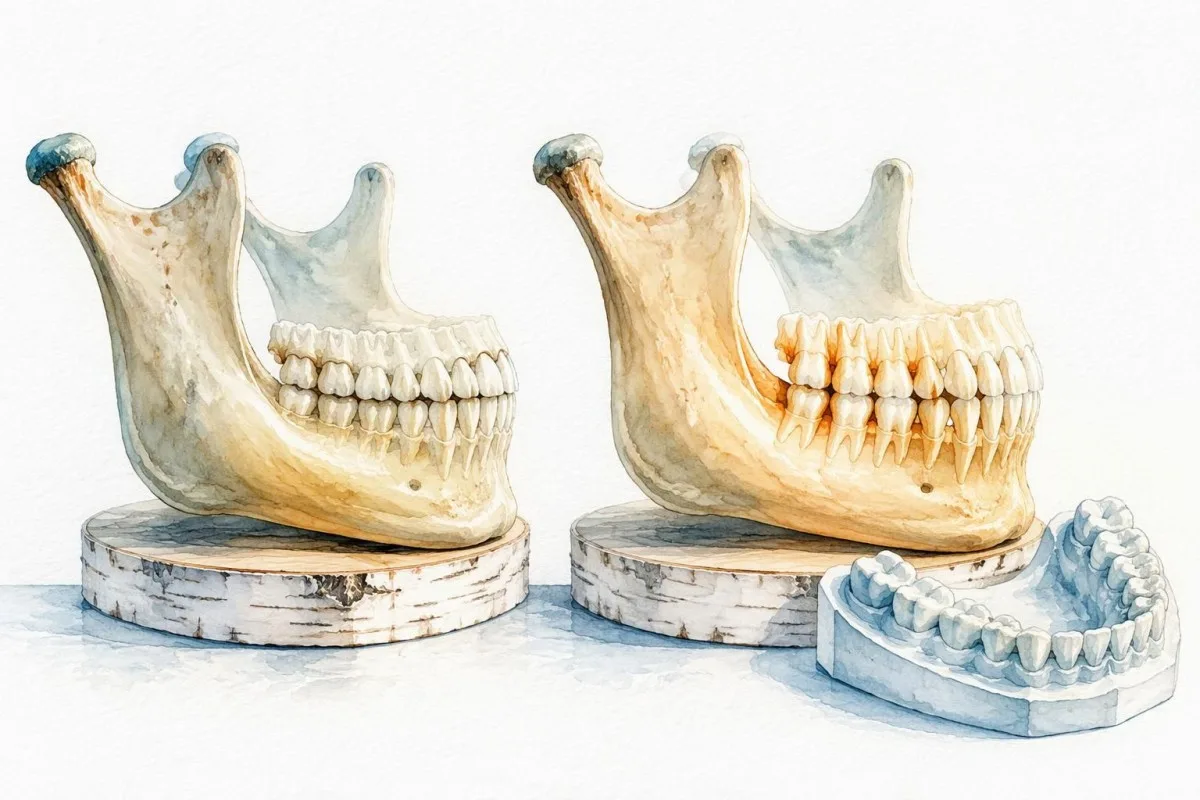
New tooth spacing does not necessarily mean the teeth themselves have enlarged. Enlargement of the jaw can change their positions relative to one another, while gum disease, missing teeth and orthodontic movement can also produce gaps; comparing dental records from 2 dates helps identify which process is more plausible.
Photographs are most useful when lighting, camera distance and head position are similar. Choose 1 older front-view photograph and 1 side view if possible; wide-angle phone lenses can exaggerate the nose and jaw, so apparent enlargement in a close selfie is not reliable evidence of hormone excess.
Bone disorders can also change skull or jaw shape, but usually require a different diagnostic pathway. Our explanation of Paget disease testing describes one alternative; an ALP result, whether normal or raised, cannot replace IGF-1 testing when the broader pattern suggests acromegaly.
Ask a dentist whether 2 findings are documented: a progressive bite change and new spacing not explained by gum or orthodontic disease. A dentist may recognize the physical pattern, but photographs, bite impressions and dental imaging cannot confirm acromegaly without an endocrine assessment.
为什么只有结合整体症状模式,出汗才有意义
Increased sweating and oily or thicker skin can accompany acromegaly, but sweating alone is a weak diagnostic clue. Persistent sweating becomes more relevant when it develops alongside at least 1 structural change, such as broader hands or a changing jaw; the combination guides evaluation rather than proving a hormonal cause.
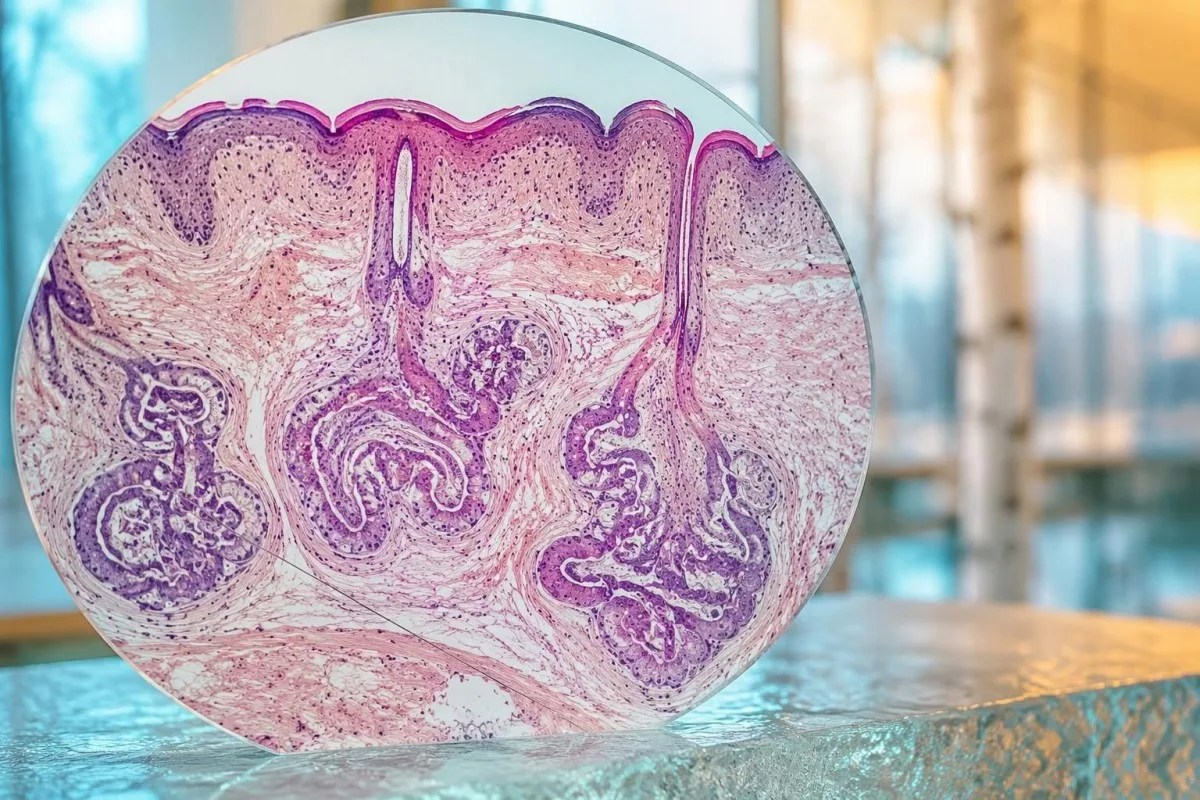
A useful sweating history distinguishes persistent excess perspiration from brief episodes. Recording triggers and timing for 7 days can reveal links to exercise, medicines, meals or hot flashes; acromegaly does not have a distinctive sweat odor or a validated sweating frequency that separates it from other causes.
Episodic sweating with pounding headaches, palpitations and marked blood-pressure swings suggests a different endocrine question. Our guide to adrenal hormone warning patterns explains when metanephrine testing may be considered; that test and IGF-1 answer different questions, even when 2 conditions share sweating as a symptom.
Hot flashes can coincide with the age at which acromegaly becomes noticeable, creating an easy attribution error. The discussion of fluctuating menopause hormone results explains why 1 estradiol measurement is not a complete explanation for sweating, especially if ring fit and facial shape are also changing.
Skin tags are common and are not an acromegaly screening test. In a hypothetical 48-year-old with new sweating and several skin tags, we would distinguish metabolic or medication-related explanations from the much more specific observation of progressive hand and jaw enlargement; counting skin tags does not resolve that distinction.
睡眠呼吸暂停与组织增大有何关联
Acromegaly can contribute to obstructive sleep apnea through enlargement of the tongue and other upper-airway tissues. Loud snoring, witnessed breathing pauses and daytime sleepiness warrant sleep evaluation; when these occur with progressive hand or jaw enlargement, an IGF-1 test may also be appropriate rather than assuming 1 diagnosis explains everything.
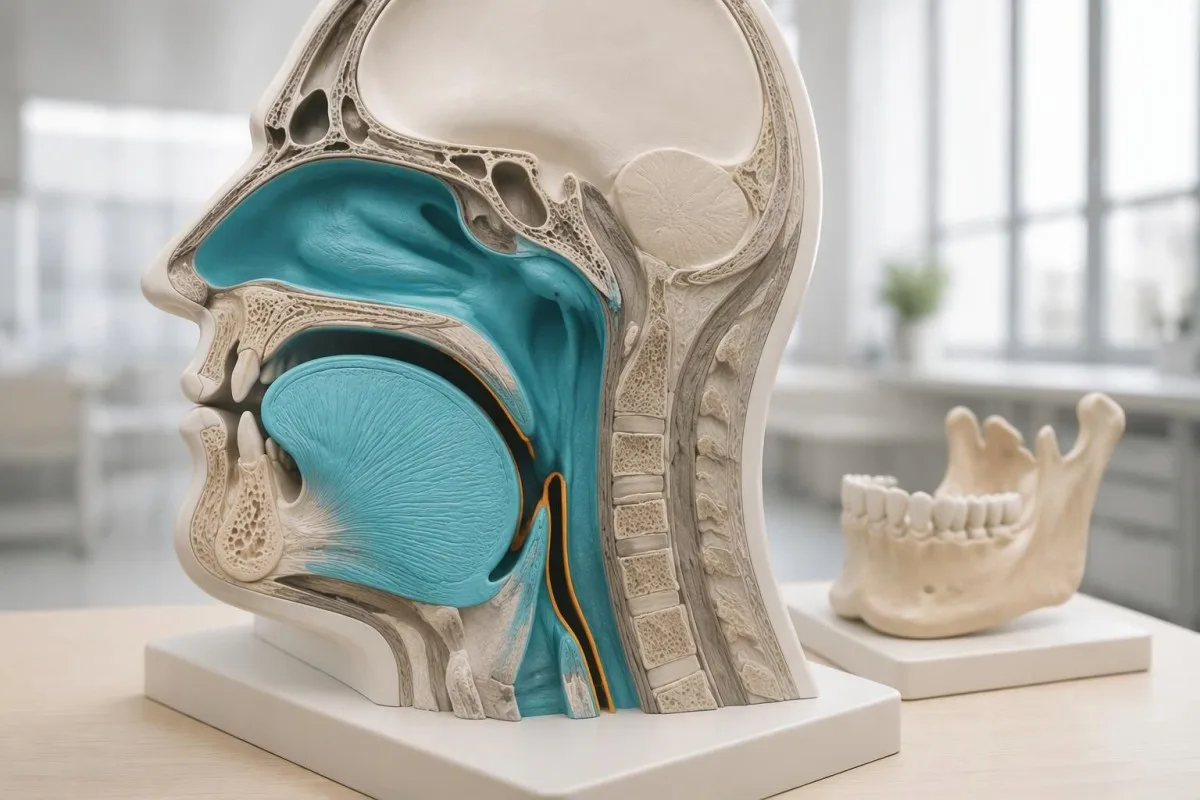
Obstructive sleep apnea is assessed using respiratory events during sleep, not facial appearance. An apnea–hypopnea index of at least 5 events/hour with relevant symptoms or comorbidities, or at least 15 events/hour regardless of symptoms, commonly supports adult diagnosis; neither threshold identifies the underlying cause as acromegaly.
Sleep studies answer a different question from a daytime sleepiness test. Our explanation of sleep-study test selection distinguishes overnight respiratory assessment from testing for narcolepsy; a normal or abnormal multiple sleep latency test does not assess growth hormone excess.
The Endocrine Society guideline recommends considering IGF-1 testing when several associated conditions occur together, including sleep apnea, diabetes, arthritis, carpal tunnel syndrome, excessive sweating and hypertension (Katznelson et al., 2014). Having 1 of these common conditions does not justify assuming acromegaly, but their coexistence can lower the threshold for discussing testing.
Treating hormone excess does not guarantee that sleep apnea disappears. If a person already uses positive-airway-pressure treatment, 1 improved night of sleep is not evidence that it can be stopped; residual airway anatomy and weight-related factors may persist, and any treatment change requires reassessment by the sleep team.
手部麻木和关节疼痛:辅助线索
Carpal tunnel syndrome and joint discomfort can accompany acromegaly because tissue enlargement affects nerves, cartilage and joint mechanics. Numbness in the thumb, index and middle fingers is more consistent with median-nerve compression than numbness involving all 5 fingers equally, but the nerve pattern does not establish a hormonal cause.
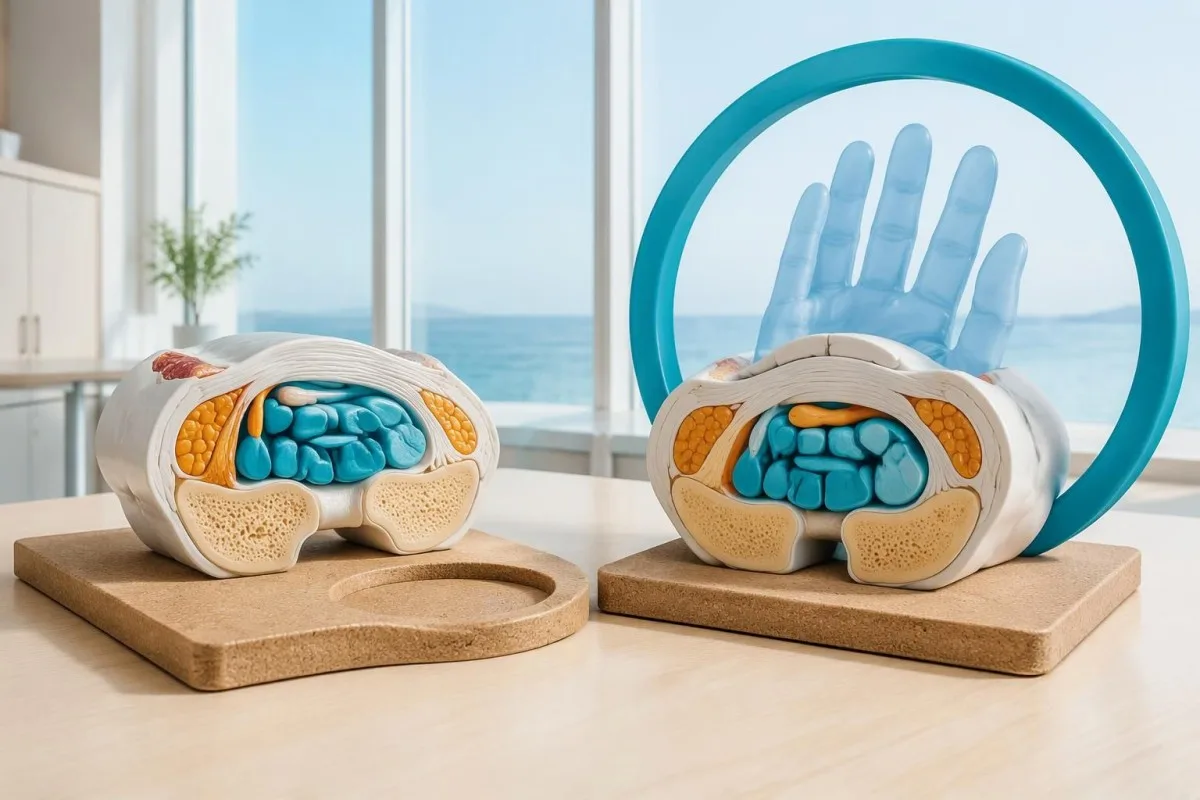
Bilateral symptoms are useful context, not proof of acromegaly. Nighttime tingling in both hands plus 2 ring resizings and a changing bite deserves a different discussion from isolated tingling after repetitive wrist use; the associated structural changes explain why an endocrine cause might enter the differential.
The fingers involved help localize the problem before choosing tests. Our guide to median-nerve symptom patterns explains why little-finger numbness may point elsewhere; an abnormal nerve-conduction study can confirm nerve dysfunction without answering whether IGF-1 excess contributed.
Joint symptoms can outlast successful control of growth hormone excess. After years of altered cartilage and bone mechanics, correcting 1 hormone pathway does not necessarily reverse established degenerative changes; this is why early recognition matters even when pain has been labeled ordinary arthritis.
Kantesti can help organize an IGF-1 result alongside glucose or thyroid findings, but nerve symptoms still require clinical localization. For a hypothetical 55-year-old, distinguishing 2 problems—median-nerve compression and progressive tissue enlargement—avoids interpreting every abnormal laboratory value as the cause of hand numbness.
其他线索:血糖、血压和激素变化
Growth hormone excess can contribute to insulin resistance, high blood pressure and changes in other pituitary hormone functions. These findings are common outside acromegaly; concern rises when at least 2 metabolic or hormonal problems develop alongside progressive hand, foot or facial enlargement, rather than when a single routine result is abnormal.
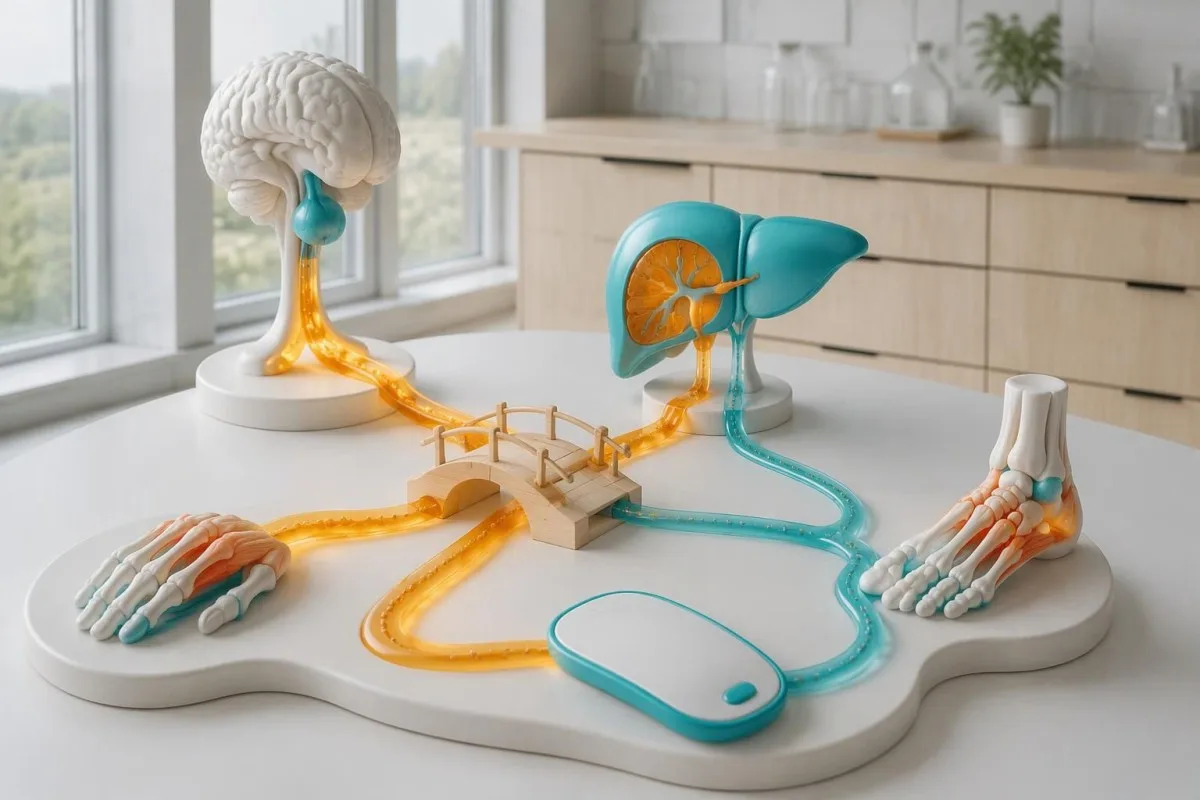
Diabetes is a possible associated condition, not a diagnostic shortcut. An HbA1c of at least 6.5% or fasting plasma glucose of at least 126 mg/dL, equivalent to 7.0 mmol/L, meets commonly used diabetes thresholds when confirmation requirements are satisfied; neither value identifies growth hormone excess as the cause.
Thirst and blurred vision may therefore need evaluation independently of changes in appearance. Our guide to 高血糖预警症状 explains why a hypothetical glucose result of 280 mg/dL with symptoms deserves prompt clinical attention, even while a separate acromegaly assessment is being arranged.
Pituitary dysfunction can alter menstrual cycles, sexual function or fertility, but these symptoms have many causes. Our women's hormonal symptom guide discusses relevant alternatives; missing 2 periods alongside progressive jaw and hand changes deserves a broader review than assuming a single age-related explanation.
At Kantesti, we distinguish a complication marker from a disease-specific test: 1 abnormal HbA1c cannot substitute for age-adjusted IGF-1. Bring blood-pressure readings, medication names and the timing of hormonal symptoms, because a clinician may need to assess associated conditions and pituitary function in parallel.
还有哪些情况会导致类似的身体变化?
Weight gain, fluid retention, thyroid disease, arthritis and dental problems can resemble parts of the acromegaly pattern. The distinction depends on the distribution and progression of change: enlargement affecting hands, feet and jaw over several years is harder to explain with 1 localized joint or dental problem.
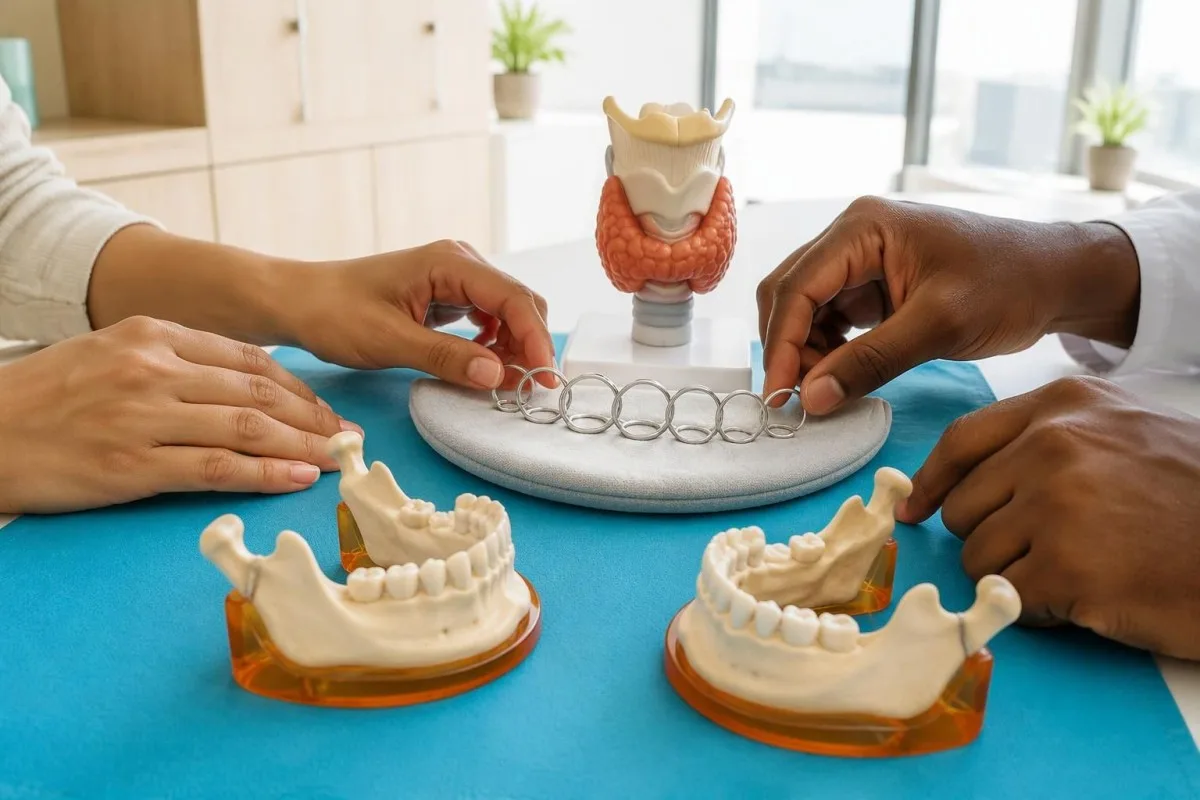
Weight gain often changes facial fullness without producing the same progressive mandibular prominence or dental spacing. In a hypothetical 50-year-old whose weight rose by 12 kg, tighter rings may have an ordinary explanation; a dentist-confirmed change in jaw relationship still deserves separate attention rather than dismissal.
Cushing syndrome can cause facial rounding, metabolic problems and muscle weakness, but its testing pathway differs from acromegaly. Our guide to cortisol screening and confirmation explains why 1 random cortisol result does not establish Cushing syndrome, just as a random growth hormone result does not establish acromegaly.
A pituitary problem can sometimes produce low free T4 without an appropriately elevated TSH. Our explanation of low T4 with normal TSH helps clarify why those 2 measurements must be interpreted together; a normal TSH alone is not a complete assessment of pituitary-related thyroid function.
Childhood growth and adult tissue enlargement should not be confused. Excess growth hormone before growth-plate closure can cause gigantism, whereas adult acromegaly does not usually increase height; a naturally large shoe size that has remained unchanged for 20 years is not equivalent to progressive adult enlargement.
为什么 IGF-1 通常是首项血液检测
Age-adjusted IGF-1 is usually the first biochemical test when acromegaly is suspected because it reflects growth hormone activity more consistently than a single growth hormone measurement. The 2024 consensus states that characteristic clinical features plus IGF-1 above 1.3 times the age-adjusted upper limit can confirm the diagnosis (Giustina et al., 2024).
IGF-1 has no single normal adult range that applies to every age and assay. For example, if a hypothetical laboratory upper limit is 250 ng/mL and the result is 340 ng/mL, the result is 1.36 times that upper limit; using another laboratory's range could change the interpretation incorrectly.
A normal IGF-1 usually argues against acromegaly, but confounders can reduce its reliability. Poorly controlled diabetes, significant liver disease, undernutrition and oral estrogen can affect results; 1 normal measurement should be reviewed in context when physical features are compelling, rather than overridden or accepted automatically.
Kantesti is an AI blood test interpretation platform that can explain an IGF-1 value relative to the reference interval printed on the report. 我们的 生物标志物解读指南 provides laboratory context, but identifying the assay, age range and clinical reason for testing remains part of clinician-led assessment.
Liver and nutritional status matter because IGF-1 production is closely linked to hepatic function and systemic health. Our 血清蛋白解释指南 explains relevant background markers; 1 albumin result cannot validate or invalidate IGF-1, but it may prompt a closer review of illness or nutrition.
| 水平 | 范围 | 含义 |
|---|---|---|
| 在实验室区间内 | At or below the age-adjusted upper limit | Usually argues against acromegaly; consider confounders if clinical suspicion remains strong. |
| 临界升高 | >1.0–1.3× the age-adjusted upper limit | Requires clinical review; repeat testing and sometimes glucose suppression testing resolve uncertainty. |
| Above the consensus diagnostic threshold | >1.3× the age-adjusted upper limit | Can confirm acromegaly when characteristic clinical features are present; specialist interpretation is needed. |
何时适合进行生长激素抑制试验
A glucose suppression test may help when IGF-1 results and clinical findings are equivocal. The test commonly uses 75 g oral glucose followed by serial growth hormone measurements; it assesses whether growth hormone suppresses appropriately, rather than treating one high random growth hormone value as diagnostic.
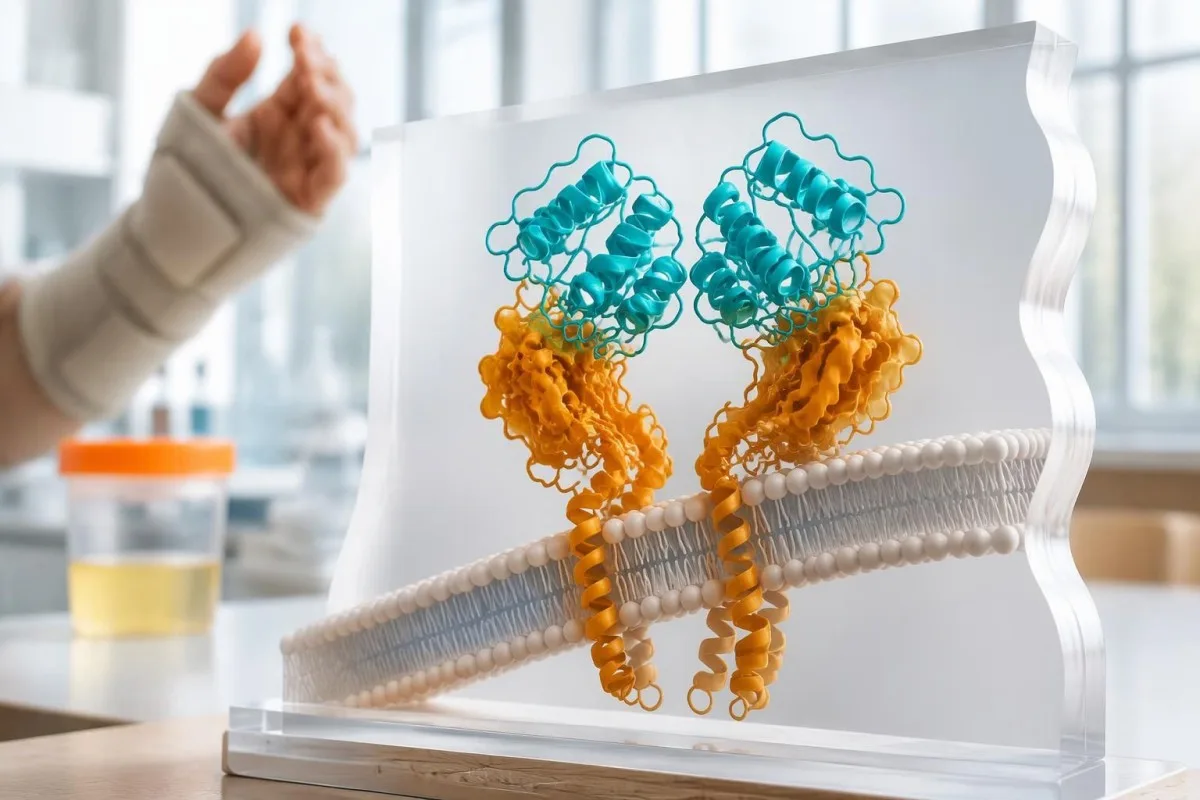
Growth hormone is released in pulses and can rise with sleep, exercise and physiological stress. That is why 1 random value, whether high or low, is unreliable for establishing or excluding acromegaly; an isolated result should not trigger a diagnosis based solely on a generic laboratory range.
Diagnostic cutoffs have changed with assay sensitivity. The Endocrine Society guideline used suppression below 1 ng/mL after glucose to exclude acromegaly in the appropriate testing context (Katznelson et al., 2014); specialist practice may use lower assay-dependent thresholds, including 0.4 ng/mL, rather than one universal cutoff.
For example, a hypothetical IGF-1 of 275 ng/mL against an upper limit of 250 ng/mL equals 1.10 times the upper limit. If growth hormone falls to 0.7 ng/mL, interpretation may differ by assay and clinical context; repeating IGF-1 and reviewing confounders is safer than selecting whichever cutoff gives a preferred answer.
Kantesti does not independently validate an acromegaly diagnosis or choose a glucose-test cutoff. Our 临床方法学和局限性 explain why interpretation must remain tied to the source report; our separate guide to 有临床意义的实验室变化指南 explains why 2 results are not automatically comparable.
何时预约复诊——以及何时症状紧急
Book a clinical review for unexplained progressive enlargement of hands, feet or jaw, especially when sweating, sleep apnea or a changing bite accompanies it. There is no minimum duration you must wait; a sudden severe headache with new visual symptoms is a separate emergency, not something to observe for 2 weeks.
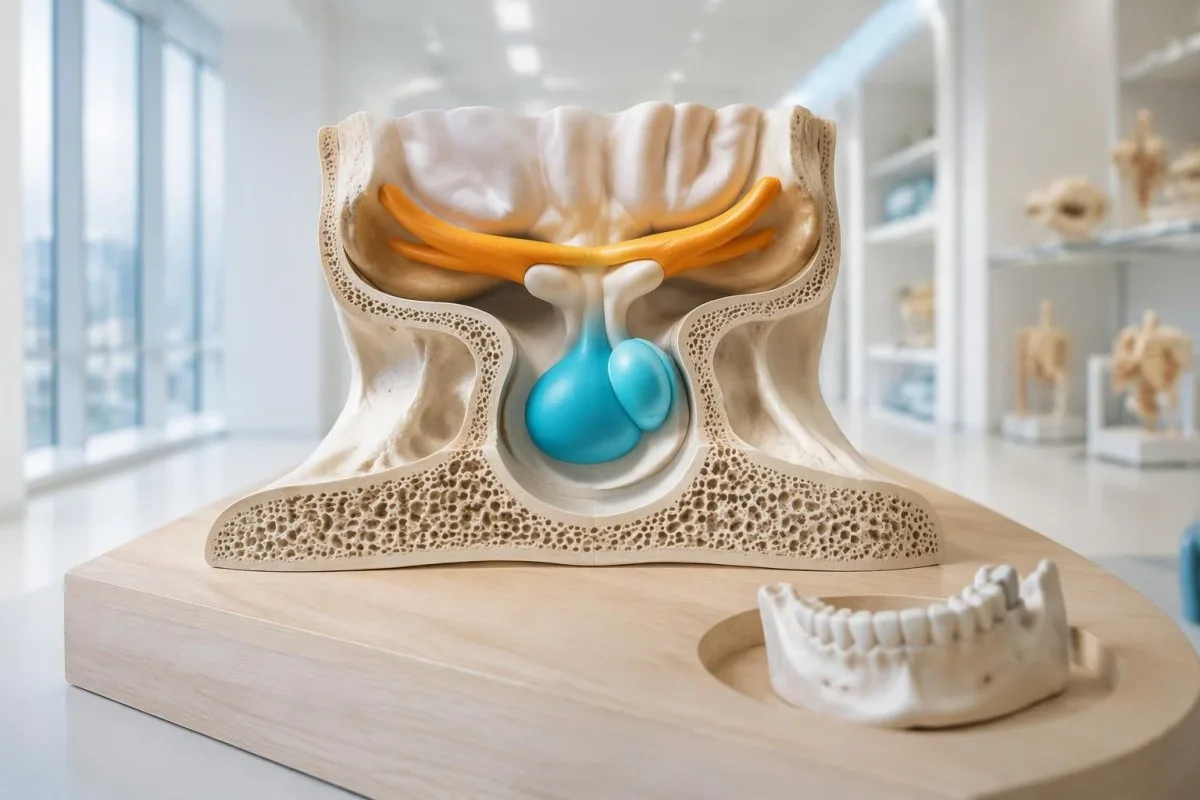
A pituitary growth can affect nearby visual pathways, sometimes causing loss of peripheral vision. New difficulty noticing objects on either side, double vision or a substantial visual change warrants prompt assessment; involvement of 1 or both eyes does not reliably determine whether the cause is pituitary, retinal or neurological.
Sudden severe headache with vomiting, double vision, reduced alertness or visual loss can indicate pituitary apoplexy or another neurological emergency. Seek emergency care immediately rather than waiting for an IGF-1 result; even 1 abrupt neurological warning symptom can justify urgent assessment when severe or unexplained.
Pituitary adenomas are usually noncancerous, but noncancerous does not mean harmless when a growth produces excess hormones or presses on nearby structures. Our guide to neurological warning symptoms explains why progressive and sudden symptoms follow different routes; a 5-year appearance change and an abrupt visual deficit should not receive the same triage.
For gradual changes without emergency features, prepare 3 categories of evidence: appearance or sizing changes, associated symptoms and existing results. Ask whether an age-adjusted IGF-1 test and endocrine referral are appropriate; avoid arriving with a self-confirmed diagnosis or postponing care until every possible symptom appears.
激素检测结果异常后会发生什么?
After biochemical confirmation or strong specialist-supported suspicion, pituitary MRI usually identifies the source and its relationship to surrounding structures. Imaging alone cannot confirm acromegaly: a pituitary finding may be incidental, and the 10 mm size boundary between microadenoma and macroadenoma describes size rather than hormone secretion.
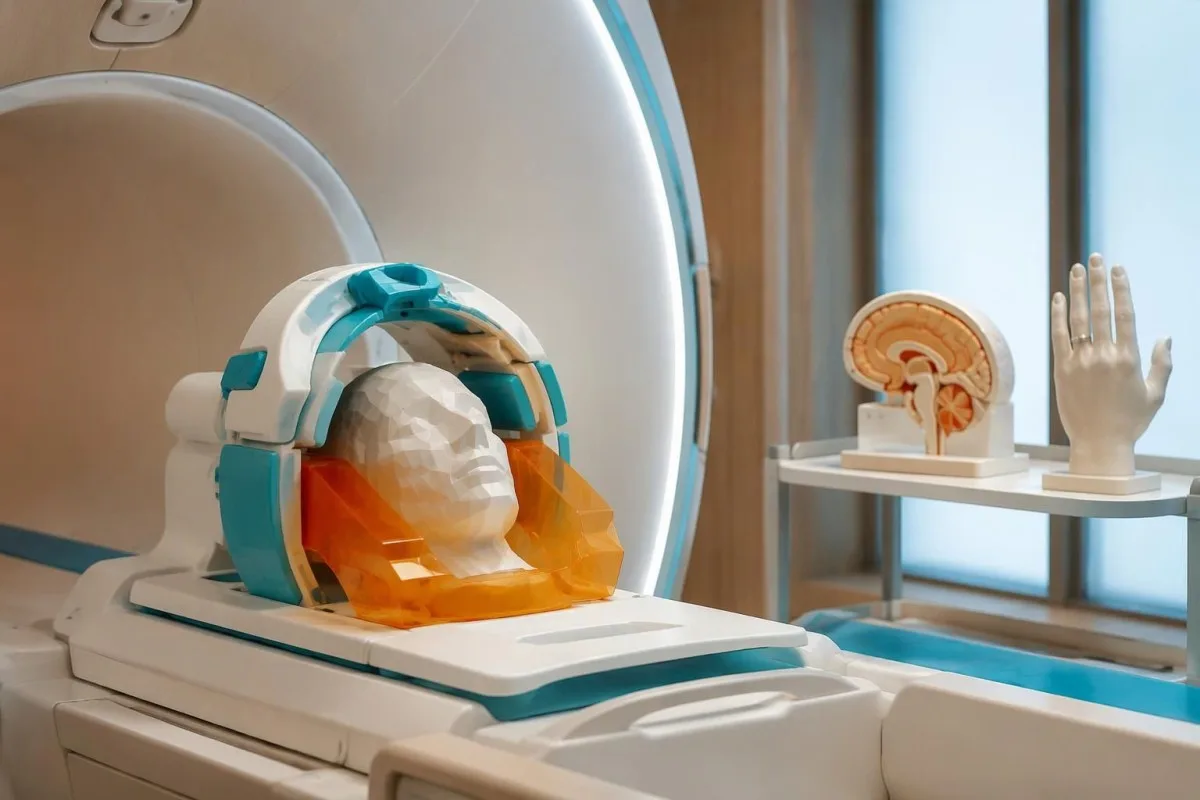
A pituitary microadenoma measures less than 10 mm, while a macroadenoma measures at least 10 mm. A smaller growth can still secrete clinically significant growth hormone; conversely, a larger nonfunctioning growth may not cause acromegaly, so dimensions and biochemical activity answer different questions.
An endocrine team may assess prolactin, thyroid function, adrenal function and reproductive hormone pathways as well as IGF-1. Our guide to 轻度催乳素升高的指南中,对此模式进行了更深入的探讨 explains why 1 raised prolactin result can have several causes; it does not prove that a pituitary growth is secreting multiple hormones.
Visual-field testing may be needed when MRI shows proximity to the optic chiasm or when vision is affected. A reassuring ability to read a phone screen at 30 cm does not exclude peripheral field loss; formal testing assesses a different part of vision from everyday reading.
Kantesti AI cannot infer pituitary growth size from an IGF-1 concentration. If the pituitary MRI does not explain convincing biochemical findings, a specialist may review imaging quality, assay issues and rare alternative sources; a negative scan should not be converted into an unsupported claim that 1 hormone result was necessarily wrong.
为就诊做准备并核查我们的资料来源
The most useful next step is a short timeline connecting physical changes, associated symptoms and existing laboratory results. Bring 2 dated photographs if available, ring or shoe history and the full IGF-1 report; these support a focused clinical discussion without turning home observations into a diagnostic score.
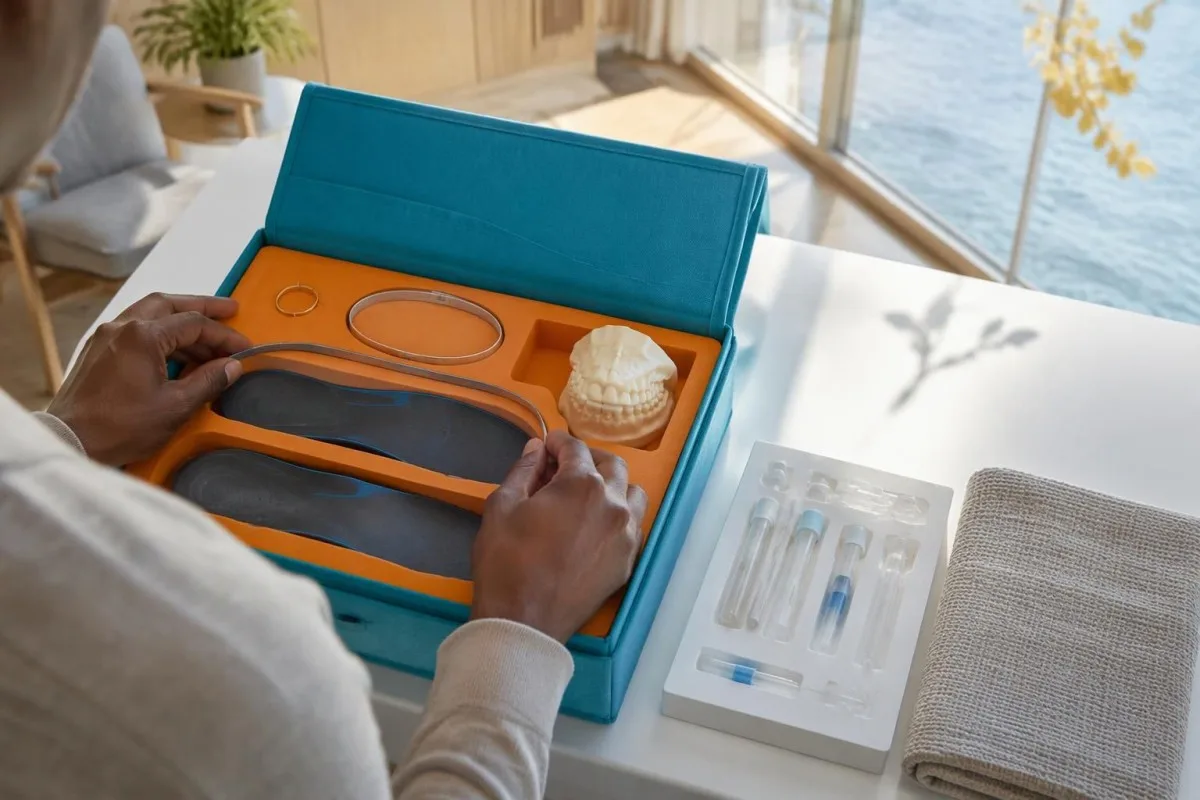
Write down when each change began and whether it has continued, fluctuated or stopped. A 1-page record is usually more useful than dozens of unlabeled photographs: include weight changes, dental observations, sleep-apnea treatment and medication or supplement use, especially prescribed hormones that could influence laboratory interpretation.
Kantesti is an AI-powered blood test analysis tool that can help explain an existing IGF-1 report and organize questions for your clinician. 我们的指南: 核查 AI 对报告的解读 describes source verification; an explanation cannot replace examination, and a normal metabolic panel does not mean IGF-1 was tested.
Protect identifying information when sharing laboratory reports or old photographs. Kantesti's 隐私和数据指南 explains our data approach; use only the materials needed for the question, and obtain permission before sharing another person's results or images, even when comparing 2 family members.
The clinical recommendations here draw on the Endocrine Society's 2014 guideline and the 2024 diagnostic consensus, listed below. The 2 accompanying Figshare publications concern gastrointestinal and women's hormonal health; they are related educational resources, not evidence for acromegaly diagnosis, and a repository DOI does not by itself establish peer review.
常见问题解答
肢端肥大症的早期症状有哪些?
肢端肥大症的早期迹象可能包括戒指逐渐变紧、鞋码变大、出汗增多、新出现的腕管综合征症状以及咬合发生变化。对比两张带日期的照片或牙科记录,可能会发现日常生活中难以察觉的变化。戒指尺码增加多少或出现多少种症状,都不能确诊肢端肥大症。若出现无法解释的进行性变化,应进行临床评估并检测年龄校正后的 IGF-1。
戒指或鞋码变大是否意味着我患有肢端肥大症?
戒指或鞋码变大本身并不意味着患有肢端肥大症。体重增加、液体潴留、关节炎、妊娠相关的足部变化以及鞋款差异也会影响合身程度。鞋码增加1码并无经过验证的诊断意义,但如果足部持续增大,同时出现下颌变化、多汗或睡眠呼吸暂停,则应就医评估。诊断取决于临床表现和适当的激素检测。
肢端肥大症会改变你的面容或导致牙齿间出现缝隙吗?
肢端肥大症可使下颌更加突出,并随着颌骨尺寸变化而增大牙齿间隙。它还可能使鼻子变宽、嘴唇变厚,但牙龈疾病、正畸治疗导致的牙齿移动以及普通的面部变化也可能出现类似表现。比较两个日期的牙科记录,有助于判断咬合或牙齿间隙是否有所加重。没有生化评估,仅凭面部照片和牙科检查结果无法确诊肢端肥大症。
哪种血液检查可以检测肢端肥大症?
当怀疑肢端肥大症时,通常首先进行年龄校正后的 IGF-1 血液检测。2024 年共识指出,若存在特征性临床表现,IGF-1 超过年龄校正正常上限的 1.3 倍即可确诊肢端肥大症。结果临界或相互矛盾时,可能需要复查,并在临床医生监督下进行葡萄糖抑制试验。单次随机生长激素测定不能作为可靠的诊断替代方法。
IGF-1 检测结果正常时,也可能患有肢端肥大症吗?
经可靠测量且已按年龄校正的 IGF-1 水平正常,通常不支持存在未经治疗的肢端肥大症。不过,控制不佳的糖尿病、严重肝病、营养不良和口服雌激素都可能影响 IGF-1 水平,使结果难以解读。如果仅有 1 次正常结果,但典型的身体变化仍在持续,临床医生应复核检测方法、参考区间及可能的干扰因素。与其直接认定症状就能证明诊断,或认为临床背景永远无关,不如考虑重复检测或接受专科评估。
什么时候应将疑似肢端肥大症症状视为急症?
手、脚或面部逐渐增大通常需要安排临床复查,而非急诊就医。如果突发剧烈头痛,并伴有新出现的视力丧失、复视、呕吐或警觉性下降,则需要紧急评估,因为可能是垂体卒中或其他神经系统急症。出现这些警示症状时,不要为了等待常规激素检查结果而拖延24小时。即使外观没有明显变化,新出现或逐渐加重的视力问题也应及时接受临床评估。
获取血液检查结果解读
上传您的实验室报告,Kantesti 的 AI 会在几秒内用通俗语言解释每项生物标志物。全球已有超过 200 万人使用。.
参考
- Klein, T., Mitchell, S., & Weber, H. (2026). 禁食后腹泻、粪便中的黑色斑点及胃肠道指南 2026。. Kantesti AI 医学研究。. DOI
- Klein, T., Mitchell, S., & Weber, H. (2026). 女性健康指南:排卵、更年期与激素症状。. Kantesti AI 医学研究。. DOI
- Katznelson L et al. (2014). Acromegaly: An Endocrine Society Clinical Practice Guideline. The Journal of Clinical Endocrinology & Metabolism。. DOI
- Giustina A et al. (2024). Consensus on criteria for acromegaly diagnosis and remission. Pituitary. DOI
- 200万+分析的检测项目
- 127+国家
- 100+语言
关于医疗团队


E-E-A-T信任信号
经验
由医生主导的临床审阅:实验室解读工作流程。.
专业知识
实验室医学重点:生物标志物在临床情境中的表现。.
权威
经 Thomas Klein 医生医学审核,并由 Sarah Mitchell 医生和 Hans Weber 教授参与撰写。.
可信度
基于循证的解读,并提供清晰的后续路径以减少警报。.




医疗免责声明
本文仅用于教育目的,不构成医疗建议。诊断和治疗决策请始终咨询合格的医疗专业人员。.
发表 · 联系编辑团队
由 Kantesti Ltd 发布,在英格兰和威尔士注册,注册公司编号:. 17090423, ,英国伦敦。.
