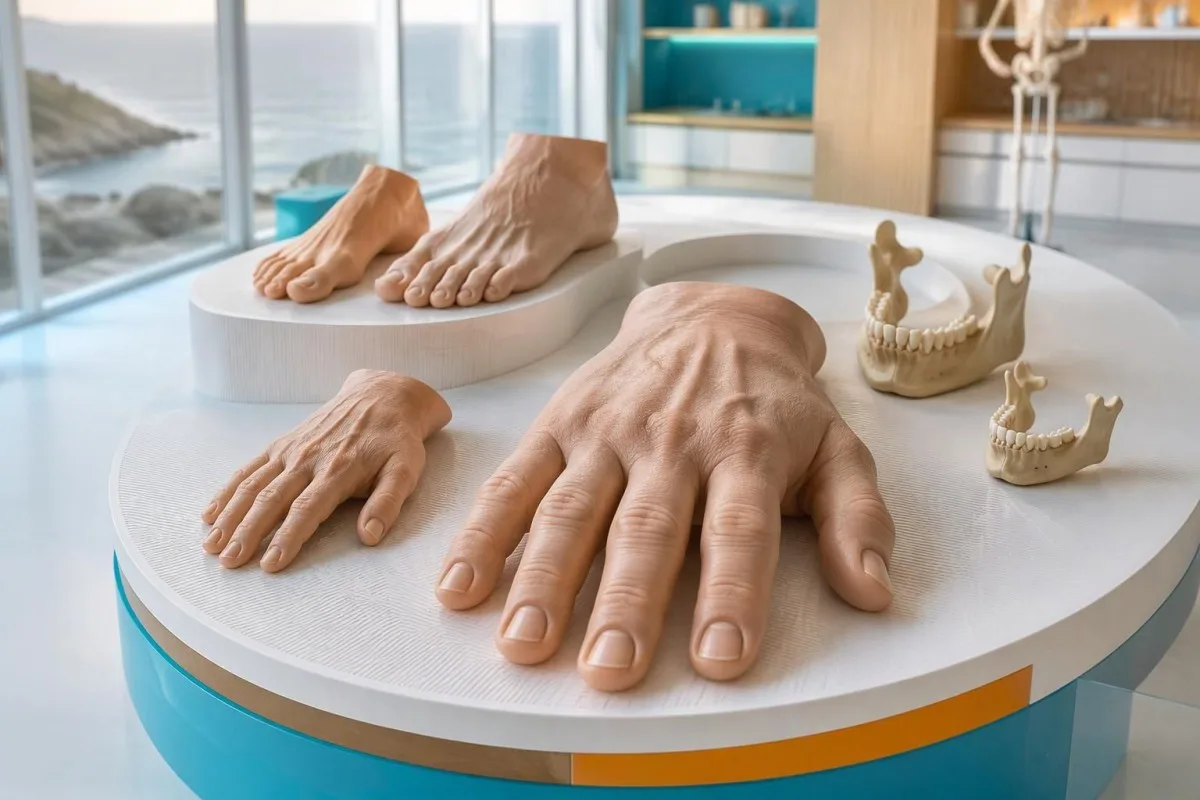
Колдун же буттун улам чоңоюшу, жаактын өзгөрүшү, тиштердин аралыгынын кеңейиши, тердөөнүн күчөшү жана уйку апноэси акромегалиядан кабар бериши мүмкүн, айрыкча бир нече өзгөрүү бир убакта пайда болсо. Белгилер диагнозду тастыктай албайт; клиникалык баалоо жана жаш куракка ылайыкташтырылган IGF-1 кан анализи керек.

Негизги жыйынтыктар
- Жылдыруу обочолонгон белгиден маанилүүрөөк: шакектин өлчөмүнүн чоңоюшу жана бир нече жыл ичинде тиштешүүнүн өзгөрүшү, бетте кескин өзгөрүүлөр болбосо да, клиникалык текшерүүнү талап кылат.
- Колдор жана буттар бой жетип, бою өскөнү токтогондон кийин жазыраак болуп калышы мүмкүн; акромегалияны аныктаган шакектин же бут кийимдин өлчөмдөрүнүн тастыкталган саны жок.
- Беттеги өзгөрүүлөр астыңкы жаактын көрүнүктүүрөөк болушун, мурундун кеңейишин, эриндердин калыңдашын жана тиштердин арасында жаңы боштуктардын пайда болушун камтышы мүмкүн; датасы көрсөтүлгөн эки сүрөттү салыштыруу өзгөрүүлөрдүн качан болгонун аныктоого жардам берет.
- Уйку апноэ кол, бут же жаактын чоңоюшу менен коштолсо, өсүү гормонунун ашыкча болушун текшерүүгө негиз күчөйт; коңурук тартуунун өзү мүнөздүү белги эмес.
- IGF-1 адатта биринчи биохимиялык тест болуп саналат, анын эталондук аралыгы адамдын жаш курагына жана лаборатория колдонгон анализ ыкмасына туура келиши керек.
- 1,3× босогосу акромегалия боюнча 2024-жылдагы консенсуска негизделет: мүнөздүү клиникалык белгилер болгондо, жаш куракка ылайыкташтырылган жогорку чектен 1,3 эсе жогору IGF-1 диагнозду ырастай алат.
- Глюкоза басуу тестирлөөсү кээде күмөндү чечүүгө жардам берет: дарыгер бир жолку кокустук өсүү гормонунун жыйынтыгына гана таянбастан, 75 г глюкозаны ооз аркылуу берип, өсүү гормонун улам өлчөп турушу мүмкүн.
- Шашылыш белгилер жаңы көрүү көйгөйлөрү, кусуу же сергектиктин төмөндөшү менен коштолгон капыстан катуу баш оору кирет; гормон боюнча кабыл алууну күтпөстөн, тез жардамга кайрылыңыз.
Акромегалиянын кайсы белгилерине көңүл буруу керек?
Кол, бут же беттин чоңоюшу тердөө, коңурук тартуу же тиштешүүнүн өзгөрүшү сыяктуу белгилер менен кошо күчөгөндө, акромегалиянын белгилери тынчсыздандырат. Бир шакектин тар болуп калышы адатта өзгөчө мүнөздүү эмес; бири-биринен көз карандысыз 2 өзгөрүүнүн чогуу пайда болушу дарыгерге көрүнүүгө олуттуураак негиз берет, бирок эч бир симптомдор тизмеси диагноз коюуга жетишсиз.
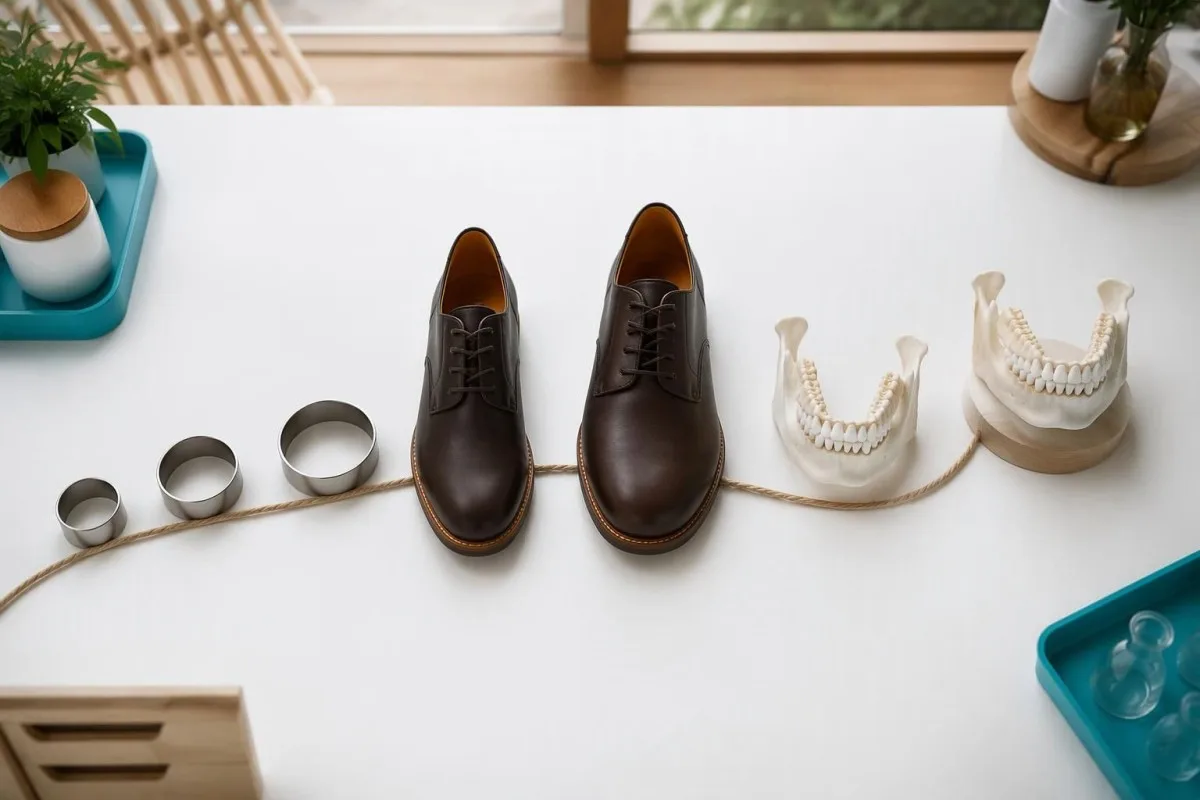
Акромегалия өсүү пластинкалары жабылгандан кийин өсүү гормонунун ашыкча бөлүнүп чыгышынан келип чыгат. Өсүү гормону инсулинге окшош өсүү фактору 1дин (IGF-1) өндүрүлүшүн стимулдайт; ал жумшак ткандардын жана айрым сөөктөрдүн чоңоюшуна өбөлгө түзөт; көпчүлүк учурлар тамактануу көйгөйүнөн эмес, залалсыз гипофиз аденомасынан келип чыгат.
Акырындап болгон өзгөрүүнү таануу күтүүсүз пайда болгон белгиге караганда кыйыныраак болушу мүмкүн. Учурдагы келбетиңизди 3–5 жыл мурунку сүрөттөр менен салыштыруу күн сайын күзгүдөн караганда байкалбай калган каштын, жаактын же мурундун өзгөрүшүн көрсөтүшү мүмкүн; бул аралык салыштыруу үчүн ыңгайлуу мезгил, сөзсүз күтүшүңүз керек болгон убакыт эмес.
Мисалы, нике шакегинин өлчөмүн эки жолу чоңойткон, бут кийиминин туурасы чоңойгон жана тиш доктуру тиштешүүсүнүн өзгөргөнүн каттаган 46 жаштагы адамды элестетиңиз. Дене салмагынын туруктуу болушу жөнөкөй салмак кошууну толук түшүндүрмө катары азыраак ынанымдуу кылат, бирок муну акромегалия деп айтуудан мурда текшерүү жана гормондук анализдер керек.
Kantesti — симптомдордун тизмесин диагноз катары кабыл албастан, IGF-1 анализинин жыйынтыгын түшүндүрүүгө жардам бере турган AI кан анализинин анализатору. Биздин уюм жана максат биздин ролду түшүндүрөбүз: биз бар болгон жыйынтыктарды түшүнүүгө көмөктөшөбүз, ал эми дарыгер денедеги өзгөрүүлөрдү баалап, адистештирилген текшерүү керекпи же жокпу чечет.
Акромегалия колдорду жана шакектин өлчөмүн кантип өзгөртөт
Акромегалия чоң кишилердин колдорун кеңейтип, калыңдатып, шакектер ысык аба ырайында гана эмес, акырындап такпай калганга чейин тар болуп калышына алып келиши мүмкүн. Убакыттын өтүшү менен эки колдун тең чоңоюшу 1 манжанын гана шишигине караганда көбүрөөк шек жаратат, айрыкча бут кийимдин отурушу, беттин түзүлүшү же тердөө да өзгөрсө.
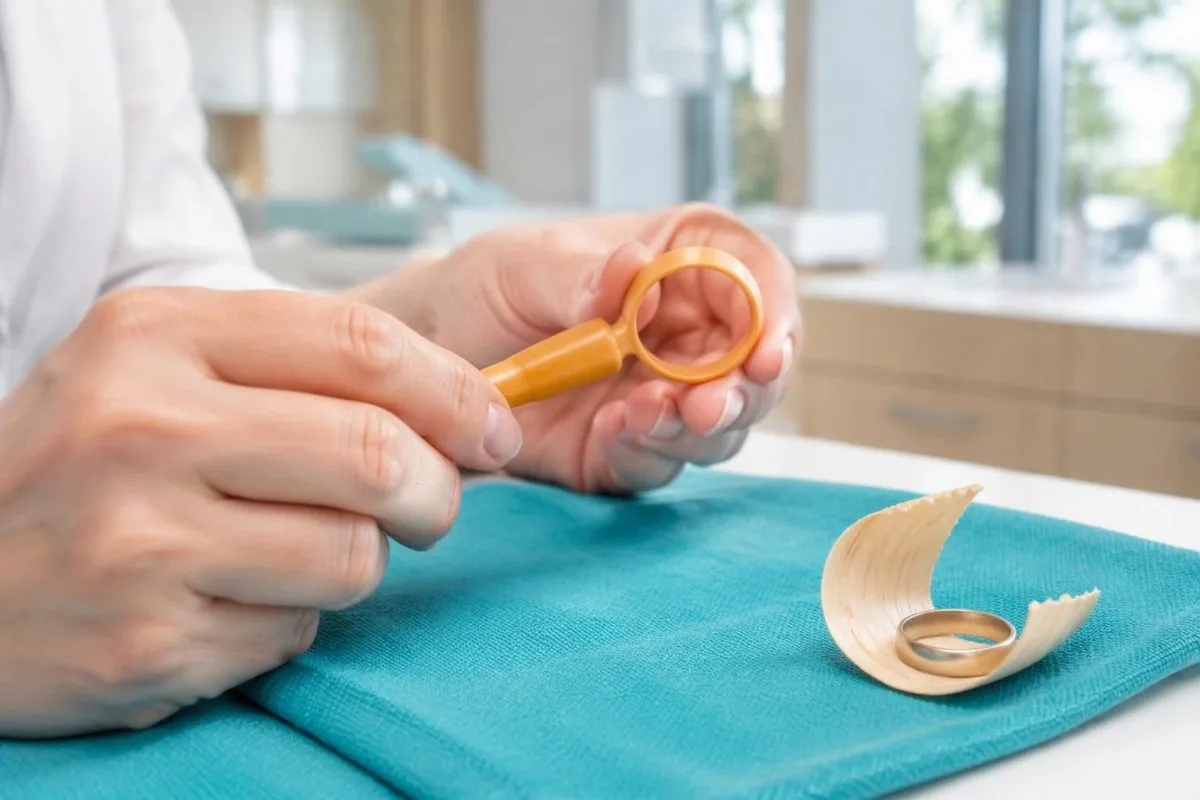
Шакектин өлчөмү чоңоюунун себебин эмес, манжанын айланасын өлчөйт. Шакектин өлчөмү 1 санга өзгөрүшү салмак кошуудан, артриттен, суюктуктун кармалышынан же өлчөм системаларынын айырмасынан болушу мүмкүн; өзгөрүү туруктуу болуп, алакандын калыңдашы же башка мүнөздүү белгилер менен коштолгондо акромегалия каралат.
Убактылуу шишик ткандардын бара-бара чоңоюшунан айырмаланат. Бир эле шакектин эртең менен жана кечинде 1 жума бою туура келишин текшерүү шишиктин өзгөрүп турарын аныктоого жардам берет, бирок үйдө жүргүзүлгөн бул байкоо акромегалияны жокко чыгара албайт; тар шакекти шишиген муундан улам-улам күч менен өткөрүүгө аракет кылбаңыз.
Калкан безине байланыштуу суюктуктун кармалышы колдун бир аз шишигине окшош болушу мүмкүн, бирок акромегалияга мүнөздүү белгилердин толук топтомун бербейт. Биздин түшүндүрмөбүз калкан безинин жеңил гипофункциясы лабораториялык көрсөткүчтөр менен аныкталган калкан безинин өзгөрүүлөрүн дененин чоңоюшунан айырмалоого жардам берет; TSH бир аз өзгөргөнү эле кол менен жаактын бир нече жыл ичиндеги өлчөм өзгөрүшүн автоматтык түрдө түшүндүрбөшү керек.
Кабыл алууга даярданганда 2 байкоону өз-өзүнчө каттоо пайдалуу: колдун жалпы кеңейиши жана айрым муундардын айланасындагы чоңоюу. Шакектин өлчөмүн болжол менен кайсы күндөрү өзгөрткөнүңүздү жазыңыз жана муун муундарынын оорушу, эртең мененки катуулук же алакандын калыңдашы кайсынысы биринчи башталганын белгилеңиз; бул маалыматтар дарыгерге ткандардын өсүшүн муун оорусунан же маал-маалы менен болгон шишиктен айырмалоого жардам берет.
Бут кийимдин өлчөмүнүн чоңоюшу алгачкы белги болгондо
Чоңойгондо буттун улам кеңейиши же чоңоюшу акромегалиянын алгачкы белгиси болушу мүмкүн, айрыкча колдун өлчөмү да өзгөрсө. Бут кийимди 1 жолу алмаштыруу диагноз коюуга негиз болбойт: бренддердин айырмасы, кош бойлуулукка байланыштуу буттун өзгөрүшү, салмак кошуу, бурсит же тамандын түшүшү да өсүү гормону ашыкча болбосо деле бут кийимдин отурушуна таасир этиши мүмкүн.
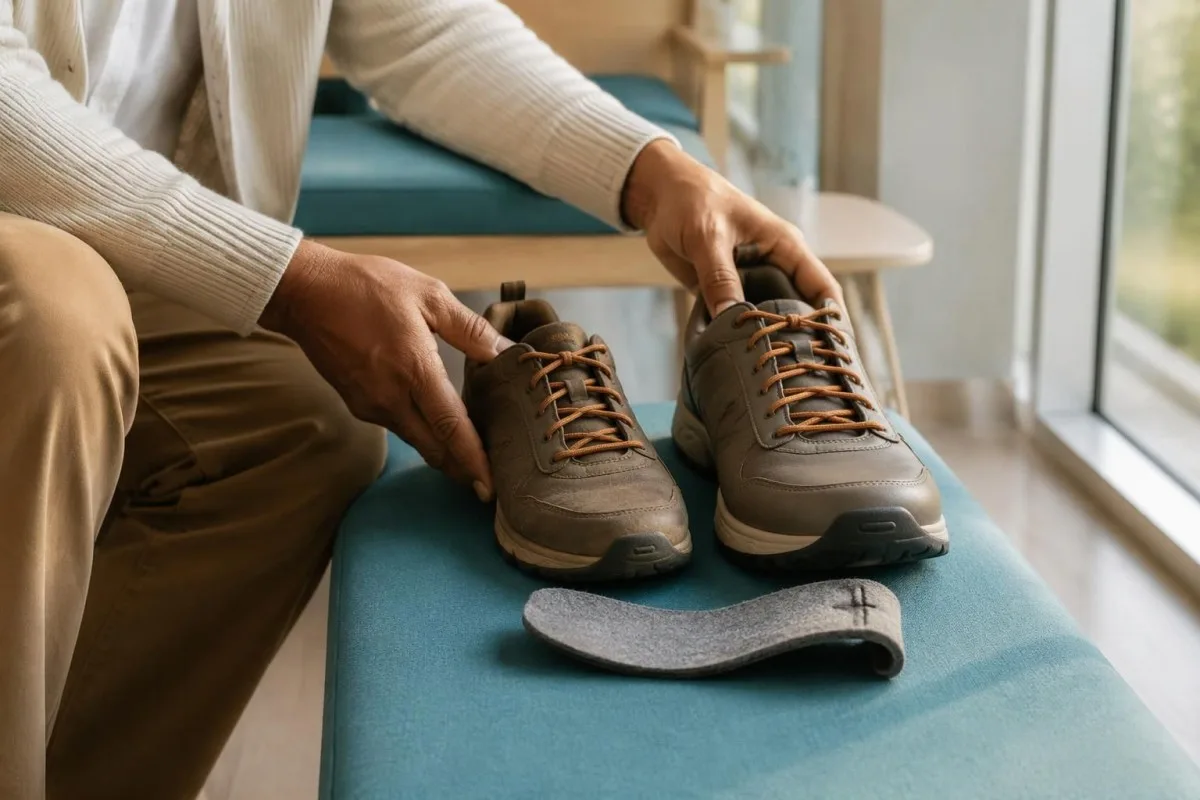
Буттун туурасы кээде бут кийимдин көрсөтүлгөн өлчөмү өзгөргөнгө чейин эле өзгөрөт. Эгер 3 жыл айырма менен сатып алынган бут кийимдердин узундугу бирдей болсо, бирок улам кененирээк учу бар бут кийим талап кылынса, муну белгилеп коюңуз; жумшак ткандардын калыңдашы жана буттун механикалык өзгөрүүлөрү катар болушу мүмкүн, андыктан узундукту гана өлчөө жетишсиз.
Акромегалияга байланыштуу чоңоюу адатта акырындап өрчүп, эки бутка тең таасир этет. 1 буттун же буттун бөлүгүнүн капыстан шишиши, айрыкча балтырдын оорушу же жылуулугу менен коштолсо, өзүнчө баалоону талап кылат; биздин колдонмо urgent one-sided leg swelling explains why that pattern should not be attributed to a slow hormonal disorder.
For a hypothetical 51-year-old, moving from the same manufacturer's size 8 to size 10 over several years would be more informative than comparing unrelated brands. The observation becomes more meaningful if a ring has also needed resizing, but there is no validated shoe-size increase that confirms acromegaly.
Bring 2 pairs of dated shoes or purchase records if available, rather than buying measuring equipment. A clinician can assess edema, arches, joints and soft tissues together; foot photographs should be taken in comparable positions because perspective can make a stable foot appear larger.
Жаак менен тиштердеги өзгөрүүлөр эмнени көрсөтүшү мүмкүн
Acromegaly facial changes can include a more prominent lower jaw, broader nose, thicker lips and wider spacing between teeth. A changing bite documented on 2 dental visits can be more useful than a subjective impression of looking different, because jaw growth and ordinary weight gain affect appearance differently.
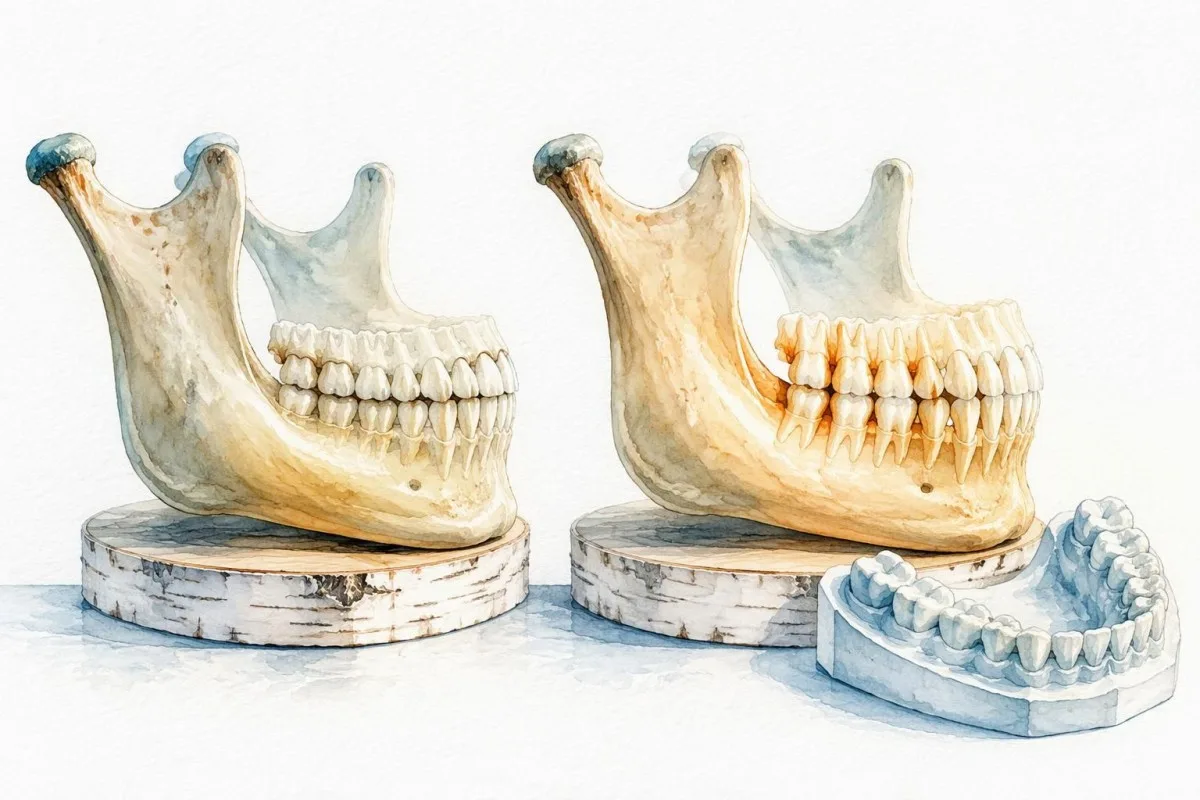
New tooth spacing does not necessarily mean the teeth themselves have enlarged. Enlargement of the jaw can change their positions relative to one another, while gum disease, missing teeth and orthodontic movement can also produce gaps; comparing dental records from 2 dates helps identify which process is more plausible.
Photographs are most useful when lighting, camera distance and head position are similar. Choose 1 older front-view photograph and 1 side view if possible; wide-angle phone lenses can exaggerate the nose and jaw, so apparent enlargement in a close selfie is not reliable evidence of hormone excess.
Bone disorders can also change skull or jaw shape, but usually require a different diagnostic pathway. Our explanation of Paget disease testing describes one alternative; an ALP result, whether normal or raised, cannot replace IGF-1 testing when the broader pattern suggests acromegaly.
Ask a dentist whether 2 findings are documented: a progressive bite change and new spacing not explained by gum or orthodontic disease. A dentist may recognize the physical pattern, but photographs, bite impressions and dental imaging cannot confirm acromegaly without an endocrine assessment.
Тердөө эмне үчүн жалпы көрүнүштүн алкагында гана маанилүү
Increased sweating and oily or thicker skin can accompany acromegaly, but sweating alone is a weak diagnostic clue. Persistent sweating becomes more relevant when it develops alongside at least 1 structural change, such as broader hands or a changing jaw; the combination guides evaluation rather than proving a hormonal cause.
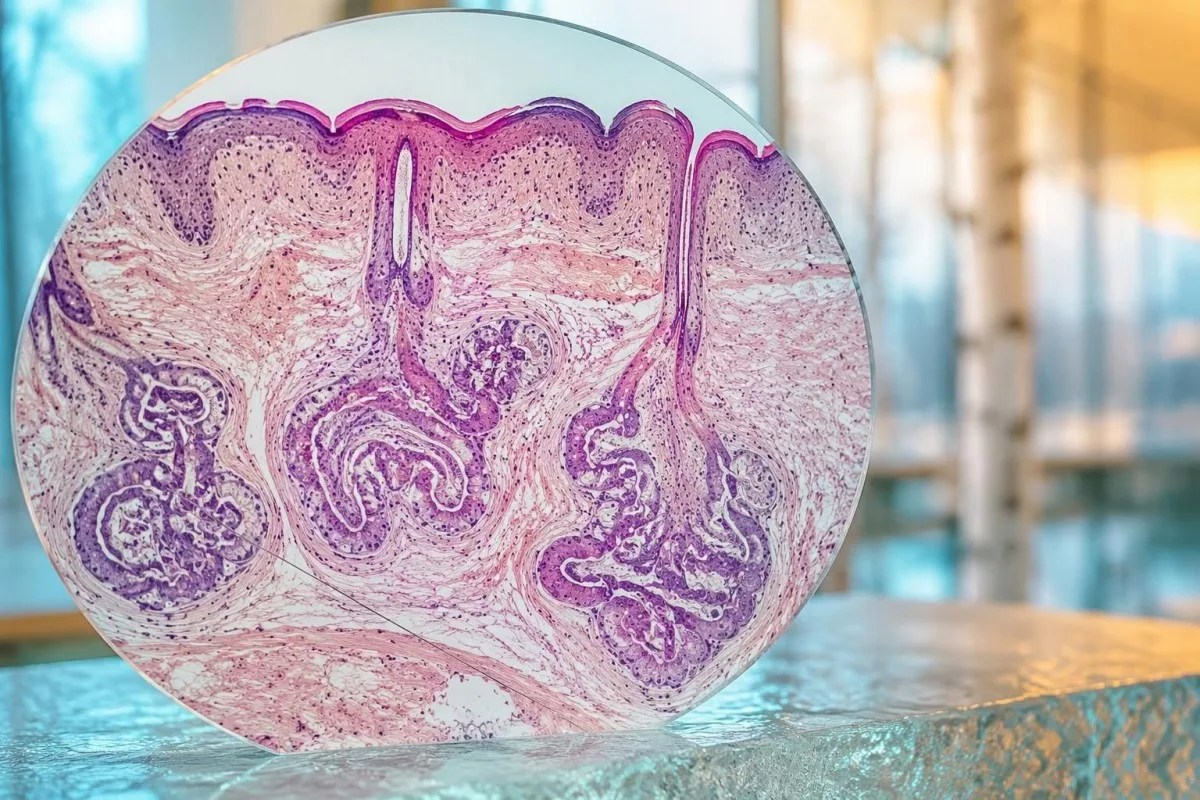
A useful sweating history distinguishes persistent excess perspiration from brief episodes. Recording triggers and timing for 7 days can reveal links to exercise, medicines, meals or hot flashes; acromegaly does not have a distinctive sweat odor or a validated sweating frequency that separates it from other causes.
Episodic sweating with pounding headaches, palpitations and marked blood-pressure swings suggests a different endocrine question. Our guide to adrenal hormone warning patterns explains when metanephrine testing may be considered; that test and IGF-1 answer different questions, even when 2 conditions share sweating as a symptom.
Hot flashes can coincide with the age at which acromegaly becomes noticeable, creating an easy attribution error. The discussion of fluctuating menopause hormone results explains why 1 estradiol measurement is not a complete explanation for sweating, especially if ring fit and facial shape are also changing.
Skin tags are common and are not an acromegaly screening test. In a hypothetical 48-year-old with new sweating and several skin tags, we would distinguish metabolic or medication-related explanations from the much more specific observation of progressive hand and jaw enlargement; counting skin tags does not resolve that distinction.
Уйку апноэси ткандардын чоңоюшу менен кантип байланышат
Acromegaly can contribute to obstructive sleep apnea through enlargement of the tongue and other upper-airway tissues. Loud snoring, witnessed breathing pauses and daytime sleepiness warrant sleep evaluation; when these occur with progressive hand or jaw enlargement, an IGF-1 test may also be appropriate rather than assuming 1 diagnosis explains everything.
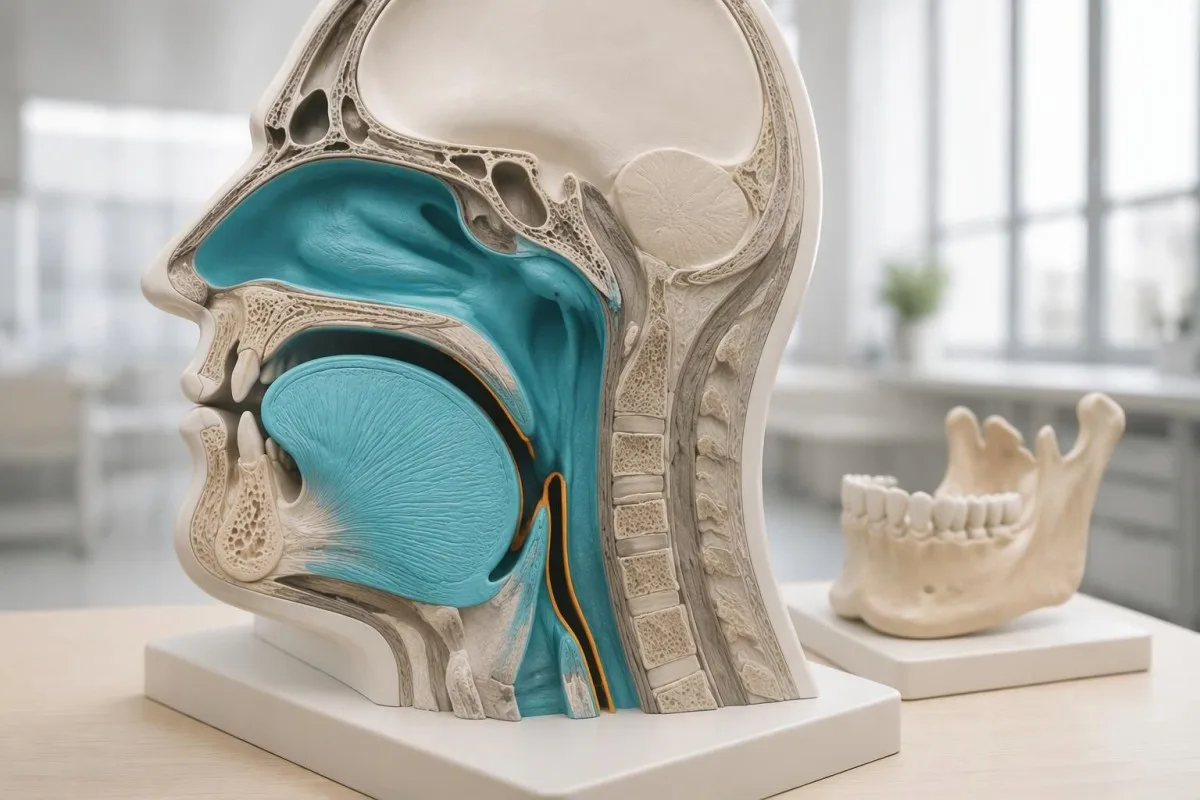
Obstructive sleep apnea is assessed using respiratory events during sleep, not facial appearance. An apnea–hypopnea index of at least 5 events/hour with relevant symptoms or comorbidities, or at least 15 events/hour regardless of symptoms, commonly supports adult diagnosis; neither threshold identifies the underlying cause as acromegaly.
Sleep studies answer a different question from a daytime sleepiness test. Our explanation of sleep-study test selection distinguishes overnight respiratory assessment from testing for narcolepsy; a normal or abnormal multiple sleep latency test does not assess growth hormone excess.
The Endocrine Society guideline recommends considering IGF-1 testing when several associated conditions occur together, including sleep apnea, diabetes, arthritis, carpal tunnel syndrome, excessive sweating and hypertension (Katznelson et al., 2014). Having 1 of these common conditions does not justify assuming acromegaly, but their coexistence can lower the threshold for discussing testing.
Treating hormone excess does not guarantee that sleep apnea disappears. If a person already uses positive-airway-pressure treatment, 1 improved night of sleep is not evidence that it can be stopped; residual airway anatomy and weight-related factors may persist, and any treatment change requires reassessment by the sleep team.
Колдун уюшу жана муундардын оорушу: кошумча белгилер
Carpal tunnel syndrome and joint discomfort can accompany acromegaly because tissue enlargement affects nerves, cartilage and joint mechanics. Numbness in the thumb, index and middle fingers is more consistent with median-nerve compression than numbness involving all 5 fingers equally, but the nerve pattern does not establish a hormonal cause.
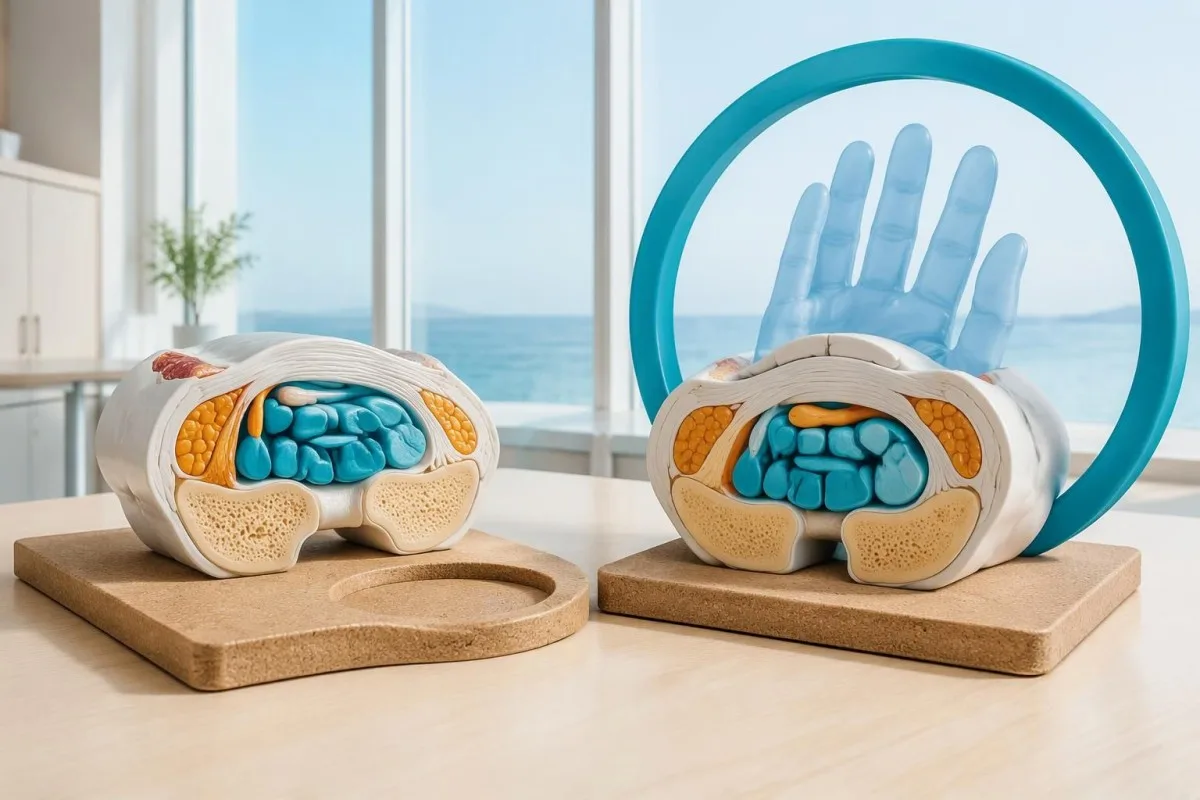
Bilateral symptoms are useful context, not proof of acromegaly. Nighttime tingling in both hands plus 2 ring resizings and a changing bite deserves a different discussion from isolated tingling after repetitive wrist use; the associated structural changes explain why an endocrine cause might enter the differential.
The fingers involved help localize the problem before choosing tests. Our guide to median-nerve symptom patterns explains why little-finger numbness may point elsewhere; an abnormal nerve-conduction study can confirm nerve dysfunction without answering whether IGF-1 excess contributed.
Joint symptoms can outlast successful control of growth hormone excess. After years of altered cartilage and bone mechanics, correcting 1 hormone pathway does not necessarily reverse established degenerative changes; this is why early recognition matters even when pain has been labeled ordinary arthritis.
Kantesti can help organize an IGF-1 result alongside glucose or thyroid findings, but nerve symptoms still require clinical localization. For a hypothetical 55-year-old, distinguishing 2 problems—median-nerve compression and progressive tissue enlargement—avoids interpreting every abnormal laboratory value as the cause of hand numbness.
Башка белгилер: глюкоза, кан басымы жана гормондордогу өзгөрүүлөр
Growth hormone excess can contribute to insulin resistance, high blood pressure and changes in other pituitary hormone functions. These findings are common outside acromegaly; concern rises when at least 2 metabolic or hormonal problems develop alongside progressive hand, foot or facial enlargement, rather than when a single routine result is abnormal.
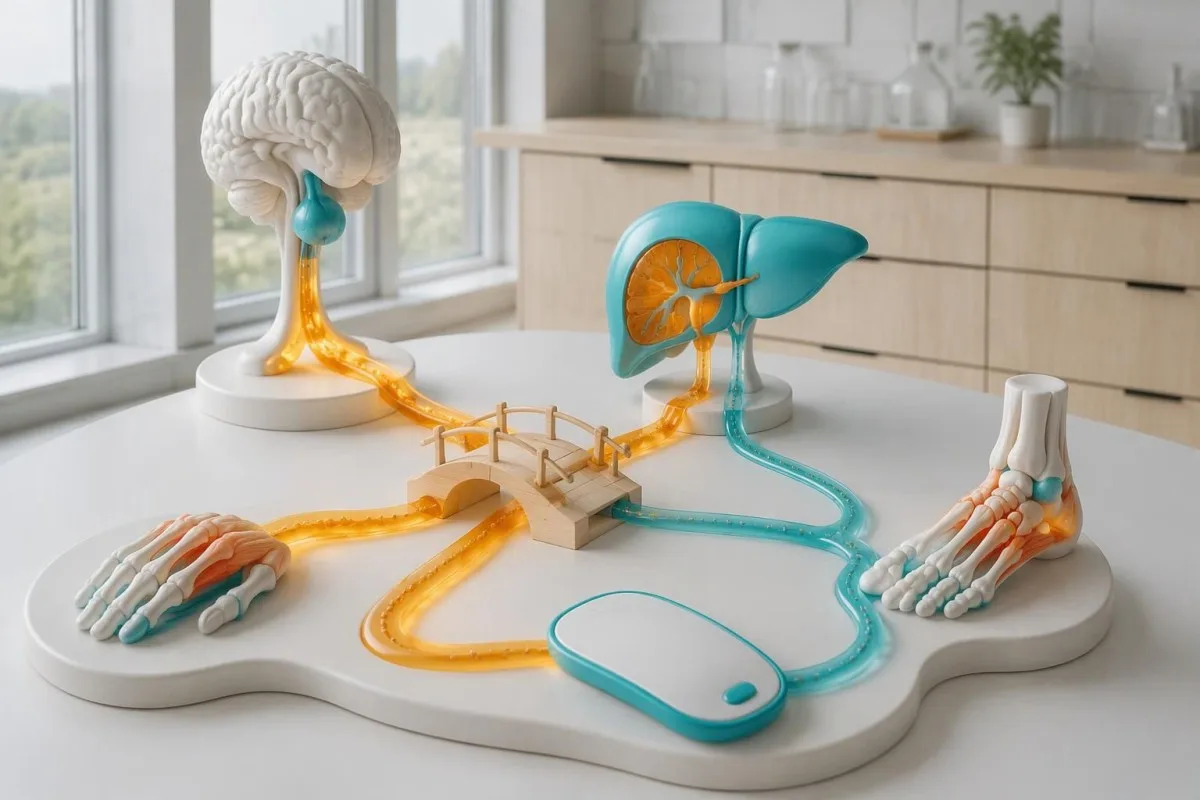
Diabetes is a possible associated condition, not a diagnostic shortcut. An HbA1c of at least 6.5% or fasting plasma glucose of at least 126 mg/dL, equivalent to 7.0 mmol/L, meets commonly used diabetes thresholds when confirmation requirements are satisfied; neither value identifies growth hormone excess as the cause.
Thirst and blurred vision may therefore need evaluation independently of changes in appearance. Our guide to жогорку глюкоза эскертүүчү симптомдары explains why a hypothetical glucose result of 280 mg/dL with symptoms deserves prompt clinical attention, even while a separate acromegaly assessment is being arranged.
Pituitary dysfunction can alter menstrual cycles, sexual function or fertility, but these symptoms have many causes. Our women's hormonal symptom guide discusses relevant alternatives; missing 2 periods alongside progressive jaw and hand changes deserves a broader review than assuming a single age-related explanation.
At Kantesti, we distinguish a complication marker from a disease-specific test: 1 abnormal HbA1c cannot substitute for age-adjusted IGF-1. Bring blood-pressure readings, medication names and the timing of hormonal symptoms, because a clinician may need to assess associated conditions and pituitary function in parallel.
Ушуга окшош дене өзгөрүүлөрүнө дагы эмне себеп болушу мүмкүн?
Weight gain, fluid retention, thyroid disease, arthritis and dental problems can resemble parts of the acromegaly pattern. The distinction depends on the distribution and progression of change: enlargement affecting hands, feet and jaw over several years is harder to explain with 1 localized joint or dental problem.
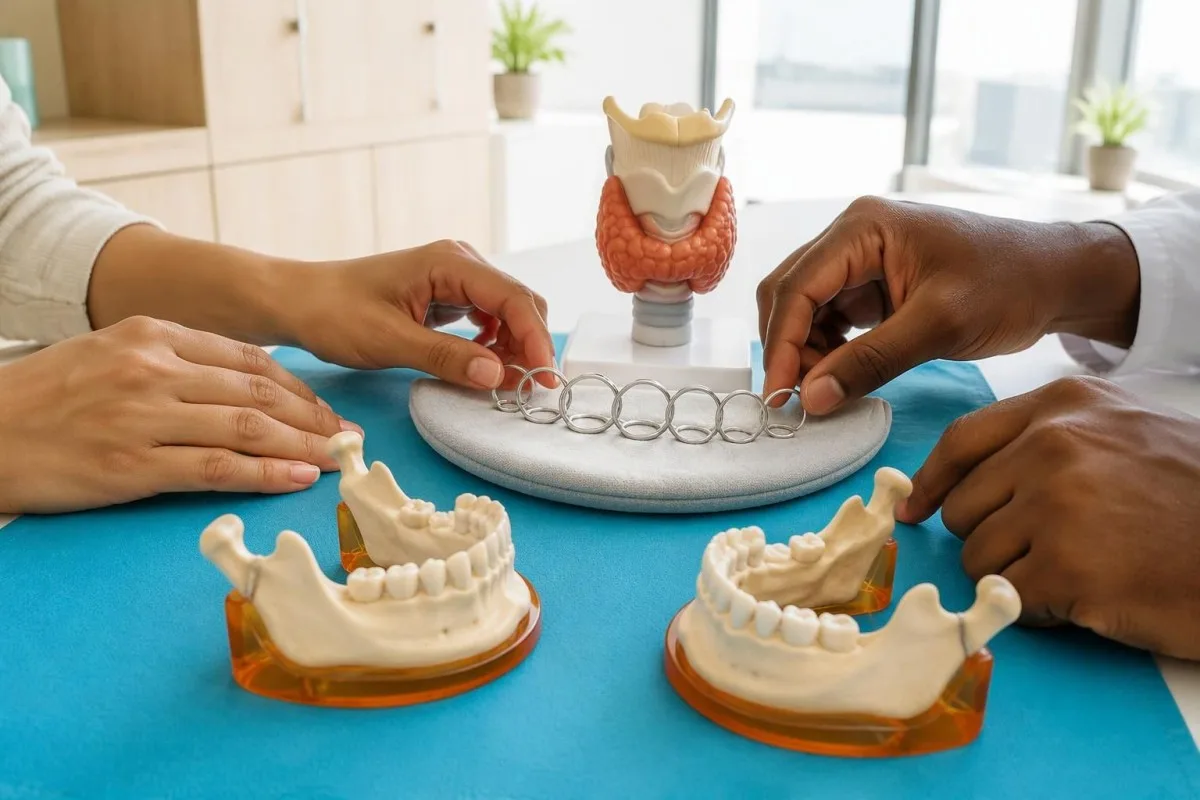
Weight gain often changes facial fullness without producing the same progressive mandibular prominence or dental spacing. In a hypothetical 50-year-old whose weight rose by 12 kg, tighter rings may have an ordinary explanation; a dentist-confirmed change in jaw relationship still deserves separate attention rather than dismissal.
Cushing syndrome can cause facial rounding, metabolic problems and muscle weakness, but its testing pathway differs from acromegaly. Our guide to cortisol screening and confirmation explains why 1 random cortisol result does not establish Cushing syndrome, just as a random growth hormone result does not establish acromegaly.
A pituitary problem can sometimes produce low free T4 without an appropriately elevated TSH. Our explanation of low T4 with normal TSH helps clarify why those 2 measurements must be interpreted together; a normal TSH alone is not a complete assessment of pituitary-related thyroid function.
Childhood growth and adult tissue enlargement should not be confused. Excess growth hormone before growth-plate closure can cause gigantism, whereas adult acromegaly does not usually increase height; a naturally large shoe size that has remained unchanged for 20 years is not equivalent to progressive adult enlargement.
Эмне үчүн IGF-1 адатта биринчи кан анализи болот
Age-adjusted IGF-1 is usually the first biochemical test when acromegaly is suspected because it reflects growth hormone activity more consistently than a single growth hormone measurement. The 2024 consensus states that characteristic clinical features plus IGF-1 above 1.3 times the age-adjusted upper limit can confirm the diagnosis (Giustina et al., 2024).
IGF-1 has no single normal adult range that applies to every age and assay. For example, if a hypothetical laboratory upper limit is 250 ng/mL and the result is 340 ng/mL, the result is 1.36 times that upper limit; using another laboratory's range could change the interpretation incorrectly.
A normal IGF-1 usually argues against acromegaly, but confounders can reduce its reliability. Poorly controlled diabetes, significant liver disease, undernutrition and oral estrogen can affect results; 1 normal measurement should be reviewed in context when physical features are compelling, rather than overridden or accepted automatically.
Kantesti is an AI blood test interpretation platform that can explain an IGF-1 value relative to the reference interval printed on the report. Биздин биомаркерди чечмелөө боюнча колдонмосу provides laboratory context, but identifying the assay, age range and clinical reason for testing remains part of clinician-led assessment.
Liver and nutritional status matter because IGF-1 production is closely linked to hepatic function and systemic health. Our кандын сары суусундагы белокторду чечмелөөчү колдонмо explains relevant background markers; 1 albumin result cannot validate or invalidate IGF-1, but it may prompt a closer review of illness or nutrition.
| Деңгээл | Диапазон | Мааниси |
|---|---|---|
| Лабораториялык интервалдын ичинде | At or below the age-adjusted upper limit | Usually argues against acromegaly; consider confounders if clinical suspicion remains strong. |
| Чектеш жогорулаган | >1.0–1.3× the age-adjusted upper limit | Requires clinical review; repeat testing and sometimes glucose suppression testing resolve uncertainty. |
| Above the consensus diagnostic threshold | >1.3× the age-adjusted upper limit | Can confirm acromegaly when characteristic clinical features are present; specialist interpretation is needed. |
Өсүү гормонун басуу тести качан пайдалуу
A glucose suppression test may help when IGF-1 results and clinical findings are equivocal. The test commonly uses 75 g oral glucose followed by serial growth hormone measurements; it assesses whether growth hormone suppresses appropriately, rather than treating one high random growth hormone value as diagnostic.
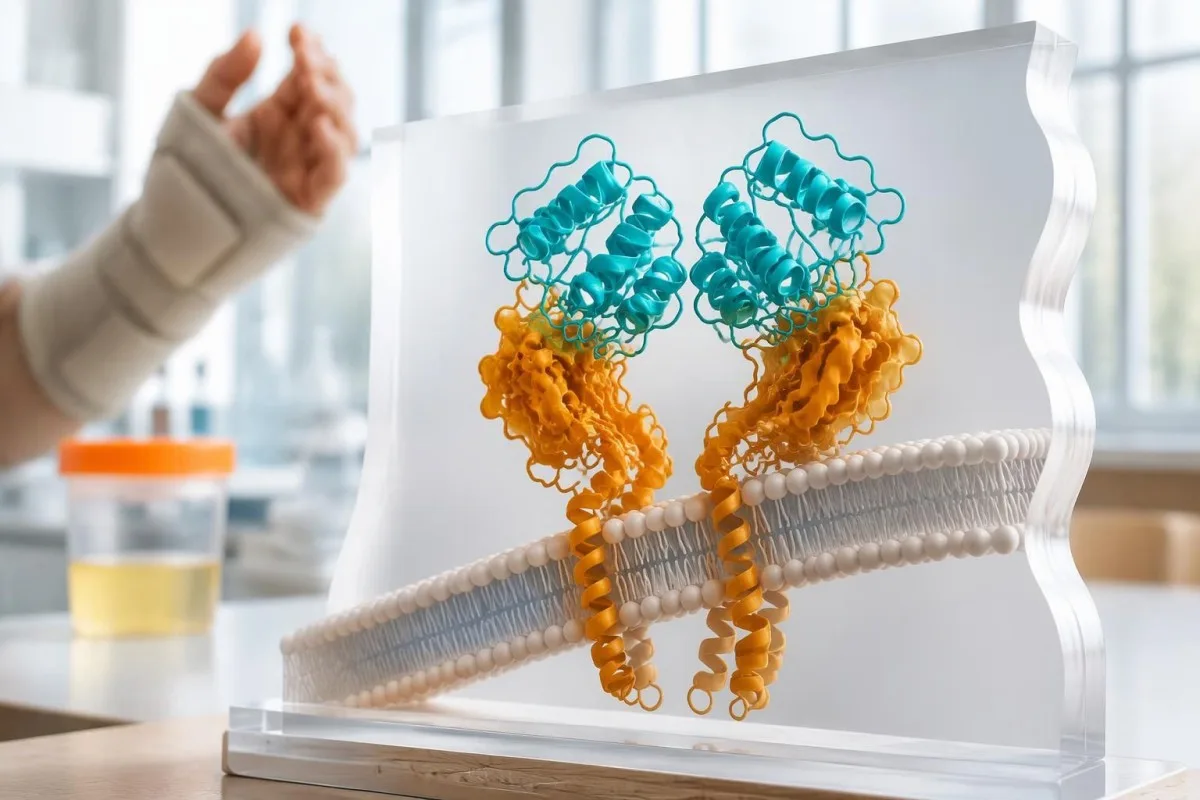
Growth hormone is released in pulses and can rise with sleep, exercise and physiological stress. That is why 1 random value, whether high or low, is unreliable for establishing or excluding acromegaly; an isolated result should not trigger a diagnosis based solely on a generic laboratory range.
Diagnostic cutoffs have changed with assay sensitivity. The Endocrine Society guideline used suppression below 1 ng/mL after glucose to exclude acromegaly in the appropriate testing context (Katznelson et al., 2014); specialist practice may use lower assay-dependent thresholds, including 0.4 ng/mL, rather than one universal cutoff.
For example, a hypothetical IGF-1 of 275 ng/mL against an upper limit of 250 ng/mL equals 1.10 times the upper limit. If growth hormone falls to 0.7 ng/mL, interpretation may differ by assay and clinical context; repeating IGF-1 and reviewing confounders is safer than selecting whichever cutoff gives a preferred answer.
Kantesti does not independently validate an acromegaly diagnosis or choose a glucose-test cutoff. Our клиникалык методология жана чектөөлөр explain why interpretation must remain tied to the source report; our separate guide to лабораториялык маанилүү өзгөрүүлөр боюнча колдонмобуз explains why 2 results are not automatically comparable.
Качан текшерилүүгө жазылуу керек жана белгилер качан шашылыш жардамды талап кылат
Book a clinical review for unexplained progressive enlargement of hands, feet or jaw, especially when sweating, sleep apnea or a changing bite accompanies it. There is no minimum duration you must wait; a sudden severe headache with new visual symptoms is a separate emergency, not something to observe for 2 weeks.
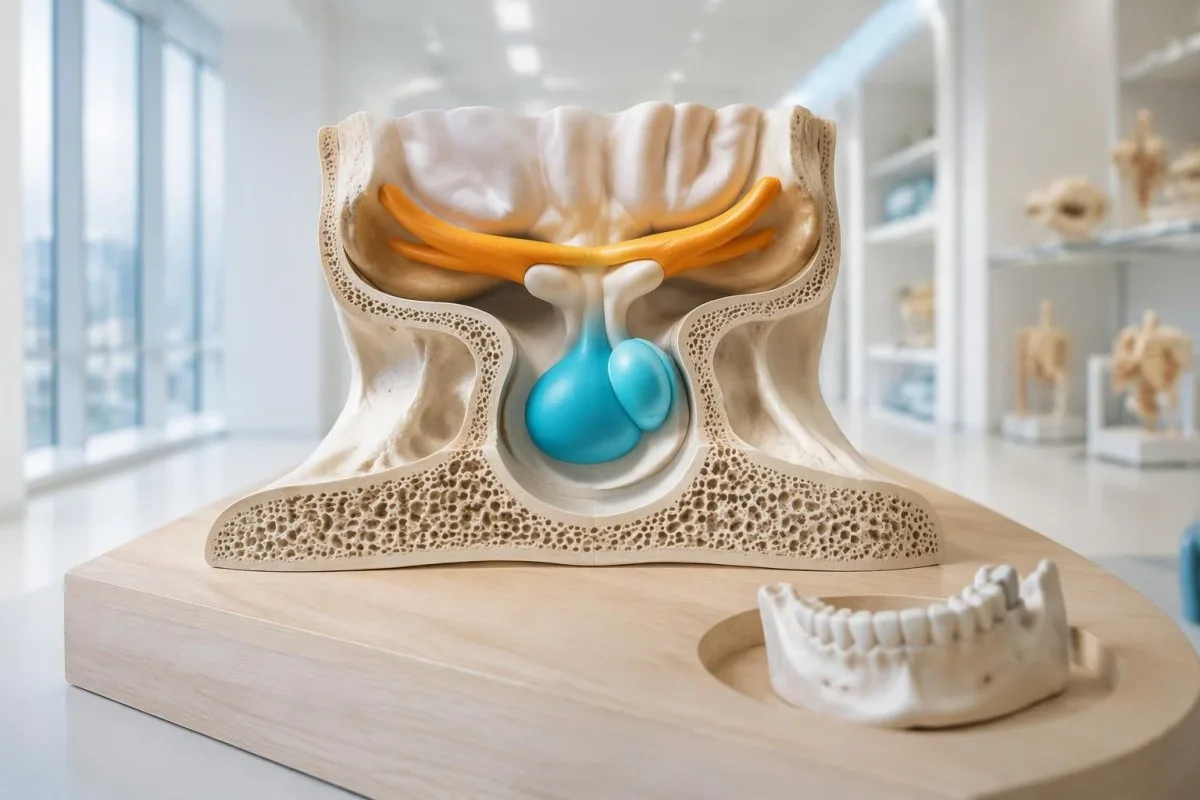
A pituitary growth can affect nearby visual pathways, sometimes causing loss of peripheral vision. New difficulty noticing objects on either side, double vision or a substantial visual change warrants prompt assessment; involvement of 1 or both eyes does not reliably determine whether the cause is pituitary, retinal or neurological.
Sudden severe headache with vomiting, double vision, reduced alertness or visual loss can indicate pituitary apoplexy or another neurological emergency. Seek emergency care immediately rather than waiting for an IGF-1 result; even 1 abrupt neurological warning symptom can justify urgent assessment when severe or unexplained.
Pituitary adenomas are usually noncancerous, but noncancerous does not mean harmless when a growth produces excess hormones or presses on nearby structures. Our guide to neurological warning symptoms explains why progressive and sudden symptoms follow different routes; a 5-year appearance change and an abrupt visual deficit should not receive the same triage.
For gradual changes without emergency features, prepare 3 categories of evidence: appearance or sizing changes, associated symptoms and existing results. Ask whether an age-adjusted IGF-1 test and endocrine referral are appropriate; avoid arriving with a self-confirmed diagnosis or postponing care until every possible symptom appears.
Гормондун анализинин жыйынтыгы нормадан тышкары болсо, андан кийин эмне болот?
After biochemical confirmation or strong specialist-supported suspicion, pituitary MRI usually identifies the source and its relationship to surrounding structures. Imaging alone cannot confirm acromegaly: a pituitary finding may be incidental, and the 10 mm size boundary between microadenoma and macroadenoma describes size rather than hormone secretion.
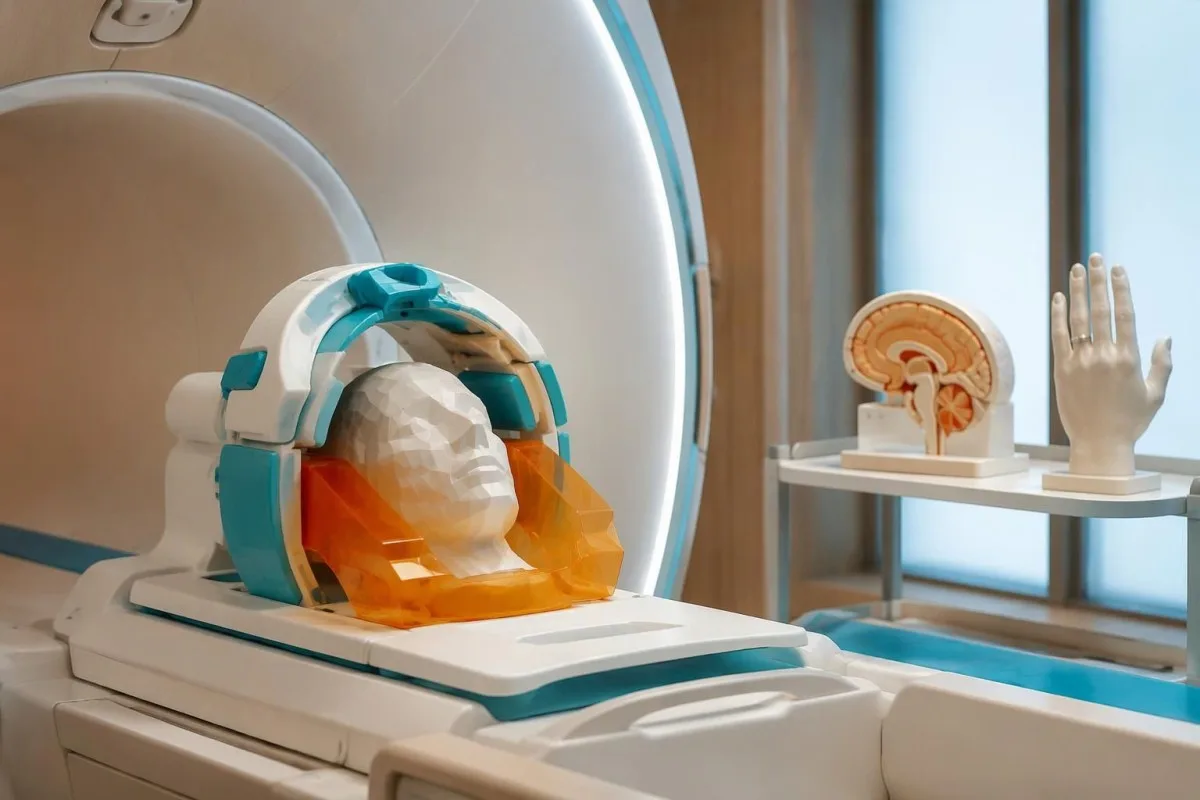
A pituitary microadenoma measures less than 10 mm, while a macroadenoma measures at least 10 mm. A smaller growth can still secrete clinically significant growth hormone; conversely, a larger nonfunctioning growth may not cause acromegaly, so dimensions and biochemical activity answer different questions.
An endocrine team may assess prolactin, thyroid function, adrenal function and reproductive hormone pathways as well as IGF-1. Our guide to жеңил пролактин жогорулашы explains why 1 raised prolactin result can have several causes; it does not prove that a pituitary growth is secreting multiple hormones.
Visual-field testing may be needed when MRI shows proximity to the optic chiasm or when vision is affected. A reassuring ability to read a phone screen at 30 cm does not exclude peripheral field loss; formal testing assesses a different part of vision from everyday reading.
Kantesti AI cannot infer pituitary growth size from an IGF-1 concentration. If the pituitary MRI does not explain convincing biochemical findings, a specialist may review imaging quality, assay issues and rare alternative sources; a negative scan should not be converted into an unsupported claim that 1 hormone result was necessarily wrong.
Кабыл алууга даярдануу жана булактарыбызды текшерүү
The most useful next step is a short timeline connecting physical changes, associated symptoms and existing laboratory results. Bring 2 dated photographs if available, ring or shoe history and the full IGF-1 report; these support a focused clinical discussion without turning home observations into a diagnostic score.
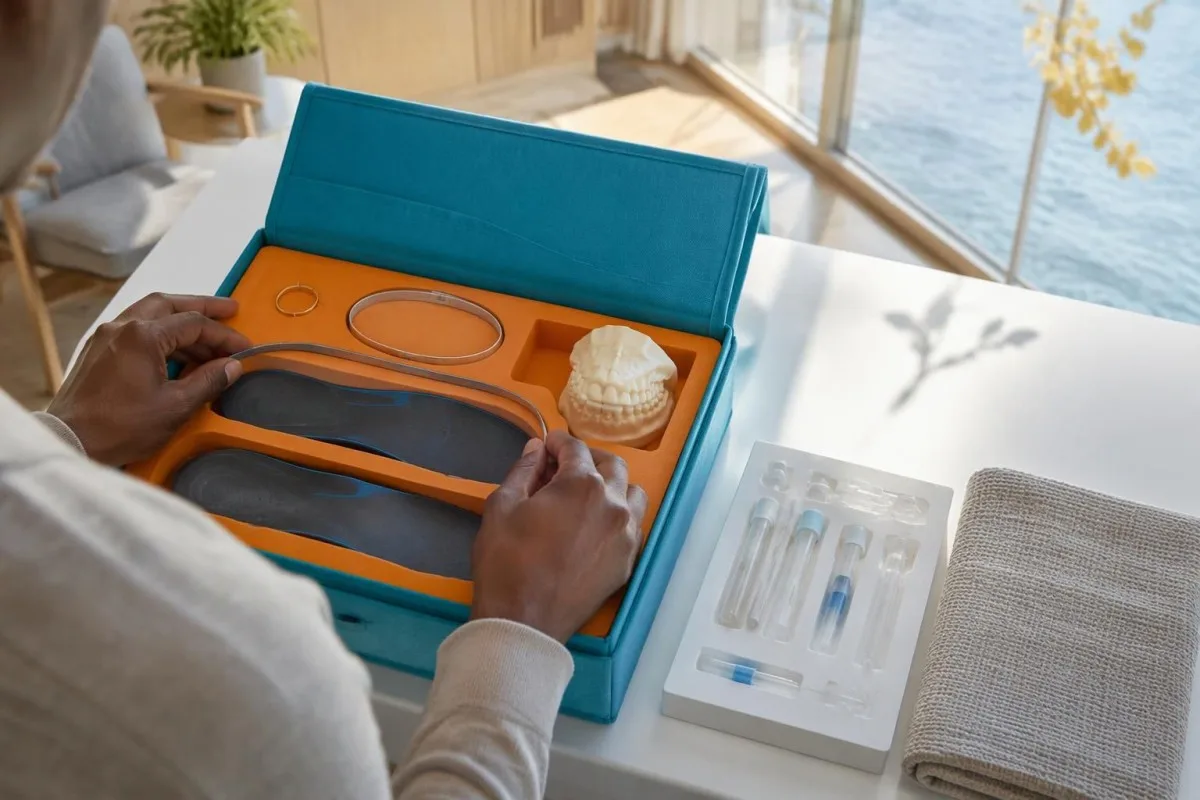
Write down when each change began and whether it has continued, fluctuated or stopped. A 1-page record is usually more useful than dozens of unlabeled photographs: include weight changes, dental observations, sleep-apnea treatment and medication or supplement use, especially prescribed hormones that could influence laboratory interpretation.
Kantesti is an AI-powered blood test analysis tool that can help explain an existing IGF-1 report and organize questions for your clinician. Биздин колдонмо ЖИ отчетторунун түшүндүрмөлөрүн текшерүү describes source verification; an explanation cannot replace examination, and a normal metabolic panel does not mean IGF-1 was tested.
Protect identifying information when sharing laboratory reports or old photographs. Kantesti's купуялык жана маалыматтар боюнча колдонмо explains our data approach; use only the materials needed for the question, and obtain permission before sharing another person's results or images, even when comparing 2 family members.
The clinical recommendations here draw on the Endocrine Society's 2014 guideline and the 2024 diagnostic consensus, listed below. The 2 accompanying Figshare publications concern gastrointestinal and women's hormonal health; they are related educational resources, not evidence for acromegaly diagnosis, and a repository DOI does not by itself establish peer review.
Көп берилүүчү суроолор
Акромегалиянын алгачкы белгилери кандай?
Акромегалиянын алгачкы белгилерине шакектердин бара-бара тар болуп калышы, бут кийимдин чоңоюшу, тердөөнүн күчөшү, билек каналы синдромунун жаңы белгилери жана тиштердин тиштешүүсүнүн өзгөрүшү кириши мүмкүн. Датасы көрсөтүлгөн 2 фотосүрөттү же тиш дарылоо жазууларын салыштыруу күн сайын байкоо кыйын болгон өзгөрүүлөрдү аныкташы мүмкүн. Шакектин өлчөмүнүн белгилүү бир даражада чоңоюшу же белгилердин саны акромегалия диагнозун тастыктабайт. Түшүндүрүүгө мүмкүн болбогон өзгөрүүлөр күчөп жатса, клиникалык текшерүүдөн өтүп, жаш курагына ылайыкташтырылган IGF-1 тестин тапшыруу керек.
Шакек же бут кийимдин өлчөмүнүн чоңоюшу менде акромегалия бар экенин билдиреби?
Шакектин же бут кийимдин өлчөмүнүн чоңоюшу өзүнөн-өзү акромегалия бар экенин билдирбейт. Салмак кошуу, суюктуктун кармалышы, артрит, кош бойлуулукка байланыштуу буттагы өзгөрүүлөр жана бут кийимдин айырмачылыктары да туура келишине таасир этиши мүмкүн. Бут кийимдин өлчөмүнүн 1 өлчөмгө өзгөрүшүнүн диагностикалык мааниси тастыкталган эмес, бирок жаактын өзгөрүшү, тердөө же уйку апноэси менен коштолгон туруктуу чоңоюу дарыгердин кароосун талап кылат. Диагноз клиникалык белгилерге жана тиешелүү гормондук анализдерге негизделет.
Акромегалия бетиңизди өзгөртүп же тиштериңиздин ортосунда ажырымдарды пайда кылышы мүмкүнбү?
Акромегалия жаактын өлчөмү өзгөргөндө астыңкы жаакты көрүнүктүүрөөк кылып, тиштердин арасындагы ажырымды көбөйтүшү мүмкүн. Ошондой эле мурунду кеңейтип, эриндерди калыңдата алат, бирок тиш этинин оорусу, ортодонтиялык дарылоо учурундагы тиштердин жылышы жана беттин кадимки өзгөрүүлөрү окшош белгилерди жаратышы мүмкүн. Эки башка күндөгү стоматологиялык жазууларды салыштыруу тиштешүү же тиштердин аралыгы өзгөргөнүн аныктоого жардам берет. Биохимиялык баалоосуз беттин сүрөттөрү жана стоматологиялык белгилер акромегалияны тастыктай албайт.
Акромегалияны аныктоо үчүн кандай кан анализи жүргүзүлөт?
Акромегалияга шек жаралганда, адатта, жаш куракка ылайыкташтырылган IGF-1 көрсөткүчүн аныктоо үчүн кан анализи биринчи жүргүзүлөт. 2024-жылдагы консенсуска ылайык, мүнөздүү клиникалык белгилер бар болсо, жаш куракка ылайыкташтырылган жогорку чектен 1,3 эсе жогору IGF-1 көрсөткүчү акромегалияны ырастай алат. Чек арадагы же бири-бирине карама-каршы келген натыйжалар анализди кайталоону жана дарыгердин көзөмөлүндө глюкоза менен супрессиялык тест жүргүзүүнү талап кылышы мүмкүн. Өсүү гормонун бир жолку, туш келди өлчөө диагноз коюуда ишенимдүү альтернатива боло албайт.
IGF-1 көрсөткүчү нормалдуу болсо да, акромегалия болушу мүмкүнбү?
Ишенимдүү өлчөнгөн, жаш курагына ылайык нормалдуу IGF-1 көрсөткүчү, адатта, дарыланбаган акромегалиянын болушу күмөн экенин көрсөтөт. Бирок канты начар көзөмөлдөнгөн диабет, олуттуу боор оорусу, жетишсиз тамактануу жана ооз аркылуу кабыл алынган эстроген IGF-1 деңгээлине таасир этип, жыйынтыктарды чечмелөөнү татаалдаштырышы мүмкүн. Эгер 1 нормалдуу жыйынтыкка карабастан мүнөздүү физикалык өзгөрүүлөр улана берсе, дарыгер анализ ыкмасын, референстик интервалды жана натыйжага таасир этиши мүмкүн болгон факторлорду карап чыгышы керек. Симптомдор диагнозду сөзсүз далилдейт же жагдайлар эч качан маанилүү эмес деп эсептегендин ордуна, анализди кайталоо же адистин баалоосу ылайыктуу болушу мүмкүн.
Акромегалиянын мүмкүн болгон белгилерин качан шашылыш абал катары кароо керек?
Колдун, буттун же беттин акырындап чоңоюшу, адатта, шашылыш жардамга эмес, алдын ала белгиленген клиникалык текшерүүгө негиз болот. Күтүүсүздөн катуу баш оору пайда болуп, көрүү жаңыдан начарласа же кош көрүү, кусуу же сергектиктин төмөндөшү коштолсо, гипофиз апоплексиясы жана башка неврологиялык өзгөчө кырдаалдар болушу мүмкүн болгондуктан, шашылыш текшерүүдөн өтүү керек. Бул эскертүүчү белгилер пайда болгондо, гормондордун пландык анализинин жыйынтыгын 24 саат күтпөңүз. Көрүүдөгү жаңы же күчөп бараткан көйгөйлөр да сырткы көрүнүштө ачык өзгөрүүлөр болбосо дагы, тез арада клиникалык баалоону талап кылат.
Кан анализинин жыйынтыгын түшүндүрүп алыңыз
Лабораториялык отчетуңузду жүктөңүз, ошондо Kantestiтин AI функциясы ар бир биомаркерди жөнөкөй тил менен бир нече секундда түшүндүрөт. Дүйнө жүзү боюнча 2 миллиондон ашык адам колдонгон.
Шилтемелер
- Klein, T., Mitchell, S., & Weber, H. (2026). Орозо кармагандан кийинки ич өткөк, заңдагы кара тактар жана ашказан-ичеги-карын боюнча колдонмо 2026. Kantesti AI медициналык изилдөөлөр. DOI
- Klein, T., Mitchell, S., & Weber, H. (2026). Аялдардын ден соолугу боюнча колдонмо: овуляция, менопауза жана гормоналдык белгилер. Kantesti AI медициналык изилдөөлөр. DOI
- Katznelson L et al. (2014). Acromegaly: An Endocrine Society Clinical Practice Guideline. The Journal of Clinical Endocrinology & Metabolism. DOI
- Giustina A et al. (2024). Consensus on criteria for acromegaly diagnosis and remission. Pituitary. DOI
- 2M+Талданган тесттер
- 127+Өлкөлөр
- 100+Тилдер
Медициналык топ жөнүндө


E-E-A-T ишеним сигналдары
Тажрыйба
Дарыгер жетектеген лабораториялык чечмелөө иш процесстерин клиникалык кароо.
Экспертиза
Биомаркерлер клиникалык контекстте кандай жүрөрүнө лабораториялык медицина багыты.
Авторитеттүүлүк
Доктор Томас Кляйн медициналык жактан карап чыккан, доктор Сара Митчелл жана профессор доктор Ханс Вебердин салымдары менен.
Ишенимдүүлүк
Тынчсызданууну азайтуу үчүн так кийинки кадамдар менен далилге негизделген чечмелөө.




Медициналык эскертүү
Бул макала билим берүү максатында гана жана медициналык кеңеш болуп саналбайт. Диагноз коюу жана дарылоо чечимдери үчүн дайыма квалификациялуу саламаттыкты сактоо адисине кайрылыңыз.
Жарыяланды · Редакциялык топко кайрылыңыз
Kantesti Ltd тарабынан жарыяланган, Англия жана Уэльсте катталган, компаниянын №. 17090423, Лондон, Улуу Британия.
