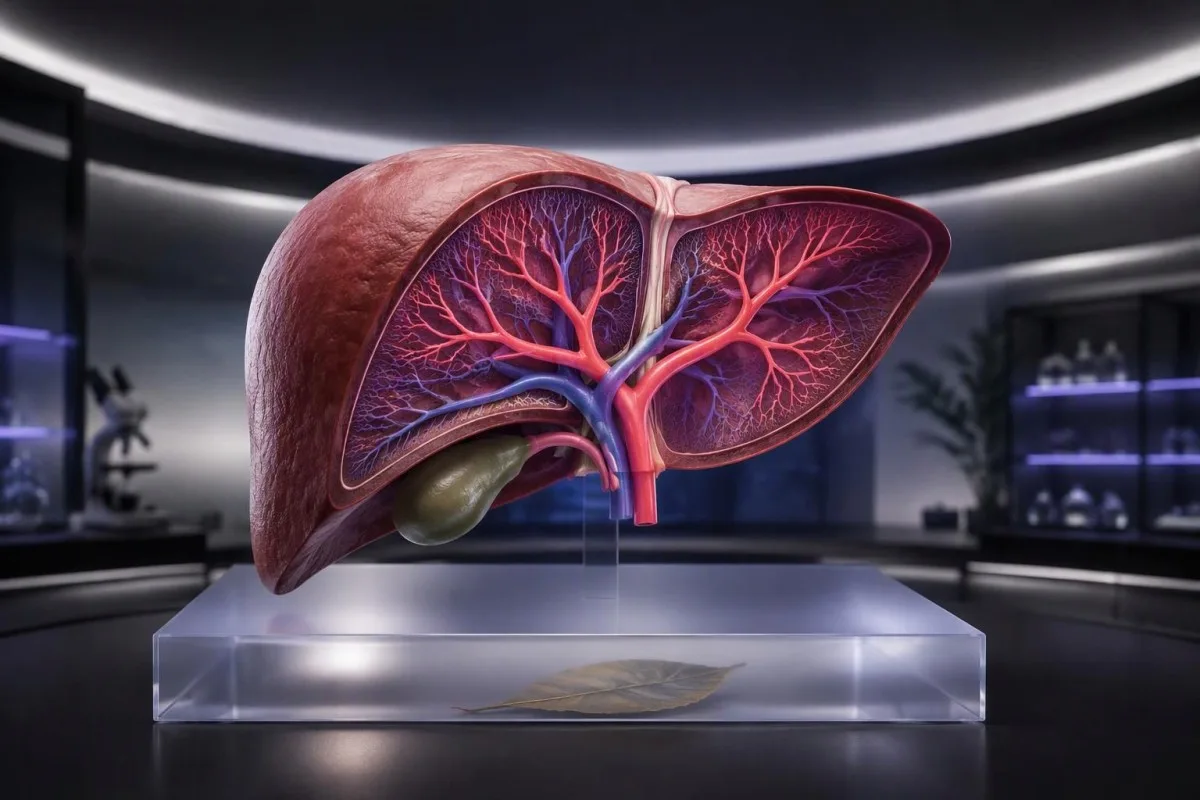
En lätt förhöjd GGT är oftast en kontextuell ledtråd snarare än en diagnos. Den användbara frågan är om den är isolerad, ihållande, stigande, eller tillsammans med ett oroande levertestmönster.


- Gränsfall GGT betyder oftast ett värde mindre än 2 gånger laboratoriets övre gräns, särskilt när ALT, AST, ALP, bilirubin, albumin och INR är normala.
- Typiska intervall varierar mellan laboratorier; många laboratorier för vuxna använder ungefär 5-36 U/L för kvinnor och 8-61 U/L för män.
- Tidpunkt för omprov sker vanligtvis 4-12 veckor efter genomgång av alkohol, mediciner, kosttillskott, nyligen genomgången sjukdom och metaboliska riskfaktorer.
- GGT plus ALP förhöjning pekar starkare mot en lever- eller gallgångskälla än en ALP-förhöjning ensam.
- Vårdcentral/akutmottagning behövs vid gulsot, feber med smärta i övre högra delen av buken, förvirring, ihållande kräkningar, svart avföring eller mycket mörk urin med ljus avföring.
- Alkoholkontext spelar roll, men GGT kan inte diagnostisera alkoholbruk eller tillförlitligt uppskatta hur mycket en person dricker.
- ihållande förhöjning under mer än 6 månader, stigande resultat, eller onormalt bilirubin, ALP, ALT, blodplättar, eller INR motiverar klinikerledd utvärdering.
- Sluta inte med receptbelagda läkemedel enbart på grund av GGT; granska möjliga läkemedelspåverkningar med förskrivaren först.
Vad ett gränsfall GGT-resultat oftast betyder
Gränsfall GGT-värde betydelse: ett isolerat resultat strax över ditt laboratorieintervall är sällan en nödsituation och återgår ofta efter ett omprov på 4-12 veckor. Det förtjänar uppmärksamhet när det kvarstår, stiger, eller förekommer med onormal ALT, ALP, bilirubin, symtom, eller nedsatt leverfunktion. Från och med den 30 september 2026 skulle jag inte diagnostisera leversjukdom enbart från GGT.
GGT, eller gamma-glutamyltransferas, är ett enzym koncentrerat i gallgångarnas epitelceller och finns även i njurar, bukspottkörtel och andra vävnader. En blygsam ökning är känslig för levercellsstress och enzyminduktion, men den är inte specifik för en viss sjukdom. För en grundläggande förklaring, se vår guide till vad GGT står för.
I mitt kliniska arbete är det mest lugnande mönstret GGT 45 U/L med en lokal övre gräns på 40 U/L, normal ALT, AST, ALP, bilirubin, albumin, blodplättar, och inga symtom. Dr. Thomas Klein skulle generellt betrakta det som en signal för uppföljning, inte en dom. Laboratorier sätter referensintervall från lokala populationer, så det tryckta intervallet på din rapport gäller framför en generell internetgräns.
Kantesti är en AI blodprovsanalysator som visar GGT bredvid resten av leverpanelen, tidigare resultat, mediciner och rapporterade riskfaktorer. Ett enda utanför intervall-flagga kan statistiskt förväntas: ett referensintervall fångar cirka 95% av en utvald frisk population, vilket lämnar ungefär 1 av 20 resultat utanför det avsiktligt.
Varför “gränsfall” inte har något universellt nummer
Kliniker kallar ofta GGT milt förhöjt när det är under 2 gånger laboratoriets övre normalgräns (ULN), men detta är en praktisk konvention snarare än en sjukdomströskel. Ett värde på 70 U/L kan vara trivialt i ett laboratorium och mer meningsfullt i ett annat, särskilt för en kvinna vars lokala ULN är 35 U/L.
GGT-intervall, könsskillnader och graden av förhöjning
Vuxna GGT-referensintervall ligger ofta nära 5-36 U/L för kvinnor och 8-61 U/L för män, men laboratorier skiljer sig avsevärt. Ett resultat under 2 gånger ULN hanteras vanligtvis med kontext och upprepad testning snarare än omedelbar avbildning hos en frisk person.
GGT mäts som enzymaktivitet, vanligtvis U/L eller IU/L, och resultaten beror på analysens temperatur och metod. Vissa europeiska laboratorier använder lägre köns-specifika övre gränser, medan fetma, ålder och regelbunden alkohol exponering kan skifta populationsfördelningar uppåt. Jämför resultat endast efter att ha kontrollerat om laboratoriet och referensintervallet ändrades mellan besöken.
Graden av förhöjning spelar mindre roll än dess följeslagare. GGT 90 U/L med ALP 240 U/L är mer oroande för kolestas än GGT 90 U/L med helt normal ALP och bilirubin. Vår detaljerade GGT-intervallguide förklarar varför samma nummer kan ge olika uppföljningsplaner.
Ett GGT-resultat ensamt mäter inte fibros, leverreserv eller cancerrisk. Albumin, INR, bilirubin, blodplättar, avbildning och fibrosskåra svarar på olika frågor; denna distinktion förhindrar mycket onödig oro.
Läs av GGT tillsammans med ALT, ALP, bilirubin och blodplättar
GGT is most informative when compared with ALP, ALT, AST, bilirubin, albumin, INR, and platelets. GGT plus raised ALP supports a hepatobiliary source of ALP, whereas isolated GGT elevation is often nonspecific.
ALT and AST rise primarily with hepatocellular injury, while ALP and GGT often rise with reduced bile flow or enzyme induction. The American College of Gastroenterology guideline recommends confirming abnormal liver chemistries and reviewing the pattern before extensive testing (Kwo et al., 2017). For a useful overview, read vad ett leverpanel innehåller.
De R-kvot helps clinicians describe a mixed picture: divide ALT/ALT ULN by ALP/ALP ULN. An R ratio above 5 is hepatocellular, below 2 is cholestatic, and 2-5 is mixed; GGT is supportive but does not enter the calculation. This is one reason a normal ALT does not automatically make an elevated ALP harmless.
Platelets below 150 × 10⁹/L, low albumin, or prolonged INR can signal reduced liver reserve or portal-hypertension risk in the right setting. Those results carry more immediate weight than an isolated GGT of 55 U/L. A normal bilirubin also does not rule out early chronic liver disease, so trend data matter.
Vanliga reversibla orsaker till en lätt förhöjd GGT
Alcohol exposure, metabolic fatty liver, recent medication changes, and enzyme-inducing medicines are the commonest explanations for a mildly elevated GGT. Short-term illness and unreported supplements can also matter, which is why a careful history often beats a broad test list.
A recent heavy drinking episode can raise GGT, but the response varies dramatically among individuals. GGT may remain elevated for weeks after alcohol reduction because its biological half-life is often estimated around 14-26 days. For a realistic view of recovery patterns, review blood markers after quitting alcohol.
Metabolic dysfunction-associated steatotic liver disease, now called MASLD, is a leading cause of persistent mild liver-enzyme abnormalities. Central weight gain, triglycerides of 150 mg/dL or more, prediabetes, type 2 diabetes, sleep apnoea, and hypertension make this explanation more likely even when ALT is normal.
I also ask about viral illness, recent surgery, fast weight loss, and high-intensity exercise, although exercise is a much stronger explanation for AST and creatine kinase than for isolated GGT. A 52-year-old endurance athlete with AST 89 U/L after a race needs CK and repeat testing; that is a different scenario from GGT 89 U/L with ALP elevation.
Alkohol och GGT: användbar kontext, inte en lögndetektor
GGT can rise with regular alcohol exposure, but it cannot prove drinking, quantify intake, or distinguish alcohol-related liver disease from MASLD. A normal GGT also does not exclude risky alcohol use.
In practice, I ask about drinks per week, binge episodes, alcohol-free days, and whether intake changed during the month before testing. The UK low-risk guidance advises not regularly exceeding 14 units per week, spread over 3 or more days; it is a risk-reduction threshold, not a guarantee of normal liver tests.
A 2024 EASL-EASD-EASO guideline treats alcohol intake and metabolic risk as overlapping contributors rather than mutually exclusive labels (EASL-EASD-EASO, 2024). That is clinically sensible: a person can have MASLD, alcohol-related injury, and medication effects at the same time. Our EtG testing guide explains why a direct alcohol biomarker answers a different question from GGT.
If alcohol may be contributing, a 4-8 week alcohol-free interval followed by repeat liver tests can be informative when medically safe and personally feasible. Do not attempt abrupt unsupervised cessation if you drink daily and have had tremor, sweating, seizures, hallucinations, or severe withdrawal before; urgent medical advice is safer.
Medicin- och tillskottseffekter värda att kontrollera
Several medicines can raise GGT through liver enzyme induction or drug-related liver injury, but patients should not stop prescribed treatment because of one mildly abnormal result. The safe next step is a medication reconciliation with the clinician or pharmacist who knows why each medicine was prescribed.
Classic enzyme-inducing anticonvulsants include phenytoin, phenobarbital, and carbamazepine; they may elevate GGT without clinically important liver damage. Some antibiotics, antifungals, antiretrovirals, statins, hormonal therapies, and immunomodulating medicines can alter liver tests through different mechanisms. Timing is the clue: a rise appearing 2-12 weeks after a new agent deserves prompt review.
Supplements deserve the same scrutiny as prescriptions. Concentrated green-tea extract, anabolic agents, high-dose niacin, multi-ingredient “detox” products, and poorly regulated bodybuilding products have all been linked to liver injury. See our practical review of liver-health supplements before assuming a product marketed as natural is benign.
Bring photographs of labels, not just product names; formulations change and doses are easily forgotten. A clinician may repeat ALT, AST, ALP, bilirubin, and INR sooner—within days to 2 weeks—if symptoms appear or a suspected drug reaction coincides with ALT more than 3 times ULN.
När gränsfall GGT pekar mot metabol risk för levern
Borderline GGT can accompany MASLD, particularly when waist circumference, triglycerides, glucose, blood pressure, or ALT are also abnormal. It is not a diagnostic test for fatty liver, and normal enzymes do not exclude liver fat or fibrosis.
MASLD is diagnosed from evidence of liver steatosis plus one or more cardiometabolic risk factors after considering alcohol and other causes. The 2024 EASL-EASD-EASO guideline recommends structured fibrosis risk assessment in people with metabolic risk, rather than relying on liver enzymes alone (EASL-EASD-EASO, 2024). Our MASLD-testguide sets out the usual laboratory and imaging sequence.
De FIB-4 poäng uses age, AST, ALT, and platelets; in adults under 65, a value below 1.3 generally indicates low risk of advanced fibrosis in primary-care triage. FIB-4 is less reliable during acute illness, in people younger than 35, and in people over 65, where age inflates the score. Use a FIB-4 förklaring rather than calculating from partial labs.
Kantesti är en AI-plattform för tolkning av blodprov that can place GGT alongside fasting glucose, HbA1c, triglycerides, HDL cholesterol, ALT, platelets, and prior results. That pattern recognition is useful for a clinician conversation, but ultrasound or elastography—not AI alone—assesses steatosis and fibrosis.
Hur länge man ska vänta innan omprov GGT
For isolated, mildly elevated GGT without symptoms, repeating a complete liver panel in 4-12 veckor is a reasonable practical interval. Retest sooner when GGT is rising quickly, another liver value is abnormal, a new medicine is involved, or symptoms develop.
Use the same laboratory where possible and repeat GGT, ALT, AST, ALP, total and direct bilirubin, albumin, and CBC with platelets. Fasting is not mandatory for GGT itself, though it can help if glucose and triglycerides are being assessed simultaneously. Avoid trying to “beat” the test with extreme dieting, dehydration, or unapproved supplements.
For the cleanest comparison, document alcohol intake for the preceding 4 weeks, new medicines, supplement doses, illness, and major exercise. A repeat test after a stable routine is more useful than one drawn immediately after a holiday, infection, or crash diet. Our blodprovstidsguide explains why day-to-day variation can be real.
A fall toward the reference range after removing an obvious trigger is reassuring, though it does not automatically establish cause and effect. A persistent result over 6 months should prompt a more deliberate work-up, even if you feel perfectly well.
När man ska oroa sig för GGT och söka akutvård
An elevated GGT becomes urgent because of symptoms or a dangerous liver pattern, not because of a single universal GGT number. Same-day assessment is appropriate for jaundice, fever with right-upper abdominal pain, confusion, severe itching with dark urine, or persistent vomiting.
Seek emergency care for yellow eyes or skin with fever, severe abdominal pain, confusion, fainting, vomiting blood, or black tarry stool. These features can reflect bile-duct obstruction, severe hepatitis, infection, gastrointestinal bleeding, or liver failure; waiting for a repeat GGT would be the wrong move. Review our warning signs for högt bilirubin.
Contact a clinician promptly, usually within days, if bilirubin is above range, ALP is more than 1.5 times ULN, ALT or AST exceeds 3 times ULN, or GGT rises on serial tests. There is no validated emergency cutoff such as “GGT 200 U/L”; a painless GGT of 200 U/L may be less urgent than GGT 80 U/L with fever and jaundice.
Pregnancy deserves a lower threshold for assessment. Itching of the palms or soles, jaundice, or elevated bile acids in pregnancy needs same-day maternity advice because the relevant test is serum bile acids, not GGT alone; see bile-acid urgency.
Vad kliniker kan kontrollera efter ihållande GGT-förhöjning
Persistent GGT elevation usually leads to a targeted history, repeat liver panel, metabolic assessment, viral hepatitis testing when risk supports it, and ultrasound or fibrosis testing when indicated. Broad “liver screens” are not necessary for every result just above range.
Initial evaluation commonly covers alcohol, medicines, body-weight history, diabetes risk, family history, travel, viral exposure, and symptoms. Hepatitis B surface antigen and hepatitis C antibody testing are appropriate when risk factors, unexplained abnormalities, or local screening recommendations support them. Read about hepatitis C symptom patterns if exposure is a concern.
Ultrasound is useful for gallstones, bile-duct dilation, liver texture, and obvious structural change, but it cannot reliably stage mild fibrosis. Transient elastography, often known as FibroScan, estimates stiffness in kilopascals and can complement FIB-4; our FibroScan guide explains why fasting and technical quality affect results.
Autoimmune markers, ferritin and transferrin saturation, coeliac testing, alpha-1 antitrypsin testing, or ceruloplasmin are selected by age, pattern, and history—not ordered reflexively. The ACG guideline supports targeted investigation because indiscriminate testing creates false positives and anxiety (Kwo et al., 2017).
GGT, gallvägssjukdomar och kolestas-mönster
GGT helps confirm that an elevated ALP probably comes from the liver or bile ducts rather than bone. It does not diagnose gallstones, cholecystitis, or bile-duct blockage without symptoms, bilirubin results, imaging, and clinical examination.
A cholestatic pattern usually means ALP is disproportionately elevated relative to ALT, often with GGT elevation. Direct bilirubin can rise when bile flow is impaired, causing dark urine and pale stool; these features are more actionable than GGT alone. Our guide för kolestas-mönster compares the usual laboratory combinations.
Gallstone-related obstruction may cause fluctuating pain under the right ribs, nausea, fever, or jaundice, although painless obstruction also occurs. A normal GGT does not rule out an acute stone event early in its course, and a high GGT cannot tell whether a stone is currently present. Ultrasound is often the first imaging test.
ALP can rise from bone turnover, healing fractures, vitamin D deficiency, pregnancy, and Paget disease. If ALP is high but GGT is normal, clinicians often look beyond the liver; our piece on ALP efter en fraktur gives a useful example.
Fyra missuppfattningar om en lätt förhöjd GGT
A slightly elevated GGT does not automatically mean alcohol misuse, cirrhosis, or a blocked bile duct. It is also not a liver “detox score,” and lowering the number without finding the context is not a meaningful treatment goal.
Misconception one: “Normal ALT means my liver is definitely fine.” Normal ALT is reassuring but does not exclude steatosis or fibrosis, particularly in diabetes and obesity. This is why fibrosis risk tools use age, platelets, and AST as well as ALT.
Misconception two: “GGT is an alcohol test.” It is not. In my experience, patients are often relieved to hear that GGT is an enzyme-induction marker with many causes, while clinicians still need an honest, nonjudgmental alcohol history to interpret it correctly.
Misconception three: “A supplement can safely normalize it.” Supplements may themselves be the cause, and there is no proven over-the-counter product that treats unexplained elevated GGT. Kantesti AI highlights supplement-related possibilities and result trends, but a clinician should assess persistent abnormalities; our medicinska valideringsstandarder describe the limits of AI-supported interpretation.
Att använda trender och AI-tolkning på ett säkert sätt
A GGT trend is more useful than a single borderline result when tests are taken under comparable conditions. AI can organize the pattern and prompt questions, but it cannot examine you, verify a medicine history, or replace ultrasound, elastography, or urgent assessment.
Kantesti är en AI-baserat analysverktyg för blodprov designed to compare GGT with ALT, AST, ALP, bilirubin, platelets, glucose, and lipids rather than treating a red flag as a diagnosis. In a stable outpatient, a change from 42 to 44 U/L may be ordinary biological and analytical variation; a rise from 42 to 140 U/L alongside ALP and bilirubin changes is not.
Before uploading or sharing results, check the exact unit, reference interval, collection date, fasting status, and whether the report contains a hemolysis or lipemia comment. A blood-test PDF checklist can prevent a transcription error from becoming a health worry.
Dr. Thomas Klein’s practical rule is simple: use an interpretation to prepare for care, not to delay it. If you have red-flag symptoms, contact urgent services rather than waiting for a trend analysis or another home-based decision.
Frågor att ställa vid en uppföljande GGT-mottagning
The best follow-up question is not “How do I lower GGT?” but “What pattern do my full liver tests show, and what is the safest next step?” Bringing prior results and a complete medication list can shorten the path to an answer.
Ask whether your elevation is isolated, whether ALP suggests a bile-duct pattern, and whether bilirubin, albumin, INR, or platelets alter the level of concern. Ask what date to retest and which tests will be repeated. A clinician should be able to explain why a 4-week, 8-week, or immediate repeat is being chosen.
Ask whether your alcohol, medicine, supplement, metabolic, viral, or family history changes the investigation. If fibrosis risk is relevant, ask whether FIB-4 or elastography is appropriate rather than requesting every available blood test. Our medicinsk rådgivande nämnd supports the clinical-review principles behind these patient safety prompts.
Keep a copy of each report. Persistent mild abnormalities are often solved by sequence—repeat panel, targeted history, then selective imaging—not by panic or by ignoring the result. If jaundice, fever, severe pain, confusion, dark urine with pale stools, or vomiting develops, seek same-day medical assessment.
Vanliga frågor
Vad betyder en gränsfall GGT-nivå?
En gränsfall GGT-nivå betyder vanligtvis att enzymet ligger strax över ditt laboratories övre referensgräns, ofta mindre än 2 gånger den gränsen. När ALT, AST, ALP, bilirubin, albumin, INR, blodplättar och symtom är normala, kontrolleras detta mönster vanligtvis om inom 4-12 veckor snarare än att behandlas som en nödsituation. Alkohol exponering, metabol risk för levern, mediciner och kosttillskott är vanliga förklaringar. Kvarstående förhöjning under mer än 6 månader eller en stigande trend kräver bedömning av en kliniker.
Hur högt måste GGT vara innan jag bör oroa mig?
There is no single GGT number that defines an emergency because urgency depends more on symptoms and other liver results. A GGT above 2 times the laboratory upper limit, especially with ALP elevation, abnormal bilirubin, or ALT and AST above 3 times ULN, should prompt timely clinical review. Jaundice, fever, right-upper abdominal pain, confusion, dark urine, pale stools, or persistent vomiting require same-day medical assessment regardless of the GGT value. An isolated GGT of 60 U/L can be less concerning than GGT of 45 U/L with jaundice.
Kan alkohol orsaka en mildt förhöjd GGT?
Regelbunden alkoholkonsumtion kan höja GGT, men GGT kan inte bevisa alkoholkonsumtion eller mäta hur mycket en person dricker. Enzymet kan förbli förhöjt i veckor efter minskad alkoholkonsumtion eftersom dess uppskattade halveringstid ofta är cirka 14-26 dagar. Ett 4-8 veckors alkoholfritt intervall följt av en upprepad leverpanel kan vara användbart när det är säkert och genomförbart. Personer med risk för alkoholabstinens bör söka medicinsk rådgivning innan de plötsligt slutar med daglig alkoholkonsumtion.
Ska jag fasta innan jag upprepar ett GGT-test?
Fasting is not usually required for a GGT test, because GGT is not strongly affected by a standard meal. If the repeat blood draw also includes fasting glucose, triglycerides, or insulin, your clinician may request an 8-12 hour fast for those markers. Use the same laboratory where possible and document alcohol intake, new medicines, supplements, illness, and major exercise in the preceding weeks. Consistent conditions make a GGT trend more interpretable.
Kan fettlever orsaka högt GGT med normalt ALT?
MASLD can occur with elevated GGT and normal ALT, and normal liver enzymes do not exclude steatosis or fibrosis. Metabolic clues include diabetes or prediabetes, triglycerides of 150 mg/dL or higher, low HDL cholesterol, high blood pressure, and increased waist circumference. FIB-4 uses age, AST, ALT, and platelets to estimate advanced-fibrosis risk, while ultrasound or elastography assesses liver structure. The 2024 EASL-EASD-EASO guideline supports structured fibrosis assessment in people with metabolic risk.
Kan mediciner höja GGT?
Medicines can raise GGT through enzyme induction or drug-related liver injury, and older anticonvulsants such as phenytoin, phenobarbital, and carbamazepine are classic examples. Antibiotics, antifungals, antiretrovirals, statins, hormones, and herbal or bodybuilding products can also alter liver tests in some people. Do not stop a prescribed medicine because of a borderline GGT result without consulting the prescriber. A rise within 2-12 weeks of starting a new product is a useful timing clue for clinical review.
Få AI-drivna analyser av blodprov redan idag
Gå med i över 2 miljoner användare världen över som litar på Kantesti för snabb och korrekt analys av blodprover. Ladda upp dina blodprovsresultat och få en heltäckande tolkning av 15,000+-biomarkörer på sekunder.
📚 Refererade forskningspublikationer
Klein, T., Mitchell, S., & Weber, H. (2026). Kantesti LTD. (2026). AI Blood Test Analyzer: 2,5M tester analyserade | Global Health Report 2026. Zenodo.. Kantesti AI Medical Research.
Klein, T., Mitchell, S., & Weber, H. (2026). Kantesti LTD. (2026). RDW-blodprov: komplett guide till RDW-CV, MCV och MCHC. Zenodo.. Kantesti AI Medical Research.
📖 Externa medicinska referenser
⚕️ Medicinsk ansvarsfriskrivning
Den här artikeln är endast avsedd för utbildningsändamål och utgör inte medicinsk rådgivning. Rådgör alltid med en behörig vårdgivare för beslut om diagnos och behandling.
E-E-A-T förtroendesignaler
Uppleva
Läkarledd klinisk granskning av arbetsflöden för laboratorietolkning.
Expertis
Laboratoriemedicinskt fokus på hur biomarkörer beter sig i kliniskt sammanhang.
Auktoritet
Skrivet av Dr. Thomas Klein med granskning av Dr. Sarah Mitchell och Prof. Dr. Hans Weber.
Trovärdighet
Evidensbaserad tolkning med tydliga uppföljningsspår för att minska larm.