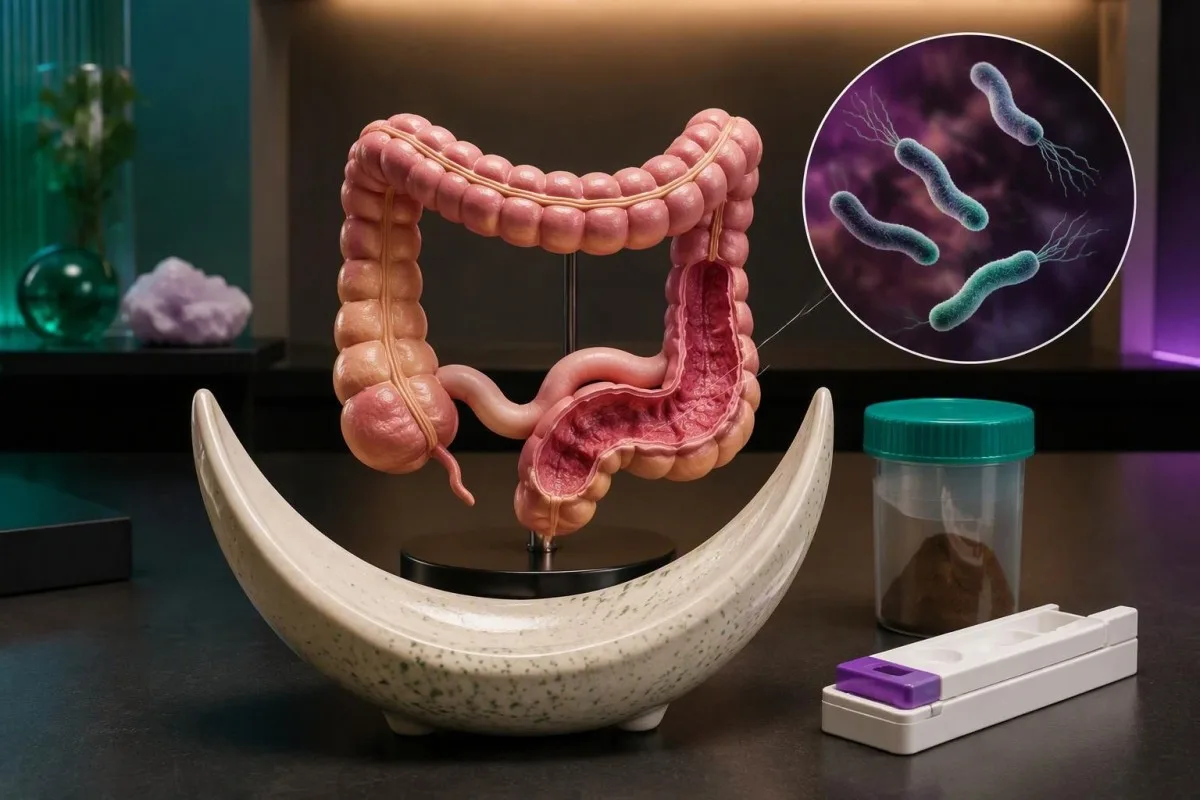
Ett positivt Campylobacter-PCR-test av avföring innebär inte automatiskt att du behöver antibiotika. De flesta i övrigt friska personer tillfrisknar med vätsketillförsel; svår eller långvarig diarré, ihållande feber, uttorkning, graviditet, hög ålder eller nedsatt immunförsvar motiverar en medicinsk bedömning och kan påverka behandlingen.

Viktiga slutsatser
- Positivt PCR innebär att Campylobacter-DNA påvisades; i sig bevisar det inte att levande bakterier finns kvar eller att antibiotika behövs.
- Vanligt tillfrisknande tar ungefär en vecka för många i övrigt friska personer, även om det kan ta längre tid innan tarmvanorna stabiliseras.
- Nytta av antibiotika var i genomsnitt cirka 1,3 dagar kortare duration av tarmsymtom i en äldre metaanalys av 11 randomiserade studier; tidig behandling ger i allmänhet större nytta.
- Bedömning av behandling är lämplig vid blodig diarré, ihållande feber, försämring eller symtom som fortsätter i mer än cirka 7 dagar utan förbättring.
- Varningssignaler vid akuta tillstånd omfattar förvirring, svimning, svår uttorkning, en hård buk eller snabbt tilltagande svaghet; vänta inte på ett nytt avföringsprov.
- Högre riskgrupper omfattar gravida, vuxna som är 65 år eller äldre och personer med nedsatt immunförsvar; spädbarn behöver en åldersanpassad bedömning.
- Upprepat PCR-test är vanligtvis onödigt efter tillfrisknande eftersom DNA-påvisning och fortsatt smittsamhet inte är samma sak.
- Smittförebyggande åtgärder omfattar att tvätta händerna med tvål i minst 20 sekunder och följa lokala regler för att stanna hemma från arbetet eller barnomsorgen, ofta i minst 48 timmar efter att diarré och kräkningar har upphört.
Kräver ett positivt Campylobacter-PCR-resultat antibiotika?
A Positivt Campylobacter-PCR innebär inte automatiskt att antibiotika behövs. En i övrigt frisk person vars diarré håller på att bli bättre kan ofta tillfriskna med enbart oral vätskeersättning, vanligtvis inom cirka 1 vecka; allvarlig sjukdom, ihållande symtom eller hälsotillstånd som medför högre risk motiverar ett behandlingsbeslut som fattas av läkare.
Symtomen avgör nästa steg mer tillförlitligt än ordet positivt. Ett provsvar som kommer dag 5 betyder något annat om du nu har 2 lösa avföringar om dagen i stället för 10, ihållande feber och svårt att dricka; laboratoriesvaret kan inte ge den kliniska utveckling som saknas.
Ett positivt provsvar utan symtom behöver också sättas i sitt sammanhang, inte leda till automatisk behandling. Om diarrén upphörde 2 dagar innan provsvaret kom ska du kontakta den läkare som beställde provet om dina riskfaktorer och eventuella arbetsplatsrestriktioner i stället för att använda överbliven antibiotika; förbättring kan inträffa innan laboratoriet har slutfört analysen av provet.
Kantesti är en AI-blodprovsanalysator som hjälper till att förklara tillhörande laboratorieresultat, men den kan inte avgöra om avförings-PCR kräver behandling. Vår organisation och kliniska omfattning är fristående från beslutet att förskriva antibiotika, vilket kräver uppgifter om symtom och läkemedelshistorik samt undersökning när det är indicerat.
En första praktisk bedömning behöver minst 4 uppgifter: när symtomen började, hur många gånger du har avföring under 24 timmar, om du kan behålla vätska och om du har feber eller synligt blod. Uppge även graviditet, immunhämmande läkemedel, nyliga resor och hela avföringspanelens provsvar innan du diskuterar behandling av Campylobacter.
Vad påvisar egentligen ett positivt Campylobacter-PCR-test av avföring?
Ett positivt avförings-PCR innebär att analysen påvisade en riktad Campylobacter-DNA-sekvens i det provet. PCR kräver inte levande bakterier, och ett kvalitativt resultat anger vanligtvis 1 av 2 kategorier– påvisad eller inte påvisad – snarare än ett validerat mått på sjukdomens svårighetsgrad.
Olika laboratorier testar inte nödvändigtvis för identiska organismer. Många gastrointestinala paneler riktar in sig på Campylobacter jejuni och Campylobacter coli, medan täckningen av andra arter varierar; man bör inte anta att dessa 2 vanliga arter representerar alla möjliga Campylobacterinfektioner, särskilt när blodbanesjukdom misstänks.
Ett PCR-positivt, odlingsnegativt prov är inte i sig motsägelsefullt. PCR kan påvisa DNA när bakterieantalet är lågt, organismerna har förlorat sin livskraft eller transportförhållandena har försämrat möjligheten att få tillväxt i odling; en negativ odling gör därför inte automatiskt ett förenligt positivt PCR-resultat ogiltigt.
Ett tröskelvärde för cykelantal är inte en universell gräns för smittsamhet vid Campylobacter. Even if a laboratory releases a Ct of 30, differences in extraction, stool consistency, and assay design prevent translating that number into a reliable treatment or return-to-work rule; our kvalitativ kontra kvantitativ guide förklarar rapporteringsskillnaden.
The original specimen date matters more than the report date when reconstructing illness. A stool sample collected on day 2 and reported on day 5 describes what was present in the earlier specimen, not necessarily what is happening in your bowel today; keep both dates when discussing the result.
Kan resultatet vara ett bifynd, ett falskt positivt resultat eller en del av en blandinfektion?
A Campylobacter stool test positive result is more persuasive when it accompanies a compatible diarrheal illness, but it does not prove that Campylobacter explains every symptom. Multiplex panels can detect 2 or more organisms, and occasional false-positive or clinically incidental detections require interpretation rather than indiscriminate antibiotics.

A second detection can change the safety of antibiotic treatment. If a panel also detects Shiga toxin or Shiga toxin-producing Escherichia coli, the 2017 IDSA guideline recommends avoiding antibiotics for certain STEC infections because of hemolytic uremic syndrome risk; contact the clinician before assuming a standard Campylobacter regimen is appropriate (Shane et al., 2017).
Two positive targets do not necessarily require 2 antimicrobial prescriptions. Giardia can produce persistent bloating and prolonged loose stools, whereas Campylobacter more often causes an acute febrile illness; the distinction matters when interpreting Giardia detection and recovery alongside the timing of your symptoms.
Some positive stool targets are particularly dependent on clinical context. A C. difficile finding after recent antibiotics needs the assay type, stool frequency, and clinical history, not merely comparison with another positive organism; our guide to diskordanta C. difficile-resultat explains why 1 laboratory label may be insufficient.
Culture is useful when the answer could change treatment or public-health action. The IDSA guideline recommends culture after relevant culture-independent bacterial detections when an isolate is needed for surveillance or susceptibility testing; repeating the same PCR after 24 hours usually supplies less actionable information than obtaining the right additional test.
Varför går många Campylobacter-infektioner över utan behandling?
Many Campylobacter infections resolve because the immune system controls the intestinal infection while fluids replace ongoing losses. Antibiotics can shorten symptoms, but an older meta-analysis of 11 randomized trials found an average reduction of about 1.32 days, not an immediate cure (Ternhag et al., 2007).
The timing of antibiotics affects their potential benefit. The 2007 analysis by Ternhag and colleagues reported a 95% confidence interval of 0.64–1.99 days for symptom shortening, with greater benefit generally expected when treatment begins early; that average should not be interpreted as a guarantee for an individual patient.
An improving illness leaves less remaining illness for an antibiotic to shorten. For example, a hypothetical 34-year-old on day 6 who is drinking normally and has reduced from 8 stools to 2 stools daily may have little additional symptomatic benefit, even though the original specimen remains PCR positive.
Avoiding unnecessary antibiotics also avoids avoidable harms. Antibiotic-associated diarrhea, allergic reactions, interactions, and resistance selection are relevant even during a 3-day course; the main decision is whether likely clinical benefit outweighs these risks, not whether a positive result deserves an antimicrobial response.
Treatment expectations differ between intestinal pathogens. A Campylobacter result cannot be managed by copying advice for parasites or commercial microbiome findings; compare Cryptosporidium treatment decisions och mikrobiomtestningens begränsningar when more than 1 type of stool report is involved.
Vilka symtom gör det mer sannolikt att antibiotika behövs mot Campylobacter?
Antibiotics are more likely to be considered for severe, worsening, or prolonged Campylobacter illness, especially with bloody diarrhea, persistent fever, substantial fluid loss, or reduced immunity. Symptoms lasting beyond about 7 days without improvement deserve reassessment, but no single stool-count or temperature cutoff determines treatment for everyone.
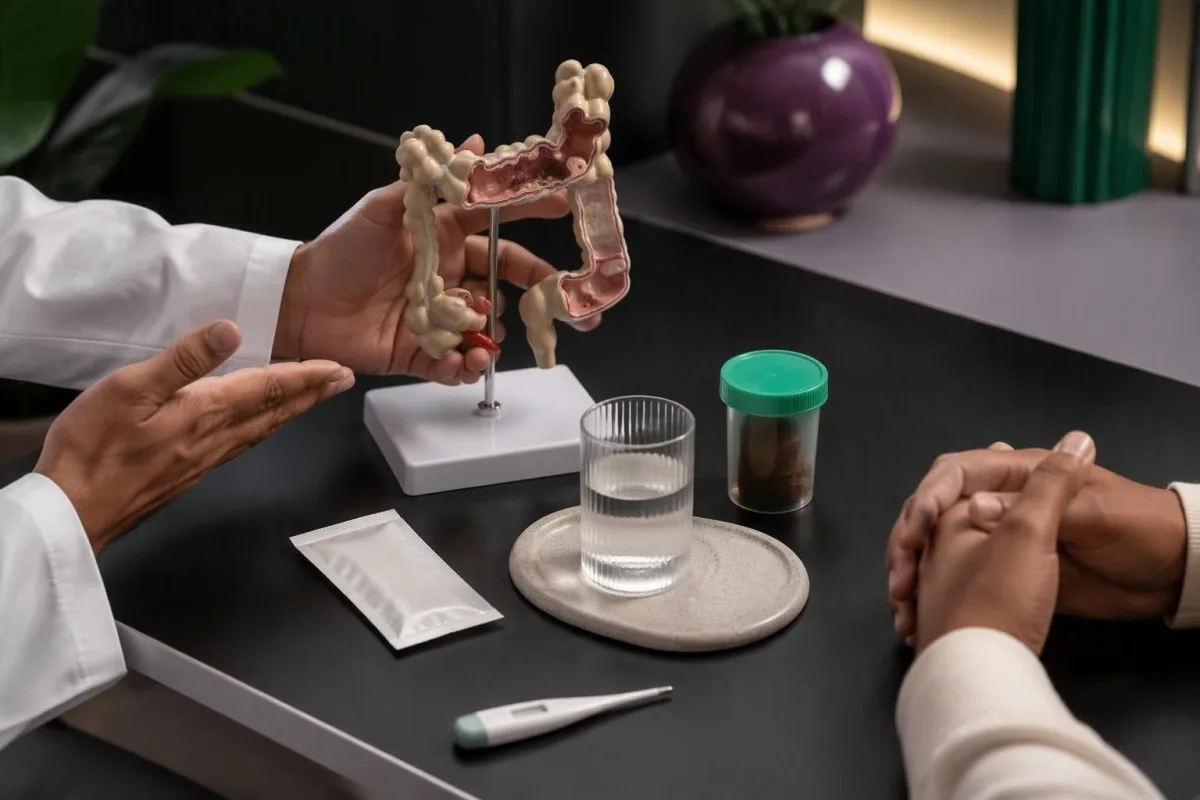
Persistent fever is more concerning than one isolated high reading. A temperature of 38.5°C combined with frequent diarrhea, worsening pain, or inability to drink warrants prompt advice; the same temperature during an otherwise improving first day does not independently establish that antibiotics will help.
Visible blood suggests inflammatory intestinal injury but does not identify its cause. More than 6 unformed stools in 24 hours can indicate a substantial symptom burden, yet a person with fewer stools and significant bleeding may need faster assessment; our stool blood warning signs explain why color and accompanying symptoms matter.
Duration is a reassessment trigger rather than an automatic prescription date. Day 8 with worsening diarrhea is different from day 8 with one slightly loose stool and normal appetite; the 2017 IDSA guideline considers treatment reasonable for particularly prolonged or severe Campylobacter disease without establishing a universal 7-day rule (Shane et al., 2017).
Treatment failure needs investigation before a second course. Persistent fever or substantial diarrhea after 48–72 hours of prescribed treatment should prompt contact with the prescriber, who may review adherence, resistance, another detected pathogen, or a noninfectious diagnosis rather than simply extending the same antibiotic.
När kräver ett positivt resultat en skyndsam bedömning eller akut bedömning?
Seek emergency care for confusion, collapse, severe dehydration, a rigid abdomen, major bleeding, or rapidly worsening weakness, regardless of the stool result. An infant younger than 3 månader with a temperature of 38°C eller högre needs urgent medical assessment rather than home monitoring alone.
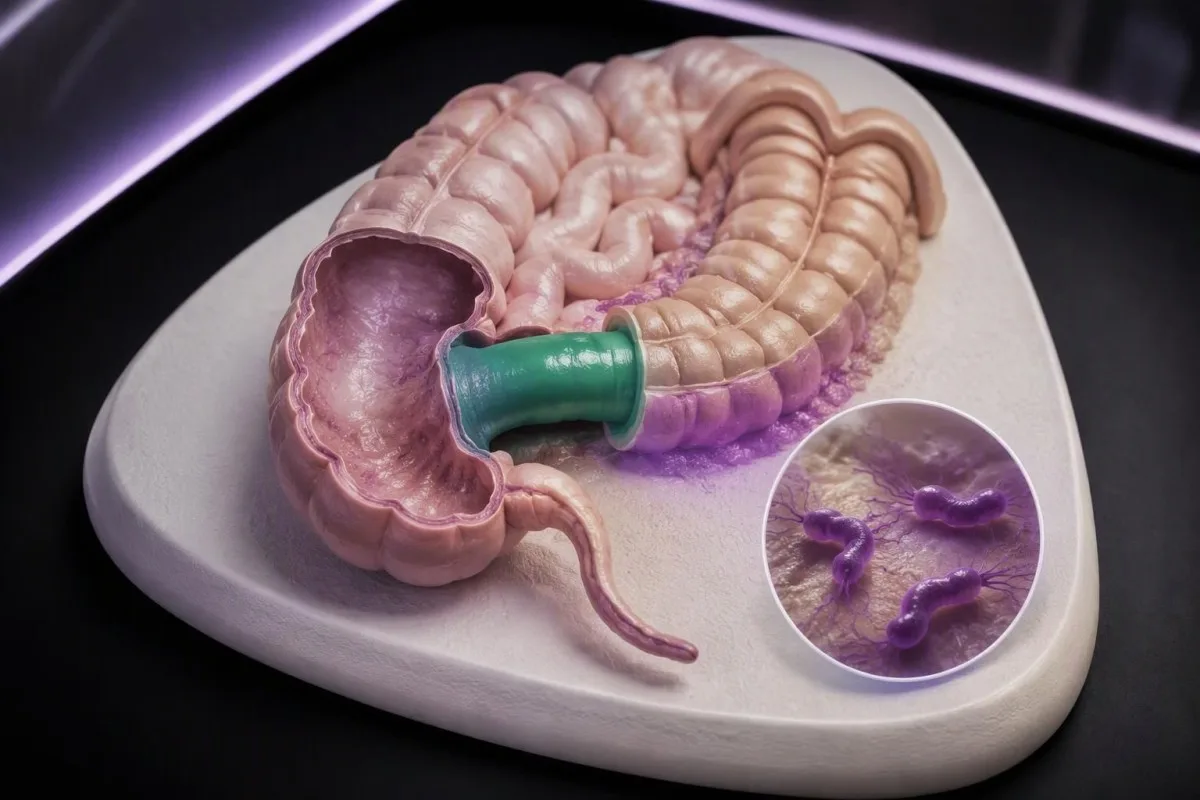
Reduced urine and dizziness can reveal dangerous fluid loss before a blood test does. Very little urine over roughly 8–12 hours in an adult, faintness on standing, or inability to keep fluids down warrants urgent advice; children, frail adults, and people with kidney disease may deteriorate sooner.
Severe localized abdominal pain should not be dismissed as confirmed gastroenteritis. Campylobacter can affect the terminal ileum and resemble appendicitis, but the 2 conditions can also be confused for other reasons; our appendicitis testing limitations explain why a stool finding or normal white-cell count cannot replace examination.
Systemic illness changes the testing plan. Fever with shaking chills, confusion, low blood pressure, or marked deterioration may require blood cultures and hospital assessment, especially in someone with reduced immunity; a single stool PCR cannot show whether bacteria have entered the bloodstream.
Neurological weakness after diarrhea is a separate emergency signal. New difficulty climbing stairs, rising from a chair, swallowing, or breathing during the following 1–3 weeks needs immediate assessment; do not wait for antibiotics to work or for a repeat stool result before seeking help.
Hur påverkar graviditet, ålder och nedsatt immunförsvar beslutet?
Pregnancy, age 65 years or older, and reduced immunity lower the threshold for clinical assessment, even when diarrhea initially seems manageable. Infants and young children also need age-specific hydration and fever assessment; a positive result alone still does not determine the antibiotic, dose, or care setting.
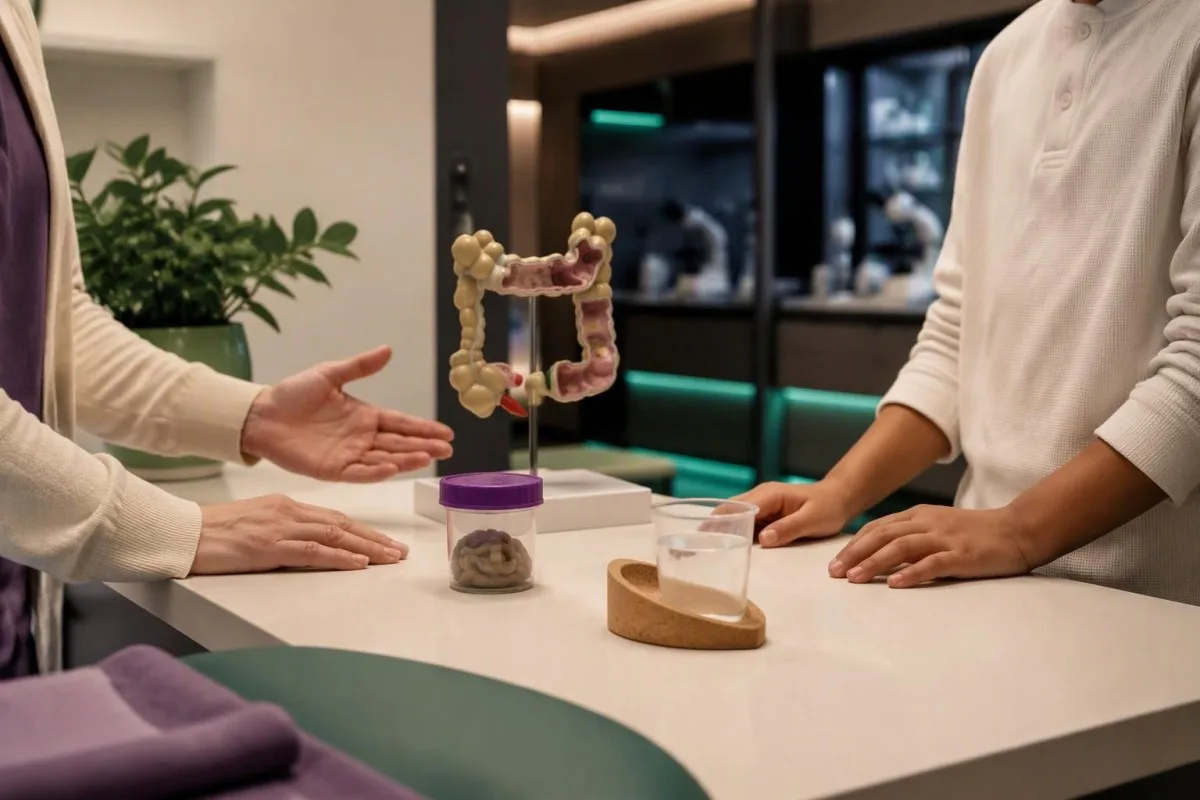
Pregnancy changes the consequences of dehydration and the medication discussion. A pregnant person with a positive result should contact their maternity or medical team, particularly with fever, reduced intake, contractions, or reduced fetal movement; 1 uncomplicated positive specimen is not proof of fetal infection.
Immune suppression is not one uniform category. Chemotherapy, organ transplantation, advanced HIV, and some immune-suppressing medicines can increase concern about prolonged or invasive illness; the 2017 IDSA guideline supports offering treatment to severely immunocompromised people with Campylobacter even when the intestinal illness appears otherwise uncomplicated (Shane et al., 2017).
Pediatric assessment cannot be reduced to adult laboratory cutoffs. A child passing 6 watery stools daily may need a different rehydration plan from an adult with the same count, because body weight, urine output, and ongoing vomiting change the risk; our children's interpretation safety guide explains this limitation.
Kantesti is an AI blood test interpretation platform, not a substitute for a pediatric or maternity examination. Vår kliniskt valideringsramverk should be read alongside that boundary: explaining 3 abnormal laboratory values does not establish whether an infant, pregnant person, or transplant recipient can safely remain at home.
Vilka antibiotika används vid behandling av Campylobacter?
Azithromycin is commonly preferred when Campylobacter requires antibiotics, because fluoroquinolone resistance can limit drugs such as ciprofloxacin. One commonly used adult regimen for uncomplicated enteritis is azithromycin 500 mg once daily for 3 days, but a clinician must choose the regimen for the individual situation.
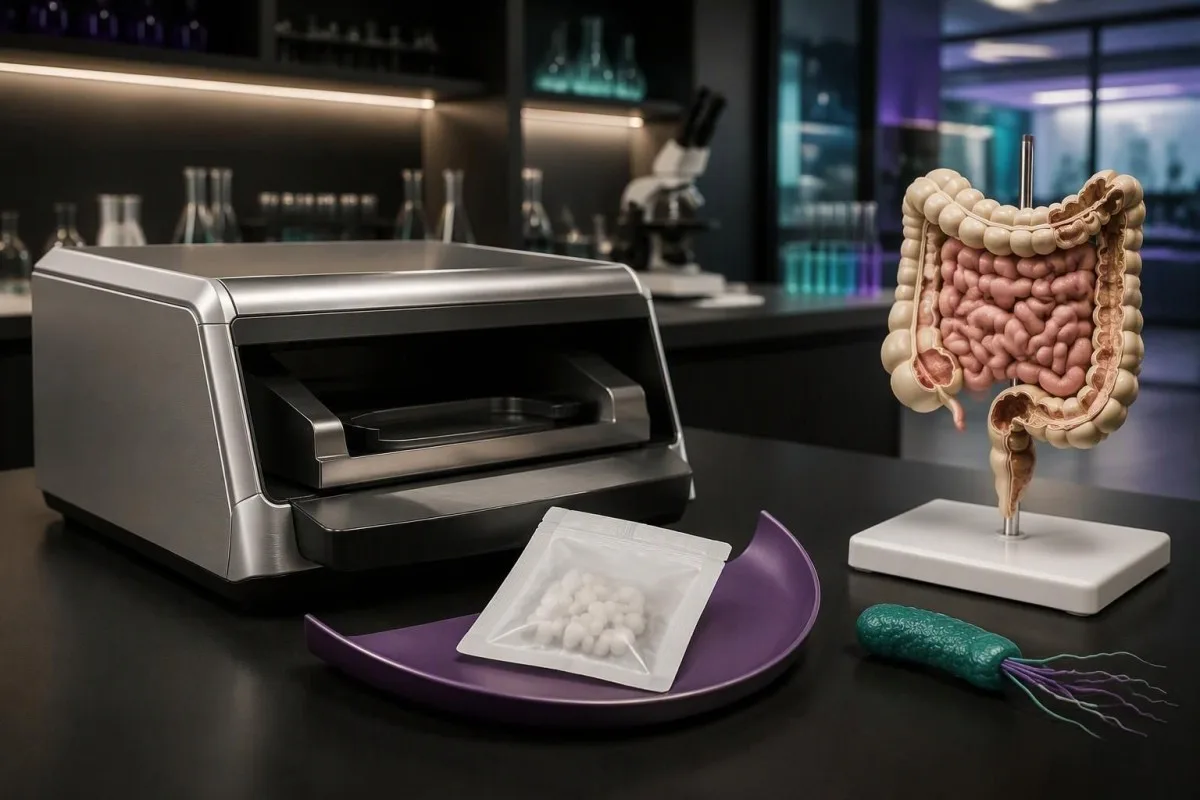
The 500 mg regimen is an example, not a self-treatment instruction. Children need weight-based prescribing, and invasive infection or severe immune suppression may require a different duration, susceptibility-guided therapy, or hospital treatment; antibiotics already prescribed for another condition should not be repurposed for a stool result.
Travel history can change the resistance assessment. The 2017 IDSA guideline identifies azithromycin as a preferred option for Campylobacter and discusses substantial geographic variation in fluoroquinolone resistance; a hypothetical 45-year-old returning from international travel should tell the prescriber where they went and whether they took antibiotics abroad (Shane et al., 2017).
Electrolyte loss matters when reviewing azithromycin safety. Potassium below 3.5 mmol/L or reduced magnesium can increase concern about rhythm problems, particularly with other QT-prolonging medicines; clinicians may need medication review, an ECG, or electrolyte correction rather than treating a 3-day prescription as automatically low risk.
Anticoagulant treatment deserves a separate safety check. Illness, reduced food intake, and antibiotics can alter warfarin control during even a short course; our INR-förändringar efter antibiotika explains why the prescriber may arrange additional monitoring instead of recommending a patient-led dose change.
Vad underlättar tillfrisknandet om antibiotika inte behövs?
Oral rehydration solution is the main treatment for ongoing diarrheal fluid loss, whether or not antibiotics are prescribed. An adult can often start with approximately 200–250 mL after each loose stool, adjusting to thirst and losses; heart failure, kidney disease, and children's needs require individualized advice.
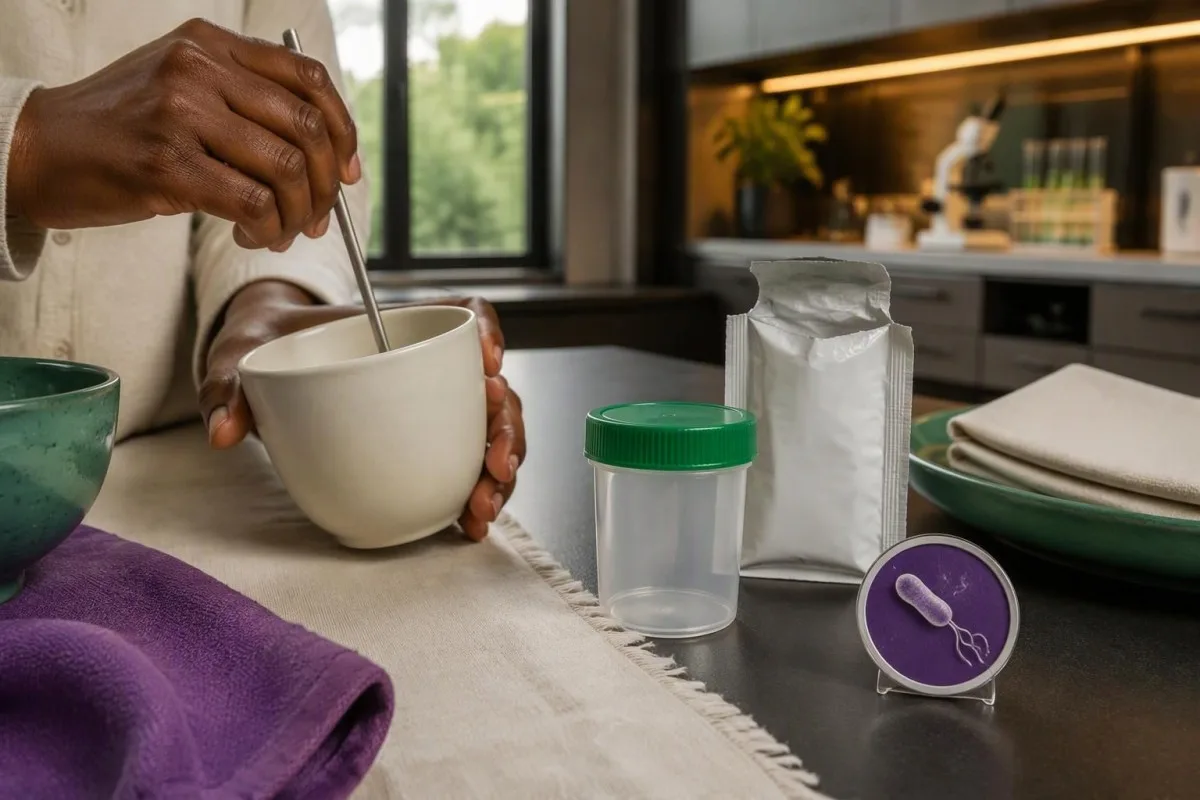
The packet's mixing volume is a medical instruction, not a serving suggestion. Dissolve a sachet in the exact stated water volume—often 200 mL or 1 L depending on the product—because making it too concentrated can worsen electrolyte problems; use safe water and follow storage instructions.
Small amounts are often better tolerated after vomiting. Try 5–10 mL every 1–2 minutes, increasing gradually if it stays down; ongoing vomiting despite this approach, worsening dizziness, or reduced urine requires medical advice rather than repeatedly forcing a large glass of fluid.
Food restriction does not clear Campylobacter. Resume tolerable meals as appetite returns, and continue breastfeeding for infants; after 24 hours, persistent avoidance of food can compound weakness without treating the organism, while very sugary drinks may aggravate diarrhea through their osmotic effect.
Antidiarrheal medicines need caution in inflammatory diarrhea. Avoid self-directed loperamide when fever or blood is present, and the IDSA guideline advises against loperamide in children younger than 18 years with acute diarrhea; our diarrhea and dietary changes guide also explains why fasting is not a substitute for rehydration.
Innebär ett positivt PCR-test att du fortfarande är smittsam?
A positive Campylobacter PCR cannot prove ongoing contagiousness, because it detects DNA rather than demonstrating viable bacteria. Nevertheless, bacteria can be shed after symptoms improve, so hygiene and local exclusion rules still matter; many UK settings use at least 48 hours after diarrhea and vomiting stop before return.

There is no validated universal PCR date that marks the end of transmission risk. A positive specimen on day 10 cannot establish that transmission is occurring, while feeling well does not guarantee shedding has stopped; culture demonstrates viable organisms under laboratory conditions but still cannot precisely quantify real-world infectiousness.
The 48-hour rule is not a universal clearance certificate. Food handlers, healthcare workers, and children in particular settings may face different local requirements, outbreak instructions, or public-health review; ask about the rule for your role instead of borrowing advice from norovirus recovery and contagiousness.
Soap-and-water handwashing interrupts the main fecal–oral transmission route. Wash for at least 20 seconds after using the toilet or changing nappies and before preparing food; do not prepare food for others while symptomatic, and clean shared bathroom touchpoints using an appropriate product according to its instructions.
Preventing another exposure is different from treating the current episode. Keep raw poultry separate from ready-to-eat foods, avoid rinsing raw poultry, and cook poultry to a verified safe internal temperature—for example, 74°C under US food-safety guidance; a new exposure can produce another illness even after the first improves.
Vilka blodprover är viktiga när diarrén blir svår?
Blood tests assess dehydration and complications; they do not confirm or clear intestinal Campylobacter infection. Electrolytes, urea, creatinine, and a full blood count may be useful in severe illness, particularly when potassium falls below 3,5 mmol/L or kidney function changes from the person's usual baseline.
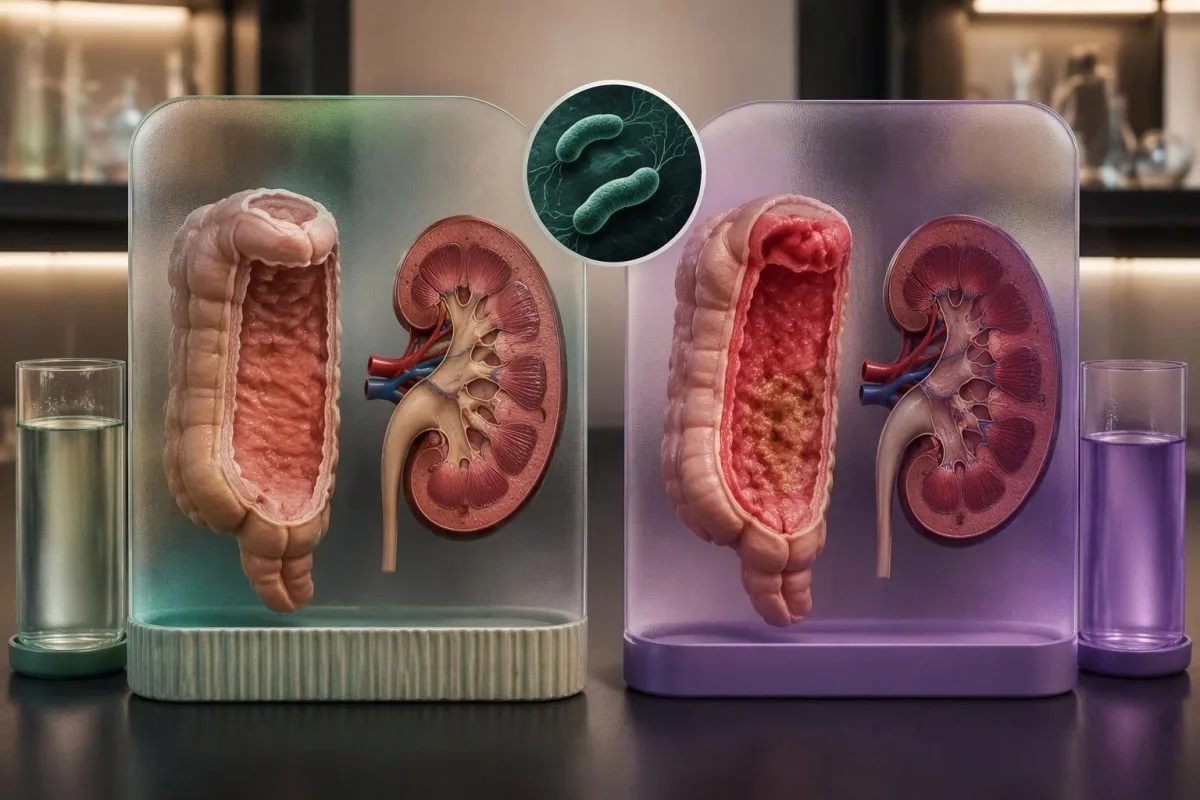
A changing creatinine can be more informative than its reference-range flag. A rise of at least 26.5 µmol/L, equivalent to 0.3 mg/dL, within 48 hours meets one standard acute kidney injury criterion; our njurresultat efter uttorkning explains why a previously normal baseline matters.
Consider a clearly hypothetical kidney-result comparison. An adult whose creatinine rises from 70 to 100 µmol/L over 2 days has a 30 µmol/L increase that merits assessment even if the laboratory's upper limit is higher; the urea-to-creatinine relationship can add context but cannot diagnose dehydration by itself.
White-cell count and CRP cannot decide whether Campylobacter needs antibiotics. At Kantesti, we explain these accompanying results as context rather than a prescription trigger; a hypothetical CRP of 60 mg/L can accompany intestinal inflammation, but there is no validated CRP cutoff that identifies antibiotic benefit for uncomplicated Campylobacter enteritis.
Normal inflammatory markers do not overrule concerning symptoms. A white-cell count of 7.0 × 10^9/L can fall within an adult laboratory range while dehydration or localized abdominal disease remains clinically significant; our jämförelse av WBC och CRP explains why discordant results require interpretation alongside examination and trends.
När är det användbart att upprepa avföringsprovet efter Campylobacter?
Routine repeat PCR is usually unnecessary after symptoms resolve, and it is not a reliable test of ongoing infectiousness. Repeat or additional testing becomes useful when symptoms persist, recur, or require public-health clearance; diarrhea lasting 14 days or longer needs a broader diagnostic review rather than automatic repeat antibiotics.

Residual DNA can outlast the illness that prompted testing. Detection may persist for days or weeks, with variation between people and assays; a second positive PCR 7 days after recovery does not by itself demonstrate antibiotic failure, a new infection, or a need to treat again.
Persistent diarrhea needs a question-driven testing plan. After 14 days, clinicians may consider other pathogens, medication effects, post-infectious bowel dysfunction, or inflammatory bowel disease; a repeat multiplex panel is most useful when its result could change management, not merely because the original result was alarming.
Suspected resistance may call for culture and susceptibility testing rather than another qualitative PCR. If substantial illness continues after 48–72 hours of an appropriate antibiotic, the prescriber can discuss whether the laboratory can recover an isolate; PCR generally cannot tell whether a particular antibiotic will work unless the assay specifically includes validated resistance testing.
A raised fecal calprotectin during acute diarrhea does not establish inflammatory bowel disease. Intestinal infection can raise this marker, so an isolated value such as 180 µg/g must be interpreted against timing, symptoms, and the laboratory range; our Guide för uppföljning av gränsfall för kalproteinet explains why follow-up timing should be individualized.
Vilka symtom efter tillfrisknandet bör inte ignoreras?
New progressive weakness, a swollen joint, or persistent bowel symptoms after Campylobacter require separate assessment, even if diarrhea has stopped. Guillain–Barré syndrome can begin in the following 1–3 veckor, while reactive arthritis often appears within approximately 1–4 veckorna; these problems are not diagnosed by repeat stool PCR.
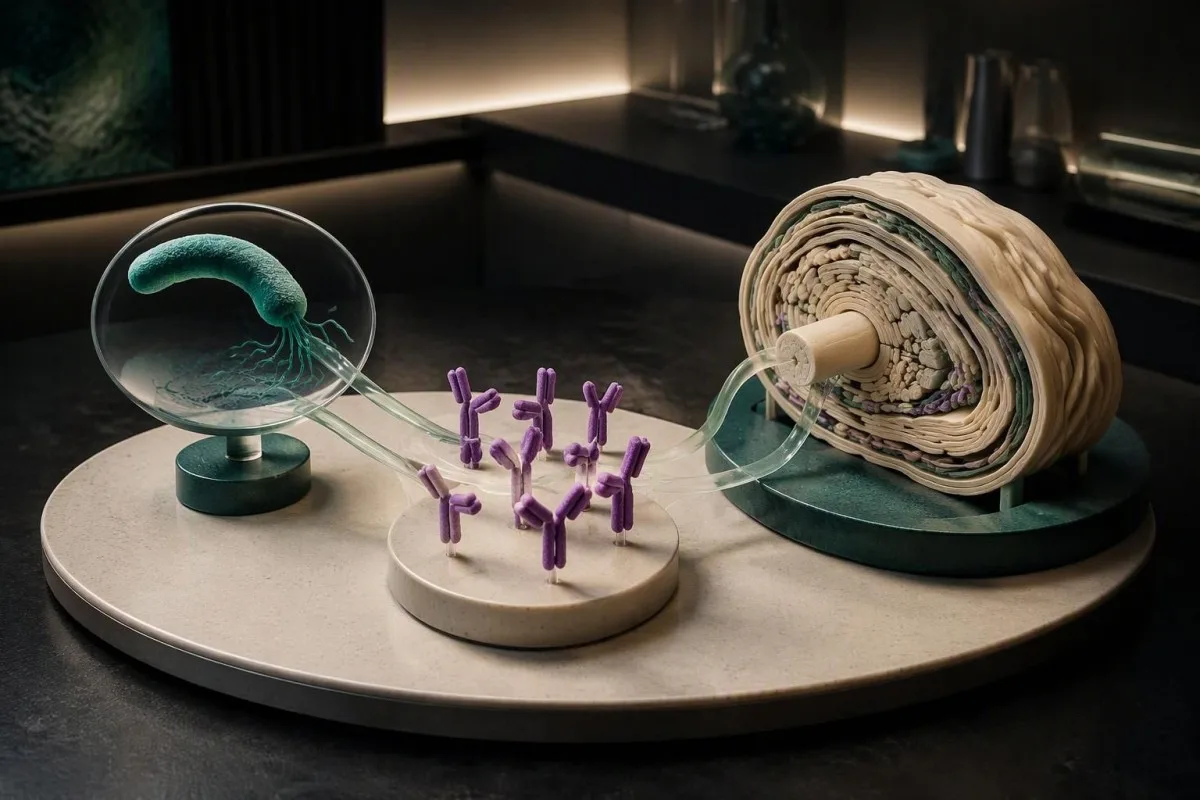
Guillain–Barré syndrome is a neurological emergency, not a reason to wait for a stool clearance test. Weakness that progresses from the legs, difficulty walking, or new swallowing or breathing problems within 1–3 weeks of diarrhea needs immediate assessment; our progressive weakness warning signs distinguishes this pattern from ordinary recovery fatigue.
Reactive arthritis can affect joints after the intestinal illness ends. New swelling in a knee or ankle 1–4 weeks after diarrhea needs assessment, particularly with eye pain, light sensitivity, or urinary symptoms; a hot swollen joint with fever should be evaluated urgently because other causes, including joint infection, must be excluded.
Post-infectious bowel disturbance does not necessarily mean live Campylobacter persists. Loose stools, urgency, or temporary food intolerance at 2–4 weeks can reflect intestinal recovery, but weight loss, persistent blood, nocturnal diarrhea, or ongoing fever warrants investigation rather than reassurance based solely on a previous diagnosis.
Antibiotics have not been shown to reliably prevent these post-infectious complications. The 11-trial meta-analysis measured symptom duration, not a proven reduction in Guillain–Barré syndrome or reactive arthritis; avoiding a rare later complication is therefore not an established reason to treat every mild PCR-positive infection (Ternhag et al., 2007).
Forskningspublikationer och begränsningarna i AI-tolkning
Clinical guidelines and treatment trials—not a positive label alone—should guide antibiotic decisions. Kantesti is an AI-powered blood test analysis tool that can explain accompanying laboratory information, but neither a single PCR nor a set of 3 abnormal blood results replaces a clinician's assessment of infection severity.
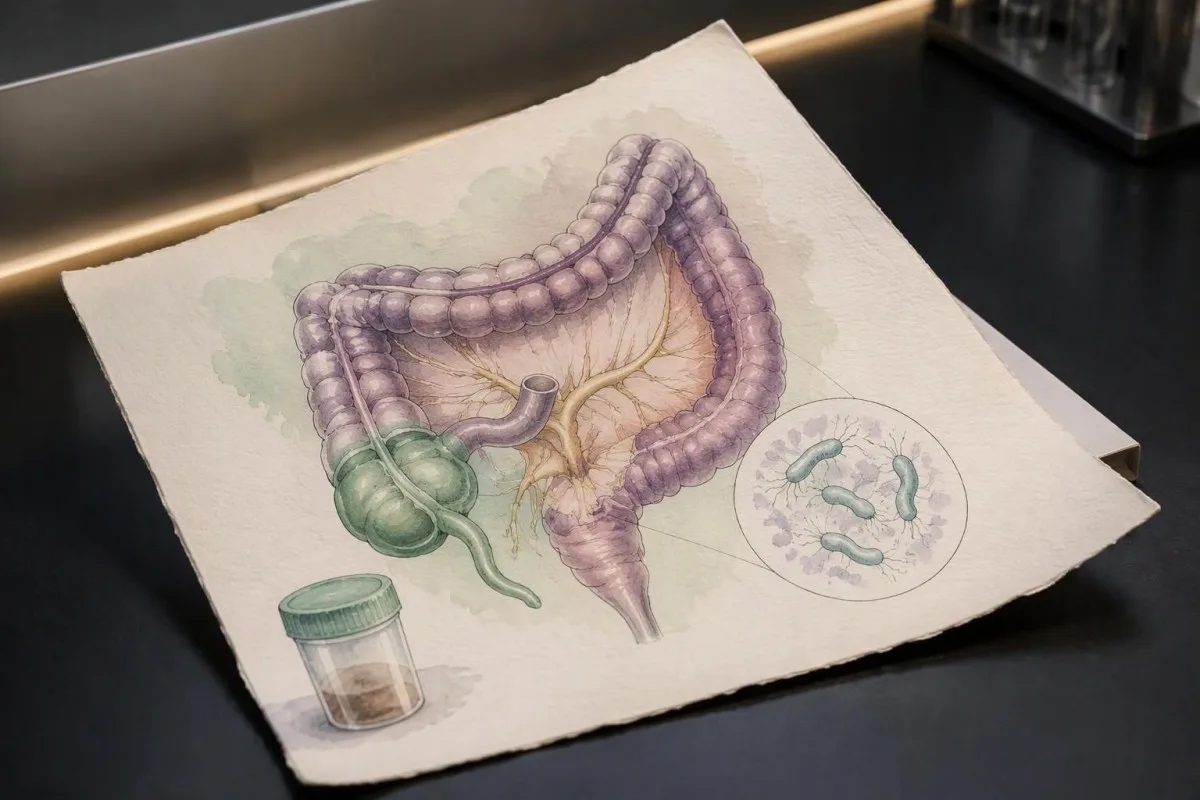
The 2017 IDSA guideline provides the main clinical framework cited here. It addresses molecular stool testing, culture, rehydration, and organism-specific antibiotic decisions; Kantesti's standarder för medicinskt innehåll distinguish those clinical recommendations from educational explanations and product-related information.
The antibiotic-benefit estimate comes from a 2007 meta-analysis, not a new treatment trial. Its 11 randomized studies support modest average symptom shortening, but older resistance patterns, treatment timing, and trial populations limit how precisely the 1.32-day estimate can predict benefit for someone with severe or invasive illness.
The 2 Figshare publications below are supplemental educational resources, not Campylobacter antibiotic trials. The gastrointestinal guide concerns symptom interpretation, while the hematology guide concerns unrelated laboratory topics; a DOI makes a publication identifiable but does not establish peer review or evidence that its content can decide infectiousness.
Kantesti Ltd is responsible for separating education from prescribing advice. Vår ansvarsfulla AI-gränser apply whether a report contains 1 positive target or several abnormal markers: uncertainty should lead to a clinical question, not a confident claim that antibiotics are definitely needed or definitely unnecessary.
Vanliga frågor
Behöver Campylobacter behandlas med antibiotika om mitt avföringsprov är PCR-positivt?
0 Ett positivt Campylobacter-PCR-test i avföring innebär inte automatiskt att antibiotika behövs. Många i övrigt friska personer tillfrisknar med vätska inom ungefär en vecka, särskilt när symtomen redan håller på att förbättras. Antibiotika övervägs oftare vid svår eller långvarig sjukdom, blodig diarré, ihållande feber eller nedsatt immunförsvar. Graviditet, ålder 65 år eller äldre och spädbarnsålder innebär också att tröskeln för klinisk bedömning är lägre.
Kan PCR-test för Campylobacter fortsätta vara positivt efter att jag mår bättre?
0 Campylobacter-PCR kan förbli positiv efter att symtomen har förbättrats eftersom testet detekterar bakteriellt DNA i stället för att visa att bakterierna är levande. DNA kan förbli detekterbart i dagar eller veckor, men det finns inget universellt tidsintervall för när det försvinner som gäller för alla personer eller tester. Ett positivt resultat 7 dagar efter tillfrisknandet bevisar inte i sig att behandlingen har misslyckats eller att personen fortfarande är smittsam. Upprepad PCR är vanligtvis inte nödvändig efter tillfrisknandet, såvida inte en läkare eller ett folkhälsoteam har en specifik anledning.
Vilket antibiotikum ordineras vanligtvis mot Campylobacter?
Azitromycin föredras ofta när en Campylobacterinfektion kräver antibiotikabehandling, medan fluorokinolonresistens kan göra ciprofloxacin olämpligt. En vanlig behandlingsregim för vuxna med okomplicerad enterit är azitromycin 500 mg en gång dagligen i 3 dagar. Detta är ett exempel, inte en rekommendation om egenbehandling; barn, invasiv infektion, graviditet och immunsuppression kräver individuell förskrivning. Förskrivaren bör också gå igenom allergier, läkemedelsinteraktioner, elektrolytförluster och lokala resistensuppgifter.
Hur länge varar Campylobacterdiarré utan antibiotika?
Campylobacterdiarré förbättras ofta inom ungefär en vecka utan antibiotika hos i övrigt friska personer. Symtom som kvarstår längre än cirka 7 dagar utan förbättring bör bedömas på nytt, medan diarré som varar i 14 dagar eller längre kräver en bredare utredning av möjliga orsaker. I en äldre metaanalys av 11 randomiserade studier förkortade antibiotika tarmsymtomen med i genomsnitt cirka 1,32 dagar. Detta genomsnitt förutsäger inte förloppet vid svår sjukdom och garanterar inte att behandling som sätts in sent ger någon nytta.
Behöver jag ha ett negativt Campylobacter-test innan jag återgår till arbetet?
Ett negativt Campylobacter-test krävs inte rutinmässigt för alla som återgår till arbetet, men lokala regler för folkhälsa och arbetsmiljö varierar. Många arbetsplatser i Storbritannien kräver att man varit utan diarré eller kräkningar i minst 48 timmar innan man återgår till arbetet. Personer som hanterar livsmedel, arbetar inom vården eller är involverade i utbrott kan behöva ytterligare instruktioner eller provtagning. Ett PCR-resultat i sig kan inte intyga att smittrisken har upphört.
När bör jag söka akut vård för Campylobacter?
Sök akut vård vid förvirring, kollaps, svår uttorkning, kraftig blödning, hård buk eller nytillkommen tilltagande svaghet efter diarré. Mycket liten urinmängd under ungefär 8–12 timmar hos en vuxen, oförmåga att behålla vätska eller tilltagande lokaliserad buksmärta kräver skyndsam rådgivning. Ett spädbarn yngre än 3 månader med en temperatur på 38 °C eller högre behöver snar medicinsk bedömning. Vänta inte på ett nytt avförings-PCR-test om dessa varningstecken förekommer.
Få dina blodprovsresultat förklarade
Ladda upp din laboratorierapport så förklarar Kantesti:s AI varje biomarkör på ett lättbegripligt språk inom några sekunder. Används av mer än 2 miljoner människor världen över.
Referenser
- Klein, T., Mitchell, S., & Weber, H. (2026). B Negative Blood Type, LDH Blood Test & Reticulocyte Count Guide. Kantesti AI Medicinsk forskning. DOI
- Klein, T., Mitchell, S., & Weber, H. (2026). Diarrhea After Fasting, Black Specks in Stool & GI Guide 2026. Kantesti AI Medicinsk forskning. DOI
- Shane AL et al. (2017). 2017 Infectious Diseases Society of America Clinical Practice Guidelines for the Diagnosis and Management of Infectious Diarrhea. Clinical Infectious Diseases. DOI PubMed
- Ternhag A et al. (2007). A meta-analysis on the effects of antibiotic treatment on duration of symptoms caused by infection with Campylobacter species. Clinical Infectious Diseases.
- 2 miljoner+Tests analysed
- 127+Länder
- 100+Språk
About the medical team


E-E-A-T förtroendesignaler
Uppleva
Läkarledd klinisk granskning av arbetsflöden för laboratorietolkning.
Expertis
Laboratoriemedicinskt fokus på hur biomarkörer beter sig i kliniskt sammanhang.
Auktoritet
Medically reviewed by Dr. Thomas Klein, with contributions from Dr. Sarah Mitchell and Prof. Dr. Hans Weber.
Trovärdighet
Evidensbaserad tolkning med tydliga uppföljningsspår för att minska larm.




Medical disclaimer
Den här artikeln är endast avsedd för utbildningsändamål och utgör inte medicinsk rådgivning. Rådgör alltid med en behörig vårdgivare för beslut om diagnos och behandling.
Publicerad · Contact the editorial team
Published by Kantesti Ltd, registered in England & Wales, company no. 17090423, London, United Kingdom.
