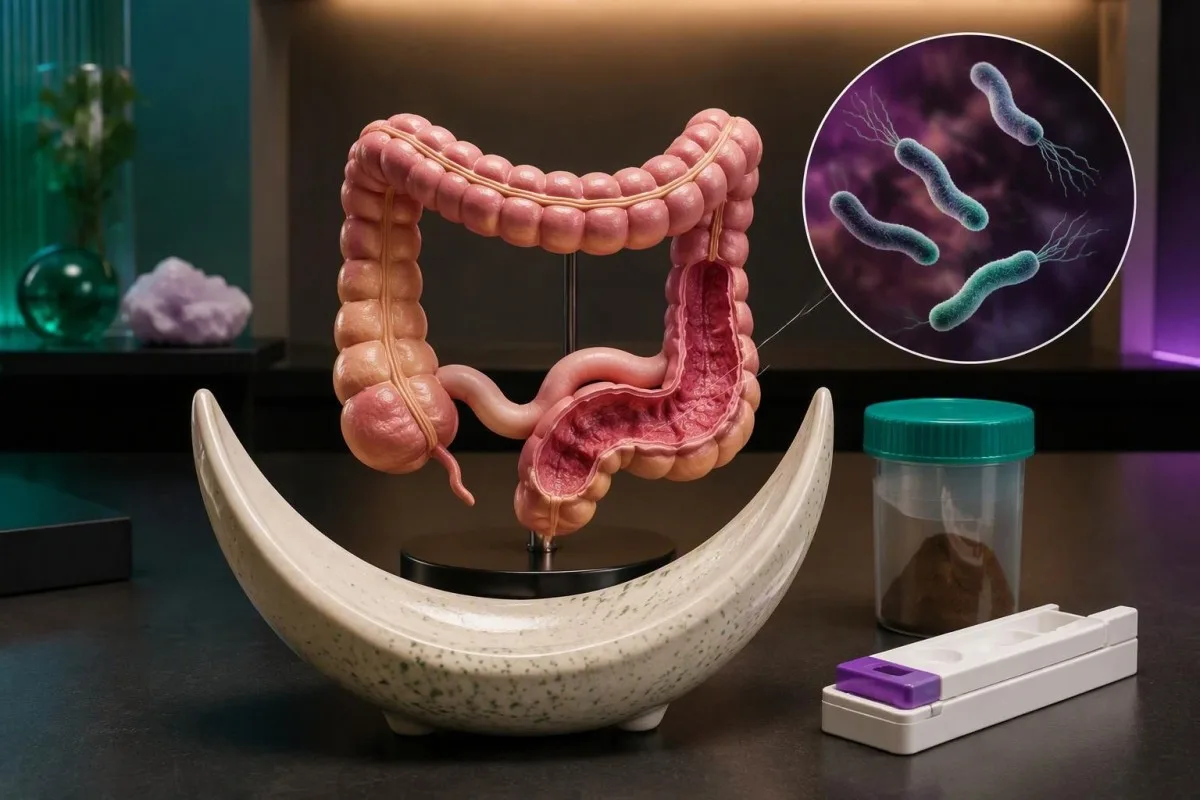
A positive Campylobacter stool PCR does not automatically mean you need antibiotics. Most otherwise healthy people recover with fluids; severe or prolonged diarrhea, persistent fever, dehydration, pregnancy, older age, or reduced immunity warrant clinical assessment and may change treatment.

خاڵە سەرەکییەکان
- پۆزەتیڤی PCR means Campylobacter DNA was detected; it does not, by itself, prove that live bacteria remain or that antibiotics are necessary.
- Usual recovery takes about 1 week in many otherwise healthy people, although bowel habits can take longer to settle.
- Antibiotic benefit averaged approximately 1.3 fewer days of intestinal symptoms in an older meta-analysis of 11 randomized trials; early treatment generally offers more benefit.
- Treatment assessment is appropriate for bloody diarrhea, persistent fever, worsening illness, or symptoms continuing beyond about 7 days without improvement.
- نیشانە ئاگادارکەرەوەکانی فریاکەوتن include confusion, fainting, severe dehydration, a rigid abdomen, or rapidly worsening weakness; do not wait for another stool test.
- گروپە بەخطرتر include pregnant people, adults aged 65 years or older, and people with weakened immunity; infants need age-specific assessment.
- PCRی دووبارە is usually unnecessary after recovery because DNA detection and ongoing infectiousness are not equivalent.
- Transmission precautions include washing hands with soap for at least 20 seconds and following local work or childcare exclusion rules, often at least 48 hours after diarrhea and vomiting stop.
Does a Campylobacter PCR positive result need antibiotics?
A Campylobacter PCR positive result does not automatically require antibiotics. An otherwise healthy person whose diarrhea is improving can often recover with oral rehydration alone, usually over about 1 هەفتە; severe illness, persistent symptoms, or higher-risk health conditions justify a clinician-led treatment decision.
Symptoms determine the next step more reliably than the word positive. A result arriving on day 5 means something different if you now have 2 loose stools daily rather than 10, persistent fever, and difficulty drinking; the laboratory result cannot supply that missing clinical trajectory.
An asymptomatic positive result also needs context, not automatic treatment. If diarrhea stopped 2 days before the report arrived, contact the requesting clinician about your risk factors and any workplace restrictions rather than using leftover antibiotics; improvement can occur before the laboratory finishes processing the specimen.
Kantesti is an AI blood test analyzer that helps explain accompanying laboratory results, but it cannot establish whether a stool PCR requires treatment. Yên me ڕێکخراوی ئێمە و بواری کلینیکی ئێمە are separate from the decision to prescribe antibiotics, which requires symptoms, medication history, and examination when indicated.
A practical first review needs at least 4 details: when symptoms began, how many stools you pass in 24 hours, whether you can keep fluids down, and whether you have fever or visible blood. Add pregnancy, immune-suppressing medicines, recent travel, and the complete stool-panel report before discussing Campylobacter treatment.
What does a positive Campylobacter stool PCR actually detect?
ئەزمونێکی stool PCR means the assay detected a targeted Campylobacter DNA sequence in that specimen. PCR does not require living bacteria, and a qualitative result usually reports 1 of 2 categories—detected or not detected—rather than a validated measure of disease severity.
Different laboratories do not necessarily test for identical organisms. Many gastrointestinal panels target Campylobacter jejuni and Campylobacter coli, while coverage of other species varies; these 2 common species should not be assumed to represent every possible Campylobacter infection, particularly when bloodstream illness is suspected.
A PCR-positive, culture-negative specimen is not inherently contradictory. PCR can detect DNA when bacterial numbers are low, organisms have lost viability, or transport conditions have reduced culture recovery; 1 negative culture therefore does not automatically invalidate a compatible positive PCR result.
A cycle-threshold value is not a universal infectiousness cutoff for Campylobacter. Even if a laboratory releases a Ct of 30, differences in extraction, stool consistency, and assay design prevent translating that number into a reliable treatment or return-to-work rule; our ڕێبەری چۆنیەتی [0xE2][0x80][0x8B]بەرامبەر چۆنیەتی [0xE2][0x80][0x8B] ڕوونکردنەوەی جیاوازی ڕاپۆرتکردنەکە.
The original specimen date matters more than the report date when reconstructing illness. A stool sample collected on day 2 and reported on day 5 describes what was present in the earlier specimen, not necessarily what is happening in your bowel today; keep both dates when discussing the result.
Can the result be incidental, false positive, or part of a mixed infection?
A Campylobacter stool test positive result is more persuasive when it accompanies a compatible diarrheal illness, but it does not prove that Campylobacter explains every symptom. Multiplex panels can detect 2 or more organisms, and occasional false-positive or clinically incidental detections require interpretation rather than indiscriminate antibiotics.

A second detection can change the safety of antibiotic treatment. If a panel also detects Shiga toxin or Shiga toxin-producing Escherichia coli, the 2017 IDSA guideline recommends avoiding antibiotics for certain STEC infections because of hemolytic uremic syndrome risk; contact the clinician before assuming a standard Campylobacter regimen is appropriate (Shane et al., 2017).
Two positive targets do not necessarily require 2 antimicrobial prescriptions. Giardia can produce persistent bloating and prolonged loose stools, whereas Campylobacter more often causes an acute febrile illness; the distinction matters when interpreting Giardia detection and recovery alongside the timing of your symptoms.
Some positive stool targets are particularly dependent on clinical context. A C. difficile finding after recent antibiotics needs the assay type, stool frequency, and clinical history, not merely comparison with another positive organism; our guide to ئەنجامە ناتەباکانی C. difficile explains why 1 laboratory label may be insufficient.
Culture is useful when the answer could change treatment or public-health action. The IDSA guideline recommends culture after relevant culture-independent bacterial detections when an isolate is needed for surveillance or susceptibility testing; repeating the same PCR after 24 hours usually supplies less actionable information than obtaining the right additional test.
Why do many Campylobacter infections resolve without treatment?
Many Campylobacter infections resolve because the immune system controls the intestinal infection while fluids replace ongoing losses. Antibiotics can shorten symptoms, but an older meta-analysis of 11 randomized trials found an average reduction of about 1.32 days, not an immediate cure (Ternhag et al., 2007).
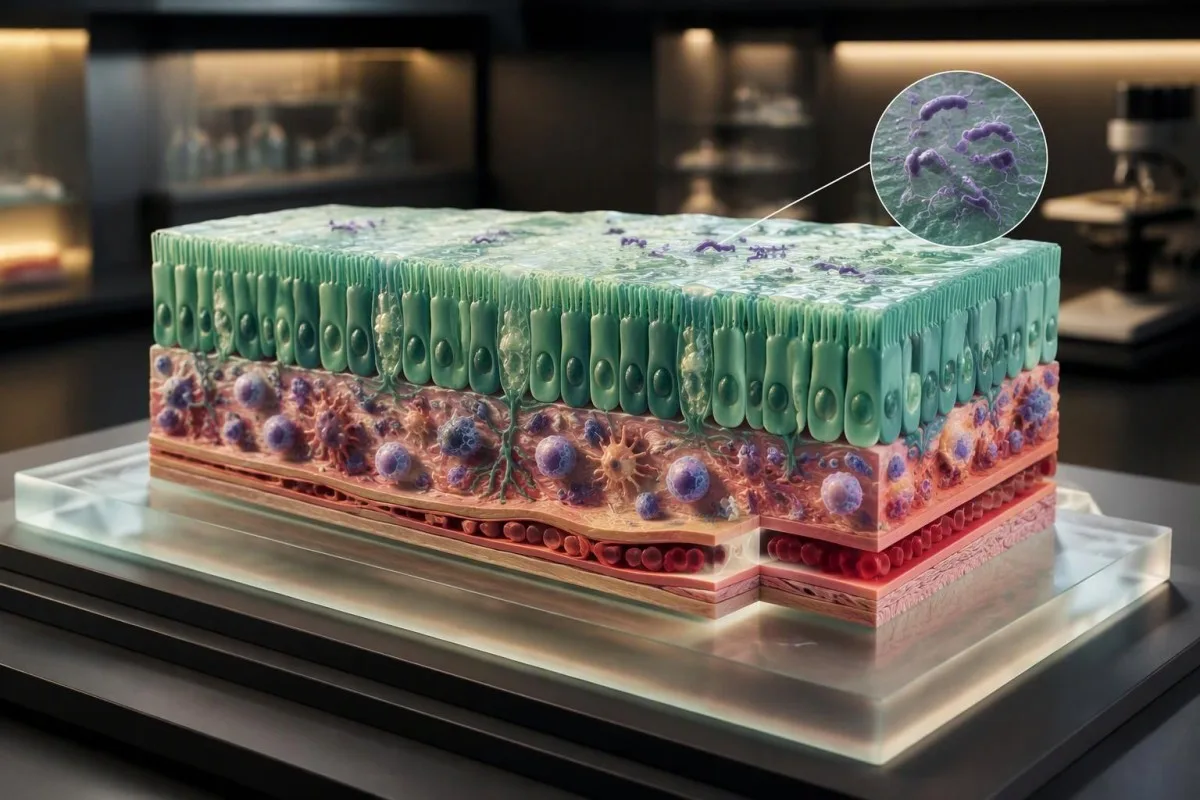
The timing of antibiotics affects their potential benefit. The 2007 analysis by Ternhag and colleagues reported a 95% confidence interval of 0.64–1.99 days for symptom shortening, with greater benefit generally expected when treatment begins early; that average should not be interpreted as a guarantee for an individual patient.
An improving illness leaves less remaining illness for an antibiotic to shorten. For example, a hypothetical 34-year-old on day 6 who is drinking normally and has reduced from 8 stools to 2 stools daily may have little additional symptomatic benefit, even though the original specimen remains PCR positive.
Avoiding unnecessary antibiotics also avoids avoidable harms. Antibiotic-associated diarrhea, allergic reactions, interactions, and resistance selection are relevant even during a 3-day course; the main decision is whether likely clinical benefit outweighs these risks, not whether a positive result deserves an antimicrobial response.
Treatment expectations differ between intestinal pathogens. A Campylobacter result cannot be managed by copying advice for parasites or commercial microbiome findings; compare Cryptosporidium treatment decisions û سنوورەکانی پشکنینی مایکرۆبایۆم when more than 1 type of stool report is involved.
Which symptoms make Campylobacter antibiotics more likely?
Antibiotics are more likely to be considered for severe, worsening, or prolonged Campylobacter illness, especially with bloody diarrhea, persistent fever, substantial fluid loss, or reduced immunity. Symptoms lasting beyond about 7 days without improvement deserve reassessment, but no single stool-count or temperature cutoff determines treatment for everyone.
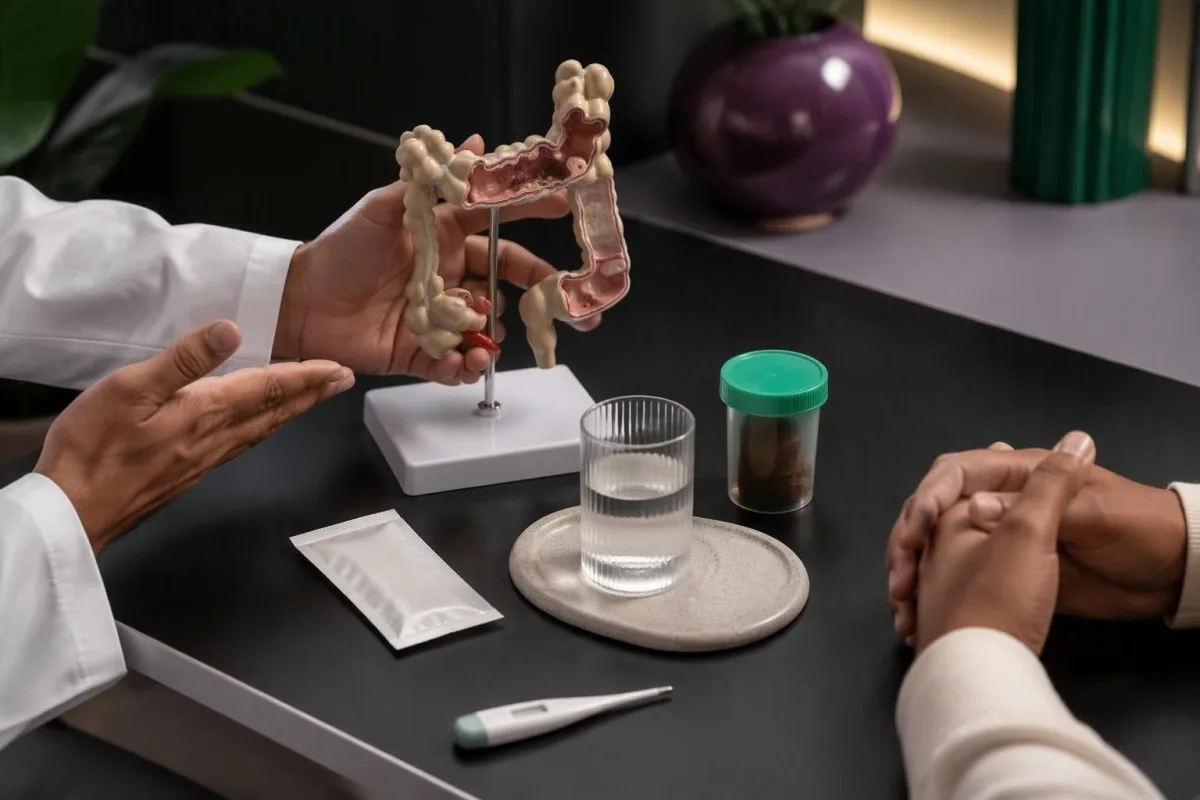
Persistent fever is more concerning than one isolated high reading. A temperature of 38.5°C combined with frequent diarrhea, worsening pain, or inability to drink warrants prompt advice; the same temperature during an otherwise improving first day does not independently establish that antibiotics will help.
Visible blood suggests inflammatory intestinal injury but does not identify its cause. More than 6 unformed stools in 24 hours can indicate a substantial symptom burden, yet a person with fewer stools and significant bleeding may need faster assessment; our stool blood warning signs explain why color and accompanying symptoms matter.
Duration is a reassessment trigger rather than an automatic prescription date. Day 8 with worsening diarrhea is different from day 8 with one slightly loose stool and normal appetite; the 2017 IDSA guideline considers treatment reasonable for particularly prolonged or severe Campylobacter disease without establishing a universal 7-day rule (Shane et al., 2017).
Treatment failure needs investigation before a second course. Persistent fever or substantial diarrhea after 48–72 hours of prescribed treatment should prompt contact with the prescriber, who may review adherence, resistance, another detected pathogen, or a noninfectious diagnosis rather than simply extending the same antibiotic.
When does a positive result need urgent or emergency assessment?
Seek emergency care for confusion, collapse, severe dehydration, a rigid abdomen, major bleeding, or rapidly worsening weakness, regardless of the stool result. An infant younger than 3 مانگ with a temperature of 38°C یا بالاتر needs urgent medical assessment rather than home monitoring alone.
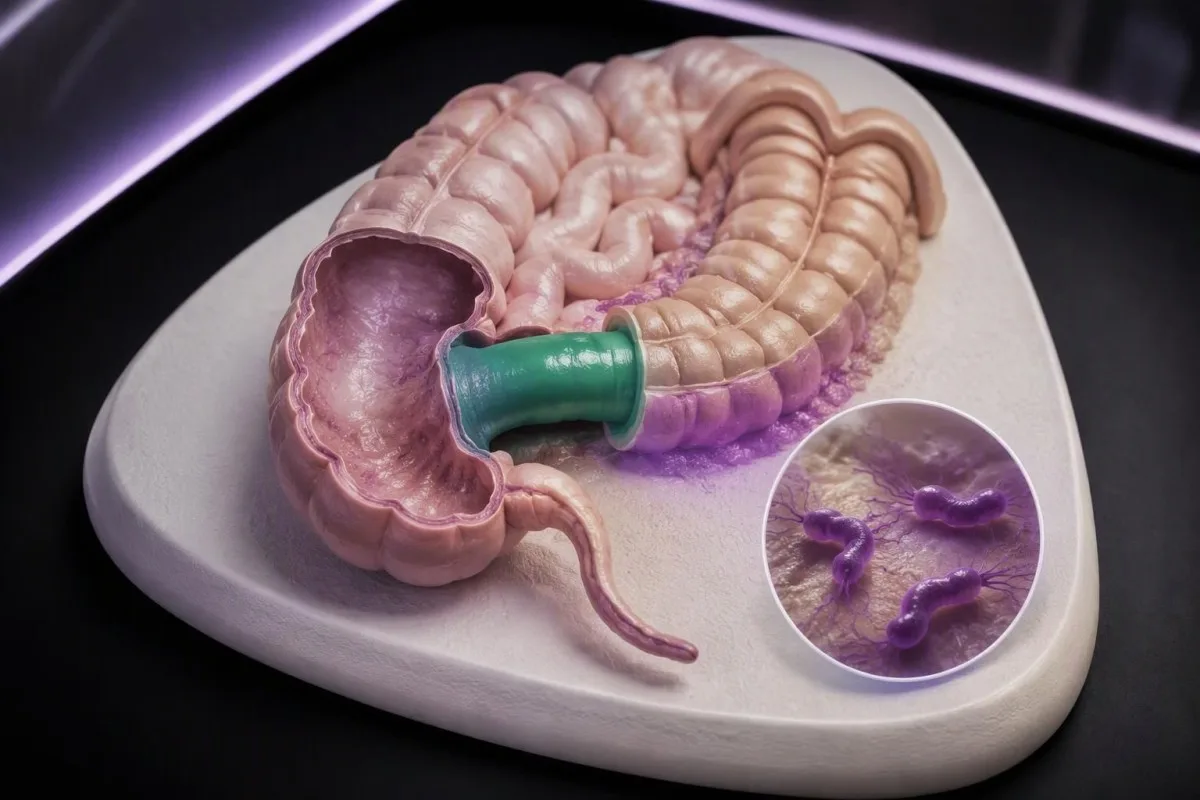
Reduced urine and dizziness can reveal dangerous fluid loss before a blood test does. Very little urine over roughly 8–12 hours in an adult, faintness on standing, or inability to keep fluids down warrants urgent advice; children, frail adults, and people with kidney disease may deteriorate sooner.
Severe localized abdominal pain should not be dismissed as confirmed gastroenteritis. Campylobacter can affect the terminal ileum and resemble appendicitis, but the 2 conditions can also be confused for other reasons; our appendicitis testing limitations explain why a stool finding or normal white-cell count cannot replace examination.
Systemic illness changes the testing plan. Fever with shaking chills, confusion, low blood pressure, or marked deterioration may require blood cultures and hospital assessment, especially in someone with reduced immunity; a single stool PCR cannot show whether bacteria have entered the bloodstream.
Neurological weakness after diarrhea is a separate emergency signal. New difficulty climbing stairs, rising from a chair, swallowing, or breathing during the following 1–3 weeks needs immediate assessment; do not wait for antibiotics to work or for a repeat stool result before seeking help.
How do pregnancy, age, and reduced immunity change the decision?
Pregnancy, age 65 years or older, and reduced immunity lower the threshold for clinical assessment, even when diarrhea initially seems manageable. Infants and young children also need age-specific hydration and fever assessment; a positive result alone still does not determine the antibiotic, dose, or care setting.
Pregnancy changes the consequences of dehydration and the medication discussion. A pregnant person with a positive result should contact their maternity or medical team, particularly with fever, reduced intake, contractions, or reduced fetal movement; 1 uncomplicated positive specimen is not proof of fetal infection.
Immune suppression is not one uniform category. Chemotherapy, organ transplantation, advanced HIV, and some immune-suppressing medicines can increase concern about prolonged or invasive illness; the 2017 IDSA guideline supports offering treatment to severely immunocompromised people with Campylobacter even when the intestinal illness appears otherwise uncomplicated (Shane et al., 2017).
Pediatric assessment cannot be reduced to adult laboratory cutoffs. A child passing 6 watery stools daily may need a different rehydration plan from an adult with the same count, because body weight, urine output, and ongoing vomiting change the risk; our children's interpretation safety guide explains this limitation.
Kantesti is an AI blood test interpretation platform, not a substitute for a pediatric or maternity examination. Yên me چوارچێوەی ڕاستکردنەوەی کڵینیکی should be read alongside that boundary: explaining 3 abnormal laboratory values does not establish whether an infant, pregnant person, or transplant recipient can safely remain at home.
Which antibiotics are used for Campylobacter treatment?
Azithromycin is commonly preferred when Campylobacter requires antibiotics, because fluoroquinolone resistance can limit drugs such as ciprofloxacin. One commonly used adult regimen for uncomplicated enteritis is azithromycin 500 mg once daily for 3 days, but a clinician must choose the regimen for the individual situation.
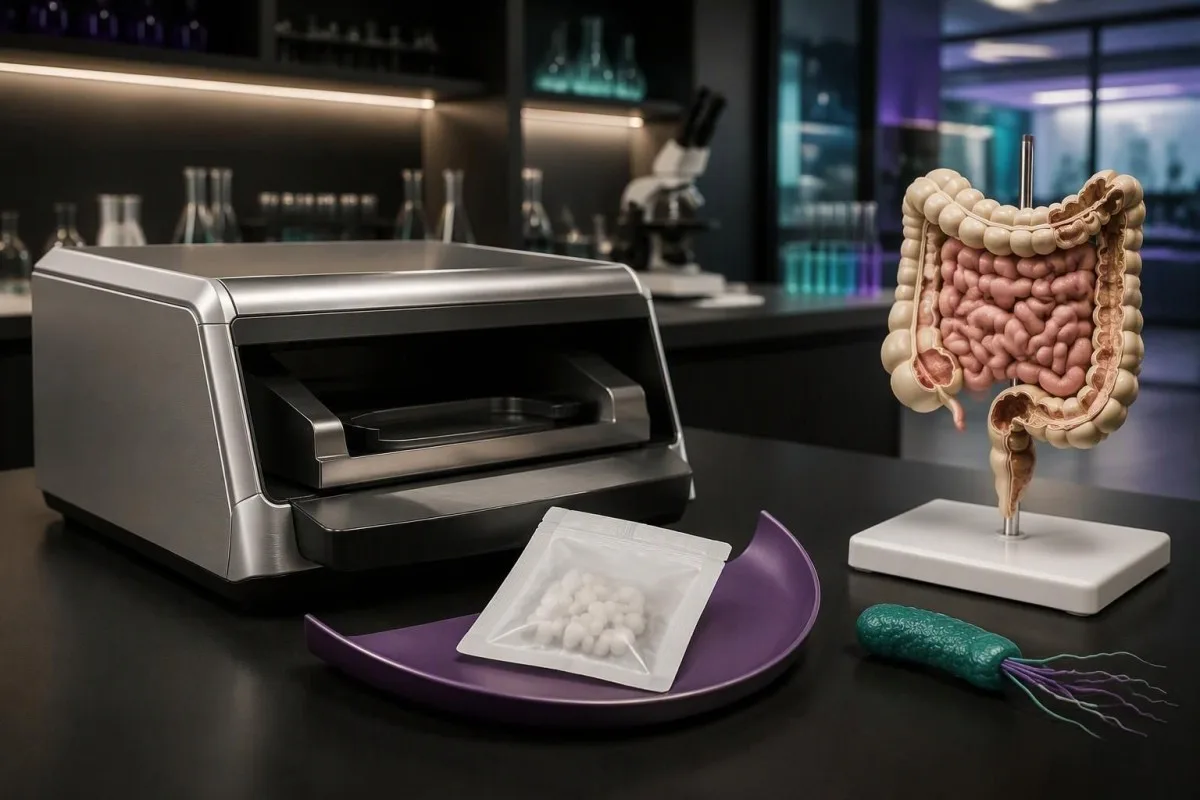
The 500 mg regimen is an example, not a self-treatment instruction. Children need weight-based prescribing, and invasive infection or severe immune suppression may require a different duration, susceptibility-guided therapy, or hospital treatment; antibiotics already prescribed for another condition should not be repurposed for a stool result.
Travel history can change the resistance assessment. The 2017 IDSA guideline identifies azithromycin as a preferred option for Campylobacter and discusses substantial geographic variation in fluoroquinolone resistance; a hypothetical 45-year-old returning from international travel should tell the prescriber where they went and whether they took antibiotics abroad (Shane et al., 2017).
Electrolyte loss matters when reviewing azithromycin safety. Potassium below 3.5 mmol/L or reduced magnesium can increase concern about rhythm problems, particularly with other QT-prolonging medicines; clinicians may need medication review, an ECG, or electrolyte correction rather than treating a 3-day prescription as automatically low risk.
Anticoagulant treatment deserves a separate safety check. Illness, reduced food intake, and antibiotics can alter warfarin control during even a short course; our گۆڕانکارییەکانی INR دوای ئەنتی بایۆتیک explains why the prescriber may arrange additional monitoring instead of recommending a patient-led dose change.
What helps recovery if antibiotics are not needed?
Oral rehydration solution is the main treatment for ongoing diarrheal fluid loss, whether or not antibiotics are prescribed. An adult can often start with approximately 200–250 mL after each loose stool, adjusting to thirst and losses; heart failure, kidney disease, and children's needs require individualized advice.
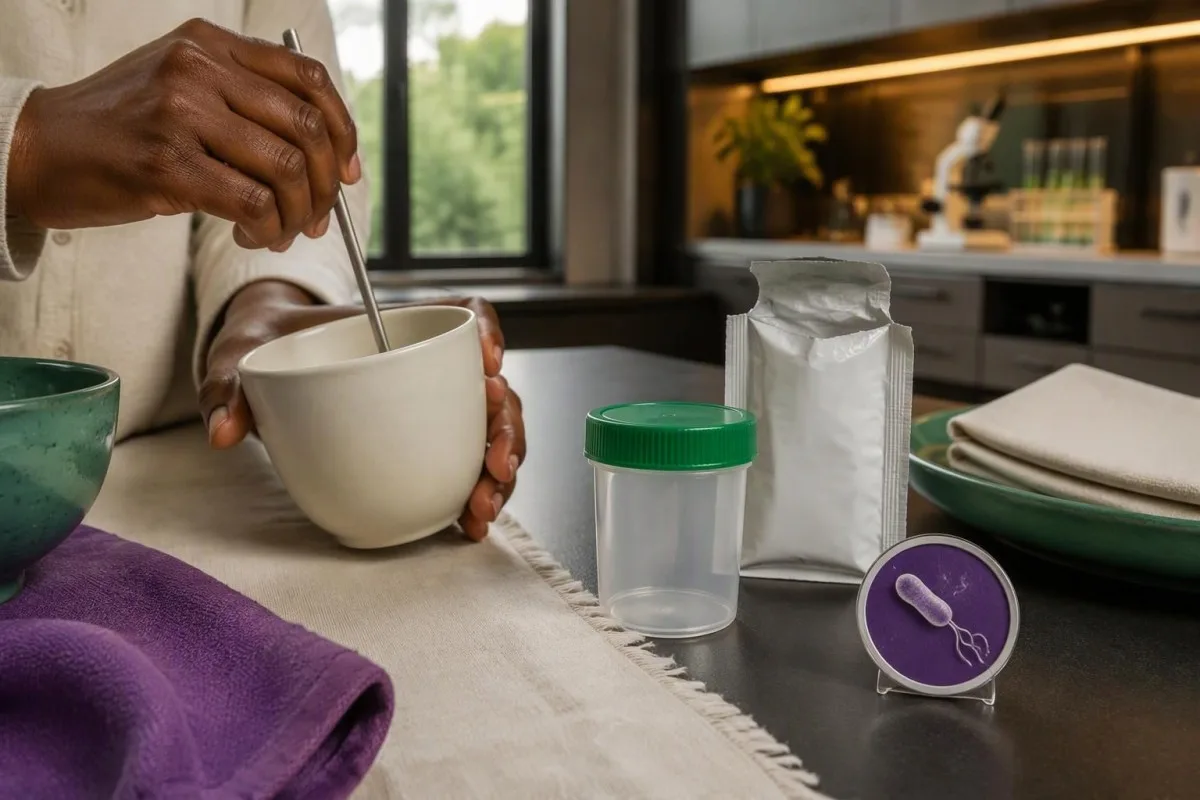
The packet's mixing volume is a medical instruction, not a serving suggestion. Dissolve a sachet in the exact stated water volume—often 200 mL or 1 L depending on the product—because making it too concentrated can worsen electrolyte problems; use safe water and follow storage instructions.
Small amounts are often better tolerated after vomiting. Try 5–10 mL every 1–2 minutes, increasing gradually if it stays down; ongoing vomiting despite this approach, worsening dizziness, or reduced urine requires medical advice rather than repeatedly forcing a large glass of fluid.
Food restriction does not clear Campylobacter. Resume tolerable meals as appetite returns, and continue breastfeeding for infants; after 24 hours, persistent avoidance of food can compound weakness without treating the organism, while very sugary drinks may aggravate diarrhea through their osmotic effect.
Antidiarrheal medicines need caution in inflammatory diarrhea. Avoid self-directed loperamide when fever or blood is present, and the IDSA guideline advises against loperamide in children younger than 18 years with acute diarrhea; our diarrhea and dietary changes guide also explains why fasting is not a substitute for rehydration.
Does positive PCR mean you are still contagious?
A positive Campylobacter PCR cannot prove ongoing contagiousness, because it detects DNA rather than demonstrating viable bacteria. Nevertheless, bacteria can be shed after symptoms improve, so hygiene and local exclusion rules still matter; many UK settings use at least 48 hours after diarrhea and vomiting stop before return.

There is no validated universal PCR date that marks the end of transmission risk. A positive specimen on day 10 cannot establish that transmission is occurring, while feeling well does not guarantee shedding has stopped; culture demonstrates viable organisms under laboratory conditions but still cannot precisely quantify real-world infectiousness.
The 48-hour rule is not a universal clearance certificate. Food handlers, healthcare workers, and children in particular settings may face different local requirements, outbreak instructions, or public-health review; ask about the rule for your role instead of borrowing advice from norovirus recovery and contagiousness.
Soap-and-water handwashing interrupts the main fecal–oral transmission route. Wash for at least 20 seconds after using the toilet or changing nappies and before preparing food; do not prepare food for others while symptomatic, and clean shared bathroom touchpoints using an appropriate product according to its instructions.
Preventing another exposure is different from treating the current episode. Keep raw poultry separate from ready-to-eat foods, avoid rinsing raw poultry, and cook poultry to a verified safe internal temperature—for example, 74°C under US food-safety guidance; a new exposure can produce another illness even after the first improves.
Which blood tests matter when diarrhea becomes severe?
Blood tests assess dehydration and complications; they do not confirm or clear intestinal Campylobacter infection. Electrolytes, urea, creatinine, and a full blood count may be useful in severe illness, particularly when potassium falls below 3.5 میلیمۆڵ/لەتر or kidney function changes from the person's usual baseline.
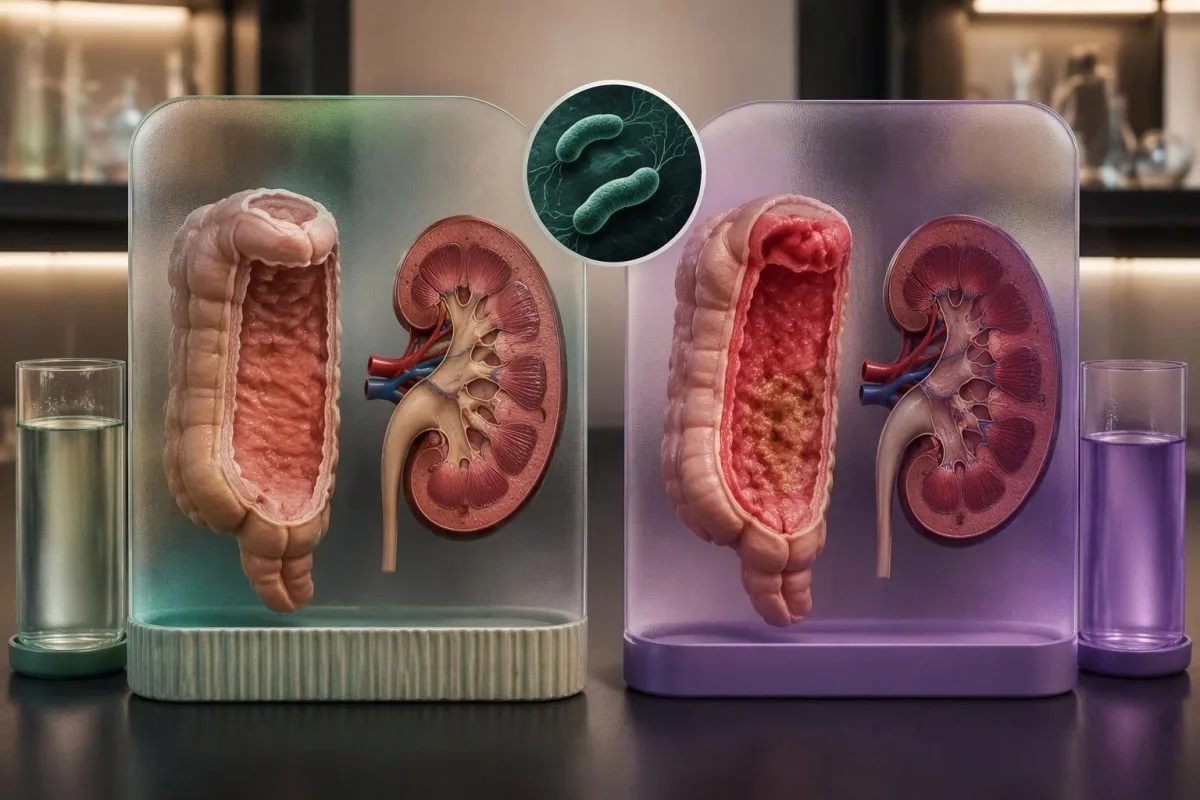
A changing creatinine can be more informative than its reference-range flag. A rise of at least 26.5 µmol/L, equivalent to 0.3 mg/dL, within 48 hours meets one standard acute kidney injury criterion; our ئەنجامەکانی گورچیلە دوای وشکبوونەوە explains why a previously normal baseline matters.
Consider a clearly hypothetical kidney-result comparison. An adult whose creatinine rises from 70 to 100 µmol/L over 2 days has a 30 µmol/L increase that merits assessment even if the laboratory's upper limit is higher; the urea-to-creatinine relationship can add context but cannot diagnose dehydration by itself.
White-cell count and CRP cannot decide whether Campylobacter needs antibiotics. At Kantesti, we explain these accompanying results as context rather than a prescription trigger; a hypothetical CRP of 60 mg/L can accompany intestinal inflammation, but there is no validated CRP cutoff that identifies antibiotic benefit for uncomplicated Campylobacter enteritis.
Normal inflammatory markers do not overrule concerning symptoms. A white-cell count of 7.0 × 10^9/L can fall within an adult laboratory range while dehydration or localized abdominal disease remains clinically significant; our بەراوردکردنی WBC و CRP explains why discordant results require interpretation alongside examination and trends.
When is repeat stool testing useful after Campylobacter?
Routine repeat PCR is usually unnecessary after symptoms resolve, and it is not a reliable test of ongoing infectiousness. Repeat or additional testing becomes useful when symptoms persist, recur, or require public-health clearance; diarrhea lasting 14 days or longer needs a broader diagnostic review rather than automatic repeat antibiotics.

Residual DNA can outlast the illness that prompted testing. Detection may persist for days or weeks, with variation between people and assays; a second positive PCR 7 days after recovery does not by itself demonstrate antibiotic failure, a new infection, or a need to treat again.
Persistent diarrhea needs a question-driven testing plan. After 14 days, clinicians may consider other pathogens, medication effects, post-infectious bowel dysfunction, or inflammatory bowel disease; a repeat multiplex panel is most useful when its result could change management, not merely because the original result was alarming.
Suspected resistance may call for culture and susceptibility testing rather than another qualitative PCR. If substantial illness continues after 48–72 hours of an appropriate antibiotic, the prescriber can discuss whether the laboratory can recover an isolate; PCR generally cannot tell whether a particular antibiotic will work unless the assay specifically includes validated resistance testing.
A raised fecal calprotectin during acute diarrhea does not establish inflammatory bowel disease. Intestinal infection can raise this marker, so an isolated value such as 180 µg/g must be interpreted against timing, symptoms, and the laboratory range; our ڕێنمایی دوایین داتای کالپڕۆتکتینی سنوورداری explains why follow-up timing should be individualized.
What symptoms after recovery should not be ignored?
New progressive weakness, a swollen joint, or persistent bowel symptoms after Campylobacter require separate assessment, even if diarrhea has stopped. Guillain–Barré syndrome can begin in the following 1–3 هەفتە, while reactive arthritis often appears within approximately 1–4 هەفتە; these problems are not diagnosed by repeat stool PCR.
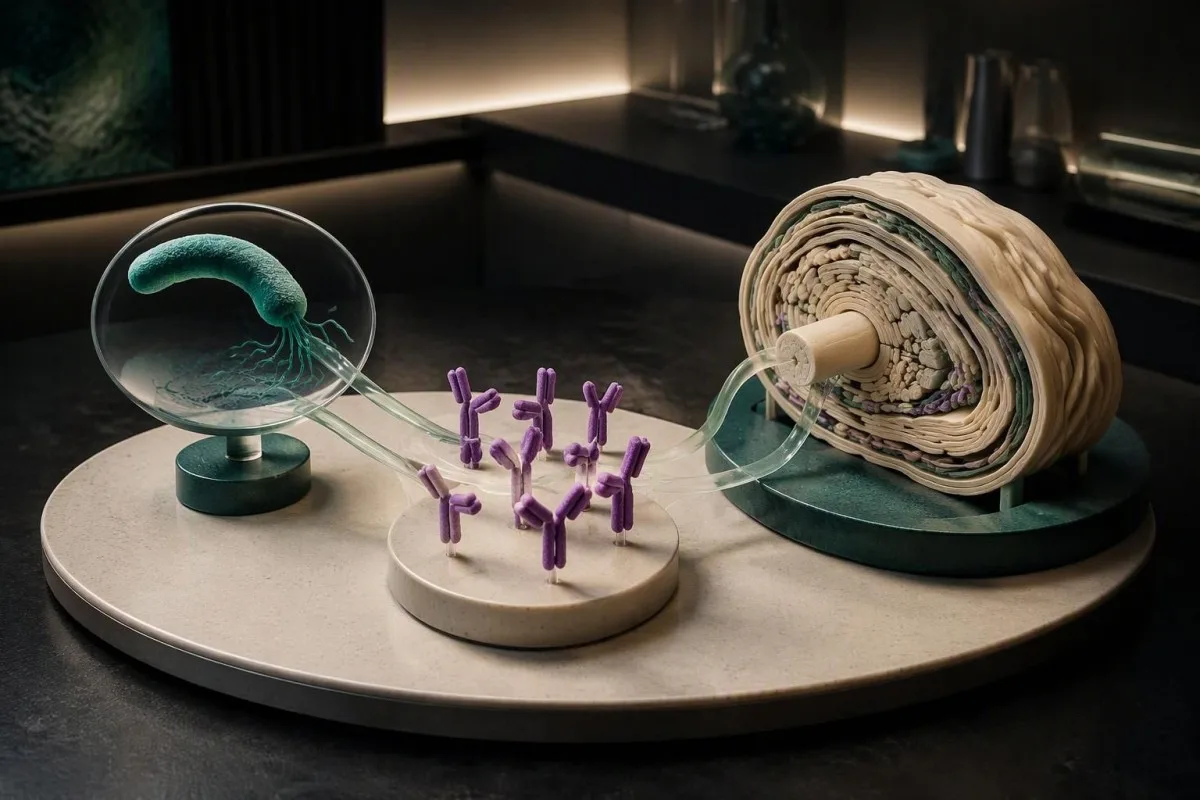
Guillain–Barré syndrome is a neurological emergency, not a reason to wait for a stool clearance test. Weakness that progresses from the legs, difficulty walking, or new swallowing or breathing problems within 1–3 weeks of diarrhea needs immediate assessment; our progressive weakness warning signs distinguishes this pattern from ordinary recovery fatigue.
Reactive arthritis can affect joints after the intestinal illness ends. New swelling in a knee or ankle 1–4 weeks after diarrhea needs assessment, particularly with eye pain, light sensitivity, or urinary symptoms; a hot swollen joint with fever should be evaluated urgently because other causes, including joint infection, must be excluded.
Post-infectious bowel disturbance does not necessarily mean live Campylobacter persists. Loose stools, urgency, or temporary food intolerance at 2–4 weeks can reflect intestinal recovery, but weight loss, persistent blood, nocturnal diarrhea, or ongoing fever warrants investigation rather than reassurance based solely on a previous diagnosis.
Antibiotics have not been shown to reliably prevent these post-infectious complications. The 11-trial meta-analysis measured symptom duration, not a proven reduction in Guillain–Barré syndrome or reactive arthritis; avoiding a rare later complication is therefore not an established reason to treat every mild PCR-positive infection (Ternhag et al., 2007).
بڵاوکراوە توێژیندییەکان و سنوورەکانی لێکدانەوەی AI
Clinical guidelines and treatment trials—not a positive label alone—should guide antibiotic decisions. Kantesti is an AI-powered blood test analysis tool that can explain accompanying laboratory information, but neither a single PCR nor a set of 3 abnormal blood results replaces a clinician's assessment of infection severity.
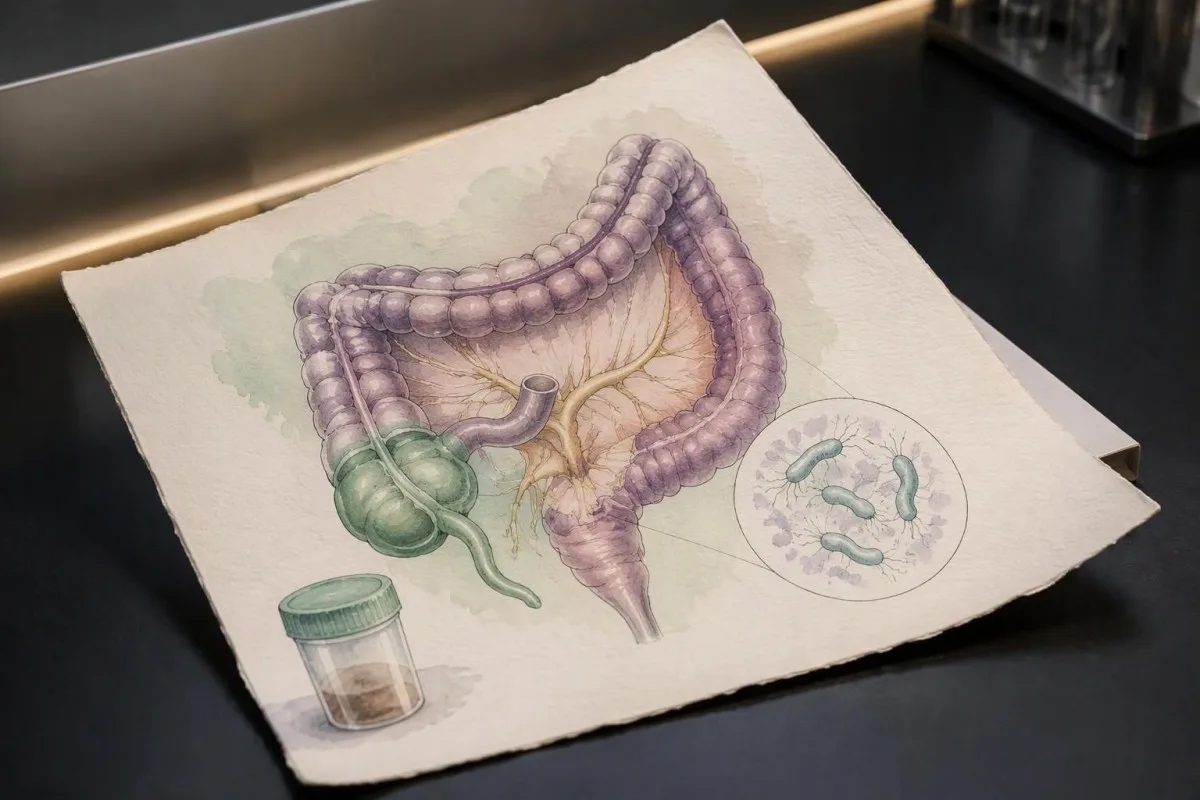
The 2017 IDSA guideline provides the main clinical framework cited here. It addresses molecular stool testing, culture, rehydration, and organism-specific antibiotic decisions; Kantesti's ستانداردەکانی ناوەڕۆکی پزیشکی distinguish those clinical recommendations from educational explanations and product-related information.
The antibiotic-benefit estimate comes from a 2007 meta-analysis, not a new treatment trial. Its 11 randomized studies support modest average symptom shortening, but older resistance patterns, treatment timing, and trial populations limit how precisely the 1.32-day estimate can predict benefit for someone with severe or invasive illness.
The 2 Figshare publications below are supplemental educational resources, not Campylobacter antibiotic trials. The gastrointestinal guide concerns symptom interpretation, while the hematology guide concerns unrelated laboratory topics; a DOI makes a publication identifiable but does not establish peer review or evidence that its content can decide infectiousness.
Kantesti Ltd is responsible for separating education from prescribing advice. Yên me سنوورەکانی زیرەکی دەستکردی بەرپرسانەی ئێمە apply whether a report contains 1 positive target or several abnormal markers: uncertainty should lead to a clinical question, not a confident claim that antibiotics are definitely needed or definitely unnecessary.
پرسیاره باوهكان
ئەگەر تاقیکردنەوەی PCRی پاشەڕۆکەم بۆ کامپیلۆباکتەر ئەرێنی بێت، پێویستیم بە ئەنتیبیۆتیک هەیە؟
پۆزەتیڤبوونی تاقیکردنەوەی PCRی کەمپیلۆباکتەر لە پاشماوەی ڕیخۆڵە بە خۆکار واتای پێویستی بە ئەنتیبیۆتیک نییە. زۆربەی کەسانی بە تەندروستییەکی باش بە خواردنەوەی شلە لە ماوەی نزیکەی ١ هەفتەدا چاک دەبنەوە، بە تایبەتی کاتێک نیشانەکان پێشتر باشتر دەبن. زۆرتر ئەگەری ئەوە هەیە کە بۆ نەخۆشیی توند یان درێژخایەن، سکچوونی خوێناوی، تاوی بەردەوام، یان لاوازیی بەرگریی جەستە ئەنتیبیۆتیک لەبەرچاو بگیرێت. دووگیانی، تەمەنی ٦٥ ساڵ یان زیاتر، و ساواشیان ئاستی پێویستی بە هەڵسەنگاندنی کلینیکی دادەبەزێنن.
ئایا PCRی کامپیلۆباکتەر دەتوانێت دوای ئەوەی باشتر هەستم کرد، هێشتا پۆزەتیڤ بێت؟
تاقیکردنەوەی PCR بۆ Campylobacter دەتوانێت دوای باشبوونی نیشانەکانیش ئەرێنی بمێنێتەوە، چونکە ئەم شیکارییە DNAی بەکتریا دەدۆزێتەوە، نەک ئەوەی بسەلمێنێت بەکتریاکان زیندوون. DNA دەتوانێت بۆ چەند ڕۆژێک یان چەند هەفتەیەک هێشتا دەستنیشان بکرێت، بەڵام ماوەیەکی گشتی بۆ پاکبوونەوە نییە کە بۆ هەموو کەسێک یان هەموو شیکارییەک بگونجێت. ئەنجامی ئەرێنی دوای ٧ ڕۆژ لە چاکبوونەوە، بە تەنیا نایسەلمێنێت کە چارەسەرییەکە سەرکەوتوو نەبووە یان هێشتا تووشکەرە. دووبارەکردنەوەی ئاسایی PCR دوای چاکبوونەوە زۆرجار پێویست نییە، مەگەر پزیشک یان تیمی تەندروستی گشتی هۆکارێکی دیاریکراوی هەبێت.
بۆ کامپیلۆباکتەر زۆرجار چ دژەزیندەیەک دەنووسرێت؟
ئەزیتڕۆمایسین زۆرجار پێشتر دەخرێتەوە کاتێک تووشبوون بە کامپیلۆباکتەر پێویستی بە دەرمانی دژەباکتریایی هەیە، لە کاتێکدا بەرگری لە فلۆرۆکینۆلۆن دەتوانێت سیپڕۆفلۆکساسین نالەبار بکات. یەکێک لە ڕێژە دەرمانییە باوەکانی بەکارهێنان بۆ گەورەساڵان لە ئینتێریتسی نالەپیچیدا، ئەزیتڕۆمایسینە بە 500 mg جارێک لە ڕۆژدا بۆ ماوەی 3 ڕۆژ. ئەمە نموونەیەکە، نەک ڕاسپاردەیەک بۆ خۆدەرمانکردن؛ منداڵان، تووشبوونی هێرشبەر، دووگیانی و لاوازیی بەرگریی جەستە پێویستیان بە دیاریکردنی دەرمانی تایبەت بە کەسیان هەیە. دەرماننووس هەروەها دەبێت هەستیارییەکان، دەرمانە کارلێککەرەکان، لەدەستدانی ئەلیکترۆلایت و زانیاریی خۆجێیی بەرگری بپشکنێتەوە.
How long does Campylobacter diarrhea last without antibiotics?
Campylobacter diarrhea often improves over about 1 week without antibiotics in otherwise healthy people. Symptoms persisting beyond about 7 days without improvement deserve reassessment, while diarrhea lasting 14 days or longer needs a broader review of possible causes. In an older meta-analysis of 11 randomized trials, antibiotics shortened intestinal symptoms by an average of about 1.32 days. That average does not predict the course of severe illness or guarantee a benefit from starting treatment late.
Do I need a negative Campylobacter test before returning to work?
A negative Campylobacter test is not routinely required for every person returning to work, but local public-health and occupational rules vary. Many UK settings require at least 48 hours without diarrhea or vomiting before return. Food handlers, healthcare workers, and people involved in outbreaks may need additional instructions or testing. A PCR result alone cannot certify that transmission risk has ended.
When should I seek urgent help for Campylobacter?
Seek emergency care for confusion, collapse, severe dehydration, major bleeding, a rigid abdomen, or new progressive weakness after diarrhea. Very little urine over roughly 8–12 hours in an adult, inability to keep fluids down, or worsening localized abdominal pain warrants urgent advice. An infant younger than 3 months with a temperature of 38°C or higher needs urgent medical assessment. Do not wait for a repeat stool PCR when these warning signs are present.
Get your blood test results explained
Upload your lab report and Kantesti's AI explains each biomarker in plain language within seconds. Used by more than 2 million people worldwide.
Referans
- کلاین، تی.، میچڵ، ئێس.، و وێبەر، ھ. (٢٠٢٦). B Negative Blood Type, LDH Blood Test & Reticulocyte Count Guide. Kantesti AI Medical Research. DOI
- کلاین، تی.، میچڵ، ئێس.، و وێبەر، ھ. (٢٠٢٦). Diarrhea After Fasting, Black Specks in Stool & GI Guide 2026. Kantesti AI Medical Research. DOI
- Shane AL et al. (2017). 2017 Infectious Diseases Society of America Clinical Practice Guidelines for the Diagnosis and Management of Infectious Diarrhea. Clinical Infectious Diseases. DOI PubMed
- Ternhag A et al. (2007). A meta-analysis on the effects of antibiotic treatment on duration of symptoms caused by infection with Campylobacter species. Clinical Infectious Diseases.
- 2M+Tests analysed
- 127+Welat
- 100+Ziman
About the medical team


سەنگەری باوەڕپێکردن E-E-A-T
Tecribe
ڕەوی پشکنینی کلینیکی لەلایەن پزیشکەوە بۆ ڕێکخستنی ڕووداوەکانی لێکدانەوەی ئازمایش.
Pisporî
گرێدانی لابراتۆرییەی پزیشکی بەوەی چۆن بایۆمارکەرەکان لە کۆنتێکستی کلینیکی دەگۆڕن.
Desthilatdarî
Medically reviewed by Dr. Thomas Klein, with contributions from Dr. Sarah Mitchell and Prof. Dr. Hans Weber.
Bawerî
لێکدانەوە بە بنەمای دڵنیابوون (Evidence-based) بە ڕێڕەوی دوایینەوەی ڕوون بۆ کەمکردنەوەی هەست بە ترس/هەڵوەشاندن.


Medical disclaimer
ئەم مادەیە تەنها بۆ. I think I must continue but user expects all items.
بڵاوکراوهتهوه · Contact the editorial team
Published by Kantesti Ltd, registered in England & Wales, company no. 17090423, London, United Kingdom.
