
An oxcarbazepine level usually measures MHD, the active metabolite—not the original tablet ingredient. The useful question is whether a correctly timed result fits your seizure control, side effects, kidney function, and previous effective levels.

Key takeaways
- Measured substance: Most oxcarbazepine level tests measure the active metabolite MHD, also called 10-hydroxycarbazepine.
- Common laboratory interval: Many laboratories report MHD at 10–35 µg/mL; other published reference schemes use approximately 3–35 or 3–36 mg/L.
- Equivalent units: An MHD concentration of 20 µg/mL equals 20 mg/L, or 20,000 ng/mL.
- Personal treatment target: A seizure-free, well-tolerated trough of 8 µg/mL may be more useful for that individual than a population interval of 10–35 µg/mL.
- Sample timing: A trough is collected immediately before the next scheduled dose—often about 12 hours after the previous dose for twice-daily immediate-release treatment.
- Steady state: MHD usually reaches steady state within 2–3 days on an unchanged twice-daily regimen when kidney function is normal.
- Kidney function: Creatinine clearance below 30 mL/min can approximately double MHD exposure; prescribers need to interpret the result alongside renal function.
- Sodium safety: Sodium below 135 mmol/L is hyponatremia, and a normal MHD level does not exclude this oxcarbazepine-related complication.
- Dose safety: Neither a result above 35 µg/mL nor one below 10 µg/mL tells you how to change your dose. Contact your prescriber rather than changing or stopping treatment yourself.
What does an oxcarbazepine level actually measure?
An oxcarbazepine level usually measures MHD, the active metabolite responsible for most antiseizure activity. Many laboratories use a trough reference interval of 10–35 µg/mL, but a result outside that interval is not automatically ineffective or toxic; timing, symptoms, kidney function, and your previous effective concentration determine its meaning.

The test name can hide the measured substance. A report headed oxcarbazepine, Trileptal, or oxcarbazepine metabolite may list the same analyte: 10-hydroxycarbazepine, rather than the parent medicine, whose half-life is approximately 2 hours.
Check the analyte before interpreting the flag. MHD, monohydroxy derivative, and 10-hydroxycarbazepine are common laboratory names; a numerical result of 20 µg/mL means something different if the laboratory actually measured a different substance or used a different sampling protocol.
Kantesti is an AI blood test analyzer that can help explain why an MHD result of 20 µg/mL needs to be read alongside sodium, renal results, and medication timing. Our biomarker terminology guide helps readers distinguish an analyte name from a medicine name.
A treatment target answers a different question from a laboratory interval: what exposure controls this person's seizures without unacceptable adverse effects? Recording a well-tolerated trough of 14 µg/mL during stable seizure control creates a useful comparison point if the person's circumstances later change.
Why do laboratories measure MHD instead of oxcarbazepine?
Laboratories usually measure MHD because oxcarbazepine is rapidly converted to this active metabolite, which persists longer and better represents ongoing drug exposure. Oxcarbazepine has an approximately 2-hour half-life, whereas MHD has an approximately 9-hour half-life in people with normal kidney function.

Conversion changes oxcarbazepine's ketone group into the corresponding alcohol group in MHD. The approximately 9-hour persistence of MHD makes its concentration more useful for comparing exposure between visits than a parent-drug concentration that changes quickly after each tablet.
Most routine MHD assays measure the combined active stereoisomers rather than reporting each separately. This is another reason a single value such as 18 µg/mL cannot be treated as a direct measure of drug activity inside individual neurons or as proof that the prescribed formulation was taken correctly.
The ILAE therapeutic drug monitoring position paper identifies the active metabolite as the relevant measurement for oxcarbazepine monitoring and emphasizes interpretation within clinical context (Patsalos et al., 2008). The related carbamazepine monitoring principles should not be used to substitute carbamazepine's different concentration range for MHD.
Metabolite testing is not unique to this medicine, but its purpose differs between treatments. Our explanation of thiopurine metabolite patterns illustrates another situation in which the laboratory measures what the body produces from a medicine; those numerical targets cannot be transferred to an MHD result of 18 µg/mL.
What is the oxcarbazepine therapeutic range?
A commonly reported oxcarbazepine therapeutic range is 10–35 µg/mL of MHD, usually for a trough sample. Published reference schemes also include approximately 3–35 or 3–36 mg/L, so the interval printed by your own laboratory—not a number found elsewhere—must be the starting point.

These are treatment-associated reference intervals, not healthy-person normal ranges. People who do not take oxcarbazepine ordinarily have no measurable treatment-related MHD, and an interval such as 10–35 µg/mL is intended to contextualize concentrations during medication use rather than diagnose a deficiency.
Norwegian reference-range work describes a broader lower boundary for oxcarbazepine's active metabolite, approximately 3–36 mg/L, demonstrating why different reports can flag the same concentration differently (Reimers et al., 2018). The disagreement reflects how reference populations and monitoring conventions were assembled—not a sudden biological change at 10 µg/mL.
At Kantesti, we explain that a hypothetical trough of 8 µg/mL can be acceptable when seizures are controlled and treatment is well tolerated, while 22 µg/mL can still accompany adverse effects. Similar caution applies to topiramate concentration ranges, where exposure and clinical response do not align perfectly.
The upper boundary of 35 µg/mL is not a universally validated emergency threshold. Adverse effects can occur below it, and an asymptomatic result just above it needs a timing and clinical review; no MHD concentration alone proves that someone is safe to drive, increase a dose, or stop treatment.
| Level | Range | What it means |
|---|---|---|
| Below a common laboratory interval | <10 µg/mL MHD | May reflect an effective individual baseline, missed doses, increased clearance, or sampling differences; seizure control and the laboratory's own interval matter. |
| Within a common laboratory interval | 10–35 µg/mL MHD | Compatible with commonly observed treatment exposure, but does not guarantee seizure control or exclude adverse effects or low sodium. |
| Above a common laboratory interval | >35 µg/mL MHD | Requires review of symptoms, sample timing, renal function, and medication history; it is not a stand-alone diagnosis of toxicity. |
When should an MHD sample be collected?
An MHD trough sample is collected immediately before the next scheduled dose, following the prescriber's instructions. For a twice-daily immediate-release regimen, this is often approximately 12 hours after the previous dose; a once-daily extended-release regimen has a different sampling interval.

A hypothetical person prescribed immediate-release oxcarbazepine at 8 am and 8 pm might have a planned collection shortly before the 8 am dose. The laboratory and prescriber should arrange how that morning's medicine is handled; patients should not skip or substantially delay a dose just to create a trough.
A sample collected 4–6 hours after immediate-release treatment may be closer to a post-dose peak than a trough. That result is not necessarily unusable, but comparing it directly with a previous pre-dose result can exaggerate an apparent rise and lead to the wrong explanation for new symptoms.
For once-daily extended-release treatment, a pre-dose sample may be approximately 24 hours after the preceding dose. Formulation and food instructions affect the concentration profile, which is why lacosamide sampling guidance offers useful timing concepts but not interchangeable targets or schedules.
When adverse effects consistently appear 2–4 hours after a dose, a clinician may request a symptom-timed sample rather than a routine trough. Write down the exact dose time, collection time, and symptom onset; a non-trough result becomes more informative when the clinical question is explicit.
How do steady state, units, and laboratory details affect interpretation?
MHD usually reaches steady state within 2–3 days on an unchanged twice-daily regimen when kidney function is normal. Units also matter: 1 µg/mL equals 1 mg/L, so 20 µg/mL and 20 mg/L describe the same concentration.
Steady state means average input and elimination have balanced—not that the concentration stays flat throughout the day. A result obtained after only 1 day on a changed regimen may not represent the exposure that will develop later, especially if renal clearance is reduced.
The unit ng/mL is 1,000 times smaller than µg/mL: 20 µg/mL equals 20,000 ng/mL. For MHD, 10–35 mg/L is approximately 39–138 µmol/L, using a molecular mass of about 254.3 g/mol; a unit mismatch can create a false impression of a thousand-fold overdose.
Most MHD assays measure total serum or plasma concentration, and laboratories specify their own acceptable collection tubes and transport requirements. Fasting is generally not required for the concentration test itself, but medication food instructions and other tests requested at the same visit may change preparation; our baseline sample preparation guide explains how to keep those instructions separate.
Ask whether a repeat can use the same laboratory and collection timing, particularly when comparing a result of 16 µg/mL with 19 µg/mL. Small differences can reflect timing and analytical variation rather than a meaningful change in treatment exposure; ask the laboratory about its method if the result does not fit the clinical picture.
How should low, in-range, and high MHD results be read?
MHD level interpretation depends on the clinical pattern, not the flag alone. A trough of 8 µg/mL, 22 µg/mL, or 38 µg/mL can mean very different things depending on seizure control, side effects, sodium, renal function, and whether the specimen was truly pre-dose.
Consider a clearly hypothetical adult with no seizures for 18 months, no troubling side effects, and repeated troughs near 8 µg/mL. A laboratory using 10–35 µg/mL would flag that result low, but increasing treatment simply to remove the flag could add harm without improving an already satisfactory clinical outcome.
A second hypothetical person has an MHD trough of 22 µg/mL and new double vision after a recent medication change. The concentration is within a common interval, yet the symptom still warrants assessment; sodium, other sedating medicines, and the timing of symptoms may explain why this apparently reassuring number is not the whole answer.
For a third hypothetical person, 38 µg/mL collected 5 hours after a dose cannot be interpreted as though it were a 12-hour trough. If the person is well, the prescriber may first clarify timing or arrange a standardized repeat; if coordination or alertness is impaired, symptom assessment takes priority over repeating the number.
An individualized baseline is most useful when it is documented under comparable conditions: the same formulation, similar timing, and stable clinical control. Our lamotrigine level interpretation guide explains the same principle, although a lamotrigine value of 8 µg/mL cannot be interpreted using MHD's reference interval.
When does Trileptal drug monitoring help?
Trileptal drug monitoring is most useful when it answers a specific question: unexpected seizures, suspected adverse effects, uncertain medication intake, pregnancy, changing kidney function, or interacting treatment. There is no universally recommended 3-month or 6-month MHD testing schedule for every stable patient.

The ILAE position paper recommends selective therapeutic drug monitoring to support clinical decisions rather than treating population ranges as automatic dosing rules (Patsalos et al., 2008). A trough recorded during 12 months of good seizure control can provide a personal benchmark if seizures later recur despite an apparently unchanged prescription.
A single low concentration cannot distinguish a missed dose from increased clearance or a long sampling interval. For example, 6 µg/mL after a delayed collection has a different implication from repeated 6 µg/mL troughs collected correctly; medication discussions should be factual and nonjudgmental rather than treating the result as proof of nonadherence.
Kantesti is an AI biomarker interpretation platform that helps organize MHD trends alongside sodium and renal measurements, while leaving treatment decisions to the prescriber. Our medication safety trend guide explains why comparing 3 well-documented results can be more useful than interpreting 3 unrelated flags.
Evidence that routine MHD testing improves outcomes in every otherwise stable patient is limited. A repeat after an exposure-changing event may be useful once steady state is expected—often 2–3 days with normal renal function—but the timing should match the clinical concern rather than follow a blanket calendar rule.
How does kidney function change an oxcarbazepine level?
Reduced kidney function can increase MHD exposure because oxcarbazepine metabolites are predominantly eliminated through the kidneys. With creatinine clearance below 30 mL/min, prescribing information describes an MHD half-life of approximately 16–19 hours and roughly a 2-fold increase in exposure.
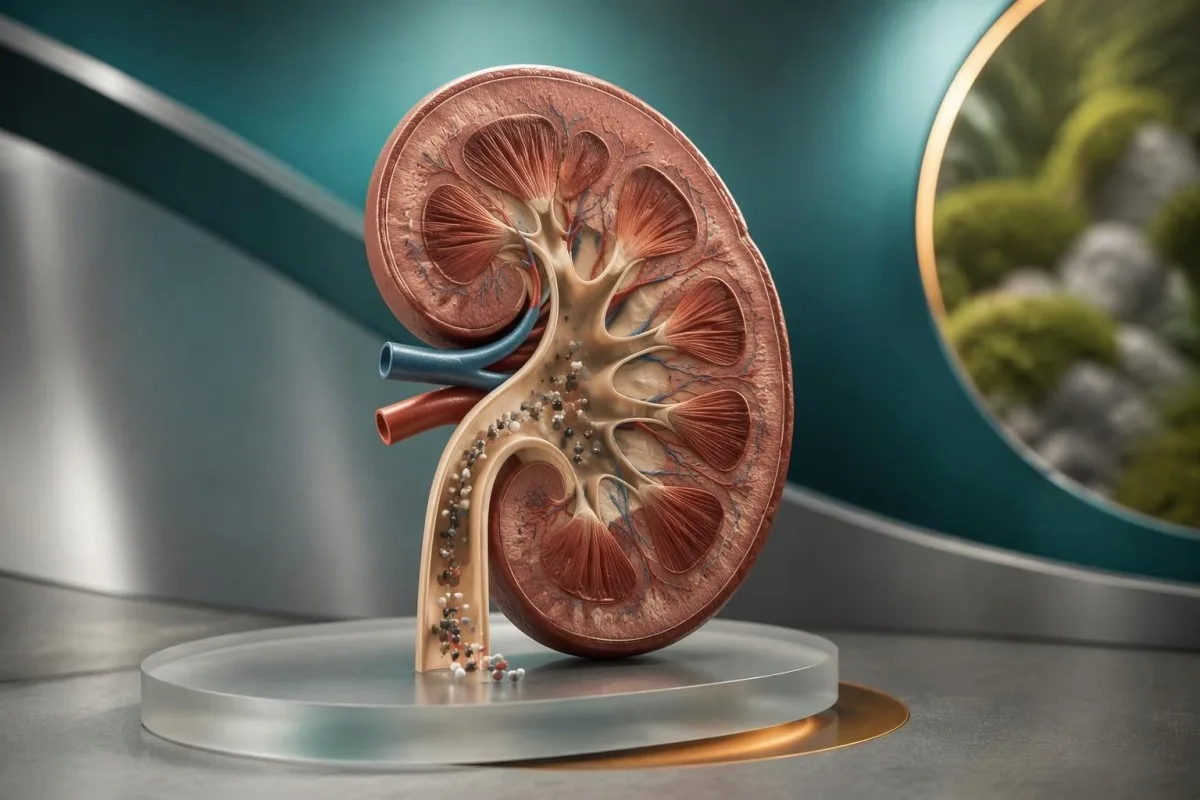
A concentration can rise even when the prescribed daily amount has not changed. In a hypothetical older adult whose correctly timed MHD trough increases from 17 to 29 µg/mL during an illness, a concurrent creatinine rise supports reduced elimination as one explanation; new imbalance or sleepiness strengthens the need for prompt clinical review.
Creatinine clearance and reported eGFR are related but not identical measurements. The prescribing threshold of 30 mL/min refers to creatinine clearance, whereas laboratory eGFR is commonly indexed to 1.73 m²; prescribers must choose the appropriate renal estimate rather than substitute the numbers without considering body size and clinical circumstances.
Dehydration or acute illness can temporarily alter renal results and make an old MHD baseline less representative. Our levetiracetam and kidney function guide describes another antiseizure medicine affected by renal elimination, but its concentration targets and adjustment rules are not transferable to an MHD result of 29 µg/mL.
Interpret renal trends rather than one isolated ratio. A BUN/creatinine ratio above 20 can occur with reduced fluid intake but is not diagnostic by itself; our BUN and creatinine guide explains why the actual creatinine change, clinical hydration assessment, and medication history need to be considered together.
Does MHD monitoring differ in pregnancy, children, and older adults?
Pregnancy can lower MHD concentrations, while childhood growth and age-related renal changes can alter exposure in different directions. A small prospective study found oxcarbazepine clearance reached approximately 1.6 times baseline during the second trimester, supporting comparison with an individual's established concentration rather than a universal pregnancy target.
Voinescu and colleagues reported pregnancy-related changes in antiseizure medicine clearance, including increased oxcarbazepine clearance, in Neurology (Voinescu et al., 2018). The approximately 1.6-fold finding came from a small observational dataset; it supports planned monitoring but does not justify a mathematical 1.6-fold dose increase for every pregnant person.
A hypothetical pre-pregnancy MHD trough of 18 µg/mL falling to 11 µg/mL represents an approximately 39% decrease, even though both results may remain inside one laboratory's interval. Renal physiology also changes during pregnancy, and our pregnancy renal result guide explains why ordinary adult kidney interpretation may not fit.
After delivery, clearance can move back toward baseline, so a pregnancy-adjusted prescription may produce increasing exposure. A change from 11 to 18 µg/mL does not itself dictate a dose change; the epilepsy and maternity teams should plan postpartum review, particularly when new dizziness, double vision, or excessive sleepiness appears.
Children should not inherit an adult target simply because the laboratory prints 10–35 µg/mL. Weight-normalized clearance changes with age, while older adults may accumulate MHD as renal function declines; Kantesti's contextual summaries should therefore include age, weight when relevant, seizure history, and the timing of each concentration.
Which medicines and formulation changes can alter MHD results?
Enzyme-inducing antiseizure medicines can lower MHD exposure, and changes in formulation, food timing, or medication intake can alter concentration profiles. MHD is approximately 40% protein-bound, so the free-versus-total interpretation problems familiar from phenytoin are generally less prominent, though clinical context still matters.
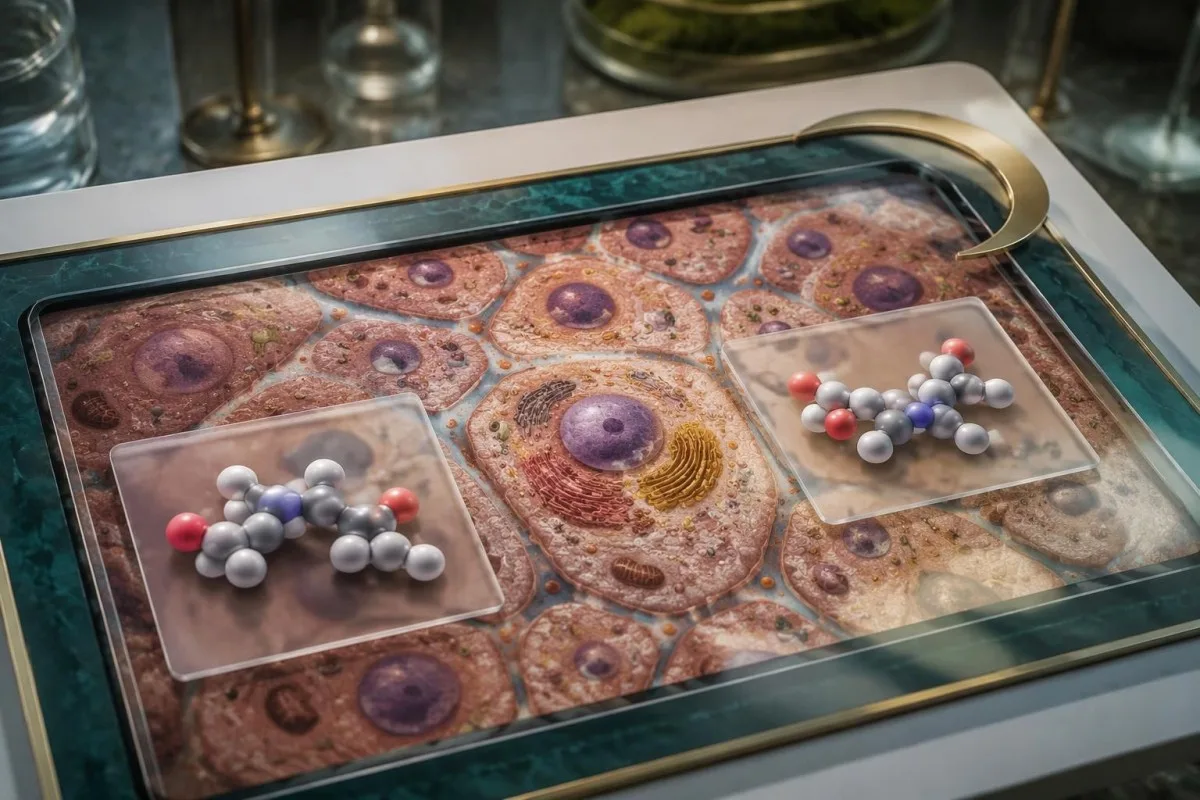
Carbamazepine, phenytoin, and phenobarbital can increase MHD clearance; stopping an inducer can therefore let MHD rise on an unchanged oxcarbazepine regimen. A hypothetical shift from 12 to 20 µg/mL after another antiseizure medicine is withdrawn should prompt an interaction review before anyone assumes the laboratory made an error.
Interactions can also run in the opposite direction. Oxcarbazepine can increase phenytoin concentrations, particularly at oxcarbazepine doses above 1,200 mg/day; our free and total phenytoin guide explains why checking MHD alone may miss the medicine actually responsible for new coordination problems.
Immediate-release and extended-release products have different concentration-time profiles and are not assumed to be interchangeable without a prescriber's plan. Some extended-release instructions specify taking treatment at least 1 hour before or 2 hours after a meal, so food timing should be documented rather than changed independently to influence the laboratory result.
An albumin correction developed for phenytoin should not be applied to an MHD result of 20 µg/mL. Routine MHD interpretation usually uses total concentration, and our valproate free-drug explanation illustrates why protein-binding rules are medicine-specific rather than universal formulas for all antiseizure treatments.
Why should sodium be checked alongside an MHD level?
Oxcarbazepine can cause hyponatremia even when MHD is within the laboratory interval. Serum sodium is commonly 135–145 mmol/L, and a value below 135 mmol/L is low; neurological symptoms or a new sodium result below 125 mmol/L require urgent clinical assessment.
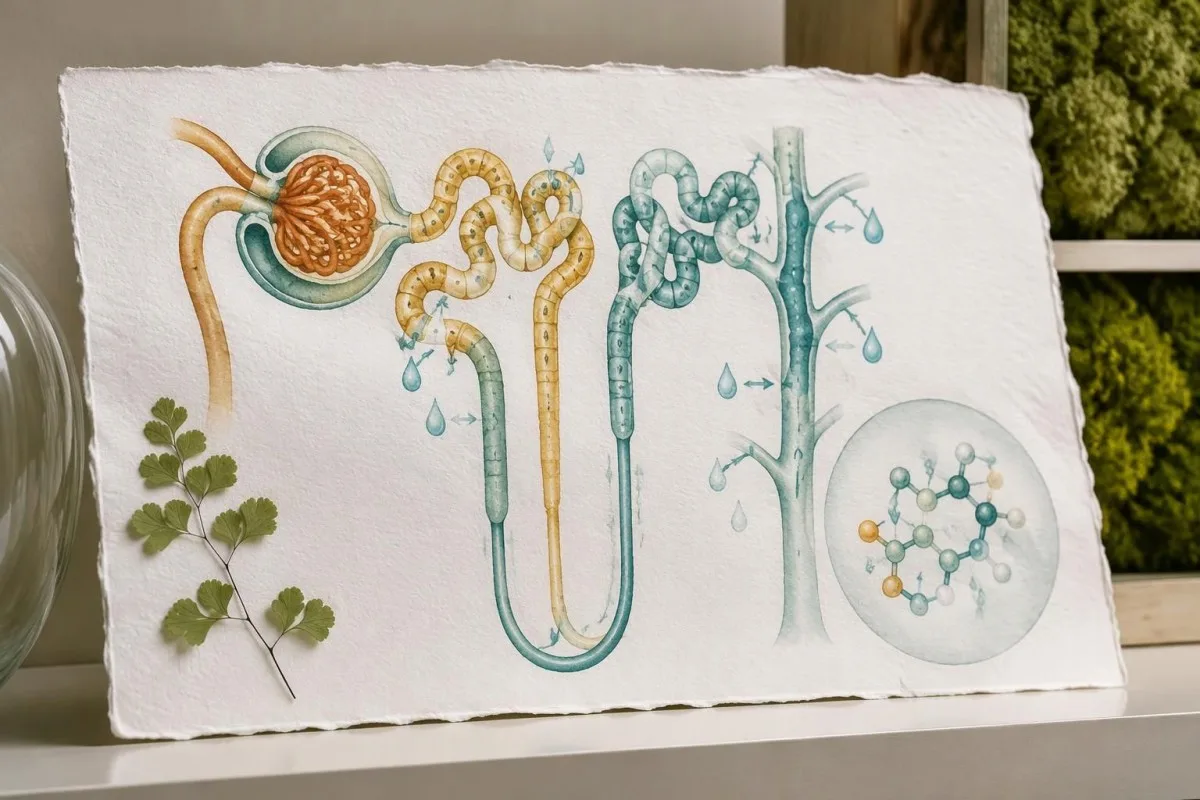
Trileptal prescribing information reports sodium below 125 mmol/L in 2.5% of treated participants in controlled epilepsy studies, compared with none in the pooled placebo or active-control groups. That trial percentage describes marked hyponatremia under study conditions, not the frequency of every milder sodium reduction in everyday practice.
Oxcarbazepine-associated water retention can resemble SIADH, but the mechanism is not always simply excessive antidiuretic hormone secretion. When sodium is 128 mmol/L, serum osmolality, urine osmolality, urine sodium, and clinical fluid assessment may help establish the pattern; our SIADH laboratory guide explains those complementary measurements.
Thiazide diuretics, some antidepressants, older age, and other clinical factors can add to the concern about falling sodium. A hypothetical MHD result of 19 µg/mL with sodium of 127 mmol/L and new confusion is not reassuring merely because the drug concentration is in range; the symptom-and-sodium combination needs prompt assessment.
High glucose can lower measured sodium through water shifts, so a sodium result of 130 mmol/L does not always represent the same physiological problem. Our glucose-corrected sodium guide explains that distinction; patients should not attempt to correct suspected medication-related hyponatremia with salt supplements or fluid restriction without clinical instructions.
Which symptoms need urgent care regardless of the MHD number?
Severe confusion, inability to stay awake, major new coordination problems, or a prolonged seizure require urgent assessment regardless of MHD concentration. A convulsive seizure lasting 5 minutes or longer, or repeated seizures without recovery, is an emergency; follow the person's prescribed seizure rescue plan and contact emergency services.
Dose-related dizziness, double vision, sleepiness, and unsteadiness can occur within a laboratory interval of 10–35 µg/mL. Their timing matters: symptoms that worsen shortly after each dose suggest a different exposure pattern from symptoms that appear during an illness with falling sodium or declining renal function.
Sudden one-sided weakness, facial droop, or new speech difficulty should not be dismissed as a medicine effect because MHD is 24 µg/mL. Our BE-FAST emergency signs explain why these features require immediate stroke assessment rather than waiting for a repeat trough.
A new widespread rash with blistering, mouth involvement, facial swelling, or breathing difficulty needs emergency assessment, and an MHD result of 15 µg/mL cannot exclude a serious drug reaction. Seek immediate professional instructions about further doses; a reassuring concentration does not test for hypersensitivity.
For a mildly high result such as 37 µg/mL without symptoms, contact the prescribing team to clarify timing and next steps rather than treating the flag as an automatic emergency. Do not drive when alertness or coordination is impaired, and do not abruptly stop routine antiseizure treatment or make your own replacement dosing plan.
What information should accompany your oxcarbazepine result?
A useful MHD review needs the result, laboratory interval, dose schedule, formulation, last dose time, collection time, symptoms, sodium, and renal results. An MHD concentration of 21 µg/mL without timing information cannot be reliably compared with a previous documented trough.

Record the prescription exactly, including tablet strength and frequency—for example, a hypothetical existing regimen of 300 mg twice daily, not merely 600 mg. Add missed or vomited doses, recent medicine changes, and seizure dates; these details help the prescriber separate exposure problems from changes in the underlying condition.
Kantesti is an AI blood test interpretation platform that can help organize a reported MHD value of 21 µg/mL alongside sodium and creatinine, provided the relevant context is supplied. Our AI interpretation technology guide explains the role of contextual analysis; our output does not replace a prescriber's treatment target or authorize dose changes.
Medication results are sensitive health information, and 1 shared report may contain names, dates of birth, and unrelated diagnoses as well as MHD. Our privacy and data information explains the relevant handling principles; review what a document contains before sharing it, and use consent-based access when reviewing another family member's results.
Verify any extracted number against the original PDF or photograph: 2.1 and 21 µg/mL would lead to very different discussions. Our AI report source checks explain why units, decimal points, and the printed analyte name must remain visible, especially when image quality is poor or the report uses an unfamiliar language.
Which research supports MHD interpretation—and what does not?
MHD interpretation is supported by antiseizure monitoring guidance, reference-range research, and pregnancy pharmacokinetic studies—not by unrelated AI publications. The 2008 ILAE position paper and 2018 reference-range review help explain why a laboratory interval should support clinical judgment rather than dictate treatment.
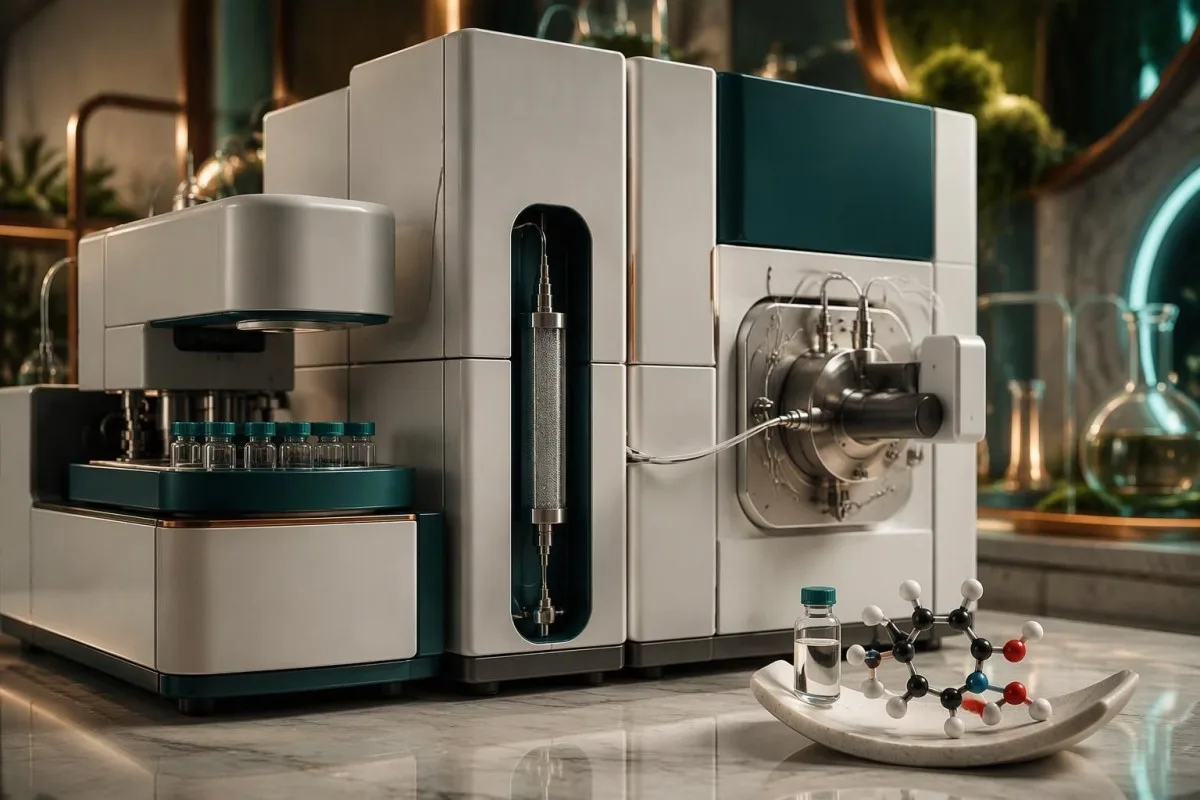
Patsalos et al. (2008) address when antiseizure drug monitoring can inform care, while Reimers et al. (2018) examine how reference intervals are selected and harmonized. Neither turns 35 µg/mL into a universal toxicity boundary, and neither supports changing a prescription solely because a laboratory flag appears.
Voinescu et al. (2018) provide directly relevant observational evidence about pregnancy-related clearance changes. The approximately 1.6-fold oxcarbazepine clearance finding helps justify comparison with a pre-pregnancy baseline, but the study's size and observational design limit how confidently it can predict any individual's required treatment.
The 2 Figshare records listed below are related Kantesti publications, not evidence establishing an oxcarbazepine therapeutic range or validating MHD-guided dosing. The women's health guide and the report describing 50,000 interpreted reports in hantavirus triage address different questions; their presence here should not be read as proof of accuracy for this medication test.
For a result such as 38 µg/mL, the safest source-checking sequence is to verify the analyte and timing, compare the laboratory's own interval, and discuss symptoms and companion tests with the prescriber. Our medical content standards explain why we separate established facts, hypothetical examples, and areas where the evidence remains uncertain.
Frequently asked questions
What is a normal oxcarbazepine level?
Many laboratories use an MHD trough reference interval of 10–35 µg/mL for an oxcarbazepine level. Other published schemes use approximately 3–35 or 3–36 mg/L, and 1 mg/L equals 1 µg/mL. These are treatment-associated reference intervals, not healthy-person normal ranges or universal dosing targets. Your prescriber interprets the number alongside seizure control, side effects, sample timing, and previous effective concentrations.
Why does my oxcarbazepine test say MHD or 10-hydroxycarbazepine?
MHD and 10-hydroxycarbazepine are names for the active metabolite usually measured in an oxcarbazepine level test. The parent medicine is rapidly converted, with an approximately 2-hour half-life compared with approximately 9 hours for MHD in people with normal renal function. Measuring MHD therefore gives a more useful picture of ongoing treatment exposure. Check the actual analyte and units on the report before applying any reference interval.
Should I take oxcarbazepine before the level test?
A routine MHD trough is usually collected immediately before the next scheduled dose, under instructions from the prescribing team. For twice-daily immediate-release treatment, this is often about 12 hours after the preceding dose; once-daily extended-release treatment uses a different interval. Do not skip or substantially delay treatment independently to create a trough. Ask how to coordinate that day's collection and medicine, and record both times.
Is an MHD level above 35 dangerous?
An MHD level above 35 µg/mL is above a commonly used laboratory interval, but it is not a universally validated toxicity threshold. A post-dose result of 38 µg/mL has a different meaning from a correctly timed trough of 38 µg/mL, and symptoms and renal function affect the assessment. Severe confusion, marked unsteadiness, or inability to stay awake requires urgent medical assessment regardless of the number. An otherwise well person should contact the prescriber for review rather than change or stop treatment independently.
Can oxcarbazepine cause low sodium when the drug level is normal?
Oxcarbazepine can cause low sodium even when MHD is within a common 10–35 µg/mL interval. Sodium below 135 mmol/L is hyponatremia, and a new value below 125 mmol/L warrants urgent clinical assessment. Confusion, pronounced sleepiness, vomiting with neurological symptoms, or worsening seizures can make assessment urgent even at a higher sodium value. An MHD result does not replace sodium testing, and patients should not start salt supplements or fluid restriction without clinical guidance.
Can a low oxcarbazepine level still control seizures?
An MHD trough below a laboratory's 10 µg/mL lower boundary can still be effective for an individual patient. A hypothetical person who remains seizure-free and well at repeated troughs near 8 µg/mL may have a useful personal baseline below that laboratory interval. A low result can also reflect missed doses, increased clearance, pregnancy, or collection timing, so seizure control and the medication history must be reviewed. Raising the dose solely to remove a laboratory flag can introduce adverse effects and should not be done without the prescriber.
Get your blood test results explained
Upload your lab report and Kantesti's AI explains each biomarker in plain language within seconds. Used by more than 2 million people worldwide.
References
- Klein, T., Mitchell, S., & Weber, H. (2026). Women's Health Guide: Ovulation, Menopause & Hormonal Symptoms. Kantesti AI Medical Research. DOI
- Klein, T., Mitchell, S., & Weber, H. (2026). Multilingual AI Assisted Clinical Decision Support for Early Hantavirus Triage: Design, Engineering Validation, and Real-World Deployment Across 50,000 Interpreted Blood Test Reports. Kantesti AI Medical Research. DOI
- Patsalos PN et al. (2008). Antiepileptic drugs—best practice guidelines for therapeutic drug monitoring: a position paper by the subcommission on therapeutic drug monitoring, ILAE Commission on Therapeutic Strategies. Epilepsia. DOI
- Reimers A et al. (2018). Reference ranges for antiepileptic drugs revisited: a practical approach to establish national guidelines. Drug Design, Development and Therapy. DOI
- Voinescu PE et al. (2018). Antiepileptic drug clearances during pregnancy and clinical implications for women with epilepsy. Neurology.
- 2M+Tests analysed
- 127+Countries
- 100+Languages
About the medical team


E-E-A-T Trust Signals
Experience
Physician-led clinical review of lab interpretation workflows.
Expertise
Laboratory medicine focus on how biomarkers behave in clinical context.
Authoritativeness
Medically reviewed by Dr. Thomas Klein, with contributions from Dr. Sarah Mitchell and Prof. Dr. Hans Weber.
Trustworthiness
Evidence-based interpretation with clear follow-up pathways to reduce alarm.
Medical disclaimer
This article is for educational purposes only and does not constitute medical advice. Always consult a qualified healthcare provider for diagnosis and treatment decisions.
Published · Contact the editorial team
Published by Kantesti Ltd, registered in England & Wales, company no. 17090423, London, United Kingdom.
