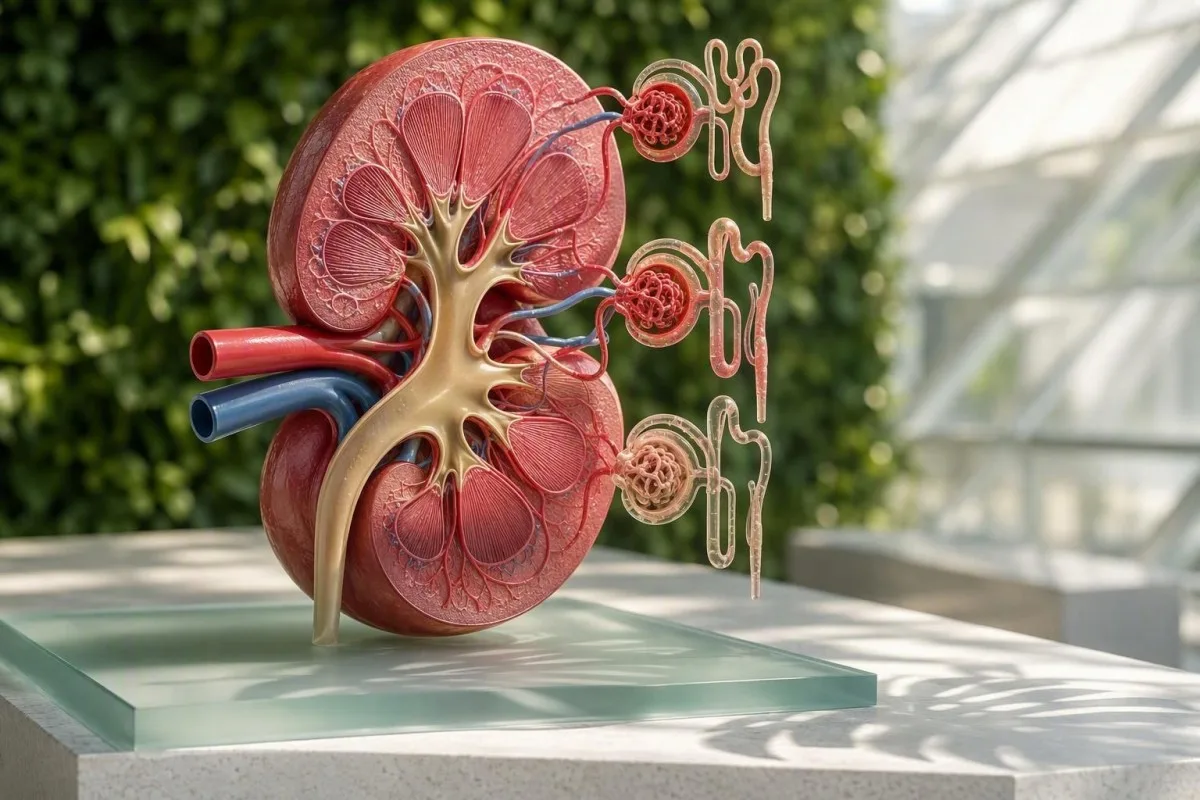
Un eGFR basso dopo vomito, esposizione al caldo, diarrea o insufficiente apporto di liquidi può essere reversibile. Il risultato necessita comunque di contesto: sintomi, creatinina di base, reperti urinari, farmaci e velocità di recupero sono importanti.


- Basso GFR temporaneo può verificarsi quando la disidratazione riduce il flusso sanguigno renale e aumenta la creatinina per ore o giorni.
- Soglia di AKI è un aumento della creatinina di almeno 0,3 mg/dL entro 48 ore o 1,5 volte il valore basale entro 7 giorni.
- Nuovo controllo della creatinina viene spesso programmato entro 24-72 ore dopo l'idratazione e il recupero per disidratazione sospetta non complicata.
- Definizione di CKD richiede un eGFR inferiore a 60 mL/min/1,73 m² o marcatori di danno renale per almeno 3 mesi.
- ACR urinario di 30 mg/g o superiore può indicare danno renale anche quando l'eGFR è superiore a 60 mL/min/1,73 m².
- revisione urgente è necessaria per un output urinario molto basso, confusione, respiro affannoso, gonfiore, grave debolezza o anomalie del potassio.
- Rischio da farmaci aumenta con la disidratazione quando sono coinvolti FANS, ACE inibitori, sartani, diuretici, litio o farmaci SGLT2.
- Limiti dei singoli risultati conta perché la eGFR basata sulla creatinina è meno affidabile durante una funzione renale in rapida evoluzione.
La disidratazione può causare un risultato temporaneamente basso nel test GFR?
Sì, la disidratazione può abbassare temporaneamente il risultato di un test GFR poiché la ridotta gittata di liquidi circolanti riduce il flusso sanguigno attraverso i reni, causando un aumento della creatinina e un calo della eGFR calcolata. Se il fattore scatenante viene corretto tempestivamente, molte persone tornano vicino al loro livello basale precedente entro 24-72 ore; una bassa GFR non dovrebbe mai essere ignorata automaticamente.
Un test GFR di solito riporta eGFR, una stima calcolata dalla creatinina sierica, dall'età e dal sesso piuttosto che una misurazione diretta della filtrazione. Durante una perdita acuta di liquidi, la creatinina può accumularsi prima che i reni vengano danneggiati permanentemente. Kantesti è una Analizzatore di analisi del sangue AI che legge la eGFR insieme a creatinina, urea, elettroliti e risultati precedenti piuttosto che trattare un singolo valore basso come una diagnosi.
Nel mio lavoro clinico, lo scenario classico è un 38enne con due giorni di gastroenterite la cui creatinina aumenta da 0,8 a 1,2 mg/dL e la eGFR scende da 98 a 58 mL/min/1,73 m². Questa potrebbe essere una fisiologia prerenale reversibile, ma l'aumento di 0,4 mg/dL soddisfa un criterio di lesione renale acuta e giustifica un follow-up tempestivo, non solo rassicurazioni.
La regola pratica del Dr. Thomas Klein è semplice: l'anamnesi ci dice se la disidratazione è plausibile, mentre il campione di controllo ci dice se è stata la spiegazione completa. Un singolo valore basso non può diagnosticare una malattia renale cronica; il nostro guida agli stadi della MRC spiega perché la durata modifica l'interpretazione.
Perché la perdita di liquidi modifica creatinina ed eGFR
La perdita di liquidi abbassa la eGFR riducendo la pressione di perfusione renale, quindi i reni conservano sale e acqua mentre filtrano meno plasma. Questa è chiamata riduzione prerenale della filtrazione; può verificarsi con diarrea, vomito, febbre, esposizione al caldo, esercizio fisico intenso o diuresi eccessiva.
La creatinina è generata principalmente dal metabolismo muscolare e eliminata attraverso la filtrazione, quindi una concentrazione più elevata può riflettere una clearance ridotta, una concentrazione dovuta a perdita di acqua, un aumento del catabolismo muscolare o diversi fattori insieme. Le equazioni eGFR presuppongono un livello di creatinina relativamente stabile; quando sta cambiando rapidamente, la eGFR calcolata è in ritardo rispetto alla fisiologia reale.
Un rapporto urea-creatinina superiore a circa 20:1 quando riportato in mg/dL può supportare la deplezione di volume, ma non è un test di disidratazione. Anche sanguinamento gastrointestinale, corticosteroidi, elevato apporto proteico e catabolismo possono aumentare l'urea; vedere il nostro dettagliato rapporto BUN/creatinina guida per le trappole che i medici evitano.
KDIGO definisce la lesione renale acuta come un aumento della creatinina di 0,3 mg/dL o più entro 48 ore, un aumento a 1,5 volte rispetto al valore basale entro 7 giorni, o un output urinario inferiore a 0,5 mL/kg/ora per 6 ore (KDIGO, 2012). Queste soglie sono deliberatamente sensibili perché aspettare un ampio calo della eGFR può far perdere un problema trattabile.
Come interpretare bassi valori di eGFR dopo disidratazione
Una eGFR di 60-89 mL/min/1,73 m² non è automaticamente una malattia renale, specialmente dopo disidratazione, negli anziani o in assenza di anomalie urinarie. Una eGFR inferiore a 60 diventa clinicamente significativa quando persiste per 3 mesi o si verifica con sintomi preoccupanti o un improvviso aumento della creatinina.
Un eGFR di 90 o superiore mL/min/1,73 m² è generalmente considerato normale o elevato negli adulti, sebbene l'albumina nelle urine possa ancora segnalare un danno renale. Un eGFR di 45-59 è classificato come G3a solo quando la cronicità o altri marcatori renali sono stabiliti; età, massa muscolare e il risultato precedente rimangono un contesto vitale.
Un calo improvviso da 105 a 62 è spesso più informativo di un valore stabile di 62 nel corso di diversi anni. Al contrario, un eGFR di 78 in un giovane muscoloso di 25 anni dopo una lunga corsa può riflettere una generazione transitoria di creatinina piuttosto che una ridotta filtrazione; il nostro articolo su creatinina dopo l’esercizio spiega questo comune falso allarme.
KDIGO 2024 afferma che la malattia renale cronica richiede anomalie della struttura o della funzione renale presenti da almeno 3 mesi (KDIGO Work Group, 2024). Quel requisito di tempo impedisce ai medici di etichettare un episodio di disidratazione di breve durata come malattia cronica.
Indizi di laboratorio che supportano la disidratazione piuttosto che una malattia renale persistente
Un campione di urina concentrato, una storia compatibile di perdita di liquidi e il recupero dopo l'idratazione favoriscono la disidratazione, mentre albuminuria, sangue nelle urine, anomalie persistenti o un reperto strutturale renale rendono più probabile la malattia cronica. Nessun singolo indizio di laboratorio risolve la questione.
La gravità specifica delle urine superiore a 1.020 indica spesso urine concentrate, e valori superiori a 1.030 possono verificarsi con una sostanziale conservazione dell'acqua. È imperfetto: anche il glucosio, le proteine e il mezzo di contrasto radiografico possono aumentare la gravità specifica, motivo per cui un risultato di gravità specifica delle urine necessita di un contesto completo di urinalisi. [ vuoto ].
Un'urinalisi "blanda" non prova la disidratazione, ma proteine, elementi cellulari rossi, elementi cellulari bianchi o cilindri cambiano la diagnosi differenziale. Un rapporto persistente albumina-creatinina di 30 mg/g o superiore è un marcatore di danno renale anche quando l'eGFR rimane superiore a 60 mL/min/1,73 m².
Lo schema che mi preoccupa è un eGFR basso più potassio al di sopra dell'intervallo di laboratorio, bicarbonato al di sotto di 22 mmol/L, o nuova proteina nelle urine. Insieme, questi suggeriscono una gestione renale compromessa piuttosto che una semplice concentrazione dovuta a una giornata calda, e meritano una valutazione guidata dal medico.
Quando programmare un nuovo controllo della creatinina?
Una nuova verifica della creatinina è comunemente appropriata entro 24-72 ore dopo che si sospetta che una disidratazione non complicata sia stata corretta, a condizione che la persona possa bere, urinare normalmente e non presenti segni di allarme. La tempistica esatta dipende dal grado di aumento della creatinina, dalla salute renale di base, dall'età e dai farmaci.
Per un risultato lieve e isolato dopo una malattia chiaramente reversibile, i medici ripetono spesso creatinina, urea, potassio, bicarbonato e urinalisi dopo la ripresa dell'idratazione orale e di una normale alimentazione. Non esiste una quantità universale di acqua da forzare; le persone con insufficienza cardiaca, epatopatia o malattia renale avanzata necessitano di consigli fluidi individualizzati.
Kantesti AI è un Piattaforma di interpretazione esami del sangue AI che confronta il pannello renale attuale con i valori storici, che è spesso più utile rispetto al confronto di un risultato con un intervallo di riferimento della popolazione. Una creatinina di 1,1 mg/dL può essere ordinaria per una persona e un salto significativo da 0,6 mg/dL per un'altra.
Una nuova analisi dopo 1-2 settimane può essere ragionevole solo dopo che un medico ha stabilito che l'episodio acuto si sta risolvendo e i valori sono vicini al valore basale. Utilizzare lo stesso laboratorio, se possibile, e leggere le nostre guida al pannello metabolico di base prima di presumere che un valore segnalato sia isolato.
Quando un basso GFR dopo disidratazione richiede cure urgenti
Richiedere una valutazione medica in giornata per GFR basso con minima urina, vomito persistente, confusione, vertigini gravi, affanno, sintomi toracici, gonfiore o debolezza marcata. Questi sintomi possono indicare uno squilibrio di liquidi clinicamente significativo, un danno renale acuto o pericolosi cambiamenti elettrolitici.
L'urgenza aumenta quando la creatinina aumenta di 0,3 mg/dL in 48 ore, del 50% rispetto al valore basale in una settimana, o quando la produzione di urina è chiaramente ridotta. In un adulto che produce meno di circa 400 mL di urina in 24 ore, non consiglierei semplicemente di bere di più a casa senza una pronta guida clinica.
Potassio sopra 6,0 mmol/L, il sodio sotto 120 mmol/L, o bicarbonato inferiore a 15 mmol/L possono richiedere un trattamento urgente a seconda dei sintomi e dei risultati dell'ECG. Il nostro guida ai segnali d’allarme degli elettroliti spiega perché i risultati renali e gli elettroliti devono essere letti insieme.
La disidratazione può coesistere con sepsi, ostruzione urinaria, rabdomiolisi, chetoacidosi diabetica o tossicità da farmaci. Il fatto che una persona abbia avuto diarrea non esclude queste possibilità, specialmente se sono presenti febbre, dolore ai fianchi, urine scure color cola o forte dolore muscolare.
Come i medici distinguono la disidratazione dalla malattia renale cronica
I medici distinguono la disidratazione eGFR temporanea dalla malattia renale cronica documentando il recupero, controllando l'albumina urinaria, rivedendo i risultati precedenti e cercando anomalie persistenti per 3 mesi. Un valore di eGFR da solo non può stabilire la causa o la durata del danno renale.
Un rapporto albumina urinaria-creatinina inferiore a 30 mg/g è categorizzato come A1, 30-300 mg/g come A2 e superiore a 300 mg/g come A3. L'albuminuria può essere transitoria dopo febbre, esercizio fisico intenso, infezione urinaria o glucosio incontrollato, quindi un campione anormale di solito richiede conferma piuttosto che una diagnosi affrettata.
I medici esaminano anche la pressione sanguigna, lo stato diabetico, la storia dell'ecografia renale, la storia familiare, l'esposizione a farmaci e se la creatinina si è mai normalizzata. La guida alla preparazione del rapporto albumina-creatinina guida alla preparazione del rapporto albumina-creatinina copre questioni pratiche come l'esercizio fisico e le mestruazioni che possono distorcere un campione.
KDIGO 2024 raccomanda di valutare sia la categoria GFR che la categoria albuminuria perché il rischio aumenta molto di più quando entrambi sono anomali rispetto a quando l'eGFR da solo è leggermente basso (KDIGO Work Group, 2024). Secondo la mia esperienza, questa valutazione abbinata previene sia la sottovalutazione che il panico non necessario.
Risultati urinari che rendono meno probabile una spiegazione temporanea
Sangue, proteina significativa, cilindri cellulari o albumina persistente nelle urine rendono la sola disidratazione meno convincente e di solito richiedono un'ulteriore valutazione renale. La disidratazione può concentrare un campione di urina, ma di solito non crea un sedimento urinario attivo sostenuto.
I cilindri granulari possono comparire dopo uno stress tubulare sostanziale, mentre i cilindri cellulari rossi sollevano preoccupazione per una malattia glomerulare. Un singolo referto di laboratorio dovrebbe essere correlato alla qualità del campione e ai sintomi, ma questi reperti generalmente meritano maggiore attenzione rispetto a una urina concentrata isolata; esplorare cilindri granulari nelle urine per una ripartizione accurata.
La proteinuria con striscia reattiva può risultare elevata nelle urine concentrate, quindi il rapporto albumina/creatinina è solitamente più utile per la conferma. Un ACR persistente di 300 mg/g o più è un marcatore ad alto rischio e non deve essere attribuito a scarsa idratazione senza revisione clinica.
Urina visibilmente rossa o color tè, dolore al fianco, febbre o incapacità di urinare modificano l'urgenza. L'ostruzione e l'infezione delle vie urinarie possono ridurre il GFR, ed entrambe richiedono una risposta diversa dalla sostituzione dei liquidi a casa.
Farmaci che possono trasformare la disidratazione in danno renale acuto
FANS, diuretici, ACE inibitori, sartani, litio e alcuni farmaci per il diabete possono amplificare un calo del GFR correlato alla disidratazione. Questi farmaci sono spesso trattamenti appropriati a lungo termine, ma una malattia acuta può alterare il piano di sicurezza.
I FANS possono ridurre la capacità dei reni di mantenere la filtrazione durante un basso volume circolante, in particolare negli anziani e nelle persone che assumono un diuretico più un ACE inibitore o un sartano. Non interrompere i farmaci prescritti in modo riflesso; chiedere al prescrittore o al farmacista un piano per i giorni di malattia specifico per le proprie condizioni.
Gli inibitori SGLT2 producono comunemente un piccolo calo iniziale dell'eGFR dopo l'inizio a causa di un cambiamento emodinamico all'interno del glomerulo, non necessariamente un danno renale. La distinzione dalla disidratazione è importante e la nostra revisione delle modifiche dell'eGFR con i farmaci SGLT2 spiega perché glucosio, pressione sanguigna, sintomi e tempistica vengono valutati insieme.
La metformina non riduce direttamente il GFR, ma un danno renale acuto può modificare la sicurezza della sua continuazione temporanea. I livelli di litio possono aumentare con la perdita di volume, mentre il trimetoprim può aumentare la creatinina senza una caduta proporzionale della filtrazione misurata: una di quelle sottigliezze che rendono rischiosa l'autointerpretazione.
Perché età, gravidanza, massa muscolare ed esercizio fisico influenzano l'interpretazione dell'eGFR
L'eGFR basato sulla creatinina può sottostimare la filtrazione nelle persone muscolose e sovrastimarla nelle persone fragili con bassa massa muscolare; la gravidanza richiede aspettative diverse. Un eGFR basso dopo disidratazione ha quindi implicazioni diverse in un bodybuilder, un anziano e una paziente incinta.
In gravidanza, il GFR normalmente aumenta, quindi la creatinina spesso scende a circa 0,4-0,8 mg/dL; un valore considerato normale al di fuori della gravidanza può essere preoccupante nel contesto. Chiunque sia incinta con vomito, ipertensione, mal di testa, gonfiore o risultati renali anomali dovrebbe contattare il proprio team di maternità, e la nostra guida GFR in gravidanza fornisce il quadro pertinente.
Un settantottenne con scarsa sensazione di sete e uso di diuretici può sviluppare ipoperfusione renale con una perdita di liquidi apparentemente modesta. Al contrario, un atleta di forza può avere la creatinina sopra l'intervallo di riferimento a causa della massa muscolare, degli integratori di creatina o dell'allenamento recente, anche con una vera filtrazione normale.
La cistatina C può occasionalmente chiarire un risultato incerto della creatinina perché è meno dipendente dalla massa muscolare, sebbene la malattia della tiroide, il fumo, gli steroidi e l'infiammazione possano influenzarla. Il dott. Thomas Klein la usa spesso come "tie-breaker", non come sostituto della storia clinica e dei risultati seriali.
Cosa fare a casa in attesa di un nuovo test GFR
Se sei vigile, in grado di bere e stai urinando, reintegra i liquidi gradualmente, evita esercizi pesanti e FANS e registra i sintomi prima del tuo controllo. Le misure domiciliari non sono appropriate se sono presenti segnali di allarme o una malattia grave.
Piccole e frequenti bevande sono generalmente meglio tollerate rispetto al consumo rapido di grandi volumi, in particolare dopo il vomito. La soluzione di reidratazione orale può essere utile in caso di diarrea perché sostituisce sodio e glucosio oltre all'acqua; le persone con restrizioni di liquidi necessitano invece di consigli specifici del medico.
L'urina giallo pallido può suggerire una buona idratazione, ma non è un certificato di liberatoria. L'urina scura può riflettere concentrazione, farmaci, bilirubina o pigmenti muscolari, quindi leggi la nostra guida per segnali d’allarme di urine scure se il colore persiste dopo i fluidi.
Evitare un allenamento intenso per 24-48 ore prima di un controllo della creatinina programmato, a meno che il tuo medico non dica diversamente. Registra le date di malattia, febbre, episodi di diarrea, dosi di farmaci, esercizio fisico, integratori e la quantità di urina prodotta; questa piccola cronologia spesso modifica l'interpretazione.
Perché i trend sono più utili di un singolo risultato di eGFR basso
La direzione e la velocità del cambiamento della creatinina sono solitamente più utili clinicamente rispetto a un singolo valore di eGFR. Un eGFR stabile di 55 e una nuova caduta da 95 a 55 possono comportare rischi molto diversi, anche se il numero riportato è identico.
I laboratori possono applicare controlli delta quando la creatinina cambia in modo imprevisto, ma la variazione biologica, la variazione del dosaggio, la dieta e l'idratazione contribuiscono anche. Un cambiamento di 0,1 mg/dL può essere rumore in un contesto e significativo in un altro se il valore di base della persona è costantemente 0,5 mg/dL.
Kantesti è un Strumento di analisi degli esami del sangue basato su AI che organizza i risultati renali seriali con il contesto clinico che salvi, come malattie e cambiamenti dei farmaci. Questo approccio è parallelo al metodo pratico descritto nella nostra guida all’analisi di laboratorio longitudinale: stabilisci il tuo valore di base prima di inferire una traiettoria di malattia.
A partire dal 29 agosto 2026, nessuna interpretazione rivolta ai consumatori dovrebbe sostituire la decisione di un medico quando l'eGFR sta diminuendo rapidamente. Un grafico può identificare uno schema; non può esaminare un paziente per disidratazione, ostruzione, insufficienza cardiaca o malattia sistemica.
Limiti del test GFR standard durante malattie acute
Un eGFR standard basato sulla creatinina è meno affidabile quando la funzione renale sta cambiando rapidamente, perché la creatinina impiega tempo per equilibrarsi. Durante la disidratazione attiva o il recupero precoce, i medici seguono la creatinina seriale e la produzione di urina piuttosto che fare affidamento su un singolo eGFR calcolato.
L'equazione CKD-EPI creatinina del 2021 migliora la stima a livello di popolazione rimuovendo la correzione razziale, ma presuppone ancora che la produzione e l'escrezione di creatinina siano ragionevolmente stabili. Integratori di creatina, carne cotta nelle ore precedenti il prelievo, amputazione, cachessia e alta massa muscolare possono alterare l'interpretazione.
Kantesti AI evidenzia combinazioni di risultati per il follow-up, ma non diagnostica lesioni renali acute né prescrive terapia idrica. La nostra guida tecnologica descrive come l'interpretazione contestuale differisce dalla sostituzione della valutazione medica.
La GFR misurata con marcatori di filtrazione esogeni è riservata a situazioni selezionate, come la valutazione di donatori o incertezze maggiori, piuttosto che al follow-up di routine della disidratazione. La maggior parte dei pazienti necessita di una revisione clinica attenta, analisi delle urine, ripetizione del pannello renale e valutazione del recupero del valore.
Checklist di un medico per un GFR basso dopo disidratazione
Un piano di follow-up sicuro verifica gravità, causa, recupero, reperti urinari, farmaci e complicazioni, non solo il numero dell'eGFR. Questo approccio strutturato identifica le persone che possono essere ricontrollate a breve e quelle che necessitano di una valutazione urgente a livello ospedaliero.
Chiederei informazioni sulla perdita di liquidi, sul volume delle urine, su recenti esami di imaging con contrasto, sintomi di infezione, lesioni muscolari, ostruzione urinaria, diabete, insufficienza cardiaca e ogni farmaco su prescrizione o da banco. Confrontarei quindi la creatinina con l'ultimo valore noto e controlleri il potassio, il bicarbonato, l'urea, l'analisi delle urine e l'ACR urinaria quando appropriato.
Un risultato ripetuto che ritorna verso il valore di base dopo il recupero supporta una causa emodinamica temporanea, sebbene non elimini il rischio futuro in persone con diabete o ipertensione. Un risultato che rimane basso, peggiora o è accompagnato da albuminuria merita un work-up renale formale e talvolta un parere nefrologico.
I nostri contenuti clinici vengono rivisti secondo gli standard descritti dal team di validazione medica di Kantesti. Il ruolo di Kantesti è aiutarti a preparare meglio le domande e individuare le tendenze; la prossima decisione clinica spetta al professionista che può esaminarti e agire sul risultato.
Domande frequenti
La disidratazione può far apparire basso l'eGFR?
Sì. La disidratazione può ridurre il flusso sanguigno ai reni, aumentare la creatinina sierica e produrre un eGFR calcolato temporaneamente basso. Un aumento della creatinina di almeno 0,3 mg/dL entro 48 ore soddisfa un criterio KDIGO per lesione renale acuta, anche quando la causa può essere reversibile. Un nuovo pannello renale dopo il recupero, spesso entro 24-72 ore per casi non complicati, aiuta a determinare se la variazione si sta risolvendo.
Quanto tempo ci vuole perché l'eGFR migliori dopo la disidratazione?
Un cambiamento dell'eGFR correlato alla disidratazione spesso migliora entro 24-72 ore una volta interrotta la perdita di liquidi e ripristinata la perfusione renale, ma il recupero può richiedere più tempo dopo una malattia grave o in persone con preesistente malattia renale. La creatinina non cambia istantaneamente, quindi l'eGFR può ritardare rispetto al miglioramento clinico. Un eGFR persistentemente basso, un aumento della creatinina, una bassa produzione di urina o un potassio anomalo richiedono una valutazione medica piuttosto che una ripetuta idratazione domestica. La malattia renale cronica non può essere diagnosticata a meno che le anomalie non persistano per almeno 3 mesi.
Devo bere molta acqua prima di un nuovo controllo della creatinina?
Non forzare un'eccessiva assunzione di acqua prima di un nuovo controllo della creatinina; mira a un'idratazione ordinaria e confortevole, a meno che un medico non abbia prescritto un limite o un obiettivo di liquidi. Il rapido sovra-consumo può abbassare il sodio, in particolare negli anziani, negli atleti di resistenza e nelle persone che assumono determinati farmaci. Evitare alcol, FANS ed esercizio fisico insolitamente faticoso per 24-48 ore prima del prelievo del campione, quando clinicamente sicuro. Le persone con insufficienza cardiaca, cirrosi o malattia renale avanzata dovrebbero chiedere al proprio medico quanto liquido è appropriato.
Qual è il numero di eGFR pericoloso dopo la disidratazione?
Non esiste un singolo valore di eGFR pericoloso perché la velocità di cambiamento, i sintomi, il livello di potassio, la produzione di urina e la funzione renale di base determinano l'urgenza. Un eGFR inferiore a 60 mL/min/1.73 m² che è nuovo dovrebbe essere valutato, mentre un eGFR inferiore a 30 mL/min/1.73 m² generalmente richiede una discussione medica immediata. Una valutazione urgente è necessaria prima se la produzione di urina è molto bassa, la creatinina aumenta di 0,3 mg/dL in 48 ore, il potassio è superiore a 6,0 mmol/L o si verificano sintomi come confusione o affanno.
Un normale esame delle urine può escludere una malattia renale dopo un eGFR basso?
No. Una normale analisi delle urine riduce la preoccupazione per alcuni disturbi renali infiammatori, ma non esclude tutte le malattie renali o ostruzioni. Un rapporto albumina/creatinina urinaria inferiore a 30 mg/g è rassicurante, mentre valori persistenti di 30 mg/g o superiori indicano danno renale anche se l'eGFR è superiore a 60 mL/min/1,73 m². I medici interpretano i risultati delle urine con la creatinina ripetuta, la pressione sanguigna, l'anamnesi farmacologica, lo stato diabetico e le precedenti misurazioni renali.
L'esercizio fisico o la creatina potrebbero causare un risultato basso al test GFR?
Esercizio fisico intenso, lesioni muscolari, carne cotta e integratori di creatina possono aumentare la creatinina sierica e far apparire l'eGFR basato sulla creatinina più basso senza una perdita equivalente della filtrazione reale. Questo effetto è particolarmente rilevante dopo eventi di lunga distanza, allenamenti di resistenza intensi o allenamenti in stile CrossFit. Dolore muscolare grave, debolezza, gonfiore o urine color cola dopo l'esercizio richiedono una valutazione urgente perché la rabdomiolisi può causare una reale insufficienza renale acuta. Un campione ripetuto dopo 24-48 ore di riposo può essere informativo quando un medico lo ritiene sicuro.
Ottieni oggi l’analisi degli esami del sangue con IA (AI-Powered Blood Test Analysis)
Unisciti a oltre 2 milioni di utenti in tutto il mondo che si fidano di Kantesti per un’analisi istantanea e accurata degli esami di laboratorio. Carica i tuoi risultati analisi del sangue e ricevi un’interpretazione completa dei biomarcatori di 15,000+ in pochi secondi.
📚 Pubblicazioni di ricerca di riferimento
Klein, T., Mitchell, S., & Weber, H. (2026). Intervallo normale aPTT: D-dimero, proteina C Guida alla coagulazione del sangue. Kantesti AI Medical Research.
Klein, T., Mitchell, S., & Weber, H. (2026). Guida alle proteine del siero: analisi del sangue per globuline, albumina e rapporto A/G. Kantesti AI Medical Research.
📖 Riferimenti medici esterni
⚕️ Esclusione di responsabilità medica
Questo articolo ha solo scopo educativo e non costituisce consulenza medica. Consulta sempre un operatore sanitario qualificato per decisioni su diagnosi e trattamento.
Segnali di fiducia E-E-A-T
Esperienza
Revisione clinica guidata da un medico dei flussi di lavoro di interpretazione degli esami.
Competenza
Focus sulla medicina di laboratorio su come i biomarcatori si comportano nel contesto clinico.
autorevolezza
Scritto dal dott. Thomas Klein con revisione della dott.ssa Sarah Mitchell e del Prof. Dr. Hans Weber.
Affidabilità
Interpretazione basata su evidenze, con percorsi di follow-up chiari per ridurre l’allarme.