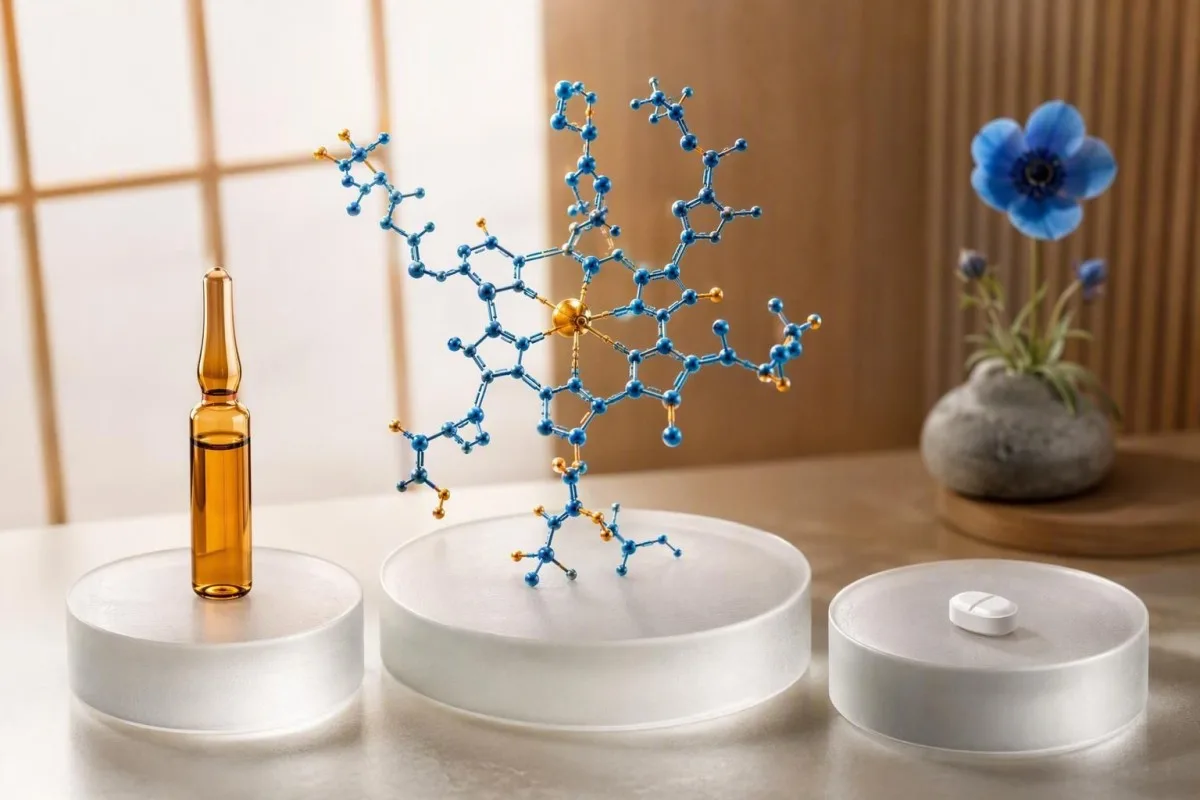
זריקות מייצרות שיא מיידי בסרום, אך מינון גבוה של B12 דרך הפה מתקן לעיתים קרובות חסר בצורה יעילה לא פחות לאורך שבועות. הגורם המכריע הוא בדרך כלל הסיבה וחומרת החסר - לא רק העדפה.


- עליית סרום מהירה ביותר: זריקת B12 תוך-שרירית של 1,000 מיקרוגרם מעלה את רמות ה-B12 במחזור תוך שעות, בעוד שהטבליות עולות בהדרגה לאורך ימים.
- תחליף דומה: צי אנוקובלאמין דרך הפה 1,000-2,000 מיקרוגרם ליום יכול להשיג תוצאות דומות בדם ובתסמינים לטווח קצר כמו טיפול תוך-שרירי עבור מבוגרים רבים.
- אינדיקציה לזריקה: תסמינים נוירולוגיים חמורים, אנמיה קשה, אי-יכולת ליטול טבליות, או ספיגה לא אמינה מצדיקים בדרך כלל זריקות בהובלת רופא.
- תוצאה גבולית: סרום B12 מתחת ל-180 pg/mL (133 pmol/L) נחשב בדרך כלל כחסר; 180-350 pg/mL לעיתים קרובות דורש אישור MMA או הומוציסטאין.
- ספיגה פסיבית: כ-1% ממינון גדול של B12 דרך הפה נספג בדיפוזיה פסיבית, וזו הסיבה שטבליה של 1,000 מיקרוגרם יכולה לפעול למרות פגיעה בפקטור הפנימי.
- תזמון לבדיקת חוזר: ספירת דם מלאה (CBC) ותגובה קלינית שימושיות יותר בדרך כלל לאחר 4-8 שבועות מאשר רמת B12 שנלקחה מיד לאחר הטיפול.
- נקודת בטיחות: אין לטפל בחוסר תחושה בלתי מוסבר בחומצה פולית בלבד; פולאט יכול לשפר אנמיה בזמן שנזק עצבי הקשור ל-B12 מתקדם.
- סיבה חשובה: מטפורמין, מעכבי משאבת פרוטונים, דיאטות טבעוניות, מחלת צליאק, ניתוחי קיבה ואנמיה ממארת מחייבים תוכניות מעקב שונות.
איזו אפשרות מעלה את רמות ויטמין B12 מהר יותר?
הזרקות B12 מעלות את רמת הסרום הנמדדת מהר יותר מכדורים, לעיתים תוך שעות, מכיוון שהן עוקפות את המעי. עבור רוב המבוגרים היציבים עם מחסור מאומת, עם זאת, מינון פומי של 1,000-2,000 מיקרוגרם ביום יכול למלא את מאגרי הגוף ולשפר את ספירת הדם לאורך שבועות בקצב דומה קלינית.
הזרקה יוצרת שיא מוקדם חד מכיוון שהידרוקסוקובלאמין או ציאנוקובלאמין ניתנים ישירות לשריר ואז למחזור הדם. השיא המעבדתי הזה אינו זהה למאגרי רקמה משוחזרים או לתפקוד עצבי מתוקן; בפועל שלי, התאוששות תסמינים נמדדת בשבועות עד חודשים, לא למחרת בבוקר.
ההשוואה המעשית היא לעיתים קרובות שעות לעומת ימים עבור ריכוז סרום, אך בערך 4-8 שבועות לתגובה המטולוגית משמעותית עם כל מסלול מתאים. רטיקולוציטים עולים בדרך כלל ביום 3-5, המוגלובין מתחיל להשתפר לאחר כשבוע עד שבועיים, ומקרוציטוזיס יכול לקחת עד 8 שבועות להתייצב.
קנטסטי הוא מנתח בדיקות דם בינה מלאכותית שממקם B12 לצד MCV, המוגלובין, פולאט, קריאטינין ותוצאות קודמות במקום לטפל בעלייה ב-B12 לאחר טיפול כהוכחה שהבעיה הבסיסית נפתרה. קוראים יכולים גם להשוות את התוצאה שלהם עם שלנו מדריך טווחי התייחסות ל-B12.
מה “מהר יותר” באמת אומר
תוצאה גבוהה לאחר הזרקה מאשרת חשיפה אחרונה, לא בהכרח אספקה תאית מספקת. חומצה מתיל-מלונית, ממצאים נוירולוגיים ומגמת ה-CBC אינפורמטיביים יותר כאשר האבחנה המקורית לא הייתה ודאית.
כיצד ספיגת B12 דרך הפה פועלת כאשר פקטור פנימי נמוך
B12 פומי במינון גבוה יכול לפעול גם כאשר ספיגת גורם פנימי פגועה מכיוון שחלק קטן נכנס באמצעות דיפוזיה סבילה. כ-1% מתוך מינון של 1,000 מיקרוגרם עשויים להיספג באופן סביל, מה שנותן כ-10 מיקרוגרם - הרבה מעל הדרישה היומית הממוצעת של 2.4 מיקרוגרם למבוגרים.
B12 הקשור למזון באופן תקין חייב להשתחרר על ידי חומצת קיבה, להיקשר לגורם פנימי, ולהיספג בחלקו הסופי של המעי הדק. מערכת רב-שלבית זו מסבירה מדוע דיכוי חומצה לטווח ארוך, דלקת קיבה אוטואימונית, מחלות במעי הדק וניתוחים בריאטרים יכולים לגרום למחסור; היא גם מסבירה מדוע מולטי-ויטמין סטנדרטי הוא לעיתים קרובות מינון נמוך מדי לטיפול.
ספיגת B12 פומית תלויה במינון אך אינה ליניארית. מסלול הגורם הפנימי מתמלא בכ-1.5-2 מיקרוגרם לארוחה, בעוד דיפוזיה סבילה הופכת שימושית קלינית רק עם כדורים בטווח מיליגרמים. תוסף של 50 מיקרוגרם הוא מניעה סבירה עבור חלק מהאנשים, אך הוא אינו שווה ערך ל-1,000 מיקרוגרם עבור מחסור מושרש.
עבור מטופלים המשתמשים באומפרזול, פנטופרזול או PPI אחר, אני בודק את התמונה הרחבה - דיאטה, גיל, אנמיה ומשך השימוש - במקום להניח שהתרופה היא כל הסיפור. הסקירה שלנו של ניטור מעבדתי ל-PPI לטווח ארוך מסבירה מדוע מגנזיום וברזל עשויים להיות רלוונטיים גם כן.
מה מחקרים קליניים מראים לגבי טבליות לעומת זריקות
ראיות אקראיות מצביעות על כך ש-B12 דרך הפה במינון של 1,000-2,000 מיקרוגרם ליום יכול להיות יעיל כמו B12 תוך-שרירי עבור אנשים רבים עם חסר. מאגר הראיות אינו עצום, והוא מכיל פחות חולים עם מחלה נוירולוגית קשה ממה שהיינו רוצים.
הסקירה של קוקרן מאת וואנג ועמיתיו מצאה ש-B12 דרך הפה במינון גבוה הפיק תגובות דומות ברמות B12 בדם לטיפול תוך-שרירי במחקרים האקראיים הקטנים הזמינים (וואנג ואח“, 2018). מחקר אחד השתמש ב-2,000 מיקרוגרם דרך הפה כל יום; אחר השתמש ב-1,000 מיקרוגרם דרך הפה לאחר תזמון ראשוני, כך ש”טיפול דרך הפה" אינו מתכוון למוצר זול מהסופרמרקט.
המחקר המוקדם יותר של קוזמינסקי ואח' דיווח על ריכוזי B12 גבוהים יותר בסרום עם 2,000 מיקרוגרם של ציאנוקובלאמין דרך הפה מאשר עם משטר הזרקה של 1,000 מיקרוגרם, אך התוצאות הקליניות היו השאלה החשובה (קוזמינסקי ואח', 1998). הראיות מעורבות למדי לגבי הפרוטוקול האידיאלי מכיוון שמחקרים השתמשו במרווחי הזרקה ותקופות מעקב שונות.
טבליה פועלת רק אם היא נלקחת. מנות יומיות שנשכחו יכולות להפוך הזרקה שניתנה כל 2-3 חודשים לאמינה יותר במציאות, במיוחד עבור מבוגרים חלשים או אנשים עם לוחות זמנים מורכבים לתרופות. שלנו מדריך ללוח זמנים של בדיקות דם יכולה לעזור להבחין בין שינוי טיפולי אמיתי לבדיקה חוזרת שתוזמנה לא נכון.
מתי זריקות B12 נחוצות מבחינה רפואית
זריקות B12 נחוצות בדרך כלל מבחינה רפואית כאשר החסר חמור, קיימים תסמינים נוירולוגיים, צריכה דרך הפה אינה אפשרית, או שלא ניתן לסמוך על ספיגה והיענות. הן אינן חובה אוטומטית רק בגלל חשד לאנמיה ממארת, בתנאי שטיפול דרך הפה במינון גבוה ומעקב אפשריים.
הערכה קלינית דחופה מתאימה לאי-יציבות הליכה חדשה, נימול מתקדם, חולשה, בלבול, שינוי בראייה, אנמיה בולטת, או הריון עם חסר משמעותי. פגיעה נוירולוגית מ-B12 יכולה להפוך לחלקית בלתי הפיכה; במצב כזה, לא הייתי מעכב טיפול פרנטרלי תוך כדי דיון בנוחות.
הנחיות NICE NG239 מייעצות לטיפול תוך-שרירי כאשר יש חשד או אישור של תת-ספיגה וממליצות על החלפת תוך-שרירית לכל החיים עבור דלקת קיבה אוטואימונית במקרים רבים (NICE, 2024). הטיפול משתנה בינלאומית: חלק מהקלינאים משתמשים ב-1-2 מ"ג דרך הפה מדי יום בחולים אמינים עם אנמיה ממארת, בעוד שאחרים מעדיפים זריקות מכיוון שהשלכות של כשל גבוהות יותר.
המוגלובין מתחת ל-80 גרם/ליטר, קוצר נשימה סימפטומטי, טכיקרדיה, או מעורבות אפשרית של חוט השדרה מצדיקים בדיקה רפואית מיידית במקום טיפול עצמי. כדי להבין כיצד דפוסי אנמיה מופיעים בבדיקות שגרתיות, ראה מה כוללת ספירת דם מלאה.
מינוני טיפול בחסר B12 שרופאים משתמשים בהם בפועל
מינוני טיפול דרך הפה נפוצים הם 1,000-2,000 מיקרוגרם ליום, בעוד משטרי תוך-שריריים נפוצים משתמשים ב-1,000 מיקרוגרם למנה עם שלב טעינה ראשוני. המוצר, ההנחיה הלאומית וסיבת החסר קובעים את לוח הזמנים המדויק.
בפרקטיקה בבריטניה, הידרוקסוקובלאמין 1,000 מיקרוגרם תוך-שרירי ניתנת לעיתים קרובות שלוש פעמים בשבוע למשך שבועיים כאשר אין מעורבות נוירולוגית, ואז כל 2-3 חודשים לתחזוקה; פרוטוקולים משתנים לפי שירות מקומי. עם תכונות נוירולוגיות, מנות ראשוניות ניתנות לעיתים קרובות כל יומיים עד שלא חל שיפור נוסף, ואז התחזוקה עוקבת אחר ייעוץ מומחה.
תוכנית פומית טיפוסית היא ציאנוקובלאמין 1,000 מיקרוגרם ליום למשך 8-12 שבועות, ואחריה 1,000 מיקרוגרם ליום או לוח זמנים תחזוקה נמוך יותר אם התזונה הייתה הסיבה היחידה. מוצרים תת-לשוניים אינם מוכחים כעולים בביצועיהם על טבליות שנבלעות; לאחר ההמסה, רובם נבלעים בכל מקרה.
אל תמציא משטר טעינה מייעוץ מרשתות חברתיות. ה השוואת B12 מתילציה לעומת ציאנוקובלאמין מסבירה מדוע המנה והעקביות חשובות בדרך כלל יותר מטענות שיווקיות לגבי צורת ה-B12.
כיצד לפרש תוצאת B12 נמוכה או גבולית
B12 בסרום מתחת ל-180 pg/mL (133 pmol/L) בדרך כלל תומך בחסר, בעוד ערכים מ-180-350 pg/mL הם אזור בלתי מוגדר שבו MMA או הומוציסטאין יכולים להבהיר חסר תאי. מרווחי המעבדה האינדיבידואליים שונים, וערך סרום תקין אינו שולל לחלוטין חסר לאחר תוספת לאחרונה.
חומצה מתילמלונית עולה כאשר חילוף החומרים התלוי ב-B12 נפגע, אך תפקוד כליות ירוד יכול להעלות MMA באופן עצמאי. הומוציסטאין עשוי לעלות עם מחסור ב-B12, מחסור בחומצה פולית, מחסור בוויטמין B6, תת-פעילות של בלוטת התריס ופגיעה כלייתית, כך שאף אחד מהבדיקות המאשרות אינו צריך להיקרא בנפרד.
מקרוציטוזיס תומך אך אינו נדרש. נפח גופיפי דם אדומים ממוצע (MCV) מעל 100 fL מעלה חשד למחסור ב-B12 או חומצה פולית, חשיפה לאלכוהול, מחלות כבד, תת-פעילות של בלוטת התריס, הפרעות במח העצם או השפעות תרופתיות; כרבע מהחולים סימפטומטיים עם מחסור ב-B12 עשויים להיות בעלי MCV תקין.
Kantesti AI מפרש תוצאות B12 על ידי בדיקת דפוס של MCV, RDW, המוגלובין, חומצה פולית וערכים היסטוריים, כולל רמזים לכך שתוסף חומצה פולית עשוי להסוות מקרוציטוזיס. המאמר שלנו על מעקב MCV גבוה מכסה את החלופות הנפוצות.
אנמיה ממארת משנה את התוכנית לטווח ארוך, לא תמיד את הדרך
אנמיה ממארת היא אובדן אוטואימוני של תפקוד פקטור פנימי (intrinsic factor), והיא דורשת החלפת B12 לכל החיים לאחר האבחנה. הזרקות מציעות אספקה אמינה, אך טיפול פומי במינון גבוה עדיין עשוי לשמור על סטטוס הולם במבוגרים נבחרים, המנוטרים מקרוב.
הבדיקות הנפוצות ביותר הן נוגדנים לפקטור פנימי ונוגדנים לתאי קיר הקיבה (parietal cells), לצד B12, CBC ולעיתים גסטרין. נוגדן חיובי לפקטור פנימי הוא ספציפי ביותר אך אינו רגיש במיוחד, כך שתוצאה שלילית אינה שוללת את המצב; זהו אחד מאותם תחומים שבהם ההקשר חשוב יותר מנוגדן בודד.
אנמיה ממארת היא יותר מבעיית ספיגה. גסטריטיס אוטואימונית יכולה להתקיים במקביל למחסור בברזל לפני שמחסור ב-B12 הופך ברור, ומחלה ממושכת נושאת שיקולי מעקב קיבה שיש לדון בהם עם הרופא המטפל. מדריך הבדיקות שלנו לאנמיה ממארת מדריך לבדיקת אנמיה ממארת מפרט את רצף האבחון.
קנטסטי הוא פלטפורמת פענוח בדיקות דם של AI בשימוש ב-127+ מדינות, אך פרשנות AI אינה יכולה לאבחן גסטריטיס אוטואימונית או לקבוע מרווח הזרקה לכל החיים. קלינאי צריך לחבר תסמינים, נוגדנים, היסטוריה אנדוסקופית ואת הדפוס המעבדתי.
מדוע תסמינים נוירולוגיים דורשים פעולה קלינית מהירה יותר
עקצוץ, אובדן תחושת רטט, הליכה לא יציבה, שינוי קוגניטיבי או חולשה עם B12 נמוך אמורים להצביע על הערכה מיידית פנים אל פנים ובדרך כלל טיפול בזריקה. התאוששות עצבית פחות צפויה מהתאוששות אנמיה, ועשויה להישאר חלקית לאחר חודשים של חסר.
עמודים אחוריים ועצבים היקפיים פגיעים למחסור ב-B12, ויוצרים דפוס שהקלינאים מכנים ניוון משולב תת-חריף במקרים מתקדמים. המוגלובין תקין אינו מגן מפני זה; ראיתי חולים שעקצוץ ברגליים ותחושת רטט חריגה קדמו לכל אנמיה ברורה.
השיפור מתחיל לעיתים קרובות תוך שבוע מטיפול יעיל, אך תסמינים תחושתיים עשויים לקחת 3-12 חודשים ולא בהכרח יחלפו לחלוטין. הגישה הבטוחה ביותר היא לתעד תפקוד בסיסי – מרחק הליכה, נפילות, זריזות ידיים, תחושת רטט – מכיוון שעלייה ב-B12 בסרום לבדה אינה מדד התאוששות.
לנוירופתיה יש גם חיקויים רבים, כולל סוכרת, פגיעה עצבית הקשורה לאלכוהול, מחלת בלוטת התריס, עודף ויטמין B6 ותרופות מסוימות. חולים עם עקצוץ יכולים להשתמש במדריך שלנו לתסמיני עצב הקשורים לוויטמין B6 מדריך לתסמיני עצב כתוצאה מחסר ויטמין B6 כדי להכין שאלות טובות יותר, אך חולשה מתקדמת דורשת טיפול רפואי כעת.
מתי טבליות מספיקות בדרך כלל לחסר B12 תזונתי
טבליות בדרך כלל מספיקות כאשר B12 נמוך נובע מצריכה לא מספקת והמעי יכול לספוג תוספים. צמחונים, אנשים שאוכלים מעט מאוד מזון מן החי, ומבוגרים עם הגבלה תזונתית זמנית מגיבים בדרך כלל היטב לציאנוקובלאמין פומי במינון 1,000 מיקרוגרם ליום.
ויטמין B12 מרוכז באופן טבעי במזונות מן החי ובמזונות מועשרים, ולכן תזונה טבעונית מחמירה דורשת אסטרטגיית מזון מועשר או תוסף אמינה. מזונות מן הצומח המשווקים כמקורות B12 טבעיים אינם עקביים; אצות ומזונות מותססים עשויים להכיל אנלוגים לא פעילים שאינם טיפול אמין.
חסר תזונתי עדיין צריך להצדיק היסטוריה קצרה. טבעוני בן 23 עם B12 של 142 pg/mL, MMA תקין לאחר טיפול וללא תסמינים של מערכת העיכול שונה מ-68-שנתי עם אותה תוצאה, ירידה במשקל וחוסר בברזל. גיל, תרופות ותסמינים של מערכת העיכול משנים את הבדיקות.
לתכנון מזון, מדריך הוויטמינים המסיסים במים שלנו מפריד בין מינוני מניעה לטיפול בחסר. אל תניחו שתזונה בלבד תתקן תסמינים נוירולוגיים במהירות מספקת.
תרופות ומצבי מעיים המשנים את בחירת הטיפול ב-B12
מטפורמין, תרופות מדכאות חומצה, מחלת צליאק, מחלת קרוהן המשפיעה על המעי הדק, אי-ספיקה לבלבית וניתוח קיבה יכולים כולם להפחית את זמינות B12. ניסיון עם טבליה עשוי להיות סביר במקרים מסוימים, אך זריקות נבחרות לעיתים קרובות כאשר הספיגה אינה בטוחה או שהתסמינים משמעותיים.
חסר B12 הקשור למטפורמין נפוץ מספיק עד שתקנות מייעצות לבדוק רמות בחולים עם נוירופתיה, אנמיה או גורמי סיכון אחרים, במיוחד במינונים גבוהים יותר או עם משך ארוך. המנגנון כנראה מערב ספיגה תלוית סידן של הקומפלקס B12-intrinsic factor במעי הדק, ולא רק תזונה לקויה.
לאחר שרוול קיבה או מעקף קיבה, החלטות טיפוליות צריכות לעקוב אחר פרוטוקול צוות הבריאטריה מכיוון שברזל, פולאט, תיאמין, ויטמין D ונחושת עשויים להיות מושפעים יחד. שלשול, אלבומין נמוך, ירידה בלתי מוסברת במשקל או צואה שומנית צריכים להצדיק בירור במקום שינויי תוספים אינסופיים.
מחסור בנחושת יכול גם לגרום לאנמיה ותסמינים נוירולוגיים הדומים לחסר B12, במיוחד לאחר ניתוח בריאטרי או צריכת אבץ מוגזמת. רמזים קליניים למחסור בנחושת מסבירים מדוע בדיקת B12 בלבד עלולה לפספס את ההסבר האמיתי.
מתי לבדוק שוב לאחר טיפול ב-B12
CBC ובדיקת תסמינים בסביבות 4-8 שבועות שימושיים בדרך כלל יותר מאשר חזרה על B12 בסרום מיד לאחר זריקה או קורס טבליות. תוצאה גבוהה מאוד של B12 זמן קצר לאחר טיפול משקפת בעיקר את המינון שנלקח.
תגובת רטיקולוציטים בסביבות יום 3-5 מציעה רמז מוקדם שהייצור במח העצם מתאושש, בעוד שההמוגלובין אמור לעלות בשבועות הבאים אם חסר B12 היה גורם מרכזי. היעדר שיפור צריך לפתוח מחדש את האבחנה המבדלת: חסר ברזל, איבוד דם מתמשך, חסר פולאט, דלקת, מחלת כליות או אבחנה שגויה.
לחסר תזונתי לא מסובך, אני בודק מחדש CBC ו-B12 בדרך כלל ב-8-12 שבועות, ואז מאשר תוכנית תחזוקה בת קיימא. עבור מחלה נוירולוגית, דלקת קיבה אוטואימונית, הריון, פגיעה כלייתית או חסרים מרובים, המעקב צריך להיות אישי ולרוב מתחיל מוקדם יותר.
Kantesti’s כלי לניתוח בדיקות דם מבוסס AI יכול להשוות תוצאות B12, MCV, RDW והמוגלובין סדרתיות ולא להציג כל דגימה כאירוע מנותק. ה מדריך ההשוואה המעבדתית זה לצד זה מראה מה לרשום בין בדיקות.
מדוע תוצאת B12 גבוהה לאחר טיפול אינה תמיד מרגיעה
רמת B12 גבוהה לאחר זריקה או טבלייה במינון גבוה משקפת בדרך כלל תוסף ואינה מוכיחה שלתסמינים יש סיבה אחרת. לעומת זאת, עלייה מתמשכת בלתי מוסברת ב-B12 ללא תוספים מצדיקה בדיקה קלינית, במיוחד כאשר קיימות חריגות בכבד, בכליות או בספירת הדם.
B12 בסרום יכול לחרוג מהגבול העליון של המעבדה של כ-900-1,000 pg/mL לאחר טיפול, תלוי באסאי ותזמון. זה צפוי ובדרך כלל לא רעיל; ל-B12 אין רמת צריכה עליונה נסבלת מבוססת במבוגרים בריאים מכיוון שעודפים מופרשים ברובם, אם כי פריחות אקנה מופיעות במיעוט קטן.
השאלה שאני שואל פשוטה: האם הדגימה נלקחה לאחר תוסף, זריקה, מולטי-ויטמין, משקה אנרגיה או מוצר מועשר? אם לא, B12 מוגבר יכול להיות נלווה למחלות כבד, פינוי כליתי מופחת, דלקת או מצבים המטולוגיים מסוימים, והוא דורש הקשר במקום בהלה.
שֶׁלָנוּ מדריך לרמות גבוהות של ויטמין B12 מסבירה את ההבחנה בין עלייה צפויה הקשורה לתוספים לבין ממצא מעבדתי בלתי מוסבר.
טעויות נפוצות בטיפול ב-B12 המעכבות החלמה
הטעות המשמעותית ביותר היא נטילת חומצה פולית בלבד כאשר לא נשללה חסר ב-B12. חומצה פולית יכולה לנרמל אנמיה תוך מתן אפשרות לפגיעה עצבית הקשורה ל-B12 להתקדם, במיוחד כאשר המינונים חורגים מהטווח התזונתי הרגיל.
אל תשתמש בתסמינים בלבד כדי להחליט בין זריקות לטבליות. עייפות, ערפול מוחי ומצב רוח ירוד הם אמיתיים אך לא ספציפיים; חוסר שינה, מחלות בלוטת התריס, חסר ברזל, דיכאון, סוכרת והשפעות תרופות יכולים לגרום לתלונות דומות. תוצאת B12 קרוב ל-250 pg/mL מצדיקה אישור לעתים קרובות יותר מזריקה אוטומטית.
טעות נוספת היא עיכוב בדיקה עד לאחר תחילת תוספים במידת האפשר. אפילו 50-500 מיקרוגרם ליום יכולים להזיז את רמת ה-B12 בסרום מספיק כדי לסבך את האבחון, אם כי יש לטפל תמיד בתסמינים נוירולוגיים דחופים תחילה. ה רמות גבוהות של חומצה פולית ובעיית B12 חבויה רלוונטיות במיוחד לאנשים הנוטלים תוספי תזונה לנשים הרות או תוספי אנרגיה.
נכון ל-27 באוגוסט 2026, העצה שלי, ד"ר תומאס קליין, היא לבחור את המסלול הפחות מעיק שהוא אמין מבחינה רפואית, ואז לאמת את ההתאוששות עם תסמינים ומגמות. טיפול בזריקות הוא תרופה מצוינת כאשר הוא מצוין; זה לא תרופה חזקה יותר באופן אינהרנטי לכל תוצאה נמוכה.
מסגרת החלטה מעשית עבור זריקות או טבליות B12
בחר זריקות כאשר הסיכון גבוה או מהימנות דרך הפה נמוכה; בחר טבליות במינון גבוה כאשר החסר קל עד בינוני, צריכה היא הבעיה העיקרית והמעקב אמין. המסלול הטוב ביותר הוא זה שמתקן את החסר מבלי לדחות את חקירת הסיבה שלו.
טבליות מתאימות ביותר כאשר B12 נמוך עקב תזונה, אין סימנים נוירולוגיים, בליעה בטוחה והאדם יכול ליטול 1,000-2,000 מיקרוגרם ביום באופן עקבי. זריקות מתאימות ביותר עם ממצאים נוירולוגיים, אנמיה סימפטומטית קשה, הקאות, ספיגה לקויה משמעותית, אנטומיה לאחר ניתוח או היענות לא ודאית.
הביאו ארבעה דברים לפגישה: תוצאת ה-B12 המקורית עם יחידות, CBC, כל תוספי התזונה והתרופות במינון, וציר זמן של תסמינים. הכלל הקליני של ד"ר תומאס קליין הוא שיש לקבוע את הסיבה לפני שהתחזוקה הופכת לקבועה ככל שניתן לעשות זאת בבטחה.
Kantesti AI הוא שירות פרשנות בדיקות מעבדת ה-AI מיועד לארגון הקשר מעבדתי למטופלים ורופאים, בעוד שאבחון סופי ומרשם נשארים החלטות קליניות. ה המועצה המייעצת הרפואית ו גישת אימות קליני שלנו מתארים את הפיקוח הרפואי מאחורי גבול זה.
שאלות נפוצות
הַאִם זְרִיקוֹת B12 פועלוֹת מְהִירָה יוֹתֵר מִכַּדּוּרִים?
זריקות B12 מעלות את רמות B12 בסרום מהר יותר מטבליות מכיוון שמינון תוך-שרירי של 1,000 מיקרוגרם עוקף ספיגה במעי ויכול להעלות רמות במחזור הדם תוך שעות. B12 אוראלי במינון גבוה, בדרך כלל 1,000-2,000 מיקרוגרם יומי, עדיין יכול לתקן חסר ביעילות לאורך מספר שבועות אצל מבוגרים רבים. נקודות הקצה המשמעותיות הן שיפור תסמינים, רטיקולוציטים תוך 3-5 ימים והתאוששות CBC בערך תוך 4-8 שבועות, לא רק השיא המיידי בסרום. זריקות מועדפות כאשר קיימים תסמינים נוירולוגיים, אנמיה קשה או ספיגה לא אמינה.
האם B12 דרך הפה יכול לעבוד אם יש לי אנמיה ממארת?
מינון גבוה של B12 דרך הפה יכול לעבוד אצל אנשים מסוימים עם אנמיה ממארת מכיוון שכ-1% ממינון גדול נספג בדיפוזיה סבילה ללא גורם פנימי. לכן, מינון יומי של 1,000-2,000 מיקרוגרם דרך הפה עשוי לספק 10-20 מיקרוגרם של B12 נספג, העולה על הדרישה היומית למבוגר של 2.4 מיקרוגרם. הנחיות NICE תומכות בדרך כלל בהחלפה תוך-שרירית לכל החיים לגסטריטיס אוטואימונית, במיוחד כאשר האמינות מוטלת בספק. יש להסכים על הדרך עם הרופא המטפל באבחנה ולעקוב אחר הסימפטומים ו-CBC.
כמה טבליות B12 שוות זריקה אחת?
אין התאמה מדויקת בין טבליות להזרקה מכיוון שהזרקות משיגות זמינות מערכתית כמעט מלאה, בעוד שספיגה אוראלית תלויה במינון וברובה ניתנת להסדרה. הזרקה של 1,000 מיקרוגרם ו-1,000-2,000 מיקרוגרם דרך הפה מדי יום הן מינוני טיפול נפוצים, אך הן אינן ניתנות להחלפה מבחינה פרמקולוגית על בסיס מינון מול מינון. בערך 1% ממינון אוראלי של 1,000 מיקרוגרם יכול להיספג באמצעות דיפוזיה פסיבית, בעוד שספיגה נוספת מתרחשת דרך פקטור פנימי כאשר מסלול זה פועל. תגובת הטיפול וסיבת החסר צריכים להנחות כל שינוי.
כמה זמן לוקח להזרקות B12 לשפר עייפות?
זריקות B12 עשויות לשפר אנרגיה תוך ימים עד שבועות ספורים כאשר מחסור הוא הגורם האמיתי לעייפות, אך ציר הזמן משתנה באופן נרחב. ייצור רטיקולוציטים עולה לרוב ביום 3-5, המוגלובין מתחיל לעלות בדרך כלל לאחר 1-2 שבועות, ותיקון מלא של מקרוציטוזיס עשוי לקחת עד 8 שבועות. קהות, בעיות שיווי משקל ותסמינים קוגניטיביים לוקחים לעתים קרובות 3-12 חודשים ויכולים להיות לא שלמים אם המחסור היה ממושך. עייפות מתמשכת לאחר CBC תקין אמורה לעודד בדיקה למחסור בברזל, מחלות בלוטת התריס, בעיות שינה וסיבות אחרות.
האם כדאי לי לקחת טבליות B12 לפני בדיקת דם?
אם מתוכננת בדיקה לאבחון חסר B12 בלתי מוסבר ואתה יציב קלינית, הימנע מלהתחיל תוספים עד לאיסוף הדגימה מכיוון שאפילו 50-500 מיקרוגרם ליום יכולים לשנות את רמת B12 בסרום. אין טווח שטיפה אוניברסלי, מכיוון שמעבדות ומינונים שונים, לכן שאל את הרופא המטפל או המעבדה לגבי הוראות ההכנה שלהם. אל תעכב טיפול כדי לקבל קו בסיס מושלם אם יש לך תסמינים נוירולוגיים, אנמיה קשה, דאגה הקשורה להריון או התדרדרות קלינית משמעותית. תיעד את המינון ותאריך ההתחלה כדי שניתן יהיה לפרש את התוצאה כראוי.
רמת B12 של 200 pg/mL נמוכה מספיק לזריקות?
רמת B12 של 200 פיקוגרם/מ"ל היא גבולית נמוכה ולא קובעת כשלעצמה אם נדרשים זריקות. מעבדות רבות רואות ערכים מתחת ל-180 פיקוגרם/מ"ל כחסר ברור, בעוד שערכים מ-180-350 פיקוגרם/מ"ל עשויים לדרוש בדיקת חומצה מתילמלונית, הומוציסטאין, ממצאי CBC ובחינת תסמינים. זריקות הן סבירות ב-200 פיקוגרם/מ"ל כאשר קיימים תסמינים נוירולוגיים, אנמיה, ספיגה לקויה, הריון או חוסר יכולת ליטול טיפול פומי. אדם יציב עם סיכון תזונתי וללא ממצאים נוירולוגיים עשוי להגיב היטב ל-1,000-2,000 מיקרוגרם B12 פומי ליום עם מעקב מתוכנן.
קבל ניתוח בדיקות דם מבוסס בינה מלאכותית כבר היום
הצטרף ליותר מ-2 מיליון משתמשים ברחבי העולם שסומכים על Kantesti לצורך ניתוח מיידי ומדויק של בדיקות מעבדה. העלה את תוצאות בדיקות הדם שלך וקבל פרשנות מקיפה של ביומרקרים של 15,000+ בתוך שניות.
📚 פרסומי מחקר עם הפניות
Klein, T., Mitchell, S., & Weber, H. (2026). Kantesti LTD. (2026). Benchmark טכני אוטומטי מבוסס-רובריקה שנרשם מראש של מנוע פענוח בדיקות הדם של Kantesti על 100,000 מקרי מבחן סינתטיים. Figshare.. מחקר רפואי של Kantesti בינה מלאכותית.
Klein, T., Mitchell, S., & Weber, H. (2026). Kantesti LTD. (2026). מסגרת אימות קלינית v2.0 (עמוד אימות רפואי). Zenodo.. מחקר רפואי של Kantesti בינה מלאכותית.
📖 הפניות רפואיות חיצוניות
NICE (2024). חסר ויטמין B12 אצל מעל גיל 16: אבחון וניהול. הנחיית NICE NG239.
⚕️ הצהרת אחריות רפואית
מאמר זה מיועד למטרות חינוכיות בלבד ואינו מהווה ייעוץ רפואי. תמיד יש להתייעץ עם גורם מוסמך בתחום הבריאות לצורך החלטות אבחון וטיפול.
אותות אמון E-E-A-T
הִתנַסוּת
סקירה קלינית בהובלת רופא של תהליכי עבודה לפענוח בדיקות מעבדה.
מוּמחִיוּת
רפואה מעבדתית מתמקדת באופן שבו סמנים ביולוגיים מתנהגים בהקשר קליני.
סמכותיות
נכתב על ידי ד״ר תומאס קליין, עם סקירה על ידי ד״ר שרה מיטשל ופרופ׳ ד״ר האנס וובר.
אֲמִינוּת
פרשנות מבוססת-ראיות עם מסלולי המשך ברורים כדי להפחית בהלה.