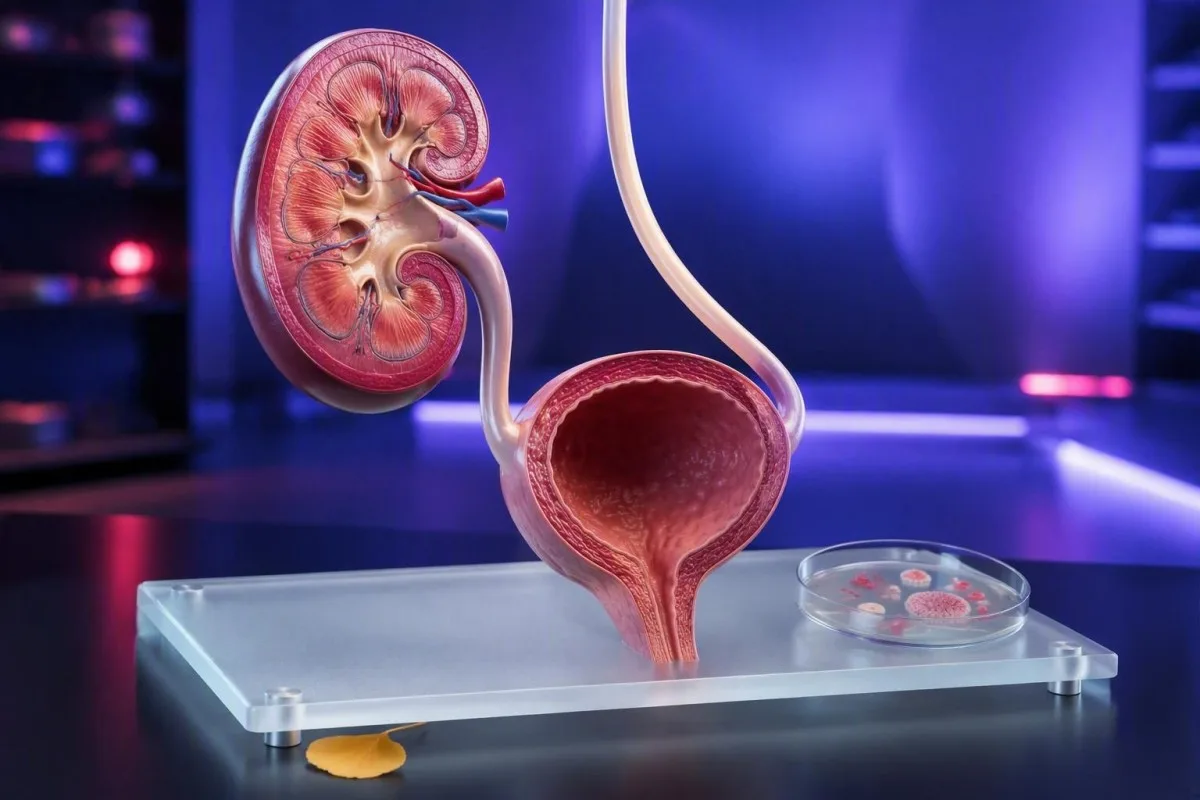
Chanadh cultar urine deimhinneach chan eil sin gu fèin-ghluasadach a’ ciallachadh galar slighe urinary. Tha na factaran a tha a’ dearbhadh a’ toirt a-steach comharran, càileachd cruinneachaidh, inbhe torrachas, agus a bheil modh-obrach urinary ionnsaigh air a phlanadh.


- Bacteriuria gun chomharraidhean a’ ciallachadh bacteria ann an cultar urine air a chruinneachadh gu ceart gun chomharran urinary; mar as trice chan eil feum air antibiotics.
- stairsinn breithneachaidh tha co-dhiù 100,000 CFU/mL de aon bhuidheann ann an sampall glan-ghlac; mar as trice feumaidh boireannaich an toradh seo air dà shampall leantainneach.
- Eisgeachd torrachas tha soilleir: sgrìonadh tràth ann an cùram ro-bhreith agus làimhseachadh bacteriuria dearbhte oir bidh làimhseachadh a’ lughdachadh cunnart pyelonephritis.
- Eisgeachd modh-obrach a’ buntainn ro mhodhan-obrachaidh urological endoscopic a thathas an dùil a ghoirteas an mucosa urinary; mar as trice thèid cùrsa antibiotic goirid a chuimseachadh.
- Fàs measgaichte de thrì no barrachd bhuidhnean mar as trice a’ nochdadh truailleadh cultar urine, gu sònraichte le mòran cheallan epithelial cearnach.
- Pyuria leis fhèin a’ ciallachadh ceallan geala ann an urine, gun a bhith gu riatanach a’ galar; tha e cumanta le bacteriuria asymptomatic agus chan eil e a’ gealltainn làimhseachadh leis fhèin.
- Inbhich nas sine le troimh-chèist a-mhàin, tuiteam, fual mar neul, no atharrachadh fàileadh cha bu chòir antibiotaicean UTI fhaighinn às aonais comharraidhean gnàthach urinary no tinneas siostaim.
- Dòrain antibiotaiceach a’ toirt a-steach a’ bhuinneach bho C. difficile, ath-bhualaidhean aileardaidh, eadar-obrachadh dhrogaichean, agus taghadh de dh’organan dìonach às aonais buannachd dearbhte don euslainteach.
Chan eil feum air làimhseachadh mar as trice air cultar deimhinneach gun chomharran
chan fhaodar bacteria ann am fual às aonais comharraidhean a làimhseachadh le antibiotaicean mar as trice, eadhon nuair a dh’aithnicheas an cultar organ UTI eòlach mar Escherichia coli. Is e na prìomh eisgeachdan a tha trom agus cuid de mhodhan urinary endoscopach a bhriseas lìnigeadh urinary. Mar an 20 Sultain, 2026, tha seo fhathast na seasamh aig stiùireadh 2019 Infectious Diseases Society of America (Nicolle et al., 2019).
Bacteriuria gun chomharraidhean tha colonisation, gun a bhith gu fèin-ghluasadach na ghalar. Tha e a“ ciallachadh gu bheil bacteria a” fàs ann am fual aig tomhas sònraichte ach chan eil losgadh, èiginn, tricead ùr, pian suprapubic, pian flank, fiabhras, no rigors aig an neach. Nam obair clionaigeach, mar as trice chan e “dearbhach”; is e an tomhas gun sgrìobhadh gu bheil dearbhach co-ionann ri cunnartach.
Airson boireannach gun catheter, feumaidh an dearbhachadh rannsachaidh foirmeil an aon ghnè bacteria aig co-dhiù 10^5 CFU/mL ann an dà shampall leantainneach air an cruinneachadh gu ceart, mar as trice air an toirt 24 uairean bho chèile. Airson fear, tha aon shampall glan-catch aig an dùmhlachd sin gu leòr; faodaidh aon shampall catheter a bhith ciallach aig 10^2 CFU/mL. Is e gnàthasan breithneachaidh a tha seo, chan e sgèile cruaidh-faic an stiùireadh againn gu urinalysis an aghaidh cultar.
Tha riaghailt practaigeach an Dotair Thomas Klein sìmplidh: làimhseachadh an t-euslainteach, chan e an cultar. Is e Kantesti Anailisiche deuchainn fala AI a chuidicheas le bhith a’ cur chomharran dubhaig co-cheangailte mar creatinine, eGFR, cunntas geal-cheall, agus CRP ann an co-theacsa, ach feumaidh cultar fual fhathast breithneachadh clionaigeach stèidhichte air comharraidhean.
Mar a tha Asymptomatic Bacteriuria Eadar-dhealaichte bhothruailleadh Cultar Urine
Tha bacteriuria asymptomatic na fhìor fhàs bacteria bhon t-slighe urinary, fhad ‘s a tha truailleadh cultar fual a’ tighinn bho chraiceann no flora gnèitheach a chaidh a thoirt a-steach rè cruinneachadh. Tha an eadar-dhealachadh ag atharrachadh na thachras a-nis: faodar bacteriuria dearbhte a thoirt fa-near, fhad ‘s a tha truailleadh mar as trice ag iarraidh sampall nas fheàrr seach òrdugh-lighiche.
Aithisg ag ràdh “measgachadh flora urogenital,” “measgachadh fàs,” no trì no barrachd organan tha e mòran nas cunbhalaiche le truailleadh na galar bladder ann an neach a tha air dhòigh eile fallain. Bidh ceallan epithelial squamous trom air microscopy a’ neartachadh amharas sin oir mar as trice bidh iad a’ tighinn bho uachdar a-muigh no gnèitheach, chan e am bladder.
Tha ùine cruinneachaidh a’ buntainn barrachd na tha a’ mhòr-chuid a’ tuigsinn. Tha fual meadhan-shruth a ruigeas an obair-lann taobh a-staigh 2 uair nas fheàrr; ma bheir còmhdhail nas fhaide, bidh fuarachadh no tiùb gleidhidh a’ lughdachadh cus fhàs às dèidh cruinneachadh. Faodaidh sampall air fhàgail blàth ann am baga-làimhe tionndadh tomhas beag de thruailleadh gu cultar a tha a’ coimhead drùidhteach.
Na feuch ri thu fhèin a dhèanamh mar sterilization le napcain antiseptic no gabh antibiotaicean a tha air fhàgail mus dèan thu sampall ath-aithris. Nigh làmhan, sgar an craiceann ma tha sin iomchaidh, tòisich a’ falamhachadh, an uairsin cruinnich a’ phàirt mheadhanach gun a bhith a’ leigeil leis an soitheach suathadh ris a’ chraiceann. Ar mìneachadh air ceallan epithelial ann am fual a’ sealltainn carson a dh’fhaodas am mion-fhiosrachadh seo casg a chuir air cùrsa dhrogaichean neo-riatanach.
Bacteria ann an Urine Adhbharan: Colonisation, Sampling, agus Atharrachaidhean Urinary
Tha adhbharan bacteria ann am fual a’ toirt a-steach àbhaisteach colonisation, cruinneachadh truaillidh, falamhachadh neo-iomlan den bladder, catheters urinary, clachan, atharrachaidhean structarail, agus fìor UTI symptomatic. A culture alone cannot distinguish these causes; symptoms and the organism pattern do the clinical heavy lifting.
E. coli causes most community urinary infections because strains from the bowel can adhere to bladder lining, but its presence without symptoms can still represent harmless colonisation. In healthy premenopausal women, asymptomatic bacteriuria occurs in roughly 1% to 5%; prevalence rises to 2% to 10% during pregnancy and can exceed 20% in some older long-term-care populations.
A catheter changes the biology entirely. Nearly every person with a long-term indwelling catheter develops bacteriuria over time—often at a rate of 3% to 7% per catheter day—so routine cultures predictably find bacteria and rarely answer a useful question. New fever, pelvic discomfort, flank pain, or otherwise unexplained sepsis warrants assessment; cloudy bag urine does not.
Urinary retention from enlarged prostate, pelvic organ prolapse, nerve conditions, or certain medicines can create residual urine where organisms persist. A post-void residual above about 150 to 200 mL may be clinically relevant, although the meaningful threshold varies with the person and setting. Persistent symptoms deserve an evaluation beyond another culture; our article on deuchainnean fala airson fual tric covers metabolic contributors too.
Mar a leughas tu Cunntasan Colony, Pyuria, Nitrites, agus Measgachadh Measgachadh
A colony count of 100,000 CFU/mL supports asymptomatic bacteriuria only when the sample is well collected and a single organism predominates. Lower counts may reflect early infection, contamination, or catheter-associated growth depending on symptoms and collection method.
A urinalysis and culture measure different things. Leukocyte esterase detects an enzyme associated with white cells, while nitrite suggests some bacteria have converted dietary nitrate during several hours in the bladder. Neither test proves that urinary symptoms are caused by bacteria, and nitrite can remain negative with Enterococcus, Staphylococcus saprophyticus, frequent urination, or low dietary nitrate.
Pyuria is often defined as more than 5 to 10 white cells per high-power field, yet it occurs in catheter users, kidney stones, sexually transmitted infections, vaginitis, interstitial cystitis, and asymptomatic bacteriuria. In older adults, pyuria plus a positive culture is especially easy to overcall as UTI. Read the pattern with our detailed guide to leukocyte esterase and false positives.
Some laboratories report 10^4 CFU/mL, others use 10^5 CFU/mL, and automated systems may write 10,000 or 100,000 CFU/mL instead. For a patient with classic dysuria and no vaginal symptoms, even 10^2 to 10^3 CFU/mL of E. coli can be meaningful; for a symptom-free person, the same number is usually a reason to pause, not treat.
Cò a dh’ fheumas Antibiotics airson Asymptomatic Bacteriuria?
Pregnant patients and people about to undergo endoscopic urologic procedures with expected mucosal trauma are the two groups routinely treated for asymptomatic bacteriuria. Outside these settings, treatment has not shown benefit and frequently causes harm.
Pregnancy is different because untreated bacteriuria can ascend to kidney infection and is associated with adverse obstetric outcomes. The US Preventive Services Task Force recommends one urine culture at 12 to 16 weeks’ gestation or the first prenatal visit, and regards more than 100,000 CFU/mL of a single uropathogen as a positive screening result (USPSTF, 2019). Group B streptococcus at 10,000 CFU/mL or more has separate implications for intrapartum antibiotic planning.
Before transurethral resection, ureteroscopy, or another procedure likely to breach urinary mucosa, a culture-guided antibiotic started shortly before the procedure lowers the risk of bloodstream infection. A 1- or 2-dose regimen is preferred over prolonged treatment when feasible; the urology and anaesthesia teams should choose timing and drug based on culture susceptibility.
Dr. Klein advises patients to ask one blunt question: “Am I pregnant, or am I having a urinary procedure that injures the lining?” If both answers are no, a positive culture needs a careful explanation before antibiotics. Our Bòrd Comhairleachaidh Meidigeach reviews this kind of evidence-versus-instinct decision, which can feel counterintuitive to patients and clinicians alike.
Carson a tha Antibiotics gu tric air an Seachnadh Nuair a tha thu a’ Faireachdainn Math
Antibiotics do not prevent future symptomatic UTI in most people with asymptomatic bacteriuria and can select resistant bacteria within days. Treating a culture result without an illness exposes the patient to drug risk without a proven clinical payoff.
The evidence is unusually consistent here. Trials in nonpregnant women, older adults, people with diabetes, and catheter users found no meaningful reduction in symptomatic infection from treating asymptomatic bacteriuria; some studies found more recurrent symptoms after antibiotics altered protective flora. The IDSA guideline specifically recommends against screening or treatment for healthy nonpregnant women and patients with diabetes (Nicolle et al., 2019).
A five- to seven-day antibiotic course can cause nausea, rash, thrush, serious allergy, tendon injury with fluoroquinolones, warfarin interaction, or Clostridioides difficile diarrhoea. Resistance is not theoretical: bacteria exposed to an antibiotic can retain resistance genes in the gut and urinary microbiome long after the prescription ends. The safest antibiotic is sometimes no antibiotic at all.
I often see this after a “just in case” prescription in an emergency department or pre-operative screen. The next true UTI then grows an organism resistant to trimethoprim or ciprofloxacin, narrowing choices unnecessarily. If you have taken antibiotics recently, our discussion of INR changes after antibiotics may matter if you use warfarin.
Feumaidh torrachas Rathad Cultar Urine Air Leth
Confirmed asymptomatic bacteriuria in pregnancy should be treated with a targeted 5- to 7-day antibiotic course, then discussed with the prenatal clinician regarding follow-up culture. This recommendation is based on preventing maternal pyelonephritis, not on whether the pregnant person feels urinary discomfort.
The older untreated-risk figures are striking: pyelonephritis developed in approximately 20% gu 35% of pregnant patients with bacteriuria in historic cohorts, versus a much lower rate after effective treatment. Modern baseline risk may differ because prenatal care has changed, but current guidance still recommends screening and treatment. ACOG’s 2023 Clinical Consensus supports a single early culture and treatment of 100,000 CFU/mL or greater.
Drug choice is culture-specific and trimester-specific. Nitrofurantoin, cephalexin, amoxicillin-clavulanate, and fosfomycin may be options depending on susceptibility, allergy history, gestational age, and local resistance; empiric ampicillin or amoxicillin alone is often avoided because E. coli resistance is common. Do not self-select from a prior prescription.
A repeat culture after treatment is handled differently across health systems, because evidence for the ideal schedule is thin. Many clinicians consider one culture 1 gu 2 sheachdain after therapy or test only if symptoms recur. Pregnancy also changes kidney filtration, so interpret bidh luachan GFR trom rather than applying nonpregnant reference expectations.
Seann Daoine, Còmhstri, Tuiteam, agus Cultaran Urine Deimhinneach
Confusion, a fall, cloudy urine, or urine odour alone should not be diagnosed as UTI in an older adult with a positive culture. Local urinary symptoms, fever, haemodynamic instability, or another systemic sign are needed before bacteriuria becomes a likely treatment target.
Asymptomatic bacteriuria is common in later life: roughly 20% gu 50% of women and 15% to 40% of men in long-term-care settings may have it at any point. A culture ordered for confusion will therefore be positive often enough to mislead clinicians, while dehydration, medication effects, constipation, pain, hypoxia, and metabolic disturbance may be the real cause.
The 2019 IDSA guideline recommends looking for other causes and observing rather than treating bacteriuria in functionally or cognitively impaired older adults with delirium but no urinary symptoms or systemic instability. This is not dismissal; it is active diagnostic medicine. Fever above 38.0°C, new costovertebral tenderness, rigors, or unstable blood pressure changes the urgency.
Kantesti AI ’s e seirbheis eadar-mhìneachaidh deuchainn-lann AI that can flag concurrent dehydration, electrolyte, kidney, glucose, and inflammatory-marker patterns from blood results, helping a family prepare better questions for the clinician. That broader view is particularly useful when a urine result seems too convenient; explore senior medication-related lab effects airson luchd-ceannairc cumanta.
Chan eil tinneas an t-siùcair, tinneas dubhaig, agus inbhe tar-chuir a’ ciallachadh làimhseachadh gu fèin-ghluasadach
Diabetes, chronic kidney disease, and stable kidney transplant status are not routine reasons to treat asymptomatic bacteriuria. These conditions raise concern for urinary complications, but available evidence does not support antibiotics in the absence of symptoms except during carefully defined transplant periods or procedures.
People with diabetes have higher rates of bacteriuria, yet randomized studies found treatment did not reduce symptomatic UTI, kidney infection, or hospitalisation. Glycaemic management still matters: persistent glucose in urine can support microbial growth and should prompt assessment of diabetes control, but it is not an indication to culture urine repeatedly. See our explanation of glucose ann am fual.
Chronic kidney disease changes drug dosing and makes a true kidney infection more consequential, but CKD itself does not turn a symptom-free culture into UTI. An eGFR below 30 mL/min/1.73 m² affects selection and dose for many antimicrobials, so unnecessary treatment carries an added risk of accumulation or kidney injury.
For kidney transplant recipients, recommendations are more nuanced in the first month after transplant because evidence is limited and devices may still be present. Beyond 1 mìos, IDSA recommends against screening or treating asymptomatic bacteriuria in stable recipients. Transplant teams may individualise a plan; no general article should overrule that relationship.
Bidhidh catheters, stents, agus bladder neurogenic ag atharrachadh toraidhean cultair
Long-term catheters and many urinary devices produce bacteriuria so reliably that routine urine cultures are usually unhelpful unless new compatible symptoms occur. Antibiotics may temporarily suppress organisms but rarely sterilise a device-associated urinary tract for long.
Bacteria form a biofilm on catheter surfaces: a structured microbial layer that antibiotics and immune cells do not easily eradicate. With an indwelling catheter, changing the device before collecting culture may be appropriate when treating a suspected catheter-associated UTI, because a bag sample frequently reflects old biofilm rather than bladder organisms.
In spinal cord injury or neurogenic bladder, symptoms can be atypical. New autonomic dysreflexia, increased spasticity, malaise, fever, leaking around a catheter, or bladder discomfort may matter more than burning, but a clinician who knows the baseline should interpret them. A positive culture without a change from baseline still does not equal infection.
Urinary stents likewise commonly become colonised. Persistent fever, obstruction, worsening renal function, or systemic illness warrants prompt care because source control can matter as much as antibiotics. Monitor kidney trends with our guide to creatinin dùthcha agus dilte, while recognising that urine creatinine does not diagnose infection.
Nuair a dh’ fhàsas bacteria ann an urine gu bhith na UTI symptomatic
Bacteria in urine should be treated as a likely UTI when a compatible symptom pattern accompanies the result, especially burning with urination, new urgency, frequency, suprapubic pain, flank pain, fever, or rigors. The culture then helps select an antibiotic rather than create the diagnosis by itself.
Acute uncomplicated cystitis usually causes dysuria and frequency without fever or flank pain. The combination of dysuria and frequency without vaginal discharge has a high probability of cystitis in appropriate patients, while vaginal irritation or discharge should broaden testing for vaginitis or sexually transmitted infection. A culture is particularly useful for pregnancy, recurrent illness, pyelonephritis, or treatment failure.
Fiabhras de 38.0°C no nas àirde, shaking chills, vomiting, flank pain, or marked unwellness can suggest pyelonephritis or sepsis and deserves same-day assessment. Pregnancy, immune suppression, obstruction, stones, recent instrumentation, and male urinary symptoms lower the threshold for urgent clinician review. Do not wait for culture finalisation if those red flags are present.
Symptoms can also arise without bacterial infection. Bladder pain syndrome, genitourinary syndrome of menopause, pelvic floor dysfunction, urethral irritation, and stones can mimic cystitis; that is why repeat antibiotics after a negative or mixed culture can be a dead end. Compare dipstick patterns in our nitrites in urine guide.
Mar a nì thu ath-aithris air sampall urine gun a bhith a’ cruthachadh rabhadh meallta eile
A repeat urine culture should be collected as a clean-catch midstream specimen before antibiotics, ideally when the sample can reach the laboratory within 2 hours. Repeating the sample is most useful after mixed growth, unexpected bacteria, or a result that conflicts with the clinical picture.
Start with clean hands and a sterile container. Begin urinating into the toilet, collect the middle stream without touching the inside of cup or lid, and finish into the toilet; this reduces organisms near the urethral opening. For infants, catheterised collection is more reliable than a bag specimen when a culture will guide treatment.
Avoid collecting during heavy menstrual flow if the test can safely wait, since blood and external cells complicate interpretation. Do not increase water intake aggressively just before collection: very dilute urine may lower microscopy sensitivity and make symptoms feel temporarily different. First-morning urine is not mandatory for culture, unlike some other urine tests.
If the laboratory reports mixed flora twice despite careful technique and symptoms persist, a clinician may request a catheterised specimen. That is not a punishment for “doing it wrong”; it is a more controlled diagnostic method. Our overview of urine dipstick flags explains why screening tests and cultures can disagree.
Ceistean ri Faighneachd mus gabh thu ri no diùltadh antibiotics
Before taking antibiotics for a positive urine culture without symptoms, ask whether the sample was contaminated, whether you meet a treatment exception, and what symptom or procedure makes therapy beneficial. These three questions often clarify a confusing portal result in under a minute.
Ask for the organism, colony count, number of organisms, susceptibility report, and whether squamous epithelial cells were present. “E. coli at **100,000 CFU/mL, one organism, no symptoms” is different from “mixed flora at 10,000 to 50,000 CFU/mL with many epithelial cells.” A screenshot of the full report is more useful than a portal alert saying only “abnormal.”
Also ask whether the test was ordered for a reason. Pre-operative screening before a hip replacement, for example, is not the same as screening before a urinary tract procedure; major guidelines do not recommend treating asymptomatic bacteriuria before nonurologic surgery. This distinction avoids delays and needless antibiotic exposure.
Tha Kantesti na àrd-ùrlar mìneachaidh biomarcadairean AI that can organise related blood-test trends for a medical visit, including kidney filtration and inflammation signals, but it does not replace urine-culture stewardship. For methodology and boundaries, review our inbhean dearbhaidh clionaigeach.
Comharran Rabhadh Èiginneach agus Plana Leanmhainn Ciallach
Seek urgent medical assessment for fever, rigors, flank pain, vomiting, confusion with systemic illness, low blood pressure, or pregnancy with urinary symptoms. A symptom-free positive culture alone is rarely urgent, but the clinical situation can change quickly when obstruction or kidney infection is present.
Call urgent care or emergency services for severe weakness, persistent vomiting, inability to keep fluids down, fainting, new confusion with fever, or signs of sepsis. People with a solitary kidney, known obstruction, an immune-suppressing treatment, or pregnancy should contact a clinician early when urinary symptoms begin. Visible blood is a separate issue and deserves evaluation if persistent or associated with pain; see rabhaidhean mu fhuil ann am fual.
For the well, nonpregnant person with an incidental positive culture, the usual plan is no antibiotics, no serial cultures, and clear return precautions. Symptoms that arise over the next 48 gu 72 uairean should prompt reassessment, while repeating cultures simply to prove “clearance” can restart the cycle of incidental findings. Hydration for thirst is reasonable; force-drinking litres of water is not treatment.
Thomas Klein, MD, recommends keeping the culture report, your medication list, and a brief symptom timeline for follow-up rather than trying to decode every bacterial name alone. Kantesti AI’s iùl teicneòlais explains how our clinical-context tools handle laboratory uncertainty, but fever or flank pain needs a real clinician, not an algorithm.
Ceistean Bitheanta
Am faod bacteria ann an fual a dhol à bith gun antibiotics?
Seadh. Bidh bacteria ann an urine às aonais comharraidhean gu tric a’ leantainn, ag atharrachadh no a’ dol à bith gun antibiotics, agus chan eilear a’ moladh làimhseachadh airson a’ mhòr-chuid de dh’inbhich nach eil trom. Faodaidh cultar a chaidh a chruinneachadh gu ceart le co-dhiù 100,000 CFU/mL fhathast a bhith a’ riochdachadh bacteriuria gun chomharraidhean seach galar. Mar as trice bidh antibiotics air an comharrachadh airson bacteriuria gun chomharraidhean dearbhte rè torrachas agus ron taghadh de mhodhan-obrachaidh urolach endoscopic a dh’adhbhraicheas trauma air a’ mhucosa. Atharraichear an t-measadh le losgadh ùr, fiabhras, pian anns an taobh, cuir a-mach, no fuachd agus bu chòir dha ath-sgrùdadh clionaigeach a bhrosnachadh.
Dè an ìre de bacteria ann an urine a thathas a’ meas àrd?
Airson neo-dhruim-ghalar, is e cunntas de co-dhiù 100,000 CFU/mL, sgrìobhte mar 10^5 CFU/mL, de aon bhuidheann ann an sampall fual glan-ghabhalach am briseadh gnàthach. Feumaidh boireannaich neo-torrach mar as trice an aon bhuidheann ann an dà shamhla leanachdach gus coinneachadh ris an dearbhadh rannsachaidh, fhad ‘s a dh’ fheumas fir aon sampall. Ann an cuideigin le comharraidhean UTI clasaigeach, faodaidh cunntasan cho ìosal ri 100 gu 1,000 CFU/mL de E. coli a bhith fhathast ciallach gu clionaigeach. Chan urrainnear an àireamh a mhìneachadh gu sàbhailte às aonais comharran agus càileachd sampall.
A bheil piuria a' ciallachadh gu bheil UTI orm?
Chan eil. Tha Pyuria a’ ciallachadh gu bheil ceallan fala geal an làthair ann an fual, gu cumanta barrachd air 5 gu 10 ceallan gach achadh cumhachdach, ach cha dhearbh e galar slighe urinary. Faodaidh Pyuria tachairt le bacteriuria asymptomatic, cathederan urinary, clachan, galairean a tha air an sgaoileadh gu gnèitheasach, sè sèid vaginal, agus suidheachaidhean pian bladder. Mar as trice feumaidh breithneachadh UTI comharraidhean urinary co-fhreagarrach a bharrachd air toraidhean fual taiceil. Cha bu chòir Pyuria leis fhèin brosnachadh antibiotics ann an neach a tha a’ faireachdainn gu math.
Am bu chòir bacteriuria gun comharran a làimhseachadh mus tèid obair-lannsa?
Cha bu chòir bacteriuria gun chomharran a bhith air a làimhseachadh ro obair-lannsa neo-ùròlach, a’ toirt a-steach a’ mhòr-chuid de dh’obrachaidhean orthopaidich, bhoilg, no cairdiach. Thathas a’ moladh làimhseachadh ro mhodhan-obrach ùròlach endoscopach a thathas an dùil a bhriseas an sgàil-chraobhan urinary oir faodaidh bacteria a dhol a-steach don t-sruth fala rè ionnsramaid. Mar as trice is fheàrr antibiotic targaichte a bheirtear mar aon no dà dòs timcheall air a’ mhodh-obrach na cùrsa fada. Bu chòir don sgioba modh-obrach co-dhùnadh stèidhichte air an organachadh cultar, toradh fulangas, agus an obair-lannsa a chaidh a phlanadh.
Carson a tha mo chultar urine ag ràdh lus measgaichte?
Tha flùra mheasgaichte a’ ciallachadh mar as trice gun do thog an sampall fual air meanbh-fhàs-bheairtean bho uachdar a’ chraicinn no ginealach aig àm cruinneachaidh an àite a bhith a’ nochdadh pathogen singilte bhoilg. Tha fàs trì no barrachd meanbh-fhàs-bheairtean, gu sònraichte le ceallan epithelial lannach air mìcrosgop, a’ moladh gu làidir truailleadh cultar fual. Mar as trice is e ath-ghairm sampall meadhain glan-ghabhail a ruigeas an obair-lann taobh a-staigh 2 uair an ath cheum ma tha feum fhathast air deuchainn gu clionaigeach. Mar as trice cha bhith feum air antibiotics air flùra mheasgaichte ann an neach gun chomharran gnìomhach.
An urrainn do dhuine nas sine a bhith aige UTI gun losgadh?
Seadh, faodaidh seann daoine gu tric clàr-obrach UTI a bhith aca gun losgadh, gu sònraichte le catadairean no duilgheadasan conaltraidh, ach chan eil cultar dearbhach leis fhèin gu leòr fhathast. Fiabhras de 38.0°C no nas àirde, pian ùr air taobh no fo-phubaileach, rigors, neo-sheasmhachd haemodynamic, no tinnsearachd siostamach soilleir a’ toirt fianais nas làidire air galar. Tha troimh-chèile, tuiteaman, fual neòinte, agus atharrachaidhean fàileadh leotha fhèin nan comharran lag o chionn gu bheil bacteriuria gun chomharran a’ toirt buaidh air timcheall air 20% gu 50% de bhoireannaich ann an cùram fad-ùine. Bu chòir do luchd-clionaigeach dìth uisgeachadh, cungaidhean-leigheis, giorrachadh, agus adhbharan metabolach a mheasadh mus cuir iad às an delirium gu bacteria fual.
Faigh Mion-sgrùdadh Deuchainn Fala le Cumhachd AI an-diugh
Thig còmhla ri còrr is 2 mhillean neach air feadh an t-saoghail a tha a’ earbsa Kantesti airson mion-sgrùdadh sa bhad, ceart air deuchainnean obair-lann. Luchdaich suas na toraidhean deuchainn fala agad agus faigh mìneachadh coileanta air biomarcair 15,000+ ann an diogan.
📚 Foillseachaidhean Rannsachaidh le Iomraidhean
Klein, T., Mitchell, S., & Weber, H. (2026). Deuchainn Fuil Bhìoras Nipah: Stiùireadh airson Lorg is Breithneachadh Tràth 2026. Rannsachadh Leigheis AI Kantesti.
Klein, T., Mitchell, S., & Weber, H. (2026). Stuth fala B àicheil, stiùireadh deuchainn fala LDH & cunntas reticulocyte. Rannsachadh Leigheis AI Kantesti.
📖 Iomraidhean Meidigeach Taobh a-muigh
⚕️ Àicheadh Meidigeach
Tha an artaigil seo dìreach airson adhbharan foghlaim agus chan eil e a’ dèanamh comhairle mheidigeach. Cuir fios an-còmhnaidh gu solaraiche cùram slàinte teisteanasach airson co-dhùnaidhean breithneachaidh is leigheis.
Comharran earbsa E-E-A-T
Eòlas
Lèirmheas clionaigeach air a stiùireadh le lighiche air sruthan-obrach mìneachaidh obair-lann.
Eòlas
Fòcas air leigheas obair-lann air mar a bhios bith-chomharraidhean (biomarkers) a’ giùlan ann an co-theacsa clionaigeach.
Ùghdarrasachd
Air a sgrìobhadh le Dr. Thomas Klein le ath-sgrùdadh le Dr. Sarah Mitchell agus Prof. Dr. Hans Weber.
Earbsachd
Mìneachadh stèidhichte air fianais le slighean leanmhainn soilleir gus dragh a lughdachadh.