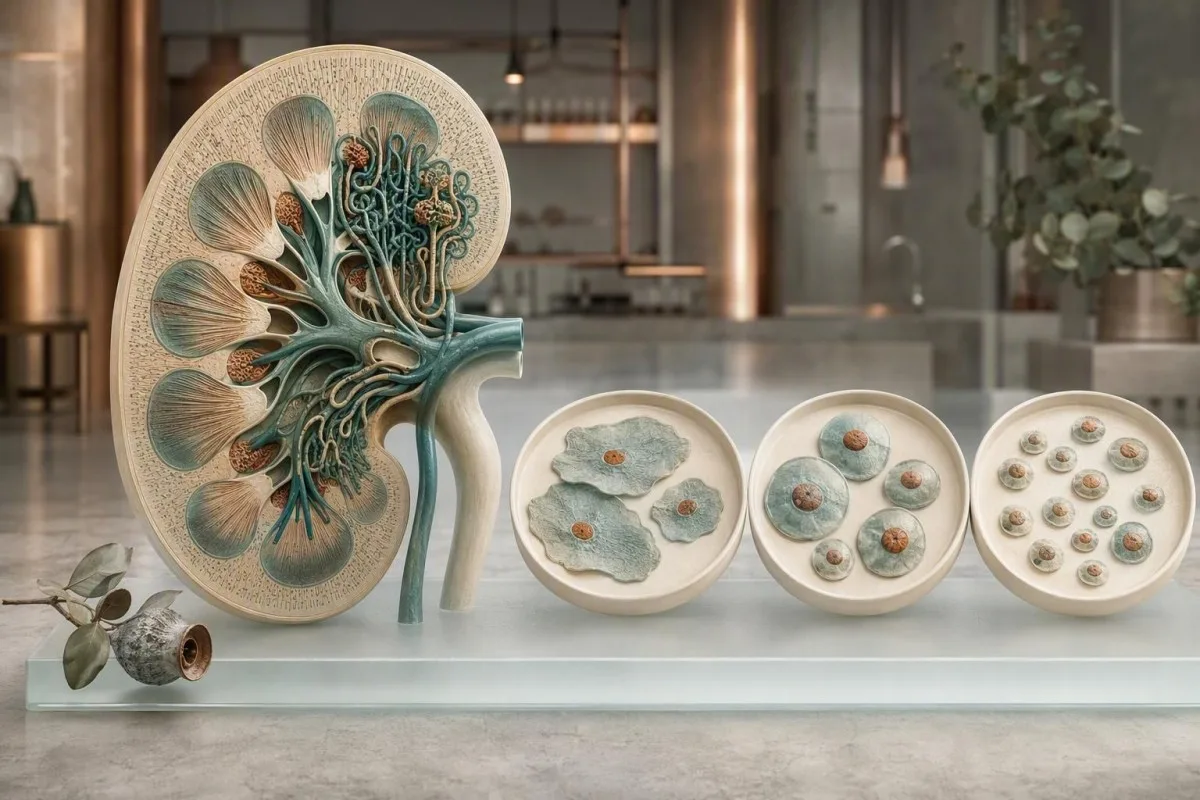
Thig a’ mhòr-chuid de cheallan epithelial san fhualas bho rùsgadh àbhaisteach no truailleadh cruinneachaidh, gu sònraichte ceallan squamous. Ach, tha ceallan tiùbaireach nan dubhan airidh air barrachd aire nuair a tha iad a’ nochdadh còmhla ri pròtain, fuil, bàsan, no gnìomhachd dubhan lag.


- Ceallan epithelial squamous mar as trice a’ tighinn bho truailleadh craiceann no sgìre ginealach seach bho bhalach no dubhan.
- Sampall ath-aithris tha e ciallach nuair a chanas aithisg ceallan squamous meadhanach no mòran agus tha an toradh cuideachd a’ nochdadh UTI.
- Ceallan epithelial tiùbaireach nan dubhan mar as trice tha iad neo-làthaireach no tearc; faodaidh toraidhean ath-aithris a bhith a’ nochdadh cuideam no milleadh tiùbaireach nan dubhan.
- Ceallan epithelial a’ dol thairis a’ cruthachadh ballachan a’ bhalach agus nan ureters, agus faodaidh àireamh bheag nochdadh às dèidh irioslachaidh, cleachdadh cathedar, no modh-obrach o chionn ghoirid.
- 1-5 ceallan gach raon àrd-chumhachd faodar aithris mar uiread bheag le cuid de na leabharlannan, ach tha modhan agus beachdan iomraidh eadar-dhealaichte.
- Pròtain, ceallan fola dearg, roinn, agus creatinine dearbhadh a dhèanamh a bheil ceallan epithelial a’ coileanadh cudromachd clionaigeach.
- ath-sgrùdadh èiginneach freagarrach airson toradh fual gu mòr air a lughdachadh, sèid, fuil ri fhaicinn anns an fhual, fiabhras le pian anns an taobh, no fìor bhuinneach.
- Teicneòlas glan-ghabhail a’ lughdachadh rabhaidhean meallta: glan an toiseach, tòisich a’ faochadh, an uairsin cruinnich a’ phàirt meadhan-shrutha.
Dè tha ceallan epithelial ann an deuchainn fual a’ ciallachadh mar as trice
Mar as trice tha ceallan epithelial san fhual a’ nochdadh a’ rùsgadh cheallan àbhaisteach no sampall air a thruailleadh rè cruinneachadh, chan e galar dubhaig. Is e an eisgeachd aithisg a dh’ aithnicheas gu sònraichte ceallan epithelial tiùbairean dubhaig, gu sònraichte nuair a nochdas pròtain, roinn, fuil, no ìre a tha a’ fàs de creatinine aig an aon àm.
Bidh microsgopaidh fual a“ sgrùdadh an t-sèididh a tha air fhàgail às deidh sampall fual a centrifugadh, mar as trice fo mheudachadh àrd-chumhachd. Bidh mòran de naobhan-obrach a” toirt aithris air ceallan mar ainneamh, beag, meadhanach, no mòran; bidh cuid eile a’ toirt cunntas gach raon àrd-chumhachd (HPF), agus mar sin chan eil àireamh "àbhaisteach" cruinneil ann. Toraidhe 0-5 ceallan/HPF dh’ fhaodadh a bhith air a ghabhail mar rùsgadh ìosal ann an aon naobh-obrach ach air a chomharrachadh ann an àiteachan eile leis gu bheil na dòighean ionadail eadar-dhealaichte.
Tha an seòrsa cealla nas cudromaiche na an àireamh iomlan. Ceallan squamous buailteach a bhith mòr agus còmhnard agus mar as trice a’ tighinn bhon taobh a-muigh den t-slighe urinary, fhad ‘s a tha ceallan tar-ghnìomhach a’ tighinn bhon lamh no na h-ureters agus ceallan tiùbairean dubhaig a’ tighinn am broinn an dubhaig. Tha ar stiùireadh iomlan air anailis urine a’ mìneachadh carson a dh’ fheumar am dipstick, an t-sèididh, agus an dòigh cruinneachaidh a leughadh còmhla.
Kantesti AI ’s e Anailisiche deuchainn fala AI a chuireas toraidhean obair-lann luchdaichte ann an co-theacsa clionaigeach, ach feumaidh lorgaidhean microsgopaidh fual fhathast faclan tùsail na obair-lann agus, aig amannan, sgrùdadh clionaigeach. Air 26 Lùnastal 2026, cha bhiodh mi a’ breithneachadh UTI, leòn dubhaig, no aillse bho cheallan epithelial a-mhàin; tha an dùil mun cuairt a’ giùlan cuideam a’ bhreithneachaidh.
Ceallan epithelial squamous: an comharra truailleadh cumanta
Mar as trice tha ceallan epithelial sgreamach ann an fual a’ nochdadh gun deach ceallan bho uachdar nan organan gintinn a-muigh no craiceann a-steach don sampall. Chan eil ceallan sgreamach meadhanach no mòran a’ dearbhadh gu bheil cultar fual neo-dhligheach, ach bidh iad a’ lughdachadh misneachd gun tàinig bacteria bhon lamh.
Tha ceallan sgreamach nan ceallan leathann, tana, neo-riaghailteach le niùclas sa mheadhan a tha gu math beag. Tha iad cumanta ann an sampallan a chaidh a chruinneachadh rè ùineach, le sruthadh vaginal, an dèidh uacharan a chleachdadh, no nuair a ghlachas a’ chiad phàirt den t-sruth fual leis a’ chupa. Is e cùis ro-anailis a tha seo: tha Delanghe agus Speeckaert a’ toirt cunntas air cruinneachadh sampall mar phrìomh thùs de mhearachd urinalysis (Delanghe & Speeckaert, 2014).
Seo an diofar practaigeach a nì mi anns a’ chlinic: mòran cheallan sgreamach a bharrachd air esterase leukocyte àicheil, nitrite àicheil, agus gun chomharraidhean urinary mar as trice chan eil feum air làimhseachadh. Air an làimh eile, faodaidh dysuria, èiginn, fiabhras, no pian taobhach dearbhadh a dhèanamh air cultar agus measadh clionaigeach a dh’aindeoin sampall a tha a’ coimhead air a mhilleadh. Tha sgòthaireachd leis fhèin na fhianais lag; faodaidh criostalan, mucus, agus dìth uisgeachadh uile atharrachadh, mar a tha air a mhìneachadh san stiùireadh againn gu adhbàr urrainne sgòthach.
Bha euslainteach 29-bliadhna a chunnaic mi air a bhith aice “mòran cheallan epithelial,” trace esterase leukocyte, agus measgachadh de fhàs bacteria às dèidh cruinneachadh fhad ‘s a bha i a’ ruith ron obair. Bha an sampall meadhanach aice 48 uairean às deidh sin gun fhàs cudromach, agus chaidh antibiotics a sheachnadh. Tha an toradh sin cumanta gu leòr gur fheàrr leam sampall ath-aithris mus làimhsich mi neach a tha fallain eile.
Cuin a nì thu ath-aithris air sampall fual glan-glan
Dèan ath-aithris air sampall glan-ghluasaid nuair a tha ceallan sgreamach meadhanach no mòran agus gu bheil an toradh ga chleachdadh gus UTI a dhearbhadh, fuil san fhuil a mhìneachadh, no antibiotics a stiùireadh. Mar as trice bidh sampall ùr nas feumail na bhith a’ feuchainn ri cultar millte iomaill a mhìneachadh.
Airson sampall glan-ghluasaid inbheach, nigh làmhan, dealaich filltean craiceann ma tha sin iomchaidh, glan an sgìre le uisge no an sguab a chaidh a thoirt seachad, tòisich a’ caimhead a-steach don taigh-beag, an uairsin cruinnich an meadhanach fual gun a bhith a’ suathadh taobh a-staigh a’ chupa no a’ chliabh. Lìbhrig e a-staigh 2 uair aig teòthachd an t-seòmair, no cuir ann an reòthadair e ma tha an leasach ag iarraidh ort sin a dhèanamh. Leigidh pròiseasachadh fadalach le bacteria iomadachadh agus ceallan briseadh sìos.
Seachain cruinneachadh rè sruth menstrual trom ma dh’ fhaodas an deuchainn feitheamh gu sàbhailte; mura h-urrainn, innis don neach-clionaigeach no don leasach. Na stad air cungaidhean a chaidh òrdachadh dìreach gus toradh fual a leasachadh, agus na toir liotairean uisge ro-làimh gu feachd, oir faodaidh fual gu math lag falach a dhèanamh air toraidhean greim subtil. Ma tha comharraidhean an làthair, urinalysis an aghaidh cultar a’ cuideachadh le faighinn a-mach dè an deuchainn a fhreagras air dè an ceist.
Tha ath-ghairm a chaidh a chruinneachadh gu ceart gu sònraichte luachmhor nuair a tha an cultar a“ chiad fhear ag ràdh ”fàs measgaichte” no grunn bhuidhnean gun aon uropathogen domhnasach. Ann an inbheach a tha air an làimh eile seasmhach, tha ath-aithris taobh a-staigh 24-72 uair a thìde mar as trice reusanta; tha fiabhras, torrachas, dìon-dìonachd, no tar-chur dubhaig ag atharrachadh a’ chrìche sin agus bu chòir dhaibh comhairle proifeasanta nas tràithe a bhrosnachadh.
Ceallan epithelial a’ dol thairis bho bhalach no ureters
Bidh ceallan epithelial gluasadach ann an fual a’ tighinn bho lìnigeadh an apex dubhaig, ureters, bladder, agus pàirt den urethra. Faodaidh lorg beag, iomallach a thighinn às an rùsgadh cunbhalach no irioslachd, ach feumaidh ceallan leantainneach le fuil fhollaiseach tuilleadh measaidh.
Canar ceallan urothelial ris na ceallan sin cuideachd. Tha an coltas eadar-dhealaichte: faodaidh iad a bhith cruinn, cumadh dath-uisge, no ioma-ghnèitheach, is e sin as coireach gu bheil anailisearan fèin-ghluasadach a’ cruinneachadh iad uaireannan le ceallan epithelial neo-sgiamhach eile. Aithisg de cheallan epithelial gluasadach ann am fual a’ dèanamh chan eil chan eil e a’ ciallachadh aillse, agus chan urrainn do sgrùdadh falamh falamh sgrùdadh a dhèanamh air aillse urothelial.
Faodaidh catheterisation o chionn ghoirid, cystoscopy, clachan urinary, agus sèid a bhith a’ meudachadh rùsgadh airson ùine ghoirid. Ma nochdas ceallan gluasadach le 3 no barrachd cheallan fala dearg / HPF air sampall a chaidh a chruinneachadh gu ceart, is e an lorg fala dearg - chan e na ceallan epithelial - a bhios mar as trice a’ stiùireadh leanmhainn. Tha Comann Lèigh-lann Ameireagaidh a’ mìneachadh microhematuria mar barrachd air 3 ceallan dearga/HPF agus a’ moladh measadh stèidhichte air cunnart às deidh mìneachaidhean math a bhith air an dèiligeadh (Barocas et al., 2020).
Nam eòlas-sa, tha seann euslainteach le fuil meanbh-fhrasach leantainneach, nochdadh smocaidh, no fuil fhollaiseach gun phian airidh air còmhradh eadar-dhealaichte na neach òg le sampall singilte às deidh eacarsaich. Leugh na soidhnichean rabhaidh nar fuil anns an fhual, ach na leig leis an fhacal “gluasadach” clisgeadh neo-riatanach a chruthachadh.
Ceallan epithelial tiùbaireach nan dubhan: carson a dh’ fheumas iad co-theacs
Tha ceallan epithelial dubhaig ann am fual, nas miosa ceallan epithelial tubular dubhaig, mar as trice neo-làthaireach no tearc agus faodaidh iad a bhith a’ comharrachadh lot do na tubules dubhaig. Tha an cudromachd aca ag èirigh gu luath nuair a nochdas tilgeadh granular, proteinuria, lughdachadh eGFR, no àrdachadh creatinine còmhla riutha.
Bidh tubules a’ faighinn air ais uisge, salann, siùcar, agus bicarbonate mus fhàg fual an dubhaig. Faodaidh ischemia bho thiormachadh trom no bruthadh-fala ìosal, tocsaineachd dhrogaichean, galar mòr, rhabdomyolysis, agus lot tubular luath adhbhrachadh gu bheil ceallan tubular a’ dealachadh a-steach do fual. Chan eil crìoch cunntais cheall gun dearbhadh gu neo-eisimeileach a’ dearbhadh lot tubular luath, mar sin bidh obair-lann agus nefrologists a’ mìneachadh morphology seach aon àireamh.
An cothlamadh de ceallan tubular dubhaig a bharrachd air tilgeadh granular nas draghail na gin den dà rud leotha fhèin leis gu bheil an dithis a’ comharrachadh sgudal tubular. Bidh àrdachadh creatinine serum de 0.3 mg/dL (26.5 µmol/L) taobh a-staigh 48 uairean no gu 1.5 uiread an ìre bhunaiteach taobh a-staigh 7 latha a’ coinneachadh ri slatan-tomhais KDIGO airson lot dubhaig luath agus tha feum air measadh luath. Tha ar mìneachadh air tilgeanan granular san fhuaigh a’ còmhdach a’ phàtran sediment seo ann an doimhneachd.
Chunnaic mi eacarsaich seasmhach fhad ‘s a bha e a’ dèanamh an dealbh nas iom-fhillte: faodaidh fual dùmhail, pròtain sealach, agus pigment coltas gu bheil sediment trang. Sin as coireach gum bu chòir inbhe dubhaig a bhith air a sgrùdadh às deidh faighinn seachad air agus uisgeachadh seach a bhith air a thoirt a-mach à aon sampall às dèidh rèis; tha an stiùireadh againn air creatinine às dèidh eacarsaich a’ mìneachadh ath-dheuchainn ciallach.
A bheil ceallan epithelial a’ ciallachadh galar slighe urinary?
Chan eil ceallan epithelial leotha fhèin a’ dearbhadh galar slighe urinary. Tha UTI nas coltaiche nuair a tha comharraidhean urinary a’ nochdadh le ceallan fala geal, leukocyte esterase, nitrite, agus cultar a’ fàs aon bhuidheann comasach.
Bidh leukocyte esterase a' lorg enzyme co-cheangailte ri ceallan geala, fhad 's a dh' fhaodadh nitrite a bhith a' nochdadh bacteria a thionndas nitrate daithead gu nitrite rè ùine fuireach na làmh. Tha Nitrite sònraichte nuair a tha e deimhinneach ach faodaidh e a bhith àicheil le urination tric, ìosal nitrate daithead, no buidhnean nach dèan e. Pyuria, gu tric barrachd air 5-10 ceallan geala/HPF an crochadh air modh obair-lann, a' toirt taic do sèid ach chan eil e co-ionann ri galar.
Faodaidh truailleadh sgamhain bacteria a thoirt gu buil air microscopy gun galar làmh, gu sònraichte nuair a dh' fhàsas an cultar grunn bhuidhnean ann an tomhasan ìosal no measgaichte. Tha stiùireadh IDSA 2019 an aghaidh sgrìonadh no làimhseachadh bacteriuria asymptomatic anns a' mhòr-chuid de dh'inbhich neo-trom nuair a tha làimhseachadh a' cur cron gun bhuannachd (Nicolle et al., 2019). Tha comharran fhathast a' co-dhùnadh.
Ma tha losgadh, ùr-fhulangas, mì-chofhurtachd suprapubic, fiabhras, no pian taobh-cinn an làthair, dh' fhaodadh clionaig cultar a dhèanamh eadhon de shampall nach eil cho foirfe. An lèirmheas againn air toraidhean esterase leukocyte a' mìneachadh mì-thuigse cumanta, a' gabhail a-steach truailleadh vaginal agus cuid de chungaidh-leigheis.
Nuair a nì pròtain, fuil, no bàsan ceallan nas ciallaiche
Bidh ceallan epithelial a' fàs nas cudromaiche gu clionaigeach nuair a nochdas iad le pròtain, ceallan dearga, tilgeadh cheallan geala, tilgeadh granular, no sìoladh dubhaig a tha a' crìonadh. Faodaidh an cruinneachadh seo cuideachadh le bhith a' dèanamh eadar-dhealachadh air sampall truaillidh bho phròiseas a tha a' tachairt taobh a-staigh an dubhaig.
Bu chòir pròtain air dipstick a dhearbhadh no a thomhas nuair a tha e leantainneach oir faodaidh dùmhlachd, eacarsaich, fiabhras, agus galar urinary a bhith ag adhbhrachadh deimhinneachd sealach. Tha co-mheas albumin-gu-creatinine urinary de 30-300 mg/g a’ comharrachadh albuminuria meadhanach àrdachadh, agus barrachd air 300 mg/g na albuminuria gu math àrd. Tha sampall glan cudromach oir faodaidh fuil agus truailleadh mìneachadh dipstick a dhèanamh neo-shoilleir.
Faodaidh ceallan dearga le pròtain agus mì-mhorf-eòlas ceallan dearga a bhith a' nochdadh stòr glomerular, fhad 's a tha ceallan tubular dubhaig agus tilgeadh granular a' comharrachadh barrachd a dh' ionnsaigh cuideam tubular. Chan urrainnear pàtran sam bith a dhearbhadh gu sàbhailte bho mhìneachadh dachaigh a-mhàin. Airson mìneachadh practaigeach air crìochan agus ùine ath-aithris, faic an stiùireadh againn gu pròtain san fhuaim.
Bidh Kantesti AI a“ mìneachadh pàtrain obair-lann co-cheangailte ri dubhaig le bhith a” beachdachadh air creatinine, eGFR, electrolytes, agus fianais urinary còmhla seach a bhith a' làimhseachadh aon loidhne chealla epithelial mar dhiagnosis. Ann an euslainteach le tinneas an t-siùcair no bruthadh-fala àrd, bidh toradh ùr de albumin urinary gu tric a' giùlan barrachd luach ro-shealladh fad-ùine na aon aithisg de “beagan cheallan epithelial.”
Torrachas, cathedar, agus modhan-obrach o chionn ghoirid
Faodaidh torrachas, cleachdadh catheter, cystoscopy, agus modhan urinary àrdachadh ceallan epithelial gun a bhith a' dearbhadh galar no milleadh dubhaig. Bidh na suidheachaidhean sin a' lughdachadh na crìche airson cultar a chaidh a chruinneachadh gu ceart oir faodaidh a bhith a' call galar fìor a bhith nas cudromaiche ann an euslaintich taghte.
Bidh torrachas ag atharrachadh sruthadh urinary agus faodaidh e bacteriuria asymptomatic a dhèanamh cudromach gu clionaigeach. Bidh poileasaidhean sgrìonadh agus làimhseachaidh ag atharrachadh a rèir dùthcha, ach mar as trice bu chòir sampall truaillidh ath-aithris seach a bhith air a ghabhail ris mar dheimhinneach. Ann an torrachas, bidh clionaigean cuideachd a' mìneachadh fianais urinary còmhla ri bruthadh-fala, creatinine, agus tomhas pròtain; bidh luachan GFR trom eadar-dhealaichte bho luachan neo-trom.
Faodaidh catheter a tha a' fuireach a bhith a' rùsgadh cheallan urothelial agus a' cruthachadh cheallan geala no bacteria tro bhrosnachadh meacanaigeach. Chan eil sampall air a tharraing bho bhaga drèanaidh seann-fhasanta freagarrach airson cultar; bu chòir do luchd-obrach le trèanadh fhaighinn bhon phort campachaidh a' cleachdadh teicneòlas smachd ghalaran ionadail. Faodaidh ceallan às deidh cystoscopy a bhith a' fuireach airson ùine ghoirid, ach feumaidh fuil fhaicinn, fiabhras, neo-chomas fual a thoirt seachad, no pian a tha a' fàs nas miosa fios fhaighinn air conaltradh meidigeach dìreach.
Mion-fhiosrachadh feumail a tha mar as trice nach cluinn euslaintich: faodaidh toraidhean vaginal, lubricants, agus fuigheall antiseptic a bhith a' cur dragh air a' phròiseas cruinneachaidh cho mòr ris an fhios-cinn fhèin. Innis don sgioba mun deidhinn. Bidh e a' sàbhaladh cuairt ro-fhuar de dheuchainnean ath-aithris agus a' casg toradh cultair bho bhith air a ghairm cus.
Leigheasan, dìth uisge, agus milleadh tiùbaireach comasach
Faodaidh dìth uisgeachadh mòr, bruthadh-fala ìosal, agus cungaidhean sònraichte a bhith a' cur ri ceallan epithelial tubular dubhaig ann am fual nuair a chuireas iad cuideam air tubhailtean dubhaig. Cha bu chòir cungaidh-leigheis a stad gu bràth dìreach air sgàth an fhianais seo, ach faodaidh an toradh ath-sgrùdadh cungaidh-leigheis agus gnìomh dubhaig a bhrosnachadh.
Dhrogaichean neo-steroidal anti-inflammatory, cuid de antibiotics, lithium, luchd-bacadh calcineurin, chemotherapy, agus cunnart iodinated, tha iad sin nam measg de na rudan a tha luchd-clionaigeach a’ meas nuair a dh’atharraicheas comharran nan dubhagan. Is gann gu bheil an cunnart bho ainm cungaidh a-mhàin; tha an dòs, fad, aois, eGFR bunaiteach, dìth uisge, agus cungaidhean eile uile cudromach. Faodaidh tinneas viral goirid le droch bhiadh atharrachadh bho chungaidh a chaidh a ghabhail roimhe gu bhith na dhuilgheadas.
Tha leòn dubhaig luath air a mhìneachadh le atharrachadh thar ùine, chan ann le aon luach creatinine. Meudachadh creatinine de 50% taobh a-staigh 7 làithean, a’ tuiteam toradh fual, no neo-riaghailteachdan potasium ag iarraidh measadh nas luaithe na aithisg fa leth de cheallan epithelial. Do dh’euslaintich le galair dubhaig leantainneach, tha ar iùil ìrean nan dubhagan a’ mìneachadh carson a thèid sùil a chumail air eGFR agus ACR fual còmhla.
Tha riaghailt practaigeach an Dr. Thomas Klein sìmplidh: ma nochdas ceallan tiùbach dubhaig an dèidh cur a-mach, a’ bhuinneach, cungaidh-leigheis ùr, no fuireach san ospadal, ath-aithris creatinine serum agus sgrùdadh fual a dh’ aithghearr fo stiùireadh clionaigeach. Tha an fianais gu h-onarach measgaichte air dè cho mòr ‘s a tha àireamh fa leth de cheallan tiùbach a’ ro-innse toraidhean, ach faodaidh am pàtran a bhith na bhrosnachadh tràth airson coimhead nas dlùithe.
Plana leantainn practaigeach airson do thoradh
Tha an ath cheum as fheàrr an urra ri seòrsa cealla, comharraidhean, agus a’ chòrr den sgrùdadh fual: ath-aithris airson truailleadh ceallan còmhnard, measadh comharraidhean agus cultar airson UTI a dh’fhaodadh a bhith ann, agus thoir sùil air comharran nan dubhagan airson ceallan tiùbach dubhaig. Tha an dòigh-obrach seo a’ seachnadh gach cuid galairean a chaillte agus antibiotics gun fheum.
Ma tha an aithisg ag ràdh beagan cheallan epithelial còmhnard agus a h-uile càil eile àbhaisteach, cha mhòr nach eil feum aig a’ mhòr-chuid de dhaoine air gnìomh sam bith. Ma tha e ag ràdh ceallan còmhnard meadhanach no mòr le bacteria no cultar teagmhach, cuir air dòigh ath-aithris glan-ghluasadach. Ma tha ceallan tiùbach dubhaig, pròtain, buill-bodhaig, no atharrachadh creatinine an làthair, cuir fios chun neach-òrdachaidh clionaigeach taobh a-staigh làithean seach a bhith a’ feitheamh ri òrdanachadh bliadhnail àbhaisteach.
Thoir an aithisg iomlan, chan ann dìreach an loidhne a chaidh a chomharrachadh. Tha na mion-fhiosrachadh feumail cruas sònraichte, pH, pròtain, siùcar, ketones, ceallan dearga is geala, nitrite, esterase leukocyte, buill-bodhaig, organism cultar, creatinine, eGFR, cuideam fala, agus atharrachaidhean cungaidh-leigheis o chionn ghoirid. Tha seirbheis eadar-mhìneachaidh deuchainn-lann AI na rud a dh’ fhaodas na luachan obair-lann ceangailte seo a chuir air dòigh ann an geàrr-chunntas leantainn a ghabhas leughadh, fhad ‘s a tha na co-dhùnaidhean clionaigeach fhathast leis an sgioba leigheis agad.
Tha modh-obrach cudromach le microscopy fèin-ghluasadach agus làimhe. Tha ar geàrr-shealladh dearbhaidh meidigeach a“ mìneachadh carson a tha mìneachadh earbsach ag iarraidh sgrùdaidhean tùsail, maidseadh raon-iomraidh, agus sgrùdadh clionaigeach daonna. Na cleachd mìneachadh toraidh gus antibiotics, diuretics, no stuthan cur-ris ”glanaidh nan dubhagan" a chuir ort fhèin.
Comharran nach bu chòir feitheamh ri deuchainn ath-aithris
Faigh measadh meidigeach èiginneach airson toraidhean cealla epithelial le fiabhras agus pian taobh, fuil fhollaiseach san fhuam, neo-chomas urination a dhèanamh, toradh fual a’ tuiteam gu luath, sèid mhòr, troimh-chèile, no cur a-mach ath-aithris. Is e an cùis èiginneach am pàtran comharraidhean agus cnap-starra dubhaig no urinary a dh’ fhaodadh a bhith ann, chan ann an àireamh nan ceallan epithelial fhèin.
Fiabhras de 38.0°C (100.4°F) no nas àirde le pian taobh no cùil, fuachd, nausea, no comharraidhean urinary faodaidh iad sin a bhith a’ nochdadh galar dubhaig àrd agus bu chòir an measadh sa bhad. Torrachas, aon dubhaig, tar-chur dubhaig, cnap-starra aithnichte, agus dìonachd lagachadh an stairsneach nas fhaide. Chan eil sampall truaillidh gu sàbhailte a’ dùnadh a-mach galar fìor anns na suidheachaidhean sin.
Tha fual dearg no dath cola follaiseach airidh air measadh, gu sònraichte ma nochdas clotaichean no ma mhaireas an t-atharrachadh às deidh eacarsaich agus uisgeachadh. Faodaidh toradh fual a tha a’ crìonadh gu h-obann le anacainnt, sèid aghaidh, no sèid cas a bhith a’ nochdadh gleidheadh fluid no dìth dubhaig luath. Tha ar stiùireadh rabhaidh airson fual dorcha a’ sgaradh dìth uisge cumanta bho phàtranan a dh’ fheumas cùram an aon latha.
Airson toraidhean nach eil èiginneach ach leantainneach, cleachd an clionaig òrdachaidh seach ionad-èiginn. Faodaidh Kantesti sgioba conaltraidh cuideachadh le ceistean seirbheis mìneachaidh, ach feumaidh comharraidhean èiginneach seirbheisean èiginn no èiginn ionadail far a bheil sgrùdadh, ìomhaigh, cultar, agus leigheas rim faighinn.
Carson a tha crìochan fìor aig microscopy fual
Chan urrainn mìneachadh air ceallan epithelial le microscopy fual, ach chan urrainn dha leis fhèin adhbhar sònraichte an sgaradh a chomharrachadh no aillse, UTI, no leòn dubhaig a dhearbhadh. Bidh càileachd cruinneachaidh, dàil mus tèid a phròiseasadh, dùmhlachd fual, agus modh an neach-amhairc uile a’ toirt buaidh air na chì an obair-lann.
Bidh ceallan a’ sèid, a’ sgoltadh, agus a’ call feartan a ghabhas aithneachadh nuair a mhaireas fual ro fhada, gu sònraichte ann an sampallan alcaileach no tana. dùmhlachd tomhas-lìonaidh timcheall air 1.005-1.030 gu tric air aithris mar an raon iomraidh airson inbhich, ach faodaidh luach ìseal tachairt às deidh cus lionn a bhith air òl agus faodaidh luach àrd ath-bheachdachadh a dhèanamh air dìth uisge no glùcos. Bidh dùmhlachd ag atharrachadh dùmhlachd faicsinneach cheallan ann an raon.
Bidh luchd-anailisidh fual fèin-ghluasadach a“ cleachdadh aithneachadh ìomhaigh no dòighean sruthadh gus mìrean a shìoladh, ach faodar ceallan neo-shoilleir ath-sgrùdadh le làimh. Faodaidh beirm, mucus, ceallan cailleach, agus ceallan gluasaid a bhith a” dol thairis air a chèile gu fradharcach, gu sònraichte ann an sampall truaillidh. Sin as coireach gu bheil beachd obair-lann mar “co-òrdanaich gu clionaigeach” na fhìor chuingealachadh seach cur às.
Faodaidh lìonra nearbhach Kantesti comharran a chomharrachadh ann am pàipearan obair-lann a chaidh an luchdachadh suas agus comharran a chomharrachadh a dh’ fheumas leantainn, ach chan eil e a’ cur an àite ath-sgrùdadh microscopy air sampall. Faodaidh luchd-leughaidh aig a bheil ùidh ann an mar a tha toirt a-mach toraidhean agus dìonan ag obair ath-sgrùdadh ar stiùireadh teicneòlais AI.
Mar a chleachdas tu toraidhean ath-aithris agus gluasadan gu ciallach
Tha toradh fual ath-aithris as fheumail nuair a tha suidheachaidhean cruinneachaidh coltach agus tha an aon phàtran neo-àbhaisteach a’ leantainn. Tha aon sampall truaillidh glè bheag de luach ro-innseach, ach tha ceallan dubhaig ath-aithris a’ fàs nas miosa le comharran dubhaig a’ seasamh ri leudachadh.
Sgrìobh sìos an robh thu a’ faighinn mìos, dìth uisge, fiabhrasach, a’ dèanamh eacarsaich gu cruaidh, a’ gabhail cungaidh-leigheis ùr, no a’ cleachdadh cathetar nuair a chaidh an sampall a chruinneachadh. Tha na mion-fhiosrachadh seo a’ mìneachadh mòran atharrachaidhean faicsinneach nas fheàrr na àireamh a-mhàin. Gu foirfe, bidh ath-dheuchainn a’ tachairt às deidh dhan eacarsaich obann agus dìth uisge a bhith air faighinn seachad air, gu tric taobh a-staigh 1-2 seachdainean airson neach seasmhach mura bi an clionaigiche ag innse nas tràithe.
Faodaidh toradh leasachadh dìreach leis gu bheil an dàrna sampall air a chruinneachadh gu ceart; tha sin na fhiosrachadh feumail, chan e “a” mealladh” an deuchainn. Air an làimh eile, tha pròtain leantainneach air co-dhiù 2 de 3 sampallan thairis air timcheall air 3 mìosan nas ciallaiche na aon toradh dearbhach gluasadach, gu sònraichte ann an daoine le tinneas an t-siùcair no bruthadh-fola àrd. Tha ar stiùireadh mion-sgrùdadh gluasad obair-lann a’ mìneachadh an diofar eadar atharrachadh bith-eòlasach agus atharrachadh seasmhach.
Tha Kantesti na àrd-ùrlar mìneachaidh biomarcadairean AI a chuidicheas daoine gus toraidhean a choimeas thar ùine, a’ toirt a-steach comharran fala co-cheangailte ri dubhaig a bheir brìgh do dheuchainn fual. Tha e gu sònraichte cuideachail nuair a tha clàran roimhe seo de creatinine, eGFR, glùcos, agus bruthadh-fola rim faighinn, ach bu chòir clàran a bhith air an ath-sgrùdadh an-còmhnaidh leis an clionaigiche a tha eòlach air do eachdraidh meidigeach.
Ceistean ri faighneachd aig an dreuchd ath-sgrùdaidh agad
Faighnich a bheil na ceallan nan ceallan cailleach, gluasaid, no dubhaig; an robh an sampall air a thruailleadh; agus dè na rudan a bharrachd a dh’ atharraicheas a’ phlana. Mar as trice bidh na trì ceistean sin a“ tionndadh teachdaireachd neo-shoilleir ”fual neo-àbhaisteach” gu ceum practaigeach.
Tha ceistean feumail a“ toirt a-steach: ”An e seo sampall glan-catch a bh“ ann?”, “An robh ceallan fala dearg, ceallan fala geal, pròtain, no cait ann?”, “Am bu chòir dhomh cultar ath-aithris mus tèid antibiotics a thoirt seachad?”, agus “Am feum mi creatinine, eGFR, no ACR fual a bhith air a sgrùdadh?” Ma tha àireamh agad, faighnich dè an aonad agus dè an dòigh a chleachd an obair-lann. Tha seo a’ cur casg air troimh-chèile eadar ceallan/HPF, cunntasan mìrean fèin-ghluasadach, agus bileagan càileachdail.
Tha Dr. Thomas Klein a’ moladh liosta de chungaidh-leigheis, stuthan-taic, tinneasan o chionn ghoirid, eacarsaich, agus toraidhean fual roimhe a thoirt leat. Dh’ fhaodadh clionaigiche gu reusanta gun a bhith a’ dèanamh tuilleadh dheuchainnean airson ceallan cailleach iomlanach, fhad ‘s a dh’ fhaodadh ceallan epithelial dubhaig a tha a’ leantainn a bhith a’ fìreanachadh ath-dheuchainn urinalysis, pannal metabolach, ACR, ultrasound, no beachd nefrology. Tha an ìre cheart de sgrùdadh air a stiùireadh le cunnart, chan ann le iomagain.
Kantesti’s Bòrd Comhairleachaidh Meidigeach a’ toirt taic do na h-inbhean clionaigeach air cùl ar dòigh-obrach mìneachaidh foghlaim. Airson sealladh farsaing air mar a bu chòir aithisgean obair-lann a leughadh mus tadhal thu air dotair, faic ar iùl sgrùdaidh stòr.
Ceistean Bitheanta
Dè an raon àbhaisteach airson ceallan epithelial ann an fual?
Chan eil raon àbhaisteach uile-choitcheann ann airson ceallan epithelial ann an urine oir tha obair-lann a' cleachdadh dhòighean microscopy eadar-dhealaichte agus cruthan aithris. Tha mòran obair-lann a' meas nach eil ach glè bheag de cheallan, gu tric mu 0-5 ceallan gach raon àrd-chumhachd, co-fhreagarrach ri ìre ìosal de rùsgadh, gu sònraichte nuair a tha na ceallan cearcallach. Tha toradh air aithris mar cheallan cearcallach meadhanach no mòran gu tric a' comharrachadh truailleadh cruinneachaidh an àite tinneas dubhaig. Bu chòir beachd-aithris iomraidh an obair-lann fhèin agus an dearbh sheòrsa cealla stiùireadh an eadar-mhìneachaidh.
A bheil ceallan epithelial sgamhain ann an fual cunnartach?
Tha ceallan epithelial sgamach ann an fual mar as trice gun chunnart oir mar as trice bidh iad a’ tighinn bho chraiceann no sgìre ginealach aig àm cruinneachaidh sampaill. Tha ceallan sgamach meadhanach no mòr cudromach sa mhòr-chuid oir is urrainn dhaibh bacteria agus toraidhean cultair a dhèanamh nas earbsaiche. Mura h-eil comharraidhean urinary ann agus gun phròtain, fuil, no bàs, bidh ath-aithris glan glan gu tric na h-uile rud a tha a dhìth. Bu chòir fiabhras, pian taobh, torrachas, no comharraidhean urinary a mheasadh eadhon nuair a tha an sampaill a’ nochdadh truailleadh.
Dè tha ceallan epithelial dubhaich ann an fual a' ciallachadh?
Tha ceallan epithelialsein dubhaich ann an fual a' toirt iomradh air ceallan epithelial tubular dubhaich mar as trice, a tha mar as trice neo-làthaireach no tearc agus faodaidh iad a bhith a 'comharrachadh cuideam no leòn dubhaich tubular. Bidh an cudthromachd a' fàs nuair a nochdas iad le tilgearan granular, pròtain ann am fual, lughdachadh toradh fual, no àrdachadh creatinine de 0.3 mg/dL taobh a-staigh 48 uairean. Faodaidh dìth uisgeachadh, bruthadh-fala ìosal, buaidhean cungaidh-leigheis, tinneas mòr, agus rhabdomyolysis a bhith nan adhbharan. Bu chòir do neach-clionaigeach ath-sgrùdadh a dhèanamh air ceallan tubular dubhaich leantainneach le deuchainnean fala dubhaich agus ath-aithris de urinalysis.
A bheil ceallan epithelial eadar-ghluasaich ann an urine a' ciallachadh aillse bladder?
Chanadhailte ceall epithelial ann an urine chan eil iad leotha fhèin a' ciallachadh aillse na h-àmhainneachd oir tha na ceallan sin mar as àbhaist a' lìnigeadh na h-àmhainneachd, na h-ureters, agus an rud a tha a' cruinneachadh nan dubhagan agus faodaidh iad a bhith air an rùsgadh an dèidh irioslachaidh no ionnsramaid. Chan urrainn microscopy urinalysis aillse a dhearbhadh. Fuil fhollaiseach leantainneach, no barrachd air 3 ceallan fola dearga gach raon cumhachdach air sampall air a chruinneachadh gu ceart, is e sin an lorg a bhios gu tric a' brosnachadh measadh urological stèidhichte air cunnart. Buaidh aois, eachdraidh smocaidh, fuil a' tilleadh ann an urine, agus comharran urinary air na h-ath cheuman.
Am bu chòir dhomh mo dheuchainn fual ath-aithris nam biodh ceallan epithelial àrd?
Bu chòir dhut mar as trice ath-aithris a dhèanamh air deuchainn fual nuair a tha an aithisg a’ nochdadh ceallan epithelial sgreamhach meadhanach no mòran agus thèid an toradh a chleachdadh gus UTI a dhearbhadh no cultar a mhìneachadh. Cruinnich sampall meadhan-sruth glan, seachain suathadh ri taobh a-staigh a’ chupa, agus lìbhrig e taobh a-staigh 2 uair mura h-eil an obair-lann a’ toirt seachad stiùireadh eadar-dhealaichte. Tha ath-aithris taobh a-staigh 24-72 uairean gu cumanta reusanta airson inbheach seasmhach gun chomharran bratach dhearg. Feumaidh ceallan epithelial dubhaig tubular, pròtain, tilgeadh, no fìor dhroch ghnìomh dubhaig leanntan air an stiùireadh leis an neach-clionaigeach an àite dìreach ath-aithris àbhaisteach.
An urinateirghal galar (UTI) fa leth faicinn cheallan epithelial ann an fual?
Faodaidh UTI àrdachadh a thoirt air sgoltadh cheallan anns an t-slighe urinary, ach chan urrainn ceallan epithelial leotha fhèin dearbhadh a thoirt air UTI. Tha UTI nas dearbhaiche nuair a thachras comharran le ceallan fala geal, esterase leukocyte, nitrite, agus cultar a ’sealltainn buidheann prìomh-achaidh. Gu tric tha ceallan lannach a ’comharrachadh truailleadh bhon taobh a-muigh agus faodaidh iad a bhith ann le fìor UTI, agus mar sin is dòcha gun ath-aithris luchd-clionaigeach an sampall mus òrdaich iad antibiotics. Tha fiabhras de 38.0 ° C no nas àirde le pian anns an taobh, cur a-mach, no torrachas a ’feumachdainn measadh clionaigeach nas èiginn.
Faigh Mion-sgrùdadh Deuchainn Fala le Cumhachd AI an-diugh
Thig còmhla ri còrr is 2 mhillean neach air feadh an t-saoghail a tha a’ earbsa Kantesti airson mion-sgrùdadh sa bhad, ceart air deuchainnean obair-lann. Luchdaich suas na toraidhean deuchainn fala agad agus faigh mìneachadh coileanta air biomarcair 15,000+ ann an diogan.
📚 Foillseachaidhean Rannsachaidh le Iomraidhean
Klein, T., Mitchell, S., & Weber, H. (2026). Urobilinogen ann an Deuchainn Fuaime: Stiùireadh Coileanta air Urinalysis 2026. Rannsachadh Leigheis AI Kantesti.
Klein, T., Mitchell, S., & Weber, H. (2026). Stiùireadh Sgrùdaidhean Iarainn: TIBC, Sàthadh Iarainn & Comas Ceangail. Rannsachadh Leigheis AI Kantesti.
📖 Iomraidhean Meidigeach Taobh a-muigh
⚕️ Àicheadh Meidigeach
Tha an artaigil seo dìreach airson adhbharan foghlaim agus chan eil e a’ dèanamh comhairle mheidigeach. Cuir fios an-còmhnaidh gu solaraiche cùram slàinte teisteanasach airson co-dhùnaidhean breithneachaidh is leigheis.
Comharran earbsa E-E-A-T
Eòlas
Lèirmheas clionaigeach air a stiùireadh le lighiche air sruthan-obrach mìneachaidh obair-lann.
Eòlas
Fòcas air leigheas obair-lann air mar a bhios bith-chomharraidhean (biomarkers) a’ giùlan ann an co-theacsa clionaigeach.
Ùghdarrasachd
Air a sgrìobhadh le Dr. Thomas Klein le ath-sgrùdadh le Dr. Sarah Mitchell agus Prof. Dr. Hans Weber.
Earbsachd
Mìneachadh stèidhichte air fianais le slighean leanmhainn soilleir gus dragh a lughdachadh.