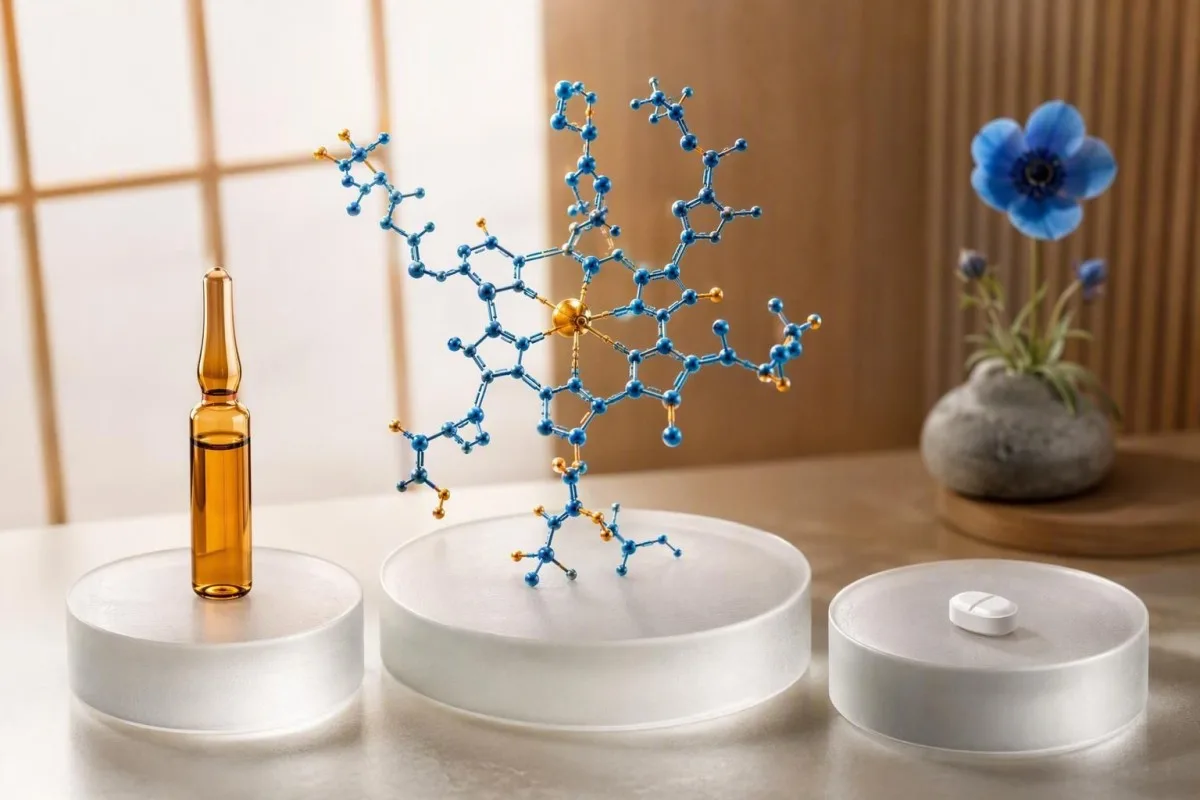
Ynspuiten jouwe in direkte serumpiek, mar B12 yn hege doses oraal genêst de tekoart faak krekt sa effektyf oer wiken. De bepalende faktor is meastal de oarsaak en earnst fan tekoart - net allinich foarkar.


- Snelste serumbelofte: In yntramuskulêre B12-ynspuiting fan 1.000 mikrogram ferheget sirkulearjende B12 binnen oeren, wylst tablets stadiger oer dagen tanimme.
- Ferlykbere ferfanging: Orale cyanocobalamine 1.000-2.000 mikrogram deis kin ferlykbere koarte-termyn bloed- en symptoomútkomsten berikke as yntramuskulêre terapy foar in protte folwoeksenen.
- Yndikaasje foar ynspuiting: Earnstige neurologyske symptomen, djippe anemy, ûnfermogen om tablets te nimmen, of ûnbetroubere absorption rjochtfeardigje meastentiids troch de klinikus liede ynspuitingen.
- Grinsresultaat: Serum B12 ûnder 180 pg/mL (133 pmol/L) wurdt meastentiids as tekoart beskôge; 180-350 pg/mL fereasket faak MMA- of homocysteïne-befêstiging.
- Passyf absorption: Sawat 1% fan in grutte orale B12-dosis wurdt opnommen troch passive diffúsje, dêrom wurket in tablet fan 1.000 mikrogram nettsjinsteande beheinde yntrinsike faktor.
- Timing foar hertest: In CBC en klinyske reaksje binne meastentiids nuttiger op 4-8 wiken dan in B12-nivo dat fuortendaliks nei de behanneling lutsen wurdt.
- Feiligenspunt: Unferklearre bêstens net behannelje mei allinnich folsäure; folaat kin anemia ferbetterje, wylst B12-relatearre nerve-beskeadiging fierder giet.
- Oarsaak is fan belang: Metformine, protonpompremmers, fegetaryske diëten, coeliakie, maachoperaasjes en pernisieuze anemia freegje om ferskate ferfolchplannen.
Hokker opsje ferheget vitamine B12-nivo's flugger?
B12-ynjeksjes ferheegje it mjitten serumnivo rapper dan tabletten, faak binnen oeren, om't se de darm omgean. Foar de measte stabile folwoeksenen mei befêstige tekoart kin in orale dosis fan 1.000-2.000 mikrogram deis lykwols de lichemsfoarrie oanfolje en bloedtellingen oer wiken ferbetterje mei in klinysk ferlykbere taryf.
In ynjeksje skept in skerpe betide pyk, om't hydroxocobalamine of cyanocobalamine direkt yn 'e spieren en dan yn 'e sirkulaasje wurdt levere. Dy laboratoarium-pyk is net itselde as restaurearre weefselfoarrieden of herstelde nervefunksje; yn myn praktyk wurdt herstel fan symptomen mjitten yn wiken oant moannen, net de oare moarns.
De praktyske fergeliking is faak oeren tsjin dagen foar serumnkonsintraasje, mar rûchwei 4-8 wiken foar in betsjuttende hematologyske reaksje mei elke adekwate rûte. Retikulocyten geane faak omheech op dei 3-5, hemoglobine begjint te ferbetterjen nei sawat 1-2 wiken, en makrosytose kin oant 8 wiken duorje om te stabilisearjen.
Kantesti is in AI bloedtestanalysator dat B12 neist MCV, hemoglobine, folaat, kreatinine en eardere resultaten pleatst ynstee fan in B12-spike nei de behanneling te behanneljen as bewiis dat it ûnderlizzende probleem oplost is. Lêzers kinne har resultaat ek ferlykje mei ús B12 referinsjeberik gids.
Wat “flugger” eins betsjut
In heech resultaat nei in ynjeksje befêstiget resinte eksposysje, net needsaaklik adekwate sellulêre levering. Methylmalonyske soer, neurologyske befiningen en de CBC-trend binne ynformatyf as de oarspronklike diagnoaze ûnwis wie.
Hoe't orale B12-absorpsje wurket as yntrinsike faktor leech is
Hege-doasis orale B12 kin wurkje, sels as de opname fan ynternofaktor hinderet, om't in lyts diel troch passive diffuse ynkomt. Ungefear 1% fan in dosis fan 1.000 mikrogram kin passyf opnommen wurde, wat sawat 10 mikrogram oplevert – goed boppe de gemiddelde deistige behoefte fan 2,4 mikrogram foar folwoeksenen.
Normale fiedselbûne B12 moat frijkomme wurde troch maagsoer, binde oan ynternofaktor, en opnommen wurde yn it terminale ileum. Dit meardere-stap-systeem ferklearret wêrom't lange-termyn soerûnderdrukking, autoimmune gastritis, ileum-sykte en bariatryske prosedueres tekoart feroarsaakje kinne; it ferklearret ek wêrom't in standert multivitamine faak in te lytse dosis is foar behanneling.
Orale B12-opname is dose-ôfhinklik, mar net lineêr. It ynternofaktor-paad verzadiget by sawat 1,5-2 mikrogram per miel, wylst passive diffuse pas klinysk nuttich wurdt by tabletten yn 'e milligram-searje. In oanfolling fan 50 mikrogram is foar guon minsken in ridlike previnsje, mar it is net lykweardich oan 1.000 mikrogram foar fêststeld tekoart.
Foar pasjinten dy't omeprazol, pantoprazol of in oare PPI brûke, kontrolearje ik it bredere patroan - dieet, leeftiid, anemia en doer fan gebrûk - ynstee fan derfan út te gean dat it medisyn it hiele ferhaal is. Us resinsje fan lange-termyn PPI laboratoariummonitoring ferklearret wêrom't magnesium en izer ek wichtich wêze kinne.
Wat klinyske proeven sizze oer tablets tsjin ynspuitingen
Randomized bewiis suggerearret dat orale B12 fan 1.000-2.000 mikrogram deisdeis like effektyf wêze kin as yntramuskulêre B12 foar in protte minsken mei tekoart. De bewiisbasis is net enoarm, en it befettet minder pasjinten mei slimme neurologyske sykte dan klinisy graach soene.
De Cochrane-evaluaasje troch Wang en kollega's fûn dat B12 mei hege dosis oraal ferlykbere B12-bloednivo's produsearre as yntramuskulêre behanneling yn “e lytse randomized proeven dy't beskikber wiene (Wang et al., 2018). Ien stúdzje brûkte 2.000 mikrogram oraal deis; in oare brûkte 1.000 mikrogram oraal nei in earste skema, dus ”orale terapy" betsjut net in produkt mei lege dosis út de supermerk.
De eardere proef troch Kuzminski et al. rapportearre gruttere serum B12-konsintraasjes mei 2.000 mikrogram orale cyanocobalamine dan mei in 1.000 mikrogram ynjeksje regimen, mar klinyske útkomsten wiene de fraach dy't der ta die (Kuzminski et al., 1998). It bewiis is earlik mingd oer it ideale protokol, om't proeven ferskate ynjeksje-yntervallen en opfolgingperioaden brûkten.
In tablet wurket allinich as it ynnnommen wurdt. Mistige deistige doses kinne in ynjeksje dy't elke 2-3 moannen jûn wurdt yn it echte libben mear betrouber meitsje, foaral foar swakke folwoeksenen as minsken mei komplekse medisynskema's. Us bloedtest tiidline gids kin helpe om in wiere behannelferoaring te ûnderskieden fan in min timide werretesting.
Wannear't B12-ynspuitingen medysk needsaaklik binne
B12-ynjeksjes binne meastentiids medysk needsaaklik as it tekoart slim is, neurologyske symptomen oanwêzich binne, orale yntak ûnmooglik is, of opname en neilibjen net betroud wurde kinne. Se binne net automatysk ferplichte gewoan om't pernisjeuze anemia wurdt fermoedlik, salang't terapy mei hege dosis oraal en opfolging mooglik binne.
Urgent klinikus-oardiel is passend foar nije gongûngemak, progressive ferdôving, swakte, betizing, fisuele feroaring, markearre bloedarmoed, of swangerskip mei signifikant tekoart. Neurologyske B12-skea kin foar in part ûnomkearber wurde; yn dy situaasje soe ik gjin fertraging hawwe fan parenterale terapy, wylst ik om gemak debatearje.
De NICE-rjochtline NG239 advisearret yntramuskulêre behanneling as malabsorpsje wurdt fermoedlik of befêstige en riedt libbenslange yntramuskulêre ferfanging oan foar auto-immune gastritis yn in protte gefallen (NICE, 2024). Praktyk ferskilt ynternasjonaal: guon klinisy brûke orale 1-2 mg deis by betroubere pasjinten mei pernisjeuze anemia, wylst oaren ynjeksjes foarkomme, om't de gefolgen fan in útfallen heger binne.
Hemoglobine ûnder 80 g/L, symptomatyske sykheljen, takykardie, of mooglike belutsenens fan it rêgemurch fereaskje prompt medyske resinsje ynstee fan selsbehanneling. Om te begripen hoe't bloedarmoedpatroanen ferskine op routine testing, sjoch wat in folslein bloedtelling omfiemet.
B12-tekoart behanneling doseringen dy't klinisy eins brûke
Mienskiplike orale behanneldoseringen binne 1.000-2.000 mikrogram deis, wylst mienskiplike yntramuskulêre regimenen 1.000 mikrogram per dosis brûke mei in earste laden faze. It produkt, nasjonale rjochtline en oarsaak fan tekoart bepale it eksakte skema.
Yn de Britske praktyk wurdt hydroxocobalamine 1.000 mikrogram yntramuskulêr faak trije kear yn 'e wike foar 2 wiken jûn as der gjin neurologyske belutsenens is, dan elke 2-3 moannen foar ûnderhâld; protokollen ferskille per lokale tsjinst. Mei neurologyske tekens wurde earste doseringen faak elke twadde dei jûn oant gjin fierdere ferbettering, dan folget ûnderhâld spesjalistysk advys.
In typysk oraaal plan is cyanocobalamine 1.000 mikrogram deis foar 8-12 wiken, folge troch 1.000 mikrogram deis of in leger ûnderhâldsskema as dieet de ienige oarsaak wie. Sublinguale produkten hawwe net bewiisd better te wurkjen dan slikke tabletten; as se oplost binne, wurdt it measte dochs slikke.
Nim gjin ymprowisearre laden regimen fan advys fan sosjale media. De fergeliking fan metilearre B12 tsjin cyanocobalamine ferklearret wêrom't de dosis en konsistinsje meastal mear útmakket as marketing-easken oer de B12-foarm.
Hoe't in lege of grinsresultaat fan B12 te ynterpretearjen
Serum B12 ûnder 180 pg/mL (133 pmol/L) stipet meastentiids tekoart, wylst wearden fan sa'n 180-350 pg/mL in ûndúdlike sône binne wêryn MMA of homocysteïne sellulêre tekoart ferdúdlikje kinne. Yndividuele laboratoariumyntervallen ferskille, en in normale serumwearde slút tekoart nei resinte oanfolling net folslein út.
Metylmalonysûr stjiget as B12-ôfhinklike metabolisme hindere wurdt, mar in fermindere nierfunksje kin MMA selsstannich ferheegje. Homosystein kin omheech gean mei B12-tekoart, folaat-tekoart, fitamine B6-tekoart, hypothyroïdy en nierfunksje, dus gjin fan beide befêstigjende tests moatte allinnich lêzen wurde.
Makrosytose is stypjend mar net ferplichte. In gemiddeld corpusculêr folume boppe 100 fL fergruttet it fertinking fan B12- of folaat-tekoart, alkoholgebrûk, leversykte, hypothyroïdy, marzgrinneringen of medikaasje-effekten; sawat in fearn fan symptomatyske B12-defisjinte pasjinten kinne in normale MCV hawwe.
Kantesti AI ynterpretearret B12-resultaten troch te kontrolearjen patroan fan MCV, RDW, hemoglobine, folaat en histoaryske wearden, ynklusyf oanwizings dat in folaat-supplement makrosytose ferbergje kin. Us artikel oer hege MCV opfolging behannelet de gewoane alternativen.
Pernisjeuse anemy feroaret it lange termynplan, net altyd de rûte
Pernisjeus anemy is auto-immune ferlies fan intrinsike faktor-funksje, en it fereasket libbenslange B12-ferfanging nei diagnoaze. Ynjekjes biede betroubere levering, mar hege-dosis orale terapy kin noch altyd adekwate status behâlde yn selektearre, nau folge folwoeksenen.
De meast brûkte tests binne intrinsike-faktor antykladen en parietale-sel antykladen, neist B12, CBC en soms gastrine. In posityf intrinsike-faktor antymiddel is tige spesifyk mar net tige gefoelich, dus in negatyf resultaat slút de betingst net út; dit is ien fan dy gebieten dêr't kontekst wichtiger is as in inkeld antylichem.
Pernisjeus anemy is mear dan in absorpsjeprobleem. Auto-immune gastritis kin tegearre foarkomme mei izertekoart foardat B12-tekoart dúdlik wurdt, en langstannich sykte draacht gastryske surveillance-oanwizings dy't besprutsen wurde moatte mei de behanneljende klinikus. Us gids foar pernisjeus anemy testing detaillet de diagnostyske folchoarder.
Kantesti is in AI bloedtest-útslachplatfoarm brûkt yn 127+ lannen, mar in AI-ynterpretaasje kin gjin auto-immune gastritis diagnostisearje of in libbenslange ynjeksje-ynterval selektearje. In klinikus moat symptomen, antykladen, endoskopyske skiednis en it laboratoariumpatroan ferbine.
Wêrom neurologyske symptomen flugger klinysk yngripen nedich hawwe
Tinteljen, ferlies fan vibrasje-sin, ûnfeilich rinne, kognityf feroaring of swakte mei lege B12 moat prompt persoanlike beoardieling en meast ynjeksjebehanneling triggerje. Nerve-herstel is minder foarsisber as anemy-herstel en kin ûnfolslein bliuwe nei moannen fan tekoart.
De dorsale kolommen en perifere nerven binne kwetsber foar B12-tekoart, wat in patroan produsearret dat klinisy subacute kombinearre degeneraasje neame yn avansearre gefallen. In normale hemoglobine beskermet hjir net tsjin; Ik haw pasjinten sjoen waans sêfte fuotten en anormale vibrasje-sin foarôfgeand oan dúdlike anemy kamen.
Ferbettering begjint faak binnen 1 wike fan effektive terapy, mar sensoryske symptomen kinne 3-12 moannen duorje en moatte miskien net folslein oplost wurde. De feilichste oanpak is om baseline funksje te registrearjen—rinfetens, fallen, hânfeardigens, vibrasje-sin—om't in stiging fan serum B12 allinnich gjin herstelskoare is.
Neuropaty hat ek in protte mimics, ynklusyf diabetes, alkohol-relatearre nerve-blessuere, skildklier sykte, tefolle fitamine B6 en guon medisinen. Pasjinten mei tinteljen kinne ús fitamine B6 nerve-symptoomgids brûke om bettere fragen te meitsjen, mar progressive swakte hat no medyske soarch nedich.
Wannear't tablets meastentiids genôch binne foar dieet B12-tekoart
Tabletten binne meastentiids genôch as lege B12-resultaten fan ûnfoldwaande ynname komme en de darm supplementen opnimme kin. Feganen, minsken dy't tige lyts iten fan dierlike boarne ite, en folwoeksenen mei tydlike dieetbeperking reagearje faak goed op orale cyanocobalamine 1.000 mikrogram deis.
Fitamine B12 is natuerlik konsintrearre yn dierprodukten en fersterke fiedings, dus in strikt fegane dieet hat in betroubere fersterke fiedsel- of supplementstrategy nedich. Planteniten ferkocht as natuerlike B12-boarnen binne ûnkonsekwint; seewier en fermentearre fiedings kinne ynaktive analogons befetsje dy't gjin betroubere behanneling binne.
Dieetkrapte moat noch altyd oanlieding jaan ta in koarte anamnese. In 23-jierrige feganist mei B12 fan 142 pg/mL, normale MMA nei behanneling en gjin darmklachten ferskilt fan in 68-jierrige mei itselde resultaat, gewichtsverlies en izertekoart. Leeftyd, medisinen en gastrointestinale symptomen feroarje de wurkwize.
Foar itenplanning, ús wetteroplosbere fitaaminguide skiedt previnsjedoses fan tekoartbehanneling. Nim net oan dat fieding allinich neurologyske symptomen hurd genôch korrigearret.
Medisinen en darmomstannichheden dy't de B12-behannelingskeuze feroarje
Metformine, soerûnderdrukkende medisinen, coeliakie, Crohn's sykte dy't it ileum beynfloedet, pankoätyske ynSuffisjinsje en maagchirurgie kinne allegear B12-beskikberens ferminderje. In tabletproef kin yn guon gefallen ridlik wêze, mar ynjeksjes wurde faak keazen as de opname ûnbedoeld is of symptomen signifikant binne.
Metformine-assosjeare B12-tekoart is sa gewoan dat regeljouwers advisearje om nivo's te kontrolearjen by pasjinten mei neuropaty, bloedarmoede of oare risikofaktoaren, benammen by hegere doses of mei lange duorje. It meganisme belûkt wierskynlik kalsium-ôfhinklike opname fan it B12-intrinsic factor kompleks yn it ileum, net gewoan min dieet.
Nei sleeve gastrektomy of gastric bypass, moatte behannelbeslissingen it protokol fan it bariatryske team folgje, om't izer, folaat, tiamine, fitaamine D en koper tegearre beynfloede wurde kinne. Diarree, lege albumine, ûnferklearber gewichtsverlies of fettere stoelgong moatte ûndersyk oproppe ynstee fan einleaze supplementwizigingen.
Leech koper kin ek bloedarmoede en neurologyske symptomen feroarsaakje dy't lykje op B12-tekoart, benammen nei bariatryske sjirurgy of oermjittich sink. Us lege koper klinyske oanwizings ferklearje wêrom't allinich B12 kontrolearje de echte ferklearring misse kin.
Hoe gau wer te testen nei B12-behanneling
In CBC en symptoomreview omtrint 4-8 wiken binne oer it algemien nuttiger as it fuortendaliks werheljen fan serum B12 nei in ynjeksje of tabletkursus. In heech B12-resultaat koart nei behanneling wjerspegelet benammen de nommen dosis.
In retikulocyt-reaksje om dei 3-5 hinne biedt in iere oanwizing dat de margsproduksje herstelt, wylst hemoglobine yn 'e folgjende wiken stige moat as B12-tekoart in wichtige driuwfear wie. Gebrek oan ferbettering moat it differinsjaaldiagnose wer iepenje: izertekoart, oanhâldend bloedferlies, folaattekort, ûntstekking, nier sykte of in ferkearde diagnoaze.
Foar in ûnbelêste dieetdefizit kontrolearje ik faak CBC en B12 op 8-12 wiken opnij, en befêstigje dan in duorsum ûnderhâldsplan. Foar neurologyske sykte, autoimmune gastritys, swangerskip, nierfunksjefermindering of meardere tekoarten, moat de opfolging yndividualisearre wurde en begjint faak earder.
Kantesti’s AI-oandreaune ark foar analyse fan bloedtests kin sekwinsjele B12, MCV, RDW en hemoglobine resultaten fergelykje ynstee fan elke tekening as in loskeppele barren te werjaan. De side-by-side lab fergelikingsgids toant wat te registrearjen tusken tests.
Wêrom in heech B12-resultaat nei behanneling net altyd gerêststellend is
In heech B12-nivo nei in ynjeksje of tablet mei hege dosis wjerspegelet faak oanfolling en bewiist net dat symptomen in oare oarsaak hawwe. Oan de oare kant, ûnferklearbere oanhâldende B12-ferheging sûnder oanfollingen fertsjinnet klinyske resinsje, benammen as lever-, nier- of bloedtellingabnormaliteiten tegearre foarkomme.
Serum B12 kin de laboratoariumboppegrins fan sawat 900-1.000 pg/mL oertreffen nei behanneling, ôfhinklik fan assay en timing. Dit is ferwachte en meastentiids net giftich; B12 hat gjin fêste tolerabel boppeste ynname nivo yn sûne folwoeksenen, om't oerskot foar in grut part útskiedt wurdt, hoewol't akne-like útslach foarkomt by in lyts minderheid.
De fraach dy't ik stel is ienfâldich: waard it stekproef lutsen nei in supplement, ynjeksje, multivitamine, enerzjydrank of fersterke produkt? As net, kin ferhege B12 lever sykte, fermindere nier klaring, ûntstekking of bepaalde hematologyske omstannichheden begeliede, en it hat kontekst nedich ynstee fan alarm.
Ús hege fitaamine B12 gids leit it ûnderskie tusken ferwachte oanfolling-relatearre ferheging en in ûnferklearbere laboratoariumwizers út.
Mienskiplike B12-behannelingsflater dy't herstel fertrage
De meast gefolchrike flater is it nimmen fan allinnich folsäure as B12-tekoart net útsletten is. Folsäure kin bloedearmoed normalisearje, wylst B12-relatearre nerve-ynjursje foarútgiet, benammen as doses de gewoane dieetbereik te boppe geane.
Brûk symptomen net allinnich om te besluten tusken ynjeksjes en tabletten. Wurgens, harsensbefal en lege stimming binne echt, mar net-spesifyk; sliepleazens, skyldrêd, izertekoart, depresje, diabetes en medisyn-effekten kinne ferlykbere klachten feroarsaakje. In B12-resultaat tichtby 250 pg/mL rjochtfeardiget faker befêstiging dan in automatyske ynjeksje.
In oare flater is it útstellen fan in test oant nei it begjinnen fan oanfollingen as it mooglik is. Sels 50-500 mikrogram deis kinne serum B12 genôch ferskowe om diagnoaze te komplisearjen, hoewol urginte neurologyske symptomen altyd earst behannele wurde moatte. De hege folate en ferburgen B12-kwestje is benammen relevant foar minsken dy'tprenatale of enerzjy-oanfollingen nimme.
Fanôf 27 augustus 2026 is myn advys as Dr. Thomas Klein om de minste belêstende rûte te kiezen dy't medysk betrouber is, en dan herstel te ferifiearjen mei symptomen en trends. Ynjektyf behanneling is poerbêste medisinen as it oanjûn is; it is net ynherint sterker medisinen foar elk leech resultaat.
In praktysk beslútkader foar B12-ynspuitingen of tablets
Kies ynjeksjes as it risiko heech is of de orale betrouberens leech is; kies hege-dose tabletten as it tekoart mild-oant-matig is, ynname it wichtichste probleem is en opfolging betrouber is. De bêste rûte is dejinge dy't it tekoart korrigearret sûnder it ûndersyk fan de oarsaak út te stellen.
Tabletten passe it bêste as B12 leech is fanwegen dieet, d'r binne gjin neurologyske tekens, slikjen is feilich en de persoan kin 1.000-2.000 mikrogram deis konsekwint nimme. Yn jeksjes passe it bêste mei neurologyske fynsten, earnstige symptomatyske bloedearmoed, braken, slimme malabsorpsje, postoperaasje anatomy of ûnwisse neilibjen.
Bring fjouwer dingen nei de ôfspraak: it orizjinele B12-resultaat mei ienheden, in CBC, elke oanfolling en medisyn-dosering, en in symptoomtiidline. De klinyske regel fan Dr. Thomas Klein is dat de oarsaak neamd wurde moat foardat it ûnderhâld ûnbepaald makke wurdt wannear't dat feilich dien wurde kin.
Kantesti AI is in AI lab test-ynterpretaasjetsjinst ûntwurpen om laboratoariumkontekst te organisearjen foar pasjinten en dokters, wylst de definitive diagnoaze en foarskriuwing klinyske beslissingen bliuwe. Us Medyske Advysried en oanpak foar klinyske falidaasje beskriuwe it medyske tafersjoch efter dy grins.
Faak stelde fragen
Wurkje B12-ynjeksjes rapper as tabletten?
B12-ynjeksjes ferheegje it serum B12 rapper as tabletten, om't in yntramuskulêre dosis fan 1.000 mikrogram de darmabsorpsje omzeilt en de sirkulearjende nivo's binnen oeren ferheegje kin. Oral B12 mei hege doses, meastentiids 1.000-2.000 mikrogram deis, kin defizit noch effektyf korrigearje oer ferskate wiken by in protte folwoeksenen. De betsjuttende einpunten binne it ferbetterjen fan symptomen, retikulocyten op dei 3-5 en CBC-herstel sawat 4-8 wiken, net allinich de direkte serumpeak. Ynjeksjes hawwe de foarkar by neurologyske symptomen, slimme bloedearmoed of ûnbetroubere absorpsje.
Kin de mûnling B12 wurkje as ik pernisjeuze anemy haw?
Hege orale doses fan B12 kinne by guon minsken mei pernisjeus bloedearmoed wurkje, om't sawat 1% fan in grutte doasis opnomd wurdt troch passive diffúsje sûnder intrinsike faktor. In deistige orale doasis fan 1.000-2.000 mikrogram kin dêrom 10-20 mikrogram B12 leverje, wat de 2,4 mikrogram folwoeksen deistige eask grutter is. NICE-begelieding stipet faak libbenslange yntramuskulêre ferfanging foar auto-ymmun gastritis, foaral as de betrouberens ûnwis is. De rûte moat wurde ôfpraat mei de klinikus dy't de diagnoaze beheart en wurde folge mei symptomen en in CBC.
Ho folle B12-tabletten lykje op ien ynjeksje?
Der is gjin krekte omsetting fan tablet nei ynjeksje, om't ynjeksjes hast folsleine systemyske beskikberens produsearje, wylst orale opname dose-ôfhinklik en foar in part saturearber is. In ynjeksje fan 1.000 mikrogram en 1.000-2.000 mikrogram mûnling deis binne beide gewoane behannelingsdosen, mar se binne net farmakologysk útwikselber op in dosis-foar-dosis basis. Rûchwei 1% fan in mûnlike dosis fan 1.000 mikrogram kin troch passive diffúsje ynkomme, wylst ekstra opname plakfynt fia intrinsic factor as dy wei wurket. Behandelingrespons en de oarsaak fan tekoart moatte elke feroaring begeliede.
Hoe lang duorret it foardat B12-ynjeksjes ferbetterje fan wurgens?
B12-ynjekten kinne it enerzjynivo ferbetterje binnen dagen oant in pear wiken as in tekoart de wiere oarsaak fan wurgens is, mar de tiidline ferskilt bot. Retikulocyteproduksje stiet faak op dei 3-5, hemoglobine begjint mienskiplik te stigen nei 1-2 wiken, en folsleine korreksje fan makrosytose kin oant 8 wiken duorje. Numbness, lykwichtproblemen en kognitive symptomen duorje faak 3-12 moannen en kinne ûnfolslein wêze as it tekoart lang duorre hat. Oanhâldende wurgens nei in normalisearjende CBC moat liede ta in ûndersyk nei izertekoart, skildklier sykte, sliepproblemen en oare oarsaken.
Moatte ik B12-tabletten nimme foar in bloedtest?
As it wurdt pland om ûnferklearbere B12-tekoart te diagnostearjen en jo binne klinysk stabyl, moatte jo gjin supplementen begjinne foardat it stekproef is sammele, om't sels 50-500 mikrogram deis serum B12 kinne feroarje. D'r is gjin universele útspraakinterval, om't laboratoaren en doses ferskille, dus freegje de klinikus of it laboratoarium om har tariedingsadvys. Stel de behanneling net út om in perfekte baseline te krijen as jo neurologyske symptomen, slimme bloedearmoed, soargen yn ferbân mei swangerskip of signifikante klinyske deterioration hawwe. Dokumintearje de dosis en startdatum, sadat it resultaat korrekt ynterpretearre wurde kin.
Is in B12-nivo fan 200 pg/mL leechich genôch foar ynjeksjes?
In B12-nivo fan 200 pg/mL is grinzend oan. It bepaalt op himsels net oft ynjeksjes nedich binne. In protte laboratoariums beskôgje wearden ûnder 180 pg/mL dúdlik tekoart, wylst wearden fan sawat 180-350 pg/mL miskien gemetylmalonsyre, homocysteïne, CBC-befinings en symptoomynterview nedich hawwe. Injeksjes binne ridlik op 200 pg/mL as neurologyske symptomen, bloedearmoed, malabsorpsje, swangerskip of ûnfermogen om mûnlike terapy te nimmen oanwêzich is. In stabile persoan mei dieetrisiko en gjin neurologyske befinings kin goed reagearje op 1.000-2.000 mikrogram mûnlike B12 deistich mei plande opfolging.
Krij hjoed noch AI-oandreaune bloedtest-analyse
Doch mei oan mear as 2 miljoen brûkers wrâldwiid dy’t Kantesti fertrouwe foar direkte, krekte analyse fan laboratoariumtests. Upload jo bloedtest resultaten en ûntfange wiidweidige ynterpretaasje fan 15,000+-biomarkers yn sekonden.
📚 Ferwiisde ûndersykspublikaasjes
Klein, T., Mitchell, S., & Weber, H. (2026). Kantesti LTD. (2026). In Pre-Registered, Rubric-Based Automated Technical Benchmark fan de Kantesti Blood-Test Interpretation Engine op 100,000 syntetyske testgefallen. Figshare.. Kantesti AI Medysk Undersyk.
Klein, T., Mitchell, S., & Weber, H. (2026). Kantesti B.V. (2026). Klinysk Falidaasjekader v2.0 (Medysk Falidaasjepagina). Zenodo.. Kantesti AI Medysk Undersyk.
📖 Eksterne medyske referinsjes
NICE (2024). Tekoart oan fitamine B12 by mear as 16-jierrigen: diagnoaze en behear. NICE Guideline NG239.
⚕️ Medyske disclaimer
Dit artikel is allinnich foar ûnderwiisdoelen en foarmet gjin medysk advys. Rieplachtsje altyd in kwalifisearre soarchferliener foar besluten oer diagnoaze en behanneling.
E-E-A-T fertrouwensignalen
Ûnderfining
Dokter-oandreaune klinyske resinsje fan lab-ynterpretaasje-wurkprosessen.
Ekspertize
Fokus fan laboratoariummedisyne op hoe’t biomarkers har gedrage yn in klinyske kontekst.
Autoriteit
Skreaun troch dr. Thomas Klein mei resinsje troch dr. Sarah Mitchell en prof. dr. Hans Weber.
Betrouberens
Bewiis-basearre ynterpretaasje mei dúdlike ferfolchpaadkes om alarm te ferminderjen.