Garapen goiztiarrak ez du beti esan nahi pubertaroko prozesu osoa aktibatu denik. Aldaketen sekuentzia, hazkunde-erritmoa eta laborategiko metodoa askotan hormona-emaitza bakarra baino garrantzitsuagoak dira.


- Adin-atalaseak: Nesketan 8 urte bete aurretik edo mutiletan 9 urte bete aurretik pubertaro-garapena izanez gero, ebaluazio klinikoa egin behar da; ilea edo gorputz-usaina bakarrik agertzea ez da automatikoki pubertaro zentrala.
- LH basala: 0,3 IU/L inguruko edo hortik gorako ultrasentikortasuneko LH emaitzak pubertaro zentrala babestu dezake, baina laborategiko saiakuntzak eta azterketa klinikoak zehazten dute haren esanahia.
- LH baxua: 0,3 IU/L-tik beherako LH basalak ez du pubertaro zentral goiztiarra baztertzen, hormonen jariapena pultsukakoa baita hasieran eta askotan loaldian izaten baitu gailurra.
- Estimulazio-probak: GnRH edo GnRH agonistaren bidezko estimulazio-probak garapen progresiboa argitzen lagun dezake, emaitza basala ez-erabakigarria denean.
- LH estimulatua: Protokolo askotan, 5 IU/L inguruko gailurra ebidentzia babesgarritzat hartzen da, baina atalase hori ezin da berdin aplikatu farmako, saiakuntza edo laginketa-egutegi guztietan.
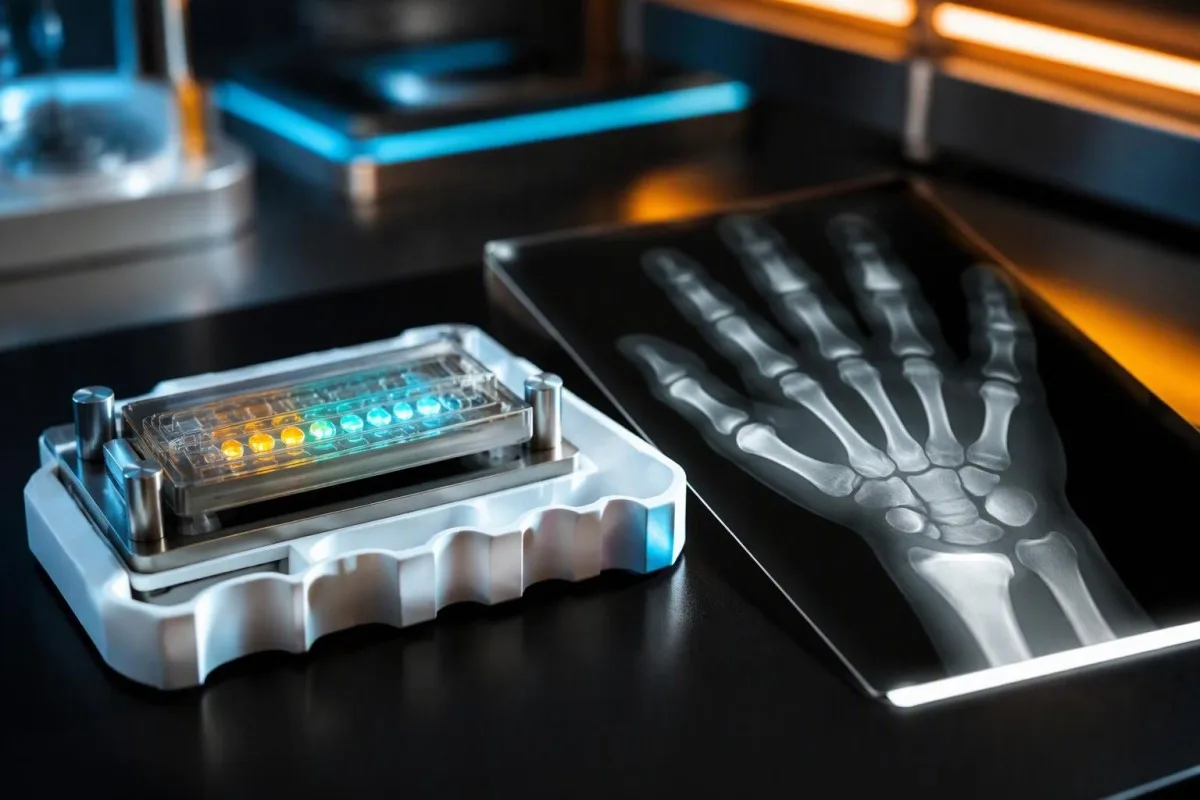
- Hezur-adina: Ezkerreko eskuaren eta eskumuturraren erradiografia batek hezur-heldutasuna kalkulatzen du; 2 urte baino gehiagoko aurrerapenak kezka areagotzen du, baina ez du pubertaro zentrala frogatzen.
- Jarraipena: 3–6 hilabeteren buruan aurreikusitako berrikuspen batek aldaketa isolatu egonkorrak pubertaro progresibotik bereiz ditzake, premiazko alarma-zeinurik ez dagoenean.
- Sintoma premiazkoak: Garapen goiztiarrak, buruko min larria, ikusmen-aldaketa, krisia, baginako odoljario handia edo barrabileko min akutua lagun baditu, mediku-ebaluazio azkarra behar da.
Noiz behar du garapen goiztiarrak odol-analisia?
A pubertaro goiztiarraren odol-analisia lagungarria da nesketan 8 urte bete aurreko bular-garapena edo mutiletan 9 urte bete aurreko barrabilen handitzea ebaluatzeko. Klinikariek LH, FSH eta sexu-hormonen emaitza hautatuak azterketarekin, hazkunde-erregistroekin eta, askotan, hezur-adinarekin batera interpretatzen dituzte; oinarrizko LH baxuak ez du pubertaro zentral goiztiarra baztertzen.
Lehen bereizketa da garunak eragindako pubertaro-bidea aktibatu den ala aldaketa goiztiar bakarra agertu den. Pubertaro goiztiar zentrala garapen-sekuentzia progresiboa eragin ohi du; gorputz-usain isolatua, pubiseko ilea edo bular-ehun egonkorra bestelako bilakaerarekin lotuta egon daitezke, baita 8 edo 9 urteko mugaren aurretik antzematen direnean ere.
Urtebetetze-eguna kontsulta egiteko gida da, ez aldaketa biologiko bat: 7 urte eta 11 hilabeterekin hastea eta 8 urte eta hilabete batekin hastea antzeko arretaren beharra izan dezakete, garapena azkarra bada. American Academy of Pediatrics-en txostenak 4–6 hilabetean zeharreko progresioa eta hazkunde azeleratua aipatzen ditu espezialista baten ebaluaziorako arrazoi gisa (Kaplowitz and Bloch, 2016).
Kantesti bat da. AI odol-analisi analizatzailea jakinarazitako LH eta FSH balioak azaltzen lagun dezake, baina AI bidezko emaitzak ezin du ordezkatu 8 edo 9 urte bete aurretik behar den azterketa. Gure erakundea eta betebehar klinikoa honen ondoan irakurri behar da: pediatriako interpretazioaren mugak, bereziki itxuraz lasaigarria den emaitza bat ikus daitekeen progresioarekin bat ez datorrenean.
Pubertaroko zein zantzu goiztiarrek iradokitzen dute pubertaro zentrala?
Nesketan bular-garapen progresiboa eta mutiletan barrabilen aldebiko handitzea pubertaro zentralaren zantzu sendoagoak dira ilea edo usaina bakarrik baino. 8 edo 9 urte bete aurretik pubiseko ilea agertzea giltzurrun gaineko guruinen jarduera hormonalaren ondorio izan daiteke, garunaren eta hipofisiaren pubertaro-bidea aktibatu gabe.
Thelarche goiztiarra bular-garapen goiztiar isolatua da, askotan hazkunde azkarragorik edo estrogenoaren bestelako ondoriorik gabe. Asimetrikoa izan daiteke eta gorabeherak izan ditzake, bereziki haur oso txikietan; 3 urte bete ondoren lehen aldiz agertzen den bular-ehunaren bilakaerari erreparatu behar zaio, aldaketa isolatu oro bere kabuz desagertuko dela suposatu beharrean.
Adrenarche goiztiarra pubiseko edo besapeko ilea, usaina eta akne arina eragin ditzake, giltzurrun gaineko guruinek androgeno gehiago sortzen dituztelako. 9 urtetik beherako mutiko batean, barrabil txikiekin batera agertzen den ileak ohiko sekuentzia zentralaren aurkakoa adierazten du; zakilaren hazkunde azkarrak, ahotsa loditzeak edo birilizazio nabarmenak, hala ere, androgeno gehiegizko esposizioa edo ekoizpena ikertzea eskatzen dute.
Sekuentziak garrantzi handiagoa du elkarren artean loturarik ez duten hormona-zenbakiak biltzeak baino. Helduen hilekoaren zikloko arauak ezin zaizkio aplikatu bular-kimu bat duen 6 urteko haur bati, eta nerabeen ereduak bestelakoak dira berriro; gure nerabeentzako hormona-azterketen gidak azaltzen du zergatik hartu behar den garapen-etapa kontuan laborategiko emaitzekin batera, aukerako xehetasun gisa tratatu beharrean.
Zergatik aztertzen dira lehenik hazkunde-kurbak eta azterketa klinikoa?
Hazkundearen azelerazioa eta garapenaren progresioa help determine whether early signs represent active puberty. A clinician checks height velocity, Tanner stage and, in boys, testicular size; bilateral testicular volume around 4 mL or greater generally marks pubertal onset, although measurement methods differ.
Many school-age children grow roughly 5–6 cm per year before puberty, although age and individual patterns matter. A sustained rise toward 7–8 cm per year, especially with upward crossing of height percentiles, can strengthen suspicion of puberty; two measurements separated by only a few weeks are too vulnerable to measurement error.
Consider a hypothetical 7-year-old whose LH is 0.08 IU/L but whose breast development has progressed and whose measured growth has accelerated over 6 months. I would not let the low LH close the case: those findings create a reason to repeat an appropriate morning measurement, obtain bone age or arrange stimulation testing.
Accurate height records are worth bringing from school, primary care and previous specialist visits, ideally covering 12–24 months. Puberty can make a child temporarily tall while reducing remaining growth potential; that differs from the problems discussed in our childhood growth hormone guide, where poor linear growth often drives the investigation.
Zer neurtzen du pubertaro goiztiarraren hasierako odol-analisiak?
The initial panel usually includes ultrasensitive LH and FSH, with estradiol in girls or testosterone in boys when clinically useful. Additional tests depend on the signs: a child under 8 or 9 with hair alone needs a different investigation from a child with progressive gonadal development.
LH provides evidence about pituitary activation, while FSH is less specific because prepubertal and early-pubertal values overlap. A single LH-to-FSH ratio cannot establish the diagnosis in a 7-year-old; the adult applications described in our LH and FSH comparison should not be used as pediatric diagnostic rules.
Estradiol may remain very low or fluctuate despite genuine early breast development, and routine assays can struggle near their lower detection limits. Testosterone is often more informative in boys, but a value such as 30 ng/dL must still be interpreted against age, examination and assay method rather than a reference interval intended for a 30-year-old.
Broad screening creates noise when the clinical question is narrow. Thyroid tests, adrenal androgens, 17-hydroxyprogesterone or hCG may be appropriate for selected findings, not automatically for every child; our hormonal physiology reference provides background while reinforcing that pediatric thresholds are distinct from adult reproductive ranges.
Zergatik izan daiteke LH basala baxua pubertaro goiztiarrean?
A low basal LH does not rule out early central precocious puberty. Early LH secretion is intermittent and initially more prominent during sleep, so a daytime sample can miss activation; a result of 0.08 IU/L may be inconclusive rather than definitively negative.
A basal sample is one frame from a moving film. In early puberty, the pituitary may release LH in pulses that leave a quiet interval between them; an early-morning sample can be more informative than a late-afternoon sample, but even a carefully timed result below 0.3 IU/L cannot overrule convincing progression.
The assay can hide the signal too. A report reading '<0.2 IU/L' does not tell you whether the underlying value is 0.01 or 0.19 IU/L, and those possibilities are not analytically identical; ask whether the laboratory uses a pediatric-sensitive LH method and whether its stated lower limit is detection or reliable quantification.
Kantesti bat da. AI odol-analisien interpretazio-plataforma that can explain why an LH below 0.3 IU/L is not a stand-alone exclusion result. Our barrutitik kanpoko emaitzaren gida addresses the opposite misconception as well: a result inside a printed interval can still require follow-up when the interval does not match the child's developmental stage.
Zein LH basalaren ebaketa-puntuk babesten du pubertaro zentralaren diagnostikoa?
A basal LH around 0.3 IU/L or higher supports central puberty on some ultrasensitive assays, but there is no single cutoff that applies to every laboratory. Lower thresholds may detect more early cases while creating more overlap with children who do not have progressive central puberty.
Cutoffs balance sensitivity and specificity, not normality and danger. A threshold of 0.3 IU/L is used because sustained LH becomes more detectable as pituitary activation develops; it is not a toxicity boundary, an emergency threshold or a number that independently determines whether treatment should start.
Units deserve a quick check before interpretation: 1 IU/L equals 1 mIU/mL, so those two LH expressions have the same numerical value. By contrast, a report containing only 'negative' or '<0.1' carries less information than an exact quantified result; our gida kualitatiboa vs. kuantitatiboa bereizketa hori azaltzen du.
When I interpret an LH of 0.24 IU/L, I would ask about the assay, sampling time and 3–6-month developmental trajectory before calling it reassuring or concerning. The 2022 Korean clinical guideline discusses assay-dependent basal thresholds and cautions about reduced LH responses in children with obesity (Kim et al., 2023); body size should modify interpretation, not become a reason to dismiss progressive development.
Noiz da lagungarria GnRH estimulazio-proba?
A GnRH stimulation test helps when early development is progressing but basal LH is low or ambiguous. The test measures pituitary hormone responses after GnRH or a GnRH agonist; it is particularly useful when a child under 8 or 9 has examination findings that disagree with the initial laboratory result.
Stimulation asks whether the pituitary is ready to respond in a pubertal pattern, rather than waiting for a spontaneous LH pulse. The 2022 Korean guideline recommends interpreting stimulated LH alongside Tanner stage, growth velocity and bone age, rather than treating the response as an isolated diagnosis (Kim et al., 2023).
The protocol matters. Depending on the agent and local method, samples may be collected at baseline and several points over roughly 30–120 minutes, while some agonist protocols add later measurements; a value at 30 minutes cannot automatically be compared with a peak obtained using a different drug or a later collection schedule.
This is a specialist-supervised test, not a challenge to reproduce at home, and medication doses are determined by the local pediatric protocol. Preparation instructions can differ from an ordinary laboratory visit; our first sample preparation guide is useful background, but the testing unit's instructions take priority for fasting, medicines and appointment length.
Nola interpretatzen dira LH estimulatuaren emaitzak?
A stimulated LH peak around 5 IU/L or higher supports central puberty in many protocols, including the cited Korean guideline. The exact threshold depends on the stimulation agent, assay and sampling schedule; a lower response does not necessarily settle the question when development continues to progress.
A peak of 4.8 IU/L and a peak of 5.2 IU/L are not biologically opposite states. Near a protocol's decision limit, analytical variation, missed peak timing and clinical trajectory become especially relevant; clinicians may review the entire LH and FSH response rather than assigning certainty to the final decimal place.
FSH-predominant responses can occur with isolated thelarche, but response ratios overlap and their interpretation varies by age and protocol. In girls under 3, developmental physiology can complicate stimulation results further; a pubertal-looking laboratory response requires correlation with sustained progression, estrogen effects and growth rather than automatic treatment.
Children with obesity may have lower stimulated LH responses, especially early in development, so an apparently subthreshold peak needs thoughtful interpretation. Repeating a test with another assay introduces another variable; our between-visit result comparison explains why a change over 3 months is easier to assess when the laboratory method and sampling conditions are documented.
Zer gehitzen dio hezur-adinak pubertaroaren azterketari?
Bone age estimates skeletal maturity from a left-hand and wrist radiograph. Advancement of more than 2 years can strengthen concern about sustained hormone exposure, but bone age alone cannot distinguish central puberty from adrenal androgen effects, obesity or other causes of accelerated skeletal maturation.
A bone age of 10 in an 8-year-old means the hand's maturation resembles the reference pattern for an older child; it does not mean every aspect of development has advanced by 2 years. Greulich–Pyle and Tanner–Whitehouse methods approach the estimate differently, and reader variation should be considered before small changes are treated as progression.
An advanced bone age can indicate less remaining growth despite an impressive current height. Predicted adult-height calculations depend on assumptions that may not hold during rapidly progressing puberty, so a single estimate should not be presented as a guaranteed outcome; serial growth over 6–12 months often gives the prediction more clinical meaning.
A normal bone age does not exclude very early central puberty because skeletal change may lag behind the first signs. Likewise, IGF-1 can rise with pubertal maturation without implying a separate growth-hormone disorder; our age-specific IGF-1 interpretation explains why chronological age, developmental stage and the laboratory's reference population must be considered together.
Noiz iradokitzen dute emaitzek hormonen ekoizpen periferikoa?
Sex-hormone effects with persistently suppressed LH can suggest peripheral hormone production or exposure rather than central puberty. In a child under 8 or 9, the evaluation may include adrenal disorders, functional ovarian cysts, hCG-related conditions, severe hypothyroidism or contact with another person's hormone medication.
Rapid pubic-hair development, acne and virilization may justify morning 17-hydroxyprogesterone testing for congenital adrenal hyperplasia. A screening value around 200 ng/dL, equivalent to 2 ng/mL, is commonly used to consider further assessment for nonclassic disease, but age, assay and symptoms matter; our 17-hydroxyprogesterone testing guide explains why confirmation may require an ACTH stimulation test.
Severe primary hypothyroidism is an unusual but useful exception: apparent pubertal development can occur with slow growth and delayed bone age, rather than the acceleration expected in ordinary central puberty. A 7-year-old with this combination needs TSH and free T4 assessment; our tiroxinari eta TSHri buruzko azalpenak provides the relevant laboratory background.
Ask specifically about testosterone gels, estrogen creams and hormone-containing supplements used by household members, including accidental transfer through contact. DHEA-S can help identify an adrenal contribution, but an adult androgen interval cannot classify a 6-year-old; our DHEA-S vs. DHEA gida explains the different information these measurements provide.
Nork behar ditu MRIa, ekografia edo azterketa genetikoak?
Brain MRI is generally recommended for boys with confirmed central precocious puberty, girls with onset before age 6, and children with neurological symptoms. For girls aged 6–8 without neurological findings, imaging decisions are individualized because the likelihood of a relevant intracranial cause is lower.
Early puberty with headache or visual change requires a different level of attention from isolated odor in an otherwise well 7-year-old. Carel and Léger's clinical review describes the importance of identifying central nervous system causes, particularly in boys and younger girls (Carel and Léger, 2008); our neurological warning signs guide helps families recognize symptoms without assuming that early puberty usually means a brain growth.
Pelvic ultrasound may support assessment in girls, especially when bleeding, a mass or a peripheral estrogen source is suspected, but size measurements overlap between developmental stages. In a girl aged 6–8, uterine or ovarian measurements cannot replace the examination and hormone pattern; in boys, asymmetry or a palpable testicular abnormality may prompt targeted ultrasound.
Family history can guide testing for causes such as MKRN3-related central puberty, but genetic testing is not routine for every child before age 8 or 9. Kantesti AI can explain laboratory terminology, not read an MRI or establish a genetic diagnosis; our AI teknologiaren gida describes a different task from pediatric endocrine imaging and examination.
Noiz da nahikoa jarraipena, eta noiz hartzen da tratamendua kontuan?
Stable isolated changes can often be monitored for 3–6 months, while progressive central puberty may warrant treatment after specialist assessment. The decision considers age at onset, progression, skeletal advancement, remaining growth potential and the child's needs—not whether one LH value crosses 0.3 IU/L.
Observation should have a date and a plan: reassess height velocity, developmental stage and new symptoms, then repeat selected testing if the pattern changes. A 7-year-old with stable isolated breast tissue and ordinary growth needs a different pathway from a 5-year-old whose development and bone age are advancing quickly.
GnRH agonist treatment suppresses the central puberty pathway through sustained receptor stimulation that ultimately reduces gonadotropin release. Height benefit is generally clearest in girls whose puberty begins before age 6, becomes more variable between 6 and 8, and requires individualized discussion at older ages; treatment is not automatically beneficial merely because puberty is earlier than the family expected.
Pubic hair or odor may continue during effective treatment because adrenal maturation is not the same pathway being suppressed. I would explain that distinction before monitoring begins, rather than letting families interpret every new hair as treatment failure; our adinaren araberako familiaren proben gida reinforces why follow-up should answer specific clinical questions instead of adding broad panels every 3 months.
Nola presta daitezke familiak pubertaro-proben emaitzak partekatzeko?
Bring the child's growth records, symptom timeline and complete laboratory report, including assay units and collection time. For suspected early puberty before age 8 or 9, these details make interpretation more useful than a cropped image containing only the LH result and a colored normal-range flag.
Ask the ordering team whether the sample should be collected early in the morning and whether fasting is required; these are not identical instructions. Record all medicines and supplements, including biotin, because interference varies by assay, and do not stop a child's prescription medicine simply to improve a test; for a stimulation visit, confirm whether the appointment lasts 1–2 hours or longer.
Kantesti bat da. AI bidezko odol-analisien analisi-tresna that can help organize an LH result such as 0.12 IU/L alongside its printed units and reference interval. That explanation cannot certify that puberty is absent, and families should check whether a service supports the child's age and obtain appropriate permission; our upload privacy checklist explains how to limit unnecessary identifiers.
A child needs age-appropriate explanation and privacy as well as parental involvement, particularly when development begins at 6 or 7. Share only the information needed for care, avoid uploading intimate photographs, and check retention and deletion terms before using any digital service; our pribatutasunari eta datuei buruzko informazioa describes the policies families should review before sharing a pediatric report.
Ikerketa-argitalpenak eta interpretazio klinikorako estandarrak
Clinical puberty guidelines—not product usage reports—should guide diagnosis and treatment. As of October 23, 2026, the external references below support this article's discussion of age thresholds, basal LH limitations, stimulation testing and bone age; organizational research serves a separate purpose.
The AAP report from 2016, the clinical review from 2008 and the Korean guideline published in 2023 address complementary questions rather than supplying one universal laboratory rule. Assay technology and local stimulation protocols differ, so I would expect a pediatric endocrinologist to use the testing laboratory's validated decision limits alongside these sources.
Kantesti's 2 linked Zenodo publications concern an organizational validation framework and a global testing report; they should not be treated as evidence that an AI system can diagnose childhood puberty or validate every pediatric LH assay. Our baliozkotze medikoko informazioa should be assessed for its stated population, methods and limitations before any performance claim is applied to children.
For Thomas Klein, the editorial priority here is simple: an LH below 0.3 IU/L should never become a blanket reassurance message when a child's development is clearly progressing. Our aholku batzorde medikoaren informazioa describes clinical oversight roles; a named review date should be recorded only after an actual medical review, and the 2 organizational citations below remain separate from the condition-specific medical references.
Maiz egiten diren galderak
Zer odol-analisi erabiltzen da pubertaro goiztiarra aztertzeko?
Pubertaro goiztiarraren hasierako odol-analisiak LH eta FSH ultrasentikorrak neurtzen ditu normalean, eta, egokia denean, estradiola nesketan edo testosterona mutiletan. Neskek 8 urte bete aurretik edo mutilek 9 urte bete aurretik pubertaro-garapena agertzen bada aztertzen da proba egitea, baina ilea edo usaina besterik ez badago, beste analisi-panel bat behar izan daiteke. Medikuak emaitzak azterketarekin, hazkunde-abiadurarekin eta, batzuetan, hezur-adinarekin batera interpretatzen ditu. Haur batzuek giltzurrun gaineko guruinen, tiroidearen edo estimulazio-probak ere behar dituzte.
LH maila baxu batek bazter dezake pubertaro goiztiarra?
0 Ahal basal baxuak ezin du modu fidagarrian baztertu pubertaro goiztiar zentralaren hasiera. 0,3 IU/L-tik beherako balioa ager daiteke LH goiz askatzen delako pultsuka, loaldian indartsuen edo saiakuntzaren neurketa-muga fidagarritik behera. Bularren edo barrabilen garapen progresiboak eta hazkunde azkarragoak ebaluazio gehiago egiteko arrazoi izaten jarraitzen dute, emaitza baxua izan arren. Goizean goiz errepikatutako neurketak edo espezialista baten zaintzapean egindako estimulazio-probak lagun dezake.
Zein LH-mailak adierazten du pubertaro goiztiar zentrala?
0 A basal LH around 0.3 IU/L or higher supports central puberty on some ultrasensitive assays, but the cutoff is laboratory-dependent. Many stimulation protocols use a peak LH around 5 IU/L as supportive evidence of pituitary activation. Neither value establishes the diagnosis without the child's age, developmental findings and testing protocol. Borderline results require context rather than a universal positive-or-negative label.
Zer gertatzen da GnRH estimulazio-proba batean?
GnRH estimulazio-proba batek neurtzen du hipofisiak nola askatzen dituen LH eta FSH, GnRH edo GnRH agonista bat jasotzen duenean. Protokoloaren arabera, laborategiko laginak oinarrian eta hainbat unetan bil daitezke, gutxi gorabehera 30–120 minutuan zehar; agonista-protokolo batzuek, berriz, neurketak geroago egitea eskatzen dute. Endokrinologia pediatrikoko taldeak aukeratzen ditu sendagaia, dosia, denborak eta interpretazio-atalasea. Familiek unitate horren prestaketa-jarraibideei jarraitu behar diete, barauari buruzko ohiko arauak aplikagarriak direla suposatu beharrean.
Hezur-adin aurreratuak esan nahi al du nire haurrak pubertaro goiztiarra duela?
0 Hezur-adin aurreratu batek ez du berez pubertaro goiztiarra diagnostikatzen. 2 urtetik gorako aurrerapenak hormona-esposizio iraunkorra egon dela adieraz dezake, baina obesitateak, adrenarka goiztiarrak eta beste egoera batzuek ere hezur-heldutasuna bizkortu dezakete. Hezur-adin normala izateak ez du baztertzen duela gutxi hasi den pubertaroa. Klinikariek erradiografia hazkunde-erregistroekin, azterketarekin eta hormona-emaitzekin batera ebaluatzen dute.
Pubiseko ilea 8 urte bete aurretik agertzea beti al da pubertaro goiztiarra?
Nesketan adina 8 urte bete aurretik neskengan edo 9 urte bete aurretik mutikoengan agertzea ez da nahitaez pubertaro goiztiar zentrala. Adrenarka goiztiarrak ilea, usaina eta akne arina eragin ditzake, pubertaroaren bide zentrala aktibatu gabe. Azkar aurrera egiteak, birilizazio nabarmenak, hazkunde bizkorragoak edo bularren edo barrabilen garapenarekin batera agertzeak ebaluazioa egiteko beharra areagotzen du. Aurkikuntza isolatu egonkorrei 3–6 hilabetez jarraitu dakieke, klinikariaren planari jarraituz.
Noiz ebaluatu behar dira pubertaro goiztiarraren zantzuak urgentziaz?
Pubertaro goiztiarreko zantzuek buruko min larria edo bat-batekoa, ikusmen-aldaketa, konbultsioa edo bestelako sintoma neurologikoak badituzte, premiazko mediku-ebaluazioa behar da. Baginako odoljario nabarmenak edo barrabiletako min akutuak ere berehala ebaluatzea eskatzen dute, ohiko hormona-emaitzen zain egon gabe. 9 urte baino gutxiagoko mutiletan edo 6 urte bete aurretik hasitako pubertaro zentral baieztatuak, oro har, espezialista baten ikerketa behar du, garuneko MRIa aztertzea barne. Beste ezaugarri kezkagarririk gabeko usain isolatua ez da normalean larrialdia.
Lortu gaur AI bidezko odol-analisien analisia
Batu mundu osoko 2 milioi erabiltzaile baino gehiagok Kantesti-n konfiantza dutenak, laborategiko analisiak berehala eta zehaztasunez aztertzeko. Igo zure odol-analisien emaitzak eta jaso 15,000+ biomarkatzaileen interpretazio integrala segundo gutxitan.
📚 Erreferentziatutako ikerketa-argitalpenak
Klein, T., Mitchell, S., & Weber, H. (2026). Baliozkotze Klinikorako Esparrua v2.0 (Baliozkotze Medikorako Orria). Kantesti AI Medical Research.
Klein, T., Mitchell, S., & Weber, H. (2026). AI odol-analisia: 2,5M analisi eginda | Osasun Globalaren Txostena 2026. Kantesti AI Medical Research.
📖 Kanpoko erreferentzia medikoak
Kaplowitz P, Bloch C (2016). Evaluation and Referral of Children With Signs of Early Puberty. Pediatrics.
Carel JC, Léger J (2008). Clinical practice. Precocious puberty. New England Journal of Medicine.
Kim SJ et al. (2023). 2022 Clinical practice guidelines for central precocious puberty of Korean children and adolescents. Annals of Pediatric Endocrinology & Metabolism.
⚕️ Ohar medikoa
Artikulu hau hezkuntza-helburuetarako da soilik eta ez du mediku-aholkurik ematen. Diagnostiko- eta tratamendu-erabakietarako, beti kontsultatu osasun-profesional kualifikatu bati.
E-E-A-T Konfiantza-seinaleak
Esperientzia
Medikuek gidatutako berrikuspen klinikoa laborategiko interpretazioaren lan-fluxuei buruz.
Espezializazioa
Laborategiko medikuntzaren ikuspegia biomarkatzaileek testuinguru klinikoan nola jokatzen duten aztertzean.
Autoritatea
Dr. Thomas Klein-ek idatzia, eta Dr. Sarah Mitchell eta Prof. Dr. Hans Weber-ek berrikusia.
Fidagarritasuna
Ebidentzian oinarritutako interpretazioa, alarma murrizteko jarraipen-bide argiekin.