Varane areng ei tähenda alati, et kogu puberteedi kulg oleks käivitunud. Muutuste järjestus, kasvukiirus ja laborimeetod on sageli olulisemad kui üks hormoonitulemus.


- Vanusepiirid: Tüdrukute puberteediealine areng enne 8. eluaastat või poiste puhul enne 9. eluaastat vajab kliinilist hindamist; üksnes karvakasv või kehalõhn ei tähenda automaatselt tsentraalset puberteeti.
- LH baastase: Ülitundlikul meetodil saadud LH tulemus ligikaudu 0,3 IU/L või kõrgem võib toetada tsentraalse puberteedi diagnoosi, kuid selle tähenduse määravad laborianalüüs ja läbivaatus.
- Madal LH: LH baastase alla 0,3 IU/L ei välista varast tsentraalset puberteeti, sest hormoon vabaneb algul pulseerivalt ja sageli kõige aktiivsemalt une ajal.
- Stimulatsioonitestimine: GnRH või GnRH agonisti stimulatsioonitest võib aidata selgitada progresseeruvat arengut, kui baastulemus jääb ebaselgeks.
- Stimuleeritud LH: Paljudes protokollides peetakse ligikaudu 5 IU/L suurust tipptaset toetavaks tõendiks, kuid see piirväärtus ei ole eri ravimite, analüüsimeetodite ega proovivõtugraafikute puhul omavahel asendatav.
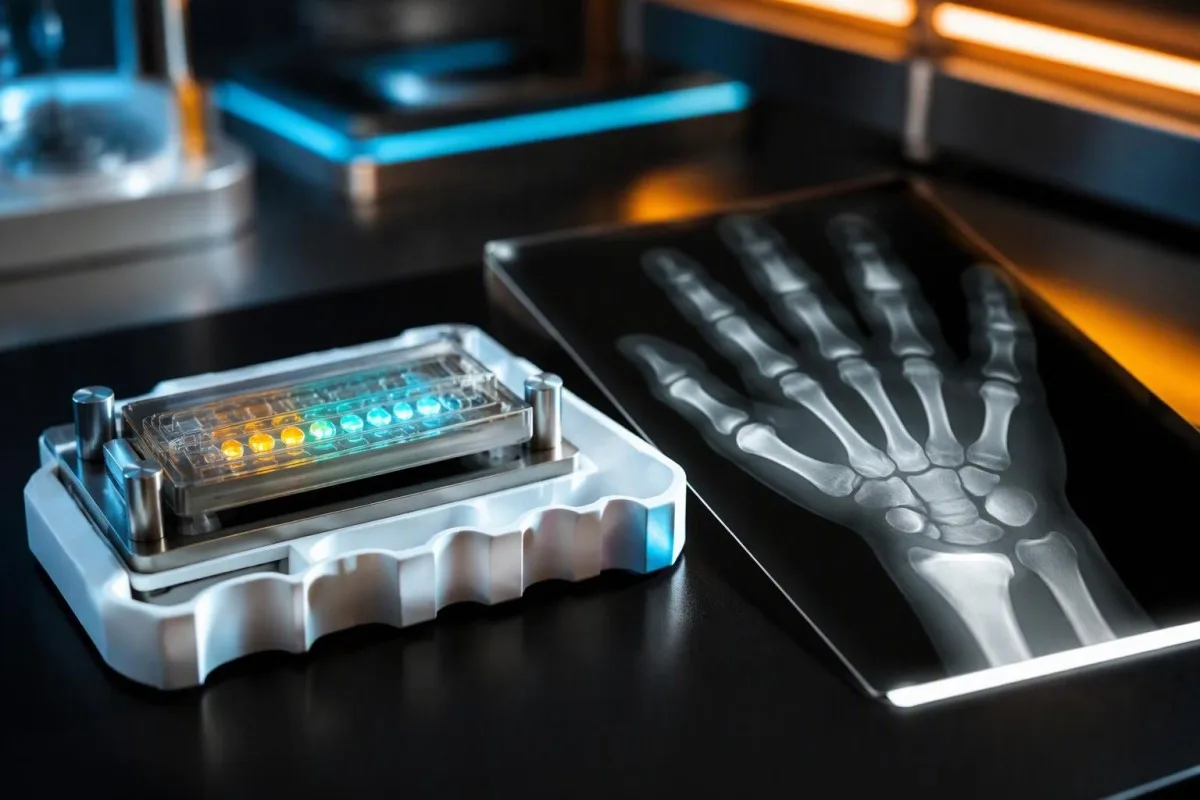
- Luuline vanus: Vasaku käe ja randme röntgenülesvõte hindab luustiku küpsust; üle 2 aasta võrra kiirenenud luustiku küpsemine suurendab muret, kuid ei tõesta tsentraalset puberteeti.
- Järelkontroll: Kui kiireloomulisi ohumärke ei ole, aitab 3–6 kuu pärast kavandatud kordushindamine eristada stabiilseid üksikuid muutusi progresseeruvast puberteedist.
- Kiireloomulised sümptomid: Varase arengu korral koos tugeva peavalu, nägemishäire, krambihoo, märkimisväärse tupeverejooksu või ägeda munandivaluga on vaja kiiret meditsiinilist hindamist.
Millal vajab varane areng vereanalüüsi?
A enneaegse puberteedi vereanalüüs aitab hinnata tüdrukutel enne 8. eluaastat tekkinud rindade arengut või poistel enne 9. eluaastat tekkinud munandite suurenemist. Arstid hindavad LH, FSH ja valitud suguhormoonide tulemusi koos läbivaatuse, kasvuandmete ja sageli luulise vanusega; madal basaalne LH ei välista varast tsentraalset puberteeti.
Esmalt tuleb kindlaks teha, kas aju juhitav puberteedi rada on aktiveerunud või on ilmnenud ainult üks varane muutus. Tsentraalne enneaegne puberteet kulgeb tavaliselt progresseeruva arengujadana; üksik kehalõhn, häbemekarvad või stabiilne rinnakude võivad järgida teistsugust kulgu ka siis, kui neid märgatakse enne 8. või 9. eluaasta piiri.
Sünnipäev on suunav piir, mitte bioloogiline lüliti: 7 aasta ja 11 kuu vanuselt ning 8 aasta ja 1 kuu vanuselt alanud areng võib vajada samaväärset tähelepanu, kui see on kiire. Ameerika Pediaatria Akadeemia raport rõhutab progresseerumist 4–6 kuu jooksul ja kiirenenud kasvu kui põhjuseid spetsialisti hinnanguks (Kaplowitz ja Bloch, 2016).
Kantesti on AI vereanalüüsi analüsaator mis võib aidata selgitada teatatud LH ja FSH väärtusi, kuid ükski tehisintellekti tulemus ei asenda läbivaatust, mis on vajalik enne 8. või 9. eluaastat. Meie organisatsioon ja kliiniline pädevus tuleks lugeda koos lasteanalüüside tõlgendamise piirangutega, eriti kui näiliselt rahustav tulemus on vastuolus nähtava progresseerumisega.
Millised varase puberteedi tunnused viitavad tsentraalsele puberteedile?
Tüdrukutel progresseeruv rindade areng ja poistel mõlema munandi suurenemine on tsentraalse puberteedi tugevamad tunnused kui üksnes karvakasv või kehalõhn. Häbemekarvad enne 8. või 9. eluaastat võivad viidata neerupealiste hormoonide toimele ilma aju-hüpofüüsi puberteediraja aktiveerumiseta.
Enneaegne telarhe tähendab isoleeritud varast rindade arengut, sageli ilma kiirema kasvu või muude östrogeenitoimeteta. See võib olla asümmeetriline ja kõikuda, eriti väga väikestel lastel; pärast 3. eluaastat esmakordselt tekkiv rinnakude nõuab selle arengu jälgimist, mitte eeldust, et iga üksik muutus taandub.
Enneaegne adrenarhe võib põhjustada häbemekarvade või kaenlakarvade kasvu, kehalõhna ja kerget aknet, sest neerupealised toodavad rohkem androgeene. Alla 9-aastasel poisil viitavad karvad koos väikeste munanditega tavapärasest tsentraalse puberteedi jadast erinevale arengule; peenise kiire kasv, hääle madaldumine või märgatav virilisatsioon nõuab siiski liigse androgeenidega kokkupuute või nende tootmise uurimist.
Arengu järjestus on olulisem kui omavahel seostamata hormoonväärtuste kogumine. Täiskasvanute menstruaaltsükli reegleid ei saa üle kanda 6-aastasele rinnapungaga lapsele ning noorukite mustrid on omakorda teistsugused; meie teismeliste hormoonanalüüside juhend selgitab, miks laboritulemusi tuleb tõlgendada koos arengustaadiumiga, mitte käsitleda seda valikulise üksikasjana.
Miks vaadatakse kõigepealt kasvukõveraid ja tehakse läbivaatus?
Kasvu kiirenemine ja arengu progresseerumine help determine whether early signs represent active puberty. A clinician checks height velocity, Tanner stage and, in boys, testicular size; bilateral testicular volume around 4 mL or greater generally marks pubertal onset, although measurement methods differ.
Many school-age children grow roughly 5–6 cm per year before puberty, although age and individual patterns matter. A sustained rise toward 7–8 cm per year, especially with upward crossing of height percentiles, can strengthen suspicion of puberty; two measurements separated by only a few weeks are too vulnerable to measurement error.
Consider a hypothetical 7-year-old whose LH is 0.08 IU/L but whose breast development has progressed and whose measured growth has accelerated over 6 months. I would not let the low LH close the case: those findings create a reason to repeat an appropriate morning measurement, obtain bone age or arrange stimulation testing.
Accurate height records are worth bringing from school, primary care and previous specialist visits, ideally covering 12–24 months. Puberty can make a child temporarily tall while reducing remaining growth potential; that differs from the problems discussed in our childhood growth hormone guide, where poor linear growth often drives the investigation.
Mida mõõdetakse esmases enneaegse puberteedi vereanalüüsis?
The initial panel usually includes ultrasensitive LH and FSH, with estradiol in girls or testosterone in boys when clinically useful. Additional tests depend on the signs: a child under 8 or 9 with hair alone needs a different investigation from a child with progressive gonadal development.
LH provides evidence about pituitary activation, while FSH is less specific because prepubertal and early-pubertal values overlap. A single LH-to-FSH ratio cannot establish the diagnosis in a 7-year-old; the adult applications described in our LH and FSH comparison should not be used as pediatric diagnostic rules.
Estradiol may remain very low or fluctuate despite genuine early breast development, and routine assays can struggle near their lower detection limits. Testosterone is often more informative in boys, but a value such as 30 ng/dL must still be interpreted against age, examination and assay method rather than a reference interval intended for a 30-year-old.
Broad screening creates noise when the clinical question is narrow. Thyroid tests, adrenal androgens, 17-hydroxyprogesterone or hCG may be appropriate for selected findings, not automatically for every child; our hormonal physiology reference provides background while reinforcing that pediatric thresholds are distinct from adult reproductive ranges.
Miks võib LH baastase enneaegse puberteedi korral olla madal?
A low basal LH does not rule out early central precocious puberty. Early LH secretion is intermittent and initially more prominent during sleep, so a daytime sample can miss activation; a result of 0.08 IU/L may be inconclusive rather than definitively negative.
A basal sample is one frame from a moving film. In early puberty, the pituitary may release LH in pulses that leave a quiet interval between them; an early-morning sample can be more informative than a late-afternoon sample, but even a carefully timed result below 0.3 IU/L cannot overrule convincing progression.
The assay can hide the signal too. A report reading '<0.2 IU/L' does not tell you whether the underlying value is 0.01 or 0.19 IU/L, and those possibilities are not analytically identical; ask whether the laboratory uses a pediatric-sensitive LH method and whether its stated lower limit is detection or reliable quantification.
Kantesti on AI vereanalüüsi tulemuste tõlgendamise platvorm that can explain why an LH below 0.3 IU/L is not a stand-alone exclusion result. Our piiridest väljuva tulemuse juhend addresses the opposite misconception as well: a result inside a printed interval can still require follow-up when the interval does not match the child's developmental stage.
Milline LH baastaseme piirväärtus toetab tsentraalse puberteedi diagnoosi?
A basal LH around 0.3 IU/L or higher supports central puberty on some ultrasensitive assays, but there is no single cutoff that applies to every laboratory. Lower thresholds may detect more early cases while creating more overlap with children who do not have progressive central puberty.
Cutoffs balance sensitivity and specificity, not normality and danger. A threshold of 0.3 IU/L is used because sustained LH becomes more detectable as pituitary activation develops; it is not a toxicity boundary, an emergency threshold or a number that independently determines whether treatment should start.
Units deserve a quick check before interpretation: 1 IU/L equals 1 mIU/mL, so those two LH expressions have the same numerical value. By contrast, a report containing only 'negative' or '<0.1' carries less information than an exact quantified result; our kvalitatiivne versus kvantitatiivne juhend selgitab seda vahet.
When I interpret an LH of 0.24 IU/L, I would ask about the assay, sampling time and 3–6-month developmental trajectory before calling it reassuring or concerning. The 2022 Korean clinical guideline discusses assay-dependent basal thresholds and cautions about reduced LH responses in children with obesity (Kim et al., 2023); body size should modify interpretation, not become a reason to dismiss progressive development.
Millal on GnRH stimulatsioonitest abiks?
A GnRH stimulation test helps when early development is progressing but basal LH is low or ambiguous. The test measures pituitary hormone responses after GnRH or a GnRH agonist; it is particularly useful when a child under 8 or 9 has examination findings that disagree with the initial laboratory result.
Stimulation asks whether the pituitary is ready to respond in a pubertal pattern, rather than waiting for a spontaneous LH pulse. The 2022 Korean guideline recommends interpreting stimulated LH alongside Tanner stage, growth velocity and bone age, rather than treating the response as an isolated diagnosis (Kim et al., 2023).
The protocol matters. Depending on the agent and local method, samples may be collected at baseline and several points over roughly 30–120 minutes, while some agonist protocols add later measurements; a value at 30 minutes cannot automatically be compared with a peak obtained using a different drug or a later collection schedule.
This is a specialist-supervised test, not a challenge to reproduce at home, and medication doses are determined by the local pediatric protocol. Preparation instructions can differ from an ordinary laboratory visit; our first sample preparation guide is useful background, but the testing unit's instructions take priority for fasting, medicines and appointment length.
Kuidas tõlgendatakse stimuleeritud LH tulemusi?
A stimulated LH peak around 5 IU/L or higher supports central puberty in many protocols, including the cited Korean guideline. The exact threshold depends on the stimulation agent, assay and sampling schedule; a lower response does not necessarily settle the question when development continues to progress.
A peak of 4.8 IU/L and a peak of 5.2 IU/L are not biologically opposite states. Near a protocol's decision limit, analytical variation, missed peak timing and clinical trajectory become especially relevant; clinicians may review the entire LH and FSH response rather than assigning certainty to the final decimal place.
FSH-predominant responses can occur with isolated thelarche, but response ratios overlap and their interpretation varies by age and protocol. In girls under 3, developmental physiology can complicate stimulation results further; a pubertal-looking laboratory response requires correlation with sustained progression, estrogen effects and growth rather than automatic treatment.
Children with obesity may have lower stimulated LH responses, especially early in development, so an apparently subthreshold peak needs thoughtful interpretation. Repeating a test with another assay introduces another variable; our between-visit result comparison explains why a change over 3 months is easier to assess when the laboratory method and sampling conditions are documented.
Mida lisab puberteedi hindamisele luu vanus?
Bone age estimates skeletal maturity from a left-hand and wrist radiograph. Advancement of more than 2 years can strengthen concern about sustained hormone exposure, but bone age alone cannot distinguish central puberty from adrenal androgen effects, obesity or other causes of accelerated skeletal maturation.
A bone age of 10 in an 8-year-old means the hand's maturation resembles the reference pattern for an older child; it does not mean every aspect of development has advanced by 2 years. Greulich–Pyle and Tanner–Whitehouse methods approach the estimate differently, and reader variation should be considered before small changes are treated as progression.
An advanced bone age can indicate less remaining growth despite an impressive current height. Predicted adult-height calculations depend on assumptions that may not hold during rapidly progressing puberty, so a single estimate should not be presented as a guaranteed outcome; serial growth over 6–12 months often gives the prediction more clinical meaning.
A normal bone age does not exclude very early central puberty because skeletal change may lag behind the first signs. Likewise, IGF-1 can rise with pubertal maturation without implying a separate growth-hormone disorder; our age-specific IGF-1 interpretation explains why chronological age, developmental stage and the laboratory's reference population must be considered together.
Millal viitavad tulemused perifeersele hormoonitootmisele?
Sex-hormone effects with persistently suppressed LH can suggest peripheral hormone production or exposure rather than central puberty. In a child under 8 or 9, the evaluation may include adrenal disorders, functional ovarian cysts, hCG-related conditions, severe hypothyroidism or contact with another person's hormone medication.
Rapid pubic-hair development, acne and virilization may justify morning 17-hydroxyprogesterone testing for congenital adrenal hyperplasia. A screening value around 200 ng/dL, equivalent to 2 ng/mL, is commonly used to consider further assessment for nonclassic disease, but age, assay and symptoms matter; our 17-hydroxyprogesterone testing guide explains why confirmation may require an ACTH stimulation test.
Severe primary hypothyroidism is an unusual but useful exception: apparent pubertal development can occur with slow growth and delayed bone age, rather than the acceleration expected in ordinary central puberty. A 7-year-old with this combination needs TSH and free T4 assessment; our türoksiini ja TSH selgitus provides the relevant laboratory background.
Ask specifically about testosterone gels, estrogen creams and hormone-containing supplements used by household members, including accidental transfer through contact. DHEA-S can help identify an adrenal contribution, but an adult androgen interval cannot classify a 6-year-old; our DHEA-S versus DHEA juhend explains the different information these measurements provide.
Kes vajab MRT-d, ultraheli või geneetilist uuringut?
Brain MRI is generally recommended for boys with confirmed central precocious puberty, girls with onset before age 6, and children with neurological symptoms. For girls aged 6–8 without neurological findings, imaging decisions are individualized because the likelihood of a relevant intracranial cause is lower.
Early puberty with headache or visual change requires a different level of attention from isolated odor in an otherwise well 7-year-old. Carel and Léger's clinical review describes the importance of identifying central nervous system causes, particularly in boys and younger girls (Carel and Léger, 2008); our neurological warning signs guide helps families recognize symptoms without assuming that early puberty usually means a brain growth.
Pelvic ultrasound may support assessment in girls, especially when bleeding, a mass or a peripheral estrogen source is suspected, but size measurements overlap between developmental stages. In a girl aged 6–8, uterine or ovarian measurements cannot replace the examination and hormone pattern; in boys, asymmetry or a palpable testicular abnormality may prompt targeted ultrasound.
Family history can guide testing for causes such as MKRN3-related central puberty, but genetic testing is not routine for every child before age 8 or 9. Kantesti AI can explain laboratory terminology, not read an MRI or establish a genetic diagnosis; our AI-tehnoloogia juhend describes a different task from pediatric endocrine imaging and examination.
Millal piisab jälgimisest ja millal kaalutakse ravi?
Stable isolated changes can often be monitored for 3–6 months, while progressive central puberty may warrant treatment after specialist assessment. The decision considers age at onset, progression, skeletal advancement, remaining growth potential and the child's needs—not whether one LH value crosses 0.3 IU/L.
Observation should have a date and a plan: reassess height velocity, developmental stage and new symptoms, then repeat selected testing if the pattern changes. A 7-year-old with stable isolated breast tissue and ordinary growth needs a different pathway from a 5-year-old whose development and bone age are advancing quickly.
GnRH agonist treatment suppresses the central puberty pathway through sustained receptor stimulation that ultimately reduces gonadotropin release. Height benefit is generally clearest in girls whose puberty begins before age 6, becomes more variable between 6 and 8, and requires individualized discussion at older ages; treatment is not automatically beneficial merely because puberty is earlier than the family expected.
Pubic hair or odor may continue during effective treatment because adrenal maturation is not the same pathway being suppressed. I would explain that distinction before monitoring begins, rather than letting families interpret every new hair as treatment failure; our vanusest sõltuvat pere testimise juhendit reinforces why follow-up should answer specific clinical questions instead of adding broad panels every 3 months.
Kuidas peaksid pered puberteeditestideks valmistuma ja tulemusi jagama?
Bring the child's growth records, symptom timeline and complete laboratory report, including assay units and collection time. For suspected early puberty before age 8 or 9, these details make interpretation more useful than a cropped image containing only the LH result and a colored normal-range flag.
Ask the ordering team whether the sample should be collected early in the morning and whether fasting is required; these are not identical instructions. Record all medicines and supplements, including biotin, because interference varies by assay, and do not stop a child's prescription medicine simply to improve a test; for a stimulation visit, confirm whether the appointment lasts 1–2 hours or longer.
Kantesti on AI-põhine vereanalüüsi analüüsitööriist that can help organize an LH result such as 0.12 IU/L alongside its printed units and reference interval. That explanation cannot certify that puberty is absent, and families should check whether a service supports the child's age and obtain appropriate permission; our upload privacy checklist explains how to limit unnecessary identifiers.
A child needs age-appropriate explanation and privacy as well as parental involvement, particularly when development begins at 6 or 7. Share only the information needed for care, avoid uploading intimate photographs, and check retention and deletion terms before using any digital service; our privaatsus- ja andmeteavet describes the policies families should review before sharing a pediatric report.
Teaduspublikatsioonid ja kliinilise tõlgendamise standardid
Clinical puberty guidelines—not product usage reports—should guide diagnosis and treatment. As of October 23, 2026, the external references below support this article's discussion of age thresholds, basal LH limitations, stimulation testing and bone age; organizational research serves a separate purpose.
The AAP report from 2016, the clinical review from 2008 and the Korean guideline published in 2023 address complementary questions rather than supplying one universal laboratory rule. Assay technology and local stimulation protocols differ, so I would expect a pediatric endocrinologist to use the testing laboratory's validated decision limits alongside these sources.
Kantesti's 2 linked Zenodo publications concern an organizational validation framework and a global testing report; they should not be treated as evidence that an AI system can diagnose childhood puberty or validate every pediatric LH assay. Our meditsiinilise valideerimise teavet should be assessed for its stated population, methods and limitations before any performance claim is applied to children.
For Thomas Klein, the editorial priority here is simple: an LH below 0.3 IU/L should never become a blanket reassurance message when a child's development is clearly progressing. Our meditsiinilise nõuandekomisjoni teave describes clinical oversight roles; a named review date should be recorded only after an actual medical review, and the 2 organizational citations below remain separate from the condition-specific medical references.
Korduma kippuvad küsimused
Millise vereanalüüsiga kontrollitakse enneaegset puberteeti?
Esmane puberteedi vereanalüüsiga mõõdetakse tavaliselt ülitundlikku LH-d ja FSH-d, vajaduse korral tüdrukutel östradiooli või poistel testosterooni. Uuringuid kaalutakse puberteedi arengu korral enne 8. eluaastat tüdrukutel või 9. eluaastat poistel, kuid üksnes karvakasv või kehalõhn võib vajada teistsugust analüüside paneeli. Arst tõlgendab tulemusi koos läbivaatuse, kasvukiiruse ja mõnikord luuvanusega. Valitud lapsed vajavad ka neerupealiste või kilpnäärme uuringuid või stimulatsiooniteste.
Kas madal LH tase välistab enneaegse puberteedi?
0 A low basal LH cannot reliably rule out early central precocious puberty. A value below 0.3 IU/L may occur because early LH release is pulsatile, strongest during sleep or below the assay's reliable measurement limit. Progressive breast or testicular development and faster growth remain reasons for further assessment despite a low result. An early-morning repeat or specialist-supervised stimulation test may help.
0 Mis LH tase viitab tsentraalsele enneaegsele puberteedile?
Baaseline LH ligikaudu 0,3 IU/L või kõrgem toetab mõne ülitundliku analüüsi korral tsentraalse puberteedi diagnoosi, kuid piirväärtus sõltub laborist. Paljudes stimulatsiooniprotokollides kasutatakse hüpofüüsi aktivatsiooni toetava tõendina LH tipptaset ligikaudu 5 IU/L. Kumbki väärtus ei kinnita diagnoosi ilma lapse vanuse, arenguleidude ja testimisprotokolli arvestamata. Piiripealseid tulemusi tuleb hinnata kontekstis, mitte liigitada universaalse positiivse või negatiivsena.
Mis toimub GnRH stimulatsioonitesti ajal?
GnRH stimulatsioonitestiga mõõdetakse, kuidas ajuripats vabastab LH-d ja FSH-d pärast GnRH või GnRH agonisti manustamist. Sõltuvalt protokollist võidakse laboriproovid võtta algtasemel ja mitu korda ligikaudu 30–120 minuti jooksul; mõne agonistiprotokolli puhul tuleb mõõtmisi teha ka hiljem. Laste endokrinoloogia meeskond valib ravimi, annuse, ajastuse ja tõlgendamise lävendi. Pered peaksid järgima vastava osakonna ettevalmistusjuhiseid, mitte eeldama, et kehtivad tavapärased paastureeglid.
Kas luude kaugelearenenud vanus tähendab, et mu lapsel on enneaegne puberteet?
0. Kõrgenenud luuline vanus ei võimalda iseenesest diagnoosida enneaegset puberteeti. Üle 2 aasta võrra kiirenenud luuline küpsemine võib viidata pikaajalisele hormoonide toimele, kuid ka rasvumine, enneaegne adrenarhe ja muud seisundid võivad luustiku küpsemist kiirendada. Normaalne luuline vanus ei välista alles hiljuti alanud puberteeti. Arstid hindavad röntgenülesvõtet koos kasvuandmete, läbivaatuse ja hormoonanalüüside tulemustega.
Kas häbemekarvade kasv enne 8. eluaastat tähendab alati varast puberteeti?
Häbemekarvad enne 8. eluaastat tüdrukutel või 9. eluaastat poistel ei tähenda automaatselt tsentraalset enneaegset puberteeti. Enneaegne adrenarhe võib põhjustada karvakasvu, kehalõhna ja kerget aknet, aktiveerimata seejuures tsentraalse puberteedirada. Kiire areng, väljendunud virilisatsioon, kiirem kasv või kaasnev rindade või munandite areng suurendab hindamise vajadust. Stabiilseid üksikuid leide võib arsti plaani järgi jälgida 3–6 kuu jooksul.
Millal tuleks varase puberteedi tunnuseid kiiresti hinnata?
0 Varase puberteedi tunnused, millega kaasneb tugev või äkki tekkinud peavalu, nägemise muutus, krambihoog või muud neuroloogilised sümptomid, vajavad kiiret meditsiinilist hindamist. Märkimisväärne tupeverejooks või äge munandivalu nõuab samuti kiiret hindamist, selle asemel et oodata tavapäraseid hormoonanalüüside tulemusi. Kinnitatud tsentraalne puberteet alla 9-aastastel poistel või enne 6. eluaastat alanud puberteet tüdrukutel nõuab üldjuhul eriarsti uuringuid, sealhulgas aju MRT kaalumist. Üksnes lõhn ilma muude murettekitavate tunnusteta ei ole tavaliselt hädaolukord.
Hangi AI-toega vereanalüüsi analüüs juba täna
Liitu enam kui 2 miljoni kasutajaga üle maailma, kes usaldavad Kantesti-d kohese ja täpse laborianalüüsi jaoks. Laadi üles oma vereanalüüsi tulemused ja saad põhjaliku tõlgenduse 15,000+ biomarkerite kohta sekunditega.
📚 Viidatud teaduspublikatsioonid
Klein, T., Mitchell, S., & Weber, H. (2026). Kliinilise valideerimise raamistik v2.0 (meditsiinilise valideerimise leht). Kantesti AI Medical Research.
Klein, T., Mitchell, S., & Weber, H. (2026). AI vereanalüüsi analüsaator: analüüsitud 2,5M testi | ülemaailmne terviseraport 2026. Kantesti AI Medical Research.
📖 Välised meditsiinilised viited
Kaplowitz P, Bloch C (2016). Evaluation and Referral of Children With Signs of Early Puberty. Pediatrics.
Carel JC, Léger J (2008). Clinical practice. Precocious puberty. New England Journal of Medicine.
Kim SJ et al. (2023). 2022 Clinical practice guidelines for central precocious puberty of Korean children and adolescents. Annals of Pediatric Endocrinology & Metabolism.
⚕️ Meditsiiniline lahtiütlus
Käesolev artikkel on mõeldud üksnes hariduslikel eesmärkidel ega kujuta endast meditsiinilist nõuannet. Diagnoosi ja ravivalikute otsuste tegemiseks konsulteeri alati kvalifitseeritud tervishoiutöötajaga.
E-E-A-T usaldussignaalid
Kogemus
Arsti juhitud kliiniline ülevaade labori tõlgendamise töövoogudest.
Ekspertiis
Laborimeditsiin keskendub sellele, kuidas biomarkerid käituvad kliinilises kontekstis.
Autoriteetsus
Kirjutanud dr Thomas Klein, ülevaade: dr Sarah Mitchell ja prof dr Hans Weber.
Usaldusväärsus
Tõenduspõhine tõlgendus selgete edasiste sammudega, et vähendada ärevust.