A positive Legionella urine antigen strongly supports Legionnaires’ disease when symptoms and imaging show pneumonia. Most assays detect Legionella pneumophila serogroup 1; respiratory PCR or culture can find infections the urine test misses, and persistent positivity after recovery does not necessarily mean treatment failure.

Conclusions principals
- Resultat positiu strongly supports Legionella pneumonia in a compatible illness; it usually identifies Legionella pneumophila serogroup 1 rather than every Legionella species.
- Test accuracy was approximately 74% sensitivity and 99.1% specificity in a 2009 meta-analysis, with performance varying by assay, illness severity, and study design.
- Resultat negatiu cannot exclude Legionnaires’ disease: a test with 74% sensitivity would miss about 26 of every 100 infections within its detection scope.
- Paired testing uses 2 complementary specimens—urine plus a lower respiratory sample—to improve detection and support outbreak investigation.
- Persistent antigen can remain detectable for weeks or months; a positive result 4 weeks after treatment is not, by itself, evidence of surviving bacteria.
- Antibiotic treatment often lasts 7–10 days in uncomplicated Legionella pneumonia, but the appropriate drug and duration depend on clinical severity and immune status.
- Cal una valoració urgent is warranted for new breathlessness with oxygen saturation at or below 92% on room air; severe breathing difficulty or a reading at or below 90% needs emergency attention.
- Companion blood tests assess complications rather than identify Legionella: sodium below 135 mmol/L indicates hyponatremia, not a Legionella-specific diagnosis.
What does a positive Legionella urine antigen mean?
A legionella urine antigen positive result means the laboratory detected Legionella antigen in urine, usually from Legionella pneumophila serogroup 1. In someone with fever, cough, breathlessness, and imaging-confirmed pneumonia, the result strongly supports Legionnaires’ disease and should prompt timely clinical treatment.
The positive result identifies a likely cause of pneumonia, not its severity. Two people with the same serogroup 1 result can have very different oxygen needs, kidney function, and treatment settings; clinicians decide between home treatment and admission using the whole clinical picture.
An unexpected positive without pneumonia deserves a different conversation. A person treated for Legionnaires’ disease 6 weeks earlier may still excrete antigen, whereas a person with no previous illness may need the laboratory result checked against symptoms, imaging, and possible assay interference.
For a hypothetical example, a 58-year-old with a temperature of 39°C, a new lung infiltrate, and a positive antigen has several findings pointing in the same direction. The same urine result in a well person with normal imaging does not automatically establish a new episode of pneumonia.
Kantesti és una Analitzador de sang amb IA that helps explain companion laboratory findings without substituting for assessment of serogroup 1 pneumonia; our organització i propòsit explain that distinction. If breathing symptoms are the immediate concern, our shortness of breath guide describes why laboratory results cannot replace examination and oxygen measurement.
Why does a lung infection produce a positive urine test?
El Legionella urinary antigen test detects bacterial material excreted into urine during an illness that usually affects the lungs. A positive serogroup 1 antigen result does no mean Legionella is causing a bladder infection, and it is not equivalent to a positive routine urine culture.
Antigen is a bacterial component recognized by the assay, rather than proof that living organisms are present in the urine. The serogroup 1 target is generally associated with the bacterial surface lipopolysaccharide, which can remain detectable after antibiotics have controlled the pulmonary illness.
Most reports are resultat qualitatiu: detected or not detected, rather than a concentration in ng/mL. Our explanation of resultats qualitatius versus quantitatius helps clarify why a positive flag cannot be converted into a bacterial count or a severity score.
A fresh urine specimen is generally sufficient; a 24-hour urine collection is not routinely required for this assay. Collection volume, storage conditions, and acceptance criteria depend on the laboratory, so follow the supplied instructions rather than borrowing preparation rules from unrelated urine tests.
Do not interpret cassette appearance as a treatment trend. Even when a laboratory uses a lateral-flow method, the apparent intensity of a signal is not a validated measure of pneumonia burden, and a stronger-looking result on day 7 cannot establish that treatment is failing.
Why does the urine test mainly detect serogroup 1?
Most commonly used Legionella urine antigen assays are designed to recognize Legionella pneumophila serogroup 1, a major cause of Legionnaires’ disease. Their antibody targets do not reliably detect every other serogroup or Legionella species, so the test’s biological coverage is narrower than its name suggests.

A serogroup is a grouping based on antigenic differences, not a stage of illness. Serogroup 1 does not mean early disease, a first infection, or a milder infection; it identifies a bacterial antigen pattern recognized by the test.
Other L. pneumophila serogroups and species such as Legionella longbeachae can cause pneumonia despite a negative standard urine antigen. Potting mix or compost exposure can be particularly relevant to L. longbeachae, while healthcare-associated disease may involve organisms outside the standard assay’s reliable detection scope.
Laboratories differ in their assays and reporting language. Ask whether the method specifically detects serogroup 1, whether a broader assay was used, and whether an additional respiratory test is pending; never assume an unfamiliar brand or a generic report heading proves broader coverage.
A negative narrow-target test should not redirect treatment solely because another pneumonia marker is positive. For example, a positive antibody result for a second organism may reflect timing or previous exposure rather than the cause of the current illness, as our Mycoplasma IgM interpretation .
How accurate is the Legionella antigen test?
Legionella antigen test accuracy is generally stronger for confirming than excluding the infection within the assay’s detection scope. A meta-analysis reported approximately 74% sensitivity i 99.1% specificity, but those pooled estimates are not a guarantee for every current assay or every patient population.
Shimada et al. reported these pooled figures in their 2009 Chest systematic review and meta-analysis. Sensitivity describes how often infected people test positive; specificity describes how often people without the target condition test negative, and neither figure alone tells an individual their probability of disease.
Consider a clearly hypothetical group of 10,000 people being tested, with a 5% prevalence of the target infection. Using 74% sensitivity and 99.1% specificity gives about 370 true positives and 86 false positives, so roughly 81% of positive results would represent the target infection under those assumptions.
Change only the hypothetical prevalence to 20%, and the same calculation gives about 1,480 true positives and 72 false positives—a positive predictive value near 95%. This is why a positive result is more convincing in someone with compatible pneumonia than in indiscriminate screening of well people.
Kantesti AI distinguishes the published 99.1% specificity estimate from the much broader question of whether a person currently has pneumonia. Our validation and clinical boundaries concern our interpretation methods; they do not certify the performance of a hospital’s Legionella assay or make false-positive results impossible.
Can a negative Legionella urine antigen miss disease?
A negative Legionella urine antigen does not rule out Legionnaires’ disease, especially when the organism is outside serogroup 1 or clinical suspicion remains high. Early sampling and variation in antigen excretion can also contribute, so a lower respiratory PCR or culture may be needed.
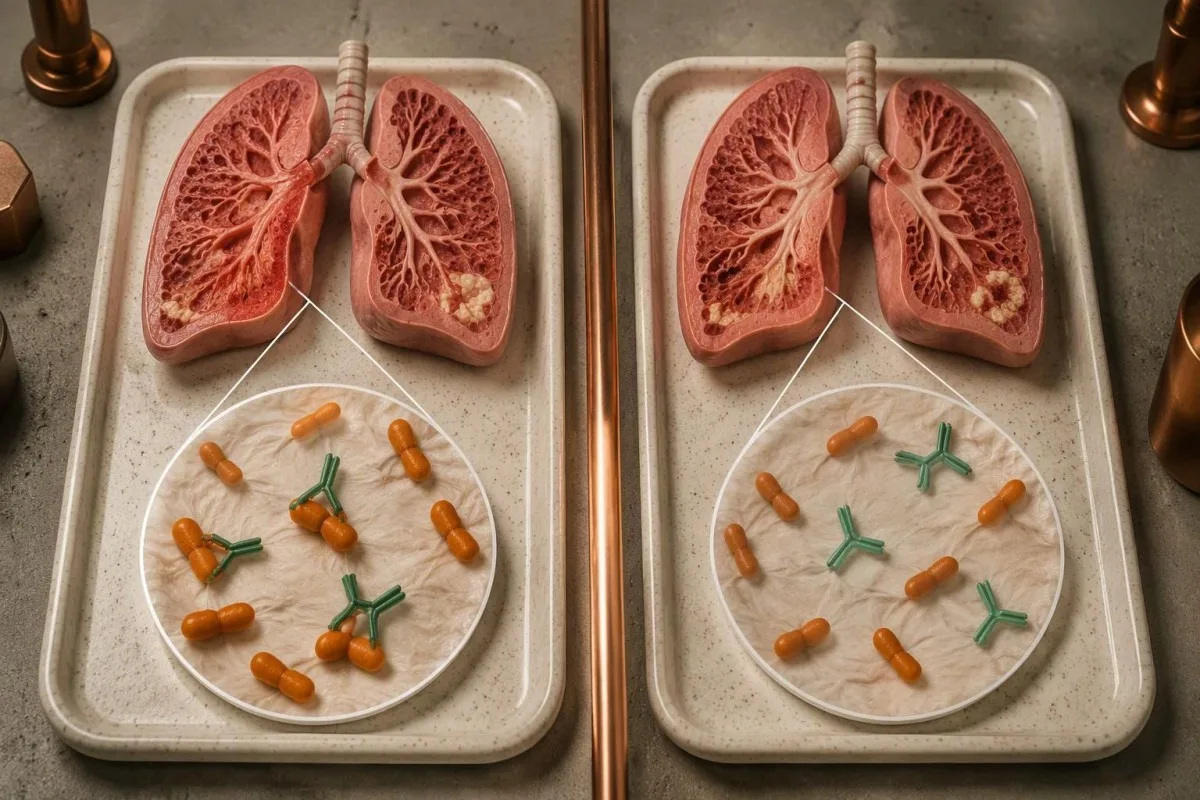
Using the pooled 74% sensitivity as an illustration, approximately 26 of 100 infections within the studied detection scope would be missed. That calculation does not include every infection caused by non-target species, so the test’s ability to exclude all Legionella pneumonia is more limited still.
A hypothetical 67-year-old with severe pneumonia after a hotel stay may need further Legionella testing despite a negative urine result on the first day of admission. The reason is not that travel proves the diagnosis; it raises suspicion enough that relying on one incomplete test could miss a treatable cause.
Repeating urine testing can sometimes be considered when timing or specimen quality is in doubt, but a second negative does not solve a serogroup mismatch. A respiratory assay with appropriate species coverage answers a different question and may add more value than repeatedly ordering the same urine method.
Sampling windows also affect other respiratory tests, although their exact rules differ from Legionella. Our respiratory PCR timing guide illustrates the broader principle: a negative result must be interpreted against specimen site, method, timing, and treatment rather than treated as a universal exclusion.
When do respiratory PCR and culture add value?
Respiratory PCR and culture add value when pneumonia is severe, the urine result is negative despite suspicion, broader Legionella detection is needed, or an outbreak is being investigated. Collecting 2 complementary specimens—urine and a lower respiratory sample—can support both immediate diagnosis and public health investigation.

The 2019 ATS/IDSA community-acquired pneumonia guideline recommends Legionella urinary antigen testing plus lower respiratory culture or nucleic acid testing in severe pneumonia (Metlay et al., 2019). It also supports urinary antigen testing when epidemiological factors, such as recent travel or an outbreak association, make Legionella more likely.
PCR detects bacterial genetic material and can return sooner than culture, but its coverage depends on the exact assay. Some tests target L. pneumophila, others detect a broader Legionella group, and not every respiratory multiplex panel includes Legionella; ask what was actually tested rather than assuming a negative panel excludes serogroup 1.
Culture requires a respiratory specimen and special media, commonly buffered charcoal yeast extract, and may take several days. Its distinctive benefit is recovery of an organism that public health laboratories can compare with environmental isolates, whereas a urine antigen result alone cannot match an individual case to a particular water system.
Collect sputum before antibiotics when feasible, but do not delay necessary treatment to obtain it; laboratories may retain cultures for around 10 days before final reporting. Exposure details help guide additional investigations: water-associated illness testing i interpretació dels anticossos contra la febre Q explain different exposure-driven pathways, not substitute tests for Legionella.
What do sodium, CRP, and kidney results contribute?
Blood tests help assess the consequences of Legionella pneumonia, but no sodium, CRP, or white cell cutoff independently confirms it. Serum sodium below 135 mmol/L indicates hyponatremia; clinicians interpret that finding alongside hydration, glucose, medications, kidney function, and the respiratory illness.
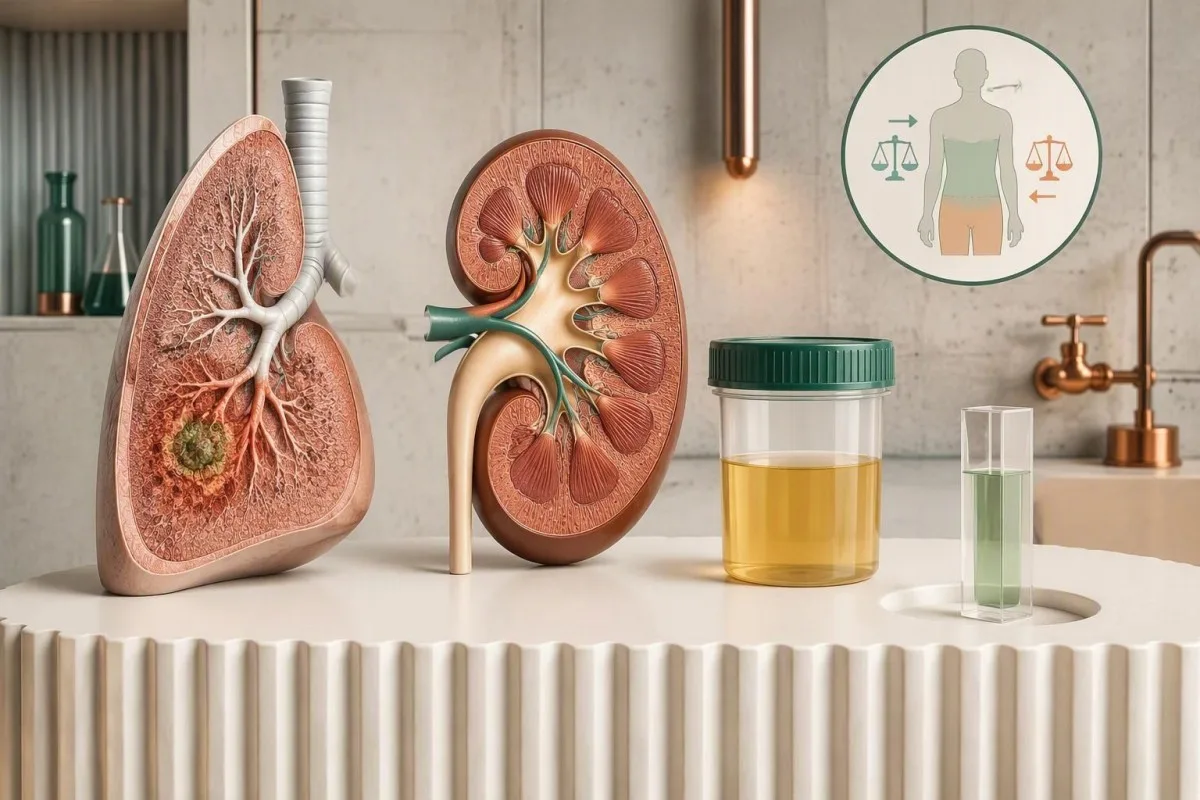
Low sodium does not automatically mean SIADH, and it does not specifically identify serogroup 1 disease. Vomiting, diarrhea, fluid intake, diuretics, and other illnesses can produce overlapping patterns; our guia de laboratori SIADH explains why osmolality and clinical volume assessment matter before choosing treatment.
Urine sodium may help investigate hyponatremia, but a value such as 40 mmol/L means different things after a diuretic dose than before treatment. Our urine sodium interpretation shows why urine chemistry should not be confused with the separate Legionella urinary antigen test.
A creatinine increase of at least 0,3 mg/dL en 48 hores is one established criterion for acute kidney injury. Dehydration, sepsis, and medication effects may contribute during pneumonia, and our guia de BUN i creatinina explains why the ratio alone cannot determine the cause.
Kantesti és una plataforma d’interpretació de biomarcadors per IA that can help contextualize a sodium of 129 mmol/L or a changing creatinine alongside other reported blood results. A hypothetical fall in CRP from 180 to 80 mg/L may support improvement, but worsening oxygenation overrides reassurance from that laboratory trend.
What treatment usually follows a positive result?
Compatible Legionella pneumonia usually requires an antibiotic active against an organism that multiplies inside cells, commonly azithromycin or a respiratory fluoroquinolone. Many uncomplicated cases receive about 7–10 dies of treatment, but severity, immune status, response, and medication safety determine the actual prescription.
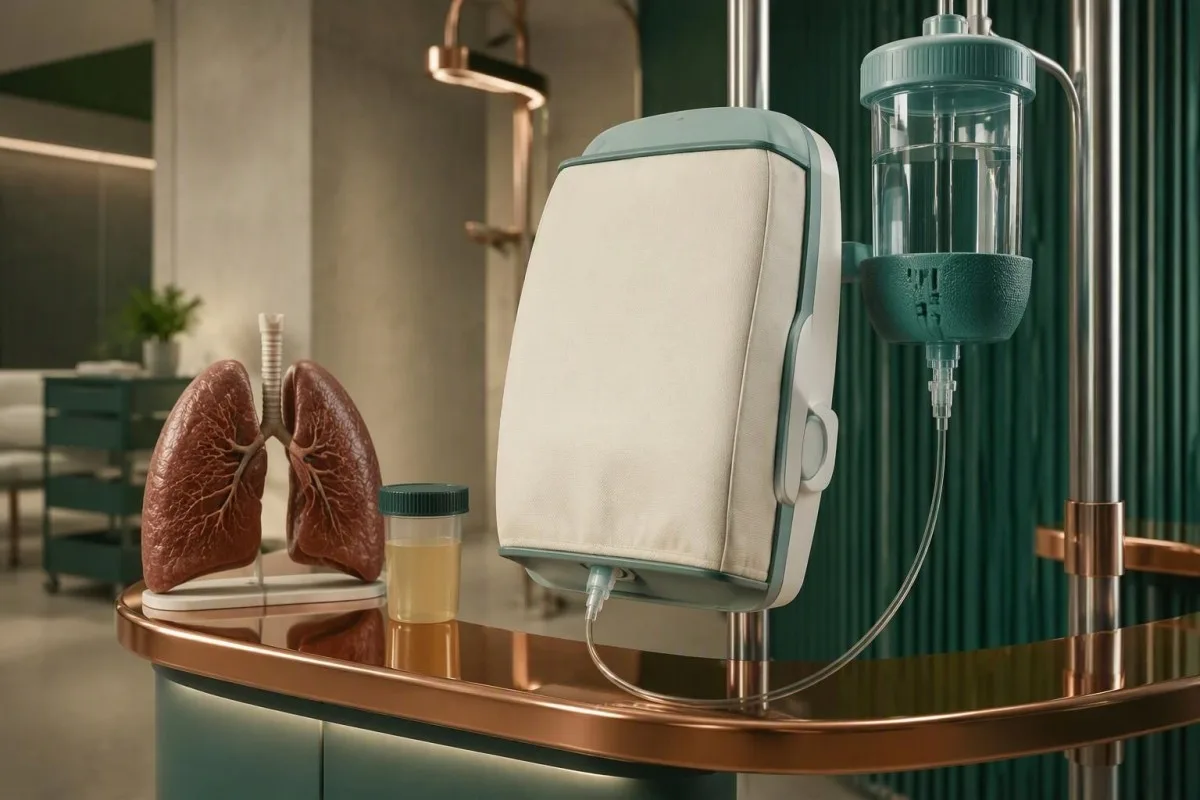
Common adult clinician-selected regimens include azithromycin 500 mg once daily or levofloxacin 750 mg once daily, given orally or intravenously as appropriate. These are examples, not instructions to self-treat; kidney function, pregnancy, interactions, local guidance, and the overall pneumonia regimen can change the choice.
A beta-lactam such as amoxicillin alone does not provide reliable treatment for Legionella pneumonia, because effective intracellular activity matters. A penicillin allergy does not automatically prevent use of the usual Legionella-active options, although other pneumonia coverage may be needed; our penicillin allergy reassessment guide explains that separate decision.
Levofloxacin generally requires dose adjustment when creatinine clearance is below 50 mL/min, while both commonly used drug classes require attention to QT prolongation and interacting medicines. People taking warfarin may need additional INR monitoring during illness or antibiotic treatment, as described in our antibiotics and INR guide.
Severe disease, complications, or substantial immunosuppression can justify longer courses, sometimes 14–21 days, rather than a fixed duration based on the urine result. Evidence comparing antibiotic choices is not definitive enough to declare one option best for every patient; clinical response and adverse-effect risk remain central.
Why can urine antigen stay positive after treatment?
Persistent Legionella urinary antigen positivity does not necessarily mean treatment failure, because the test detects bacterial material rather than bacterial viability. Antigen can remain detectable for weeks and occasionally months, so a positive test 4 weeks after treatment must be interpreted against recovery and previous results.

Kohler et al. documented prolonged urinary antigen excretion in Legionnaires’ disease in the 1984 Journal of Clinical Microbiology paper on its onset and duration. The practical consequence is still relevant: antigen clearance and clinical recovery run on different timelines, and there is no universal day when every successful course produces a negative urine test.
For a hypothetical example, a 61-year-old completes a prescribed 10-day course, no longer has fever, and returns to their usual oxygen saturation. A positive urine antigen 3 weeks later, without new symptoms, is not sufficient reason to restart antibiotics or label the treatment unsuccessful.
Routine repeat urine antigen testing is generally not a test of cure. If symptoms recur at 6 weeks, clinicians reassess the lungs, oxygenation, treatment history, and possible alternative causes; the old antigen result cannot independently distinguish relapse, a new illness, or residual antigen excretion.
Kantesti separates a historical serogroup 1 antigen finding from companion blood-test trends rather than treating every positive flag as evidence of ongoing disease. Our guide to resultats després de l'alta hospitalària explains why persistent abnormalities need context, especially when the patient is improving clinically.
How do clinicians judge recovery or treatment failure?
Clinicians judge Legionella treatment response using fever, breathing, oxygen requirements, circulation, function, and complications—not urine antigen clearance. Some improvement is often expected within 48–72 hores of effective treatment, but severe pneumonia can recover more slowly and deterioration at any time needs reassessment.
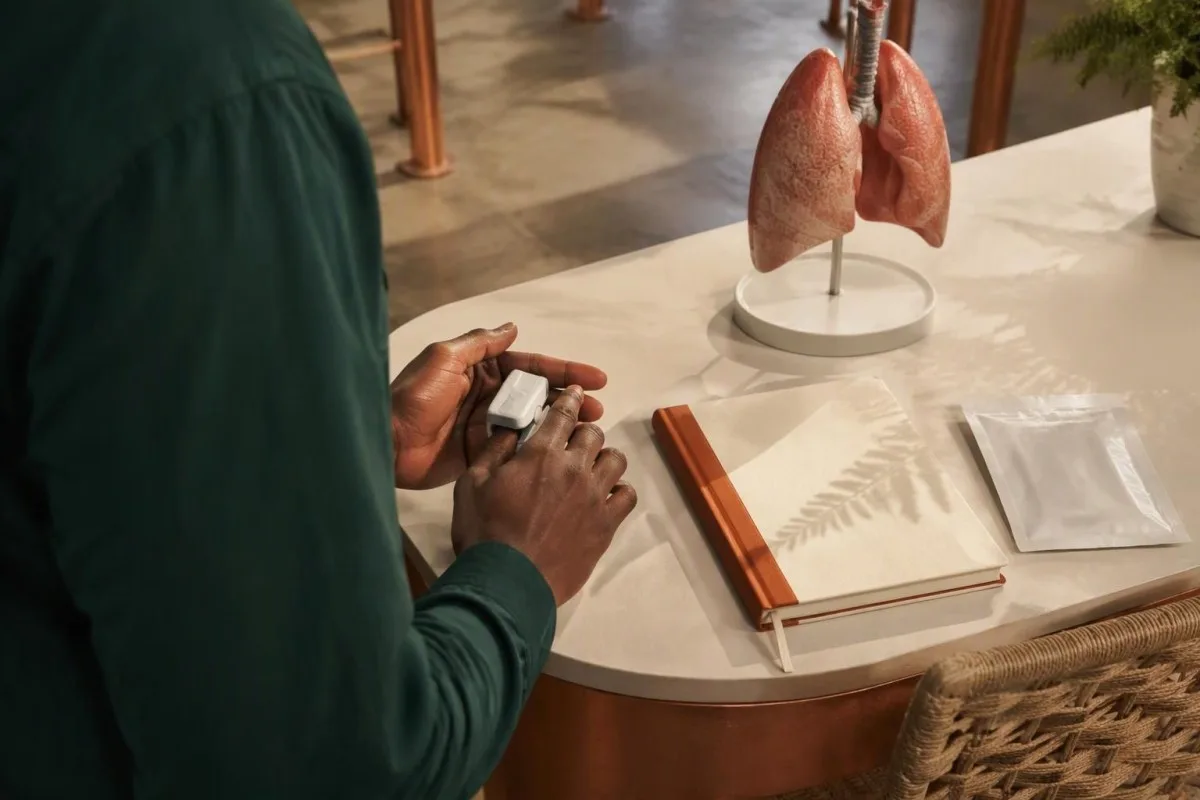
A lingering cough or reduced stamina at 2 weeks does not by itself establish persistent bacterial illness. Lung imaging can also lag behind clinical recovery for several weeks; clinicians interpret the direction of change, not just whether every symptom or radiographic opacity has disappeared.
Escalating oxygen needs, recurrent high fever, worsening blood pressure, or new confusion are more concerning than a persistently positive serogroup 1 antigen. Those changes may reflect an inadequate regimen, poor absorption, a complication, a second infection, or an alternative diagnosis rather than simple slow antigen clearance.
A hypothetical patient whose CRP falls from 160 to 70 mg/L but whose room-air oxygen saturation drops from 95% to 89% is not showing a safely reassuring overall pattern. The respiratory deterioration warrants urgent review even though one laboratory marker is improving.
Record the dates of symptoms, specimen collection, first effective antibiotic dose, and major changes in oxygen or fever. Our guia de temps de laboratori explains why comparing day 2 of treatment with day 10 is often more meaningful than comparing two isolated positive flags.
Does a positive test mean you are contagious?
Legionnaires’ disease is usually acquired from inhaling contaminated water aerosols or, less often, aspirating contaminated water; routine person-to-person spread is not expected. Symptoms commonly begin 2–10 dies després de l’exposició, and a positive urine antigen does not identify where exposure occurred or how contagious someone is.
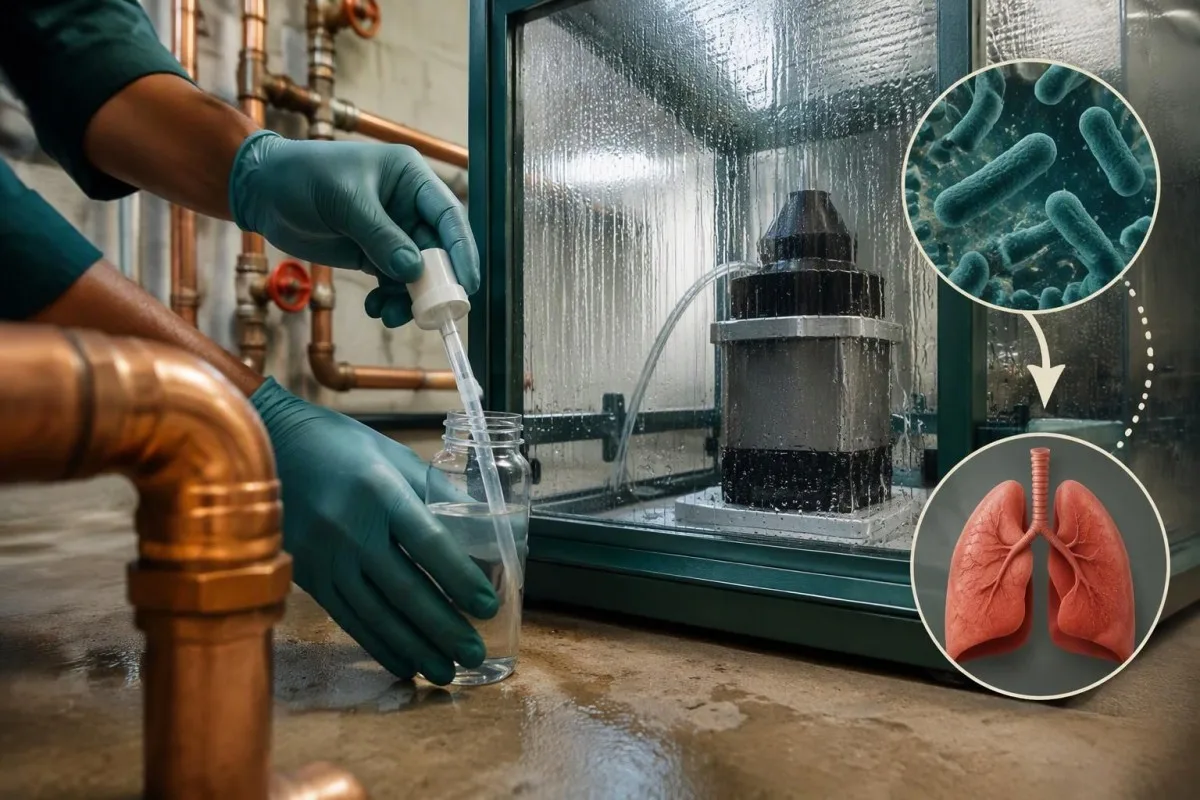
Showers, hot tubs, cooling towers, and complex building water systems can create relevant aerosols, but finding one of these exposures does not prove its source. For a person with a serogroup 1 result, public health investigators may need travel dates, accommodation details, healthcare stays, and other potentially shared exposures.
An exposure history usually starts with the 10 days before symptom onset, although investigators may ask about a longer interval in selected situations. Keep dates rather than relying on memory alone; the same hotel visit can be relevant or irrelevant depending on when symptoms began.
Family members do not usually need antibiotics or urine testing simply because one household member has Legionnaires’ disease. A relative who develops fever and cough after the same 3-day hotel stay, however, needs assessment because the two people may share an environmental exposure rather than have infected each other.
Persistent antigen does not establish ongoing transmission risk. That differs from some gastrointestinal viruses, where contagiousness after symptoms can be a separate concern; our norovirus recovery and transmission guide describes a different organism and should not be used to set isolation rules for Legionella.
Which symptoms need urgent or emergency care?
A positive Legionella urine antigen with new breathlessness, confusion, fainting, or deteriorating oxygenation needs urgent medical assessment. For most adults without an individualized oxygen target, room-air saturation at or below 92% warrants prompt review; severe breathing difficulty or saturation at or below 90% needs emergency attention.
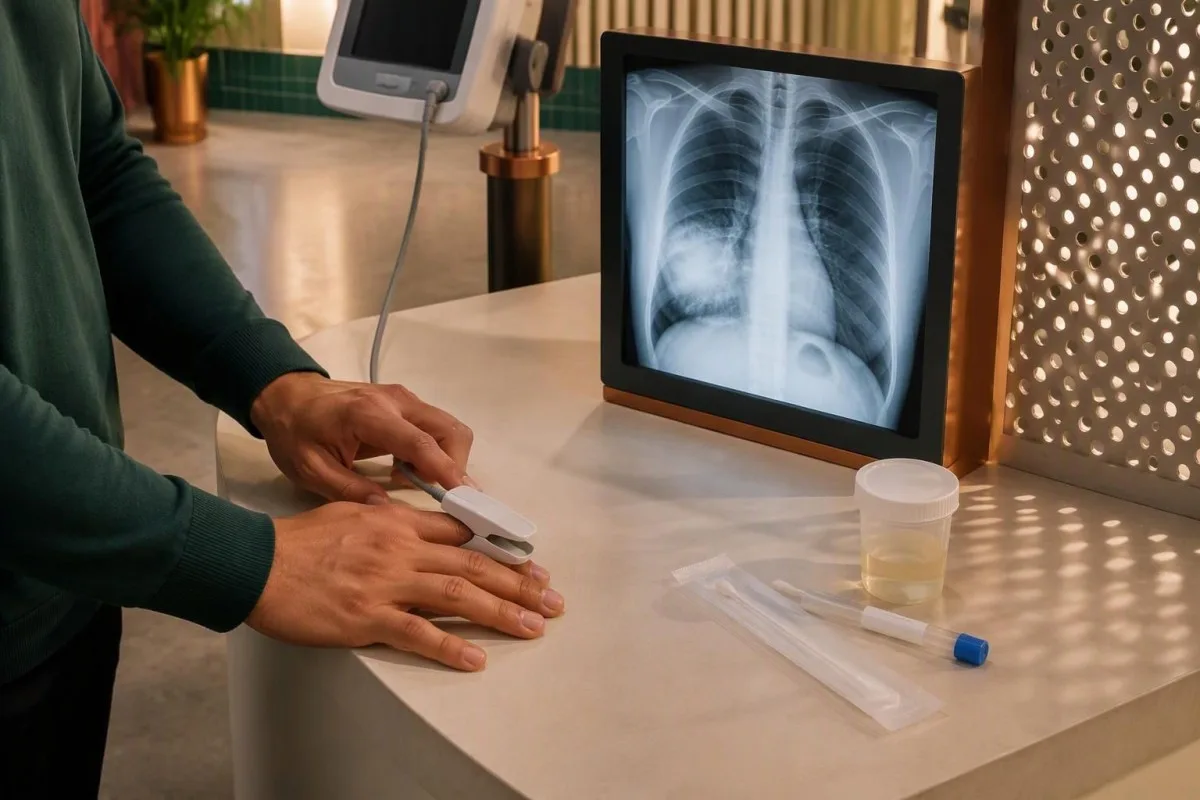
Do not wait for another laboratory result if breathing is rapidly worsening. A respiratory rate of 30 breaths per minute or more, new confusion, or systolic blood pressure below 90 mmHg can indicate serious pneumonia or circulatory compromise and should prompt immediate clinical evaluation.
Home pulse oximeters have limitations, including motion, cold hands, nail coverings, and performance differences across skin pigmentation. Repeat an unexpected reading after resting and warming the hand, but do not use a seemingly normal value such as 95% to dismiss severe breathlessness, blue-gray lips, or altered awareness.
Some people with chronic respiratory disease have a prescribed oxygen target of 88–92%, so their usual care plan matters. A new need for more oxygen, a significant fall from baseline, or worsening symptoms remains concerning even when the reading is inside that target interval.
Hospitals may use an gas de sang arterial when they need more detail about oxygen, carbon dioxide, or acid–base status. Our guia d'analítica de sang arterial explains why these measurements answer severity questions that a serogroup 1 urine antigen cannot.
How can AI help organize the follow-up safely?
AI can help explain companion blood tests and organize questions, but it cannot independently diagnose Legionella pneumonia or determine treatment success from 1 urine result. Keep the antigen report, specimen date, respiratory test status, prescribed treatment, and symptom timeline together for discussion with the treating team.
Kantesti és una plataforma d’interpretació d’anàlisi de sang AI that helps make companion results, such as sodium of 130 mmol/L or a changing creatinine, easier to understand. Our guia de tecnologia d’IA explains the interpretation workflow, but blood-test analysis is not validation of a Legionella urine assay.
Preserve units, reference intervals, collection dates, and any comments about serogroup 1 coverage. A sodium result of 130 mmol/L before intravenous fluids and another result of 136 mmol/L afterward represent a treatment-linked sequence; removing dates can make the explanation less reliable.
Useful follow-up questions include whether pneumonia was demonstrated, whether the antibiotic covers Legionella, and whether a respiratory PCR or culture was collected. A 7-day prescription may be entirely appropriate in one clinical setting and insufficient in another, so ask about the reasoning rather than comparing duration alone.
Kantesti AI cannot assess your current oxygen requirement, hear lung findings, or confirm whether a recurring positive at week 4 represents residual antigen. Our guia de seguretat de la explicació d'IA describes source checking and escalation boundaries; contact your clinician for treatment changes instead of acting on an automated explanation.
Which evidence supports this interpretation?
The clinical interpretation rests on 3 complementary evidence sources: a urinary antigen accuracy meta-analysis, adult pneumonia guidance, and research documenting prolonged antigen excretion. The separate publications listed below describe broader blood-test interpretation topics and should not be mistaken for clinical validation of Legionella diagnosis or treatment.
Shimada et al. (2009) provide the approximately 74% sensitivity and 99.1% specificity estimates used in the worked examples. Those values come from pooled studies with different methods and patient populations, so they are useful for understanding uncertainty rather than predicting an exact result for an individual laboratory.
Metlay et al. (2019) address adult community-acquired pneumonia and support paired Legionella testing in severe disease. The guideline does not turn a positive antigen into a severity score, and its recommendations should not be transferred unchanged to children, every immunocompromised patient, or every healthcare-associated case.
Kohler et al. (1984) show why persistent antigen must be separated from bacterial viability and treatment response. A positive result at 4 setmanes needs a symptom-based reassessment if the person is unwell, but the duration alone cannot establish failure; this is a diagnostic limitation, not permission to ignore recurrent pneumonia.
The 2 Kantesti publications below are platform-related resources, not independent Legionella treatment trials; our estàndards de contingut mèdic explain how educational claims should be distinguished from diagnostic evidence. The accompanying RDW and CBC resource concerns red-cell measurements, which may appear on a hospital report but do not confirm Legionnaires’ disease.
Preguntes freqüents
Un antigen urinari positiu de Legionella confirma la malaltia dels legionaris?
Un antigen urinari positiu de Legionella dona un fort suport al diagnòstic de la malaltia dels legionaris quan una persona presenta símptomes compatibles i evidència de pneumònia. La majoria de les proves estàndard detecten principalment Legionella pneumophila del serogrup 1, i no totes les espècies de Legionella. Una metanàlisi del 2009 va informar d’una especificitat d’aproximadament 99,1%, però continuen sent possibles els falsos positius i la persistència d’antigen després d’una malaltia prèvia. Un resultat inesperat en absència de pneumònia requereix una revisió clínica i de laboratori, en lloc d’un tractament automàtic.
Puc tenir la malaltia dels legionaris amb un antigen urinari negatiu?
Sí, un antigen urinari negatiu de Legionella no exclou la malaltia del legionari. La prova pot no detectar serogrups o espècies que no són objectiu, i una metanàlisi va informar d’una sensibilitat aproximada del 74 % dins de l’abast de detecció estudiat. Amb aquesta sensibilitat, es passarien per alt aproximadament 26 de cada 100 infeccions objectiu en les mateixes condicions. La PCR respiratòria o el cultiu aporten valor quan la pneumònia és greu o la sospita continua sent alta.
Quant de temps pot continuar sent positiu l’antigen urinari de Legionella?
L’antigen urinari de Legionella pot continuar sent detectable durant setmanes i, ocasionalment, mesos després de la malaltia aguda. Un resultat positiu 4 setmanes després del tractament pot indicar la presència de material bacterià residual, més que no pas d’organismes supervivents. No hi ha un dia universal en què desaparegui, i les proves rutinàries d’antigen urinari generalment no serveixen per confirmar la curació. La febre recurrent, l’empitjorament de la respiració o la necessitat creixent d’oxigen requereixen una nova valoració, independentment del resultat de l’antigen.
Necessito un altre cicle d’antibiòtics si el meu antigen encara és positiu?
La positivitat persistent de l’antigen urinari de Legionella, per si sola, no és motiu per reprendre els antibiòtics. Molts casos no complicats reben tractament durant uns 7–10 dies, però el professional sanitari responsable determina la durada adequada segons la gravetat, l’estat immunitari i la resposta. Una persona que millora clínicament pot continuar donant positiu a l’antigen sense que això indiqui un fracàs del tractament. Els símptomes nous o que empitjoren requereixen una valoració mèdica, en lloc de prendre una decisió sobre els antibiòtics basant-se només en la repetició de la prova d’orina.
Per què demanar una PCR respiratòria o un cultiu després d’un antigen urinari positiu?
La PCR o el cultiu respiratoris poden aportar informació que un antigen urinari positiu no pot proporcionar, incloent-hi la detecció d’un ventall més ampli de microorganismes o un aïllat per a la investigació d’un brot. La guia de l’ATS/IDSA de 2019 recomana l’antigen urinari més el cultiu de les vies respiratòries inferiors o una prova d’àcids nucleics en la pneumònia greu adquirida a la comunitat. La cobertura de la PCR depèn de la prova, i el cultiu pot trigar diversos dies. Aquests 2 tipus de mostra són complementaris, per la qual cosa recollir una mostra respiratòria pot continuar sent útil encara que el resultat urinari ja sigui positiu.
La presència de Legionella en una prova d’antigen urinari vol dir que hi ha una infecció urinària?
Un antigen urinari positiu per a Legionella sol reflectir material bacterià excretat durant una malaltia pulmonar, no pas una infecció de la bufeta. Les proves estàndard solen detectar l’antigen del serogrup 1 de Legionella pneumophila i no demostren que hi hagi bacteris vius proliferant a l’orina. El cultiu d’orina rutinari i la prova d’antigen urinari responen a preguntes diferents. Una persona amb dificultat respiratòria de nova aparició i una saturació d’oxigen igual o inferior a 92% hauria de demanar una valoració mèdica prompta per la malaltia respiratòria, en lloc d’interpretar el resultat com una infecció urinària rutinària.
Fes que t’expliquin els resultats anàlisi de sang
Puja l’informe del laboratori i la IA de Kantesti t’explicarà cada biomarcador en llenguatge planer en qüestió de segons. Més de 2 milions de persones d’arreu del món ja l’han utilitzat.
Referències
- Klein, T., Mitchell, S., & Weber, H. (2026). Analitzador d’anàlisi de sang amb IA: 2,5M proves analitzades | Global Health Report 2026. Recerca mèdica amb IA de Kantesti. DOI
- Klein, T., Mitchell, S., & Weber, H. (2026). Anàlisi de sang RDW: guia completa sobre RDW-CV, MCV i MCHC. Recerca mèdica amb IA de Kantesti. DOI
- Shimada T et al. (2009). Systematic review and metaanalysis: urinary antigen tests for Legionellosis. Chest.
- Metlay JP et al. (2019). Diagnosis and Treatment of Adults with Community-acquired Pneumonia. An Official Clinical Practice Guideline of the American Thoracic Society and Infectious Diseases Society of America. American Journal of Respiratory and Critical Care Medicine. DOI
- Kohler RB et al. (1984). Onset and duration of urinary antigen excretion in Legionnaires disease. Journal of Clinical Microbiology.
- Més de 2 milionsProves analitzades
- 127+Països
- 100+Idiomes
Sobre l’equip mèdic


Senyals de confiança E-E-A-T
Experiència
Revisió clínica liderada per metges dels fluxos de treball d’interpretació de laboratori.
Experiència
Enfocament en medicina de laboratori sobre com es comporten els biomarcadors en context clínic.
Autoritat
Revisat mèdicament pel Dr. Thomas Klein, amb aportacions de la Dra. Sarah Mitchell i el Prof. Dr. Hans Weber.
Fiabilitat
Interpretació basada en l’evidència amb vies de seguiment clares per reduir l’alarma.

Exempció de responsabilitat mèdica
Aquest article és només per a finalitats educatives i no constitueix assessorament mèdic. Consulteu sempre un professional sanitari qualificat per a decisions de diagnòstic i tractament.
Publicat · Contacteu amb l’equip editorial
Publicat per Kantesti Ltd, registrat a Anglaterra i Gal·les, número de societat. 17090423, Londres, Regne Unit.
