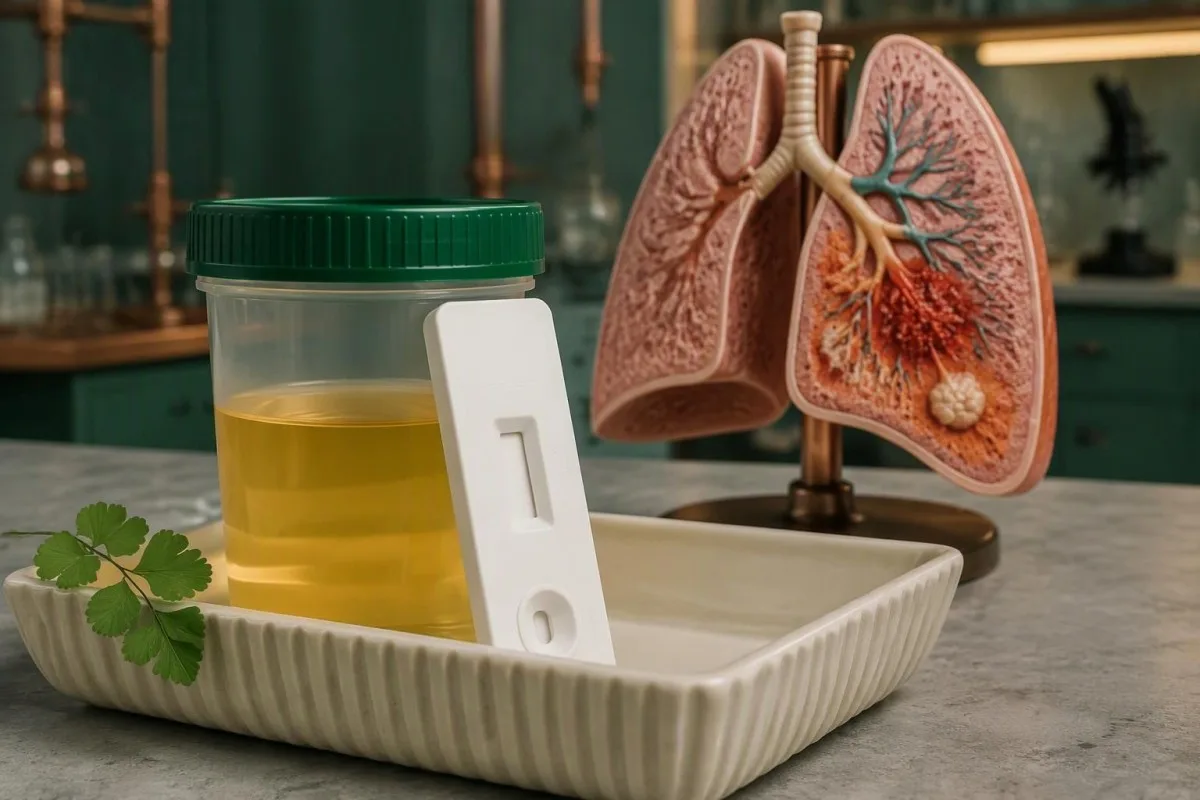
A positive Legionella urine antigen strongly supports Legionnaires’ disease when symptoms and imaging show pneumonia. Most assays detect Legionella pneumophila serogroup 1; respiratory PCR or culture can find infections the urine test misses, and persistent positivity after recovery does not necessarily mean treatment failure.

মূল কথাসমূহ
- പോസിറ്റീവ് ഫലം strongly supports Legionella pneumonia in a compatible illness; it usually identifies Legionella pneumophila serogroup 1 rather than every Legionella species.
- Test accuracy was approximately 74% sensitivity and 99.1% specificity in a 2009 meta-analysis, with performance varying by assay, illness severity, and study design.
- നെഗറ്റീവ് ഫലം cannot exclude Legionnaires’ disease: a test with 74% sensitivity would miss about 26 of every 100 infections within its detection scope.
- Paired testing uses 2 complementary specimens—urine plus a lower respiratory sample—to improve detection and support outbreak investigation.
- Persistent antigen can remain detectable for weeks or months; a positive result 4 weeks after treatment is not, by itself, evidence of surviving bacteria.
- Antibiotic treatment often lasts 7–10 days in uncomplicated Legionella pneumonia, but the appropriate drug and duration depend on clinical severity and immune status.
- তৎক্ষণাৎ মূল্যায়ন is warranted for new breathlessness with oxygen saturation at or below 92% on room air; severe breathing difficulty or a reading at or below 90% needs emergency attention.
- Companion blood tests assess complications rather than identify Legionella: sodium below 135 mmol/L indicates hyponatremia, not a Legionella-specific diagnosis.
What does a positive Legionella urine antigen mean?
A legionella urine antigen positive result means the laboratory detected Legionella antigen in urine, usually from Legionella pneumophila serogroup 1. In someone with fever, cough, breathlessness, and imaging-confirmed pneumonia, the result strongly supports Legionnaires’ disease and should prompt timely clinical treatment.
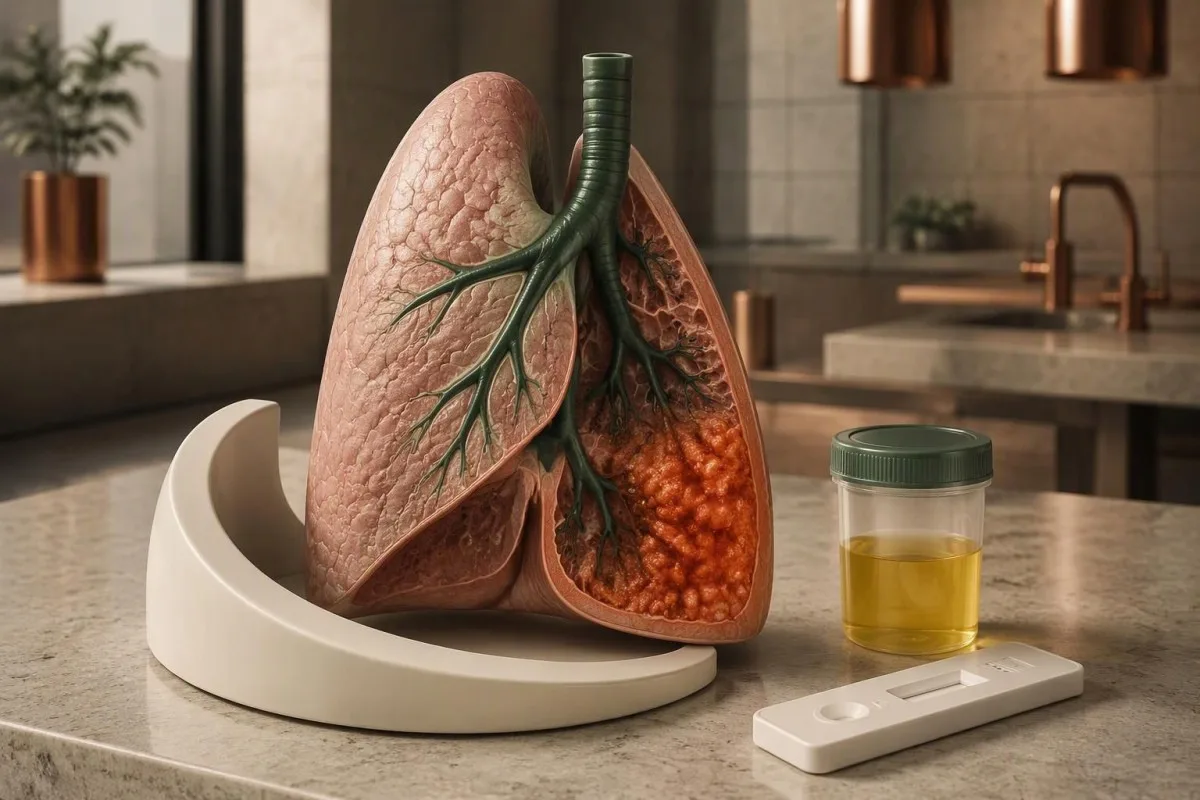
The positive result identifies a likely cause of pneumonia, not its severity. Two people with the same serogroup 1 result can have very different oxygen needs, kidney function, and treatment settings; clinicians decide between home treatment and admission using the whole clinical picture.
An unexpected positive without pneumonia deserves a different conversation. A person treated for Legionnaires’ disease 6 weeks earlier may still excrete antigen, whereas a person with no previous illness may need the laboratory result checked against symptoms, imaging, and possible assay interference.
For a hypothetical example, a 58-year-old with a temperature of 39°C, a new lung infiltrate, and a positive antigen has several findings pointing in the same direction. The same urine result in a well person with normal imaging does not automatically establish a new episode of pneumonia.
কান্টেষ্টি হৈছে এক... এ আই ব্লাড টেষ্ট এনালাইজাৰ that helps explain companion laboratory findings without substituting for assessment of serogroup 1 pneumonia; our সংস্থা আৰু উদ্দেশ্য explain that distinction. If breathing symptoms are the immediate concern, our shortness of breath guide describes why laboratory results cannot replace examination and oxygen measurement.
Why does a lung infection produce a positive urine test?
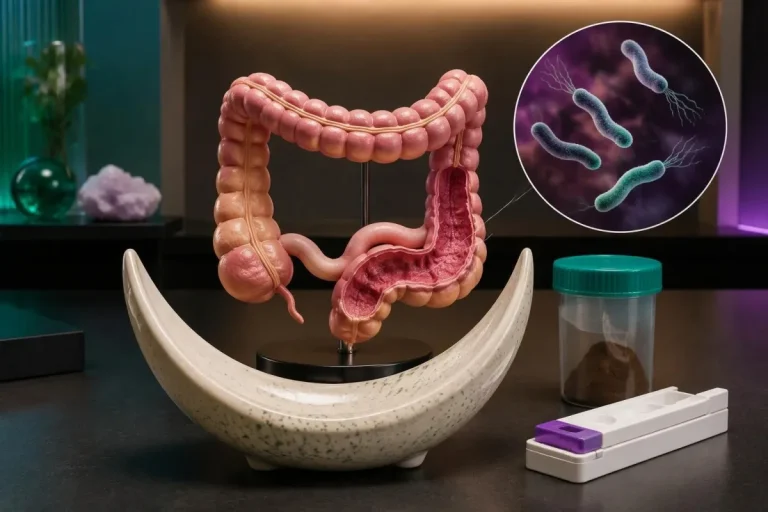
দ্য... Legionella urinary antigen test detects bacterial material excreted into urine during an illness that usually affects the lungs. A positive serogroup 1 antigen result does নহয় mean Legionella is causing a bladder infection, and it is not equivalent to a positive routine urine culture.
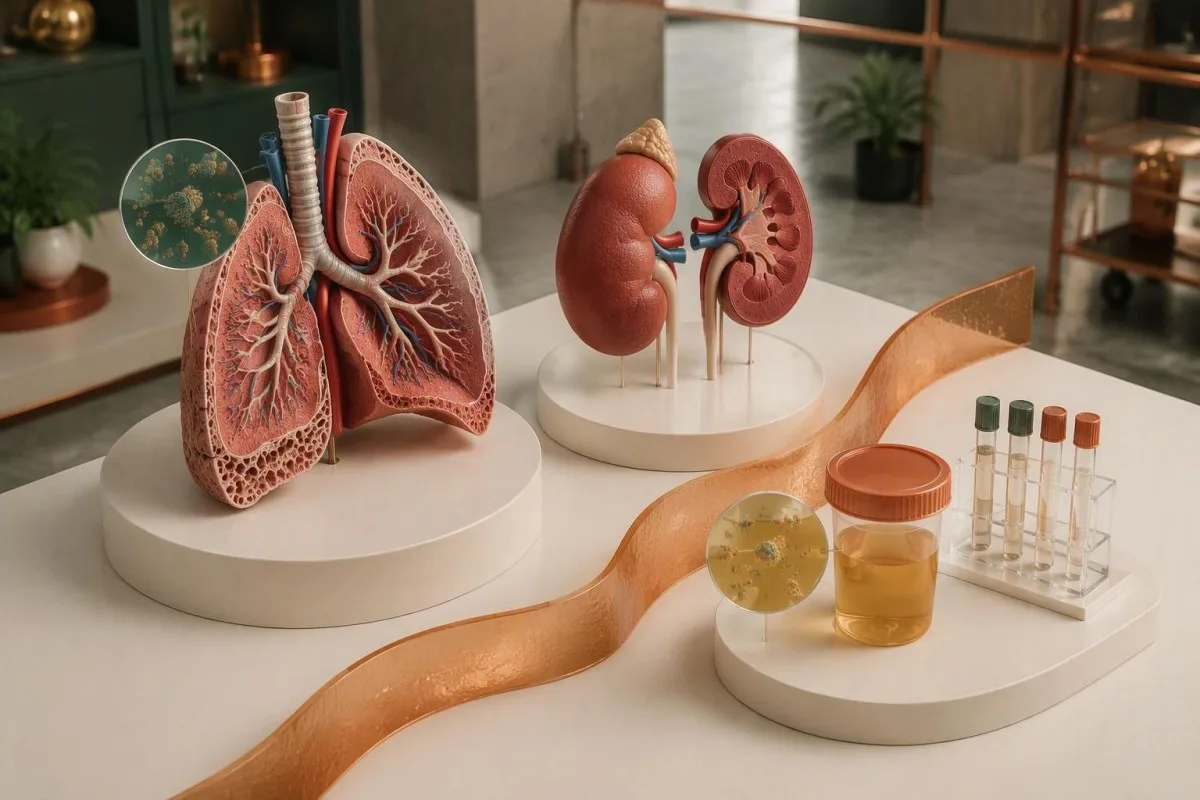
Antigen is a bacterial component recognized by the assay, rather than proof that living organisms are present in the urine. The serogroup 1 target is generally associated with the bacterial surface lipopolysaccharide, which can remain detectable after antibiotics have controlled the pulmonary illness.
Most reports are গুণগত: detected or not detected, rather than a concentration in ng/mL. Our explanation of গুণগত বনাম পৰিমাণগত ফলাফল helps clarify why a positive flag cannot be converted into a bacterial count or a severity score.
A fresh urine specimen is generally sufficient; a 24-hour urine collection is not routinely required for this assay. Collection volume, storage conditions, and acceptance criteria depend on the laboratory, so follow the supplied instructions rather than borrowing preparation rules from unrelated urine tests.
Do not interpret cassette appearance as a treatment trend. Even when a laboratory uses a lateral-flow method, the apparent intensity of a signal is not a validated measure of pneumonia burden, and a stronger-looking result on day 7 cannot establish that treatment is failing.
Why does the urine test mainly detect serogroup 1?
Most commonly used Legionella urine antigen assays are designed to recognize Legionella pneumophila serogroup 1, a major cause of Legionnaires’ disease. Their antibody targets do not reliably detect every other serogroup or Legionella species, so the test’s biological coverage is narrower than its name suggests.
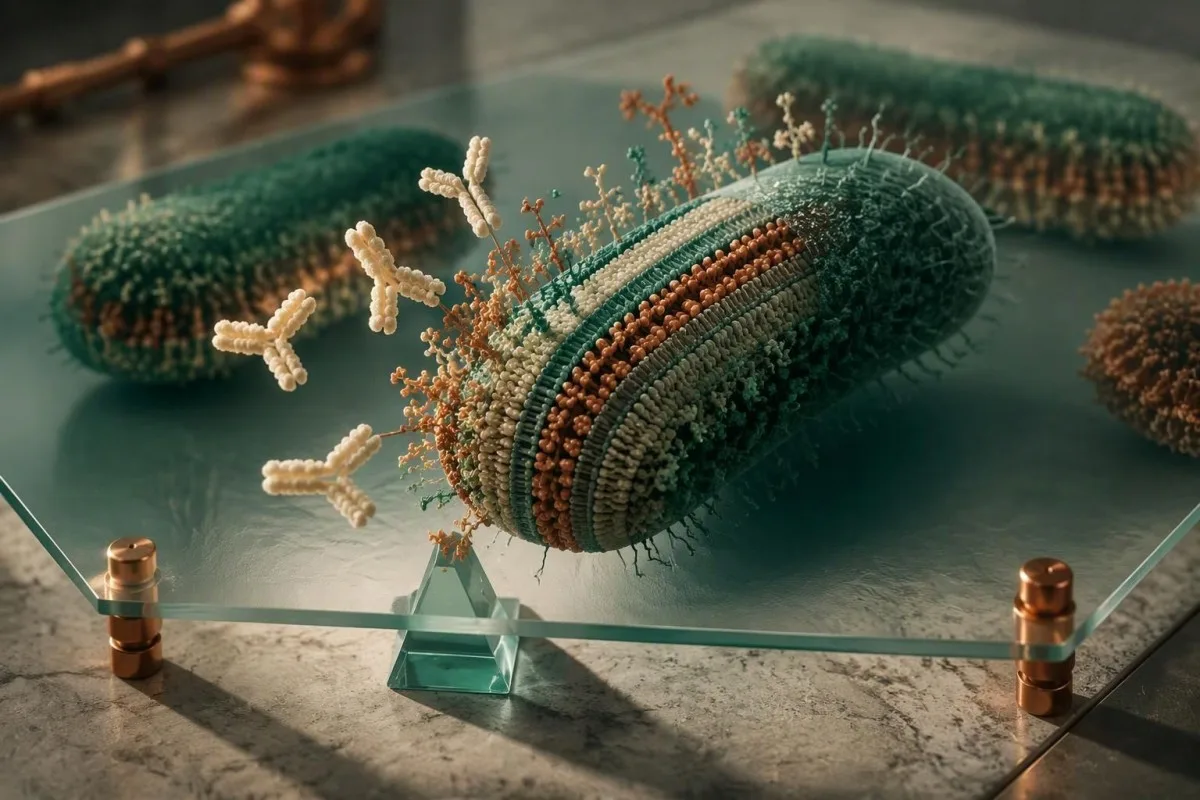
A serogroup is a grouping based on antigenic differences, not a stage of illness. Serogroup 1 does not mean early disease, a first infection, or a milder infection; it identifies a bacterial antigen pattern recognized by the test.
Other L. pneumophila serogroups and species such as Legionella longbeachae can cause pneumonia despite a negative standard urine antigen. Potting mix or compost exposure can be particularly relevant to L. longbeachae, while healthcare-associated disease may involve organisms outside the standard assay’s reliable detection scope.
Laboratories differ in their assays and reporting language. Ask whether the method specifically detects serogroup 1, whether a broader assay was used, and whether an additional respiratory test is pending; never assume an unfamiliar brand or a generic report heading proves broader coverage.
A negative narrow-target test should not redirect treatment solely because another pneumonia marker is positive. For example, a positive antibody result for a second organism may reflect timing or previous exposure rather than the cause of the current illness, as our Mycoplasma IgM interpretation এ ব্যাখ্যা কৰে।.
How accurate is the Legionella antigen test?
Legionella antigen test accuracy is generally stronger for confirming than excluding the infection within the assay’s detection scope. A meta-analysis reported approximately 74% sensitivity আৰু 99.1% specificity, but those pooled estimates are not a guarantee for every current assay or every patient population.
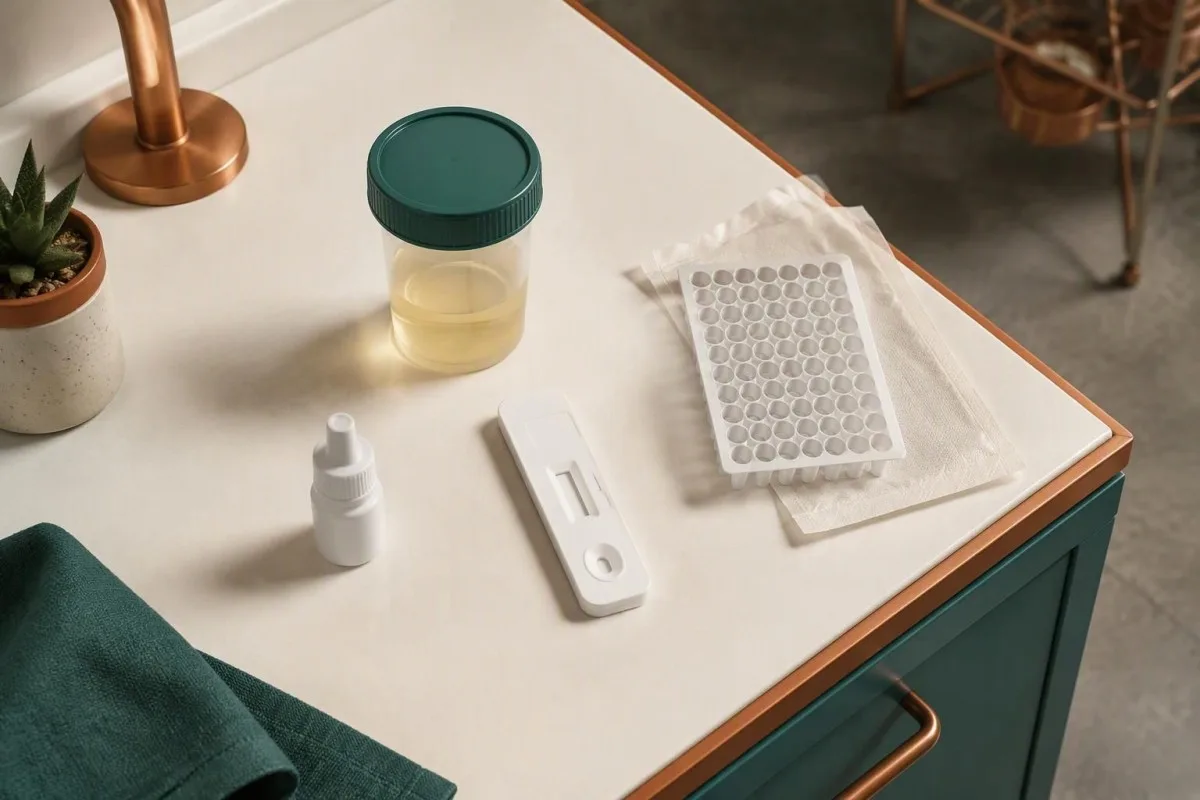
Shimada et al. reported these pooled figures in their 2009 Chest systematic review and meta-analysis. Sensitivity describes how often infected people test positive; specificity describes how often people without the target condition test negative, and neither figure alone tells an individual their probability of disease.
Consider a clearly hypothetical group of 10,000 people being tested, with a 5% prevalence of the target infection. Using 74% sensitivity and 99.1% specificity gives about 370 true positives and 86 false positives, so roughly 81% of positive results would represent the target infection under those assumptions.
Change only the hypothetical prevalence to 20%, and the same calculation gives about 1,480 true positives and 72 false positives—a positive predictive value near 95%. This is why a positive result is more convincing in someone with compatible pneumonia than in indiscriminate screening of well people.
Kantesti AI distinguishes the published 99.1% specificity estimate from the much broader question of whether a person currently has pneumonia. Our validation and clinical boundaries concern our interpretation methods; they do not certify the performance of a hospital’s Legionella assay or make false-positive results impossible.
Can a negative Legionella urine antigen miss disease?
A negative Legionella urine antigen does not rule out Legionnaires’ disease, especially when the organism is outside serogroup 1 or clinical suspicion remains high. Early sampling and variation in antigen excretion can also contribute, so a lower respiratory PCR or culture may be needed.
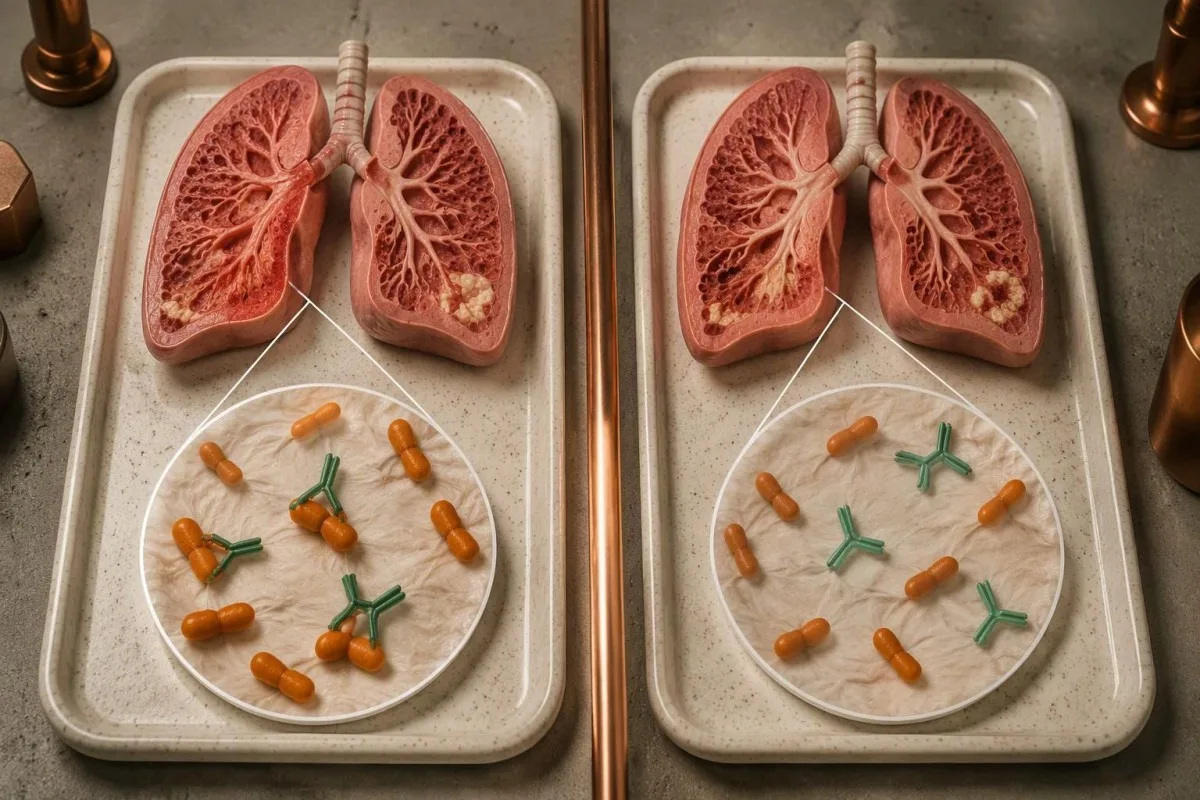
Using the pooled 74% sensitivity as an illustration, approximately 26 of 100 infections within the studied detection scope would be missed. That calculation does not include every infection caused by non-target species, so the test’s ability to exclude all Legionella pneumonia is more limited still.
A hypothetical 67-year-old with severe pneumonia after a hotel stay may need further Legionella testing despite a negative urine result on the first day of admission. The reason is not that travel proves the diagnosis; it raises suspicion enough that relying on one incomplete test could miss a treatable cause.
Repeating urine testing can sometimes be considered when timing or specimen quality is in doubt, but a second negative does not solve a serogroup mismatch. A respiratory assay with appropriate species coverage answers a different question and may add more value than repeatedly ordering the same urine method.
Sampling windows also affect other respiratory tests, although their exact rules differ from Legionella. Our respiratory PCR timing guide illustrates the broader principle: a negative result must be interpreted against specimen site, method, timing, and treatment rather than treated as a universal exclusion.
When do respiratory PCR and culture add value?
Respiratory PCR and culture add value when pneumonia is severe, the urine result is negative despite suspicion, broader Legionella detection is needed, or an outbreak is being investigated. Collecting 2 complementary specimens—urine and a lower respiratory sample—can support both immediate diagnosis and public health investigation.

The 2019 ATS/IDSA community-acquired pneumonia guideline recommends Legionella urinary antigen testing plus lower respiratory culture or nucleic acid testing in severe pneumonia (Metlay et al., 2019). It also supports urinary antigen testing when epidemiological factors, such as recent travel or an outbreak association, make Legionella more likely.
PCR detects bacterial genetic material and can return sooner than culture, but its coverage depends on the exact assay. Some tests target L. pneumophila, others detect a broader Legionella group, and not every respiratory multiplex panel includes Legionella; ask what was actually tested rather than assuming a negative panel excludes serogroup 1.
Culture requires a respiratory specimen and special media, commonly buffered charcoal yeast extract, and may take several days. Its distinctive benefit is recovery of an organism that public health laboratories can compare with environmental isolates, whereas a urine antigen result alone cannot match an individual case to a particular water system.
Collect sputum before antibiotics when feasible, but do not delay necessary treatment to obtain it; laboratories may retain cultures for around 10 days before final reporting. Exposure details help guide additional investigations: water-associated illness testing আৰু Q fever এণ্টিবডীৰ ব্যাখ্যা-নিৰ্দেশিকা explain different exposure-driven pathways, not substitute tests for Legionella.
What do sodium, CRP, and kidney results contribute?
Blood tests help assess the consequences of Legionella pneumonia, but no sodium, CRP, or white cell cutoff independently confirms it. Serum sodium below 135 mmol/L indicates hyponatremia; clinicians interpret that finding alongside hydration, glucose, medications, kidney function, and the respiratory illness.
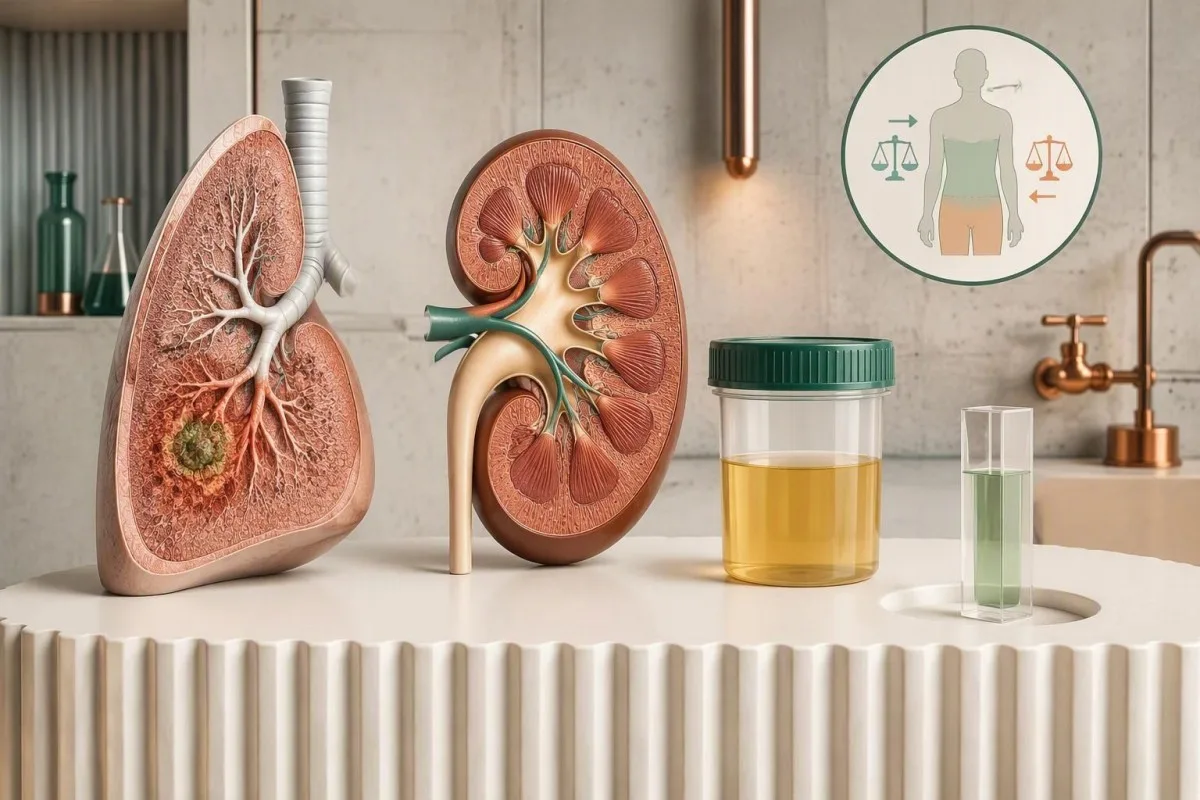
Low sodium does not automatically mean SIADH, and it does not specifically identify serogroup 1 disease. Vomiting, diarrhea, fluid intake, diuretics, and other illnesses can produce overlapping patterns; our SIADH লেবৰेटरी গাইড explains why osmolality and clinical volume assessment matter before choosing treatment.
Urine sodium may help investigate hyponatremia, but a value such as 40 mmol/L means different things after a diuretic dose than before treatment. Our urine sodium interpretation shows why urine chemistry should not be confused with the separate Legionella urinary antigen test.
A creatinine increase of at least 0.3 mg/dL is one established criterion for acute kidney injury. Dehydration, sepsis, and medication effects may contribute during pneumonia, and our BUN আৰু creatinine গাইড explains why the ratio alone cannot determine the cause.
কান্টেষ্টি হৈছে এক... এআই বায়োমাৰ্কাৰ ইণ্টাৰপ্ৰিটেশন প্লেটফৰ্ম that can help contextualize a sodium of 129 mmol/L or a changing creatinine alongside other reported blood results. A hypothetical fall in CRP from 180 to 80 mg/L may support improvement, but worsening oxygenation overrides reassurance from that laboratory trend.
What treatment usually follows a positive result?
Compatible Legionella pneumonia usually requires an antibiotic active against an organism that multiplies inside cells, commonly azithromycin or a respiratory fluoroquinolone. Many uncomplicated cases receive about 7–10 দিন of treatment, but severity, immune status, response, and medication safety determine the actual prescription.
Common adult clinician-selected regimens include azithromycin 500 mg once daily or levofloxacin 750 mg once daily, given orally or intravenously as appropriate. These are examples, not instructions to self-treat; kidney function, pregnancy, interactions, local guidance, and the overall pneumonia regimen can change the choice.
A beta-lactam such as amoxicillin alone does not provide reliable treatment for Legionella pneumonia, because effective intracellular activity matters. A penicillin allergy does not automatically prevent use of the usual Legionella-active options, although other pneumonia coverage may be needed; our penicillin allergy reassessment guide explains that separate decision.
Levofloxacin generally requires dose adjustment when creatinine clearance is below 50 mL/min, while both commonly used drug classes require attention to QT prolongation and interacting medicines. People taking warfarin may need additional INR monitoring during illness or antibiotic treatment, as described in our antibiotics and INR guide.
Severe disease, complications, or substantial immunosuppression can justify longer courses, sometimes 14–21 days, rather than a fixed duration based on the urine result. Evidence comparing antibiotic choices is not definitive enough to declare one option best for every patient; clinical response and adverse-effect risk remain central.
Why can urine antigen stay positive after treatment?
Persistent Legionella urinary antigen positivity does not necessarily mean treatment failure, because the test detects bacterial material rather than bacterial viability. Antigen can remain detectable for weeks and occasionally months, so a positive test 4 weeks after treatment must be interpreted against recovery and previous results.
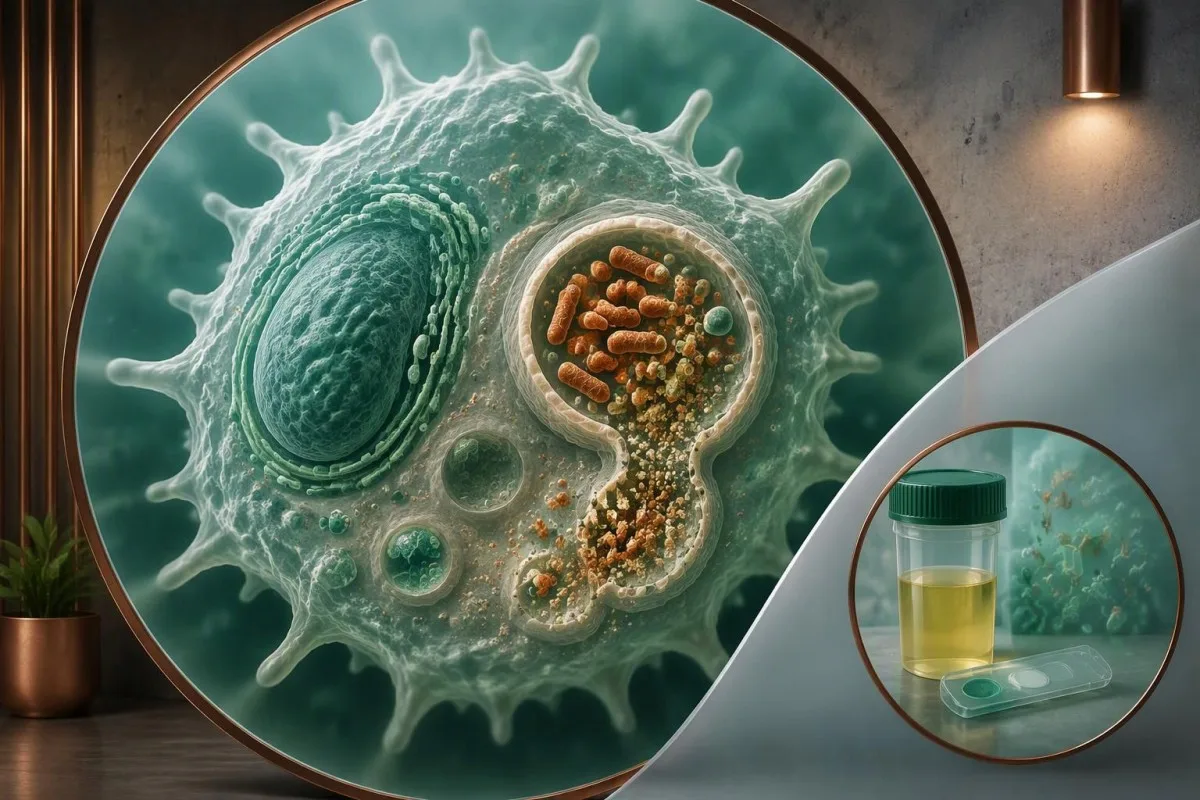
Kohler et al. documented prolonged urinary antigen excretion in Legionnaires’ disease in the 1984 Journal of Clinical Microbiology paper on its onset and duration. The practical consequence is still relevant: antigen clearance and clinical recovery run on different timelines, and there is no universal day when every successful course produces a negative urine test.
For a hypothetical example, a 61-year-old completes a prescribed 10-day course, no longer has fever, and returns to their usual oxygen saturation. A positive urine antigen 3 weeks later, without new symptoms, is not sufficient reason to restart antibiotics or label the treatment unsuccessful.
Routine repeat urine antigen testing is generally not a test of cure. If symptoms recur at 6 weeks, clinicians reassess the lungs, oxygenation, treatment history, and possible alternative causes; the old antigen result cannot independently distinguish relapse, a new illness, or residual antigen excretion.
Kantesti separates a historical serogroup 1 antigen finding from companion blood-test trends rather than treating every positive flag as evidence of ongoing disease. Our guide to চিকিৎসালয়ৰ পৰা छुट्टी পোৱাৰ পিছৰ ফলাফল explains why persistent abnormalities need context, especially when the patient is improving clinically.
How do clinicians judge recovery or treatment failure?
Clinicians judge Legionella treatment response using fever, breathing, oxygen requirements, circulation, function, and complications—not urine antigen clearance. Some improvement is often expected within 48–72 ঘণ্টা of effective treatment, but severe pneumonia can recover more slowly and deterioration at any time needs reassessment.
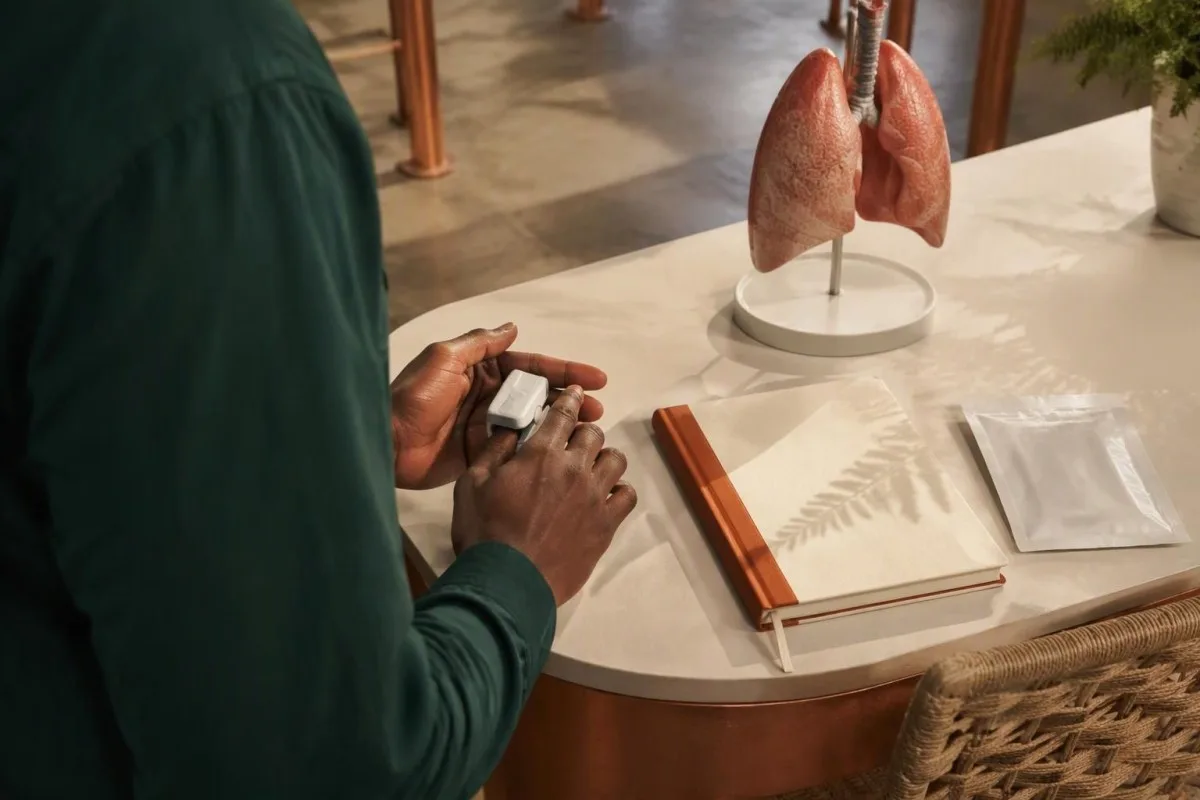
A lingering cough or reduced stamina at 2 weeks does not by itself establish persistent bacterial illness. Lung imaging can also lag behind clinical recovery for several weeks; clinicians interpret the direction of change, not just whether every symptom or radiographic opacity has disappeared.
Escalating oxygen needs, recurrent high fever, worsening blood pressure, or new confusion are more concerning than a persistently positive serogroup 1 antigen. Those changes may reflect an inadequate regimen, poor absorption, a complication, a second infection, or an alternative diagnosis rather than simple slow antigen clearance.
A hypothetical patient whose CRP falls from 160 to 70 mg/L but whose room-air oxygen saturation drops from 95% to 89% is not showing a safely reassuring overall pattern. The respiratory deterioration warrants urgent review even though one laboratory marker is improving.
Record the dates of symptoms, specimen collection, first effective antibiotic dose, and major changes in oxygen or fever. Our পৰীক্ষাগাৰৰ সময়সূচীৰ সহায়িকা explains why comparing day 2 of treatment with day 10 is often more meaningful than comparing two isolated positive flags.
Does a positive test mean you are contagious?
Legionnaires’ disease is usually acquired from inhaling contaminated water aerosols or, less often, aspirating contaminated water; routine person-to-person spread is not expected. Symptoms commonly begin সংক্ৰমণৰ 2–10 দিন পিছত, and a positive urine antigen does not identify where exposure occurred or how contagious someone is.
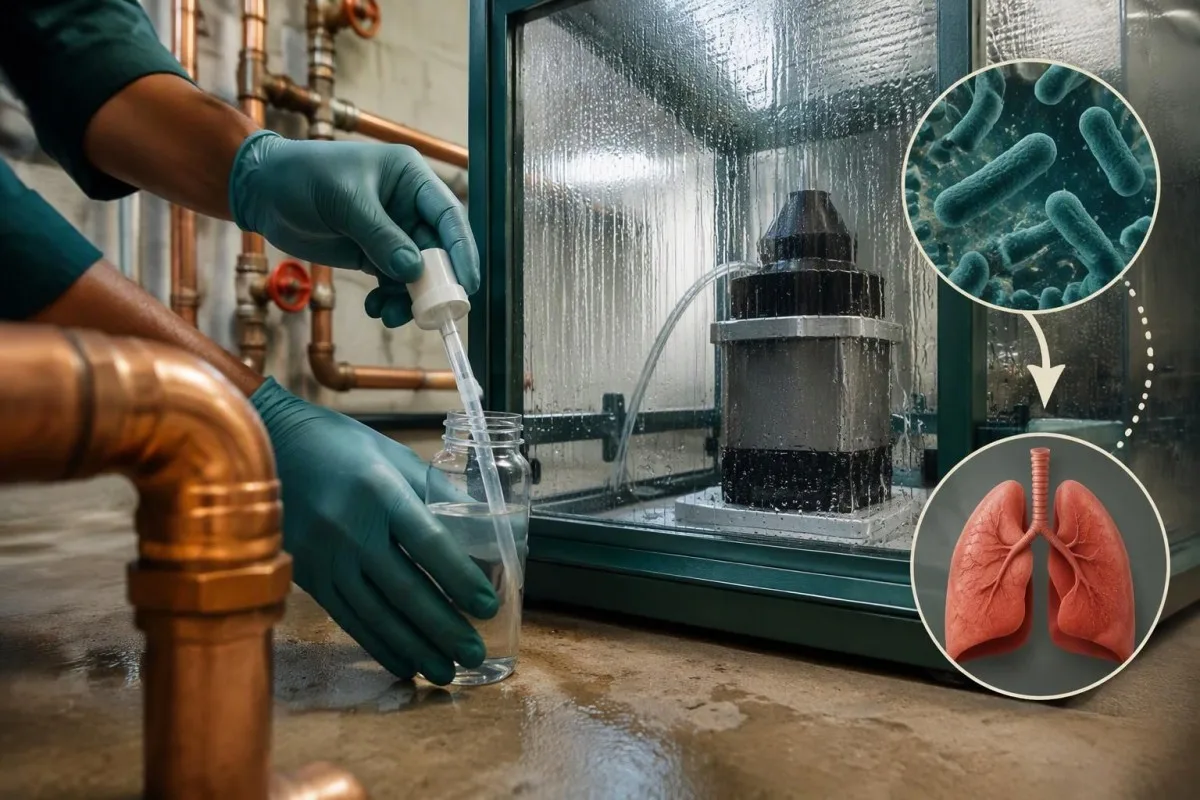
Showers, hot tubs, cooling towers, and complex building water systems can create relevant aerosols, but finding one of these exposures does not prove its source. For a person with a serogroup 1 result, public health investigators may need travel dates, accommodation details, healthcare stays, and other potentially shared exposures.
An exposure history usually starts with the 10 days before symptom onset, although investigators may ask about a longer interval in selected situations. Keep dates rather than relying on memory alone; the same hotel visit can be relevant or irrelevant depending on when symptoms began.
Family members do not usually need antibiotics or urine testing simply because one household member has Legionnaires’ disease. A relative who develops fever and cough after the same 3-day hotel stay, however, needs assessment because the two people may share an environmental exposure rather than have infected each other.
Persistent antigen does not establish ongoing transmission risk. That differs from some gastrointestinal viruses, where contagiousness after symptoms can be a separate concern; our norovirus recovery and transmission guide describes a different organism and should not be used to set isolation rules for Legionella.
Which symptoms need urgent or emergency care?
A positive Legionella urine antigen with new breathlessness, confusion, fainting, or deteriorating oxygenation needs urgent medical assessment. For most adults without an individualized oxygen target, room-air saturation at or below 92% warrants prompt review; severe breathing difficulty or saturation at or below 90% needs emergency attention.
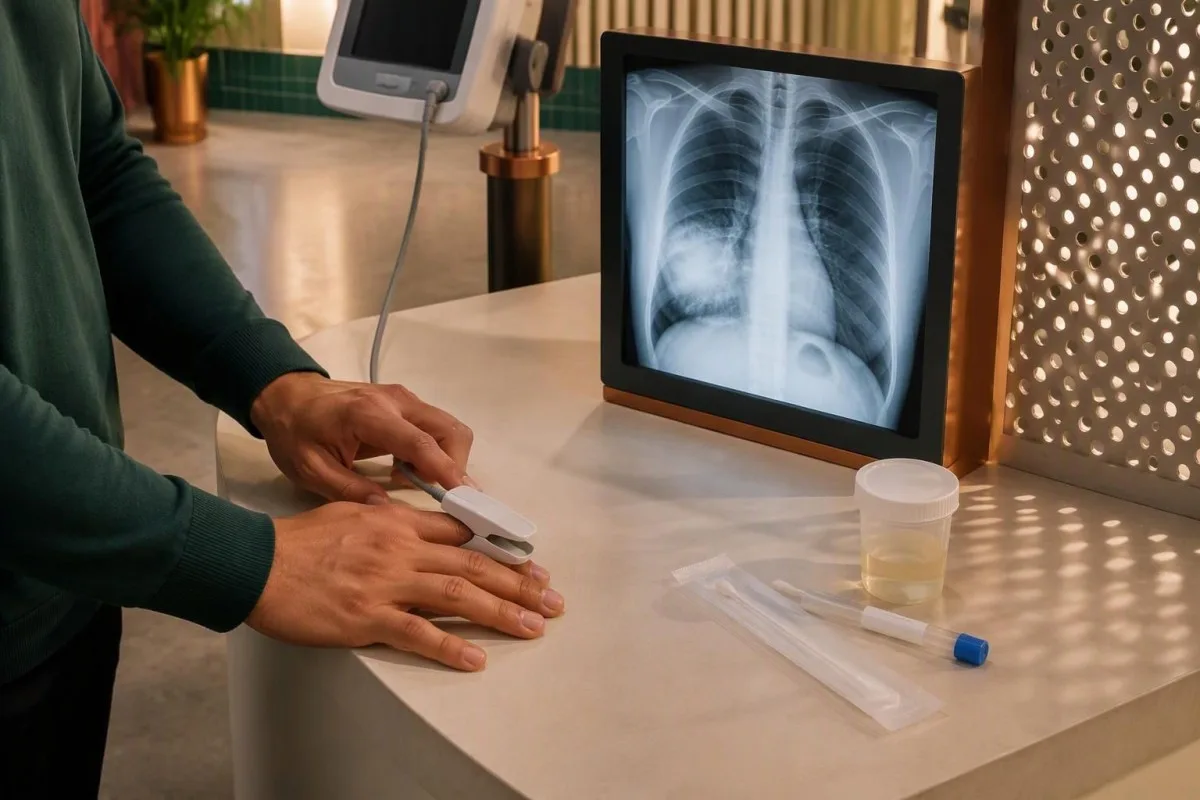
Do not wait for another laboratory result if breathing is rapidly worsening. A respiratory rate of 30 breaths per minute or more, new confusion, or systolic blood pressure below 90 mmHg can indicate serious pneumonia or circulatory compromise and should prompt immediate clinical evaluation.
Home pulse oximeters have limitations, including motion, cold hands, nail coverings, and performance differences across skin pigmentation. Repeat an unexpected reading after resting and warming the hand, but do not use a seemingly normal value such as 95% to dismiss severe breathlessness, blue-gray lips, or altered awareness.
Some people with chronic respiratory disease have a prescribed oxygen target of 88–92%, so their usual care plan matters. A new need for more oxygen, a significant fall from baseline, or worsening symptoms remains concerning even when the reading is inside that target interval.
Hospitals may use an ধমনী রক্ত গ্যাস-এ when they need more detail about oxygen, carbon dioxide, or acid–base status. Our ধমনীৰ তেজৰ গেছৰ সহায়িকা explains why these measurements answer severity questions that a serogroup 1 urine antigen cannot.
How can AI help organize the follow-up safely?
AI can help explain companion blood tests and organize questions, but it cannot independently diagnose Legionella pneumonia or determine treatment success from 1 urine result. Keep the antigen report, specimen date, respiratory test status, prescribed treatment, and symptom timeline together for discussion with the treating team.
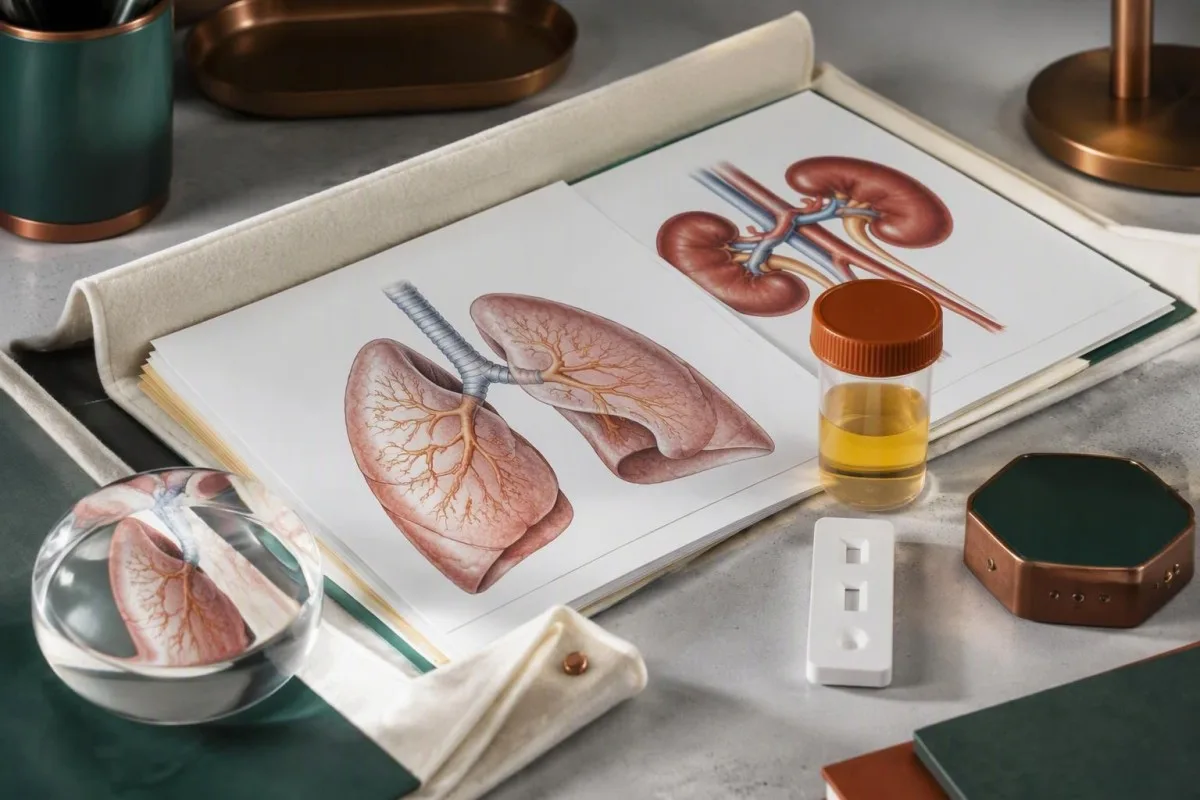
কান্টেষ্টি হৈছে এক... AI তেজ পৰীক্ষাৰ ফলাফল প্লেটফৰ্ম that helps make companion results, such as sodium of 130 mmol/L or a changing creatinine, easier to understand. Our AI প্রযুক্তি গাইড explains the interpretation workflow, but blood-test analysis is not validation of a Legionella urine assay.
Preserve units, reference intervals, collection dates, and any comments about serogroup 1 coverage. A sodium result of 130 mmol/L before intravenous fluids and another result of 136 mmol/L afterward represent a treatment-linked sequence; removing dates can make the explanation less reliable.
Useful follow-up questions include whether pneumonia was demonstrated, whether the antibiotic covers Legionella, and whether a respiratory PCR or culture was collected. A 7-day prescription may be entirely appropriate in one clinical setting and insufficient in another, so ask about the reasoning rather than comparing duration alone.
Kantesti AI cannot assess your current oxygen requirement, hear lung findings, or confirm whether a recurring positive at week 4 represents residual antigen. Our AI ব্যাখ্যা সুৰক্ষা নিৰ্দেশিকা describes source checking and escalation boundaries; contact your clinician for treatment changes instead of acting on an automated explanation.
Which evidence supports this interpretation?
The clinical interpretation rests on 3 complementary evidence sources: a urinary antigen accuracy meta-analysis, adult pneumonia guidance, and research documenting prolonged antigen excretion. The separate publications listed below describe broader blood-test interpretation topics and should not be mistaken for clinical validation of Legionella diagnosis or treatment.
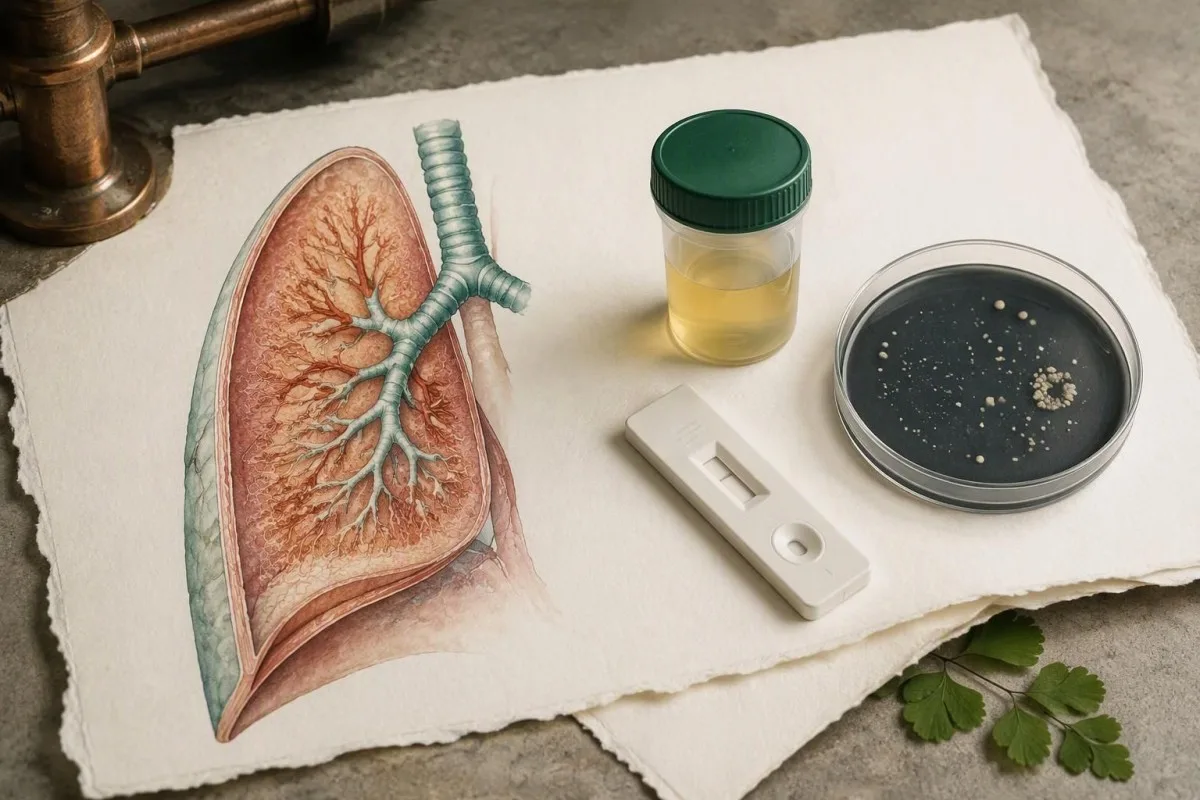
Shimada et al. (2009) provide the approximately 74% sensitivity and 99.1% specificity estimates used in the worked examples. Those values come from pooled studies with different methods and patient populations, so they are useful for understanding uncertainty rather than predicting an exact result for an individual laboratory.
Metlay et al. (2019) address adult community-acquired pneumonia and support paired Legionella testing in severe disease. The guideline does not turn a positive antigen into a severity score, and its recommendations should not be transferred unchanged to children, every immunocompromised patient, or every healthcare-associated case.
Kohler et al. (1984) show why persistent antigen must be separated from bacterial viability and treatment response. A positive result at 4 weeks needs a symptom-based reassessment if the person is unwell, but the duration alone cannot establish failure; this is a diagnostic limitation, not permission to ignore recurrent pneumonia.
The 2 Kantesti publications below are platform-related resources, not independent Legionella treatment trials; our চিকিৎসা বিষয়বস্তুৰ মানদণ্ড explain how educational claims should be distinguished from diagnostic evidence. The accompanying RDW and CBC resource concerns red-cell measurements, which may appear on a hospital report but do not confirm Legionnaires’ disease.
সাধাৰণতে সোধা প্ৰশ্ন
ইতিবাচক লেজিঅ’নেলা মূত্ৰৰ এণ্টিজেনে লেজিঅ’নেয়াৰ্ছ ৰোগ নিশ্চিত কৰে নেকি?
এজন ব্যক্তিৰ সামঞ্জস্যপূৰ্ণ লক্ষণ আৰু নিউমোনিয়াৰ প্ৰমাণ থাকিলে, প্ৰস্ৰাৱত Legionella এন্টিজেন পজিটিভ পোৱাটোৱে Legionnaires’ ৰোগৰ সম্ভাৱনাক দৃঢ়ভাৱে সমৰ্থন কৰে। অধিকাংশ মানক পৰীক্ষাই সকলো Legionella প্ৰজাতিৰ সলনি মূলতঃ Legionella pneumophila ছিৰ’গ্ৰুপ ১ চিনাক্ত কৰে। ২০০৯ চনৰ এটা মেটা-বিশ্লেষণত প্ৰায় 99.1% নিৰ্দিষ্টতা উল্লেখ কৰা হৈছিল, কিন্তু ভুলকৈ পজিটিভ ফল আৰু পূৰ্বৰ অসুস্থতাৰ পিছতো এন্টিজেন অৱশিষ্ট থকাৰ সম্ভাৱনা থাকে। নিউমোনিয়া নথকা অৱস্থাত অপ্ৰত্যাশিত ফল পালে স্বয়ংক্ৰিয়ভাৱে চিকিৎসা দিয়াৰ সলনি চিকিৎসা আৰু পৰীক্ষাগাৰৰ পৰ্যালোচনা কৰা উচিত।.
প্ৰস্ৰাৱৰ এণ্টিজেন পৰীক্ষা নিগেটিভ হ’লেও মোৰ লেজিঅ’নেয়াৰ্ছ ৰোগ হ’ব পাৰেনে?
0. হয়, Legionella-ৰ প্ৰস্ৰাৱৰ এণ্টিজেন পৰীক্ষাৰ ফল ঋণাত্মক হ’লেও Legionnaires’ disease নুই কৰিব নোৱাৰি। পৰীক্ষাটোৱে লক্ষ্যৰ বাহিৰৰ চেৰ’গ্ৰুপ বা প্ৰজাতি চিনাক্ত নকৰিবও পাৰে, আৰু এটা মেটা-বিশ্লেষণত অধ্যয়ন কৰা চিনাক্তকৰণৰ পৰিসৰৰ ভিতৰত প্ৰায় 74% সংবেদনশীলতাৰ কথা উল্লেখ কৰা হৈছিল। একে ধাৰণাৰ ভিত্তিত সেই সংবেদনশীলতাই প্ৰতি 100টা লক্ষ্য-সংক্ৰমণৰ ভিতৰত প্ৰায় 26টা চিনাক্ত কৰিব নোৱাৰিব। নিউমোনিয়া গুৰুতৰ হ’লে বা সন্দেহ অধিক থাকিলে শ্বাস-প্ৰশ্বাসজনিত PCR বা কালচাৰে অতিৰিক্ত মূল্য যোগ কৰে।.
0 লেজিওনেলা ইউৰিন এণ্টিজেন কিমান দিনলৈ পজিটিভ হৈ থাকিব পাৰে?
0] লিজিঅ’নেলা প্ৰস্ৰাৱৰ এণ্টিজেন তীব্ৰ অসুস্থতাৰ পিছত কেইবা সপ্তাহ আৰু কেতিয়াবা কেইবা মাহলৈকে ধৰা পৰি থাকিব পাৰে। চিকিৎসাৰ ৪ সপ্তাহ পিছত পোৱা পজিটিভ ফলাফলে জীৱিত জীৱাণুৰ পৰিৱৰ্তে অৱশিষ্ট বেক্টেৰিয়াৰ উপাদানৰ উপস্থিতি বুজাব পাৰে। এণ্টিজেন সম্পূৰ্ণৰূপে নোহোৱা হোৱাৰ কোনো সাৰ্বজনীন দিন নাই, আৰু নিয়মীয়া প্ৰস্ৰাৱৰ এণ্টিজেন পৰীক্ষা সাধাৰণতে চিকিৎসা সফল হোৱাৰ পৰীক্ষা নহয়। এণ্টিজেনৰ ফলাফল যিয়েই নহওক, পুনৰ জ্বৰ হোৱা, উশাহ-নিশাহৰ অৱস্থা বেয়া হোৱা, বা অক্সিজেনৰ প্ৰয়োজন বৃদ্ধি পালে পুনৰ মূল্যায়নৰ প্ৰয়োজন।.
মোৰ এণ্টিজেন এতিয়াও পজিটিভ হৈ থাকিলে মোক আন এটা এণ্টিবায়টিকৰ কোৰ্ছৰ প্ৰয়োজন হ’বনে?
কেৱল Legionellaৰ প্ৰস্ৰাৱৰ এণ্টিজেনৰ স্থায়ীভাৱে পজিটিভ ফলাফলেই এণ্টিবায়টিক পুনৰ আৰম্ভ কৰাৰ কাৰণ নহয়। বহুতো জটিলতাবিহীন ক্ষেত্ৰত প্ৰায় ৭–১০ দিন চিকিৎসা দিয়া হয়, কিন্তু চিকিৎসকজনে ৰোগৰ তীব্ৰতা, ৰোগপ্ৰতিৰোধ ক্ষমতাৰ অৱস্থা আৰু চিকিৎসাৰ প্ৰতি সঁহাৰিৰ ভিত্তিত উপযুক্ত সময়সীমা নিৰ্ধাৰণ কৰে। ক্লিনিকেলভাৱে উন্নতি হোৱা ব্যক্তিৰ চিকিৎসা বিফল নোহোৱাকৈও এণ্টিজেন পজিটিভ হৈ থাকিব পাৰে। নতুনকৈ দেখা দিয়া বা বাঢ়ি যোৱা লক্ষণৰ ক্ষেত্ৰত কেৱল পুনৰ কৰা প্ৰস্ৰাৱ পৰীক্ষাৰ ভিত্তিত এণ্টিবায়টিকৰ সিদ্ধান্ত লোৱাৰ পৰিৱৰ্তে চিকিৎসকৰ পৰামৰ্শ লোৱা উচিত।.
পজিটিভ প্ৰস্ৰাৱৰ এণ্টিজেনৰ পিছত কিয় শ্বাসতন্ত্ৰৰ PCR বা কালচাৰ পৰীক্ষা কৰিবলৈ নিৰ্দেশ দিয়া হয়?
Respiratory PCR or culture can provide information that a positive urine antigen cannot, including broader organism detection or an isolate for outbreak investigation. The 2019 ATS/IDSA guideline recommends urine antigen plus lower respiratory culture or nucleic acid testing in severe community-acquired pneumonia. PCR coverage depends on the assay, and culture may take several days. These 2 specimen types are complementary, so collecting a respiratory sample can remain useful even when the urine result is already positive.
Does Legionella in a urine antigen test mean a urinary tract infection?
A positive Legionella urine antigen usually reflects bacterial material excreted during a pulmonary illness, not a bladder infection. Standard assays commonly recognize Legionella pneumophila serogroup 1 antigen and do not demonstrate that living bacteria are growing in urine. Routine urine culture and urine antigen testing answer different questions. A person with new breathlessness and an oxygen saturation at or below 92% should seek prompt assessment for the respiratory illness rather than interpret the result as a routine UTI.
আপোনাৰ তেজ পৰীক্ষাৰ ফলাফল কেনেকৈ পঢ়িব
আপোনাৰ পৰীক্ষাগাৰৰ প্ৰতিবেদন আপল’ড কৰক আৰু Kantesti-ৰ AI-এ কেইছেকেণ্ডৰ ভিতৰতে প্ৰতিটো বায়’মাৰ্কাৰ সহজ ভাষাত বুজাই দিয়ে। বিশ্বজুৰি 2 নিযুততকৈও অধিক লোকে ব্যৱহাৰ কৰে।.
তথ্যসূত্ৰ
- ক্লেইন, টি., মিচেল, এস., ও ওয়েবার, এইচ. (২০২৬)।. AI Blood Test Analyzer: 2.5M Tests Analyzed | Global Health Report 2026।. Kantesti AI চিকিৎসা গৱেষণা।. DOI
- ক্লেইন, টি., মিচেল, এস., ও ওয়েবার, এইচ. (২০২৬)।. RDW তেজ পৰীক্ষা: RDW-CV, MCV আৰু MCHC-ৰ সম্পূৰ্ণ গাইড।. Kantesti AI চিকিৎসা গৱেষণা।. DOI
- Shimada T et al. (2009). Systematic review and metaanalysis: urinary antigen tests for Legionellosis. Chest.
- Metlay JP et al. (2019). Diagnosis and Treatment of Adults with Community-acquired Pneumonia. An Official Clinical Practice Guideline of the American Thoracic Society and Infectious Diseases Society of America. American Journal of Respiratory and Critical Care Medicine. DOI
- Kohler RB et al. (1984). Onset and duration of urinary antigen excretion in Legionnaires disease. Journal of Clinical Microbiology.
- ২M+বিশ্লেষণ কৰা পৰীক্ষাসমূহ
- 127+দেশসমূহ
- 100+ভাষাসমূহ
চিকিৎসা দলৰ বিষয়ে


E-E-A-T বিশ্বাস সংকেত
অভিজ্ঞতা
চিকিৎসক-নিৰ্দেশিত লেব ব্যাখ্যা কাৰ্যপ্ৰবাহৰ ক্লিনিকেল পৰ্যালোচনা।.
বিশেষজ্ঞতা
ক্লিনিকেল পৰিপ্ৰেক্ষিতত বায়’মাৰ্কাৰসমূহ কেনেকৈ আচৰণ কৰে—সেই বিষয়ে লেবৰেটৰী মেডিচিনৰ গুৰুত্ব।.
কৰ্তৃত্বশীলতা
ডাঃ Thomas Klein-এ চিকিৎসা পৰ্যালোচনা কৰিছে; ডাঃ Sarah Mitchell আৰু অধ্যাপক ডাঃ Hans Weber-ৰ অৱদান আছে।.
বিশ্বাসযোগ্যতা
স্পষ্ট অনুসৰণ পথৰ সৈতে প্ৰমাণ-ভিত্তিক ব্যাখ্যা—আতংক কমাবলৈ।.
চিকিৎসা-সম্পৰ্কীয় অস্বীকাৰোক্তি
এই লেখাটো কেৱল শিক্ষামূলক উদ্দেশ্যৰ বাবে, আৰু ই চিকিৎসাজনিত পৰামৰ্শ নহয়। ৰোগ নিৰ্ণয় আৰু চিকিৎসাৰ সিদ্ধান্তৰ বাবে সদায় যোগ্য স্বাস্থ্যসেৱা বিশেষজ্ঞৰ সৈতে পৰামৰ্শ কৰক।.
প্ৰকাশিত · সম্পাদকীয় দলৰ সৈতে যোগাযোগ কৰক
Kantesti Ltd-ৰ দ্বাৰা প্ৰকাশিত, ইংলেণ্ড আৰু ৱেলছত পঞ্জীয়নভুক্ত, কোম্পানী নং।. 17090423, লণ্ডন, যুক্তৰাজ্য।.
