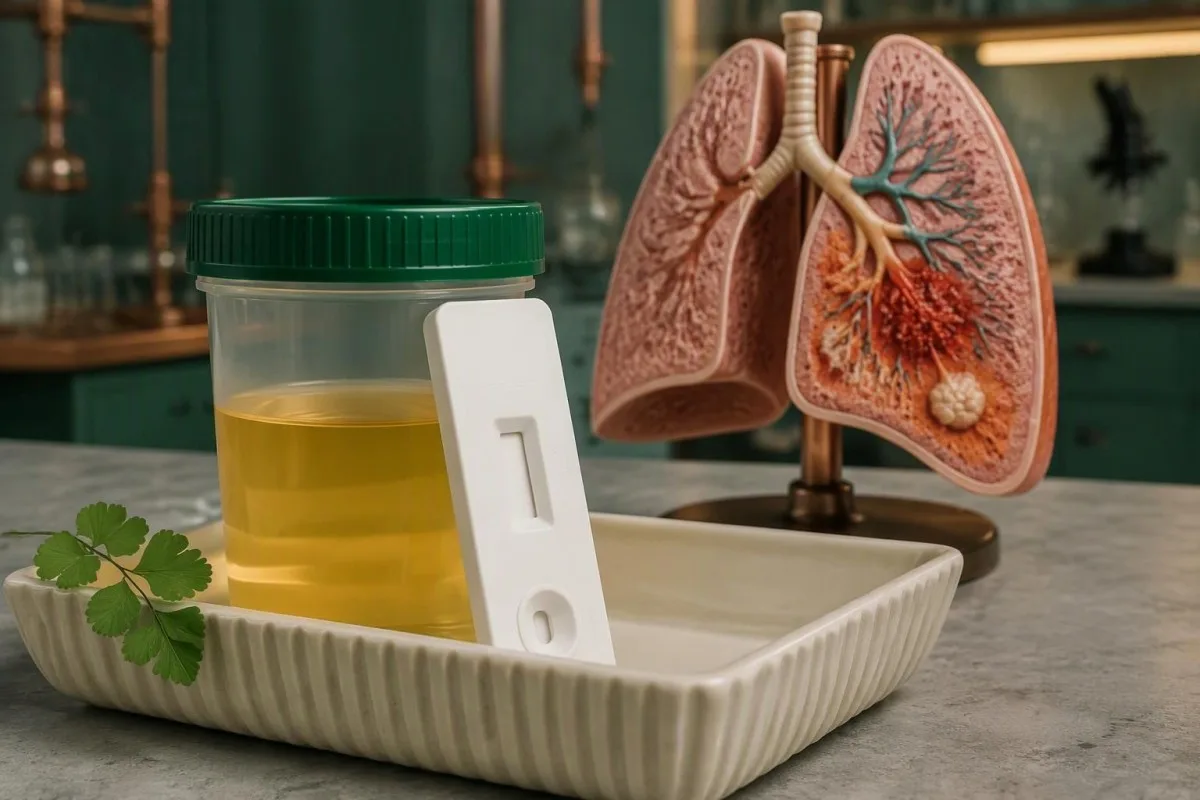
ಲಕ್ಷಣಗಳು ಮತ್ತು ಚಿತ್ರಣ ಪರೀಕ್ಷೆಗಳಲ್ಲಿ ನ್ಯುಮೋನಿಯಾ ಕಂಡುಬಂದಾಗ, ಮೂತ್ರದಲ್ಲಿ ಲೆಜಿಯೊನೆಲ್ಲಾ ಆಂಟಿಜೆನ್ ಪಾಸಿಟಿವ್ ಆಗಿರುವುದು ಲೆಜಿಯೊನೈರ್ಸ್ ಕಾಯಿಲೆಯನ್ನು ಬಲವಾಗಿ ಸೂಚಿಸುತ್ತದೆ. ಹೆಚ್ಚಿನ ಪರೀಕ್ಷೆಗಳು ಲೆಜಿಯೊನೆಲ್ಲಾ ನ್ಯುಮೋಫಿಲಾದ ಸೆರೋಗ್ರೂಪ್ 1 ಅನ್ನು ಪತ್ತೆಹಚ್ಚುತ್ತವೆ; ಉಸಿರಾಟದ PCR ಅಥವಾ ಕಲ್ಚರ್ ಮೂಲಕ ಮೂತ್ರ ಪರೀಕ್ಷೆಯಲ್ಲಿ ಪತ್ತೆಯಾಗದ ಸೋಂಕುಗಳನ್ನು ಕಂಡುಹಿಡಿಯಬಹುದು, ಮತ್ತು ಚೇತರಿಕೆಯ ನಂತರವೂ ಪಾಸಿಟಿವ್ ಫಲಿತಾಂಶ ಮುಂದುವರಿಯುವುದು ಚಿಕಿತ್ಸೆಯ ವೈಫಲ್ಯ ಎಂದೇನೂ ಅರ್ಥವಲ್ಲ.

ಪ್ರಮುಖ ಅಂಶಗಳು
- ಧನಾತ್ಮಕ ಫಲಿತಾಂಶ ಸೂಕ್ತವಾದ ಕಾಯಿಲೆಯ ಲಕ್ಷಣಗಳಿದ್ದಾಗ ಲೆಜಿಯೊನೆಲ್ಲಾ ನ್ಯುಮೋನಿಯಾವನ್ನು ಬಲವಾಗಿ ಸೂಚಿಸುತ್ತದೆ; ಇದು ಸಾಮಾನ್ಯವಾಗಿ ಎಲ್ಲ ಲೆಜಿಯೊನೆಲ್ಲಾ ಪ್ರಭೇದಗಳನ್ನಲ್ಲ, ಲೆಜಿಯೊನೆಲ್ಲಾ ನ್ಯುಮೋಫಿಲಾದ ಸೆರೋಗ್ರೂಪ್ 1 ಅನ್ನು ಗುರುತಿಸುತ್ತದೆ.
- ಪರೀಕ್ಷೆಯ ನಿಖರತೆ 2009ರ ಮೆಟಾ-ವಿಶ್ಲೇಷಣೆಯಲ್ಲಿ ಸಂವೇದನಾಶೀಲತೆ ಸುಮಾರು 74% ಮತ್ತು ನಿರ್ದಿಷ್ಟತೆ 99.1% ಆಗಿತ್ತು; ಪರೀಕ್ಷಾ ವಿಧಾನ, ಕಾಯಿಲೆಯ ತೀವ್ರತೆ ಮತ್ತು ಅಧ್ಯಯನದ ವಿನ್ಯಾಸಕ್ಕೆ ಅನುಗುಣವಾಗಿ ಕಾರ್ಯಕ್ಷಮತೆ ಬದಲಾಗುತ್ತದೆ.
- ನೆಗೆಟಿವ್ ಫಲಿತಾಂಶ ಲೆಜಿಯೊನೈರ್ಸ್ ಕಾಯಿಲೆಯನ್ನು ತಳ್ಳಿಹಾಕಲು ಸಾಧ್ಯವಿಲ್ಲ: 74% ಸಂವೇದನಾಶೀಲತೆಯಿರುವ ಪರೀಕ್ಷೆಯು ತನ್ನ ಪತ್ತೆ ವ್ಯಾಪ್ತಿಯೊಳಗಿನ ಪ್ರತಿ 100 ಸೋಂಕುಗಳಲ್ಲಿ ಸುಮಾರು 26 ಅನ್ನು ಪತ್ತೆಹಚ್ಚದೆ ಬಿಡುತ್ತದೆ.
- ಜೋಡಿ ಪರೀಕ್ಷೆ ಪತ್ತೆಹಚ್ಚುವಿಕೆಯನ್ನು ಸುಧಾರಿಸಲು ಮತ್ತು ಏಕಾಏಕಿ ಹರಡುವಿಕೆಯ ತನಿಖೆಗೆ ನೆರವಾಗಲು, ಮೂತ್ರದ ಜೊತೆಗೆ ಕೆಳ ಉಸಿರಾಟದ ಮಾದರಿ ಎಂಬ 2 ಪರಸ್ಪರ ಪೂರಕ ಮಾದರಿಗಳನ್ನು ಬಳಸುತ್ತದೆ.
- ದೀರ್ಘಕಾಲ ಉಳಿಯುವ ಆಂಟಿಜೆನ್ ವಾರಗಳು ಅಥವಾ ತಿಂಗಳುಗಳವರೆಗೆ ಪತ್ತೆಯಾಗುತ್ತಿರಬಹುದು; ಚಿಕಿತ್ಸೆಯ 4 ವಾರಗಳ ನಂತರ ಪಾಸಿಟಿವ್ ಫಲಿತಾಂಶ ಬಂದರೆ, ಅದೊಂದೇ ಉಳಿದಿರುವ ಬ್ಯಾಕ್ಟೀರಿಯಾಗಳ ಸಾಕ್ಷ್ಯವಲ್ಲ.
- ಆಂಟಿಬಯಾಟಿಕ್ ಚಿಕಿತ್ಸೆ ಜಟಿಲತೆಗಳಿಲ್ಲದ ಲೆಜಿಯೊನೆಲ್ಲಾ ನ್ಯುಮೋನಿಯಾದಲ್ಲಿ ಸಾಮಾನ್ಯವಾಗಿ 7–10 ದಿನಗಳವರೆಗೆ ಇರುತ್ತದೆ, ಆದರೆ ಸೂಕ್ತ ಔಷಧ ಮತ್ತು ಚಿಕಿತ್ಸೆಯ ಅವಧಿಯು ರೋಗದ ತೀವ್ರತೆ ಮತ್ತು ರೋಗನಿರೋಧಕ ಸ್ಥಿತಿಯನ್ನು ಅವಲಂಬಿಸಿರುತ್ತದೆ.
- ತುರ್ತು ಮೌಲ್ಯಮಾಪನ ಕೋಣೆಯ ಗಾಳಿಯಲ್ಲಿ ಆಮ್ಲಜನಕ насыщತೆ 92% ಅಥವಾ ಅದಕ್ಕಿಂತ ಕಡಿಮೆಯಿರುವ ಹೊಸ ಉಸಿರಾಟದ ತೊಂದರೆಗೆ ಇದು ಅಗತ್ಯ; ತೀವ್ರ ಉಸಿರಾಟದ ತೊಂದರೆ ಅಥವಾ 90% ಅಥವಾ ಅದಕ್ಕಿಂತ ಕಡಿಮೆ ಮೌಲ್ಯಕ್ಕೆ ತುರ್ತು ಗಮನ ಅಗತ್ಯ.
- ಜೊತೆಯ ರಕ್ತ ಪರೀಕ್ಷೆಗಳು ಲೆಜಿಯೊನೆಲ್ಲಾವನ್ನು ಗುರುತಿಸುವ ಬದಲು ಅದರ ತೊಡಕುಗಳನ್ನು ಮೌಲ್ಯಮಾಪನ ಮಾಡುತ್ತವೆ: 135 mmol/L ಗಿಂತ ಕಡಿಮೆ ಸೋಡಿಯಂ ಹೈಪೋನಾಟ್ರೀಮಿಯಾವನ್ನು ಸೂಚಿಸುತ್ತದೆ, ಲೆಜಿಯೊನೆಲ್ಲಾ-ನಿರ್ದಿಷ್ಟ ರೋಗನಿರ್ಣಯವನ್ನಲ್ಲ.
ಮೂತ್ರದಲ್ಲಿ ಲೆಜಿಯೊನೆಲ್ಲಾ ಆಂಟಿಜೆನ್ ಪಾಸಿಟಿವ್ ಆಗಿರುವುದರ ಅರ್ಥವೇನು?
A ಲೆಜಿಯೊನೆಲ್ಲಾ ಮೂತ್ರದ ಪ್ರತಿಜನಕ ಧನಾತ್ಮಕ ಫಲಿತಾಂಶವೆಂದರೆ ಪ್ರಯೋಗಾಲಯವು ಮೂತ್ರದಲ್ಲಿ ಲೆಜಿಯೊನೆಲ್ಲಾ ಪ್ರತಿಜನಕವನ್ನು ಪತ್ತೆಹಚ್ಚಿದೆ, ಸಾಮಾನ್ಯವಾಗಿ ಲೆಜಿಯೊನೆಲ್ಲಾ ನ್ಯುಮೋಫಿಲಾ ಸೆರೋಗ್ರೂಪ್ 1. ಜ್ವರ, ಕೆಮ್ಮು, ಉಸಿರಾಟದ ತೊಂದರೆ ಮತ್ತು ಚಿತ್ರಣದಿಂದ ದೃಢಪಟ್ಟ ನ್ಯುಮೋನಿಯಾ ಇರುವ ವ್ಯಕ್ತಿಯಲ್ಲಿ, ಈ ಫಲಿತಾಂಶವು ಬಲವಾಗಿ ಬೆಂಬಲಿಸುತ್ತದೆ ಲೆಜಿಯೊನೆರೀಸ್ ಕಾಯಿಲೆ ಮತ್ತು ಸಮಯೋಚಿತ ವೈದ್ಯಕೀಯ ಚಿಕಿತ್ಸೆಗೆ ಕಾರಣವಾಗಬೇಕು.
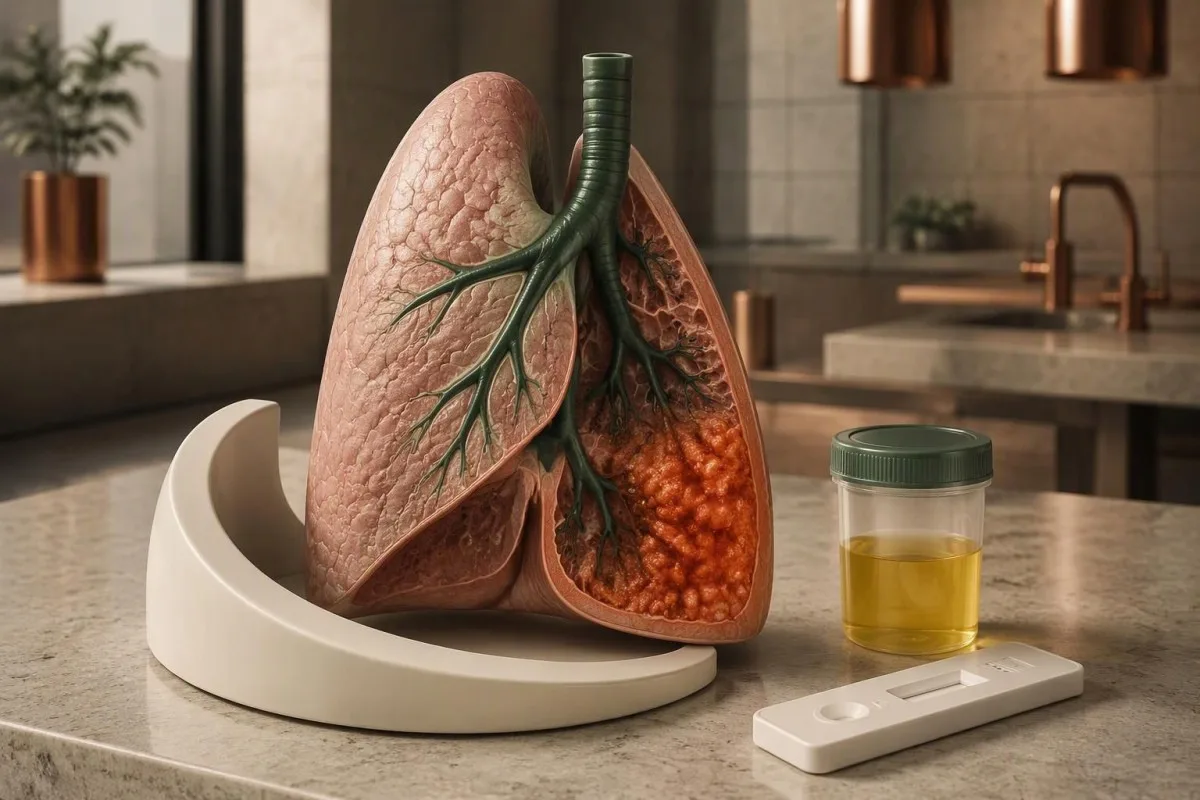
ಧನಾತ್ಮಕ ಫಲಿತಾಂಶವು ನ್ಯುಮೋನಿಯಾದ ಸಂಭವನೀಯ ಕಾರಣವನ್ನು ಗುರುತಿಸುತ್ತದೆ, ಅದರ ತೀವ್ರತೆಯನ್ನಲ್ಲ. ಒಂದೇ ಸೆರೋಗ್ರೂಪ್ 1 ಫಲಿತಾಂಶವಿರುವ ಇಬ್ಬರಿಗೆ ಆಮ್ಲಜನಕದ ಅಗತ್ಯ, ಮೂತ್ರಪಿಂಡದ ಕಾರ್ಯ ಮತ್ತು ಚಿಕಿತ್ಸೆಯ ಸ್ಥಳದಲ್ಲಿ ಬಹಳ ವ್ಯತ್ಯಾಸವಿರಬಹುದು; ಸಂಪೂರ್ಣ ವೈದ್ಯಕೀಯ ಚಿತ್ರಣವನ್ನು ಆಧರಿಸಿ ಮನೆಯಲ್ಲಿ ಚಿಕಿತ್ಸೆ ನೀಡಬೇಕೇ ಅಥವಾ ಆಸ್ಪತ್ರೆಗೆ ದಾಖಲಿಸಬೇಕೇ ಎಂಬುದನ್ನು ವೈದ್ಯರು ನಿರ್ಧರಿಸುತ್ತಾರೆ.
ನ್ಯುಮೋನಿಯಾ ಇಲ್ಲದಿದ್ದಾಗ ಅನಿರೀಕ್ಷಿತವಾಗಿ ಧನಾತ್ಮಕ ಫಲಿತಾಂಶ ಬಂದರೆ, ಅದನ್ನು ವಿಭಿನ್ನವಾಗಿ ಚರ್ಚಿಸಬೇಕು. 6 ವಾರಗಳ ಹಿಂದೆ ಲೆಜಿಯೊನೆರೀಸ್ ಕಾಯಿಲೆಗೆ ಚಿಕಿತ್ಸೆ ಪಡೆದ ವ್ಯಕ್ತಿ ಇನ್ನೂ ಪ್ರತಿಜನಕವನ್ನು ಹೊರಹಾಕುತ್ತಿರಬಹುದು; ಆದರೆ ಹಿಂದೆ ಯಾವುದೇ ಕಾಯಿಲೆ ಇಲ್ಲದ ವ್ಯಕ್ತಿಯಲ್ಲಿ, ಪ್ರಯೋಗಾಲಯದ ಫಲಿತಾಂಶವನ್ನು ಲಕ್ಷಣಗಳು, ಚಿತ್ರಣ ಮತ್ತು ಸಾಧ್ಯವಾದ ಪರೀಕ್ಷಾ ಹಸ್ತಕ್ಷೇಪದೊಂದಿಗೆ ಹೋಲಿಸಿ ಪರಿಶೀಲಿಸಬೇಕಾಗಬಹುದು.
ಒಂದು ಕಾಲ್ಪನಿಕ ಉದಾಹರಣೆಗೆ, 39°C ತಾಪಮಾನ, ಹೊಸ ಶ್ವಾಸಕೋಶದ ಒಳನುಸುಳುವಿಕೆ ಮತ್ತು ಧನಾತ್ಮಕ ಪ್ರತಿಜನಕವಿರುವ 58 ವರ್ಷದ ವ್ಯಕ್ತಿಯಲ್ಲಿ, ಹಲವಾರು ಲಕ್ಷಣಗಳು ಒಂದೇ ನಿರ್ಣಯದತ್ತ ಸೂಚಿಸುತ್ತವೆ. ಚಿತ್ರಣ ಸಾಮಾನ್ಯವಾಗಿರುವ ಆರೋಗ್ಯವಂತ ವ್ಯಕ್ತಿಯಲ್ಲಿ ಇದೇ ಮೂತ್ರದ ಫಲಿತಾಂಶ ಬಂದರೆ, ಅದು ಹೊಸ ನ್ಯುಮೋನಿಯಾ ಪ್ರಕರಣವನ್ನು ಸ್ವಯಂಚಾಲಿತವಾಗಿ ಸ್ಥಾಪಿಸುವುದಿಲ್ಲ.
ಕಾಂತೆಸ್ಟಿ ಒಬ್ಬ AI ರಕ್ತ ಪರೀಕ್ಷಾ ವಿಶ್ಲೇಷಕ ಸೆರೋಗ್ರೂಪ್ 1 ನ್ಯುಮೋನಿಯಾದ ಮೌಲ್ಯಮಾಪನಕ್ಕೆ ಬದಲಿಯಾಗದೆ, ಜೊತೆಯ ಪ್ರಯೋಗಾಲಯದ ಫಲಿತಾಂಶಗಳನ್ನು ವಿವರಿಸಲು ಇದು ಸಹಾಯ ಮಾಡುತ್ತದೆ; ನಮ್ಮ ಸಂಸ್ಥೆ ಮತ್ತು ಉದ್ದೇಶ ಆ ವ್ಯತ್ಯಾಸವನ್ನು ವಿವರಿಸುತ್ತವೆ. ಉಸಿರಾಟದ ಲಕ್ಷಣಗಳು ತಕ್ಷಣದ ಕಾಳಜಿಯಾಗಿದ್ದರೆ, ನಮ್ಮ ಉಸಿರಾಟದ ತೊಂದರೆ ಮಾರ್ಗದರ್ಶಿ ಪ್ರಯೋಗಾಲಯದ ಫಲಿತಾಂಶಗಳು ಪರೀಕ್ಷೆ ಮತ್ತು ಆಮ್ಲಜನಕದ ಮಾಪನಕ್ಕೆ ಬದಲಿಯಾಗಲು ಸಾಧ್ಯವಿಲ್ಲ ಎಂಬುದನ್ನು ವಿವರಿಸುತ್ತದೆ.
ಶ್ವಾಸಕೋಶದ ಸೋಂಕು ಮೂತ್ರ ಪರೀಕ್ಷೆಯನ್ನು ಪಾಸಿಟಿವ್ ಮಾಡುವುದು ಏಕೆ?
ದಿ ಲೆಜಿಯೊನೆಲ್ಲಾ ಮೂತ್ರದ ಪ್ರತಿಜನಕ ಪರೀಕ್ಷೆ ಸಾಮಾನ್ಯವಾಗಿ ಶ್ವಾಸಕೋಶದ ಮೇಲೆ ಪರಿಣಾಮ ಬೀರುವ ಕಾಯಿಲೆಯ ಸಂದರ್ಭದಲ್ಲಿ ಮೂತ್ರದ ಮೂಲಕ ಹೊರಹಾಕಲ್ಪಡುವ ಬ್ಯಾಕ್ಟೀರಿಯಾದ ಅಂಶವನ್ನು ಪತ್ತೆಹಚ್ಚುತ್ತದೆ. ಸೆರೋಗ್ರೂಪ್ 1 ಪ್ರತಿಜನಕದ ಧನಾತ್ಮಕ ಫಲಿತಾಂಶವು ಅಲ್ಲ ಲೆಜಿಯೊನೆಲ್ಲಾ ಮೂತ್ರಕೋಶದ ಸೋಂಕನ್ನು ಉಂಟುಮಾಡುತ್ತಿದೆ ಎಂದರ್ಥವಲ್ಲ, ಮತ್ತು ಇದು ಸಾಮಾನ್ಯ ಮೂತ್ರದ ಕಲ್ಚರ್ ಧನಾತ್ಮಕ ಫಲಿತಾಂಶಕ್ಕೆ ಸಮಾನವಲ್ಲ.
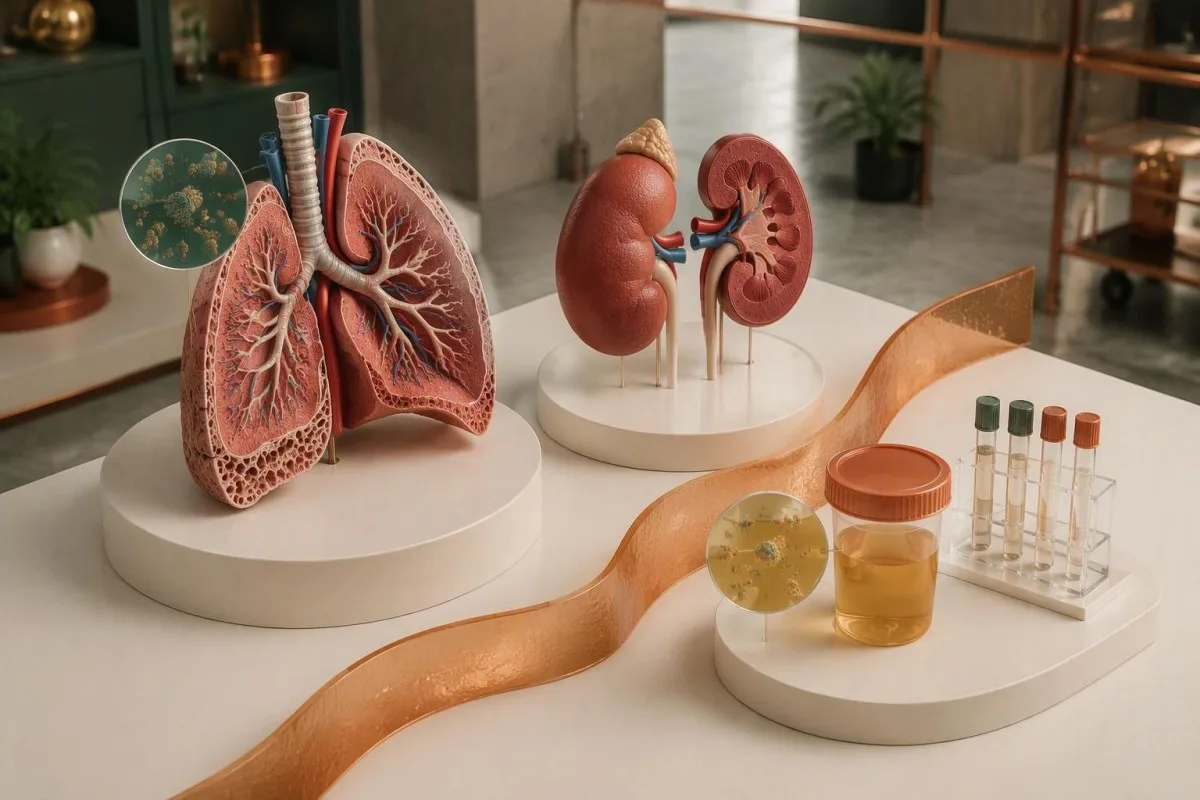
ಪ್ರತಿಜನಕವೆಂದರೆ ಪರೀಕ್ಷೆಯಿಂದ ಗುರುತಿಸಲ್ಪಡುವ ಬ್ಯಾಕ್ಟೀರಿಯಾದ ಘಟಕ; ಮೂತ್ರದಲ್ಲಿ ಜೀವಂತ ಸೂಕ್ಷ್ಮಜೀವಿಗಳಿರುವುದಕ್ಕೆ ಇದು ಪುರಾವೆಯಲ್ಲ. ಸೆರೋಗ್ರೂಪ್ 1 ಗುರಿ ಸಾಮಾನ್ಯವಾಗಿ ಬ್ಯಾಕ್ಟೀರಿಯಾದ ಮೇಲ್ಮೈ ಲಿಪೊಪಾಲಿಸ್ಯಾಕರೈಡ್ಗೆ ಸಂಬಂಧಿಸಿದೆ; ಪ್ರತಿಜೀವಕಗಳು ಶ್ವಾಸಕೋಶದ ಕಾಯಿಲೆಯನ್ನು ನಿಯಂತ್ರಿಸಿದ ನಂತರವೂ ಅದು ಪತ್ತೆಯಾಗಬಹುದು.
ಹೆಚ್ಚಿನ ವರದಿಗಳು ಹೀಗಿವೆ ಗುಣಾತ್ಮಕ: detected or not detected, rather than a concentration in ng/mL. Our explanation of ಗುಣಾತ್ಮಕ ಮತ್ತು ಪರಿಮಾಣಾತ್ಮಕ ಫಲಿತಾಂಶಗಳು helps clarify why a positive flag cannot be converted into a bacterial count or a severity score.
A fresh urine specimen is generally sufficient; a 24-hour urine collection is not routinely required for this assay. Collection volume, storage conditions, and acceptance criteria depend on the laboratory, so follow the supplied instructions rather than borrowing preparation rules from unrelated urine tests.
Do not interpret cassette appearance as a treatment trend. Even when a laboratory uses a lateral-flow method, the apparent intensity of a signal is not a validated measure of pneumonia burden, and a stronger-looking result on day 7 cannot establish that treatment is failing.
ಮೂತ್ರ ಪರೀಕ್ಷೆಯು ಮುಖ್ಯವಾಗಿ ಸೆರೋಗ್ರೂಪ್ 1 ಅನ್ನು ಏಕೆ ಪತ್ತೆಹಚ್ಚುತ್ತದೆ?
Most commonly used Legionella urine antigen assays are designed to recognize ಲೆಜಿಯೊನೆಲ್ಲಾ ನ್ಯುಮೋಫಿಲಾ ಸೆರೋಗ್ರೂಪ್ 1, a major cause of Legionnaires’ disease. Their antibody targets do not reliably detect every other serogroup or Legionella species, so the test’s biological coverage is narrower than its name suggests.
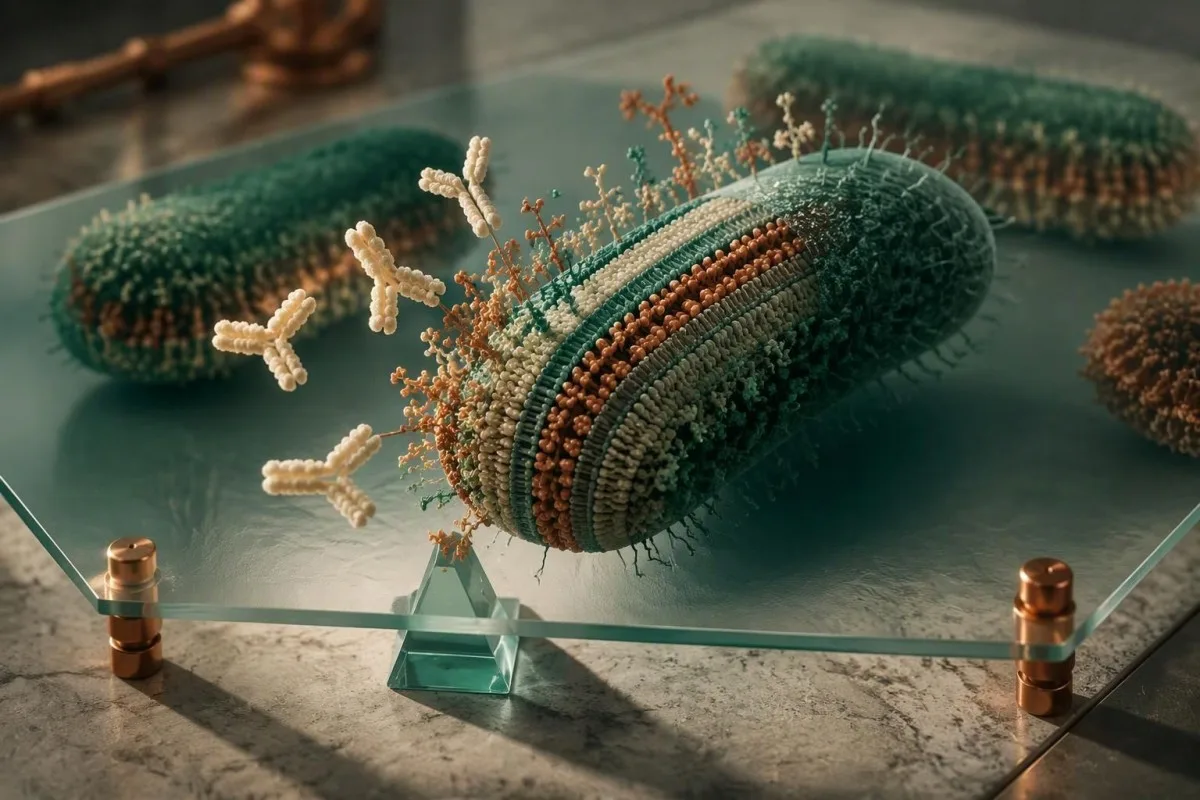
A serogroup is a grouping based on antigenic differences, not a stage of illness. Serogroup 1 does not mean early disease, a first infection, or a milder infection; it identifies a bacterial antigen pattern recognized by the test.
Other L. pneumophila serogroups and species such as Legionella longbeachae can cause pneumonia despite a negative standard urine antigen. Potting mix or compost exposure can be particularly relevant to L. longbeachae, while healthcare-associated disease may involve organisms outside the standard assay’s reliable detection scope.
Laboratories differ in their assays and reporting language. Ask whether the method specifically detects serogroup 1, whether a broader assay was used, and whether an additional respiratory test is pending; never assume an unfamiliar brand or a generic report heading proves broader coverage.
A negative narrow-target test should not redirect treatment solely because another pneumonia marker is positive. For example, a positive antibody result for a second organism may reflect timing or previous exposure rather than the cause of the current illness, as our Mycoplasma IgM interpretation ಅದನ್ನು ವಿವರಿಸುತ್ತದೆ.
ಲೆಜಿಯೊನೆಲ್ಲಾ ಆಂಟಿಜೆನ್ ಪರೀಕ್ಷೆ ಎಷ್ಟು ನಿಖರವಾಗಿದೆ?
Legionella antigen test accuracy is generally stronger for confirming than excluding the infection within the assay’s detection scope. A meta-analysis reported approximately 74% sensitivity ಮತ್ತು 99.1% specificity, but those pooled estimates are not a guarantee for every current assay or every patient population.
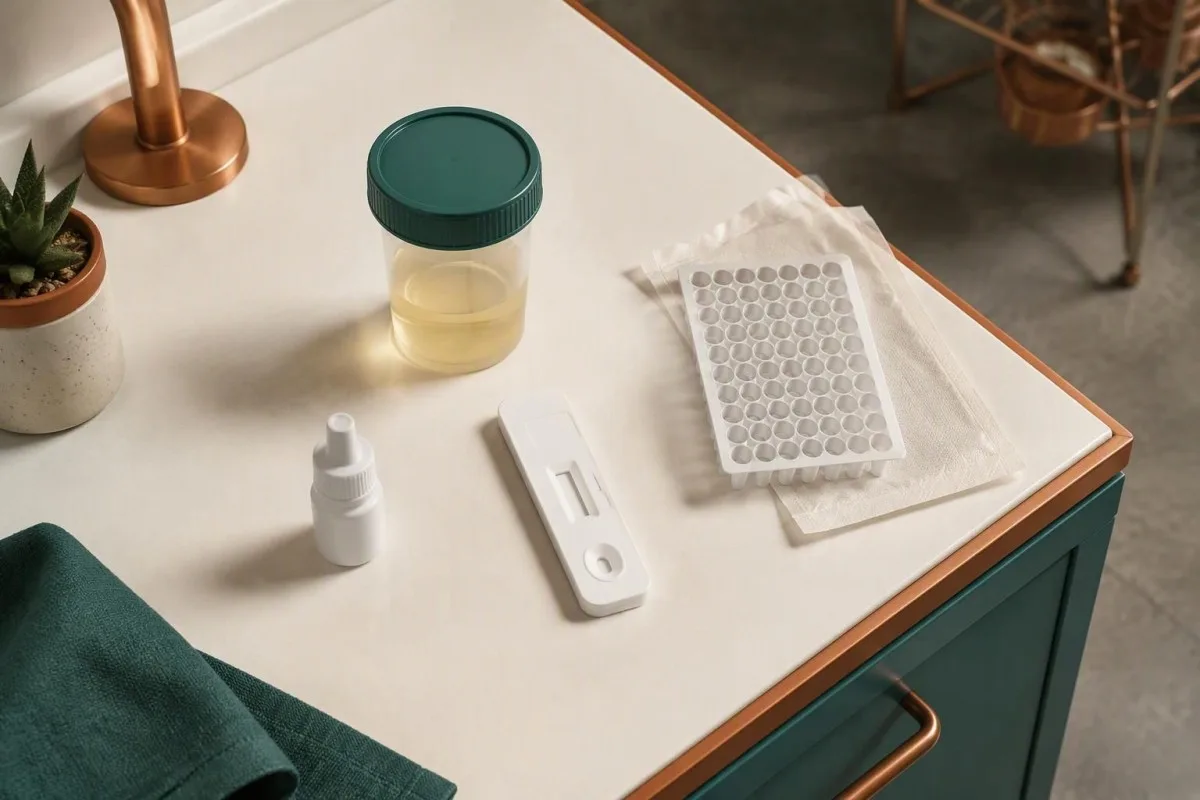
Shimada et al. reported these pooled figures in their 2009 Chest systematic review and meta-analysis. Sensitivity describes how often infected people test positive; specificity describes how often people without the target condition test negative, and neither figure alone tells an individual their probability of disease.
Consider a clearly hypothetical group of 10,000 people being tested, with a 5% prevalence of the target infection. Using 74% sensitivity and 99.1% specificity gives about 370 true positives and 86 false positives, so roughly 81% of positive results would represent the target infection under those assumptions.
Change only the hypothetical prevalence to 20%, and the same calculation gives about 1,480 true positives and 72 false positives—a positive predictive value near 95%. This is why a positive result is more convincing in someone with compatible pneumonia than in indiscriminate screening of well people.
Kantesti AI distinguishes the published 99.1% specificity estimate from the much broader question of whether a person currently has pneumonia. Our validation and clinical boundaries concern our interpretation methods; they do not certify the performance of a hospital’s Legionella assay or make false-positive results impossible.
ಮೂತ್ರದಲ್ಲಿ ಲೆಜಿಯೊನೆಲ್ಲಾ ಆಂಟಿಜೆನ್ ನೆಗೆಟಿವ್ ಬಂದರೂ ಕಾಯಿಲೆ ಇರಬಹುದೇ?
A negative Legionella urine antigen does not rule out Legionnaires’ disease, especially when the organism is outside serogroup 1 or clinical suspicion remains high. Early sampling and variation in antigen excretion can also contribute, so a lower respiratory PCR or culture may be needed.
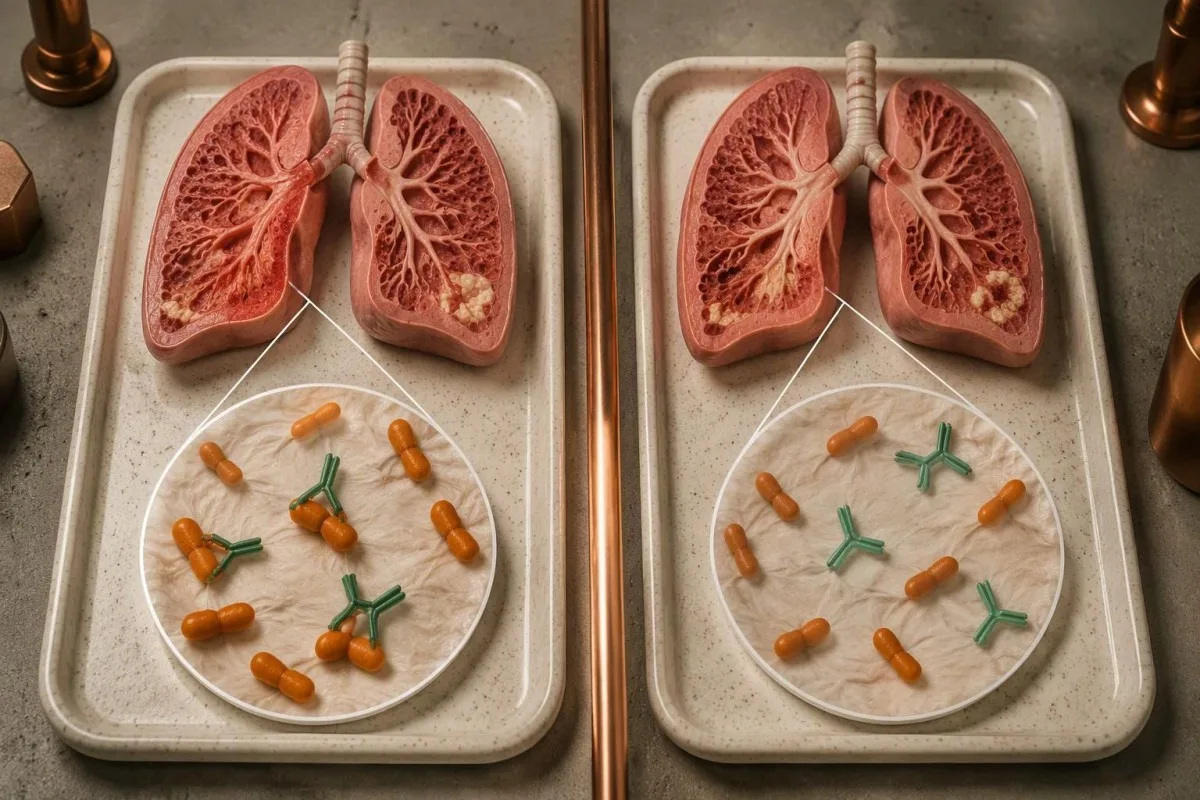
Using the pooled 74% sensitivity as an illustration, approximately 26 of 100 infections within the studied detection scope would be missed. That calculation does not include every infection caused by non-target species, so the test’s ability to exclude all Legionella pneumonia is more limited still.
A hypothetical 67-year-old with severe pneumonia after a hotel stay may need further Legionella testing despite a negative urine result on the first day of admission. The reason is not that travel proves the diagnosis; it raises suspicion enough that relying on one incomplete test could miss a treatable cause.
Repeating urine testing can sometimes be considered when timing or specimen quality is in doubt, but a second negative does not solve a serogroup mismatch. A respiratory assay with appropriate species coverage answers a different question and may add more value than repeatedly ordering the same urine method.
Sampling windows also affect other respiratory tests, although their exact rules differ from Legionella. Our respiratory PCR timing guide illustrates the broader principle: a negative result must be interpreted against specimen site, method, timing, and treatment rather than treated as a universal exclusion.
ಉಸಿರಾಟದ PCR ಮತ್ತು ಕಲ್ಚರ್ ಯಾವಾಗ ಹೆಚ್ಚುವರಿ ಪ್ರಯೋಜನ ನೀಡುತ್ತವೆ?
Respiratory PCR and culture add value when pneumonia is severe, the urine result is negative despite suspicion, broader Legionella detection is needed, or an outbreak is being investigated. Collecting 2 complementary specimens—urine and a lower respiratory sample—can support both immediate diagnosis and public health investigation.
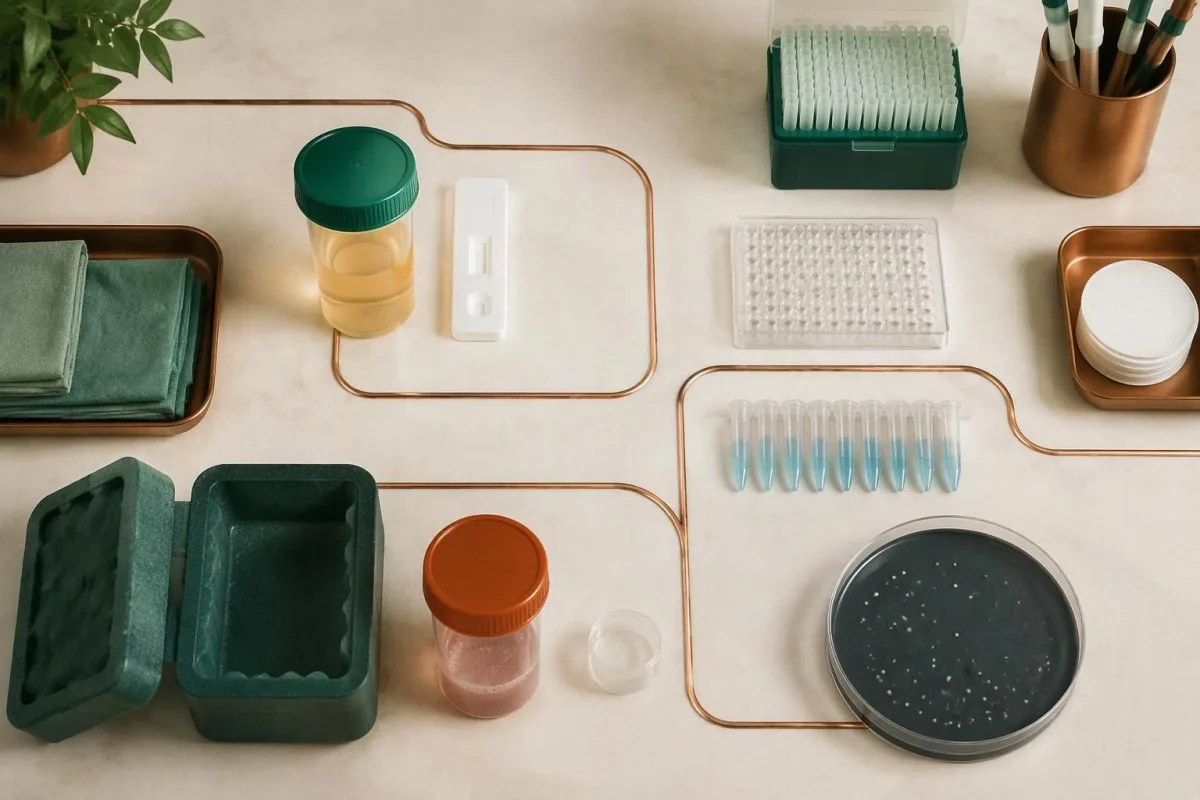
The 2019 ATS/IDSA community-acquired pneumonia guideline recommends Legionella urinary antigen testing plus lower respiratory culture or nucleic acid testing in severe pneumonia (Metlay et al., 2019). It also supports urinary antigen testing when epidemiological factors, such as recent travel or an outbreak association, make Legionella more likely.
PCR detects bacterial genetic material and can return sooner than culture, but its coverage depends on the exact assay. Some tests target L. pneumophila, others detect a broader Legionella group, and not every respiratory multiplex panel includes Legionella; ask what was actually tested rather than assuming a negative panel excludes serogroup 1.
Culture requires a respiratory specimen and special media, commonly buffered charcoal yeast extract, and may take several days. Its distinctive benefit is recovery of an organism that public health laboratories can compare with environmental isolates, whereas a urine antigen result alone cannot match an individual case to a particular water system.
Collect sputum before antibiotics when feasible, but do not delay necessary treatment to obtain it; laboratories may retain cultures for around 10 days before final reporting. Exposure details help guide additional investigations: water-associated illness testing ಮತ್ತು Q ಜ್ವರದ ಪ್ರತಿಕಾಯಗಳ ವ್ಯಾಖ್ಯಾನ explain different exposure-driven pathways, not substitute tests for Legionella.
ಸೋಡಿಯಂ, CRP ಮತ್ತು ಮೂತ್ರಪಿಂಡದ ಫಲಿತಾಂಶಗಳು ಏನನ್ನು ತಿಳಿಸುತ್ತವೆ?
Blood tests help assess the consequences of Legionella pneumonia, but no sodium, CRP, or white cell cutoff independently confirms it. Serum sodium below 135 mmol/L indicates hyponatremia; clinicians interpret that finding alongside hydration, glucose, medications, kidney function, and the respiratory illness.
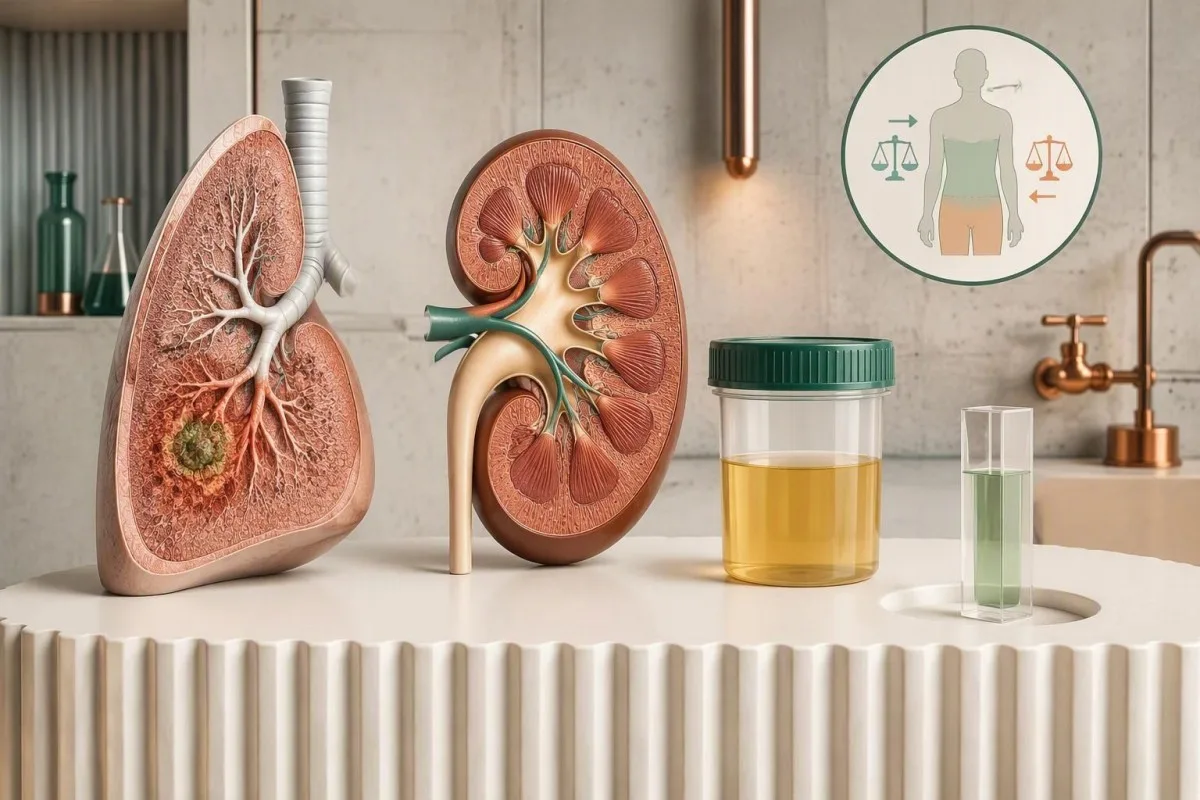
Low sodium does not automatically mean SIADH, and it does not specifically identify serogroup 1 disease. Vomiting, diarrhea, fluid intake, diuretics, and other illnesses can produce overlapping patterns; our SIADH ಪ್ರಯೋಗಾಲಯ ಮಾರ್ಗದರ್ಶಿ explains why osmolality and clinical volume assessment matter before choosing treatment.
Urine sodium may help investigate hyponatremia, but a value such as 40 mmol/L means different things after a diuretic dose than before treatment. Our urine sodium interpretation shows why urine chemistry should not be confused with the separate Legionella urinary antigen test.
A creatinine increase of at least 48 ಗಂಟೆಗಳೊಳಗೆ 0.3 ಮಿಗ್ರಾಂ/ಡಿಎಲ್ is one established criterion for acute kidney injury. Dehydration, sepsis, and medication effects may contribute during pneumonia, and our BUN ಮತ್ತು ಕ್ರಿಯಾಟಿನಿನ್ ಮಾರ್ಗದರ್ಶಿ explains why the ratio alone cannot determine the cause.
ಕಾಂತೆಸ್ಟಿ ಒಬ್ಬ AI ಬಯೋಮಾರ್ಕರ್ ವ್ಯಾಖ್ಯಾನ ವೇದಿಕೆ that can help contextualize a sodium of 129 mmol/L or a changing creatinine alongside other reported blood results. A hypothetical fall in CRP from 180 to 80 mg/L may support improvement, but worsening oxygenation overrides reassurance from that laboratory trend.
ಪಾಸಿಟಿವ್ ಫಲಿತಾಂಶದ ನಂತರ ಸಾಮಾನ್ಯವಾಗಿ ಯಾವ ಚಿಕಿತ್ಸೆ ನೀಡಲಾಗುತ್ತದೆ?
Compatible Legionella pneumonia usually requires an antibiotic active against an organism that multiplies inside cells, commonly azithromycin or a respiratory fluoroquinolone. Many uncomplicated cases receive about 7–10 ದಿನಗಳಲ್ಲಿ of treatment, but severity, immune status, response, and medication safety determine the actual prescription.
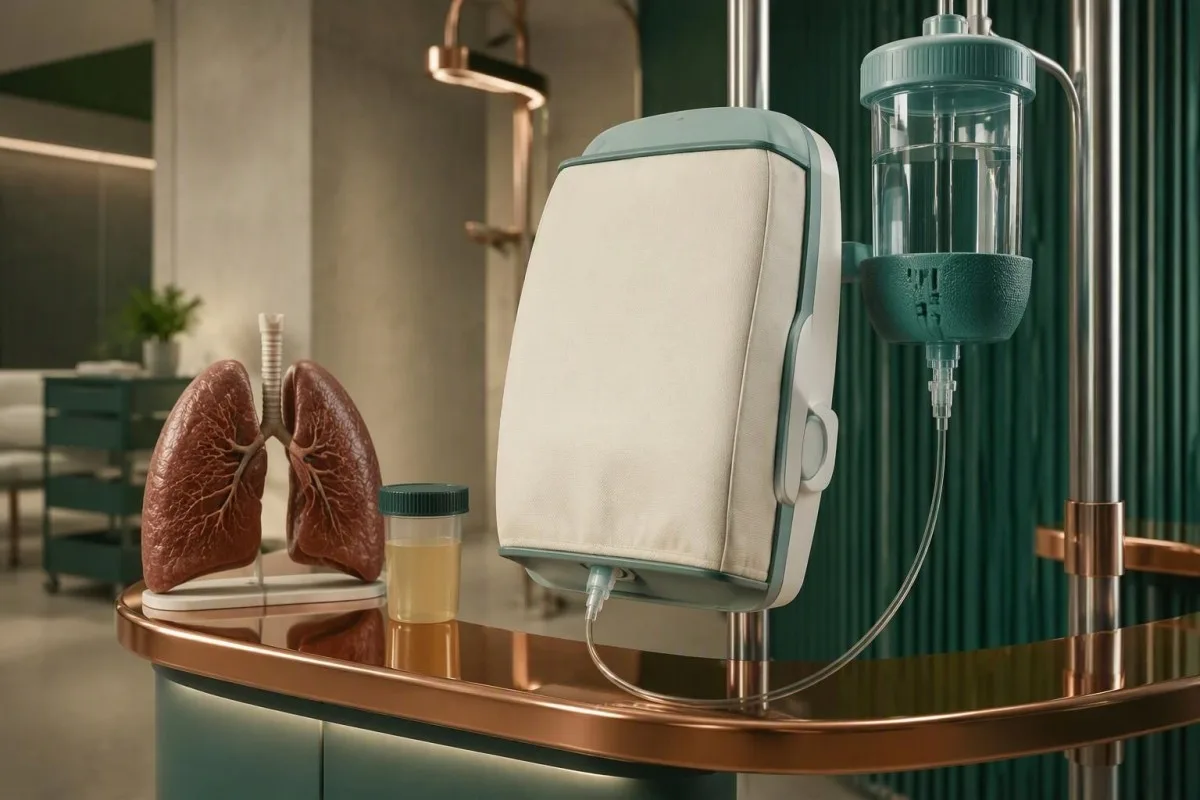
Common adult clinician-selected regimens include azithromycin 500 mg once daily or levofloxacin 750 mg once daily, given orally or intravenously as appropriate. These are examples, not instructions to self-treat; kidney function, pregnancy, interactions, local guidance, and the overall pneumonia regimen can change the choice.
A beta-lactam such as amoxicillin alone does not provide reliable treatment for Legionella pneumonia, because effective intracellular activity matters. A penicillin allergy does not automatically prevent use of the usual Legionella-active options, although other pneumonia coverage may be needed; our penicillin allergy reassessment guide explains that separate decision.
Levofloxacin generally requires dose adjustment when creatinine clearance is below 50 mL/min, while both commonly used drug classes require attention to QT prolongation and interacting medicines. People taking warfarin may need additional INR monitoring during illness or antibiotic treatment, as described in our antibiotics and INR guide.
Severe disease, complications, or substantial immunosuppression can justify longer courses, sometimes 14–21 days, rather than a fixed duration based on the urine result. Evidence comparing antibiotic choices is not definitive enough to declare one option best for every patient; clinical response and adverse-effect risk remain central.
ಚಿಕಿತ್ಸೆಯ ನಂತರವೂ ಮೂತ್ರದ ಆಂಟಿಜೆನ್ ಪಾಸಿಟಿವ್ ಆಗಿಯೇ ಉಳಿಯುವುದು ಏಕೆ?
Persistent Legionella urinary antigen positivity does not necessarily mean treatment failure, because the test detects bacterial material rather than bacterial viability. Antigen can remain detectable for weeks and occasionally months, so a positive test 4 weeks after treatment must be interpreted against recovery and previous results.
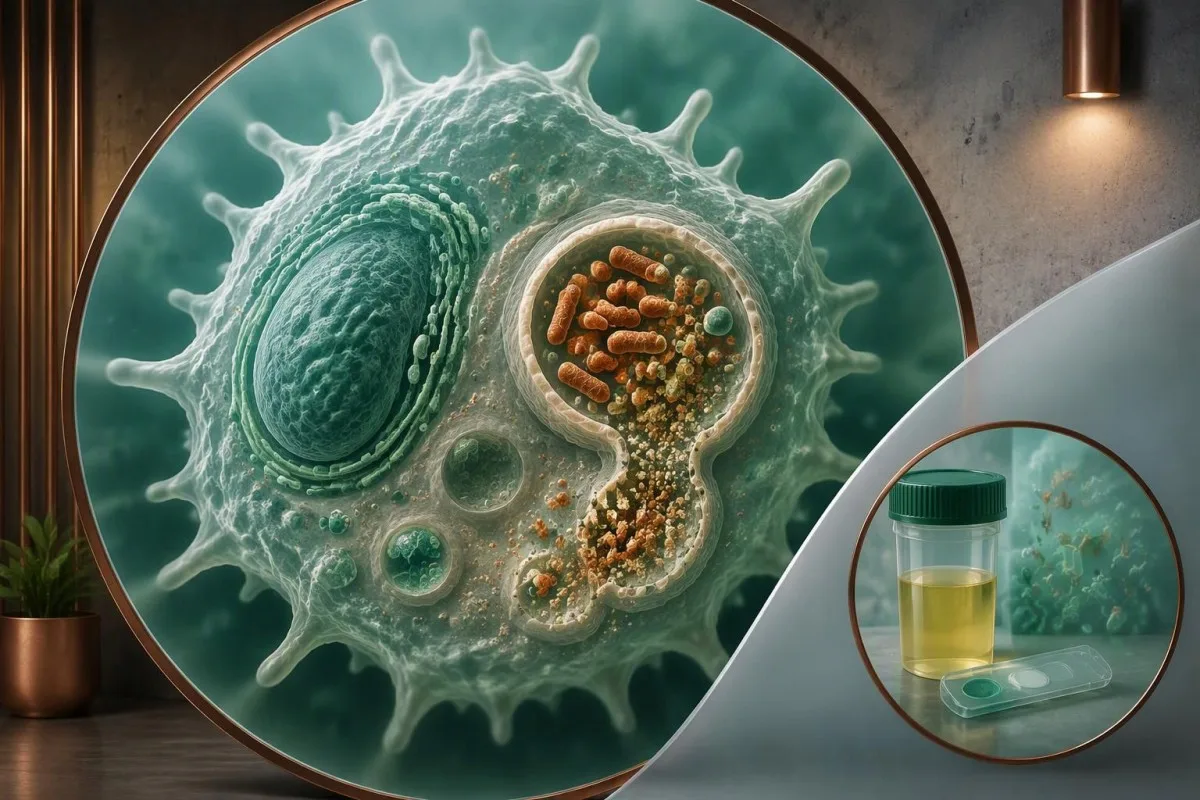
Kohler et al. documented prolonged urinary antigen excretion in ಲೆಜಿಯೊನೆರೀಸ್ ಕಾಯಿಲೆ in the 1984 Journal of Clinical Microbiology paper on its onset and duration. The practical consequence is still relevant: antigen clearance and clinical recovery run on different timelines, and there is no universal day when every successful course produces a negative urine test.
For a hypothetical example, a 61-year-old completes a prescribed 10-day course, no longer has fever, and returns to their usual oxygen saturation. A positive urine antigen 3 weeks later, without new symptoms, is not sufficient reason to restart antibiotics or label the treatment unsuccessful.
Routine repeat urine antigen testing is generally not a test of cure. If symptoms recur at 6 weeks, clinicians reassess the lungs, oxygenation, treatment history, and possible alternative causes; the old antigen result cannot independently distinguish relapse, a new illness, or residual antigen excretion.
Kantesti separates a historical serogroup 1 antigen finding from companion blood-test trends rather than treating every positive flag as evidence of ongoing disease. Our guide to ಆಸ್ಪತ್ರೆಯಿಂದ ಬಿಡುಗಡೆಯ ನಂತರದ ಫಲಿತಾಂಶಗಳು explains why persistent abnormalities need context, especially when the patient is improving clinically.
ಚೇತರಿಕೆ ಅಥವಾ ಚಿಕಿತ್ಸೆಯ ವೈಫಲ್ಯವನ್ನು ವೈದ್ಯರು ಹೇಗೆ ನಿರ್ಧರಿಸುತ್ತಾರೆ?
Clinicians judge Legionella treatment response using fever, breathing, oxygen requirements, circulation, function, and complications—not urine antigen clearance. Some improvement is often expected within 48–72 ಗಂಟೆಗಳು of effective treatment, but severe pneumonia can recover more slowly and deterioration at any time needs reassessment.
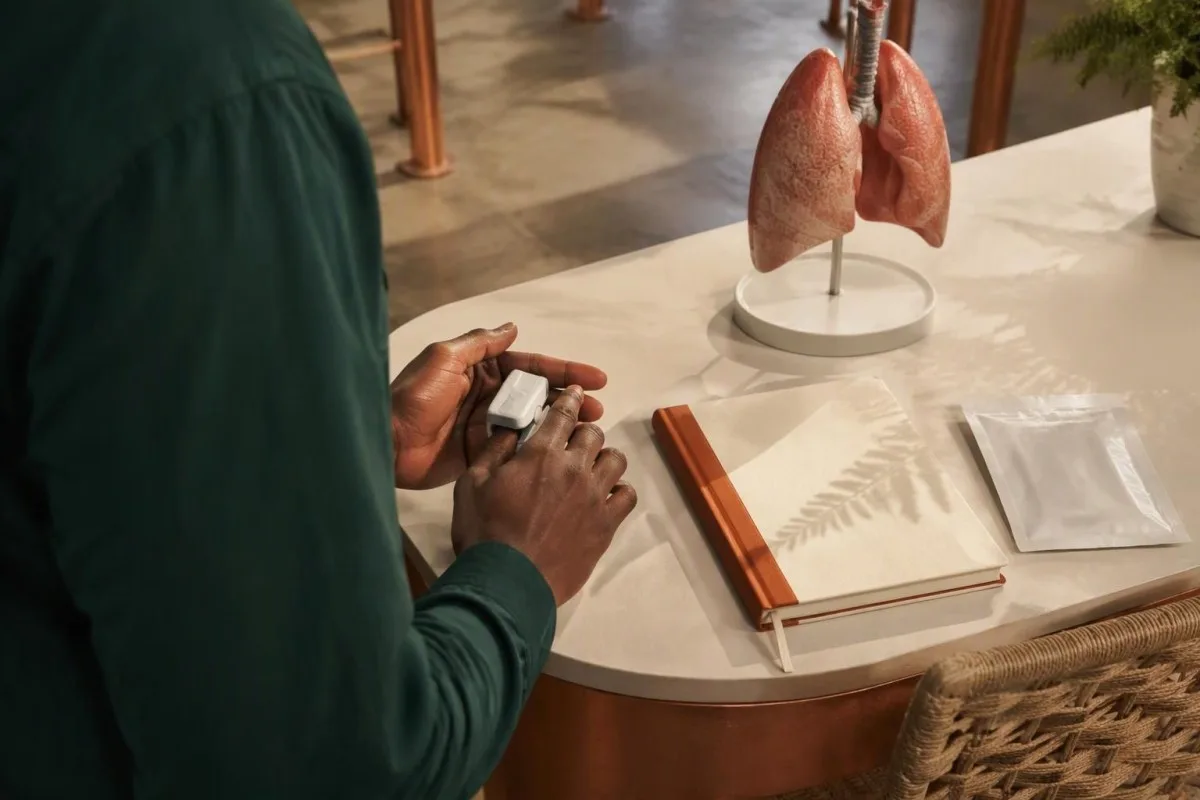
A lingering cough or reduced stamina at 2 weeks does not by itself establish persistent bacterial illness. Lung imaging can also lag behind clinical recovery for several weeks; clinicians interpret the direction of change, not just whether every symptom or radiographic opacity has disappeared.
Escalating oxygen needs, recurrent high fever, worsening blood pressure, or new confusion are more concerning than a persistently positive serogroup 1 antigen. Those changes may reflect an inadequate regimen, poor absorption, a complication, a second infection, or an alternative diagnosis rather than simple slow antigen clearance.
A hypothetical patient whose CRP falls from 160 to 70 mg/L but whose room-air oxygen saturation drops from 95% to 89% is not showing a safely reassuring overall pattern. The respiratory deterioration warrants urgent review even though one laboratory marker is improving.
Record the dates of symptoms, specimen collection, first effective antibiotic dose, and major changes in oxygen or fever. Our ಪ್ರಯೋಗಾಲಯದ ಕಾಲಾವಧಿ ಮಾರ್ಗದರ್ಶಿ explains why comparing day 2 of treatment with day 10 is often more meaningful than comparing two isolated positive flags.
ಪರೀಕ್ಷೆ ಪಾಸಿಟಿವ್ ಬಂದರೆ ನಿಮಗೆ ಸೋಂಕು ಹರಡುವ ಸಾಧ್ಯತೆಯಿದೆಯೇ?
Legionnaires’ disease is usually acquired from inhaling contaminated water aerosols or, less often, aspirating contaminated water; routine person-to-person spread is not expected. Symptoms commonly begin ಒಡ್ಡಿಕೊಂಡ 2–10 ದಿನಗಳ ನಂತರ, and a positive urine antigen does not identify where exposure occurred or how contagious someone is.
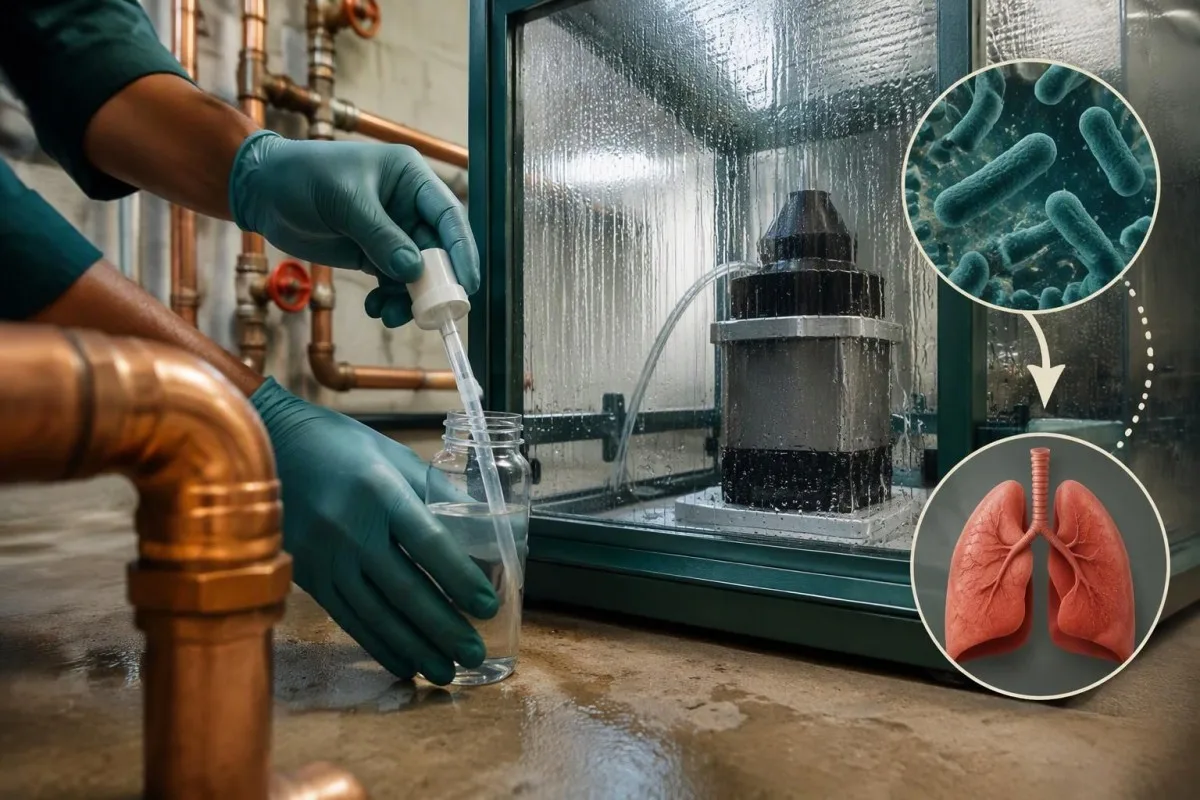
Showers, hot tubs, cooling towers, and complex building water systems can create relevant aerosols, but finding one of these exposures does not prove its source. For a person with a serogroup 1 result, public health investigators may need travel dates, accommodation details, healthcare stays, and other potentially shared exposures.
An exposure history usually starts with the 10 days before symptom onset, although investigators may ask about a longer interval in selected situations. Keep dates rather than relying on memory alone; the same hotel visit can be relevant or irrelevant depending on when symptoms began.
Family members do not usually need antibiotics or urine testing simply because one household member has Legionnaires’ disease. A relative who develops fever and cough after the same 3-day hotel stay, however, needs assessment because the two people may share an environmental exposure rather than have infected each other.
Persistent antigen does not establish ongoing transmission risk. That differs from some gastrointestinal viruses, where contagiousness after symptoms can be a separate concern; our norovirus recovery and transmission guide describes a different organism and should not be used to set isolation rules for Legionella.
ಯಾವ ಲಕ್ಷಣಗಳಿಗೆ ತುರ್ತು ಅಥವಾ ತಕ್ಷಣದ ವೈದ್ಯಕೀಯ ಆರೈಕೆಯ ಅಗತ್ಯವಿದೆ?
A positive Legionella urine antigen with new breathlessness, confusion, fainting, or deteriorating oxygenation needs urgent medical assessment. For most adults without an individualized oxygen target, room-air saturation at or below 92% warrants prompt review; severe breathing difficulty or saturation at or below 90% needs emergency attention.
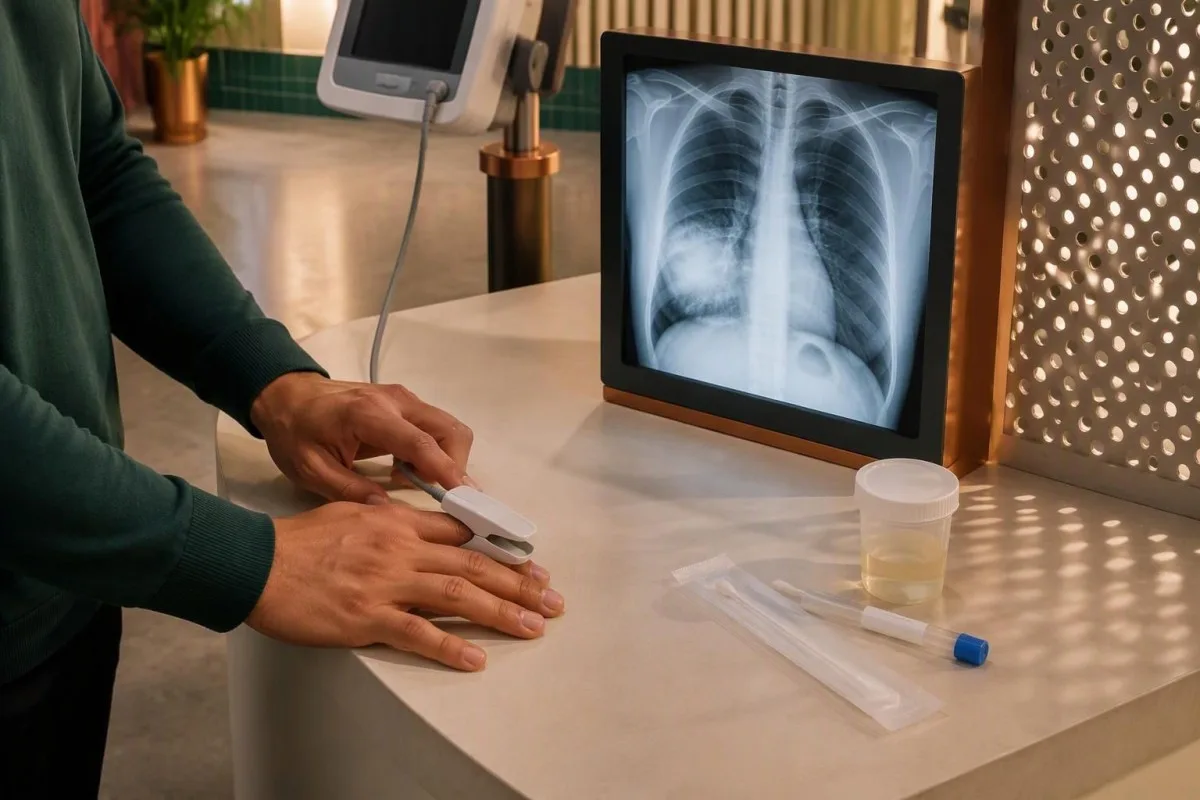
Do not wait for another laboratory result if breathing is rapidly worsening. A respiratory rate of 30 breaths per minute or more, new confusion, or systolic blood pressure below 90 mmHg can indicate serious pneumonia or circulatory compromise and should prompt immediate clinical evaluation.
Home pulse oximeters have limitations, including motion, cold hands, nail coverings, and performance differences across skin pigmentation. Repeat an unexpected reading after resting and warming the hand, but do not use a seemingly normal value such as 95% to dismiss severe breathlessness, blue-gray lips, or altered awareness.
Some people with chronic respiratory disease have a prescribed oxygen target of 88–92%, so their usual care plan matters. A new need for more oxygen, a significant fall from baseline, or worsening symptoms remains concerning even when the reading is inside that target interval.
Hospitals may use an ಅಪಧಮನಿಯ ರಕ್ತದ ಅನಿಲ when they need more detail about oxygen, carbon dioxide, or acid–base status. Our ಆರ್ಟೀರಿಯಲ್ ಬ್ಲಡ್ ಗ್ಯಾಸ್ ಮಾರ್ಗದರ್ಶಿ explains why these measurements answer severity questions that a serogroup 1 urine antigen cannot.
ಅನುಸರಣಾ ಆರೈಕೆಯನ್ನು ಸುರಕ್ಷಿತವಾಗಿ ವ್ಯವಸ್ಥೆಗೊಳಿಸಲು AI ಹೇಗೆ ಸಹಾಯ ಮಾಡಬಹುದು?
AI can help explain companion blood tests and organize questions, but it cannot independently diagnose Legionella pneumonia or determine treatment success from 1 urine result. Keep the antigen report, specimen date, respiratory test status, prescribed treatment, and symptom timeline together for discussion with the treating team.
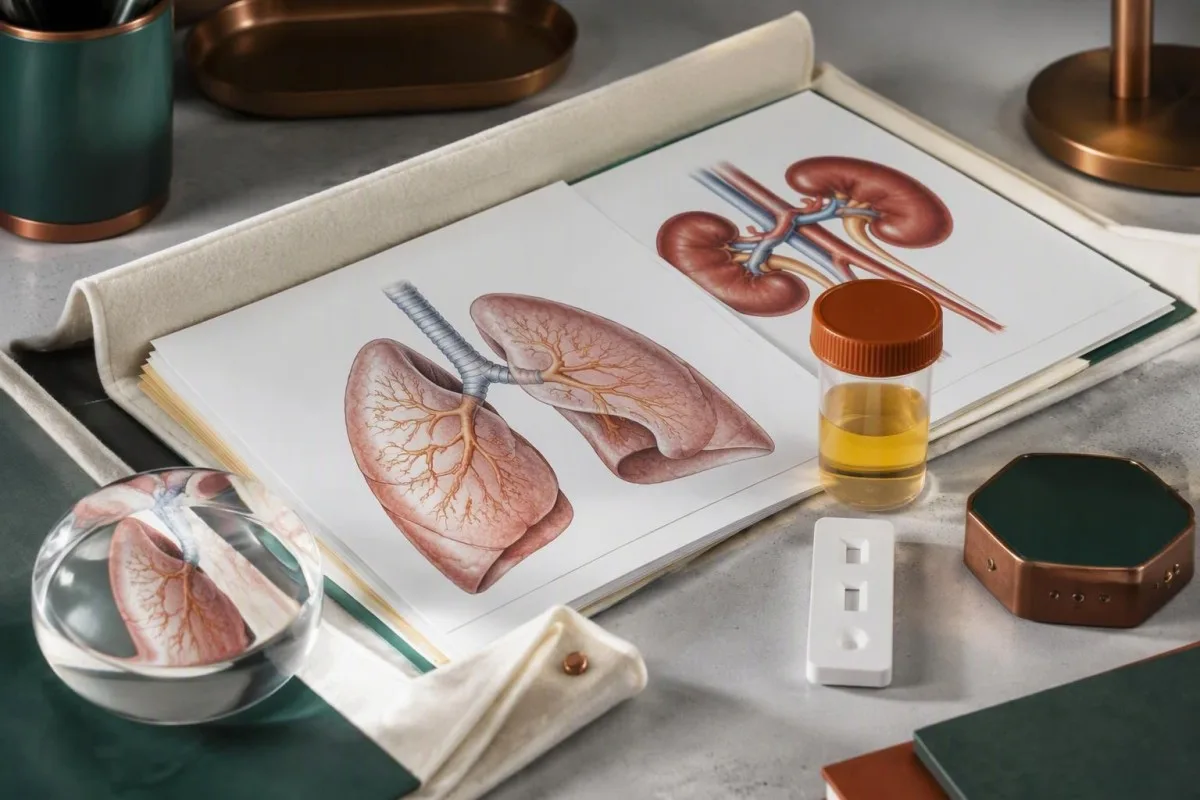
ಕಾಂತೆಸ್ಟಿ ಒಬ್ಬ AI ರಕ್ತ ಪರೀಕ್ಷೆ ವರದಿ ಅರ್ಥ ಪ್ಲಾಟ್ಫಾರ್ಮ್ that helps make companion results, such as sodium of 130 mmol/L or a changing creatinine, easier to understand. Our AI ತಂತ್ರಜ್ಞಾನ ಮಾರ್ಗದರ್ಶಿ explains the interpretation workflow, but blood-test analysis is not validation of a Legionella urine assay.
Preserve units, reference intervals, collection dates, and any comments about serogroup 1 coverage. A sodium result of 130 mmol/L before intravenous fluids and another result of 136 mmol/L afterward represent a treatment-linked sequence; removing dates can make the explanation less reliable.
Useful follow-up questions include whether pneumonia was demonstrated, whether the antibiotic covers Legionella, and whether a respiratory PCR or culture was collected. A 7-day prescription may be entirely appropriate in one clinical setting and insufficient in another, so ask about the reasoning rather than comparing duration alone.
Kantesti AI cannot assess your current oxygen requirement, hear lung findings, or confirm whether a recurring positive at week 4 represents residual antigen. Our AI ವಿವರಣೆ ಸುರಕ್ಷತಾ ಮಾರ್ಗದರ್ಶಿ describes source checking and escalation boundaries; contact your clinician for treatment changes instead of acting on an automated explanation.
ಈ ವ್ಯಾಖ್ಯಾನಕ್ಕೆ ಯಾವ ಸಾಕ್ಷ್ಯಗಳು ಬೆಂಬಲ ನೀಡುತ್ತವೆ?
The clinical interpretation rests on 3 complementary evidence sources: a urinary antigen accuracy meta-analysis, adult pneumonia guidance, and research documenting prolonged antigen excretion. The separate publications listed below describe broader blood-test interpretation topics and should not be mistaken for clinical validation of Legionella diagnosis or treatment.
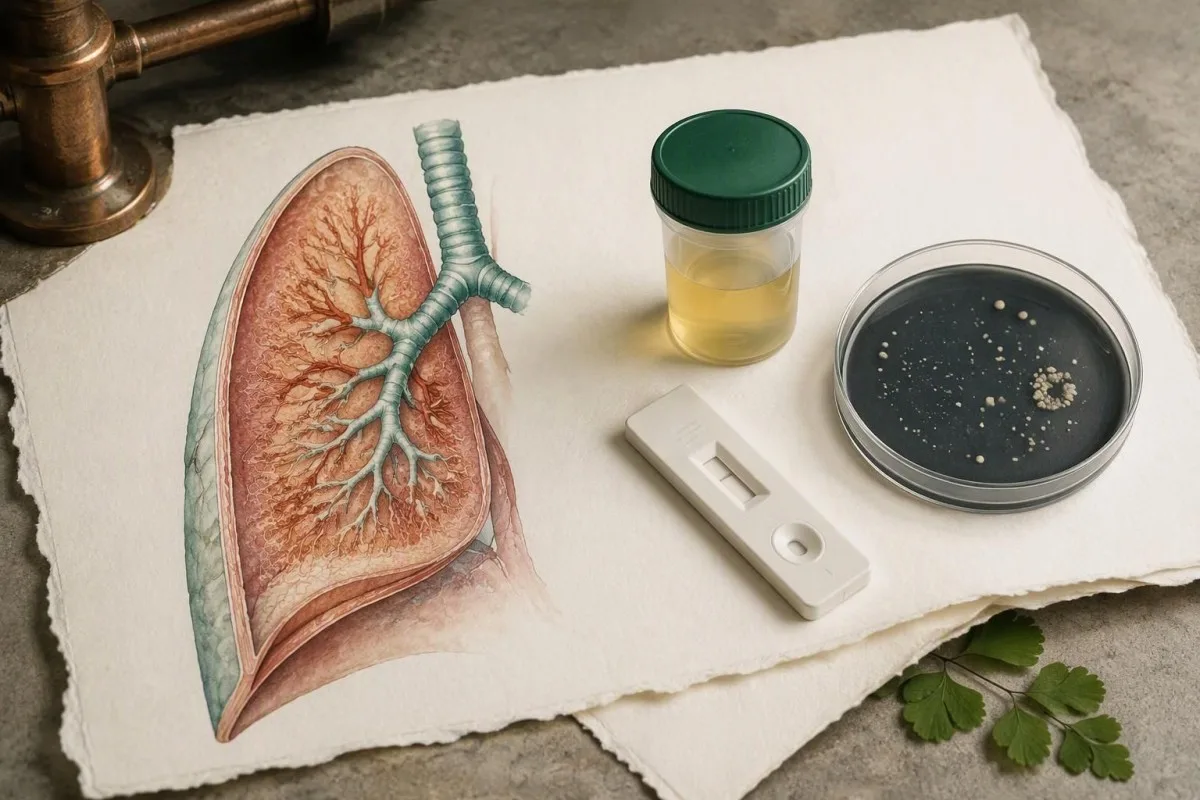
Shimada et al. (2009) provide the approximately 74% sensitivity and 99.1% specificity estimates used in the worked examples. Those values come from pooled studies with different methods and patient populations, so they are useful for understanding uncertainty rather than predicting an exact result for an individual laboratory.
Metlay et al. (2019) address adult community-acquired pneumonia and support paired Legionella testing in severe disease. The guideline does not turn a positive antigen into a severity score, and its recommendations should not be transferred unchanged to children, every immunocompromised patient, or every healthcare-associated case.
Kohler et al. (1984) show why persistent antigen must be separated from bacterial viability and treatment response. A positive result at 4 ವಾರಗಳಲ್ಲಿ needs a symptom-based reassessment if the person is unwell, but the duration alone cannot establish failure; this is a diagnostic limitation, not permission to ignore recurrent pneumonia.
The 2 Kantesti publications below are platform-related resources, not independent Legionella treatment trials; our ವೈದ್ಯಕೀಯ ವಿಷಯದ ಮಾನದಂಡಗಳು explain how educational claims should be distinguished from diagnostic evidence. The accompanying RDW and CBC resource concerns red-cell measurements, which may appear on a hospital report but do not confirm Legionnaires’ disease.
ಆಗಾಗ್ಗೆ ಕೇಳಲಾಗುವ ಪ್ರಶ್ನೆಗಳು
ಸಕಾರಾತ್ಮಕ ಲೆಜಿಯೊನೆಲ್ಲಾ ಮೂತ್ರದ ಪ್ರತಿಜನಕ ಪರೀಕ್ಷೆಯು ಲೆಜಿಯೊನೈರ್ಸ್ ರೋಗವನ್ನು ದೃಢಪಡಿಸುತ್ತದೆಯೇ?
ಹೊಂದಾಣಿಕೆಯ ಲಕ್ಷಣಗಳು ಮತ್ತು ನ್ಯುಮೋನಿಯಾದ ಸಾಕ್ಷ್ಯವಿರುವ ವ್ಯಕ್ತಿಯಲ್ಲಿ ಧನಾತ್ಮಕ ಲೆಜಿಯೊನೆಲ್ಲಾ ಮೂತ್ರದ ಆಂಟಿಜೆನ್ ಲೆಜಿಯೊನೇರ್ಸ್ ಕಾಯಿಲೆಯನ್ನು ಬಲವಾಗಿ ಸೂಚಿಸುತ್ತದೆ. ಹೆಚ್ಚಿನ ಪ್ರಮಾಣಿತ ಪರೀಕ್ಷೆಗಳು ಪ್ರತಿಯೊಂದು ಲೆಜಿಯೊನೆಲ್ಲಾ ಪ್ರಭೇದವನ್ನಲ್ಲ, ಮುಖ್ಯವಾಗಿ ಲೆಜಿಯೊನೆಲ್ಲಾ ನ್ಯುಮೋಫಿಲಾದ ಸೆರೋಗ್ರೂಪ್ 1 ಅನ್ನು ಪತ್ತೆಹಚ್ಚುತ್ತವೆ. 2009ರ ಮೆಟಾ-ವಿಶ್ಲೇಷಣೆಯು ಸರಿಸುಮಾರು 99.1% ನಿರ್ದಿಷ್ಟತೆಯನ್ನು ವರದಿ ಮಾಡಿದೆ; ಆದರೆ ತಪ್ಪು ಧನಾತ್ಮಕ ಫಲಿತಾಂಶಗಳು ಮತ್ತು ಹಿಂದಿನ ಕಾಯಿಲೆಯ ನಂತರ ಉಳಿಯುವ ಆಂಟಿಜೆನ್ ಇನ್ನೂ ಸಾಧ್ಯ. ನ್ಯುಮೋನಿಯಾ ಇಲ್ಲದಿರುವಾಗ ನಿರೀಕ್ಷಿಸದ ಫಲಿತಾಂಶ ಬಂದರೆ, ತಕ್ಷಣವೇ ಚಿಕಿತ್ಸೆ ನೀಡುವ ಬದಲು ವೈದ್ಯಕೀಯ ಮತ್ತು ಪ್ರಯೋಗಾಲಯದ ಪರಿಶೀಲನೆ ಅಗತ್ಯ.
ಮೂತ್ರದ ಆಂಟಿಜೆನ್ ಪರೀಕ್ಷೆ ನಕಾರಾತ್ಮಕವಾಗಿದ್ದರೂ ನನಗೆ ಲೆಜಿಯೊನೆಲ್ಲಾ ಕಾಯಿಲೆ ಇರಬಹುದೇ?
ಹೌದು, ಲೆಜಿಯೊನೆಲ್ಲಾ ಮೂತ್ರದ ಪ್ರತಿಜನಕ ಪರೀಕ್ಷೆಯ ಫಲಿತಾಂಶ ನಕಾರಾತ್ಮಕವಾಗಿರುವುದು ಲೆಜಿಯೊನೆಲ್ಲೇರ್ಸ್ ಕಾಯಿಲೆಯನ್ನು ಹೊರತುಪಡಿಸುವುದಿಲ್ಲ. ಈ ಪರೀಕ್ಷೆಯು ಗುರಿಯಲ್ಲದ ಸೆರೋಗ್ರೂಪ್ಗಳು ಅಥವಾ ಪ್ರಭೇದಗಳನ್ನು ಪತ್ತೆಹಚ್ಚದೆ ಇರಬಹುದು, ಮತ್ತು ಅಧ್ಯಯನದಲ್ಲಿ ಪರಿಶೀಲಿಸಲಾದ ಪತ್ತೆ ವ್ಯಾಪ್ತಿಯಲ್ಲಿ ಸಂವೇದನಾಶೀಲತೆ ಸರಿಸುಮಾರು 74% ಎಂದು ಮೆಟಾ-ವಿಶ್ಲೇಷಣೆಯೊಂದು ವರದಿ ಮಾಡಿದೆ. ಅದೇ ಊಹೆಗಳ ಅಡಿಯಲ್ಲಿ, ಆ ಸಂವೇದನಾಶೀಲತೆಯು ಪ್ರತಿ 100 ಗುರಿ ಸೋಂಕುಗಳಲ್ಲಿ ಸುಮಾರು 26 ಅನ್ನು ಪತ್ತೆಹಚ್ಚದೆ ಬಿಡುತ್ತದೆ. ನ್ಯುಮೋನಿಯಾ ತೀವ್ರವಾಗಿದ್ದಾಗ ಅಥವಾ ಅನುಮಾನ ಹೆಚ್ಚಾಗಿಯೇ ಉಳಿದಿದ್ದಾಗ, ಉಸಿರಾಟದ ಮಾದರಿಯ PCR ಅಥವಾ ಕಲ್ಚರ್ ಪರೀಕ್ಷೆ ಹೆಚ್ಚುವರಿ ಮೌಲ್ಯವನ್ನು ನೀಡುತ್ತದೆ.
ಲೆಜಿಯೊನೆಲ್ಲಾ ಮೂತ್ರದ ಪ್ರತಿಜನಕ ಎಷ್ಟು ಕಾಲ ಧನಾತ್ಮಕವಾಗಿರಬಹುದು?
0 ಲೆಜಿಯೊನೆಲ್ಲಾ ಮೂತ್ರದ ಪ್ರತಿಜನಕವು ತೀವ್ರ ಅನಾರೋಗ್ಯದ ನಂತರ ವಾರಗಳವರೆಗೆ ಮತ್ತು ಕೆಲವೊಮ್ಮೆ ತಿಂಗಳುಗಳವರೆಗೆ ಪತ್ತೆಯಾಗಬಹುದು. ಚಿಕಿತ್ಸೆಯ 4 ವಾರಗಳ ನಂತರದ ಧನಾತ್ಮಕ ಫಲಿತಾಂಶವು ಉಳಿದಿರುವ ಬ್ಯಾಕ್ಟೀರಿಯಾದ ವಸ್ತುವನ್ನು ಸೂಚಿಸಬಹುದು; ಜೀವಂತವಾಗಿರುವ ಜೀವಾಣುಗಳನ್ನು ಅಲ್ಲ. ಎಲ್ಲರಿಗೂ ಅನ್ವಯಿಸುವ ತೆರವುಗೊಳ್ಳುವಿಕೆಯ ಒಂದು ನಿರ್ದಿಷ್ಟ ದಿನವಿಲ್ಲ, ಮತ್ತು ವಾಡಿಕೆಯ ಮೂತ್ರದ ಪ್ರತಿಜನಕ ಪರೀಕ್ಷೆಯು ಸಾಮಾನ್ಯವಾಗಿ ಗುಣಮುಖತೆಯನ್ನು ದೃಢೀಕರಿಸುವ ಪರೀಕ್ಷೆಯಲ್ಲ. ಪ್ರತಿಜನಕದ ಫಲಿತಾಂಶ ಏನೇ ಇರಲಿ, ಜ್ವರ ಮತ್ತೆ ಕಾಣಿಸಿಕೊಂಡರೆ, ಉಸಿರಾಟ ಹದಗೆಟ್ಟರೆ ಅಥವಾ ಆಮ್ಲಜನಕದ ಅಗತ್ಯ ಹೆಚ್ಚಾದರೆ ಮರುಮೌಲ್ಯಮಾಪನ ಅಗತ್ಯ.
ನನ್ನ ಆಂಟಿಜೆನ್ ಪರೀಕ್ಷೆ ಇನ್ನೂ ಪಾಸಿಟಿವ್ ಆಗಿದ್ದರೆ, ನನಗೆ ಮತ್ತೊಂದು ಆಂಟಿಬಯೋಟಿಕ್ ಕೋರ್ಸ್ ಬೇಕೇ?
0 Persistent Legionella ಮೂತ್ರದ ಆಂಟಿಜೆನ್ ಧನಾತ್ಮಕವಾಗಿರುವುದು ಮಾತ್ರವೇ ಆಂಟಿಬಯಾಟಿಕ್ಗಳನ್ನು ಮರುಪ್ರಾರಂಭಿಸಲು ಕಾರಣವಲ್ಲ. ಅನೇಕ ಜಟಿಲತೆಯಿಲ್ಲದ ಪ್ರಕರಣಗಳಲ್ಲಿ ಸುಮಾರು 7–10 ದಿನಗಳ ಚಿಕಿತ್ಸೆ ನೀಡಲಾಗುತ್ತದೆ, ಆದರೆ ತೀವ್ರತೆ, ರೋಗನಿರೋಧಕ ಸ್ಥಿತಿ ಮತ್ತು ಚಿಕಿತ್ಸೆಗೆ ಪ್ರತಿಕ್ರಿಯೆಯನ್ನು ಆಧರಿಸಿ ಸೂಕ್ತ ಅವಧಿಯನ್ನು ಚಿಕಿತ್ಸೆ ನೀಡುವ ವೈದ್ಯರು ನಿರ್ಧರಿಸುತ್ತಾರೆ. ವೈದ್ಯಕೀಯವಾಗಿ ಸುಧಾರಿಸುತ್ತಿರುವ ವ್ಯಕ್ತಿಯಲ್ಲಿ ಚಿಕಿತ್ಸೆಯ ವೈಫಲ್ಯವಿಲ್ಲದಿದ್ದರೂ ಆಂಟಿಜೆನ್ ಧನಾತ್ಮಕವಾಗಿಯೇ ಉಳಿಯಬಹುದು. ಹೊಸ ಅಥವಾ ಹದಗೆಡುತ್ತಿರುವ ಲಕ್ಷಣಗಳಿಗೆ, ಪುನರಾವರ್ತಿತ ಮೂತ್ರ ಪರೀಕ್ಷೆಯ ಆಧಾರದ ಮೇಲೆ ಮಾತ್ರ ಆಂಟಿಬಯಾಟಿಕ್ ನಿರ್ಧರಿಸುವ ಬದಲು, ವೈದ್ಯಕೀಯ ಪರಿಶೀಲನೆ ಅಗತ್ಯ.
ಮೂತ್ರದ ಪ್ರತಿಜನಕ ಪರೀಕ್ಷೆ ಧನಾತ್ಮಕವಾದ ನಂತರ ಉಸಿರಾಟದ PCR ಅಥವಾ ಸಂಸ್ಕೃತಿ ಪರೀಕ್ಷೆಯನ್ನು ಏಕೆ ಆದೇಶಿಸಬೇಕು?
ಉಸಿರಾಟದ ಪಿಸಿಆರ್ ಅಥವಾ ಕಲ್ಚರ್, ಧನಾತ್ಮಕ ಮೂತ್ರದ ಆಂಟಿಜೆನ್ ಪರೀಕ್ಷೆಯಿಂದ ದೊರೆಯದ ಮಾಹಿತಿಯನ್ನು ನೀಡಬಲ್ಲದು; ಇದರಲ್ಲಿ ಹೆಚ್ಚಿನ ವಿಧದ ರೋಗಕಾರಕಗಳನ್ನು ಪತ್ತೆಹಚ್ಚುವುದು ಅಥವಾ ರೋಗವ್ಯಾಪಿ ತನಿಖೆಗಾಗಿ ಪ್ರತ್ಯೇಕಿಸಿದ ಸೂಕ್ಷ್ಮಜೀವಿಯನ್ನು ಪಡೆಯುವುದು ಸೇರಿವೆ. 2019ರ ATS/IDSA ಮಾರ್ಗಸೂಚಿಯು ತೀವ್ರ ಸಮುದಾಯ-ಸ್ವಾಧೀನ ನ್ಯುಮೋನಿಯಾದಲ್ಲಿ ಮೂತ್ರದ ಆಂಟಿಜೆನ್ ಪರೀಕ್ಷೆಯ ಜೊತೆಗೆ ಕೆಳ ಉಸಿರಾಟ ಮಾರ್ಗದ ಕಲ್ಚರ್ ಅಥವಾ ನ್ಯೂಕ್ಲಿಯಿಕ್ ಆಮ್ಲ ಪರೀಕ್ಷೆಯನ್ನು ಶಿಫಾರಸು ಮಾಡುತ್ತದೆ. ಪಿಸಿಆರ್ನ ವ್ಯಾಪ್ತಿ ಪರೀಕ್ಷಾ ವಿಧಾನವನ್ನು ಅವಲಂಬಿಸಿರುತ್ತದೆ, ಮತ್ತು ಕಲ್ಚರ್ಗೆ ಹಲವಾರು ದಿನಗಳು ಬೇಕಾಗಬಹುದು. ಈ 2 ಮಾದರಿ ಪ್ರಕಾರಗಳು ಪರಸ್ಪರ ಪೂರಕವಾಗಿವೆ; ಆದ್ದರಿಂದ ಮೂತ್ರದ ಫಲಿತಾಂಶವು ಈಗಾಗಲೇ ಧನಾತ್ಮಕವಾಗಿದ್ದರೂ ಉಸಿರಾಟದ ಮಾದರಿಯನ್ನು ಸಂಗ್ರಹಿಸುವುದು ಉಪಯುಕ್ತವಾಗಿರಬಹುದು.
ಮೂತ್ರದ ಆಂಟಿಜೆನ್ ಪರೀಕ್ಷೆಯಲ್ಲಿ ಲೆಜಿಯೊನೆಲ್ಲಾ ಕಂಡುಬಂದರೆ, ಅದು ಮೂತ್ರನಾಳದ ಸೋಂಕು ಎಂದರ್ಥವೇ?
ಧನಾತ್ಮಕ ಲೆಜಿಯೊನೆಲ್ಲಾ ಮೂತ್ರ ಪ್ರತಿಜನಕವು ಸಾಮಾನ್ಯವಾಗಿ ಶ್ವಾಸಕೋಶದ ಕಾಯಿಲೆಯ ಸಮಯದಲ್ಲಿ ಹೊರಹಾಕಲ್ಪಟ್ಟ ಬ್ಯಾಕ್ಟೀರಿಯಾದ ವಸ್ತುವನ್ನು ಸೂಚಿಸುತ್ತದೆ; ಮೂತ್ರಕೋಶದ ಸೋಂಕನ್ನು ಅಲ್ಲ. ಸಾಮಾನ್ಯ ಪರೀಕ್ಷೆಗಳು ಸಾಮಾನ್ಯವಾಗಿ ಲೆಜಿಯೊನೆಲ್ಲಾ ನ್ಯುಮೋಫಿಲಾದ ಸೆರೋಗ್ರೂಪ್ 1 ಪ್ರತಿಜನಕವನ್ನು ಗುರುತಿಸುತ್ತವೆ ಮತ್ತು ಮೂತ್ರದಲ್ಲಿ ಜೀವಂತ ಬ್ಯಾಕ್ಟೀರಿಯಾಗಳು ಬೆಳೆಯುತ್ತಿವೆ ಎಂಬುದನ್ನು ತೋರಿಸುವುದಿಲ್ಲ. ನಿಯಮಿತ ಮೂತ್ರ ಕಲ್ಚರ್ ಮತ್ತು ಮೂತ್ರ ಪ್ರತಿಜನಕ ಪರೀಕ್ಷೆಗಳು ವಿಭಿನ್ನ ಪ್ರಶ್ನೆಗಳಿಗೆ ಉತ್ತರಿಸುತ್ತವೆ. ಹೊಸದಾಗಿ ಉಸಿರಾಟದ ತೊಂದರೆ ಕಾಣಿಸಿಕೊಂಡಿರುವ ಮತ್ತು ಆಮ್ಲಜನಕದ ಸ್ಯಾಚುರೇಶನ್ 92% ಅಥವಾ ಅದಕ್ಕಿಂತ ಕಡಿಮೆ ಇರುವ ವ್ಯಕ್ತಿಯು, ಈ ಫಲಿತಾಂಶವನ್ನು ಸಾಮಾನ್ಯ UTI ಎಂದು ಅರ್ಥೈಸುವ ಬದಲು, ಉಸಿರಾಟದ ಕಾಯಿಲೆಗಾಗಿ ತಕ್ಷಣದ ವೈದ್ಯಕೀಯ ಮೌಲ್ಯಮಾಪನ ಪಡೆಯಬೇಕು.
ನಿಮ್ಮ ರಕ್ತ ಪರೀಕ್ಷೆ ಫಲಿತಾಂಶಗಳನ್ನು ವಿವರಿಸಿಕೊಳ್ಳಿ
ನಿಮ್ಮ ಪ್ರಯೋಗಾಲಯ ವರದಿಯನ್ನು ಅಪ್ಲೋಡ್ ಮಾಡಿ; Kantestiಯ AI ಕೆಲವೇ ಸೆಕೆಂಡುಗಳಲ್ಲಿ ಪ್ರತಿಯೊಂದು ಜೈವಿಕ ಸೂಚಕವನ್ನು ಸರಳ ಭಾಷೆಯಲ್ಲಿ ವಿವರಿಸುತ್ತದೆ. ವಿಶ್ವದಾದ್ಯಂತ 2 ದಶಲಕ್ಷಕ್ಕೂ ಹೆಚ್ಚು ಜನರು ಬಳಸಿದ್ದಾರೆ.
ಉಲ್ಲೇಖಗಳು
- Klein, T., Mitchell, S., & Weber, H. (2026). AI ರಕ್ತ ಪರೀಕ್ಷೆ ವಿಶ್ಲೇಷಕ: 2.5M ಪರೀಕ್ಷೆಗಳು ವಿಶ್ಲೇಷಿಸಲಾಗಿದೆ | ಗ್ಲೋಬಲ್ ಹೆಲ್ತ್ ರಿಪೋರ್ಟ್ 2026. Kantesti AI ವೈದ್ಯಕೀಯ ಸಂಶೋಧನೆ. ಡಿಒಐ
- Klein, T., Mitchell, S., & Weber, H. (2026). RDW ರಕ್ತ ಪರೀಕ್ಷೆ: RDW-CV, MCV ಮತ್ತು MCHC ಕುರಿತು ಸಂಪೂರ್ಣ ಮಾರ್ಗದರ್ಶಿ. Kantesti AI ವೈದ್ಯಕೀಯ ಸಂಶೋಧನೆ. ಡಿಒಐ
- Shimada T et al. (2009). Systematic review and metaanalysis: urinary antigen tests for Legionellosis. Chest.
- Metlay JP et al. (2019). Diagnosis and Treatment of Adults with Community-acquired Pneumonia. An Official Clinical Practice Guideline of the American Thoracic Society and Infectious Diseases Society of America. American Journal of Respiratory and Critical Care Medicine. ಡಿಒಐ
- Kohler RB et al. (1984). Onset and duration of urinary antigen excretion in Legionnaires disease. Journal of Clinical Microbiology.
- 2ಮಿ+ವಿಶ್ಲೇಷಿಸಿದ ಪರೀಕ್ಷೆಗಳು
- 127+ದೇಶಗಳು
- 100+ಭಾಷೆಗಳು
ವೈದ್ಯಕೀಯ ತಂಡದ ಬಗ್ಗೆ


E-E-A-T ವಿಶ್ವಾಸ ಸಂಕೇತಗಳು
ಅನುಭವ
ಲ್ಯಾಬ್ ಅರ್ಥೈಸುವ ಕಾರ್ಯಪ್ರವಾಹಗಳ ಮೇಲೆ ವೈದ್ಯರಿಂದ ನೇತೃತ್ವದ ಕ್ಲಿನಿಕಲ್ ವಿಮರ್ಶೆ.
ಪರಿಣಿತಿ
ಕ್ಲಿನಿಕಲ್ ಸಂದರ್ಭದಲ್ಲಿನ ಬಯೋಮಾರ್ಕರ್ಗಳು ಹೇಗೆ ವರ್ತಿಸುತ್ತವೆ ಎಂಬುದರ ಮೇಲೆ ಪ್ರಯೋಗಾಲಯ ವೈದ್ಯಕೀಯದ ಕೇಂದ್ರೀಕರಣ.
ಅಧಿಕಾರಯುತತೆ
ಡಾ. ಥಾಮಸ್ ಕ್ಲೈನ್ ಅವರ ವೈದ್ಯಕೀಯ ವಿಮರ್ಶೆ; ಡಾ. ಸಾರಾ ಮಿಚೆಲ್ ಮತ್ತು ಪ್ರೊ. ಡಾ. ಹಾನ್ಸ್ ವೆಬರ್ ಅವರ ಕೊಡುಗೆಗಳೊಂದಿಗೆ.
ವಿಶ್ವಾಸಾರ್ಹತೆ
ಎಚ್ಚರಿಕೆಯನ್ನು ಕಡಿಮೆ ಮಾಡಲು ಸ್ಪಷ್ಟವಾದ ಮುಂದಿನ ಹಂತಗಳೊಂದಿಗೆ ಸಾಕ್ಷ್ಯಾಧಾರಿತ ಅರ್ಥೈಸಿಕೆ.
ವೈದ್ಯಕೀಯ ಹಕ್ಕುತ್ಯಾಗ
ಈ ಲೇಖನವು ಕೇವಲ ಶಿಕ್ಷಣ ಉದ್ದೇಶಗಳಿಗಾಗಿ이며 ವೈದ್ಯಕೀಯ ಸಲಹೆಯನ್ನು ನೀಡುವುದಿಲ್ಲ. ರೋಗನಿರ್ಣಯ ಮತ್ತು ಚಿಕಿತ್ಸೆ ನಿರ್ಧಾರಗಳಿಗಾಗಿ ಸದಾ ಅರ್ಹ ಆರೋಗ್ಯ ಸೇವಾ ಪೂರೈಕೆದಾರರನ್ನು ಸಂಪರ್ಕಿಸಿ.
ಪ್ರಕಟಿಸಲಾಗಿದೆ · ಸಂಪಾದಕೀಯ ತಂಡವನ್ನು ಸಂಪರ್ಕಿಸಿ
Kantesti Ltd ಪ್ರಕಟಿಸಿದೆ, ಇಂಗ್ಲೆಂಡ್ ಮತ್ತು ವೇಲ್ಸ್ನಲ್ಲಿ ನೋಂದಾಯಿತವಾಗಿದೆ, ಕಂಪನಿ ಸಂಖ್ಯೆ. 17090423, ಲಂಡನ್, ಯುನೈಟೆಡ್ ಕಿಂಗ್ಡಮ್.
