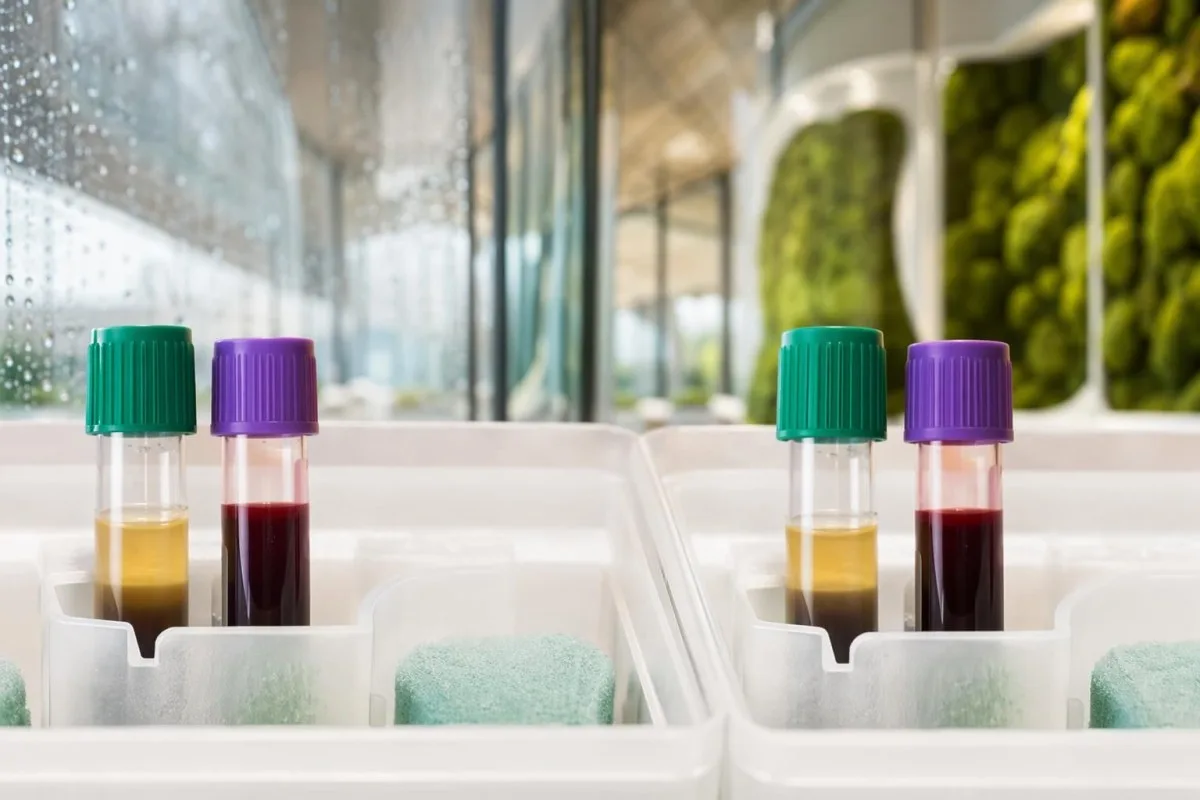
Partners often start health goals together, but lab results still belong to one body at a time. This guide shows how to compare baseline markers without turning shared habits into shared diagnoses.


- Blood test for couples means two individual panels reviewed side by side; do not average results or assume one partner’s abnormality applies to both.
- HbA1c below 5.7% is generally normal, 5.7–6.4% suggests prediabetes, and 6.5% or higher meets a diabetes diagnostic threshold when confirmed.
- LDL cholesterol at 190 mg/dL or higher is a high-risk result that should trigger clinician review, even when a partner’s LDL is normal.
- Ferritin below 30 ng/mL commonly suggests low iron stores in adults, but inflammation can falsely raise ferritin and hide iron deficiency.
- TSH is often interpreted around 0.4–4.0 mIU/L in adults, yet fertility planning, pregnancy, medications, and biotin can change the clinical meaning.
- Vitamin D 25-OH below 20 ng/mL is usually deficiency; 20–29 ng/mL is often called insufficient, although guideline cutoffs still vary.
- eGFR below 60 mL/min/1.73 m² for at least 3 months suggests chronic kidney disease and should not be explained away by a partner’s normal kidney result.
- Retesting usually makes sense after 8–12 weeks for lipids, HbA1c, ferritin, vitamin D, and lifestyle-driven markers unless a clinician advises faster follow-up.
What a couples blood test can and cannot tell you
A blood test for couples is best used as two individual baseline panels reviewed side by side, not as a shared diagnosis. Before fertility planning, weight loss, fitness, or prevention work, each partner should know their own CBC, CMP, HbA1c, lipids, thyroid, iron, vitamin D, kidney, and liver markers; then compare household patterns like high triglycerides or low vitamin D. On Kantesti AI, our AI reads both reports in about 60 seconds and keeps the interpretation personal, which is the safer way to plan together.
I’m Thomas Klein, MD, and the most common mistake I see in couple testing is emotional arithmetic: one partner’s LDL is 165 mg/dL, the other’s is 84 mg/dL, and they feel the household average is reassuring. It is not. A lipid particle does not care that dinner is shared.
A couple baseline works when you separate individual disease risk from shared exposure risk. For example, two partners with triglycerides above 150 mg/dL may share sleep loss, alcohol intake, insulin resistance, or a high-refined-carbohydrate diet, while only one partner with ferritin of 9 ng/mL may have heavy menstrual losses, frequent donation, or malabsorption.
The practical starting point is a written goal and a saved baseline. If you want the deeper reasoning behind personal baselines, our guide to a personalized blood test explains why your own 3-year trend often beats a generic reference interval.
Choose the panel around the goal, not the relationship
A couple’s lab panel should match the goal: fertility, weight loss, fitness, prevention, medication safety, or household risk tracking. The core mistake is buying a large wellness panel with 80 markers when the decision depends on 10–20 interpretable tests.
For most healthy adults starting a shared goal, I usually want a CBC, CMP, fasting or non-fasting lipid panel, HbA1c, TSH with free T4 when indicated, ferritin with iron studies, vitamin B12, folate, 25-OH vitamin D, urine albumin-creatinine ratio, and hs-CRP when cardiovascular risk is being assessed. That is already enough to catch many silent problems without creating noise.
Kantesti’s neural network maps more than 15,000 biomarkers, but our clinical logic still starts with the question being asked. If you are building a family wellness program, the blood test biomarkers guide is more useful than a random menu of exotic markers.
A 34-year-old couple planning pregnancy and marathon training does not need the same panel as a 56-year-old couple starting GLP-1 medication and blood pressure treatment. For paid panels, I like patients to compare the list against our wellness panel guide before spending money.
Cardiometabolic markers partners should compare first
The highest-yield shared markers are HbA1c, fasting glucose, triglycerides, HDL, LDL, non-HDL cholesterol, ApoB when available, blood pressure, waist circumference, and urine albumin-creatinine ratio. These markers change with household food patterns, sleep, exercise, genetics, and medication history.
HbA1c below 5.7% is generally normal, 5.7–6.4% suggests prediabetes, and 6.5% or higher meets a diabetes diagnostic threshold when confirmed. The American Diabetes Association’s 2026 Standards of Care use these same diagnostic cutoffs, though anemia, kidney disease, and recent blood loss can make HbA1c misleading.
LDL cholesterol at 190 mg/dL or higher suggests severe hypercholesterolemia and deserves clinician review even if the other partner’s LDL is 90 mg/dL. The 2018 AHA/ACC cholesterol guideline highlights LDL-C, non-HDL-C, triglycerides, and selected markers such as ApoB for risk refinement, especially when triglycerides exceed 200 mg/dL (Grundy et al., 2019).
Triglycerides above 150 mg/dL and HDL below 40 mg/dL in men or below 50 mg/dL in women often point toward insulin resistance, liver fat, or low activity. For the mechanics of these results, our lipid panel interpretation guide pairs well with the HbA1c versus fasting sugar discussion when partners have discordant glucose markers.
Fertility planning labs both partners may need
Fertility planning labs should include both partners because conception depends on ovulation, sperm health, thyroid function, glucose control, iron status, infection status, and medication safety. A one-sided fertility workup misses treatable contributors in many couples.
For the partner who may carry a pregnancy, baseline labs often include CBC, ferritin, TSH, free T4 when TSH is abnormal, HbA1c, rubella and varicella immunity where locally recommended, vitamin D when risk is present, and cycle-timed hormones when periods are irregular. Progesterone should be checked about 7 days before the expected period, not blindly on day 21 for every cycle.
For the other partner, blood work may include HbA1c, thyroid markers when symptomatic, testosterone with SHBG when low libido or low energy is present, prolactin when testosterone is low, and infection screening based on local guidance. NICE fertility guidance recommends assessing both partners during infertility evaluation, not assuming the female partner is the default patient (NICE, 2013, updated 2017).
If you are actively trying to conceive within 3–6 months, review our fertility blood test guide and the preconception lab checklist. In my clinic, a TSH of 5.8 mIU/L or ferritin of 11 ng/mL before pregnancy changes the plan more often than a fashionable hormone panel does.
Nutrient markers that often look shared but are personal
Low vitamin D, B12, folate, magnesium, and iron patterns can cluster in couples, but the reason is often different for each person. Shared meals explain exposure; absorption, menstrual loss, gut disease, medications, and genetics explain the result.
Ferritin below 30 ng/mL commonly suggests low iron stores in adults, even when hemoglobin is still normal. A partner with ferritin of 8 ng/mL and hemoglobin of 13.1 g/dL may already feel breathless on stairs, while the other partner eating the same meals may have ferritin of 95 ng/mL.
Vitamin B12 below about 200 pg/mL is often deficient, while 200–350 pg/mL can be borderline when numbness, high MCV, or high homocysteine is present. Metformin, acid-suppressing medicines, vegan diets, bariatric surgery, and autoimmune gastritis can affect one partner but not the other.
25-OH vitamin D below 20 ng/mL is usually deficiency, and 20–29 ng/mL is often called insufficiency, although clinicians disagree about the ideal target for low-risk adults. For symptom-to-lab matching, our guide to nutrient deficiency signs is a good companion when both partners feel tired.
Thyroid and hormone timing can skew couples comparisons
Thyroid and hormone results should be compared only when timing, medication, sleep, supplements, and cycle phase are documented. Two partners tested on different mornings can look medically different for reasons that are entirely pre-analytic.
TSH is commonly interpreted around 0.4–4.0 mIU/L in adults, but many fertility clinicians investigate values above 2.5–4.0 mIU/L depending on pregnancy status, antibodies, and local practice. Some European labs use narrower TSH reference intervals, so a value may look flagged in one country and normal in another.
Testosterone should usually be checked between 7 and 10 a.m., ideally after decent sleep and no heavy alcohol the night before. A total testosterone of 290 ng/dL at 4 p.m. after a poor night is not the same clinical signal as 290 ng/dL at 8 a.m. on two separate mornings.
Biotin is a sneaky troublemaker. Doses of 5,000–10,000 mcg per day, common in hair supplements, can distort some immunoassays for TSH, free T4, testosterone, and other hormones; our TSH range guide explains why timing can matter more than the flag.
Liver, kidney, and medication safety before shared plans
Liver and kidney markers are safety markers before couples start weight loss drugs, high-protein diets, supplements, endurance training, or fertility medications. ALT, AST, ALP, GGT, bilirubin, creatinine, eGFR, electrolytes, and urine ACR are not glamorous, but they prevent avoidable harm.
ALT above about 35 IU/L in many adult men or above about 25 IU/L in many adult women can suggest liver irritation, though lab cutoffs vary. A 52-year-old marathon runner with AST of 89 IU/L and ALT of 32 IU/L may have muscle-related AST after training, not primary liver disease.
eGFR below 60 mL/min/1.73 m² for at least 3 months suggests chronic kidney disease, while urine albumin-creatinine ratio below 30 mg/g is generally normal. ACR between 30 and 300 mg/g can detect early kidney stress before creatinine looks abnormal.
I become cautious when couples start the same supplement stack without checking medications and kidney function first. Before high-dose protein, creatine, NSAID-heavy training, or new long-term drugs, our guides to urine ACR kidney testing and liver function patterns can help frame the discussion with a clinician.
Fitness baselines before training together
Fitness baselines should be drawn after 24–48 hours without unusually hard exercise if the goal is a calm starting point. CK, AST, ALT, creatinine, potassium, WBC, ferritin, and hs-CRP can all shift after heavy training.
Creatine kinase can rise above 1,000 IU/L after intense resistance training, especially in beginners, and AST may rise alongside it because muscle contains AST. A partner who trained legs the night before testing may look abnormal beside someone who rested for 3 days.
Creatinine can be higher in a muscular partner because creatinine tracks muscle mass and creatine intake as well as kidney filtration. That is why cystatin C, urine ACR, and trend data sometimes clarify kidney risk better than one creatinine result.
Most patients find it helpful to repeat the baseline under cleaner conditions rather than panic. Our article on exercise-related lab changes explains why a single post-workout panel can be a very unfair comparison.
How to compare results without fake couple averages
Partners should compare direction, timing, and exposure patterns, not calculate couple averages. A1c, LDL, ferritin, TSH, and eGFR are individual medical results with personal thresholds.
The safest comparison is a two-column review: same test, same units, same date range, same fasting status, same recent illness or training note. If one lab reports creatinine in mg/dL and another in µmol/L, the apparent difference may be pure unit conversion.
Trend slope matters. A partner whose LDL moved from 118 to 154 mg/dL in 12 months may need more attention than someone stable at 142 mg/dL for 5 years, depending on ApoB, blood pressure, smoking history, and family history.
Kantesti AI interprets paired uploads by keeping each person’s report separate while flagging shared patterns such as rising triglycerides or falling vitamin D across the household. If you want to understand slopes, swings, and drift, the lab trend graph guide is worth reading before you compare.
Shared household risks that can move both lab reports
Shared household risks can raise similar markers in both partners, especially triglycerides, ALT, hs-CRP, vitamin D, cotinine, lead, and HbA1c. The pattern suggests exposure, not a shared diagnosis.
Two partners with ALT in the 50–80 IU/L range and triglycerides above 200 mg/dL often make me ask about sugary drinks, late meals, sleep apnea, alcohol, and central weight gain before rare liver diseases. The reason we worry about ALT plus triglycerides is that together they often point toward insulin resistance and fatty liver physiology.
Vitamin D is a classic household marker. Couples who work indoors, avoid sun, or live at higher latitudes may both sit below 20 ng/mL, yet replacement dose and response can differ by body size, skin pigmentation, absorption, and adherence.
A household health management plan can include parents, children, and aging relatives, but results still need age-specific interpretation. Our entire family blood test guide explains why pediatric, adult, pregnancy, and senior ranges cannot be merged.
Privacy rules before you share blood test with family
You should share blood test results with family only after explicit consent, clear boundaries, and a plan for who can view, store, and discuss the information. A couple health project should never become medical surveillance.
A lab report can reveal pregnancy status, sexually transmitted infection testing, medication effects, alcohol-related markers, inherited risk, and chronic disease clues. Even in a loving relationship, those details belong to the person tested.
If you want to share blood test with family, I suggest three rules: share the PDF only with permission, discuss goals before abnormal results, and decide whether historical results stay private. In our platform, Kantesti keeps family interpretation structured so one person’s abnormal marker is not copied into another person’s risk profile.
Digital storage matters too. For practical steps, our guide to safe lab result storage pairs well with Kantesti’s terms of use when families need clear expectations.
When couples should retest after changing habits
Most lifestyle-driven markers should be retested after 8–12 weeks, because that window is long enough for lipids, liver enzymes, ferritin response, vitamin D, and HbA1c to move meaningfully. Faster retesting is useful only for safety concerns or medication monitoring.
HbA1c reflects roughly 2–3 months of glucose exposure, so a 14-day diet rarely shows its full effect. Fasting glucose can change within days, but HbA1c usually needs the red cell lifespan to catch up.
Ferritin often rises slowly with oral iron; many clinicians recheck CBC and ferritin after 8–12 weeks, then continue iron for about 3 months after hemoglobin normalizes when true deficiency is present. Vitamin D commonly takes 8–12 weeks to show a steady response after dose changes.
For couples doing weight loss, fertility prep, or prevention work, one baseline and one planned retest beats random monthly panic testing. Our blood test progress tracking guide shows which markers move fast and which require patience.
When one partner’s result needs prompt medical review
One partner needs prompt medical review when a result is critical, rapidly changing, symptom-linked, or outside a safe threshold. The other partner’s normal report does not reduce the urgency.
Potassium above 6.0 mmol/L, sodium below 125 mmol/L, hemoglobin below 8 g/dL, platelets below 50,000/µL, neutrophils below 500/µL, or glucose above 300 mg/dL with symptoms usually deserves urgent medical advice. Labs can be wrong, but dangerous results should be treated as real until checked.
A PSA that rises quickly, ferritin above 1,000 ng/mL, ALT more than 3 times the upper limit of normal, or eGFR dropping by more than 25% from baseline also changes the conversation. I have seen calm-looking patients with serious results and anxious-looking patients with benign lab variation; context cuts both ways.
If a result looks dangerous, use a clinician, urgent care, or emergency pathway rather than a household debate. Our critical lab value guide and contact page can help you decide how to escalate safely.
Kantesti research, validation, and the next safe step
Kantesti AI is designed to interpret individual lab reports quickly while preserving the clinical distinction between personal results and household patterns. As of May 22, 2026, our platform supports users in 127+ countries, 75+ languages, and analyzes uploaded blood test PDFs or photos in about 60 seconds.
Our medical team reviews interpretation logic against clinical standards, unit conversions, trend behavior, and high-risk pattern recognition. You can read more about our approach on medical validation before using AI-powered results for a conversation with your clinician.
If you and your partner already have reports, upload them separately through Try Free AI Blood Test Analysis. Our AI-powered blood test interpretation can show where your markers overlap, where they diverge, and which results should not wait for the next annual check.
Kantesti Clinical Research Group. (2026). Multilingual AI Assisted Clinical Decision Support for Early Hantavirus Triage: Design, Engineering Validation, and Real-World Deployment Across 50,000 Interpreted Blood Test Reports. Figshare. https://doi.org/10.6084/m9.figshare.32230290. ResearchGate. Academia.edu.
Kantesti Clinical Research Group. (2026). aPTT Normal Range: D-Dimer, Protein C Blood Clotting Guide. Zenodo. https://doi.org/10.5281/zenodo.18262555. ResearchGate. Academia.edu.
Frequently Asked Questions
What blood tests should couples get before starting health goals?
Most couples starting fertility, weight loss, fitness, or prevention goals should consider a CBC, CMP, lipid panel, HbA1c, TSH, ferritin with iron studies, vitamin B12, folate, 25-OH vitamin D, urine albumin-creatinine ratio, and blood pressure measurement. Fertility planning may add cycle-timed hormones, immunity testing, infection screening, and male hormone testing when symptoms suggest it. The exact panel should be individualized, because an LDL of 190 mg/dL, ferritin of 9 ng/mL, or HbA1c of 6.5% changes care for one person even if the partner’s results are normal.
Can couples compare blood test results directly?
Couples can compare patterns, timing, and shared exposures, but they should not compare results as if both bodies have the same thresholds. HbA1c, LDL, ferritin, TSH, creatinine, eGFR, and hormone results are individual medical data. A useful comparison checks whether both partners have similar trends, such as triglycerides above 150 mg/dL or vitamin D below 20 ng/mL, while keeping each person’s diagnosis separate.
Is a blood test for couples useful before pregnancy?
A blood test for couples can be very useful before pregnancy because both partners can have treatable issues that affect conception or pregnancy health. Common preconception markers include CBC, ferritin, TSH, HbA1c, immunity testing where recommended, vitamin D in at-risk patients, and infection screening based on local guidance. For the male partner, testosterone, prolactin, thyroid testing, glucose markers, and infection screening may be appropriate when symptoms, history, or infertility evaluation point that way.
How often should couples repeat baseline blood tests?
Most couples should repeat lifestyle-driven markers after 8–12 weeks if they have changed diet, exercise, supplements, or medication. HbA1c usually needs about 2–3 months to reflect glucose changes, while fasting glucose can shift within days. Lipids, ferritin, vitamin D, ALT, AST, and hs-CRP are often more meaningful after a planned retest than after random weekly checking.
Should partners share blood test results with each other?
Partners should share blood test results only with explicit consent and clear boundaries. A lab report can reveal pregnancy status, infection testing, medication effects, inherited risk, and chronic disease clues, so it deserves the same privacy as any medical record. A safe sharing plan states who can view the PDF, whether historical reports are included, and whether results may be discussed with other family members.
What lab results are urgent even if only one partner has them?
Urgent results include potassium above 6.0 mmol/L, sodium below 125 mmol/L, hemoglobin below 8 g/dL, platelets below 50,000/µL, neutrophils below 500/µL, or glucose above 300 mg/dL with symptoms. Very high triglycerides above 500 mg/dL, ferritin above 1,000 ng/mL, or ALT more than 3 times the upper limit of normal also deserve prompt clinician review. A partner’s normal result does not make these findings safer.
Get AI-Powered Blood Test Analysis Today
Join over 2 million users worldwide who trust Kantesti for instant, accurate lab test analysis. Upload your blood test results and receive comprehensive interpretation of 15,000+ biomarkers in seconds.
📚 Referenced Research Publications
Klein, T., Mitchell, S., & Weber, H. (2026). Multilingual AI Assisted Clinical Decision Support for Early Hantavirus Triage: Design, Engineering Validation, and Real-World Deployment Across 50,000 Interpreted Blood Test Reports. Kantesti AI Medical Research.
Klein, T., Mitchell, S., & Weber, H. (2026). aPTT Normal Range: D-Dimer, Protein C Blood Clotting Guide. Kantesti AI Medical Research.
📖 External Medical References
American Diabetes Association Professional Practice Committee (2026). 2. Diagnosis and Classification of Diabetes: Standards of Care in Diabetes—2026. Diabetes Care.
National Institute for Health and Care Excellence (2013, updated 2017). Fertility problems: assessment and treatment. NICE Clinical Guideline CG156.
⚕️ Medical Disclaimer
This article is for educational purposes only and does not constitute medical advice. Always consult a qualified healthcare provider for diagnosis and treatment decisions.
E-E-A-T Trust Signals
Experience
Physician-led clinical review of lab interpretation workflows.
Expertise
Laboratory medicine focus on how biomarkers behave in clinical context.
Authoritativeness
Written by Dr. Thomas Klein with review by Dr. Sarah Mitchell and Prof. Dr. Hans Weber.
Trustworthiness
Evidence-based interpretation with clear follow-up pathways to reduce alarm.