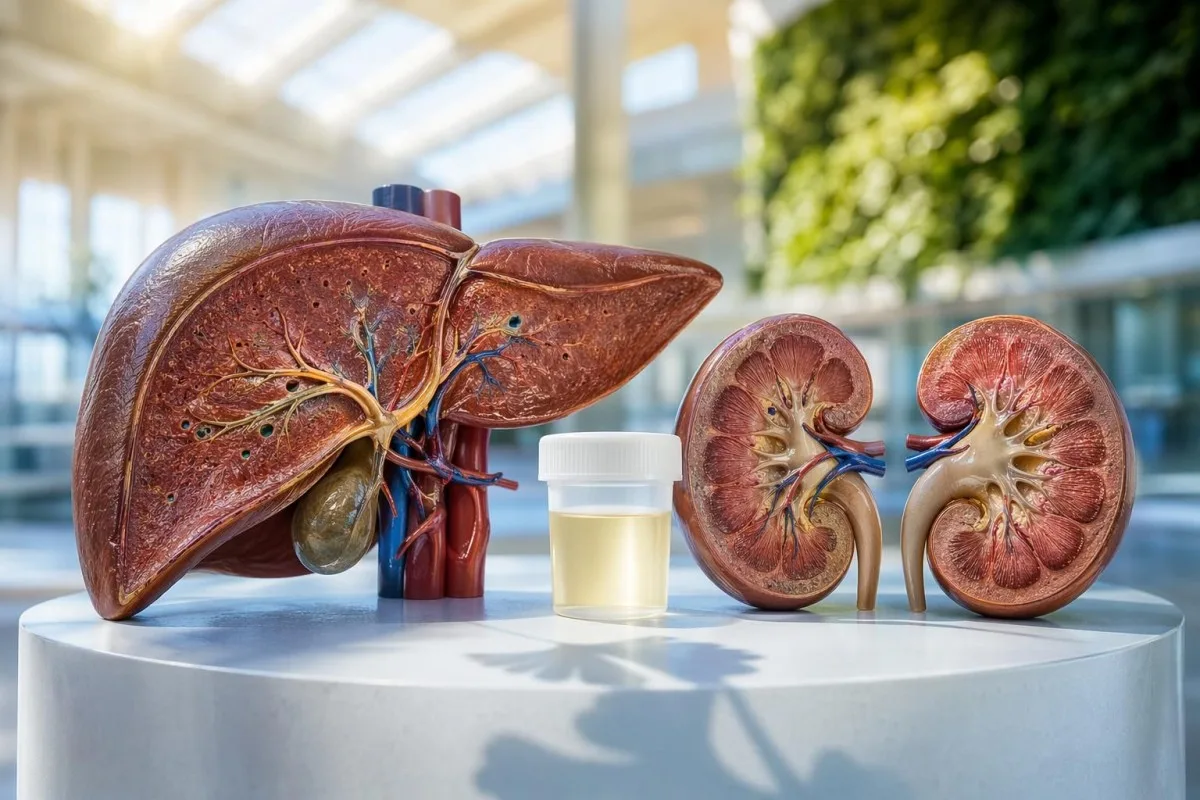
Most BUN articles focus on high values and kidney disease. This one answers the more common post-lab worry: why a BUN result came back low, and when that actually matters.


- BUN normal range is commonly 7-20 mg/dL in adults, though some labs use 6-23 mg/dL.
- Clearly low BUN is often below 5 mg/dL and deserves context review with sodium, creatinine, albumin, and liver markers.
- Overhydration can lower BUN by 2-4 mg/dL after heavy water intake, endurance exercise, or IV fluids.
- Low protein intake below about 0.8 g/kg/day can reduce urea production and push BUN into the 5-7 mg/dL range.
- Pregnancy often lowers BUN into the single digits because plasma volume and glomerular filtration increase.
- Low BUN plus low sodium below 135 mmol/L raises concern for dilutional states such as SIADH.
- Low BUN plus low albumin below 3.5 g/dL makes liver or nutrition issues more relevant.
- Best next check is the rest of the metabolic panel: creatinine, sodium, chloride, albumin, total protein, AST, ALT, and bilirubin.
What a low BUN result usually means on a BUN test
Low BUN on a BUN test usually reflects dilution, lower protein intake, pregnancy, or reduced liver urea production—not kidney failure by itself. As of May 18, 2026, our clinicians at Kantesti AI still find that patients searching a low result are often reassured once the pattern is explained. A quick refresher on what BUN means helps before you jump to kidney disease.
BUN measures blood urea nitrogen, a waste product made in the liver from protein metabolism and cleared by the kidneys. A BUN normal range is commonly 7-20 mg/dL in adults, so a result of 5 or 6 mg/dL is low on many reports but often not dangerous when creatinine and sodium are normal.
When I, Dr. Thomas Klein, review a panel with BUN 5 mg/dL, creatinine 0.8 mg/dL, and normal liver markers, the most common explanation is simple context: more water, less protein, or pregnancy. The reason we worry more when low BUN travels with albumin below 3.5 g/dL or sodium below 135 mmol/L is that the combination can suggest dilutional states, poor intake, or reduced hepatic synthesis.
BUN normal range: why one lab flags low and another does not
A BUN normal range is usually 7-20 mg/dL in adults, but many labs use 6-23 mg/dL or similar intervals. That is why our BUN range guide may label one result borderline while another report calls it normal.
Labs do not build reference ranges in exactly the same way. Some use local populations, some exclude pregnant patients, and some report urea instead of BUN; roughly 1 mmol/L urea equals 2.8 mg/dL BUN, which confuses patients comparing international reports.
Clinicians disagree on the exact cutoff that deserves follow-up—some react below 6 mg/dL, others mainly below 5 mg/dL. Some European labs use urea rather than BUN, so the number looks lower at first glance even when the physiology is unchanged.
Overhydration is the most common benign reason for low BUN
Overhydration is the most common benign cause of low BUN, especially when creatinine stays normal. On our AI blood test platform we often see BUN fall after heavy pre-test water intake, endurance training, or recent IV fluids.
A patient who drinks 1.5-2.5 liters of water in the few hours before a metabolic panel can dilute serum enough to push BUN from 8-10 mg/dL down to 5-6 mg/dL. That is one reason we tell readers to review water before a blood test rather than assuming the lab found a disease.
I see this pattern in runners a lot. A 34-year-old marathon trainee can show BUN 4 mg/dL, creatinine 0.7 mg/dL, and a slightly low urine specific gravity after a long run plus aggressive rehydration—and the retest a week later is completely ordinary.
Low protein intake, vegetarian diets, and low muscle mass
Low protein intake can lower BUN because the liver has less nitrogen to turn into urea. Results around 5-7 mg/dL are common in people eating very light diets, recovering from illness, or following plant-based diets without enough total protein.
That does not mean vegetarian eating is the problem by itself; inadequate intake is. Patients using GLP-1 drugs, older adults with smaller appetites, and people planning supplements without checking basics often benefit from a broader look at vegetarian lab checks. Many adults unintentionally drop below 60-70 g/day during aggressive weight-loss phases.
Protein intake below about 0.8 g/kg/day can contribute to a low BUN, while many older adults do better closer to 1.0-1.2 g/kg/day if their clinician agrees. The exact threshold is honestly mixed across nutrition studies, and the catch is that low muscle mass can also lower creatinine, so a very calm kidney panel may partly reflect low production of both markers rather than unusually efficient kidneys.
When low BUN points toward liver issues
Low BUN can signal liver dysfunction when the liver is not converting ammonia into urea effectively. We look much harder when low BUN appears beside low albumin, rising bilirubin, abnormal INR, or liver enzymes that do not fit the story.
The ACG guideline on abnormal liver chemistries recommends interpreting synthetic markers and liver enzymes together, not one at a time (Kwo et al., 2017). That is why a low BUN should prompt a review of liver function tests such as ALT, AST, ALP, bilirubin, albumin, and sometimes PT/INR.
Still, a low result alone does not diagnose cirrhosis. In practice, BUN 4 mg/dL becomes more meaningful if albumin is 3.1 g/dL, bilirubin is 2.0 mg/dL, or INR is 1.5; isolated BUN 6 mg/dL with normal proteins and enzymes is a very different situation.
Why pregnancy can lower BUN without meaning disease
Pregnancy commonly lowers BUN into the single digits because plasma volume expands and kidney filtration rises. A mildly low result can be completely normal in pregnancy, especially when blood pressure, urine protein, and liver markers are otherwise reassuring.
Pregnancy physiology changes kidney handling early and keeps changing across trimesters, which is why it helps to review prenatal blood tests by trimester. Cheung and Lafayette (2013) note that normal pregnancy increases renal plasma flow and GFR, and serum urea and creatinine often drift downward as a result.
Some labs cite pregnancy BUN values roughly in the 3-13 mg/dL range, though local intervals differ. What matters is the pattern: low BUN with normal creatinine is common, but low BUN plus blood pressure above 140/90 mmHg, rising AST/ALT, or proteinuria deserves prompt obstetric review.
Low BUN with low sodium: a pattern clinicians do not ignore
Low BUN with low sodium is a pattern clinicians do not ignore because it can suggest water excess or SIADH. When sodium is below 135 mmol/L, low BUN stops being just a curiosity and becomes part of a fluid-balance workup.
The expert hyponatremia recommendations from Verbalis et al. (2013) describe low BUN as a classic clue in dilutional states, especially SIADH, where serum is dilute but urine stays inappropriately concentrated. If your report also shows low chloride or low serum osmolality, read more about low sodium causes and call your clinician rather than guessing.
This is one of those areas where context matters more than the number. BUN 5 mg/dL with sodium 139 mmol/L after lots of water is usually benign; BUN 4 mg/dL with sodium 129 mmol/L, nausea, or confusion needs faster attention.
Symptoms are usually from the cause, not from low BUN itself
Low BUN itself rarely causes symptoms; the underlying cause does. Most people feel nothing from the number alone, but they may notice headache from hyponatremia, fatigue from under-eating, or swelling and jaundice when liver disease is the real issue.
That difference matters because people often blame the wrong marker. Our symptom decoder reflects what we see clinically: headache, nausea, cramps, confusion, edema, fatigue, low appetite, and weakness usually point to the driver behind the low BUN, not to BUN as an isolated toxin.
A short rule helps: low BUN does not usually cause kidney pain, dark urine, or fever. If symptoms are significant, look for associated red flags such as sodium below 130 mmol/L, new abdominal swelling, yellowing of the eyes, vomiting, or rapid weight change from fluid shifts.
What to check next on the metabolic panel and beyond
The best next step after a low BUN is to check the rest of the metabolic panel and a few protein markers. Creatinine, sodium, chloride, CO2, albumin, total protein, AST, ALT, bilirubin, and glucose usually tell a more complete story than BUN alone.
A low BUN with normal sodium, normal creatinine, and normal albumin usually points toward hydration or diet rather than organ failure. If you are comparing panels, our CMP fasting guide explains which chemistry values move with eating, water, and timing.
Kantesti AI interprets low BUN by clustering markers. Low BUN plus low albumin and low total protein suggests nutrition or liver synthesis issues, while low BUN plus low sodium and low serum osmolality points toward dilution.
Pattern that usually reassures us
A reassuring pattern is BUN 6 mg/dL, creatinine 0.8 mg/dL, sodium 138 mmol/L, albumin 4.2 g/dL, AST 22 U/L, and ALT 19 U/L. That profile is far more consistent with hydration or low protein intake than with kidney disease.
Pattern that needs follow-up
A follow-up pattern is BUN 4 mg/dL with sodium 131 mmol/L, albumin 3.2 g/dL, total protein 5.8 g/dL, or rising bilirubin. The reason we worry about that cluster is that multiple systems now point in the same direction.
How the BUN/creatinine ratio changes the story
The BUN/creatinine ratio helps because it shows whether both markers moved together or only one did. A ratio under about 10:1 often appears when BUN is suppressed by dilution, low protein intake, or reduced urea production.
Normal ratios are commonly around 10:1 to 20:1, though labs vary. Our BUN/creatinine ratio guide explains why a low ratio is usually less alarming than a high ratio caused by dehydration or GI bleeding.
But ratios can fool you. An older adult with creatinine 0.5 mg/dL from low muscle mass and BUN 6 mg/dL may still have a ratio of 12, which looks ordinary even though both values are unusually low for production reasons.
Medications, IV fluids, and recent illness that can push BUN down
IV fluids, some medications, and recent illness can push BUN down without pointing to permanent disease. Hospitalized patients often show the lowest values because fluid balance, appetite, and medication effects all change at once.
Large saline infusions can dilute BUN within hours, and low appetite during viral illness can reduce urea production for days. That is why we often delay interpretation until the clinical dust settles and use repeat-testing guidance instead of reacting to a single number.
There is another angle here: drugs that trigger SIADH—including some SSRIs, carbamazepine, oxcarbazepine, and thiazide diuretics indirectly—may produce the low-BUN, low-sodium pattern, sometimes with sodium in the 124-133 mmol/L range. Desmopressin and aggressive postoperative fluids can do something similar, so recent treatment history matters.
When a low BUN is clinically meaningful versus basically harmless
A low BUN is usually harmless when it is isolated and mild, but it becomes meaningful when other markers are off. BUN 6 mg/dL with normal sodium, creatinine, albumin, and liver tests is commonly benign; BUN 3-4 mg/dL with symptoms or companion abnormalities deserves follow-up.
Most labs do not treat low BUN as a critical value by itself, and our critical lab overview makes the same point. The decision to act usually comes from the pattern, which is also how our Medical Advisory Board reviews edge cases.
When I, Dr. Thomas Klein, call a low BUN clinically meaningful, it is usually because I also see sodium under 132 mmol/L, albumin under 3.5 g/dL, unexpected weight loss, edema, abnormal liver markers, or recent confusion. A healthy person with normal exam findings and a one-off BUN 6 mg/dL often just needs context and maybe a repeat.
Should you repeat the BUN test and how soon?
Repeat a low BUN test when hydration, diet, symptoms, or companion markers make the first result hard to trust. In most stable adults, repeating the panel in 1-4 weeks is reasonable; in symptomatic patients or those with low sodium, the timeline is much shorter.
Trend beats snapshot. Use the same lab when possible, review a lab trend graph, and try to keep the pre-test routine similar—especially morning timing, exercise, and water intake.
Kantesti AI checks for unit mismatches, borderline shifts, and internal consistency across the panel, and our methods are described on Medical Validation. You can also see the workflow logic in our technology guide. Dr. Sarah Mitchell and I repeatedly find that a mysterious low BUN often disappears once the retest is done under similar conditions, sometimes after only a 2-3 mg/dL swing back into range.
How Kantesti interprets low BUN results in practice
Kantesti interprets low BUN by analyzing at least 8 related signals first: hydration clues, protein status, liver synthetic markers, pregnancy status, symptoms, and prior trends. That is different from a simplistic high-or-low flag, and it is central to how About Kantesti explains our clinical mission.
Our clinicians and neural network review the BUN test beside creatinine, sodium, albumin, total protein, AST, ALT, bilirubin, and user-provided context, then deliver multilingual explanations in about 60 seconds across 75+ languages. If you want to see how our logic handles a borderline result, try the free blood test demo with a chemistry panel or metabolic panel image.
We also publish research. See our deployment paper on early triage at Figshare. You can also review the engine benchmark paper at DOI record; both show how Kantesti approaches clinically structured interpretation rather than single-marker panic.
Frequently Asked Questions
What does low BUN mean on a blood test?
Low BUN usually means the concentration of urea in blood is lower than expected, most often from overhydration, lower protein intake, pregnancy, or reduced liver urea production. A common adult BUN normal range is 7-20 mg/dL, so results of 5-6 mg/dL are often only mildly low. Low BUN is usually less concerning than high BUN when creatinine, sodium, albumin, and liver enzymes are normal. The result matters more when it appears with sodium below 135 mmol/L, albumin below 3.5 g/dL, or symptoms such as confusion, swelling, or jaundice.
Is a low BUN result dangerous?
A low BUN result is usually not dangerous when it is isolated and mild. Many people with BUN values of 5-6 mg/dL feel well and simply had higher fluid intake, lower protein intake, or normal pregnancy-related changes. There is no universal danger cutoff for low BUN alone, and the surrounding labs matter much more. Concern rises when BUN falls to about 3-4 mg/dL and the panel also shows low sodium, low albumin, abnormal liver tests, or significant symptoms.
Can drinking too much water lower BUN?
Yes, drinking a lot of water before a metabolic panel can lower BUN by dilution. In everyday practice, an extra 1.5-2.5 liters over a short period can move BUN down by a few mg/dL, especially in smaller adults or endurance athletes. This matters most when creatinine stays normal and the low result seems out of character for the person. If sodium is also low, the picture shifts from simple hydration to a fluid-balance problem that needs proper review.
Does pregnancy lower BUN?
Yes, pregnancy commonly lowers BUN because plasma volume expands and glomerular filtration rate increases. Single-digit BUN values can be normal in pregnancy, and some labs cite approximate pregnancy intervals around 3-13 mg/dL. A low BUN result in pregnancy is usually reassuring when blood pressure, urine protein, creatinine, and liver markers are otherwise normal. The number becomes more clinically relevant only when paired with hypertension, proteinuria, abnormal liver enzymes, or new symptoms.
Can liver disease cause low BUN?
Yes, liver disease can cause low BUN because the liver is responsible for converting ammonia into urea. Low BUN is more clinically meaningful when it appears with albumin below 3.5 g/dL, rising bilirubin, prolonged INR, or elevated AST and ALT. An isolated BUN of 6 mg/dL with normal liver proteins is not the same as BUN 4 mg/dL with albumin 3.1 g/dL and bilirubin 2.0 mg/dL. Low BUN alone does not diagnose cirrhosis, but it can add weight to a broader liver pattern.
What if BUN is low but creatinine is normal?
Low BUN with normal creatinine usually points toward dilution, lower protein intake, or pregnancy rather than kidney failure. In that setting, the BUN/creatinine ratio may drop below 10:1, but ratios are only useful when you also know muscle mass and hydration status. A normal creatinine does not automatically mean the entire picture is harmless, yet it does make serious kidney under-clearance less likely. The next checks are sodium, albumin, total protein, AST, ALT, bilirubin, and any recent change in fluid intake or diet.
Should I eat more protein before repeating a BUN test?
Do not try to game the result with a large protein load the night before repeat testing. For the most useful comparison, keep your usual routine for 2-7 days before the retest and avoid extreme hydration or unusual exercise. If your long-term intake is clearly low, discussing a target around 0.8 g/kg/day with your clinician is reasonable, and some older adults may need closer to 1.0-1.2 g/kg/day. A single high-protein meal can raise urea transiently, but it does not answer why the earlier result was low.
Get AI-Powered Blood Test Analysis Today
Join over 2 million users worldwide who trust Kantesti for instant, accurate lab test analysis. Upload your blood test results and receive comprehensive interpretation of 15,000+ biomarkers in seconds.
📚 Referenced Research Publications
Klein, T., Mitchell, S., & Weber, H. (2026). Multilingual AI Assisted Clinical Decision Support for Early Hantavirus Triage: Design, Engineering Validation, and Real-World Deployment Across 50,000 Interpreted Blood Test Reports. Kantesti AI Medical Research.
Klein, T., Mitchell, S., & Weber, H. (2026). Women's Health Guide: Ovulation, Menopause & Hormonal Symptoms. Kantesti AI Medical Research.
📖 External Medical References
⚕️ Medical Disclaimer
This article is for educational purposes only and does not constitute medical advice. Always consult a qualified healthcare provider for diagnosis and treatment decisions.
E-E-A-T Trust Signals
Experience
Physician-led clinical review of lab interpretation workflows.
Expertise
Laboratory medicine focus on how biomarkers behave in clinical context.
Authoritativeness
Written by Dr. Thomas Klein with review by Dr. Sarah Mitchell and Prof. Dr. Hans Weber.
Trustworthiness
Evidence-based interpretation with clear follow-up pathways to reduce alarm.