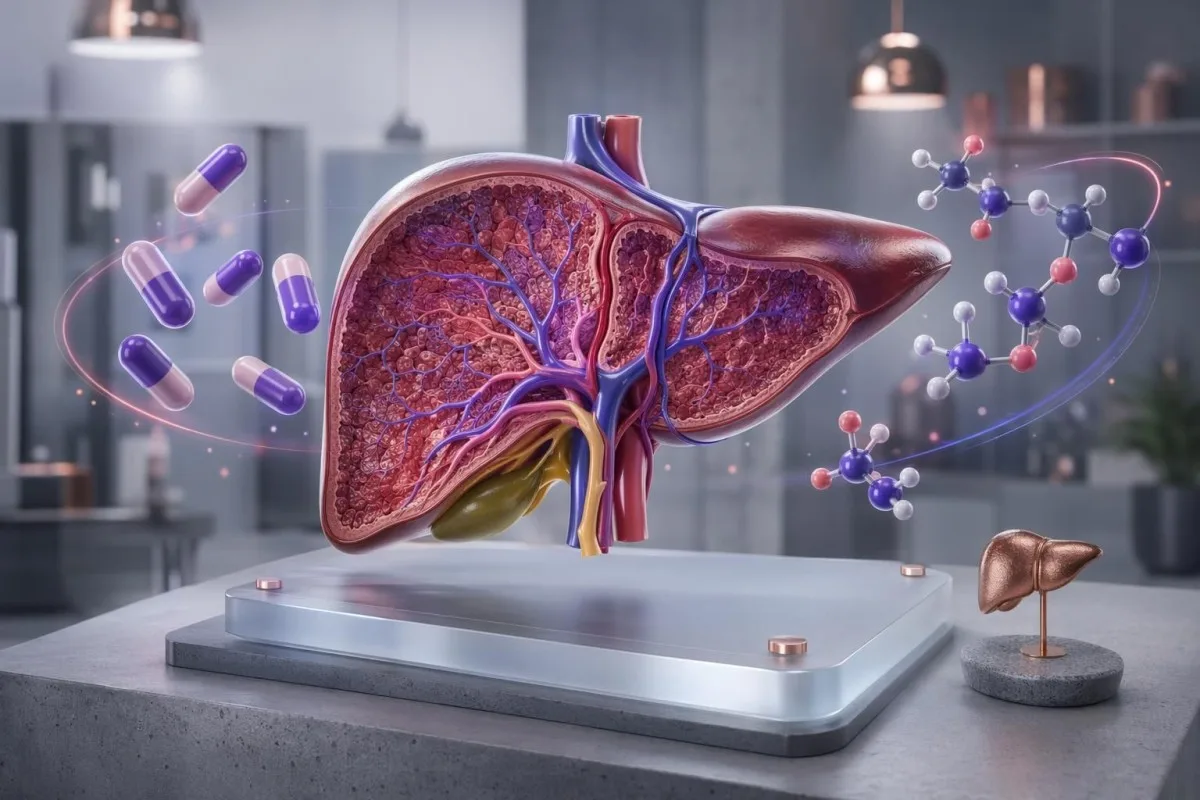
NAC is not a magic liver cleanse. Used thoughtfully, it can support glutathione-related pathways — but the lab pattern and medication context matter more than the capsule.


- NAC supplement benefits are most plausible when oxidative stress, low glutathione reserve, fatty liver risk, or medication-related liver monitoring is part of the picture.
- Common oral NAC doses range from 600 mg once daily to 600 mg twice daily; higher doses should be clinician-guided, especially with chronic disease.
- ALT and AST are the first liver enzymes most people track; ALT above about 56 IU/L or AST above about 40 IU/L is commonly flagged, but reference ranges vary by lab.
- GGT is often more sensitive to alcohol exposure, bile flow issues, fatty liver, and some medications; adult male values above 60 IU/L often deserve context-based review.
- Glutathione testing is not routine; red-cell glutathione or GSH:GSSG ratio can be informative but is fragile and not comparable across all laboratories.
- Medication interactions matter most with nitroglycerin, blood pressure drugs, antiplatelet or anticoagulant therapy, and complex liver or kidney medication regimens.
- Retesting timelines are usually 6-12 weeks for supplement-related trends, unless ALT, bilirubin, INR, or symptoms suggest a faster medical review.
- Red flags include jaundice, dark urine, right upper abdominal pain, confusion, vomiting, INR above 1.5, or ALT/AST above 5 times the lab upper limit.
When NAC supplement benefits actually make sense
NAC supplement benefits are most realistic when someone has oxidative stress risk, borderline liver enzymes, fatty liver risk, medication exposure, or low dietary sulfur amino acid intake. NAC supplies cysteine, which the body can use to make glutathione, but it does not “detox” the liver on demand. At Kantesti AI, we read NAC questions through the lab pattern first, not the marketing claim.
As of May 12, 2026, I would not recommend NAC just because an online quiz says someone is “oxidatively stressed.” I look first at ALT, AST, GGT, bilirubin, albumin, INR, fasting glucose, triglycerides, ferritin, and CRP, because those markers tell us whether the liver signal is isolated, metabolic, inflammatory, or possibly medication-related.
A typical case: a 48-year-old with ALT 62 IU/L, GGT 74 IU/L, triglycerides 218 mg/dL, and HbA1c 5.9% is not the same patient as a 28-year-old runner with AST 89 IU/L after a hard race. The first pattern nudges me toward fatty liver and insulin resistance; the second needs a CK check before anyone calls it liver injury.
If your main concern is liver enzymes, start with pattern reading rather than supplement shopping. Our liver function guide explains why ALT, AST, ALP, GGT, bilirubin, albumin, and INR belong together rather than being interpreted as seven separate numbers.
Thomas Klein, MD, has reviewed many panels where NAC was harmless but unnecessary. The useful question is not “Does NAC work?”; it is “What pathway are we trying to support, and which lab will prove that the pathway changed?”
How NAC connects to glutathione without being the same thing
NAC is a cysteine donor, while glutathione is a tripeptide made from cysteine, glutamate, and glycine. The practical difference matters: NAC may help the body make glutathione when cysteine availability is limiting, but swallowing NAC does not guarantee higher intracellular glutathione in every tissue.
Glutathione exists mainly inside cells, and the reduced-to-oxidized balance, often written as GSH:GSSG, is more meaningful than a single “glutathione level.” A high oxidative burden can lower the reduced pool even when total glutathione looks acceptable.
Rushworth and Megson described in Pharmacology & Therapeutics that many proposed NAC benefits depend on conversion to intracellular cysteine and then glutathione, not on NAC acting as a simple antioxidant floating around the bloodstream (Rushworth & Megson, 2014). That is one reason NAC responses vary so much between patients.
People often ask whether a glutathione supplement is better than NAC. Oral glutathione may raise blood glutathione markers in some studies, but NAC is usually cheaper, more available, and more directly tied to cysteine supply; neither option replaces checking the labs that made you consider it.
For people using several supplements, our AI supplement recommendations workflow weighs NAC against B12, folate, magnesium, iron, vitamin D, kidney markers, and medication context. That matters because cysteine support is only one small piece of a larger biochemical map.
Which liver enzymes people track before and after NAC
ALT, AST, GGT, ALP, total bilirubin, albumin, and INR are the core liver-related markers to review before and after NAC. ALT and AST reflect hepatocyte leakage, GGT and ALP suggest bile flow or enzyme induction, and albumin plus INR tell us more about liver synthetic function.
ALT is often the cleanest routine marker for liver-cell irritation, but it is not perfectly liver-specific. Many laboratories flag ALT above 56 IU/L, while some European and hepatology-focused references use lower upper limits near 30-35 IU/L for men and 19-25 IU/L for women.
AST is found in liver and muscle, so an AST rise after exercise can mislead people. If AST is high and ALT is normal, I usually want CK before assuming a liver problem; our high AST with normal ALT guide covers that exact pattern.
GGT above about 60 IU/L in adult men or 40 IU/L in adult women often points toward alcohol exposure, fatty liver, bile duct stress, or medication enzyme induction, though lab ranges vary. A high GGT with normal ALT is not “nothing”; it is a context marker that deserves a better history.
Albumin below 3.5 g/dL or INR above 1.2 shifts the conversation away from wellness supplementation and toward medical evaluation. Enzymes tell us about injury signals; albumin and INR tell us whether the liver is keeping up with production tasks.
Baseline labs to check before starting NAC
A reasonable baseline before NAC includes a CMP, CBC, creatinine or eGFR, fasting glucose or HbA1c, lipids, and medication-specific safety labs. If the goal is liver support, add GGT and consider PT/INR when liver disease is known or suspected.
A CMP usually includes ALT, AST, ALP, bilirubin, albumin, total protein, creatinine, BUN, sodium, potassium, chloride, CO2, calcium, and glucose. That one panel gives far more safety context than a standalone ALT.
CBC can catch anemia, platelet changes, and infection clues that may explain fatigue or inflammation better than oxidative stress theories. Platelets below 150 x 10^9/L with abnormal liver tests can raise concern for chronic liver disease, portal hypertension, immune causes, or marrow issues depending on the rest of the panel.
If NAC is being considered before a new medicine, compare the baseline to the drug’s monitoring plan. Our guide on liver tests before new meds gives a practical way to avoid blaming NAC for a lab shift that actually started before the supplement.
I also ask about alcohol, acetaminophen, anabolic agents, herbal products, and high-dose green tea extract. In my experience, the “mystery liver enzyme” often turns out to be one of those, not a missing antioxidant capsule.
Lab patterns that hint at oxidative stress pathways
No routine blood test directly diagnoses oxidative stress, but certain patterns can make oxidative pathways more plausible. High GGT, high hs-CRP, high ferritin with normal iron saturation, insulin resistance markers, and fatty liver enzyme patterns often travel together.
GGT is not just a bile duct enzyme; it participates in extracellular glutathione metabolism. A GGT of 85 IU/L with triglycerides 240 mg/dL and fasting insulin 18 µIU/mL makes me think about metabolic stress, not simply “liver detox.”
hs-CRP below 1 mg/L is often considered low cardiovascular inflammation risk, 1-3 mg/L intermediate, and above 3 mg/L higher risk when measured in stable health. Acute infections can push CRP far higher, so timing matters; our inflammation blood test guide explains why CRP, ESR, ferritin, and CBC do not answer the same question.
Ferritin can rise from iron overload, but it also rises as an acute-phase reactant. Ferritin of 420 ng/mL with transferrin saturation 24% and CRP 9 mg/L is a different story than ferritin 420 ng/mL with transferrin saturation 62%.
Kantesti AI interprets oxidative-stress-adjacent patterns by grouping liver enzymes, inflammatory markers, metabolic labs, iron indices, and kidney function into one trend view. That grouping reduces a common error: treating every flagged number as a separate deficiency.
Dose, forms, and retest timing for NAC
Most adult NAC supplement regimens use 600-1,200 mg per day, often as 600 mg once daily or 600 mg twice daily. Retesting liver and metabolic labs after 6-12 weeks is usually more informative than checking after only a few days.
Oral NAC has variable bioavailability, often estimated around 6-10%, but low bioavailability does not mean no biological effect. It means dose, adherence, food timing, and individual metabolism can all change the response.
Some patients tolerate NAC better with food because nausea, reflux, loose stool, and sulfur odor are the usual nuisance effects. If someone starts 1,200 mg on day one and feels awful, I usually back down to 600 mg daily rather than declaring the supplement a failure.
Do not use supplement NAC to treat suspected acetaminophen overdose. Medical NAC protocols are time-sensitive, weight-based, and often intravenous; an over-the-counter capsule is not a substitute for emergency care.
If NAC is part of a larger stack, separate the decision from the noise. Our guide on supplements not to take together is useful when people are combining NAC with magnesium, zinc, iron, thyroid medication, or blood pressure agents.
NAC and fatty liver: what labs can and cannot prove
NAC may support antioxidant pathways in fatty liver risk, but lifestyle, weight change, glucose control, triglycerides, and alcohol intake usually move liver labs more powerfully. A falling ALT after NAC does not prove NAC caused the improvement if diet, weight, or exercise changed at the same time.
A fatty liver pattern often includes ALT higher than AST, GGT elevation, triglycerides above 150 mg/dL, waist gain, and HbA1c in the prediabetes range of 5.7-6.4%. Ultrasound or elastography may be needed because normal enzymes do not rule out fatty liver.
The evidence for NAC in metabolic-associated fatty liver disease is honestly mixed. Small trials have suggested possible enzyme improvements, but the signal is not strong enough for me to frame NAC as primary therapy.
When I review a panel showing ALT 74 IU/L, HDL 36 mg/dL, triglycerides 265 mg/dL, and fasting glucose 112 mg/dL, the first intervention is not NAC. It is a structured food, alcohol, sleep, and resistance-training plan; our fatty liver diet guide gives practical lab-linked targets.
A useful 12-week target is a 10-20% drop in ALT or GGT together with lower triglycerides or fasting insulin. If only one marker improves while the metabolic pattern worsens, I do not call that a liver win.
Exercise can confuse NAC and liver enzyme tracking
Hard exercise can raise AST, ALT, CK, LDH, and sometimes white blood cells, making NAC before-and-after comparisons unreliable. If you trained hard within 3-7 days of a liver panel, muscle markers may explain an apparent enzyme rise.
A 52-year-old marathon runner with AST 89 IU/L and ALT 42 IU/L is a common trap. Before anyone blames liver disease or NAC, I want CK, training history, alcohol history, and the exact timing of the blood draw.
CK can rise above 1,000 IU/L after intense endurance events or heavy eccentric lifting, and AST often follows muscle injury more than ALT. If CK is high and bilirubin, ALP, and GGT are normal, the pattern is usually not a primary liver story.
For clean supplement tracking, avoid unusually hard training for 48-72 hours before a repeat liver panel. Our guide to exercise-related lab changes gives realistic timelines for CK, AST, white blood cells, and inflammatory markers.
This is one of those areas where context matters more than the number. Thomas Klein, MD, has seen athletes stop useful training plans because a single AST flag was interpreted without CK.
Supplement interactions and medication safety with NAC
NAC supplement interactions are most relevant with nitroglycerin, blood pressure drugs, antiplatelet or anticoagulant therapy, and complex medication regimens for liver, kidney, or heart disease. Most healthy adults tolerate NAC, but “natural” does not mean interaction-free.
NAC can intensify the vasodilating effect of nitroglycerin, which may increase headache, flushing, dizziness, or low blood pressure. If someone already runs 90/60 mmHg, adding NAC casually is not my favorite experiment.
Platelet and clotting effects are less predictable at supplement doses, but caution is sensible if you use warfarin, direct oral anticoagulants, aspirin, clopidogrel, or have a bleeding disorder. If you are on anticoagulation, our blood thinner lab guide explains which monitoring tests actually matter.
NAC can also complicate interpretation when started with several other supplements at once. If ALT drops after adding NAC, milk thistle, berberine, omega-3, and weight loss in the same month, no clinician can honestly assign the effect to one capsule.
My practical rule is boring but effective: change one variable, document the dose, and retest after a defined interval. For most stable outpatient panels, that interval is 6-12 weeks.
Chronic conditions that change the NAC conversation
Asthma, chronic kidney disease, cystinuria, active peptic symptoms, pregnancy, and advanced liver disease all change the risk-benefit discussion for NAC. These conditions do not automatically ban NAC, but they make clinician review more valuable.
Inhaled NAC can trigger bronchospasm in susceptible people, and oral NAC may still bother some patients with reactive airways through reflux or nausea. A person with brittle asthma and frequent exacerbations deserves a slower, more supervised approach than a healthy 35-year-old.
Kidney disease changes supplement risk because patients often have polypharmacy, altered clearance, and electrolyte vulnerability. An eGFR below 60 mL/min/1.73 m² for more than 3 months meets the laboratory definition of chronic kidney disease, and our eGFR guide explains why age and muscle mass can reframe that result.
Pregnancy and breastfeeding deserve extra caution because supplement quality and indication matter. NAC is used medically in specific pregnancy-related situations, but that does not make unsupervised daily supplementation automatically appropriate.
Advanced liver disease is the other big caveat. If albumin is low, platelets are falling, INR is elevated, or bilirubin is rising, NAC is no longer a wellness decision; it is a hepatology decision.
How to interpret before-and-after NAC lab changes
A meaningful NAC-related lab change should be directional, reproducible, and biologically plausible. One improved ALT result is encouraging, but trends across ALT, AST, GGT, bilirubin, CRP, glucose, triglycerides, and weight tell a more honest story.
ALT can vary by roughly 10-30% from week to week depending on exercise, alcohol, illness, sleep, and lab variation. A fall from 58 to 50 IU/L may be real, but it is not the same as a fall from 118 to 54 IU/L.
Look for linked changes. If GGT falls from 92 to 48 IU/L while triglycerides fall from 240 to 145 mg/dL and HbA1c drops from 6.0% to 5.6%, I suspect a metabolic improvement rather than a single supplement effect.
Kantesti’s trend analysis is built for exactly this problem: it separates true movement from noise by comparing prior results, units, reference intervals, and related markers. Our blood test variability guide is useful when a result changes but you cannot tell whether it matters.
Do not compare labs drawn during flu, COVID, heavy training, fasting extremes, or alcohol-heavy travel to a calm baseline. The cleaner the comparison, the less guessing you need.
Red flags where NAC is not enough
NAC is not enough when liver injury looks acute, progressive, or synthetic function is impaired. Jaundice, dark urine, confusion, persistent vomiting, severe right upper abdominal pain, INR above 1.5, or ALT/AST above 5 times the upper limit needs medical care rather than supplement adjustment.
ALT or AST above 250-300 IU/L is roughly 5 times many adult upper limits and should not be managed as a supplement experiment. If bilirubin is also high, the urgency rises because bile handling or hepatocyte function may be affected.
The EASL drug-induced liver injury guideline emphasizes structured assessment of timing, competing causes, pattern of injury, and severity markers such as bilirubin and INR (European Association for the Study of the Liver, 2019). That framework is much safer than guessing which supplement caused the problem.
Lee and colleagues found that intravenous NAC improved transplant-free survival in early-stage non-acetaminophen acute liver failure in a randomized trial, but that was hospital medicine, not self-care dosing (Lee et al., 2009). The distinction matters; medical NAC and supplement NAC live in different worlds.
If hepatitis is possible, antibody and antigen testing should happen promptly. Our hepatitis blood test guide explains why past exposure markers and active infection markers can look confusing on a first read.
How Kantesti AI interprets NAC-related lab panels
Kantesti AI interprets NAC-related labs by reading patterns across liver enzymes, kidney markers, inflammation, metabolic risk, protein status, and medication context. Our platform analyzes more than 15,000 biomarkers and returns an interpretation in about 60 seconds after PDF or photo upload.
Kantesti is used by more than 2M users in 127+ countries, and our AI supports 75+ languages. That global spread matters because ALT units, GGT reference intervals, and lab formatting differ more than most patients realize.
Our medical validation standards describe how our clinical review process handles reference ranges, trend logic, and safety flags. We also publish performance work such as the Kantesti benchmark so clinicians can inspect methodology rather than take accuracy claims on faith.
Our AI blood test platform does not diagnose you with “oxidative stress.” It says, for example, that ALT is mildly elevated, GGT is disproportionately high, bilirubin is normal, triglycerides are high, and the pattern may fit metabolic liver stress if alcohol and medications do not explain it.
The organization behind this work is described on About Us, and yes, I say that as Thomas Klein, MD, because accountability should not hide behind software. Clinical tools are strongest when they show their reasoning.
A practical NAC plan before you buy another bottle
Before buying NAC, define the lab problem, check safety, choose one dose, and set a retest date. For most adults, that means baseline CMP with GGT, kidney function, medication review, 600 mg daily to start if appropriate, and repeat labs in 6-12 weeks.
If your ALT is 48 IU/L and everything else is normal, the first step may be alcohol pause, exercise timing control, weight trend review, and repeat testing. If your ALT is 148 IU/L with bilirubin 1.8 mg/dL, the first step is medical evaluation.
Use the same lab if possible, and keep fasting status, exercise, alcohol intake, and supplement timing similar. A repeat panel after 8 weeks is usually long enough to see enzyme trends but short enough to catch a worsening pattern.
You can upload a recent panel to Try Free AI Blood Test Analysis and see how our system frames NAC-relevant markers in context. If your report is a photo or PDF, our blood test PDF upload guide explains how to prepare it safely.
Bring the interpretation to your clinician if you have chronic disease, abnormal bilirubin, abnormal INR, pregnancy, or several prescriptions. The best supplement decision is the one that survives a medication list review.
Kantesti research publications that support lab interpretation
Kantesti’s research publications focus on safer interpretation of the lab patterns that often sit beside NAC questions. Coagulation markers, serum proteins, albumin, globulins, and A/G ratio help clinicians decide whether a liver-related panel is a mild enzyme issue or a broader safety concern.
Kantesti LTD. (2026). aPTT Normal Range: D-Dimer, Protein C Blood Clotting Guide. Zenodo. https://doi.org/10.5281/zenodo.18262555. Related reading: coagulation marker guide. ResearchGate link: https://www.researchgate.net/. Academia.edu link: https://www.academia.edu/.
Kantesti LTD. (2026). Serum Proteins Guide: Globulins, Albumin & A/G Ratio Blood Test. Zenodo. https://doi.org/10.5281/zenodo.18316300. Related reading: serum protein patterns. ResearchGate link: https://www.researchgate.net/. Academia.edu link: https://www.academia.edu/.
Albumin below 3.5 g/dL, total protein below 6.0 g/dL, or a low A/G ratio can change how we interpret liver enzyme questions. NAC may support glutathione pathways, but low synthetic markers point to nutrition, kidney loss, chronic inflammation, liver production, or protein-losing gut conditions that need a wider workup.
Our physicians and reviewers are listed through the Medical Advisory Board, which is where readers can see the clinical accountability behind our content. Bottom line: NAC belongs in a lab-guided plan, not in a one-size-fits-all supplement script.
Frequently Asked Questions
What are the main NAC supplement benefits?
NAC supplement benefits are most often discussed for glutathione support, mucus thinning, acetaminophen-related medical treatment, and oxidative-stress pathways. For routine supplement use, the most practical lab-related reasons are borderline liver enzymes, high GGT, fatty liver risk, or inflammatory metabolic patterns. Typical oral supplement doses are 600-1,200 mg per day, but medical NAC dosing for overdose is completely different and should not be self-managed.
Is NAC the same as a glutathione supplement?
NAC is not the same as a glutathione supplement. NAC provides cysteine, one of the three amino acid building blocks used to make glutathione, while glutathione itself is a tripeptide made from cysteine, glutamate, and glycine. Some people use NAC at 600 mg once or twice daily to support glutathione-related pathways, but intracellular response varies and routine blood tests do not directly prove tissue glutathione status.
Which liver enzymes should I check before taking NAC?
Before taking NAC for liver-related reasons, check ALT, AST, GGT, ALP, total bilirubin, albumin, and ideally INR if liver disease is known or suspected. ALT above about 56 IU/L and AST above about 40 IU/L are commonly flagged in adult labs, though reference ranges vary. GGT above roughly 60 IU/L in adult men or 40 IU/L in adult women can suggest alcohol exposure, fatty liver, medication effects, or bile flow stress.
How long should I take NAC before retesting labs?
For stable outpatient supplement tracking, retesting after 6-12 weeks is usually reasonable. A shorter interval may be needed if ALT or AST is more than 3-5 times the upper limit, bilirubin is high, INR is abnormal, or symptoms such as jaundice or dark urine appear. Use the same lab when possible and avoid unusually hard exercise for 48-72 hours before repeat testing.
Can NAC lower ALT or GGT?
NAC may be associated with lower ALT or GGT in some people, especially when oxidative stress or fatty liver risk is part of the pattern, but a drop does not prove NAC caused it. ALT and GGT also change with weight loss, alcohol reduction, improved insulin resistance, medication changes, and exercise timing. A clinically meaningful change is usually directional across several markers, such as ALT falling 20% while triglycerides, HbA1c, or GGT also improve.
Who should avoid NAC or ask a doctor first?
People taking nitroglycerin, anticoagulants, antiplatelet drugs, multiple blood pressure medicines, or complex liver and kidney medications should ask a clinician before using NAC. Extra caution is also sensible with asthma, chronic kidney disease, cystinuria, pregnancy, breastfeeding, active ulcers or severe reflux, and advanced liver disease. An eGFR below 60 mL/min/1.73 m² or INR above 1.5 makes supplement self-experimentation a poor idea.
Does NAC interact with medications?
Yes, NAC can interact with medications, most notably by intensifying nitroglycerin-related vasodilation and possibly worsening headache, dizziness, flushing, or low blood pressure. Caution is also reasonable with blood thinners or antiplatelet therapy because bleeding risk depends on the full medication list, not one supplement. If you start NAC, keep the dose stable, avoid adding several supplements at once, and retest relevant labs after 6-12 weeks unless your clinician advises sooner.
Get AI-Powered Blood Test Analysis Today
Join over 2 million users worldwide who trust Kantesti for instant, accurate lab test analysis. Upload your blood test results and receive comprehensive interpretation of 15,000+ biomarkers in seconds.
📚 Referenced Research Publications
Klein, T., Mitchell, S., & Weber, H. (2026). aPTT Normal Range: D-Dimer, Protein C Blood Clotting Guide. Kantesti AI Medical Research.
Klein, T., Mitchell, S., & Weber, H. (2026). Serum Proteins Guide: Globulins, Albumin & A/G Ratio Blood Test. Kantesti AI Medical Research.
📖 External Medical References
⚕️ Medical Disclaimer
This article is for educational purposes only and does not constitute medical advice. Always consult a qualified healthcare provider for diagnosis and treatment decisions.
E-E-A-T Trust Signals
Experience
Physician-led clinical review of lab interpretation workflows.
Expertise
Laboratory medicine focus on how biomarkers behave in clinical context.
Authoritativeness
Written by Dr. Thomas Klein with review by Dr. Sarah Mitchell and Prof. Dr. Hans Weber.
Trustworthiness
Evidence-based interpretation with clear follow-up pathways to reduce alarm.