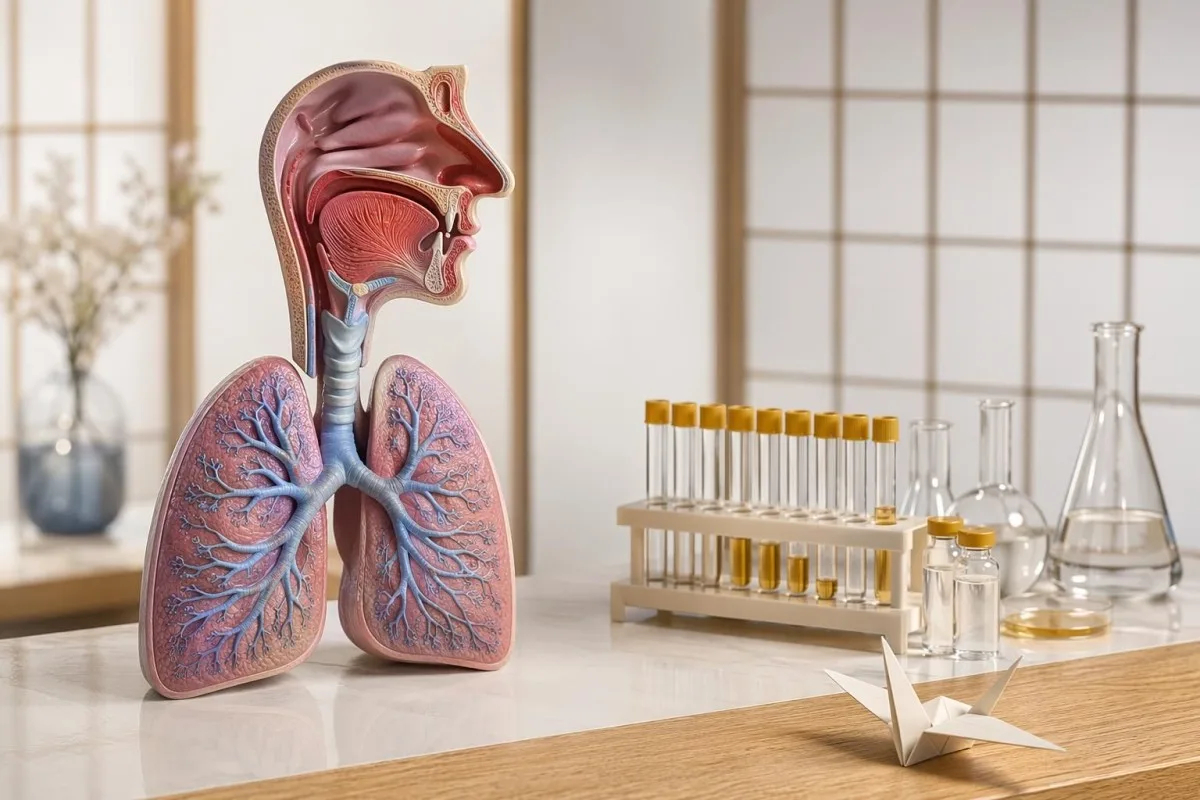
Common yearly labs can reveal metabolic and oxygen-stress patterns that make sleep apnea screening more urgent. They cannot diagnose apnea, but they can stop a risky pattern from being missed.


- Blood tests do not diagnose sleep apnea; obstructive sleep apnea is confirmed with polysomnography or a validated home sleep apnea test.
- CBC can show high hemoglobin or hematocrit; hematocrit above about 52% in men or 48% in women deserves context, especially with snoring or low overnight oxygen.
- Bicarbonate/CO2 on a BMP is usually 22–29 mmol/L; repeated values above 27–28 mmol/L can support screening for sleep-related hypoventilation in the right patient.
- HbA1c below 5.7% is normal, 5.7–6.4% is prediabetes, and 6.5% or higher suggests diabetes if confirmed by standard criteria.
- Lipids with triglycerides above 150 mg/dL and low HDL often travel with insulin resistance, weight gain, fatty liver and sleep apnea risk.
- TSH is commonly interpreted around 0.4–4.0 mIU/L in adults; hypothyroidism can worsen fatigue, weight gain, snoring and upper-airway narrowing.
- Liver enzymes such as ALT and GGT may rise with fatty liver; obstructive sleep apnea can worsen liver stress through intermittent hypoxia.
- STOP-Bang scores of 3–4 suggest intermediate risk and 5–8 suggest high risk; lab patterns should be combined with symptoms, not read alone.
- Kantesti AI can help interpret annual blood work patterns in about 60 seconds, but abnormal results still need clinician review when symptoms or red flags are present.
What annual labs can and cannot tell you about apnea risk
For annual blood work what to test when sleep apnea is on the radar: ask your clinician about CBC, CMP/BMP with bicarbonate, HbA1c or fasting glucose, lipid panel, TSH, and liver enzymes. These blood tests do not diagnose obstructive sleep apnea; diagnosis requires a sleep study or validated home sleep apnea test. But in clinic, a pattern of high hematocrit, bicarbonate above 27–28 mmol/L, rising A1c, high triglycerides, low HDL, abnormal TSH, and mild ALT/GGT elevation often makes me push harder for screening—especially with snoring, witnessed pauses, sleepiness, or resistant hypertension.
As of May 12, 2026, the American Academy of Sleep Medicine still treats objective sleep testing as the diagnostic standard for adult obstructive sleep apnea, not routine blood work (Kapur et al., 2017). I am Thomas Klein, MD, and when I review annual labs, I use them as risk context—a clinical nudge, not a verdict.
The practical difference matters. A 46-year-old with an HbA1c of 5.9%, triglycerides of 240 mg/dL and a bicarbonate of 29 mmol/L tells a different story than a 46-year-old with one isolated, borderline lab flag and no symptoms.
Our Kantesti AI blood test interpretation helps patients see these patterns together rather than chasing one red number. If you are unsure what a yearly panel usually includes, our guide to a standard annual panel explains the common gaps.
The annual blood work shortlist to ask for
The annual shortlist for sleep apnea risk context is CBC, CMP or BMP with bicarbonate, HbA1c, fasting glucose if appropriate, lipid panel, TSH, ALT, AST, ALP, bilirubin and often GGT. These are routine, relatively low-cost tests in many health systems, and most can be drawn on the same morning.
If someone asks me what blood tests should I get at an annual visit, I start with the tests that change decisions. CBC checks oxygen-carrying cells; CMP/BMP checks bicarbonate, kidney and liver chemistry; HbA1c checks 8–12 week glucose exposure; lipids show cardiometabolic risk; TSH screens a common fatigue mimic.
Not every person needs every add-on. A lean 28-year-old with normal blood pressure and no snoring may not need GGT, while a 52-year-old with central weight gain, ALT of 58 IU/L and morning headaches probably does.
For a cleaner conversation with your doctor, bring one page listing symptoms, medications, alcohol intake, weight change and family history. Our what blood tests to ask for guide and biomarker reference library can help you avoid ordering fashionable but low-yield tests.
CBC: hemoglobin and hematocrit as oxygen-stress clues
CBC can support sleep apnea screening when hemoglobin or hematocrit is repeatedly high, because chronic low oxygen can stimulate red-cell production in some patients. A typical adult hemoglobin range is about 13.5–17.5 g/dL in men and 12.0–15.5 g/dL in women, though laboratories vary.
High hematocrit is not common in mild obstructive sleep apnea, and that is where many articles oversell the clue. In my experience, the CBC becomes more persuasive when hematocrit is above 52% in a man or 48% in a woman and the patient also has loud snoring, morning headaches or low overnight oxygen readings.
A 58-year-old nonsmoker in our clinic had hemoglobin of 18.1 g/dL, hematocrit of 54%, normal ferritin and no testosterone use. His sleep study later showed severe apnea with long desaturation runs, but the lab pattern was only one piece of the puzzle.
Kantesti's neural network reads CBC values alongside age, sex, altitude, dehydration clues and prior trends. If your CBC report has confusing flags, our hemoglobin range guide explains why one high value may mean dehydration while a repeated high trend needs work-up.
Bicarbonate on the BMP: the overlooked overnight breathing clue
Serum bicarbonate, often listed as CO2 on a BMP or CMP, is usually about 22–29 mmol/L in adults. Repeated bicarbonate above 27–28 mmol/L can support screening for sleep-related hypoventilation, particularly in patients with obesity, daytime sleepiness or morning headaches.
The reason is physiology, not magic. If breathing is shallow for hours overnight, carbon dioxide can run high, and the kidneys may retain bicarbonate to buffer the acid load over days to weeks.
This clue is most useful for obesity hypoventilation syndrome, not garden-variety mild snoring. I get more concerned when bicarbonate is 30–34 mmol/L, oxygen saturation is low, and the patient wakes unrefreshed despite 7–8 hours in bed.
Do not panic over one CO2 result of 30 mmol/L after vomiting, diuretic use or dehydration. Our BMP CO2 guide walks through the common non-sleep causes that must be checked before blaming nighttime breathing.
A1c and fasting glucose: insulin resistance that fits the sleep story
HbA1c helps flag the metabolic stress that often travels with sleep apnea, but it does not prove apnea caused the problem. HbA1c below 5.7% is normal, 5.7–6.4% is prediabetes, and 6.5% or higher supports diabetes diagnosis when confirmed according to ADA criteria.
The 2024 American Diabetes Association Standards of Care use HbA1c, fasting plasma glucose and oral glucose tolerance testing for diabetes diagnosis, with repeat confirmation in most non-urgent cases (American Diabetes Association Professional Practice Committee, 2024). Sleep apnea can worsen insulin resistance through sympathetic activation, sleep fragmentation and intermittent hypoxia.
I often see the pattern before the diagnosis: A1c moves from 5.4% to 5.9% over 18 months, triglycerides climb, waist size increases, and the spouse reports gasping. That is not a lab diagnosis of apnea; it is a reason to ask better sleep questions.
HbA1c can mislead in iron deficiency, kidney disease, pregnancy, hemoglobin variants and recent blood loss. If the number seems wrong, compare it with fasting glucose and our HbA1c cutoff guide before changing treatment.
Lipids: triglycerides, HDL and non-HDL as metabolic fingerprints
A lipid panel can support sleep apnea risk screening when it shows high triglycerides, low HDL and raised non-HDL cholesterol together. Triglycerides below 150 mg/dL are generally desirable, while HDL below 40 mg/dL in men or below 50 mg/dL in women is considered low.
Sleep apnea does not create one signature lipid result. The pattern I pay attention to is triglycerides of 200–400 mg/dL, low HDL, rising A1c and abdominal weight gain, because those results often point to insulin resistance rather than one isolated cholesterol issue.
Non-HDL cholesterol is total cholesterol minus HDL, and it captures cholesterol carried by atherogenic particles. In plain English, non-HDL of 170 mg/dL with triglycerides of 260 mg/dL usually worries me more than LDL alone in a sleepy snorer with blood pressure of 148/92 mmHg.
A lipid panel also gives you a safety baseline before major diet changes or medication discussions. For step-by-step reading of LDL, HDL and triglycerides, see our lipid panel reading.
TSH: thyroid results that can imitate or worsen sleep apnea symptoms
TSH belongs in annual blood work when fatigue, weight gain, cold intolerance, constipation, heavy periods or snoring has appeared. A common adult TSH reference range is about 0.4–4.0 mIU/L, although pregnancy, age, medication timing and laboratory methods change interpretation.
Hypothyroidism can worsen sleep apnea risk through weight gain, fluid retention around the upper airway and reduced ventilatory drive. Clinicians disagree on how aggressively to treat mild TSH elevations of 4.5–7.0 mIU/L, so symptoms and free T4 matter.
This is one of those areas where context matters more than the number. A TSH of 5.8 mIU/L with normal free T4 in a 72-year-old feels different from the same TSH in a 33-year-old trying to conceive or a patient with new severe fatigue.
Biotin supplements can falsely distort thyroid immunoassays, sometimes making results look more reassuring or more alarming than they are. Our TSH normal range guide explains timing, medication interference and when free T4 changes the story.
Liver enzymes: ALT, AST and GGT when fatty liver enters the picture
Liver enzymes can strengthen the case for sleep apnea screening when ALT or GGT is persistently high in a patient with metabolic risk. ALT, AST, ALP, bilirubin and GGT do not diagnose fatty liver or apnea, but the pattern can point toward cardiometabolic stress.
The 2023 AASLD Practice Guidance describes nonalcoholic fatty liver disease as tightly linked to obesity, insulin resistance, dyslipidemia and diabetes (Rinella et al., 2023). Intermittent hypoxia from sleep apnea may aggravate liver injury in susceptible patients, although the exact contribution varies.
A common pattern is ALT 45–85 IU/L, AST lower than ALT, GGT mildly high and triglycerides above 200 mg/dL. A 52-year-old marathon runner with AST of 89 IU/L after a hard race is a different case; muscle injury can raise AST without liver disease.
I get more cautious when ALT stays high for 3–6 months, platelets drift down, albumin falls or bilirubin rises. For a deeper liver-pattern read, use our liver function test guide.
How to understand lab results as patterns, not single red flags
A lab pattern is more useful for sleep apnea risk than any single abnormal result. High bicarbonate plus high hematocrit plus rising A1c suggests a different clinical question than mildly high ALT alone after a holiday week.
When people ask how to understand lab results, I tell them to sort every abnormality into four buckets: oxygen stress, glucose metabolism, lipid metabolism and organ strain. Sleep apnea risk becomes more credible when two or three buckets move in the same direction over time.
The evidence here is honestly mixed for some markers. For example, hematocrit may be normal in many people with severe obstructive sleep apnea, while A1c can rise for reasons that have nothing to do with sleep.
Our AI lab analysis tool weighs the full panel, reference units and prior results rather than treating every red flag equally. If your results sit near a cutoff, our guide on borderline lab results is a good companion.
When lab clues should trigger formal sleep apnea screening
Formal sleep apnea screening is reasonable when lab clues align with symptoms such as loud snoring, witnessed pauses, choking awakenings, morning headaches, daytime sleepiness or resistant hypertension. A STOP-Bang score of 3–4 is commonly treated as intermediate risk, while 5–8 suggests high risk.
STOP-Bang gives one point each for snoring, tiredness, observed apneas, high blood pressure, BMI over 35 kg/m², age over 50, neck circumference over 40 cm and male sex. It is blunt, but it catches a lot of patients who minimize symptoms.
The AASM guideline recommends polysomnography or technically adequate home sleep apnea testing for adults with signs suggesting moderate to severe obstructive sleep apnea (Kapur et al., 2017). A blood panel can support the referral, but it should not delay testing when symptoms are obvious.
I have seen patients with completely normal annual labs and an apnea-hypopnea index above 40 events per hour. Our doctors on the Medical Advisory Board review content with that reality in mind: normal chemistry does not equal normal sleep breathing.
How to prepare for annual blood work without distorting results
For annual blood work, preparation should reduce avoidable noise without creating an artificial version of your health. Most lipid and glucose interpretation is cleanest after 8–12 hours fasting when your clinician requests it, but many modern lipid panels can still be useful non-fasting.
Do not crash diet, dehydrate, binge exercise or stop prescribed medication just to improve a number. A hard workout within 24–48 hours can raise AST, CK and sometimes white cells, which can muddy a liver or inflammation interpretation.
Tell your clinician about CPAP use, alcohol, cannabis, sedatives, testosterone, diuretics, GLP-1 medicines and thyroid supplements. Testosterone can raise hematocrit, diuretics can raise bicarbonate, and biotin can distort thyroid tests.
If your appointment is early, drink water and avoid a heroic caffeine experiment. Our fasting versus non-fasting guide explains which results shift most and which barely move.
Trend analysis: why last year’s normal may matter this year
Trend analysis can reveal sleep-apnea-related risk earlier than a single flagged result. A bicarbonate shift from 24 to 29 mmol/L, A1c from 5.3% to 5.9%, and triglycerides from 110 to 230 mg/dL over two years deserves attention even if only one value is technically abnormal.
Reference ranges are built for populations, not your personal baseline. A patient whose hematocrit usually sits at 41% but rises to 48% after weight gain and new snoring has a story worth hearing.
Some European laboratories use slightly different reference intervals for ALT, TSH and hematology indices, so cross-border patients often think their health changed when only the reporting system changed. Units matter: mmol/L, mg/dL and IU/L are not interchangeable decorations.
Kantesti AI compares uploaded PDFs and photos across time, which is often where the clinically useful signal appears. If you want a system for storing old reports, our blood test history guide is practical and not fussy.
Normal labs but classic symptoms: why apnea can still be present
Normal annual blood work does not rule out obstructive sleep apnea. Many patients with moderate or severe apnea have normal CBC, bicarbonate, A1c, lipids, TSH and liver enzymes, especially when they are younger, leaner or early in the disease course.
I see this pattern in shift workers and endurance athletes more than people expect. A lean 39-year-old cyclist had perfect lipids, HbA1c of 5.2% and hematocrit of 43%, yet his partner recorded repeated breathing pauses and his sleep study was clearly abnormal.
Symptoms should outrank tidy chemistry when the sleep story is strong. Unrefreshing sleep, nocturia, dry mouth, morning headaches, mood changes and near-miss driving episodes are not explained away by a normal CMP.
Fatigue is also broad, so we still check anemia, thyroid disease, B12 deficiency, depression, medication effects and inflammatory disorders. Our fatigue blood test guide helps separate sleep clues from the many other causes patients worry about.
Using Kantesti AI to review your annual blood work safely
Kantesti AI reviews annual blood work by reading uploaded lab PDFs or photos, standardizing units and comparing patterns across more than 15,000 biomarkers. It can help you prepare better questions for your clinician, but it should not replace sleep testing when apnea symptoms are present.
Our platform is used by people in 127+ countries and supports more than 75 languages, which matters when reference ranges and units differ. In our analysis of millions of uploaded lab reports, the preventable mistake is usually not a rare disease; it is missed pattern recognition across common tests.
For sleep apnea risk, Kantesti AI looks for combinations: bicarbonate with chloride and kidney function, CBC with hydration clues, A1c with triglycerides, TSH with free T4 when available, and liver enzymes with platelet and albumin context. That is how clinicians think at 8:10 a.m. between appointments.
You can try AI-powered blood test interpretation or upload a report through our free blood test demo. If the report suggests urgent risk—very high glucose, marked liver enzyme elevation, severe anemia or symptoms such as chest pain—seek medical care rather than waiting for an app answer.
Kantesti research publications and medical sources
Kantesti's research section separates our internal medical publications from external clinical references. The external sleep apnea, diabetes and liver guidance cited above should carry the most weight for clinical decisions, while our DOI publications document Kantesti's broader educational and interpretation work.
Dr. Thomas Klein and our clinical team review YMYL content against guideline-level evidence, not social-media interpretations. Our medical validation standards describe how Kantesti AI is tested against clinician-reviewed cases and safety traps.
Kantesti LTD. (2026). B Negative Blood Type, LDH Blood Test & Reticulocyte Count Guide. Figshare. https://doi.org/10.6084/m9.figshare.31333819. ResearchGate: ResearchGate. Academia.edu: Academia.edu.
Kantesti LTD. (2026). Diarrhea After Fasting, Black Specks in Stool & GI Guide 2026. Figshare. https://doi.org/10.6084/m9.figshare.31438111. ResearchGate: ResearchGate. Academia.edu: Academia.edu. Our population-scale benchmark is also available through the Kantesti AI validation DOI.
Frequently Asked Questions
Can annual blood work diagnose sleep apnea?
Annual blood work cannot diagnose obstructive sleep apnea. Diagnosis requires polysomnography or a technically adequate home sleep apnea test that measures breathing, oxygen patterns and sleep-related events. Labs such as CBC, bicarbonate, HbA1c, lipids, TSH and liver enzymes can support risk screening when they fit symptoms like snoring, witnessed pauses or daytime sleepiness.
What blood tests should I get if I snore and feel tired?
If you snore and feel tired, reasonable annual blood work often includes CBC, CMP or BMP with bicarbonate, HbA1c, fasting glucose when appropriate, lipid panel, TSH and liver enzymes including ALT and AST. These tests look for anemia, thyroid disease, glucose problems, metabolic risk and oxygen-stress clues that can overlap with sleep apnea symptoms. A STOP-Bang score of 3 or higher should prompt a discussion about formal sleep apnea testing.
Why does bicarbonate matter for sleep apnea risk?
Bicarbonate, often reported as CO2 on a BMP or CMP, is usually about 22–29 mmol/L in adults. Repeated values above 27–28 mmol/L may suggest the body is compensating for chronic carbon dioxide retention, especially in patients with obesity, morning headaches or daytime sleepiness. Bicarbonate can also rise from vomiting, diuretics or dehydration, so it should never be read as a stand-alone sleep apnea test.
Can high hematocrit mean sleep apnea?
High hematocrit can occur when chronic low oxygen stimulates red-cell production, but many people with sleep apnea have normal CBC results. Hematocrit above about 52% in men or 48% in women deserves review for dehydration, smoking, altitude, testosterone therapy, lung disease and sleep-related oxygen drops. Sleep apnea is only one possible cause, so repeated elevation should be interpreted by a clinician.
Does a high A1c mean I have sleep apnea?
A high HbA1c does not mean you have sleep apnea. HbA1c of 5.7–6.4% is the prediabetes range, and 6.5% or higher supports diabetes diagnosis when confirmed by accepted criteria. Sleep apnea can worsen insulin resistance, but A1c can also rise from diet, weight change, medications, pregnancy, kidney disease or hemoglobin-related issues.
Which lab pattern most strongly suggests I should ask about sleep apnea screening?
The most persuasive lab pattern is not one abnormal result but a cluster: bicarbonate above 27–28 mmol/L, rising HbA1c, triglycerides above 150–200 mg/dL, low HDL, mild ALT or GGT elevation, and high-normal hematocrit. That pattern becomes more meaningful when paired with loud snoring, witnessed breathing pauses, morning headaches, nocturia or resistant hypertension. Formal screening should use a validated questionnaire and, when indicated, a sleep study.
Can I use Kantesti AI before seeing my doctor?
Yes, Kantesti AI can help organize your annual blood work into understandable patterns before a doctor visit. Uploading a PDF or photo can give a structured interpretation in about 60 seconds, including unit checks, trend context and possible questions to ask. It is not a sleep apnea diagnostic tool, and urgent symptoms or major lab abnormalities still require direct medical care.
Get AI-Powered Blood Test Analysis Today
Join over 2 million users worldwide who trust Kantesti for instant, accurate lab test analysis. Upload your blood test results and receive comprehensive interpretation of 15,000+ biomarkers in seconds.
📚 Referenced Research Publications
Klein, T., Mitchell, S., & Weber, H. (2026). B Negative Blood Type, LDH Blood Test & Reticulocyte Count Guide. Kantesti AI Medical Research.
Klein, T., Mitchell, S., & Weber, H. (2026). Diarrhea After Fasting, Black Specks in Stool & GI Guide 2026. Kantesti AI Medical Research.
📖 External Medical References
American Diabetes Association Professional Practice Committee (2024). 2. Diagnosis and Classification of Diabetes: Standards of Care in Diabetes—2024. Diabetes Care.
⚕️ Medical Disclaimer
This article is for educational purposes only and does not constitute medical advice. Always consult a qualified healthcare provider for diagnosis and treatment decisions.
E-E-A-T Trust Signals
Experience
Physician-led clinical review of lab interpretation workflows.
Expertise
Laboratory medicine focus on how biomarkers behave in clinical context.
Authoritativeness
Written by Dr. Thomas Klein with review by Dr. Sarah Mitchell and Prof. Dr. Hans Weber.
Trustworthiness
Evidence-based interpretation with clear follow-up pathways to reduce alarm.