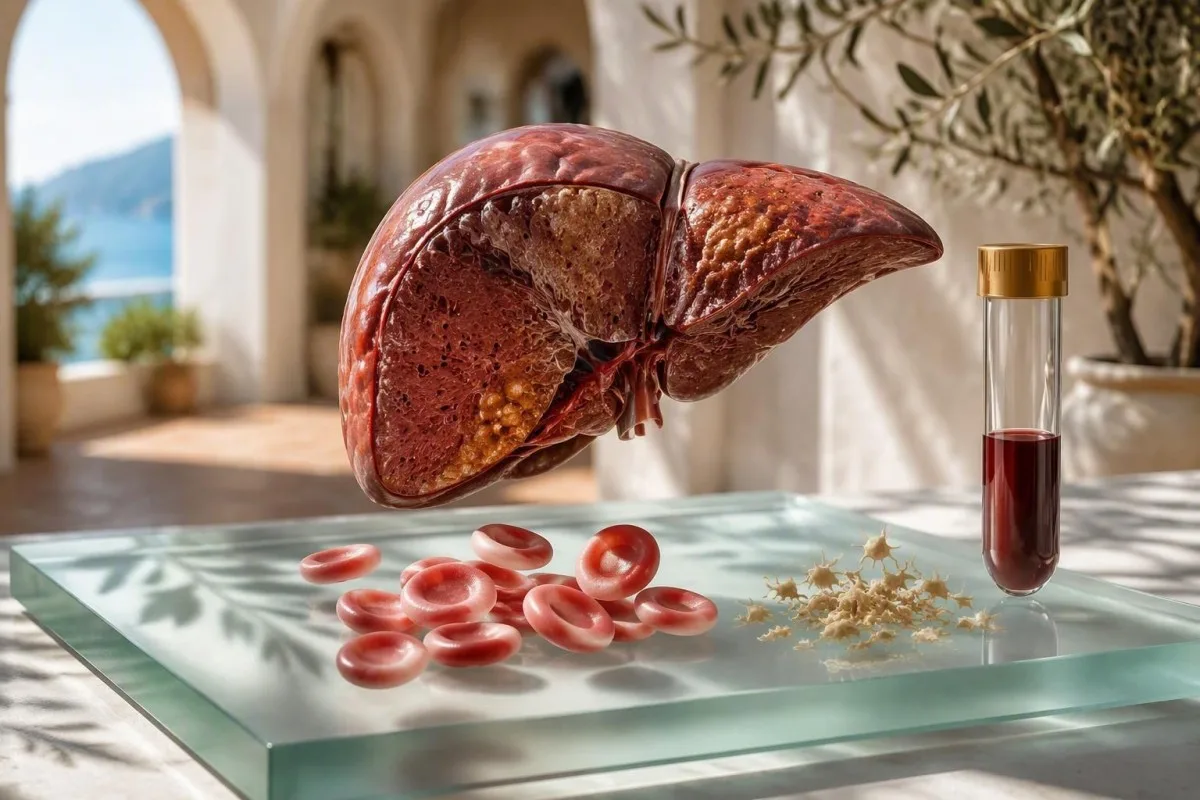
KAM (HELLP) sindromi homiladorlikda yoki tug'ilgandan ko'p o'tmay, trombotsitlarning kamayishi, AST yoki ALTning ko'tarilishi va qizil qon hujayralarining parchalanishi belgilari bir vaqtda kuzatilganda shubha qilinadi. Kuchli bosh og'rig'i, ko'rishning o'zgarishi, o'ng yuqori qorin og'rig'i, hansirash, kuchli qon ketishi yoki homila harakatining kamayishi darhol akusherlik bo'limi yoki tez yordam ko'rigini talab qiladi — takroriy tekshiruvni kutmang.


- Trombotsitlar 100 × 10⁹/L dan past jigar fermentlarining ko'tarilishi bilan homiladorlikda jiddiy holat chegarasiga to'g'ri keladi va bir kun ichida akusherlik tekshiruvini talab qiladi.
- LDH 600 U/L dan yuqori qo'shimcha ravishda past haptoglobin, bilvosita bilirubinning ko'tarilishi yoki shistotsitlar klassik KAM (HELLP) namunasida gemolizni tasdiqlaydi.
- AST yoki ALT kamida 70 U/L Tennessi mezonlarida ishlatiladi; shifokorlar shuningdek, har qanday ferment laboratoriya yuqori chegarasidan ikki barobar ko'p yoki yo'qligini baholaydilar.
- Birta anormal natija KAM (HELLP) emas. Trombotsitlarning kamayishi, gepatotsellyulyar shikastlanish va gemoliz soatlar davomida birga harakat qilganda xavotir keskin ortadi.
- Favqulodda holat belgilari doimiy kuchli bosh og'rig'i, ko'rishning buzilishi, epigastral yoki o'ng yuqori kvadrant og'rig'i, hansirash, ongning chalkashishi, tirishishlar yoki homila harakatining kamayishini o'z ichiga oladi.
- HELLP tug'madan keyin ham yuzaga kelishi mumkin. Holatlarning taxminan 30 foizi tug'ruqdan keyin namoyon bo'ladi, ko'pincha 48 soat ichida, ammo ba'zan 7 kungacha davom etishi mumkin.
- Tug'ruq - bu aniq davolash usuli onaning yoki homilaning ahvoli yomonlashganda; konvulsiyalarning oldini olish uchun magniy sulfat keng qo'llaniladi.
- Past trombotsitlarni o'zingiz davolamang qo'shimchalar bilan yoki onlayn talqin uchun tibbiy yordamni kechiktirmang, agar homiladorlikning ogohlantiruvchi belgilari mavjud bo'lsa.
KAM (HELLP) lab tekshiruvining uch bosqichli namunasi: qisqacha ko'rinish
HELLP sindromi laboratoriya ko'rsatkichlari gemoliz, jigar fermentlarining ko'payishi va trombotsitlarning kamayishi bir-biriga bog'liq bo'lib rivojlanayotgan patologik holatda tibbiy favqulodda vaziyatni ko'rsatadi. Trombotsitlarning 100 × 10⁹/L dan kam, ASTning 70 U/L yoki undan ko'p va LDHning 600 U/L dan yuqori bo'lishi odatda diagnostika chegaralari sifatida ishlatiladi, ammo tez pasayish tendentsiyasi ham xavfli bo'lishi mumkin.
HELLP quyidagilarni anglatadi gemoliz, jigar fermentlarining ko'payishi va trombotsitlarning kamayishi. Bu nom foydali bo'lsa-da, klinik haqiqat dinamikdir: bemorda avval 185 dan 112 × 10⁹/L gacha trombotsitlar 12 soat ichida kamayishi mumkin, keyin esa 100 chegarasidan oshib ketadi. Mening amaliyotimda, bu pasayish, hatto texnik jihatdan normal qiymat ham tasalli berguncha harakat qilishga undaydi; homiladorlikdagi trombotsitlar diapazonlari bo‘yicha resurslarimiz bitta ko'rsatkichni kontekstga qo'yishga yordam beradi.
Tennessi tasnifi to'liq HELLPni kamida 600 U/L LDH, kamida 70 U/L AST va 100 × 10⁹/L dan kam trombotsitlar bilan aniqlaydi. Missisipi tizimi jiddiylikni qisman trombotsitlarning eng past ko'rsatkichi bo'yicha baholaydi: 1-sinf - 50 × 10⁹/L yoki undan kam, 2-sinf - 50 dan 100 × 10⁹/L gacha, va 3-sinf - 100 dan 150 × 10⁹/L gacha bo'lib, ferment va LDH mezonlari mavjud.
Kantesti - bu AI qon testi analizatori bu izolyatsiyalangan qiymatni belgilash o'rniga CBC, jigar paneli va gemoliz markerlarini birgalikda o'qiydi. Tomas Keyn, MD, bu kombinatsiya yoki tashvishga soladigan belgilarga ega bo'lgan har qanday homilador bemorni darhol onalik triage xizmatiga murojaat qilishni maslahat beradi; raqamli talqin hech qachon shoshilinch yotoq yonidagi baholashni o'rnini bosa olmaydi.
Nima uchun naqsh bitta raqamdan muhimroqdir
Trombotsitlarning 118 × 10⁹/L bo'lishi o'z-o'zidan homiladorlik trombotizmini aks ettirishi mumkin, bu odatda engil va barqaror bo'ladi. AST 96 U/L va LDH 720 U/L bilan 118 hisobga olish mikrovaskulyar kasallikni ko'rsatadi, toki акушерлик jamoasi boshqacha isbotlamaguncha.
Homiladorlikda trombotsitlarning kamayishi: favqulodda holatni o'zgartiradigan raqamlar
Homiladorlikda 100 × 10⁹/L dan kam trombotsitlar og'ir preeklampsiya belgisi bo'lib, shoshilinch klinik baholashni talab qiladi, ayniqsa hisob kamayib borayotgan bo'lsa. 50 × 10⁹/L dan past hisoblar protsedurali va qon ketishini boshqarish murakkabligini sezilarli darajada oshiradi, ammo spontan qon ketishi faqat hisobga bog'liq emas.
Oddiy homilador bo'lmagan trombotsitlar uchun taxminan 150 dan 400 × 10⁹/L gacha bo'lgan interval mavjud, ammo oddiy homiladorlik oxirgi trimestrda biroz pasayishni keltirib chiqarishi mumkin. Homiladorlik trombozitozi odatda 100 × 10⁹/L dan yuqori bo'ladi, gemoliz yoki transaminitemiyaga olib kelmaydi va tug'ruqdan keyin o'tadi. Shu sababdan, klinisyenslar har bir past hisobni bir xil muammo deb hisoblagan holda, to'liq paneldan takroran tekshiradilar.
ACOG trombotsitlarning 100 × 10⁹/L dan kam bo'lishini gipertenziya aniq bo'ladimi yoki yo'qmi (ACOG, 2020) preeklampsiya belgisi deb hisoblaydi. 72 × 10⁹/L hisobga ega yangi kuchli bosh og'rig'i uyda kuzatiladigan natija emas; u qon bosimi, nevrologik holat, homila farovonligi va seriyali laboratoriya tekshiruvlarining zudlik bilan baholanishini talab qiladi.
Agar trombotsitlarning klonlashidan gumon qilinsa, laboratoriya surtmani ko'rib chiqishi yoki namuna olishni takrorlashi kerak, chunki EDTA bilan bog'liq klonlash yolg'on past avtomatlashtirilgan natijani yaratishi mumkin. Bu ogohlantirish simptomlar mavjud bo'lganda triageni kechiktirmasligi kerak; bizning qo'llanmamiz EDTA sababli trombotsitlar agregatsiyasi (to‘planib qolishi). sitratli naycha bilan hisob ba'zan nima uchun so'ralishi mumkinligini tushuntiradi.
Homiladorlikda jigar fermentlarining ko'tarilishi: AST va ALTni o'qish
AST and ALT rise in HELLP because small-vessel injury and reduced blood flow affect the liver, not because HELLP is ordinary hepatitis. AST or ALT at least twice the local upper limit is a severe-feature threshold, while AST of 70 U/L or higher is used in classic Tennessee HELLP criteria.
ALT is more liver-specific than AST, but both matter in pregnancy. An AST of 145 U/L and ALT of 120 U/L is far more concerning alongside platelets of 82 × 10⁹/L than the same enzyme values in an otherwise well non-pregnant endurance athlete. The jigar paneli bo‘yicha qo‘llanmamiz explains which tests usually accompany AST and ALT.
Severe right-upper-quadrant or epigastric pain can reflect liver capsule stretching even before enzymes reach their maximum. Pain, nausea, shoulder-tip discomfort, hypotension, or a rapidly falling haemoglobin raises concern for hepatic hematoma or rupture, rare but life-threatening complications that require emergency imaging and specialist management.
Alkaline phosphatase is a poor discriminator in late pregnancy because placental production can make it two to four times the non-pregnant upper limit. Bilirubin may be normal in HELLP; when indirect bilirubin rises above about 20.5 µmol/L or 1.2 mg/dL with LDH elevation, hemolysis becomes more likely than isolated liver injury.
Do AST and ALT have to be extremely high?
No. HELLP may be present with AST between 70 and 200 U/L, and the trajectory can worsen quickly. AST or ALT in the thousands shifts the differential toward acute viral hepatitis, ischemic injury, toxin exposure, or acute fatty liver of pregnancy, although overlap can occur.
Gemoliz belgilari: LDH, Bilirubin, Haptoglobin va Qon surtmasi
Hemolysis in HELLP is demonstrated by red-cell fragmentation and turnover, most often an LDH above 600 U/L plus a falling haptoglobin or schistocytes on a peripheral smear. A haemoglobin decline alone is not enough because pregnancy fluid expansion and bleeding have different mechanisms.
LDH is a sensitive but nonspecific marker of cellular injury; muscle injury, liver injury, and even a poorly handled specimen can increase it. In HELLP, LDH above 600 U/L gains meaning when it parallels platelets falling and AST rising. A high LDH result should therefore trigger a search for the whole pattern, not a single-cause assumption.
Schistocytes are fragmented red cells seen on a manually reviewed cell sample slide. Their presence supports a thrombotic microangiopathy, but their percentage and interpretation require an experienced laboratory professional; a sample with more than 1% schistocytes is generally considered significant in the right clinical setting.
Haptoglobin often falls below the laboratory reference interval as it binds free haemoglobin, while indirect bilirubin and reticulocytes may rise. These are supporting markers, not gatekeepers: in rapidly evolving HELLP, clinicians do not wait for every confirmatory value before admitting and monitoring a symptomatic patient.
A sample error can imitate hemolysis
Laboratory sample hemolysis can falsely increase potassium, LDH, AST, and bilirubin-related measurements. It does not explain a genuine platelet decline or new hypertension, so a redraw is sensible only alongside—not instead of—immediate clinical assessment; see our repeat test after hemolysis guide.
KAM (HELLP) sindromini ketma-ket qon tekshiruvlari nima uchun muhim
Suspected HELLP requires serial CBC, AST, ALT, LDH, creatinine, and coagulation testing because the direction of change over 6 to 12 hours can alter delivery and critical-care decisions. A normal result yesterday does not exclude an emergency pattern today.
Hospital teams commonly repeat key laboratories every 6 to 12 hours in unstable or evolving disease, then adjust the interval to symptoms and results. A platelet fall of 35 × 10⁹/L between draws matters even if both values are above 100 × 10⁹/L. The first 24 hours after delivery can also be the nadir, which catches many families off guard.
Coagulation studies are not required to diagnose HELLP, but PT, aPTT, fibrinogen, and D-dimer help assess disseminated intravascular coagulation when there is bleeding, placental abruption, shock, or very low platelets. Pregnancy normally raises fibrinogen to around 4 to 6 g/L, so a fibrinogen of 2 g/L may be concerning despite appearing nonzero; our koagulyatsion test bo‘yicha qo‘llanmamiz foydali kontekst beradi.
A rising creatinine, particularly above 1.1 mg/dL or 97 µmol/L, is another severe-feature marker and can coexist with HELLP. One practical point: ask for the actual prior values, not merely whether the result was flagged, because many electronic portals hide the clinical significance of a sharp change within the reference interval.
Do not wait for the final send-out test
Most decisive HELLP tests are routine hospital laboratories with turnaround measured in hours, not days. Treatment decisions rest on bedside condition, blood pressure, fetal monitoring, and the available trend—not on a delayed specialized assay.
KAM (HELLP) bilan birga qon bosimi, siydik oqsili va buyrak ko'rsatkichlari
HELLP often occurs with preeclampsia, so blood pressure of 160/110 mmHg or higher, new proteinuria, or creatinine above 1.1 mg/dL increases urgency—but HELLP can appear without obvious hypertension or protein in urine. Normal urine protein never clears a concerning laboratory triad.
Preeclampsia is classically diagnosed after 20 weeks with new blood pressure of at least 140/90 mmHg on two readings four hours apart, plus proteinuria or maternal organ dysfunction. Severe-range pressure of 160 systolic or 110 diastolic needs prompt treatment in a monitored setting to reduce maternal stroke risk. Home cuffs can be helpful, but technique and cuff size change readings by 10 mmHg or more.
A urine protein-to-creatinine ratio of 0.3 mg/mg or more supports proteinuria, while a 24-hour urine total of 300 mg or more is another accepted threshold. Yet about 10% to 20% of HELLP presentations may lack hypertension or proteinuria at first, which is why unexplained epigastric pain and falling platelets should never be dismissed.
Kantesti - bu AI qon tahlili natijalari platformasi that can organize renal, liver, and CBC results in a clear timeline, but urgent pregnancy symptoms override any remote review workflow. For practical context about a positive result, read our guide to siydikdagi protein.
Bir lab natijasidan ustun turadigan favqulodda alomatlar
A severe persistent headache, visual symptoms, upper-abdominal pain, shortness of breath, seizure, confusion, vaginal bleeding, or reduced fetal movement needs emergency assessment immediately in pregnancy or within 7 days after birth. These symptoms can signal cerebral, liver, lung, placental, or clotting complications before laboratory values are complete.
Headache is common in pregnancy, but a new headache that is severe, persistent, unresponsive to acetaminophen, or paired with flashing lights, blind spots, or confusion is different. A blood pressure reading below 140/90 does not make neurologic symptoms safe. In the emergency department, assessment may include repeated pressure measurements, reflexes, oxygen saturation, fetal monitoring, and a focused neurologic examination.
Right-upper-quadrant pain may be mistaken for reflux, gallbladder disease, or a pulled muscle. If it is intense, constant, accompanied by vomiting or shoulder pain, or occurs with platelets below 150 × 10⁹/L, seek care now; the differential includes HELLP and conditions discussed in our gallbladder blood test article.
Breathlessness, chest pressure, oxygen saturation below 95%, or sudden swelling with rapid weight gain can reflect pulmonary edema or another urgent cardiopulmonary condition. Do not drive yourself if you feel faint, confused, severely unwell, or have reduced fetal movement; call emergency services or your local maternity emergency line.
What to say when calling triage
State the gestational age or delivery date, blood pressure if known, exact symptoms, fetal movement change, and the latest platelet, AST, ALT, and LDH values. Saying that you are worried about HELLP provides the team a useful clinical frame without asking you to diagnose yourself.
Lab natijalarida KAM (HELLP)ga o'xshash holatlar
Acute fatty liver of pregnancy, thrombotic thrombocytopenic purpura, atypical hemolytic uremic syndrome, lupus flare, viral hepatitis, and severe infection can resemble HELLP. The overlap is why hospital clinicians check glucose, creatinine, coagulation, blood film, medication exposure, and the timing of symptoms rather than relying on one checklist.
Acute fatty liver of pregnancy more often brings low glucose, raised bilirubin, prolonged PT or INR, elevated ammonia, and liver synthetic dysfunction. HELLP more characteristically features severe hypertension, platelet consumption, and microangiopathic hemolysis, but mixed cases happen. A glucose below 70 mg/dL or an INR above 1.5 in late pregnancy deserves immediate senior obstetric and liver input.
TTP can produce profound thrombocytopenia and neurologic symptoms with comparatively modest liver enzyme elevation; ADAMTS13 activity below 10% supports the diagnosis, but treatment may begin before the result returns. Atypical HUS frequently has prominent kidney injury after delivery. These distinctions are specialist territory, not something a patient should try to settle from a portal result.
Viral hepatitis can raise ALT and AST above 1,000 U/L, often much higher than in classic HELLP, but numbers overlap. Medication and supplement history matters too—particularly acetaminophen-containing products and herbal preparations; our hepatitis symptom guide explains why jaundice may be absent.
Why a specialist blood film matters
A manually reviewed cell sample can distinguish schistocyte-predominant hemolysis from other red-cell patterns. In difficult cases, obstetrics, maternal-fetal medicine, hematology, anesthesia, nephrology, and critical care may all be involved within the same day.
KAM (HELLP) uchun favqulodda kasalxonada parvarish odatda nimalarni o'z ichiga oladi
Emergency HELLP care centers on maternal stabilization, seizure prevention, blood-pressure control, close fetal assessment, and timely delivery when indicated. Delivery is the definitive treatment for HELLP, although clinicians may briefly stabilize a parent or give fetal corticosteroids when that is safe.
Magnesium sulfate is commonly administered for seizure prevention in preeclampsia with severe features and HELLP; a common regimen is a 4 to 6 g intravenous loading dose followed by 1 to 2 g per hour, adjusted for renal function and local protocol. Staff monitor reflexes, breathing, urine output, and serum magnesium when clinically indicated. This is hospital medicine, not a home supplement strategy.
For sustained severe blood pressure, teams may use intravenous labetalol, intravenous hydralazine, or immediate-release oral nifedipine, aiming to treat promptly rather than allowing repeated pressures above 160/110 mmHg. ACOG recommends urgent antihypertensive therapy for acute-onset severe hypertension persisting 15 minutes or more (ACOG, 2020).
Platelet transfusion is not routine just because a count is low; it is considered around delivery, active bleeding, or invasive procedures based on count and clinical context. Vaginal delivery is often feasible, while anesthesia decisions require a current platelet trend and local expertise; platelet thresholds before procedures illustrate why procedure-specific risk matters.
Will corticosteroids cure HELLP?
Corticosteroids may be given before preterm delivery for fetal lung maturation, generally betamethasone 12 mg intramuscularly every 24 hours for two doses. Evidence has not established maternal high-dose corticosteroids as a reliable cure for HELLP, so they must not delay indicated delivery.
Tug'ruqdan keyingi KAM (HELLP): nega dastlabki 48 soat hali ham muhim
HELLP can first appear after birth, most commonly within 48 hours and occasionally up to 7 days postpartum. New headache, abdominal pain, breathlessness, swelling, high blood pressure, or abnormal labs after discharge should be treated as an obstetric emergency, not assumed to be normal recovery.
Roughly 30% of HELLP cases present postpartum, and platelet counts may continue falling for 24 to 48 hours after delivery before recovering. Haram and colleagues described the syndrome's variable timing and emphasized that postpartum surveillance is clinically necessary, not merely precautionary (Haram et al., 2009). A planned follow-up blood pressure check does not replace emergency review for red-flag symptoms.
The postpartum differential includes retained products, infection, cardiomyopathy, pulmonary embolism, TTP, and postpartum hemorrhage, so clinicians again interpret laboratory changes with examination and vital signs. Sudden breathlessness, fainting, one-sided weakness, or a seizure needs emergency services rather than a call-back request. The nafas qisishi qon testi qo'llanmasini ko'ring. describes several non-HELLP causes that also require speed.
Do not stop prescribed antihypertensives or anticonvulsant plans because the baby has been delivered; the maternal risk does not end at birth. Document the diagnosis and nadir platelet count for future pregnancies, because a prior HELLP history changes early antenatal risk planning.
When do laboratory values recover?
Most patients begin improving within 48 to 72 hours after delivery, but recovery varies with disease severity and complications. Persistent hemolysis, worsening creatinine, or platelets that do not turn upward should trigger reassessment for an alternative thrombotic microangiopathy.
KAM (HELLP) ehtimoli borligida onlayn natijalardan xavfsiz foydalanish
Online laboratory results can help you identify a concerning trend, but they cannot establish whether you or your baby are clinically stable. If HELLP is possible, contact maternity triage first and use the exact report only to communicate values, dates, units, and symptoms accurately.
A result page may display platelets as 92, AST as 88, and LDH as 650 without explaining that all three were normal yesterday. That delta is clinically meaningful. Save screenshots or PDFs with collection times, but do not spend an hour comparing reference ranges while severe symptoms are developing.
Kantesti AI bu AI asosidagi qon tahlili analiz vositasi designed to identify cross-panel patterns and trends, including the CBC-liver-hemolysis relationship that clinicians assess in suspected HELLP. Its output should be treated as a structured conversation starter for a clinician, not as clearance to remain at home; our tibbiy validatsiya yondashuvimiz describes the boundaries of responsible interpretation.
Before sharing a report, check patient identity, pregnancy week, collection date, units, and whether the laboratory marked the sample hemolyzed. A point-of-care platelet count and the central laboratory count can differ slightly, but an important clinical decision should be based on the treating team's verified result and repeat testing.
A practical message for your care team
A concise message can read: 32 weeks pregnant, platelets fell from 154 to 94 × 10⁹/L today, AST 82 U/L, new right-upper-abdominal pain, blood pressure 158/102. That gives triage staff a usable snapshot in fewer than 30 seconds.
Gumon qilingan KAM (HELLP) natijalari bilan nima qilish kerak emas
Do not wait for a routine appointment, start an iron product for a falling haemoglobin, or use supplements to treat a possible HELLP pattern. HELLP is driven by pregnancy-related endothelial and microvascular disease, and its dangerous complications can develop over hours.
Iron deficiency is common in pregnancy, but it does not explain LDH above 600 U/L with schistocytes and rapidly falling platelets. Taking iron may be appropriate when a clinician confirms deficiency, yet it will not reverse HELLP or replace urgent monitoring. If iron questions coexist, review a proper temir ko‘rsatkichlarini talqin qilish after the emergency issue is addressed.
Avoid nonsteroidal anti-inflammatory drugs unless your obstetric clinician specifically advises them, particularly with thrombocytopenia, kidney impairment, hypertension, or bleeding risk. Do not take aspirin, herbal products, or high-dose vitamins to alter a result on your own; low-dose aspirin is preventive therapy for selected high-risk pregnancies, not emergency treatment for established HELLP.
I have seen patients minimize symptoms because an earlier scan was reassuring or because their home pressure was only 145/95 mmHg. Fetal imaging and one pressure are snapshots. Persistent severe pain, visual change, or a deteriorating laboratory trend deserves a higher level of caution.
Can diet prevent a current episode?
No food, salt restriction, hydration plan, or supplement reverses established HELLP. Nutrition supports general pregnancy health, but emergency obstetric assessment is the intervention that changes immediate safety.
Tiklanish va kelajakdagi homiladorlikni rejalashtirish
A prior HELLP syndrome episode raises the risk of hypertensive disease in a later pregnancy, so preconception or early first-trimester review is appropriate. Recurrence estimates vary by population and definition, but are often cited around 5% to 20% for HELLP or preeclampsia-spectrum disease.
At the postnatal review, ask for the discharge diagnosis, highest AST and ALT, lowest platelets, kidney function, blood pressure plan, and whether any alternative diagnosis was excluded. This record helps a future obstetric team distinguish recurrent disease from baseline mild thrombocytopenia. It also prevents the frustrating situation where a patient remembers only that their liver tests were high.
Many high-risk patients are offered low-dose aspirin, commonly 81 to 150 mg daily, starting between 12 and 28 weeks and ideally before 16 weeks, according to local guidance and individual bleeding risk. Aspirin must be prescribed by the pregnancy clinician; its role is prevention, not a response to acute warning labs. Baseline CBC, creatinine, urine protein assessment, and liver tests can make later changes easier to recognize.
Kantesti — AI lab test interpretatsiya xizmati, can maintain a date-stamped laboratory timeline for a clinician-led pregnancy plan across reports from different laboratories. For decisions about safeguards and clinical oversight, our Tibbiy maslahat kengashi outlines the physicians who guide our medical standards.
When to seek preconception advice
Arrange review before trying to conceive if HELLP occurred before 34 weeks, involved kidney injury, severe hypertension, intensive care, or fetal growth restriction. Maternal-fetal medicine may individualize aspirin timing, blood-pressure targets, and surveillance frequency.
Yaqin bir soat uchun shifokorga tayyor ro'yxat
When HELLP is suspected, the next hour should focus on emergency contact, safe transport, symptom documentation, and bringing the laboratory report—not on interpreting every reference range. Prompt escalation is appropriate even if the diagnosis is uncertain.
Call maternity triage, labor and delivery, or emergency services now if red-flag symptoms or a concerning lab combination is present. Do not drive if you have visual disturbance, severe pain, faintness, confusion, seizure activity, heavy bleeding, or shortness of breath. If fetal movements are reduced, say so explicitly when you call.
Bring or transmit the latest report and one prior report if available. Include platelet count in × 10⁹/L, AST and ALT in U/L, LDH in U/L, bilirubin, creatinine, collection time, medications, allergies, and blood-pressure readings. This information helps the team recognize a meaningful delta rather than repeating history under pressure.
As of September 16, 2026, the practical standard remains the same: suspected HELLP is an obstetric emergency evaluated in person with serial tests and maternal-fetal monitoring. Thomas Klein, MD, recommends that readers use our klinik texnologiya qo'llanmasi only after urgent care has been arranged, because a well-designed tool should accelerate escalation—not create false reassurance.
What improvement looks like after treatment
Improvement usually means symptoms settle, blood pressure becomes controllable, urine output is adequate, platelets turn upward, LDH falls, and AST or ALT stop rising. One better value is encouraging, but hospital discharge decisions depend on the full trajectory and reliable follow-up.
Tez-tez so'raladigan savollar
GELP sindromini qanday laboratoriya ko'rsatkichlari tashxis qiladi?
To'liq HELLP sindromi odatda Tennessi tizimida trombotsitlar 100 × 10⁹/L dan kam, AST kamida 70 U/L va LDH kamida 600 U/L bilan aniqlanadi. Gemoliz periferik surtmadan skistotsitlar, past gaptoglobin, ko'tarilgan bilindurbin yoki retikulotsitlarning ko'tarilishi bilan qo'llab-quvvatlanadi. Shifokorlar shuningdek, trombotsitlar 100 × 10⁹/L dan kam va jigar transaminazalari mahalliy yuqori chegaradan kamida ikki barobar ko'p bo'lgan ACOGning og'ir belgilari mezonlaridan foydalanadilar. Tashxis har doim laboratoriya tendentsiyalarini simptomlar, qon bosimi, tekshiruv va homiladorlik vaqtini birlashtiradi.
HELLP sindromi normal qon bosimi bilan ham yuzaga kelishi mumkinmi?
Ha, HELLP sindromi, ayniqsa, uning dastlabki bosqichlarida, ko'rinadigan gipertenziya yoki proteinuriyasiz ham yuzaga kelishi mumkin. HELLP bilan kasallanganlarning taxminan 10% dan 20% qismida dastlabki baholashda klassik preeklampsiya belgilari bo'lmasligi mumkin. Trombotsitlar sonining kamayishi, AST yoki ALT ko'tarilishi, LDH 600 U/L dan yuqori bo'lishi, kuchli bosh og'rig'i yoki o'ng qorin bo'shlig'ining yuqori qismida og'riq hali ham shoshilinch акушерлик tekshiruvini talab qiladi. Uyda qon bosimining normal bo'lishi HELLPni xavfsiz ravishda istisno qilmaydi.
HELLP sindromida trombotsitlar qanchalik pasayadi?
HELLP sindromida trombotsitlar soni 100 × 10⁹/L dan pastga tushishi mumkin va Mississippi tasnifida 50 × 10⁹/L yoki undan kamroq son eng jiddiy trombotsitlar toifasi bo'lgan 1-sinf sifatida aniqlanadi. 12 soat ichida 180 dan 110 × 10⁹/L gacha tez tushish, son 100 ga yetmasdan ham klinik jihatdan xavotir tug'dirishi mumkin. Trombotsitlar soni yolg'iz o'zi har bir asoratlarni bashorat qila olmaydi, shuning uchun shifokorlar qon ketishi, jigar fermentlari, gemoliz, qon bosimi va tug'ruq zaruriyatini birgalikda baholaydilar. Har qanday homilador ayol, agar uning trombotsitlar soni 100 × 10⁹/L dan past bo'lsa, shoshilinch ravishda shifokor ko'rigidan o'tishi kerak.
Jigar fermentlari GELLP uchun juda yuqori bo'lishi kerakmi?
Yo'q, jigar fermentlari HELLP sindromi xavfli bo'lishi uchun minglab darajaga yetishi shart emas. Tennesi mezonlariga ko'ra, AST darajasi 70 U/L yoki undan yuqori bo'lishi, va AST yoki ALT laboratoriya yuqori chegarasining kamida ikki baravar ko'payishi og'ir preeklampsiyaning belgisidir. Engil ferment ko'tarilishiga qaramay, jigar kapsulasining cho'zilishi raqamga mukammal mutanosib bo'lmagani uchun jigar yuqori-o'ng kvadrantining og'rig'i yuzaga kelishi mumkin. AST yoki ALT 1000 U/L dan oshishi virusli, ishemik, toksin bilan bog'liq yoki o'tkir yog'li jigar kasalligiga shubha tug'diradi, ammo har holda shoshilinch baholashni talab qiladi.
HELLP tug'ruqdan keyin boshlanishi mumkinmi?
Ha, HELLP sindromi holatlarining taxminan 30% qismi tug'ruqdan keyin, ko'pincha 48 soat ichida va ba'zan tug'ruqdan keyin 7 kungacha namoyon bo'ladi. Trombotsitlar tug'ilgandan keyin 24 dan 48 soatgacha yomonlashishi mumkin, keyin tiklana boshlaydi, shuning uchun tug'ruqdan keyingi laboratoriya monitoringi zarur bo'lishi mumkin. Tug'ruqdan keyin kuchli bosh og'rig'i, ko'rish o'zgarishlari, qorin og'rig'i, nafas qisishi, yuqori qon bosimi yoki shishish hollari zudlik bilan baholanishi kerak. Tug'ruq asosiy homiladorlik sababini davolaydi, lekin bu onaning zudlik bilan xavfini tugatmaydi.
GELLP sindromi uchun shoshilinch davolash nima?
Gosh qutqaruvchi davolashda statsionar davolash, onalik va homila holatini yaqindan kuzatish, ko'rsatilgan hollarda tirishishlarning oldini olish uchun magniy sulfati, qon bosimi 160/110 mmHg yoki undan yuqori bo'lsa, darhol davolash va onalik yoki homila holati talab qilsa, tug'ruqni amalga oshirish kiradi. Magniy sulfatining keng tarqalgan tartibi 4 dan 6 g tomir ichiga yuklama dozasidan so'ng, buyrak faoliyati va mahalliy protokollarga mos ravishda soatiga 1 dan 2 g gacha yuboriladi. Qon mahsulotlari, antihipertansivlar, homila o'pkasini etuklashtirish uchun kortikosteroidlar va intensiv davolash supporti klinik vaziyatga qarab tanlanadi. Hech qanday qo'shimcha, parhez o'zgarishi yoki uy sharoitida qon bosimini nazorat qilish rejasi shoshilinch akusherlik yordamining o'rnini bosa olmaydi.
Bugun AI asosidagi qon tahlilini tahlil qilishni oling
Kantesti’ga tezkor va aniq laboratoriya tahlili uchun ishonadigan butun dunyo bo‘ylab 2 milliondan ortiq foydalanuvchiga qo‘shiling. Qon tahlili natijalaringizni yuklang va soniyalar ichida 15,000+ biomarkerlarining to‘liq talqinini oling.
📚 Havola qilingan ilmiy tadqiqot nashrlari
Klein, T., Mitchell, S., & Weber, H. (2026). Kantesti MChJ. (2026). Temir tadqiqotlari qo'llanmasi: TIBC, temir to'yinganlik va bog'lash qobiliyati. Zenodo.. Kantesti AI tibbiy tadqiqoti.
Klein, T., Mitchell, S., & Weber, H. (2026). Kantesti LTD. (2026). aPTT Normal Range: D-Dimer, Protein C Qon Ivish Qo'llanmasi. Zenodo.. Kantesti AI tibbiy tadqiqoti.
📖 Tashqi tibbiy manbalar
⚕️ Tibbiy ogohlantirish
Ushbu maqola faqat ta’lim maqsadlari uchun mo‘ljallangan va tibbiy maslahatni anglatmaydi. Tashxis va davolash bo‘yicha qarorlar uchun har doim malakali sog‘liqni saqlash mutaxassisiga murojaat qiling.
E-E-A-T ishonch signallari
Tajriba
Shifokor boshchiligidagi laboratoriya talqin qilish ish jarayonlarini klinik ko‘rib chiqish.
Tajriba
Laboratoriya tibbiyoti biomarkerlarning klinik kontekstda qanday o‘zini tutishini yoritadi.
Vakolatlilik
Dr. Tomas Klein tomonidan yozilgan, Dr. Sarah Mitchell va Prof. Dr. Hans Weber tomonidan ko‘rib chiqilgan.
Ishonchlilik
Xavotirni kamaytirish uchun aniq keyingi qadamlar yo‘nalishlari bilan dalillarga asoslangan talqin.