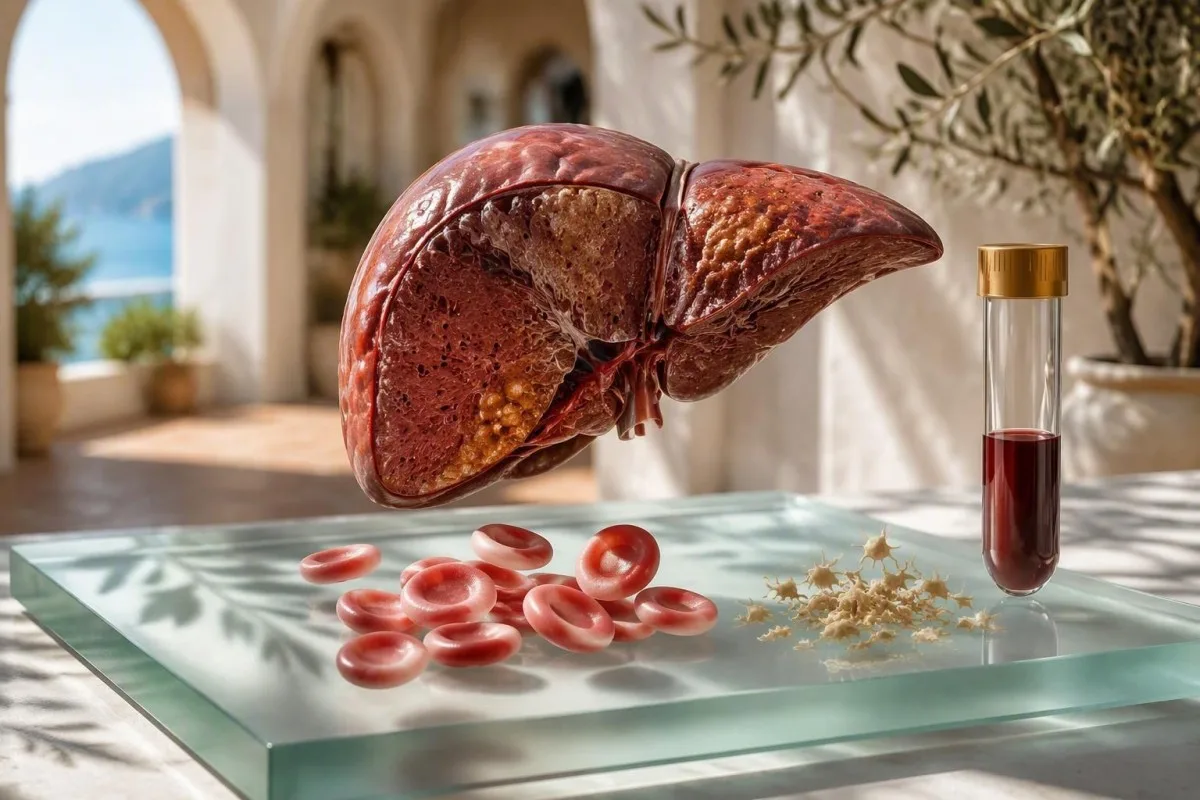
HELLP-syndroom wurdt fertocht wannear't lege bloedplaatjes, tanimmende AST of ALT, en bewiis fan ôfbraak fan reade bloedsellen tegearre foarkomme yn de swangerskip of koart nei de berte. In swiere hoofdpijn, feroaring fan fyzje, pine yn it rjochterboppeste diel fan de búk, koartademing, slimme bloeden of fermindere fetale beweging freget direkte beoardieling fan de ferloskundige ôfdieling of needtsjinsten – wachtsje net op in werhelle test.


- Bloedplaatjes ûnder 100 × 10⁹/L mei ferheging fan leverenzymen foldocht oan in grutte drompel fan slimme symptomen yn de swangerskip en fereasket soarch foar ferloskunde op deselde dei.
- LDH boppe 600 U/L plus lege haptoglobine, ferheging fan yndirekte bilirubine, of skisstocyten stypje hemolyse yn it klassike HELLP-patroan.
- AST of ALT op syn minst 70 U/L wurdt brûkt yn Tennessee kritearia; dokters beoardielje ek oft ien fan beide enzymen twa kear de boppeste limyt fan it laboratoarium is.
- Ien anormaal resultaat is gjin HELLP. De soarch nimt skerp ta as ôfnimmende bloedplaatjes, leversellen beskeadiging, en hemolyse oer oeren hinne tegearre geane.
- Noodsymptomen omfetsje oanhâldende slimme hoofdpijn, fisuele steuring, epigastryske of rjochterboppeste quadrant pine, koartademing, betizing, oanfal, of fermindere fetale beweging.
- HELLP kin post-partum foarkomme. Likernôch 30% fan 'e gefallen presintearret nei de befalling, meastentiids binnen 48 oeren mar soms oant 7 dagen.
- Befalling is de definitive behanneling sadra't maternale of fetale efterútgong foarkomt; magnesiumsulfaat wurdt faak brûkt foar previnsje fan krampen.
- Nim gjin supplementen foar lege bloedplaatjes op eigen manneboet of stel soarch út foar in online ynterpretaasje as swangerskipswarskuwingssymptomen oanwêzich binne.
It Trije-Dielige HELLP Laboratoariumpatroan yn ien eachopslach
HELLP-syndroomlabtests wize op in medyske needgefallen as hemolyse, ferhege leverenzymen en lege bloedplaatjes foarkomme as ien ûntwikkeljend patroan. In bloedplaatjestelling ûnder 100 × 10⁹/L, AST fan 70 U/L of mear, en LDH boppe 600 U/L wurde faak brûkte diagnostyske drompels, mar in snelle delgeande trend kin like alarmearend wêze.
HELLP stiet foar hemolyse, ferhege leverenzymen en lege bloedplaatjes. De label is nuttich, mar de klinyske realiteit is dynamysk: in persoan kin earst bloedplaatjes sjen falle fan 185 nei 112 × 10⁹/L oer 12 oeren foardat se de 100 drompel krúsje. Yn myn praktyk feroarsaket dy helling aksje lang foardat immen gerêststeld wurdt troch in noch technysk normale wearde; swangerskip trombocytbereiken helpt om in inkelde telling yn kontekst te pleatsen.
De Tennessee-klassifikaasje definiearret folsleine HELLP as LDH op syn minst 600 U/L, AST op syn minst 70 U/L, en bloedplaatjes ûnder 100 × 10⁹/L. It Mississippi-systeem gradearret de earnst foar in part nei de bloedplaatjesnadir: klasse 1 is 50 × 10⁹/L of leger, klasse 2 is 50 oant 100 × 10⁹/L, en klasse 3 is 100 oant 150 × 10⁹/L mei enzym- en LDH-kritearia.
Kantesti is in AI bloedtestanalysator lêst in CBC, leverpaniel en hemolysiemerker tegearre ynstee fan ien isolearre út-fan-berik wearde te flagjen. Thomas Klein, MD, advisearret dat elke swangere brûker mei dizze kombinaasje of soarchlike symptomen fuortendaliks kontakt opnimme moat mei harren materniteits triage tsjinst; digitale ynterpretaasje ferfangt nea urgente bedside beoardieling.
Wêrom it patroan mear betsjut as ien nûmer
In bloedplaatjestelling fan 118 × 10⁹/L allinnich kin swangerskipstrombocytopenia reflektearje, wat meastentiids mild en stabyl is. In telling fan 118 mei AST 96 U/L en LDH 720 U/L suggerearret mikrovaskulêre sykte oant in obstetrysk team it tsjinoerstelde bewiist.
Lege bloedplaatjes yn de swangerskip: nûmers dy't de driuwendens feroarje
Bloedplaatjes ûnder 100 × 10⁹/L yn swangerskip binne in earnstich pre-eklamptysk kenmerk en fereaskje urgente klinyske evaluaasje, benammen as de telling falt. Tellingen ûnder 50 × 10⁹/L ferheegje de kompleksiteit fan prosedueres en bloedingsbehear signifikant, hoewol spontane blieding net allinnich troch de telling bepaald wurdt.
In typysk net-swangere bloedplaatjesreferinsjeinterval is rûchwei 150 oant 400 × 10⁹/L, wylst ûngekomplisearre swangerskip in beskieden lette-gestaasje-fal feroarsaakje kin. Swangerskipstrombocytopenia bliuwt meastentiids boppe 100 × 10⁹/L, feroarsaket gjin hemolyse of transaminitis, en giet nei de befalling werom. Dat ûnderskie is wêrom't dokters it folsleine paniel werhelje ynstee fan elke lege telling as itselde probleem te behanneljen.
ACOG identifisearret in bloedplaatjestelling ûnder 100 × 10⁹/L as in earnstich kenmerk fan pre-eklamptsy, oft hypertensje dramatysk is of net (ACOG, 2020). In telling fan 72 × 10⁹/L mei in nije earnstige kopynflammeljende is gjin resultaat om thús te folgjen; it fertsjinnet direkte beoardieling fan bloeddruk, neurologyske status, fetale wolwêzen en seriel laboaratoariumresultaten.
It laboratoarium moat in smear beoardielje of it stekproef werhelje as bloedplaatjesklontering fermoedlik is, om't EDTA-relatearre klontering in falsk lege automatyske resultaat jaan kin. Dat foarbehâld moat gjin fertraging feroarsaakje by triage as symptomen oanwêzich binne; ús gids foar EDTA-trombocyteklompen leit út wêrom't soms in sitraatbuis-telling frege wurde kin.
Ferhege leverenzymen yn de swangerskip: AST en ALT lêze
AST and ALT rise in HELLP because small-vessel injury and reduced blood flow affect the liver, not because HELLP is ordinary hepatitis. AST or ALT at least twice the local upper limit is a severe-feature threshold, while AST of 70 U/L or higher is used in classic Tennessee HELLP criteria.
ALT is more liver-specific than AST, but both matter in pregnancy. An AST of 145 U/L and ALT of 120 U/L is far more concerning alongside platelets of 82 × 10⁹/L than the same enzyme values in an otherwise well non-pregnant endurance athlete. The leverpaniel-gids explains which tests usually accompany AST and ALT.
Severe right-upper-quadrant or epigastric pain can reflect liver capsule stretching even before enzymes reach their maximum. Pain, nausea, shoulder-tip discomfort, hypotension, or a rapidly falling haemoglobin raises concern for hepatic hematoma or rupture, rare but life-threatening complications that require emergency imaging and specialist management.
Alkaline phosphatase is a poor discriminator in late pregnancy because placental production can make it two to four times the non-pregnant upper limit. Bilirubin may be normal in HELLP; when indirect bilirubin rises above about 20.5 µmol/L or 1.2 mg/dL with LDH elevation, hemolysis becomes more likely than isolated liver injury.
Do AST and ALT have to be extremely high?
No. HELLP may be present with AST between 70 and 200 U/L, and the trajectory can worsen quickly. AST or ALT in the thousands shifts the differential toward acute viral hepatitis, ischemic injury, toxin exposure, or acute fatty liver of pregnancy, although overlap can occur.
Hemolysemarkers: LDH, bilirubine, haptoglobine en smear
Hemolysis in HELLP is demonstrated by red-cell fragmentation and turnover, most often an LDH above 600 U/L plus a falling haptoglobin or schistocytes on a peripheral smear. A haemoglobin decline alone is not enough because pregnancy fluid expansion and bleeding have different mechanisms.
LDH is a sensitive but nonspecific marker of cellular injury; muscle injury, liver injury, and even a poorly handled specimen can increase it. In HELLP, LDH above 600 U/L gains meaning when it parallels platelets falling and AST rising. A high LDH result should therefore trigger a search for the whole pattern, not a single-cause assumption.
Schistocytes are fragmented red cells seen on a manually reviewed cell sample slide. Their presence supports a thrombotic microangiopathy, but their percentage and interpretation require an experienced laboratory professional; a sample with more than 1% schistocytes is generally considered significant in the right clinical setting.
Haptoglobin often falls below the laboratory reference interval as it binds free haemoglobin, while indirect bilirubin and reticulocytes may rise. These are supporting markers, not gatekeepers: in rapidly evolving HELLP, clinicians do not wait for every confirmatory value before admitting and monitoring a symptomatic patient.
A sample error can imitate hemolysis
Laboratory sample hemolysis can falsely increase potassium, LDH, AST, and bilirubin-related measurements. It does not explain a genuine platelet decline or new hypertension, so a redraw is sensible only alongside—not instead of—immediate clinical assessment; see our repeat test after hemolysis guide.
Wêrom searje HELLP-syndroom bloedtesten wichtich binne
Suspected HELLP requires serial CBC, AST, ALT, LDH, creatinine, and coagulation testing because the direction of change over 6 to 12 hours can alter delivery and critical-care decisions. A normal result yesterday does not exclude an emergency pattern today.
Hospital teams commonly repeat key laboratories every 6 to 12 hours in unstable or evolving disease, then adjust the interval to symptoms and results. A platelet fall of 35 × 10⁹/L between draws matters even if both values are above 100 × 10⁹/L. The first 24 hours after delivery can also be the nadir, which catches many families off guard.
Coagulation studies are not required to diagnose HELLP, but PT, aPTT, fibrinogen, and D-dimer help assess disseminated intravascular coagulation when there is bleeding, placental abruption, shock, or very low platelets. Pregnancy normally raises fibrinogen to around 4 to 6 g/L, so a fibrinogen of 2 g/L may be concerning despite appearing nonzero; our gids foar stollingstests jout nuttige kontekst.
A rising creatinine, particularly above 1.1 mg/dL or 97 µmol/L, is another severe-feature marker and can coexist with HELLP. One practical point: ask for the actual prior values, not merely whether the result was flagged, because many electronic portals hide the clinical significance of a sharp change within the reference interval.
Do not wait for the final send-out test
Most decisive HELLP tests are routine hospital laboratories with turnaround measured in hours, not days. Treatment decisions rest on bedside condition, blood pressure, fetal monitoring, and the available trend—not on a delayed specialized assay.
Bloeddruk, urineproteïne en nierdúdjes neist HELLP
HELLP often occurs with preeclampsia, so blood pressure of 160/110 mmHg or higher, new proteinuria, or creatinine above 1.1 mg/dL increases urgency—but HELLP can appear without obvious hypertension or protein in urine. Normal urine protein never clears a concerning laboratory triad.
Preeclampsia is classically diagnosed after 20 weeks with new blood pressure of at least 140/90 mmHg on two readings four hours apart, plus proteinuria or maternal organ dysfunction. Severe-range pressure of 160 systolic or 110 diastolic needs prompt treatment in a monitored setting to reduce maternal stroke risk. Home cuffs can be helpful, but technique and cuff size change readings by 10 mmHg or more.
A urine protein-to-creatinine ratio of 0.3 mg/mg or more supports proteinuria, while a 24-hour urine total of 300 mg or more is another accepted threshold. Yet about 10% to 20% of HELLP presentations may lack hypertension or proteinuria at first, which is why unexplained epigastric pain and falling platelets should never be dismissed.
Kantesti is in AI bloedtest-útslachplatfoarm that can organize renal, liver, and CBC results in a clear timeline, but urgent pregnancy symptoms override any remote review workflow. For practical context about a positive result, read our guide to proteïne yn urine.
Noodsymptomen dy't in ienmalich laboratoariumresultaat oertreffe
A severe persistent headache, visual symptoms, upper-abdominal pain, shortness of breath, seizure, confusion, vaginal bleeding, or reduced fetal movement needs emergency assessment immediately in pregnancy or within 7 days after birth. These symptoms can signal cerebral, liver, lung, placental, or clotting complications before laboratory values are complete.
Headache is common in pregnancy, but a new headache that is severe, persistent, unresponsive to acetaminophen, or paired with flashing lights, blind spots, or confusion is different. A blood pressure reading below 140/90 does not make neurologic symptoms safe. In the emergency department, assessment may include repeated pressure measurements, reflexes, oxygen saturation, fetal monitoring, and a focused neurologic examination.
Right-upper-quadrant pain may be mistaken for reflux, gallbladder disease, or a pulled muscle. If it is intense, constant, accompanied by vomiting or shoulder pain, or occurs with platelets below 150 × 10⁹/L, seek care now; the differential includes HELLP and conditions discussed in our gallbladder blood test article.
Breathlessness, chest pressure, oxygen saturation below 95%, or sudden swelling with rapid weight gain can reflect pulmonary edema or another urgent cardiopulmonary condition. Do not drive yourself if you feel faint, confused, severely unwell, or have reduced fetal movement; call emergency services or your local maternity emergency line.
What to say when calling triage
State the gestational age or delivery date, blood pressure if known, exact symptoms, fetal movement change, and the latest platelet, AST, ALT, and LDH values. Saying that you are worried about HELLP provides the team a useful clinical frame without asking you to diagnose yourself.
Kondysjes dy't HELLP imitearje kinne op laboratoariumtests
Acute fatty liver of pregnancy, thrombotic thrombocytopenic purpura, atypical hemolytic uremic syndrome, lupus flare, viral hepatitis, and severe infection can resemble HELLP. The overlap is why hospital clinicians check glucose, creatinine, coagulation, blood film, medication exposure, and the timing of symptoms rather than relying on one checklist.
Acute fatty liver of pregnancy more often brings low glucose, raised bilirubin, prolonged PT or INR, elevated ammonia, and liver synthetic dysfunction. HELLP more characteristically features severe hypertension, platelet consumption, and microangiopathic hemolysis, but mixed cases happen. A glucose below 70 mg/dL or an INR above 1.5 in late pregnancy deserves immediate senior obstetric and liver input.
TTP can produce profound thrombocytopenia and neurologic symptoms with comparatively modest liver enzyme elevation; ADAMTS13 activity below 10% supports the diagnosis, but treatment may begin before the result returns. Atypical HUS frequently has prominent kidney injury after delivery. These distinctions are specialist territory, not something a patient should try to settle from a portal result.
Viral hepatitis can raise ALT and AST above 1,000 U/L, often much higher than in classic HELLP, but numbers overlap. Medication and supplement history matters too—particularly acetaminophen-containing products and herbal preparations; our hepatitis symptom guide explains why jaundice may be absent.
Why a specialist blood film matters
A manually reviewed cell sample can distinguish schistocyte-predominant hemolysis from other red-cell patterns. In difficult cases, obstetrics, maternal-fetal medicine, hematology, anesthesia, nephrology, and critical care may all be involved within the same day.
Wat needhospitaalsoarch foar HELLP meastentiids omfiemet
Emergency HELLP care centers on maternal stabilization, seizure prevention, blood-pressure control, close fetal assessment, and timely delivery when indicated. Delivery is the definitive treatment for HELLP, although clinicians may briefly stabilize a parent or give fetal corticosteroids when that is safe.
Magnesium sulfate is commonly administered for seizure prevention in preeclampsia with severe features and HELLP; a common regimen is a 4 to 6 g intravenous loading dose followed by 1 to 2 g per hour, adjusted for renal function and local protocol. Staff monitor reflexes, breathing, urine output, and serum magnesium when clinically indicated. This is hospital medicine, not a home supplement strategy.
For sustained severe blood pressure, teams may use intravenous labetalol, intravenous hydralazine, or immediate-release oral nifedipine, aiming to treat promptly rather than allowing repeated pressures above 160/110 mmHg. ACOG recommends urgent antihypertensive therapy for acute-onset severe hypertension persisting 15 minutes or more (ACOG, 2020).
Platelet transfusion is not routine just because a count is low; it is considered around delivery, active bleeding, or invasive procedures based on count and clinical context. Vaginal delivery is often feasible, while anesthesia decisions require a current platelet trend and local expertise; platelet thresholds before procedures illustrate why procedure-specific risk matters.
Will corticosteroids cure HELLP?
Corticosteroids may be given before preterm delivery for fetal lung maturation, generally betamethasone 12 mg intramuscularly every 24 hours for two doses. Evidence has not established maternal high-dose corticosteroids as a reliable cure for HELLP, so they must not delay indicated delivery.
Postpartum HELLP: Wêrom de earste 48 oeren noch wichtich binne
HELLP can first appear after birth, most commonly within 48 hours and occasionally up to 7 days postpartum. New headache, abdominal pain, breathlessness, swelling, high blood pressure, or abnormal labs after discharge should be treated as an obstetric emergency, not assumed to be normal recovery.
Roughly 30% of HELLP cases present postpartum, and platelet counts may continue falling for 24 to 48 hours after delivery before recovering. Haram and colleagues described the syndrome's variable timing and emphasized that postpartum surveillance is clinically necessary, not merely precautionary (Haram et al., 2009). A planned follow-up blood pressure check does not replace emergency review for red-flag symptoms.
The postpartum differential includes retained products, infection, cardiomyopathy, pulmonary embolism, TTP, and postpartum hemorrhage, so clinicians again interpret laboratory changes with examination and vital signs. Sudden breathlessness, fainting, one-sided weakness, or a seizure needs emergency services rather than a call-back request. The guide foar bloedtests foar koartheid fan sykheljen describes several non-HELLP causes that also require speed.
Do not stop prescribed antihypertensives or anticonvulsant plans because the baby has been delivered; the maternal risk does not end at birth. Document the diagnosis and nadir platelet count for future pregnancies, because a prior HELLP history changes early antenatal risk planning.
When do laboratory values recover?
Most patients begin improving within 48 to 72 hours after delivery, but recovery varies with disease severity and complications. Persistent hemolysis, worsening creatinine, or platelets that do not turn upward should trigger reassessment for an alternative thrombotic microangiopathy.
Hoe't online resultaten feilich te brûken binne as HELLP mooglik is
Online laboratory results can help you identify a concerning trend, but they cannot establish whether you or your baby are clinically stable. If HELLP is possible, contact maternity triage first and use the exact report only to communicate values, dates, units, and symptoms accurately.
A result page may display platelets as 92, AST as 88, and LDH as 650 without explaining that all three were normal yesterday. That delta is clinically meaningful. Save screenshots or PDFs with collection times, but do not spend an hour comparing reference ranges while severe symptoms are developing.
Kantesti AI is in AI-oandreaune ark foar analyse fan bloedtests designed to identify cross-panel patterns and trends, including the CBC-liver-hemolysis relationship that clinicians assess in suspected HELLP. Its output should be treated as a structured conversation starter for a clinician, not as clearance to remain at home; our medyske validaasje-oanpak describes the boundaries of responsible interpretation.
Before sharing a report, check patient identity, pregnancy week, collection date, units, and whether the laboratory marked the sample hemolyzed. A point-of-care platelet count and the central laboratory count can differ slightly, but an important clinical decision should be based on the treating team's verified result and repeat testing.
A practical message for your care team
A concise message can read: 32 weeks pregnant, platelets fell from 154 to 94 × 10⁹/L today, AST 82 U/L, new right-upper-abdominal pain, blood pressure 158/102. That gives triage staff a usable snapshot in fewer than 30 seconds.
Wat net te dwaan mei fertochte HELLP-resultaten
Do not wait for a routine appointment, start an iron product for a falling haemoglobin, or use supplements to treat a possible HELLP pattern. HELLP is driven by pregnancy-related endothelial and microvascular disease, and its dangerous complications can develop over hours.
Iron deficiency is common in pregnancy, but it does not explain LDH above 600 U/L with schistocytes and rapidly falling platelets. Taking iron may be appropriate when a clinician confirms deficiency, yet it will not reverse HELLP or replace urgent monitoring. If iron questions coexist, review a proper izerûndersyk útslach after the emergency issue is addressed.
Avoid nonsteroidal anti-inflammatory drugs unless your obstetric clinician specifically advises them, particularly with thrombocytopenia, kidney impairment, hypertension, or bleeding risk. Do not take aspirin, herbal products, or high-dose vitamins to alter a result on your own; low-dose aspirin is preventive therapy for selected high-risk pregnancies, not emergency treatment for established HELLP.
I have seen patients minimize symptoms because an earlier scan was reassuring or because their home pressure was only 145/95 mmHg. Fetal imaging and one pressure are snapshots. Persistent severe pain, visual change, or a deteriorating laboratory trend deserves a higher level of caution.
Can diet prevent a current episode?
No food, salt restriction, hydration plan, or supplement reverses established HELLP. Nutrition supports general pregnancy health, but emergency obstetric assessment is the intervention that changes immediate safety.
Herstel en planning foar in takomstige swangerskip
A prior HELLP syndrome episode raises the risk of hypertensive disease in a later pregnancy, so preconception or early first-trimester review is appropriate. Recurrence estimates vary by population and definition, but are often cited around 5% to 20% for HELLP or preeclampsia-spectrum disease.
At the postnatal review, ask for the discharge diagnosis, highest AST and ALT, lowest platelets, kidney function, blood pressure plan, and whether any alternative diagnosis was excluded. This record helps a future obstetric team distinguish recurrent disease from baseline mild thrombocytopenia. It also prevents the frustrating situation where a patient remembers only that their liver tests were high.
Many high-risk patients are offered low-dose aspirin, commonly 81 to 150 mg daily, starting between 12 and 28 weeks and ideally before 16 weeks, according to local guidance and individual bleeding risk. Aspirin must be prescribed by the pregnancy clinician; its role is prevention, not a response to acute warning labs. Baseline CBC, creatinine, urine protein assessment, and liver tests can make later changes easier to recognize.
Kantesti, in AI lab test-ynterpretaasjetsjinst, can maintain a date-stamped laboratory timeline for a clinician-led pregnancy plan across reports from different laboratories. For decisions about safeguards and clinical oversight, our Medyske Advysried outlines the physicians who guide our medical standards.
When to seek preconception advice
Arrange review before trying to conceive if HELLP occurred before 34 weeks, involved kidney injury, severe hypertension, intensive care, or fetal growth restriction. Maternal-fetal medicine may individualize aspirin timing, blood-pressure targets, and surveillance frequency.
In checklist foar dokters foar it folgjende oere
When HELLP is suspected, the next hour should focus on emergency contact, safe transport, symptom documentation, and bringing the laboratory report—not on interpreting every reference range. Prompt escalation is appropriate even if the diagnosis is uncertain.
Call maternity triage, labor and delivery, or emergency services now if red-flag symptoms or a concerning lab combination is present. Do not drive if you have visual disturbance, severe pain, faintness, confusion, seizure activity, heavy bleeding, or shortness of breath. If fetal movements are reduced, say so explicitly when you call.
Bring or transmit the latest report and one prior report if available. Include platelet count in × 10⁹/L, AST and ALT in U/L, LDH in U/L, bilirubin, creatinine, collection time, medications, allergies, and blood-pressure readings. This information helps the team recognize a meaningful delta rather than repeating history under pressure.
As of September 16, 2026, the practical standard remains the same: suspected HELLP is an obstetric emergency evaluated in person with serial tests and maternal-fetal monitoring. Thomas Klein, MD, recommends that readers use our klinyske technologygids only after urgent care has been arranged, because a well-designed tool should accelerate escalation—not create false reassurance.
What improvement looks like after treatment
Improvement usually means symptoms settle, blood pressure becomes controllable, urine output is adequate, platelets turn upward, LDH falls, and AST or ALT stop rising. One better value is encouraging, but hospital discharge decisions depend on the full trajectory and reliable follow-up.
Faak stelde fragen
Hokker labwearden diagnostisearje HELLP-syndroom?
Komplete HELLP syndroom wurdt meastal definiearre troch bloedplaatjes ûnder 100 × 10⁹/L, AST fan op syn minst 70 U/L, en LDH fan op syn minst 600 U/L ûnder it Tennessee-systeem. Hemolyse wurdt fierder stipe troch schistocyten op in perifeare smear, lege haptoglobine, tanimmend yndirekt bilirubine, of in taname fan retikulocyten. Klinisy brûke ek ACOG slimme-funksje kritearia, ynklusyf bloedplaatjes ûnder 100 × 10⁹/L en levertransaminasen op syn minst twa kear de pleatslike boppegrins. Diagnostyk kombinearret altyd laboratoariumtrends mei symptomen, bloeddruk, ûndersyk en swangerskip timing.
Kin HELLP-syndroom foarkomme by in normale bloeddruk?
Ja, HELLP-syndroom kin foarkomme sûnder dúdlike hypertensje of proteïnurie, benammen betiid yn it ferrin. Likernôch 10% oant 20% fan de minsken mei HELLP hawwe de klassike preeklamptyske fynsten net by de earste beoardieling. In ôfnimmen fan bloedplaatjes, AST- of ALT-stiging, LDH boppe 600 U/L, slimme hoofdpijn of pine yn it rjochterboppeste diel fan de búk freget noch altyd om in driuwende ferloskundige evaluaasje. Normale bloeddruk thús slút HELLP net feilich út.
Hoe leech wurde trombosieten by it HELLP-syndroom?
Trombosytetellingen by HELLP-syndroom kinne falle ta ûnder 100 × 10⁹/L, en de Mississippi-klassifikaasje identifisearret tellings fan 50 × 10⁹/L of minder as klasse 1, de meast serieuze trombosytkategory. In rappe fal fan 180 oant 110 × 10⁹/L oer 12 oeren kin klinysk soarchlik wêze sels foardat de telling 100 berikt. Trombosytetelling allinich foarseit net elke komplikaasje, dus dokters beoardielje tegearre bloedingen, leverenzymen, hemolyse, bloeddruk en behoeften oan befalling. Elke swangere persoan mei trombosytetellingen ûnder 100 × 10⁹/L moat in urgente beoardieling troch in dokter krije.
Moatte leverenzimen tige heech wêze foar HELLP?
Nee, leverenzimen hoege net de tûzenen te berikken om HELLP-syndroom gefaarlik te meitsjen. AST fan 70 U/L of heger wurdt brûkt yn Tennessee-kritearia, en AST of ALT op syn minst twa kear de laboratoariumboppegrins is in earnstich preeklampsy-skaaimerk. Earnstige pine yn it rjochterboppeste kwadrant kin foarkomme nettsjinsteande allinich matige enzymferheging, om't de spanning fan de leverkapsule net perfekt proporsjoneel is oan it nûmer. AST of ALT boppe 1.000 U/L ferbreedt de differinsjaal diagnoaze nei virale, ischemyske, toksine-relatearre, of akute fatty lever sykte, mar fereasket yn beide gefallen needûndersyk.
Kin HELLP ûntstean nei de befalling?
Ja, sa'n 30% fan de gefallen fan HELLP-syndroom komme nei de befalling foar, meastentiids binnen 48 oeren en soms oant 7 dagen nei de befalling. De bloedplaatjes kinne yn 24 oant 48 oeren nei de berte slimmer wurde foardat se begjinne te herstellen, dus laboratoariummonitoring nei de befalling kin nedich wêze. Swiere hoofdpijn, feroarings yn it sicht, pine yn 'e buik, koartheid fan sykheljen, hege bloeddruk, of swelling nei de befalling moatte driuwend beoardiele wurde. Befalling behannelet de ûnderlizzende trigger fan 'e swangerskip, mar it einiget it direkte risiko foar de mem net.
Wat is de needterNeeds help for HELLP syndrome?
Behandeling fan HELLP yn gefal fan need omfettet sikehûsopname, nauwe kontrôle fan mem en foetus, magnesiumsulfaat foar previnsje fan oanfallen as oanjûn, rappe behanneling fan oanhâldende bloeddruk fan 160/110 mmHg of heger, en befalling as de tastân fan mem of foetus it fereasket. In mienskiplik magnesiumsulfaatregime is in intraveneaze laaddosis fan 4 oant 6 g folge troch 1 oant 2 g per oere, oanpast oan nierfunksje en lokaal protokol. Bloedprodukten, anty-hypertensiva, kortikosteroïden foar fetale longmaturaasje, en intensive care stipe wurde selektearre neffens de klinyske situaasje. Gjin oanfolling, dieetferoaring of thúsbloeddrukplan kin need-obstetryske soarch ferfange.
Krij hjoed noch AI-oandreaune bloedtest-analyse
Doch mei oan mear as 2 miljoen brûkers wrâldwiid dy’t Kantesti fertrouwe foar direkte, krekte analyse fan laboratoariumtests. Upload jo bloedtest resultaten en ûntfange wiidweidige ynterpretaasje fan 15,000+-biomarkers yn sekonden.
📚 Ferwiisde ûndersykspublikaasjes
Klein, T., Mitchell, S., & Weber, H. (2026). Kantesti B.V. (2026). Iron Studies Guide: TIBC, Iron Saturation & Binding Capacity. Zenodo.. Kantesti AI Medysk Undersyk.
Klein, T., Mitchell, S., & Weber, H. (2026). Kantesti LTD. (2026). aPTT Normaal Berik: D-Dimer, Protein C Bloedstollingsgids. Zenodo.. Kantesti AI Medysk Undersyk.
📖 Eksterne medyske referinsjes
⚕️ Medyske disclaimer
Dit artikel is allinnich foar ûnderwiisdoelen en foarmet gjin medysk advys. Rieplachtsje altyd in kwalifisearre soarchferliener foar besluten oer diagnoaze en behanneling.
E-E-A-T fertrouwensignalen
Ûnderfining
Dokter-oandreaune klinyske resinsje fan lab-ynterpretaasje-wurkprosessen.
Ekspertize
Fokus fan laboratoariummedisyne op hoe’t biomarkers har gedrage yn in klinyske kontekst.
Autoriteit
Skreaun troch dr. Thomas Klein mei resinsje troch dr. Sarah Mitchell en prof. dr. Hans Weber.
Betrouberens
Bewiis-basearre ynterpretaasje mei dúdlike ferfolchpaadkes om alarm te ferminderjen.