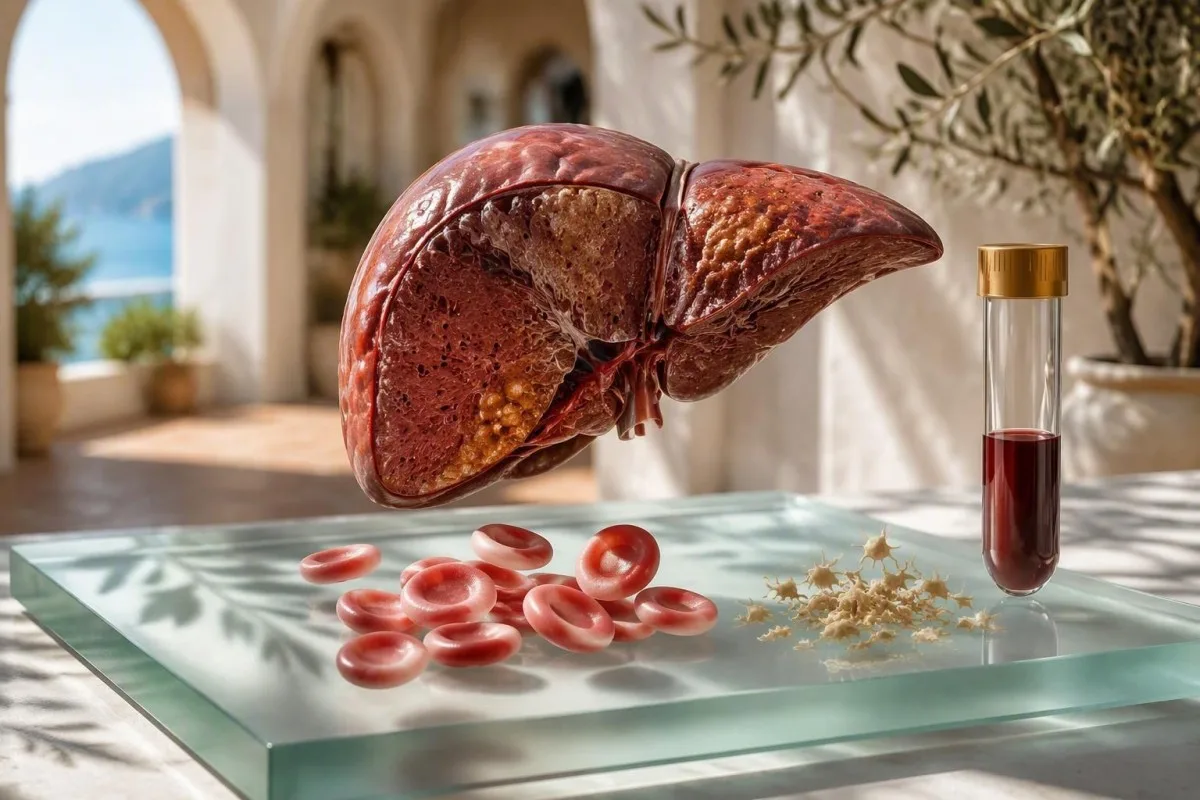
HELLP синдромы тромбоцитларның аз булуы, AST яки ALT күтәрелүе һәм эритроцитларның таркалу билгеләре хатын-кыз булу вакытында яки туганнан соң тиз арада барлыкка килгәндә шик тудыра. Баш авырту, күрүнең үзгәрүе, уң яктагы өске корсак авыртуы, сулыш алуның кыенлашуы, канның күп югалуы яки феталь хәрәкәтнең кимүе ашыгыч хатын-кыз бүлегенә яки тиз арада бәяләүгә мохтаҗ – кабат тестны көтмәгез.


- Тромбоцитлар 100 × 10⁹/л дан кимрәк хатын-кыз булу вакытында бавыр ферментлары арту белән бергә мөһим авыр хәл чигенә җитә һәм шул ук көнне акушерлык бәясенә мохтаҗ.
- LDH 600 U/л дан югары плюс аз гаптоглобин, косвен билирубин арту яки шистоцитлар классик HELLP үрнәгендә гемолизне хуплый.
- AST яки ALT кимендә 70 U/л Теннесси критерийларында кулланыла; табиблар шулай ук һәр ферментның лаборатория чигеннән ике тапкыр артык булуын бәялиләр.
- Бер начар нәтиҗә HELLP түгел. Соңгы сәгатьләр эчендә тромбоцитлар кимү, гепатоцеллюляр зарарлану һәм гемолиз бергә күченгәндә борчылу арта.
- Ашыгыч симптомнар даими баш авыртуы, күрү бозылу, эпигастрий яки уң яктагы өске квадрант авыртуы, сулыш кысылу, буталу, талма, яки феталь хәрәкәтнең кимүен үз эченә ала.
- HELLP синдромы тумыштан соң да барлыкка килергә мөмкин. Очракларның якынча 30% тудырудан соң, еш кына 48 сәгать эчендә, ләкин кайвакыт 7 көнгә кадәр күренә.
- Тудыру - төп дәвалау ана яки бала тормышы куркыныч астына эләккәндә; магний сульфаты еш кына карынуны профилактикалау өчен кулланыла.
- Тромбоцитларның аз булуын үз аллы дәваламагыз өстәмәләр белән яки онлайн интерпретация өчен карарны кичектермәгез, әгәр кош җыелышы симптомнары булса.
HELLP лабораториясенең өч өлешле үрнәге бер карашта
HELLP синдромы лаборатор күрсәткечләре гемолиз, бавыр ферментларының югары булуы һәм тромбоцитларның аз булуы бердәм үсеш алган паттерн буларак барлыкка килгәндә, бу медицина өчен ашыгыч ярдәм таләп иткәнлекне күрсәтә. 100 × 10⁹/л дан азрак тромбоцитлар саны, 70 U/л яки аннан да күбрәк AST, һәм 600 U/л дан күбрәк LDH еш кулланыла торган диагностик чикләр, ләкин тиз төшү тенденциясе дә шулкадәр куркыныч булырга мөмкин.
HELLP аббревиатурасы аңлата гемолиз, бавыр ферментларының югары булуы, һәм тромбоцитларның аз булуы. Бу атама файдалы, ләкин клиник чынбарлык динамик: бер кеше башта 185 тан 112 × 10⁹/л га кадәр тромбоцитларның 12 сәгать эчендә кимүен күрсәтергә мөмкин, аннары 100 чигеннән узып китә. Минем практикада, бу тренд, хәтта нормаль дип саналган кыйммәткә ирешкәнче үк, эшкә керешүгә этәрә; йөклелек тромбоцит диапазоннары буенча ресурслар бер санны контекстта аңларга булышу.
Теннесси классификациясе тулы HELLPны LDH кимендә 600 U/л, AST кимендә 70 U/л, һәм тромбоцитлар 100 × 10⁹/л дан азрак булганда билгели. Миссисипи системасы катылыкны тромбоцитларның иң түбән ноктасы буенча бәяли: 1 класс - 50 × 10⁹/л яки аннан азрак, 2 класс - 50-100 × 10⁹/л, һәм 3 класс - 100-150 × 10⁹/л фермент һәм LDH критерийлары белән.
Кантести - ЯИ анализы бу бер изолированный нормадан чыккан кыйммәтне аерып күрсәтү урынына, берьюлы CBC, бавыр панелен һәм гемолиз маркерларын укый. Томас Кляйн, MD, мондый комбинация яки шикле симптомнары булган һәр кош тоткан хатын-кызны шундук аналар бүлегенә мөрәҗәгать итәргә кирәклеген кисәтә; санлы интерпретация ашыгыч карават янындагы бәясен беркайчан да алыштыра алмый.
Ни өчен паттерн бер саннан күбрәк мөһим
118 × 10⁹/л тромбоцитлар саны гына кош тоткан тромбоцитопенияне күрсәтергә мөмкин, ул гадәттә йомшак һәм тотрыклы. AST 96 U/л һәм LDH 720 U/л булган 118 сан, микрососудистый авыруны күрсәтә, акушерлык командасы моны кире какмыйча.
Хатын-кыз булу вакытында тромбоцитларның аз булуы: мөһимлекне үзгәртүче саннар
Кош тоткан вакытта 100 × 10⁹/л дан азрак тромбоцитлар саны преэклампсиянең каты билгесе булып тора һәм ашыгыч клиник бәяләүне таләп итә, аеруча сан кими икән. 50 × 10⁹/л дан азрак саннар процедура һәм кан китү белән идарә итү катлаулылыгын шактый арттыра, гына кан китү сан белән генә билгеләнми.
Гадәттәге кош тотмаган тромбоцитлар өчен нормаль интервал якынча 150-400 × 10⁹/л, кош тоткан вакытта кош тотмаган вакытның соңгы стадиясендә йомшак кимү булырга мөмкин. Кош тоткан вакытта тромбоцитопения гадәттә 100 × 10⁹/л дан югарырак кала, гемолиз яки трансаминит тудырмый, һәм тумыштан соң уза. Шуңа күрә клиницистлар һәр аз санны бер үк проблема дип санамыйча, тулы панельне кабатлыйлар.
ACOG тромбоцитларның 100 × 10⁹/л дан азрак булуын преэклампсиянең каты билгесе дип саный, кан басымы югары булмаганда да (ACOG, 2020). 72 × 10⁹/л тромбоцитлар саны һәм яңа каты баш авыртуы өйдә күзәтеп торырлык нәтиҗә түгел; ул кан басымын, неврологик хәлне, баланың хәлен һәм серияле лаборатория тикшеренүләрен ашыгыч бәяләүне таләп итә.
Лаборатория шикле тромбоцитларны беркетү очрагында мазокны карарга яки үрнәкне кабатларга тиеш, чөнки EDTA белән бәйле беркетү ялгыш аз автомат нәтиҗә бирергә мөмкин. Бу искәрмә симптомнар булганда triage-ны кичектерергә тиеш түгел; безнең җитәкчелек EDTA тромбоцитларның төркемләнеп ябышуы цитрат трубкасы белән сан кайвакыт ни өчен соралырга мөмкинлеген аңлата.
Хатын-кыз булу вакытында бавыр ферментларының артуы: AST һәм ALT не уку
AST and ALT rise in HELLP because small-vessel injury and reduced blood flow affect the liver, not because HELLP is ordinary hepatitis. AST or ALT at least twice the local upper limit is a severe-feature threshold, while AST of 70 U/L or higher is used in classic Tennessee HELLP criteria.
ALT is more liver-specific than AST, but both matter in pregnancy. An AST of 145 U/L and ALT of 120 U/L is far more concerning alongside platelets of 82 × 10⁹/L than the same enzyme values in an otherwise well non-pregnant endurance athlete. The бавыр панель буенча кулланма explains which tests usually accompany AST and ALT.
Severe right-upper-quadrant or epigastric pain can reflect liver capsule stretching even before enzymes reach their maximum. Pain, nausea, shoulder-tip discomfort, hypotension, or a rapidly falling haemoglobin raises concern for hepatic hematoma or rupture, rare but life-threatening complications that require emergency imaging and specialist management.
Alkaline phosphatase is a poor discriminator in late pregnancy because placental production can make it two to four times the non-pregnant upper limit. Bilirubin may be normal in HELLP; when indirect bilirubin rises above about 20.5 µmol/L or 1.2 mg/dL with LDH elevation, hemolysis becomes more likely than isolated liver injury.
Do AST and ALT have to be extremely high?
No. HELLP may be present with AST between 70 and 200 U/L, and the trajectory can worsen quickly. AST or ALT in the thousands shifts the differential toward acute viral hepatitis, ischemic injury, toxin exposure, or acute fatty liver of pregnancy, although overlap can occur.
Гемолиз маркерлары: LDH, билирубин, гаптоглобин һәм буяу
Hemolysis in HELLP is demonstrated by red-cell fragmentation and turnover, most often an LDH above 600 U/L plus a falling haptoglobin or schistocytes on a peripheral smear. A haemoglobin decline alone is not enough because pregnancy fluid expansion and bleeding have different mechanisms.
LDH is a sensitive but nonspecific marker of cellular injury; muscle injury, liver injury, and even a poorly handled specimen can increase it. In HELLP, LDH above 600 U/L gains meaning when it parallels platelets falling and AST rising. A high LDH result should therefore trigger a search for the whole pattern, not a single-cause assumption.
Schistocytes are fragmented red cells seen on a manually reviewed cell sample slide. Their presence supports a thrombotic microangiopathy, but their percentage and interpretation require an experienced laboratory professional; a sample with more than 1% schistocytes is generally considered significant in the right clinical setting.
Haptoglobin often falls below the laboratory reference interval as it binds free haemoglobin, while indirect bilirubin and reticulocytes may rise. These are supporting markers, not gatekeepers: in rapidly evolving HELLP, clinicians do not wait for every confirmatory value before admitting and monitoring a symptomatic patient.
A sample error can imitate hemolysis
Laboratory sample hemolysis can falsely increase potassium, LDH, AST, and bilirubin-related measurements. It does not explain a genuine platelet decline or new hypertension, so a redraw is sensible only alongside—not instead of—immediate clinical assessment; see our repeat test after hemolysis guide.
Ни өчен HELLP синдромын даими кан анализлары мөһим
Suspected HELLP requires serial CBC, AST, ALT, LDH, creatinine, and coagulation testing because the direction of change over 6 to 12 hours can alter delivery and critical-care decisions. A normal result yesterday does not exclude an emergency pattern today.
Hospital teams commonly repeat key laboratories every 6 to 12 hours in unstable or evolving disease, then adjust the interval to symptoms and results. A platelet fall of 35 × 10⁹/L between draws matters even if both values are above 100 × 10⁹/L. The first 24 hours after delivery can also be the nadir, which catches many families off guard.
Coagulation studies are not required to diagnose HELLP, but PT, aPTT, fibrinogen, and D-dimer help assess disseminated intravascular coagulation when there is bleeding, placental abruption, shock, or very low platelets. Pregnancy normally raises fibrinogen to around 4 to 6 g/L, so a fibrinogen of 2 g/L may be concerning despite appearing nonzero; our Тромбоцитларны шулай ук коагуляция тестлары белән бергә аңлатырга кирәк, әгәр хикәя кан китү яки тромблашу турында сөйли. Тромбоцитлар саны нормаль булырга мөмкин, ә файдалы контекст бирә.
A rising creatinine, particularly above 1.1 mg/dL or 97 µmol/L, is another severe-feature marker and can coexist with HELLP. One practical point: ask for the actual prior values, not merely whether the result was flagged, because many electronic portals hide the clinical significance of a sharp change within the reference interval.
Do not wait for the final send-out test
Most decisive HELLP tests are routine hospital laboratories with turnaround measured in hours, not days. Treatment decisions rest on bedside condition, blood pressure, fetal monitoring, and the available trend—not on a delayed specialized assay.
Кан басымы, сидек агымындагы аксым һәм бөер сигналлары HELLP белән бергә
HELLP often occurs with preeclampsia, so blood pressure of 160/110 mmHg or higher, new proteinuria, or creatinine above 1.1 mg/dL increases urgency—but HELLP can appear without obvious hypertension or protein in urine. Normal urine protein never clears a concerning laboratory triad.
Preeclampsia is classically diagnosed after 20 weeks with new blood pressure of at least 140/90 mmHg on two readings four hours apart, plus proteinuria or maternal organ dysfunction. Severe-range pressure of 160 systolic or 110 diastolic needs prompt treatment in a monitored setting to reduce maternal stroke risk. Home cuffs can be helpful, but technique and cuff size change readings by 10 mmHg or more.
A urine protein-to-creatinine ratio of 0.3 mg/mg or more supports proteinuria, while a 24-hour urine total of 300 mg or more is another accepted threshold. Yet about 10% to 20% of HELLP presentations may lack hypertension or proteinuria at first, which is why unexplained epigastric pain and falling platelets should never be dismissed.
Кантести - AI кан анализы нәтиҗәләрен аңлату платформасы that can organize renal, liver, and CBC results in a clear timeline, but urgent pregnancy symptoms override any remote review workflow. For practical context about a positive result, read our guide to сидектә аксым.
Лаборатория нәтиҗәләреннән өстен булган ашыгыч симптомнар
A severe persistent headache, visual symptoms, upper-abdominal pain, shortness of breath, seizure, confusion, vaginal bleeding, or reduced fetal movement needs emergency assessment immediately in pregnancy or within 7 days after birth. These symptoms can signal cerebral, liver, lung, placental, or clotting complications before laboratory values are complete.
Headache is common in pregnancy, but a new headache that is severe, persistent, unresponsive to acetaminophen, or paired with flashing lights, blind spots, or confusion is different. A blood pressure reading below 140/90 does not make neurologic symptoms safe. In the emergency department, assessment may include repeated pressure measurements, reflexes, oxygen saturation, fetal monitoring, and a focused neurologic examination.
Right-upper-quadrant pain may be mistaken for reflux, gallbladder disease, or a pulled muscle. If it is intense, constant, accompanied by vomiting or shoulder pain, or occurs with platelets below 150 × 10⁹/L, seek care now; the differential includes HELLP and conditions discussed in our gallbladder blood test article.
Breathlessness, chest pressure, oxygen saturation below 95%, or sudden swelling with rapid weight gain can reflect pulmonary edema or another urgent cardiopulmonary condition. Do not drive yourself if you feel faint, confused, severely unwell, or have reduced fetal movement; call emergency services or your local maternity emergency line.
What to say when calling triage
State the gestational age or delivery date, blood pressure if known, exact symptoms, fetal movement change, and the latest platelet, AST, ALT, and LDH values. Saying that you are worried about HELLP provides the team a useful clinical frame without asking you to diagnose yourself.
Лабораторияләрдә HELLP га охшаган шартлар
Acute fatty liver of pregnancy, thrombotic thrombocytopenic purpura, atypical hemolytic uremic syndrome, lupus flare, viral hepatitis, and severe infection can resemble HELLP. The overlap is why hospital clinicians check glucose, creatinine, coagulation, blood film, medication exposure, and the timing of symptoms rather than relying on one checklist.
Acute fatty liver of pregnancy more often brings low glucose, raised bilirubin, prolonged PT or INR, elevated ammonia, and liver synthetic dysfunction. HELLP more characteristically features severe hypertension, platelet consumption, and microangiopathic hemolysis, but mixed cases happen. A glucose below 70 mg/dL or an INR above 1.5 in late pregnancy deserves immediate senior obstetric and liver input.
TTP can produce profound thrombocytopenia and neurologic symptoms with comparatively modest liver enzyme elevation; ADAMTS13 activity below 10% supports the diagnosis, but treatment may begin before the result returns. Atypical HUS frequently has prominent kidney injury after delivery. These distinctions are specialist territory, not something a patient should try to settle from a portal result.
Viral hepatitis can raise ALT and AST above 1,000 U/L, often much higher than in classic HELLP, but numbers overlap. Medication and supplement history matters too—particularly acetaminophen-containing products and herbal preparations; our hepatitis symptom guide explains why jaundice may be absent.
Why a specialist blood film matters
A manually reviewed cell sample can distinguish schistocyte-predominant hemolysis from other red-cell patterns. In difficult cases, obstetrics, maternal-fetal medicine, hematology, anesthesia, nephrology, and critical care may all be involved within the same day.
HELLP өчен гадәти хастаханәдә ашыгыч ярдәм нәрсә үз эченә ала
Emergency HELLP care centers on maternal stabilization, seizure prevention, blood-pressure control, close fetal assessment, and timely delivery when indicated. Delivery is the definitive treatment for HELLP, although clinicians may briefly stabilize a parent or give fetal corticosteroids when that is safe.
Magnesium sulfate is commonly administered for seizure prevention in preeclampsia with severe features and HELLP; a common regimen is a 4 to 6 g intravenous loading dose followed by 1 to 2 g per hour, adjusted for renal function and local protocol. Staff monitor reflexes, breathing, urine output, and serum magnesium when clinically indicated. This is hospital medicine, not a home supplement strategy.
For sustained severe blood pressure, teams may use intravenous labetalol, intravenous hydralazine, or immediate-release oral nifedipine, aiming to treat promptly rather than allowing repeated pressures above 160/110 mmHg. ACOG recommends urgent antihypertensive therapy for acute-onset severe hypertension persisting 15 minutes or more (ACOG, 2020).
Platelet transfusion is not routine just because a count is low; it is considered around delivery, active bleeding, or invasive procedures based on count and clinical context. Vaginal delivery is often feasible, while anesthesia decisions require a current platelet trend and local expertise; platelet thresholds before procedures illustrate why procedure-specific risk matters.
Will corticosteroids cure HELLP?
Corticosteroids may be given before preterm delivery for fetal lung maturation, generally betamethasone 12 mg intramuscularly every 24 hours for two doses. Evidence has not established maternal high-dose corticosteroids as a reliable cure for HELLP, so they must not delay indicated delivery.
Тугач булган HELLP: Ни өчен беренче 48 сәгать мөһим
HELLP can first appear after birth, most commonly within 48 hours and occasionally up to 7 days postpartum. New headache, abdominal pain, breathlessness, swelling, high blood pressure, or abnormal labs after discharge should be treated as an obstetric emergency, not assumed to be normal recovery.
Roughly 30% of HELLP cases present postpartum, and platelet counts may continue falling for 24 to 48 hours after delivery before recovering. Haram and colleagues described the syndrome's variable timing and emphasized that postpartum surveillance is clinically necessary, not merely precautionary (Haram et al., 2009). A planned follow-up blood pressure check does not replace emergency review for red-flag symptoms.
The postpartum differential includes retained products, infection, cardiomyopathy, pulmonary embolism, TTP, and postpartum hemorrhage, so clinicians again interpret laboratory changes with examination and vital signs. Sudden breathlessness, fainting, one-sided weakness, or a seizure needs emergency services rather than a call-back request. The gvidilon pri sangotestoj pri dispneo describes several non-HELLP causes that also require speed.
Do not stop prescribed antihypertensives or anticonvulsant plans because the baby has been delivered; the maternal risk does not end at birth. Document the diagnosis and nadir platelet count for future pregnancies, because a prior HELLP history changes early antenatal risk planning.
When do laboratory values recover?
Most patients begin improving within 48 to 72 hours after delivery, but recovery varies with disease severity and complications. Persistent hemolysis, worsening creatinine, or platelets that do not turn upward should trigger reassessment for an alternative thrombotic microangiopathy.
HELLP мөмкин булганда онлайн нәтиҗәләрне куркынычсыз куллану
Online laboratory results can help you identify a concerning trend, but they cannot establish whether you or your baby are clinically stable. If HELLP is possible, contact maternity triage first and use the exact report only to communicate values, dates, units, and symptoms accurately.
A result page may display platelets as 92, AST as 88, and LDH as 650 without explaining that all three were normal yesterday. That delta is clinically meaningful. Save screenshots or PDFs with collection times, but do not spend an hour comparing reference ranges while severe symptoms are developing.
Kantesti AI — ул AI нигезендәге кан анализы тикшерү коралы designed to identify cross-panel patterns and trends, including the CBC-liver-hemolysis relationship that clinicians assess in suspected HELLP. Its output should be treated as a structured conversation starter for a clinician, not as clearance to remain at home; our медицина валидацияләү алымы describes the boundaries of responsible interpretation.
Before sharing a report, check patient identity, pregnancy week, collection date, units, and whether the laboratory marked the sample hemolyzed. A point-of-care platelet count and the central laboratory count can differ slightly, but an important clinical decision should be based on the treating team's verified result and repeat testing.
A practical message for your care team
A concise message can read: 32 weeks pregnant, platelets fell from 154 to 94 × 10⁹/L today, AST 82 U/L, new right-upper-abdominal pain, blood pressure 158/102. That gives triage staff a usable snapshot in fewer than 30 seconds.
HELLP шикләнгән нәтиҗәләр белән нәрсә эшләргә ярамый
Do not wait for a routine appointment, start an iron product for a falling haemoglobin, or use supplements to treat a possible HELLP pattern. HELLP is driven by pregnancy-related endothelial and microvascular disease, and its dangerous complications can develop over hours.
Iron deficiency is common in pregnancy, but it does not explain LDH above 600 U/L with schistocytes and rapidly falling platelets. Taking iron may be appropriate when a clinician confirms deficiency, yet it will not reverse HELLP or replace urgent monitoring. If iron questions coexist, review a proper тимер тикшеренүләре нәтиҗәләрен ничек укырга after the emergency issue is addressed.
Avoid nonsteroidal anti-inflammatory drugs unless your obstetric clinician specifically advises them, particularly with thrombocytopenia, kidney impairment, hypertension, or bleeding risk. Do not take aspirin, herbal products, or high-dose vitamins to alter a result on your own; low-dose aspirin is preventive therapy for selected high-risk pregnancies, not emergency treatment for established HELLP.
I have seen patients minimize symptoms because an earlier scan was reassuring or because their home pressure was only 145/95 mmHg. Fetal imaging and one pressure are snapshots. Persistent severe pain, visual change, or a deteriorating laboratory trend deserves a higher level of caution.
Can diet prevent a current episode?
No food, salt restriction, hydration plan, or supplement reverses established HELLP. Nutrition supports general pregnancy health, but emergency obstetric assessment is the intervention that changes immediate safety.
Савыгу һәм киләчәк хатын-кыз булу өчен планлаштыру
A prior HELLP syndrome episode raises the risk of hypertensive disease in a later pregnancy, so preconception or early first-trimester review is appropriate. Recurrence estimates vary by population and definition, but are often cited around 5% to 20% for HELLP or preeclampsia-spectrum disease.
At the postnatal review, ask for the discharge diagnosis, highest AST and ALT, lowest platelets, kidney function, blood pressure plan, and whether any alternative diagnosis was excluded. This record helps a future obstetric team distinguish recurrent disease from baseline mild thrombocytopenia. It also prevents the frustrating situation where a patient remembers only that their liver tests were high.
Many high-risk patients are offered low-dose aspirin, commonly 81 to 150 mg daily, starting between 12 and 28 weeks and ideally before 16 weeks, according to local guidance and individual bleeding risk. Aspirin must be prescribed by the pregnancy clinician; its role is prevention, not a response to acute warning labs. Baseline CBC, creatinine, urine protein assessment, and liver tests can make later changes easier to recognize.
Kantesti, табиблар күзәтүе астында эшләнгән AI лаборатория тестларын аңлату хезмәтендә басылып чыга, can maintain a date-stamped laboratory timeline for a clinician-led pregnancy plan across reports from different laboratories. For decisions about safeguards and clinical oversight, our Медицина консультатив советы outlines the physicians who guide our medical standards.
When to seek preconception advice
Arrange review before trying to conceive if HELLP occurred before 34 weeks, involved kidney injury, severe hypertension, intensive care, or fetal growth restriction. Maternal-fetal medicine may individualize aspirin timing, blood-pressure targets, and surveillance frequency.
Киләсе сәгать өчен табиблар өчен әзер чек-лист
When HELLP is suspected, the next hour should focus on emergency contact, safe transport, symptom documentation, and bringing the laboratory report—not on interpreting every reference range. Prompt escalation is appropriate even if the diagnosis is uncertain.
Call maternity triage, labor and delivery, or emergency services now if red-flag symptoms or a concerning lab combination is present. Do not drive if you have visual disturbance, severe pain, faintness, confusion, seizure activity, heavy bleeding, or shortness of breath. If fetal movements are reduced, say so explicitly when you call.
Bring or transmit the latest report and one prior report if available. Include platelet count in × 10⁹/L, AST and ALT in U/L, LDH in U/L, bilirubin, creatinine, collection time, medications, allergies, and blood-pressure readings. This information helps the team recognize a meaningful delta rather than repeating history under pressure.
As of September 16, 2026, the practical standard remains the same: suspected HELLP is an obstetric emergency evaluated in person with serial tests and maternal-fetal monitoring. Thomas Klein, MD, recommends that readers use our клиник технологиясе буенча кулланмасы only after urgent care has been arranged, because a well-designed tool should accelerate escalation—not create false reassurance.
What improvement looks like after treatment
Improvement usually means symptoms settle, blood pressure becomes controllable, urine output is adequate, platelets turn upward, LDH falls, and AST or ALT stop rising. One better value is encouraging, but hospital discharge decisions depend on the full trajectory and reliable follow-up.
Еш бирелә торган сораулар
HELLP синдромын нинди лаборатория күрсәткечләре диагнозлый?
HELLP синдромының тулы формасы, Тенесси системасы буенча, гадәттә 100 × 10⁹/Л дан азрак тромбоцитлар, кимендә 70 U/L AST һәм кимендә 600 U/L LDH белән билгеләнә. Гемолиз периферик буяуда шизоцитлар, түбән һельтоглобин, билгесез билирубинның артуы яки ретикулоцитларның артуы белән тагын да раслана. Табиблар шулай ук ACOG каты билгеләре критерийларын кулланалар, алар 100 × 10⁹/Л дан азрак тромбоцитларны һәм җирле югары чиктән ике тапкыр күбрәк бавыр трансаминазаларын үз эченә ала. Диагноз һәрвакыт лаборатория тенденцияләрен симптомнар, кан басымы, тикшерү һәм йөклелек вакыты белән берләштерә.
КАН басымы нормаль булганда HELLP синдромы була аламы?
Әйе, HELLP синдромы, бигрәк тә аның башлангыч стадияләрендә, ачыктан-ачык гипертензия яки протеинуриясез дә барлыкка килергә мөмкин. HELLP булган кешеләрнең якынча 10% - 20% өлешендә классик преэклампсия билгеләре башлангыч тикшерү вакытында булмаска мөмкин. Тромбоцитларның кимүе, AST яки ALT күтәрелүе, LDH 600 U/L дан артык булуы, көчле баш авыртуы яки уң яктагы корсакның өске өлеше авыртуы әле дә тиз арада акушерлык бәясен таләп итә. Өйдә нормаль кан басымы HELLPны куркынычсыз рәвештә кире кага алмый.
HELLP синдромында тромбоцитлар күпмегә кими?
HELLP синдромында тромбоцитлар саны 100 × 10⁹/Л дан ким булырга мөмкин, һәм Миссисипи классификациясе 50 × 10⁹/Л яки аннан азрак санын 1 класс, иң куркыныч тромбоцит категориясе дип билгели. 12 сәгать эчендә 180 дән 110 × 10⁹/Л га кадәр тиз төшү, сан 100 гә җиткәнче үк клиник яктан борчылырга мөмкин. Тромбоцитлар саны гына һәр осложнение юрамый, шуңа күрә клиницистлар кан китү, бавыр ферментлары, гемолиз, кан басымы һәм тудыру ихтыяҗларын бергә бәялиләр. Тромбоцитлары 100 × 10⁹/Л дан ким булган һәр кошрырга тиешле хатын-кызга тиз арада клиницист җитәкчелегендә бәяләү үткәрелергә тиеш.
HELLP өчен бавыр ферментлары бик югары булырга тиешме?
Юк, HELLP синдромы куркыныч булыр өчен бавыр ферментлары меңләргә җитәргә тиеш түгел. Теннесси критерийларында AST 70 U/L яки югарырак кулланыла, ә AST яки ALT лаборатория чикләренең икеләтә югары булуы — авыр преэклампсия билгесе. Уртача ферментлар күтәрелсә дә, бавыр капсуласының сузылуы саннарга туры килмәгәнгә, уң якның өске чирагында авырту булырга мөмкин. AST яки ALT 1000 U/L югарырак булу вируслы, ишемик, токсинлы яки бавырның кискен майлы чире диагнозын киңәйтә, ләкин шулай да ике очракта да тиз медицина ярдәме таләп итә.
HELLP синдромы бала туганнан соң башланырга мөмкинме?
Әйе, HELLP синдромы очракларының якынча 30% чаклы туганнан соң, еш кына 48 сәгать эчендә һәм кайвакыт 7 көнгә кадәр була. Тромбоцитлар тугач 24-48 сәгать дәвамында начарланырга мөмкин, аннары торгызыла башлый, шуңа күрә туганнан соңгы лаборатория мониторинг кирәк булырга мөмкин. Туганнан соң көчле баш авырту, күрү үзгәрешләре, корсак авыртуы, сулау, югары кан басымы яки шешү тиз арада бәяләнергә тиеш. Тудыру төп триггерны дәвалый, ләкин ул шунда ук ана куркынычын бетерми.
HELLP синдромы өчен тиз арада күрсәтелә торган дәвалау нинди?
HELLP-ның кичектермәслек дәвалау чараларына хастаханәгә салу, ана белән баланы җентекләп күзәтү, кирәк булганда эпилепсияне кисәтү өчен магний сульфаты, торыклы кан басымы 160/110 мм сыйм баганасы яки аннан югары булганда тиз арада дәвалау һәм ана яки бала хәле таләп итсә, бала тудыру керә. Магний сульфатының гадәти билгеләнгән дозасы – 4-6 г тамырга кертү, аннары 1-2 г сәгатенә, бөер функциясенә һәм җирле протоколга карап көйләнә. Кан продуктлары, антигипертензив дарулар, балага үпкә җитлегү өчен кортикостероидлар һәм интенсив дәвалау ярдәме клиник хәлгә карап сайлана. Бернинди өстәмә туклану, диета үзгәреше яки өйдә кан басымын контрольдә тоту планы да кичектермәслек акушерлык ярдәме урынына була алмый.
Бүген үк AI белән эшләнгән кан анализы тикшерүе
Дөнья буенча 2 миллионнан артык кулланучы кушылыгыз: алар Kantestiны тиз һәм төгәл лаборатория анализы өчен ышана. Кан анализы нәтиҗәләрегезне йөкләгез һәм 15,000+ биомаркерларын секундлар эчендә тулы аңлатма белән алыгыз.
📚 Сылтама бирелгән тикшеренү басмалары
Klein, T., Mitchell, S., & Weber, H. (2026). Kantesti LTD. (2026). Тимерне өйрәнү җитәкчелеге: TIBC, тимер туену һәм бәйләү сыйдырышлыгы. Zenodo.. Kantesti AI медицина тикшеренүе.
Klein, T., Mitchell, S., & Weber, H. (2026). Kantesti LTD. (2026). aPTT Нормаль диапазон: D-димер, протеин С, кан коагуляциясе буенча кулланма. Zenodo.. Kantesti AI медицина тикшеренүе.
📖 Тышкы медицина белешмәләре
⚕️ Медицина кисәтүе
Бу мәкалә бары тик белем бирү максатларында гына һәм медицина киңәше булып тормый. Диагноз һәм дәвалау карарлары өчен һәрвакыт квалификацияле сәламәтлек саклау белгеченә мөрәҗәгать итегез.
E-E-A-T ышаныч сигналлары
Тәҗрибә
Табиб җитәкчелегендә лаборатория нәтиҗәләрен аңлату эш процессларын клиник тикшерү.
Белгечлек
Лаборатория медицинасы: биомаркерларның клиник контекстта үз-үзләрен тотышын аңлау.
Авторититет
Доктор Томас Кляйн тарафыннан язылган, доктор Сара Митчелл һәм профессор доктор Ханс Вебер тарафыннан тикшерелгән.
Ышанычлылык
Ачык күзәтү юллары белән куркуны киметү өчен дәлилләргә нигезләнгән аңлату.