
Tay-Sachs taşıyıcılık taramasında sonuçlar uyuşmayabilir; bunun nedeni enzim testlerinin laboratuvar substratlarına karşı aktiviteyi ölçerken DNA testlerinin HEXA varyantlarını saptamasıdır. Psödoyetersizlik, hastalığa neden olmadan ölçülen aktiviteyi düşürebilir; diğer varyantlar bazı enzim yöntemleriyle saptanamayabilir. Hastalığa neden olan tek bir HEXA varyantı genellikle Tay-Sachs hastalığı değil, taşıyıcılık anlamına gelir. Eş testi ve genetik danışmanlık üreme riskini netleştirir.

Temel çıkarımlar
- Taşıyıcılık durumu genellikle 1 patojenik veya muhtemelen patojenik HEXA varyantı anlamına gelir; taşıyıcılar bu tek varyant nedeniyle Tay-Sachs hastalığına yakalanmaz.
- Etkilenen gebelikler üreme partnerlerinin her ikisi de hastalığa neden olan HEXA varyantlarını taşıdığında olasılıkla görülür; her gebelik bağımsız olarak değerlendirilir.
- Psödoeksiklik doğal substratını işlemesini bozmadan yapay substratlara karşı düşük aktiviteye yol açabilir; bilinen 2 örneği p.Arg247Trp ve p.Arg249Trp'tir.
- Hekzosaminidaz A aktivitesi toplam hekzosaminidazın yüzdesi olarak veya yönteme özgü aktivite birimleriyle raporlanabilir; ikisi için de taşıyıcılık açısından evrensel bir eşik değer yoktur.
- Örnek seçimi matters: hamilelik veya oral kontraseptif kullanımı sırasında serum testi yerine lökosit enzimi testi tercih edilir.
- HEXA genetik testi sınırlı bir varyant panelini dizileme ve delesyon/duplikasyon analizinden ayırt etmelidir; negatif sonuç taşıyıcılık olasılığını 0'a düşürmez.
- B1 varyantları hastalığa neden olmalarına rağmen bazı geleneksel enzim testlerinde güven verici görünebilir; bu nedenle normal bir enzim sonucu DNA bulgularını otomatik olarak geçersiz kılmaz.
- Klinik önemi belirsiz bir varyant doğrulanmış bir taşıyıcılık sonucu değildir; 1 belirsiz varyant, otomatik bir üreme riski sınıflandırması yerine laboratuvar ve genetik değerlendirmesi gerektirir.
Tay-Sachs taşıyıcılık sonucu gerçekte ne anlama gelir?
doğrulanmış Tay-Sachs taşıyıcısı genellikle HEXA'da 1 patojenik veya olası patojenik varyanta sahiptir ve Tay-Sachs hastalığına sahip değildir. Tay-Sachs hastalığı için genellikle HEXA'nın her iki kopyasında da hastalığa neden olan varyantlar gerekir; bunlar enzim bulguları ve ilgili durumlarda belirtilerle birlikte değerlendirilir.

Kantesti bir AI kan testi analizörü laboratuvar raporlarını açıklamaya yardımcı olur; hekzosaminidaz A'yı ölçen veya HEXA varyantlarını doğrulayan bir laboratuvar değildir. 1 HEXA bulgusu içeren bir raporu ele aldığımızda, laboratuvarın sınıflandırmasını okuyucunun sağlık durumundan ayrı değerlendiririz; kuruluşumuzda genetik tanı yerine yorumlama desteği sağlar.
Bir genin iki kopyasının olması, iki farklı bulgunun mutlaka farklı kopyalarda bulunduğu anlamına gelmez. Dizileme iki varyant saptarsa, uzmanların bunların aynı kopyada mı cis, yoksa trans, diğer kopyada mı bulunduğunu belirlemesi gerekebilir; bu ayrım, görünürdeki bir hastalık sonucunu taşıyıcılık sonucuna dönüştürebilir.
Bir taşıyıcının enzim sonucu, laboratuvarın sınırda aralığıyla örtüşebilir; bu, ileride nörolojik gerileme olacağı anlamına gelmez. Buna karşılık, hastalığa neden olan 2 varyanta sahip bir kişide kısmen kalıntı işlevine bağlı olarak infantil, jüvenil veya geç başlangıçlı bir hastalık görülebilir; başlangıç yaşı yalnızca bir tarama yüzdesine dayanarak güvenilir biçimde öngörülemez.
Otozomal resesif kalıtım, bir kişinin görünüşü, soyadı veya varsayılan kökeniyle değil, gen çiftleriyle ilgilidir. ALDOB kalıtım örüntülerine ilişkin açıklamamız aynı iki kopya ilkesini ortaya koyar; ancak Tay-Sachs ve kalıtsal fruktoz intoleransı farklı testler gerektirir ve klinik sonuçları farklıdır.
Hekzosaminidaz A aktivitesi neyi ölçer?
Hekzosaminidaz A aktivitesi bir enzim preparatının, tanımlanmış koşullar altında bir laboratuvar substratını ne kadar etkili işlediğini ölçer. Hekzosaminidaz A, HEXA tarafından kodlanan alfa alt birimi ile HEXB tarafından kodlanan beta alt biriminden oluşan 2 alt birim içerirken, hekzosaminidaz B iki beta alt birimi içerir.

Birçok taşıyıcılık testi, bazen enzim formlarını ayırt etmek için ısıyla inaktivasyondan yararlanarak toplam hekzosaminidazın Hex A'ya atfedilen oranını tahmin eder. Yüzde mutlak bir miktar değil, orandır: tahmini Hex A aktivitesinin toplam hekzosaminidaz aktivitesine bölünüp 100 ile çarpılması, bu tür yöntemlerde bildirilen oranı verir.
Tanısal referans aralığı olmayan, özellikle basitleştirilmiş bir örneği ele alalım: toplam 100 birim içindeki tahmini 60 keyfî birim Hex A aktivitesi, 60% verirken, aynı payın 150 toplam birim içindeki karşılığı 40% verir. Bu, paydanın neden önemli olduğunu gösterir; varsayımsal örneklerden herhangi birinin normal olduğunu veya taşıyıcılık açısından pozitif olduğunu kanıtlamaz.
Mutlak aktivite, örneğe ve yönteme bağlı olarak nmol/saat/mg protein gibi birimlerle ifade edilebilir. U/L cinsinden sonuçlar, proteine göre normalize edilmiş birimler ve yüzdeler, yalnızca sayısal büyüklüklerine bakılarak birbirinin yerine kullanılamaz; her 1 sonuç kendi laboratuvar aralığını, test açıklamasını ve yorumunu gerektirir.
Yapay substratlar enzim ölçümünü uygulanabilir kılar, ancak lizozom içindeki GM2 yıkımının tüm özelliklerini taklit etmez. İşlevsel test ile genetik doğrulama arasındaki ayrım da şurada görülür: Gaucher enzyme testing; each disorder nevertheless has its own substrates, thresholds, and sources of error.
Tay-Sachs taşıyıcılık testi için en uygun örnek hangisidir?
Leukocyte enzyme testing is preferred when screening someone who is pregnant or taking oral contraceptives because serum testing can give misleading results in those settings. The 2017 ACOG carrier-screening guidance specifically identifies this specimen distinction rather than recommending that every low serum result be treated as carrier-positive.

Serum and leukocyte measurements represent 2 different biological compartments, so their reference intervals are not interchangeable. An apparently abnormal serum percentage during pregnancy may need a leukocyte assay rather than another serum measurement; this recommendation comes from ACOG Committee Opinion No. 691, not from a universal numerical correction formula.
Shipping and processing requirements are laboratory-specific. Before collection, ask whether the receiving laboratory accepts a specimen arriving after 24 or 48 hours, which anticoagulant it requires, and whether refrigeration is appropriate; do not assume instructions from a routine chemistry panel apply to an enzyme specimen.
Sample integrity is part of interpretation, not an administrative afterthought. Our discussion of sample handling requirements explains why collection conditions can affect results, although ACTH and Hex A have different handling rules; one laboratory's accepted transport window cannot be borrowed for another assay.
Kantesti AI can help readers distinguish a report labeled serum from one labeled leukocytes, but neither label establishes carrier status on its own. Tell the testing team about 1 major exception to routine specimen assumptions: an allogeneic stem-cell transplant can make circulating-cell DNA reflect a donor, requiring specialist advice on genetic specimens.
HEXA genetik testi neleri saptar veya gözden kaçırır?
HEXA genetik testi identifies DNA variants, but its scope depends on the test ordered. A targeted panel checks selected variants, while sequencing evaluates a much larger portion of the gene; deletion/duplication analysis is a separate capability that should not be assumed from the word sequencing alone.

A negative result on a panel containing only a small set of founder variants means those listed variants were not detected. It does not mean that all 14 HEXA exons, relevant splice regions, and copy-number changes were assessed; the report's methods section is more informative than the word negative.
Full-exon sequencing usually detects many single-nucleotide changes and small insertions or deletions, but some structural changes and deep intronic variants can remain outside its scope. Ask 3 coverage questions: were coding regions sequenced, which splice boundaries were included, and was deletion/duplication analysis performed or otherwise validated?
Analytical accuracy and carrier detection are different statistics. A laboratory might accurately identify more than 99% of variants within its validated target regions without detecting 99% of all possible carriers; the latter also depends on which disease-causing variants exist outside those regions and how unfamiliar variants are classified.
Variant classification is another layer of the Tay-Sachs carrier test, not a cosmetic label attached after sequencing. The distinction between pathogenic, uncertain, and benign findings is explained in genetic variant classifications; HEXA requires its own evidence, and a classification used for another gene cannot be transferred.
Enzim ve DNA bulguları neden uyuşmayabilir?
Enzyme and DNA findings can disagree because they examine different properties: measured substrate processing versus identifiable genetic variation. The 4 main explanations are pseudodeficiency, an assay-insensitive disease-causing variant, incomplete DNA coverage, and an enzyme result affected by specimen or borderline analytical variation.

Low enzyme activity with no detected pathogenic variant can reflect pseudodeficiency or a disease-causing change outside the DNA test's coverage. Those are 2 very different explanations: one may not create Tay-Sachs reproductive risk, while the other can leave carrier status unresolved until broader testing or specialist review is completed.
Normal enzyme activity with a pathogenic HEXA finding can occur when a variant retains activity against the assay substrate but not against the relevant natural substrate. Before dismissing the DNA result, ask whether the method detects B1 varyantları; a single reassuring percentage cannot answer that methodological question.
Cecchi et al. reported in Molecular Genetics & Genomic Medicine in 2019 that full-exon sequencing with their variant-interpretation approach outperformed enzyme screening in a pan-ethnic cohort. The result supports attention to molecular coverage and classification, but it does not establish that every sequencing product or every uncertain variant has equivalent diagnostic performance.
Kantesti treats a report containing 2 conflicting interpretations as a question for the testing laboratory, not an invitation to average the results. Our discussion of Pompe enzyme–DNA discordance shows a related interpretation problem; confirm specimen identity, exact variants, and assay methods before concluding that either HEXA result is wrong.
HEXA psödoyetersizliği yorumlamayı nasıl değiştirir?
HEXA pseudodeficiency means that an enzyme variant processes certain artificial assay substrates poorly while retaining sufficient function toward its natural substrate. Two recognized pseudodeficiency variants are p.Arg247Trp and p.Arg249Trp; these findings alone are not disease-causing Tay-Sachs carrier alleles.
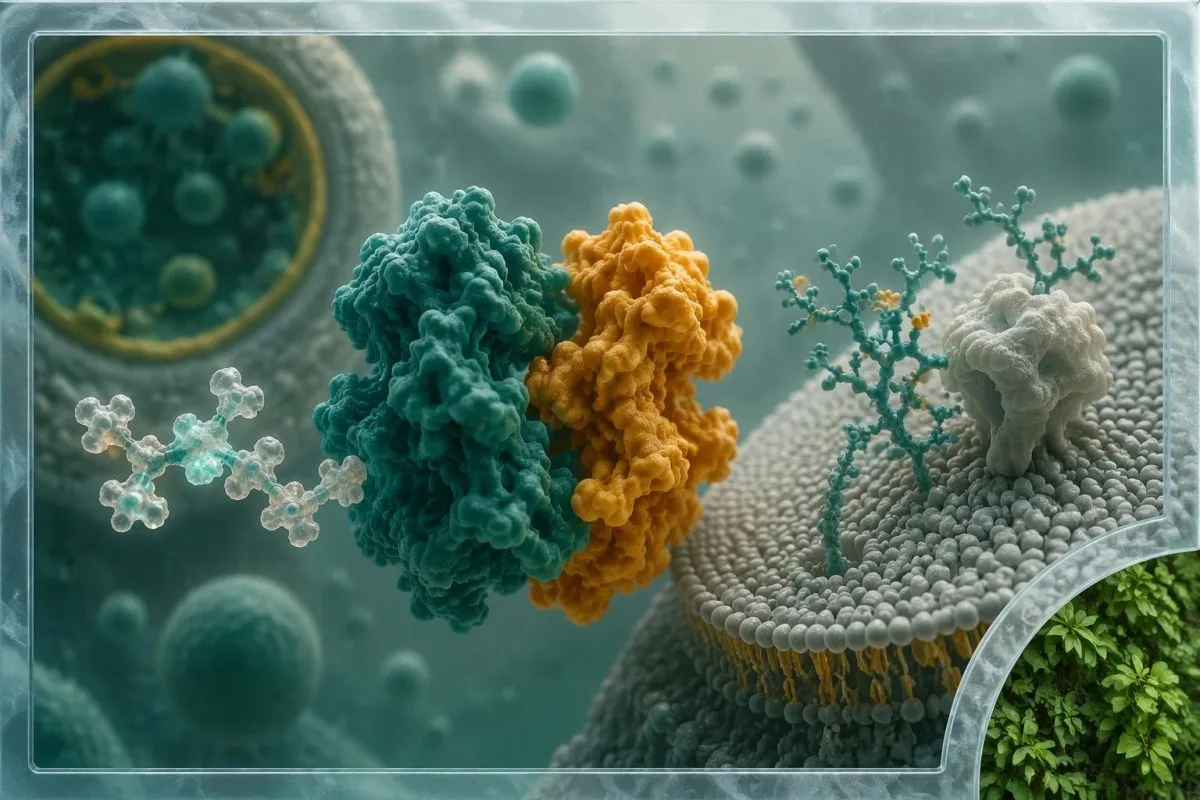
The corresponding commonly used coding descriptions are c.739C>T for p.Arg247Trp and c.745C>T for p.Arg249Trp, subject to the reference transcript stated on the report. These 2 examples show why the exact variant matters more than an undifferentiated label such as HEXA mutation or low enzyme.
A person can have a pseudodeficiency variant and a separate pathogenic HEXA variant. Finding 1 pseudodeficiency allele therefore does not automatically settle every abnormal enzyme result; interpretation must account for all reported variants, their classifications, and whether the molecular test adequately assessed the rest of the gene.
Two pseudodeficiency findings should not automatically be converted into a diagnosis of Tay-Sachs disease. The relevant question is whether either of the 2 findings impairs natural-substrate function in a disease-causing way; laboratory nomenclature and evidence review are more useful here than counting how many variant lines appear.
For a hypothetical reader with low activity and only 1 established pseudodeficiency finding after an appropriately comprehensive evaluation, counseling may explain that the enzyme screen was misleading rather than confirming carrier status. Similar cautions about enzyme result limitations occur in other lysosomal disorders, but HEXA pseudodeficiency must be assessed on its own evidence.
Normal enzim aktivitesi B1 alelini gözden kaçırabilir mi?
B1 alleles can escape some conventional Hex A screening methods because their enzymes may process a nonsulfated artificial substrate while failing to process GM2 appropriately. The disease-causing p.Arg178His variant, commonly described as c.533G>A, is 1 established example that makes a reassuring conventional enzyme result insufficient.

The conventional substrate often abbreviated MUG is 4-methylumbelliferyl N-acetyl-beta-D-glucosaminide. A sulfated substrate, often abbreviated MUGS, can help assess alpha-subunit-related activity; these 2 substrates are not interchangeable, and the laboratory must interpret the assay within its validated diagnostic method.
Pseudodeficiency and B1 behavior point in opposite interpretive directions. Pseudodeficiency can make laboratory activity look concerning without disease-causing loss of natural-substrate function, whereas a B1 allele can make 1 conventional assay look reassuring despite a genuine pathogenic variant; both problems arise from substrate specificity.
Ask the laboratory a focused question: does this method reliably identify B1 carriers, and would a specialized substrate assay change the interpretation? A second test using the same substrate and the same analytical approach may reproduce the first result without resolving the underlying limitation.
Functional patterns can reveal information that a single normal/abnormal label hides. Our explanation of functional assay patterns illustrates that principle in a different condition; for HEXA, the useful pairing is the exact pathogenic variant with the specific enzyme method, not 2 unrelated screening labels.
Sınırda enzim ve HEXA VUS sonuçları nasıl ele alınmalıdır?
A borderline enzyme result veya HEXA variant of uncertain significance does not independently confirm carrier status. No single percentage cutoff applies across all laboratories, and 1 uncertain variant should not be treated as pathogenic merely because an enzyme measurement is near a carrier interval.
A borderline result should trigger review of the specimen, method, laboratory interval, and relevant medication or pregnancy history. Repeating an assay on a suitable specimen may clarify analytical variation, but 2 similar borderline measurements are not automatically equivalent to identifying a disease-causing HEXA variant.
Laboratories may use population frequency, segregation, functional evidence, and previously reported affected individuals to classify a variant. A low enzyme measurement can contribute evidence, but 1 screening assay affected by pseudodeficiency or substrate limitations is not necessarily a validated variant-specific functional study.
If 2 variants are reported, family testing may help establish phase or segregation when the genetics team judges that information useful. A pathogenic variant plus a VUS is not the same as two confirmed pathogenic variants in trans; neither disease certainty nor a precise severity prediction follows from that combination alone.
Variant interpretation can change as evidence accumulates, so ask who can request reanalysis and whether the laboratory has a recontact policy. Our discussion of uncertain hereditary test results explains this distinction; keep the original report and its date rather than relying on a 1-line summary copied into another record.
Üreme partneri ne zaman taranmalıdır?
A reproductive partner should be offered HEXA carrier screening when the other partner has a confirmed disease-causing HEXA variant. The 2021 ACMG practice resource supports ancestry-neutral carrier-screening offers and recommends sufficiently broad analysis of the relevant gene in the partner, rather than checking only the first partner's variant.
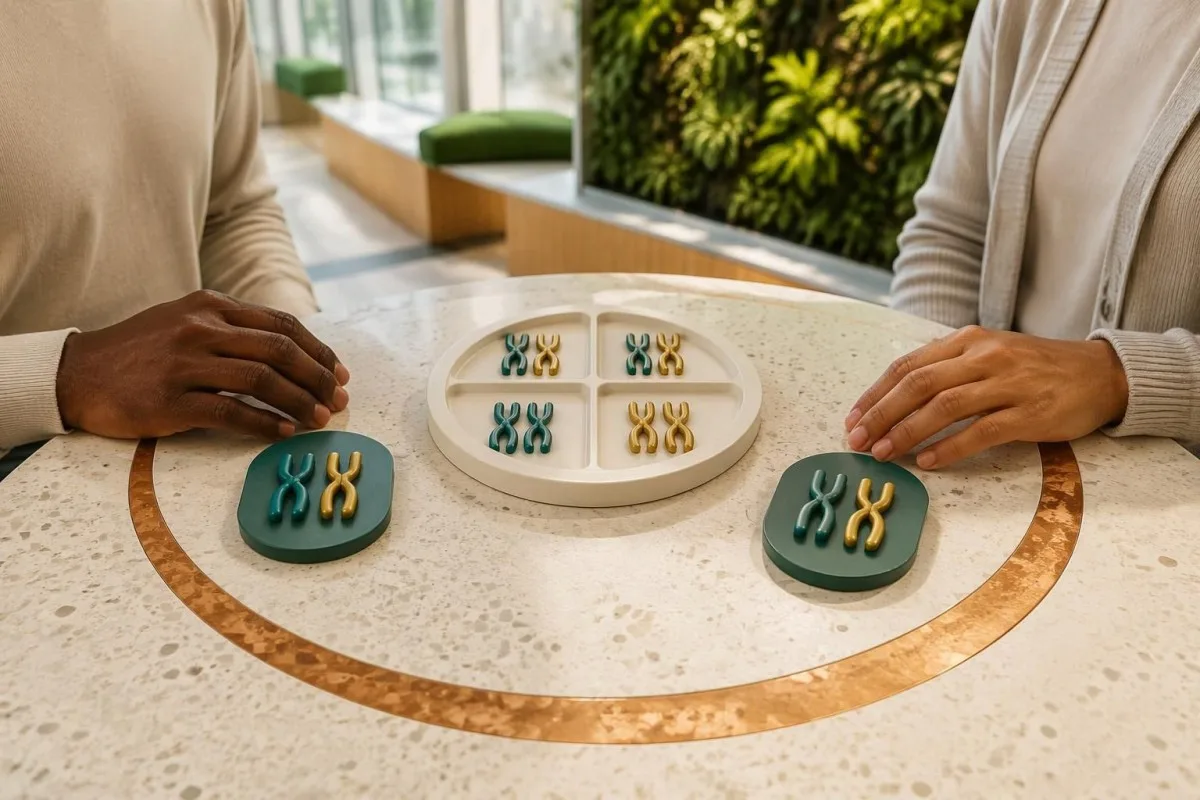
Two partners can carry different pathogenic variants in the same gene and still have an affected child. Testing only for partner A's exact variant could miss partner B's different HEXA variant; ask about sequencing, deletion/duplication detection, and any enzyme testing needed to resolve the particular findings.
Pregnancy can make sequential testing too slow, so simultaneous screening of both partners may be reasonable when time-sensitive decisions are possible. Gregg et al., 2021, recommend discussing concurrent testing in pregnancy; 1 unresolved carrier result should prompt timely coordination rather than waiting for an arbitrary repeat-testing interval.
Ancestry can inform a carefully documented prior probability or reveal the limits of an older targeted panel, but it should not be the sole reason to offer or withhold testing. SMA residual carrier risk demonstrates why a reassuring result needs assay-specific interpretation, even when a report lists 2 gene copies.
Kantesti bir AI laboratuvar testi yorumlama hizmetinde yayımlanır. that can help organize 2 partners' reported findings into questions for a genetics appointment, without replacing that appointment. A pseudodeficiency-only result is not automatically a confirmed carrier finding; FMR1 screening interpretation also shows why different carrier conditions cannot share one generic risk calculator.
Her iki partner de HEXA taşıyıcısı olduğunda üreme riski nedir?
When both reproductive partners carry disease-causing HEXA variants, each pregnancy has a 25% chance of an affected child, a 50% chance of a carrier child, and a 25% chance of a child who inherits neither familial variant. These probabilities apply independently to each pregnancy.

The 25% affected probability does not require both partners to carry the same variant. A child can inherit one pathogenic HEXA variant from each parent and be compound heterozygous; that is why partner testing should examine the gene adequately rather than search only for an identical family mutation.
A previous unaffected pregnancy does not reduce the next pregnancy's Mendelian risk to below 25%. Outcomes are independent, like separate draws from the same probability distribution; families should not be told that having one unaffected child means an affected pregnancy is now more or less likely.
The probability of inheriting 2 disease-causing variants and the likely clinical severity are separate questions. Some combinations are associated with later-onset disease or residual activity, but specialist interpretation is needed; a 25% genotype risk should not be presented as a precise prediction of onset age or neurological course.
If only 1 partner is a confirmed carrier, the affected-pregnancy probability is one quarter of the other partner's carrier probability, assuming the relevant variants cause recessive HEXA disease. Family inheritance analysis explains why identifying the gene and inheritance pattern must come before multiplying probabilities.
Partnerin test sonucu negatif çıktıktan sonra ne kadar risk kalır?
A negative partner screen reduces residual carrier risk but does not make it 0. The remaining probability depends on the partner's prior carrier probability, the test's detection rate, and its coverage and classification limits; a generic negative label cannot supply those missing inputs.

Here is an explicitly hypothetical calculation: assume a prior carrier probability of 1 in 100 and a test detection rate of 95%, with essentially complete specificity. Bayes' rule gives a residual carrier probability of 0.01 × 0.05 divided by 1 − 0.01 × 0.95, approximately 1 in 1,981.
If the other partner is a confirmed HEXA carrier, that hypothetical residual probability gives an affected-pregnancy probability of approximately 1 in 7,924. The convenient approximation is about 1 in 8,000; neither figure is a population estimate or a result that can be assigned without validating the assumed 1% prior and 95% detection rate.
Two negative methods should not have their false-negative probabilities multiplied unless independence and combined performance are justified. Enzyme and DNA testing can share blind spots or classification problems; a claimed detection rate near 100% is especially sensitive to whether rare variants and specimen limitations were included.
Kantesti's explanations keep a quoted detection percentage separate from an individual's reproductive probability. When prior risk is uncertain, the genetics team may describe a range or say that a precise estimate is unavailable; negative familial genetic findings similarly need to distinguish a known-family-variant test from a broader screen.
Genetik danışmanlık ve üreme testleri neleri netleştirebilir?
Genetik danışmanlık can confirm which variants create reproductive risk, explain residual uncertainty, and discuss options without directing a family's decision. When familial HEXA variants are established, targeted prenatal diagnosis or IVF with preimplantation genetic testing for monogenic conditions may clarify whether 2 disease-causing variants were inherited.

Chorionic villus sampling is generally performed around 10–13 weeks of pregnancy, while amniocentesis is generally performed from 15 weeks onward. The specialist team should confirm local timing, procedural risks, and which molecular or enzyme analyses are validated for the obtained specimen before any procedure is scheduled.
Routine ultrasound and standard cell-free DNA aneuploidy screening do not exclude Tay-Sachs disease. A reassuring scan or common screening result is not evidence that a fetus avoided the 2 familial HEXA variants; ask specifically whether the offered test is diagnostic for the family's condition.
PGT-M requires a family-specific laboratory approach and IVF; it is not the same as routine embryo chromosome screening. Families should discuss test development, inconclusive results, and whether prenatal confirmation is recommended because 1 embryo test cannot eliminate every technical source of error.
Counseling can also discuss donor gametes, unassisted conception with or without prenatal testing, adoption, or choosing not to pursue pregnancy. Our discussion of genetic testing decisions addresses informed choice, although Huntington disease has a different inheritance pattern; no option is obligatory because a couple receives a 25% risk estimate.
Belirti gösteren kişiler veya akrabaları bundan sonra ne yapmalıdır?
Progressive neurological symptoms require a diagnostic assessment, not reinterpretation of a single carrier screen as proof of Tay-Sachs disease. Infantile Tay-Sachs commonly becomes apparent around 3–6 months, but juvenile and late-onset forms exist; 1 pathogenic HEXA variant alone does not explain a recessive disease diagnosis.
Loss of acquired skills, progressive weakness, or new movement difficulties should prompt clinical review, especially when there is a relevant family history. Diagnostic testing may combine enzyme studies and molecular analysis of both HEXA copies; acute breathing difficulty, prolonged seizures, or rapidly worsening function require urgent care regardless of the suspected genetic cause.
Related GM2 disorders can involve HEXB or GM2A rather than HEXA. Sandhoff disease may reduce both Hex A and Hex B activity, while GM2 activator deficiency can occur despite apparently preserved activities of these 2 enzymes; the full biochemical pattern helps determine which genes and methods need evaluation.
Adult neurological symptoms have many possible causes, and an incidental carrier result can distract from the actual diagnosis. Inherited ataxia assessment illustrates why neurological examination and disease-specific testing matter; neither a normal screening percentage nor 1 unrelated genetic finding should close the workup.
Relatives can benefit from targeted testing for an established familial pathogenic variant, with broader testing when their own reproductive situation requires it. For a child of 2 carriers whose affected genotype has been excluded, the remaining carrier probability is 2 in 3; absence of symptoms alone may not justify that calculation when late-onset disease is possible, particularly under pediatrik yorumlama sınırları.
Takip ve araştırma notlarınızda neler bulunmalıdır?
A useful follow-up record contains the specimen, enzyme method and interval, exact HEXA variants, test coverage, and the laboratory's final interpretation. Keep both reports when 2 methods disagree; the clinical action should follow the resolved interpretation, not whichever result appeared first or sounded more reassuring.
Bring 5 practical items to the appointment: the complete enzyme report, complete DNA report, relevant family reports, pregnancy or contraceptive information, and the partner's testing status. Our klinik metodoloji standartlarımız concern interpretation quality; they do not establish that an AI system can validate a HEXA variant, resolve pseudodeficiency, or replace an accredited genetics laboratory.
Kantesti bir Yapay zekâ destekli kan testi analiz aracı that can help readers understand laboratory terminology while preserving the distinction between screening and diagnosis. Our Yapay zeka teknolojisi rehberi describes the interpretation workflow, but a report containing 1 VUS or conflicting enzyme findings still needs qualified laboratory or genetics review before reproductive decisions.
Genetic results reveal information about relatives as well as the tested person, so obtain consent before sharing a partner's or family member's report. Kantesti's genetic report privacy information should be reviewed before submitting files; remove unnecessary identifiers, while preserving 2 clinically useful details—the laboratory method and variant reference transcript.
The Tay-Sachs recommendations discussed here are supported by the ACOG guidance, ACMG practice resource, and Cecchi et al. study listed below. The first of our 2 separately listed Zenodo resources accompanies the serum protein yorumlama kılavuzu; it is general laboratory education, not evidence validating HEXA carrier detection.
The second Zenodo resource accompanies our kompleman ve ANA rehberi. Those 2 publications address different laboratory topics and should not be cited as Tay-Sachs screening studies; for unresolved HEXA findings, request a written explanation from the testing laboratory and a genetic counseling referral.
Sıkça sorulan sorular
Tay-Sachs taşıyıcısı olmak bu hastalığa sahip olduğum anlamına mı gelir?
Kesinleşmiş bir Tay-Sachs taşıyıcısı olmak genellikle Tay-Sachs hastalığına sahip olmak değil, 1 patojenik veya muhtemelen patojenik HEXA varyantı taşımak anlamına gelir. Hastalık için genellikle HEXA geninin her iki kopyasında da hastalığa neden olan varyantlar bulunması gerekir; bunlar enzim ve klinik bulgularla birlikte değerlendirilir. Taşıyıcılar, bu tek varyant nedeniyle Tay-Sachs hastalığı geliştirmez. Nörolojik belirtiler, otomatik olarak taşıyıcılık durumuna bağlanmak yerine bağımsız bir tıbbi değerlendirmeyi hak eder.
Heksozaminidaz A aktivitem neden düşük, ancak DNA testim negatif?
Low hexosaminidase A activity with a negative DNA screen can result from pseudodeficiency, specimen-related effects, a borderline assay result, or a disease-causing variant outside the DNA test's coverage. Two recognized HEXA pseudodeficiency variants are p.Arg247Trp and p.Arg249Trp. A negative targeted panel is not equivalent to negative comprehensive sequencing with appropriate structural-variant assessment. Ask the laboratory to reconcile the exact enzyme method, specimen, and molecular coverage before treating the result as confirmed carrier status.
HEXA psödoyetersizliği Tay-Sachs hastalığı riskini artırır mı?
An established HEXA pseudodeficiency variant alone is not a disease-causing Tay-Sachs carrier allele. Pseudodeficiency reduces activity against certain laboratory substrates without the corresponding disease-causing impairment of natural GM2 processing. Finding 1 pseudodeficiency variant does not exclude a separate pathogenic variant elsewhere in HEXA. Reproductive-risk interpretation should therefore use all findings and the molecular test's coverage, not the low enzyme value alone.
Normal bir Tay-Sachs enzim testi taşıyıcıyı gözden kaçırabilir mi?
A normal conventional Tay-Sachs enzyme test can miss some disease-causing B1 variants because the assay substrate may still be processed. The p.Arg178His variant, commonly described as c.533G>A, is 1 established example. Specialized substrate testing or appropriately interpreted HEXA genetic testing may resolve the discrepancy. A normal enzyme result should not automatically override a pathogenic DNA finding without review of the assay's limitations.
Tay-Sachs taşıyıcısıysam partnerim de test yaptırmalı mı?
A reproductive partner should be offered HEXA carrier screening when the other partner has a confirmed disease-causing HEXA variant. The partner's test should assess the gene adequately rather than check only 1 exact variant, because partners can carry different pathogenic changes. If both partners are carriers, each pregnancy has a 25% probability of an affected child. Screening should not be offered or withheld solely on presumed ancestry, and genetic counseling helps explain residual risk after a negative result.
Hamilelik sırasında hangi Tay-Sachs taşıyıcılık testi kullanılır?
Gebelik sırasında ve oral kontraseptif kullanımı sırasında serum enzim testi yerine lökosit enzim testi tercih edilir; çünkü bu durumlarda serum sonuçları yanıltıcı olabilir. 2017’de yayımlanan ACOG Komite Görüşü No. 691, bu örnek türü ayrımını belirtir. Tarama yaklaşımına ve çelişkili bulgulara bağlı olarak HEXA moleküler testi de uygun olabilir. Örnek alınmadan önce laboratuvar, örnek toplama ve gönderim talimatlarını teyit etmelidir.
HEXA geninde klinik önemi belirsiz bir varyantın gebelik açısından anlamı nedir?
A HEXA variant of uncertain significance means there is insufficient evidence to classify that finding as disease-causing or benign. One VUS is not a confirmed Tay-Sachs carrier result and should not automatically be assigned the same reproductive risk as a pathogenic variant. Genetics review may consider enzyme methods, family testing, phase, and future reclassification. The familiar 25% affected-pregnancy probability applies when both partners have established disease-causing HEXA carrier findings, not simply when both reports contain uncertain variants.
Kan tahlili sonuçları ne anlama gelir
Laboratuvar raporunuzu yükleyin; Kantesti'nin AI'ı her biyobelirteci saniyeler içinde sade bir dille açıklar. Dünya genelinde 2 milyondan fazla kişi tarafından kullanılıyor.
Referanslar
- Klein, T., Mitchell, S. & Weber, H. (2026). Serum Proteinleri Rehberi: Globülinler, Albümin ve A/G Oranı Kan Testi. Kantesti AI Tıbbi Araştırma. DOI
- Klein, T., Mitchell, S. & Weber, H. (2026). C3 C4 Kompleman Kan Testi ve ANA Titre Kılavuzu. Kantesti AI Tıbbi Araştırma. DOI
- Amerikan Kadın Hastalıkları ve Doğum Uzmanları Koleji (2017). Komite Görüşü No. 691: Genetik Hastalıklar İçin Taşıyıcılık Taraması. Obstetrics & Gynecology. DOI PubMed
- Gregg AR ve ark. (2021). Gebelik sırasında ve gebelik öncesinde otozomal resesif ve X'e bağlı hastalıklar için tarama: American College of Medical Genetics and Genomics'in (ACMG) uygulama kaynağı. Tıpta Genetik. DOI
- Cecchi E et al. (2019). Screening for Tay-Sachs disease carriers by full-exon sequencing with novel variant interpretation outperforms enzyme testing in a pan-ethnic cohort. Molecular Genetics & Genomic Medicine. DOI
- 2 milyondan fazlaAnaliz edilen testler
- 127+Ülkeler
- 100+Diller
Sağlık ekibi hakkında


E-E-A-T Güven Sinyalleri
Deneyim
Hekim liderliğinde laboratuvar yorumlama iş akışlarının klinik incelemesi.
Uzmanlık
Klinik bağlamda biyobelirteçlerin nasıl davrandığına odaklanan laboratuvar tıbbı.
Otorite
Dr. Thomas Klein tarafından tıbbi açıdan incelenmiş; Dr. Sarah Mitchell ve Prof. Dr. Hans Weber'in katkılarıyla hazırlanmıştır.
Güvenilirlik
Alarmı azaltmaya yönelik net takip yollarıyla kanıta dayalı yorumlama.






Tıbbi sorumluluk reddi
Bu makale yalnızca eğitim amaçlıdır ve tıbbi tavsiye niteliği taşımaz. Tanı ve tedavi kararları için her zaman yetkin bir sağlık hizmeti sağlayıcısına danışın.
Yayınlanmış · Yayın ekibiyle iletişime geçin
Kantesti Ltd tarafından yayımlanmıştır; İngiltere ve Galler'de kayıtlı, şirket no. 17090423, Londra, Birleşik Krallık.
