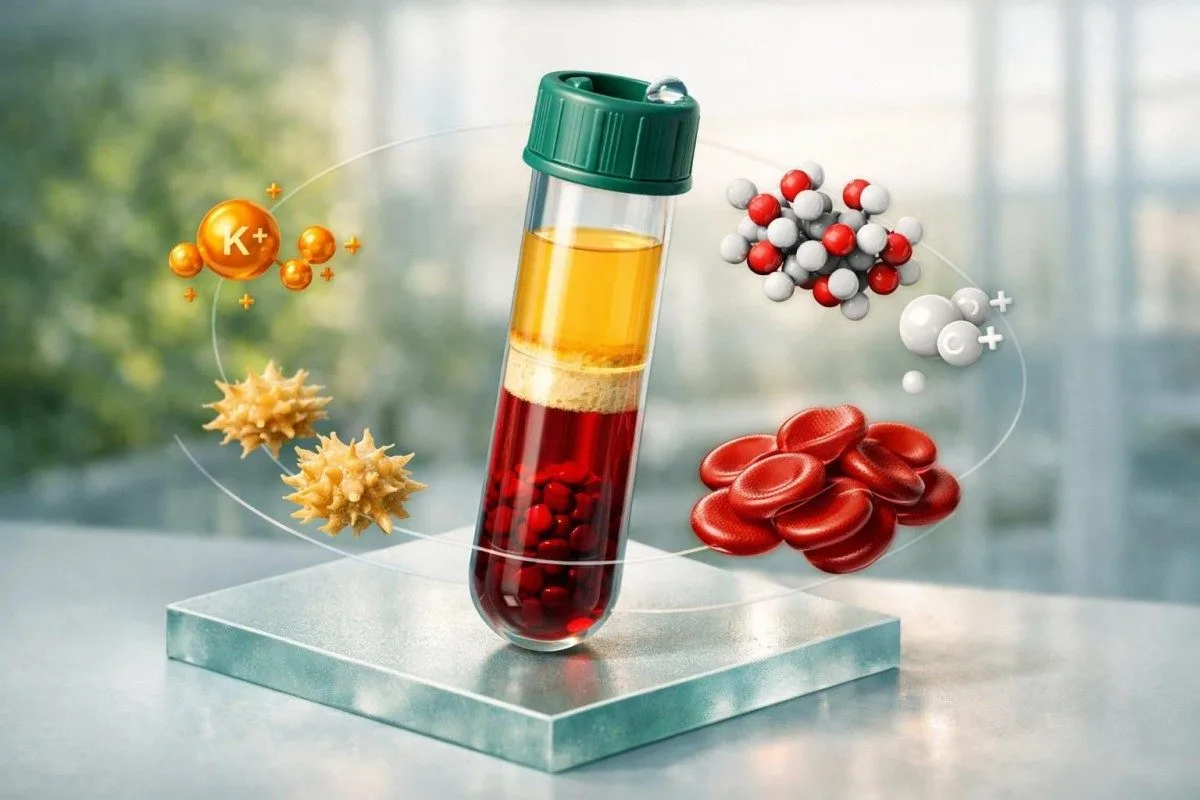
Bendera merah pada laporan makmal boleh bermaksud apa-apa sahaja daripada isu sampel yang remeh kepada kecemasan yang perlu ditangani pada hari yang sama. Ini cara klinisi menentukan nombor yang mencetuskan panggilan telefon, yang boleh menunggu, dan apa yang pesakit patut tanya seterusnya.


- Nilai kritikal bermaksud makmal percaya bahawa kelewatan dalam semakan boleh menjadi tidak selamat; ia tidak sama dengan bendera rutin untuk tinggi atau rendah.
- Potassium biasanya dipanggil kritikal pada ≥6.0 mmol/L atau ≤2.5 mmol/L, terutamanya jika ada penyakit buah pinggang atau simptom ECG.
- natrium di bawah 120 mmol/L atau melebihi 160 mmol/L boleh menyebabkan bengkak atau pengecutan otak, dan kelajuan perubahan sama penting seperti nombor itu.
- Glukosa di bawah 50 mg/dL atau melebihi 400-500 mg/dL sering mencetuskan panggilan balik pada hari yang sama, tetapi pengendalian sampel boleh menurunkan glukosa secara palsu.
- Hemoglobin di bawah 7 g/dL ialah ambang mendesak yang biasa, namun simptom pendarahan dan kadar penurunan lebih penting daripada fon merah.
- Platelet di bawah 20 ×10^9/L meningkatkan risiko pendarahan spontan, tetapi penggumpalan berkaitan EDTA boleh melaporkan bilangan yang berbahaya secara palsu.
- Trend kreatinin lebih penting daripada satu nilai; peningkatan sebanyak 0.3 mg/dL dalam 48 jam memenuhi kriteria AKI walaupun keputusan masih kelihatan hampir normal.
- Amaran palsu berlaku akibat hemolisis, pencemaran EDTA, mengepal tangan, pemprosesan yang tertangguh, dan dehidrasi.
- Langkah seterusnya adalah mudah: jawab panggilan, tulis ujian dan unit yang tepat, tanya sama ada sampel diulang, dan ikut arahan pada hari yang sama.
Maksud sebenar nilai makmal kritikal
Nilai kritikal ialah keputusan ujian darah yang begitu tinggi atau begitu rendah sehingga makmal menghubungi klinisyen dengan segera kerana menunggu boleh menjadi tidak selamat, dan pada Kantesti AI kami biasanya menerangkannya sebagai nombor yang mungkin memerlukan tindakan dalam beberapa minit hingga beberapa jam. Ia bukan sama seperti penanda H atau L biasa; contoh dewasa yang lazim ialah kalium ≥6.0 mmol/L atau ≤2.5 mmol/L, natrium ≤120 mmol/L, glukosa <50 mg/dL, dan hemoglobin <7 g/dL, manakala banyak kelainan yang lebih kecil sesuai dibincangkan dengan lebih tenang tentang keputusan sempadan.
A julat rujukan bersifat statistik; had kritikal bersifat operasi. Seorang pelari maraton berusia 52 tahun dengan AST 89 IU/L selepas perlumbaan adalah tidak normal, tetapi kebanyakan makmal tidak akan menelefon keputusan itu; seorang penghuni rumah jagaan dengan glukosa 38 mg/dL biasanya mencetuskan panggilan segera. Jika anda sedang belajar cara membaca keputusan ujian darah, perbezaan itu mengelakkan banyak ketakutan yang tidak perlu.
Makmal tidak cuba membuat diagnosis daripada satu nombor; mereka cuba mencegah kelewatan yang berbahaya. Banyak penganalisis akan mengulang nilai secara automatik di luar had kebolehmasyuran analitik, dan pasukan kami di Pengesahan Perubatan memberi perhatian yang teliti pada langkah pengesahan sebelum dikeluarkan itu kerana nilai panik yang benar nilai panik seharusnya tepat dan boleh diambil tindakan.
Saya Thomas Klein, MD, dan panggilan yang paling saya ingat ialah panggilan yang nombornya kelihatan sangat menakutkan tetapi fisiologinya tidak. Kebanyakan keputusan yang ditandakan tidak kecemasan; yang penting ialah nilai luar (outlier) yang sesuai dengan pesakit, masa, dan simptom.
Mengapa makmal menelefon segera dan mengapa satu had pemotongan berbeza daripada yang lain
Makmal menghubungi segera kerana sesetengah keputusan boleh mengubah rawatan dalam beberapa minit hingga beberapa jam, bukan hari. Pesakit luar dewasa ambang kritikal kalium selalunya 6.0 mmol/L, tetapi sesetengah makmal di UK dan Eropah menggunakan 6.2 mmol/L, dan ambang untuk pediatrik, onkologi serta ICU mungkin berbeza kerana profil risiko adalah berbeza.
Cuma, makmal tidak semuanya melayani pesakit yang sama. Pesakit dialisis yang stabil dengan kalium 6.1 mmol/L pada pukul 7 pagi mungkin dikendalikan dengan cara yang sangat berbeza berbanding seseorang yang sebelum ini sihat dengan nilai yang sama, itulah sebabnya klinisi kami pada Lembaga Penasihat Perubatan melihat diagnosis, ubat-ubatan, dan trend, bukan nombor semata-mata secara berasingan.
Kebanyakan makmal bertauliah menggunakan protokol baca-ulang (read-back): pemanggil menyatakan keputusan, penerima mengulangkannya semula, dan masa direkodkan. Ada juga yang menggunakan semakan delta, bermaksud mereka membandingkan keputusan semasa dengan nilai-nilai terkini; peningkatan kreatinin daripada 0.9 kepada 1.5 mg/dL semalaman mungkin lebih membimbangkan berbanding 2.4 mg/dL yang stabil dalam penyakit buah pinggang kronik yang diketahui.
Aliran kerja klinikal Kantesti dibina berdasarkan logik konteks-dahulu yang sama, dan kami menghuraikannya dalam panduan aliran kerja tafsiran makmal AI. Mengesan nombor merah itu mudah. Menentukan nombor merah yang tidak boleh menunggu sehingga esok ialah kerja sebenar.
Elektrolit yang paling kerap mencetuskan nilai panik
Kalium, natrium, dan kalsium ialah keputusan elektrolit yang paling berkemungkinan mencetuskan panggilan balik segera. Banyak makmal dewasa mentakrifkan kalium kritikal sebagai ≥6.0 mmol/L atau ≤2.5 mmol/L, natrium kritikal sebagai ≤120 atau ≥160 mmol/L, dan kalsium jumlah kritikal sebagai ≥13.0 atau ≤6.5 mg/dL, walaupun polisi setempat berbeza.
Apabila saya menyemak panel dengan kalium 6.3 mmol/L dan dengan sejarah klinikal yang normal, saya segera mencari hemolisis, trombositosis, dan leukositosis. Pseudohiperkalemia adalah cukup biasa sehingga spesimen plasma ulangan boleh mengelakkan lawatan kecemasan yang tidak perlu; jika ini corak anda, baca kami amaran kalium tinggi.
A natrium di bawah 120 mmol/L menjadi lebih berbahaya apabila ia menurun dengan cepat; sawan jauh lebih mungkin berlaku dalam hiponatremia akut berbanding nilai stabil kronik sebanyak 118 mmol/L. Panel pakar yang diketuai oleh Verbalis menyatakan bahawa simptom dan tempo adalah sama penting seperti bilangannya, dan hipernatremia teruk melebihi 160 mmol/L boleh sama membimbangkan kerana sel otak mengecil dengan cepat (Verbalis et al., 2013); kami panduan julat natrium pergi lebih mendalam.
Kalsium total boleh mengelirukan apabila albumin rendah, sebab itu kalsium terion di bawah kira-kira 0.90 mmol/L selalunya lebih bermakna berbanding nilai jumlah yang sedikit rendah. Satu corak makmal yang saya tidak pernah abaikan ialah kalium tinggi + kalsium rendah + fosfatase alkali rendah dalam sampel yang sama; ia sering bermaksud pencemaran EDTA, bukan tiga penyakit serentak, dan kami tafsiran kalsium menerangkan sebabnya.
Magnesium ialah pembuat masalah yang senyap
A magnesium di bawah 1.2 mg/dL boleh mengekalkan aritmia dan menjadikan hipokalemia lebih sukar untuk dibetulkan, walaupun magnesium bukan keputusan pertama yang makmal panggil. Dalam pesakit dengan kalium di bawah 3.0 mmol/L, saya sering menyemak magnesium sebelum menganggap pemakanan yang buruk semata-mata; simptom dan strategi penggantian adalah berbeza dalam penerang kalium rendah.
Glukosa, bikarbonat, dan jurang anion apabila gula menjadi kecemasan
glukosa kritikal selalunya <50 mg/dL atau >400 hingga 500 mg/dL pada orang dewasa, dan bikarbonat di bawah 15 mmol/L atau jurang anion melebihi 20 mengubah keputusan daripada membimbangkan kepada berpotensi kecemasan. Yang penting dari segi klinikal ialah gabungan: gula, keton, bikarbonat, status mental, dan hidrasi.
Glukosa vena 42 mg/dL memerlukan perhatian segera, tetapi saya masih bertanya bagaimana sampel itu dikendalikan. Darah yang tidak diproses terus menggunakan glukosa selepas diambil; dalam keadaan panas, nilai boleh menurun kira-kira 5% hingga 7% per jam, jadi spesimen yang tertangguh kadangkala menerangkan bacaan rendah pada seseorang yang tiada simptom langsung.
Dalam DKA, glukosa biasanya >250 mg/dL dan serum bikarbonat <18 mEq/L; dalam HHS, glukosa selalunya >600 mg/dL dengan dehidrasi yang ketara dan osmolaliti melebihi 320 mOsm/kg. Rangka kerja ini masih diambil terus daripada kajian semakan Diabetes Care klasik oleh Kitabchi dan rakan-rakan (Kitabchi et al., 2009), dan kami panduan jurang anion membantu pesakit memahami mengapa satu bacaan glukosa yang terpencil boleh terlepas pandang kecemasan yang lebih besar.
HbA1c hampir tidak pernah menghasilkan panggilan balik pada hari yang sama kerana ia mencerminkan yang terakhir 8 hingga 12 minggu, bukan 8 jam yang terakhir. Jika laporan anda menunjukkan peningkatan yang mengejut, mulakan dengan gambaran keseluruhan glukosa tinggi kami. Kemudian gunakan penerang potongan A1c kami untuk memahami mengapa 11.2% serius tetapi tidak diurus dengan cara yang sama seperti glukosa simptomatik sebanyak 486 mg/dL.
Keputusan CBC yang benar-benar boleh membahayakan
Hemoglobin, platelet, dan kiraan neutrofil mutlak ialah nombor CBC yang kebanyakan makmal anggap berpotensi berbahaya. Ambang pesakit luar dewasa yang biasa ialah hemoglobin <7 g/dL, platelet <20 ×10^9/L, dan ANC <0.5 ×10^9/L, manakala jumlah kiraan sel darah putih sahaja selalunya kurang berguna.
A hemoglobin 6.8 g/dL pada pesakit yang mengalami keletihan akibat kekurangan zat besi selama beberapa minggu, ia bukan kecemasan yang sama seperti 6.8 g/dL dengan najis hitam, sakit dada, atau sesak nafas. Saya pernah menerima pesakit dengan hemoglobin melebihi 8 g/dL kerana mereka sedang mengalami pendarahan aktif, dan saya telah mengatur perbincangan pemindahan darah pada hari berikutnya dengan selamat untuk pesakit yang stabil secara kronik di bawah 7 g/dL.
A kiraan platelet di bawah 10 ×10^9/L meningkatkan risiko pendarahan spontan, terutamanya jika ada demam, sepsis, atau lebam baharu. Tetapi penggumpalan platelet bergantung EDTA boleh melaporkan platelet secara palsu pada 18 ×10^9/L atau lebih rendah; pengulangan dalam tiub sitrat selalunya membetulkannya, sebab itulah kami platelet rendah sentiasa memasangkan kiraan dengan semakan smear.
Neutropenia dengan demam ialah salah satu daripada beberapa corak CBC yang mengubah nada saya dengan serta-merta: ANC <0.5 ×10^9/L ditambah suhu ≥38.0°C memerlukan penilaian onkologi atau kecemasan pada hari yang sama. Bandingkan kami panduan corak WBC yang tinggi dengan artikel ini tentang petunjuk CBC yang meningkatkan kebimbangan leukemia kerana kiraan sederhana dengan blast boleh menjadi jauh lebih serius berbanding lonjakan WBC berkaitan steroid.
Mengapa perbezaan (differential) lebih penting daripada jumlah keseluruhan
Seorang kiraan neutrofil mutlak dikira daripada jumlah WBC dan peratus neutrofil. Seorang pesakit dengan WBC 1.2 ×10^9/L dan 20% neutrofil mempunyai ANC 0.24 ×10^9/L, yang jauh lebih berisiko berbanding apa yang WBC sahaja cadangkan.
Keputusan buah pinggang, hati dan pembekuan—nombor yang paling penting
Kreatinin, INR, dan bilirubin boleh menjadi segera, tetapi bahagian yang berbahaya selalunya coraknya, bukan satu nombor universal semata-mata. Kecederaan buah pinggang akut ditakrifkan oleh peningkatan kreatinin sebanyak 0.3 mg/dL dalam 48 jam atau 1.5 kali daripada bacaan asas dalam tempoh 7 hari, dan banyak makmal menganggap INR >5.0 sebagai nilai kritikal.
Menurut garis panduan KDIGO, lonjakan daripada 0.8 kepada 1.2 mg/dL boleh menandakan awal AKI walaupun 1.2 mg/dL masih kelihatan hampir normal pada banyak cetakan (KDIGO AKI Work Group, 2012). Itulah sebabnya panduan ujian darah buah pinggang kami mengajar tafsiran arah aliran sebelum pesakit diberi keyakinan palsu oleh julat rujukan tunggal.
Dengan warfarin, dan INR antara 5 dan 9 tanpa pendarahan selalunya diurus dengan menahan dos dan pemantauan rapat, bukannya penjagaan ambulans segera, tetapi pelan bergantung pada umur, risiko jatuh, dan sebab pesakit diberi antikoagulan. Seorang INR melebihi 5 pada seseorang yang tidak mengambil antikoagulan jauh lebih membimbangkan kerana ia menunjukkan kegagalan hati, kekurangan vitamin K, atau masalah sampel; kami PT/INR merangkumi nuansanya.
Sangat tinggi AST atau ALT , kadang-kadang >1000 IU/L, kelihatan menakutkan, namun peraturan panggilan balik pesakit luar untuk transaminase adalah agak tidak konsisten. Kluster yang lebih membimbangkan saya ialah bilirubin meningkat + INR meningkat + keliru atau glukosa rendah kerana itu menunjukkan fungsi sintetik hati yang terjejas, bukan sekadar sel hati yang meradang.
Keputusan yang kelihatan menakutkan di internet tetapi tidak semestinya panggilan balik makmal
Troponin, D-dimer, feritin, CRP, dan A1c boleh menjadi sangat tidak normal tanpa mencetuskan sistem panik makmal. Ujian ini selalunya ditafsir bersama simptom, masa, dan kebarangkalian pra-ujian, bukannya satu ambang mutlak.
A troponin melebihi persentil ke-99 adalah tidak normal, tetapi perubahan dalam 1 hingga 3 jam selalunya lebih bermaklumat berbanding nombor pertama sahaja. Saya melihat pesakit yang cemas dengan peningkatan kecil yang stabil akibat penyakit buah pinggang kronik atau kegagalan jantung yang kurang mendesak berbanding seseorang dengan nilai yang lebih kecil tetapi jelas meningkat; artikel arah aliran troponin kami menerangkan logik itu.
A D-dimer 1.2 mg/L FEU adalah perkara biasa selepas pembedahan, kehamilan, jangkitan, atau sekadar dengan peningkatan usia. Kebanyakan makmal tidak menganggap D-dimer sebagai nilai kritikal kerana ia ialah alat untuk menolak (rule-out), bukan diagnosis, dan kadar positif palsunya adalah tinggi di luar konteks klinikal yang sesuai.
Ferritin melebihi 1000 ng/mL atau CRP melebihi 100 mg/L boleh mencerminkan keradangan yang ketara, kecederaan hati, atau keganasan, tetapi jarang sekali ia mencetuskan aliran kerja makmal-ke-klinikan yang segera yang sama seperti kalium 6.7 mmol/L. Ini salah satu bidang di mana konteks lebih penting daripada nombor.
Peringatan palsu akibat hemolisis, pencemaran, dehidrasi, dan keanehan makmal
Hemolisis, pencemaran, dehidrasi, dan pemprosesan yang tertangguh merupakan sebab paling lazim mengapa keputusan yang kelihatan berbahaya akhirnya tidak mencerminkan fisiologi sebenar pesakit. Dalam semakan kami terhadap laporan yang dimuat naik pada Kantesti, petunjuk yang berulang bukanlah satu nombor ganjil, tetapi corak nombor yang bercanggah antara satu sama lain.
Sampel yang mengalami hemolisis separa boleh menaikkan secara palsu kalium, LDH, dan kadangkala AST, manakala dehidrasi boleh memekatkan hemoglobin, albumin, dan natrium sehingga kelihatan lebih teruk daripada keadaan sebenar pesakit. Jika beberapa nilai hanya sedikit tinggi selepas muntah, cirit-birit, atau senaman berat, bandingkan dengan artikel kami tentang bacaan tinggi palsu berkaitan dehidrasi.
Saya masih melihat pseudo-hiperkalemia akibat menggenggam kuat semasa pengambilan sampel, masa tourniquet yang berpanjangan, dan getaran pengangkutan dalam sistem pneumatik. Satu lagi yang klasik ialah penggumpalan platelet yang menghasilkan kiraan rendah secara palsu sedangkan pesakit langsung tidak mengalami lebam.
Berikut ialah petunjuk corak yang praktikal: kalium tinggi + kalsium sangat rendah + fosfatase alkali yang tidak dijangka rendah lebih cenderung ke arah pencemaran EDTA berbanding ke arah tiga diagnosis baharu. Apabila cerita dan kimia tidak sepadan, minta ulang sebelum anda membuat kesimpulan yang paling teruk.
Perbezaan kaedah adalah penting
Sesetengah ujian natrium menggunakan elektrod pemilih ion tidak langsung, yang boleh memandang rendah natrium dalam hiperlipidemia hipertrigliseridemia yang teruk atau paraproteinemia. ISE langsung atau natrium daripada gas darah boleh membetulkan nilai yang kelihatan kritikal tetapi tidak sesuai dengan gambaran di sisi katil.
Apa yang pesakit patut lakukan selepas panggilan balik makmal yang mendesak
Jika makmal atau klinik menghubungi tentang keputusan kritikal, jawab, catat ujian tepat, nilai dan unit, serta ikut arahan hari yang sama. Pergi ke jabatan kecemasan sekarang untuk sakit dada, sesak nafas yang teruk, pengsan, kekeliruan, sawan, kelemahan yang mendalam, atau pendarahan aktif, tanpa mengira apa yang portal itu katakan.
Tanyakan enam soalan: Apakah nilainya, apakah unitnya, adakah sampel diulang, apakah nilai terakhir saya, simptom yang mana mengubah pelan, dan ubat yang mana patut saya hentikan sehingga saya bercakap dengan klinisian? Pesakit yang menguruskan ujian darah mereka melalui portal akan mendapat keputusan yang lebih baik apabila mereka boleh mengesahkan laporan berbanding PDF asal, sebab itulah saya sering menghantar mereka ke panduan keselamatan keputusan dalam talian.
Sebagai Thomas Klein, MD, saya agak tegas tentang perkara ini: jangan cuba membetulkan keputusan kritikal sendiri dengan ubat internet. Minum air dalam jumlah besar untuk natrium 126 mmol/L boleh memburukkan hiponatremia, dan mengambil kalium tambahan untuk kekejangan apabila ujian darah anda sebenarnya 6.1 mmol/L boleh menjadi berbahaya.
Jika situasi ini tidak kecemasan dan anda mahu laporan disusun dengan cepat, muat naik PDF atau foto yang jelas ke demo tafsiran keputusan ujian darah percuma. Kemudian semak aliran kerja dalam panduan muat naik PDF supaya Kantesti AI boleh menyusun penanda, mengenal pasti kelainan berpasangan, dan menunjukkan perkara yang wajar dihubungi pada hari yang sama berbanding susulan yang dirancang.
Bagaimana AI Kantesti membantu anda membaca keputusan ujian darah dengan selamat
Kantesti AI membantu dengan membaca keseluruhan panel, bukan hanya kotak merah, dan dengan membandingkan keputusan dengan garis dasar yang terdahulu. Kalium sebanyak 5.7 mmol/L dengan fungsi buah pinggang yang stabil adalah berbeza daripada 5.7 mmol/L dengan bikarbonat 16 mmol/L, kreatinin meningkat, dan ACE inhibitor sudah diambil; enjin kami dibina untuk pengecaman corak itu. Tafsiran ujian darah berkuasa AI enjin kami dibina untuk pengecaman corak itu.
Sehingga 21 April 2026, Kantesti AI telah menganalisis 2M+ laporan ujian darah merentasi 127+ negara dan 75+ bahasa, jadi platform kami melihat banyak gangguan pemformatan dunia sebenar sebelum ia mengulas tentang sesuatu nilai. AI kami memetakan PDF dan foto yang dimuat naik kepada perpustakaan biomarker lebih daripada 15,000 penanda dan kemudian menyemak keputusan berbanding julat rujukan, umur, jantina, kaedah, dan trend.
Kebanyakan pesakit mendapati paparan trend lebih berguna berbanding tafsiran sekali sahaja. Penurunan hemoglobin daripada 13.4 kepada 10.2 g/dL dalam tempoh 6 minggu, atau lebih dari 6 minggu, atau peningkatan kreatinin daripada 1.0 kepada 1.4 mg/dL, selalunya lebih penting sama ada nilai tersebut telah melepasi ambang merah makmal atau tidak.
Apabila saya menyemak laporan yang telah dinaikkan taraf, saya jarang mencari satu nombor ajaib. Saya mencari gabungan seperti kalium tinggi dengan bikarbonat rendah, hemoglobin menurun dengan BUN tinggi, atau platelet rendah dengan PT/INR yang tidak normal—dan di situlah platform kami membantu pembaca menentukan sama ada langkah seterusnya ialah ujian ulangan, panggilan pada hari yang sama, atau Jabatan Kecemasan.
Nota penyelidikan dan penerbitan yang berkaitan dengan tafsiran makmal yang mendesak
Penyelidikan penting kerana tafsiran nilai kritikal sebenarnya masalah sistem: perubatan makmal, konteks klinikal, dan komunikasi semuanya perlu seiring. Sebab itulah kami menerbitkan panduan praktikal bersama kerja produk, dan sebab itulah pembaca yang mahukan asal-usul boleh meneroka penerbitan yang disenaraikan di bawah.
Dua contoh ada di bawah: kertas kerja Zenodo mengenai ujian darah virus Nipah dan panduan Figshare mengenai jenis darah B negatif, LDH, dan kiraan retikulosit. Ia bukan manual perubatan kecemasan, tetapi ia menunjukkan perincian merentas disiplin yang kami ambil berat apabila nilai yang pelik muncul di hadapan pesakit selepas waktu pejabat.
Pembaca yang mahu misi klinikal yang lebih luas boleh melihat Tentang Kami. Intinya bukan untuk menimbus pesakit dengan kertas kerja; ia untuk menunjukkan rantaian penaakulan di sebalik mengapa sesetengah keputusan mencetuskan peningkatan segera dan yang lain wajar menjalani ujian ulangan yang terukur.
Kesimpulan: jika makmal menelefon, anggap nombor itu memerlukan perhatian, bukan panik. Respons paling selamat ialah pengesahan cepat, semakan simptom, dan tahap susulan yang betul.
Soalan Lazim
Apakah nilai kritikal dalam ujian darah?
Nilai kritikal ialah keputusan makmal yang berada jauh di luar julat yang dijangka sehingga makmal perlu segera memaklumkan seorang klinisyen kerana menangguhkan semakan boleh menjadi tidak selamat. Contoh biasa bagi orang dewasa termasuk kalium pada atau melebihi 6.0 mmol/L, natrium pada atau di bawah 120 mmol/L, glukosa di bawah 50 mg/dL, dan hemoglobin di bawah 7 g/dL, walaupun ambang berbeza mengikut makmal dan kumpulan pesakit. Nilai kritikal tidak sama dengan penanda rutin “tinggi” atau “rendah” dalam portal. Nombor tersebut masih perlu ditafsirkan bersama simptom, arah aliran (trend), dan kualiti sampel.
Keputusan ujian darah yang biasanya mencetuskan panggilan makmal secara segera?
Keputusan panggilan balik (callback) dewasa yang paling biasa ialah keabnormalan teruk dalam kalium, natrium, glukosa, kalsium, hemoglobin, platelet, kiraan neutrofil mutlak, dan INR. Banyak makmal menghubungi klinisi untuk kalium pada atau melebihi 6.0 mmol/L, natrium pada atau di bawah 120 mmol/L, glukosa di bawah 50 mg/dL atau melebihi 400 hingga 500 mg/dL, platelet di bawah 20 ×10^9/L, dan INR melebihi 5.0. Kreatinin juga boleh menjadi mendesak, tetapi peningkatan dari masa ke masa selalunya lebih penting berbanding satu nombor yang tinggi sahaja. Ambang tepat berbeza mengikut hospital, negara, umur, dan keadaan klinikal.
Adakah keputusan yang ditandakan tinggi atau rendah bermaksud saya perlu pergi ke Jabatan Kecemasan (ER)?
Tidak, keputusan yang ditandakan tidak semestinya bermaksud kecemasan secara automatik kerana kebanyakan penanda portal adalah berdasarkan julat rujukan, bukan had panik. ALT yang sedikit tinggi, feritin 600 ng/mL, atau A1c 8.2% adalah tidak normal tetapi biasanya bukan kecemasan yang perlu dalam masa sejam. Jabatan kecemasan adalah sesuai apabila nilai tersebut benar-benar kritikal atau apabila anda juga mempunyai sakit dada, kekeliruan, kelemahan yang teruk, pengsan, sawan, sesak nafas, atau pendarahan aktif. Gejala sentiasa lebih diutamakan berbanding warna portal.
Bolehkah sampel yang tidak baik menyebabkan keputusan yang panik?
Ya, masalah sampel adalah punca yang sangat nyata bagi keputusan yang kelihatan berbahaya. Hemolisis boleh menaikkan kalium dan LDH secara palsu, pencemaran EDTA boleh menaikkan kalium sambil menurunkan kalsium, pemprosesan yang tertangguh boleh menurunkan glukosa kira-kira 5% hingga 7% setiap jam, dan penggumpalan platelet boleh menghasilkan kiraan platelet yang rendah secara palsu. Sebab itulah, doktor sering mengulang nilai kritikal yang tidak dijangka sebelum bertindak apabila pesakit kelihatan baik. Keputusan yang tidak selari dengan gambaran keseluruhan wajar diperiksa semula.
Patutkah saya mengulang ujian sebelum panik?
Ujian ulangan selalunya merupakan langkah seterusnya yang tepat apabila bilangannya tidak dijangka, pesakit tiada simptom, atau sampel mungkin telah terganggu. Ini lazim berlaku dengan pseudo-hiperkalemia, penggumpalan platelet, dan artifak natrium yang disebabkan oleh lipemia teruk atau paraproteinemia. Namun, jika doktor memberitahu anda supaya terus mendapatkan rawatan, atau jika anda mengalami simptom berbahaya, jangan tangguhkan penjagaan kecemasan untuk ujian ulangan. Keputusan bergantung pada kedua-dua bilangannya dan konteks klinikal.
Apa yang patut saya tanya jika makmal atau klinik menghubungi saya tentang keputusan yang mendesak?
Minta ujian yang tepat, nilai, unit, dan sama ada makmal sudah mengulang sampel tersebut. Kemudian tanya apakah keputusan terakhir anda, simptom yang mana akan mengubah pelan, dan sama ada anda perlu menghentikan sebarang ubat seperti suplemen kalium, insulin, diuretik, atau warfarin. Jika jawapannya termasuk sakit dada, kekeliruan, pengsan, atau pendarahan aktif, dapatkan rawatan kecemasan sekarang. Mencatat butiran ini mengelakkan sebilangan besar salah faham yang mengejutkan.
Bolehkah AI Kantesti membantu saya memahami keputusan ujian makmal yang kritikal?
Ya, AI Kantesti boleh menyusun laporan, membandingkan nilai semasa dengan trend terdahulu, serta menerangkan mengapa kombinasi tertentu seperti kolesterol tinggi dengan bikarbonat rendah atau hemoglobin yang menurun dengan BUN yang meningkat lebih mendesak daripada yang kelihatan pada awalnya. Alat ini berguna untuk PDF dan gambar yang dimuat naik kerana ia menyusun maklumat dalam bahasa yang mudah difahami dalam kira-kira 60 saat. Namun, ia tidak seharusnya melambatkan penjagaan kecemasan jika makmal atau klinisi memberitahu anda bahawa keputusan tersebut memerlukan tindakan pada hari yang sama. AI paling sesuai digunakan untuk menjelaskan, bukan untuk menggantikan nasihat perubatan yang mendesak.
Gejala apakah yang perlu saya hubungi perkhidmatan kecemasan dan bukannya menunggu doktor membalas panggilan?
Hubungi perkhidmatan kecemasan sekarang jika mengalami sakit dada, sesak nafas teruk, pitam, sawan, keliru secara tiba-tiba, lemah teruk, atau pendarahan yang tidak terkawal. Gejala-gejala ini boleh menandakan kesan berbahaya daripada potassium, sodium, glukosa, kiraan darah, atau ujian pembekuan yang tidak normal dan memerlukan penilaian segera.
Bolehkah saya makan atau mengambil ubat biasa saya semasa menunggu arahan tentang keputusan makmal kritikal?
Ambil ubat biasa yang telah ditetapkan kecuali jika seorang klinisyen memberitahu sebaliknya, tetapi elakkan dos tambahan atau membetulkan sendiri bilangannya. Tanya secara khusus tentang insulin, ubat diabetes, ubat pencair darah, pil kalium, atau diuretik, kerana ini sering mempengaruhi keputusan makmal yang mendesak.
Bolehkah saya memandu sendiri selepas panggilan balik makmal yang mendesak?
Jika anda berasa hendak pengsan, keliru, sangat lemah, sesak nafas, sakit dada, mengalami pendarahan yang teruk, atau mengalami simptom glukosa yang sangat rendah, jangan memandu sendiri. Hubungi perkhidmatan kecemasan atau minta seseorang membawa anda dengan selamat.
Dapatkan Analisis Ujian Darah Berkuasa AI Hari Ini
Sertai lebih 2 juta pengguna di seluruh dunia yang mempercayai Kantesti untuk analisis ujian makmal segera dan tepat. Muat naik keputusan ujian darah anda dan terima tafsiran menyeluruh biomarker 15,000+ dalam beberapa saat.
📚 Penerbitan Penyelidikan Dirujuk
Klein, T., Mitchell, S., & Weber, H. (2026). Ujian Darah Virus Nipah: Panduan Pengesanan & Diagnosis Awal 2026. Kantesti Penyelidikan Perubatan AI.
Klein, T., Mitchell, S., & Weber, H. (2026). Panduan Jenis Darah B Negatif, Ujian Darah LDH & Kiraan Retikulosit. Kantesti Penyelidikan Perubatan AI.
📖 Rujukan Perubatan Luaran
Kumpulan Kerja Kecederaan Buah Pinggang Akut KDIGO (2012). Garis panduan amalan klinikal KDIGO untuk kecederaan buah pinggang akut. Kidney International Supplements.
⚕️ Penafian Perubatan
Artikel ini adalah untuk tujuan pendidikan sahaja dan tidak merupakan nasihat perubatan. Sentiasa rujuk pembekal penjagaan kesihatan yang berkelayakan untuk keputusan diagnosis dan rawatan.
Isyarat Kepercayaan E-E-A-T
Pengalaman
Semakan klinikal yang diketuai oleh doktor terhadap aliran kerja tafsiran makmal.
Kepakaran
Fokus perubatan makmal tentang bagaimana biomarker berkelakuan dalam konteks klinikal.
Kewibawaan
Ditulis oleh Dr. Thomas Klein dengan semakan oleh Dr. Sarah Mitchell dan Prof. Dr. Hans Weber.
Kebolehpercayaan
Tafsiran berasaskan bukti dengan laluan susulan yang jelas untuk mengurangkan kebimbangan.