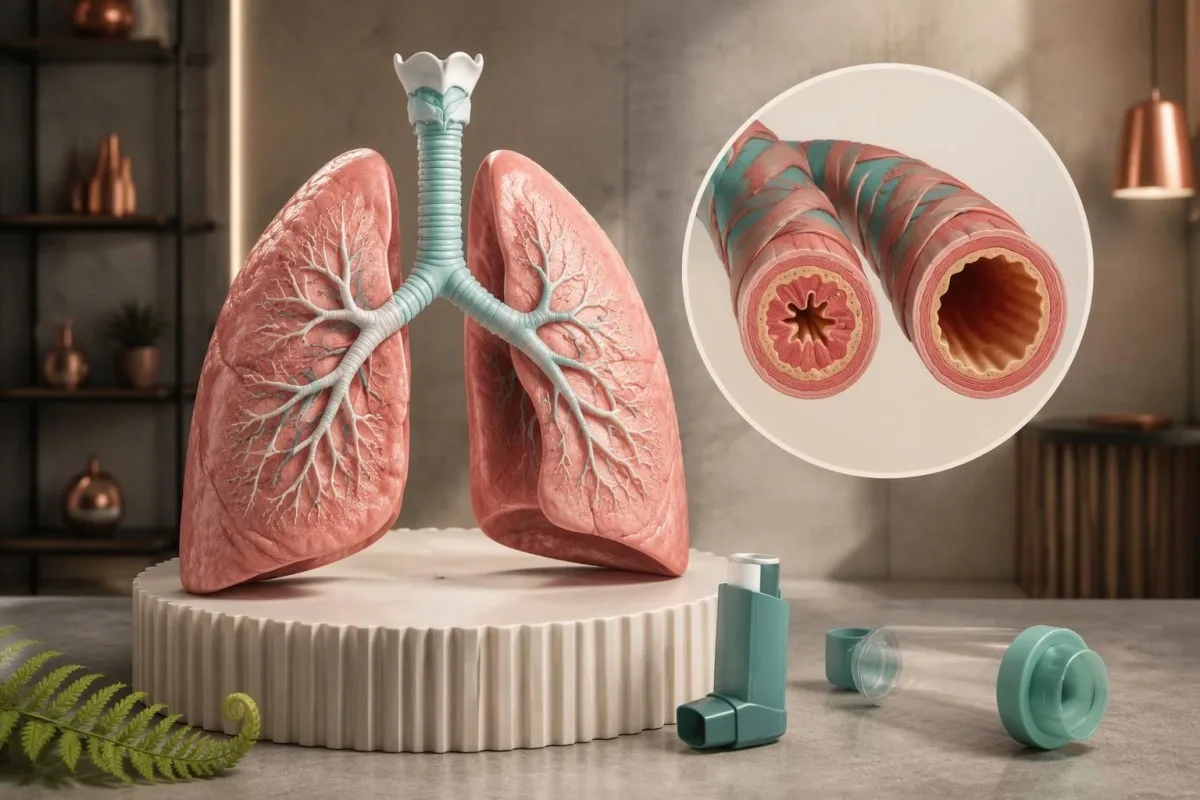
L’asma può causare dispnea variabile, tosse notturna o sintomi durante l’attività fisica, anche quando nessuno sente sibili. I test respiratori sono più importanti di un singolo risultato di laboratorio.

Punti chiave
- Sintomi dell’asma comprendono sibili variabili, dispnea, senso di costrizione toracica e tosse; la presenza di 1 sintomo non basta a stabilire la diagnosi.
- Risvegli notturni dovuti ai sintomi dell’asma anche una sola volta nelle 4 settimane precedenti sono un motivo per rivalutare il controllo dei sintomi secondo il quadro di valutazione GINA.
- Tosse senza sibili può manifestarsi nell’asma variante con tosse, ma una tosse che dura più di 8 settimane negli adulti può avere diverse altre cause.
- Risposta alla spirometria di almeno il 12% e 200 mL del FEV1 negli adulti dopo un broncodilatatore è indice di limitazione variabile del flusso aereo secondo i criteri comunemente usati per l’asma.
- Variabilità del picco di flusso una media superiore a 10% nell'arco di 2 settimane supporta la diagnosi di asma negli adulti secondo i criteri GINA; NICE utilizza una soglia diagnostica diversa.
- FeNO pari ad almeno 50 ppb negli adulti supporta la presenza di infiammazione delle vie aeree di tipo 2 nel contesto clinico appropriato, ma un FeNO basso non esclude l'asma.
- Eosinofili nel sangue superiore a 0.5 × 10^9/L può indicare allergia, asma o altre condizioni; un risultato ematico da solo non può confermare l'asma.
- Segnali di difficoltà respiratoria che richiedono l’emergenza includono l'incapacità di parlare normalmente, spossatezza, confusione, labbra bluastre o grigiastre, oppure una risposta insufficiente al farmaco di sollievo prescritto; non attendere il risultato di un esame.
Quali sono i primi segni dell’asma?
Sintomi dell’asma sono episodi variabili di respiro sibilante, affanno, costrizione toracica o tosse, spesso peggiori di notte o dopo l'attività fisica; l'asma può manifestarsi senza respiro sibilante evidente. La spirometria e il monitoraggio del picco di flusso aiutano a dimostrare una limitazione variabile del flusso aereo, mentre gli esami del sangue da soli non possono confermare l'asma. Una grave difficoltà respiratoria, la confusione o un farmaco di sollievo inefficace richiedono assistenza d'emergenza.
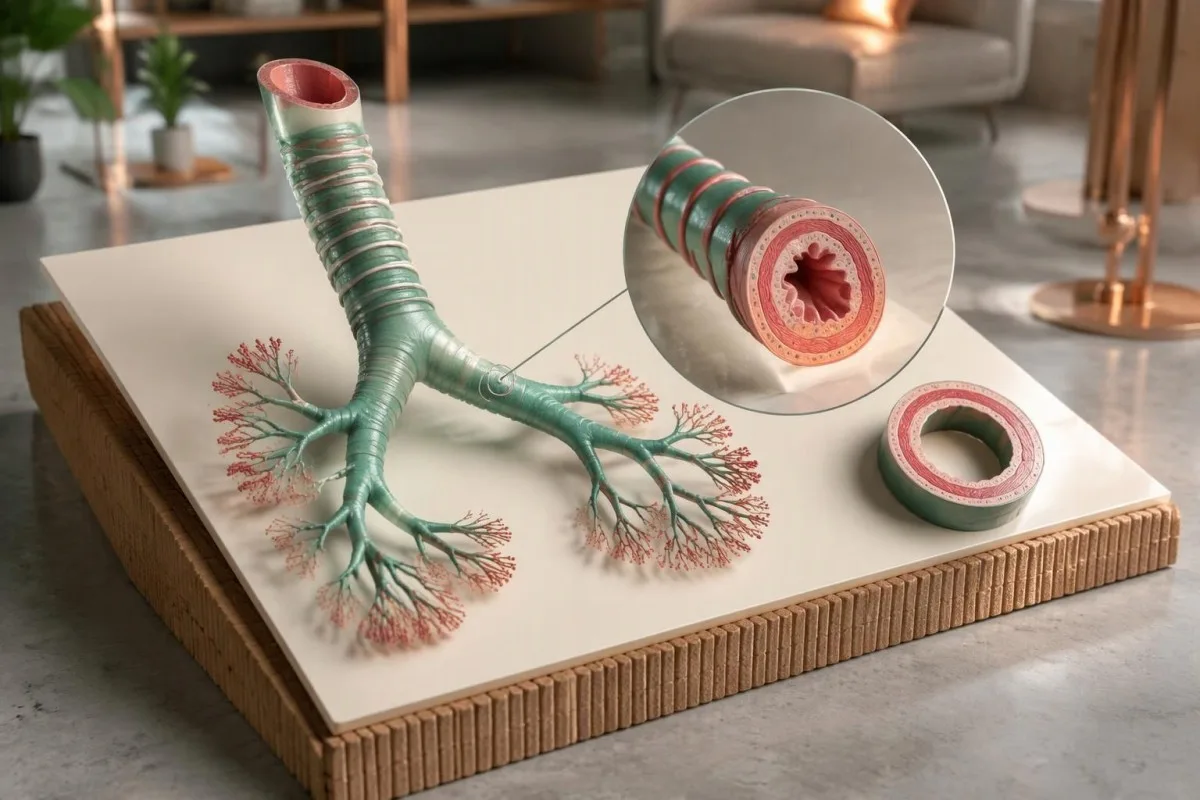
I primi segni dell'asma spesso consistono in un cambiamento rispetto al proprio respiro abituale, anziché in un sintomo costante: una passeggiata familiare diventa più faticosa, una risata scatena la tosse oppure un raffreddore lascia sintomi toracici insolitamente prolungati. Se i sintomi sono lievi e stabili, annotane l'andamento per 2 settimane, ma richiedi una valutazione prima se la respirazione peggiora.
Gli intervalli senza sintomi non escludono l'asma. Una persona può stare bene per 3 giorni e poi avvertire una costrizione toracica dopo aver fatto attività fisica all'aria fredda, perché la sensibilità delle vie aeree e l'esposizione variano; analogamente, un esame obiettivo toracico normale tra un episodio e l'altro non dimostra che le vie aeree funzionino sempre normalmente.
Un ipotetico adulto di 34 anni potrebbe riferire di tossire dopo una corsa, di essersi svegliato due volte in una settimana e di sentirsi perfettamente bene al lavoro. Questa combinazione aumenta il sospetto più di un singolo episodio di tosse, ma il passo successivo consiste nell'anamnesi clinica e in esami obiettivi, non nel presumere che il miglioramento dopo aver usato l'inalatore preso in prestito da qualcuno confermi l'asma.
Kantesti è un Analizzatore di analisi del sangue AI che aiuta a interpretare i risultati di laboratorio di supporto, ma non sostituisce la misurazione del flusso aereo. Il nostro organizzazione e l'ambito clinico distinguono l'interpretazione degli esami di laboratorio dalla diagnosi respiratoria: persino 2 pannelli di laboratorio normali non possono escludere un disturbo respiratorio intermittente.
Perché i sintomi dell’asma sono più evidenti di notte?
Sintomi dell'asma notturni possono diventare più evidenti perché il calibro delle vie aeree e l'attività infiammatoria seguono ritmi giornalieri, mentre gli allergeni presenti in camera da letto o il reflusso possono costituire ulteriori fattori scatenanti. Secondo la valutazione del controllo dei sintomi della strategia GINA 2025, qualsiasi risveglio notturno dovuto all'asma nelle 4 settimane precedenti merita attenzione.
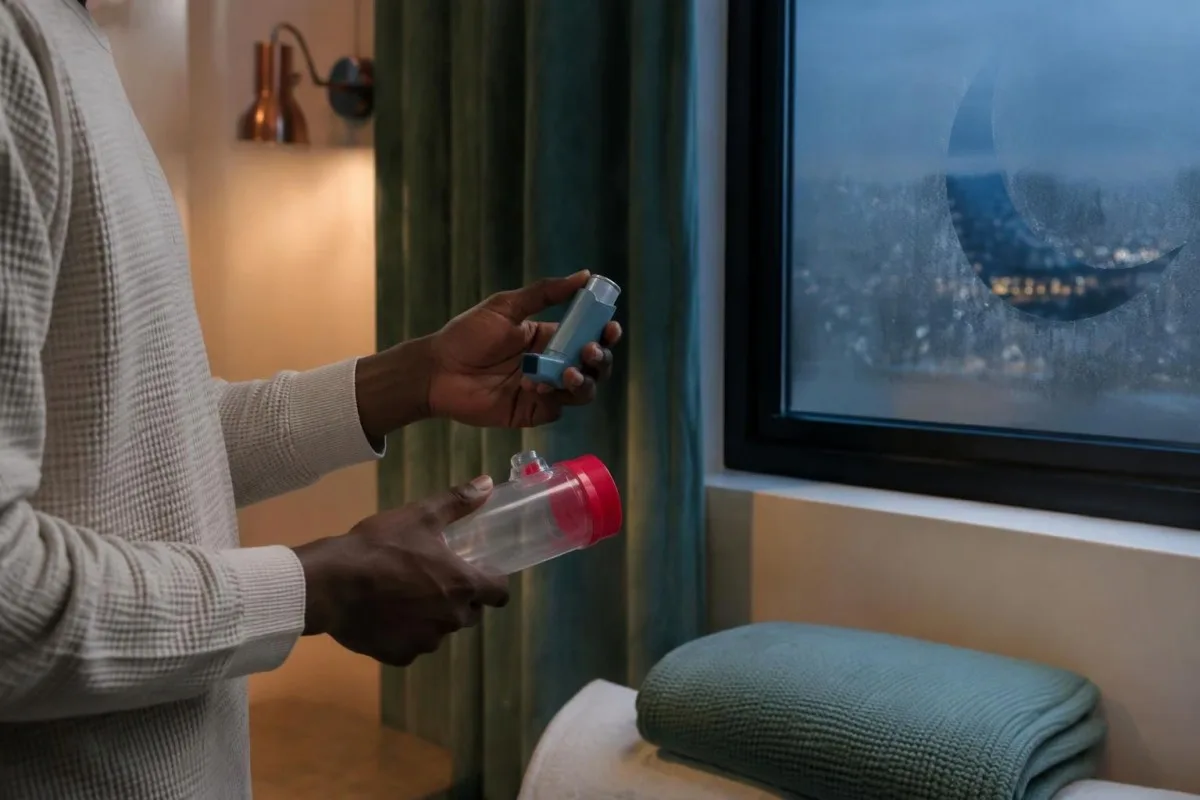
La tosse notturna non è automaticamente asma. La tosse quando ci si sdraia, accompagnata da sapore acido o rigurgito, suggerisce un altro possibile fattore; e il nostro quadri sintomatologici del reflusso spiegano perché la tempistica è utile; 2 condizioni possono coesistere, quindi individuare il reflusso non spiega necessariamente ogni episodio di affanno.
I risvegli ripetuti forniscono più informazioni del solo orario. Annota il numero di risvegli nell'arco di 7 notti, se hai avvertito costrizione toracica o affanno e se il farmaco di sollievo prescritto è stato efficace; una tosse a mezzanotte dopo un pasto è diversa da un risveglio verso l'alba con difficoltà a espirare.
La strategia GINA 2025 valuta i sintomi diurni, i risvegli notturni, le limitazioni dell'attività e, ove applicabile, l'uso di farmaci di sollievo a breve durata d'azione nell'arco di 4 settimane. Chi dorme male a causa dell'asma non dovrebbe interpretare una normale lettura diurna dell'ossigeno come prova di un buon controllo, perché la saturazione di ossigeno non misura la variabilità delle vie aeree.
Un diario tenuto in camera da letto può aiutare a distinguere l'esposizione dalla coincidenza: annota se i sintomi si manifestano a casa, fuori casa o dopo aver cambiato la biancheria da letto nell'arco di 2 settimane. Evita di esporti deliberatamente di nuovo a un fattore scatenante sospetto; i risvegli persistenti meritano una revisione del trattamento e della tecnica d'uso dell'inalatore, anziché il semplice aggiungere altri cuscini.
L’asma può causare tosse senza sibili?
Tosse asmatica senza respiro sibilante è possibile, in particolare nell'asma variante tosse, in cui la tosse può essere il sintomo principale e la spirometria di routine può risultare normale. Negli adulti, una tosse che dura più di 8 settimane richiede una valutazione anche per altre cause, oltre che per l'asma.

L'asma variante tosse e la bronchite eosinofila non asmatica possono entrambe causare tosse cronica associata a infiammazione eosinofila delle vie aeree. La distinzione è importante perché la seconda condizione è in genere priva della limitazione variabile del flusso aereo o dell'iperreattività bronchiale caratteristiche dell'asma; una conta elevata degli eosinofili non può distinguere da sola queste 2 diagnosi.
A normal initial breathing test does not close the investigation when the symptom pattern remains convincing. Clinicians may repeat spirometry during symptoms or consider a supervised bronchial challenge, whereas coughing spells with vomiting or a relevant contact history may need whooping cough testing with attention to how many weeks have elapsed.
Medication review can identify an overlooked explanation for cough. An ACE inhibitor used for blood pressure can cause a dry cough even after months of treatment, so bring a complete medication list rather than focusing only on drugs started within the previous 2 weeks; do not stop prescribed treatment without advice.
The absence of wheezing has 2 very different meanings: mild asthma may produce no audible wheeze, while a severe attack may become quiet because too little air is moving. Quiet breathing combined with exhaustion, difficulty speaking or worsening breathlessness is an emergency—not evidence that the attack has ended.
Come si manifestano i sintomi dell’asma scatenati dall’attività fisica?
Exercise-induced bronchoconstriction causes temporary airway narrowing during or after exercise, often becoming most noticeable within about 5–10 minutes after stopping. Exercise symptoms alone do not prove asthma, because laryngeal obstruction, anaemia and other conditions can also limit breathing.
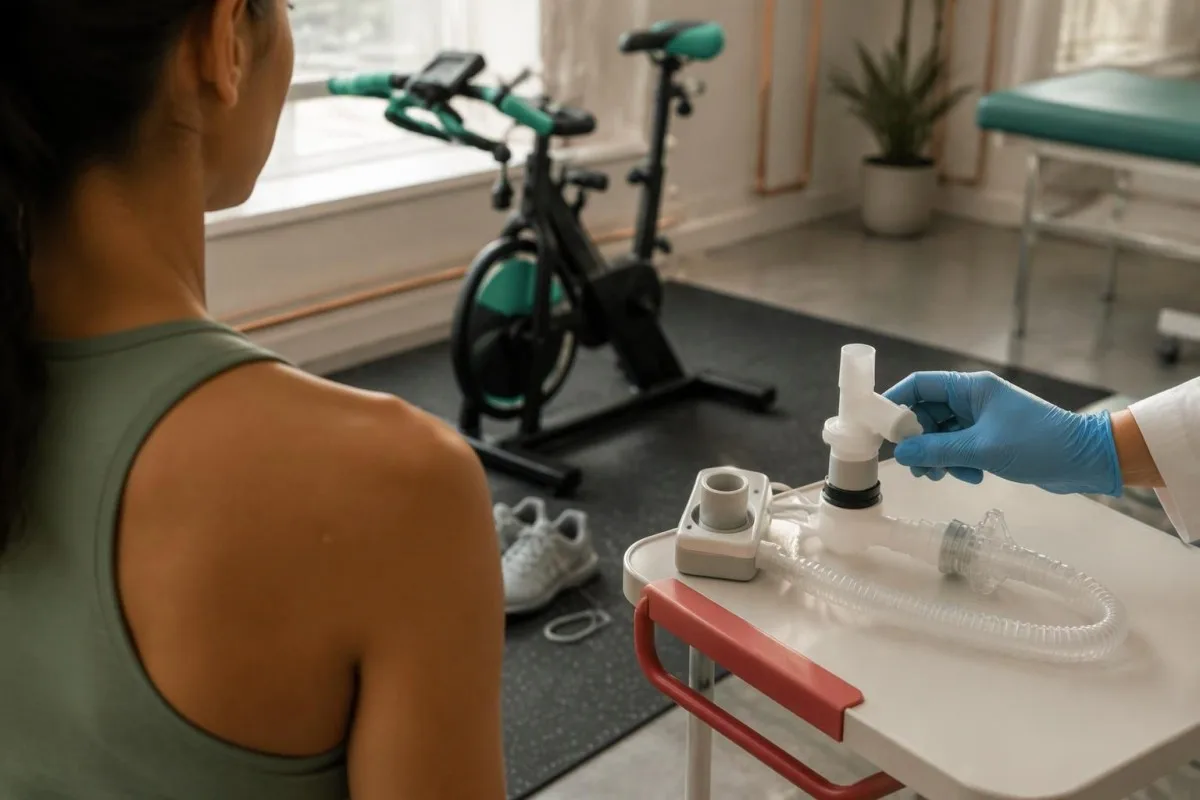
Exercise-related laryngeal obstruction often causes throat tightness or noisy breathing during inhalation at peak effort, then settles relatively quickly after stopping. Bronchoconstriction more often affects expiration and recovery; these are clues rather than absolute rules, and the 2 conditions can occur in the same person.
A supervised exercise challenge measures airflow rather than relying on whether exercise feels difficult. A fall in FEV1 of more than 10% and more than 200 mL after exercise supports asthma in adults under GINA's diagnostic framework; local protocols and criteria for exercise-induced bronchoconstriction may differ.
Reduced exercise tolerance without cough, tightness or variable wheeze deserves a broader assessment. Our iron stores in athletes guide explains why a hypothetical runner with ferritin of 12 ng/mL may need an iron assessment, but that result would not explain away independently documented airway narrowing.
An exercise diary should include intensity, weather and whether symptoms peak during activity or 10 minutes afterward. Once assessed, many people can remain active using a clinician-agreed plan; avoid testing your limits during an unstable period or repeatedly using a reliever without reviewing the underlying treatment.
Quali fattori scatenanti causano comunemente i sintomi dell’asma?
Asthma triggers include respiratory viruses, pollen, dust mites, animal allergens, smoke, air pollution, cold air and exercise. A 2-week exposure diary can suggest patterns, but a suspected trigger is not the same thing as a confirmed allergy or a diagnosis of asthma.
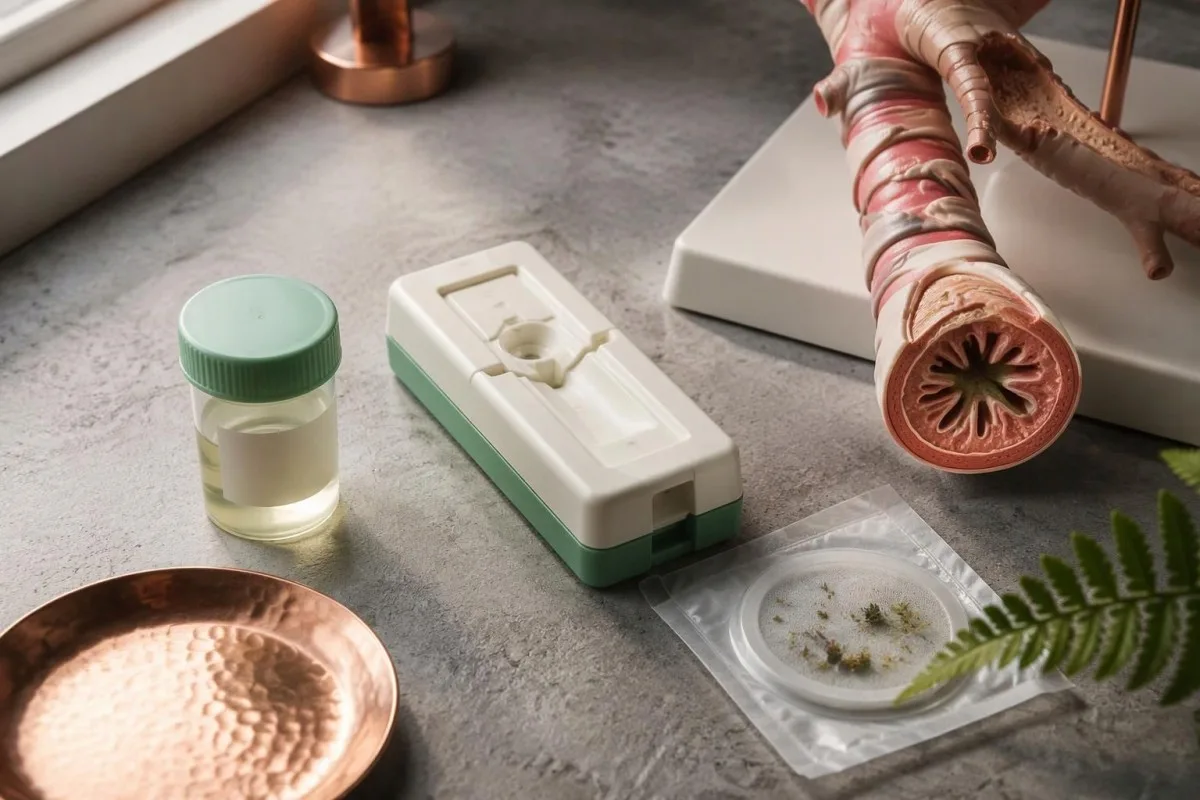
Allergy testing identifies sensitisation, not necessarily the cause of every breathing episode. A positive specific IgE result to 1 allergen becomes clinically useful when exposure reliably matches symptoms; our valutazione allergologica dei componenti guide explains why more detailed panels still require a relevant history.
Damp buildings can worsen respiratory symptoms through several mechanisms, including allergen exposure and irritation. There is no single laboratory panel that establishes 'mould-related asthma'; our mould testing limitations distinguish targeted allergy assessment from unsupported broad testing, and symptoms should be evaluated even when 1 panel is normal.
Work-related asthma can appear after months or years of exposure and may improve on weekends or holidays. Record work tasks and breathing measurements across both work and non-work days for an occupational assessment; a specialist may need more than the standard 2-week diagnostic diary, and intentional exposure challenges are unsafe.
Some beta-blockers, including certain eye drops, can worsen bronchoconstriction, while aspirin or other NSAIDs trigger symptoms in a susceptible subgroup rather than everyone with asthma. Review all medications, including over-the-counter products, during 1 appointment; do not stop cardiovascular drugs or attempt a home aspirin challenge.
Quali altre patologie possono sembrare asma?
Asthma-like symptoms can result from reflux, upper-airway disorders, COPD, anaemia, cardiac disease or respiratory infection. At least 2 separate conditions may contribute, so persistent symptoms despite appropriate asthma treatment should prompt reassessment rather than automatic dose escalation.

Wheeze limited to one area or symptoms beginning suddenly after choking suggest focal airway obstruction rather than typical diffuse asthma. The finding deserves clinical assessment, particularly in a child; a single persistent wheeze has a different diagnostic meaning from episodes that change with several unrelated triggers.
Fixed obstruction on repeated spirometry does not automatically mean COPD, because longstanding asthma can also leave persistent airflow limitation. Smoking history, age and previous lung disease help distinguish causes, while early emphysema or a strong family history may justify alpha-1 antitrypsin assessment rather than assuming 1 diagnostic label explains everything.
Recurrent chest infections, poor growth or a chronic productive cough in a young person should widen the investigation. A sweat chloride result of at least 60 mmol/L supports cystic fibrosis in the appropriate diagnostic setting; values of 30–59 mmol/L require further evaluation rather than being treated as an asthma result.
New breathlessness with chest pressure, fainting or inability to lie comfortably needs timely assessment for non-asthma causes. Even 1 abrupt episode of unexplained breathlessness can be urgent, and attributing symptoms to anxiety before checking relevant respiratory and cardiac possibilities risks missing a treatable condition.
In che modo la spirometria aiuta a diagnosticare l’asma?
Spirometry measures airflow, including FEV1 and FVC, and can show obstruction that improves after a bronchodilator. An adult FEV1 increase of at least 12% and 200 mL supports variable airflow limitation under commonly used asthma criteria, but a negative test does not exclude intermittent asthma.
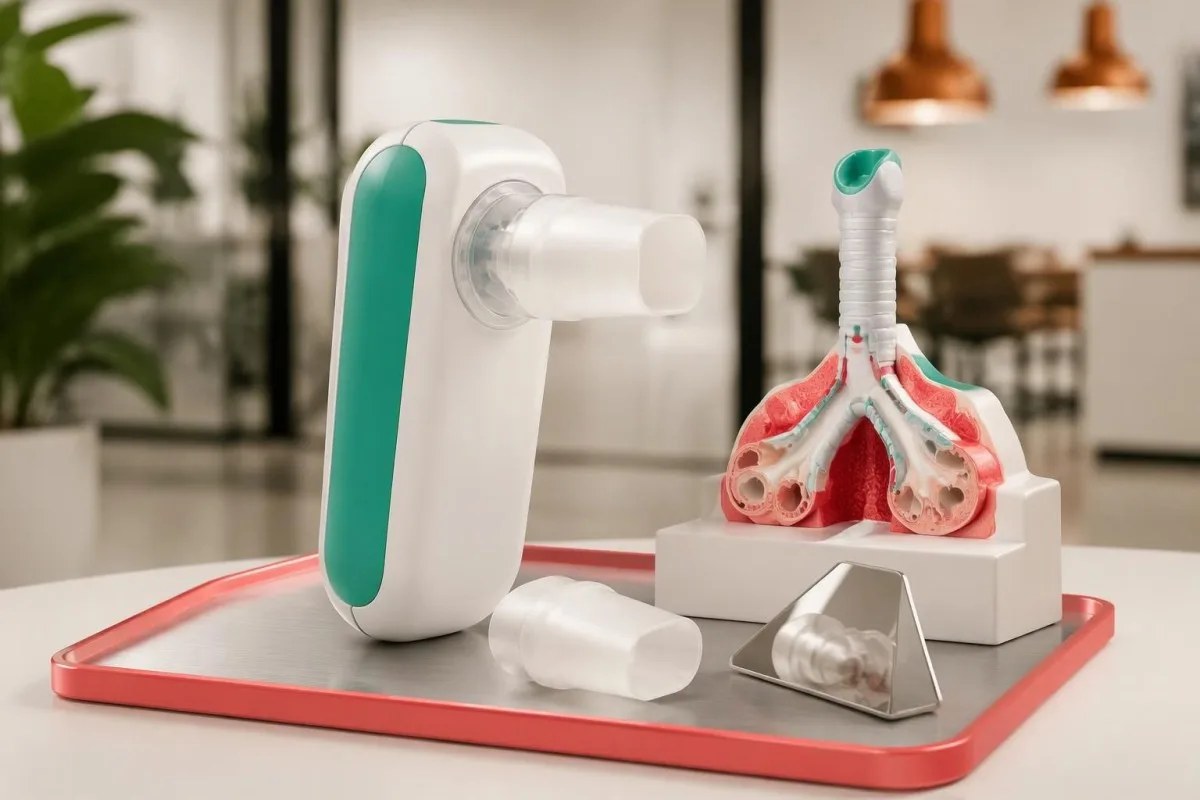
The FEV1/FVC ratio helps identify obstruction, but interpretation should use an age-appropriate lower limit of normal rather than applying 0.70 to every patient. The European Respiratory Society adult diagnostic guideline recommends spirometry and bronchodilator testing within a structured assessment, followed by additional tests when necessary (Louis et al., 2022).
Consider a hypothetical result: FEV1 rises from 1.90 L to 2.18 L after the test medication. The increase is 280 mL and 14.7% of the starting value, meeting the commonly used adult reversibility criterion; the finding supports asthma when the history fits, but it is not a diagnosis detached from clinical context.
Guidelines and laboratory reporting standards do not always express reversibility in the same way. NICE NG245 also accepts an adult FEV1 increase of at least 10% of predicted normal; if predicted FEV1 is 3.40 L, that same 280 mL improvement is only 8.2% of predicted, explaining why 2 reporting conventions can produce different flags.
Testing quality matters: spirometry usually seeks at least 3 acceptable manoeuvres, and adult repeatability commonly requires the best FEV1 values to be within 150 mL. Our breathlessness laboratory guide explains complementary investigations, but no laboratory interpretation can compensate for an unreliable breathing manoeuvre.
In che modo un diario del picco di flusso può aiutare a diagnosticare l’asma?
Peak-flow monitoring can document variable breathing when spirometry is unavailable or initially inconclusive. GINA uses average daily variability above 10% in adults and above 13% in children over 2 weeks as supportive evidence; NICE NG245 uses a 20% diagnostic threshold in its pathway.
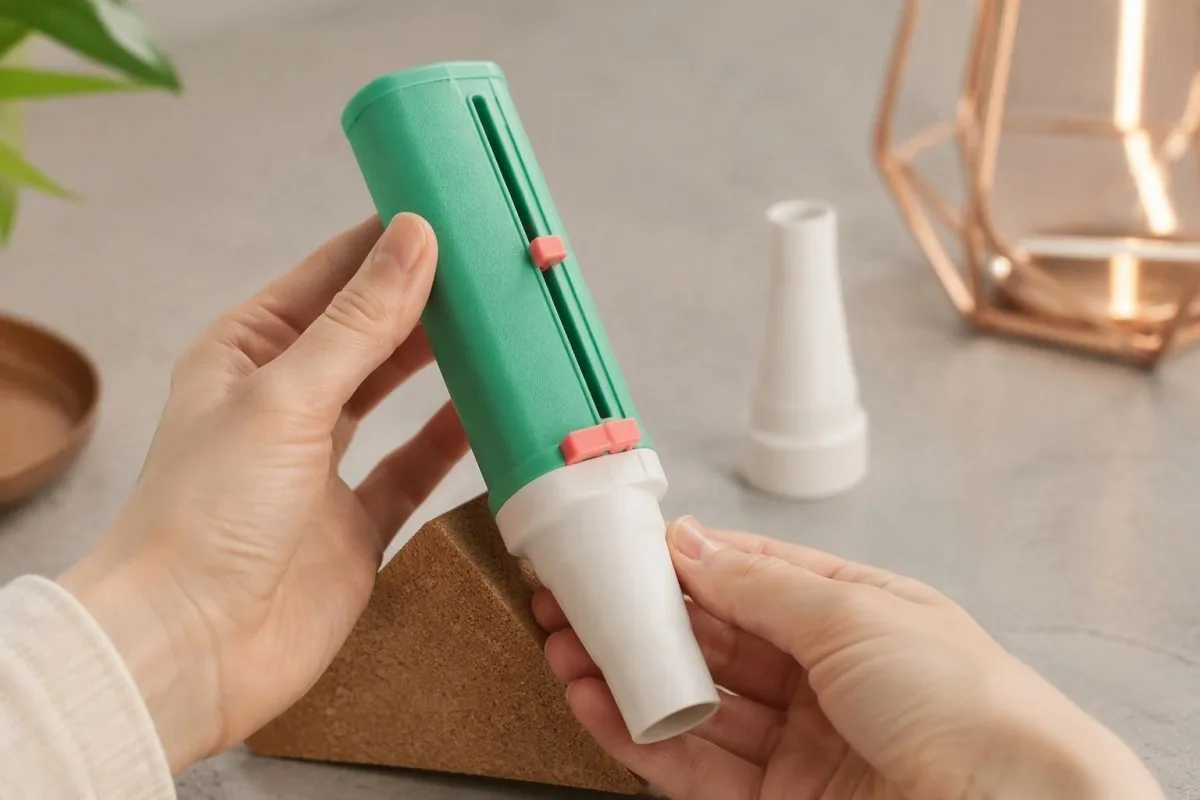
Use the same meter and technique each time, usually measuring morning and evening as instructed. Perform 3 blows per session and record the highest acceptable reading in L/min; note symptoms and medication timing, because taking a bronchodilator before one session but not the other can distort the comparison.
Daily variability can be calculated as the highest minus the lowest reading divided by their mean, multiplied by 100. If a hypothetical day's readings are 380 and 460 L/min, variability is 80/420 × 100, or 19.0%; the diagnostic assessment uses the average across the monitoring period, not that single day's percentage.
Peak-flow action zones and diagnostic variability answer different questions. A personalised plan may use at least 80% of personal best, 50–79%, and below 50% to guide action, whereas diagnosis examines fluctuations over time; a low personal best should not be accepted as normal without checking technique and clinical status.
Kantesti è un Piattaforma di interpretazione esami del sangue AI, not a service for confirming asthma from a 2-week breathing diary. Our AI report safety checks explain why readers should distinguish a recorded value, an automated explanation and a clinician's diagnosis—particularly when different guidelines use different thresholds.
Cosa indicano FeNO ed eosinofili sull’asma?
FeNO measures nitric oxide in exhaled breath, while blood eosinophils measure an inflammatory cell population; both can support assessment of type 2 asthma. NICE NG245 uses FeNO of at least 50 ppb in adults and at least 35 ppb in children aged 5–16 within its diagnostic pathways.

The NICE/BTS/SIGN 2024 guideline allows an elevated blood eosinophil count above the laboratory reference range or FeNO of at least 50 ppb to establish an adult diagnosis within its suggestive-history pathway. This does not mean a blood test alone confirms asthma: the recommendation depends on clinical assessment, and GINA places greater emphasis on documenting variable airflow limitation.
A low FeNO reading does not rule out asthma, particularly after inhaled corticosteroid treatment or in non-type-2 disease. Allergic rhinitis can raise FeNO without proving lower-airway asthma, so a hypothetical reading of 60 ppb with nasal symptoms but no compatible breathing history needs a different interpretation from 60 ppb with recurrent nocturnal tightness.
Eosinophil counts above 0.5 × 10^9/L, equivalent to 500 cells/µL, commonly attract attention, although laboratories use different upper limits. Our high eosinophil interpretation explains why persistent counts of at least 1.5 × 10^9/L require broader evaluation for medications, parasites and other disorders—not simply a stronger asthma label.
Steroid timing can change both FeNO and eosinophil results, sometimes making 2 tests taken weeks apart look inconsistent. Our standard di interpretazione clinica support reporting such limitations; tell the clinician when you last used inhaled or oral steroids, but never stop treatment just to make a test more likely to turn positive.
Perché gli esami del sangue da soli non possono confermare l’asma?
Blood tests alone cannot confirm asthma because they do not demonstrate variable airflow limitation or reliably distinguish asthma from every alternative cause of cough. Even 1 markedly abnormal eosinophil or IgE result needs a compatible history and an appropriate diagnostic pathway.
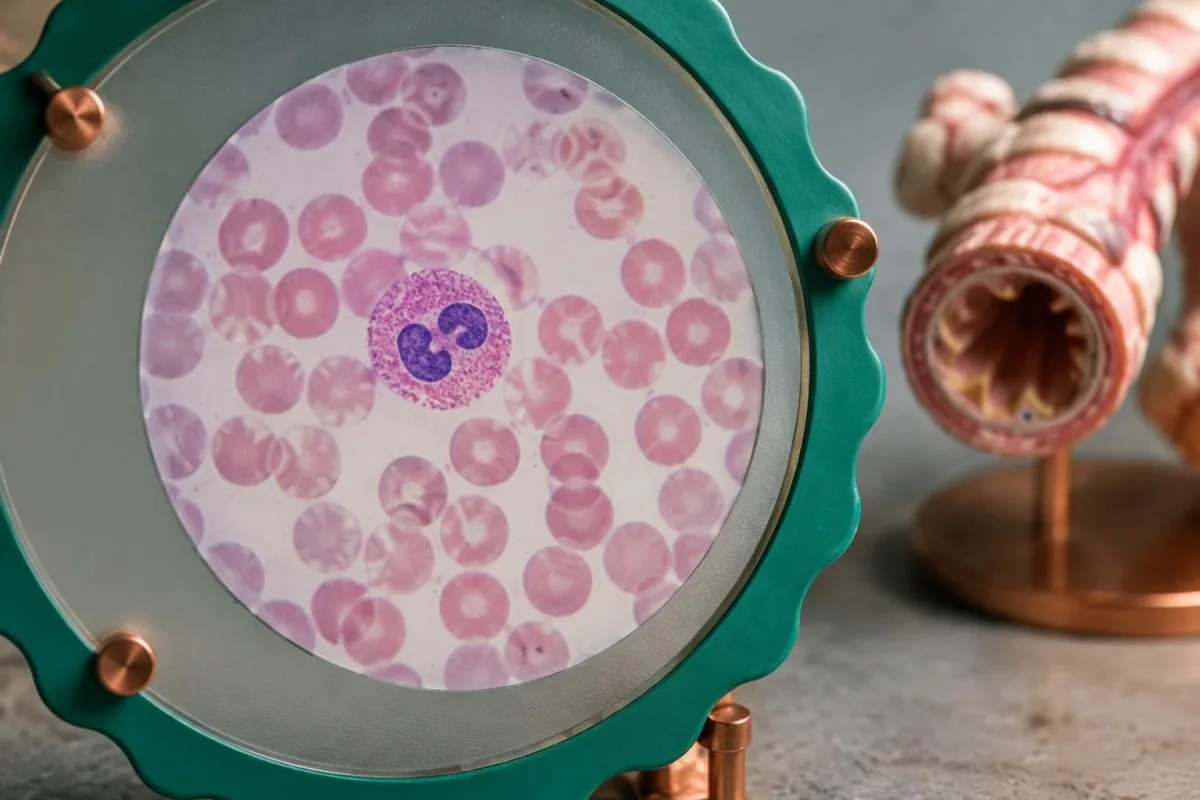
Total IgE and allergen-specific IgE are different measurements: one reflects an overall antibody concentration, while the other tests sensitisation to selected allergens. There is no universal total-IgE cutoff that diagnoses asthma across adults and children; a positive result to 1 allergen may explain sensitisation without proving that exposure causes wheeze.
A CBC may identify anaemia that contributes to breathlessness, and selected inflammatory tests may help assess a suspected infection. Our confronto WBC e CRP explains why these markers can disagree; an elevated CRP of 25 mg/L is not an asthma threshold and cannot independently determine whether antibiotics are needed.
Kantesti AI can help readers compare eosinophil counts, haemoglobin and other reported markers, but it cannot establish variable airflow limitation from a laboratory PDF. A hypothetical eosinophil change from 0.62 to 0.18 × 10^9/L after steroid treatment may reflect treatment exposure rather than the disappearance of asthma.
Routine asthma diagnosis does not require ordering every available inflammatory marker. Bring existing results and a medication timeline covering at least the previous 2 weeks; clinicians can then select tests for a specific question, such as anaemia, allergy or treatment planning, instead of treating a large panel as a substitute for breathing assessment.
Quali segnali d’allarme respiratori richiedono cure d’emergenza?
Chiamare immediatamente i servizi di emergenza for severe breathlessness, inability to speak normally, blue or grey lips, confusion, drowsiness, exhaustion or a prescribed reliever that is not helping. If available, peak flow below 50% of personal best or oxygen saturation of 92% or less with acute symptoms adds urgency; do not wait for either measurement.

A quiet or 'silent' chest during worsening breathing can indicate critically reduced air movement, not recovery. Peak flow below 33% of personal best is a life-threatening feature in UK acute-asthma frameworks, but inability to obtain a reading because of severe breathlessness is itself concerning; call the local emergency number, such as 999 or 112 where applicable.
While help is coming, sit upright and use your prescribed reliever according to your written action plan or emergency-dispatch instructions. Do not drive yourself, and do not delay the call to perform repeated peak-flow tests; even 1 episode of confusion or marked exhaustion can signal that self-management is no longer safe.
An oxygen reading does not measure carbon dioxide, and home devices can be inaccurate because of movement, cold fingers or other factors. Our arterial gas interpretation explains why a normal or rising PaCO2 near or above 45 mmHg during severe acute asthma can concern clinicians when vigorous breathing would usually lower it.
Sudden breathlessness with chest pain, coughing up blood or unilateral leg swelling may indicate another emergency; our urgent leg clot signs explain that connection. Breathing difficulty with tongue or throat swelling after an exposure can be anaphylaxis: use a prescribed adrenaline auto-injector immediately and call emergency services, because 1 asthma inhaler does not replace anaphylaxis treatment.
Come si valutano i sintomi dell’asma nei bambini?
Children's asthma symptoms may include nighttime cough, wheeze, reduced play or breathlessness rather than a clear description of chest tightness. Objective testing is often possible from about age 5, while younger children usually need a pattern-based assessment and monitored treatment response.
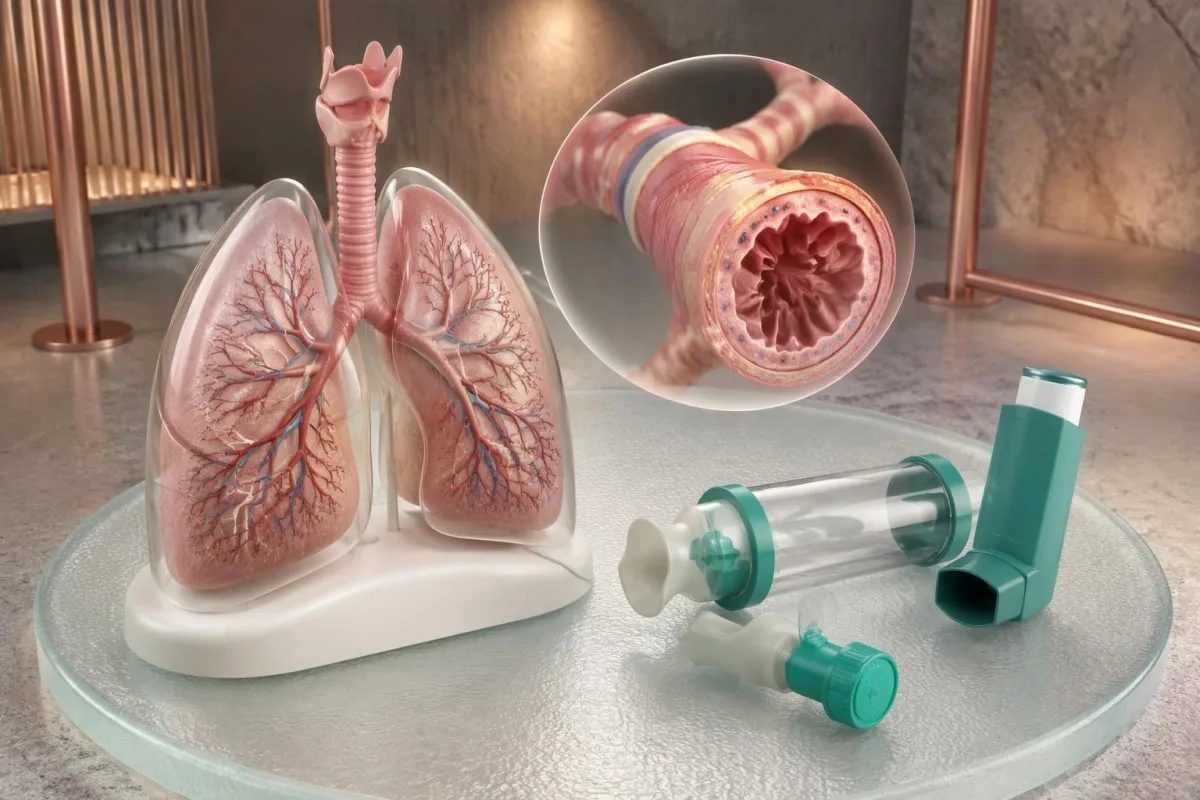
Preschool viral wheeze is not identical to established persistent asthma. Clinicians consider whether symptoms occur only during colds or also between illnesses, along with allergy history and family risk; 2 children who wheeze with the same virus can have different longer-term patterns, so a permanent label should not rest on one episode.
A treatment trial in a child younger than 5 may be assessed over approximately 8–12 weeks under NICE guidance, depending on the presentation. Improvement needs to be interpreted alongside adherence, device technique and natural recovery from a virus; a treatment response is useful evidence, but it is not an isolated laboratory-style confirmation.
Children's spirometry requires age-appropriate interpretation and coaching, not adult thresholds pasted onto smaller lungs. GINA uses an FEV1 increase of at least 12% of predicted in children as a supportive bronchodilator criterion, and a technically poor test may need repetition even if the report prints a reassuring percentage.
Nostro children's laboratory safety guide explains why age-specific ranges matter without replacing respiratory assessment. In a child, marked chest recession, inability to drink or speak normally, unusual sleepiness or worsening breathing warrants urgent help; even 1 such sign outweighs a normal previous test.
Cosa dovresti portare a una valutazione per l’asma?
Prepare for an asthma assessment by bringing your symptom pattern, medication list, inhaler devices and any previous breathing or laboratory results. A 2-week diary of symptoms, exposures and clinician-requested peak-flow readings is often more useful than a long list of unrelated tests.
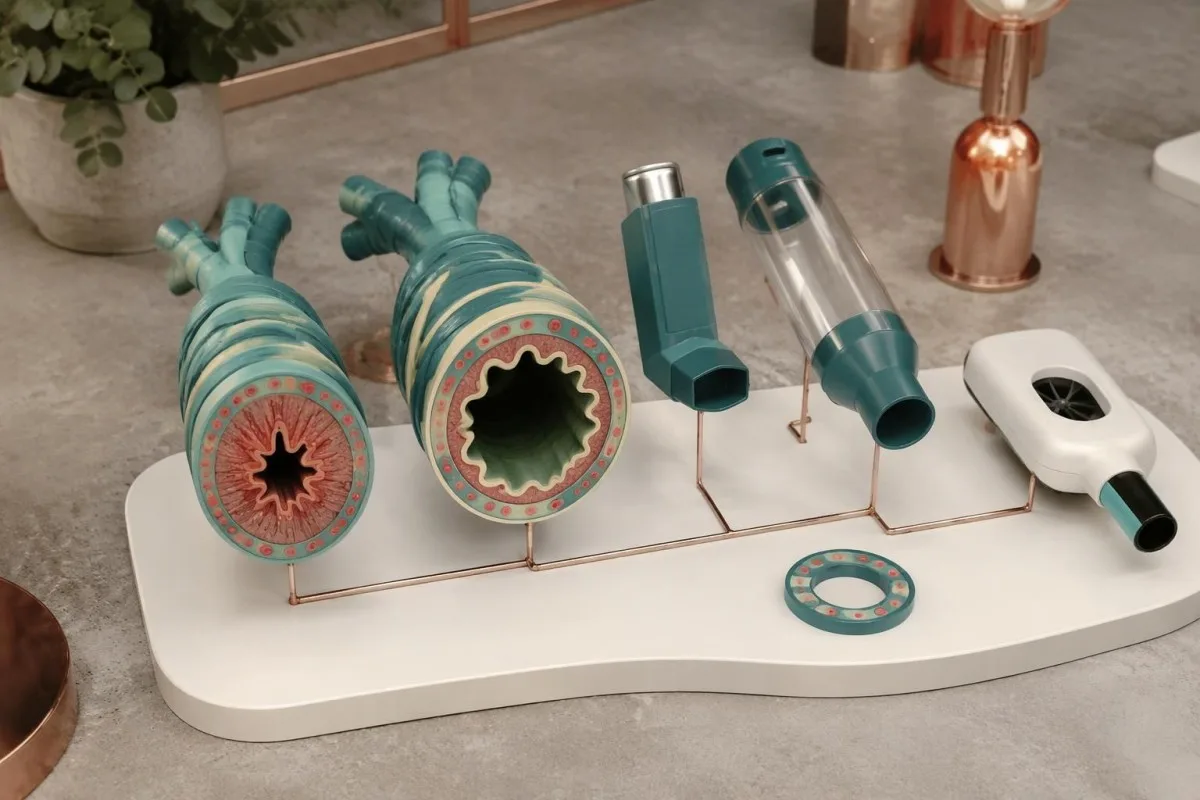
Ask the testing service which inhalers, if any, should be withheld and for how long before spirometry. Instructions vary by medication and test purpose, so do not assume a universal 12-hour rule; if symptoms worsen while following preparation instructions, use needed treatment and contact the service rather than prioritising an ideal test.
Bring the actual inhaler and spacer so a clinician can observe technique rather than relying on a description. Different devices require different inhalation patterns, and 1 correct demonstration can reveal why a prescribed treatment seemed ineffective; poor technique can look like resistant disease even when the medication choice is appropriate.
Kantesti è un Strumento di analisi degli esami del sangue basato su AI that can help explain accompanying laboratory reports while the clinician evaluates breathing symptoms. Our Guida alla tecnologia AI describes the interpretation workflow, but an estimated processing time of about 60 seconds should never be confused with the time needed to establish a respiratory diagnosis.
Share only the information needed for the assessment, particularly when organising results for another family member. Our informazioni sulla privacy e sui dati explains handling considerations; keep symptom diaries and original reports available for clinical review, and do not let uploading 1 document delay urgent care or a necessary breathing appointment.
Pubblicazioni di ricerca ed evidenze alla base dei test per l’asma
Asthma diagnostic evidence comes primarily from respiratory guidelines and studies of airflow, airway responsiveness and inflammatory markers. The 3 external references below directly support this article; the 2 Zenodo laboratory guides are separate educational resources and are not studies validating asthma diagnosis.
GINA's 2025 strategy links a characteristic symptom history with evidence of variable expiratory airflow limitation, while the 2024 NICE/BTS/SIGN guideline specifies a different sequence of objective tests. The European Respiratory Society adult guideline supplies a third structured approach (Louis et al., 2022); comparing all 3 helps explain why clinicians may reasonably order tests in different sequences.
I materiali di Kantesti Guida RDW e globuli rossi provides background when a CBC raises a separate question about anaemia and breathlessness. Its Zenodo DOI identifies that publication, not proof that RDW diagnoses asthma; even 2 abnormal red-cell indices must be interpreted as haematology findings rather than measurements of airway narrowing.
IL guida all'interpretazione del rapporto renale addresses BUN, creatinine and clinical context rather than asthma symptoms. Its separate Zenodo DOI is included for publication transparency, and neither of these 2 laboratory guides establishes the sensitivity, specificity or effectiveness of an asthma diagnostic pathway.
Nostro standard di contenuto medico distinguish guideline-supported facts from educational examples and product descriptions. Kantesti does not claim that these 2 DOI resources validate asthma detection; uncertain symptoms need clinical assessment, and emergency breathing warning signs require immediate action regardless of how recently a report was interpreted.
Domande frequenti
Quali sono i primi segni dell’asma negli adulti?
I primi segni dell’asma negli adulti includono spesso affanno variabile, senso di costrizione toracica, respiro sibilante o tosse che peggiora di notte o dopo l’attività fisica. Un periodo senza sintomi non esclude l’asma, perché la limitazione del flusso aereo può variare da un giorno all’altro. Un diario dei sintomi di 2 settimane può aiutare il medico a individuare degli schemi quando i sintomi sono lievi e stabili. Per confermare la diagnosi sono necessarie la spirometria o altri esami obiettivi appropriati; in caso di peggioramento della respirazione, è opportuno sottoporsi a una valutazione prima.
Si può avere l’asma senza respiro sibilante?
L’asma può manifestarsi senza sibili udibili, in particolare quando la tosse è il sintomo principale o quando i sintomi sono assenti durante una visita. La tosse nell’adulto che dura più di 8 settimane richiede una valutazione per l’asma e altre possibili cause, tra cui il reflusso, gli effetti dei farmaci e la bronchite eosinofila non asmatica. Se la spirometria iniziale è normale ma il sospetto persiste, può essere necessario ripetere l’esame o eseguire un test di provocazione bronchiale sotto supervisione. Un torace silenzioso in caso di grave difficoltà respiratoria è un’altra situazione: può indicare un flusso d’aria pericolosamente ridotto e richiede assistenza urgente.
Perché l’asma peggiora di notte?
Asthma can worsen at night because airway function follows daily rhythms and bedroom allergens or reflux may add triggers. GINA's symptom-control assessment treats any asthma-related nighttime waking in the previous 4 weeks as a reason to review control. Record awakenings, breathing symptoms and prescribed reliever use rather than assuming every nighttime cough is asthma. Repeated waking should prompt a clinical review, while severe breathing difficulty requires emergency care.
Un esame del sangue può rilevare se hai l’asma?
Un esame del sangue da solo non può confermare l’asma, perché non dimostra una limitazione variabile del flusso aereo né esclude tutte le altre cause dei sintomi respiratori. Una conta degli eosinofili superiore a 0.5 × 10^9/L può riscontrarsi in caso di asma, allergie, assunzione di farmaci o altri disturbi. La linea guida NICE NG245 consente di formulare una diagnosi negli adulti sulla base di eosinofili elevati nell’ambito di un percorso che prevede un’anamnesi suggestiva, ma si tratta di un algoritmo clinico, non dell’interpretazione di un singolo risultato ematico. A seconda del quadro clinico e delle linee guida locali, i medici possono ricorrere anche alla spirometria, alla FeNO, al monitoraggio del picco di flusso o al test di provocazione bronchiale.
Si può avere l’asma con una spirometria normale?
Una spirometria normale non esclude l’asma, perché il restringimento delle vie aeree può essere intermittente o attenuato dal trattamento. Il medico può ripetere la spirometria durante i sintomi, richiedere misurazioni del picco di flusso due volte al giorno per 2 settimane oppure prescrivere un test di provocazione bronchiale sotto supervisione. Un miglioramento del FEV1 nell’adulto di almeno il 12% e 200 mL dopo la somministrazione di un broncodilatatore è indicativo di variabilità secondo i criteri comunemente utilizzati. Le istruzioni per la preparazione dipendono dal farmaco e dal test: non sospendere mai un inalatore senza aver ricevuto indicazioni specifiche da un professionista sanitario.
Quando i sintomi dell’asma devono essere trattati come un’emergenza?
I sintomi dell’asma richiedono assistenza d’emergenza quando la respirazione è molto difficoltosa, parlare normalmente è difficile, la persona è esausta o confusa, le labbra appaiono blu o grigie oppure il farmaco di sollievo prescritto non fa effetto. Un picco di flusso inferiore al 50% del miglior valore personale o una saturazione di ossigeno pari o inferiore al 92% in presenza di sintomi acuti aumenta la preoccupazione, ma non si deve rimandare l’intervento d’emergenza per effettuare misurazioni. Mettetevi seduti in posizione eretta, chiamate il numero locale di emergenza e usate il farmaco di sollievo prescritto secondo il piano scritto o le istruzioni dell’operatore. Non guidate da soli e considerate un torace silenzioso associato a un peggioramento della difficoltà respiratoria un segnale d’allarme, non un motivo di rassicurazione.
Scopri come leggere le analisi del sangue
Carica il tuo referto di laboratorio e l'IA di Kantesti spiega ogni biomarcatore in un linguaggio semplice in pochi secondi. Utilizzata da oltre 2 milioni di persone in tutto il mondo.
Riferimenti
- Klein, T., Mitchell, S., & Weber, H. (2026). Esame del sangue RDW: guida completa a RDW-CV, MCV e MCHC. Ricerca medica sull'IA di Kantesti. DOI
- Klein, T., Mitchell, S., & Weber, H. (2026). Rapporto BUN/Creatinina Spiegato: Guida al Test della Funzione Renale. Ricerca medica sull'IA di Kantesti. DOI
- Global Initiative for Asthma (2025). Global Strategy for Asthma Management and Prevention. GINA Strategy Report.
- National Institute for Health and Care Excellence, British Thoracic Society, and Scottish Intercollegiate Guidelines Network (2024). Asthma: diagnosis, monitoring and chronic asthma management (BTS, NICE, SIGN). NICE Guideline NG245.
- Louis R et al. (2022). European Respiratory Society guidelines for the diagnosis of asthma in adults. European Respiratory Journal. DOI
- 2 milioni+Esami analizzati
- 127+Paesi
- 100+Lingue
Informazioni sul team medico


Segnali di fiducia E-E-A-T
Esperienza
Revisione clinica guidata da un medico dei flussi di lavoro di interpretazione degli esami.
Competenza
Focus sulla medicina di laboratorio su come i biomarcatori si comportano nel contesto clinico.
autorevolezza
Revisione medica a cura del dott. Thomas Klein, con il contributo della dott.ssa Sarah Mitchell e del prof. Hans Weber.
Affidabilità
Interpretazione basata su evidenze, con percorsi di follow-up chiari per ridurre l’allarme.


Avvertenza medica
Questo articolo ha solo scopo educativo e non costituisce consulenza medica. Consulta sempre un operatore sanitario qualificato per decisioni su diagnosi e trattamento.
Pubblicato · Contatta il team editoriale
Pubblicato da Kantesti Ltd, registrata in Inghilterra e Galles, numero di società. 17090423, Londra, Regno Unito.
