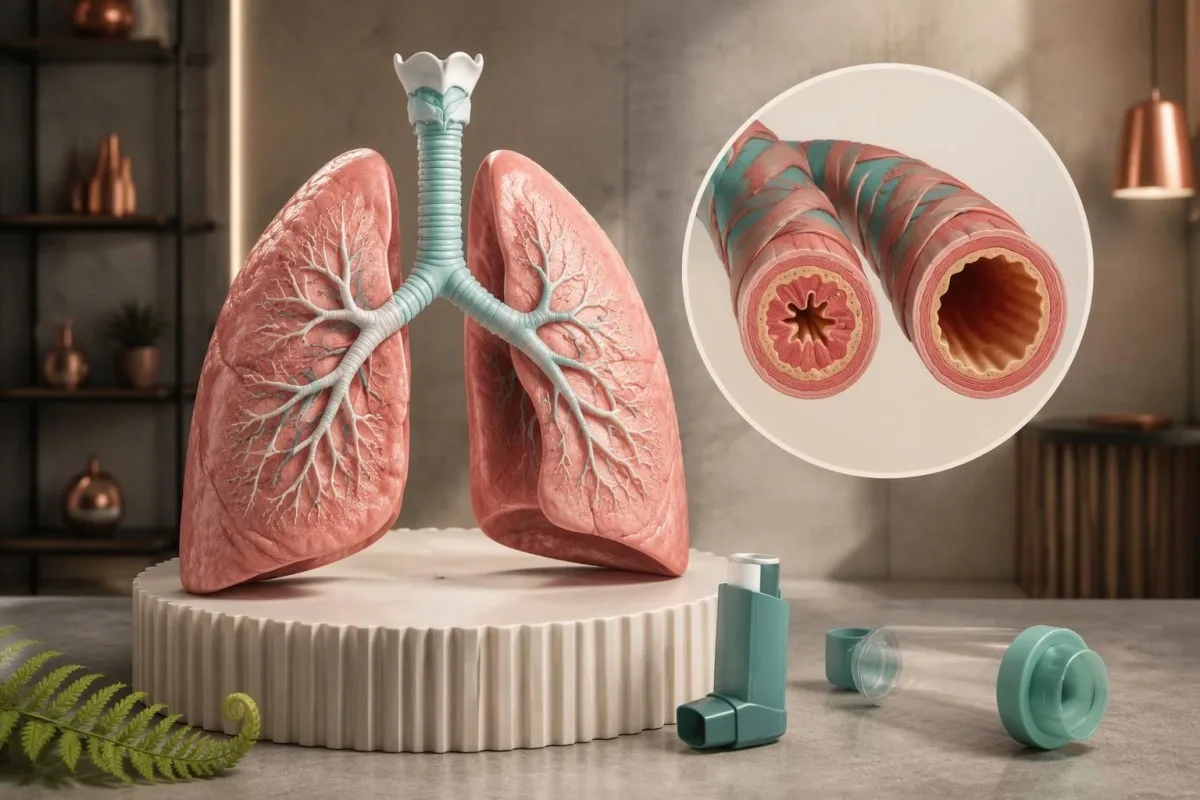
Asthma can cause changing breathlessness, nighttime cough or exercise symptoms—even when nobody hears a wheeze. Breathing tests matter more than an isolated laboratory result.

Кључне поруке
- Asthma symptoms include variable wheezing, breathlessness, chest tightness and cough; having 1 symptom does not establish the diagnosis.
- Nighttime waking from asthma symptoms even once in the previous 4 weeks is a reason to review symptom control under the GINA assessment framework.
- Cough without wheezing can occur in cough-variant asthma, but cough lasting more than 8 weeks in adults has several other possible causes.
- Spirometry response of at least 12% and 200 mL in adult FEV1 after a bronchodilator supports variable airflow limitation under commonly used asthma criteria.
- Peak-flow variability averaging more than 10% over 2 weeks supports asthma in adults under GINA criteria; NICE uses a different diagnostic threshold.
- FeNO of at least 50 ppb in adults supports type 2 airway inflammation in the appropriate clinical context, but low FeNO does not exclude asthma.
- Eozinofili u krvi above 0.5 × 10^9/L can reflect allergy, asthma or other conditions; a blood result alone cannot confirm asthma.
- Знаци отежаног дисања који захтевају хитну помоћ include inability to speak normally, exhaustion, confusion, blue or grey lips, or poor response to the prescribed reliever; do not wait for a test result.
What are the early signs of asthma?
Asthma symptoms are changing episodes of wheezing, breathlessness, chest tightness or cough, often worse at night or after exercise; asthma can occur without obvious wheezing. Spirometry and peak-flow monitoring help demonstrate variable airflow limitation, whereas blood tests alone cannot confirm asthma. Severe breathing difficulty, confusion or a reliever that is not helping requires emergency care.
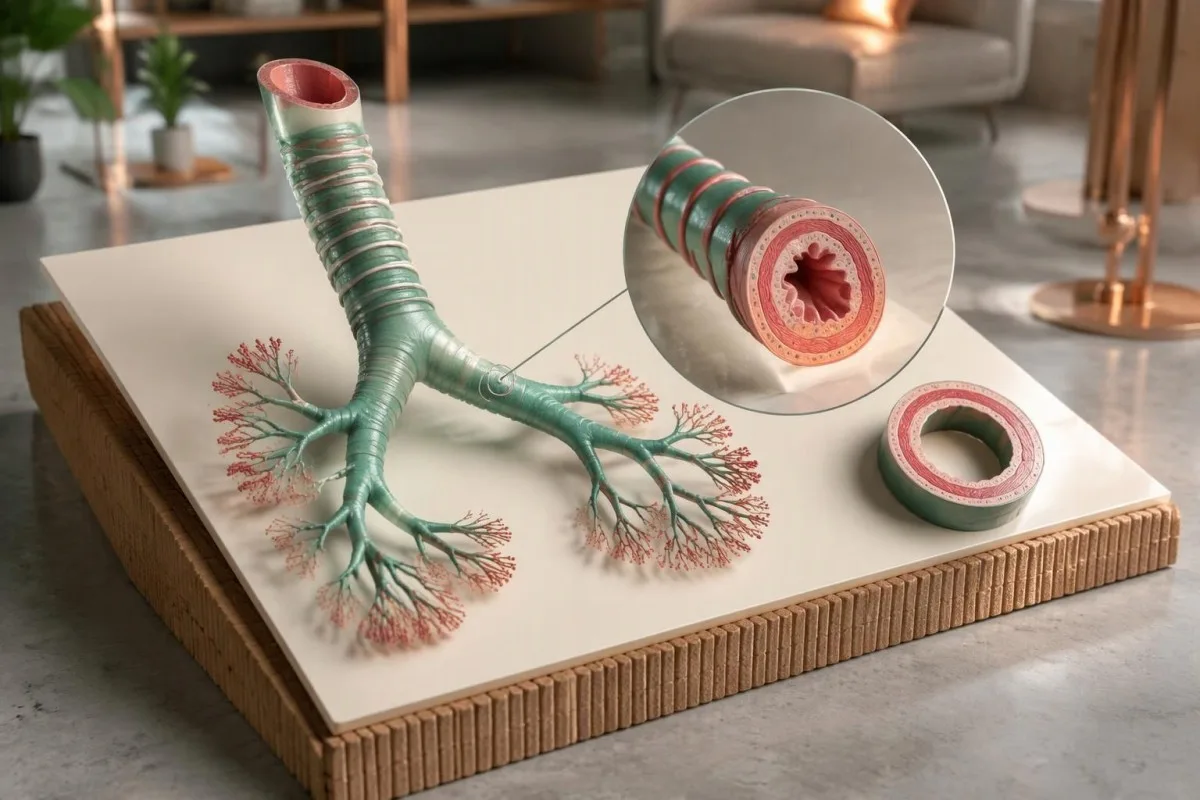
The early signs of asthma often involve a change from your usual breathing rather than a constant symptom: a familiar walk becomes harder, laughter starts a cough, or a cold leaves unusually prolonged chest symptoms. Record the pattern for 2 weeks if symptoms are mild and stable, but seek assessment sooner if breathing is worsening.
Symptom-free intervals do not rule out asthma. A person can have 3 comfortable days followed by tightness after cold-air exercise because airway sensitivity and exposure vary; similarly, a normal chest examination between episodes cannot establish that the airways always function normally.
A hypothetical 34-year-old might report coughing after running, waking twice in a week and feeling entirely well at work. That combination raises suspicion more than one isolated cough, but the next step is a clinical history and objective testing—not assuming that improvement after a borrowed inhaler proves asthma.
Кантести је АИ анализатор крви that helps explain supportive laboratory findings, not a substitute for measuring airflow. Our organizacija i klinički obim distinguish laboratory interpretation from respiratory diagnosis: even 2 normal laboratory panels cannot exclude an intermittent breathing disorder.
Why are asthma symptoms at night more noticeable?
Asthma symptoms at night can become more noticeable because airway calibre and inflammatory activity follow daily rhythms, while bedroom allergens or reflux may add triggers. Under the GINA 2025 symptom-control assessment, any asthma-related nighttime waking during the previous 4 weeks warrants attention.
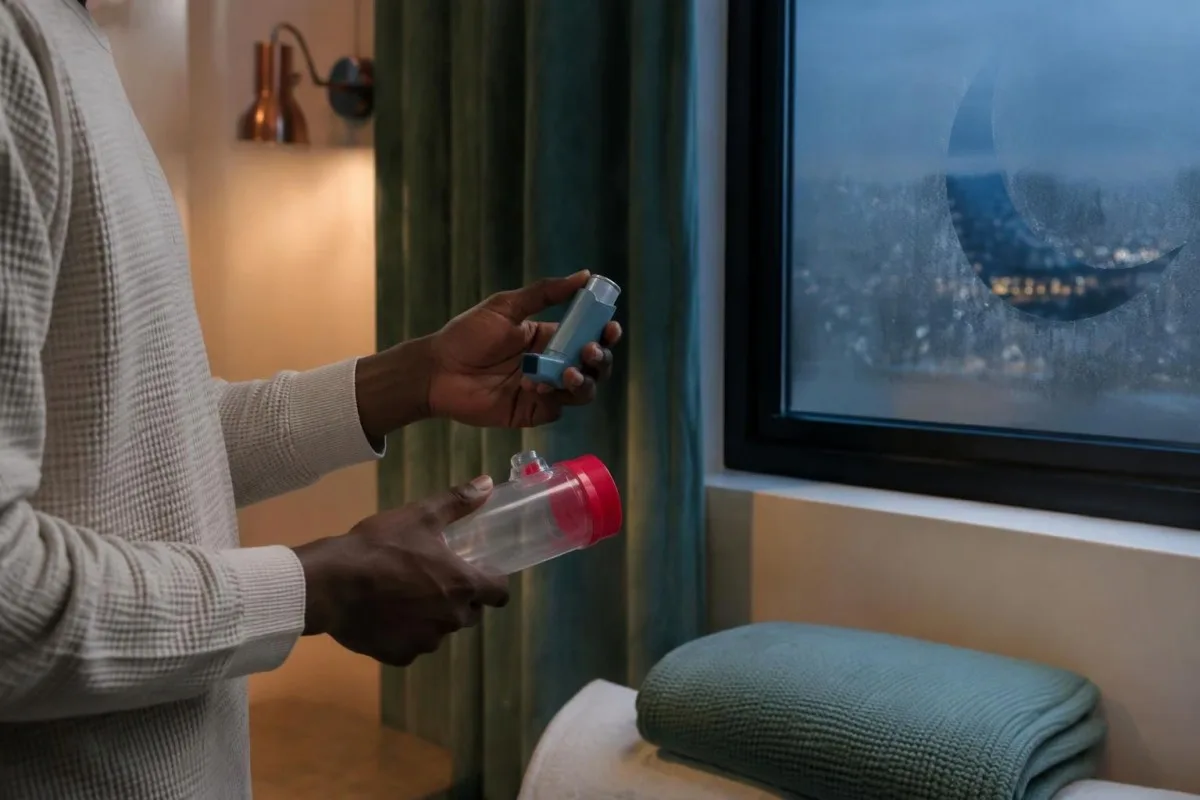
Nighttime cough is not automatically asthma. Cough after lying down with sour taste or regurgitation suggests another possible contributor, and our reflux symptom patterns explain why timing helps; 2 conditions can coexist, so identifying reflux does not necessarily explain every episode of breathlessness.
Repeated waking carries more information than the clock time alone. Write down the number of awakenings over 7 nights, whether you felt tightness or breathlessness, and whether your prescribed reliever helped; a cough at midnight after a meal differs from waking near dawn with difficulty exhaling.
GINA's 2025 strategy assesses daytime symptoms, nighttime waking, activity limitation and, where applicable, short-acting reliever use over 4 weeks. A person who sleeps poorly because of asthma should not interpret a normal daytime oxygen reading as evidence of good control, because oxygen saturation does not measure airway variability.
A bedroom diary can separate exposure from coincidence: note whether symptoms occur at home, away from home or after changing bedding during a 2-week period. Avoid deliberately re-exposing yourself to a suspected trigger; persistent waking deserves a treatment and inhaler-technique review rather than simply adding extra pillows.
Can asthma cause a cough without wheezing?
Asthma cough without wheezing is possible, particularly in cough-variant asthma, where cough may be the main symptom and routine spirometry can be normal. In adults, cough lasting more than 8 weeks requires evaluation for other causes as well as asthma.

Cough-variant asthma and non-asthmatic eosinophilic bronchitis can both cause chronic cough associated with eosinophilic airway inflammation. The distinction matters because the second condition typically lacks the variable airflow limitation or airway hyperresponsiveness characteristic of asthma; an elevated eosinophil count cannot distinguish these 2 diagnoses by itself.
Normalan početni test disanja ne završava ispitivanje kada obrazac simptoma i dalje ubedljivo ukazuje na problem. Lekari mogu ponoviti spirometriju tokom simptoma ili razmotriti nadzirani bronhijalni provokacioni test, dok napadi kašlja praćeni povraćanjem ili relevantan podatak o kontaktu mogu zahtevati testiranje na veliki kašalj uz obraćanje pažnje na to koliko je nedelja prošlo.
Pregled terapije može otkriti previden uzrok kašlja. ACE inhibitor koji se koristi za krvni pritisak može izazvati suv kašalj čak i nakon višemesečne terapije, zato ponesite potpun spisak lekova umesto da se usredsredite samo na lekove uvedene tokom prethodne 2 nedelje; nemojte prekidati propisanu terapiju bez saveta lekara.
Odsustvo zviždanja pri disanju ima 2 veoma različita značenja: blaga astma možda neće izazvati čujno zviždanje, dok težak napad može postati tih jer se kreće premalo vazduha. Tiho disanje praćeno iscrpljenošću, otežanim govorom ili pogoršanjem otežanog disanja predstavlja hitan slučaj — a ne dokaz da je napad prošao.
How do exercise-triggered asthma symptoms behave?
Bronhokonstrikcija izazvana vežbanjem izaziva privremeno suženje disajnih puteva tokom ili nakon vežbanja, koje često postaje najuočljivije u roku od oko 5–10 minuta po prestanku aktivnosti. Samo simptomi tokom vežbanja ne dokazuju astmu, jer i opstrukcija grkljana, anemija i druga stanja mogu ograničiti disanje.
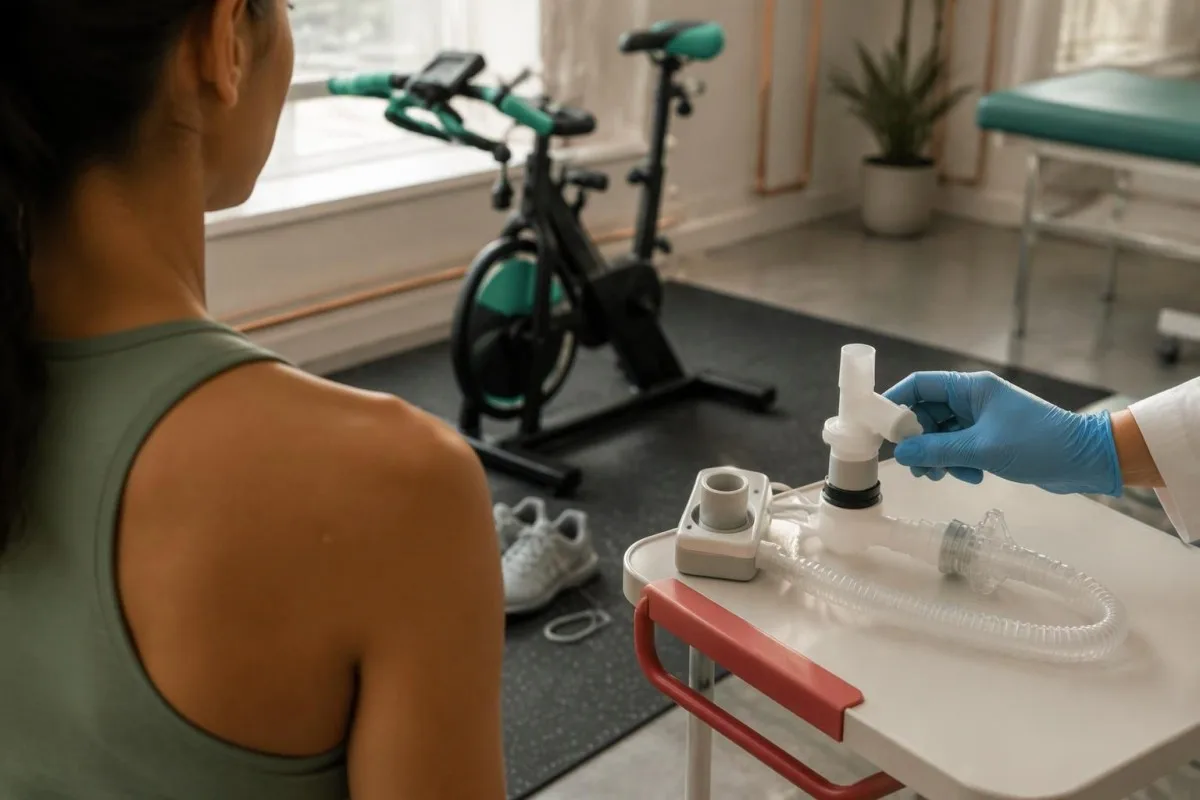
Opstrukcija grkljana povezana sa vežbanjem često izaziva stezanje u grlu ili bučno disanje pri udahu tokom najvećeg napora, a zatim se relativno brzo smiruje po prestanku aktivnosti. Bronhokonstrikcija češće utiče na izdisaj i oporavak; ovo su pokazatelji, a ne apsolutna pravila, i oba stanja mogu se javiti kod iste osobe.
Nadzirani provokacioni test vežbanjem meri protok vazduha, umesto da se oslanja na to da li je vežbanje subjektivno teško. Pad FEV1 za više od 10% i više od 200 mL nakon vežbanja ukazuje na astmu kod odraslih prema dijagnostičkom okviru GINA; lokalni protokoli i kriterijumi za bronhokonstrikciju izazvanu vežbanjem mogu se razlikovati.
Smanjena tolerancija na vežbanje bez kašlja, stezanja ili promenljivog zviždanja pri disanju zahteva širu procenu. Naš vodič o zalihama gvožđa kod sportista objašnjava zašto bi hipotetičkom trkaču sa feritinom od 12 ng/mL mogla biti potrebna procena statusa gvožđa, ali taj rezultat ne bi objasnio nezavisno dokumentovano suženje disajnih puteva.
Dnevnik vežbanja treba da sadrži intenzitet, vremenske uslove i podatak o tome da li simptomi dostižu vrhunac tokom aktivnosti ili 10 minuta nakon nje. Nakon procene, mnogi ljudi mogu ostati fizički aktivni uz plan dogovoren sa lekarom; izbegavajte proveravanje svojih granica tokom nestabilnog perioda ili ponovljenu upotrebu leka za brzo olakšanje bez preispitivanja osnovne terapije.
Which triggers commonly bring on asthma symptoms?
Okidači astme obuhvataju respiratorne viruse, polen, grinje, životinjske alergene, dim, zagađenje vazduha, hladan vazduh i vežbanje. Dvonedeljni dnevnik izloženosti može ukazati na obrasce, ali sumnja na okidač nije isto što i potvrđena alergija ili dijagnoza astme.
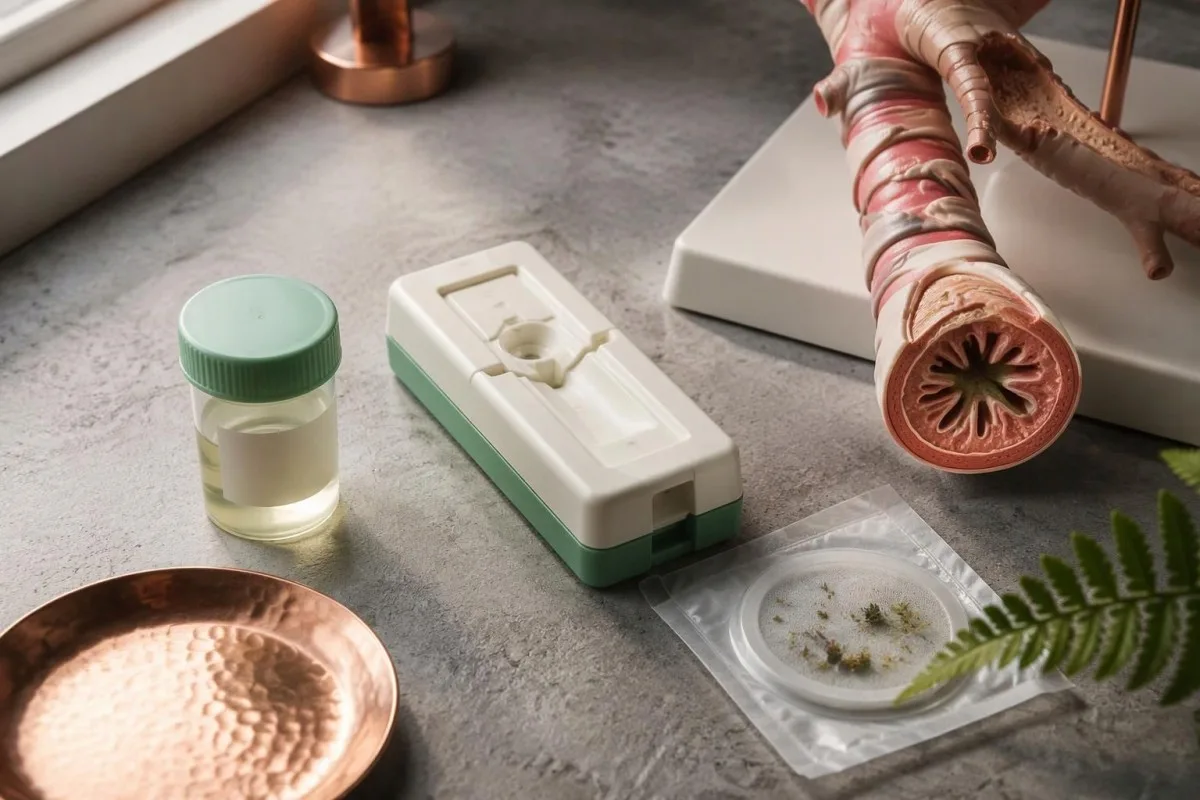
Alergološko testiranje otkriva senzibilizaciju, ali ne nužno i uzrok svake epizode otežanog disanja. Pozitivan specifični IgE nalaz na 1 alergen postaje klinički koristan kada se izloženost pouzdano podudara sa simptomima; naš testiranje na alergiju na komponente vodič objašnjava zašto su za tumačenje detaljnijih panela i dalje potrebni relevantni podaci o anamnezi.
Vlažne zgrade mogu pogoršati respiratorne simptome kroz više mehanizama, uključujući izloženost alergenima i iritaciju. Ne postoji jedan laboratorijski panel kojim se utvrđuje 'astma povezana sa buđi'; naš vodič o ograničenjima testiranja na buđ razlikuje ciljanu procenu alergija od neutemeljenog širokog testiranja, a simptome treba proceniti čak i kada je 1 panel normalan.
Astma povezana sa radom može se javiti nakon višemesečne ili višegodišnje izloženosti i može se poboljšati tokom vikenda ili praznika. Za procenu u vezi sa radnim mestom beležite radne zadatke i merenja disanja tokom radnih i neradnih dana; specijalisti će možda biti potreban duži period praćenja od standardnog dvonedeljnog dnevnika za postavljanje dijagnoze, a namerno izlaganje radi izazivanja reakcije nije bezbedno.
Neki beta-blokatori, uključujući određene kapi za oči, mogu pogoršati bronhokonstrikciju, dok aspirin ili drugi NSAIL izazivaju simptome kod osetljive podgrupe, a ne kod svih osoba sa astmom. Tokom 1 pregleda navedite sve lekove, uključujući preparate koji se kupuju bez recepta; nemojte prekidati terapiju za srce i krvne sudove niti pokušavati kućni provokacioni test aspirinom.
What else can look like asthma?
Simptomi nalik astmi može biti posledica refluksa, poremećaja gornjih disajnih puteva, HOBP-a, anemije, srčane bolesti ili respiratorne infekcije. Može doprineti najmanje 2 zasebna stanja, pa trajni simptomi uprkos odgovarajućem lečenju astme treba da podstaknu ponovnu procenu, a ne automatsko povećanje doze.
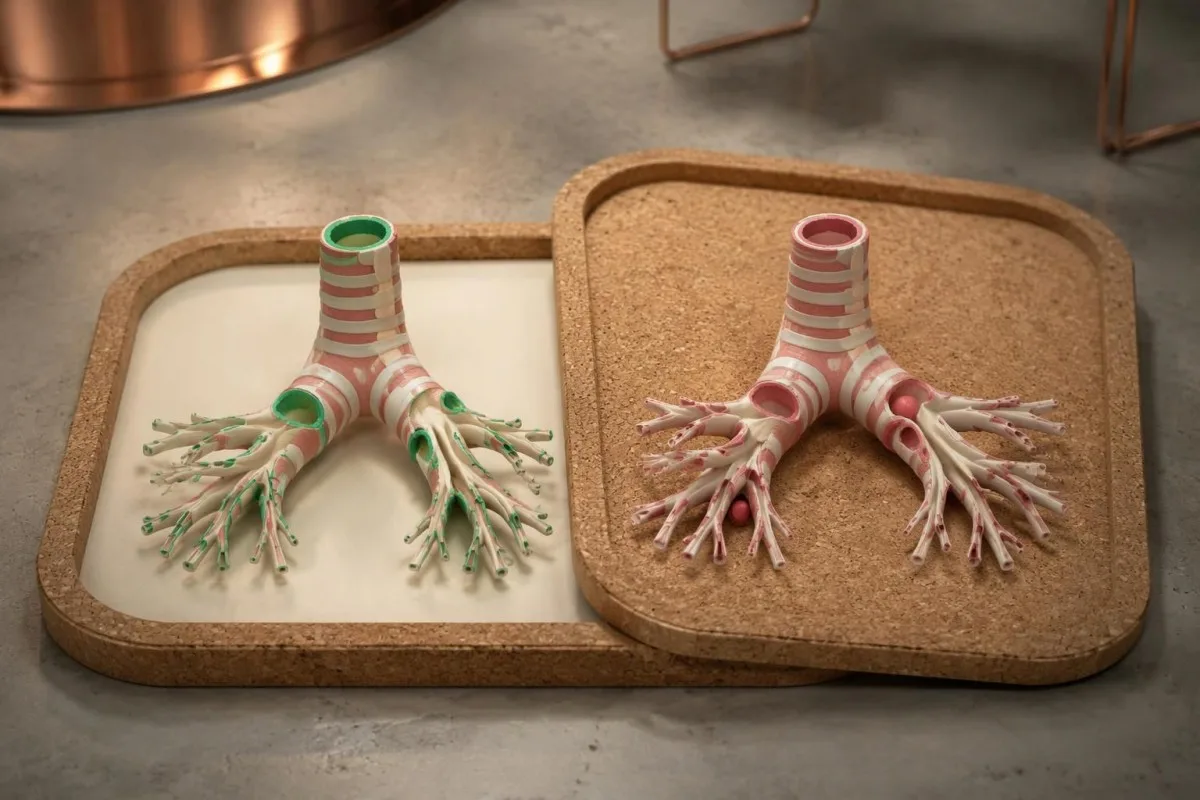
Zviždanje pri disanju ograničeno na jedno područje ili simptomi koji iznenada počinju nakon gušenja ukazuju na fokalnu opstrukciju disajnih puteva, a ne na tipičnu difuznu astmu. Ovaj nalaz zahteva kliničku procenu, naročito kod deteta; jedno uporno zviždanje pri disanju ima drugačije dijagnostičko značenje od epizoda koje se menjaju u zavisnosti od više nepovezanih okidača.
Trajna opstrukcija na ponovljenoj spirometriji ne znači automatski HOBP, jer i dugogodišnja astma može ostaviti trajno ograničenje protoka vazduha. Pušački staž, uzrast i prethodne bolesti pluća pomažu u razlikovanju uzroka, dok rani emfizem ili snažna porodična anamneza mogu opravdati procenu alfa-1 antitripsina umesto pretpostavke da jedna dijagnostička oznaka objašnjava sve.
Ponavljane infekcije grudnog koša, slab napredak u rastu ili hronični produktivni kašalj kod mlade osobe treba da prošire dijagnostičku obradu. Rezultat testa na hloride u znoju od najmanje 60 mmol/L podržava dijagnozu cistične fibroze u odgovarajućem dijagnostičkom kontekstu; vrednosti od 30–59 mmol/L zahtevaju dalju procenu, a ne tumačenje kao nalaz astme.
Novonastala zadihanost uz pritisak u grudima, nesvesticu ili nemogućnost udobnog ležanja zahteva pravovremenu procenu zbog mogućih uzroka koji nisu astma. Čak i 1 iznenadna epizoda neobjašnjene zadihanosti može biti hitna, a pripisivanje simptoma anksioznosti pre provere relevantnih respiratornih i srčanih uzroka nosi rizik da se propusti stanje koje se može lečiti.
How does spirometry support an asthma diagnosis?
Spirometrija meri protok vazduha, uključujući FEV1 i FVC, i može da pokaže opstrukciju koja se ublažava nakon primene bronhodilatatora. Povećanje FEV1 kod odraslih od najmanje 12% i 200 mL podržava promenljivo ograničenje protoka vazduha prema često korišćenim kriterijumima za astmu, ali negativan test ne isključuje povremenu astmu.
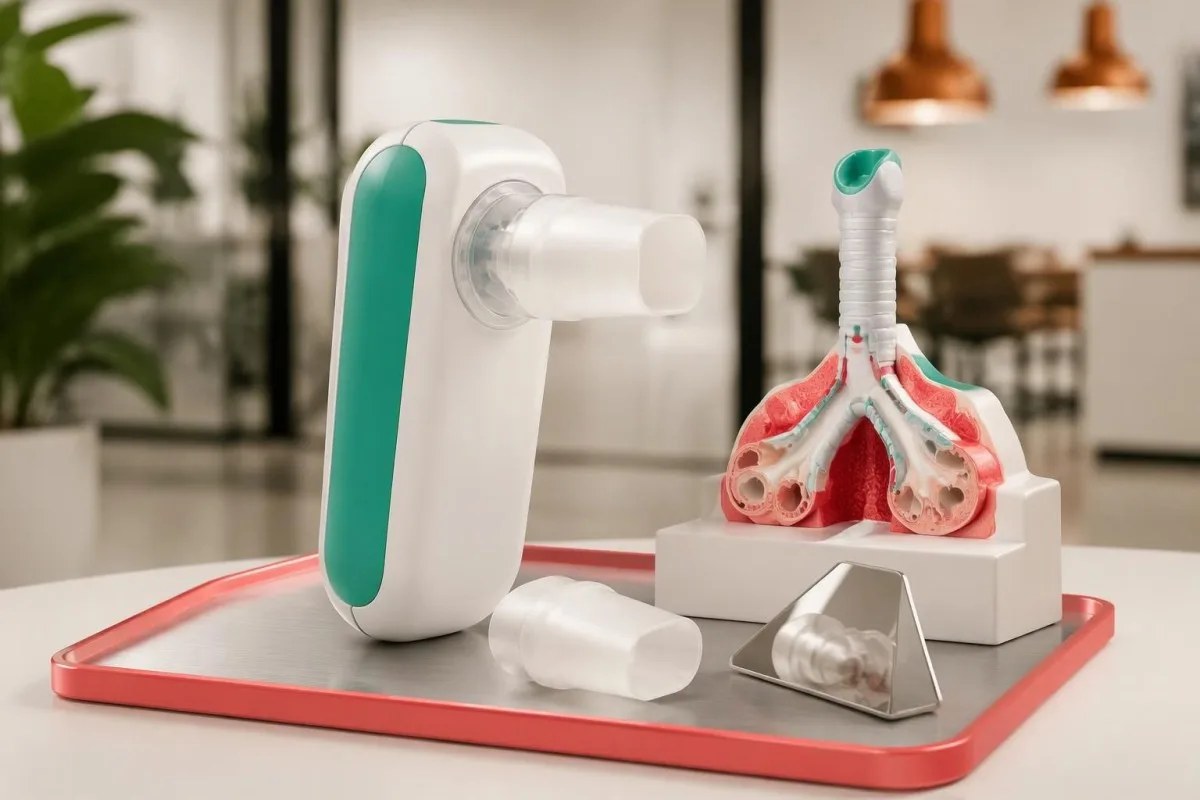
Odnos FEV1/FVC pomaže u otkrivanju opstrukcije, ali pri tumačenju treba primeniti donju granicu normale primerenu uzrastu, a ne vrednost 0.70 na svakog pacijenta. Smernice Evropskog respiratornog društva za dijagnostiku kod odraslih preporučuju spirometriju i testiranje bronhodilatatorom u okviru strukturisane procene, nakon čega slede dodatni testovi kada su potrebni (Louis et al., 2022).
Razmotrimo hipotetički rezultat: FEV1 raste sa 1.90 L na 2.18 L nakon probnog leka. Povećanje iznosi 280 mL i 14.7% početne vrednosti, čime se ispunjava često korišćeni kriterijum reverzibilnosti kod odraslih; nalaz podržava astmu kada se uklapa u anamnezu, ali nije dijagnoza izvan kliničkog konteksta.
Smernice i standardi laboratorijskog izveštavanja ne izražavaju uvek reverzibilnost na isti način. NICE NG245 takođe prihvata povećanje FEV1 kod odraslih od najmanje 10% očekivane normalne vrednosti; ako je očekivani FEV1 3.40 L, isto poboljšanje od 280 mL iznosi samo 8.2% očekivane vrednosti, što objašnjava zašto 2 konvencije izveštavanja mogu dati različite oznake.
Kvalitet testiranja je važan: spirometrija obično zahteva najmanje 3 prihvatljiva manevra, a ponovljivost kod odraslih najčešće zahteva da se najbolje vrednosti FEV1 razlikuju za najviše 150 mL. Naš vodič za laboratorijsku procenu zadihanosti objašnjava dopunske dijagnostičke pretrage, ali nijedno laboratorijsko tumačenje ne može nadoknaditi nepouzdan manevar disanja.
How can a peak-flow diary help diagnose asthma?
Praćenje vršnog protoka može dokumentovati promenljivo disanje kada spirometrija nije dostupna ili u početku ne daje jasan rezultat. GINA koristi prosečnu dnevnu varijabilnost veću od 10% kod odraslih i veću od 13% kod dece tokom 2 nedelje kao dokaz koji podržava dijagnozu; NICE NG245 koristi dijagnostički prag od 20% u svom algoritmu.
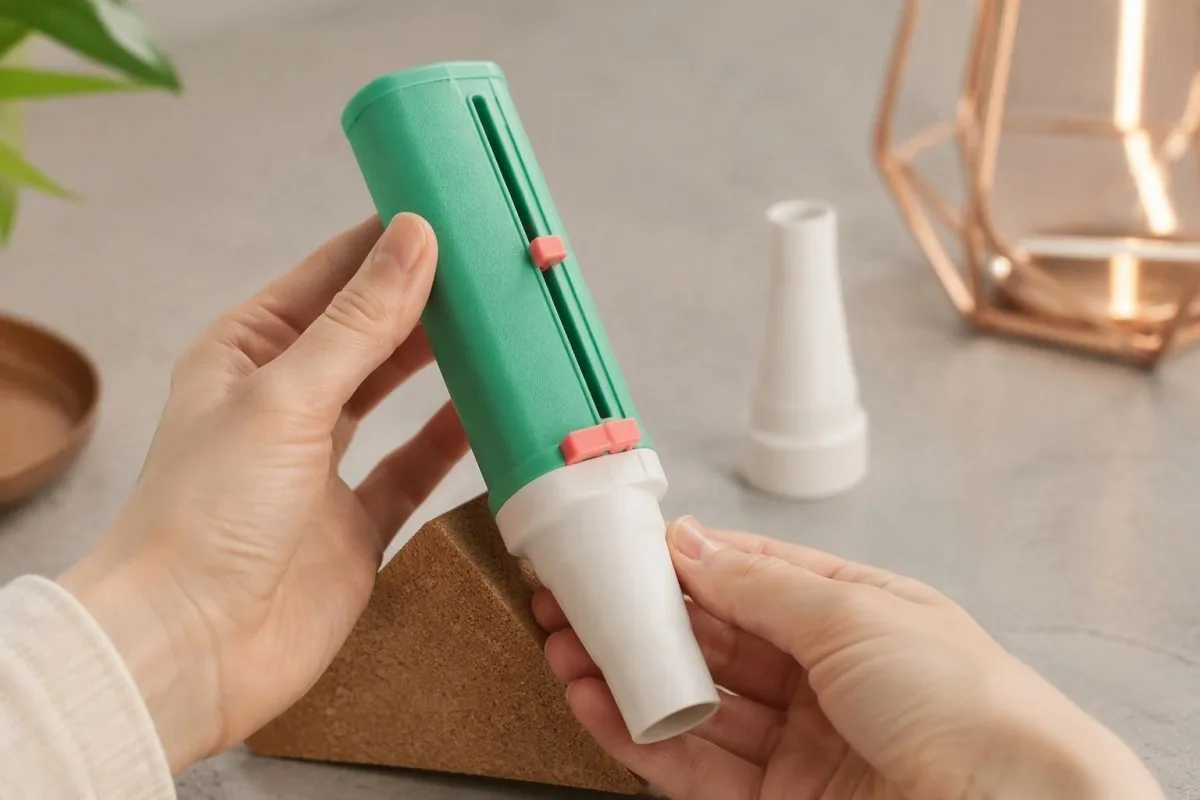
Svaki put koristite isti merač i istu tehniku, obično mereći ujutru i uveče prema uputstvu. Izvedite 3 duvanja po merenju i zabeležite najveće prihvatljivo očitavanje u L/min; beležite simptome i vreme uzimanja lekova, jer uzimanje bronhodilatatora pre jednog merenja, ali ne i pre drugog, može da iskrivi poređenje.
Dnevna varijabilnost može se izračunati tako što se najniže očitavanje oduzme od najvišeg, rezultat podeli njihovom srednjom vrednošću i pomnoži sa 100. Ako su hipotetička očitavanja za jedan dan 380 i 460 L/min, varijabilnost iznosi 80/420 × 100, odnosno 19.0%; pri dijagnostičkoj proceni koristi se prosek za ceo period praćenja, a ne procenat za samo jedan dan.
Zone delovanja prema vršnom protoku i dijagnostička varijabilnost odgovaraju na različita pitanja. Personalizovani plan može koristiti vrednosti od najmanje 80% ličnog najboljeg rezultata, 50–79% i ispod 50% kao smernice za postupanje, dok se pri dijagnostici ispituju oscilacije tokom vremena; nizak lični najbolji rezultat ne treba prihvatiti kao normalan bez provere tehnike i kliničkog stanja.
Кантести је AI платформа за тумачење крвне слике, not a service for confirming asthma from a 2-week breathing diary. Our AI report safety checks explain why readers should distinguish a recorded value, an automated explanation and a clinician's diagnosis—particularly when different guidelines use different thresholds.
What do FeNO and eosinophils tell you about asthma?
FeNO measures nitric oxide in exhaled breath, while blood eosinophils measure an inflammatory cell population; both can support assessment of type 2 asthma. NICE NG245 uses FeNO of at least 50 ppb in adults and at least 35 ppb in children aged 5–16 within its diagnostic pathways.
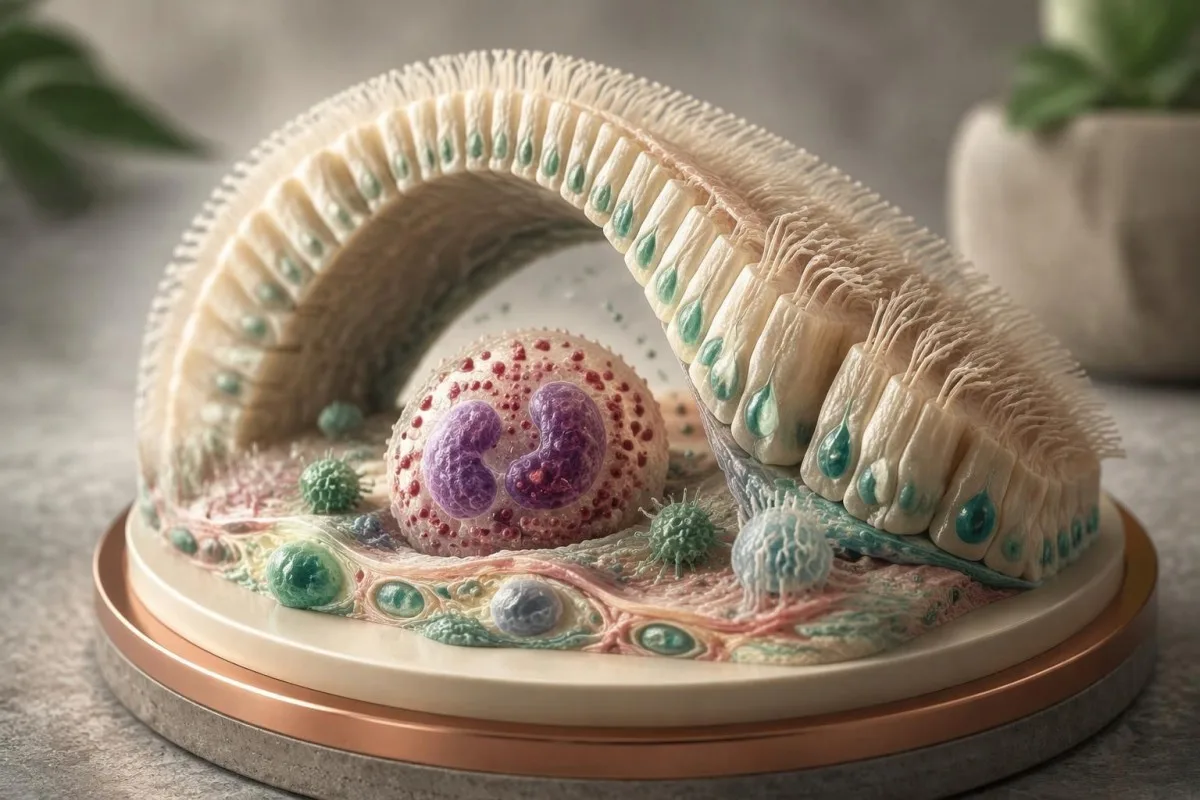
The NICE/BTS/SIGN 2024 guideline allows an elevated blood eosinophil count above the laboratory reference range or FeNO of at least 50 ppb to establish an adult diagnosis within its suggestive-history pathway. This does not mean a blood test alone confirms asthma: the recommendation depends on clinical assessment, and GINA places greater emphasis on documenting variable airflow limitation.
A low FeNO reading does not rule out asthma, particularly after inhaled corticosteroid treatment or in non-type-2 disease. Allergic rhinitis can raise FeNO without proving lower-airway asthma, so a hypothetical reading of 60 ppb with nasal symptoms but no compatible breathing history needs a different interpretation from 60 ppb with recurrent nocturnal tightness.
Eosinophil counts above 0.5 × 10^9/L, equivalent to 500 cells/µL, commonly attract attention, although laboratories use different upper limits. Our high eosinophil interpretation explains why persistent counts of at least 1.5 × 10^9/L require broader evaluation for medications, parasites and other disorders—not simply a stronger asthma label.
Steroid timing can change both FeNO and eosinophil results, sometimes making 2 tests taken weeks apart look inconsistent. Our standardi kliničkog tumačenja support reporting such limitations; tell the clinician when you last used inhaled or oral steroids, but never stop treatment just to make a test more likely to turn positive.
Why can't blood tests alone confirm asthma?
Blood tests alone cannot confirm asthma because they do not demonstrate variable airflow limitation or reliably distinguish asthma from every alternative cause of cough. Even 1 markedly abnormal eosinophil or IgE result needs a compatible history and an appropriate diagnostic pathway.
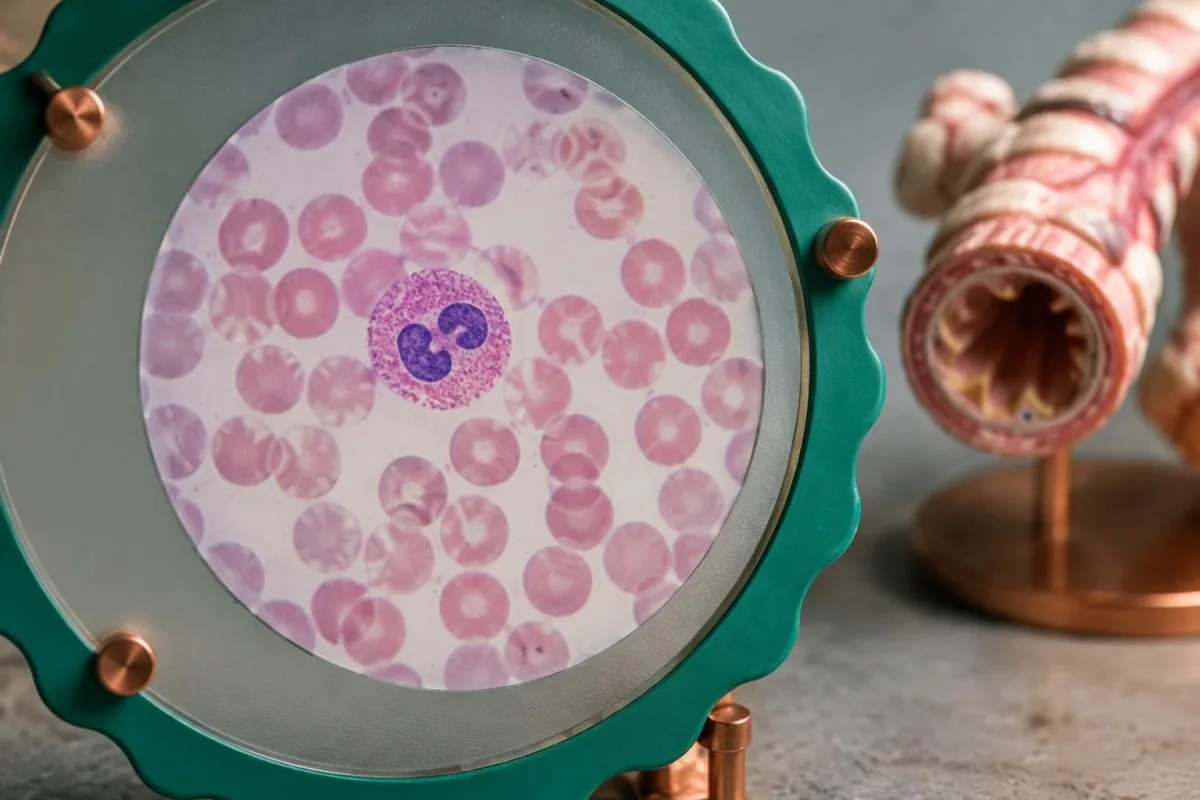
Total IgE and allergen-specific IgE are different measurements: one reflects an overall antibody concentration, while the other tests sensitisation to selected allergens. There is no universal total-IgE cutoff that diagnoses asthma across adults and children; a positive result to 1 allergen may explain sensitisation without proving that exposure causes wheeze.
A CBC may identify anaemia that contributes to breathlessness, and selected inflammatory tests may help assess a suspected infection. Our poređenje WBC i CRP explains why these markers can disagree; an elevated CRP of 25 mg/L is not an asthma threshold and cannot independently determine whether antibiotics are needed.
Kantesti AI can help readers compare eosinophil counts, haemoglobin and other reported markers, but it cannot establish variable airflow limitation from a laboratory PDF. A hypothetical eosinophil change from 0.62 to 0.18 × 10^9/L after steroid treatment may reflect treatment exposure rather than the disappearance of asthma.
Routine asthma diagnosis does not require ordering every available inflammatory marker. Bring existing results and a medication timeline covering at least the previous 2 weeks; clinicians can then select tests for a specific question, such as anaemia, allergy or treatment planning, instead of treating a large panel as a substitute for breathing assessment.
Which breathing warning signs require emergency care?
Odmah pozovite hitnu pomoć for severe breathlessness, inability to speak normally, blue or grey lips, confusion, drowsiness, exhaustion or a prescribed reliever that is not helping. If available, peak flow below 50% of personal best or oxygen saturation of 92% or less with acute symptoms adds urgency; do not wait for either measurement.

A quiet or 'silent' chest during worsening breathing can indicate critically reduced air movement, not recovery. Peak flow below 33% of personal best is a life-threatening feature in UK acute-asthma frameworks, but inability to obtain a reading because of severe breathlessness is itself concerning; call the local emergency number, such as 999 or 112 where applicable.
While help is coming, sit upright and use your prescribed reliever according to your written action plan or emergency-dispatch instructions. Do not drive yourself, and do not delay the call to perform repeated peak-flow tests; even 1 episode of confusion or marked exhaustion can signal that self-management is no longer safe.
An oxygen reading does not measure carbon dioxide, and home devices can be inaccurate because of movement, cold fingers or other factors. Our arterial gas interpretation explains why a normal or rising PaCO2 near or above 45 mmHg during severe acute asthma can concern clinicians when vigorous breathing would usually lower it.
Sudden breathlessness with chest pain, coughing up blood or unilateral leg swelling may indicate another emergency; our urgent leg clot signs explain that connection. Breathing difficulty with tongue or throat swelling after an exposure can be anaphylaxis: use a prescribed adrenaline auto-injector immediately and call emergency services, because 1 asthma inhaler does not replace anaphylaxis treatment.
How are asthma symptoms assessed in children?
Children's asthma symptoms may include nighttime cough, wheeze, reduced play or breathlessness rather than a clear description of chest tightness. Objective testing is often possible from about age 5, while younger children usually need a pattern-based assessment and monitored treatment response.
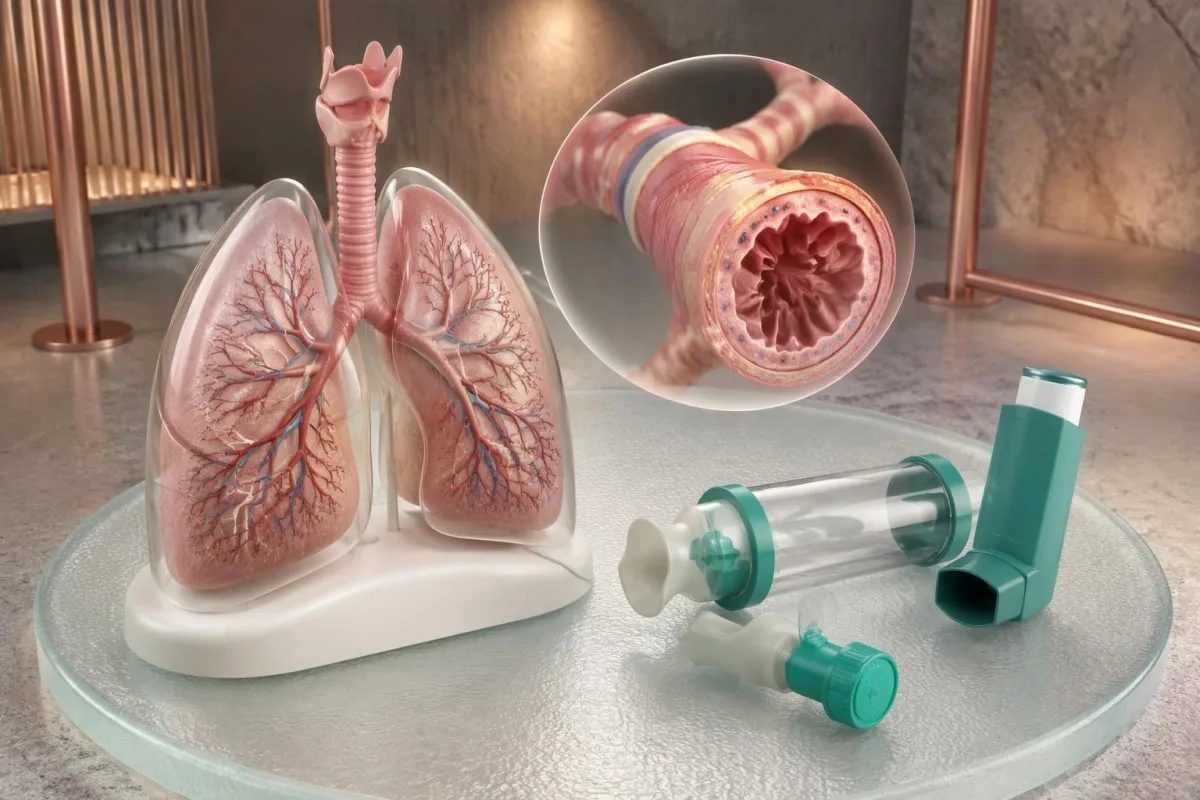
Preschool viral wheeze is not identical to established persistent asthma. Clinicians consider whether symptoms occur only during colds or also between illnesses, along with allergy history and family risk; 2 children who wheeze with the same virus can have different longer-term patterns, so a permanent label should not rest on one episode.
A treatment trial in a child younger than 5 may be assessed over approximately 8–12 weeks under NICE guidance, depending on the presentation. Improvement needs to be interpreted alongside adherence, device technique and natural recovery from a virus; a treatment response is useful evidence, but it is not an isolated laboratory-style confirmation.
Children's spirometry requires age-appropriate interpretation and coaching, not adult thresholds pasted onto smaller lungs. GINA uses an FEV1 increase of at least 12% of predicted in children as a supportive bronchodilator criterion, and a technically poor test may need repetition even if the report prints a reassuring percentage.
Наше children's laboratory safety guide explains why age-specific ranges matter without replacing respiratory assessment. In a child, marked chest recession, inability to drink or speak normally, unusual sleepiness or worsening breathing warrants urgent help; even 1 such sign outweighs a normal previous test.
What should you bring to an asthma assessment?
Prepare for an asthma assessment by bringing your symptom pattern, medication list, inhaler devices and any previous breathing or laboratory results. A 2-week diary of symptoms, exposures and clinician-requested peak-flow readings is often more useful than a long list of unrelated tests.
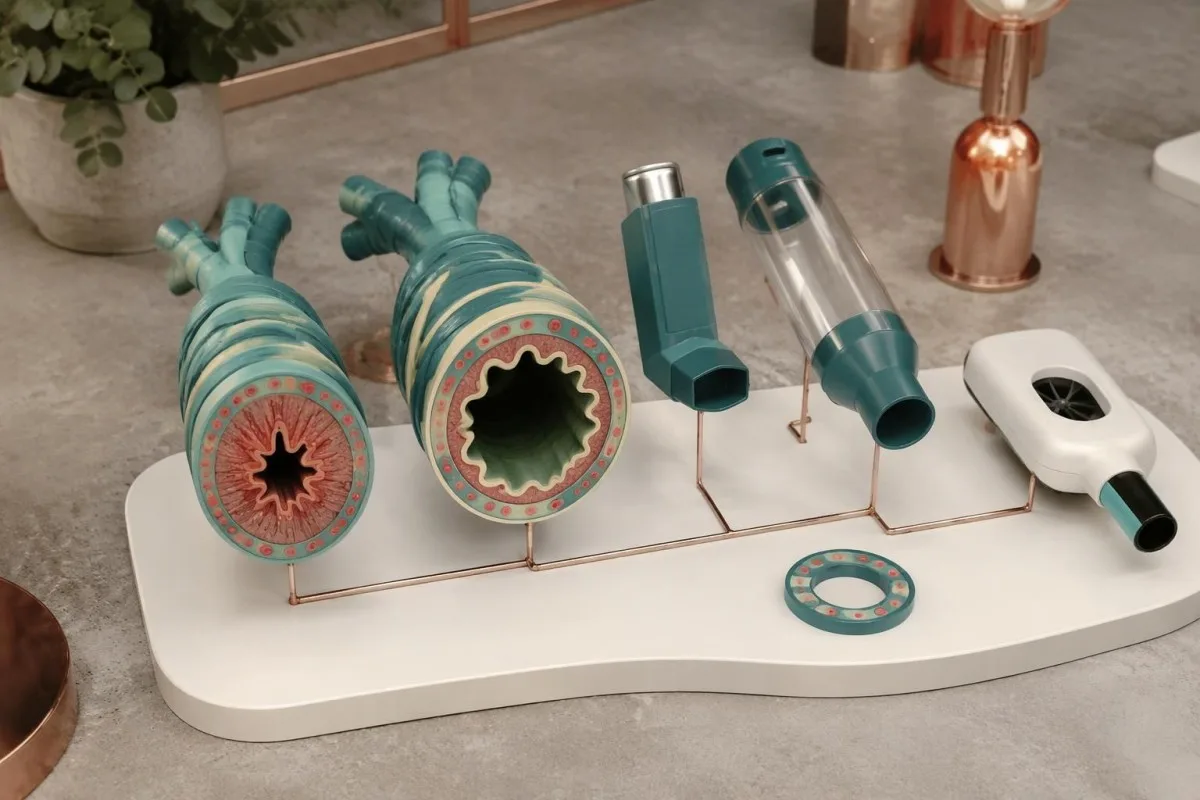
Ask the testing service which inhalers, if any, should be withheld and for how long before spirometry. Instructions vary by medication and test purpose, so do not assume a universal 12-hour rule; if symptoms worsen while following preparation instructions, use needed treatment and contact the service rather than prioritising an ideal test.
Bring the actual inhaler and spacer so a clinician can observe technique rather than relying on a description. Different devices require different inhalation patterns, and 1 correct demonstration can reveal why a prescribed treatment seemed ineffective; poor technique can look like resistant disease even when the medication choice is appropriate.
Кантести је Алат за анализу крвних тестова уз помоћ AI that can help explain accompanying laboratory reports while the clinician evaluates breathing symptoms. Our Vodič kroz AI tehnologiju describes the interpretation workflow, but an estimated processing time of about 60 seconds should never be confused with the time needed to establish a respiratory diagnosis.
Share only the information needed for the assessment, particularly when organising results for another family member. Our информацијама о приватности и подацима explains handling considerations; keep symptom diaries and original reports available for clinical review, and do not let uploading 1 document delay urgent care or a necessary breathing appointment.
Research publications and evidence behind asthma testing
Asthma diagnostic evidence comes primarily from respiratory guidelines and studies of airflow, airway responsiveness and inflammatory markers. The 3 external references below directly support this article; the 2 Zenodo laboratory guides are separate educational resources and are not studies validating asthma diagnosis.
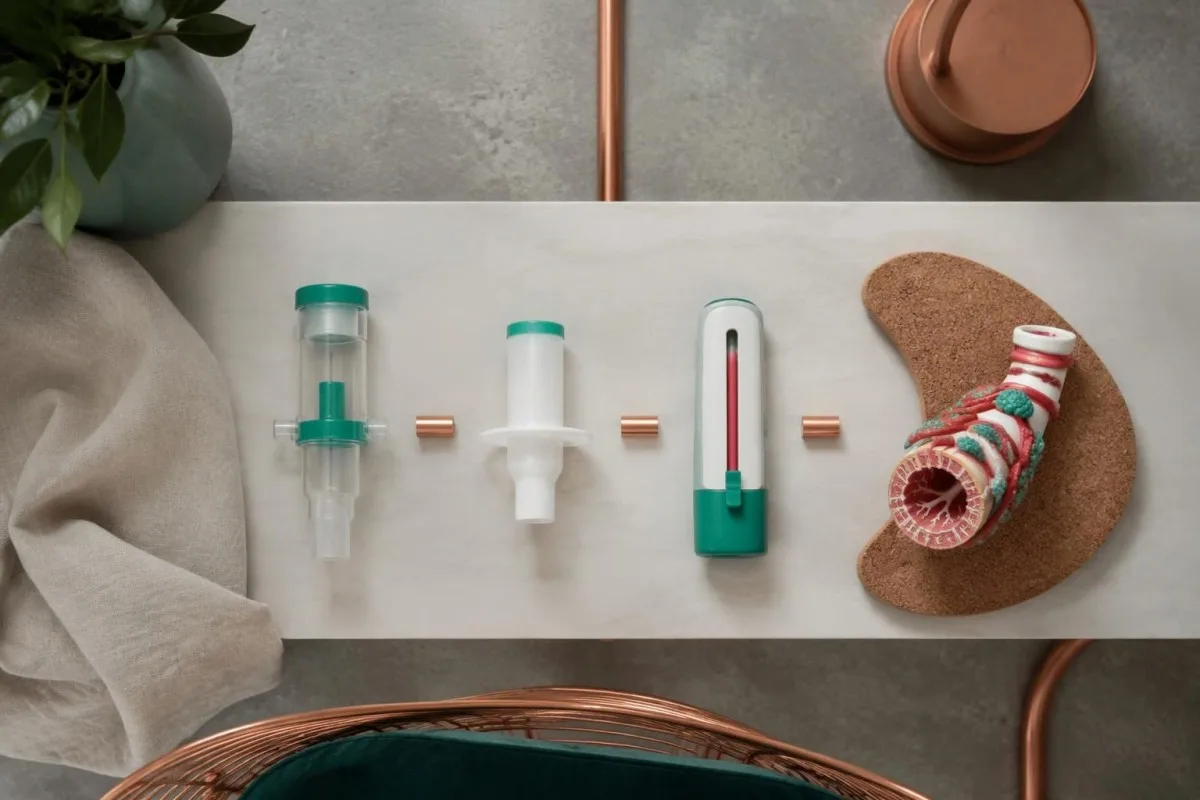
GINA's 2025 strategy links a characteristic symptom history with evidence of variable expiratory airflow limitation, while the 2024 NICE/BTS/SIGN guideline specifies a different sequence of objective tests. The European Respiratory Society adult guideline supplies a third structured approach (Louis et al., 2022); comparing all 3 helps explain why clinicians may reasonably order tests in different sequences.
materijale Kantesti RDW i vodič za crvena krvna zrnca provides background when a CBC raises a separate question about anaemia and breathlessness. Its Zenodo DOI identifies that publication, not proof that RDW diagnoses asthma; even 2 abnormal red-cell indices must be interpreted as haematology findings rather than measurements of airway narrowing.
Тхе vodič za interpretaciju bubrežnog odnosa addresses BUN, creatinine and clinical context rather than asthma symptoms. Its separate Zenodo DOI is included for publication transparency, and neither of these 2 laboratory guides establishes the sensitivity, specificity or effectiveness of an asthma diagnostic pathway.
Наше standardi medicinskog sadržaja distinguish guideline-supported facts from educational examples and product descriptions. Kantesti does not claim that these 2 DOI resources validate asthma detection; uncertain symptoms need clinical assessment, and emergency breathing warning signs require immediate action regardless of how recently a report was interpreted.
Često postavljana pitanja
Koji su prvi znaci astme kod odraslih?
Prvi znaci astme kod odraslih često uključuju promenljiv osećaj nedostatka vazduha, stezanje u grudima, zviždanje u grudima ili kašalj koji se pogoršava noću ili nakon vežbanja. Period bez simptoma ne isključuje astmu jer ograničenje protoka vazduha može da varira iz dana u dan. Dnevnik simptoma koji se vodi tokom 2 nedelje može pomoći lekaru da uoči obrasce kada su simptomi blagi i stabilni. Spirometrija ili drugo odgovarajuće objektivno testiranje potrebno je da bi se potvrdila dijagnoza, a pogoršanje disanja treba proceniti što pre.
Možete li imati astmu bez zviždanja u grudima?
Astma može biti prisutna i bez čujnog zviždanja u grudima, naročito kada je kašalj glavni simptom ili kada simptomi izostaju tokom pregleda. Kašalj kod odraslih koji traje duže od 8 nedelja zahteva procenu astme i drugih uzroka, uključujući refluks, dejstvo lekova i neastmatični eozinofilni bronhitis. Ako je početna spirometrija uredna, može biti potrebno ponoviti testiranje ili sprovesti nadzirani bronhijalni provokacioni test ako sumnja i dalje postoji. Tišina u grudima tokom teškog nedostatka vazduha je nešto drugo: može ukazivati na opasno smanjen protok vazduha i zahteva hitnu pomoć.
Zašto se astma pogoršava noću?
Asthma can worsen at night because airway function follows daily rhythms and bedroom allergens or reflux may add triggers. GINA's symptom-control assessment treats any asthma-related nighttime waking in the previous 4 weeks as a reason to review control. Record awakenings, breathing symptoms and prescribed reliever use rather than assuming every nighttime cough is asthma. Repeated waking should prompt a clinical review, while severe breathing difficulty requires emergency care.
Može li test krvi da pokaže da li imate astmu?
Samo analiza krvi ne može da potvrdi astmu jer ne pokazuje promenljivu opstrukciju protoka vazduha niti isključuje sve druge uzroke simptoma otežanog disanja. Broj eozinofila veći od 0.5 × 10^9/L može se javiti kod astme, alergija, kao posledica uzimanja lekova ili kod drugih poremećaja. NICE NG245 dopušta da povišen broj eozinofila posluži za postavljanje dijagnoze kod odraslih u okviru postupka koji podrazumeva anamnezu koja ukazuje na astmu, ali to je klinički algoritam — a ne tumačenje izolovanog rezultata analize krvi. U zavisnosti od kliničke slike i lokalnih smernica, lekari mogu primeniti i spirometriju, merenje FeNO, praćenje vršnog protoka ili bronhijalni provokacioni test.
Možete li imati astmu uz normalnu spirometriju?
Normalna spirometrija ne isključuje astmu, jer suženje disajnih puteva može biti povremeno ili ublaženo terapijom. Lekari mogu ponoviti spirometriju tokom simptoma, organizovati merenje vršnog protoka dva puta dnevno tokom 2 nedelje ili zatražiti nadzirani bronhijalni provokacioni test. Poboljšanje FEV1 kod odraslih od najmanje 12% i 200 mL nakon primene bronhodilatatora ukazuje na varijabilnost prema često korišćenim kriterijumima. Uputstva za pripremu zavise od leka i testa, zato nikada nemojte prestati da koristite inhalator bez konkretnih saveta lekara.
Kada simptome astme treba tretirati kao hitan slučaj?
Simptomi astme zahtevaju hitnu pomoć kada je disanje otežano, govor otežan, osoba postaje iscrpljena ili zbunjena, usne izgledaju plavo ili sivo ili propisani lek za brzo olakšanje ne pomaže. Vršni protok ispod 50% ličnog najboljeg rezultata ili zasićenost kiseonikom od 92% ili niža uz akutne simptome dodatni su razlog za zabrinutost, ali ne treba odlagati pozivanje hitne pomoći radi merenja. Sedite uspravno, pozovite lokalni broj hitne pomoći i primenite propisani lek za brzo olakšanje u skladu s pisanim planom ili uputstvima dispečera. Nemojte sami voziti, a tiha pluća uz pogoršanje nedostatka vazduha smatrajte znakom upozorenja, a ne razlogom za olakšanje.
Сазнајте како да читате крвну слику
Отпремите свој лабораторијски извештај, а AI алата Kantesti ће за неколико секунди објаснити сваки биомаркер једноставним језиком. Користи га више од 2 милиона људи широм света.
Референце
- Klein, T., Mitchell, S., & Weber, H. (2026). RDW у крвној слици: комплетан водич за RDW-CV, MCV и MCHC. Kantesti AI Medical Research. ДОИ
- Klein, T., Mitchell, S., & Weber, H. (2026). Objašnjenje BUN/Creatininog odnosa: Vodič za test funkcije bubrega. Kantesti AI Medical Research. ДОИ
- Global Initiative for Asthma (2025). Global Strategy for Asthma Management and Prevention. GINA Strategy Report.
- National Institute for Health and Care Excellence, British Thoracic Society, and Scottish Intercollegiate Guidelines Network (2024). Asthma: diagnosis, monitoring and chronic asthma management (BTS, NICE, SIGN). NICE Guideline NG245.
- Louis R et al. (2022). European Respiratory Society guidelines for the diagnosis of asthma in adults. European Respiratory Journal. ДОИ
- 2 милиона+Analizirani testovi
- 127+Земље
- 100+Језици
O medicinskom timu


Е-Е-А-Т сигнали поверења
Искуство
Клиничка ревизија процеса тумачења лабораторијских налаза коју води лекар.
Експертиза
Фокус на лабораторијску медицину: како се биомаркери понашају у клиничком контексту.
Ауторитативност
Medicinski pregledao dr Thomas Klein, uz doprinos dr Sarah Mitchell i prof. dr Hansa Webera.
Поузданост
Тумачење засновано на доказима, са јасним путевима праћења како би се смањила узнемиреност.


Medicinsko odricanje od odgovornosti
Овај чланак је само у образовне сврхе и не представља медицински савет. За одлуке о дијагнози и лечењу увек се консултујте са квалификованим здравственим радником.
Objavljeno · Kontaktirajte urednički tim
Objavio Kantesti Ltd, registrovan u Engleskoj i Velsu, broj kompanije. 17090423, London, Ujedinjeno Kraljevstvo.
