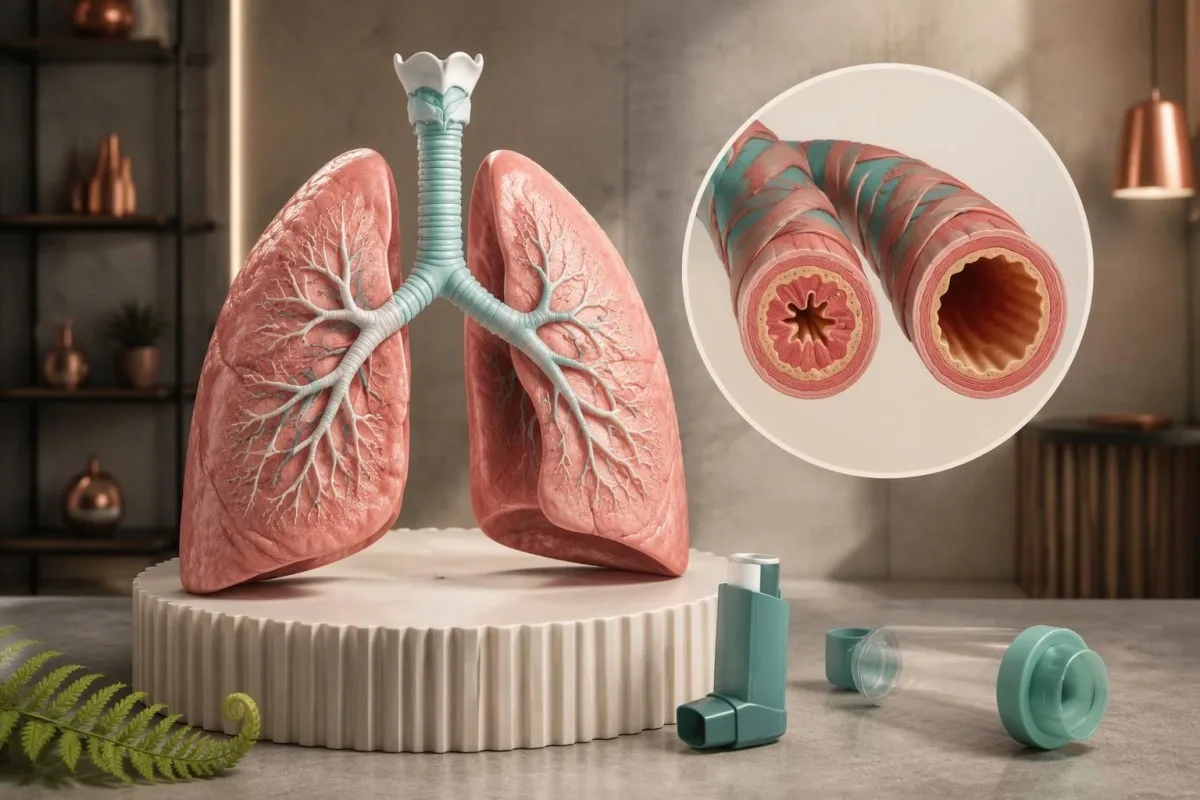
Астмата може да причинява променлив задух, нощна кашлица или симптоми при физическо натоварване — дори когато никой не чува хрипове. Изследванията на дишането са по-важни от единичен лабораторен резултат.

Основни изводи
- Симптоми на астма включват променливи хрипове, задух, стягане в гърдите и кашлица; наличието на 1 симптом не потвърждава диагнозата.
- Нощно събуждане поради симптоми на астма дори веднъж през предходните 4 седмици е основание за преглед на контрола на симптомите съгласно рамката за оценка на GINA.
- Кашлица без хрипове може да се наблюдава при кашличен вариант на астмата, но кашлица с продължителност над 8 седмици при възрастни има няколко други възможни причини.
- Отговор при спирометрия от поне 12% и 200 mL при FEV1 при възрастни след бронходилататор подкрепя наличието на променливо ограничение на въздушния поток съгласно широко използваните критерии за астма.
- Вариабилност на пиковия експираторен дебит усреднено над 10% за 2 седмици подкрепя диагнозата астма при възрастни според критериите на GINA; NICE използва различен диагностичен праг.
- FeNO от поне 50 ppb при възрастни подкрепя наличието на възпаление на дихателните пътища тип 2 в подходящ клиничен контекст, но ниското FeNO не изключва астма.
- Еозинофили в кръвта над 0.5 × 10^9/L може да е признак за алергия, астма или други състояния; само резултатът от кръвно изследване не може да потвърди астма.
- Признаците за спешно състояние с дишането включват невъзможност за нормално говорене, изтощение, обърканост, посинели или посивели устни или слаб отговор към предписания облекчаващ инхалатор; не чакайте резултат от изследване.
Кои са ранните признаци на астма?
Симптоми на астма представляват променливи епизоди на хрипове, задух, стягане в гърдите или кашлица, често по-силни през нощта или след физическо натоварване; астмата може да протича и без ясно изразени хрипове. Спирометрията и проследяването на пиковия дебит помагат да се установи променливо ограничение на въздушния поток, докато само кръвните изследвания не могат да потвърдят астма. Силно затруднено дишане, обърканост или липса на ефект от облекчаващия инхалатор налагат спешна медицинска помощ.
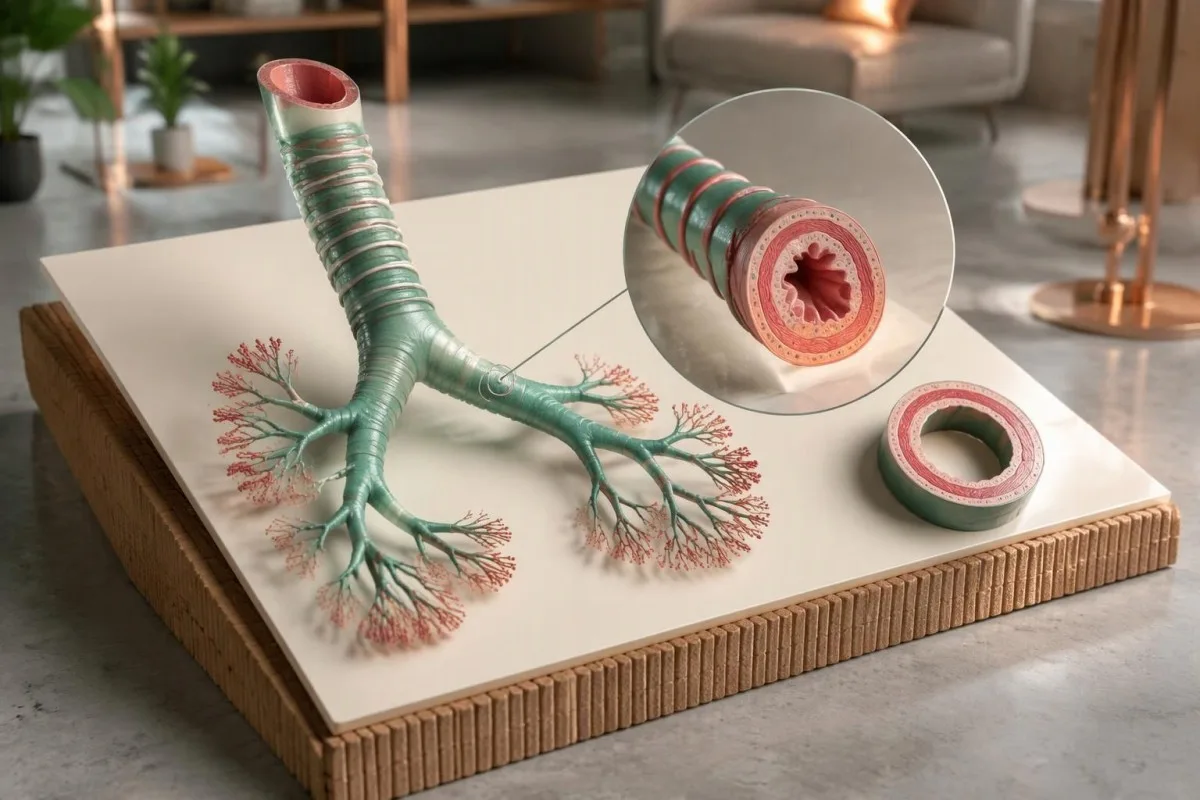
Ранните признаци на астма често се изразяват в промяна спрямо обичайния ви начин на дишане, а не в постоянен симптом: обичайна разходка става по-трудна, смехът предизвиква кашлица или настинката оставя необичайно продължителни симптоми в гърдите. Ако симптомите са леки и стабилни, записвайте закономерностите в продължение на 2 седмици, но потърсете оценка по-рано, ако дишането се влошава.
Периодите без симптоми не изключват астма. Човек може да се чувства добре в продължение на 3 дни, а след това да усети стягане след физическо натоварване на студен въздух, тъй като чувствителността на дихателните пътища и въздействието на отключващите фактори се променят; по същия начин нормалният преглед на гръдния кош между епизодите не доказва, че дихателните пътища функционират нормално през цялото време.
Представете си 34-годишен човек, който съобщава за кашлица след бягане, две събуждания през седмицата и че се чувства напълно добре на работа. Тази комбинация поражда по-голямо подозрение от единична кашлица, но следващата стъпка е снемане на клинична анамнеза и обективни изследвания, а не предположението, че подобрението след използване на чужд инхалатор доказва астма.
Кантести е един AI кръвен анализатор което помага да се обяснят подкрепящите лабораторни находки, но не замества измерването на въздушния поток. Нашият организация и клиничен обхват разграничават тълкуването на лабораторните резултати от диагностиката на дихателните заболявания: дори 2 нормални лабораторни панела не могат да изключат интермитентно нарушение на дишането.
Защо симптомите на астма са по-забележими през нощта?
Симптоми на астма през нощта могат да станат по-осезаеми, тъй като просветът на дихателните пътища и възпалителната активност следват дневни ритми, а алергените в спалнята или рефлуксът могат да добавят отключващи фактори. Според оценката на GINA за контрол на симптомите от 2025 г. всяко нощно събуждане, свързано с астма, през предходните 4 седмици заслужава внимание.
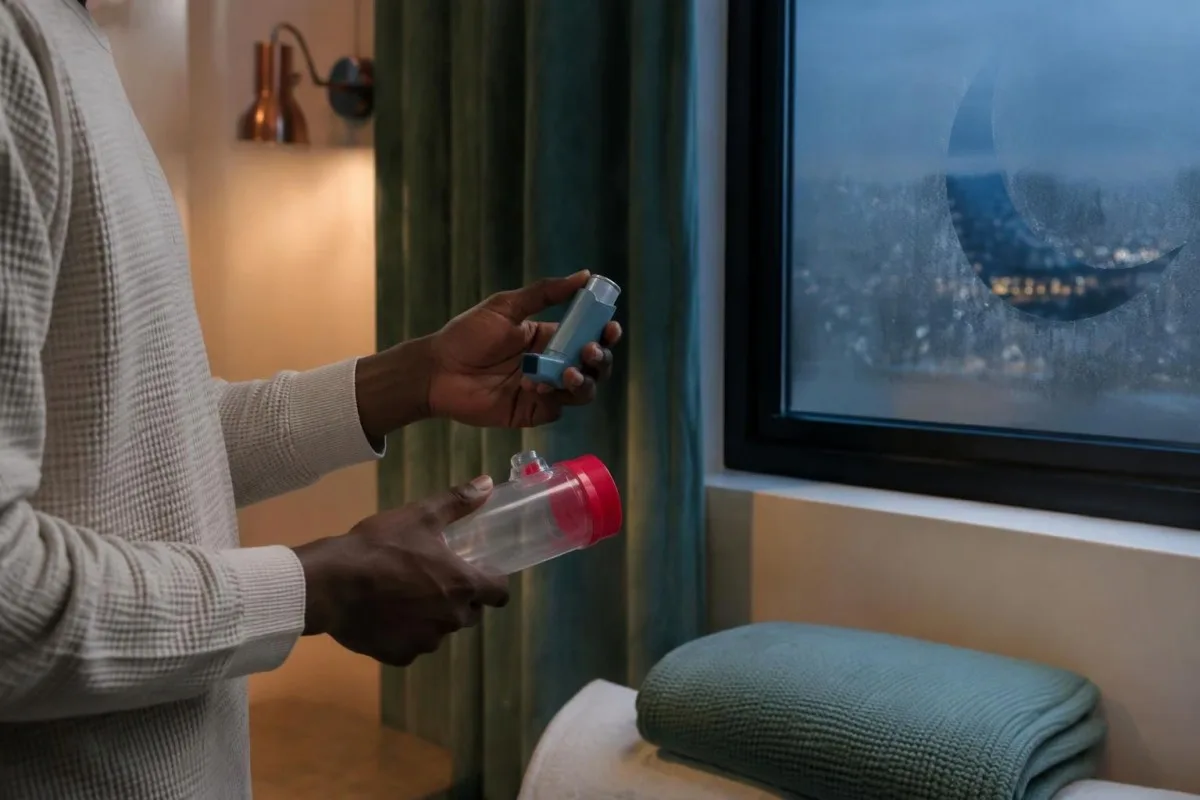
Нощната кашлица не означава непременно астма. Кашлицата след лягане, придружена от кисел вкус или връщане на стомашно съдържимо, насочва към друг възможен фактор, а нашите закономерности при симптомите на рефлукс обясняват защо времето на поява е важно; 2 състояния могат да съществуват едновременно, така че установяването на рефлукс не обяснява непременно всеки епизод на задух.
Повтарящите се събуждания носят повече информация от самия час. Записвайте броя на събужданията в продължение на 7 нощи, дали сте усещали стягане или задух и дали предписаният ви облекчаващ инхалатор е помогнал; кашлица в полунощ след хранене се различава от събуждане близо до зазоряване със затруднено издишване.
Стратегията на GINA за 2025 г. оценява дневните симптоми, нощните събуждания, ограничението на физическата активност и, когато е приложимо, употребата на краткодействащ облекчаващ инхалатор през последните 4 седмици. Човек, който спи лошо заради астма, не бива да приема нормалното дневно измерване на кислорода като доказателство за добър контрол, тъй като кислородната сатурация не измерва вариабилността на дихателните пътища.
Дневникът в спалнята може да помогне да се разграничат излагането на фактор от съвпадението: записвайте дали симптомите се появяват у дома, извън дома или след смяна на спалното бельо в продължение на 2 седмици. Не се излагайте умишлено отново на предполагаем отключващ фактор; продължаващите събуждания налагат преглед на лечението и техниката на използване на инхалатора, а не просто добавяне на още възглавници.
Може ли астмата да причини кашлица без хрипове?
Кашлица при астма без хрипове е възможна, особено при кашличен вариант на астмата, при който кашлицата може да е основният симптом, а рутинната спирометрия да е нормална. При възрастни кашлица, продължаваща повече от 8 седмици, изисква оценка и за други причини, освен астма.

Кашличният вариант на астмата и неастматичният еозинофилен бронхит могат да причинят хронична кашлица, свързана с еозинофилно възпаление на дихателните пътища. Разграничаването е важно, защото при второто състояние обикновено липсва характерното за астмата променливо ограничение на въздушния поток или бронхиална хиперреактивност; повишеният брой еозинофили сам по себе си не може да разграничи тези 2 диагнози.
A normal initial breathing test does not close the investigation when the symptom pattern remains convincing. Clinicians may repeat spirometry during symptoms or consider a supervised bronchial challenge, whereas coughing spells with vomiting or a relevant contact history may need whooping cough testing with attention to how many weeks have elapsed.
Medication review can identify an overlooked explanation for cough. An ACE inhibitor used for blood pressure can cause a dry cough even after months of treatment, so bring a complete medication list rather than focusing only on drugs started within the previous 2 weeks; do not stop prescribed treatment without advice.
The absence of wheezing has 2 very different meanings: mild asthma may produce no audible wheeze, while a severe attack may become quiet because too little air is moving. Quiet breathing combined with exhaustion, difficulty speaking or worsening breathlessness is an emergency—not evidence that the attack has ended.
Как се проявяват симптомите на астма, предизвикани от физическо натоварване?
Exercise-induced bronchoconstriction causes temporary airway narrowing during or after exercise, often becoming most noticeable within about 5–10 minutes after stopping. Exercise symptoms alone do not prove asthma, because laryngeal obstruction, anaemia and other conditions can also limit breathing.
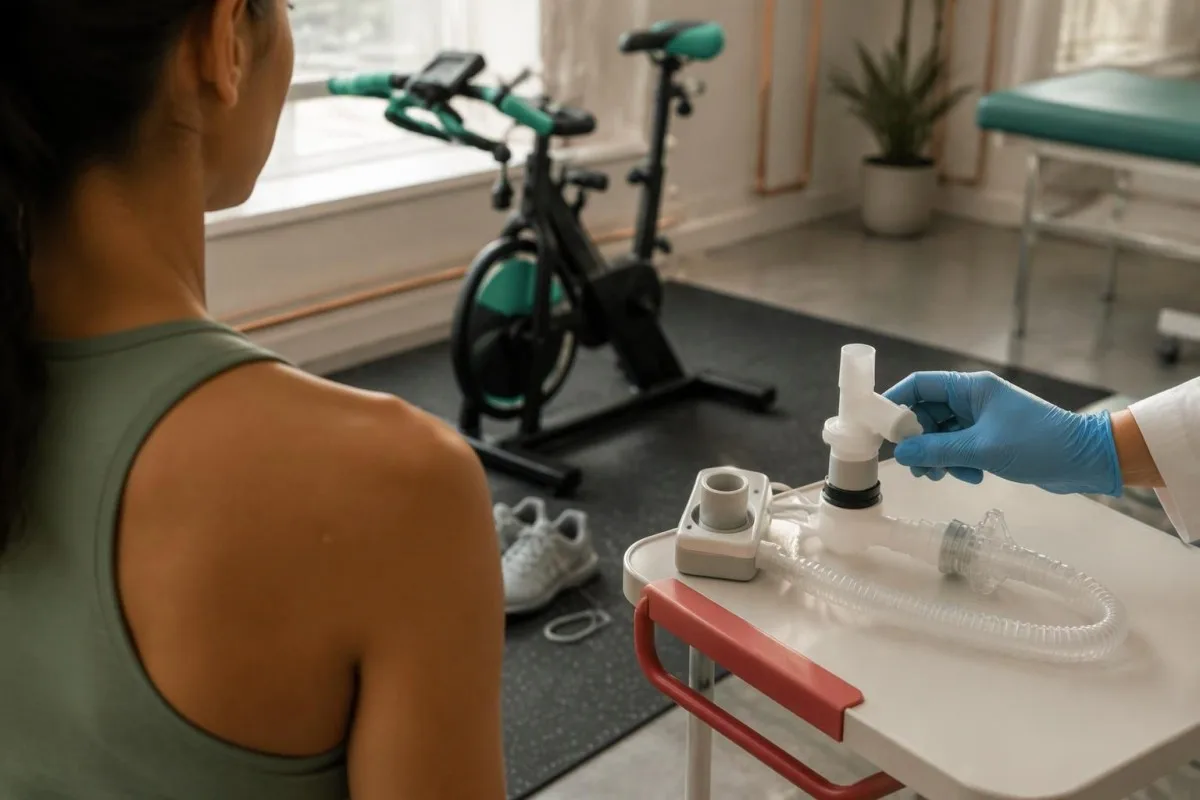
Exercise-related laryngeal obstruction often causes throat tightness or noisy breathing during inhalation at peak effort, then settles relatively quickly after stopping. Bronchoconstriction more often affects expiration and recovery; these are clues rather than absolute rules, and the 2 conditions can occur in the same person.
A supervised exercise challenge measures airflow rather than relying on whether exercise feels difficult. A fall in FEV1 of more than 10% and more than 200 mL after exercise supports asthma in adults under GINA's diagnostic framework; local protocols and criteria for exercise-induced bronchoconstriction may differ.
Reduced exercise tolerance without cough, tightness or variable wheeze deserves a broader assessment. Our iron stores in athletes guide explains why a hypothetical runner with ferritin of 12 ng/mL may need an iron assessment, but that result would not explain away independently documented airway narrowing.
An exercise diary should include intensity, weather and whether symptoms peak during activity or 10 minutes afterward. Once assessed, many people can remain active using a clinician-agreed plan; avoid testing your limits during an unstable period or repeatedly using a reliever without reviewing the underlying treatment.
Кои причинители често отключват симптоми на астма?
Asthma triggers include respiratory viruses, pollen, dust mites, animal allergens, smoke, air pollution, cold air and exercise. A 2-week exposure diary can suggest patterns, but a suspected trigger is not the same thing as a confirmed allergy or a diagnosis of asthma.
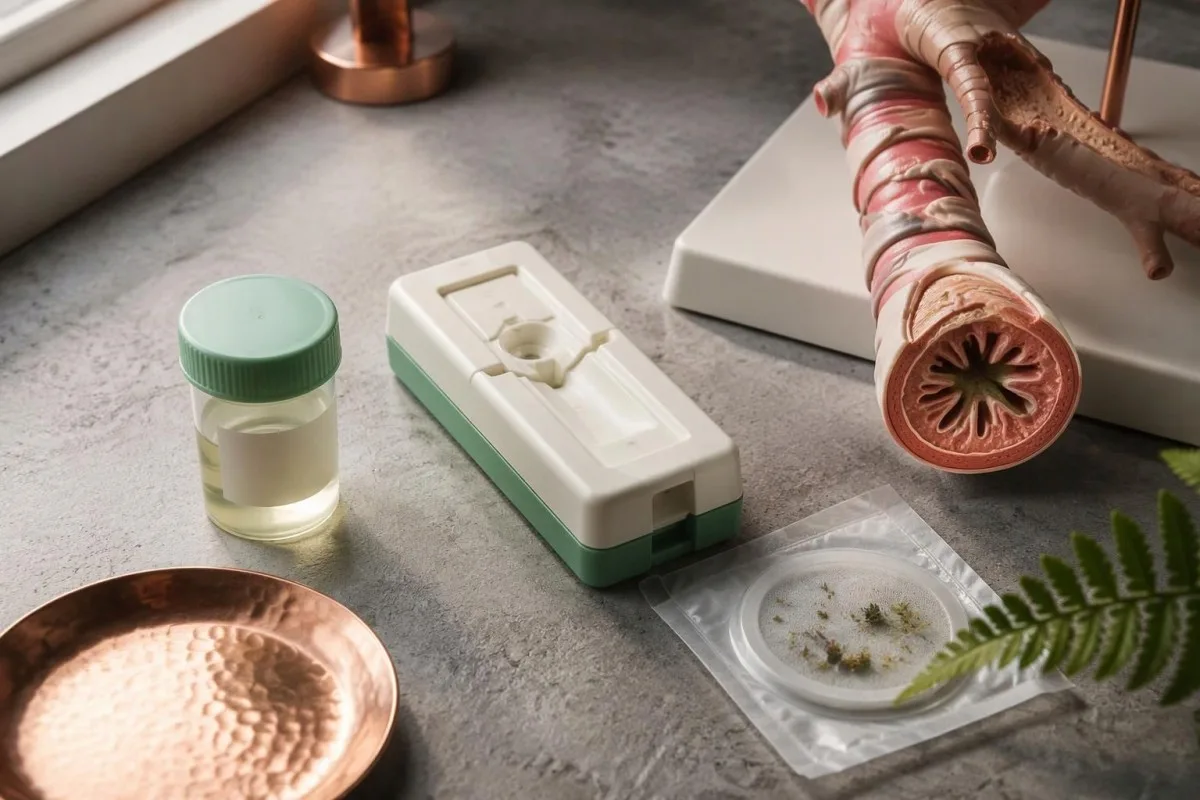
Allergy testing identifies sensitisation, not necessarily the cause of every breathing episode. A positive specific IgE result to 1 allergen becomes clinically useful when exposure reliably matches symptoms; our тестване за алергия към компоненти guide explains why more detailed panels still require a relevant history.
Damp buildings can worsen respiratory symptoms through several mechanisms, including allergen exposure and irritation. There is no single laboratory panel that establishes 'mould-related asthma'; our mould testing limitations distinguish targeted allergy assessment from unsupported broad testing, and symptoms should be evaluated even when 1 panel is normal.
Work-related asthma can appear after months or years of exposure and may improve on weekends or holidays. Record work tasks and breathing measurements across both work and non-work days for an occupational assessment; a specialist may need more than the standard 2-week diagnostic diary, and intentional exposure challenges are unsafe.
Some beta-blockers, including certain eye drops, can worsen bronchoconstriction, while aspirin or other NSAIDs trigger symptoms in a susceptible subgroup rather than everyone with asthma. Review all medications, including over-the-counter products, during 1 appointment; do not stop cardiovascular drugs or attempt a home aspirin challenge.
Какво друго може да изглежда като астма?
Asthma-like symptoms can result from reflux, upper-airway disorders, COPD, anaemia, cardiac disease or respiratory infection. At least 2 separate conditions may contribute, so persistent symptoms despite appropriate asthma treatment should prompt reassessment rather than automatic dose escalation.
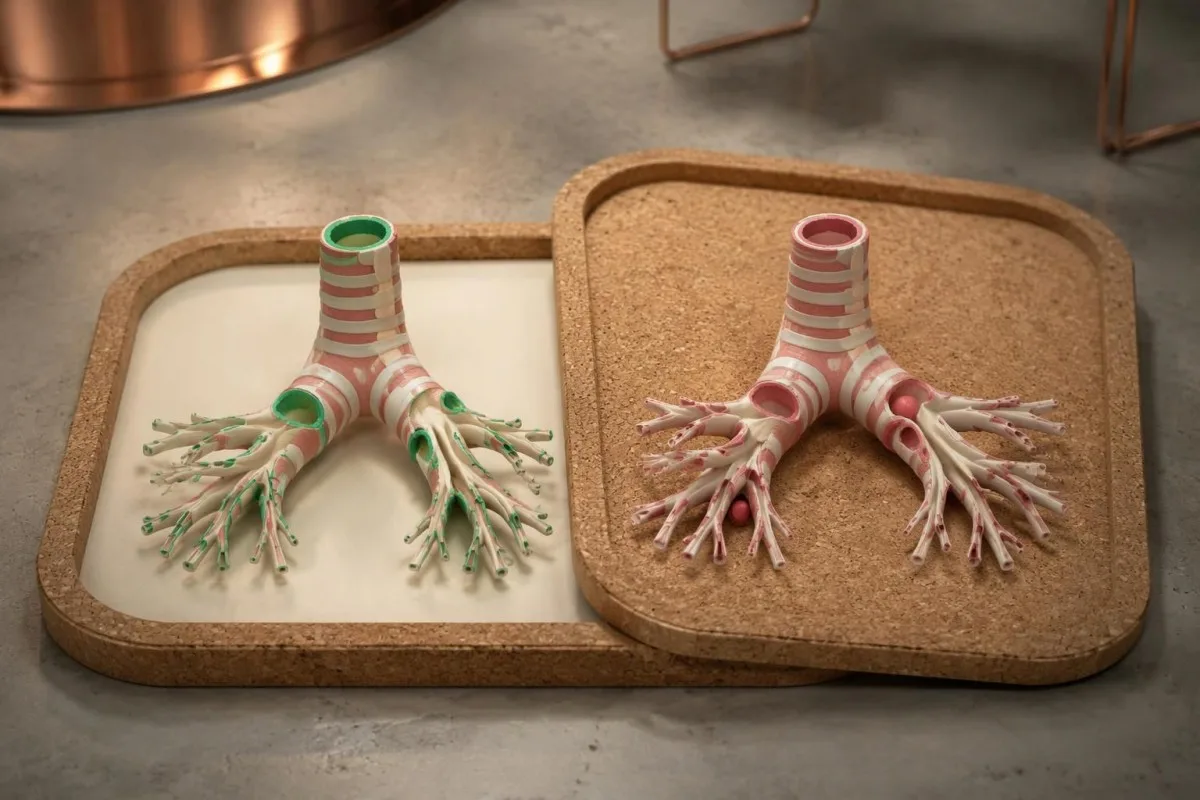
Wheeze limited to one area or symptoms beginning suddenly after choking suggest focal airway obstruction rather than typical diffuse asthma. The finding deserves clinical assessment, particularly in a child; a single persistent wheeze has a different diagnostic meaning from episodes that change with several unrelated triggers.
Fixed obstruction on repeated spirometry does not automatically mean COPD, because longstanding asthma can also leave persistent airflow limitation. Smoking history, age and previous lung disease help distinguish causes, while early emphysema or a strong family history may justify alpha-1 antitrypsin assessment rather than assuming 1 diagnostic label explains everything.
Recurrent chest infections, poor growth or a chronic productive cough in a young person should widen the investigation. A sweat chloride result of at least 60 mmol/L supports cystic fibrosis in the appropriate diagnostic setting; values of 30–59 mmol/L require further evaluation rather than being treated as an asthma result.
New breathlessness with chest pressure, fainting or inability to lie comfortably needs timely assessment for non-asthma causes. Even 1 abrupt episode of unexplained breathlessness can be urgent, and attributing symptoms to anxiety before checking relevant respiratory and cardiac possibilities risks missing a treatable condition.
Как спирометрията подпомага диагностицирането на астма?
Spirometry measures airflow, including FEV1 and FVC, and can show obstruction that improves after a bronchodilator. An adult FEV1 increase of at least 12% and 200 mL supports variable airflow limitation under commonly used asthma criteria, but a negative test does not exclude intermittent asthma.
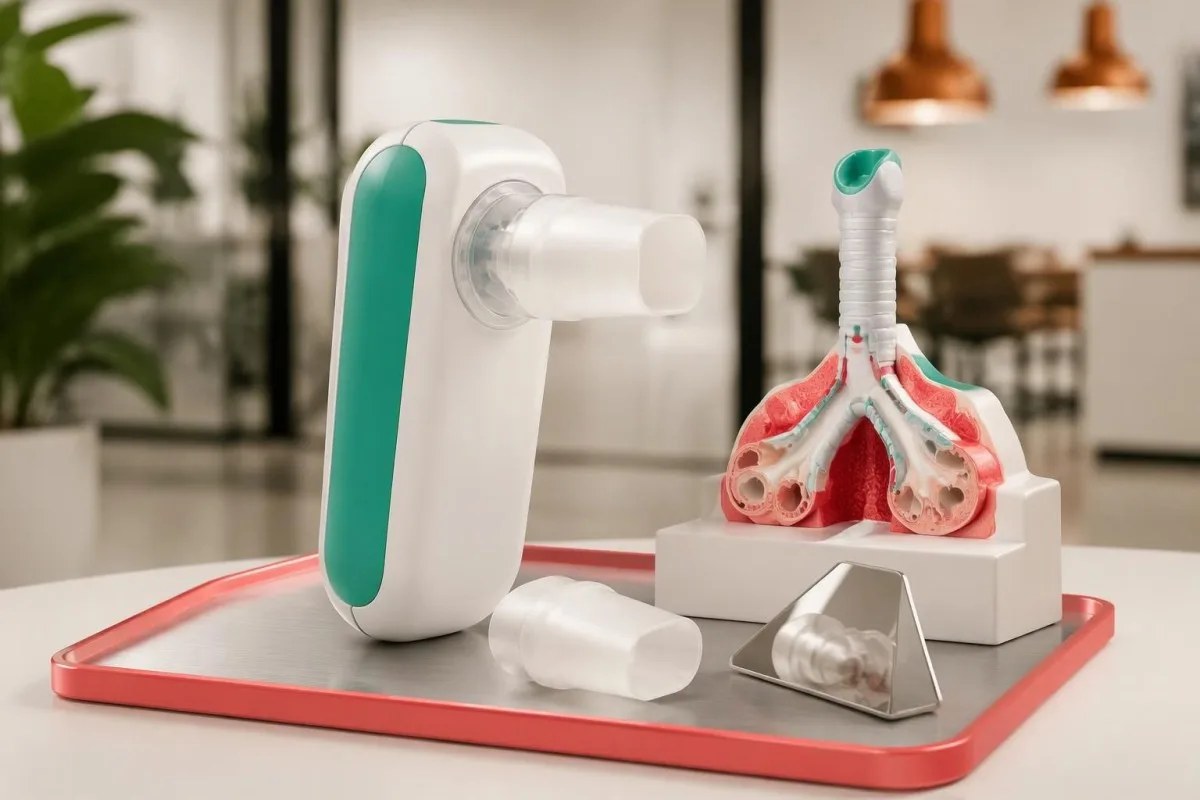
The FEV1/FVC ratio helps identify obstruction, but interpretation should use an age-appropriate lower limit of normal rather than applying 0.70 to every patient. The European Respiratory Society adult diagnostic guideline recommends spirometry and bronchodilator testing within a structured assessment, followed by additional tests when necessary (Louis et al., 2022).
Consider a hypothetical result: FEV1 rises from 1.90 L to 2.18 L after the test medication. The increase is 280 mL and 14.7% of the starting value, meeting the commonly used adult reversibility criterion; the finding supports asthma when the history fits, but it is not a diagnosis detached from clinical context.
Guidelines and laboratory reporting standards do not always express reversibility in the same way. NICE NG245 also accepts an adult FEV1 increase of at least 10% of predicted normal; if predicted FEV1 is 3.40 L, that same 280 mL improvement is only 8.2% of predicted, explaining why 2 reporting conventions can produce different flags.
Testing quality matters: spirometry usually seeks at least 3 acceptable manoeuvres, and adult repeatability commonly requires the best FEV1 values to be within 150 mL. Our breathlessness laboratory guide explains complementary investigations, but no laboratory interpretation can compensate for an unreliable breathing manoeuvre.
Как дневникът на пиковия експираторен дебит може да помогне при диагностицирането на астма?
Peak-flow monitoring can document variable breathing when spirometry is unavailable or initially inconclusive. GINA uses average daily variability above 10% in adults and above 13% in children over 2 weeks as supportive evidence; NICE NG245 uses a 20% diagnostic threshold in its pathway.
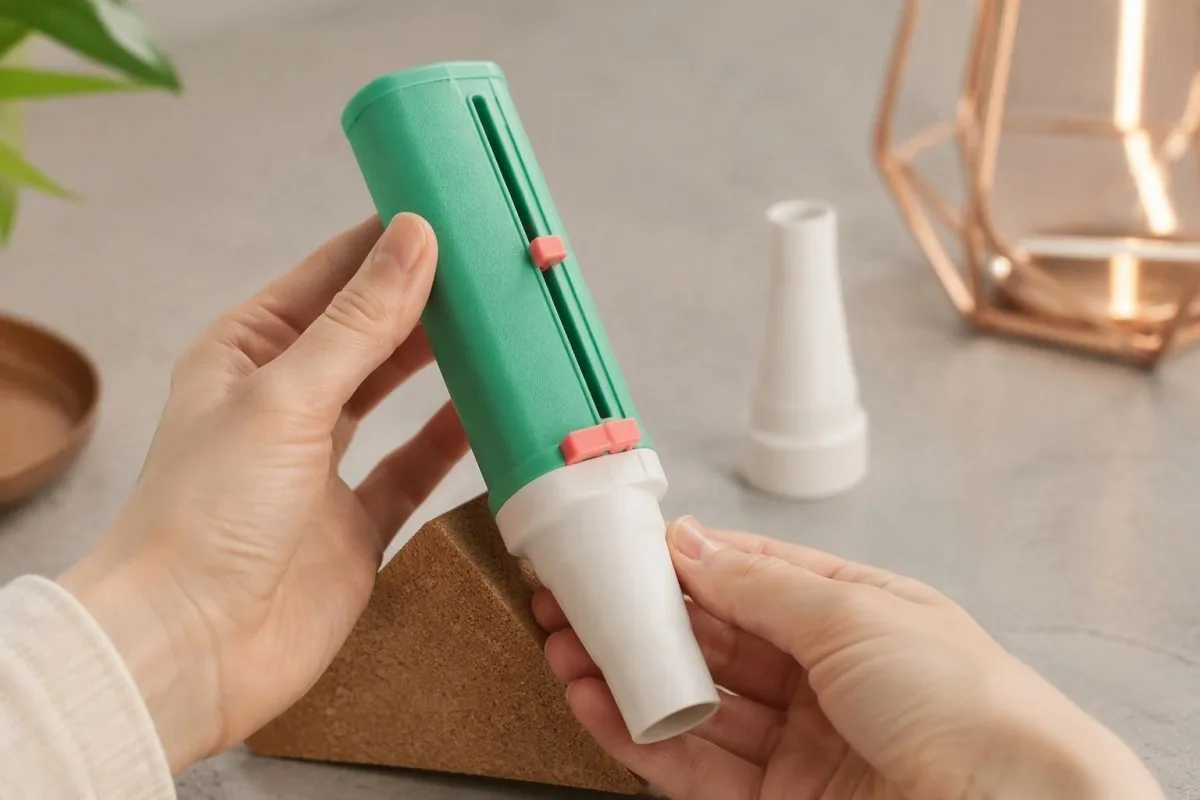
Use the same meter and technique each time, usually measuring morning and evening as instructed. Perform 3 blows per session and record the highest acceptable reading in L/min; note symptoms and medication timing, because taking a bronchodilator before one session but not the other can distort the comparison.
Daily variability can be calculated as the highest minus the lowest reading divided by their mean, multiplied by 100. If a hypothetical day's readings are 380 and 460 L/min, variability is 80/420 × 100, or 19.0%; the diagnostic assessment uses the average across the monitoring period, not that single day's percentage.
Peak-flow action zones and diagnostic variability answer different questions. A personalised plan may use at least 80% of personal best, 50–79%, and below 50% to guide action, whereas diagnosis examines fluctuations over time; a low personal best should not be accepted as normal without checking technique and clinical status.
Кантести е един Платформа за кръвни изследвания тълкуване с AI, not a service for confirming asthma from a 2-week breathing diary. Our AI report safety checks explain why readers should distinguish a recorded value, an automated explanation and a clinician's diagnosis—particularly when different guidelines use different thresholds.
Какво показват FeNO и еозинофилите за астмата?
FeNO measures nitric oxide in exhaled breath, while blood eosinophils measure an inflammatory cell population; both can support assessment of type 2 asthma. NICE NG245 uses FeNO of at least 50 ppb in adults and at least 35 ppb in children aged 5–16 within its diagnostic pathways.
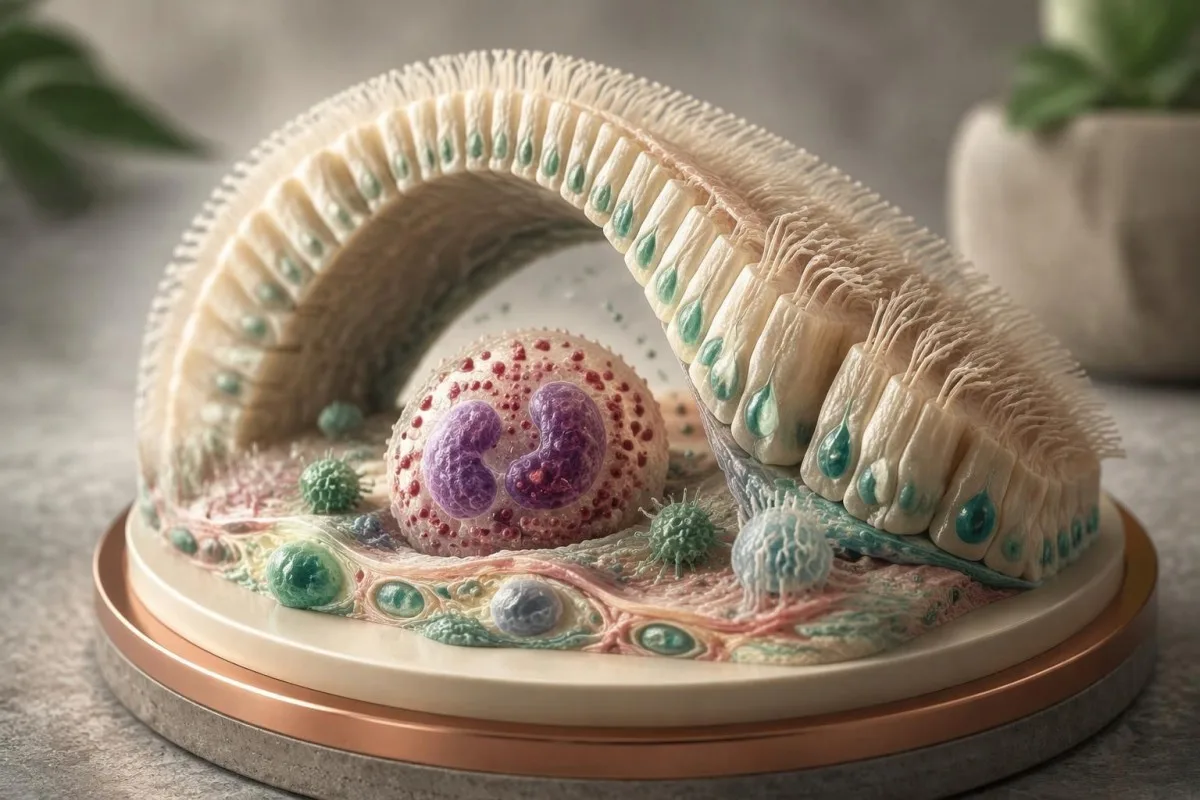
The NICE/BTS/SIGN 2024 guideline allows an elevated blood eosinophil count above the laboratory reference range or FeNO of at least 50 ppb to establish an adult diagnosis within its suggestive-history pathway. This does not mean a blood test alone confirms asthma: the recommendation depends on clinical assessment, and GINA places greater emphasis on documenting variable airflow limitation.
A low FeNO reading does not rule out asthma, particularly after inhaled corticosteroid treatment or in non-type-2 disease. Allergic rhinitis can raise FeNO without proving lower-airway asthma, so a hypothetical reading of 60 ppb with nasal symptoms but no compatible breathing history needs a different interpretation from 60 ppb with recurrent nocturnal tightness.
Eosinophil counts above 0.5 × 10^9/L, equivalent to 500 cells/µL, commonly attract attention, although laboratories use different upper limits. Our high eosinophil interpretation explains why persistent counts of at least 1.5 × 10^9/L require broader evaluation for medications, parasites and other disorders—not simply a stronger asthma label.
Steroid timing can change both FeNO and eosinophil results, sometimes making 2 tests taken weeks apart look inconsistent. Our стандарти за клинично тълкуване support reporting such limitations; tell the clinician when you last used inhaled or oral steroids, but never stop treatment just to make a test more likely to turn positive.
Защо кръвните изследвания сами по себе си не могат да потвърдят астма?
Blood tests alone cannot confirm asthma because they do not demonstrate variable airflow limitation or reliably distinguish asthma from every alternative cause of cough. Even 1 markedly abnormal eosinophil or IgE result needs a compatible history and an appropriate diagnostic pathway.
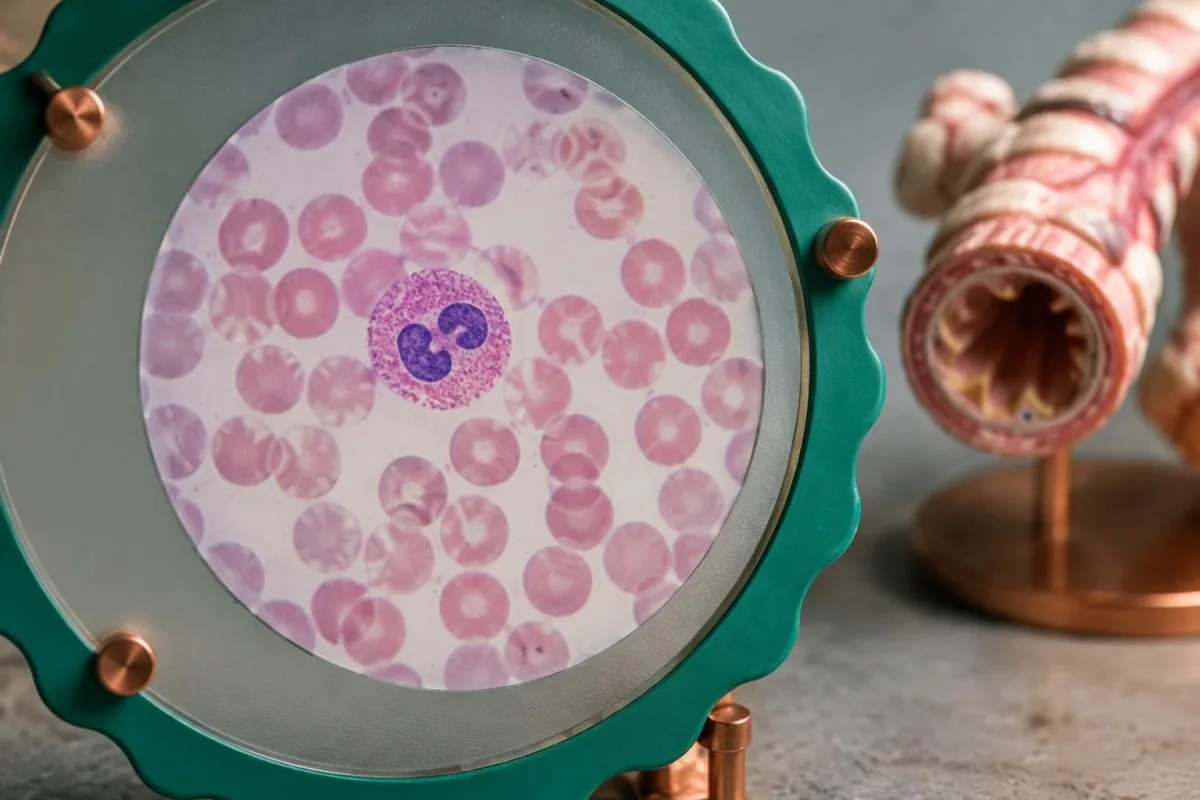
Total IgE and allergen-specific IgE are different measurements: one reflects an overall antibody concentration, while the other tests sensitisation to selected allergens. There is no universal total-IgE cutoff that diagnoses asthma across adults and children; a positive result to 1 allergen may explain sensitisation without proving that exposure causes wheeze.
A CBC may identify anaemia that contributes to breathlessness, and selected inflammatory tests may help assess a suspected infection. Our сравнение на WBC и CRP explains why these markers can disagree; an elevated CRP of 25 mg/L is not an asthma threshold and cannot independently determine whether antibiotics are needed.
Kantesti AI can help readers compare eosinophil counts, haemoglobin and other reported markers, but it cannot establish variable airflow limitation from a laboratory PDF. A hypothetical eosinophil change from 0.62 to 0.18 × 10^9/L after steroid treatment may reflect treatment exposure rather than the disappearance of asthma.
Routine asthma diagnosis does not require ordering every available inflammatory marker. Bring existing results and a medication timeline covering at least the previous 2 weeks; clinicians can then select tests for a specific question, such as anaemia, allergy or treatment planning, instead of treating a large panel as a substitute for breathing assessment.
Кои предупредителни признаци, свързани с дишането, изискват спешна медицинска помощ?
Обадете се незабавно на спешна помощ for severe breathlessness, inability to speak normally, blue or grey lips, confusion, drowsiness, exhaustion or a prescribed reliever that is not helping. If available, peak flow below 50% of personal best or oxygen saturation of 92% or less with acute symptoms adds urgency; do not wait for either measurement.

A quiet or 'silent' chest during worsening breathing can indicate critically reduced air movement, not recovery. Peak flow below 33% of personal best is a life-threatening feature in UK acute-asthma frameworks, but inability to obtain a reading because of severe breathlessness is itself concerning; call the local emergency number, such as 999 or 112 where applicable.
While help is coming, sit upright and use your prescribed reliever according to your written action plan or emergency-dispatch instructions. Do not drive yourself, and do not delay the call to perform repeated peak-flow tests; even 1 episode of confusion or marked exhaustion can signal that self-management is no longer safe.
An oxygen reading does not measure carbon dioxide, and home devices can be inaccurate because of movement, cold fingers or other factors. Our arterial gas interpretation explains why a normal or rising PaCO2 near or above 45 mmHg during severe acute asthma can concern clinicians when vigorous breathing would usually lower it.
Sudden breathlessness with chest pain, coughing up blood or unilateral leg swelling may indicate another emergency; our urgent leg clot signs explain that connection. Breathing difficulty with tongue or throat swelling after an exposure can be anaphylaxis: use a prescribed adrenaline auto-injector immediately and call emergency services, because 1 asthma inhaler does not replace anaphylaxis treatment.
Как се оценяват симптомите на астма при деца?
Children's asthma symptoms may include nighttime cough, wheeze, reduced play or breathlessness rather than a clear description of chest tightness. Objective testing is often possible from about age 5, while younger children usually need a pattern-based assessment and monitored treatment response.
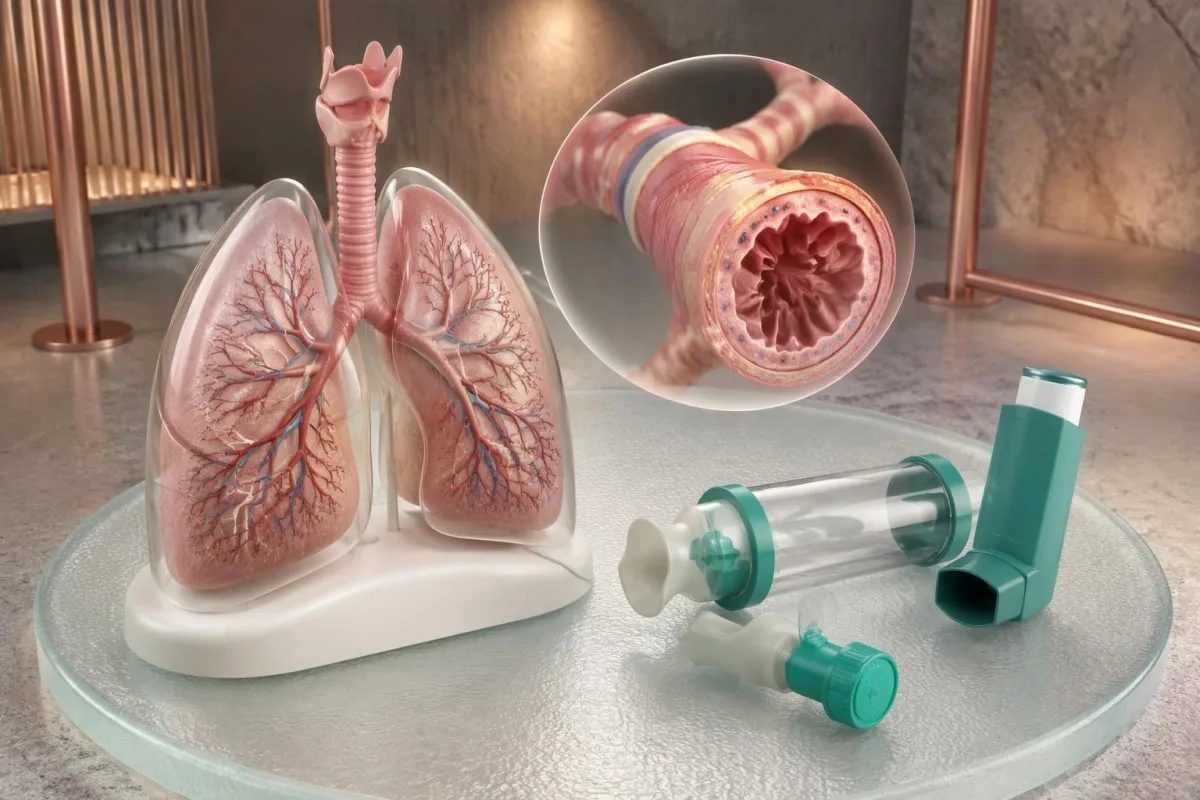
Preschool viral wheeze is not identical to established persistent asthma. Clinicians consider whether symptoms occur only during colds or also between illnesses, along with allergy history and family risk; 2 children who wheeze with the same virus can have different longer-term patterns, so a permanent label should not rest on one episode.
A treatment trial in a child younger than 5 may be assessed over approximately 8–12 weeks under NICE guidance, depending on the presentation. Improvement needs to be interpreted alongside adherence, device technique and natural recovery from a virus; a treatment response is useful evidence, but it is not an isolated laboratory-style confirmation.
Children's spirometry requires age-appropriate interpretation and coaching, not adult thresholds pasted onto smaller lungs. GINA uses an FEV1 increase of at least 12% of predicted in children as a supportive bronchodilator criterion, and a technically poor test may need repetition even if the report prints a reassuring percentage.
Нашите children's laboratory safety guide explains why age-specific ranges matter without replacing respiratory assessment. In a child, marked chest recession, inability to drink or speak normally, unusual sleepiness or worsening breathing warrants urgent help; even 1 such sign outweighs a normal previous test.
Какво трябва да носите на преглед за оценка на астма?
Prepare for an asthma assessment by bringing your symptom pattern, medication list, inhaler devices and any previous breathing or laboratory results. A 2-week diary of symptoms, exposures and clinician-requested peak-flow readings is often more useful than a long list of unrelated tests.
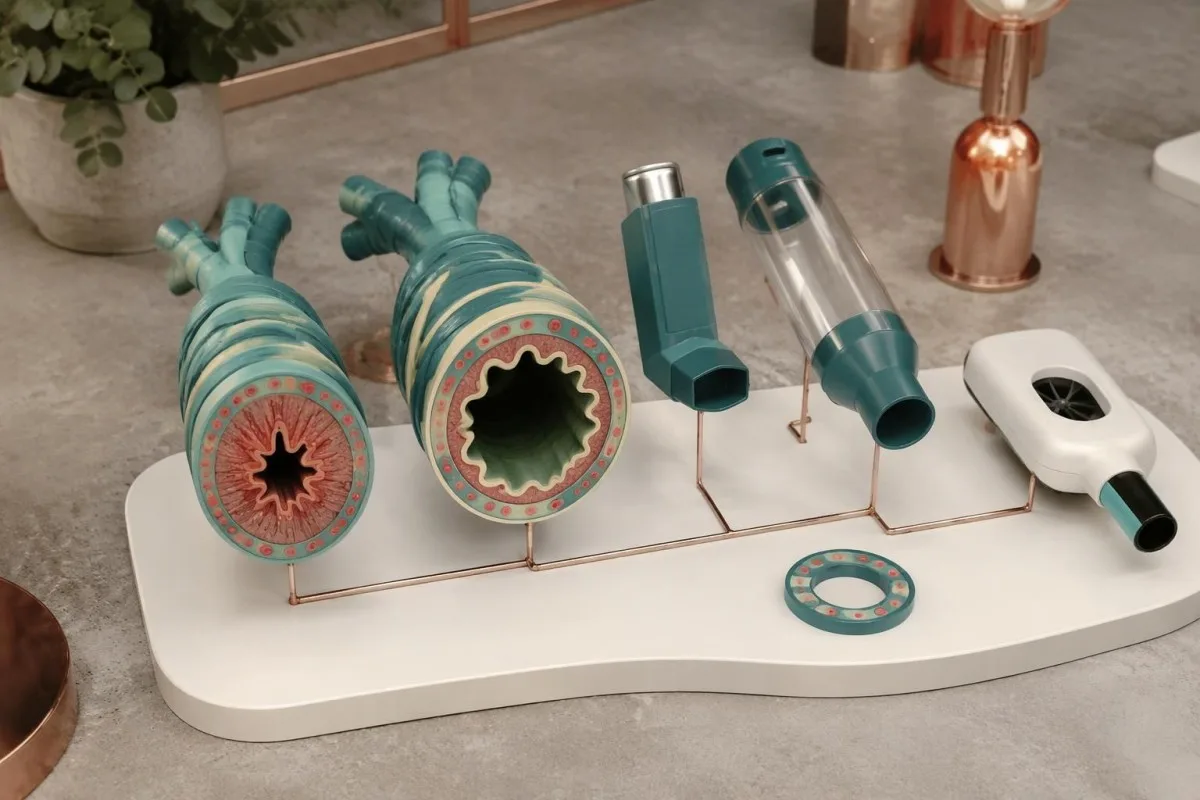
Ask the testing service which inhalers, if any, should be withheld and for how long before spirometry. Instructions vary by medication and test purpose, so do not assume a universal 12-hour rule; if symptoms worsen while following preparation instructions, use needed treatment and contact the service rather than prioritising an ideal test.
Bring the actual inhaler and spacer so a clinician can observe technique rather than relying on a description. Different devices require different inhalation patterns, and 1 correct demonstration can reveal why a prescribed treatment seemed ineffective; poor technique can look like resistant disease even when the medication choice is appropriate.
Кантести е един Инструмент за анализ на кръвни изследвания с AI that can help explain accompanying laboratory reports while the clinician evaluates breathing symptoms. Our Ръководство за AI технология describes the interpretation workflow, but an estimated processing time of about 60 seconds should never be confused with the time needed to establish a respiratory diagnosis.
Share only the information needed for the assessment, particularly when organising results for another family member. Our информация за поверителността и данните explains handling considerations; keep symptom diaries and original reports available for clinical review, and do not let uploading 1 document delay urgent care or a necessary breathing appointment.
Научни публикации и доказателства в подкрепа на изследванията за астма
Asthma diagnostic evidence comes primarily from respiratory guidelines and studies of airflow, airway responsiveness and inflammatory markers. The 3 external references below directly support this article; the 2 Zenodo laboratory guides are separate educational resources and are not studies validating asthma diagnosis.
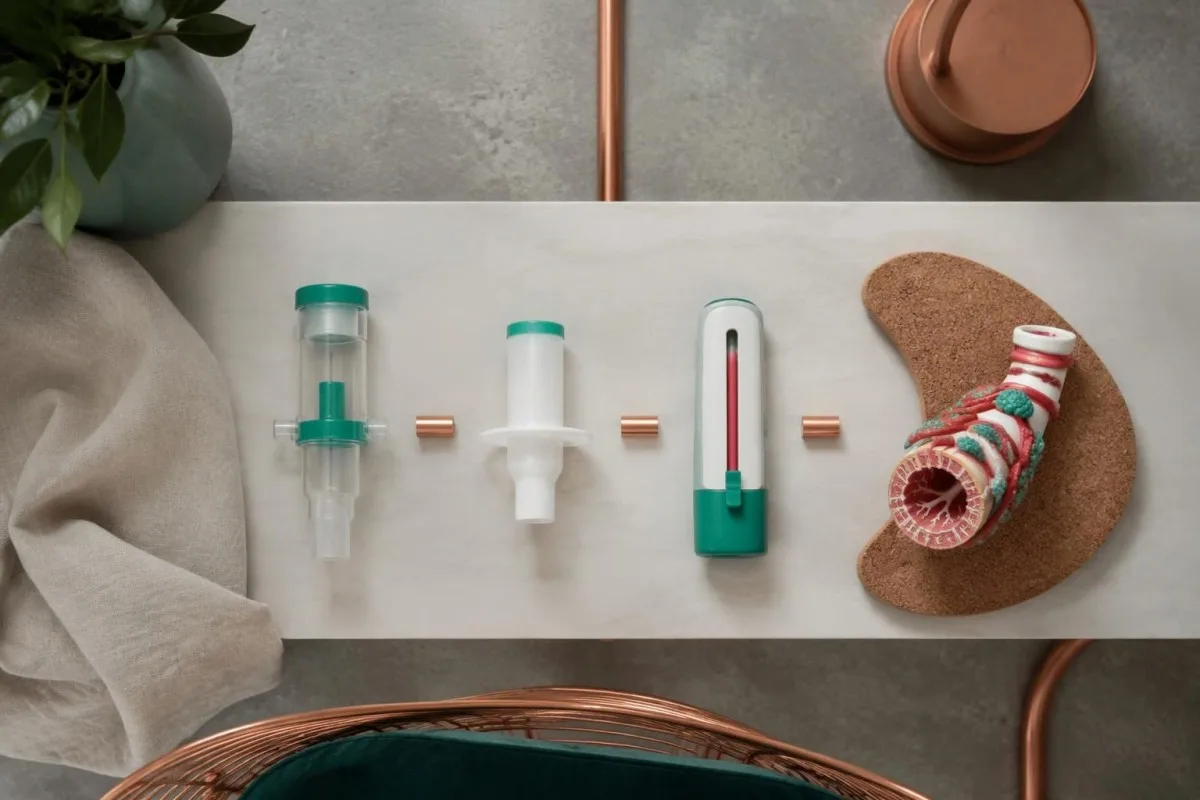
GINA's 2025 strategy links a characteristic symptom history with evidence of variable expiratory airflow limitation, while the 2024 NICE/BTS/SIGN guideline specifies a different sequence of objective tests. The European Respiratory Society adult guideline supplies a third structured approach (Louis et al., 2022); comparing all 3 helps explain why clinicians may reasonably order tests in different sequences.
На Kantesti RDW и ръководство за червените кръвни клетки provides background when a CBC raises a separate question about anaemia and breathlessness. Its Zenodo DOI identifies that publication, not proof that RDW diagnoses asthma; even 2 abnormal red-cell indices must be interpreted as haematology findings rather than measurements of airway narrowing.
The ръководство за интерпретация на бъбречното съотношение addresses BUN, creatinine and clinical context rather than asthma symptoms. Its separate Zenodo DOI is included for publication transparency, and neither of these 2 laboratory guides establishes the sensitivity, specificity or effectiveness of an asthma diagnostic pathway.
Нашите стандарти за медицинско съдържание distinguish guideline-supported facts from educational examples and product descriptions. Kantesti does not claim that these 2 DOI resources validate asthma detection; uncertain symptoms need clinical assessment, and emergency breathing warning signs require immediate action regardless of how recently a report was interpreted.
Често задавани въпроси
Кои са първите признаци на астма при възрастни?
Първите признаци на астма при възрастни често включват променлив задух, стягане в гърдите, свиркащо дишане или кашлица, която се влошава през нощта или след физическо натоварване. Период без симптоми не изключва астма, тъй като ограничението на въздушния поток може да варира от ден на ден. Дневник на симптомите, воден в продължение на 2 седмици, може да помогне на лекаря да установи закономерности, когато симптомите са леки и стабилни. За потвърждаване на диагнозата са необходими спирометрия или други подходящи обективни изследвания, а влошаването на дишането трябва да бъде оценено по-скоро.
Възможно ли е да имате астма без хрипове?
Астмата може да протича без доловимо свиркане в гърдите, особено когато кашлицата е основният симптом или когато симптомите липсват по време на прегледа. Кашлица при възрастни, продължаваща повече от 8 седмици, изисква оценка за астма и други причини, включително рефлукс, лекарствени ефекти и неастматичен еозинофилен бронхит. Нормалната първоначална спирометрия може да наложи повторно изследване или провокационен бронхиален тест под наблюдение, ако съмнението остава. Тихият гръден кош при тежък задух е нещо различно: може да показва опасно нисък въздушен поток и изисква спешна помощ.
Защо астмата се влошава през нощта?
Asthma can worsen at night because airway function follows daily rhythms and bedroom allergens or reflux may add triggers. GINA's symptom-control assessment treats any asthma-related nighttime waking in the previous 4 weeks as a reason to review control. Record awakenings, breathing symptoms and prescribed reliever use rather than assuming every nighttime cough is asthma. Repeated waking should prompt a clinical review, while severe breathing difficulty requires emergency care.
Може ли кръвен тест да покаже дали имате астма?
Само по себе си кръвното изследване не може да потвърди астма, тъй като не доказва променливо ограничение на въздушния поток и не изключва всички останали причини за симптоми от страна на дишането. Еозинофили над 0.5 × 10^9/L могат да се наблюдават при астма, алергии, прием на лекарства или други заболявания. NICE NG245 допуска повишените еозинофили да установят диагноза при възрастен в рамките на алгоритъм, приложим при анамнеза, насочваща към астма, но това е клиничен алгоритъм, а не тълкуване на изолиран резултат от кръвно изследване. Според клиничната картина и местните указания лекарите могат да използват и спирометрия, FeNO, проследяване на пиковия дебит или бронхопровокационен тест.
Възможно ли е да имате астма при нормална спирометрия?
Нормалната спирометрия не изключва астма, тъй като стеснението на дихателните пътища може да е периодично или потиснато от лечението. Лекарите могат да повторят спирометрията по време на симптоми, да назначат измерване на пиковия дебит два пъти дневно в продължение на 2 седмици или да поискат провеждане на контролиран бронхиален провокационен тест. Подобрение на FEV1 при възрастен с поне 12% и 200 mL след прилагане на бронходилататор е в подкрепа на вариабилността според широко използваните критерии. Инструкциите за подготовка зависят от лекарството и изследването, затова никога не спирайте инхалатор без конкретен медицински съвет.
Кога симптомите на астма трябва да се приемат като спешен случай?
Симптомите на астма налагат спешна помощ, когато дишането е силно затруднено, човекът трудно говори нормално, става изтощен или объркан, устните му изглеждат сини или сиви или предписаният бързодействащ инхалатор не помага. Пикова скорост на издишване под 50% от личния най-добър резултат или кислородна сатурация от 92% или по-ниска при остри симптоми са допълнителен повод за тревога, но не бива да се чака измерването, преди да се предприемат спешни действия. Седнете изправени, обадете се на местния номер за спешна помощ и използвайте предписания инхалатор според писмения план или указанията на диспечера. Не шофирайте сами и приемайте тихото дишане при влошаващ се задух като предупредителен знак, а не като успокоение.
Получете обяснение на резултатите от кръвните си изследвания
Качете лабораторния си доклад и AI на Kantesti ще обясни всеки биомаркер на разбираем език за секунди. Използва се от над 2 милиона души по света.
Референции
- Klein, T., Mitchell, S., & Weber, H. (2026). Кръвен тест RDW: Пълно ръководство за RDW-CV, MCV и MCHC. Медицински изследвания с Kantesti AI. ДОИ
- Klein, T., Mitchell, S., & Weber, H. (2026). Обяснение на BUN/Креатинин съотношение: Ръководство за тест за бъбречна функция. Медицински изследвания с Kantesti AI. ДОИ
- Global Initiative for Asthma (2025). Global Strategy for Asthma Management and Prevention. GINA Strategy Report.
- National Institute for Health and Care Excellence, British Thoracic Society, and Scottish Intercollegiate Guidelines Network (2024). Asthma: diagnosis, monitoring and chronic asthma management (BTS, NICE, SIGN). NICE Guideline NG245.
- Louis R et al. (2022). European Respiratory Society guidelines for the diagnosis of asthma in adults. European Respiratory Journal. ДОИ
- 2 милиона+Анализирани тестове
- 127+Държави
- 100+Езици
За медицинския екип


Сигнали за доверие E-E-A-T
Опит
Медицински преглед, воден от лекар, на работните процеси за интерпретация на лабораторни резултати.
Експертиза
Фокус в лабораторната медицина върху това как се държат биомаркерите в клиничен контекст.
Авторитетност
Медицинска рецензия от д-р Thomas Klein, с принос от д-р Sarah Mitchell и проф. д-р Hans Weber.
Надеждност
Интерпретация, основана на доказателства, с ясни последващи стъпки за намаляване на тревогата.


Медицински отказ от отговорност
Тази статия е само с образователна цел и не представлява медицински съвет. Винаги се консултирайте с квалифициран медицински специалист за решения относно диагностика и лечение.
Публикувано · Свържете се с редакционния екип
Издава се от Kantesti Ltd, регистрирана в Англия и Уелс, дружество №. 17090423, Лондон, Обединено кралство.
