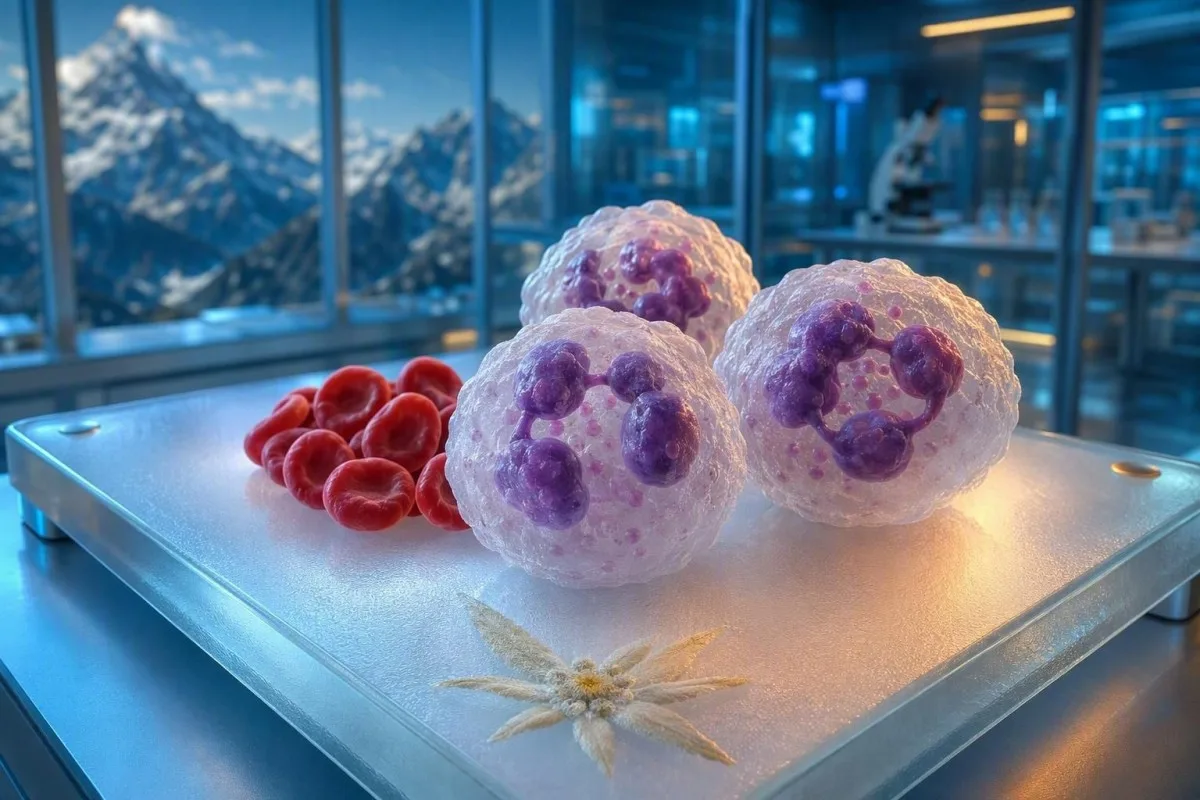
Hlutfall daufkyrninga sem er aðeins hækkað er oft tímabundið, en fjöldi daufkyrninga í sermi, restin af CBC, einkenni og þróun ákvarða hvort þörf er á aðgerð.


- Óljós gildi daufkyrninga þýðir venjulega ANC rétt fyrir ofan efri mörk rannsóknarstofunnar, oft um það bil 7,0-7,5 × 10⁹/L hjá fullorðnum.
- Algildur fjöldi daufkyrninga (absolute neutrophil count) er upplýsandi en prósenta daufkyrninga; reiknaðu ANC sem WBC × prósenta daufkyrninga ÷ 100.
- Væg daufkyrningahækkun undir 15 × 10⁹/L án kvíða einkenna er algengt að vera viðbrögð og getur komið í kjölfar sýkingar, reykinga, hreyfingar eða sterameðferðar.
- Endurtekningartímasetning er venjulega 2-6 vikum eftir bata frá stuttri veikindum, erfiðri hreyfingu, bólusetningu eða lyfjabreytingu.
- Bráð yfirferð er viðeigandi vegna hita með alvarlegri veikindum, mæði, ruglings, hratt hækkandi gilda, blast frumna, blóðleysis eða lágs blóðflagnafjölda.
- Sterar og adrenalín getur hækkað daufkyrninga í blóðrásinni innan nokkurra klukkustunda með því að færa frumur frá æðaveggjum inn í mælda blóðmagn.
- viðvarandi hækkun í meira en 3 mánuði, sérstaklega yfir 15-20 × 10⁹/L, þarfnast klínískrar endurskoðunar og oft blóðsýnis.
- Þungun getur eðlilega hækkað fjölda daufkyrninga, sérstaklega á þriðja þriðjungi meðgöngu, svo viðmiðunarbil fyrir fullorðna sem ekki eru ófríðar geta verið villandi.
Hvað óljóst hækkuð gildi daufkyrninga þýðir raunverulega
Landamæradaufkyrninga þýðir venjulega lítil hækkun á algildum fjölda daufkyrninga (ANC), ekki greining. Hjá flestum heilbrigðum fullorðnum, ANC aðeins örlítið yfir rannsóknarstofuviðmiðum jafnast þegar tímabundinn kveikja líður hjá; fyrsta verkefnið er að athuga algilda fjölda, heildarfjölda hvítra blóðkorna og einkenni frekar en að bregðast við auðkenndu prósentu.
Algild viðmiðunarbil fyrir ANC fullorðinna eru oft um 1.5 til 7.5 × 10⁹/L, þó að efri mörkin fari eftir greiningartæki, uppruna, meðgönguástandi og staðbundinni rannsóknaraðferð. Gildið 7.8 × 10⁹/L er klínískt mjög frábrugðið 28 × 10⁹/L, jafnvel þótt báðir geti verið merktir háir; sjá leiðbeiningar okkar um eðlilegt viðmiðunarbil daufkyrninga.
The prósenta daufkyrninga getur litið út fyrir að vera há einfaldlega vegna þess að eitilfrumur lækkuðu eftir streitu eða útsetningu fyrir kortisóni. Til dæmis gefur WBC 6.0 × 10⁹/L með 78% daufkyrningum ANC upp á 4.68 × 10⁹/L, sem er eðlilegt þrátt fyrir háa prósentu.
Kantesti er AI blóðprufugreiningartæki sem les CBC greiningu ásamt heildar WBC, hemóglóbíni, blóðflögum og fyrri niðurstöðum frekar en að meðhöndla eina appelsínugula flagga sem sjúkdómsmerki. Þann 28. ágúst 2026 er þessi nálgun sem byggir á mynstrum áfram öruggasta leiðin til að túlka landamæranlegar niðurstöður.
Af hverju merkingar rannsóknarstofu eru ekki greiningar
Viðmiðunarbil ná yfir miðhluta 95% valins hóps, svo um 1 af hverjum 20 heilbrigð mælingar geta verið utan tiltekins bils fyrir tilviljun. Merking er áskorun til samhengis, ekki sönnun þess að eitthvað sé að.
Af hverju fjöldi daufkyrninga í sermi skiptir meira máli en prósenta
ANC er fjöldinn sem læknar nota til að dæma daufkyrningahækkun vegna þess að hann sameinar heildar WBC með greiningunni. Hár hluti daufkyrninga með eðlilegum ANC er oft hlutfallsleg breyting, á meðan hár ANC staðfestir sanna daufkyrningahækkun.
Formúlan er einföld: ANC = WBC × (% daufkyrningar + % stafir) ÷ 100. Með WBC 12,0 × 10⁹/L og daufkyrningum 75% er ANC 9,0 × 10⁹/L; þetta er vægur daufkyrningahækkun, ekki neyðarástand eitt og sér.
Ég sé oft óþarfa kvíða þegar gátt skýrir frá 82% daufkyrningum en sýnir ekki útreikninginn skýrt. Hugsandi regla dr. Thomas Klein er að skrifa niður WBC, ANC, blóðrauða, blóðflögufjölda og allar óþroskaðar daufkyrningaskýrslur áður en ákvörðun er tekin um hvað niðurstaðan þýðir; okkar leiðbeiningar um CBC-þætti hjálpar við hugtökin.
WBC yfir 11 × 10⁹/L er almennt kallað hvítblæði hjá ekki-þunguðum fullorðnum, en orsökina er ekki hægt að leiða út frá því númeri einu saman. Riley og Rupert (2015) ráðleggja læknum að endurtaka CBC og endurskoða blóðsmásjármynd þegar hvítblæði er óútskýrt eða viðvarandi.
Algengar tímabundnar orsakir vægrar daufkyrningahækkunar
Væg daufkyrningahækkun endurspeglar oftast tímabundið viðbragðsferli: nýleg sýking, líkamlegt álag, reykingar, bólga, lyfjaáhrif eða meðganga. Þessar orsakir auka dreifðar daufkyrningar án þess að það þýði endilega að beinmergurinn sé að framleiða óeðlilegar frumur.
Kalt, tannbólga, þvagfæraeinkenni, húðútbrot eða jafnvel fyrstu dagarnir eftir veirusjúkdóm geta hækkað ANC í 8-14 × 10⁹/L bilinu. Daufkyrningar geta verið vægt hækkaðar í nokkra daga eftir að hiti er farinn vegna þess að beinmergslosun og vefjabati hættir ekki á sama tíma.
Erfitt millitímabil, maraþon, panikkastig eða bráð sársauki getur valdið demargination—frumur sem áður hvíldu við æðaveggi komast í dreifð sýni. Þessi hækkun getur gerst innan mínútna til klukkustunda og er ein ástæða þess að ég bið íþróttamenn að forðast óvenju erfitt þjálfun í 24-48 klukkustundir fyrir fyrirhugaða CBC; okkar leiðbeiningar um tímasetningu rannsókna tengdar líkamsrækt útskýrir breiðari mynstrið.
Reykingar tengjast hærri fjölda hvítfrumna og daufkyrninga, á meðan offita, langvinnir tannholds- og húðsjúkdómar geta viðhaldið hóflegri hækkun. Því eru hækkaðar daufkyrningar oft tengdar útsetningu og lífeðlisfræði, ekki falinni bakteríusýkingu.
Lyf, bóluefni og lífsatburðir sem geta hækkað daufkyrningafjölda
Kortikosteróíð, beta-ágósta innöndunartæki, litíum og örvandi lyf geta hækkað daufkyrningar, stundum verulega. Hættu ekki við ávísað lyf vegna CBC merkis; skráðu í staðinn lyfið, skammtinn og tímasetninguna fyrir lækninn sem endurskoðar niðurstöðuna.
Prednisón og svipaðir glúkókortíkóíðar geta aukið dreifðar daufkyrningar innan 4-6 klukkustunda með því að fjarlægja þær úr vefjum og draga úr frumuúthreinsun. Steratengd daufkyrningahækkun skortir oft eitruð korn eða áberandi vinstri hliðar sem geta fylgt alvarlegri bakteríusýkingu, þótt blóðkornamynd þurfi til að meta þetta réttilega.
Litíum getur aukið framleiðslu daufkyrninga, á meðan filgrastim og tengdar meðferðir hækka daufkyrningafjölda viljandi; nýleg skurðaðgerð, áfall og fæðing koma einnig af stað streituviðbrögð. Bólusetning getur tímabundið breytt greiningu, svo venjubundin próf tekin innan 7–14 dagana bólusarinnar getur verið minna fulltrúi grunnlína; lestu meira um tilfærslur í rannsóknarstofu eftir bólusetningu.
Kantesti er AI blóðrannsóknartúlkunarvettvangur sem gerir fólki kleift að vista lyf og sjúkdómssamhengi með niðurstöðu, sem er klínískt gagnlegra en að bera saman hráar tölur. Lyfjalisti ætti að innihalda innöndunartæki, sterakrem, sprautur og “náttúruleg” efni – ekki aðeins töflur.
Hvenær á að endurtaka CBC vegna óljósra gilda daufkyrninga
Fyrir annars heilbrigðan einstakling með vægt einangraða átfrumuaukningu er yfirleitt hæfilegt að endurtaka blóðkornafrumutalningu með mismun innan 2-6 vikna eftir að líkleg orsök hefur gengið yfir. Endurtakið próf fyrr – innan nokkurra daga – ef einkenni versna, fjöldinn eykst, eða upphafleg niðurstaða var mjög há.
Choose a stable day for the redraw: no fever, no vigorous workout for 24–48 hours, ordinary hydration, and no newly started steroid unless the prescriber says otherwise. Fasting is not generally required for a CBC, but matching time of day and conditions makes changes easier to interpret; our **guide to preparing for a repeat CBC** details why. tímasetningu blóðprófa **[continued reference to the preparation guide]**.
Ef ANC er 7.6–12 × 10⁹/L og allar aðrar frumulínur eru eðlilegar, kýs ég oft eina fyrirhugaða eftirúttekt frekar en raðprófanir á fáeinna daga fresti. Endurtekin próf eftir 4 vikur geta verið villandi ef sjúklingur er enn að ná sér eftir lungnabólgu, hefur byrjað á prednisólóni, eða hefur þjálfað sig fyrir langhlaup.
Persistence matters more than one isolated number. Neutrophilia lasting beyond **several weeks**, with no clear reactive explanation, generally merits primary-care review, a manual blood film and targeted testing based on symptoms. 3 mánuði, **[completed sentence]**.
CBC mynstur sem gera hækkun daufkyrninga meira eða minna áhyggjuefni
Einangruð væg ANC aukning með eðlilegu blóðrauða og blóðflögum er yfirleitt minna áhyggjuefni en átfrumuaukning ásamt blóðleysi, blóðflagnafæð, blóðflagnaaukningu eða ósþroskuðum frumum. Samhengi blóðkornafrumutalningarinnar gefur fjöldanum klíníska merkingu.
Hækkað ANC auk hár blóðflögufjöldi yfir 450 × 10⁹/L, unexplained anemia, basophilia or a leukoerythroblastic blood film increases concern for a marrow process. None of these combinations diagnoses cancer, but they justify prompt clinician review rather than a casual repeat months later; see our overview of the **CBC patterns that warrant medical review**. leiðarvísir að greiningu á blóðkrabbameini.
“Vinstri tilfærslan” þýðir að dreifingarfrumur, metamyelocytes eða myelocytes eru til staðar í útlægum blóði. Lítill fjöldi getur komið fram við mikinn álag á líkamanum, en viðvarandi vinstri tilfærslan réttlætir skoðun á blóðfilmu vegna þess að sjálfvirknitalningar greina ekki alltaf á milli góðrar bata frá klónal prócessi.
**Our AI tool** reviews white-cell subsets together with red-cell indices and platelet trends, then flags combinations for medical follow-up rather than attempting to diagnose leukemia from a CBC. This approach is aligned with our published clinical validation principles..
Sýking, bólga eða streita: Að túlka klínísk merki
Hiti, staðbundin einkenni og hækkuð CRP geta stutt sýkingu, en hækkaður átfrumufjöldi eingöngu getur ekki greint bakteríusýkingu frá streitu eða bólgu. Læknar greina einstaklinginn fyrir framan sig, ekki mismunatalningu í algjöru einangrun.
Við bakteríu lungnabólgu, nýrna- eða punktalaga bólgu, getur ANC hækkað yfir 15 × 10⁹/L,, ennþá hafa sum alvarleg sýkingar eðlilega eða lága hvítfrumutalningu – sérstaklega hjá eldra fólki eða ónæmisbældum einstaklingum. Einkenni, lífsmarkvísar, rannsókn og ræktanir skipta oft meira máli en hvort ANC er 11 eða 13.
CRP rises and falls more quickly than ESR, but neither is specific for infection. If neutrophilia is paired with high CRP, joint swelling, bowel symptoms or a rash, the differential broadens to autoimmune and inflammatory conditions; our explanation of **CRP and ESR interpretation** provides further context. mynstur með háu ESR getur hjálpað til við að móta þá umræðu.
Eftir minni reynslu þarf sjúklingur með ANC 10,5 × 10⁹/L, engan hita og eðlilega CRP eftir svefnlausa heimsókn á bráðamóttöku yfirleitt rólega eftirfylgni, ekki sýklalyf. Aftur á móti getur veikt fólk með hitaköst og ANC 6,5 × 10⁹/L þurft bráða umönnun þrátt fyrir tæknilega eðlilega fjölda.
Meðganga, aldur og persónulegt grunnstig breyta túlkun
Meðganga veldur oft lífeðlisfræðilegri átfrumuaukningu, sérstaklega seint á meðgöngu, og börn þurfa aldurssértæk viðmið. Viðmiðunarbil fyrir ófrjósa fullorðna ætti ekki að nota til að merkja CBC ófrjósa einstaklings sem óeðlilegt án samhengis.
Meðgöngu, heildar hvítfrumugildi geta náð 12-15 × 10⁹/L og getur hækkað enn frekar við fæðingu, aðallega vegna daufkyrninga. Hækkað magn án hita, legverkjum, þvagfæraeinkennum eða öðrum veikindamerkjum getur verið lífeðlisfræðilegt, en fæðingateymi nota allt klíníska mynd.
Nýburar og ung börn geta haft daufkyrningatölur sem virðast óeðlilegar á greinargerð fullorðinna, á meðan eldri fullorðnir geta brugðist minna við hvítblóðkornum við sýkingu. Túlkum niðurstöðu barnsins miðað við aldurshóp rannsóknastofunnar; okkar leiðarvísir um drjólahópa útskýrir hvers vegna samanburður við fullorðna bregst.
Fyrri blóðtalningar þínar sjálfs eru oft besti samanburðurinn. Stöðugt ANC um 7,8 × 10⁹/L yfir fimm ár hjá heilbrigðum einstaklingi hefur aðra líkindaprófíl en ný hækkun úr 3,2 í 12,8 × 10⁹/L.
Reykingar, efnaskiptaþættir og langvarandi væg daufkyrningahækkun
Reykingar, offita og langvarandi bólguáhrif geta valdið lággráðu daufkyrningahækkun sem varir eftir að kvefi hefur lagast. Þessir þættir eiga enn skilið athygli vegna þess að þeir geta haft áhrif á heilsu umfram blóðtalningarniðurstöðuna sjálfa.
Reykingatengd hvítblæðishækkun getur náð til daufkyrninga, einkirninga og stórkyrninga, svo það gerist kannski ekki sem hrein daufkyrningahækkun. Endurtekin blóðtalning 8-12 vikur eftir að reykjastöðvun getur verið upplýsandi, þótt eðlileg niðurstaða sé ekki nauðsynleg áður en heilsufarslegir kostir stöðvunar eru fagnaðir.
Miðlæg offita, kæfisvefn og langvarandi tannholdsveiki geta stuðlað að bólguupplýsingum og hóflega hærri WBC fjölda. Þessar tengingar eru raunverulegar en ótilgreindar; þær ætti ekki að nota til að vísa nýjum einkennum eða hratt hækkandi fjölda frá sér.
Kantesti, sem AI-knúið blóðprófunargreiningartól, getur borið saman núverandi mismun við nokkrar fyrri greinargerðir og sýnt hægar breytingar sem árleg niðurstaða ein og sér hylur. Til að fylgjast með, skráðu reykingarstöðu, þyngdarbreytingu, nýlegar sýkingar og steróíðaálag við hlið hvers prófs í langtímarannsóknarskránni.
Hvenær á að hafa áhyggjur af daufkyrningum og leita tafarlaust aðstoðar
Leitaðu mats læknis sama dag fyrir háa daufkyrninganiðurstöðu með alvarlegum veikindum, hita og ruglingi, mæði, brjóstverkjum, stífum hálsi eða hratt versnandi einkennum. Urðunin stafar af hugsanlegri sýkingu eða kerfisbundinni sjúkdómi, ekki af jaðrandi ANC einu saman.
Hvítblóðkorn eða ANC yfir 25-30 × 10⁹/L **A high neutrophil count** deserves prompt clinical contact, especially if it is new, rising, or paired with immature granulocytes. Counts above 50 × 10⁹/L **about 20 × 10⁹/L** can represent a leukemoid reaction or hematologic disease and should not wait for a routine annual appointment.
**Unexplained night sweats, weight loss, recurrent infections, easy bruising, enlarged lymph nodes or abdominal fullness** are reasons to arrange a timely clinician review. The concern rises when symptoms coexist with anemia, low platelets, basophilia or abnormal cells on the analyzer alert.
**If you are unwell after travel, chemotherapy, transplant treatment or immune-suppressing medication, use a lower threshold for urgent assessment. Our** **sepsis-marker guide** **explains why normal-looking laboratory values never rule out serious illness.**.
Hvað læknar athuga þegar daufkyrningahækkun varir
Viðvarandi óútskýrð daufkyrningahækkun er venjulega metin með sögu, rannsókn, endurtekinni blóðtalningu, blóðþurrðarlímmiða og markvissum bólgu- eða sýkingarprófum. Mólækni próf eru áskilin fyrir mynstur sem benda til myeloproliferative neoplasm, ekki fyrir hverja örlítið háa niðurstöðu.
Læknir getur spurt um reykingar, kæfisvefn, langvarandi verki, bólgu í meltingarvegi, steróíðanotkun, nýlega miltafjarlægingu og blóðsjúkdóma í fjölskyldunni. Þeir geta pantað CRP, ESR, lifrar- og nýrnastýringar, ræktanir eða myndgreiningu aðeins þegar saga vísar í þá átt - víðtæk próf án klínískrar spurningar skapa oft falska viðvörun.
Handvirk filmu getur borið kennsl á eitruð korn, Döhle-líkur breytingar, vinstri tilfærslu, basófílu eða sprengjur sem sjálfvirkir mismunitalningar gætu ónákvæmt merkt. WHO flokkunin frá 2022 lýsir langvinna daufkyrningahvítblæði sem sjaldgæft myelóíðæxli sem krefst viðvarandi daufkyrningahækkunar og sérstakra mólækni- og morfískra viðmiða; það er ekki greint frá jaðrandi niðurstöðu (Khoury o.fl., 2022).
BCR::ABL1 próf, JAK2 próf eða CSF3R próf getur blóðfræðingur íhugað í völdum tilfellum. Þessi próf eru þýðingarmikil þegar blóðtalningarmynstur og klínískir fundir styðja þau, ekki sem fullvissunarúthreinsun fyrir ANC á 8,1 × 10⁹/L.
Hvað blóðsýnisathugasemdir og ónóttar frumur geta sagt þér
Sníklaathugasemd við blóðþurrð bætir morfologi—útlit og þroska frumna—við fjöldatalningu blóðfrumna. “Eitraðar breytingar” geta stutt mikla viðbragðsaðgerð, en sprengjur eða viðvarandi óútskýrð óþroskuð form krefjast hraðrar sérfræðimats.
Bönd eru óþroskaðri daufkyrningum, og fáir geta birst við sýkingar, skurðaðgerðir eða endurheimt beinmergjar. Rannsóknarstofur eru ólíkar í því hvernig þær tilkynna bönd, svo ekki ætti að bera saman prósentur beint milli kerfa án þess að athuga skýrsluaðferðina.
Eitraðar kornun og frumu holrúm eru lýsandi þekjufræðilegar niðurstöður, ekki greiningar. Þær geta fylgt alvarlegum vefsvörun, en túlkun veltur á klínísku samhengi, CRP og hvort það er vinstri tilfærsla; leiðbeiningar okkar um **toxic neutrophil granulation** **covers these terms.**.
Sprengjur í skýrslu, beiðni frá rannsóknarstofu um tafarlausa endurskoðun sýnis, eða nýjar “óeðlilegar frumur” á að ræða við lækninn sem pantaði prófið þann dag. Þetta er ein aðstæða þar sem bið eftir venjulegri endurskoðun er röng ráðstöfun.
Hvernig á að undirbúa sig fyrir gagnlegt endurpróf á daufkyrningum
Gagnleg endurtekin blóðfrumu tali er tekin þegar þú ert klínískt stöðugur og inniheldur nægilegt samhengi til að útskýra allar eftirstöðvar hækkunar. Þú getur ekki á öruggan hátt “lækkað” daufkyrninga vegna prófs, en þú getur forðast fyrirbyggjandi hávaða.
Fyrir fyrirhugaða óviðkomandi endurpróf, forðastu mikla þjálfun fyrir 24-48 klukkustundir, **24–48 hours**, arrive normally hydrated, and tell the phlebotomy team about steroid doses, inhalers, vaccines and recent infections. Do not skip prescribed medicines or deliberately overdrink water to alter a laboratory value.
Notkun sama rannsóknarstofu þegar það er framkvæmanlegt því sérsniðnar viðmiðunarmörk og mismunandi aðferðir sveiflast. Munur upp á 0.5-1.0 × 10⁹/L getur endurspeglað venjulega líffræðilega og greiningarmun, sérstaklega þegar niðurstöður eru nálægt efri mörkum; grein okkar um raunverulegar og tilviljanakenndar rannsóknarstofubreytingar fjallar um þetta mál.
Komið með fyrri skýrslu eða geymið ljósmynd af henni. Dagsetning hita, sýklalyfjakúr, sterakast eða mikil æfing skýrir oft meira en eitt auka blóðsýni.
Að nota gervigreindar túlkun á öruggan hátt ásamt klínískri umönnun
Gervingagervigreind (AI) getur skipulagt CBC þróun og bent á eftirfylgni spurningar, en hún getur ekki metið lífsnauðsynleg merki, skoðað eitla eða útilokað bráða sýkingu. Hágæða túlkun ætti að tilgreina óvissu, sýna ANC útreikning og vísa bráðum einkennum til mannlegri umönnunar.
Kantesti AI túlkar daufkyrninganiðurstöður með því að greina algjöra fjölda, heildarleukocytes, aðrar frumulínur, rannsóknarstofuviðmið og langtíma breytingar. Það er hannað til að hjálpa notendum að undirbúa betri spurningar fyrir lækninn sinn, ekki til að koma í stað bráðrar mats eða ávísa meðferð.
Persónuvernd skiptir máli með rannsóknarstofuskýrslum því CBC getur afhjúpað lyfjanotkun, meðgöngutengdar breytingar og hugsanlega langvinna sjúkdóma. Kantesti styður örugga niðurstöðutúlkun á mörgum tungumálum, á meðan læknar okkar veita eftirlit í gegnum Læknisfræðileg ráðgjafarnefnd.
Niðurstaða Dr. Thomas Klein er einföld: lítil einangruð hækkun er venjulega vandamál með endurprófun og samhengi, en hár eða hækkandi ANC ásamt einkennum eða öðrum CBC óeðlileika er vandamál sem krefst læknisathugunar. Ef skýrslan virðist ekki í samræmi við hvernig þér líður, biðjið lækni um að skoða upprunalega rannsóknarstofuskjalið – ekki bara skjáskot.
Hagnýt næstu skref fyrir óljóst gildi
Flestir með jaðarlíðandi daufkyrninga geta fylgt þriggja þrepa áætlun: staðfesta ANC, greina tímabundið áreiti og skipuleggja viðeigandi endurprófun á réttum tíma. Eskalera strax ef rauðflögguð einkenni eða miklar CBC óeðlileika eru til staðar.
Í fyrsta lagi, athugaðu hvort flaggaða gildið sé prósenta eða ANC, og taktu eftir nákvæmri einingu. Í öðru lagi, skráðu veikindi í fyrri 2 vikur, mikil hreyfing síðastliðna 48 klukkustundir, reykingar, meðgöngustöðu, lyf og bólusetningartíma.
Í þriðja lagi, ef þér líður vel og ANC er lítið hár með eðlilegu hemóglóbíni og blóðflögum, skipuleggðu endurprófun á CBC eftir 2-6 vikur í gegnum þinn venjulega lækni. Ef það er enn hækkað eftir 3 mánuði eða hækkar í átt að 15 × 10⁹/L, spyrðu hvort úttekt á filmu og markviss vinna sé viðeigandi; okkar á lista yfir atriði fyrir aðra skoðun getur hjálpað til við að undirbúa heimsóknina.
Fyrir frekari upplýsingar um hvernig aðferð okkar meðhöndlar þróun og óvissu, skoðaðu leiðarvísir fyrir gervigreindartækni. Jaðarmerki ætti að hvetja til skynsamlegrar eftirfylgni, ekki seint á nóttunni greiningarleitar.
Algengar spurningar
Hvað þýðir örlítið hækkað magn átfrumna?
Hækkuð neutrófílfrumnafjöldi þýðir yfirleitt að heildarfjöldi neutrófílfrumna er rétt fyrir ofan efri mörk staðbundinnar rannsóknastofu, oft um 7,5 × 10⁹/L hjá fullorðnum. Nýleg sýking, hreyfing, reykingar, tilfinningaleg streita, meðganga og barksterar eru algengar skýringar. Ef ANC er undir 15 × 10⁹/L, blóðrauði og blóðflögur eru eðlileg og þér líður vel, er endurtekin CBC eftir 2-6 vikur oft viðeigandi. Niðurstöðu skal meta út frá rannsóknastofusviðinu og fyrri CBC.
Hvenær ætti ég að hafa áhyggjur af háum daufkyrningum?
Mikill fjöldi daufkyrninga krefst tafarlausrar greiningar þegar hann kemur fram ásamt miklum hita, rugli, andþröskli, brjóstverkjum, stífum hálsi, hratt versnandi veikindum eða afar háum fjölda. Hlutfall daufkyrninga í blóði (ANC) yfir 25-30 × 10⁹/L, sérstaklega ef það hækkar eða tengist ón þroskuðum frumum, blóðleysi eða lágum blóðflögum, ætti að hvetja til snögrar samvinnu við lækni. Hóflegur, einangraður ANC á bilinu 8-12 × 10⁹/L hjá hraustum einstaklingi er mun minna áhyggjuvekjandi. Einkenni og restin af CBC ákvarða aðkall meira áreiðanlega en hlutfallið eitt sér.
Hversu lengi eru daufkyrningar hækkaðar eftir sýkingu?
Hvítingarfrumur geta verið áframvæmilega hækkaðar í nokkra daga til nokkrar vikur eftir að sýking batnar, fer eftir alvarleika hennar og meðferð sem notuð er. Endurtekin CBC 2-6 vikum eftir fullan bata er oft upplýsandi en að taka próf aftur daginn eftir. Einkenni sem vara lengur en 3 mánuði án augljósrar ástæðu réttlæta skoðun læknis. Sterameðferð getur lengt eða líkt eftir hækkaðri niðurstöðu með því að auka hvítingarfrumur á nokkrum klukkustundum.
Getur streita eða hreyfing valdið háum daufkyrnum?
Já, brátt tilfinningalegt álag, sársauki og mikil hreyfing getur tímabundið hækkað fjölda daufkyrninga með því að frumurnar losna af æðaþekju og komast í blóðsýnið. Breytingin getur átt sér stað innan mínútna til klukkustunda og jafnar sig oft innan 24-48 klukkustunda eftir að álaginu lýkur. Að forðast óvenju erfiða hreyfingu í 24-48 klukkustundir fyrir fyrirhugaða endurtekna CBC getur dregið úr þessari breytileika. Þessi áhrif þýða ekki að hreyfing sé skaðleg eða að sýking sé til staðar.
Er hár neutrófílahlutfall það sama og hár ANC?
Nei, hár hlutfall daufkyrninga er ekki endilega hár fjöldi daufkyrninga. ANC jafngildir heildarfjölda WBC margfaldað með hlutfalli daufkyrninga deilt með 100, svo að WBC sem er 6,0 × 10⁹/L með 78% daufkyrningum gefur eðlilegt ANC sem er 4,68 × 10⁹/L. Lágt hlutfall einkirninga getur gert hlutfall daufkyrninga hærra þótt algildur fjöldi daufkyrninga sé eðlilegur. Læknar nota almennt ANC til að ákvarða raunverulega daufkyrningahækkun.
Getur krabbamein valdið háum neutrófílum?
Sumir blóðkrabbamein og góðkynja æxli geta valdið neutrófílufjölgun, en það eru óalgengar skýringar á einni komtumarginalaniðurstöðu. Áhyggjur aukast þegar neutrófílufjölgun er viðvarandi og ásamt blóðleysi, blóðflagnamegnum, basófílufjölgun, óeðlilegum ónægum frumum, stækkuðum milta, nætursvita eða óviljandi þyngdartapi. WHO-flokkunin frá 2022 krefst sérstakra klínískra, blóðfilmu- og sameindafræðilegra fundargerða til að greina myelóíð nýmyndun. Mild einangruð ANC hækkun greinir ekki krabbamein.
Fáðu AI-knúna greiningu á blóðprufum í dag
Vertu með yfir 2 milljónir notenda um allan heim sem treysta Kantesti fyrir tafarlausa og nákvæma greiningu á blóðprufum. Hladdu upp niðurstöðum blóðrannsókna þinna og fáðu yfirgripsmikla túlkun á 15,000+ lífmerkjum á sekúndum.
📚 Tilvísuð rannsóknarútgáfa
Klein, T., Mitchell, S., & Weber, H. (2026). Kantesti LTD. (2026). Leiðbeiningar um sermisprótein: Glóbúlín, Albúmín & A/G hlutfall blóðprufu. Zenodo. Fæst með DOI; tengdar prófílar höfunda má finna á ResearchGate og Academia.edu.. Kantesti AI Medical Research.
Klein, T., Mitchell, S., & Weber, H. (2026). Kantesti LTD. (2026). C3 C4 Komplement blóðprufa & ANA Titer leiðbeiningar. Zenodo. Fæst með DOI; tengdar prófílar höfunda má finna á ResearchGate og Academia.edu.. Kantesti AI Medical Research.
📖 Ytri læknisfræðilegar heimildir
Riley LK, Rupert J (2015). Mat á sjúklingum með hvítfrumufjölgun (leukocytosis). American Family Physician.
⚕️ Fyrirvari vegna læknisfræðilegra mála
Þessi grein er eingöngu til fræðslu og felur ekki í sér læknisráðgjöf. Leitaðu alltaf til hæfs heilbrigðisstarfsmanns vegna ákvarðana um greiningu og meðferð.
E-E-A-T traustmerki
Reynsla
Læknastýrð klínísk yfirferð á vinnuferlum við túlkun rannsóknarniðurstaðna.
Sérþekking
Áhersla á rannsóknarstofulækningar: hvernig lífmarkarar hegða sér í klínísku samhengi.
Yfirvald
Skrifað af Dr. Thomas Klein með yfirferð Dr. Sarah Mitchell og próf. Dr. Hans Weber.
Traustleiki
Rökstudd túlkun byggð á gögnum með skýrum eftirfylgnileiðum til að draga úr ávörun.