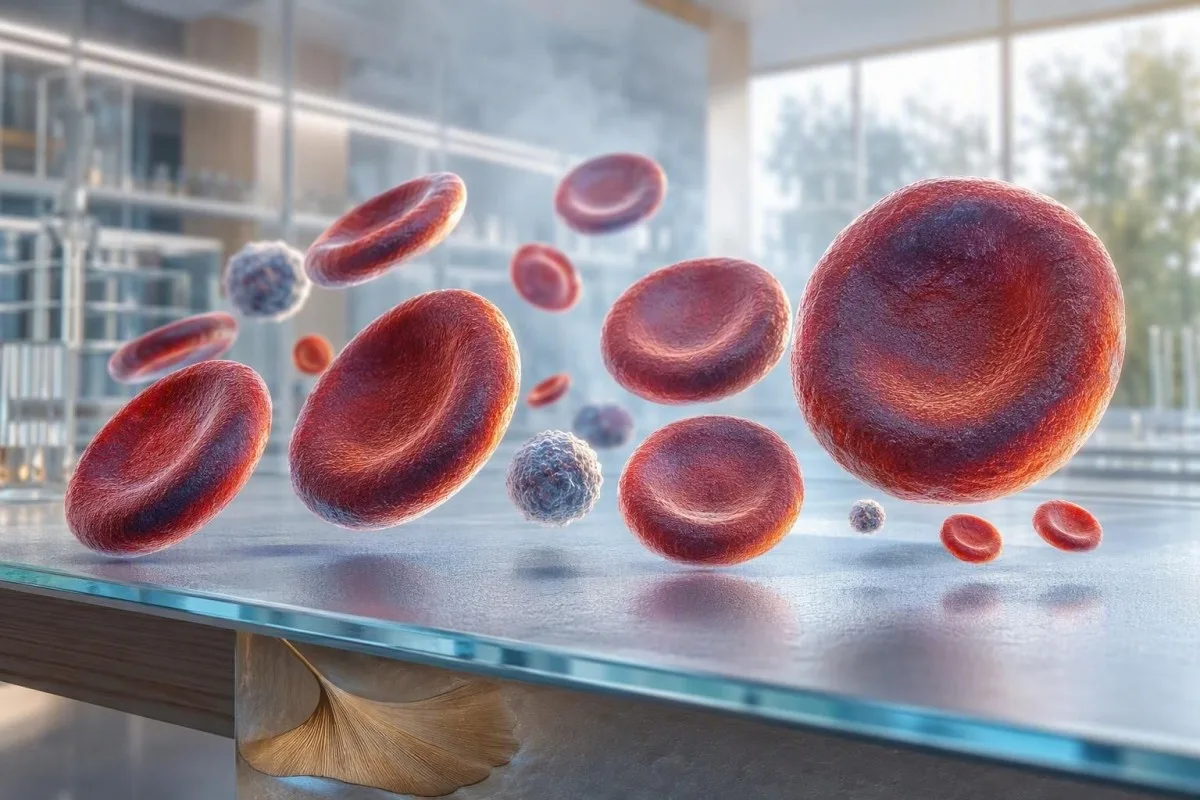
A high MCV describes larger-than-average red cells, not a diagnosis. Symptoms usually come from the cause—especially anemia, vitamin B12 deficiency, liver disease, thyroid disease, alcohol exposure, or medicine effects.


- High MCV usually means an MCV above 100 fL in adults, although each laboratory sets its own reference interval.
- Macrocytosis symptoms are usually absent when hemoglobin is normal; fatigue or breathlessness points more toward coexisting anemia.
- Neurologic clues such as tingling, reduced vibration sense, poor balance, or a sore tongue can occur with vitamin B12 deficiency even before anemia develops.
- MCV above 115 fL makes megaloblastic change from vitamin B12 or folate deficiency more likely, but a smear and clinical history still matter.
- First follow-up tests commonly include repeat CBC, reticulocyte count, peripheral smear, vitamin B12, folate, TSH, liver enzymes, and medication review.
- Urgent review is sensible for new confusion, rapidly worsening breathlessness, fainting, chest pain, jaundice, or low white cells and platelets alongside macrocytosis.
- Do not self-treat with folic acid alone when B12 deficiency is possible; it may correct anemia while neurologic injury progresses.
- Trend matters: a stable MCV of 101 fL for years is interpreted differently from a rise from 89 to 108 fL over 3 months.
What a High MCV Result Actually Measures
High MCV means the average red-cell volume is above the laboratory range, commonly above 100 femtolitres (fL) in adults. It does not tell us why cells are large or whether they carry oxygen adequately; MCV and MCH need to be read with hemoglobin, RDW, reticulocytes, and the rest of the CBC.
The MCV is an arithmetic average, so a result of 103 fL can hide two cell populations—older large cells and newly produced normal-sized cells. A high RDW makes this mixture more likely, which is why a complete RDW guide can add more than repeating the MCV number alone.
In my clinic, the common misconception is that large red blood cells physically block circulation. They do not; macrocytosis itself rarely causes a sensation, while anemia lowers oxygen delivery and produces the familiar tired, breathless, light-headed feeling.
Kantesti is an AI blood test analyzer that reads MCV beside hemoglobin, RDW, liver markers, thyroid results, and prior values rather than treating one flagged index as a diagnosis. As of August 20, 2026, that pattern-first approach is particularly useful when a result sits only 1 to 3 fL beyond a laboratory cutoff.
Do Large Red Blood Cells Cause Symptoms by Themselves?
Large red blood cells usually cause no symptoms on their own when hemoglobin, white cells, and platelets are normal. High MCV symptoms generally reflect anemia or the underlying condition producing macrocytosis.
Anemia is commonly defined as hemoglobin below 13.0 g/dL in adult men or below 12.0 g/dL in non-pregnant adult women, though pregnancy and altitude change interpretation. Breathlessness climbing one flight of stairs, new palpitations, headaches, and reduced exercise tolerance fit anemia better than macrocytosis itself; see our guide to low red-cell symptoms.
A person may have an MCV of 104 fL and feel entirely well, while another with an MCV of 101 fL and hemoglobin of 8.9 g/dL may struggle to walk across a room. The difference is not 3 fL; it is the degree and speed of oxygen-carrying decline.
A rise in MCV can also be transient after reticulocytosis because reticulocytes are larger than mature red cells. Recent blood loss, hemolysis, or recovery after treatment can therefore nudge MCV upward for 1 to 2 weeks, a distinction explored in our reticulocyte count guide.
Anemia Clues That Matter More Than the MCV Flag
Fatigue, exertional breathlessness, dizziness, racing heart, pallor, and reduced stamina suggest anemia when they occur with high MCV. The hemoglobin value and its rate of fall determine urgency more reliably than MCV alone.
New symptoms at hemoglobin 7 to 8 g/dL deserve prompt clinical assessment, especially in people with heart or lung disease; transfusion decisions are individualized rather than based on MCV. A recent hemoglobin of 12.5 g/dL becoming 9.5 g/dL matters even if both MCV results are near 100 fL.
I ask patients about stairs, not merely tiredness: needing to stop halfway up 12 steps is a more reproducible functional clue than a 1-to-10 fatigue score. Our shortness-of-breath blood-test guide explains why oxygen saturation, ferritin, thyroid function, and cardiac context may also be relevant.
Macrocytosis plus low neutrophils or platelets is a different pattern from isolated macrocytosis. When two or three cell lines are low, clinicians usually arrange a blood film and may seek hematology input rather than simply prescribing a vitamin.
Neurologic Symptoms That Can Signal Vitamin B12 Deficiency
Tingling in both feet or hands, impaired vibration sense, unsteady gait, reduced position sense, memory change, and a painful smooth tongue can signal vitamin B12 deficiency with or without anemia. These neurologic clues warrant timely review because delayed treatment can leave residual deficits.
Vitamin B12 deficiency may raise MCV, but a normal MCV does not rule it out—iron deficiency, inflammation, or thalassemia trait can mask the expected enlargement. NICE guidance on vitamin B12 deficiency recommends acting on symptoms and risk factors alongside laboratory results, not waiting for severe anemia (NICE, 2024).
A serum B12 below 148 pmol/L, roughly 200 pg/mL, supports deficiency in many laboratories; values around 148 to 258 pmol/L are often indeterminate and may need methylmalonic acid or homocysteine. Kidney impairment can elevate methylmalonic acid independently, so it is a helpful confirmatory test, not an oracle; our B12 range guide explains the unit differences.
Do not assume numbness is automatically B12-related. Diabetes, alcohol-related neuropathy, thyroid disease, compression neuropathies, and excess vitamin B6 can look similar, which is why a focused neurologic examination still beats a single supplement purchase.
High MCV Causes Clinicians Check First
The most common high MCV causes are alcohol exposure, vitamin B12 or folate deficiency, medicines, liver disease, hypothyroidism, reticulocytosis, and less often bone-marrow disorders. A careful history often narrows the list faster than an indiscriminate panel.
Alcohol can increase MCV even without anemia or overt liver enzyme elevation, and the effect may take 2 to 4 months to recede after stopping. The useful question is actual weekly intake, including larger weekend episodes—not whether someone considers themselves a drinker; lab trends after alcohol reduction can help frame expected timing.
Metformin, proton-pump inhibitors, hydroxyurea, methotrexate, trimethoprim, anticonvulsants, antiretrovirals, and chemotherapy are frequent medication clues. Long-term metformin and acid suppression can reduce B12 absorption over time, while hydroxyurea predictably raises MCV and may simply document adherence.
Kantesti AI highlights medication context and related markers, but its interpretation is not a substitute for reviewing the actual prescription list with a prescriber. A falsely high MCV may also arise from marked hyperglycemia, cold agglutinins, or delayed sample processing—details a repeat CBC can settle.
Vitamin B12 and Folate Testing: Avoiding a Common Trap
Vitamin B12 should be assessed before treating presumed folate deficiency when macrocytosis or neurologic symptoms are present. Folic acid can improve the blood count while allowing B12-related nerve damage to continue.
Folate deficiency can arise from low intake, malabsorption, increased requirement, alcohol exposure, and antifolate medicines. A serum folate below 7 nmol/L is considered deficient by many laboratories, but recent meals can influence serum levels; low folate causes deserve assessment before a long-term prescription.
O'Leary and Samman describe why B12 deficiency affects both DNA synthesis and myelin maintenance, explaining the combination of macrocytosis and neurologic symptoms in some patients (O'Leary & Samman, 2010). Intrinsic-factor antibodies are appropriate when pernicious anemia is suspected, particularly with autoimmune thyroid disease, glossitis, or unexplained recurrent low B12.
In my experience, a B12 result near the lower limit plus symmetric pins-and-needles is enough to justify urgent clinician-led follow-up, even if hemoglobin is 13.4 g/dL. The pernicious-anemia testing pathway explains why identifying the cause affects treatment duration.
Why a Blood Film and Reticulocyte Count Change the Work-Up
A peripheral blood film shows the shape and maturity of cells, while a reticulocyte count shows whether marrow output is increased or inadequate. These two tests often sort macrocytosis into productive, nutrient-related, liver-related, or marrow-related patterns.
Macro-ovalocytes and hypersegmented neutrophils favor megaloblastic change from B12 or folate deficiency, whereas round macrocytes are more typical of alcohol exposure, liver disease, or reticulocytosis. A film can also reveal clumping, fragments, or mixed cell sizes that make an automated average misleading.
An absolute reticulocyte count above roughly 100 × 10^9/L in an anemic adult suggests an appropriate marrow response to blood loss or hemolysis, although local intervals vary. Bilirubin, LDH, and haptoglobin then help test that hypothesis; our haptoglobin guide explains the combination.
Kantesti is an AI blood test interpretation platform that compares reticulocytes, MCV, bilirubin, LDH, and hemoglobin across time to identify patterns worth clinician review. It cannot examine a physical film, which is precisely why a smear remains valuable when results conflict.
Why Thyroid and Liver Tests Are Often Included
TSH and liver tests are standard parts of many macrocytosis work-ups because hypothyroidism and liver dysfunction can enlarge red cells without classic nutrient deficiency. The surrounding pattern tells us which direction to investigate.
Overt hypothyroidism can reduce erythropoiesis and produce a modest MCV rise, often between 100 and 110 fL. A raised TSH with low free T4 is more meaningful than a borderline TSH alone; patients changing levothyroxine products may need specific TSH retesting timing.
ALT, AST, alkaline phosphatase, GGT, bilirubin, albumin, and platelet count provide distinct clues about liver health. MCV does not diagnose liver disease, and normal liver enzymes do not prove alcohol is irrelevant; the liver-panel breakdown shows why clinicians read them together.
A slightly high MCV with AST greater than ALT is suggestive but never diagnostic of alcohol-related injury. Muscle exercise, medicines, fatty liver, viral illness, and sampling time can alter transaminases, so I avoid making causal claims from that ratio alone.
Medicines, Alcohol, and Everyday Exposures to Discuss Openly
Medication-related macrocytosis is common and is often expected, but it still deserves documentation and periodic review. Alcohol-related macrocytosis can occur at MCV values of 102 to 108 fL before anemia appears.
Hydroxyurea frequently produces an MCV above 110 fL, and clinicians may use the change as an adherence clue in selected conditions. In contrast, methotrexate-related macrocytosis should prompt review of folate supplementation, dose, renal function, and any accompanying mouth ulcers or low counts.
Proton-pump inhibitors do not automatically cause B12 deficiency after a few weeks; risk becomes more plausible with long-term use, reduced gastric acid, low dietary intake, or autoimmune gastritis. A long-term PPI monitoring plan is more sensible than routine testing for every short course.
Dr. Thomas Klein has seen patients understate alcohol use because they expect judgment; a neutral 7-day diary is usually more clinically useful than a yes-or-no answer. Be specific about fortified drinks, recreational nitrous oxide exposure, and supplements, because each can change the differential.
When High MCV May Need Hematology Review
Persistent macrocytosis with anemia plus low white cells, low platelets, abnormal cells on a smear, or a rising MCV needs more urgent medical evaluation. These combinations can reflect marrow disorders, though they are far less common than alcohol, medicines, thyroid disease, or nutrient deficiency.
Myelodysplastic syndromes become more common with age, but MCV alone cannot diagnose them. A 72-year-old with MCV 106 fL, hemoglobin 10.2 g/dL, platelets 105 × 10^9/L, and a declining trend needs a different pathway from a 32-year-old with stable MCV 102 fL and normal counts.
Aslinia and colleagues emphasize that macrocytosis evaluation begins with history, blood count, smear, and reticulocytes before escalating to invasive testing (Aslinia et al., 2006). This sequence avoids both missed marrow disease and unnecessary alarm from an isolated mild flag.
Kantesti uses trend analysis to show whether MCV has climbed by 8 fL over 6 months or remained unchanged for 5 years; the latter is often reassuring but does not override abnormal companion counts. Our blood-cancer test pathway explains the usual staged assessment.
When to Repeat a High MCV Blood Test
A repeat CBC is commonly arranged within 4 to 12 weeks for isolated, mild macrocytosis after reversible causes are addressed. Repeat sooner when hemoglobin is falling, symptoms are new, MCV exceeds 115 fL, or other cell lines are abnormal.
Repeat timing should match the clinical question: after correcting a laboratory handling issue, days may be enough; after reduced alcohol exposure or B12 treatment, 8 to 12 weeks better reflects red-cell turnover. Red cells circulate for about 120 days, so a normal MCV rarely returns overnight.
Compare results from the same laboratory where possible because analyzer methods and reference intervals differ. A change from 98 to 102 fL may be real, but it can also fall within biological and analytical variation; comparing lab visits helps put small shifts in perspective.
Kantesti's AI-powered blood test analysis tool organizes longitudinal CBC values so patients can bring a clear trend, medication timeline, and symptom dates to a clinician. It is most useful as preparation for that conversation, not as a reason to delay it.
High MCV Red Flags That Should Not Wait
Seek same-day medical advice for high MCV with chest pain, fainting, breathlessness at rest, new confusion, severe gait instability, jaundice, black stools, or rapidly worsening weakness. These symptoms signal possible severe anemia, neurologic disease, hemolysis, liver dysfunction, or bleeding—not the MCV value in isolation.
A hemoglobin below 8 g/dL with symptoms, or any rapidly falling hemoglobin, deserves prompt assessment; the safe threshold changes with pregnancy, heart disease, active bleeding, and baseline health. Black tarry stools or vomiting material resembling coffee grounds are bleeding warnings even when MCV is high rather than low.
New loss of balance, falls, or progressive numbness should not wait for a routine vitamin appointment when B12 deficiency is possible. Neurologic recovery is variable after delayed treatment, and clinical urgency depends on examination findings rather than a single serum level.
For people who feel dizzy or short of breath, a dizziness laboratory guide can help prepare questions, but emergency symptoms require direct care. Do not drive yourself if you have fainted, have chest pressure, or cannot walk safely.
How to Prepare for a Macrocytosis Follow-Up Appointment
Bring your full CBC trend, medication and supplement list, alcohol history, dietary pattern, surgery history, and symptom timeline to a macrocytosis appointment. This information often determines which 3 to 6 targeted tests are needed next.
Record dates and doses for metformin, acid suppressants, antiseizure medicines, methotrexate, hydroxyurea, folic acid, B12, and nitrous oxide exposure. Mention gastric bypass, ileal surgery, coeliac disease, chronic diarrhea, and vegan eating patterns because each changes the likelihood of impaired B12 or folate absorption.
Ask whether the next tests should include CBC with smear, reticulocytes, B12, folate, methylmalonic acid, homocysteine, TSH, liver panel, LDH, bilirubin, haptoglobin, and intrinsic-factor antibody. Not everyone needs all 12; selection should follow the pattern and not a checklist.
Kantesti can create a concise doctor-visit summary from prior reports, while our clinician-reviewed standards are described in the medical validation overview. A good appointment ends with a named hypothesis, a retest date, and clear instructions for earlier review.
Safe Next Steps After an Elevated MCV Result
The safest next step after high MCV is to confirm the result, assess hemoglobin and symptoms, then test likely causes rather than taking high-dose vitamins at random. Isolated macrocytosis is often manageable, but persistent or progressive changes deserve an explanation.
Do not donate blood, start high-dose folic acid, or dismiss a persistent result solely because you feel well. A common first pass is repeat CBC plus smear, reticulocytes, B12, folate, TSH, and liver enzymes; testing expands only if that first pass leaves the cause unclear.
Most patients find that the anxiety falls once the result is framed as a pattern rather than a label. A stable MCV of 103 fL with normal hemoglobin, normal film, known medicine exposure, and no symptoms is generally followed very differently from an MCV of 118 fL with anemia and sensory change.
Our Medical Advisory Board helps shape Kantesti's safety thresholds and referral prompts. Dr. Thomas Klein's practical advice is simple: treat the person and the trend, then treat the cause—not the MCV flag.
Frequently Asked Questions
What symptoms can a high MCV cause?
High MCV itself usually causes no symptoms because it measures average red-cell size rather than oxygen delivery. Symptoms such as fatigue, breathlessness, dizziness, palpitations, and reduced exercise tolerance usually occur when macrocytosis coexists with anemia, for example hemoglobin below 12.0 g/dL in many non-pregnant adult women or below 13.0 g/dL in many adult men. Tingling, poor balance, numbness, or a sore smooth tongue raise concern for vitamin B12 deficiency even when hemoglobin remains normal. New chest pain, fainting, breathlessness at rest, or confusion needs urgent assessment.
Is an MCV of 102 fL dangerous?
An MCV of 102 fL is a mild elevation and is not automatically dangerous, particularly when hemoglobin, white cells, platelets, and symptoms are normal. Common explanations include alcohol exposure, medication effects, early B12 or folate deficiency, liver disease, and hypothyroidism. A repeat CBC within about 4 to 12 weeks is often reasonable after a clinician reviews the context, but a faster review is appropriate if MCV is rising or anemia is present. The significance of 102 fL depends far more on the accompanying blood-count pattern than on the number alone.
Can vitamin B12 deficiency cause high MCV without anemia?
Vitamin B12 deficiency can cause high MCV without anemia, and it can also cause neurologic symptoms before either MCV or hemoglobin becomes abnormal. Serum B12 below 148 pmol/L, approximately 200 pg/mL, supports deficiency in many laboratories, while values from roughly 148 to 258 pmol/L may need confirmation with methylmalonic acid or homocysteine. Symmetric tingling, reduced vibration sense, imbalance, and cognitive change should prompt timely medical review. Folic acid should not be used alone until B12 deficiency has been considered.
What tests are done after a high MCV result?
Common follow-up tests for high MCV include a repeat CBC, peripheral blood film, reticulocyte count, vitamin B12, folate, TSH, and liver enzymes. Clinicians may add bilirubin, LDH, haptoglobin, methylmalonic acid, homocysteine, intrinsic-factor antibodies, or coeliac testing when the history and first results point that way. An MCV above 115 fL, anemia, or low white cells or platelets makes a smear and more prompt evaluation especially useful. No single test diagnoses every cause of macrocytosis.
Does alcohol make MCV high?
Alcohol can raise MCV even when hemoglobin and liver enzymes are normal, commonly producing mild macrocytosis in the 102 to 108 fL range. The MCV may remain elevated for 2 to 4 months after alcohol reduction because circulating red cells live for about 120 days. Alcohol use does not exclude B12, folate, thyroid, liver, or medication-related causes, so clinicians still examine the full pattern. A truthful 7-day intake record is more informative than a vague estimate of occasional drinking.
When should high MCV lead to a hematology referral?
High MCV may lead to hematology referral when it persists without explanation or occurs with anemia, platelets below the laboratory range, low white cells, abnormal cells on a blood film, or a steadily rising trend. For example, an MCV of 106 fL with hemoglobin 10.2 g/dL and platelets 105 × 10^9/L requires a more urgent work-up than isolated MCV 102 fL with otherwise normal results. Hematology may assess for marrow disorders only after common reversible causes have been examined. Referral is based on the pattern, age, symptoms, and trajectory rather than one MCV cutoff.
Get AI-Powered Blood Test Analysis Today
Join over 2 million users worldwide who trust Kantesti for instant, accurate lab test analysis. Upload your blood test results and receive comprehensive interpretation of 15,000+ biomarkers in seconds.
📚 Referenced Research Publications
Klein, T., Mitchell, S., & Weber, H. (2026). Women's Health Guide: Ovulation, Menopause & Hormonal Symptoms. Kantesti AI Medical Research.
Klein, T., Mitchell, S., & Weber, H. (2026). Multilingual AI Assisted Clinical Decision Support for Early Hantavirus Triage: Design, Engineering Validation, and Real-World Deployment Across 50,000 Interpreted Blood Test Reports. Kantesti AI Medical Research.
📖 External Medical References
National Institute for Health and Care Excellence (2024). Vitamin B12 deficiency in over 16s: diagnosis and management. NICE Guideline NG239.
⚕️ Medical Disclaimer
This article is for educational purposes only and does not constitute medical advice. Always consult a qualified healthcare provider for diagnosis and treatment decisions.
E-E-A-T Trust Signals
Experience
Physician-led clinical review of lab interpretation workflows.
Expertise
Laboratory medicine focus on how biomarkers behave in clinical context.
Authoritativeness
Written by Dr. Thomas Klein with review by Dr. Sarah Mitchell and Prof. Dr. Hans Weber.
Trustworthiness
Evidence-based interpretation with clear follow-up pathways to reduce alarm.