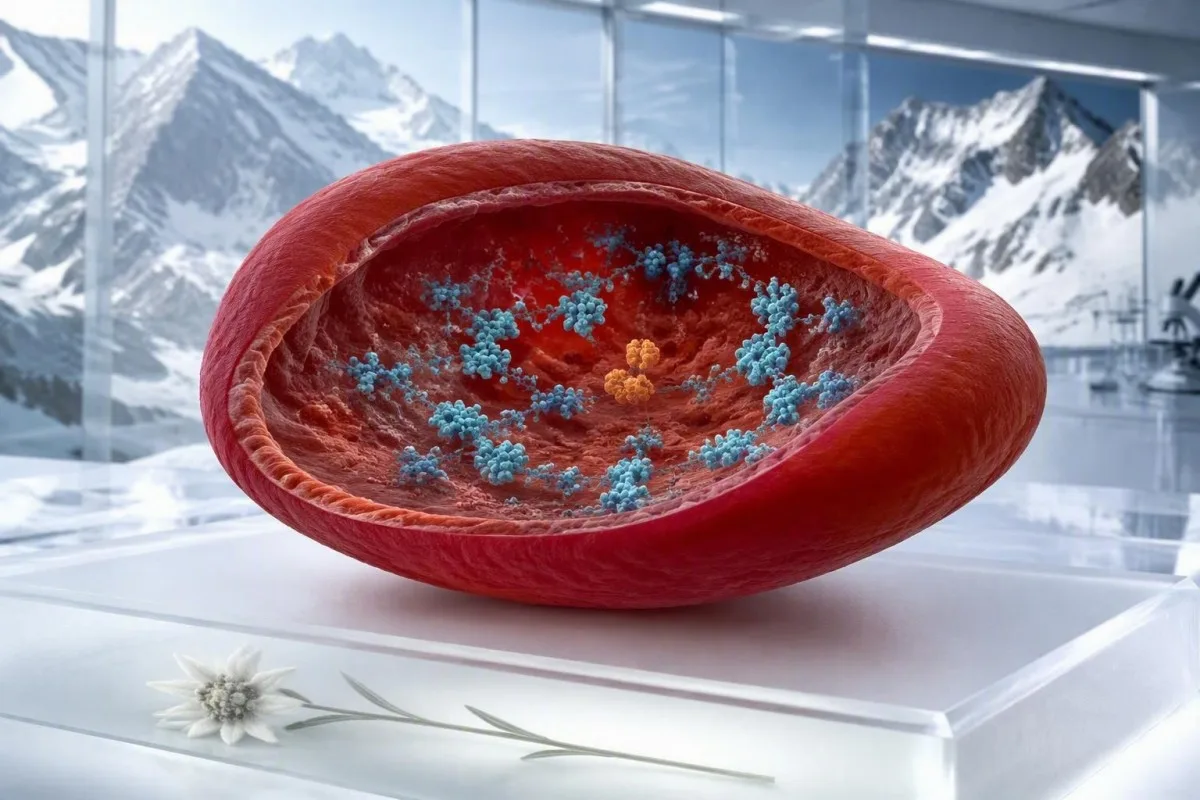
A glutathione result can reflect sample handling as much as biology. The clinically useful question is rarely whether one result is “low,” but whether the method, timing, symptoms, and standard tests point to a treatable cause.


- No universal range applies to every glutathione blood test; laboratories use different specimen types, stabilisers, units, and reference intervals.
- Plasma glutathione is typically present at low micromolar concentrations and can fall rapidly after collection if processing is delayed.
- Red blood cell glutathione is usually reported in millimolar or amount-per-haemoglobin units and reflects a cellular compartment, not whole-body antioxidant status.
- GSH:GSSG ratio is highly pre-analytic-sensitive; delayed derivatisation can falsely lower reduced GSH and raise oxidised glutathione.
- A low result is not a diagnosis of “oxidative stress,” chronic fatigue, toxin exposure, or nutrient deficiency without corroborating clinical evidence.
- Medical follow-up is more appropriate than supplements when an unusual result accompanies anaemia, jaundice, neuropathy, kidney disease, recurrent infections, or unexplained weight loss.
- Repeat testing should use the same laboratory, tube, stabilisation protocol, time of day, and ideally a 48-hour avoidance of unusually hard exercise.
- Supplement caution matters: high-dose N-acetylcysteine can interact with nitroglycerin and may be unsuitable for some people with asthma or active gastrointestinal symptoms.
What a Glutathione Blood Test Actually Measures
A glutathione blood test measures either reduced glutathione (GSH), oxidised glutathione (GSSG), total glutathione, or a calculated ratio in a specified sample compartment. It cannot directly measure oxidative damage across every organ, predict longevity, or establish that a person needs antioxidant supplements.
Glutathione is a three-amino-acid molecule made from glutamate, cysteine, and glycine. GSH donates electrons during detoxification and redox reactions, while GSSG forms when two GSH molecules become linked after oxidation; these are meaningful biochemical roles, not disease labels.
In my clinical experience, patients often arrive with a low number from a wellness panel and understandably fear systemic damage. Dr Thomas Klein’s first question is simpler: was this plasma, whole blood, packed erythrocytes, or a derived ratio, and did the laboratory chemically stabilise the sample immediately?
Kantesti is an AI blood test analyzer that reads glutathione alongside the complete blood count, liver tests, kidney markers, glucose, and medication context rather than treating one oxidative-stress value as a verdict. The distinction between serum, plasma, and whole blood is foundational here.
Why compartment changes the meaning
Plasma is the liquid outside cellular elements, whereas erythrocytes contain much higher intracellular GSH concentrations. A plasma result and a red-cell result are therefore not interchangeable, even if both are reported as “glutathione.”
Plasma Versus Red Blood Cell Glutathione
Plasma glutathione levels mainly describe a small, unstable extracellular pool, while red blood cell glutathione describes intracellular redox handling in circulating erythrocytes. Neither specimen is a validated stand-alone screen for vague symptoms such as tiredness, brain fog, or “poor detoxification.”
Fresh plasma GSH concentrations are often in the single-digit micromolar range, whereas erythrocyte GSH is commonly in the millimolar range; the roughly 100-fold scale difference reflects biology as well as assay design. Laboratories may report erythrocyte values as µmol/g haemoglobin, mmol/L packed cells, or nmol/mg protein, so unit conversion is not safely improvised.
Red-cell GSH may be relevant in specialist research or selected metabolic, haematologic, toxicologic, and nutrition assessments, but red cells circulate for about 120 days. A result can therefore be influenced by recent haemolysis, transfusion, reticulocytosis, G6PD status, and the age distribution of cells rather than a change that happened this week.
A low plasma value with a normal red-cell value does not prove extracellular oxidative stress; it may simply suggest delayed processing. If the CBC is unusual, start with red-cell indices and anaemia patterns before interpreting an expensive specialty marker.
Why There Is No Single Normal Glutathione Range
There is no internationally accepted diagnostic reference interval for plasma or erythrocyte glutathione that applies across laboratories. A result should only be compared with the interval printed by the testing laboratory for that exact specimen, assay, and sample-processing protocol.
Some laboratories quantify GSH after derivatisation with N-ethylmaleimide, which blocks artificial oxidation; others use enzymatic recycling, chromatography, or mass spectrometry workflows. Giustarini and colleagues showed why immediate derivatisation is central to reliable GSH and GSSG analysis (Giustarini et al., 2013).
A reference range is usually a statistical interval from a selected population, commonly the middle 95%, rather than a health target. A value just outside that range can occur in roughly 1 in 20 healthy people even with flawless testing, while a result inside range does not exclude disease.
The practical rule is to record the result, units, reference interval, tube type, collection time, and whether the sample was frozen. Our biomarkers guide helps readers preserve those details rather than relying on a screenshot alone.
Sample Handling Can Change Glutathione Results Before Analysis
Delayed separation, temperature shifts, haemolysis, and failure to stabilise GSH can materially distort a glutathione result before the analyser begins. A single surprising plasma result is often best treated as a specimen-quality question first.
GSH oxidises ex vivo, particularly when plasma sits unseparated or without a trapping reagent. A warm transport delay can reduce measured GSH and inflate GSSG, creating a low GSH:GSSG ratio that looks biologically dramatic but is analytically mundane.
Haemolysis complicates interpretation in two directions: it releases intracellular contents into plasma while also signalling mechanical stress during collection or transport. The lab’s haemolysis index, potassium, LDH, and sample comment deserve attention; our guide to repeat results after haemolysis explains why a redraw can be more informative than speculation.
Kantesti AI is an AI lab test interpretation service that flags a result’s specimen type and accompanying laboratory comments when they are available. It cannot reconstruct whether a tube spent 45 minutes at room temperature, which is one reason a verified redraw sometimes beats algorithmic confidence.
What Low Glutathione Results Can Mean—and Cannot Prove
A low glutathione result can occur with acute illness, poor intake, uncontrolled diabetes, heavy alcohol exposure, chronic kidney or liver disease, certain medicines, or assay artefact. It cannot, by itself, diagnose toxic exposure, mitochondrial disease, nutrient deficiency, or a need for intravenous glutathione.
Low GSH is biologically plausible during substantial metabolic stress because glutathione synthesis requires cysteine, glycine, ATP, and functioning enzymes. Forman et al. described glutathione as a dynamic regulator of cellular redox balance, which is precisely why a static measurement has limited diagnostic specificity (Forman et al., 2009).
When I review a low result, I first look for conventional signals that change care: ALT or AST elevation, bilirubin pattern, eGFR, fasting glucose or HbA1c, albumin, CBC, and medication list. A patient with low GSH plus new jaundice needs a liver work-up, not a generic antioxidant protocol; see liver panel components for the basics.
Low values are also reported after prolonged fasting, recent endurance events, and severe calorie restriction. Those states can change redox chemistry transiently, so timing matters as much as the flag.
High Results and GSH:GSSG Ratios Need Caution Too
A high reduced-glutathione result or high GSH:GSSG ratio is not automatically protective, and a low ratio is not automatically harmful. Ratios amplify measurement error because both the numerator and denominator are unstable and often near an assay’s lower quantification range in plasma.
The GSH:GSSG ratio describes the relative abundance of reduced to oxidised glutathione in one preparation. In a carefully preserved intracellular sample it may support mechanistic interpretation, but it is not a clinically validated score for cancer risk, burnout, ageing rate, or immune “strength.”
An unusually high value may arise after supplementation, haemolysis, a calculation convention, or a low GSSG value near the method’s reporting limit. This is one of those areas where context matters more than the number; a ratio without raw GSH, GSSG, units, and laboratory method is barely interpretable.
Kantesti’s AI biomarker interpretation platform uses trend comparison only when the same laboratory and comparable specimen conditions are documented. Readers tracking change should also understand when blood-test differences are real.
Exercise, Fasting, Alcohol, and Supplements Can Shift Results
Hard endurance exercise, recent alcohol use, fasting, illness, and supplements can alter glutathione-related measurements for hours to days. For a meaningful repeat, most patients should avoid an unfamiliar maximal workout and non-essential antioxidant products for at least 48 hours, unless their clinician advises otherwise.
A 52-year-old marathon runner with an AST of 89 IU/L after a race may have muscle-related enzyme release rather than liver disease; the same exercise can also alter redox markers. A quiet 48- to 72-hour recovery period gives more interpretable baseline blood work, especially if CK is elevated.
N-acetylcysteine, liposomal glutathione, vitamin C, alpha-lipoic acid, and multivitamins may affect results or the redox state being measured. They do not treat unexplained anaemia, kidney impairment, jaundice, or neuropathy, and high-dose N-acetylcysteine can enhance nitroglycerin-related headache and low blood pressure.
If a test is intended to evaluate baseline physiology, document every product and dose rather than quietly stopping prescribed medicine. Our article on glutathione supplements separates plausible biochemical effects from clinical claims.
Conditions and Medicines That Deserve a Broader Work-Up
Glutathione abnormalities warrant medical follow-up when they accompany organ-specific symptoms or standard laboratory abnormalities. The priority is identifying anaemia, liver injury, renal dysfunction, malabsorption, diabetes, medication toxicity, or haemolysis—not correcting a redox number in isolation.
Paracetamol overdose is a clear example of glutathione biology with real clinical consequences, but its emergency assessment relies on time since ingestion, serum paracetamol concentration, liver tests, INR, and clinical toxicology protocols. Do not use a private glutathione value to decide whether an overdose is safe; urgent care is required immediately.
Chronic kidney disease can affect oxidative balance, but eGFR and urine albumin-creatinine ratio remain the validated markers for staging and monitoring. An eGFR below 60 mL/min/1.73 m² persisting for 3 months meets a core CKD criterion; review our CKD stages guide for the clinical framework.
Medicines such as anticonvulsants, chemotherapy, immunosuppressants, and long-term parenteral nutrition require clinician-led monitoring tailored to the drug. There is no reliable rule that an abnormal glutathione test should trigger a supplement dose.
When an Oxidative-Stress Result Needs Medical Care
Seek urgent medical assessment for confusion, fainting, chest pain, severe breathlessness, new jaundice, black stools, rapidly worsening weakness, or suspected overdose—regardless of a glutathione result. A specialty oxidative-stress result does not lower the urgency of these symptoms.
Arrange a prompt GP or clinician review within days when a low or unusual result occurs with persistent fatigue plus anaemia, abnormal liver enzymes, declining eGFR, weight loss, recurrent infections, or new sensory symptoms. For example, haemoglobin below 80 g/L (8.0 g/dL) in an adult generally merits urgent assessment, whatever the glutathione level.
The reason we worry about low glutathione alongside high bilirubin and reticulocytes is not the redox marker itself; together, those findings may suggest increased red-cell turnover or hepatic handling problems. A high reticulocyte result needs a deliberate clinical pattern review.
Normal routine labs and no red-flag symptoms usually support a measured approach: verify collection conditions, avoid self-treatment escalation, and discuss whether repeating the specialised assay would change any decision.
How to Repeat a Glutathione Test More Reliably
The best repeat glutathione test uses the same laboratory, same specimen type, same stabilising procedure, and a stable health week. Repeating at a different laboratory after a different workout, diet, or supplement routine answers a different question.
Book a morning collection when you are free of fever, acute gastrointestinal illness, and unusually hard training for 48 hours. Ask the laboratory in advance whether it requires a chilled tube, immediate centrifugation, or pre-added derivatising reagent; a generic phlebotomy collection may not be adequate.
Write down fasting duration, sleep, alcohol intake for 72 hours, all supplements, recent infusions, prescription changes, and the time the sample was drawn. This small log often explains variation better than a new supplement plan, particularly for people comparing results months apart.
Kantesti AI interprets uploaded results against their stated units and reference interval, while longitudinal lab tracking helps preserve the conditions surrounding each draw. The algorithm should support, never replace, the laboratory’s method notes.
Better First-Line Tests for Common “Oxidative Stress” Concerns
For fatigue, low mood, poor recovery, or frequent illness, routine targeted tests usually provide more actionable information than glutathione measurement. A CBC, ferritin with transferrin saturation, B12 when indicated, TSH, HbA1c, renal profile, liver panel, and CRP guided by symptoms are more clinically established.
Iron deficiency can cause fatigue before anaemia, and ferritin must be interpreted with CRP because inflammation can raise it. Ferritin below 15 µg/L strongly supports depleted iron stores in most adults, while higher thresholds are often used when inflammation is present; our low ferritin guide covers the nuance.
Vitamin B12 deficiency can produce neuropathy or macrocytosis, but a normal serum B12 does not settle every case. In borderline situations, methylmalonic acid, homocysteine, diet, metformin use, acid-suppressing therapy, and CBC indices may be more useful than assuming oxidative stress.
Dr Thomas Klein has seen many “low antioxidant” referrals resolve into sleep deprivation, iron loss, glycaemic dysregulation, thyroid disease, medication effects, or under-fuelling. That is good news: these causes have clearer diagnostic pathways and safer endpoints.
Why Supplement Self-Treatment Can Be the Wrong Next Step
Starting several antioxidants after an abnormal glutathione test can obscure the cause, create side effects, and delay needed evaluation. More antioxidant activity is not universally better; redox signals are also used in normal immune, exercise-adaptation, and cellular-repair processes.
N-acetylcysteine is an established medicine in specific settings, including paracetamol toxicity, but that does not make it a universal remedy for a low GSH result. Oral doses sold for general use often range from 600 to 1,200 mg/day, yet the appropriate dose, duration, and indication vary and evidence for nonspecific wellbeing is mixed.
High-dose zinc can induce copper deficiency, causing anaemia and neurologic symptoms that no glutathione product will correct. Anyone using zinc chronically should understand zinc-related copper loss and have treatment guided by a clinician when symptoms or abnormal counts are present.
Kantesti is an AI-powered blood test analysis tool used to organise evidence from the full panel, not to prescribe antioxidant stacks. If a result is concerning, take the report and supplement list to your clinician before changing multiple products at once.
Using AI Interpretation Without Overreading a Specialty Marker
AI can help organise a glutathione result, but it cannot validate an inadequately handled specimen or diagnose the cause of symptoms from one oxidative-stress marker. Safe interpretation connects the result to laboratory quality, trends, medications, symptoms, and standard diagnostic testing.
Kantesti AI can identify whether a report says plasma, whole blood, or erythrocytes, retain the laboratory’s interval, and surface linked markers such as bilirubin, ALT, creatinine, haemoglobin, MCV, and glucose. That structure is useful because a lone green or red flag does not convey diagnostic probability.
Our AI technology guide explains how contextual interpretation differs from diagnosis. A clinician still needs the history: alcohol pattern, diet, surgical history, medication exposure, family history, onset of symptoms, and the collection chain of custody.
For accuracy claims, methods matter more than marketing language. Review the clinical oversight and validation approach and bring unresolved or discordant findings to a qualified clinician, particularly if the original laboratory recommends repeat collection.
Questions to Take to Your Clinician After an Abnormal Result
The most useful follow-up question is: “Does this result change what we do next?” If the answer is no, a supplement purchase is unlikely to be the right medical response; if the answer is yes, clarify which validated test or referral will guide treatment.
Ask which compound was measured—GSH, GSSG, total glutathione, or ratio—and whether it was plasma or erythrocytes. Then ask whether the sample was stabilised promptly, whether haemolysis was reported, and whether a repeat under controlled conditions would alter care.
Ask which standard findings support a particular explanation and which diagnoses are being considered. For example, liver disease work-up may include ALT, AST, ALP, GGT, bilirubin, albumin, INR, viral testing, imaging, or fibrosis scoring depending on the pattern; MASLD testing illustrates why panels outperform isolated markers.
Our physician reviewers on the Medical Advisory Board favour this decision-focused approach. As of September 16, 2026, no major clinical guideline recommends population screening or supplement treatment based solely on a glutathione blood test.
The Practical Bottom Line for Glutathione Test Results
A glutathione result is most credible when the sample was stabilised correctly and most useful when it corroborates a clear clinical question. It is least useful when used as a stand-alone explanation for nonspecific symptoms or as a sales trigger for high-dose supplements.
A plasma measurement can be technically fragile; a red-cell measurement is a different biological compartment; and neither has a universal disease cutoff. Confirm a surprising result before acting, especially when the report does not state the sample type, units, reference interval, or collection protocol.
Use symptoms and validated markers to decide urgency. Chest pain, confusion, jaundice, severe shortness of breath, suspected poisoning, or marked CBC, liver, renal, glucose, or electrolyte abnormalities need conventional medical assessment—not a wait-and-see antioxidant experiment.
Kantesti can help you prepare a structured result summary, and the Kantesti team supports clinician-informed interpretation across laboratory reports. The sensible next step is usually careful context, not more capsules.
Frequently Asked Questions
What is a normal glutathione level in a blood test?
There is no single normal glutathione level that applies to every blood test. Plasma GSH is often measured in low micromolar concentrations, while red blood cell glutathione is much higher and may be reported in mmol/L, µmol/g haemoglobin, or nmol/mg protein. The only valid comparison is with the reference interval printed by the laboratory that performed that exact assay. A result slightly outside a reference interval does not diagnose oxidative stress or establish a need for supplements.
Is plasma or red blood cell glutathione testing better?
Red blood cell glutathione and plasma glutathione answer different biochemical questions, so neither is universally better. Plasma reflects a small extracellular pool that can change substantially with delayed processing, whereas red-cell glutathione reflects intracellular handling in cells that circulate for about 120 days. A clinician should select the specimen based on the clinical question and the laboratory’s validated handling process. Results from plasma and erythrocytes should not be compared as if they were the same test.
Can a low glutathione result prove oxidative stress?
A low glutathione result cannot prove clinically meaningful oxidative stress because specimen handling, acute illness, exercise, fasting, medicines, and assay method can all affect the measurement. Delayed stabilisation can artificially lower GSH and increase GSSG before analysis. A low value becomes more relevant when it accompanies validated abnormalities such as anaemia, elevated liver enzymes, reduced eGFR, high glucose, or symptoms that fit a defined condition. Repeating the same test under controlled conditions is often more useful than self-treating the first result.
Should I take N-acetylcysteine for low glutathione?
You should not start N-acetylcysteine solely because a glutathione blood test is low. Over-the-counter oral doses commonly range from 600 to 1,200 mg daily, but an appropriate dose depends on the reason for use, medical history, medicines, and the quality of the original test. N-acetylcysteine can cause gastrointestinal symptoms and can potentiate nitroglycerin-related headache or low blood pressure. A clinician should first determine whether the result reflects a handling issue or an underlying problem requiring different treatment.
How should I prepare for a repeat glutathione blood test?
For a repeat glutathione blood test, use the same laboratory and confirm its requirements for chilled transport, immediate separation, and chemical stabilisation. Avoid unusually intense exercise, alcohol excess, and non-essential antioxidant supplements for about 48 hours unless a clinician tells you otherwise, and do not stop prescribed medicines without advice. Record your fasting duration, collection time, recent illness, supplements, and medication changes. These details can explain a result change that might otherwise be mistaken for worsening oxidative stress.
When should abnormal glutathione results be taken seriously?
An abnormal glutathione result deserves prompt clinical review when it occurs with jaundice, unexplained anaemia, neuropathy, persistent weight loss, recurrent infections, abnormal liver enzymes, reduced kidney function, or poorly controlled diabetes. Emergency symptoms such as chest pain, confusion, severe breathlessness, fainting, black stools, or suspected overdose require immediate medical assessment regardless of the glutathione number. There is no critical glutathione threshold that replaces standard emergency testing. The level of concern comes from symptoms and corroborating validated markers.
Get AI-Powered Blood Test Analysis Today
Join over 2 million users worldwide who trust Kantesti for instant, accurate lab test analysis. Upload your blood test results and receive comprehensive interpretation of 15,000+ biomarkers in seconds.
📚 Referenced Research Publications
Klein, T., Mitchell, S., & Weber, H. (2026). Kantesti LTD. (2026). Multilingual AI Assisted Clinical Decision Support for Early Hantavirus Triage: Design, Engineering Validation, and Real-World Deployment Across 50,000 Interpreted Blood Test Reports. Figshare.. Kantesti AI Medical Research.
Klein, T., Mitchell, S., & Weber, H. (2026). Kantesti LTD. (2026). A Pre-Registered, Rubric-Based Automated Technical Benchmark of the Kantesti Blood-Test Interpretation Engine on 100,000 Synthetic Test Cases. Figshare.. Kantesti AI Medical Research.
📖 External Medical References
⚕️ Medical Disclaimer
This article is for educational purposes only and does not constitute medical advice. Always consult a qualified healthcare provider for diagnosis and treatment decisions.
E-E-A-T Trust Signals
Experience
Physician-led clinical review of lab interpretation workflows.
Expertise
Laboratory medicine focus on how biomarkers behave in clinical context.
Authoritativeness
Written by Dr. Thomas Klein with review by Dr. Sarah Mitchell and Prof. Dr. Hans Weber.
Trustworthiness
Evidence-based interpretation with clear follow-up pathways to reduce alarm.