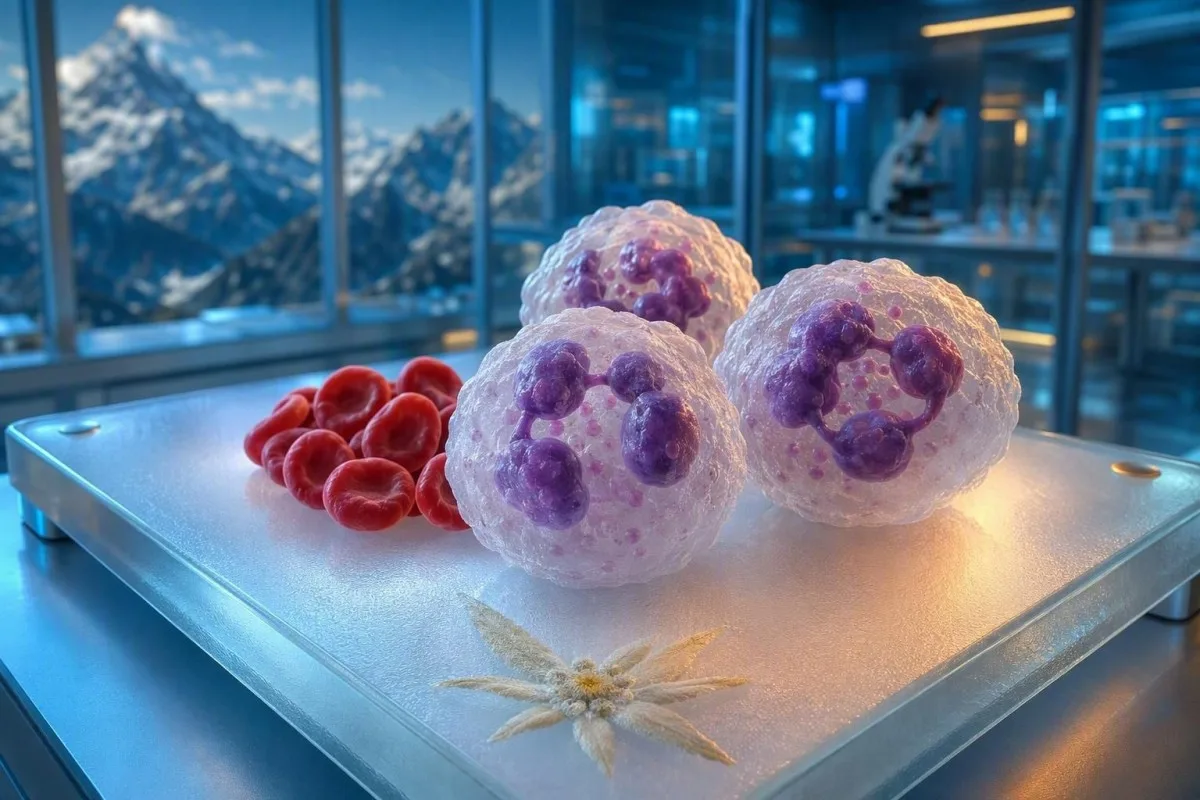
Lievästi kohonnut neutrofiilien tulos on usein ohimenevä, mutta absoluuttinen neutrofiilimäärä, muu CBC, oireet ja kehitys määrittävät, vaatiiko se toimenpiteitä.


- Epäselvät neutrofiilit tarkoittaa yleensä ANC:tä, joka on juuri ja juuri laboratorion ylärajan yläpuolella, aikuisilla usein noin 7,0–7,5 × 10⁹/L.
- Neutrofiilien absoluuttinen määrä on informatiivisempi kuin neutrofiiliprosentti; laske ANC kaavalla WBC × neutrofiiliprosentti ÷ 100.
- Lievä neutrofiilia alle 15 × 10⁹/L ilman hälyttäviä oireita on yleensä reaktiivinen ja voi seurata infektioita, tupakointia, liikuntaa tai steroidihoitoa.
- Toistumisaika ilmenee yleensä 2–6 viikkoa toipumisen jälkeen lyhyestä sairaudesta, kovasta liikunnasta, rokotuksesta tai lääkemuutoksesta.
- Kiireellinen arvio on asianmukainen kuumeessa vaikean sairauden, hengenahdistuksen, sekavuuden, nopeasti nousevien arvojen, blastien, anemian tai matalien verihiutaleiden yhteydessä.
- Steroidit ja adrenaliini voivat nostaa verenkiertoon päätyviä neutrofiilejä tunneissa siirtämällä soluja verisuonten seinämistä mitattavaan verialtaaseen.
- jatkuva kohoaminen yli 3 kuukauden ajan, erityisesti yli 15–20 × 10⁹/L, vaatii kliinikon johtaman arvioinnin ja usein veren sivelyvalmisteen.
- Raskaus voi normaalisti nostaa neutrofiilimääriä, erityisesti kolmannella trimesterillä, joten raskaana olevien aikuisten viitearvot voivat johtaa harhaan.
Mitä epäselvä neutrofiilitulos todella tarkoittaa
Rajatapausneutrofiilit tarkoittavat yleensä pientä nousua absoluuttisessa neutrofiilimäärässä (ANC), eivät diagnoosia. Useimmilla hyväkuntoisilla aikuisilla ANC, joka on vain hieman laboratorion viitearvojen yläpuolella, normalisoituu väliaikaisen laukaisevan tekijän poistuessa; ensimmäinen tehtävä on tarkistaa absoluuttinen määrä, kokonaisvalkosolumäärä ja oireet sen sijaan, että reagoitaisiin korostettuun prosenttiosuuteen.
Aikuisten ANC-viitevälit ovat yleensä noin 1,5–7,5 × 10⁹/l, vaikka yläraja vaihtelee analysaattorin, etnisyyden, raskausstatuksen ja paikallisen laboratorion menetelmän mukaan. Arvo 7,8 × 10⁹/l on kliinisesti hyvin erilainen kuin 28 × 10⁹/l, vaikka molemmat voivatkin olla merkitty korkeiksi; katso oppaamme normaali neutrofiilialue.
The neutrofiilien prosenttiosuus voi näyttää korkealta yksinkertaisesti siksi, että lymfosyytit laskivat stressin tai kortikosteroidialtistuksen jälkeen. Esimerkiksi WBC 6,0 × 10⁹/l ja 78 % neutrofiilejä antaa ANC:n 4,68 × 10⁹/l, joka on normaali korkeasta prosenttiosuudesta huolimatta.
Kantesti on Tekoälyinen verikoeanalysaattori joka lukee CBC-erittelyn yhdessä kokonais-WBC:n, hemoglobiinin, verihiutaleiden ja aiempien tulosten kanssa sen sijaan, että yhtä oranssia lippua käsiteltäisiin tautimerkintänä. 28. elokuuta 2026 alkaen tämä ensin kuvioita tarkasteleva lähestymistapa on edelleen turvallisin tapa tulkita rajatapaus tuloksia.
Miksi laboratorioliput eivät ole diagnooseja
Viitevälit kattavat valitun populaation keskiosan, joten noin 1/20 terveitä mittauksia voi sattumalta olla ilmoitetun alueen ulkopuolella. Lippu on kehotus kontekstiin, ei todiste siitä, että jokin on vialla.
Miksi absoluuttinen neutrofiilimäärä on tärkeämpi kuin prosenttiosuus
ANC on määrä, jota kliinikot käyttävät arvioidakseen neutrofiilien lisääntymistä, koska se yhdistää kokonais-WBC:n ja erittelyn. Korkea neutrofiiliprosentti normaalilla ANC:llä on usein suhteellinen muutos, kun taas korkea ANC vahvistaa todellisen neutrofilian.
Kaava on yksinkertainen: ANC = WBC × (% neutrofiilit + % sauvat) ÷ 100. Kun WBC 12,0 × 10⁹/L ja neutrofiileja 75 %, ANC on 9,0 × 10⁹/L; tämä on lievää neutrofiliaa, ei erikseen hätätapaus.
Näen usein vältettävissä olevaa ahdistusta, kun portaali ilmoittaa 82 % neutrofiileja, mutta ei näytä laskelmaa selkeästi. Tohtori Thomas Kleinin käytännön sääntö on kirjata ylös WBC, ANC, hemoglobiini, trombosyyttimäärä ja mahdolliset kypsymättömien granulosyyttien liput ennen kuin päättää, mitä tulos tarkoittaa; meidän CBC-komponenttiohje auttaa termien kanssa.
WBC yli 11 × 10⁹/L kutsutaan yleisesti leukosytoosiksi ei-raskaana olevilla aikuisilla, mutta syytä ei voida päätellä pelkästään tuosta numerosta. Riley ja Rupert (2015) neuvovat kliinikoita toistamaan CBC:n ja tarkistamaan perifeerisen sivelyvalmisteen, kun leukosytoosi on selittämätön tai jatkuva.
Lievän neutrofilian yleisiä ohimeneviä syitä
Lievä neutrofilia heijastaa useimmiten väliaikaista reaktiivista prosessia: äskettäistä infektiota, fyysistä stressiä, tupakointia, tulehdusta, lääkevaikutusta tai raskautta. Nämä syyt lisäävät kiertäviä neutrofiileja ilman, että luuydin välttämättä tuottaisi poikkeavia soluja.
Kylmyys, hammasinfektio, virtsaoireet, ihoärsytys tai jopa ensimmäiset päivät virusinfektion jälkeen voivat nostaa ANC:n 8–14 × 10⁹/L alueelle. Neutrofiilit voivat pysyä lievästi koholla päiviä kuumeen laskun jälkeen, koska luuytimen vapautuminen ja kudosten toipuminen eivät lopu samalla hetkellä.
Kova harjoitusjakso, maraton, paniikkikohtaus tai akuutti kipu voi aiheuttaa marginaalisten solujen irtoamisen– solut, jotka ovat aiemmin lepääneet verisuonten seinämien vieressä, pääsevät kiertävään näytteeseen. Tämä nousu voi tapahtua minuuteissa tunneissa ja on yksi syy, miksi pyydän urheilijoita välttämään epätavallisen kovaa harjoittelua 24–48 tuntia ennen suunniteltua CBC:tä; meidän liikuntaan liittyvä laboratorion ajoitusopas selittää laajemman mallin.
Tupakointi liittyy korkeampiin WBC- ja neutrofiilimääriin, kun taas lihavuus, krooninen ientulehdus ja tulehdukselliset ihosairaudet voivat ylläpitää vaatimatonta nousua. Siksi hieman kohonneiden neutrofiilien merkitys liittyy usein altistukseen ja fysiologiaan, ei piilevään bakteeri-infektioon.
Lääkkeet, rokotteet ja elämäntapahtumat, jotka voivat nostaa neutrofiilejä
Kortikosteroidit, beeta-agonisti-inhalaattorit, litium ja kolmesta stimuloivat lääkkeet voivat nostaa neutrofiileja, joskus huomattavasti. Älä lopeta määrättyä lääkettä CBC-lipun vuoksi; sen sijaan dokumentoi lääke, annos ja ajoitus tulosta arvioivalle kliinikolle.
Prednisoni ja vastaavat glukokortikoidit voivat lisätä kiertäviä neutrofiileja 4–6 tunnin kuluessa demarginaation, hidastuneen siirtymisen kudoksiin ja vähentyneen solujen poistumisen kautta. Steroidiin liittyvästä neutrofiliasta puuttuu usein toksiininen granulaatio tai voimakas vasemmalle siirtymä, jotka voivat liittyä vakavaan bakteeri-infektioon, vaikka verikalvo tarvitaankin tämän asian asianmukaisesti arvioimiseksi.
Litium voi lisätä granulosyyttien tuotantoa, kun taas filgrastiimi ja vastaavat hoidot nostavat tarkoituksella neutrofiilimääriä; äskettäinen leikkaus, trauma ja synnytys laukaisevat myös stressireaktion. Rokote voi muuttaa ohimenevästi erittelyä, joten rutiinitesti, joka otetaan 7–14 päivää rokotuksen jälkeen, voi olla vähemmän edustava perustasosta; lue lisää rokotuksen jälkeisistä laboratorion muutoksista.
Kantesti on AI verikoe-tulkinta-alusta , jonka avulla ihmiset voivat tallentaa lääkitys- ja sairauskontekstin tuloksen yhteyteen, mikä on kliinisesti hyödyllisempää kuin pelkkien numeroiden vertailu. Lääkeluettelon tulisi sisältää inhalaattorit, steroidivoiteet, pistokset ja “luonnontuotteet” – ei vain tabletteja.
Milloin toistaa CBC epäselvien neutrofiilien kohdalla
Muuten terveellä henkilöllä, jolla on lievää erillistä neutrofiliaa, CBC:n ja erittelyn uusiminen 2–6 viikon kuluttua on yleensä kohtuullista, kun todennäköinen laukaiseva tekijä on poistunut. Uusintatutkimus nopeammin – muutaman päivän sisällä – jos oireet pahenevat, lukumäärä nousee tai alkuperäinen tulos oli merkittävästi korkea.
Valitse uudelleennäytteenottoon vakaa päivä: ei kuumetta, ei voimakasta liikuntaa 24–48 tuntiin, normaali nesteytys ja ei äskettäin aloitettua steroidikuuria, ellei määrääjä toisin määrää. Paasto ei yleensä ole tarpeen CBC-tutkimuksessa, mutta vuorokausiajan ja olosuhteiden yhdenmukaisuus tekee muutosten tulkitsemisesta helpompaa; meidän verikokeiden aikajanaopas selittää miksi.
Jos ANC on 7,6–12 × 10⁹/L ja kaikki muut solulinjat ovat normaaleja, suosin yleensä yhtä suunniteltua uusintatarkastusta sarjatestauksen sijaan muutaman päivän välein. Neljän viikon uusintatarkastus voi olla harhaanjohtava, jos potilas toipuu edelleen keuhkokuumeesta, on aloittanut prednisonin tai on harjoitellut kestävyyssuoritusta varten.
Pysyvyys on tärkeämpää kuin yksi yksittäinen luku. Neutrofilia, joka kestää yli 3 kuukauden ajan, ilman selvää reaktiivista selitystä, vaatii yleensä ensihoidon arvioinnin, manuaalisen verenkuvan ja oireisiin perustuvan kohdennetun testauksen.
CBC-kuviot, jotka tekevät neutrofiilien noususta enemmän tai vähemmän huolestuttavan
Yksittäinen lievä ANC:n nousu normaalilla hemoglobiinilla ja verihiukkasilla on yleensä vähemmän huolestuttavaa kuin neutrofilia, johon liittyy anemiaa, trombosytopeniaa, trombosytoosia tai epäkypsiä soluja. Ympäröivä CBC-kuvio antaa luvulle sen kliinisen merkityksen.
Kohonnut ANC sekä korkeat verihiukkaset yli 450 × 10⁹/L, selittämätön anemia, basofilia tai leukoerytroblastinen verenkuva lisäävät huolta luuytimen prosessista. Mikään näistä yhdistelmistä ei diagnosoi syöpää, mutta ne oikeuttavat nopean lääkärin arvioinnin pikemmin kuin satunnaisen uusinnan kuukausien kuluttua; katso yleiskatsaus verisyöpien arviointipolku.
“Vasen siirtymä” tarkoittaa, että ääreisverenkierrossa on nauhasoluja, metamyelosyyttejä tai myelosyyttejä. Pieniä määriä voi esiintyä merkittävässä reaktiivisessa stressissä, mutta pysyvä vasen siirtymä vaatii verenkuvan tarkistuksen, koska automaattiset laskurit eivät aina erota hyvänlaatuista toipumista kloonaalisesta prosessista.
Kantesti AI tarkastelee valkosolujen alaryhmiä yhdessä punaisten verisolujen indeksien ja verihiutaletrendien kanssa, ja merkitsee sitten yhdistelmiä lääketieteellistä seurantaa varten sen sijaan, että yrittäisi diagnosoida leukemiaa CBC-tutkimuksella. Tämä lähestymistapa on linjassa julkaisemamme kliinisen validoinnin periaatteiden.
Infektio, tulehdus tai stressi: kliinisten vihjeiden tulkinta
Kuume, paikalliset oireet ja nouseva CRP voivat tukea infektiota, mutta kohonnut neutrofiilimäärä yksinään ei voi erottaa bakteeri-infektiota stressistä tai tulehduksesta. Lääkärit diagnosoivat edessään olevan henkilön, eivät erillistä erittelylaskentaa.
Bakteerikeuhkokuumeen, pyelonefriitin tai umpilisäkkeen tulehduksen yhteydessä ANC voi nousta yli 15 × 10⁹/L, mutta joissakin vakavissa infektioissa voi olla normaali tai matala WBC-määrä – erityisesti vanhemmilla aikuisilla tai immuunipuutteisilla henkilöillä. Oireet, elintoiminnot, tutkimus ja viljelyt ovat usein tärkeämpiä kuin se, onko ANC 11 vai 13.
CRP nousee ja laskee nopeammin kuin ESR, mutta kumpikaan ei ole spesifinen infektiolle. Jos neutrofiliaa yhdistää korkea CRP, nivelten turvotus, suolisto-oireet tai ihottuma, erittely laajenee autoimmuuni- ja tulehdussairauksiin; selityksemme korkean ESR:n kuvioista voi auttaa kehystämään keskustelun.
Kokemukseni mukaan potilas, jolla on ANC 10,5 × 10⁹/L, ei kuumetta ja normaali CRP unettoman päivystyskäynnin jälkeen, tarvitsee yleensä rauhallista seurantaa, ei antibiootteja. Päinvastoin, sairas henkilö, jolla on vilunväristykset ja ANC 6,5 × 10⁹/L, voi tarvita kiireellistä hoitoa teknisesti normaaleista arvoista huolimatta.
Raskaus, ikä ja henkilökohtainen perusarvo muuttavat tulkintaa
Raskaus aiheuttaa yleisesti fysiologista neutrofiliaa, erityisesti raskauden loppuvaiheessa, ja lapset tarvitsevat ikäkohtaisia viitearvoja. Raskaana olevan aikuisen viiteväliä ei pidä käyttää raskaana olevan henkilön CBC:n epänormaaliksi leimaamiseen ilman kontekstia.
Raskauden aikana kokonaisvalkosolujen määrät voivat nousta 12-15 × 10⁹/L ja voivat nousta edelleen synnytyksen aikana, pääasiassa neutrofiilien ansiosta. Kohonnut määrä ilman kuumetta, kohdun arkuutta, virtsaoireita tai muita sairauden merkkejä voi olla fysiologinen, mutta synnytysryhmät käyttävät koko kliinistä kuvaa.
Vastasyntyneillä ja pienillä lapsilla voi olla neutrofiilimääriä, jotka näyttäisivät epänormaaleilta aikuisen raportissa, kun taas vanhemmat aikuiset voivat reagoida vaimennetusti infektioihin. Tulkitse lapsen tulos laboratorion ikäryhmää vastaan; meidän imeväisten viitearvo-opas selittää, miksi aikuisten vertailut epäonnistuvat.
Omat aiemmat CBC-arvosi ovat usein paras vertailukohta. Vakaa ANC noin 7,8 × 10⁹/L viiden vuoden aikana terveellä henkilöllä on erilainen todennäköisyysprofiili kuin uusi nousu 3,2:sta 12,8 × 10⁹/L.
Tupakointi, aineenvaihdunnan tekijät ja krooninen matala-asteinen neutrofilia
Tupakointi, lihavuus ja krooniset tulehdusalttiudet voivat aiheuttaa lievää neutrofiliaa, joka jatkuu flunssan parannuttuakin. Nämä tekijät ansaitsevat edelleen huomiota, koska ne voivat vaikuttaa terveyteen itse CBC-tulosta laajemmin.
Tupakointiin liittyvä leukosytoosi voi koskea neutrofiilejä, lymfosyyttejä ja monosyyttejä, joten se ei välttämättä ilmene puhtaana neutrofiilien nousuna. Uusintatutkimus CBC 8–12 viikon kuluttua tupakoinnin lopettamisen jälkeen voi olla informatiivinen, vaikka normaalia tulosta ei vaadita ennen lopettamisen terveyshyötyjen juhlistamista.
Keskivartalon lihavuus, uniapnea ja krooninen iensairaus voivat edistää tulehdusmerkkiaineiden välittymistä ja kohtuullisen korkeampaa WBC-määrää. Nämä yhteydet ovat todellisia, mutta epäspesifejä; niitä ei tule käyttää uusien oireiden tai nopeasti kasvavan määrän sivuuttamiseen.
Kantesti, joka on AI-pohjainen verikokeiden analyysityökalu, voi verrata nykyistä erittelyä useisiin aiempiin raportteihin ja nostaa esiin hitaat muutokset, jotka yksittäinen vuosittainen tulos peittää. Käytännön seurannassa kirjaa tupakointistatus, painonmuutos, viimeaikaiset infektiot ja steroidialtistus jokaisen testin viereen pitkittäiseen laboratoriotietueeseen.
Milloin olla huolissaan neutrofiileistä ja hakeutua kiireelliseen apuun
Hakeudu saman päivän lääketieteelliseen arviointiin korkean neutrofiilituloksen yhteydessä, jos esiintyy vaikeaa sairautta, kuumetta ja sekavuutta, hengenahdistusta, rintakipua, jäykkää niskaa tai nopeasti pahenevia oireita. Kiireellisyys johtuu mahdollisesta infektiosta tai systeemitaudista, ei pelkästä raja-arvoisesta ANC:stä.
WBC tai ANC yli 25–30 × 10⁹/L A neutrophil count above the laboratory’s reference range 50 × 10⁹/L 50 × 10⁹/L.
Certain symptoms.
If you are immunocompromised or recently exposed to major medical stressors sepsis-marker guide A normal CBC or other laboratory result does not reliably exclude serious illness.
Mitä kliinikot tarkistavat, kun neutrofilia jatkuu
Persistent unexplained neutrophilia. Molecular testing.
The clinician’s evaluation.
A manual blood-film review.
BCR::ABL1, JAK2 or CSF3R testing.
Mitä veren sivelyvalmisteen kommentit ja kypsymättömät solut voivat kertoa
A blood-film comment. “Toxic changes or blasts.
Bands.
Toxic granulation and cytoplasmic vacuolation toksinen neutrofiilgranulaatio These findings.
Blasts, an urgent laboratory-review request or atypical-cell comment.
Miten valmistautua hyödylliseen neutrofiilien uusintamittaukseen
A repeat CBC. Neutrophil counts.
24–48 hours 24–48 tunnissa, 24–48 hours.
Käytä samaa laboratoriota, kun se on käytännöllistä, koska analysaattorikohtaiset viitevälit ja erotusmenetelmät vaihtelevat. Ero 0,5–1,0 × 10⁹/l voi heijastaa tavallista biologista ja analyyttistä vaihtelua, erityisesti kun tulokset ovat lähellä ylärajaa; artikkelimme aiheesta todelliset vs. satunnaiset laboratorion muutokset käsittelee tätä asiaa.
Ota mukaan aiempi raportti tai säilytä siitä valokuva. Kuumeen, antibioottikuurin, steroidipurskeen tai raskaan liikunnan päivämäärä selittää usein enemmän kuin yksittäinen lisäverinäyte.
Tekoälyn tulkinnan turvallinen käyttö kliinisen hoidon rinnalla
Tekoäly voi järjestää CBC-trendin ja tunnistaa jatkokysymyksiä, mutta se ei voi arvioida elintoimintoja, tutkia imusolmukkeita tai sulkea pois kiireellistä infektiota. Laadukkaassa tulkinnassa tulisi ilmoittaa epävarmuus, näyttää ANC-laskelma ja ohjata kiireelliset oireet ihmisten hoidettavaksi.
Kantesti AI tulkitsee neutrofiilituloksia analysoimalla absoluuttisen määrän, kokonaisleukosyytit, muut solulinjat, laboratorion viitevälin ja pitkittäisen muutoksen. Se on suunniteltu auttamaan käyttäjiä valmistelemaan parempia kysymyksiä lääkärilleen, ei korvaamaan kiireellistä arviointia tai määräämään hoitoa.
Tietosuoja on tärkeää laboratoriotietojen kanssa, koska CBC voi paljastaa lääkkeiden käytön, raskauden aikaiset muutokset ja mahdolliset krooniset sairaudet. Kantesti tukee turvallista tulostulkkintaa useilla kielillä, kun taas lääkärimme valvovat sitä Lääketieteellinen neuvoa-antava toimikunta.
Dr. Thomas Kleinin lopputulos on suoraviivainen: pieni erillinen nousu on yleensä uusintatestin ja kontekstin ongelma, kun taas korkea tai nouseva ANC yhdistettynä oireisiin tai muihin CBC-poikkeamiin on lääketieteellisen tarkastelun ongelma. Jos raportti tuntuu ristiriitaiselta tuntemustesi kanssa, pyydä lääkäriä tarkastamaan alkuperäinen laboratoriodokumentti – ei pelkkää kuvakaappausta.
Käytännön jatkotoimintasuunnitelma epäselvälle tulokselle
Useimmat rajatarkastuksen alapuolella olevat neutrofiilit voivat noudattaa kolmivaiheista suunnitelmaa: vahvista ANC, tunnista väliaikainen laukaiseva tekijä ja järjestä asianmukaisesti ajoitettu uusintatesti. Pahenna välittömästi, jos punaisen lipun oireita tai suuria CBC-poikkeamia on läsnä.
Tarkista ensin, onko merkitty arvo prosenttiosuus vai ANC, ja merkitse tarkka yksikkö. Toiseksi, kirjaa sairaus edellisenä 2 viikkoa, kova liikunta edellisen 48 tunnin aikana, tupakointi, raskausstatus, lääkkeet ja rokotusaikataulu.
Kolmanneksi, jos voit hyvin ja ANC on lievästi korkea normaalilla hemoglobiinilla ja verihiukkasilla, järjestä uusintatesti CBC:lle 2–6 viikon kuluttua tavallisen lääkärisi kautta. Jos se pysyy kohonneena 3 kuukauden kuluttua tai nousee kohti 15 × 10⁹/l, kysy, onko filmitarkastus ja kohdennettu selvitys tarkoituksenmukaista; meidän toisen mielipiteen tarkistuslista voi auttaa valmistelemaan käyntiä varten.
Lisätietoja siitä, miten menetelmämme käsittelee trendejä ja epävarmuutta, saat tarkastelemalla Tekoälyteknologiaopas. Rajatarkastuksen lippu tulisi käynnistää järkevää jatkotoimintaa, ei myöhään illalla tehtävää diagnoosihakua.
Usein kysytyt kysymykset
Mitä lievästi kohonneet neutrofiilit tarkoittavat?
Lievästi kohonneet neutrofiilit tarkoittavat yleensä, että absoluuttinen neutrofiilimäärä on juuri paikallisen laboratorion ylärajan yläpuolella, aikuisilla usein noin 7,5 × 10⁹/l. Äskettäinen infektio, liikunta, tupakointi, emotionaalinen stressi, raskaus ja kortikosteroidit ovat yleisiä selityksiä. Jos ANC on alle 15 × 10⁹/l, hemoglobiini ja trombosyytit ovat normaalit ja vointisi on hyvä, on yleensä asianmukaista tehdä uusi CBC 2–6 viikon kuluttua. Tulosta tulee arvioida suhteessa laboratorion viitearvoihin ja aiempiin CBC-tuloksiisi.
Milloin minun pitäisi huolestua kohonneista neutrofiileista?
Korkea neutrofiilien määrä vaatii kiireellistä arviota, jos siihen liittyy korkea kuume, sekavuus, hengenahdistus, rintakipu, niskajäykkyys, nopeasti paheneva sairaus tai huomattavan korkea lukema. Valkosolujen ANC-määrä yli 25–30 × 10⁹/L, erityisesti jos se nousee tai siihen liittyy kypsymättömiä soluja, anemiaa tai vähän verihiutaleita, tulisi kehottaa nopeaan yhteydenottoon lääkäriin. Lievä, erillinen ANC-määrä 8–12 × 10⁹/L hyväkuntoisella henkilöllä on paljon vähemmän huolestuttava. Oireet ja muu CBC-kokonaiskuva määrittävät kiireellisyyden luotettavammin kuin pelkkä prosenttiosuus.
Kuinka kauan neutrofiilit pysyvät koholla infektion jälkeen?
Neutrofiilit voivat pysyä lievästi koholla useita päiviä tai muutaman viikon ajan infektion paranemisen jälkeen, riippuen sen vakavuudesta ja mahdollisesta hoidosta. Uusinta CBC-tutkimusta 2–6 viikon kuluttua täydellisestä toipumisesta pidetään usein informatiivisempana kuin tutkimusta seuraavana päivänä. Yli 3 kuukauden jatkuva kohonneisuus ilman ilmeistä syytä vaatii lääkärin arviota. Steroidihoito voi pidentää tai jäljitellä kohonnutta tulosta lisäämällä kiertäviä neutrofiilejä muutaman tunnin kuluessa.
Voivatko stressi tai liikunta aiheuttaa korkean neutrofiilimäärän?
Kyllä, akuutti emotionaalinen stressi, kipu ja voimakas liikunta voivat väliaikaisesti nostaa neutrofiilimäärää demarginaation kautta, jossa solut siirtyvät verisuonten seinämiltä kiertävään näytteeseen. Muutos voi tapahtua muutamassa minuutissa tai tunnissa ja tasaantuu usein 24–48 tunnin kuluessa stressitekijän poistumisen jälkeen. Epätavallisen rankan liikunnan välttäminen 24–48 tuntia ennen suunniteltua uutta CBC-testiä voi vähentää tätä vaihtelun lähdettä. Tämä vaikutus ei tarkoita, että liikunta olisi haitallista tai että läsnä olisi infektio.
Onko korkea neutrofiiliprosentti sama asia kuin korkea ANC?
Ei, korkea neutrofiiliprosentti ei välttämättä tarkoita korkeaa neutrofiilimäärää. ANC lasketaan kertomalla kokonais-WBC neutrofiiliprosentilla ja jakamalla sadalla, joten 6,0 × 10⁹/L WBC:llä ja 78 % neutrofiileilla saadaan normaali ANC 4,68 × 10⁹/L. Alhainen lymfosyyttiprosentti voi saada neutrofiiliprosentin näyttämään korkealta, vaikka absoluuttinen neutrofiilimäärä olisi normaali. Kliinikot käyttävät yleensä ANC:tä todellisen neutrofilian määrittämiseen.
Voiko syöpä nostaa neutrofiilien määrää?
Jotkin verisyövät ja kiinteät kasvaimet voivat aiheuttaa neutrofiliaa, mutta ne ovat epätavallisia selityksiä yksittäiselle rajatapaukselle. Huoli herää, kun neutrofilia on jatkuvaa ja siihen liittyy anemiaa, verihiutaleiden poikkeavuuksia, basofiliaa, epänormaaleja kypsiä soluja, suurentunut perna, yöhikoilua tai tahatonta painonlaskua. Vuoden 2022 WHO:n luokitus edellyttää tiettyjä kliinisiä, veren sivelyvalmisteen ja molekyylitason löydöksiä myeloisten neoplasioiden diagnosoimiseksi. Lievä erillinen ANC-kohotus ei diagnosoi syöpää.
Hanki tekoälypohjainen verikoeanalyysi tänään
Liity yli 2 miljoonan käyttäjän joukkoon maailmanlaajuisesti, jotka luottavat Kantesti:hen saadakseen välittömän ja tarkan laboratoriotestianalyysin. Lataa verikoetuloksesi ja saat kattavan tulkinnan 15,000+-biomarkkereista sekunneissa.
📚 Viitatut tutkimusjulkaisut
Klein, T., Mitchell, S., & Weber, H. (2026). Kantesti LTD. (2026). Serum Proteins Guide: Globulins, Albumin & A/G Ratio Blood Test. Zenodo. Saatavilla DOI:n kautta; vastaavia tekijäprofiileja voi etsiä ResearchGaten ja Academia.edun kautta.. Kantesti AI Medical Research.
Klein, T., Mitchell, S., & Weber, H. (2026). Kantesti LTD. (2026). C3 C4 Complement Blood Test & ANA Titer Guide. Zenodo. Saatavilla DOI:n kautta; vastaavia tekijäprofiileja voi etsiä ResearchGaten ja Academia.edun kautta.. Kantesti AI Medical Research.
📖 Ulkoiset lääketieteelliset lähteet
Riley LK, Rupert J (2015). Leukosytoosista kärsivien potilaiden arviointi. American Family Physician.
⚕️ Lääketieteellinen vastuuvapauslauseke
Tämä artikkeli on tarkoitettu vain koulutustarkoituksiin eikä se muodosta lääketieteellistä neuvontaa. Ota aina yhteyttä pätevään terveydenhuollon ammattilaiseen diagnoosi- ja hoitopäätöksiä varten.
E-E-A-T-luottamussignaalit
Kokea
Lääkärin johtama kliininen arviointi laboratoriotulkinnan työnkuluista.
Asiantuntemus
Laboratoriolääketiede keskittyy siihen, miten biomarkkerit käyttäytyvät kliinisessä kontekstissa.
Auktoriteetti
Kirjoittanut tohtori Thomas Klein, tarkistanut tohtori Sarah Mitchell ja professori tohtori Hans Weber.
Luotettavuus
Näyttöön perustuva tulkinta selkeillä jatkopoluilla, jotka vähentävät hälytystä.