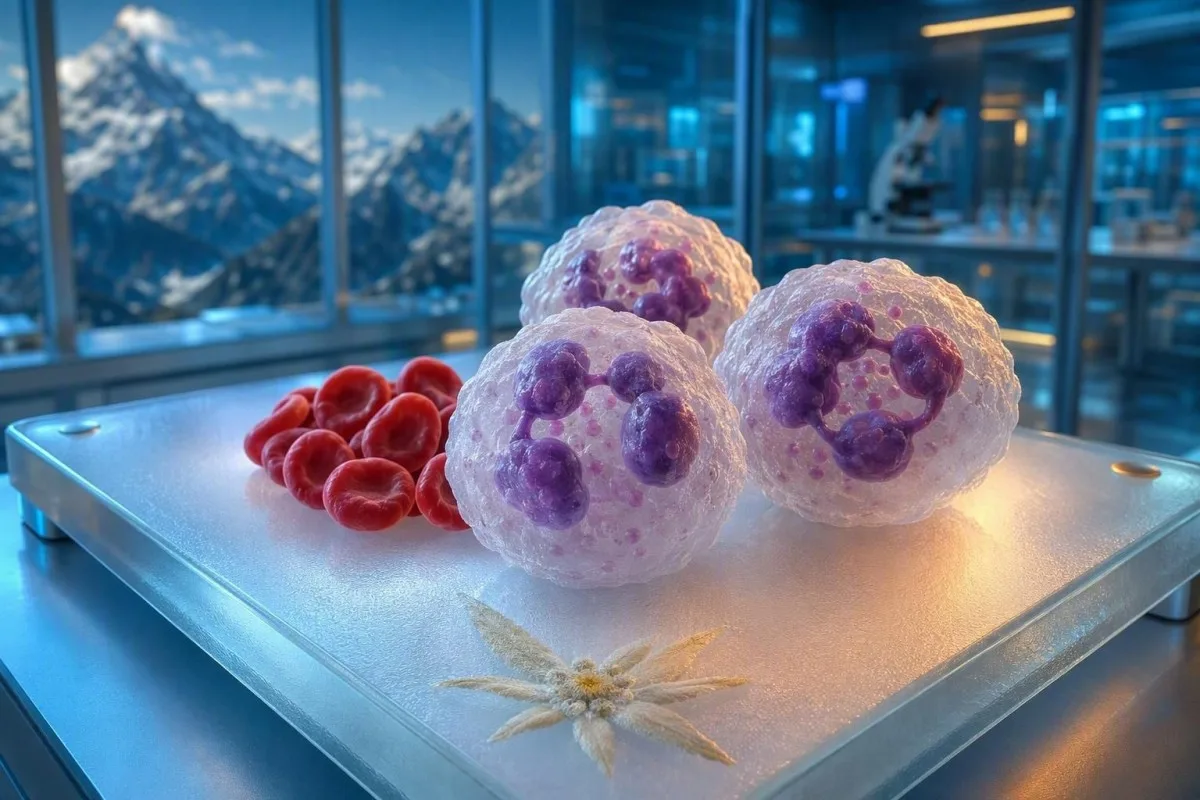
Ένα ελαφρώς αυξημένο αποτέλεσμα ουδετερόφιλων είναι συχνά προσωρινό, αλλά η απόλυτη μέτρηση ουδετερόφιλων, το υπόλοιπο του CBC, τα συμπτώματα και η τάση καθορίζουν εάν χρειάζεται δράση.


- Οριακά ουδετερόφιλα συνήθως σημαίνει ένα ANC ακριβώς πάνω από το ανώτερο εργαστηριακό όριο, συχνά γύρω στα 7,0-7,5 × 10⁹/L σε ενήλικες.
- Απόλυτος αριθμός ουδετερόφιλων είναι πιο ενημερωτικό από το ποσοστό των ουδετερόφιλων· υπολογίστε το ANC ως WBC × ποσοστό ουδετερόφιλων ÷ 100.
- Ήπια ουδετεροφιλία κάτω από 15 × 10⁹/L χωρίς ανησυχητικά συμπτώματα είναι συνήθως αντιδραστικό και μπορεί να ακολουθήσει λοίμωξη, κάπνισμα, άσκηση ή θεραπεία με στεροειδή.
- Χρόνος επανάληψης είναι συνήθως 2-6 εβδομάδες μετά την ανάρρωση από μια σύντομη ασθένεια, έντονη άσκηση, εμβολιασμό ή αλλαγή φαρμάκων.
- Επείγουσα επανεξέταση είναι κατάλληλο για πυρετό με σοβαρή ασθένεια, δύσπνοια, σύγχυση, ταχέως αυξανόμενους αριθμούς, βλάστες, αναιμία ή χαμηλά αιμοπετάλια.
- Στεροειδή και αδρεναλίνη μπορούν να αυξήσουν τα κυκλοφορούντα ουδετερόφιλα μέσα σε ώρες, μετατοπίζοντας κύτταρα από τα τοιχώματα των αγγείων στην μετρούμενη δεξαμενή αίματος.
- επίμονη αύξηση για περισσότερο από 3 μήνες, ειδικά πάνω από 15-20 × 10⁹/L, αξίζει κλινική ανασκόπηση και συχνά εξέταση φιλμ αίματος.
- Εγκυμοσύνη μπορεί κανονικά να αυξήσει τα επίπεδα των ουδετερόφιλων, ιδιαίτερα στο τρίτο τρίμηνο, οπότε τα εύρη αναφοράς για μη έγκυες ενήλικες μπορεί να είναι παραπλανητικά.
Τι Σημαίνει Πράγματι ένα Οριακό Αποτέλεσμα Ουδετερόφιλων
Τα οριακά ουδετερόφιλα συνήθως σημαίνουν μια μικρή αύξηση στον απόλυτο αριθμό ουδετερόφιλων (ANC), όχι διάγνωση. Στους περισσότερους υγιείς ενήλικες, ένα ANC ελαφρώς πάνω από το εύρος του εργαστηρίου σταθεροποιείται όταν περάσει η προσωρινή αιτία. Η πρώτη δουλειά είναι να ελέγξετε τον απόλυτο αριθμό, τη συνολική λευκοκυττάρωση και τα συμπτώματα, αντί να αντιδράσετε σε ένα επισημασμένο ποσοστό.
Τα εύρη αναφοράς ANC για ενήλικες κυμαίνονται συνήθως από περίπου 1,5 έως 7,5 × 10⁹/L, αν και το ανώτερο όριο διαφέρει ανάλογα με τον αναλυτή, την καταγωγή, την εγκυμοσύνη και την τοπική εργαστηριακή μέθοδο. Μια τιμή 7,8 × 10⁹/L είναι κλινικά πολύ διαφορετική από 28 × 10⁹/L, παρόλο που και οι δύο μπορεί να επισημανθούν ως υψηλές· δείτε τον οδηγό μας για το φυσιολογικό εύρος ουδετερόφιλων.
Ο το ποσοστό ουδετερόφιλων μπορεί να φαίνεται υψηλό απλώς επειδή τα λεμφοκύτταρα έπεσαν μετά από στρες ή έκθεση σε κορτικοστεροειδή. Για παράδειγμα, ένα WBC 6,0 × 10⁹/L με 78% ουδετερόφιλα δίνει ένα ANC 4,68 × 10⁹/L, το οποίο είναι φυσιολογικό παρά το υψηλό ποσοστό.
Το Καντέστι είναι ένα Αναλυτής εξέτασης αίματος AI που διαβάζει τη διαφορική CBC παράλληλα με τη συνολική WBC, την αιμοσφαιρίνη, τα αιμοπετάλια και προηγούμενα αποτελέσματα, αντί να αντιμετωπίζει μια επισημασμένη ένδειξη ως ετικέτα ασθένειας. Από τις 28 Αυγούστου 2026, αυτή η προσέγγιση που δίνει προτεραιότητα στο μοτίβο παραμένει ο ασφαλέστερος τρόπος ερμηνείας οριακών αποτελεσμάτων.
Γιατί οι εργαστηριακές επισημάνσεις δεν είναι διαγνώσεις
Τα εύρη αναφοράς καλύπτουν το κεντρικό 95% ενός επιλεγμένου πληθυσμού, οπότε περίπου 1 στους 20 υγιείς μετρήσεις μπορεί να βρεθούν εκτός ενός καθορισμένου εύρους τυχαία. Μια επισήμανση είναι μια προτροπή για πλαίσιο, όχι απόδειξη ότι κάτι πάει στραβά.
Γιατί η Απόλυτη Μέτρηση Ουδετερόφιλων Έχει Μεγαλύτερη Σημασία από το Ποσοστό
Το ANC είναι ο αριθμός που χρησιμοποιούν οι κλινικοί για να κρίνουν την αύξηση των ουδετερόφιλων, επειδή συνδυάζει τη συνολική WBC με τη διαφορική. Ένα υψηλό ποσοστό ουδετερόφιλων με φυσιολογικό ANC είναι συχνά μια αναλογική μετατόπιση, ενώ ένα υψηλό ANC επιβεβαιώνει αληθινή ουδετεροφιλία.
Ο τύπος είναι απλός: ANC = WBC × (% ουδετερόφιλα + % μπάντες) ÷ 100. Με WBC 12.0 × 10⁹/L και ουδετερόφιλα 75%, ο ANC είναι 9.0 × 10⁹/L· αυτή είναι ήπια ουδετεροφιλία, όχι επείγουσα κατάσταση από μόνη της.
Βλέπω συχνά αποφεύξιμο άγχος όταν μια πύλη αναφέρει 75% ουδετερόφιλα αλλά δεν εμφανίζει τον υπολογισμό με σαφήνεια. Ο πρακτικός κανόνας του Δρ. Thomas Klein είναι να καταγράφετε το WBC, ANC, αιμοσφαιρίνη, αριθμό αιμοπεταλίων και οποιαδήποτε σήμανση άωλων κοκκιοκυττάρων πριν αποφασίσετε τι σημαίνει το αποτέλεσμα· η Οδηγός συστατικών για το CBC μας βοηθάει με τους όρους.
Τα WBC πάνω από 11 × 10⁹/L ονομάζεται συνήθως λευκοκυττάρωση σε μη έγκυες ενήλικες, αλλά η αιτία δεν μπορεί να συναχθεί μόνο από αυτόν τον αριθμό. Οι Riley και Rupert (2015) συμβουλεύουν τους κλινικούς ιατρούς να επαναλάβουν το CBC και να ελέγξουν επίχρισμα περιφερικού αίματος όταν η λευκοκυττάρωση είναι ανεξήγητη ή εμμένουσα.
Κοινές Προσωρινές Αιτίες Ήπιας Ουδετεροφιλίας
Η ήπια ουδετεροφιλία συχνότερα αντανακλά μια προσωρινή αντιδραστική διαδικασία: πρόσφατη λοίμωξη, φυσικό στρες, κάπνισμα, φλεγμονή, επίδραση φαρμάκων ή εγκυμοσύνη. Αυτές οι αιτίες αυξάνουν τα κυκλοφορούντα ουδετερόφιλα χωρίς απαραίτητα να σημαίνουν ότι ο μυελός των οστών παράγει αφύσικα κύτταρα.
Ένα κρύωμα, μια οδοντική φλεγμονή, ουρολογικά συμπτώματα, μια δερματική έξαρση ή ακόμα και οι πρώτες ημέρες μετά από μια ιογενή ασθένεια μπορούν να αυξήσουν τον ANC στο 8-14 × 10⁹/L εύρος. Τα ουδετερόφιλα μπορεί να παραμείνουν ήπια αυξημένα για ημέρες μετά την υποχώρηση του πυρετού, επειδή η απελευθέρωση από τον μυελό και η αποκατάσταση των ιστών δεν σταματούν την ίδια στιγμή.
Μια σκληρή διαλειμματική προπόνηση, ένας μαραθώνιος, ένα επεισόδιο πανικού ή οξύς πόνος μπορεί να προκαλέσουν απομαργίνωση—κύτταρα που προηγουμένως ηρεμούσαν κατά μήκος των τοιχωμάτων των αγγείων εισέρχονται στο κυκλοφορούν δείγμα. Αυτή η αύξηση μπορεί να συμβεί μέσα σε λεπτά έως ώρες και είναι ένας λόγος που ζητώ από τους αθλητές να αποφεύγουν ασυνήθιστα σκληρή προπόνηση για 24-48 ώρες πριν από ένα προγραμματισμένο CBC· ο οδηγός χρονισμού εξετάσεων σχετικά με την άσκηση εξηγεί το ευρύτερο μοτίβο.
Το κάπνισμα συνδέεται με υψηλότερα επίπεδα WBC και ουδετεροφίλων, ενώ η παχυσαρκία, η χρόνια ουλοδοντική νόσος και οι φλεγμονώδεις δερματικές παθήσεις μπορούν να διατηρήσουν μια μέτρια αύξηση. Η ελαφρώς αυξημένη σημασία των ουδετεροφίλων αφορά επομένως συχνά την έκθεση και τη φυσιολογία, όχι μια κρυφή βακτηριακή λοίμωξη.
Φάρμακα, Εμβόλια και Γεγονότα Ζωής που Μπορούν να Αυξήσουν τα Ουδετερόφιλα
Τα κορτικοστεροειδή, οι β-αγωνιστές εισπνεόμενοι, το λίθιο και τα φάρμακα που διεγείρουν τα κοκκιοκύτταρα μπορούν να αυξήσουν τα ουδετερόφιλα, μερικές φορές σημαντικά. Μην διακόπτετε ένα συνταγογραφούμενο φάρμακο λόγω μιας σήμανσης CBC· αντίθετα, καταγράψτε το φάρμακο, τη δόση και το χρονοδιάγραμμα για τον κλινικό ιατρό που εξετάζει το αποτέλεσμα.
Η πρεδνιζόνη και παρόμοια γλυκοκορτικοειδή μπορεί να αυξήσουν τα κυκλοφορούντα ουδετερόφιλα εντός 4-6 ώρες μέσω αποδιάταξης, καθυστερημένης μετακίνησης στους ιστούς και μειωμένης κάθαρσης κυττάρων. Η ουδετεροφιλία που σχετίζεται με τα στεροειδή συχνά στερείται της τοξικής κοκκίωσης ή της έντονης αριστερής μετατόπισης που μπορεί να συνοδεύει τη σοβαρή βακτηριακή λοίμωξη, αν και απαιτείται επίχρισμα αίματος για την ορθή αξιολόγηση αυτού.
Το λίθιο μπορεί να αυξήσει την παραγωγή κοκκιοκυττάρων, ενώ το φιλγραστίμη και οι σχετικές θεραπείες αυξάνουν σκόπιμα τους αριθμούς των ουδετεροφίλων· η πρόσφατη χειρουργική επέμβαση, το τραύμα και ο τοκετός πυροδοτούν επίσης μια στρεσογόνο αντίδραση. Ένα εμβόλιο μπορεί να μεταβάλει παροδικά ένα διαφορικό, οπότε μια τυπική εξέταση που λαμβάνεται εντός 7-14 ημέρες από τον εμβολιασμό μπορεί να είναι λιγότερο αντιπροσωπευτική της βασικής γραμμής· διαβάστε περισσότερα για μετα-εμβολιαστικές αλλαγές εργαστηριακών εξετάσεων.
Το Καντέστι είναι ένα πλατφόρμα ερμηνείας εξετάσεων αίματος AI που επιτρέπει στους ανθρώπους να αποθηκεύουν το πλαίσιο φαρμάκων και ασθενειών με ένα αποτέλεσμα, το οποίο είναι κλινικά πιο χρήσιμο από τη σύγκριση απλών αριθμών. Μια λίστα φαρμάκων πρέπει να περιλαμβάνει εισπνεόμενα, στεροειδείς κρέμες, ενέσεις και “φυσικά” προϊόντα—όχι μόνο ταμπλέτες.
Πότε να Επαναληφθεί ένα CBC για Οριακά Ουδετερόφιλα
Για ένα κατά τα άλλα υγιές άτομο με ήπια μεμονωμένη ουδετεροφιλία, η επανάληψη ενός CBC με διαφορικό σε 2-6 εβδομάδες είναι συνήθως λογική αφού έχει επιλυθεί ο πιθανός εκλυτικός παράγοντας. Επανεξετάστε νωρίτερα - εντός ημερών - εάν τα συμπτώματα επιδεινώνονται, ο αριθμός αυξάνεται ή το αρχικό αποτέλεσμα ήταν σημαντικά υψηλό.
Επιλέξτε μια σταθερή ημέρα για την επανεξέταση: χωρίς πυρετό, χωρίς έντονη άσκηση για 24-48 ώρες, συνήθη ενυδάτωση και καμία νεοεμφανιζόμενη στεροειδή θεραπεία, εκτός εάν ο συνταγογράφος ορίσει διαφορετικά. Η νηστεία γενικά δεν απαιτείται για ένα CBC, αλλά η αντιστοίχιση της ώρας της ημέρας και των συνθηκών διευκολύνει την ερμηνεία των αλλαγών· το δικό μας οδηγός χρονοδιαγράμματος αιματολογικών εξετάσεων εξηγεί γιατί.
Εάν το ANC είναι 7,6-12 × 10⁹/L και όλες οι άλλες κυτταρικές σειρές είναι φυσιολογικές, συνήθως προτιμώ μία προγραμματισμένη επανεξέταση παρά τη σειριακή εξέταση κάθε λίγες ημέρες. Μια επανάληψη σε 4 εβδομάδες μπορεί να είναι παραπλανητική εάν ο ασθενής αναρρώνει ακόμη από πνευμονία, έχει ξεκινήσει πρεδνιζολόνη ή έχει προπονηθεί για ένα γεγονός αντοχής.
Η εμμονή έχει μεγαλύτερη σημασία από έναν μεμονωμένο αριθμό. Η ουδετεροφιλία που διαρκεί πέραν 3 μήνες, χωρίς σαφή αντιδραστική εξήγηση, γενικά χρήζει πρωτοβάθμιας ιατρικής εξέτασης, εξέτασης επιχρίσματος περιφερικού αίματος και στοχευμένων εξετάσεων με βάση τα συμπτώματα.
Μοτίβα CBC που Κάνουν μια Αύξηση των Ουδετερόφιλων Περισσότερο ή Λιγότερο Ανησυχητική
Μια μεμονωμένη ήπια αύξηση του ANC με φυσιολογική αιμοσφαιρίνη και αιμοπετάλια είναι συνήθως λιγότερο ανησυχητική από την ουδετεροφιλία που συνοδεύεται από αναιμία, θρομβοπενία, θρομβοκυττάρωση ή ανώριμα κύτταρα. Το περιβάλλον μοτίβο του CBC δίνει στον αριθμό το κλινικό του νόημα.
Ένα αυξημένο ANC συν υψηλά αιμοπετάλια άνω των 450 × 10⁹/L, ανεξήγητη αναιμία, βασοφιλία ή ένα λευκο-ερυθροβλαστικό επίχρισμα αίματος αυξάνει την ανησυχία για μια μυελική διαδικασία. Κανένας από αυτούς τους συνδυασμούς δεν διαγιγνώσκει καρκίνο, αλλά δικαιολογούν άμεση κλινική εξέταση παρά μια περιστασιακή επανάληψη μήνες αργότερα· δείτε την επισκόπηση του οδός αξιολόγησης καρκίνου του αίματος.
Ένα “αριστερό μετατόπιση” σημαίνει ότι μπάντες, μεταμυελοκύτταρα ή μυελοκύτταρα είναι παρόντα στο περιφερικό αίμα. Μικροί αριθμοί μπορούν να εμφανιστούν σε σοβαρό αντιδραστικό στρες, αλλά μια εμμένουσα αριστερή μετατόπιση χρήζει εξέτασης επιχρίσματος αίματος, επειδή οι αυτοματοποιημένοι μετρητές δεν διακρίνουν πάντα την καλοήθη ανάρρωση από μια κλωνική διαδικασία.
Το Kantesti AI εξετάζει υποομάδες λευκών αιμοσφαιρίων μαζί με δείκτες ερυθρών αιμοσφαιρίων και τάσεις αιμοπεταλίων, στη συνέχεια επισημαίνει συνδυασμούς για ιατρική παρακολούθηση αντί να προσπαθεί να διαγνώσει λευχαιμία από ένα CBC. Αυτή η προσέγγιση ευθυγραμμίζεται με τις δημοσιευμένες αρχές κλινικής επικύρωσης.
Λοίμωξη, Φλεγμονή ή Στρες: Ερμηνεύοντας τα Κλινικά Σημάδια
Ο πυρετός, τα εστιακά συμπτώματα και η αυξανόμενη CRP μπορούν να υποστηρίξουν την λοίμωξη, αλλά ένας αυξημένος αριθμός ουδετερόφιλων από μόνος του δεν μπορεί να διακρίνει βακτηριακή λοίμωξη από στρες ή φλεγμονή. Οι κλινικοί ιατροί διαγιγνώσκουν το άτομο μπροσροστά τους, όχι μια διαφορική καταμέτρηση απομονωμένα.
Με βακτηριακή πνευμονία, πυελονεφρίτιδα ή σκωληκοειδίτιδα, το ANC μπορεί να αυξηθεί πάνω από 15 × 10⁹/L, ωστόσο κάποιες σοβαρές λοιμώξεις έχουν φυσιολογικούς ή χαμηλούς αριθμούς WBC - ειδικά σε ηλικιωμένους ή ανοσοκατεσταλμένους ανθρώπους. Συμπτώματα, ζωτικά σημεία, κλινική εξέταση και καλλιέργειες συχνά έχουν μεγαλύτερη σημασία από το εάν το ANC είναι 11 ή 13.
Η CRP αυξάνεται και μειώνεται πιο γρήγορα από την ESR, αλλά καμία δεν είναι ειδική για λοίμωξη. Εάν η ουδετεροφιλία συνδυάζεται με υψηλή CRP, πρήξιμο στις αρθρώσεις, γαστρεντερικά συμπτώματα ή εξάνθημα, η διαφορική διάγνωση διευρύνεται σε αυτοάνοσες και φλεγμονώδεις καταστάσεις· η εξήγησή μας για μοτίβα υψηλής ESR μπορεί να βοηθήσει στο πλαισίωση αυτής της συζήτησης.
Κατά την εμπειρία μου, ένας ασθενής με ANC 10.5 × 10⁹/L, χωρίς πυρετό και φυσιολογική CRP μετά από μια άυπνη επίσκεψη στα επείγοντα, συνήθως χρειάζεται ήρεμη παρακολούθηση, όχι αντιβιοτικά. Αντίστροφα, ένα άρρωστο άτομο με ρίγη και ANC 6.5 × 10⁹/L μπορεί να χρειαστεί επείγουσα φροντίδα παρά την τεχνικά φυσιολογική τιμή.
Εγκυμοσύνη, Ηλικία και Προσωπική Βασική Γραμμή Αλλάζουν την Ερμηνεία
Η εγκυμοσύνη προκαλεί συχνά φυσιολογική ουδετεροφιλία, ιδιαίτερα στα τέλη της κύησης, και τα παιδιά χρειάζονται ηλικιακά συγκεκριμένα εύρη. Ένα μη έγκυο διάστημα αναφοράς ενηλίκων δεν πρέπει να χρησιμοποιείται για να χαρακτηριστεί το CBC μιας έγκυου γυναίκας ως μη φυσιολογικό χωρίς πλαίσιο.
Κατά τη διάρκεια της εγκυμοσύνης, οι συνολικές τιμές WBC μπορούν να φτάσουν 12-15 × 10⁹/L και μπορεί να αυξηθούν περαιτέρω κατά τον τοκετό, κυρίως μέσω των ουδετερόφιλων. Μια αυξημένη τιμή χωρίς πυρετό, ενδομητρική ευαισθησία, ουρολογικά συμπτώματα ή άλλα σημάδια ασθένειας μπορεί να είναι φυσιολογική, αλλά οι ομάδες μαιευτικής χρησιμοποιούν την πλήρη κλινική εικόνα.
Τα νεογέννητα και τα μικρά παιδιά μπορεί να έχουν αριθμούς ουδετερόφιλων που θα έμοιαζαν μη φυσιολογικοί σε μια αναφορά ενηλίκων, ενώ οι μεγαλύτεροι ενήλικες μπορεί να εμφανίσουν μια αμβλύ αντίδραση λευκών αιμοσφαιρίων κατά τη διάρκεια της μόλυνσης. Ερμηνεύστε το αποτέλεσμα ενός παιδιού σε σχέση με την ηλικιακή ζώνη του εργαστηρίου. οδηγός εύρους για βρέφη εξηγεί γιατί οι συγκρίσεις με ενήλικες αποτυγχάνουν.
Τα δικά σας προηγούμενα CBC είναι συχνά ο καλύτερος συγκριτής. Ένα σταθερό ANC γύρω στα 7.8 × 10⁹/L για πέντε χρόνια σε ένα υγιές άτομο έχει διαφορετικό προφίλ πιθανοτήτων από μια νέα αύξηση από 3.2 σε 12.8 × 10⁹/L.
Κάπνισμα, Μεταβολικοί Παράγοντες και Χρόνια Χαμηλού Βαθμού Ουδετεροφιλία
Το κάπνισμα, η παχυσαρκία και οι χρόνιες φλεγμονώδεις εκθέσεις μπορούν να προκαλέσουν χαμηλού βαθμού ουδετεροφιλία που παραμένει μετά την υποχώρηση ενός κρυολογήματος. Αυτοί οι παράγοντες εξακολουθούν να χρήζουν προσοχής, επειδή μπορούν να επηρεάσουν την υγεία πέρα από το ίδιο το αποτέλεσμα του CBC.
Η λευκοκυττάρωση σχετιζόμενη με το κάπνισμα μπορεί να περιλαμβάνει ουδετερόφιλα, λεμφοκύτταρα και μονοκύτταρα, οπότε μπορεί να μην παρουσιάζεται ως καθαρή αύξηση των ουδετερόφιλων. Ένα επαναληπτικό CBC 8-12 εβδομάδες μετά τη διακοπή του καπνίσματος μπορεί να είναι διαφωτιστικό, αν και ένα φυσιολογικό αποτέλεσμα δεν απαιτείται πριν από τον εορτασμό των οφελών για την υγεία από τη διακοπή.
Η κεντρική παχυσαρκία, η υπνική άπνοια και η χρόνια περιοδοντική νόσος μπορεί να συμβάλουν στη φλεγμονώδη σηματοδότηση και σε μια μέτρια υψηλότερη τιμή WBC. Αυτές οι συσχετίσεις είναι πραγματικές αλλά μη ειδικές· δεν πρέπει να χρησιμοποιούνται για να απορρίψουν νέα συμπτώματα ή μια ταχέως αυξανόμενη τιμή.
Το Kantesti, ένα Εργαλείο ανάλυσης αιματολογικών εξετάσεων με AI-powered, μπορεί να συγκρίνει ένα τρέχον διαφορικό με πολλές προηγούμενες αναφορές και να αναδείξει τις αργές αλλαγές που αποκρύπτει ένα μεμονωμένο ετήσιο αποτέλεσμα. Για πρακτική παρακολούθηση, καταγράψτε την κατάσταση καπνίσματος, την αλλαγή βάρους, τις πρόσφατες λοιμώξεις και την έκθεση σε στεροειδή δίπλα σε κάθε εξέταση σε ένα αρχείο εργαστηριακής ιστορικότητας.
Πότε να Ανησυχήσετε για τα Ουδετερόφιλα και να Ζητήσετε Επείγουσα Βοήθεια
Ζητήστε ιατρική αξιολόγηση την ίδια ημέρα για υψηλό αποτέλεσμα ουδετεροφίλων με σοβαρή νόσο, πυρετό και σύγχυση, δύσπνοια, πόνο στο στήθος, αυχενική δυσκαμψία ή ταχέως επιδεινούμενα συμπτώματα. Ο επείγων χαρακτήρας προέρχεται από πιθανή λοίμωξη ή συστηματική νόσο, όχι μόνο από ένα οριακό ANC.
Ένα WBC ή ANC πάνω από 25-30 × 10⁹/L A markedly elevated neutrophil count 50 × 10⁹/L 50 × 10⁹/L.
Red-flag symptoms.
Seek urgent medical advice Sepsis markers Important safety point.
Τι Ελέγχουν οι Κλινικοί Όταν η Ουδετεροφιλία Επιμένει
Evaluation. Further testing.
Clinical assessment.
Blood-film examination.
Specialist testing.
Τι Μπορούν να Σας Πουν τα Σχόλια Φιλμ Αίματος και τα Ανώριμα Κύτταρα
Blood-film comment. “Interpretation.
Band forms.
Interpretation of toxic changes τοξική κοκκίωση ουδετεροφίλων Additional information.
Urgent review.
Πώς να Προετοιμαστείτε για μια Χρήσιμη Επανεξέταση Ουδετερόφιλων
Repeat testing. Practical point.
24–48 hours στις 24-48 ώρες, 24–48 hours.
Χρησιμοποιήστε το ίδιο εργαστήριο όταν είναι πρακτικό, επειδή τα ειδικά για τον αναλυτή διαστήματα αναφοράς και οι διαφορικές μέθοδοι ποικίλλουν. Μια διαφορά 0,5-1,0 × 10⁹/L μπορεί να αντικατοπτρίζει τη συνήθη βιολογική και αναλυτική μεταβλητότητα, ιδιαίτερα όταν τα αποτελέσματα βρίσκονται κοντά στο ανώτατο όριο· το άρθρο μας σχετικά με πραγματικές έναντι τυχαίων εργαστηριακών αλλαγών διερευνά αυτό το ζήτημα.
Φέρτε την προηγούμενη αναφορά ή κρατήστε μια φωτογραφία της. Η ημερομηνία πυρετού, η θεραπεία με αντιβιοτικά, η χορήγηση στεροειδών ή η έντονη άσκηση συχνά εξηγούν περισσότερα από μια μεμονωμένη επιπλέον αιμοληψία.
Χρήση Ερμηνείας AI με Ασφάλεια Παράλληλα με την Κλινική Φροντίδα
Η ΤΝ μπορεί να οργανώσει μια τάση CBC και να εντοπίσει ερωτήσεις παρακολούθησης, αλλά δεν μπορεί να αξιολογήσει ζωτικά σημεία, να εξετάσει λεμφαδένες ή να αποκλείσει μια επείγουσα λοίμωξη. Μια υψηλής ποιότητας ερμηνεία θα πρέπει να δηλώνει αβεβαιότητα, να δείχνει τον υπολογισμό του ANC και να κατευθύνει επείγοντα συμπτώματα σε ανθρώπινη φροντίδα.
Η Kantesti AI ερμηνεύει τα αποτελέσματα των ουδετερόφιλων αναλύοντας την απόλυτη καταμέτρηση, τα ολικά λευκά αιμοσφαίρια, άλλες κυτταρικές σειρές, το εργαστηριακό διάστημα και τη διαχρονική αλλαγή. Έχει σχεδιαστεί για να βοηθά τους χρήστες να προετοιμάσουν καλύτερες ερωτήσεις για τον κλινικό τους ιατρό, όχι για να αντικαταστήσει την επείγουσα αξιολόγηση ή να συνταγογραφήσει θεραπεία.
Η ιδιωτικότητα είναι σημαντική με τα εργαστηριακά αρχεία, επειδή ένα CBC μπορεί να αποκαλύψει χρήση φαρμάκων, αλλαγές σχετιζόμενες με την εγκυμοσύνη και πιθανή χρόνια ασθένεια. Η Kantesti υποστηρίζει την ασφαλή ερμηνεία αποτελεσμάτων σε πολλές γλώσσες, ενώ οι γιατροί μας παρέχουν επίβλεψη μέσω Ιατρική Συμβουλευτική Επιτροπή.
Το τελικό συμπέρασμα του Dr. Thomas Klein είναι απλό: μια μικρή μεμονωμένη αύξηση είναι συνήθως ένα πρόβλημα επανεξέτασης και πλαισίου, ενώ ένα υψηλό ή αυξανόμενο ANC σε συνδυασμό με συμπτώματα ή άλλες ανωμαλίες CBC είναι ένα πρόβλημα ιατρικής αξιολόγησης. Εάν η αναφορά φαίνεται ασυνεπής με το πώς αισθάνεστε, ζητήστε από έναν κλινικό ιατρό να αξιολογήσει το αρχικό εργαστηριακό έγγραφο—όχι μόνο ένα στιγμιότυπο οθόνης.
Ένα Πρακτικό Σχέδιο Επόμενων Βημάτων για ένα Οριακό Αποτέλεσμα
Οι περισσότεροι άνθρωποι με οριακά ουδετερόφιλα μπορούν να ακολουθήσουν ένα σχέδιο τριών βημάτων: επιβεβαίωση του ANC, εντοπισμός προσωρινού παράγοντα πυροδότησης και οργάνωση μιας κατάλληλα χρονομετρημένης επαναληπτικής εξέτασης. Κλιμακώστε αμέσως εάν υπάρχουν συμπτώματα κόκκινης σημαίας ή σοβαρές ανωμαλίες CBC.
Πρώτον, ελέγξτε εάν η επισημασμένη τιμή είναι ποσοστό ή το ANC, και σημειώστε την ακριβή μονάδα. Δεύτερον, καταγράψτε την ασθένεια στο προηγούμενο 2 εβδομάδες, έντονη άσκηση τις προηγούμενες 48 ώρες, κάπνισμα, κατάσταση εγκυμοσύνης, φάρμακα και χρονισμό εμβολιασμού.
Τρίτον, εάν αισθάνεστε καλά και το ANC είναι ελαφρώς αυξημένο με φυσιολογική αιμοσφαιρίνη και αιμοπετάλια, κανονίστε ένα επαναληπτικό CBC σε 2-6 εβδομάδες μέσω του συνήθους κλινικού σας ιατρού. Εάν παραμένει αυξημένο στους 3 μήνες ή αυξάνεται προς τα 15 × 10⁹/L, ρωτήστε εάν μια εξέταση επιχρίσματος και μια εστιασμένη διερεύνηση είναι κατάλληλες· η checklist δεύτερης γνώμης μας μπορεί να βοηθήσει στην προετοιμασία της επίσκεψης.
Για περισσότερες πληροφορίες σχετικά με το πώς η μεθοδολογία μας χειρίζεται τάσεις και αβεβαιότητα, ανατρέξτε στο οδηγός τεχνολογίας AI. Μια οριακή επισήμανση θα πρέπει να προκαλεί λογική παρακολούθηση, όχι αναζήτηση διάγνωσης αργά το βράδυ.
Συχνές Ερωτήσεις
Τι σημαίνει ελαφρώς αυξημένα ουδετερόφιλα;
Οι ελαφρώς αυξημένοι ουδετερόφιλοι συνήθως σημαίνουν ότι η απόλυτη καταμέτρηση ουδετεροφίλων είναι λίγο πάνω από το ανώτατο όριο του τοπικού εργαστηρίου, συχνά γύρω στα 7,5 × 10⁹/L σε ενήλικες. Πρόσφατη λοίμωξη, άσκηση, κάπνισμα, συναισθηματικό στρες, εγκυμοσύνη και κορτικοστεροειδή είναι συχνές εξηγήσεις. Εάν η ANC είναι κάτω από 15 × 10⁹/L, η αιμοσφαιρίνη και τα αιμοπετάλια είναι φυσιολογικά και αισθάνεστε καλά, μια επαναληπτική CBC σε 2-6 εβδομάδες είναι συνήθως κατάλληλη. Το αποτέλεσμα θα πρέπει να αξιολογηθεί σε σχέση με το εύρος του εργαστηρίου και τις προηγούμενες CBC σας.
Πότε πρέπει να ανησυχώ για υψηλά ουδετερόφιλα;
Οι υψηλοί ουδετερόφιλοι απαιτούν άμεση εκτίμηση όταν εμφανίζονται με σοβαρό πυρετό, σύγχυση, δύσπνοια, θωρακικό άλγος, αυχενική δυσκαμψία, ταχεία επιδείνωση της νόσου ή σημαντικά υψηλό αριθμό. Ένας ANC άνω των 25-30 × 10⁹/L, ειδικά εάν αυξάνεται ή σχετίζεται με ανώριμα κύτταρα, αναιμία ή χαμηλά αιμοπετάλια, θα πρέπει να προκαλέσει άμεση επικοινωνία με τον κλινικό ιατρό. Ένας ήπιος μεμονωμένος ANC 8-12 × 10⁹/L σε ένα υγιές άτομο είναι πολύ λιγότερο ανησυχητικός. Τα συμπτώματα και το υπόλοιπο του CBC καθορίζουν την επείγουσα ανάγκη πιο αξιόπιστα από το ποσοστό μόνο.
Πόσο καιρό παραμένουν αυξημένα τα ουδετερόφιλα μετά από μια λοίμωξη;
Τα ουδετερόφιλα μπορεί να παραμένουν ελαφρώς αυξημένα για μερικές ημέρες έως μερικές εβδομάδες μετά τη βελτίωση μιας λοίμωξης, ανάλογα με τη σοβαρότητά της και οποιαδήποτε θεραπεία χρησιμοποιήθηκε. Μια επαναληπτική CBC 2-6 εβδομάδες μετά την πλήρη ανάρρωση είναι συχνά πιο κατατοπιστική από την εξέταση ξανά την επόμενη ημέρα. Η επίμονη αύξηση πέραν των 3 μηνών χωρίς εμφανή αιτία δικαιολογεί κλινική αξιολόγηση. Η θεραπεία με στεροειδή μπορεί να παρατείνει ή να μιμηθεί το αυξημένο αποτέλεσμα αυξάνοντας τα κυκλοφορούντα ουδετερόφιλα εντός ωρών.
Μπορεί το στρες ή η άσκηση να προκαλέσουν υψηλά ουδετερόφιλα;
Ναι, το οξύ συναισθηματικό στρες, ο πόνος και η έντονη άσκηση μπορούν να αυξήσουν προσωρινά την καταμέτρηση των ουδετερόφιλων μέσω της αποπεριθώρησης (demargination), όπου τα κύτταρα μετακινούνται από τα τοιχώματα των αγγείων στο κυκλοφορούν δείγμα. Η αλλαγή μπορεί να συμβεί μέσα σε λίγα λεπτά έως ώρες και συνήθως σταθεροποιείται εντός 24-48 ωρών μετά την αποδρομή του στρεσογόνου παράγοντα. Η αποφυγή ασυνήθιστα έντονης άσκησης για 24-48 ώρες πριν από μια προγραμματισμένη επαναληπτική CBC μπορεί να μειώσει αυτή την πηγή μεταβλητότητας. Αυτή η επίδραση δεν σημαίνει ότι η άσκηση είναι επιβλαβής ή ότι υπάρχει λοίμωξη.
Είναι το υψηλό ποσοστό ουδετερόφιλων το ίδιο με την υψηλή ANC;
Όχι, ένα υψηλό ποσοστό ουδετερόφιλων δεν συνεπάγεται απαραίτητα υψηλό αριθμό ουδετερόφιλων. Ο ANC ισούται με τη συνολική τιμή WBC πολλαπλασιασμένη επί το ποσοστό των ουδετερόφιλων διαιρεμένη δια 100, οπότε ένα WBC 6,0 × 10⁹/L με 78% ουδετερόφιλα δίνει έναν φυσιολογικό ANC 4,68 × 10⁹/L. Ένα χαμηλό ποσοστό λεμφοκυττάρων μπορεί να κάνει το ποσοστό των ουδετερόφιλων να φαίνεται υψηλό ακόμα και όταν ο απόλυτος αριθμός ουδετερόφιλων είναι φυσιολογικός. Οι κλινικοί γιατροί χρησιμοποιούν γενικά τον ANC για να καθορίσουν την πραγματική ουδετεροφιλία.
Μπορεί ο καρκίνος να προκαλέσει αυξημένα ουδετερόφιλα;
Ορισμένες κακοήθειες του αίματος και συμπαγείς όγκοι μπορούν να προκαλέσουν ουδετεροφιλία, αλλά σπάνια αποτελούν την εξήγηση για ένα μεμονωμένο οριακό αποτέλεσμα. Η ανησυχία αυξάνεται όταν η ουδετεροφιλία είναι επίμονη και συνοδεύεται από αναιμία, ανωμαλίες αιμοπεταλίων, βασεοφιλία, άωλα κύτταρα, διευρυμένο σπλήνα, νυκτερινές εφιδρώσεις ή ανεξήγητη απώλεια βάρους. Η ταξινόμηση του ΠΟΥ το 2022 απαιτεί συγκεκριμένα κλινικά, επιχρίσματα περιφερικού αίματος και μοριακά ευρήματα για τη διάγνωση μυελοειδών νεοπλασμάτων. Μια ήπια απομονωμένη αύξηση του ANC δεν διαγιγνώσκει καρκίνο.
Λάβετε σήμερα ανάλυση εξετάσεων αίματος με AI
Εγγραφείτε σε πάνω από 2 εκατομμύρια χρήστες παγκοσμίως που εμπιστεύονται το Kantesti για άμεση, ακριβή ανάλυση εργαστηριακών εξετάσεων. Ανεβάστε τα αποτελέσματα εξετάσεων αίματος και λάβετε ολοκληρωμένη ερμηνεία βιοδεικτών του 15,000+ μέσα σε δευτερόλεπτα.
📚 Παραπομπές σε δημοσιεύσεις έρευνας
Klein, T., Mitchell, S., & Weber, H. (2026). Kantesti LTD. (2026). Οδηγός Σερum Πρωτεϊνών: Σφαιρίνες, Λευκώματα & Αναλογία A/G Αιματολογική Εξέταση. Zenodo. Διαθέσιμο μέσω DOI· συναφή προφίλ συγγραφέων μπορούν να αναζητηθούν μέσω ResearchGate και Academia.edu.. Ιατρική έρευνα του Kantesti με AI.
Klein, T., Mitchell, S., & Weber, H. (2026). Kantesti LTD. (2026). Οδηγός C3 C4 Συμπληρώματος Αιματολογικής Εξέτασης & Τίτλου ANA. Zenodo. Διαθέσιμο μέσω DOI· συναφή προφίλ συγγραφέων μπορούν να αναζητηθούν μέσω ResearchGate και Academia.edu.. Ιατρική έρευνα του Kantesti με AI.
📖 Εξωτερικές ιατρικές αναφορές
Riley LK, Rupert J (2015). Αξιολόγηση ασθενών με λευκοκυττάρωση. American Family Physician.
⚕️ Ιατρική αποποίηση ευθύνης
Αυτό το άρθρο προορίζεται μόνο για εκπαιδευτικούς σκοπούς και δεν αποτελεί ιατρική συμβουλή. Συμβουλεύεστε πάντα έναν κατάλληλο επαγγελματία υγείας για αποφάσεις σχετικά με τη διάγνωση και τη θεραπεία.
Σήματα εμπιστοσύνης E-E-A-T
Εμπειρία
Κλινική ανασκόπηση από ιατρό για τις ροές εργασίας ερμηνείας εργαστηριακών αποτελεσμάτων.
Πραγματογνωμοσύνη
Εστίαση στην εργαστηριακή ιατρική στο πώς συμπεριφέρονται οι βιοδείκτες στο κλινικό πλαίσιο.
Αυθεντικότητα
Γραμμένο από τον Δρ. Thomas Klein με ανασκόπηση από την Δρ. Sarah Mitchell και τον Καθ. Dr. Hans Weber.
Αξιοπιστία
Ερμηνεία βασισμένη σε τεκμηριωμένα δεδομένα με σαφείς οδούς παρακολούθησης για τη μείωση του συναγερμού.