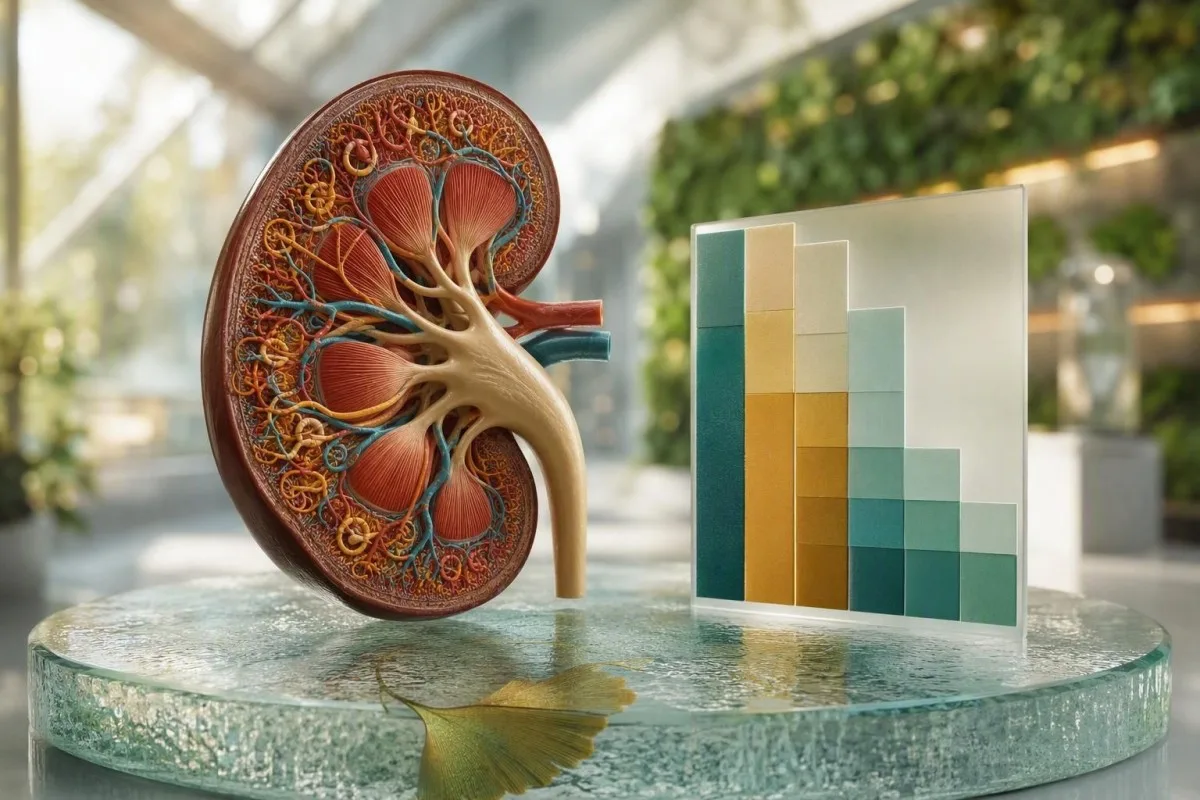
Eine nierenfreundliche Ernährung ist niemals eine universelle Lebensmittelliste. Ein sinnvoller Plan beginnt mit Labortrends, Medikamenten, Symptomen, Urinbefunden und dem Stadium der Nierenerkrankung – nicht mit einem einzigen “hohen” oder “niedrigen” Ergebnis.


- eGFR-Stadieneinteilung erfordert eine Beständigkeit von mindestens 3 Monaten; ein einzelner niedriger Wert nach Dehydrierung oder intensiver körperlicher Betätigung begründet keine chronische Nierenerkrankung.
- Kalium von 6,0 mmol/L oder höher kann gefährlich sein, insbesondere bei Schwäche, Herzklopfen oder EKG-Veränderungen, und ist kein Problem für den Ernährungsplan, das zu Hause behandelt werden kann.
- Proteinzufuhr wird bei vielen Erwachsenen mit nicht-dialysepflichtiger CKD üblicherweise individuell um 0,6–0,8 g/kg/Tag eingestellt, während die Dialyse den Bedarf in der Regel auf etwa 1,0–1,2 g/kg/Tag erhöht.
- Urin-ACR von 30 mg/g oder mehr ist Albuminurie und ändert Ernährungs-, Blutdruck- und Medikationsgespräche, auch wenn die eGFR erhalten zu sein scheint.
- Phosphat oberhalb eines Laborobergrenzwertes von etwa 1,45 mmol/L erfordert eine Überprüfung von Zusatzstoffen, Bindemitteln, Vitamin-D-Therapie und Nierenstadium – nicht einfach die Vermeidung aller proteinhaltigen Lebensmittel.
- Natrium eine Zufuhr von unter 2 g/Tag, was weniger als 5 g/Tag Salz entspricht, wird von KDIGO für die meisten Menschen mit CKD empfohlen, es sei denn, ein Kliniker gibt einen anderen Zielwert vor.
- KI-Ernährungsberater Empfehlungen sollten wiederholte Laborwerte und Medikamentendaten verwenden, dann vom Nierenfacharzt oder der Nierendiätassistentin überprüft werden, bevor sinnvolle Einschränkungen erfolgen.
- Warnzeichen Kalium von 6,0 mmol/L oder höher, rapide sinkende eGFR, neu aufgetretene schwere Atemnot, Verwirrtheit, Brustschmerzen oder deutlich reduzierte Urinausscheidung einschließen.
Was ein KI-Ernährungsberater sicher personalisieren kann für Nierendiäten
Ein KI-Ernährungsberater kann sicher bei der Organisation nierenfreundlicher Mahlzeiten helfen, wenn wiederholte eGFR-, Kalium-, Bicarbonat-, Phosphat-, Urin-Albumin-, Diabetes-Marker und Medikamente zusammen ausgelesen werden; er kann keine Nierenerkrankung diagnostizieren oder eine Nierendiätassistentin ersetzen. Die sichere Ausgabe ist ein vorläufiger personalisierter Ernährungsplan mit klaren Eskalationsregeln, kein starrer kaliumarmer Speiseplan.
Ab dem 1. September 2026 sind die nützliche Rolle der KI die Mustererkennung und die praktische Übersetzung: Erkennen, dass sich Kalium von 4,5 auf 5,4 mmol/L nach einer Änderung des ACE-Hemmers verändert hat, und dann eine Überprüfung von Medikamenten und Nahrung vorschlagen, anstatt eine Banane zu beschuldigen. Kantesti ist ein KI-Bluttest-Analyzer zur Interpretation des Laborumfelds und zur Hervorhebung von Fragen für die klinische Nachsorge konzipiert. Unser Nierenstadien-Leitfaden vergleichen erklärt, warum eGFR und Urin-ACR zusammengehören.
Ein einziges normal aussehendes Nierenpanel ist keine Erlaubnis, eine generische “Nierendiät” zu verwenden. In meiner klinischen Arbeit sind die Personen, die am meisten von breiten Einschränkungen geschädigt werden, oft ältere Erwachsene, die gleichzeitig Obst, Gemüse, Milchprodukte und Protein weglassen und dann Gewicht verlieren oder Verstopfung bekommen, während ihr Kalium nie erhöht war.
Dr. Thomas Kleins praktische Regel ist einfach: Eine KI-Empfehlung sollte das Labor Datum, die Einheit, die Trendrichtung und die Sicherheitsgrenze angeben. Wenn eines davon fehlt, ist es keine individualisierte Ernährung; es ist generischer Wellness-Text.
Die richtige Aufgabe für KI
KI kann vom Kliniker genehmigte Ziele in Einkaufsalternativen, Rezeptportionen und Erinnerungen für Wiederholungstests umwandeln. Sie sollte kulturelle Essensvorlieben berücksichtigen und Unsicherheiten kennzeichnen, wenn das Timing des Labors, die Medikamentenliste oder der Dialysestatus fehlen.
Warum eGFR eine Schätzung und keine Diätempfehlung ist
eGFR unter 60 mL/min/1,73 m² für 3 Monate oder länger unterstützt chronische Nierenerkrankungen, wenn diese anhaltend sind, bestimmt aber nicht allein Kalium-, Flüssigkeits- oder Proteineinschränkungen. eGFR schätzt die Filtration aus Kreatinin oder Cystatin C und kann sich mit Muskelmasse, Ernährung, Hydration und einigen Medikamenten ändern.
Eine eGFR von 52 mL/min/1,73 m² bei einem muskulösen 35-Jährigen nach einem Marathon verdient eine andere Reaktion als das gleiche Ergebnis bei einem 82-Jährigen mit Albuminurie und Hypertonie. Kreatinin steigt nach anstrengendem Training und Dehydrierung kann die eGFR vorübergehend senken; siehe unseren Leitfaden zur vorübergehenden eGFR-Änderungen.
KDIGO definiert G3a CKD als eGFR 45–59 und G3b als 30–44 mL/min/1,73 m², wenn die Änderung mindestens 3 Monate anhält (KDIGO CKD Work Group, 2024). Ein Rückgang von 20% oder mehr bei wiederholter Testung überschreitet die erwartete biologische Variation ausreichend, um eine Überprüfung zu rechtfertigen, insbesondere nach Beginn eines nierenaktiven Medikaments.
Das neuronale Netz von Kantesti behandelt eGFR als Trend, nicht als Urteil. Kantesti ist eine AI-Plattform für Blutbild Auswertung die datierte Berichte vergleichen kann, aber nur der behandelnde Kliniker kann entscheiden, ob ein offensichtlicher Rückgang eine CKD-Progression, eine akute Erkrankung, eine Obstruktion, eine Medikamentenwirkung oder einen Berichtsunterschied zwischen Labors widerspiegelt.
Wie Kaliumwerte die Ernährungsratschläge ändern
Ein Serumkaliumwert von 3,5–5,0 mmol/L ist in vielen Erwachsenen-Laboren typisch, während 5,5 mmol/L oder mehr in der Regel eine zeitnahe klinische Überprüfung erfordert. Eine Kaliumrestriktion ist nur dann angebracht, wenn die Erhöhung anhaltend ist oder das Risiko hoch ist; viele Menschen mit CKD können weiterhin pflanzenbasierte Mahlzeiten sicher zu sich nehmen.
Kalium wird durch Nierenausscheidung, Insulin, Säure-Basen-Haushalt, Verstopfung und Medikamente wie ACE-Hemmer, ARBs, Spironolacton, Trimethoprim und NSAIDs beeinflusst. Ein Wert von 5,7 mmol/L mit einem Bicarbonat von 17 mmol/L und Verstopfung ist ein anderes klinisches Bild als 5,7 nach einer sichtbar hämolysierten Probe; Sammlung-bedingte falsch erhöhte Werte sind überraschend häufig.
Kalium von 6,0 mmol/L oder höher erfordert eine dringende Beurteilung am selben Tag, und eine Notfallbehandlung ist bei Palpitationen, Ohnmacht, starker Schwäche, Brustbeschwerden oder einem abnormalen EKG angebracht. Ernährungsänderungen wirken über Tage, nicht über Minuten, daher darf ein KI-Ernährungsberater niemals ein Rezept als Behandlung für schwere Hyperkaliämie anbieten.
Der weniger offensichtliche Punkt: Kaliumzusätze in verarbeiteten Fleischersatzprodukten, Instantgetränken und salzarmen Salzersatzprodukten können besser resorbierbar sein als Kalium, das natürlich in einem ganzen Apfel oder Linsen enthalten ist. Eine Ernährungsfachkraft kann Zubereitungsmethoden wie das Kochen und Abgießen von Gemüse anwenden, aber ich empfehle keine pauschalen Einweichrituale ohne ein individuelles Ziel. Lesen Sie unseren Leitfaden zu leicht erhöhtem Kalium.
Proteinzielle ändern sich mit dem CKD-Stadium und der Dialyse
Der Proteinbedarf unterscheidet sich stark zwischen nicht-dialysepflichtiger CKD und Dialyse. Viele Stoffwechsel-stabile Erwachsene mit CKD G3–G5, die keine Dialyse erhalten, erhalten etwa 0,6–0,8 g/kg/Tag verschrieben, während die Hämodialyse häufig 1,0–1,2 g/kg/Tag erfordert, um Aminosäureverluste auszugleichen.
Die KDOQI-Ernährungsrichtlinie von 2020 unterstützt die Proteineinschränkung unter Ernährungsaufsicht für ausgewählte, stoffwechselstabile Erwachsene mit CKD (Ikizler et al., 2020). Für eine 70 kg schwere Person sind 0,8 g/kg/Tag etwa 56 g täglich – nicht “Protein vermeiden” und kein Grund, Hülsenfrüchte automatisch zu streichen.
Protein-Energie-Mangel verändert die Gleichung. Unbeabsichtigter Gewichtsverlust von mehr als 5% des Körpergewichts in 3 Monaten, verminderter Appetit, Albumin in Verbindung mit Entzündungen oder Gebrechlichkeit sollten eine Beurteilung durch eine Nierenernährungsfachkraft veranlassen, anstatt strengere Proteinlimits festzulegen. Unser Albumin- und Proteinwerte leiten erklärt, warum Serumalbumin kein direktes Ernährungstagebuch ist.
Ein individueller Ernährungsplan für Bluttests sollte vor der Berechnung des Proteins nach Dialysetyp, Schwangerschaft, aktiven Wunden, Krebsbehandlung, Infektion, Trainingsumfang und Körpergewichtstrend fragen. Eine 62-jährige Patientin an Bauchfelldialyse mit schlechtem Appetit benötigt einen proteinreicheren Plan als eine sitzende Person mit G3a CKD; dieselbe eGFR-Zahl würde Sie in die Irre führen.
Pflanzliches Protein ist nicht automatisch verboten
Pflanzliche Proteine können in CKD-Ernährungsmuster passen, aber Portionsgröße, Kalium, Phosphatzusätze, Diabeteskontrolle und Proteinziel sind wichtig. Das klinische Ziel ist eine angemessene Ernährung mit geringerer Nierenbelastung, wo angebracht, kein einfacher Tier-gegen-Pflanze-Wettbewerb.
Phosphat, Kalzium und PTH benötigen eine zusammenhängende Beurteilung
Anhaltendes Phosphat über etwa 1,45 mmol/L (4,5 mg/dL) bei fortgeschrittener CKD verdient eine Überprüfung, aber eine mäßige Erhöhung beweist keinen Ernährungsüberschuss. Nieren-Knochen-Erkrankungen werden durch Phosphat, korrigiertes Kalzium, Parathormon, Vitamin-D-Therapie, Nierenstadium und Zeitpunkt der Gabe von Bindemitteln interpretiert.
Phosphat aus Zusätzen wird normalerweise effizienter aufgenommen als Phosphat, das natürlich in Getreide, Bohnen, Nüssen oder Milchprodukten vorkommt. Ein KI-Ernährungsberater sollte zuerst Muster in den Inhaltsstoffen hervorheben und nach Phosphatbindern fragen, anstatt reflexartig nahrhafte pflanzliche Lebensmittel zu streichen. Unser Artikel zu hohes Phosphat verursacht behandelt die relevanten nicht-diätetischen Ursachen.
Formeln für korrigiertes Kalzium sind bei niedrigem Albumin ungenau, und das ionisierte Kalzium kann in ausgewählten akuten Situationen aussagekräftiger sein. Kalziumbasierte Binder, Calcitriol und Vitamin-D-Präparate können Kalzium und Phosphat in entgegengesetzte Richtungen verschieben, weshalb Ernährungsratschläge nicht von der Überprüfung der Verschreibung getrennt werden können.
Dr. Thomas Klein hat Patienten gesehen, die nach einem Phosphatwert von 1,5 mmol/L die gesamte Milchprodukte abgesetzt haben, und diese dann durch verarbeitete Snacks mit Phosphatzusätzen ersetzt haben. Die nützlichere Frage ist, ob das Phosphat bei 2-3 Tests konstant erhöht ist, ob das Parathormon (PTH) ansteigt und ob der verschriebene Binder wie angewiesen zu den Mahlzeiten eingenommen wird.
Bikarbonat, Natrium und Flüssigkeitsstatus ändern den Ernährungsplan
Ein Serum-Bicarbonat unter 22 mmol/L bei CKD deutet auf eine metabolische Azidose hin und erfordert eine ärztliche Überprüfung, da sie den Muskelabbau und Knochenveränderungen beschleunigen kann. Natriumreduktion hilft bei Blutdruck und Flüssigkeitshaushalt, aber Flüssigkeitsrestriktion basiert normalerweise auf Ödemen, Urinausscheidung, Natrium, Herzstatus und Dialyseplan – nicht allein auf der eGFR.
KDIGO 2024 schlägt für die meisten Menschen mit CKD eine Natriumaufnahme unter 2 g/Tag, etwa 5 g Salz täglich, vor. Die größte Natriumquelle sind oft verpacktes Brot, Soßen, Fertiggerichte und Restaurantmahlzeiten statt des Salzstreuers; ein DASH Laborleitfaden kann bei praktischen Alternativen helfen.
Ein niedriger Bicarbonatwert kann zusammen mit einem normalen Kaliumergebnis auftreten, daher sollte er bei einer Diät, die auf Laborwerten basiert, nicht übersehen werden. Obst- und Gemüsestrategien können einigen Patienten zugute kommen, aber fortgeschrittene CKD, Hyperkaliämierisiko und Diabetesmedikamente können eine unüberwachte “alkalische Diät” unsicher machen.
Schwellungen sind kein Beweis dafür, dass eine Person zu viel Wasser getrunken hat. Neue Knöchelschwellungen mit niedrigem Albumin, steigendem Kreatinin, Atemnot oder schneller Gewichtszunahme erfordern eine Beurteilung auf kardiale, renale, leberbedingte oder venöse Ursachen; unser Schwellungs-Laborleitfaden beschreibt die Überlappung.
Warum Urin-ACR oft wichtiger ist als Kreatinin allein
Ein Urin-Albumin-Kreatinin-Quotient (ACR) unter 30 mg/g ist A1, 30–300 mg/g ist A2 und über 300 mg/g ist A3 Albuminurie. ACR erkennt Nierenschäden und kardiovaskuläre Risiken, die eine auf Kreatinin basierende eGFR möglicherweise übersieht, insbesondere früh bei Diabetes oder Hypertonie.
Ein erster erhöhter ACR sollte wiederholt werden, vorzugsweise unter Verwendung einer Urinprobe am frühen Morgen, da Fieber, anstrengende körperliche Betätigung, Harnwegsinfekte, Menstruation und deutliche Hyperglykämie die Albumin_ausscheidung vorübergehend erhöhen können. Unsere praktischen ACR-Vorbereitungsanleitung Details beschreiben vermeidbare Fehler vor der Untersuchung.
Kantesti KI liest ACR zusammen mit eGFR und blutdruckbezogenen Markern, um zu identifizieren, wo Ernährungsratschläge von der Medikamentenoptimierung ablenken sollten. Kantesti ist ein KI-gestütztes Analyse-Tool für Bluttests die einen ACR-Trend aus hochgeladenen Berichten aufzeigen können, aber Urin-Dipstick-Protein, ACR und 24-Stunden-Sammelurin sind keine austauschbaren Tests.
Für die Ernährungsplanung kann eine anhaltende A3-Albuminurie die Diskussion über Natrium, Diabetesmanagement, Blutdruckziele und die Einhaltung von ACE-Hemmern oder ARBs verstärken. Sie rechtfertigt nicht automatisch eine strenge Kalium-, Phosphat- oder Flüssigkeitsrestriktion, wenn diese Werte normal sind.
Medikamentenlisten können generische Ernährungsratschläge außer Kraft setzen
ACE-Hemmer, ARBs, Mineralkortikoidrezeptorantagonisten, SGLT2-Inhibitoren, Diuretika, Insulin, Phosphatbinder und Kaliumpräparate verändern jeweils, wie Nierenlaborwerte interpretiert werden sollten. Jeder Ernährungsplan, der keine aktuelle Medikamentenliste enthält, kann unsicher sein.
ACE-Hemmer und ARBs können einen moderaten frühen Kreatininanstieg verursachen, während die Albuminurie im Laufe der Zeit sinkt; ein Abfall der eGFR nach einem SGLT2-Inhibitor kann ebenfalls ein zu erwartender hämodynamischer Einbruch sein. Die richtige Reaktion ist normalerweise eine geplante Überwachung, nicht das Absetzen eines nierenprotektiven Medikaments oder eine übermäßige Essensrestriktion; siehe eGFR-Veränderungen bei SGLT2-Medikamenten.
Kaliumbasierte Salzsubstitute sind eine häufige Schwachstelle bei Personen, die ACE-Hemmer, ARBs oder Spironolacton einnehmen. Sie können die Natriumexposition reduzieren, aber das Kalium erhöhen, insbesondere wenn die eGFR unter 45 mL/min/1,73 m² liegt.
NSARs erfordern besondere Vorsicht: Ibuprofen, Naproxen und ähnliche Produkte können die Nierendurchblutung verschlechtern, Kalium erhöhen und Diuretika abschwächen. Eine KI sollte nach rezeptfreien Produkten und pflanzlichen Zubereitungen fragen, da Patienten diese oft nicht als Medikamente einstufen.
Warum Labortrends wichtiger sind als ein einzelnes Nierenergebnis
Ein aussagekräftiger Nierentrend erfordert vergleichbare Tests, Daten, Einheiten und klinischen Kontext. Kreatinin, Kalium und Harnstoff können sich nach Krankheit, Dehydrierung, intensivem Training, Steroidgebrauch oder einer Änderung der Labormethode ändern; ihre Interpretation ohne Zeitangabe führt zu falschen diätetischen Einschränkungen.
Wenn ich eine Kreatinin-Erhöhung von 88 auf 103 µmol/L überprüfe, frage ich zuerst nach dem Zeitpunkt: Hatte die Person gefastet, war sie dehydriert, fieberhaft, nahm sie Kreatin ein oder wurde sie nach intensivem Training getestet? Eine Wiederholung unter normalen Bedingungen kann informativer sein, als die gesamte Ernährung am Nachmittag zu ändern. Weiterlesen Kreatinin nach dem Training.
Die Trendanalyse von Kantesti vergleicht datierte Werte und behält die ursprünglichen Einheiten bei, wodurch es einfacher wird zu erkennen, ob Kalium um 0,1 mmol/L oder 0,8 mmol/L gestiegen ist. Unser Laborexplainer für Änderungen erörtert auch den Referenzänderungswert – die oft übersehene Idee, dass einige kleine Verschiebungen analytisches Rauschen darstellen.
Der nützlichste Wiederholungsturnus variiert. Eine Medikamentenänderung mit Kaliumrisiko erfordert möglicherweise Tests in 1–2 Wochen, während eine stabile CKD G3a alle 6–12 Monate überwacht werden kann; das behandelnde Team legt dies auf der Grundlage des Risikos fest, nicht eine App.
Was Laborwerte einer KI-Ernährungsberaterin nicht sagen können
Laborergebnisse können keinen Appetit, Zugang zu Lebensmitteln, Kauvermögen, kulturelle Grundnahrungsmittel, Kochkünste, Gebrechlichkeit oder die finanzielle Möglichkeit einer Person, die vorgeschlagenen Lebensmittel zu kaufen, messen. Sie können auch allein anhand der routinemäßigen Chemie die Ursache einer Nierenerkrankung nicht bestimmen.
Ein Kaliumergebnis kann nicht sagen, ob hohe Werte von einer Salzsubstitution, Verstopfung, verpasster Dialyse, metabolischer Azidose, einer Medikamenteninteraktion oder einer fehlerhaften Entnahme herrühren. Ein niedriges Albuminergebnis kann nicht sagen, ob die Nahrungsaufnahme schlecht ist, eine Entzündung vorliegt, eine Flüssigkeitsüberladung die Probe verdünnt hat oder eine Lebererkrankung dazu beiträgt.
Hier muss ein personalisierter Ernährungsplan Korrekturen zulassen, anstatt Gewissheit zu beanspruchen. Eine Person, die sich auf Linsen, Maniok, Reis, Mais, Fladenbrote, Tofu, Fisch oder lokale Gemüsesorten verlässt, benötigt portionsbasierte Anpassungen, die Kalorien und Identität erhalten, und keine Übernahme aus einer generischen westlichen Nierenkost.
Kantesti unterstützt 75+ Sprachen und kann Laborberichte leichter im Haushalt besprechbar machen, ersetzt aber nicht die gemeinsame Entscheidungsfindung. Unsere Anleitung zur familiären Laborfreigabe regelt die Einwilligung, bevor Verwandte die Ergebnisse einer anderen Person einsehen.
Ein sichererer Arbeitsablauf zum Erstellen nierenfreundlicher Mahlzeiten mit KI
Der sicherste KI-Workflow hat fünf Schritte: Überprüfung des Berichts, Ermittlung des Nierenstadiums und des Urin-ACR, Abgleich der Medikamente, Festlegung von klinisch genehmigten Zielen und erneute Testung nach Änderungen. Das Überspringen der Medikamenten- oder Symptomprüfung ist der häufigste Weg zu unsicheren generischen Ratschlägen.
Beginnen Sie mit einem klaren Bericht, der das Entnahmedatum, die Einheiten, die Referenzintervalle, Kreatinin, eGFR, Kalium, Bicarbonat, Kalzium, Phosphat, Glukose oder HbA1c und, falls verfügbar, den Urin-ACR enthält. PDF-Extraktionsfehler treten auf, insbesondere bei Dezimalpunkten und Einheiten; verwenden Sie unsere OCR-Überprüfungscheckliste bevor Sie ein Ergebnis umsetzen.
Geben Sie dann dem System Informationen über Dialyse, Transplantation, Schwangerschaft, Diabetes, Blutdruck, Gewichtsveränderung, Stuhlgang, Nahrungsmittelallergien sowie jede Verschreibung und jedes Nahrungsergänzungsmittel. Dies wandelt Rezeptvorschläge in eingeschränkte Optionen um: zum Beispiel “Mittagsoptionen mit wenig Natrium in Erwartung der Kaliumüberprüfung” anstatt “essen Sie dies täglich”.”
Kantesti verwendet eine datenschutzfreundliche, GDPR-konforme Verarbeitung für hochgeladene Berichte und liefert eine Interpretation in etwa 60 Sekunden, aber klinische Entscheidungen bleiben beim Pflegeteam der Person. Zur Methodik und Aufsicht, überprüfen Sie unsere technischer Validierungsansatz.
Wann eine kaliumarme Diät schädlich sein kann
Eine Kalium-arme Diät kann Menschen mit normalem Kalium, schlechtem Appetit, Verstopfung, Diabetes oder hohem Herz-Kreislauf-Risiko schaden, indem sie ballaststoffreiche Lebensmittel unnötig reduziert. Die Kaliumrestriktion sollte auf Laborerhöhungen und klinische Umstände abzielen und nicht automatisch jeder CKD-Stufe zugeordnet werden.
Viele kaliumreiche Lebensmittel liefern auch Ballaststoffe, Folsäure, Vitamin C, Magnesium und pflanzliches Eiweiß. Ihre undifferenzierte Entfernung kann die Verstopfung verschlimmern – die ihrerseits das Kalium erhöhen kann – und die Blutzuckereinstellung erschweren, wenn sie durch raffinierte Stärke ersetzt werden.
Kochtechniken bieten einen Mittelweg. Bei einigen Gemüsesorten reduziert das Kochen in reichlich Wasser und das Wegschütten des Wassers den Kaliumgehalt stärker als das Dämpfen; der tatsächliche Nutzen hängt jedoch von der Portionsgröße und der gesamten Tagesaufnahme ab, sodass die Methode einem vorgeschriebenen Ziel folgen sollte.
Die gleiche Vorsicht gilt für Nahrungsergänzungsmittel. “Kidney-Cleanse”-Pulver, magnesiumhaltige Abführmittel und Kalium-Elektrolytgetränke können bei eingeschränkter Nierenfunktion riskant sein; siehe unsere Leitfaden zur Sicherheit von Nahrungsergänzungsmitteln bei CKD.
Warnsignale, die einen Kliniker und keinen Algorithmus erfordern
Kalium von 6,0 mmol/L oder höher, ein schneller eGFR-Abfall, schwere Atemnot, Verwirrung, Brustbeschwerden, Ohnmacht oder stark reduzierte Urinausscheidung erfordern eine dringende ärztliche Untersuchung. Ein KI-Ernährungsberater kann diese Auslöser identifizieren, darf aber nicht versuchen, sie durch Ernährungsratschläge zu behandeln.
Suchen Sie am selben Tag ärztlichen Rat bei Kalium von 5,5–5,9 mmol/L, wenn eine CKD vorliegt, relevante Medikamente eingenommen werden, Symptome auftreten oder ein steigender Trend besteht; der örtliche Arzt kann eine dringende Wiederholung, ein EKG, eine Medikamentenanpassung oder eine Notfallbeurteilung anordnen. Ein Kaliumwert von 6,5 mmol/L oder höher wird oft als Notfallschwelle behandelt, obwohl die örtlichen Protokolle variieren.
Ein plötzlicher Kreatininanstieg, neues Blut im Urin, Fieber mit Flankenschmerzen oder schnell einsetzende Ödeme erfordern eine Diagnose, bevor die Ernährung feineingestellt wird. Mögliche Ursachen sind Verstopfung, Infektion, Immunerkrankung, Medikamentenverletzung und reduzierte Nierenperfusion; die Ernährung ist selten die alleinige Erklärung.
Dr. Thomas Klein rät Patienten, eine datierte Medikamentenliste und das ursprüngliche Labor-PDF für eine dringende Überprüfung aufzubewahren. Wenn Unsicherheiten bestehen, kann unser Checkliste für eine Zweitmeinung helfen, gezielte Fragen für einen Arzt vorzubereiten.
Fragen für Ihren Nierenspezialisten oder Diätassistenten
Die besten Fragen zur Nierendiät sind spezifisch: Welches Ziel gilt für mich, welches Ergebnis ändert sich und wann sollte es erneut überprüft werden? Ein Ernährungsberater für Nierenpatienten kann diese Antworten in Portionsgrößen, Kochmethoden und Mahlzeiten übersetzen, die den Kalorien- und Eiweißbedarf decken.
Fragen Sie, ob Ihre eGFR-Änderung anhaltend ist, ob die Urin-ACR überprüft wurde und ob Kalium, Bicarbonat, Phosphat und Kalzium jetzt diätetische Maßnahmen erfordern. Bitten Sie um Zielwerte in den Einheiten Ihres Berichts; “Kalium beachten” ist weniger aussagekräftig als “Kalium unter 5,2 mmol/L halten, bis eine erneute Messung in 10 Tagen erfolgt”.”
Bringen Sie einen 3-Tage-Ernährungs- und Trinkprotokoll mit, einschließlich Salz-Ersatzstoffen, Proteinpulvern, Abführmitteln und Kräuterprodukten. Das Protokoll deckt versteckte Natrium- oder Kaliumzusätze oft klarer auf als ein reines Erinnerungsgespräch und hilft dabei, die Lebensmittel zu erhalten, die Sie tatsächlich genießen.
Unsere Ärzte überprüfen die klinischen Sicherheitsgrundsätze hinter den Inhalten von Kantesti, während die individuelle Betreuung bei Ihrem eigenen Team verbleibt. Sie können die relevante klinische Steuerung auf unserer Seite des Medizinischen Beirats, einsehen und die Diskussion nutzen, um Ihre nächste Konsultation effizienter zu gestalten.
Fazit: Labore als Leitplanken nutzen, nicht als Essensregeln
Die laborsgestützte Nierenernährung funktioniert am besten, wenn die Labore als Leitplanken dienen: eGFR und ACR definieren das Risiko, Kalium und Bicarbonat die unmittelbare Sicherheit, und Medikamente erklären viele Veränderungen. Der endgültige Ernährungsplan sollte gleichzeitig die Ernährung, die Lebensqualität und die Nierensicherheit schützen.
Eine bluttestbasierte Ernährung ist am stärksten, wenn sie mindestens zwei Zeitpunkte, aktuelle Medikamente, Urindaten und Symptome nutzt. Sie ist am schwächsten, wenn sie einen Kreatininwert in eine lange Verbotsliste umwandelt. Für zusätzlichen Kontext zur strukturierten Laborinterpretation siehe unsere AI-Report-Sicherheits-Checkliste.
In der Praxis geht es den meisten Menschen mit einer kleinen Anzahl von Änderungen besser: Ersetzen Sie natriumreiche Fertiggerichte, vermeiden Sie Kaliumsalzersatzstoffe, wenn Sie gefährdet sind, passen Sie das Protein an den Niereninsuffizienz- oder Dialysestatus an und wiederholen Sie die relevanten Tests planmäßig. Das ist weniger glamourös als ein “perfektes Nierenmenü”, aber so funktioniert sichere Versorgung.
Kantesti ist ein KI-Labor-Testerklärungsdienst, der Benutzern hilft, Fragen zu Labortrends für ihren Arzt zu organisieren; er schreibt keine Behandlung vor. Eine transparente Erklärung, wie unsere Analyse funktioniert, finden Sie unter KI-Technologie-Leitfaden.
Häufig gestellte Fragen
Kann ein KI-Ernährungsberater eine Nierendiät aus Bluttests erstellen?
Ein KI-Ernährungsberater kann aus wiederholten Laborergebnissen einen vorläufigen nierenfreundlichen Ernährungsplan erstellen, kann aber nicht allein auf der Grundlage eines einzelnen Bluttests sicher eine Nierendiät verschreiben. eGFR, Kalium, Bikarbonat, Phosphat, Urin-ACR, Medikamentenliste, Dialysestatus, Gewichtsentwicklung und Symptome beeinflussen alle den geeigneten Plan. So kann beispielsweise ein Kaliumwert von 5,6 mmol/L eine dringende Medikamentenverordnung und eine Überprüfung der Wiederholungstests erfordern, während ein Kaliumwert von 4,4 mmol/L in der Regel keine Kaliumrestriktion rechtfertigt. Ein Nephrologe oder Diätassistent sollte wesentliche Einschränkungen bei Protein, Flüssigkeit, Kalium oder Phosphat genehmigen.
Welche eGFR erfordert eine Nierendiät?
Kein einzelner eGFR-Wert erfordert automatisch eine restriktive Nierendiät. Eine anhaltende eGFR unter 60 mL/min/1,73 m² über mindestens 3 Monate hinweg unterstützt eine CKD, aber die Ernährungsziele hängen von der Urin-ACR, Kalium, Phosphat, Bikarbonat, Diabetes, Blutdruck, dem Risiko einer Mangelernährung und der Dialysepflichtigkeit ab. CKD G3a ist eine eGFR von 45–59 mL/min/1,73 m², während G4 15–29 mL/min/1,73 m² beträgt. Eine Person mit G3a und normalem Kalium benötigt möglicherweise eine Natriumreduktion und ausreichend Protein, keinen pauschalen Essensentzug.
Bei welchem Kaliumspiegel sollte ich kaliumreiche Lebensmittel meiden?
Persistierende Kaliumwerte über 5,0–5,5 mmol/L können einen Kliniker dazu veranlassen, die Kaliumaufnahme individuell anzupassen, insbesondere wenn die eGFR reduziert ist oder kaliumsteigernde Medikamente angewendet werden. Kalium von 6,0 mmol/L oder höher erfordert eine dringende klinische Beurteilung und keine Selbstbehandlung durch Ernährungsumstellung. Ein falsch hoher Wert kann bei Hämolyse der Probe auftreten, daher kann eine erneute Entnahme erforderlich sein, wenn das Ergebnis im Widerspruch zum klinischen Bild steht. Verwenden Sie keine kaliumbasierten Salz-Ersatzstoffe ohne ärztlichen Rat, wenn Sie eine CKD haben oder einen ACE-Hemmer, ein ARB oder Spironolacton einnehmen.
Wie viel Protein sollte jemand mit CNE essen?
Vielen Stoffwechselgesunden Erwachsenen mit CKD, die keine Dialyse erhalten, wird empfohlen, täglich etwa 0,6–0,8 g Protein pro kg Körpergewicht zu sich zu nehmen, wobei das Ziel individuell angepasst werden muss. Ein 70 kg schwerer Erwachsener mit 0,8 g/kg/Tag würde täglich etwa 56 g Protein zu sich nehmen. Personen, die eine Hämodialyse erhalten, benötigen häufig etwa 1,0–1,2 g/kg/Tag, da die Dialyse Aminosäuren entfernt. Schwangerschaft, Gebrechlichkeit, aktive Krankheit, Gewichtsverlust und Appetitlosigkeit können den Proteinbedarf erhöhen und erfordern die Einbeziehung eines Ernährungsberaters.
Kann ich Obst und Gemüse bei chronischer Nierenerkrankung essen?
Die meisten Menschen mit chronischer Nierenerkrankung dürfen Obst und Gemüse essen, und viele benötigen keine kaliumarme Diät. Eine Einschränkung wird im Allgemeinen in Betracht gezogen, wenn das Kalium anhaltend erhöht ist, oft über 5,0–5,5 mmol/L, oder wenn ein Nierenarzt ein hohes Risiko feststellt. Portionsgröße, Zubereitungsmethode, Verstopfung, Säure-Basen-Status, Medikamente und Kaliumzusätze sind wichtiger als die einfache Kennzeichnung von Lebensmitteln als gut oder schlecht. Der Ersatz aller Produkte durch raffinierte Lebensmittel kann die Ballaststoffaufnahme verringern und die allgemeine Ernährungsqualität verschlechtern.
Welche Nierenwerte sollte ich für einen personalisierten Ernährungsplan hochladen?
Eine nützliche Ernährungsübersicht für die Nieren umfasst Kreatinin, eGFR, Kalium, Natrium, Bicarbonat oder Gesamt-CO2, Kalzium, Phosphat, Harnstoff oder BUN, Glukose oder HbA1c und Urin-ACR, wenn verfügbar. Berücksichtigen Sie nach Möglichkeit mindestens zwei datierte Berichte, da eine Kreatininveränderung von 80 auf 100 µmol/L je nach Zeitpunkt und Kontext vorübergehend oder klinisch bedeutsam sein kann. Die Medikamentenliste, der Dialysestatus, der Blutdruck, das Körpergewicht und das Ernährungsmuster sind gleichermaßen notwendig. Ein Plan, der nur auf einem Kreatininergebnis basiert, ist unvollständig.
Hol dir heute eine KI-gestützte Bluttest-Analyse
Schließe dich über 2 Millionen Nutzern weltweit an, die Kantesti für sofortige, genaue Laboranalysen vertrauen. Lade deine Blutwerte Ergebnisse hoch und erhalte in Sekunden eine umfassende Interpretation von 15,000+-Biomarkern.
📚 Referenzierte Forschungsveröffentlichungen
Klein, T., Mitchell, S., & Weber, H. (2026). aPTT-Normalbereich: D-Dimer, Protein C Blutgerinnungsleitfaden. Kantesti KI-Medizinische Forschung.
Klein, T., Mitchell, S., & Weber, H. (2026). Leitfaden zu Serumproteinen: Globuline, Albumin und Albumin/Globulin-Quotient (A/G-Quotient) – Bluttest. Kantesti KI-Medizinische Forschung.
📖 Externe medizinische Referenzen
⚕️ Medizinischer Haftungsausschluss
Dieser Artikel dient nur zu Bildungszwecken und stellt keine medizinische Beratung dar. Wende dich für Diagnose- und Behandlungsentscheidungen immer an eine qualifizierte medizinische Fachkraft.
E-E-A-T Vertrauenssignale
Erfahrung
Ärztlich geleitete klinische Überprüfung von Labor-Interpretations-Workflows.
Sachverstand
Fokus der Labormedizin darauf, wie Biomarker sich im klinischen Kontext verhalten.
Autorität
Verfasst von Dr. Thomas Klein, überprüft von Dr. Sarah Mitchell und Prof. Dr. Hans Weber.
Vertrauenswürdigkeit
Evidenzbasierte Interpretation mit klaren nächsten Schritten zur Reduzierung von Alarm.