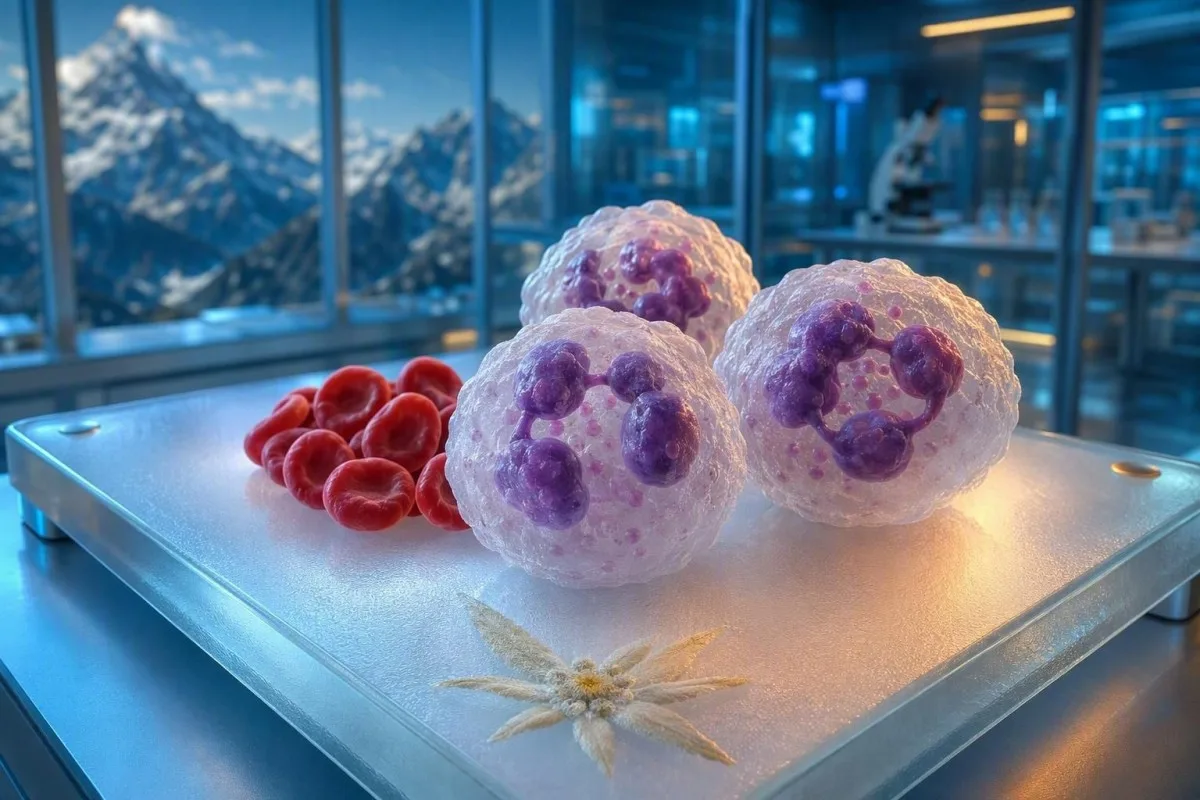
Blago povišen rezultat neutrofila je često privremen, ali apsolutni broj neutrofila, ostatak CBC-a, simptomi i trend određuju da li je potrebna akcija.


- Granični neutrofili obično znači ANC neposredno iznad gornje laboratorijske granice, često oko 7,0-7,5 × 10⁹/L kod odraslih.
- Apsolutni broj neutrofila je informativniji od postotka neutrofila; ANC se izračunava kao WBC × postotak neutrofila ÷ 100.
- Mild neutrophilia ispod 15 × 10⁹/L bez alarmantnih simptoma je često reaktivan i može uslijediti nakon infekcije, pušenja, vježbanja ili liječenja steroidima.
- Ponovite termin je obično 2-6 sedmica nakon oporavka od kratke bolesti, teškog vježbanja, vakcinacije ili promjene lijekova.
- hitna provjera je prikladan za groznicu sa teškom bolešću, otežano disanje, konfuziju, brzo rastuće vrijednosti, blaste, anemiju ili nizak broj trombocita.
- Steroidi i adrenalin mogu povećati cirkulirajuće neutrofile u roku od nekoliko sati pomjeranjem ćelija sa zidova krvnih sudova u mjereni krvni bazen.
- perzistentno povišenje duže od 3 mjeseca, posebno iznad 15-20 × 10⁹/L, zaslužuje kliničku procjenu i često krvni razmaz.
- Trudnoća može normalno povisiti broj neutrofila, posebno u trećem trimestru, tako da referentni rasponi za odrasle koji nisu trudni mogu dovesti u zabludu.
Šta granični rezultat neutrofila zapravo znači
Granični neutrofili obično znače mali porast apsolutnog broja neutrofila (ANC), a ne dijagnozu. Kod većine zdravih odraslih osoba, ANC samo malo iznad laboratorijskog raspona se normalizuje kada prođe privremeni okidač; prvi zadatak je provjeriti apsolutni broj, ukupan broj bijelih krvnih zrnaca i simptome, umjesto da se reagira na istaknuti postotak.
Referentni intervali ANC-a za odrasle obično se kreću od otprilike 1,5 do 7,5 × 10⁹/L, iako gornja granica varira ovisno o analizatoru, porijeklu, statusu trudnoće i lokalnoj laboratorijskoj metodi. Vrijednost od 7,8 × 10⁹/L klinički je vrlo različita od 28 × 10⁹/L, iako obje mogu biti označene kao povišene; pogledajte naš vodič za normalni raspon neutrofila.
The postotak neutrofila može izgledati visok jednostavno zato što su limfociti opali nakon stresa ili izlaganja kortikosteroidima. Na primjer, WBC od 6,0 × 10⁹/L sa 78% neutrofila daje ANC od 4,68 × 10⁹/L, što je normalno uprkos visokom postotku.
Kantesti je AI analizator krvi koji čita CBC diferencijal zajedno sa ukupnim WBC, hemoglobinom, trombocitima i ranijim rezultatima, umjesto da jednu narandžastu zastavicu tretira kao oznaku bolesti. Od 28. augusta 2026., taj pristup prvo posmatranja obrazaca ostaje najsigurniji način tumačenja graničnih rezultata.
Zašto laboratorijske zastavice nisu dijagnoze
Referentni intervali pokrivaju centralnih 95% odabrane populacije, tako da oko 1 od 20 zdravih mjerenja mogu slučajno biti izvan navedenog raspona. Zastavica je poticaj za kontekst, a ne dokaz da nešto nije u redu.
Zašto apsolutni broj neutrofila ima veću važnost od postotka
ANC je broj koji kliničari koriste za procjenu povišenja neutrofila jer kombinuje ukupni WBC sa diferencijalom. Visok postotak neutrofila sa normalnim ANC-om je često proporcionalni pomak, dok visok ANC potvrđuje pravu neutrofiliju.
Formula je jednostavna: ANC = WBC × (% neutrofili + % trakasti oblici) ÷ 100. S WBC 12,0 × 10⁹/L i neutrofilima 75%, ANC iznosi 9,0 × 10⁹/L; ovo je blaga neutrofilija, sama po sebi nije hitno stanje.
Često vidim nepotrebnu anksioznost kada portal prikaže 82% neutrofila, ali ne prikaže jasno izračun. Praktično pravilo dr. Thomasa Kleina je zapisati WBC, ANC, hemoglobin, broj trombocita i bilo koju zastavicu za nezrele granulocite prije nego što odlučite što rezultat znači; naš Vodič za komponente CBC-a pomaže s pojmovima.
WBC iznad 11 × 10⁹/L se obično naziva leukocitoza kod odraslih koji nisu trudni, ali uzrok se ne može zaključiti samo iz tog broja. Riley i Rupert (2015) savjetuju kliničarima da ponove CBC i pregledaju razmaz periferne krvi kada je leukocitoza neobjašnjiva ili perzistentna.
Uobičajeni privremeni uzroci blage neutrofilije
Blaga neutrofilija najčešće odražava privremeni reaktivni proces: nedavna infekcija, fizički stres, pušenje, upala, učinak lijekova ili trudnoća. Ovi uzroci povećavaju cirkulirajuće neutrofile bez nužno značenja da koštana srž proizvodi abnormalne stanice.
Hladnoća, zubna upala, urinarne tegobe, upala kože ili čak prvi dani nakon virusne bolesti mogu povećati ANC u 8-14 × 10⁹/L opsegu. Neutrofili mogu ostati blago povišeni danima nakon što je vrućica nestala jer otpuštanje koštane srži i oporavak tkiva ne prestaju u istom trenutku.
Teška intervalna sesija, maraton, epizoda panike ili akutna bol mogu uzrokovati demarginalizaciju—stanice koje su se prije nalazile uz stijenke krvnih žila ulaze u cirkulirajući uzorak. Ovo povećanje može se dogoditi u roku od nekoliko minuta do sati i jedan je od razloga zašto sportaše molim da izbjegavaju neuobičajeno naporne treninge 24-48 sati prije planiranog CBC-a; naš vodič za vremensko planiranje laboratorijskih pretraga vezanih uz vježbanje objašnjava širi obrazac.
Pušenje je povezano s višim vrijednostima WBC i neutrofila, dok pretilost, kronične bolesti desni i upalne bolesti kože mogu održavati umjereno povećanje. Stoga, značenje blago povišenih neutrofila često se odnosi na izloženost i fiziologiju, a ne na skrivenu bakterijsku infekciju.
Lijekovi, vakcine i životni događaji koji mogu povećati broj neutrofila
Kortikosteroidi, inhalatori beta-agonista, litij i lijekovi koji stimuliraju kolonije mogu povećati neutrofile, ponekad značajno. Nemojte prestati uzimati propisani lijek zbog zastavice na CBC-u; umjesto toga, zabilježite lijek, dozu i vrijeme za kliničara koji pregledava rezultat.
Prednizon i slični glukokortikoidi mogu povećati cirkulirajuće neutrofile unutar 4-6 sati putem demarginalizacije, odgođenog kretanja u tkiva i smanjene eliminacije stanica. Neutrofilija povezana sa steroidima često nema toksične granulacije ili izraženi lijevi pomak koji mogu pratiti tešku bakterijsku infekciju, iako je potreban krvni razmaz za pravilnu procjenu.
Litij može povećati proizvodnju granulocita, dok filgrastim i srodni tretmani namjerno povećavaju broj neutrofila; nedavna operacija, trauma i porođaj također pokreću stresni odgovor. Cjepivo može prolazno promijeniti diferencijalnu krvnu sliku, tako da rutinski test uzet unutar 7–14 dana cijepljenja može biti manje reprezentativan za baznu liniju; pročitajte više o post-vakcinalnim promjenama u laboratorijskim nalazima.
Kantesti je AI platforma za tumačenje krvne slike koji omogućuju ljudima da pohrane kontekst lijekova i bolesti uz rezultat, što je klinički korisnije od usporedbe golih brojeva. Popis lijekova trebao bi uključivati inhalatore, steroidne kreme, injekcije i “prirodne” proizvode—ne samo tablete.
Kada ponoviti CBC za granične neutrofile
Za inače zdravu osobu s blagom izoliranom neutrofilijom, ponavljanje CBC-a s diferencijalnom krvnom slikom za 2-6 tjedana obično je razumno nakon što se vjerojatni okidač povukao. Ponovite testiranje ranije—u roku od nekoliko dana—ako se simptomi pogoršavaju, broj raste, ili je prvobitni rezultat bio izrazito visok.
Odaberite stabilan dan za ponovno vađenje krvi: bez temperature, bez žestokog vježbanja 24-48 sati, uobičajena hidratacija i bez novopokrenutog steroida osim ako ljekar ne odredi drugačije. Post nije općenito potreban za CBC, ali usklađivanje vremena dana i uslova olakšava tumačenje promjena; naše vodič za vremensku liniju krvnih pretraga detalji zašto.
Ako je ANC 7.6-12 × 10⁹/L i sve ostale ćelijske loze su normalne, obično preferiram jedno planirano ponovno provjeravanje umjesto serijskog testiranja svakih nekoliko dana. Ponovno testiranje nakon 4 sedmice može biti dovodljivo u zabludu ako se pacijent još uvijek oporavlja od upale pluća, počeo je uzimati prednizolon, ili se pripremao za izdržljivostni događaj.
Perzistencija je važnija od jednog izolovanog broja. Neutrofilija koja traje duže od 3 mjeseca, bez jasnog reaktivnog objašnjenja, generalno zaslužuje pregled primarne zdravstvene zaštite, manuelni krvni razmaz i ciljano testiranje na osnovu simptoma.
CBC obrasci koji čine porast neutrofila više ili manje zabrinjavajućim
Izolovano blago povećanje ANC-a uz normalan hemoglobin i trombocite je obično manje zabrinjavajuće nego neutrofilija praćena anemijom, trombocitopenijom, trombocitozom ili nezrelim ćelijama. Okolni CBC obrazac daje broju klinički značaj.
Povećan ANC plus visoki trombociti iznad 450 × 10⁹/L, neobjašnjiva anemija, bazofilija ili leukoeritroblastični krvni razmaz povećavaju zabrinutost za proces koštane srži. Nijedna od ovih kombinacija ne dijagnostikuje rak, ali opravdavaju hitan pregled ljekara umjesto neobaveznog ponavljanja za nekoliko mjeseci; pogledajte naš pregled putanja procjene raka krvi.
“Lijevi pomak” znači da su band forme, metamijelociti ili mijelociti prisutni u perifernoj krvi. Mali brojevi se mogu javiti kod jakog reaktivnog stresa, ali perzistentni lijevi pomak zahtijeva pregled krvnog razmaza jer automatski brojači ne uvijek razlikuju benigni oporavak od klonalnog procesa.
Kantesti AI pregleda podgrupe bijelih krvnih zrnaca zajedno sa indeksima crvenih krvnih zrnaca i trendovima trombocita, a zatim označava kombinacije za medicinsko praćenje umjesto da pokušava dijagnosticirati leukemiju na osnovu CBC-a. Ovaj pristup je usklađen sa našim objavljenim principima kliničke validacije.
Infekcija, upala ili stres: čitanje kliničkih znakova
Temperatura, žarišni simptomi i povišen CRP mogu podržati infekciju, ali povećan broj neutrofila sam po sebi ne može razlikovati bakterijsku infekciju od stresa ili upale. Ljekari dijagnostikuju osobu ispred sebe, a ne diferencijalnu krvnu sliku izolovano.
Kod bakterijske upale pluća, pijelonefritisa ili upale slijepog creva, ANC može porasti iznad 15 × 10⁹/L, ali neke teške infekcije imaju normalne ili niske WBC brojeve—posebno kod starijih odraslih osoba ili imunosuprimiranih osoba. Simptomi, vitalni znaci, pregled i kulture često su važniji od toga da li je ANC 11 ili 13.
CRP raste i pada brže od ESR-a, ali nijedan nije specifičan za infekciju. Ako je neutrofilija uparena sa visokim CRP-om, oticanjem zglobova, crijevnim simptomima ili osipom, diferencijalna dijagnoza se proširuje na autoimune i upalne bolesti; naše objašnjenje obrasce visokog ESR-a može pomoći u oblikovanju te rasprave.
Po mom iskustvu, pacijentu s ANC-om 10,5 × 10⁹/L, bez temperature i normalnim CRP-om nakon neprospavane noći u hitnoj pomoći, obično je potreban miran daljnji nadzor, a ne antibiotici. Nasuprot tome, bolesnoj osobi s drhtavicom i ANC-om od 6,5 × 10⁹/L možda je potrebna hitna medicinska pomoć unatoč tehnički normalnom broju.
Trudnoća, dob i lična osnovna vrijednost mijenjaju interpretaciju
Trudnoća često uzrokuje fiziološku neutrofiliju, osobito kasno u gestaciji, a djeci su potrebni rasponi specifični za dob. Referentni interval za odrasle koji nisu trudni ne bi se trebao koristiti za označavanje CBC-a trudnice kao abnormalnog bez konteksta.
Tijekom trudnoće, ukupne vrijednosti WBC-a mogu doseći 12-15 × 10⁹/L i mogu dalje rasti tijekom poroda, uglavnom zbog neutrofila. Povišeni broj bez temperature, osjetljivosti maternice, urinarnih simptoma ili drugih znakova bolesti može biti fiziološki, ali timovi za opstetriciju koriste potpunu kliničku sliku.
Novorođenčad i mala djeca mogu imati broj neutrofila koji bi izgledao nenormalno na nalazu za odrasle, dok starije odrasle osobe mogu pokazati slabiji odgovor bijelih krvnih stanica tijekom infekcije. Interpretirajte djetetov rezultat prema laboratorijskim dobnim skupinama; naš vodič za raspon kod dojenčadi objašnjava zašto usporedbe s odraslima nisu uspješne.
Vaši vlastiti prijašnji CBC nalazi često su najbolji usporedni podaci. Stabilni ANC od oko 7,8 × 10⁹/L tijekom pet godina kod zdrave osobe ima drugačiji profil vjerojatnosti od novog porasta s 3,2 na 12,8 × 10⁹/L.
Pušenje, metabolički faktori i hronična blaga neutrofilija
Pušenje, pretilost i kronične upalne ekspozicije mogu uzrokovati nisku neutrofiliju koja perzistira nakon što se prehlada povukla. Ovi čimbenici i dalje zaslužuju pozornost jer mogu utjecati na zdravlje izvan samog CBC rezultata.
Leukocitoza povezana s pušenjem može uključivati neutrofile, limfocite i monocite, tako da se možda neće manifestirati kao čisti porast neutrofila. Ponavljanje CBC-a 8-12 sedmica nakon prestanka pušenja može biti informativno, iako normalan rezultat nije potreban prije nego što se proslave zdravstvene prednosti prestanka.
Središnja pretilost, apneja u snu i kronična parodontna bolest mogu doprinijeti upalnom signaliziranju i nešto višem broju WBC-a. Ove su povezanosti stvarne, ali nespecifične; ne bi ih trebalo koristiti za zanemarivanje novih simptoma ili brzo rastućeg broja.
Kantesti, a Alat za analizu krvnih nalaza uz pomoć AI-a, može usporediti trenutni diferencijal s nekoliko prethodnih nalaza i prikazati spore promjene koje jedan godišnji rezultat zamagljuje. Za praktično praćenje, zabilježite status pušenja, promjenu težine, nedavne infekcije i izloženost steroidima pored svakog testa u longitudinal lab record.
Kada se brinuti zbog neutrofila i potražiti hitnu pomoć
Hitno potražite ljekarsku pomoć zbog visoke vrijednosti neutrofila uz tešku bolest, groznicu i konfuziju, otežano disanje, bol u grudima, ukočen vrat ili brzo pogoršanje simptoma. Hitnost proizlazi iz moguće infekcije ili sistemske bolesti, a ne samo iz granične ANC vrijednosti.
WBC ili ANC iznad 25-30 × 10⁹/L zaslužuje hitan klinički kontakt, posebno ako je novo, u porastu ili upareno sa nezrelim granulocitima. Vrijednosti iznad 50 × 10⁹/L mogu predstavljati leukemoidnu reakciju ili hematološku bolest i ne treba čekati rutinski godišnji pregled.
Neobjašnjivo noćno znojenje, gubitak težine, ponavljajuće infekcije, lako krvarenje, uvećani limfni čvorovi ili punoća u trbuhu su razlozi za zakazivanje blagovremenog pregleda kod ljekara. Zabrinutost raste kada se simptomi javljaju zajedno sa anemijom, niskim trombocitima, bazofilijom ili abnormalnim ćelijama na upozorenju analizatora.
Ako se ne osjećate dobro nakon putovanja, hemoterapije, transplantacije ili imunosupresivne terapije, postavite niži prag za hitnu procjenu. Naš sepsis-marker guide objašnjava zašto normalno izgledajući laboratorijski nalazi nikada ne isključuju ozbiljnu bolest.
Šta kliničari provjeravaju kada neutrofilija potraje
Perzistentna neobjašnjiva neutrofilija se obično procjenjuje anamnezom, pregledom, ponovljenim CBC-om, razmazom periferne krvi i ciljanim testovima na upalu ili infekciju. Molekularni testovi su rezervisani za obrasce koji sugerišu mijeloproliferativni neoplazam, a ne za svaki blago povišen rezultat.
Ljekar može pitati o pušenju, apneji u snu, hroničnom bolu, simptomima zapaljenske bolesti crijeva, upotrebi steroida, nedavnoj splenektomiji i porodičnim poremećajima krvi. Oni mogu naručiti CRP, ESR, jetrene i bubrežne markere, kulture ili snimanje samo kada anamneza ukazuje u tom pravcu — opsežno testiranje bez kliničkog pitanja često stvara lažne alarme.
Manualni razmaz može identificirati toksične granulacije, promjene Döhle-ovog tijela, lijevi pomak, bazofiliju ili blaste koje automatski diferencijalni brojači mogu nepotpuno označiti. WHO klasifikacija iz 2022. opisuje hroničnu neutrofilnu leukemiju kao rijedak mijeloidni neoplazam koji zahtijeva perzistentnu neutrofiliju i specifične molekularne i morfološke kriterije; ne dijagnostikuje se iz graničnog rezultata (Khoury et al., 2022).
BCR::ABL1 testiranje, JAK2 testiranje ili CSF3R testiranje može razmotriti hematologija u odabranim slučajevima. Ti testovi su značajni kada CBC obrazac i klinički nalazi podržavaju, a ne kao skrining za umirenje za ANC od 8.1 × 10⁹/L.
Šta komentari krvnog razmaza i nezrelih ćelija mogu reći
Komentar na razmaz krvi dodaje morfologiju — izgled i zrelost ćelija — CBC broju. “Toksične promjene” mogu podržati intenzivan reaktivni proces, dok blasti ili perzistentni neobjašnjivi nezreli oblici zahtijevaju brzu specijalističku procjenu.
Band oblici su manje zreli neutrofili, i nekoliko njih se može pojaviti tokom infekcije, operacije ili oporavka koštane srži. Laboratorije se razlikuju u načinu prijavljivanja band oblika, tako da se postotak ne smije direktno upoređivati između sistema bez provjere metode izvještavanja.
Toksične granulacije i citoplazmatske vakuole su deskriptivni nalazi razmaza, a ne dijagnoze. Oni mogu pratiti tešku tkivnu reakciju, ali tumačenje zavisi od kliničkog okruženja, CRP-a i da li postoji lijevi pomak; naš objašnjavač o toksičnoj granulaciji neutrofila pokriva ove termine.
Blasti na nalazu, laboratorijski poziv koji zahtijeva hitnu reviziju uzorka ili novi komentar o “atipičnim ćelijama” treba raspraviti sa ljekarom koji je naručio pregled tog dana. Ovo je jedna situacija gdje čekanje rutinske ponovne provjere nije ispravan potez.
Kako se pripremiti za korisno ponovno testiranje neutrofila
Korisno ponovljeno CBC se uzima kada ste klinički stabilni i uključuje dovoljno konteksta za objašnjenje bilo kojeg preostalog povišenja. Ne možete bezbjedno “sniziti” neutrofile za test, ali možete izbjeći spriječivu buku.
Za planirani nehitni ponovni test, izbjegavajte intenzivni trening 24–48 sati, dođite normalno hidrirani i obavijestite tim za vađenje krvi o dozama steroida, inhalatorima, vakcinama i nedavnim infekcijama. Nemojte preskakati propisane lijekove niti namjerno prekomjerno piti vodu kako biste promijenili laboratorijsku vrijednost.
Koristite istu laboratoriju kada je to praktično jer se referentni intervali i diferencijalne metode specifične za analizator razlikuju. Razlika od 0.5-1.0 × 10⁹/L može odražavati uobičajene biološke i analitičke varijacije, posebno kada su rezultati blizu gornje granice; naš članak o stvarnim u odnosu na nasumične laboratorijske promjene istražuje ovo pitanje.
Ponesite raniji izvještaj ili sačuvajte njegovu fotografiju. Datum febre, kursa antibiotika, primjene steroida ili intenzivnog vježbanja često objašnjava više od jednog dodatnog vađenja krvi.
Sigurna upotreba AI interpretacije uz kliničku njegu
AI može organizovati trend CBC-a i identifikovati pitanja za praćenje, ali ne može procijeniti vitalne znakove, pregledati limfne čvorove ili isključiti hitnu infekciju. Visokokvalitetna interpretacija treba da navede neizvjesnost, prikaže obračun ANC-a i uputi hitne simptome na ljudsku njegu.
Kantesti AI interpretira rezultate neutrofila analizirajući apsolutni broj, ukupne leukocite, druge ćelijske linije, laboratorijski interval i longitudinalnu promjenu. Dizajniran je da pomogne korisnicima da pripreme bolja pitanja za svog kliničara, a ne da zamijeni hitnu procjenu ili propisuje liječenje.
Privatnost je važna kod laboratorijskih nalaza jer CBC može otkriti upotrebu lijekova, promjene povezane s trudnoćom i potencijalne hronične bolesti. Kantesti podržava sigurnu interpretaciju rezultata na više jezika, dok naši ljekari pružaju nadzor putem Medicinski savjetodavni odbor.
Zaključak dr. Thomasa Kleina je jednostavan: mali izolovani porast je obično problem ponovnog testiranja i konteksta, dok je visoki ili rastući ANC u kombinaciji sa simptomima ili drugim abnormalnostima CBC-a problem medicinskog pregleda. Ako se izvještaj čini nekonzistentnim s vašim osjećajem, zatražite od kliničara da pregleda originalni laboratorijski dokument - ne samo snimak ekrana.
Praktičan plan sljedećih koraka za granični rezultat
Većina ljudi s graničnim neutrofilima može slijediti plan u tri koraka: potvrditi ANC, identificirati privremeni okidač i dogovoriti odgovarajuće ponovljeno testiranje. Odmah eskalirajte ako su prisutni simptomi upozorenja ili velike abnormalnosti CBC-a.
Prvo, provjerite da li je označena vrijednost postotak ili ANC, i zabilježite tačnu jedinicu. Drugo, zapišite bolest u prethodnom 2 sedmice, intenzivno vježbanje u prethodna 48 sata, pušenje, status trudnoće, lijekove i vrijeme vakcinacije.
Treće, ako se osjećate dobro i ANC je blago povišen s normalnim hemoglobinom i trombocitima, dogovorite ponovljeni CBC za 2-6 sedmica putem vašeg uobičajenog kliničara. Ako ostane povišen nakon 3 mjeseca ili poraste prema 15 × 10⁹/L, pitajte da li su pregled razmaza i fokusirano ispitivanje prikladni; naš kontrolna lista za drugo mišljenje može pomoći u pripremi posjete.
Za više informacija o tome kako naša metodologija obrađuje trendove i neizvjesnost, pregledajte Vodič kroz AI tehnologiju. Granična oznaka treba da podstakne razumno praćenje, a ne pretragu dijagnoze usred noći.
Često postavljana pitanja
Šta znači blago povišeni neutrofili?
Blago povišeni neutrofili obično znače da je apsolutni broj neutrofila samo iznad gornje granice lokalne laboratorije, često oko 7,5 × 10⁹/L kod odraslih. Nedavna infekcija, vježbanje, pušenje, emocionalni stres, trudnoća i kortikosteroidi su uobičajena objašnjenja. Ako je ANC ispod 15 × 10⁹/L, hemoglobin i trombociti su normalni, a vi se dobro osjećate, ponovljeni CBC za 2-6 sedmica je obično prikladan. Rezultat treba ocijeniti u odnosu na laboratorijski raspon i vaše prethodne CBC nalaze.
Kada treba da brinem zbog visokog broja neutrofila?
Visoki neutrofili zahtijevaju hitnu procjenu kada se pojave sa jakom groznicom, konfuzijom, nedostatkom daha, bolom u grudima, ukočenim vratom, brzo pogoršanjem bolesti ili izrazito visokim brojem. ANC iznad 25-30 × 10⁹/L, posebno ako raste ili je povezan sa nezrelim ćelijama, anemijom ili niskim brojem trombocita, trebao bi potaknuti hitan kontakt sa kliničarem. Blagi izolovani ANC od 8-12 × 10⁹/L kod zdrave osobe je mnogo manje zabrinjavajući. Simptomi i ostatak CBC-a pouzdanije određuju hitnost nego sam procenat.
Koliko dugo neutrofili ostaju povišeni nakon infekcije?
Neutrofili mogu ostati blago povišeni nekoliko dana do nekoliko tjedana nakon poboljšanja infekcije, ovisno o njenoj težini i primijenjenom liječenju. Ponovljeni CBC 2-6 tjedana nakon potpunog oporavka često je informativniji od ponovnog testiranja sljedeći dan. Perzistentno povišenje duže od 3 mjeseca bez očitog uzroka zahtijeva pregled kliničara. Tretman steroidima može produžiti ili oponašati povišeni rezultat povećavanjem cirkulirajućih neutrofila u roku od nekoliko sati.
Može li stres ili vježbanje uzrokovati povišene neutrofile?
Da, akutni emocionalni stres, bol i intenzivno vježbanje mogu privremeno povisiti broj neutrofila demarginalizacijom, gdje se ćelije pomjeraju sa zidova krvnih sudova u cirkulirajući uzorak. Promjena se može dogoditi u roku od nekoliko minuta do sati i često se normalizuje u roku od 24-48 sati nakon što stresor prestane. Izbjegavanje neuobičajeno teškog vježbanja 24-48 sati prije planiranog ponovljenog CBC-a može smanjiti ovaj izvor varijacije. Ovaj efekat ne znači da je vježbanje štetno ili da je prisutna infekcija.
Da li je visok procenat neutrofila isto što i visok ANC?
Ne, visok postotak neutrofila nije nužno visok broj neutrofila. ANC je jednak ukupnom WBC pomnoženom s postotkom neutrofila podijeljenim sa 100, tako da WBC od 6.0 × 10⁹/L sa 78% neutrofila daje normalan ANC od 4.68 × 10⁹/L. Nizak postotak limfocita može učiniti da postotak neutrofila izgleda visok čak i kada je apsolutni broj neutrofila normalan. Kliničari općenito koriste ANC za određivanje prave neutrofilije.
Može li rak uzrokovati povišenje neutrofila?
Neke krvne maligne bolesti i solidni tumori mogu uzrokovati neutrofiliju, ali oni su neuobičajena objašnjenja za pojedinačni granični rezultat. Zabrinutost raste kada je neutrofilija uporna i praćena anemijom, abnormalnostima trombocita, bazofilijom, abnormalnim nezrelim ćelijama, povećanom slezinom, noćnim znojenjem ili nenamjernim gubitkom težine. WHO klasifikacija iz 2022. godine zahtijeva specifične kliničke, nalaze krvnog razmaza i molekularne nalaze za dijagnozu mijeloidnih neoplazmi. Blago izolirano povišenje ANC-a ne dijagnostikuje rak.
Nabavite analizu krvne slike uz AI već danas
Pridružite se više od 2 miliona korisnika širom svijeta koji vjeruju Kantesti-u za trenutnu i tačnu analizu laboratorijskih testova. Otpremite svoje rezultate krvne slike i dobijte sveobuhvatno tumačenje 15,000+ biomarkera za nekoliko sekundi.
📚 Referisane naučne publikacije
Klein, T., Mitchell, S., & Weber, H. (2026). Kantesti LTD. (2026). Serum Proteins Guide: Globulins, Albumin & A/G Ratio Blood Test. Zenodo. Dostupno putem DOI; srodni profili autora mogu se pretraživati putem ResearchGate i Academia.edu.. Kantesti AI Medical Research.
Klein, T., Mitchell, S., & Weber, H. (2026). Kantesti LTD. (2026). C3 C4 Complement Blood Test & ANA Titer Guide. Zenodo. Dostupno putem DOI; srodni profili autora mogu se pretraživati putem ResearchGate i Academia.edu.. Kantesti AI Medical Research.
📖 Eksterne medicinske reference
Riley LK, Rupert J (2015). Procjena pacijenata s leukocitozom. American Family Physician.
⚕️ Medicinska izjava o odricanju odgovornosti
Ovaj članak je samo u edukativne svrhe i ne predstavlja medicinski savjet. Za odluke o dijagnozi i liječenju uvijek se posavjetujte s kvalifikovanim zdravstvenim radnikom.
E-E-A-T signal(i) povjerenja
Iskustvo
Klinička revizija radnih tokova tumačenja laboratorijskih nalaza koju vodi ljekar.
Stručnost
Fokus laboratorijske medicine na to kako se biomarkeri ponašaju u kliničkom kontekstu.
Autoritativnost
Napisao dr. Thomas Klein, uz recenziju dr. Sarah Mitchell i prof. dr. Hans Weber.
Pouzdanost
Tumačenje zasnovano na dokazima, s jasnim sljedećim koracima kako bi se smanjila uzbuna.