
Most healthy women aged 20 to 29 do not need a broad annual blood panel. The right blood test depends on symptoms, pregnancy possibility, sexual exposure, medicines, menstrual bleeding, family history, and conditions such as diabetes or thyroid disease.

Key takeaways
- Routine prevention does not usually require a yearly CBC, thyroid panel, vitamin panel, or hormone panel when you feel well and have no risk factors.
- CBC checks hemoglobin, white cellular elements, platelets, and red-cell indices; a hemoglobin below 12.0 g/dL in a nonpregnant adult woman generally meets the anemia definition.
- Ferritin below 30 ng/mL commonly indicates depleted iron stores even when hemoglobin remains normal, although inflammation can make ferritin appear falsely reassuring.
- Thyroid testing usually starts with TSH; a typical adult reference interval is about 0.4–4.0 mIU/L, but each laboratory sets its own range.
- Pregnancy testing uses hCG; many laboratories interpret serum hCG below 5 IU/L as negative and 25 IU/L or higher as positive, with repeat testing for uncertain results.
- STI screening may require blood tests for HIV, syphilis, or hepatitis, while chlamydia and gonorrhea are usually detected with a NAAT from urine or a site-specific swab.
- Metabolic screening is risk-based: HbA1c of 5.7%–6.4% indicates prediabetes, while LDL cholesterol of 190 mg/dL or higher warrants evaluation regardless of age.
- Unnecessary panels can create false positives; order a test when the result is likely to change treatment, follow-up, pregnancy care, or risk assessment.
Which routine labs are useful in your 20s?
For most healthy women aged 20–29, routine blood testing is selective rather than automatic: there is no universally recommended annual panel containing CBC, ferritin, thyroid markers, vitamins, hormones, and inflammation tests. A blood test for women in their 20s is most useful when a symptom, exposure, medication, pregnancy possibility, or inherited risk creates a clear clinical question.
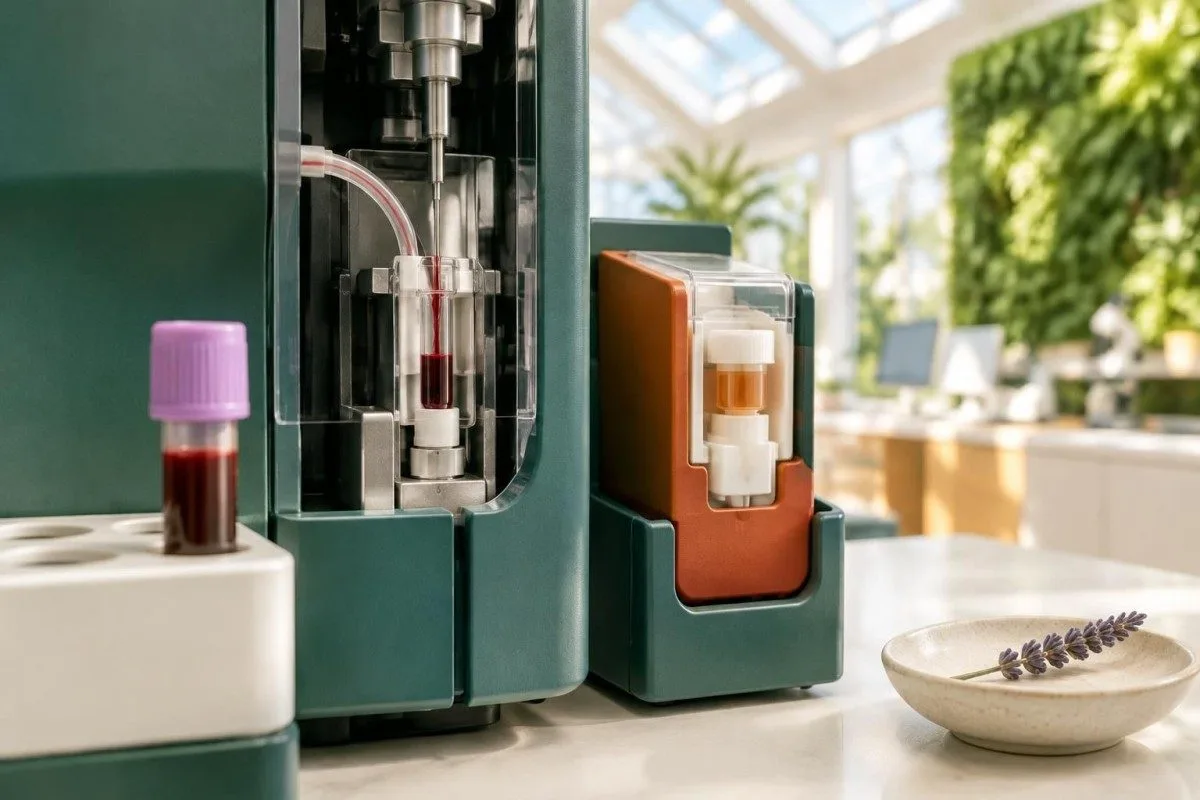
The most useful preventive checks in the 20s often include blood pressure, vaccination review, mental-health assessment, cervical screening when age-appropriate, and sexual-health screening rather than a large blood panel. A routine CBC, thyroid panel, or vitamin D test in an entirely well person may find a borderline result without proving that treatment will improve health.
A practical starting point is a personal risk inventory: heavy or prolonged periods, vegetarian or vegan eating, pregnancy possibility, family history of early heart disease, obesity, diabetes risk, thyroid disease, kidney disease, or medicines that require monitoring. The annual blood work guide explains why a symptom-free person may need fewer tests than a person taking regular medication.
Reference intervals are statistical, not guarantees of health. A result inside a range can still matter when symptoms are strong, while a result just outside the range may reflect dehydration, recent illness, timing, or ordinary biological variation; reviewing the biomarker reference guide can help identify which results deserve context rather than alarm.
A test is worthwhile when it answers a decision
A useful laboratory question has three parts: what problem is being considered, what result would change the next step, and when would the result be repeated. For example, checking ferritin for heavy menstrual bleeding can guide iron treatment, whereas ordering 40 unrelated markers may produce several mildly abnormal findings that do not explain the symptom.
CBC and ferritin: the most useful pair for fatigue and heavy periods
A CBC identifies anemia and blood-cell patterns, while ferritin estimates stored iron; together they are more informative for suspected iron deficiency than hemoglobin alone. Hemoglobin below 12.0 g/dL generally indicates anemia in a nonpregnant adult woman, and ferritin below 30 ng/mL often indicates low iron stores before anemia develops.
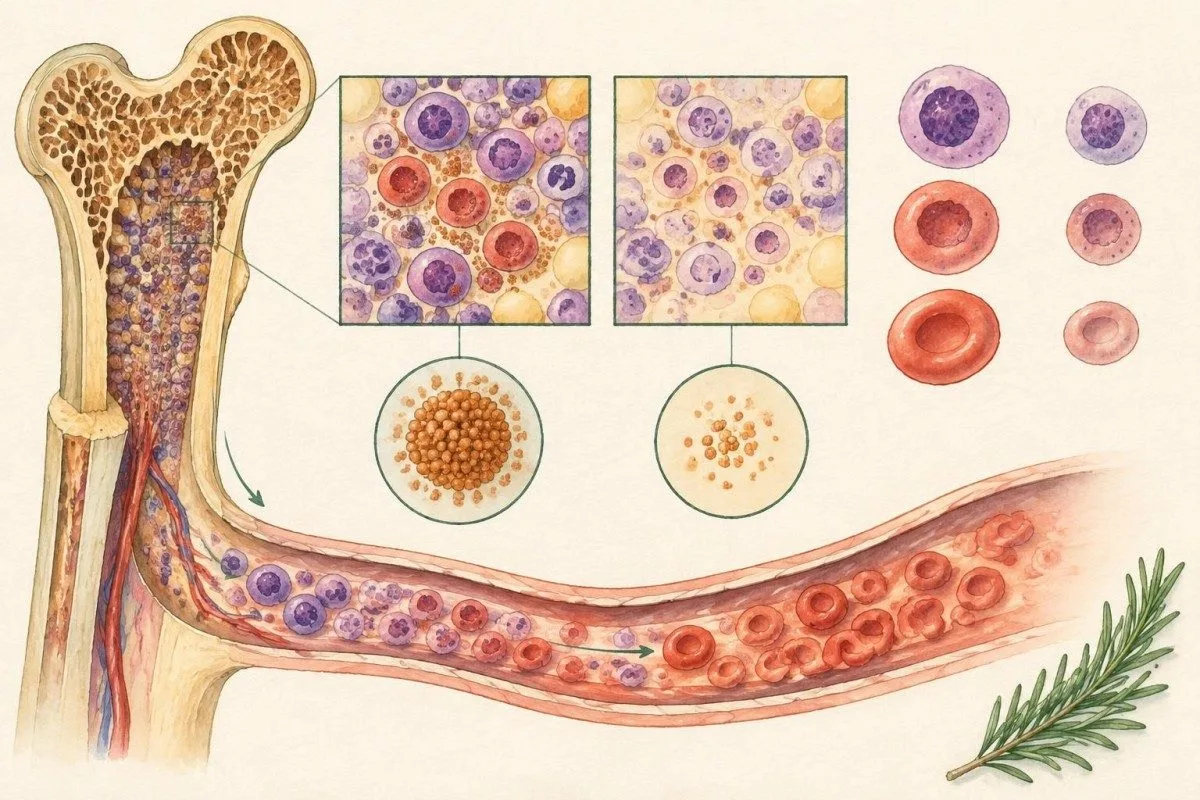
The CBC reports hemoglobin, hematocrit, mean corpuscular volume, mean corpuscular hemoglobin, red-cell distribution width, white-cell counts, and platelets. A typical adult female hemoglobin interval is approximately 12.0–16.0 g/dL, but a low MCV below about 80 fL suggests small red cells and makes iron deficiency or a hemoglobin trait more likely.
Ferritin below 15 ng/mL is strongly consistent with depleted iron stores, while ferritin between 15 and 30 ng/mL can still be clinically meaningful when fatigue, hair shedding, restless legs, or heavy periods are present. Ferritin rises during infection or inflammation, so a result of 50 ng/mL does not always exclude iron deficiency; the WHO ferritin guideline recommends interpreting ferritin alongside inflammation markers when inflammatory disease is possible (World Health Organization, 2020).
A normal hemoglobin does not prove normal iron status. A hypothetical 24-year-old with hemoglobin 12.6 g/dL, MCV 82 fL, and ferritin 18 ng/mL may have early iron depletion rather than an entirely normal result, especially if menstrual bleeding lasts 8 days; the low-ferritin symptom guide describes this pre-anemia pattern.
| Level | Range | What it means |
|---|---|---|
| Often adequate stores | Ferritin about 30–150 ng/mL | Iron stores are usually adequate, but inflammation and symptoms still affect interpretation. |
| Borderline or context-dependent | Ferritin 150–300 ng/mL | May reflect inflammation, liver effects, iron supplementation, or metabolic factors rather than iron overload. |
| Low stores | Ferritin 15–29 ng/mL | Often indicates depleted stores, particularly with heavy periods or low iron intake. |
| Marked depletion | Ferritin <15 ng/mL | Strongly supports iron deficiency and needs evaluation for blood loss, intake, absorption, and treatment. |
When ferritin needs an iron panel
Transferrin saturation below 20% supports iron-restricted production, but serum iron changes substantially with meals and time of day. If ferritin is confusing, an iron panel containing transferrin or total iron-binding capacity can clarify the pattern; the iron studies guide explains why one iron result should not be interpreted alone.
Heavy menstrual bleeding, gastrointestinal symptoms, restrictive eating, frequent endurance exercise, and recent blood donation can all lower iron stores. A heavy-periods assessment is more useful than simply taking iron indefinitely, because supplementation does not address fibroids, bleeding disorders, or gastrointestinal blood loss.
Which thyroid blood tests should women in their 20s get?
TSH is usually the first thyroid blood test for symptoms such as cold intolerance, constipation, tremor, unexplained weight change, palpitations, or persistent fatigue. A typical adult TSH reference interval is about 0.4–4.0 mIU/L, while free T4 commonly falls near 0.8–1.8 ng/dL, although laboratory methods and pregnancy ranges differ.
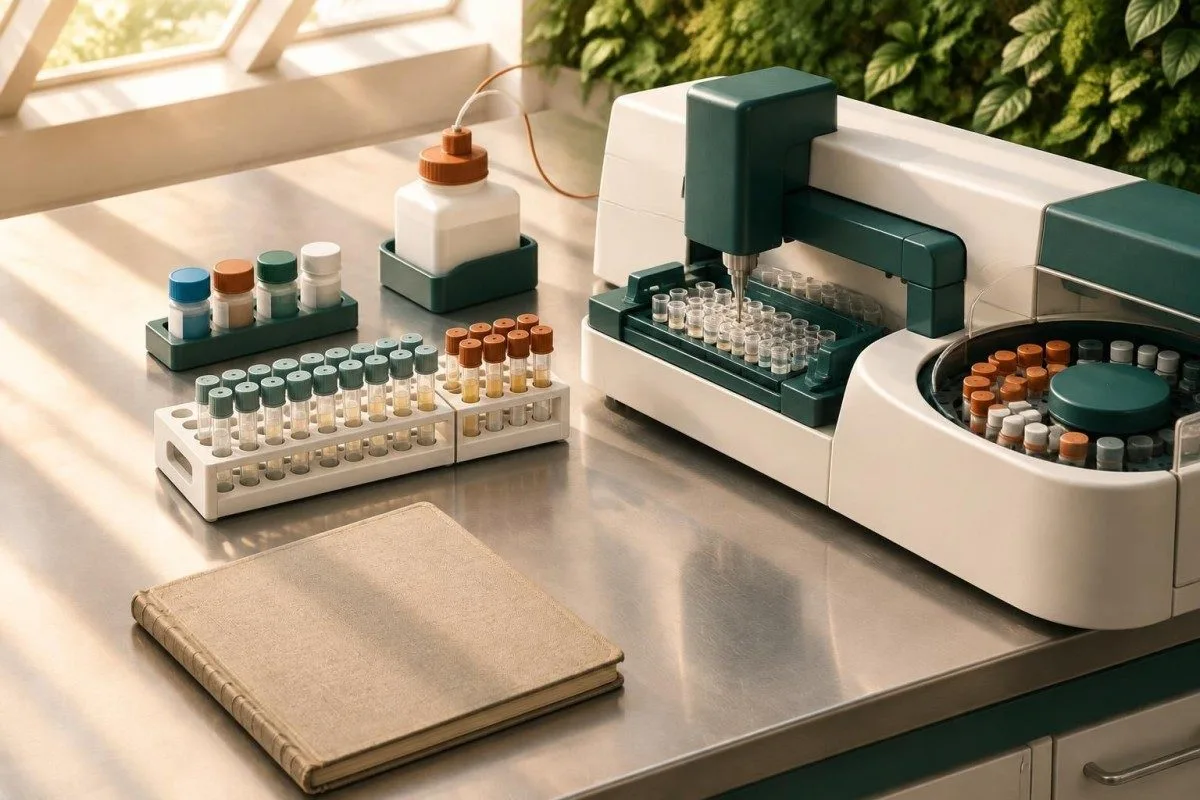
A raised TSH with low free T4 supports primary hypothyroidism, whereas a low TSH with high free T4 supports hyperthyroidism. A mildly abnormal TSH between roughly 4.0 and 10.0 mIU/L with normal free T4 is called subclinical hypothyroidism, and treatment depends on symptoms, pregnancy plans, thyroid antibodies, age, and repeat results.
Free T3 is not usually the best first test for suspected hypothyroidism because it can remain normal while thyroid hormone production is already insufficient. The T4 explanation clarifies why TSH, free T4, and T3 answer different clinical questions rather than forming one interchangeable hormone panel.
A hypothetical 27-year-old with TSH 6.2 mIU/L, normal free T4, and no symptoms should not automatically start treatment from one result. Repeating TSH, reviewing biotin and medicines, and considering thyroid peroxidase antibodies may be more appropriate; the subclinical hypothyroidism guide discusses why clinicians may reasonably disagree about the next step.
When thyroid antibodies add value
Thyroid peroxidase antibodies are most useful when TSH is persistently abnormal, autoimmune thyroid disease is suspected, or pregnancy planning makes risk assessment important. Ordering TPO antibodies for every person with fatigue is less helpful because a positive antibody result predicts immune activity but does not by itself prove that symptoms are caused by thyroid dysfunction.
When is a pregnancy blood test useful?
A pregnancy blood test measures human chorionic gonadotropin, or hCG, and is useful when a period is late, symptoms suggest pregnancy, contraception failed, or a medicine or procedure requires pregnancy status. Many laboratories classify serum hCG below 5 IU/L as negative, 5–25 IU/L as uncertain, and 25 IU/L or higher as positive.

Serum hCG can become detectable roughly 8–10 days after ovulation, but testing too early can produce a negative result despite an early pregnancy. A urine test is often adequate around the first day of a missed period, while quantitative serum hCG is more useful when timing is uncertain, symptoms are concerning, or a clinician needs to follow a changing value.
An hCG result of 12 IU/L is not automatically reassuring or diagnostic; repeating it after about 48 hours may show whether the level is rising, falling, or remaining indeterminate. Early pregnancy values vary widely, and the old idea that every viable pregnancy must exactly double in 48 hours is too rigid for clinical decision-making.
Pregnancy status can change the interpretation of thyroid tests, ferritin, medication safety, and imaging choices. After a pregnancy loss, hCG may remain detectable for weeks, so the beta-hCG follow-up guide explains why a single positive result does not establish a new pregnancy.
Do routine fertility hormone panels help?
FSH, LH, estradiol, progesterone, prolactin, and anti-Müllerian hormone are not general wellness tests for every woman in her 20s. Their usefulness depends on the question, cycle day, contraception, pregnancy status, and fertility history; a random hormone panel can look abnormal simply because hormone concentrations change throughout the menstrual cycle.
Which STI screening tests require blood?
Blood-based STI screening commonly includes HIV, syphilis, hepatitis B, and hepatitis C testing, while chlamydia and gonorrhea are usually detected with a nucleic acid amplification test from urine or a swab of the exposed site. Sexually active women younger than 25 are routinely recommended for annual chlamydia and gonorrhea screening by the USPSTF, with risk-based testing at older ages (USPSTF, 2021).
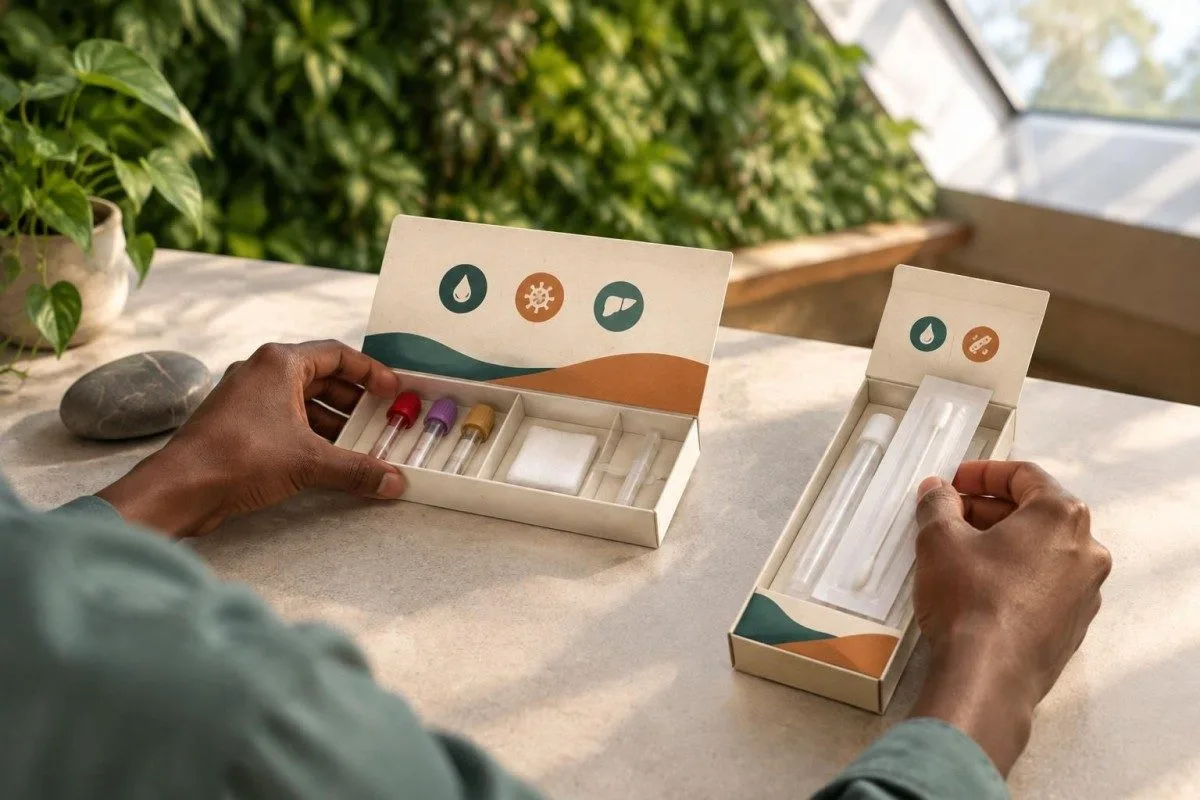
A laboratory HIV antigen-antibody test usually detects infection 18–45 days after exposure, while an HIV nucleic acid test may detect it about 10–33 days after exposure. A negative result before the relevant window period does not reliably exclude infection, so the testing date and exposure date belong in the same clinical conversation.
Syphilis screening generally starts with a treponemal or nontreponemal blood test, followed by a complementary assay when the first result is reactive. Hepatitis B testing is best understood as a panel containing surface antigen, surface antibody, and core antibody, because one marker cannot distinguish active infection from immunity or past exposure.
Chlamydia and gonorrhea are not reliably ruled out by a routine blood panel; a urine or vaginal NAAT is usually the correct test, and throat or rectal exposure may require site-specific sampling. The chlamydia NAAT guide explains why a negative test from one body site does not automatically assess another.
The CDC STI guideline advises against routine type-specific herpes blood testing in asymptomatic people because false-positive results and uncertain interpretation can cause harm (Workowski et al., 2021). A positive HSV-2 antibody index near the assay cutoff may need confirmation rather than an immediate lifelong diagnosis; gonorrhea retesting information covers situations where site and timing alter follow-up.
When HIV screening should be repeated
The USPSTF recommends HIV screening for adolescents and adults aged 15–65, with repeat testing based on ongoing exposure risk, pregnancy, local prevalence, or a new sexual partner. A person with a recent high-risk exposure should seek urgent clinical advice about post-exposure prophylaxis rather than waiting for a routine test result; HIV viral-load terminology is mainly relevant after diagnosis, not for initial screening.
Should women in their 20s check cholesterol and blood sugar?
Cholesterol and glucose testing in the 20s is risk-based, not a requirement for every healthy person each year. An LDL cholesterol of 190 mg/dL or higher is considered severe elevation, while HbA1c of 5.7%–6.4% indicates prediabetes and 6.5% or higher suggests diabetes when confirmed appropriately.

The ACC/AHA approach commonly assesses traditional cardiovascular risk factors every 4–6 years in adults aged 20–39, with earlier or more frequent testing when family history, obesity, diabetes, hypertension, smoking, kidney disease, or inflammatory disease is present. LDL cholesterol below 100 mg/dL is often described as optimal, but treatment decisions depend on the whole risk pattern rather than one isolated number.
A family history of a parent or sibling with premature cardiovascular disease can justify earlier lipid testing, and an LDL result of 160–189 mg/dL deserves more attention in a young adult than the same mild elevation might receive in an older low-risk context. Lipoprotein(a) is often measured once in adulthood when inherited risk is suspected, but repeating it every year rarely adds value.
HbA1c reflects roughly 2–3 months of average glucose and does not require fasting, but iron-deficiency anemia can distort the result. A hypothetical woman with ferritin 9 ng/mL and HbA1c 5.8% may need iron deficiency addressed before interpreting a borderline HbA1c as definite prediabetes; the borderline triglyceride guide explains why recent meals and metabolic context matter.
Which wellness panels are usually low value?
Fasting insulin, reverse T3, cortisol, broad food-antibody panels, and multiple sex hormones are not standard screening tests for an asymptomatic woman in her 20s. A test becomes more defensible when a defined symptom or diagnosis gives the result a decision threshold, such as glucose testing for polyuria or a lipid panel for a strong family history.
Which blood tests match common symptoms?
Symptoms should determine the laboratory plan: fatigue often starts with CBC, ferritin, TSH, pregnancy testing when relevant, and targeted tests for diet or disease; irregular periods may require pregnancy testing, prolactin, TSH, and androgen assessment; hair loss may need ferritin and thyroid testing. A symptom-led panel is safer than ordering every available hormone or vitamin.
For persistent fatigue, CBC and ferritin are reasonable first-line tests when menstrual loss or dietary restriction is possible, while TSH becomes more useful when temperature sensitivity, bowel change, tremor, or weight change accompanies fatigue. Vitamin B12 is more relevant with vegan eating, malabsorption, neurological symptoms, or certain medicines; a borderline B12 result may need methylmalonic acid rather than automatic injections.
Irregular periods require a pregnancy test before many other investigations because pregnancy changes both symptoms and treatment safety. Depending on the pattern, clinicians may add TSH, prolactin, total testosterone, free testosterone or SHBG, and 17-hydroxyprogesterone; the PCOS testing guide explains why diagnosis uses symptoms and clinical findings, not one hormone value.
Mood changes, poor concentration, or low motivation do not automatically indicate a thyroid problem or vitamin deficiency. A CBC, ferritin, TSH, pregnancy test, medication review, sleep assessment, and mental-health evaluation may be more informative than a commercial hormone panel; the low-mood blood-test guide discusses how common medical mimics are assessed without overtesting.
A normal test does not invalidate a symptom. For example, a 22-year-old with severe fatigue, hemoglobin 13.1 g/dL, ferritin 11 ng/mL, and TSH 1.8 mIU/L has no anemia or obvious thyroid abnormality, yet depleted iron stores may still deserve evaluation alongside sleep, nutrition, mood, and bleeding history.
Why broad hormone panels can mislead
Hormone concentrations vary with cycle phase, contraception, illness, sleep, and time of day, so a single result may not represent a stable baseline. Testing testosterone, estradiol, progesterone, FSH, LH, and cortisol together without a defined question increases the chance of a confusing abnormality; the hormone testing guide after stopping the pill describes why timing matters.
How should you prepare for and interpret these tests?
Preparation depends on the test: CBC, ferritin, TSH, hCG, HIV testing, and most STI blood tests usually do not require fasting, whereas some lipid or glucose orders may specify 8–12 hours without food. The result should be interpreted using the reporting laboratory’s interval, recent symptoms, medicines, cycle timing, and whether the test was taken during acute illness.
Water is generally acceptable during a fasting period, while alcohol, intense exercise, and a large fatty meal can affect selected results. Do not stop prescribed medicines without advice, and tell the laboratory about supplements; high-dose biotin can interfere with some thyroid and hormone immunoassays, so many clinicians recommend stopping it 48 hours before testing when medically safe.
Menstrual timing matters for reproductive hormones but usually does not prevent CBC or ferritin testing. Ferritin can rise during inflammation, and a blood test taken during a fever may not reflect the usual baseline; repeating a surprising result after recovery can be more informative than ordering five additional markers immediately.
A result should be judged against both a reference interval and a clinical decision threshold. For example, a TSH of 4.2 mIU/L may be flagged by one laboratory and accepted by another, while hCG thresholds such as 5 IU/L and 25 IU/L are commonly used decision points; the fasting instructions guide explains why orders differ.
Keeping results from several dates side by side can reveal whether ferritin is rising, TSH is stable, or an isolated abnormality was temporary. Methodology and clinical review standards also matter, which is why readers may find the medical validation information and medical content standards useful when assessing how health information is produced.
When an abnormal result needs prompt care
Seek urgent care for severe shortness of breath, fainting, chest pain, heavy uncontrolled bleeding, confusion, or severe one-sided pelvic pain, regardless of whether a blood result looks normal. A laboratory report cannot rule out every emergency, and a normal hemoglobin, negative early pregnancy test, or normal white-cell count should not delay assessment when symptoms are severe.
Frequently asked questions
What blood tests should a healthy woman in her 20s get?
A healthy woman in her 20s usually does not need a routine annual panel containing CBC, ferritin, thyroid hormones, vitamins, and reproductive hormones. Testing should match a risk or decision, such as CBC and ferritin for heavy periods, TSH for thyroid symptoms, hCG for possible pregnancy, or HIV and STI testing after sexual exposure. Risk-based glucose and lipid testing may be appropriate, particularly with obesity, diabetes risk, or a family history of premature cardiovascular disease.
Should women in their 20s have a CBC and ferritin test every year?
Women in their 20s do not automatically need annual CBC and ferritin testing if they feel well, have regular light periods, and have no nutritional or medical risk factors. A CBC hemoglobin below 12.0 g/dL generally indicates anemia in a nonpregnant adult woman, while ferritin below 30 ng/mL often indicates low iron stores before anemia develops. Testing is more useful with heavy menstrual bleeding, fatigue, restless legs, restrictive eating, endurance training, or previous iron deficiency.
Is thyroid testing recommended for everyone in their 20s?
Thyroid testing is not universally required for every asymptomatic woman in her 20s, but TSH is appropriate when symptoms or risk factors raise suspicion. A typical adult TSH reference interval is about 0.4–4.0 mIU/L, and free T4 is commonly about 0.8–1.8 ng/dL, although laboratory ranges differ. A mildly high TSH with normal free T4 usually requires context and often repeat testing rather than automatic treatment.
When should I get a blood pregnancy test?
A blood pregnancy test is useful when a period is late, pregnancy symptoms occur, contraception failed, or a medication or procedure requires confirmation. Many laboratories interpret serum hCG below 5 IU/L as negative and 25 IU/L or higher as positive, while 5–25 IU/L is commonly considered indeterminate. Testing too early can be falsely negative, so repeating hCG after about 48 hours may clarify an uncertain result.
Which STI tests are blood tests?
Blood tests commonly screen for HIV, syphilis, hepatitis B, and hepatitis C, while chlamydia and gonorrhea are usually tested with a urine or site-specific NAAT. A laboratory HIV antigen-antibody test typically detects infection 18–45 days after exposure, so testing inside that window may miss a recent infection. Sexually active women younger than 25 are generally recommended to receive annual chlamydia and gonorrhea screening, with additional testing based on exposure and symptoms.
Are broad hormone and vitamin panels useful for fatigue?
Broad hormone and vitamin panels are usually not the best first test for fatigue because hormone levels vary with cycle phase, contraception, time of day, and illness. CBC, ferritin, TSH, pregnancy testing when relevant, and targeted vitamin B12 or metabolic testing are more defensible when symptoms or risk factors support them. Ferritin below 30 ng/mL may indicate iron depletion even when hemoglobin is at least 12.0 g/dL.
Get your blood test results explained
Upload your lab report and Kantesti's AI explains each biomarker in plain language within seconds. Used by more than 2 million people worldwide.
References
- Klein, T., Mitchell, S., & Weber, H. (2026). Clinical Validation Framework v2.0 (Medical Validation Page). Kantesti AI Medical Research. DOI
- Klein, T., Mitchell, S., & Weber, H. (2026). AI Blood Test Analyzer: 2.5M Tests Analyzed | Global Health Report 2026. Kantesti AI Medical Research. DOI
- World Health Organization (2020). WHO guideline on use of ferritin concentrations to assess iron status in individuals and populations. World Health Organization.
- USPSTF (2021). Screening for Chlamydia and Gonorrhea: US Preventive Services Task Force Recommendation Statement. JAMA. DOI PubMed
- Workowski KA et al. (2021). Sexually Transmitted Infections Treatment Guidelines, 2021. MMWR Recommendations and Reports. DOI PubMed
- 2M+Tests analysed
- 127+Countries
- 100+Languages
About the medical team


E-E-A-T Trust Signals
Experience
Physician-led clinical review of lab interpretation workflows.
Expertise
Laboratory medicine focus on how biomarkers behave in clinical context.
Authoritativeness
Medically reviewed by Dr. Thomas Klein, with contributions from Dr. Sarah Mitchell and Prof. Dr. Hans Weber.
Trustworthiness
Evidence-based interpretation with clear follow-up pathways to reduce alarm.





Medical disclaimer
This article is for educational purposes only and does not constitute medical advice. Always consult a qualified healthcare provider for diagnosis and treatment decisions.
Published · Contact the editorial team
Published by Kantesti Ltd, registered in England & Wales, company no. 17090423, London, United Kingdom.
