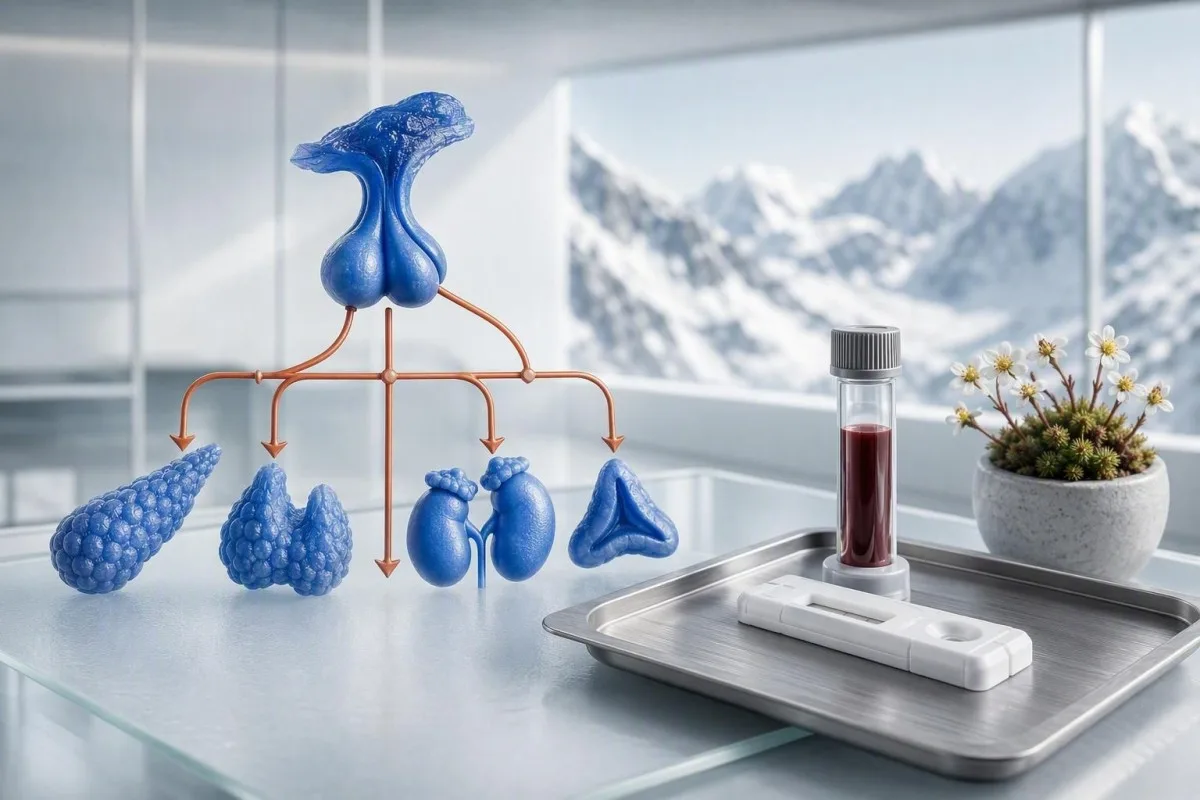
A missed or irregular period after stopping hormonal contraception is often temporary, but the timing of hormone tests determines whether a result is useful or misleading.


- First test: Take a urine or serum pregnancy test whenever a period is late after stopping the pill; ovulation can return before the first bleed.
- Wait period: For most androgen and gonadotropin testing, wait at least 8 weeks off combined hormonal contraception unless symptoms require earlier care.
- Thyroid screen: A TSH above the laboratory upper limit, especially with low free T4, can explain irregular or absent periods and deserves clinical review.
- Prolactin: A prolactin result above the lab range should usually be repeated fasting, rested, and at least 1 hour after waking before escalation.
- Ovulation check: Progesterone should be measured about 7 days before the expected next period, not automatically on cycle day 21.
- PCOS clue: Persistent cycles longer than 35 days plus biochemical or clinical androgen excess warrants a PCOS-focused assessment.
- Ovarian reserve: AMH can inform fertility planning, but it does not diagnose the cause of a missed period and is not a test of current ovulation.
- Urgent symptoms: Severe pelvic pain, fainting, positive pregnancy test with bleeding, new visual symptoms, or a severe sudden headache require prompt in-person care.
Which blood tests are most useful after stopping hormonal contraception?
Blood tests for hormonal imbalance after the pill should begin with pregnancy testing, TSH, prolactin, and cycle-targeted reproductive hormones—not an indiscriminate panel on the first day off contraception. Most people regain ovulation within weeks, while a pattern of no period for 3 months, cycles repeatedly longer than 35 days, or new androgenic symptoms deserves evaluation.
The practical starting set is serum hCG, TSH with free T4 when indicated, prolactin, FSH, estradiol, and targeted testosterone testing. In my practice, the most costly mistake is ordering progesterone, LH, and estradiol on a random day and treating one low value as a diagnosis; these hormones are supposed to move substantially across a normal cycle.
Kantesti is an AI blood test analyzer that reads hormone values alongside collection date, cycle day, medicines, and reference intervals rather than treating a flagged result as a verdict. Dr. Thomas Klein’s clinical rule is simple: record the last active pill, last withdrawal bleed, any unprotected sex, and the exact sampling time before interpreting a post-pill panel.
If irregularity persists, a focused pathway is more informative than repeating every hormone monthly. The PCOS testing timeline is particularly useful when acne, scalp-hair thinning, or coarse facial hair accompanies long cycles; the combination changes the differential diagnosis.
What counts as delayed recovery?
A single late period in the first 1 to 3 months is common and does not by itself prove a hormonal disorder. Secondary amenorrhea means no spontaneous menstruation for 3 months in someone previously regular, or 6 months in someone previously irregular, and that threshold is a sensible point for a structured assessment.
Why hormone results can mislead soon after the pill
Combined pills suppress FSH, LH, ovarian estradiol production, and circulating free testosterone while raising SHBG, so tests drawn during use or immediately after stopping may not represent baseline physiology. A withdrawal bleed is medication-related endometrial shedding; it does not confirm that ovulation has restarted.
Ethinylestradiol-containing pills increase sex hormone-binding globulin (SHBG), sometimes well above the local upper reference limit, which lowers calculated free testosterone even when total testosterone appears ordinary. SHBG often drifts down over several weeks, although the pace varies with formulation, body weight, thyroid status, and liver function; see our explanation of estrogen results while on contraception.
Progestin-only pills, implants, injections, patches, rings, and hormonal intrauterine systems do not affect every marker in the same way. Depot medroxyprogesterone is the outlier: ovulation can remain delayed for many months after the last injection, so an early low estradiol or low gonadotropin result may reflect residual pharmacologic effect rather than pituitary disease.
The evidence is honestly mixed on one universal washout period. For a non-urgent androgen or PCOS work-up, I generally prefer 8 to 12 weeks off combined hormonal contraception; Teede et al. (2023) similarly advise that biochemical hyperandrogenism is difficult to assess reliably while hormonal contraception is influencing SHBG and androgen production.
Why pregnancy testing comes before every hormone panel
A serum or urine hCG test is the first laboratory test for a late period after stopping the pill because pregnancy can occur before the first natural period. A negative result is generally reliable from the day a period is expected, but timing relative to sex still matters.
A sensitive urine test is usually accurate 14 days after intercourse and most reliable 21 days after intercourse if cycle timing is unknown. Quantitative serum hCG detects smaller concentrations earlier, but a very early negative serum result can still require repetition in 48 to 72 hours when pregnancy remains plausible.
An hCG value below 5 IU/L is generally interpreted as negative by most laboratories, while values from 5 to 25 IU/L are often treated as indeterminate and repeated. A positive test plus one-sided pelvic pain, shoulder-tip pain, dizziness, or bleeding is not a hormone-panel problem—it needs urgent assessment for ectopic pregnancy.
Home tests are not inferior simply because they are home tests; dilution and testing too early are the usual reasons for false reassurance. Our guide to early pregnancy test timing explains why a first-morning sample can help when hCG is still near the detection threshold.
The core blood tests for persistent post-pill irregular periods
For persistent irregular periods after stopping the pill, the highest-yield blood tests are TSH, prolactin, FSH, estradiol, and testosterone with SHBG; add 17-hydroxyprogesterone only when androgen excess is suspected. These tests identify common endocrine mimics before a clinician labels the pattern PCOS or “post-pill syndrome.”
TSH is typically about 0.4 to 4.0 mIU/L, though the reporting range is assay-specific; an elevated TSH with low free T4 supports primary hypothyroidism, which can produce infrequent or heavy periods. A normal TSH makes overt thyroid dysfunction less likely but does not explain every symptom such as fatigue or hair shedding.
A typical early-follicular assessment uses FSH and estradiol collected on cycle days 2 to 5, if cycles are occurring. FSH is not interpreted alone: a high estradiol concentration can suppress FSH and hide a reduced ovarian response, which is why the pair must be read together.
Kantesti is an AI blood test interpretation platform that compares each reported value with the laboratory method and the clinical reason for testing. Readers can use our biomarker reference guide to distinguish total from free hormone measurements, but diagnosis still requires a clinician who can examine the whole history.
Tests not routinely needed first
Random cortisol, reverse T3, broad food-sensitivity panels, and serial LH/FSH ratios usually add noise in an uncomplicated first evaluation. A targeted test earns its place when the symptom pattern points to a specific disorder, not because it appears on a commercial “female hormone” bundle.
When to test FSH, LH, and estradiol after the pill
FSH, LH, and estradiol are most interpretable on cycle days 2 to 5 after a true spontaneous bleed; random testing is acceptable in amenorrhea but answers a different question. If there has been no bleeding for 90 days, clinicians usually test rather than waiting indefinitely for an ideal cycle day.
In a cycling adult, estradiol can range roughly from 20 to 80 pg/mL early in the follicular phase, then rise far higher near ovulation; laboratory ranges differ enough that the report’s own interval matters. A single estradiol result of 35 pg/mL can be appropriate early in a cycle and concerning in another setting, such as persistent amenorrhea with symptoms of estrogen deficiency.
An FSH persistently above 25 IU/L on two samples at least 4 weeks apart can support ovarian insufficiency in the right clinical setting, particularly before age 40, but no one should self-diagnose from one draw. The 2024 ASRM committee opinion on amenorrhea recommends pairing pregnancy exclusion with FSH, estradiol, prolactin, and TSH rather than relying on LH alone.
A high LH-to-FSH ratio is neither required nor sufficient for PCOS. I have seen a ratio above 2 in a completely normal mid-cycle sample and a normal ratio in confirmed PCOS, so use high LH interpretation as context, not a shortcut.
How to use progesterone to check whether ovulation returned
Serum progesterone measured about 7 days before the next expected period is the practical blood test for recent ovulation. A result above approximately 3 ng/mL suggests ovulation occurred, while a value above 10 ng/mL in an untreated cycle is often considered reassuring evidence of a well-timed ovulatory luteal phase.
The “day-21 progesterone” rule works only for a textbook 28-day cycle. For a 35-day cycle, testing around day 28 is closer to correct; for unpredictable cycles, a clinician may use ovulation predictor kits, cervical mucus changes, or repeated samples to place the draw appropriately.
Progesterone secretion is pulsatile, so one value of 4 ng/mL may document ovulation without proving that every luteal day was optimal. A value below 3 ng/mL is compatible with anovulation or simply mistimed sampling; this distinction prevents unnecessary progesterone treatment.
Progesterone is especially easy to overinterpret after recent contraception because a withdrawal bleed does not create a normal luteal phase. Our progesterone range guide shows why phase-specific reference intervals are clinically safer than one universal number.
Which androgen tests reveal PCOS-like patterns after the pill?
Total testosterone, SHBG, calculated free testosterone or free androgen index, and DHEA-S are the most useful androgen tests after stopping the pill. Persistent biochemical androgen excess with irregular ovulation supports PCOS only after other causes have been excluded.
For women, total testosterone should ideally be measured by liquid chromatography-tandem mass spectrometry (LC-MS/MS) when available because routine immunoassays are less accurate at low concentrations. A total testosterone above the female laboratory upper limit, especially if confirmed, carries more weight than a barely abnormal isolated free-testosterone calculation.
DHEA-S is produced mainly by the adrenal glands and is more stable through the day than testosterone. Marked elevations—often more than twice the laboratory upper limit—or rapid virilising changes such as deepening voice or rapidly progressive hair growth warrant prompt endocrinology review rather than a slow PCOS work-up.
Kantesti is an AI-powered blood test analysis tool that evaluates testosterone, SHBG, and DHEA-S as a pattern rather than three disconnected flags. For the technical distinction between binding protein and active fraction, read what SHBG means before drawing conclusions from total testosterone alone.
When prolactin and thyroid tests explain missed periods
High prolactin and thyroid dysfunction are two treatable causes of absent or irregular periods that should be checked early after pregnancy is excluded. Mild prolactin elevations frequently normalize when the sample is repeated under calmer, standardized conditions.
Prolactin rises with poor sleep, vigorous exercise, nipple stimulation, sex, venepuncture anxiety, some antipsychotics, metoclopramide, opioids, and untreated hypothyroidism. For a borderline result, repeat after 20 to 30 minutes of quiet rest, ideally fasting in the morning and at least an hour after waking; testing macroprolactin can prevent unnecessary imaging.
A prolactin level above 100 ng/mL is more concerning for a medication effect, prolactinoma, or another significant cause than a level of 28 ng/mL, although units and assays differ. Headache with new peripheral visual loss, galactorrhoea, or a very high confirmed value should trigger urgent medical review.
TSH is the screening anchor, but free T4 clarifies whether a high TSH represents overt disease. The details in our slightly raised prolactin guide can help patients avoid repeating a test immediately after a stressful commute or gym session.
Why metabolic, iron, and nutrient labs belong in the roadmap
A CBC, ferritin, HbA1c or fasting glucose, and lipid profile often add more actionable information than an expanded sex-hormone panel after stopping the pill. Heavy recovery bleeds, dietary change, insulin resistance, and previously masked iron deficiency can all influence symptoms attributed to “hormones.”
Ferritin below 15 ng/mL is highly specific for depleted iron stores in otherwise healthy adults, while many clinicians investigate symptoms and heavy menstrual loss when ferritin is below 30 ng/mL. Ferritin rises during infection or inflammation, so pairing it with CBC and sometimes CRP gives a more honest picture than ferritin alone.
An HbA1c of 5.7% to 6.4% indicates prediabetes in non-pregnant adults, and insulin resistance is common in—but not synonymous with—PCOS. Teede et al. (2023) recommend glycaemic assessment in PCOS because risk is increased across BMI categories, with an oral glucose tolerance test often more sensitive than fasting glucose alone.
Kantesti AI can place ferritin, HbA1c, triglycerides, and reproductive results on one timeline, which is useful when symptoms began after a medication change but the cause is multifactorial. Review ferritin ranges in women if fatigue and heavier bleeding arrived together.
What AMH can and cannot tell you after stopping the pill
AMH estimates the pool of small developing follicles and is useful for fertility planning, but it does not confirm ovulation, diagnose infertility, or explain every late period. AMH is less cycle-dependent than FSH, although hormonal contraception can modestly suppress it in some users.
AMH is reported in either ng/mL or pmol/L, with 1 ng/mL equal to about 7.14 pmol/L; unit confusion is a surprisingly common source of panic. There is no single normal AMH number because age, assay, and laboratory method shift the expected distribution substantially.
A low AMH result may predict fewer eggs retrieved during IVF stimulation, but it does not prove that natural conception is impossible in a given month. Conversely, a high AMH may occur in PCOS and says little about whether a person is ovulating regularly right now.
When a result will guide near-term fertility decisions, I often discuss repeating AMH 2 to 3 months after stopping a combined pill, particularly if the first value was unexpectedly low. Our article on low AMH timing covers the limits that are often omitted from marketing around ovarian reserve tests.
When cortisol testing is appropriate—and when it is not
A random cortisol test is not a reliable screen for ordinary stress, fatigue, or post-pill mood changes. Cortisol testing becomes useful when symptoms suggest adrenal disease, and the collection time, medication list, and assay method determine whether the number means anything.
Cortisol follows a strong circadian rhythm: morning concentrations are normally much higher than evening values, and reference ranges are laboratory-specific. A single 4 p.m. cortisol cannot reliably diagnose “adrenal fatigue,” a term not recognized as an endocrine diagnosis by major endocrine societies.
Clinicians consider an 8 a.m. serum cortisol below about 3 µg/dL (83 nmol/L) concerning for adrenal insufficiency, while a value above roughly 15 to 18 µg/dL (414 to 497 nmol/L) often makes it less likely; intermediate values may require ACTH stimulation testing. Oral estrogen can raise cortisol-binding globulin and total cortisol, which is another reason post-pill timing matters.
If severe fatigue comes with weight loss, low blood pressure, salt craving, hyperpigmentation, or recurrent vomiting, seek clinician-led testing rather than purchasing broad salivary panels. The sampling pitfalls are detailed in our cortisol reference guide.
Patterns that warrant evaluation rather than watchful waiting
No spontaneous period by 3 months, repeated cycles longer than 35 days, cycles shorter than 21 days, or escalating androgen symptoms warrant a clinician-led assessment after stopping the pill. The relevant pattern matters more than a single mildly abnormal hormone result.
Functional hypothalamic amenorrhea becomes more likely with recent weight loss, restrictive eating, high training load, psychological stress, or low energy availability; FSH and LH may be low-normal with low estradiol. In endurance athletes, an estradiol result below 50 pg/mL with amenorrhea needs context, but bone-health risk can accumulate before a person recognizes the seriousness of low energy availability.
Primary ovarian insufficiency is considered when someone under 40 has at least 4 months of irregular or absent periods and elevated FSH on repeat testing. Hot flushes, vaginal dryness, family history of early menopause, chemotherapy, pelvic radiation, and autoimmune disease raise the pre-test probability, though many cases remain unexplained.
Kantesti’s women’s hormonal health guide helps connect symptoms to appropriate testing without claiming that a laboratory dashboard can diagnose PCOS, hypothalamic amenorrhea, or ovarian insufficiency on its own.
Symptoms that should not wait for repeat hormone testing
Severe pelvic pain, fainting, a positive pregnancy test with bleeding, sudden severe headache, new visual disturbance, or rapidly progressive virilising symptoms need prompt in-person assessment. These features can signal conditions in which waiting for another routine hormone panel is unsafe.
Ectopic pregnancy can present with one-sided pelvic or shoulder-tip pain and may occur at low hCG levels, so a “faint positive” is still clinically meaningful. Go to emergency care immediately for collapse, severe abdominal pain, heavy bleeding soaking pads rapidly, or signs of shock.
New visual field loss or a severe persistent headache with raised prolactin raises concern for pituitary mass effect. Similarly, testosterone values substantially above the female reference interval plus changes developing over months rather than years should be assessed quickly for an ovarian or adrenal source.
Do not take leftover hormones, supplements marketed as cycle “resetters,” or high-dose iodine to force a result into range. For a careful decision pathway, our medical advisory board supports physician oversight of health information and flags that require direct care.
How to prepare for accurate hormone tests after stopping birth control
Accurate hormone testing requires documenting cycle day, sampling before 10 a.m. when testing prolactin or testosterone, avoiding biotin for at least 48 hours, and disclosing every medication and supplement. Exercise, illness, sleep loss, and a recent hormonal dose can alter results enough to change the interpretation.
For testosterone and prolactin, morning collection is preferable because both show diurnal variation; use the same laboratory for repeat tests whenever practical. Biotin doses of 5 to 10 mg daily—common in hair and nail products—can interfere with some streptavidin-biotin immunoassays, producing falsely high or low values depending on assay design.
Avoid heavy training the evening before a prolactin test and sit quietly before collection. Fasting is not required for most reproductive hormones, but it is sensible when fasting glucose, insulin, triglycerides, or iron studies are ordered at the same visit; our supplement-related test guide covers practical exceptions.
Write down symptoms and dates rather than relying on memory: last pill, last withdrawal bleed, first spontaneous period, ovulation-kit results, major weight change, and new medicines. This small record often reveals whether a laboratory shift is real or merely a different point in the cycle.
How to follow hormone results without chasing normal numbers
The best follow-up plan compares like with like: the same test method, similar cycle phase, and a clear clinical question after 8 to 12 weeks when a non-urgent abnormality is being rechecked. Trend interpretation is safer than reacting to a lone borderline result.
A repeat test is most useful when it can change management. For example, repeat a mild prolactin elevation under standardized conditions, confirm high testosterone with a high-quality assay, or recheck FSH and estradiol when ovarian insufficiency is suspected; repeating a normal LH ratio rarely advances care.
Kantesti AI organizes prior reports so patients and clinicians can see whether SHBG fell after contraception stopped while free androgen estimates changed, rather than mistaking a pharmacologic recovery for a new illness. Kantesti is an AI lab test interpretation service built to preserve the collection context that makes trend comparison medically defensible.
As of August 31, 2026, I still advise patients to bring the original PDF, not only a screenshot, because units and laboratory reference ranges matter. Our clinical validation approach explains how our AI is clinically overseen; it is a support tool, never a substitute for examination, imaging, or urgent care.
Frequently Asked Questions
How long should I wait after stopping the pill before testing hormones?
For non-urgent androgen, SHBG, FSH, LH, and estradiol testing, waiting about 8 to 12 weeks after stopping a combined hormonal pill usually gives a more representative baseline. Pregnancy testing should be done immediately when a period is late, and TSH or prolactin can be tested sooner when symptoms warrant it. If there is no spontaneous period by 3 months, do not wait simply to reach a washout target; a clinician should assess amenorrhea. Depot medroxyprogesterone injections can delay ovulation much longer than pills, sometimes for many months.
What blood tests should I ask for if my period has not returned after the pill?
A practical initial set includes serum or urine hCG, TSH, prolactin, FSH, and estradiol; testosterone with SHBG and DHEA-S are added when acne, hirsutism, or scalp-hair thinning suggests androgen excess. A CBC and ferritin are useful when bleeding has become heavy, and HbA1c or glucose assessment is relevant when PCOS or insulin resistance is suspected. FSH and estradiol are ideally collected on cycle days 2 to 5 if a spontaneous cycle has resumed. With 3 months of absent periods, testing should proceed even without a predictable cycle day.
Can the pill cause a false PCOS hormone panel?
Yes. Combined hormonal contraception can raise SHBG, lower free testosterone, suppress LH and FSH, and alter ovarian hormone patterns, making biochemical PCOS assessment unreliable during use and soon after stopping. Most clinicians prefer testing androgen markers after at least 8 weeks off combined hormonal contraception when it is medically safe to wait. PCOS diagnosis requires at least two of three features—ovulatory dysfunction, androgen excess, and polycystic ovarian morphology—after exclusion of mimicking conditions. A high LH-to-FSH ratio alone does not diagnose PCOS.
What progesterone level proves ovulation after stopping the pill?
A correctly timed serum progesterone level above about 3 ng/mL supports recent ovulation, while a result above 10 ng/mL is often considered stronger evidence of ovulation in an untreated cycle. The sample should be collected roughly 7 days before the next expected period, not automatically on day 21. A low result can mean anovulation, but it can also mean the sample was collected on the wrong day. Pregnancy testing remains necessary if a period is late, regardless of progesterone level.
Should I test AMH after stopping birth control?
AMH can be measured after stopping birth control when fertility planning is the question, but it does not diagnose the reason for irregular periods or confirm that ovulation has returned. Hormonal contraception may modestly lower AMH in some people, so repeating an unexpectedly low result after 2 to 3 months off a combined pill can be reasonable. AMH values must be interpreted by age, assay, and units because 1 ng/mL equals approximately 7.14 pmol/L. A low AMH result does not mean pregnancy cannot occur naturally.
Can stress cause high prolactin after the pill?
Yes. Stress from the collection itself, poor sleep, exercise, sex, nipple stimulation, and several medicines can produce a mild prolactin elevation. A borderline result should usually be repeated fasting in the morning after 20 to 30 minutes of quiet rest and at least 1 hour after waking. A confirmed prolactin level above 100 ng/mL, especially with headache or visual symptoms, needs prompt clinician review. Thyroid dysfunction should also be checked because high TSH can raise prolactin.
Get AI-Powered Blood Test Analysis Today
Join over 2 million users worldwide who trust Kantesti for instant, accurate lab test analysis. Upload your blood test results and receive comprehensive interpretation of 15,000+ biomarkers in seconds.
📚 Referenced Research Publications
Klein, T., Mitchell, S., & Weber, H. (2026). Kantesti LTD. (2026). Diarrhea After Fasting, Black Specks in Stool & GI Guide 2026. Figshare. https://doi.org/10.6084/m9.figshare.31438111. ResearchGate: https://www.researchgate.net/ . Academia.edu: https://www.academia.edu/. Kantesti AI Medical Research.
Klein, T., Mitchell, S., & Weber, H. (2026). Kantesti LTD. (2026). Women's Health Guide: Ovulation, Menopause & Hormonal Symptoms. Figshare. https://doi.org/10.6084/m9.figshare.31830721. ResearchGate: https://www.researchgate.net/ . Academia.edu: https://www.academia.edu/. Kantesti AI Medical Research.
📖 External Medical References
Practice Committee of the American Society for Reproductive Medicine (2024). Current evaluation of amenorrhea: a committee opinion. Fertility and Sterility.
⚕️ Medical Disclaimer
This article is for educational purposes only and does not constitute medical advice. Always consult a qualified healthcare provider for diagnosis and treatment decisions.
E-E-A-T Trust Signals
Experience
Physician-led clinical review of lab interpretation workflows.
Expertise
Laboratory medicine focus on how biomarkers behave in clinical context.
Authoritativeness
Written by Dr. Thomas Klein with review by Dr. Sarah Mitchell and Prof. Dr. Hans Weber.
Trustworthiness
Evidence-based interpretation with clear follow-up pathways to reduce alarm.