Aanhoudende lae gemoedstemming verdien 'n behoorlike geestesgesondheidsbeoordeling, tesame met geteikende toetse vir omkeerbare fisiese bydraers. Bloedtoetse kan bydraers openbaar; dit stel nie depressie vas nie.

- Veiligheid eerste: Selfmoordgedagtes, psigose, ernstige opwekking, of onvermoë om veilig te bly benodig dringende geestesgesondheidsorg; laboratoriumresultate moet dit nooit vertraag nie.
- CBC en feritien: Feritien onder 30 ng/mL ondersteun dikwels ystertekort, selfs voordat hemoglobien val.
- Skildklierondersoek: 'n Verhoogde TSH met lae vry T4 dui op oop hipotiroïdisme en kan bydra tot moegheid, vertraagde denke en lae gemoedstemming.
- Vitamien B12: B12 onder 180 pg/mL of 133 pmol/L is gewoonlik tekort; grense resultate benodig dikwels metielmaloniese suur toetsing.
- Glukose: 'n HbA1c van 6.5% of hoër voldoen aan 'n diabetes diagnostiese drempel wanneer dit bevestig word, terwyl glukosesskuiwings energie en konsentrasie kan vererger.
- Nier- en lewertoetse: Lae eGFR, lae natrium, hoë kalsium, of lewerdisfunksie kan slaap, kognisie, medikasiehantering en bui beïnvloed.
- Moenie oor-toets nie: Kortisol, geslagshormone, breë outo-immuunpanele en genetiese toetse is nie roetine bloedwerk vir lae bui nie, tensy simptome daarna wys.
- Praktiese volgende stap: Bring simptome, medisyne, menstruele geskiedenis, dieet, alkoholgebruik en vorige resultate na 'n klinikus; die patroon is belangriker as een gemerkte waarde.
Wat 'n bloedtoets vir lae gemoedstemming eintlik kan openbaar
A bloedtoets vir lae bui kan mediese toestande identifiseer wat depressie naboots of vererger, veral bloedarmoede, skildklierdisfunksie, vitamientekorte, glukosestoornisse, nier- of leversiekte, en elektrolietversteurings. Dit kan nie depressie bevestig of uitsluit nie, wat 'n kliniese diagnose bly gebaseer op simptome, duur, funksie en veiligheidsbeoordeling.
Vanaf 12 September 2026 is die nuttige vraag nie “watter toets bewys my bui is medies?” nie, maar “watter omkeerbare toestande pas by my simptome en risikofaktore?” NICE riglyne vir depressie beveel beoordeling van fisiese gesondheid, medisyne, alkohol- en middelgebruik, en selfmoordrisiko langs geestesgesondheid-simptome aan (NICE, 2022). 'n Normale paneel maak nood nie minder werklik nie; dit vernou bloot die mediese differensiaal.
In my 15 jaar van kliniese praktyk het ek pasiënte maande lank hulself blameer vir uitputting wat ystertekort, hipotireose, of swak beheerde diabetes geblyk het. Ek het ook heeltemal normale resultate gesien by mense met ernstige hoofdepressie. Albei situasies benodig sorg, en geen daarvan moet geminimaliseer word nie.
Kantesti is 'n KI-bloedtoetsontleder ontwerp om laboratoriumpatrone te organiseer vir bespreking met 'n klinikus, eerder as om 'n psigiatriese etiket aan 'n resultaat te koppel. Begin met die bloedtoets biomerkers gids as die afkortings op 'n verslag onbekend is.
Wanneer lae bui 'n noodgeval is
Gedagtes aan selfmoord, 'n plan om jouself te beseer, stemme hoor, nuwe paranoia, ernstige verwarring, of verskeie dae sonder slaap en toenemende energie vereis dringende dieselfde-dag geestesgesondheidsbeoordeling. Bel nooddienste of 'n plaaslike kriselyn, gaan na 'n noodafdeling, of vra iemand wat jy vertrou om by jou te bly; wag vir lae bui bloedwerk is nie veilig nie.
1. CBC en ysterstudies: moegheid voordat bloedarmoede verskyn
Ystertekort kan bydra tot moegheid, verswakte konsentrasie, oefenintoleransie, en lae bui voordat bloedarmoede ontwikkel. 'n Volledige bloedtelling, ferritien, oortransferrinversadiging, en CRP is die mees insiggewende begin toetse wanneer moegheid lae bui vergesel.
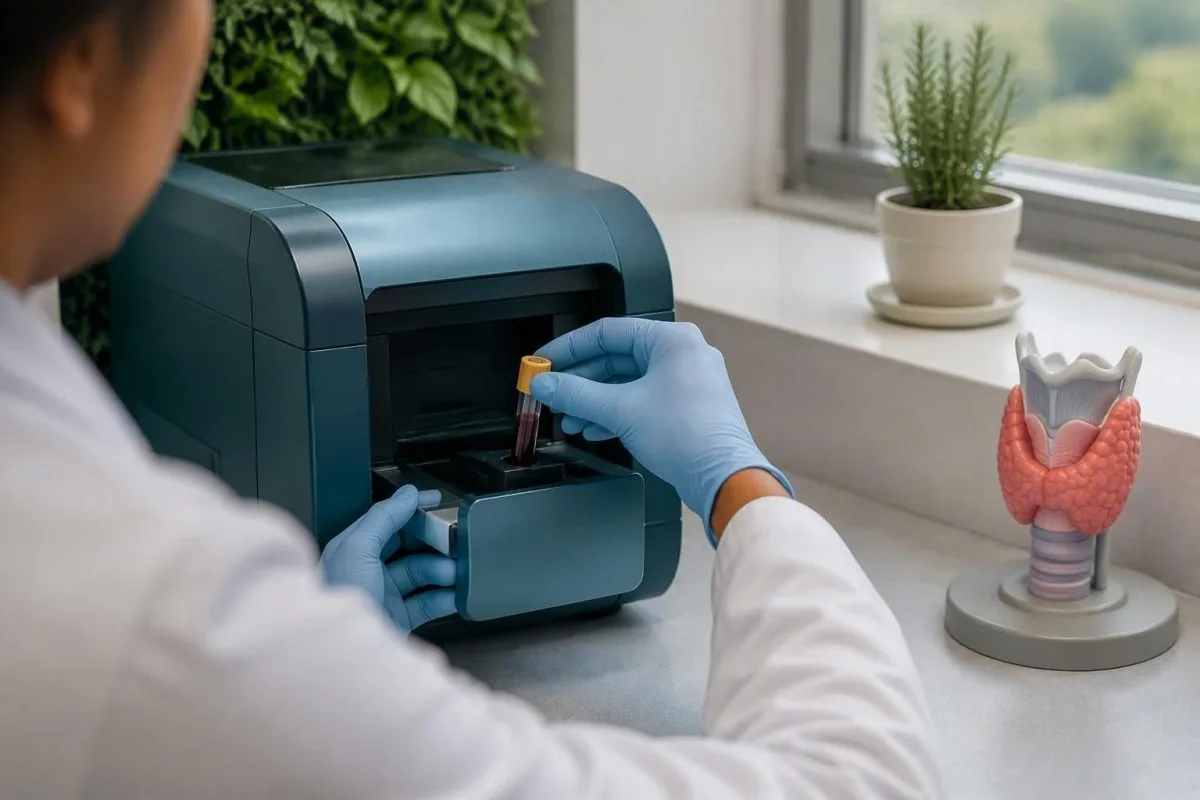
Ferritien onder 15 ng/mL is hoogs spesifiek vir afwesige ysterstore, terwyl 'n waarde onder 30 ng/mL word algemeen gebruik by simptomatiese volwassenes om ystertekort te ondersteun. Ferritien is ook 'n akute-fase proteïen, so 'n resultaat van 60 ng/mL sluit nie betroubaar tekort uit tydens infeksie, vetsug, inflammatoriese siekte, of onlangse strawwe oefening nie.
Hemoglobien onder 12.0 g/dL by nie-swanger volwasse vroue of 13.0 g/dL by volwasse mans voldoen aan algemene bloedarmoede drempels, maar hemoglobien alleen is 'n laat merker. 'n Lae MCV, stygende RDW, oortransferrinversadiging onder 20%, en lae ferritien vorm 'n baie meer oortuigende patroon as serumyster op sigself geneem.
Camaschella se NEJM oorsig beskryf moegheid en verminderde funksionele kapasiteit as algemene yster-tekort kenmerke, met die oorsaak van tekort wat ondersoek vereis eerder as outomatiese aanvulling (Camaschella, 2015). Swaar periodes, bloedskenking, beperkende diëte, coeliakie, en gastroïntestinale verlies is algemene paaie; ons gids na lae ferritien voor anemie verduidelik hoekom “n ”normale CBC" kan mislei.
2. Skildkliertoetse: toets TSH voordat stres geblameer word
Overt hipotiroïdisme is 'n erkende mediese oorsaak van lae bui, kognitiewe vertraging, hardlywigheid, koue-intoleransie en moegheid. Die eerstelyn skildkliertoets is TSH met vrye T4 wanneer TSH abnormaal is of hipofise siekte waarskynlik is.
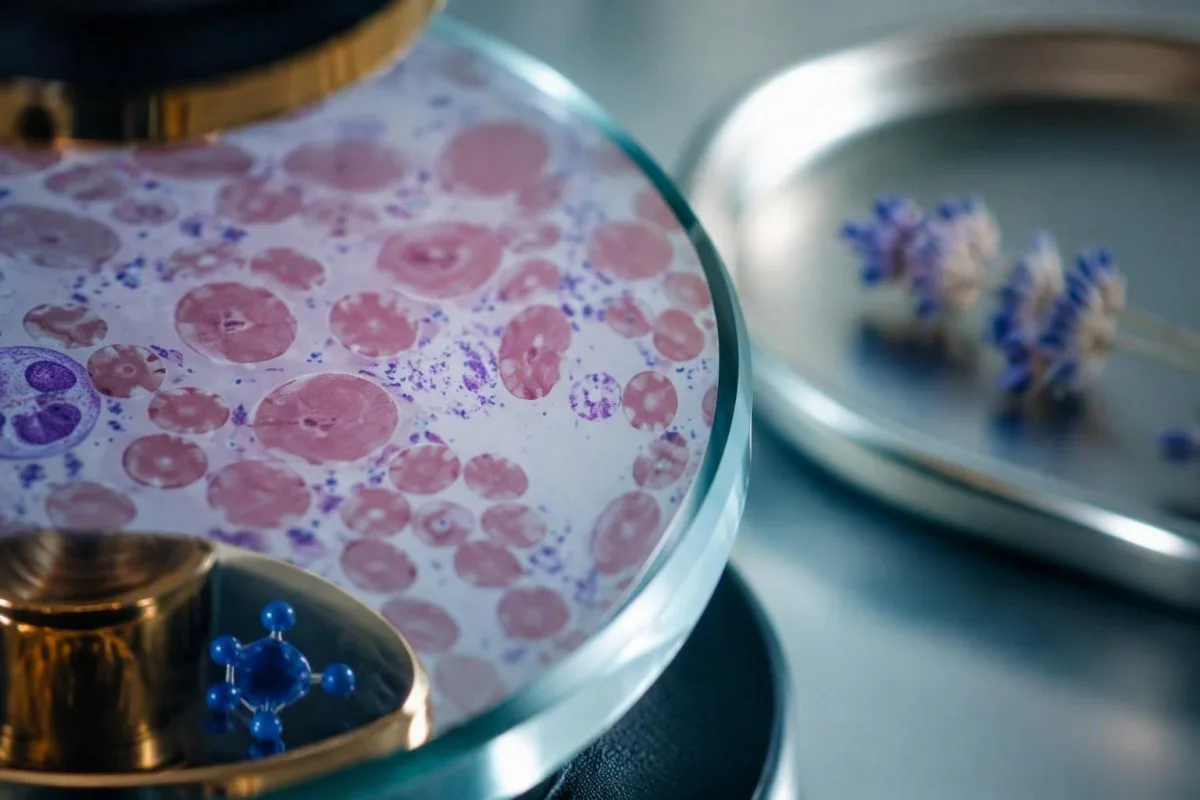
'n Hoë TSH met lae vrye T4 dui op oort hipotiroïdisme en regverdig gewoonlik behandelingsbespreking. Verwysingsintervalle verskil volgens toets, maar TSH is algemeen ongeveer 0.4-4.0 mIE/L; 'n TSH bo 10 mIU/L is klinies betekenisvoller as 'n grensoorskrydende styging van 4.5 mIU/L, veral wanneer dit herhaal word.
Subkliniese hipotiroïdisme beteken verhoogde TSH met normale vrye T4. Die bewyse dat behandeling bui verbeter by matige TSH-verhogings is eerlik gesê gemeng, veral by ouer volwassenes, so simptome, skildklier-teenliggame, swangerskap planne en herhaaltoetsing is belangrik. Biotin aanvullings kan TSH vals verlaag en vrye T4 verhoog op sommige immunoassays; stop hoë-dosis biotin vir ten minste 48 uur indien die laboratorium dit aanbeveel.
Chaker et al. beskryf hipotiroïdisme as 'n sistemiese toestand met neuropsigiatriese manifestasies, hoewel skildklier toetsing nie 'n kortpad moet word om 'n regte depressie-assessering te omseil nie (Chaker et al., 2017). Vir tydsberekening na medikasieveranderinge, sien skildklier hertoets intervalle.
'n Resultaat wat 'n ander roete benodig
Lae vrye T4 met “n normale of lae TSH kan sentrale hipotiroïdisme, ernstige nie-skildklier siekte, of toets inmenging aandui; dit moet nie as ”normale skildklier" afgemaak word nie. Hierdie patroon verdien klinikus oorsig, veral met hoofpyn, visuele verandering, lae libido, of ander hipofise simptome.
3. Vitamien B12 en folaat: senuweesimptome verander die dringendheid
Vitamien B12-tekort kan lae bui, geheue probleme, gevoelloosheid, gang wanbalans, en moegheid veroorsaak, selfs sonder bloedarmoede. Toets B12 met CBC en oorweeg metielmalonzuur of homocisteïen wanneer die B12 waarde grensgeval is of simptome neurologies is.
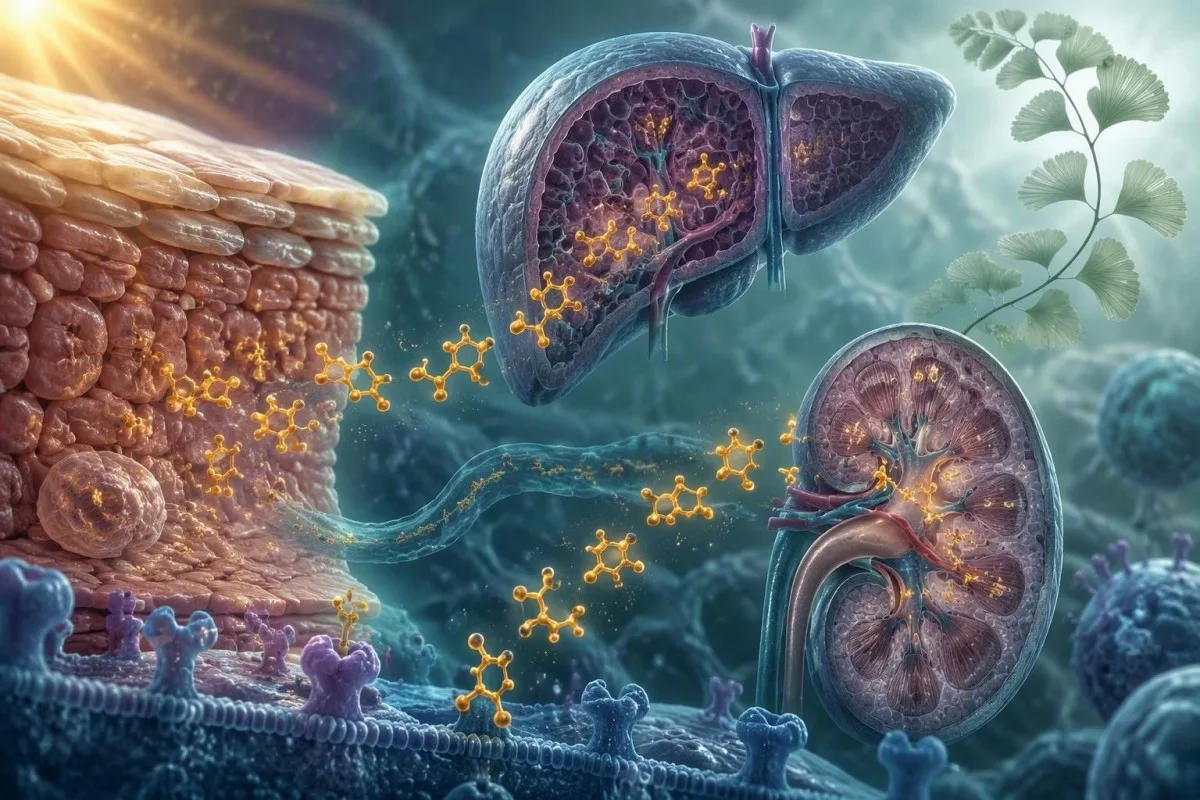
’n Serum B12 onder 180 pg/mL of 133 pmol/L ondersteun algemeen tekort, hoewel plaaslike afsnypunte wissel. Resultate van rofweg 180-350 pg/mL kan onduidelik wees, en metielmalonzuur styg wanneer B12-afhanklike metabolisme benadeel word; verminderde nierfunksie kan ook metielmalonzuur verhoog.
Makrositose, gewoonlik 'n MCV bo 100 fL, kan wys na B12 of folaat tekort, maar is nog nog nodig nog spesifiek. Alkohol gebruik, lewersiekte, hipotiroïdisme, retikulositose, en medikasie kan ook MCV verhoog. Die afwesigheid van bloedarmoede sluit nie B12-verwante senuweeskade veilig uit nie.
Ek is veral versigtig wanneer iemand tinteling, verminderde vibrasie-sensasie, balanseringsveranderinge, metformien gebruik, langtermyn suuronderdrukking, vegan eet, maag chirurgie, of lachgas blootstelling het. Moenie slegs foliensuur neem vir vermoedde B12-tekort nie: dit mag bloedarmoede regstel terwyl neurologiese skade voortduur; hersien B12 teenoor folaattoetsing met 'n klinikus.
4. Vitamien D: 'n bydraer, nie 'n op sigself staande verklaring nie
Lae 25-hidroksivitamien D kan saamval met moegheid, spierpyn, verminderde aktiwiteit buite, en lae gemoed, maar dit verklaar selde ernstige depressie op sigself. Meet 25-OH vitamien D eerder as die aktiewe 1,25-dihiroksivitamien D-toets vir roetine-tekort-assesserings.
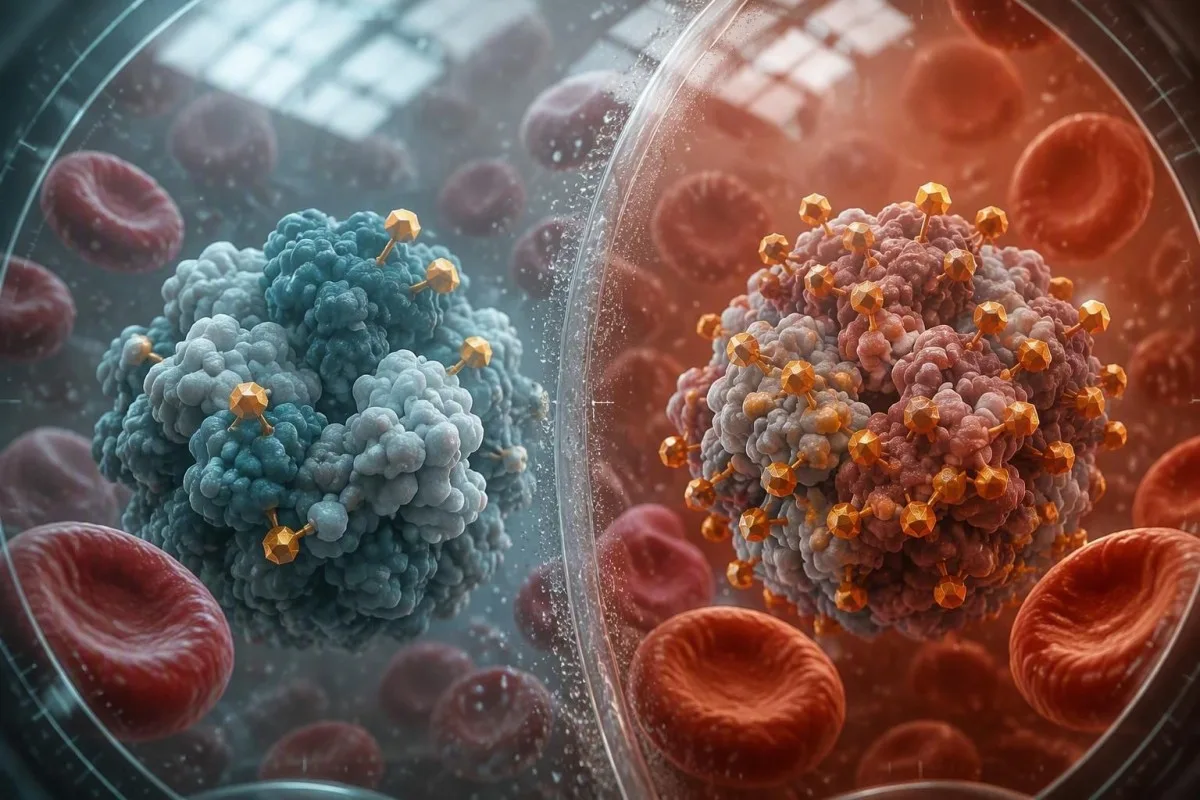
'n 25-OH vitamien D-konsentrasie onder 20 ng/mL (50 nmol/L) word deur baie owerhede as tekort beskou, terwyl 20-29 ng/mL dikwels as onvoldoende beskryf word. Die drempel is omstrede: been-gefokusde groepe verskil oor of 20 of 30 ng/mL die teiken moet wees, en gemoeds-spesifieke behandelingdrempels is nie vasgestel nie.
Vitamien D-tekort is meer waarskynlik met min sonskyn blootstelling, donkerder vel op hoë breedtegraad, bedekkende klere, vetsug, wanabsorpsie, niersiekte, en sekere anti-epileptiese middels. Die kliniese vangnet is om aan te neem dat 'n lae resultaat alles verklaar; slaaptekort, hartseer, angs, anemie en depressie kom dikwels saam daarmee voor.
Die meeste pasiënte vind dat regstelling spiersimptome of algemene energie geleidelik oor weke verbeter, nie oornag nie. Oormatige aanvulling kan kalsium verhoog; 'n hoë vitamien D resultaat verdien aandag wanneer naarheid, dors, hardlywigheid of verwarring ontwikkel.
Redelike vervanging benodig toesig
Vir ongekompliseerde tekort gebruik klinici algemeen daaglikse dosisse rondom 800-2,000 IE, maar laai-regimens hang af van erns, swangerskap, nierfunksie, kalsiumvlak en plaaslike leiding. 'n 25-OH vitamien D-resultaat bo 150 ng/mL of 375 nmol/L wek kommer oor toksisiteit en vereis mediese oorsig.
5. Glukose en HbA1c: energiekollapse het patrone
Diabetes en herhalende hipoglisemie kan moegheid, konsentrasie, slaap en prikkelbaarheid vererger, wat as lae gemoed ervaar kan word. Vasglukose en HbA1c is toepaslik wanneer dors, gereelde urinering, gewigsverandering, dowwe sig, bewing of metaboliese risiko teenwoordig is.
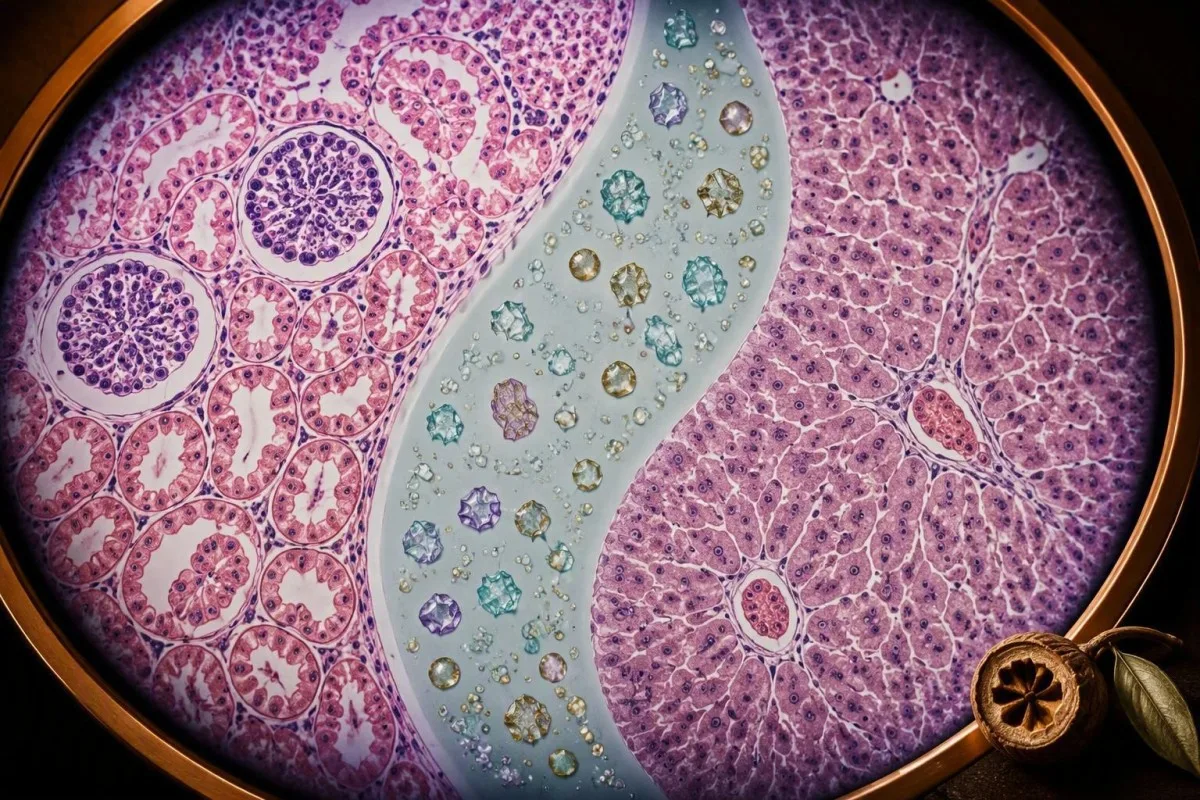
’n HbA1c van 6.5% of hoër ondersteun diabetes wanneer dit bevestig word deur herhaalde toetsing of 'n ander diagnostiese toets, terwyl 5.7-6.4% dui op diabetesrisiko in Amerikaanse kriteria aan. HbA1c weerspieël rofweg 8-12 weke van glukoseblootstelling, maar bloedarmoede, hemoglobienvariante, niersiekte en transfusie kan dit misleidend maak.
'n Plasma glukose onder 70 mg/dL (3.9 mmol/L) is hipoglisemie, tog is simptome belangrik: sweet, bewing, hartkloppings, verwarring en gedragsverandering tydens 'n gedokumenteerde lae vlak regverdig hersiening. By mense sonder diabetes is 'n enkele lae resultaat na langdurige vas nie dieselfde as 'n geverifieerde spontane hipoglisemiese afwyking nie.
Wanneer ek bloedtoetse vir lae bui hersien, vra ek wat gebeur om 11 vm., na oefening, en twee uur na etes. Herhaalde koolhidraatryke etes, alkohol sonder kos, diabetesmedisyne en onder-brandstof kan 'n herkenbare patroon skep; sien lae glukose oorsake.
Waarom 'n normale vasglukose die storie kan mis
Vasglukose kan vroeg in insulienweerstand normaal bly, terwyl HbA1c, trigliseriede, middellyf omtrek, slaapapnee en familiegeskiedenis risiko aandui. Omgekeerd kan HbA1c glukoseblootstelling onderskat wanneer rooibloedselle 'n verkorte lewensduur het, so klinici gebruik soms frukosamien of glukosemonitering in plaas daarvan.
6. Nier-, lewer- en elektroliettoetse: die misgekykte chemie
Niersiekte, lewerdisfunksie, natriumversteuring en kalsiumwanbalans kan moegheid, slaapontwrigting, vertraagde denke of verwarring veroorsaak wat oorvleuel met lae bui. “n Basiese metaboliese paneel, lewerpaneel, eGFR en medikasiehersiening is nuttiger as geïsoleerde ”welstand" toetse.
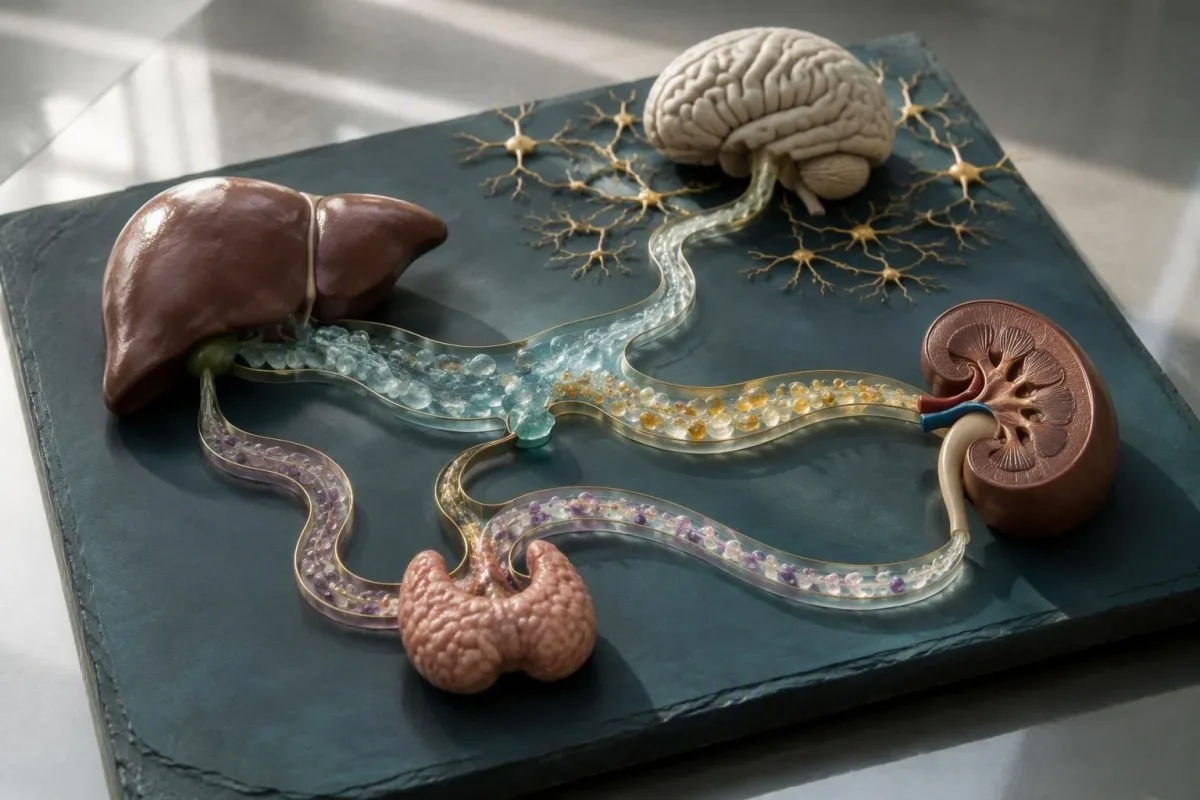
’n eGFR onder 60 mL/min/1.73 m² vir ten minste 3 maande voldoen aan een kriterium vir chroniese niersiekte, hoewel 'n enkele resultaat tydelik kan daal na dehidrasie of akute siekte. Uremiese simptome kom gewoonlik voor op veel laer filtrasievlakke, maar medikasie-akkumulasie en bloedarmoede kan welstand vroeër beïnvloed.
Natrium onder 130 mmol/L kan hoofpyn, naarheid, onvastigheid, verwarring en duidelike moegheid veroorsaak; natrium onder 120 mmol/L is dikwels 'n noodgeval. Kalsium bo 11.0 mg/dL (2.75 mmol/L) kan hardlywigheid, dors, kognitiewe verandering en lae bui veroorsaak, veral as dit vinnig styg.
Kantesti is 'n KI-labtoets-interpretasiediens wat renale, hepatiese, elektroliet- en CBC-resultate as 'n patroon lees, insluitend medisyne-verwante risiko's. 'n Skielike eGFR-verandering benodig konteks van hidrasie en vorige waardes, wat ons nierfunksietoets-gids dek.
Medikasie-effekte kan die ontbrekende leidraad wees
Tiazieddiuretika kan kalsium verhoog en natrium verlaag, SSRI's kan bydra tot hiponatremie, metformien kan B12 mettertyd verminder, en sommige anti-epileptiese medisyne beïnvloed vitamien D. Moet nooit 'n voorgeskrewe medisyne slegs op grond van 'n laboratoriumresultaat stop nie; vra die voorskrywer om die tydsberekening, dosis en veiliger alternatiewe te weeg.
7. Ontsteking-, infeksie- en outo-immuun leidrade: toets selektief
CRP, ESR, infeksietoetse en outo-immuunteenliggame is nie roetine-siftingstoetse vir lae bui nie, maar hulle is nuttig wanneer fisiese leidrade na sistemiese siekte wys. Koors, gewigsverlies, gewrigswelling, uitslag, aanhoudende diarree, nagsweet of fokale simptome moet hierdie tak van toetsing lei.
CRP onder 3 mg/L word dikwels beskou as lae kardiovaskulêre-graad inflammasie, maar laboratoriums gebruik verskillende metodes en reekse. “n CRP van 30 mg/L kan infeksie, outo-immuun aktiwiteit, weefselbesering, vetsug of baie ander toestande weerspieël; dit identifiseer nie ”n oorsaak van lae bui nie en kan nie "breinontsteking" diagnoseer nie.”
ESR styg stadig en val stadig, wat dit minder nuttig maak vir 'n skielike verandering in simptome. 'n Normale CRP en ESR sluit nie elke inflammatoriese toestand uit nie, terwyl ligte geïsoleerde verhogings algemeen is na infeksies, tandheelkundige siektes, intense oefening en hoër liggaamsgewig.
Ek sien meer skade van onoordeelkundige teenliggaampanale as van geteikende toetsing: laevlak positiewe ANA-resultate is algemeen en kan maande van angs skep. Indien ferriet onverwags hoog is met CRP-verhoging, ferritien en CRP saam is meer insiggewend as een van die merkers alleen.
Wanneer 'n infeksiestoetsing sinvol is
HIV, hepatitis, coeliakie serologie, en ander infeksie of wanabsorpsie toetse moet volg op blootstelling, gastroïntestinale simptome, bloedarmoede patroon, lewer resultate, of kliniese geskiedenis. Om “alles” te toets na gewone lae gemoed lewer dikwels vals positiewe resultate op eerder as antwoorde.
'n Verstandige eerste paneel vir aanhoudende moegheid en lae gemoedstemming
Vir aanhoudende lae gemoed met moegheid, sluit 'n gefokusde eerste paneel gewoonlik CBC, feritien met transferrin versadiging, TSH, vry T4 wanneer aangedui, B12, folaat wanneer risiko teenwoordig is, HbA1c of glukose, nierfunksie, elektroliete, lewertoetse, en vitamien D wanneer tekort risiko hoog is, in. Die regte stel is kleiner in baie mense en breër in ander.
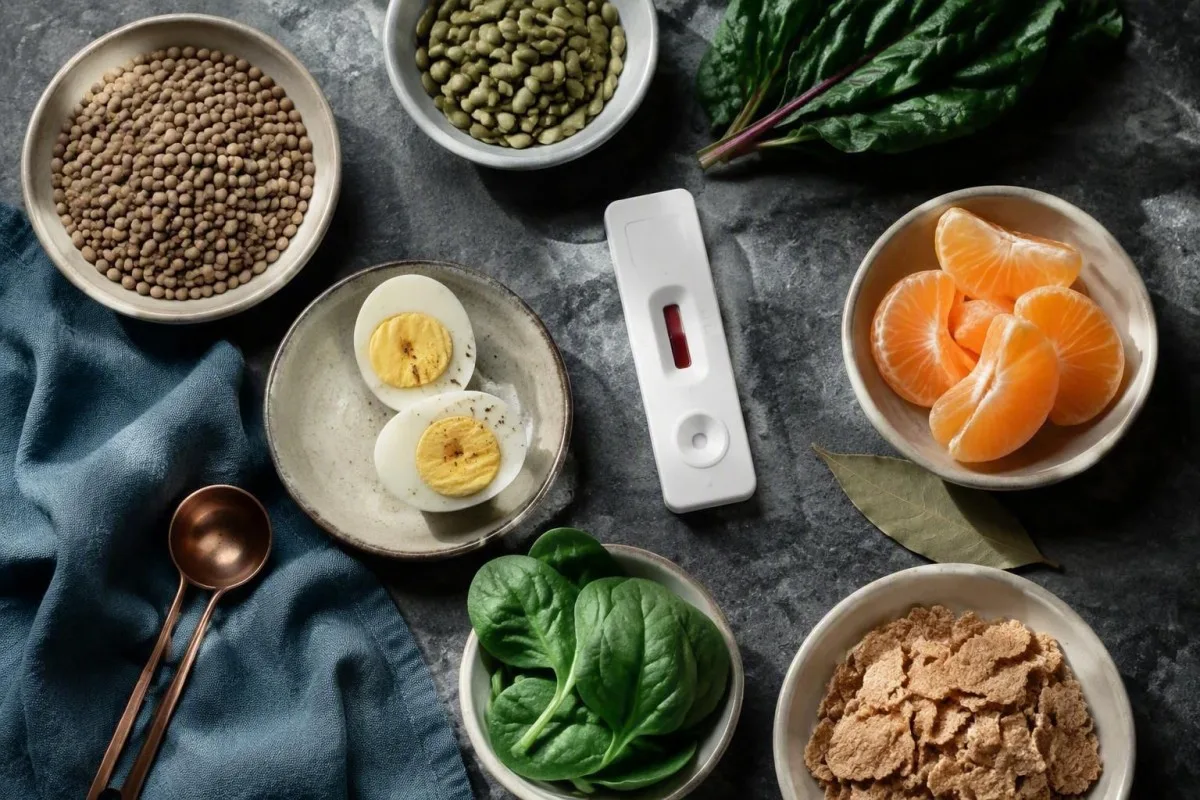
Swangerskap moontlikheid verander die triage onmiddellik: swangerskap toetsing, feritien, skildkliertoetsing, glukose assessering, en dringende oorsig van medisyne kan prioriteit geniet. By ouer volwassenes verdien gewigsverlies, dermveranderinge, nuwe bloedarmoede, verminderde eGFR, en medikasie-effekte meer gewig as geslagshormoon toetsing.
Kantesti AI is ’n AI bloedtoets interpretasie platform gebruik regoor 127+ lande om resultate in vrae vir 'n klinikus te sorteer, nie om geskiedenisopname of ondersoek te vervang nie. Ons stelsel kan help om ontbrekende konteks te identifiseer soos vas status, menstruele bloeding, aanvullings, oefening, of onlangse siekte; lees oor hoe die tegnologie werk.
Dr. Thomas Klein se praktiese reël is eenvoudig: bestel 'n toets slegs wanneer 'n resultaat die volgende stap kan verander. 'n Breë paneel kan geregverdig word met multisisteem simptome, maar roetine kortisol, geslagshormone, voedselintoleransie toetse, swaar metale, en tumor merkers skep gewoonlik geraas in lae gemoed bloed werk.
Berei voor sodat die resultaat die vraag beantwoord
Teken aanvullings aan, veral biotin, B12, yster, vitamien D, en kreatien; let op die laaste dosis en of jy gevas het. Vermy ongewoon intense oefening en oormatige alkohol vir 24-48 uur voor nie-dringende toetsing waar moontlik, want beide kan AST, CK, glukose, feritien, en hidrasie-sensitiewe resultate verander.
Waarom kortisol- en geslagshormoonpanele selde eersdaags is
Willekeurige kortisol en breë geslagshormoon panele verduidelik gewoonlik nie aanhoudende lae gemoed nie en moet nie as algemene “uitbrandings toetse” gebruik word nie.” Hulle word nuttig wanneer simptome stres siekte, menstruele wanfunksie, menopouse oorgang, hipogonadisme, pituïtêre siekte, of medikasie-effekte voorstel.
Kortisol het “n sterk daaglikse ritme: ”n vroeë-oggend monster is normaalweg baie hoër as 'n aand monster, so 'n ongetimde waarde het beperkte diagnostiese betekenis. Vermoedelike bniere onvoldoendeheid word beoordeel met 'n behoorlik getimde kortisol en dikwels stimulasie toetsing, nie deur 'n aanlyn "bniere fatigue" telling nie.
Testosteroon wissel met tyd van die dag, akute siekte, slaap, en bindingsproteïene; by mans, moet oggend totale testosteroon op ten minste twee geleenthede herhaal word voordat tekort gediagnoseer word. Estradiol en progesteroon wissel oor die menstruele siklus, wat is hoekom 'n enkele waarde nie gemoed veranderinge sonder siklus tydsberekening kan verduidelik nie.
Simptome wat gemikskikte endokriene toetsing regverdig, sluit in nuwe verlies van liggaamshare, erektiele disfunksie, amenorrhea, galactorrhea, ernstige warm flitse, pers rekmerke, onverklaarbare kneusplekke, of aanhoudende lae bloeddruk. Ons kortisol verwysingsgids verduidelik hoekom versamelingstyd deel van die resultaat is.
Menopouse is klinies voor dit biochemies is
Vir mense ouer as 45 met tipiese warm flitse en siklus veranderinge, word menopouse dikwels klinies gediagnoseer eerder as uit een FSH toets. Skildklier siekte, bloedarmoede, medikasie-effekte, en depressie kan saam voorkom, so behandeling van een etiket moet nie die assessering beëindig nie.
Hersien medisyne, alkohol, stowwe en slaap voordat toetse bygevoeg word
Medikasie-effekte, alkohol, cannabis, stimulante, sedatiewe, en slaapversteurings is algemene omkeerbare bydraers tot lae gemoed wat geen standaard bloed paneel ten volle kan vasvang nie. 'n Medikasie tydlyn lewer dikwels meer op as 'n ekstra monsterbuis van die laboratorium.
Beta-blokkers, isotretinoïen, kortikosteroïede, sommige anti-epileptiese medisyne, interferoon-gebaseerde terapieë, sedatiewe, en hormonale behandelings kan gemoed beïnvloed by vatbare mense. SSRI's, diuretika, en karbamazepien kan natrium verlaag; proton-pomp inhibeerders en metformien kan mettertyd tot B12 tekort bydra.
Alkohol kan kortstondig angs versag, maar fragmenteer slaap en kan GGT, MCV, trigliseriede en lewerensieme verhoog. 'n GGT bo die laboratorium se boonste limiet is onsistens, dit kan alkohol, vetsugtige lewer, medikasie of cholestasis weerspieël, daarom moet dit nooit as bewys van alkoholgebruik gebruik word nie.
Obstruktiewe slaapapnee kan opvallend soos depressie lyk—nie-rusgevende slaap, swak konsentrasie, libido veranderinge, en middag moegheid—terwyl CBC en skildkliertoetse normaal bly. Indien gesnork, waargenome pouses, oggend hoofpyn, of weerstandbiedende hipertensie teenwoordig is, vra oor slaapbeoordeling eerder as om aanvullings na te jaag; swak slaap en laboratoriumuitslae bied nuttige konteks.
Hoe klinici patrone eerder as rooi vlae lees
Een resultaat buite reeks verduidelik selde lae gemoed; samehangende patrone oor simptome, herhaalde resultate, en verwante biomerkers is meer betroubaar. Laboratorium verwysingsreekse beskryf waar 95% van 'n verwysingspopulasie val, nie 'n persoonlike gesondheidsgaransie nie.

'n Ferritien van 18 ng/mL met lae transferrienversadiging, swaar periodes, rustelose bene, en moegheid is 'n sterker ystertekortgeval as ferritien 18 alleen. Daarteenoor is ferritien 18 na 'n onlangse virale siekte steeds laag genoeg om te ondersoek, maar CRP, dieet, bloedverlies, en herhaalde tydsberekening vorm die besluit.
Dieselfde beginsel geld vir skildkliertoetse: TSH 5.2 mIU/L na 'n slapelose week mag 'n herhaling verdien, terwyl TSH 12 mIU/L met lae vrye T4 en hardlywigheid 'n veel duideliker sein is. Laboratoriums verskil in toetse, so die opspoor van dieselfde laboratorium en eenhede verminder vals skynbare verandering.
Kantesti AI vergelyk tendense en verwante merkers om hierdie besprekings minder gefragmenteerd te maak, maar ons kliniese standaard is om onsekerheid te merk eerder as om sekerheid uit te dink. Leer hoekom 'n verandering tussen bloedtoetse biologiese variasie, versameling variasie, of 'n werklike verskuiwing mag wees.
'n Normale reeks is nie 'n behandelingsdoelwit nie
Moenie probeer om elke biomerker na die middel van 'n verwysingsinterval te stoot nie. Byvoorbeeld, hoë-dosis yster kan gastroïntestinale skade veroorsaak en die evaluasie van bloedverlies verberg, terwyl oormatige vitamien D hiperkalsemie kan veroorsaak; behandeling moet diagnose, simptome en opvolgtoetse volg.
Wanneer om toetse te herhaal, 'n huisdokter se hersiening te soek, of dringende hulp te kry
Herhaalde toetsing is gepas wanneer 'n ligte abnormaliteit tydelik kan wees, maar dringende simptome oorheers 'n wag-en-sien plan. Nuwe suïcidale gesindheid, delirium, ernstige swakheid, borspyn, flouval, geelsug, swart stoelgange, of glukose-verwante verwarring vereis dringende mediese hulp.
'n Lig effens verhoogde TSH met normale vrye T4 word dikwels herhaal in 6-12 weke, vroeër in swangerskap of opvallende simptome. Yster, B12, en vitamien D opvolg tydsberekening hang af van behandeling en baslyn erns; klinici assesseer algemeen 'n CBC en ystermerkers na verskeie weke eerder as dae omdat rooibloedselherstel tyd neem.
Soek dieselfde weekse oorsig vir hemoglobien onder 10 g/dL, natrium onder 130 mmol/L, kalsium bo 11.0 mg/dL, eGFR wat vinnig daal, bilirubien met geelsug, of vasglukose in die diabetiese reeks plus simptome. Dit is triage-prompts, nie diagnoses nie, en plaaslike dienste mag verskillende drempels gebruik.
Vir komplekse verslae, Kantesti se kliniese valideringsbenadering beklemtoon bronkontrole, herhaalbaarheid, en eskaleer eerder as een-klik gerusstelling. Dr. Thomas Klein beveel aan om die werklike PDF, 'n medisyne lys, en 'n een-week simptoom dagboek na die afspraak te bring.
Wat om neer te skryf voor die afspraak
Sluit in wanneer lae gemoed begin het, slaapduur, eetlus of gewigsverandering, menstruele bloeding, alkohol en middelgebruik, familie skildklier of diabetes geskiedenis, onlangse infeksies, dieet beperking, en elke medikasie of aanvulling dosis. Hierdie inligting verander dikwels watter “abnormale” resultaat klinies relevant is.
Behandel lae gemoedstemming terwyl mediese oorsake nagesien word
Geestesgesondheidondersteuning moet begin wanneer lae gemoedstoestand aanhoudend is of belemmerend is, selfs terwyl bloedtoetse wag. Sielkundige terapie, sosiale ondersteuning, slaapbehandeling, medikasie wanneer gepas, en veiligheidsbeplanning is nie terugval-opsies na “normale toetse nie; dit is bewysgebaseerde sorg.

Depressie word algemeen gedefinieer deur ten minste 2 weke van lae gemoed of verlies aan belangstelling vergesel deur ander simptome soos slaap, eetlus, energie, konsentrasie, skuld, psigomotoriese, of selfmoordveranderinge. Ernstigheid hang af van funksionele impak en veiligheid, nie of die laboratoriumverslag rooi vlae het nie.
'n Fisiese bydraer kan werklik wees sonder om die enigste bydraer te wees. Die regstelling van B12-tekort kan moegheid en konsentrasie verbeter terwyl terapie berou, trauma, isolasie, of ingewortelde depressiewe simptome aanspreek; die meeste pasiënte vind hierdie gekombineerde raamwerk baie minder blameer.
Kantesti werk met geneesheer toesig deur ons mediese adviesraad, en ons moedig lesers aan om KI-interpretasie te gebruik ter voorbereiding vir—nie vervanging van—kliniese en geestesgesondheidsorg nie. As jy vandag nie veilig kan bly nie, gebruik nood dienste of 'n krisis hulpbron in jou land nou.
Die slotsom vir lae gemoed bloedwerk
Geteikende bloedtoetse kan sewe waardevolle kategorieë ontbloot: yster-verwante anemie, tiroïed disfunksie, B12 of folaat tekort, vitamien D-tekort, glukose versteurings, nier-lewer-elektroliet abnormaliteite, en simptoom-gedrewe inflammatoriese of aansteeklike siekte. Dit is een deel van 'n deernisvolle assessering, nooit 'n uitspraak oor of jou lyding legitiem is nie.
Gereelde vrae
Watter bloedtoetse moet ek vra indien ek lusteloosheid en moegheid ervaar?
'n Gefokusde bloedtoets vir lae gemoed en moegheid sluit dikwels 'n CBC, ferritien met transferrien versadiging, TSH, B12, HbA1c of glukose, nierfunksie, elektroliete, en lewertoetse in. Vitamien D is redelik wanneer son blootstelling beperk is, wanabsorpsie risiko teenwoordig is, of spierpyn saamval. Ferritien onder 30 ng/mL, B12 onder 180 pg/mL, en TSH bo die laboratoriuminterval is voorbeelde van resultate wat kliniese konteks benodig. Hierdie toetse identifiseer moontlike mediese bydraers; hulle diagnoseer nie depressie nie.
Kan 'n bloedtoets depressie diagnoseer?
Nee, geen bloedtoets kan depressie diagnoseer in roetine kliniese sorg nie. Depressie word gediagnoseer uit simptome wat ten minste 2 weke duur, hul effek op daaglikse funksie, psigiatriese geskiedenis, ondersoek, en 'n veiligheidsassessering. Toetse soos TSH, ferritien, B12, glukose, natrium, en kalsium help om toestande te identifiseer wat depressiewe simptome kan naboots of vererger. Normale bloedresultate sluit nie depressie uit nie of beteken dat behandeling nie nodig is nie.
Kan lae ystervlakke angs en lae gemoedstemming veroorsaak sonder bloedarmoede?
Ja, yster tekort kan moegheid, swak konsentrasie, rustelose bene, verminderde oefen verdraagsaamheid, en lae gemoed veroorsaak voordat hemoglobien laag genoeg word om anemie kriteria te ontmoet. Ferritien onder 30 ng/mL ondersteun dikwels uitgeputte ysterreserwes, terwyl transferrien versadiging onder 20% bykomende bewyse van onvoldoende beskikbare yster lewer. Die oorsaak maak saak: swaar menstruele bloeding, gastroïntestinale verlies, lae inname, bloedoortapping, en wanabsorpsie benodig verskillende reaksies. Moenie langdurige ysterbehandeling begin sonder om die resultaat en oorsaak met 'n klinikus te bespreek nie.
Watter skildklieruitslag kan die gemoed beïnvloed?
Overt hipotiroïdisme, gedefinieer deur 'n hoë TSH met lae vry T4, kan bydra tot moegheid, stadige denke, koue onverdraagsaamheid, hardlywigheid, en depressiewe simptome. Baie laboratoriums gebruik 'n TSH verwysingsinterval rondom 0.4-4.0 mIU/L, maar 'n resultaat bo 10 mIU/L dra oor die algemeen meer gewig as 'n grenshoogte. 'n Effens verhoogde TSH met normale vry T4 benodig dikwels herhaal toetse in 6-12 weke eerder as onmiddellike aannames. Tiroïed siekte en depressie kan saam bestaan, so die behandeling van tiroïed funksie vervang nie geestesgesondheidsassessering nie.
Moet ek kortisol toets vir lae bui of uitbranding?
“n Willekeurige kortisol toets is gewoonlik nie nuttig vir gewone lae gemoed of uitbranding nie, want kortisol verander aansienlik deur die dag en met akute stres, siekte, en slaap. Geteikende toetse is gepas wanneer simptome op byniersiekte dui, soos aanhoudende lae bloeddruk, onverklaarbare gewigsverlies, verandering in vel pigmentasie, ernstige swakheid, of Cushing-agtige kenmerke. ”n Vroeë-oggend kortisol kan lei tot bevestigende stimulasie toetsing wanneer klinies geïndiseer. Kommersiële "bynier moegheid" toetsing is nie 'n erkende diagnose in hoofstroom endokriene praktyk nie.
Wanneer moet 'n lae gemoedstemming dringend behandel word?
Lae gemoed benodig dringende assessering wanneer daar selfmoord gedagtes met intensie of 'n plan is, onvermoë om veilig te bly, psigose, ernstige agitasie, nuwe verwarring, of verskeie dae van min slaap met ongewoon hoë energie of riskante gedrag. Ernstige laboratorium simptome regverdig ook dringende sorg, insluitend natrium onder 120 mmol/L, glukose-verwante verwarring, flouheid, borspyn, of vinnig verslegtende swakheid. Kontak nood dienste, 'n krisis diens, of 'n nood departement eerder as om vir roetine toets resultate te wag. Om 'n betroubare persoon te vra om by jou te bly is 'n sinvolle onmiddellike veiligheidsmaatreël.
Kry vandag KI-aangedrewe bloedtoets-analise
Sluit aan by meer as 2 miljoen gebruikers wêreldwyd wat Kantesti vertrou vir onmiddellike, akkurate laboratoriumtoetsanalise. Laai jou bloedtoetsresultate op en ontvang omvattende interpretasie van 15,000+-biomerkers binne sekondes.
📚 Verwysde navorsingspublikasies
Klein, T., Mitchell, S., & Weber, H. (2026). Nipah-virusbloedtoets: Vroeë opsporing en diagnosegids 2026. Kantesti KI Mediese Navorsing.
Klein, T., Mitchell, S., & Weber, H. (2026). B Negatiewe Bloedgroep, LDH-bloedtoets en retikulosiettelling-gids. Kantesti KI Mediese Navorsing.
📖 Eksterne mediese verwysings
Nasionale Instituut vir Gesondheid en Sorg-uitnemendheid (2022). Depressie by volwassenes: behandeling en bestuur. NICE Richtlijn NG222.
⚕️ Mediese Vrywaring
Hierdie artikel is slegs vir opvoedkundige doeleindes en vorm nie mediese advies nie. Raadpleeg altyd ’n gekwalifiseerde gesondheidsorgverskaffer vir besluite oor diagnose en behandeling.
E-E-A-T Vertrouenseine
Ervaring
Kliniese oorsig gelei deur ’n geneesheer van laboratorium-interpretasie-werksvloei.
Kundigheid
Laboratoriumgeneeskunde fokus op hoe biomerkers in ’n kliniese konteks optree.
Gesagsvermoë
Geskryf deur dr. Thomas Klein met hersiening deur dr. Sarah Mitchell en prof. dr. Hans Weber.
Betroubaarheid
Bewysgebaseerde interpretasie met duidelike opvolgpaaie om alarm te verminder.