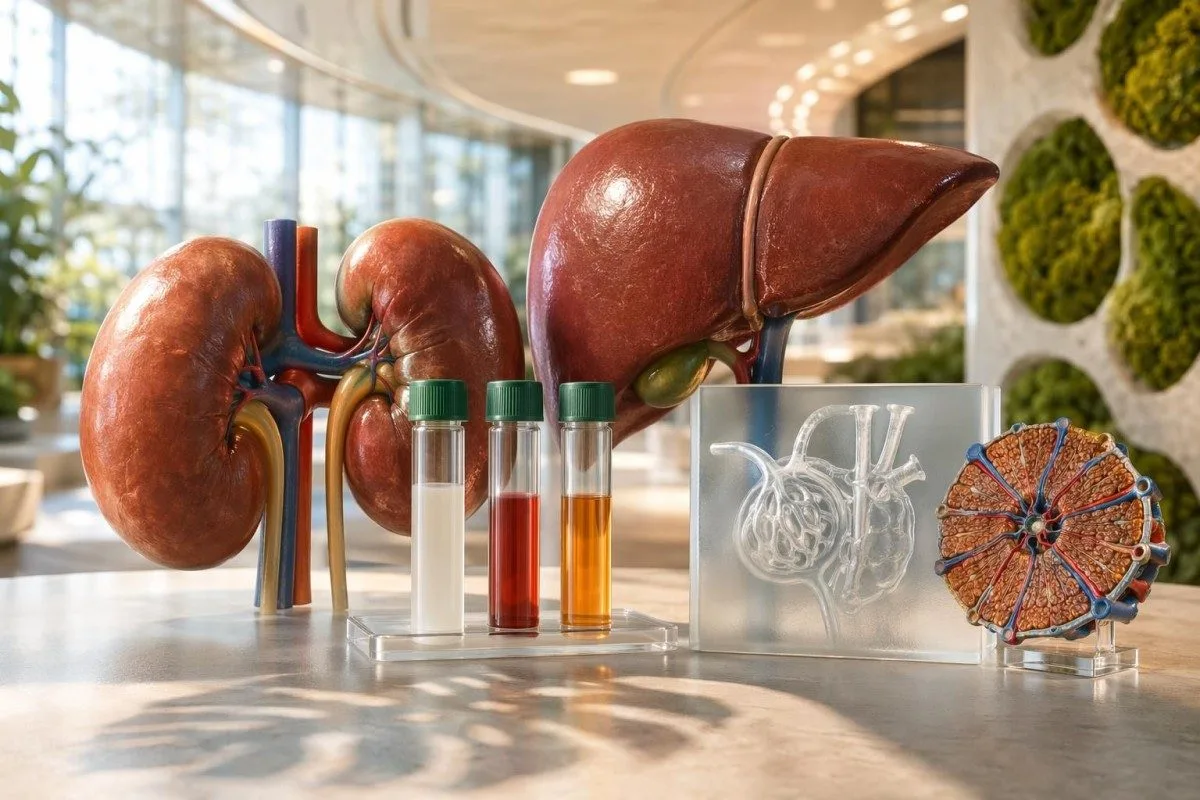
Higher protein can make some results look different without meaning organ damage. The trick is comparing urea, creatinine, eGFR, liver enzymes, urine albumin and your own baseline together.


- BUN or urea often rises after high protein intake; BUN of 21-30 mg/dL can be diet or dehydration if creatinine and eGFR are stable.
- Creatinine is less diet-sensitive than BUN, but muscle mass, hard training and creatine supplements can raise it without true kidney injury.
- eGFR below 60 mL/min/1.73 m² for 3 months suggests chronic kidney disease, especially when urine albumin is also high.
- Urine albumin-to-creatinine ratio should be below 30 mg/g; persistent results of 30 mg/g or higher need medical follow-up.
- ALT and AST should not climb just because protein intake increased; persistent ALT above 40-50 IU/L deserves liver and medication review.
- Albumin usually stays between 3.5-5.0 g/dL; high protein intake rarely raises albumin unless dehydration is present.
- Uric acid may rise with organ meats, red meat, dehydration or rapid weight loss; gout risk increases as uric acid approaches 6.8 mg/dL.
- Blood test before and after comparisons are most useful when timing, hydration, fasting status, training load and lab units are kept consistent.
What usually changes on labs after starting high protein?
A high protein diet blood test most commonly shows higher BUN or urea, sometimes a higher BUN-to-creatinine ratio, and occasionally small shifts in uric acid, lipids or liver enzymes depending on food choices. If creatinine, eGFR and urine albumin stay stable, a mild urea rise is often expected rather than kidney damage. You can upload results to high protein diet blood test analysis through Kantesti AI, but a clinician should review persistent or symptomatic abnormalities.
I’m Thomas Klein, MD, and in our review of 2M+ uploaded reports, the classic pattern is boring but useful: BUN moves first, creatinine often barely moves, and the story changes only when urine albumin or eGFR worsens. A single BUN of 24 mg/dL after a steak-heavy week is not the same clinical problem as BUN 24 mg/dL plus eGFR 52 mL/min/1.73 m² and rising urine albumin.
The number I ask for first is not the latest result. It is the old one. A personal baseline from 3-12 months before the diet change often explains more than the lab flag itself.
Protein intake also changes the pre-test environment: people lift harder, drink less water than they think, lose glycogen water, and sometimes add creatine. Those details can shift BUN, creatinine, sodium, hematocrit and uric acid without a new disease process.
How high can BUN or urea go from protein alone?
BUN often rises with higher protein intake because the liver converts protein nitrogen into urea, which the kidneys then excrete. Adult BUN is commonly reported as 7-20 mg/dL in the United States, while urea is often reported as about 2.5-7.8 mmol/L in the UK and Europe.
A mild BUN increase to 21-30 mg/dL can fit high protein intake, especially if the BUN-to-creatinine ratio rises above 20:1 and creatinine is unchanged. I get more concerned when BUN rises with vomiting, black stools, low blood pressure, confusion or a falling eGFR.
The ratio matters because urea is reabsorbed when the body is conserving water. Our detailed BUN meaning guide explains why dehydration and protein can look similar unless you check creatinine, sodium, urine concentration and symptoms together.
One practical trick: repeat the test after 48-72 hours of normal hydration and no unusually large protein meal the evening before. If BUN falls from 31 to 21 mg/dL with stable creatinine, the answer was probably physiology, not kidney failure.
When creatinine and eGFR separate diet from kidney strain
Creatinine and eGFR help separate expected urea production from impaired kidney filtration. A stable creatinine with higher BUN usually points away from acute kidney injury, while a rising creatinine or falling eGFR changes the conversation quickly.
Creatinine is produced from muscle creatine, so it is not a pure kidney toxin meter. A muscular 32-year-old taking 5 g/day creatine may show creatinine of 1.25 mg/dL with normal cystatin C and normal urine albumin; a smaller older adult with the same creatinine may have reduced filtration.
KDIGO’s 2024 CKD guideline emphasizes confirming chronic kidney disease using both eGFR and albuminuria categories rather than one creatinine result in isolation (KDIGO, 2024). When creatinine seems mismatched to the person, a cystatin C eGFR recheck is often the cleaner next step.
An eGFR below 60 mL/min/1.73 m² for at least 3 months is not explained by protein intake alone. If eGFR drops by more than 20-25% after a diet change, I would review NSAID use, dehydration, blood pressure medication, supplements and urine findings before blaming the steak.
Why the BUN-to-creatinine ratio can look high
A high BUN-to-creatinine ratio usually means urea rose more than creatinine, and common causes include high protein intake, dehydration, gastrointestinal bleeding and reduced kidney perfusion. A ratio above 20:1 is a clue, not a diagnosis.
In our platform, the ratio gets weighted differently when sodium is 147 mmol/L, urine specific gravity is high, and albumin is slightly high from hemoconcentration. That pattern behaves differently from a ratio of 28:1 with hemoglobin falling and dark stools.
The BUN creatinine ratio guide is useful because the same ratio can mean three different things. I have seen endurance athletes after hot-weather training show BUN 34 mg/dL, creatinine 1.1 mg/dL and sodium 146 mmol/L, then normalize after two rest days and proper fluids.
A low ratio can matter too. BUN that stays low despite high protein intake may occur with low protein absorption, significant liver synthetic problems, overhydration or rare urea-cycle issues; that is uncommon, but it is not a pattern I ignore.
Which electrolytes can shift with high protein intake?
Electrolytes usually remain normal on a high-protein diet, but sodium, chloride, potassium and CO2 can shift when the diet causes dehydration, low carbohydrate intake or heavy training. CO2 on a metabolic panel commonly reflects serum bicarbonate, not carbon dioxide in the lungs.
Serum CO2 is often about 22-29 mmol/L in adults. A CO2 of 18 mmol/L after very low carbohydrate intake, diarrhea or intense exercise deserves a second look, especially if the anion gap is high or potassium is abnormal.
Potassium is the urgent electrolyte in this group. The electrolyte panel guide explains why potassium above 5.5 mmol/L should be repeated quickly if unexpected, and potassium above 6.0 mmol/L may need urgent care depending on ECG risk and symptoms.
A high-protein diet does not protect you from ordinary lab noise. Tourniquet time, delayed sample processing, hemolysis and unit changes can all create apparent blood test changes over time that have nothing to do with protein.
Why urine albumin is the kidney result I do not skip
Urine albumin-to-creatinine ratio, or ACR, is one of the best early checks for kidney stress because it can become abnormal before creatinine rises. ACR below 30 mg/g is generally normal, 30-300 mg/g is moderately increased, and above 300 mg/g is severely increased.
KDIGO 2024 uses albuminuria categories because kidney risk is not captured by eGFR alone. A 45-year-old with eGFR 92 mL/min/1.73 m² but ACR 85 mg/g has a different risk profile from someone with the same eGFR and ACR 6 mg/g.
Temporary albumin in urine can appear after fever, hard exercise, urinary tract irritation or uncontrolled blood pressure. That is why I usually repeat ACR using a first-morning urine sample, and the urinalysis guide is a good companion when protein, blood or ketones are also flagged.
If your ACR rises after starting high protein, do not just cut protein and move on. Check blood pressure, HbA1c, medications such as NSAIDs, and whether the sample was taken within 24-48 hours of strenuous training.
Should ALT, AST, GGT or bilirubin rise after more protein?
ALT, AST, GGT and bilirubin should not rise simply because protein intake is higher. When liver enzymes climb after a diet change, I look at alcohol, fatty liver, rapid weight loss, supplements, medications and muscle injury before blaming protein itself.
ALT is more liver-specific than AST, while AST also comes from muscle. A 52-year-old marathon runner with AST 89 IU/L and ALT 38 IU/L two days after a race may have a muscle pattern, especially if creatine kinase is high.
The EASL 2021 non-invasive liver test guideline supports pattern-based assessment of liver disease severity rather than relying on one enzyme alone (EASL, 2021). Our liver function test guide walks through ALT, AST, ALP, GGT and bilirubin combinations in more detail.
GGT above about 60 IU/L in adult men or above 40 IU/L in many adult women often prompts a hepatobiliary review, but reference ranges vary. Some European labs use lower GGT cutoffs, and a result that is high-normal for one lab may be flagged in another.
Do albumin and total protein prove you ate more protein?
Albumin and total protein do not usually rise much just because you eat more protein. Albumin is commonly 3.5-5.0 g/dL, and high values more often reflect dehydration than excellent nutrition.
Albumin has a long half-life of roughly 20 days, so it is a slow marker. A person who doubles protein intake on Monday should not expect albumin to jump by Friday unless fluid balance changed.
Kantesti AI checks albumin alongside globulin, calcium, liver enzymes and urine protein because the same low albumin can mean different things. A deeper explanation is in our low albumin guide, especially if swelling, foamy urine or abnormal liver markers are present.
Total protein is usually about 6.0-8.3 g/dL in adults. High total protein with high globulin may point toward inflammation, chronic infection, liver disease or plasma cell disorders; that is not a normal high-protein diet effect.
Why uric acid may rise when protein sources change
Uric acid may rise on a high-protein diet when the protein comes from purine-rich foods, when hydration drops, or when rapid weight loss increases ketone production. The solubility threshold for urate is about 6.8 mg/dL, which is why gout risk rises near and above that level.
Not all protein behaves the same. Fish, shellfish, organ meats and large amounts of red meat can raise uric acid more than eggs, dairy, soy, lentils or poultry in many patients, although individual responses vary.
A uric acid of 7.8 mg/dL without symptoms is not an emergency, but it deserves context if there is gout, kidney stones or chronic kidney disease. Our uric acid range guide explains why some people need a lower target than the lab’s standard reference interval.
I see this pattern in rapid fat-loss phases: BUN rises, uric acid rises, CO2 may drift down, and the person feels proud but crampy. Slowing weight loss from 1.5 kg/week to 0.5-1.0 kg/week often improves the lab pattern.
How protein choices affect cholesterol, glucose and insulin
Cholesterol, triglycerides, glucose and insulin may improve or worsen after a high-protein diet depending on what the protein replaces. Replacing refined carbohydrates with lean protein often improves triglycerides, while replacing fibre-rich foods with saturated-fat-heavy meals may raise LDL cholesterol.
Triglycerides below 150 mg/dL are generally considered normal, and they often fall when sugar and alcohol intake fall. LDL can move the other way if the diet becomes heavy in butter, processed meats or very high saturated fat.
The most useful before-after pair is fasting triglycerides plus non-HDL cholesterol, not total cholesterol alone. For food-based changes that move lipids, see our cholesterol-lowering foods guide.
Glucose may improve even when BUN rises. A patient with fasting glucose 108 mg/dL and triglycerides 220 mg/dL who switches to higher protein and loses 6 kg may come back with BUN 26 mg/dL, glucose 94 mg/dL and triglycerides 135 mg/dL; that is a trade-off worth interpreting carefully.
What CBC, ferritin and hematocrit can reveal
CBC and ferritin do not directly measure protein intake, but they reveal dehydration, inflammation, iron intake and training stress that can mimic diet-related changes. Hemoglobin and hematocrit can appear higher when plasma volume is low.
Adult hematocrit is often about 41-50% in men and 36-44% in women, though ranges differ by lab. If hematocrit rises from 43% to 48% while albumin and sodium also rise, dehydration is more likely than sudden overproduction of red cells.
Ferritin can rise with inflammation, fatty liver, alcohol use and iron-rich diets, but it does not respond overnight to one high-meat dinner. Our high ferritin guide is useful when ferritin is above 300 ng/mL in men or above 200 ng/mL in women.
The CBC also catches hidden reasons a diet feels bad. Low MCV, high RDW or falling hemoglobin can explain fatigue during a diet phase even when protein grams look perfect in a tracking app.
Which results should you compare before and after?
A useful blood test before and after a high-protein diet compares the same core markers at baseline and again after 4-12 weeks. The minimum set I like is CMP, BUN, creatinine, eGFR, electrolytes, liver enzymes, fasting lipids, HbA1c or glucose, uric acid and urine ACR.
Four weeks is enough to see BUN, electrolytes and some triglyceride changes. Twelve weeks is better for HbA1c, LDL cholesterol and body composition-related shifts, because HbA1c reflects roughly 8-12 weeks of glucose exposure.
Keep conditions boring: same lab if possible, same fasting status, similar workout timing, no extreme meal the night before, and normal fluid intake. Our fasting versus non-fasting guide shows which results are most sensitive to timing.
For blood biomarker trends, the direction often matters more than the flag. BUN 18 to 25 mg/dL with eGFR 101 to 99 is not the same as BUN 18 to 25 mg/dL with eGFR 72 to 55 and new ACR 120 mg/g.
Who should not start high protein without medical advice?
People with known CKD, persistent albuminuria, kidney stones, advanced liver disease, pregnancy complications, eating disorders or complex diabetes medications should not start a high-protein plan without medical advice. Protein targets are safest when matched to kidney function, body size and clinical goals.
For many healthy adults, 1.2-1.6 g/kg/day is a common high-protein range used in weight loss and resistance training. Very high intakes above 2.0 g/kg/day are not automatically dangerous, but they are less forgiving if hydration, kidney reserve or food quality is poor.
A 2018 Journal of Nutrition systematic review by Devries et al. found that higher-protein diets did not cause meaningful kidney function decline in healthy adults studied in controlled trials, but those results should not be casually applied to people with CKD. Our kidney disease diet guide explains why CKD changes the risk calculation.
In liver disease, the old advice to broadly restrict protein has softened, but advanced cirrhosis is a different clinical world. People with confusion, ascites, low albumin or high INR need physician-guided nutrition rather than internet macro targets.
How Kantesti reads blood biomarker trends over time
Kantesti AI interprets blood test changes over time by comparing the current result with prior values, units, reference ranges, age, sex, medications and related markers. A trend line is often safer than a single red flag because normal biological variation can be 5-20% for many common labs.
Our AI blood test analyzer does not treat BUN as a standalone kidney diagnosis. It checks whether creatinine, eGFR, cystatin C, ACR, sodium, albumin and hematocrit support dehydration, filtration change or expected urea production.
This is where blood test comparison becomes clinically useful. A result can be inside the lab range but abnormal for you if it has doubled from your stable baseline, and a flagged result can be harmless if it matches years of personal history.
Kantesti’s clinical workflow is reviewed against our medical validation standards and ongoing validation work, including a population-scale benchmark of anonymised cases. The technical preprint is available through our AI engine benchmark, which describes rubric-based testing and hyperdiagnosis trap cases.
Which kidney or liver results need faster follow-up?
Faster follow-up is needed when high BUN is paired with rising creatinine, falling eGFR, high potassium, new urine albumin, jaundice, very high liver enzymes or symptoms such as confusion, swelling or low urine output. Protein intake should not be used as an excuse for dangerous patterns.
Potassium above 6.0 mmol/L, creatinine rising quickly, eGFR dropping below 30 mL/min/1.73 m², or CO2 below 18 mmol/L can be urgent depending on symptoms and the full panel. Do not wait weeks to recheck those results.
For the liver, ALT or AST above 200 IU/L, bilirubin above 2.0 mg/dL with yellow eyes, or ALP and GGT rising together deserves prompt review. Our critical value guide explains when a lab abnormality moves from watchful waiting to same-day care.
As Thomas Klein, MD, I tell patients the same thing I tell family: one weird number can wait for context, but a cluster of weird numbers earns attention. If you feel faint, confused, severely weak, short of breath or cannot keep fluids down, the diet is no longer the main issue.
Kantesti research notes and your next blood test
The practical checklist is simple: get baseline labs, keep diet conditions consistent, repeat key markers after 4-12 weeks, and compare patterns rather than isolated flags. If you already have results, upload them to Try Free AI Blood Test Analysis and review the interpretation with your clinician when results are persistent, severe or symptomatic.
Kantesti AI can read PDF or photo lab reports in about 60 seconds across more than 15,000 biomarkers, then flag patterns that fit dehydration, kidney filtration change, liver enzyme source or nutrition-related shifts. Our Medical Advisory Board reviews clinical standards so the output stays practical, not alarmist.
For a clean recheck, avoid very hard exercise for 24-48 hours, keep fluid intake normal, and do not change five supplements at once. If you are tracking family members, our family records app helps separate your personal baseline from your partner’s or parent’s very different baseline.
Kantesti LTD. (2026). C3 C4 Complement Blood Test & ANA Titer Guide. Zenodo. https://doi.org/10.5281/zenodo.18353989. ResearchGate: https://www.researchgate.net/search/publication?q=C3%20C4%20Complement%20Blood%20Test%20ANA%20Titer%20Guide. Academia.edu: https://www.academia.edu/search?q=C3%20C4%20Complement%20Blood%20Test%20ANA%20Titer%20Guide.
Kantesti LTD. (2026). Nipah Virus Blood Test: Early Detection & Diagnosis Guide 2026. Zenodo. https://doi.org/10.5281/zenodo.18487418. ResearchGate: https://www.researchgate.net/search/publication?q=Nipah%20Virus%20Blood%20Test%20Early%20Detection%20Diagnosis%20Guide%202026. Academia.edu: https://www.academia.edu/search?q=Nipah%20Virus%20Blood%20Test%20Early%20Detection%20Diagnosis%20Guide%202026.
Frequently Asked Questions
Can a high protein diet make BUN high?
Yes, a high-protein diet can raise BUN because the liver converts protein nitrogen into urea and the kidneys excrete it. Adult BUN is commonly 7-20 mg/dL, and a mild increase to 21-30 mg/dL can be diet-related if creatinine, eGFR and urine albumin remain stable. BUN above 30 mg/dL, symptoms, dehydration, black stools or rising creatinine should prompt medical review.
Does high protein damage healthy kidneys?
In healthy adults, controlled studies have not shown meaningful kidney function decline from higher-protein diets over typical study periods, but this does not prove every person is safe at every intake. A 2018 Journal of Nutrition systematic review by Devries et al. found no major kidney harm signal in healthy adults on higher-protein diets. People with CKD, albuminuria, kidney stones or diabetes-related kidney risk need individualized medical advice before increasing protein.
What blood tests should I check before a high protein diet?
Before starting a high-protein diet, a useful baseline panel includes BUN or urea, creatinine, eGFR, electrolytes, CO2, ALT, AST, ALP, GGT, bilirubin, albumin, fasting lipids, glucose or HbA1c, uric acid and urine albumin-to-creatinine ratio. Urine ACR should generally be below 30 mg/g, and eGFR should usually be interpreted with age and baseline history. Repeating the same markers after 4-12 weeks gives a much clearer before-after comparison.
Can high protein raise liver enzymes?
High protein itself should not usually raise ALT, AST, GGT or bilirubin. If liver enzymes rise after a diet change, common explanations include fatty liver, rapid weight loss, alcohol, supplements, medications or muscle injury from hard training. ALT persistently above 40-50 IU/L, AST above ALT after intense exercise, or GGT above 60 IU/L in men often needs pattern-based review.
Is high creatinine after high protein always kidney disease?
No, high creatinine after a high-protein phase is not always kidney disease because creatinine is influenced by muscle mass, recent meat intake, creatine supplements and strenuous exercise. The concerning pattern is rising creatinine with falling eGFR, high potassium, abnormal urine albumin or symptoms. Cystatin C can help when creatinine seems misleading, especially in muscular people or those using creatine.
How long after changing protein intake should I repeat labs?
For BUN, electrolytes, creatinine and liver enzymes, repeating labs after 4-6 weeks is often enough to see early diet-related shifts. For HbA1c and some lipid changes, 8-12 weeks is more meaningful because HbA1c reflects roughly 2-3 months of glucose exposure. Keep fasting status, hydration, exercise timing and the laboratory as consistent as possible.
What is the biggest red flag on a high protein diet blood test?
The biggest red flag is not one mildly high BUN result; it is a cluster of abnormalities such as rising creatinine, eGFR below 60 mL/min/1.73 m², potassium above 5.5 mmol/L, urine ACR above 30 mg/g, or liver enzymes more than 3 times the upper reference limit. Symptoms such as low urine output, swelling, confusion, jaundice or severe weakness make the situation more urgent. In that setting, stop guessing and seek clinical review.
Get AI-Powered Blood Test Analysis Today
Join over 2 million users worldwide who trust Kantesti for instant, accurate lab test analysis. Upload your blood test results and receive comprehensive interpretation of 15,000+ biomarkers in seconds.
📚 Referenced Research Publications
Klein, T., Mitchell, S., & Weber, H. (2026). Kantesti LTD. (2026). C3 C4 Complement Blood Test & ANA Titer Guide. Zenodo.. Kantesti AI Medical Research.
Klein, T., Mitchell, S., & Weber, H. (2026). Kantesti LTD. (2026). Nipah Virus Blood Test: Early Detection & Diagnosis Guide 2026. Zenodo.. Kantesti AI Medical Research.
📖 External Medical References
KDIGO Work Group (2024). KDIGO 2024 Clinical Practice Guideline for the Evaluation and Management of Chronic Kidney Disease. Kidney International.
⚕️ Medical Disclaimer
This article is for educational purposes only and does not constitute medical advice. Always consult a qualified healthcare provider for diagnosis and treatment decisions.
E-E-A-T Trust Signals
Experience
Physician-led clinical review of lab interpretation workflows.
Expertise
Laboratory medicine focus on how biomarkers behave in clinical context.
Authoritativeness
Written by Dr. Thomas Klein with review by Dr. Sarah Mitchell and Prof. Dr. Hans Weber.
Trustworthiness
Evidence-based interpretation with clear follow-up pathways to reduce alarm.