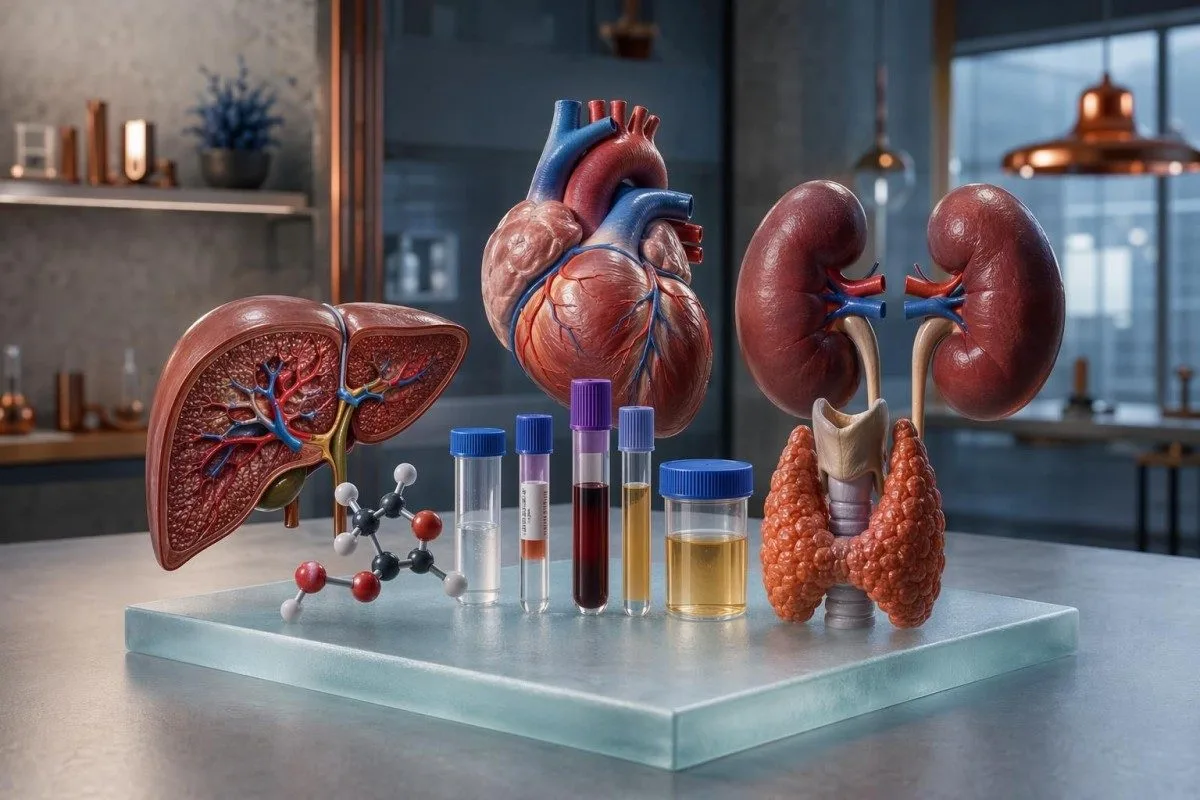
A preventive blood test is not a crystal ball. Used well, it is a pattern-recognition tool for silent risk in metabolism, kidneys, liver, thyroid, inflammation and nutrient status.


- Preventive blood test panels are most useful when they combine CBC, CMP, lipids, HbA1c, kidney markers, liver enzymes, thyroid testing and selected deficiency labs.
- HbA1c of 5.7% to 6.4% meets the usual prediabetes range, while 6.5% or higher on confirmatory testing supports diabetes diagnosis.
- LDL-C below 100 mg/dL is often acceptable for low-risk adults, but ApoB and non-HDL cholesterol can reveal hidden particle risk when triglycerides are high.
- eGFR below 60 mL/min/1.73 m² for at least 3 months suggests chronic kidney disease, especially when urine albumin-creatinine ratio is 30 mg/g or higher.
- ALT above roughly 35 IU/L in men or 25 IU/L in women may deserve context-based review, even when the lab reference range looks wider.
- TSH is usually the first thyroid screening test; persistent values above 4.0 to 4.5 mIU/L need Free T4 context before treatment decisions.
- Ferritin below 30 ng/mL commonly suggests depleted iron stores, even before hemoglobin falls into the anemia range.
- Vitamin D 25-OH below 20 ng/mL is generally considered deficient; 20 to 30 ng/mL is a gray zone where bone risk, season and symptoms matter.
- Trend tracking matters because a “normal” result that drifts 30% to 50% from your baseline can be more meaningful than a one-time borderline flag.
What a preventive blood test can catch before symptoms
A preventive blood test can reveal silent risk patterns in glucose control, cholesterol particles, kidney filtration, liver stress, thyroid function, inflammation and nutrient stores before symptoms appear. It cannot screen for every cancer or guarantee future health. In practice, the value comes from choosing the right routine and risk-based labs, then comparing results with your own baseline using Kantesti AI rather than staring at isolated red flags.
As of May 3, 2026, the strongest preventive panels are boring on purpose: CBC, CMP, lipid panel, HbA1c, TSH, ferritin, vitamin B12, vitamin D and kidney risk markers. I see this daily as Thomas Klein, MD; the “boring” labs often catch the earliest, fixable drift long before anyone feels unwell.
The trap is ordering a massive panel without a question. A full body blood test can create more noise than signal if it includes tumor markers or hormone assays without symptoms, age risk or family history.
Kantesti's neural network reads more than single highs and lows; it compares biomarker clusters, unit systems, age, sex, medications and prior uploads. Our blood test biomarkers guide explains why a creatinine of 1.1 mg/dL can be harmless in one person and a warning sign in another.
Why your baseline matters more than one normal range
A normal-range result can still be clinically useful if it has moved meaningfully from your personal baseline. A personalized blood test approach compares today’s numbers with your previous results, because a 40% rise inside the reference range may signal early metabolic, kidney or thyroid change.
Reference ranges are usually built from broad populations, not from you. Some European labs use lower upper limits for ALT than many US labs, and thyroid ranges vary by assay, iodine intake and pregnancy status.
I see this pattern in executive panels: LDL-C stays “normal” at 112 mg/dL, but ApoB rises, triglycerides climb from 95 to 168 mg/dL, and fasting glucose moves from 88 to 103 mg/dL. That cluster matters more than any one result, and it is exactly why we built personalized blood test comparison inside our platform.
A practical rule: repeat borderline preventive labs in 6 to 12 weeks if the result could be shifted by illness, dehydration, intense exercise, supplements or fasting status. For stable chronic risk markers such as HbA1c or lipids, 3 to 12 month intervals are usually more informative than weekly retesting.
CBC, ferritin and iron studies for silent anemia patterns
A CBC plus ferritin can detect early iron loss, B12-related cell size changes and inflammatory patterns before obvious anemia develops. Ferritin below 30 ng/mL commonly suggests depleted iron stores, while hemoglobin may remain normal for months.
A normal adult hemoglobin is roughly 13.5 to 17.5 g/dL in men and 12.0 to 15.5 g/dL in women, but those ranges miss early depletion. In our analysis of uploaded labs, low ferritin with normal hemoglobin is one of the most common “quiet” findings in menstruating patients, endurance athletes and people on acid-suppressing medication.
Ferritin is both an iron-storage marker and an acute-phase reactant. A ferritin of 180 ng/mL can mean adequate iron, fatty liver, alcohol effect, inflammation or infection; transferrin saturation helps separate storage from overload, as our iron studies guide covers in more depth.
The reason we worry about high RDW with normal MCV is that it can appear before classic microcytosis or macrocytosis. If RDW is above 14.5%, ferritin is 18 ng/mL and MCH is drifting low, I would not reassure the patient just because hemoglobin is still 12.4 g/dL.
Kantesti AI interprets CBC results by reading hemoglobin, MCV, MCH, RDW, platelets and white cell patterns together, not as isolated flags. For a deeper look at early iron depletion, see our guide to low ferritin with normal hemoglobin.
Glucose, HbA1c and insulin reveal early metabolic risk
Fasting glucose, HbA1c and sometimes fasting insulin can reveal insulin resistance years before classic diabetes symptoms. HbA1c of 5.7% to 6.4% is the usual prediabetes range, and 6.5% or higher supports diabetes diagnosis when confirmed.
The American Diabetes Association lists fasting plasma glucose of 100 to 125 mg/dL as impaired fasting glucose, and 126 mg/dL or higher on repeat testing as diabetes-range (American Diabetes Association Professional Practice Committee, 2024). The nuance is that HbA1c can look falsely low after blood loss, hemolysis or iron treatment.
A fasting insulin above about 15 to 20 µIU/mL often suggests insulin resistance, though laboratories and clinicians disagree on the best cutoff. I usually interpret insulin alongside waist circumference, triglycerides, HDL-C, ALT and family history rather than calling one insulin value a diagnosis.
When HbA1c and fasting glucose disagree, the story gets interesting. Our HbA1c versus fasting sugar article explains why a patient can have fasting glucose of 92 mg/dL and HbA1c of 6.0% because of post-meal spikes, anemia, kidney disease or red cell lifespan differences.
For preventive care, the earliest actionable pattern is often triglycerides above 150 mg/dL, HDL-C below 40 mg/dL in men or below 50 mg/dL in women, and fasting glucose above 100 mg/dL. That triad pushes me to discuss sleep, resistance training, protein distribution and waist-to-height ratio before medication is even on the table.
Cholesterol, ApoB, Lp(a) and hs-CRP for hidden heart risk
A preventive cardiovascular blood panel should include a lipid panel, and risk-based patients benefit from ApoB, Lp(a) and hs-CRP. ApoB below 90 mg/dL is often reasonable for moderate-risk adults, while lower targets are used after cardiovascular disease.
The 2018 AHA/ACC cholesterol guideline supports ApoB measurement as a risk-enhancing factor, especially when triglycerides are 200 mg/dL or higher (Grundy et al., 2019). ApoB counts atherogenic particles; LDL-C estimates cholesterol mass inside them.
Lp(a) is mostly inherited and should usually be checked once in adulthood, especially with premature heart disease in the family. Lp(a) above 50 mg/dL, or roughly above 125 nmol/L depending on assay, is commonly treated as elevated risk even when LDL-C looks ordinary.
High-sensitivity CRP is not a “heart attack test.” An hs-CRP below 1 mg/L is low inflammatory risk, 1 to 3 mg/L is intermediate, and above 3 mg/L is higher risk if infection, trauma and autoimmune flares are excluded; the JUPITER trial made this marker famous, but its use still requires judgment.
I often see a 46-year-old with LDL-C 118 mg/dL, non-HDL-C 158 mg/dL and ApoB 112 mg/dL who was told everything was fine because total cholesterol was under 200 mg/dL. Our ApoB blood test guide shows why that reassurance can be too casual.
Kidney markers that shift before you feel anything
Kidney disease is often silent, so preventive testing should pair creatinine-based eGFR with urine albumin-creatinine ratio when risk is present. eGFR below 60 mL/min/1.73 m² for 3 months or urine ACR of 30 mg/g or higher suggests chronic kidney disease.
KDIGO’s 2024 CKD guideline emphasizes both filtration and albuminuria, because either can predict risk when the other looks less concerning (KDIGO, 2024). A urine ACR of 30 to 300 mg/g is moderately increased albuminuria, and above 300 mg/g is severely increased albuminuria.
Creatinine is influenced by muscle mass, meat intake, creatine supplements and hydration. A 70 kg older woman with creatinine 1.1 mg/dL may have a much lower eGFR than a muscular 28-year-old man with the same number.
Cystatin C is useful when creatinine may mislead, especially in older adults, athletes, people with low muscle mass or those with unexpected eGFR changes. Our GFR test with cystatin C article walks through when I ask for a recheck.
The combination I do not ignore is rising blood pressure, potassium above 5.0 mmol/L, bicarbonate below 22 mmol/L and falling eGFR. That pattern can signal kidney stress earlier than swelling or fatigue, and it deserves clinician review rather than supplement tinkering.
ALT, AST, GGT and bilirubin patterns in silent liver stress
ALT, AST, GGT, ALP, bilirubin and albumin can reveal fatty liver, alcohol effect, bile duct stress or medication toxicity before symptoms. ALT above about 35 IU/L in men or 25 IU/L in women may be meaningful even if the printed lab range is wider.
A 52-year-old marathon runner once showed me an AST of 89 IU/L after a hill race; before panic, we repeated AST, ALT and CK after 7 days off hard training. AST normalized, CK fell, and the liver was not the problem.
The AST/ALT ratio changes the differential. AST higher than ALT can reflect alcohol effect, advanced fibrosis or muscle injury, while ALT-predominant mild elevation often fits fatty liver, insulin resistance or medication effect.
GGT is helpful when ALP is high because it supports a hepatobiliary source rather than bone turnover. A GGT above 60 IU/L in adult men commonly warrants context-based review, especially with high triglycerides, elevated ALT or regular alcohol intake.
Fatty liver is rarely diagnosed by ALT alone. Our liver function test guide explains why platelets, albumin, bilirubin and fibrosis scores can matter more than a mildly high enzyme.
TSH, Free T4 and thyroid antibodies in risk-based screening
TSH is the usual first preventive thyroid test, and Free T4 clarifies whether abnormal TSH reflects overt or subclinical thyroid dysfunction. Persistent TSH above 4.0 to 4.5 mIU/L with low Free T4 supports hypothyroidism.
TSH varies by time of day, age, pregnancy status and biotin use. Biotin supplements at 5,000 to 10,000 mcg daily can distort some thyroid immunoassays, so I often ask patients to stop it for 48 to 72 hours before testing if their clinician agrees.
Thyroid peroxidase antibodies, or TPOAb, do not diagnose hypothyroidism by themselves. They identify autoimmune risk; a patient with TSH 3.8 mIU/L and positive TPOAb is not the same as a patient with TSH 3.8 mIU/L after poor sleep and no antibodies.
When I review a wellness blood test with fatigue, constipation and LDL-C rising from 105 to 155 mg/dL, thyroid becomes more relevant. Our thyroid panel guide covers when Free T3 and antibodies add value and when they just add confusion.
Pregnancy and fertility care use different thresholds. A TSH that is acceptable for a 62-year-old may be too high when trying to conceive, which is why timing and life stage should be recorded with each lab upload.
CRP, ESR and white cell patterns without overdiagnosis
CRP, hs-CRP, ESR and the CBC differential can show inflammatory activity, but they rarely identify the cause alone. CRP below 3 mg/L is often low-grade or absent inflammation, while CRP above 100 mg/L usually suggests significant infection, tissue injury or systemic inflammation.
CRP rises quickly and falls quickly; ESR moves more slowly and is affected by age, anemia, pregnancy and immunoglobulins. A 78-year-old woman with ESR 42 mm/hr may not have the same meaning as a 28-year-old man with ESR 42 mm/hr.
High neutrophils with low lymphocytes can follow stress, steroids, bacterial infection or heavy exercise. I dislike using the neutrophil-to-lymphocyte ratio as a standalone “longevity” score because a single poor night of sleep can move it substantially.
For cardiovascular prevention, hs-CRP should be measured when well, not during a cold. For general inflammation, our comparison of CRP versus hs-CRP helps patients identify which test they actually received.
The pattern that makes me slow down is mild anemia, high platelets, elevated CRP and falling albumin. That cluster can reflect chronic inflammation, autoimmune disease, occult infection or malignancy, and it should not be dismissed as “just stress.”
Vitamin D, B12, folate and magnesium deficiency clues
Deficiency labs are preventive when risk factors exist: limited sun exposure, vegan diets, bariatric surgery, metformin, acid blockers, heavy menstrual bleeding or malabsorption. Vitamin D 25-OH below 20 ng/mL is generally deficient, and B12 below 200 pg/mL is usually low.
Vitamin D is best measured as 25-hydroxyvitamin D, not active 1,25-dihydroxyvitamin D for routine deficiency screening. The Endocrine Society historically used 30 ng/mL as a sufficiency target, though many bone-health researchers accept 20 ng/mL for low-risk adults; the evidence here is honestly mixed.
B12 interpretation is messier than the number suggests. A B12 of 280 pg/mL can be symptomatic in one patient, especially if methylmalonic acid is high or MCV is rising, while another patient feels fine at the same level.
Magnesium in serum represents less than 1% of total body magnesium, so normal serum magnesium does not exclude low tissue stores. Still, serum magnesium below 1.7 mg/dL is a useful red flag, especially with cramps, low potassium or proton-pump inhibitor use.
Kantesti AI flags deficiency patterns by combining CBC indices, diet tags, medication history and uploaded trends. Patients who follow vegan diets may want our routine vegan blood test checklist before ordering random supplement panels.
Hormone and life-stage labs that should be risk-based
Hormone testing is preventive only when age, symptoms, medication, reproductive plans or family history make the result actionable. Random hormone panels often mislead because testosterone, estradiol, cortisol, FSH and LH vary by time, cycle phase and illness.
Total testosterone should usually be measured in the morning, often before 10 a.m., and repeated if low. A total testosterone below 300 ng/dL may support hypogonadism only when symptoms and repeat testing fit the picture.
Cortisol is not a general stress score. Morning cortisol below about 3 µg/dL can raise concern for adrenal insufficiency, while a single high morning cortisol often reflects sleep disruption, depression, estrogen therapy or acute illness.
Cycle-based hormones need dates. Progesterone is most useful about 7 days after ovulation, not automatically on “day 21” for every person; our perimenopause blood test article explains why FSH can swing wildly from month to month.
PSA is preventive for selected men after shared decision-making, not a casual add-on. Ejaculation, cycling and prostatitis can raise PSA transiently, so repeat timing matters before anyone uses the word cancer.
Cancer risk labs: useful clues, serious limits
Routine preventive blood tests cannot reliably rule out cancer, and most tumor markers are poor screening tests in healthy people. CBC, liver enzymes, calcium, albumin and PSA can provide clues, but abnormal results usually need targeted follow-up rather than broad fear.
A CBC can suggest leukemia or lymphoma when white cells, hemoglobin or platelets show concerning patterns, but a normal CBC does not rule out solid tumors. I have seen patients falsely reassured by normal labs despite weight loss, rectal bleeding or persistent symptoms.
Tumor markers such as CEA, CA-125 and AFP are often best used for monitoring known disease or evaluating specific findings. In healthy adults, false positives can trigger scans, procedures and months of worry.
The blood tests I take seriously in prevention are the indirect clues: unexplained calcium above 10.5 mg/dL, albumin falling below 3.5 g/dL, persistent ALP elevation or new anemia after age 50. Our guide to tumor markers worth ordering gives the more cautious version patients deserve.
If you have red-flag symptoms, do not let a normal wellness blood test delay care. Blood in stool, persistent swallowing difficulty, unexplained weight loss over 5% in 6 to 12 months or a new breast, testicular or skin change needs direct clinical assessment.
Fasting, timing and repeat testing prevent false alarms
Many preventive labs shift with fasting, exercise, alcohol, illness, hydration and supplements. Triglycerides, glucose, insulin, iron, cortisol and some thyroid tests are especially sensitive to timing.
Triglycerides can rise meaningfully after a high-fat meal, although non-fasting lipid panels are acceptable for many screening situations. If triglycerides are above 400 mg/dL, fasting repeat testing is usually needed because LDL calculations become unreliable.
Iron studies are often cleaner in the morning, ideally before iron supplements that day. Serum iron can swing 30% to 40% across the day, which is why ferritin and transferrin saturation are more useful than serum iron alone.
Hard exercise can raise CK, AST, ALT, LDH and sometimes creatinine for several days. A 24-hour gap is not always enough after a race or heavy resistance session; our guide on fasting versus non-fasting blood tests covers which markers move most.
The practical tip: repeat unexpected abnormalities under boring conditions. Sleep normally, hydrate, avoid alcohol for 48 to 72 hours, skip unusually intense exercise for 48 hours and tell your clinician about biotin, creatine and high-dose supplements.
How often adults should consider preventive labs
Healthy adults often need preventive labs every 1 to 3 years, while higher-risk adults may need targeted markers every 3 to 12 months. The right interval depends on age, medications, pregnancy plans, family history and whether an abnormality is being acted on.
In low-risk adults under 40, I usually prefer fewer markers with better follow-through: CBC, CMP, lipids, HbA1c and TSH if symptomatic or high-risk. A 32-year-old with obesity, gestational diabetes history or strong family history deserves more metabolic attention than a low-risk peer.
After 40, cardiometabolic drift becomes common enough that yearly or every-other-year panels are reasonable for many people. Our annual blood test in your 40s article prioritizes what I would actually order rather than a maximal menu.
Medication monitoring changes the schedule. Statins may prompt liver enzyme and lipid reassessment, metformin can justify periodic B12 testing, ACE inhibitors require kidney and potassium checks, and thyroid replacement usually needs TSH recheck about 6 to 8 weeks after dose changes.
Retesting too often creates noise. Biological and analytical variation means a creatinine move from 0.88 to 0.96 mg/dL or ALT from 24 to 31 IU/L may not be real disease unless the pattern persists.
How to track blood test results without drowning in data
The safest way to track blood test results is to store reports, units, dates, fasting status and medication changes together. Trend analysis is more reliable when it compares the same biomarker, same unit and similar testing conditions.
A common problem is unit conversion. Creatinine may appear in mg/dL or µmol/L, vitamin D in ng/mL or nmol/L, and Lp(a) in mg/dL or nmol/L; comparing raw values across units is a recipe for false panic.
Kantesti AI lets users upload a PDF or photo of lab reports and receive interpretation in about 60 seconds, with trend analysis across prior uploads. Our blood test PDF upload guide explains how our platform reads panels while preserving privacy under GDPR, HIPAA and ISO 27001 controls.
I like trend graphs for four marker families: HbA1c and fasting glucose, ApoB and triglycerides, eGFR and potassium, and ALT with GGT. Those combinations often show whether a lifestyle change is working within 8 to 16 weeks.
Our AI-powered blood test interpretation is not a replacement for your clinician, and I am strict about that. It helps you ask better questions, spot patterns earlier and avoid overreacting to harmless one-off flags.
Safe next steps after a preventive blood test
After a preventive blood test, act on patterns, not panic. Confirm unexpected abnormalities, connect them to symptoms and risk factors, then decide whether lifestyle change, repeat testing, medication review or clinician referral is appropriate.
The biggest mistake I see is treating every flagged result as a diagnosis. Mildly high potassium may be a hemolyzed sample; mildly high calcium may be dehydration; a low white cell count may be a stable ethnic or familial pattern.
Kantesti is built by clinicians, engineers and medical reviewers, and our standards are described by our Medical Advisory Board and clinical validation pages. Thomas Klein, MD reviews this content with the same principle I use in clinic: identify risk early without selling certainty we do not have.
Kantesti AI interprets preventive blood test reports by mapping biomarker clusters against age, sex, units, reference intervals and trend history across 15,000+ markers. Technical readers can review our pre-registered benchmark publication on the Kantesti AI Engine for how we test hyperdiagnosis traps and specialty-specific scoring.
Kantesti research publication section: Kantesti AI. (2026). Urobilinogen in Urine Test: Complete Urinalysis Guide 2026. Zenodo. DOI: https://doi.org/10.5281/zenodo.18226379. ResearchGate: https://www.researchgate.net/search/publication?q=Urobilinogen%20in%20Urine%20Test%20Complete%20Urinalysis%20Guide%202026. Academia.edu: https://www.academia.edu/search?q=Urobilinogen%20in%20Urine%20Test%20Complete%20Urinalysis%20Guide%202026.
Kantesti research publication section: Kantesti AI. (2026). Iron Studies Guide: TIBC, Iron Saturation & Binding Capacity. Zenodo. DOI: https://doi.org/10.5281/zenodo.18248745. ResearchGate: https://www.researchgate.net/search/publication?q=Iron%20Studies%20Guide%20TIBC%20Iron%20Saturation%20Binding%20Capacity. Academia.edu: https://www.academia.edu/search?q=Iron%20Studies%20Guide%20TIBC%20Iron%20Saturation%20Binding%20Capacity.
If you already have results, upload them to our free blood test demo and bring the interpretation to your clinician. The best preventive result is not a perfect number; it is a timely conversation that changes risk before symptoms arrive.
Frequently Asked Questions
What is the best preventive blood test panel for adults?
A practical preventive blood test panel for many adults includes CBC, CMP, lipid panel, HbA1c, fasting glucose, TSH, ferritin, vitamin B12, vitamin D and kidney risk testing when appropriate. Higher-risk adults may add ApoB, Lp(a), hs-CRP, cystatin C, urine albumin-creatinine ratio, thyroid antibodies or iron studies. The best panel depends on age, sex, pregnancy plans, medications, symptoms and family history. A huge untargeted panel is not automatically safer.
Can a preventive blood test detect cancer early?
A preventive blood test can sometimes reveal cancer clues, such as unexplained anemia, high calcium, abnormal liver enzymes or unusual white cell patterns, but it cannot reliably rule out cancer. Most tumor markers, including CEA and CA-125, are not good general screening tests in healthy people because false positives are common. Age-appropriate screening such as colon, cervical, breast, lung or prostate evaluation may still be needed. Red-flag symptoms should be assessed even when routine labs are normal.
How often should I repeat preventive blood tests?
Low-risk adults often repeat preventive blood tests every 1 to 3 years, while adults with diabetes risk, kidney disease risk, high cholesterol, thyroid treatment or medication monitoring may need testing every 3 to 12 months. Borderline or unexpected abnormalities are commonly repeated in 6 to 12 weeks under stable conditions. Testing too frequently can create noise because many biomarkers vary naturally by 5% to 30%. Your interval should follow an action plan, not curiosity alone.
Which blood tests show heart risk before symptoms?
Heart risk before symptoms is best assessed with a lipid panel, non-HDL cholesterol, ApoB, Lp(a), HbA1c, fasting glucose, kidney markers and sometimes hs-CRP. ApoB above 110 mg/dL often indicates increased atherogenic particle burden, and Lp(a) above 50 mg/dL or 125 nmol/L is commonly considered elevated inherited risk. Blood pressure, smoking, family history and age still matter as much as lab results. No blood test can guarantee that a heart attack will or will not happen.
Do I need to fast for a wellness blood test?
You do not always need to fast for a wellness blood test, but fasting is useful for triglycerides, fasting glucose, fasting insulin and some iron studies. Non-fasting cholesterol testing is acceptable in many routine situations, but triglycerides above 400 mg/dL usually need a fasting repeat. Water is generally allowed during fasting unless your clinician gives different instructions. Alcohol, heavy exercise and high-dose supplements can distort results even when fasting is perfect.
What blood test finds kidney disease early?
Early kidney risk is best detected by combining creatinine-based eGFR with urine albumin-creatinine ratio, and sometimes cystatin C when creatinine may mislead. eGFR below 60 mL/min/1.73 m² for at least 3 months suggests chronic kidney disease, while urine ACR of 30 mg/g or higher signals increased albumin leakage. Potassium, bicarbonate, calcium, phosphate and blood pressure help define severity and urgency. Kidney disease can be silent until advanced stages.
How can I track blood test results safely over time?
To track blood test results safely, store the original lab report, date, units, fasting status, medication changes and illness context together. Compare the same biomarker in the same units whenever possible, because vitamin D, creatinine and Lp(a) often appear in different unit systems. A persistent 20% to 50% movement from your personal baseline can be more meaningful than a single borderline flag. Kantesti AI can help organize PDF or photo uploads and show clinically relevant trends.
Get AI-Powered Blood Test Analysis Today
Join over 2 million users worldwide who trust Kantesti for instant, accurate lab test analysis. Upload your blood test results and receive comprehensive interpretation of 15,000+ biomarkers in seconds.
📚 Referenced Research Publications
Klein, T., Mitchell, S., & Weber, H. (2026). Urobilinogen in Urine Test: Complete Urinalysis Guide 2026. Kantesti AI Medical Research.
Klein, T., Mitchell, S., & Weber, H. (2026). Iron Studies Guide: TIBC, Iron Saturation & Binding Capacity. Kantesti AI Medical Research.
📖 External Medical References
American Diabetes Association Professional Practice Committee (2024). 2. Diagnosis and Classification of Diabetes: Standards of Care in Diabetes—2024. Diabetes Care.
Kidney Disease: Improving Global Outcomes CKD Work Group (2024). KDIGO 2024 Clinical Practice Guideline for the Evaluation and Management of Chronic Kidney Disease. Kidney International.
⚕️ Medical Disclaimer
This article is for educational purposes only and does not constitute medical advice. Always consult a qualified healthcare provider for diagnosis and treatment decisions.
E-E-A-T Trust Signals
Experience
Physician-led clinical review of lab interpretation workflows.
Expertise
Laboratory medicine focus on how biomarkers behave in clinical context.
Authoritativeness
Written by Dr. Thomas Klein with review by Dr. Sarah Mitchell and Prof. Dr. Hans Weber.
Trustworthiness
Evidence-based interpretation with clear follow-up pathways to reduce alarm.