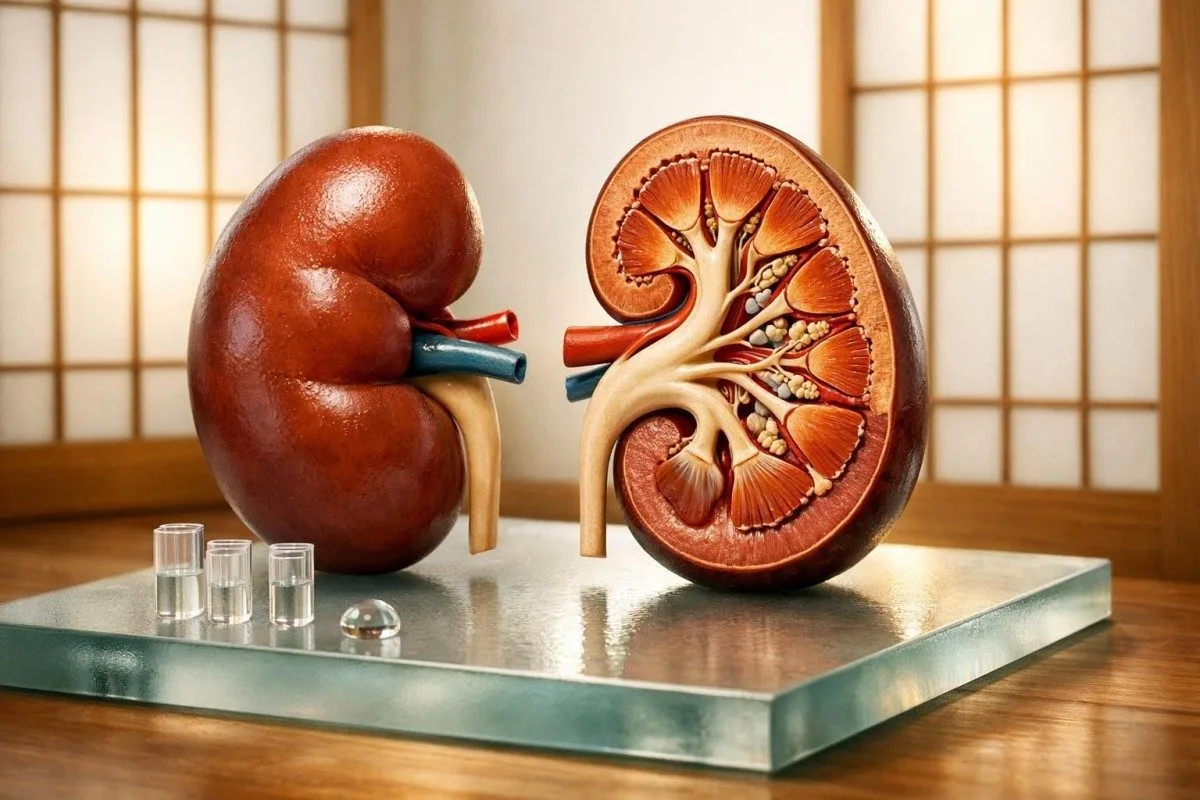
A renal panel is more than one kidney number. This patient-first guide shows how clinicians read creatinine, BUN, eGFR, electrolytes, albumin, calcium, and phosphorus as one story.


- Creatinine is usually about 0.6-1.3 mg/dL in adults, but muscle mass can shift the 'normal' meaning by more than the printed range suggests.
- eGFR above 90 mL/min/1.73 m² is often reassuring; below 60 for at least 3 months supports chronic kidney disease when the result is persistent.
- BUN is usually 7-20 mg/dL, and a BUN/creatinine ratio above 20:1 often points to dehydration, reduced kidney perfusion, or high protein breakdown.
- Potassium above 6.0 mmol/L can become an emergency because dangerous heart rhythm changes may occur even before severe symptoms appear.
- CO2/bicarbonate below 22 mmol/L suggests metabolic acidosis, and below 18 mmol/L deserves prompt clinical review when kidney markers are also abnormal.
- Albumin below 3.5 g/dL can make total calcium look falsely low and may reflect kidney protein loss, inflammation, liver disease, or fluid overload.
- Phosphorus above 4.5 mg/dL with a falling eGFR raises concern for CKD-mineral bone disease, though phosphorus often stays normal until kidney disease is more advanced.
- Trend over time matters more than one isolated result; a creatinine rise of 0.3 mg/dL within 48 hours meets one AKI criterion used in practice.
- A renal panel is a blood test only; early kidney damage can still be missed if urine albumin-creatinine ratio is abnormal while creatinine remains normal.
What a renal function panel actually checks
A renal function panel is a kidney blood test that usually includes creatinine, BUN, sodium, potassium, chloride, bicarbonate, calcium, phosphorus, albumin, glucose, and a calculated eGFR. It screens for dehydration, medication effects, acute kidney injury, chronic kidney disease, and acid-base problems; the real mistake is reading one number alone. I wrote this as Thomas Klein, MD, after years of seeing patients panic over a creatinine of 1.3 that was harmless in one person and serious in another. On Kantesti AI, we often compare it with our deeper look at what changes before creatinine rises.
A renal panel is distinct from a basic metabolic panel because it leans into kidney-relevant chemistry. Many laboratories add phosphorus and albumin, which is why this test feels more focused than a general chemistry screen; our comparison of the renal panel vs CMP goes into the overlap and the gaps.
We order it when we want to answer three questions at once: is filtration falling, is fluid balance off, and are the kidneys still controlling acid and minerals properly? The combination of creatinine 1.6 mg/dL, potassium 5.7 mmol/L, and CO2 18 mmol/L tells a much riskier story than creatinine 1.6 mg/dL alone.
The blind spot matters too. A renal function panel is still a blood test, so it can miss early diabetic or hypertensive kidney damage if urine albumin-creatinine ratio is abnormal while the blood values still look ordinary.
Which tests are usually included in a renal panel
Most renal panels include 10-12 chemistry markers: glucose, BUN, creatinine, eGFR, sodium, potassium, chloride, CO2/bicarbonate, calcium, phosphorus, and albumin. Some labs also show a BUN/creatinine ratio, and our Blood Test Biomarkers Guide is useful if your report uses unfamiliar units.
Creatinine and eGFR screen filtration. BUN tracks nitrogen waste handling, but it also rises with dehydration, GI bleeding, steroids, and high protein turnover; glucose matters because uncontrolled diabetes remains one of the commonest drivers of kidney damage worldwide.
Electrolytes show whether the kidneys are maintaining chemical balance. Sodium is usually 135-145 mmol/L, potassium 3.5-5.0 mmol/L, chloride 98-106 mmol/L, and total CO2 22-29 mmol/L in most adult labs; numbers outside those bands can reflect kidney disease, but also vomiting, diarrhea, medications, or sample handling.
Here is what patients rarely hear: phosphorus and albumin are included because kidney disease affects bone-mineral metabolism and protein balance earlier than many people expect. Some European labs package these markers separately, so two reports can both be called a kidney blood test yet not contain exactly the same list.
What a standard renal panel does not include
A standard renal panel usually does not include cystatin C, urine albumin-creatinine ratio, parathyroid hormone, or kidney imaging. If your eGFR is below 60 mL/min/1.73 m², diabetes is present, or blood pressure has been hard to control, those follow-up tests often change the interpretation more than repeating creatinine alone.
How creatinine and eGFR work together
Creatinine is usually about 0.7-1.3 mg/dL in adult males and 0.6-1.1 mg/dL in adult females, though some labs report 53-115 µmol/L and 44-97 µmol/L instead. eGFR above 90 mL/min/1.73 m² is often reassuring, while a persistent value below 60 deserves a closer look; if your creatinine is up, start with our review of high creatinine levels.
Creatinine comes from muscle metabolism, so it is never a pure kidney number. That is why the GFR test versus eGFR difference matters: eGFR adjusts for age and sex, but it still inherits creatinine's bias from muscle mass, diet, and a few medications.
Most labs now use CKD-EPI equations rather than the older MDRD approach because the 2009 Annals of Internal Medicine paper by Levey et al. improved accuracy, especially when true filtration is above 60 mL/min/1.73 m². Some reports still cap the result as '>60' or '>90' rather than printing a precise value, and eGFR is less reliable in acute kidney injury because creatinine can lag 24-48 hours behind the real fall in filtration.
When values do not fit the person in front of us, our AI on Medical Validation & Clinical Standards flags a creatinine-eGFR mismatch rather than forcing a neat answer. The 2021 NEJM equations from Inker et al. brought cystatin C back into the conversation for exactly this reason—frail older adults, amputees, and very muscular patients are where creatinine misleads most often.
A small but useful clinical nuance
eGFR is an estimate, not a direct measurement. When I see creatinine 1.0 mg/dL in a frail 82-year-old and the lab reports eGFR 58, I do not reassure them based on the creatinine alone; the estimate is usually closer to the real risk than the naked creatinine number.
What BUN and the BUN-creatinine ratio can tell you
BUN is usually 7-20 mg/dL, and the BUN/creatinine ratio is often around 10:1 to 20:1. A high ratio often points to dehydration or reduced kidney perfusion rather than intrinsic kidney damage; if that pattern is on your report, our BUN/creatinine ratio guide is a good next stop.
BUN rises when urea production rises or when the kidneys reabsorb more urea. That means a BUN of 28 mg/dL with creatinine 1.0 mg/dL often has a different meaning from BUN 28 mg/dL with creatinine 2.2 mg/dL—same BUN, very different physiology.
I see false alarms here all the time. A short course of prednisone, a high-protein diet, heavy training, tissue breakdown, or an upper GI bleed can push BUN upward without primary kidney failure, while severe liver disease can keep BUN deceptively low because the liver is not making normal amounts of urea.
The ratio helps most when the clinical picture is simple and the sample is drawn at a stable moment. It helps less in mixed cases—say, an 82-year-old on diuretics with heart failure and chronic kidney disease—because both numbers are being pulled by several forces at once.
Electrolytes, bicarbonate, and the urgent clues doctors look for
Electrolytes often tell you whether a renal function panel is routine or urgent. Potassium above 6.0 mmol/L, sodium below 125 mmol/L, or CO2 below 18 mmol/L deserves prompt clinician review, and our electrolyte panel guide explains the basics if those markers moved together.
Potassium is the one I respect fastest. A potassium of 5.1-5.5 mmol/L is usually mild, 5.6-5.9 warrants quicker follow-up, and 6.0 mmol/L or above can threaten heart rhythm—especially if creatinine is rising or there are ECG changes; see our page on high potassium warning signs if that is the number you are staring at.
Total CO2 on a renal panel is a surrogate for bicarbonate, not a breathing test. When CO2 falls below 22 mmol/L, we think about metabolic acidosis; when it drops below 18 mmol/L with high chloride and impaired kidney function, the kidneys may be failing to hold acid-base balance.
Sodium is trickier than people expect. A sodium of 131 mmol/L is not automatically kidney failure, and our review of what low sodium means goes into the common causes; in practice I look first at the company it keeps—glucose, volume status, diuretics, and whether the patient is drinking far more free water than their kidneys can clear.
Albumin, calcium, and phosphorus: the part patients are rarely told
Serum albumin is usually 3.5-5.0 g/dL, calcium 8.6-10.2 mg/dL, and phosphorus 2.5-4.5 mg/dL in adults. This trio is where a kidney panel starts acting like a metabolic story, and our separate guide on low albumin clues helps if swelling or liver disease is also in the picture.
Low albumin can signal kidney protein loss, liver disease, malnutrition, inflammation, or simple dilution from fluid overload. It also drags total calcium down on paper, which is why a measured calcium of 8.2 mg/dL may be less concerning if albumin is 2.8 g/dL—though corrected calcium formulas can overestimate the truth in sick hospitalized patients.
Phosphorus is one of those late-but-important markers. In chronic kidney disease, phosphate retention often begins before serum phosphorus rises much because fibroblast growth factor 23 and parathyroid hormone compensate first; once phosphorus is clearly high, kidney impairment is usually no longer subtle.
Patients mix up serum albumin with urine albumin all the time. The blood test tells us about protein circulating in the bloodstream, while urine albumin tells us about leakage through the kidney filter; one can be abnormal while the other is still normal, and that distinction changes treatment.
How to read the whole renal function panel as one story
The safest way to read a renal function panel is as a pattern, not a scoreboard. A mildly high creatinine with normal potassium, normal CO2, and a concentrated-looking BUN often behaves very differently from the same creatinine paired with hyperkalemia and acidosis; dehydration commonly creates the first pattern, which I cover in our piece on dehydration false highs.
A classic dehydration pattern is BUN 26 mg/dL, creatinine 1.2 mg/dL, sodium 146 mmol/L, albumin slightly high, and otherwise stable electrolytes. In that setting I usually repeat the test after rehydration rather than labeling kidney disease, because the kidneys may be filtering adequately once plasma volume is restored.
Intrinsic kidney injury looks different. When creatinine climbs by 0.3 mg/dL or more within 48 hours, or to 1.5 times baseline within 7 days, KDIGO 2024 still treats that as acute kidney injury; if potassium is rising and CO2 is falling at the same time, I worry far more than I do about the creatinine number alone.
This is one place where borderline results matter. A value can sit inside the lab range and still be wrong for you, which is why I like our explainer on how to read borderline blood tests; one pattern Thomas Klein, MD, sees often is a patient whose creatinine is 'normal' at 1.0 mg/dL but has quietly risen from a personal baseline of 0.6.
When a normal creatinine or low GFR can mislead
Yes, a normal creatinine can miss kidney impairment, and a low eGFR can sometimes overcall it. The common mismatch is an older, small-framed adult with creatinine 0.8 mg/dL but eGFR 55 mL/min/1.73 m², or a muscular athlete with creatinine 1.4 mg/dL and otherwise normal findings; we unpack the first pattern in low GFR with normal creatinine.
Creatinine tracks muscle mass more than most patients realize. That is why our article on the normal range for creatinine matters less than your baseline: a frail 78-year-old can have significant kidney disease with a seemingly ordinary creatinine, while a 28-year-old lifter on creatine may sit above the lab range with perfectly adequate filtration.
Pregnancy flips the script again. Because renal plasma flow and GFR rise, serum creatinine often falls into the 0.4-0.8 mg/dL range; a creatinine of 1.0 mg/dL that looks 'normal' on a generic lab sheet can be worrisome in late pregnancy.
This is where Kantesti AI helps most in my experience: we compare the result with age, sex, unit system, prior trends, and the rest of the panel instead of treating the printed reference range as gospel. I wrote that logic into our clinical workflow as Thomas Klein, MD, because isolated creatinine interpretation is one of the most common avoidable errors I see.
When cystatin C changes the answer
If you are very muscular, very frail, pregnant, or living with an amputation, a creatinine-based estimate can be off by a meaningful margin. In those cases, cystatin C or a combined creatinine-cystatin equation often gives a cleaner answer than repeating creatinine alone.
How to prepare for a renal panel so the result is not misleading
For most people, a renal function panel does not require fasting, but hydration and timing still matter. Plain water is usually fine unless your clinician ordered additional fasting tests, and our article on fasting before blood work covers the common exceptions.
Do not chug water right before the draw; that can dilute sodium slightly and make the result look cleaner than your usual state. A normal morning of fluids is better, and intense exercise in the 24 hours before testing can raise creatinine, potassium, and BUN more than people expect.
Creatine supplements, large cooked-meat meals, NSAIDs, ACE inhibitors, ARBs, diuretics, trimethoprim, and cimetidine can all move kidney markers or their interpretation. If you want a second read after the lab posts, you can upload the report to our free blood test review and we will map the pattern against prior results in about 60 seconds.
Another practical nuisance is hemolysis—the sample breaks down in the tube and potassium reads falsely high. When a potassium value looks wildly out of character and the rest of the panel is calm, I often repeat the sample before scaring the patient.
Which renal panel results need quick follow-up or emergency care
A few renal panel results deserve quick action, not a wait-and-see plan. Potassium at or above 6.0 mmol/L, rapidly rising creatinine, CO2 below 15 mmol/L, sodium below 120-125 mmol/L, or new eGFR below 30 mL/min/1.73 m² should be taken seriously; our guide to critical lab values explains the general approach.
Symptoms change the urgency. Reduced urine output, sudden swelling, shortness of breath, marked weakness, palpitations, confusion, or vomiting alongside abnormal kidney numbers pushes me toward same-day assessment, because the lab is no longer just a lab.
Not every abnormal result needs the emergency department. But persistent eGFR under 60 for more than 3 months, recurrent potassium above 5.5 mmol/L, or repeated albumin-calcium-phosphorus changes should trigger a structured review with a clinician, and our Medical Advisory Board uses exactly that trend-based approach when we review complex uploads.
If you only remember one rule, make it this: urgency comes from the number plus the symptoms plus the speed of change. A creatinine of 1.8 mg/dL that was 1.0 last week worries me more than a stable 1.8 that has looked the same for years.
How Kantesti interprets renal panels and what our data add
As of April 23, 2026, the best way to interpret a renal function panel is to combine the current pattern with prior labs, units, age, and clinical context. Our guide to tracking blood test history year over year is not just nice to have—kidney interpretation gets markedly better once you know whether today's creatinine is new, stable, or drifting.
In our 2026 global report covering 2.5 million analyzed results, renal markers were among the most frequently uploaded chemistry groups because patients wanted help with exactly these gray-zone patterns. The dataset is summarized in the Zenodo publication AI Blood Test Analyzer: 2.5M Tests Analyzed | Global Health Report 2026 (DOI: 10.5281/zenodo.18175532), and our blood test comparison guide shows why a 0.2-0.3 mg/dL creatinine shift can matter even when both numbers sit inside a lab range.
We built that logic into Kantesti AI after seeing the same mistakes across 127+ countries: unit confusion between mg/dL and µmol/L, eGFR reported as '>60' without nuance, and serum albumin mistaken for urine protein. If your report arrives as a phone photo or PDF, our explainer on how AI reads lab reports safely shows the workflow we use before returning an interpretation.
Our role is interpretation, not diagnosis in a vacuum. The strongest renal-panel decisions still come from pattern recognition, repeat testing, urine data when needed, and clinician judgment; that same method appears in our Zenodo methods paper RDW Blood Test: Complete Guide to RDW-CV, MCV & MCHC (DOI: 10.5281/zenodo.18202598), even though the biomarker is different.
Frequently Asked Questions
Is a renal function panel the same as a kidney blood test?
A renal function panel is a type of kidney blood test, and many patients use the terms interchangeably. In most laboratories it includes creatinine, BUN, electrolytes, CO2, calcium, phosphorus, albumin, glucose, and a calculated eGFR, which is more detailed than a single creatinine test. The exact list still varies by lab, so two reports labeled 'renal panel' may not match line for line. In practice, I tell patients to check the marker list before comparing one lab's panel with another.
Does a renal panel include a GFR test?
Most renal panels include a calculated eGFR, not a directly measured GFR test. The calculation is usually derived from serum creatinine plus age and sex, and many labs now use the 2021 CKD-EPI approach. A directly measured GFR is far less common, takes longer, and uses specialized filtration markers rather than routine chemistry alone. If your report only says '>60' or '>90,' that is still an eGFR result, just reported in a simplified way.
Can you have kidney disease with normal creatinine?
Yes, kidney disease can be present even when creatinine looks normal. This happens often in older adults with low muscle mass, in early diabetic kidney disease where urine albumin rises before creatinine, and sometimes in small-framed patients whose baseline creatinine is very low. A creatinine of 0.8 mg/dL can coexist with an eGFR around 55 mL/min/1.73 m², which is why clinicians do not read creatinine in isolation. Persistent urine albumin or an eGFR below 60 for at least 3 months changes the picture substantially.
Do I need to fast before a renal function panel?
Most people do not need to fast for a renal function panel alone. Water is usually encouraged, but drinking a very large amount right before the draw can dilute sodium slightly and muddy the comparison with prior results. What changes the panel more often than breakfast is hard exercise, creatine supplements, cooked meat, NSAIDs, diuretics, and certain antibiotics such as trimethoprim. If the renal panel is bundled with glucose, lipid, or other fasting tests, follow the stricter instructions for the whole order.
What renal panel results are considered dangerous?
The results that make me move fastest are potassium at or above 6.0 mmol/L, sodium below about 120-125 mmol/L, CO2 below 15-18 mmol/L with symptoms, and a creatinine rise of 0.3 mg/dL or more within 48 hours. A new eGFR below 30 mL/min/1.73 m² also deserves prompt clinician review, especially if urine output is falling. The number alone is not everything: palpitations, weakness, shortness of breath, swelling, vomiting, confusion, or reduced urination raise the urgency sharply. Those combinations are the ones I do not like patients to sit on for a week.
Why is my BUN high but creatinine normal?
A high BUN with normal creatinine often points to dehydration, high protein intake, steroid use, recent hard exercise, or an upper GI bleed rather than primary kidney failure. A BUN/creatinine ratio above 20:1 makes dehydration or reduced kidney perfusion more likely, but it is not diagnostic by itself. Severe liver disease can do the opposite and keep BUN unexpectedly low because urea production falls. This is exactly why clinicians pair BUN with creatinine, symptoms, medications, and fluid status instead of treating BUN as a standalone kidney test.
Get AI-Powered Blood Test Analysis Today
Join over 2 million users worldwide who trust Kantesti for instant, accurate lab test analysis. Upload your blood test results and receive comprehensive interpretation of 15,000+ biomarkers in seconds.
📚 Referenced Research Publications
Klein, T., Mitchell, S., & Weber, H. (2026). AI Blood Test Analyzer: 2.5M Tests Analyzed | Global Health Report 2026. Kantesti AI Medical Research.
Klein, T., Mitchell, S., & Weber, H. (2026). RDW Blood Test: Complete Guide to RDW-CV, MCV & MCHC. Kantesti AI Medical Research.
📖 External Medical References
Kidney Disease: Improving Global Outcomes (KDIGO) CKD Work Group (2024). KDIGO 2024 Clinical Practice Guideline for the Evaluation and Management of Chronic Kidney Disease. Kidney International.
⚕️ Medical Disclaimer
This article is for educational purposes only and does not constitute medical advice. Always consult a qualified healthcare provider for diagnosis and treatment decisions.
E-E-A-T Trust Signals
Experience
Physician-led clinical review of lab interpretation workflows.
Expertise
Laboratory medicine focus on how biomarkers behave in clinical context.
Authoritativeness
Written by Dr. Thomas Klein with review by Dr. Sarah Mitchell and Prof. Dr. Hans Weber.
Trustworthiness
Evidence-based interpretation with clear follow-up pathways to reduce alarm.