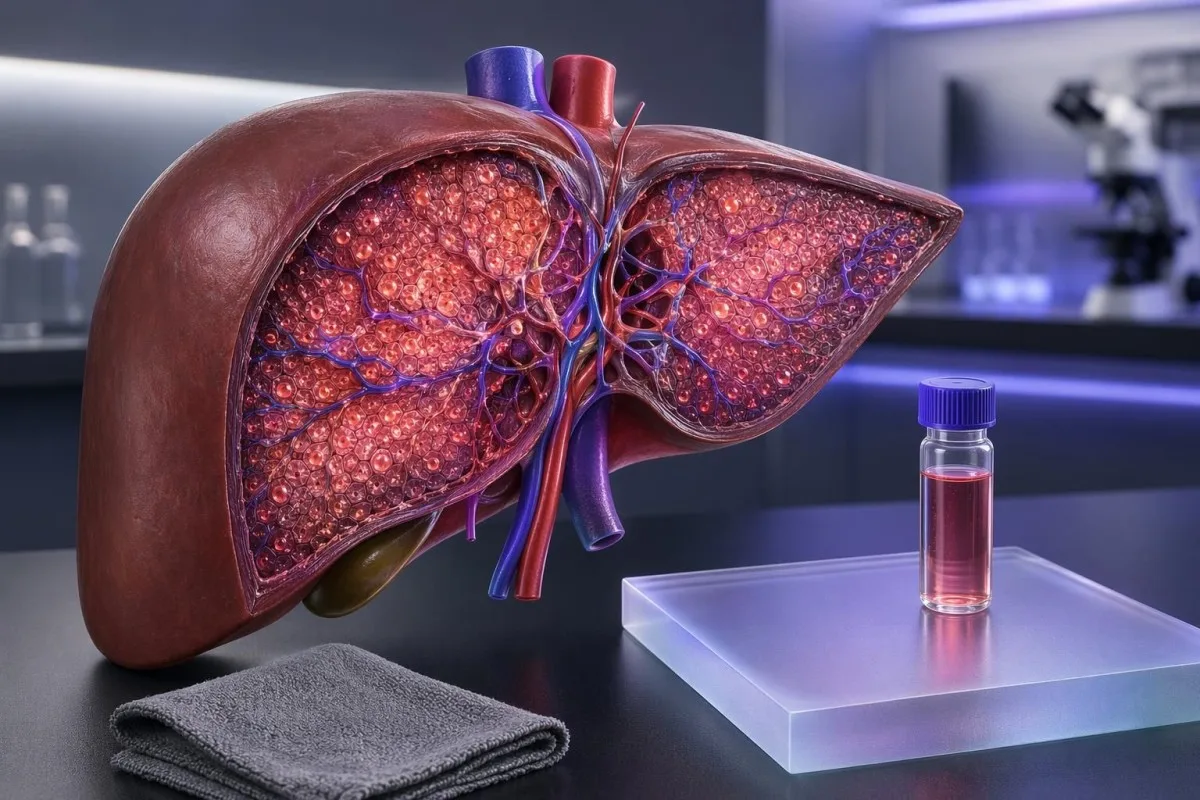
Serum retinol is useful in specific situations, not as a casual wellness screen. The tricky part is that supplements, inflammation, liver disease, and recent meals can make the number look more certain than it really is.


- Vitamin A blood test usually measures serum or plasma retinol, the circulating transport form of vitamin A.
- Normal range for vitamin A in many adult labs is about 20–60 mcg/dL, equal to roughly 0.70–2.09 µmol/L.
- Low vitamin A blood test results below 20 mcg/dL may suggest deficiency, but infection and inflammation can temporarily lower retinol.
- Severe deficiency is often considered below 10 mcg/dL, especially when night blindness, dry eyes, or malabsorption is present.
- High vitamin A levels above 80–100 mcg/dL raise concern for excess intake, liver storage overload, or impaired clearance.
- Supplement toxicity risk is mainly from preformed retinol, retinyl palmitate, retinyl acetate, cod liver oil, and retinoid medicines—not beta-carotene from food.
- Adult upper limit for preformed vitamin A is 3,000 mcg RAE daily, which is about 10,000 IU of retinol.
- Best preparation is usually a fasting morning sample after avoiding non-essential retinol supplements for 24–72 hours, unless your clinician gives different instructions.
- Kantesti AI reads vitamin A in context with liver enzymes, triglycerides, albumin, inflammation markers, kidney function, and medication history.
What a vitamin A blood test actually measures
A vitamin A blood test is most useful when deficiency, malabsorption, liver disease, bariatric surgery, retinoid medication use, or supplement toxicity is clinically plausible. Most labs measure serum retinol; a typical adult range is about 20–60 mcg/dL. I’m Thomas Klein, MD, and when I review this result in Kantesti AI blood test analyzer, I never read it alone—retinol can look low during infection and look high after poorly timed supplements. For broader deficiency patterns, our vitamin deficiency marker guide is often the better starting point.
Serum retinol is the transport form of vitamin A bound mainly to retinol-binding protein, and it does not perfectly mirror liver stores until deficiency or excess is fairly advanced. That is the first trap: a person can have falling liver stores while retinol still sits at 28–35 mcg/dL.
In our analysis of 2M+ blood test uploads, the most misleading vitamin A results tend to come from people taking high-dose beauty supplements, cod liver oil, or isotretinoin while also having mild ALT or triglyceride changes. A result of 72 mcg/dL may be less interesting in isolation than 72 mcg/dL with triglycerides of 260 mg/dL and ALT of 58 IU/L.
The test is not a general energy screen. If fatigue is the only symptom and CBC, ferritin, B12, TSH, glucose, and liver enzymes have not been checked, retinol is rarely the first lab I would order.
Normal range for vitamin A and unit conversions
The normal range for vitamin A is commonly 20–60 mcg/dL for adults, which converts to about 0.70–2.09 µmol/L. Some European laboratories report retinol in µmol/L, and some specialist nutrition labs use slightly different cutoffs; this is why unit-aware interpretation matters, as we explain in our blood test normal range guide.
A retinol value below 20 mcg/dL is generally considered low in adults, while values below 10 mcg/dL fit severe biochemical deficiency when symptoms match. The World Health Organization uses serum retinol below 0.70 µmol/L to define vitamin A deficiency at a population level, not as a perfect individual diagnosis (WHO, 2011).
A vitamin A value above 80 mcg/dL is not automatically toxic, but it should trigger a supplement and medication review. Values above 100 mcg/dL, especially fasting, make me look carefully for retinol intake, retinoid therapy, liver strain, kidney impairment, or high retinyl esters.
Conversion is simple enough: 1 mcg/dL retinol is approximately 0.0349 µmol/L. So a result of 30 mcg/dL is about 1.05 µmol/L, and a result of 90 mcg/dL is about 3.14 µmol/L.
How to prepare so supplements do not distort retinol
For the cleanest vitamin A blood test, many clinicians prefer a fasting morning sample and avoidance of non-essential vitamin A supplements for 24–72 hours. Fasting is not always mandatory, but retinyl esters rise after a fat-containing meal, so preparation is more important here than with many routine labs; our fasting rules guide covers which results shift most.
Do not stop prescribed retinoid medicines, bariatric vitamins, or pregnancy-related supplements without your clinician’s advice. But if you bought a high-dose retinol capsule online, pausing it before testing may prevent a misleading spike.
The supplement label matters. A capsule listing 3,000 mcg RAE from retinyl palmitate is near the adult upper limit, while beta-carotene from vegetables behaves differently and rarely causes classic vitamin A toxicity.
I see people stack a multivitamin, cod liver oil, a skin supplement, and a ‘vision formula’ without realizing the total retinol dose can exceed 10,000 IU daily. Our supplement timing guide is useful before retesting because the problem is often overlap, not one dramatic overdose.
What a low vitamin A blood test may suggest
A low vitamin A blood test below 20 mcg/dL may suggest low intake, fat malabsorption, liver storage depletion, chronic diarrhea, pancreatic insufficiency, celiac disease, bariatric surgery, or inflammation. The BOND Vitamin A Review emphasizes that serum retinol is homeostatically controlled and falls during the acute-phase response, which can mimic deficiency (Tanumihardjo et al., 2016).
Here is the clinical nuance: CRP of 45 mg/L can temporarily push retinol down even when liver stores are not truly empty. When retinol is 17 mcg/dL during pneumonia, I usually repeat it after recovery rather than diagnosing chronic deficiency from one number.
Malabsorption patterns have a different feel. Low retinol plus low vitamin D, low vitamin E, loose stools, weight loss, and low cholesterol makes fat absorption a real concern; our celiac blood test guide explains one common workup route.
Albumin and zinc matter because retinol travels with carrier proteins. A patient with albumin of 2.9 g/dL and retinol of 16 mcg/dL may need evaluation for protein loss, liver disease, kidney loss, or gut disease before simply swallowing more vitamin A.
Symptoms that make low retinol more convincing
Low retinol is more clinically convincing when it appears with night blindness, dry eyes, Bitot-like conjunctival changes, poor growth in children, frequent infections, or chronic fat-malabsorption symptoms. In children, a retinol result below 20 mcg/dL deserves faster follow-up than the same number in a well adult recovering from a cold.
Night blindness is the classic clue because retinal pigments depend on vitamin A. Patients often describe it in ordinary language: ‘I’m fine in daylight, but parking garages suddenly feel impossible.’
Children are not small adults here. Growth, recurrent respiratory or gastrointestinal infections, and restrictive diets can change the urgency, so I pair retinol with pediatric context from our child lab range guide.
Pregnancy is awkward because both deficiency and excess can matter. If someone is planning pregnancy and has a history of bariatric surgery, inflammatory bowel disease, or very restrictive eating, our preconception labs guide gives a safer framework than self-prescribing retinol.
Patterns that point beyond diet
Low vitamin A with abnormal albumin, INR, bilirubin, triglycerides, or stool symptoms points beyond simple dietary intake. I get more concerned when retinol below 20 mcg/dL travels with low vitamin D, low vitamin E, prolonged INR, or unexplained weight loss.
Bile is needed for fat-soluble vitamin absorption. Cholestatic liver disease can reduce vitamin A absorption even when the diet looks fine, because fat and fat-soluble vitamins do not move through the gut normally.
After bariatric surgery, vitamin A deficiency can show up months to years later, especially after malabsorptive procedures. Our bariatric supplement guide covers why fat-soluble vitamins need structured follow-up rather than occasional guesswork.
Low albumin reframes the result. Retinol-binding protein and transthyretin are part of the transport system, so a low retinol with low total protein should send the reader to our low total protein guide before increasing dose.
What high vitamin A levels may mean
High vitamin A levels above 80–100 mcg/dL may reflect excess preformed retinol intake, retinoid medications, liver storage overload, kidney impairment, or recent supplement timing. Serum retinol alone is imperfect, but a fasting high value plus symptoms is not something I brush off.
Chronic vitamin A toxicity can cause headache, dry skin, hair shedding, bone pain, nausea, fatigue, and liver enzyme abnormalities. Penniston and Tanumihardjo’s review in the American Journal of Clinical Nutrition describes both acute and chronic toxicity patterns, including liver and skeletal effects (Penniston & Tanumihardjo, 2006).
The dose history often solves the puzzle. A patient taking 25,000 IU of preformed retinol daily for acne or skin health may have a very different risk profile from someone eating carrots every day.
When AST, ALT, ALP, GGT, bilirubin, or triglycerides are abnormal alongside high retinol, I move faster. Our elevated liver enzymes guide explains why the pattern matters more than one enzyme.
Why supplements can make results look wrong
Supplements distort vitamin A interpretation because preformed retinol and retinyl esters can raise circulating vitamin A after dosing, while beta-carotene usually does not behave the same way. A fasting retinyl ester fraction above about 10% of total vitamin A has historically been used as a clue to excess stores.
The label terms are not interchangeable. Retinyl palmitate, retinyl acetate, and retinol count as preformed vitamin A; beta-carotene is a provitamin A carotenoid and is regulated by conversion in the intestine.
The Institute of Medicine set the adult tolerable upper intake level for preformed vitamin A at 3,000 mcg RAE per day, about 10,000 IU retinol (Institute of Medicine, 2001). Many patients reach that by accident with a multivitamin plus cod liver oil plus a skin supplement.
Kantesti’s neural network flags possible supplement overlap when uploaded reports show high retinol alongside high triglycerides or liver markers. If your supplement stack is complicated, our AI supplement recommendations page explains how we convert lab context into safer nutrition guidance.
Retinoid medicines, pregnancy, and safety limits
Retinoid medicines and pregnancy change the safety conversation because vitamin A excess can affect the liver, lipids, skin, bones, and fetal development. People who are pregnant, trying to conceive, or taking isotretinoin or acitretin should not use high-dose retinol supplements unless a clinician specifically recommends them.
Isotretinoin is not the same as a vitamin pill, but it sits in the retinoid family. Dermatology monitoring often focuses on ALT, AST, triglycerides, pregnancy prevention where relevant, and symptom review rather than routine serum retinol for everyone.
Pregnancy is where I become blunt: avoid stacking retinol-containing supplements. The adult upper limit of 3,000 mcg RAE per day applies to preformed vitamin A, and fetal risk is tied much more to retinoid exposure than to vegetables rich in carotenoids.
Before new long-term medications that can stress the liver or lipids, a baseline CMP and lipid panel often says more than retinol alone. Our liver function test guide shows the enzyme patterns I look for when retinoids are involved.
Other labs that change the meaning of retinol
A vitamin A result should be read with CRP, albumin, liver enzymes, bilirubin, triglycerides, cholesterol, kidney function, and sometimes zinc or other fat-soluble vitamins. Retinol of 18 mcg/dL with CRP of 70 mg/L means something different from retinol of 18 mcg/dL with chronic diarrhea and low vitamin D.
Inflammation lowers retinol through the acute-phase response. That is why WHO population guidance and nutrition researchers caution against interpreting low serum retinol without inflammation context (WHO, 2011; Tanumihardjo et al., 2016).
Triglycerides matter on the high side. If retinol is 92 mcg/dL and triglycerides are 310 mg/dL, I ask about retinoids, alcohol intake, metabolic syndrome, and supplement oils rather than only the vitamin result.
The lipid panel can also hint at absorption problems when cholesterol is unexpectedly low. For broader lipid context, our lipid panel guide helps readers see why triglycerides are not just a heart-risk number here.
Children, older adults, and chronic illness need different judgment
Children, older adults, and people with chronic disease need more cautious vitamin A interpretation because symptoms, diet, inflammation, and organ reserve differ. A retinol value of 19 mcg/dL in a child with growth faltering is not the same clinical problem as 19 mcg/dL in an adult one week after influenza.
In children, vitamin A deficiency is more likely to matter when there is restricted intake, chronic diarrhea, cystic fibrosis, cholestasis, or poor growth. Pediatric dosing is weight- and diagnosis-specific, so I strongly discourage adult retinol capsules for children.
Older adults may have mixed risks: low intake, low protein, polypharmacy, kidney disease, and supplement stacking. Our senior routine labs guide is useful because retinol needs to sit beside kidney, liver, albumin, CBC, and metabolic markers.
Family context helps. Kantesti can store and compare results across relatives, which matters when a caregiver is tracking restricted diets, bariatric history, or recurrent low fat-soluble vitamins across several household members.
When to repeat retinol and how reliable it is
Repeat a vitamin A blood test when the first result conflicts with symptoms, was drawn during infection, followed recent supplement use, or came from a nonfasting sample after a fatty meal. In practice, I often repeat borderline retinol in 4–8 weeks after correcting preparation or waiting for inflammation to settle.
Serum retinol is usually measured by HPLC or LC-MS/MS in specialist settings, and light exposure or sample handling can matter. If a lab report shows an unexpected result with no units or method, I am cautious before changing treatment.
Small changes are not always biologically meaningful. Moving from 31 to 27 mcg/dL may reflect timing, lab variation, or inflammation rather than a true drop in liver stores.
Trends help more than single flags. Our blood test variability guide explains why a result must exceed normal analytical and biological noise before it deserves a major decision.
What clinicians may check after an abnormal result
After an abnormal vitamin A result, clinicians may check CRP, CMP, fasting lipid panel, albumin, INR, CBC, zinc, vitamin D, vitamin E, stool or celiac testing, and a medication-supplement review. The next test depends on whether the problem looks like deficiency, excess, malabsorption, liver disease, or inflammation.
For low retinol, I usually want at least CRP, albumin, liver enzymes, bilirubin, and a fat-soluble vitamin pattern. If vitamin D and vitamin E are also low, malabsorption rises on the list.
For high retinol, I ask for exact supplement doses in mcg RAE or IU, not vague names. A photo of the label often reveals hidden retinyl palmitate in a product marketed for skin, hair, immunity, or vision.
If you are trying to make sense of several flags at once, our blood test reading guide gives a practical order of operations. One abnormal vitamin result should not distract from a dangerous bilirubin, INR, creatinine, or triglyceride value.
How Kantesti AI reads vitamin A in context
Kantesti AI interprets vitamin A by checking the retinol value against units, reference interval, age, pregnancy context, supplement exposure, liver enzymes, kidney function, lipids, inflammation markers, and historical trends. Our AI-powered blood test interpretation platform is designed to notice patterns a single-marker explanation can miss.
Kantesti covers 15,000+ biomarkers across 75+ languages, which is useful because vitamin A reports arrive in mcg/dL, µmol/L, local lab formats, and scanned PDFs. Our biomarkers guide explains how we normalize units before interpretation.
Clinical safety matters more than speed. Our methodology is aligned with physician review workflows and documented on our medical validation page, including rubric-based checks for overdiagnosis traps and missing red flags.
Most users get an interpretation in about 60 seconds after uploading a PDF or photo. If you want to test the workflow with your own report, use the free blood test analysis page and compare the vitamin A result with the rest of your panel.
Bottom line: retinol is useful, but context wins
The bottom line is that serum retinol is a targeted test, not a perfect measure of total vitamin A stores. A result below 20 mcg/dL or above 80–100 mcg/dL deserves context from symptoms, supplements, inflammation, liver function, lipids, and timing.
In my experience, the most preventable harm comes from well-meaning supplement escalation. Someone sees dry skin, buys high-dose retinol, adds cod liver oil, and months later has headaches, hair shedding, and ALT twice the upper limit.
Our physicians and advisors review content and model behavior through Kantesti’s clinical governance process. You can read more about the doctors behind our work on the Medical Advisory Board page.
Kantesti research publications include: Kantesti AI Research Group. (2026). Multilingual AI Assisted Clinical Decision Support for Early Hantavirus Triage: Design, Engineering Validation, and Real-World Deployment Across 50,000 Interpreted Blood Test Reports. Figshare. https://doi.org/10.6084/m9.figshare.32230290. Kantesti AI Research Group. (2026). Clinical Validation Framework v2.0. Zenodo. https://doi.org/10.5281/zenodo.17993721.
Frequently Asked Questions
What is the normal range for a vitamin A blood test?
The normal range for a vitamin A blood test is commonly about 20–60 mcg/dL in adults, equal to roughly 0.70–2.09 µmol/L. A result below 20 mcg/dL is usually considered low, while values below 10 mcg/dL suggest severe biochemical deficiency when symptoms match. Ranges vary by laboratory, method, fasting status, and units, so the reference interval printed on the report still matters.
What does a low vitamin A blood test mean?
A low vitamin A blood test below 20 mcg/dL may suggest vitamin A deficiency, fat malabsorption, liver storage depletion, chronic diarrhea, bariatric surgery effects, low protein status, or inflammation. Infection can temporarily lower serum retinol through the acute-phase response, so a low value during illness may need repeat testing after recovery. Night blindness, dry eyes, poor growth in children, and low other fat-soluble vitamins make true deficiency more likely.
What causes high vitamin A levels in blood?
High vitamin A levels above about 80–100 mcg/dL most often come from preformed retinol supplements, cod liver oil, retinoid medicines, recent dosing before the test, liver disease, or impaired clearance. Toxicity risk is mainly linked to retinol, retinyl palmitate, retinyl acetate, isotretinoin, and acitretin rather than beta-carotene from vegetables. Symptoms such as headache, dry skin, hair shedding, bone pain, nausea, and abnormal liver enzymes make high results more concerning.
Should I stop supplements before a vitamin A blood test?
Many clinicians prefer avoiding non-essential vitamin A supplements for 24–72 hours before a vitamin A blood test, especially if the goal is to assess baseline retinol rather than supplement absorption. Do not stop prescribed retinoids, bariatric vitamins, pregnancy-related supplements, or medically directed treatment without asking your clinician. A fasting morning sample is often cleaner because retinyl esters can rise after a fat-containing meal.
Can vitamin A supplements be toxic?
Yes, vitamin A supplements can be toxic when they contain high-dose preformed retinol taken chronically or in large acute doses. The adult tolerable upper intake level for preformed vitamin A is 3,000 mcg RAE daily, about 10,000 IU of retinol. Toxicity can affect the liver, bones, skin, nervous system, lipids, and pregnancy safety, so high-dose retinol should not be used casually.
Is beta-carotene the same as vitamin A on a blood test?
Beta-carotene is not the same as preformed vitamin A on a blood test because the body converts beta-carotene into retinol as needed. Serum retinol testing measures circulating retinol, not a complete picture of carotenoid intake. High beta-carotene intake from vegetables may turn the skin orange but usually does not cause classic vitamin A toxicity in the way high-dose retinol supplements can.
When should vitamin A be retested?
Vitamin A is often retested in 4–8 weeks when the initial result was borderline, drawn during infection, affected by recent supplements, or inconsistent with symptoms. If retinol is very low below 10 mcg/dL or very high above 100 mcg/dL, follow-up may be faster and guided by symptoms, liver enzymes, triglycerides, kidney function, and malabsorption clues. Trend interpretation is safer than reacting to one isolated result.
Get AI-Powered Blood Test Analysis Today
Join over 2 million users worldwide who trust Kantesti for instant, accurate lab test analysis. Upload your blood test results and receive comprehensive interpretation of 15,000+ biomarkers in seconds.
📚 Referenced Research Publications
Klein, T., Mitchell, S., & Weber, H. (2026). Multilingual AI Assisted Clinical Decision Support for Early Hantavirus Triage: Design, Engineering Validation, and Real-World Deployment Across 50,000 Interpreted Blood Test Reports. Kantesti AI Medical Research.
Klein, T., Mitchell, S., & Weber, H. (2026). Clinical Validation Framework v2.0 (Medical Validation Page). Kantesti AI Medical Research.
📖 External Medical References
World Health Organization (2011). Serum retinol concentrations for determining the prevalence of vitamin A deficiency in populations. WHO Vitamin and Mineral Nutrition Information System.
⚕️ Medical Disclaimer
This article is for educational purposes only and does not constitute medical advice. Always consult a qualified healthcare provider for diagnosis and treatment decisions.
E-E-A-T Trust Signals
Experience
Physician-led clinical review of lab interpretation workflows.
Expertise
Laboratory medicine focus on how biomarkers behave in clinical context.
Authoritativeness
Written by Dr. Thomas Klein with review by Dr. Sarah Mitchell and Prof. Dr. Hans Weber.
Trustworthiness
Evidence-based interpretation with clear follow-up pathways to reduce alarm.