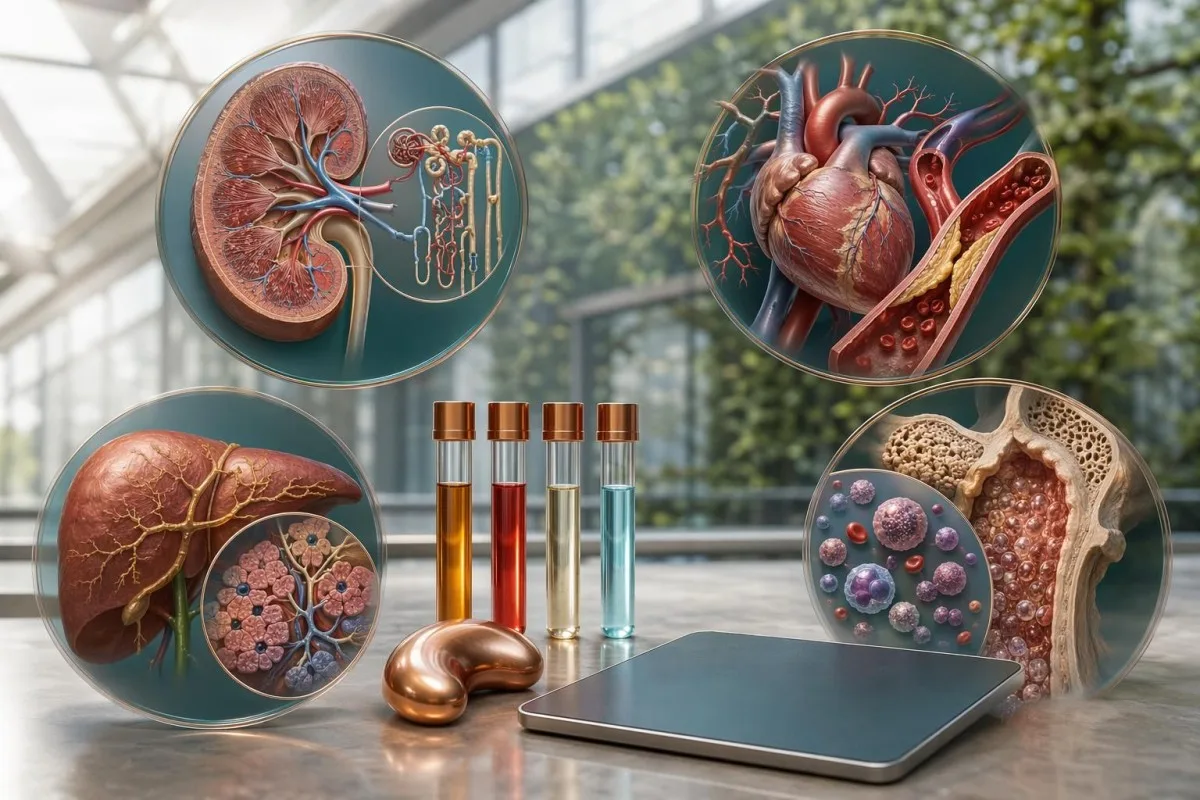
After 60, the same lab number can mean something different. This guide focuses on prevention, medication safety, trend changes, and the quiet red flags I look for first.


- CBC should be checked yearly in most men over 60; hemoglobin below 13.0 g/dL is anemia and deserves a cause, not just iron tablets.
- Kidney function should include eGFR and urine albumin-creatinine ratio; eGFR below 60 mL/min/1.73 m² for 3 months suggests chronic kidney disease.
- Diabetes screening uses fasting glucose and HbA1c; HbA1c 5.7–6.4% is prediabetes and 6.5% or higher meets the diabetes threshold if confirmed.
- Cardiovascular risk is better assessed with LDL-C, non-HDL-C, triglycerides, ApoB, and sometimes Lp(a), not total cholesterol alone.
- PSA follow-up should be individualized after 60; a rising PSA trend can matter more than one mildly high result.
- Medication safety labs matter more with age because NSAIDs, ACE inhibitors, diuretics, statins, anticoagulants, and diabetes drugs can shift potassium, creatinine, liver enzymes, INR, and CK.
- Borderline results deserve action when they are persistent, worsening, paired with symptoms, or part of a pattern such as low hemoglobin plus high ESR.
- Kantesti AI can read uploaded lab PDFs or photos in about 60 seconds and compare new results with older baselines across 15,000+ biomarkers.
What changes after 60 in annual blood work
A blood test for men over 60 should usually include CBC, CMP or renal panel, fasting glucose or HbA1c, lipid panel, PSA when appropriate, TSH, vitamin B12 or ferritin when symptoms or anemia appear, and medication-specific safety labs. Red flags include hemoglobin below 13.0 g/dL, eGFR below 60, urine ACR above 30 mg/g, HbA1c 6.5% or higher, LDL-C above risk-based targets, PSA rising quickly, potassium below 3.0 or above 5.5 mmol/L, and liver enzymes more than 3 times the upper limit.
As of May 14, 2026, I tell men over 60 that the goal is not to order every possible marker; it is to catch silent decline early enough to change the trajectory. A practical starting point is our Kantesti AI interpretation paired with a clinician’s review, especially when old results are available.
The difference between a blood test for men over 50 and one after 60 is trend sensitivity. A creatinine of 1.18 mg/dL may look harmless on a printed range, but if the man has lost muscle since age 55, that same value can hide a meaningful fall in filtration; our senior lab checklist explains why age-adjusted context matters.
In our analysis of 2M+ blood test reports, the common miss is not a dramatic abnormality. It is a small cluster: borderline low hemoglobin, rising RDW, eGFR drifting from 78 to 61, and HbA1c creeping from 5.6% to 6.1% over 4 years. Separately, each result is easy to wave away; together, they describe aging physiology under stress.
CBC results that should not be ignored after 60
A CBC in men over 60 screens for anemia, infection patterns, platelet disorders, and marrow stress. Hemoglobin below 13.0 g/dL in an adult man is anemia, while platelets below 150,000/µL or above 450,000/µL deserve follow-up when persistent.
A normal CBC is reassuring, but the trend is the clinical gold. A man whose hemoglobin drops from 15.1 to 13.4 g/dL in 18 months has lost roughly 11% of his oxygen-carrying reserve even though many lab portals will not flag the result.
The MCV helps point the investigation. Low MCV below about 80 fL suggests iron deficiency or thalassemia trait, while MCV above 100 fL pushes me toward B12 deficiency, folate deficiency, alcohol effect, liver disease, hypothyroidism, or medication effects; our anemia pattern guide goes deeper into those branches.
I worry more about two-line abnormalities than one mild flag. Low hemoglobin plus low platelets, or high WBC plus unexplained anemia, is not a supplement problem until proven otherwise. In older men, persistent anemia can be the first lab clue of kidney disease, chronic inflammation, gastrointestinal blood loss, or a hematology disorder.
Iron, ferritin, B12, and folate when energy drops
Ferritin, transferrin saturation, vitamin B12, folate, and sometimes methylmalonic acid help explain fatigue or anemia in men over 60. Ferritin below 30 ng/mL strongly suggests depleted iron stores, but ferritin can look falsely normal or high during inflammation.
A ferritin of 45 ng/mL may be fine in a healthy 35-year-old, but in a 68-year-old man with low MCV and aspirin use, I would not dismiss it. The reason is simple: ferritin rises as an acute-phase reactant, so inflammation can mask early iron loss.
Serum iron alone is noisy. I prefer ferritin plus transferrin saturation, because transferrin saturation below 20% with falling MCH often catches iron-restricted red cell production earlier than hemoglobin; our iron studies guide shows why one iron value can mislead.
Vitamin B12 below 200 pg/mL is usually deficient, but symptoms can occur between 200 and 350 pg/mL, particularly with neuropathy, metformin use, proton pump inhibitors, or a high MCV. If the story and the number do not match, methylmalonic acid is often a better tie-breaker than repeating the same B12 test twice.
Kidney labs need more than creatinine
Kidney screening after 60 should include creatinine-based eGFR and a urine albumin-creatinine ratio, not creatinine alone. An eGFR below 60 mL/min/1.73 m² for at least 3 months or urine ACR above 30 mg/g suggests chronic kidney disease risk.
Creatinine can understate kidney decline in older men who have lost muscle. According to the KDIGO 2024 CKD guideline, risk classification should combine eGFR category with albuminuria category, because filtration and leakage predict outcomes differently (KDIGO, 2024).
A urine ACR below 30 mg/g is usually normal, 30–300 mg/g is moderately increased, and above 300 mg/g is severely increased albuminuria. I have seen men with eGFR 82 and ACR 140 mg/g who were told their kidneys were normal because only creatinine was discussed.
Potassium, bicarbonate or CO2, calcium, phosphate, and BUN add safety context, especially for men taking ACE inhibitors, ARBs, spironolactone, SGLT2 inhibitors, or frequent NSAIDs. Our urine ACR guide explains why albumin leakage may show up years before creatinine crosses the red line.
Diabetes risk can hide behind normal fasting glucose
Men over 60 should usually screen for diabetes with HbA1c and fasting glucose; some need insulin, C-peptide, or oral glucose testing when results conflict. HbA1c of 5.7–6.4% is prediabetes, and 6.5% or higher meets the diabetes threshold if confirmed.
The ADA Standards of Care in Diabetes—2026 continues to use HbA1c, fasting plasma glucose, and oral glucose tolerance testing for diagnosis, but it also recognizes situations where HbA1c can be unreliable (American Diabetes Association Professional Practice Committee, 2026). Iron deficiency anemia, recent blood loss, kidney disease, and altered red cell turnover can distort A1c.
A fasting glucose of 96 mg/dL can coexist with high post-meal glucose in older men with visceral fat and reduced muscle mass. That is why a man with neuropathy, night urination, fatty liver, or triglycerides above 150 mg/dL may need more than one sugar marker; our prediabetes lab guide covers borderline patterns.
I see a common pattern in retired men who walk less after a joint injury: HbA1c rises from 5.5% to 6.0% without much weight gain. The physiology is not mysterious. Less leg muscle activity means less glucose disposal, so the lab changes before the mirror does.
Cardiovascular markers beyond total cholesterol
A cardiovascular blood test for men over 60 should include LDL-C, HDL-C, triglycerides, non-HDL-C, and often ApoB or Lp(a) when risk is unclear. ApoB reflects the number of atherogenic particles, while Lp(a) is mostly inherited and should usually be checked once.
The 2018 AHA/ACC cholesterol guideline lists ApoB as a risk-enhancing factor, especially when triglycerides are 200 mg/dL or higher, and identifies Lp(a) of at least 50 mg/dL or 125 nmol/L as a risk-enhancing level (Grundy et al., 2019). This is where total cholesterol is too blunt.
LDL-C below 100 mg/dL is often called near optimal, but targets tighten for men with diabetes, prior heart attack, stroke, CKD, or high coronary calcium. If triglycerides are elevated, I often look at non-HDL-C because it captures cholesterol carried by remnant particles too.
ApoB below 90 mg/dL is commonly used as a lower-risk benchmark in primary prevention, while values above 130 mg/dL suggest high particle burden. Our ApoB blood test guide explains the frustrating case where LDL-C looks average but particle count is still risky.
Liver enzymes reveal diet, medication, and alcohol strain
ALT, AST, ALP, bilirubin, albumin, and GGT help assess liver and bile-duct patterns in men over 60. ALT or AST more than 3 times the upper reference limit, rising bilirubin, or low albumin deserves timely review.
ALT is more liver-specific than AST, but AST rises with muscle injury too. A 64-year-old cyclist with AST 89 IU/L and ALT 31 IU/L after a long ride may need CK and repeat testing, not an immediate liver panic.
GGT is the marker I use when ALP is high and I want to know whether the signal is hepatobiliary rather than bone. A GGT above about 60 IU/L in adult males typically warrants context-based review, especially when ALP, bilirubin, or alcohol intake points in the same direction.
Statins, antifungals, anti-seizure drugs, methotrexate, and heavy supplement stacks can all shift liver enzymes. Before starting or changing medication, our liver function guide is useful because the pattern matters more than one isolated arrow on a portal.
Hormone and nutrient markers that change with age
TSH, free T4, testosterone, SHBG, vitamin D, calcium, and sometimes PTH can clarify fatigue, falls, low mood, low libido, and muscle loss after 60. A TSH above 10 mIU/L usually deserves treatment discussion, while mild TSH elevation is more nuanced in older adults.
Clinicians disagree on mild TSH elevations in older men, and honestly, that disagreement is reasonable. A TSH of 5.8 mIU/L with normal free T4 may be watched in a well 72-year-old, but it feels different if he has bradycardia, constipation, high LDL-C, and positive thyroid antibodies.
Total testosterone should be drawn in the morning, usually before 10 a.m., and repeated if low. Total testosterone below 300 ng/dL is commonly used as a biochemical cutoff, but SHBG can make total testosterone misleading; symptoms and free testosterone estimates often settle the question.
Vitamin D is another area where the evidence is mixed. I generally treat clear deficiency below 20 ng/mL and individualize 20–30 ng/mL based on bone density, falls, calcium, kidney function, and PTH; our TSH age guide explains why age and timing can change interpretation.
PSA follow-up after 60 is about trend, not panic
PSA testing after 60 should be individualized using age, family history, urinary symptoms, prior PSA values, prostate size, infection history, and patient preference. A PSA above 4.0 ng/mL can be abnormal, but a rapid rise from baseline may matter even below that number.
A PSA result is not a cancer diagnosis. Cycling, ejaculation, urinary infection, catheterization, recent instrumentation, and benign enlargement can raise PSA, which is why I often repeat a borderline result after removing avoidable confounders.
For men aged 60–69, many clinicians still discuss PSA screening because potential benefit and potential harm are both real. Some European labs and urology pathways use age-specific thresholds, while others rely more heavily on PSA density, free PSA percentage, MRI, and shared decision-making.
A free PSA percentage below 10% is more concerning than above 25% when total PSA is in a gray zone, though it is not a stand-alone answer. Our PSA age-range guide is a good starting point before discussing whether reflex tests or imaging make sense.
Medication safety labs become non-negotiable
Medication monitoring after 60 should match the drug: creatinine and potassium for ACE inhibitors or ARBs, INR for warfarin, liver enzymes for several long-term medicines, and CK when statin symptoms suggest muscle injury. Borderline kidney function can turn a normal dose into too much.
The lab result I dislike most is potassium 5.6 mmol/L in a man taking an ACE inhibitor, spironolactone, and ibuprofen for back pain. Each drug may be defensible alone; the combination can push kidney handling of potassium into dangerous territory.
Warfarin needs INR monitoring, and many direct oral anticoagulants still need kidney function checks even though they do not use INR for dose adjustment. Our medication monitoring guide lays out common retest timelines after starting or changing long-term drugs.
Kantesti AI flags medication-risk patterns by reading the lab values alongside age, sex, units, and prior results when uploaded. Our AI-powered blood test interpretation is not a substitute for a prescribing clinician, but it can make the follow-up question much sharper: Is this result expected, drug-related, or unsafe?
Inflammation markers need a story attached
CRP, ESR, ferritin, albumin, CBC, calcium, and liver markers can support investigation when an older man has weight loss, night sweats, persistent pain, or unexplained anemia. ESR above 50 mm/hr with low hemoglobin deserves more attention than a mild isolated CRP bump.
CRP rises quickly and falls quickly; ESR moves more slowly and is affected by age, anemia, kidney disease, and immunoglobulins. That is why high ESR with low hemoglobin can feel more ominous than CRP 8 mg/L after a cold.
Calcium above 10.5 mg/dL, albumin below 3.5 g/dL, alkaline phosphatase rising, or unexplained high platelets can change the investigation. None of these proves cancer, but after 60 they should not be filed under aging without a second look.
The misconception is that cancer screening means ordering every tumor marker. In practice, unexplained weight loss is often better approached with CBC, CMP, ESR or CRP, urinalysis, age-appropriate screening, and targeted imaging; our weight loss lab guide explains the first-pass logic.
When borderline results deserve action
A borderline result deserves action when it persists, worsens, clusters with other abnormalities, or matches symptoms. A single LDL-C of 132 mg/dL is different from LDL-C 132 plus ApoB 128 mg/dL, A1c 6.1%, eGFR 58, and family history of early heart disease.
Reference ranges are built from populations, not from your personal baseline. If a man’s platelets have been 210,000/µL for a decade and now sit at 390,000/µL with ferritin 18 ng/mL, I do not call that normal just because it is under 450,000/µL.
The practical rule I use is 3 layers: size of abnormality, speed of change, and biological coherence. A mildly high ALT with high triglycerides and rising waist size points toward metabolic liver strain; the same ALT after a marathon points somewhere else.
Borderline results are where trend tools pay for themselves. Our borderline lab guide shows why a 10% change may be noise for one marker but meaningful for another, depending on biological and analytical variability.
How to prepare so results are not misleading
Men over 60 should prepare for blood testing by clarifying fasting instructions, avoiding unusually hard exercise for 24–48 hours, staying normally hydrated, and listing all medicines and supplements. Poor preparation can falsely shift glucose, triglycerides, creatinine, CK, AST, potassium, and PSA.
Fasting is not always required, but triglycerides and fasting glucose are easier to interpret when the fasting status is known. Coffee without sugar may still affect some people’s glucose, cortisol, and gastrointestinal activity, so I prefer plain water before morning metabolic panels.
Hard exercise can raise CK into the hundreds or thousands and push AST up without liver injury. A 61-year-old man who starts heavy deadlifts two days before annual labs can look medically alarming on paper, even if the issue is muscle repair.
Biotin supplements can interfere with some immunoassays, including thyroid tests and certain hormone tests. If you take high-dose biotin, tell the clinician and lab; our fasting guide covers the common preparation traps that create false alarms.
How Kantesti AI reads older men’s lab patterns
Kantesti AI interprets annual labs for men over 60 by combining reference ranges, age, sex, units, cross-marker patterns, and prior results when available. That matters because eGFR, PSA, A1c, ferritin, and hemoglobin often become clinically meaningful through movement over time.
Kantesti’s neural network reads uploaded PDF or photo lab reports in about 60 seconds, then organizes abnormal, borderline, and trend-sensitive findings into plain language. Our clinical standards are described in medical validation, including how we test the system against trap cases where overdiagnosis would be easy.
In my work as Thomas Klein, MD, I look for pattern explanations rather than isolated flags. A low creatinine in a frail man may reflect low muscle mass, not excellent kidney health; the same report may still show eGFR that needs cystatin C confirmation.
Our PDF upload guide is especially useful for families managing older parents’ records across clinics and countries. Kantesti AI supports 75+ languages, which matters when a father’s old report is in German, his new report is in English, and the units do not match cleanly.
Research, review, and the safest next step
Kantesti’s research section documents how our AI tools are engineered and evaluated, but a lab interpretation still needs clinical judgment. For men over 60, the safest next step is to combine AI interpretation, trend review, medication context, and a licensed clinician when red flags appear.
Thomas Klein, MD, and the Kantesti medical team treat AI interpretation as decision support, not a diagnosis. Our Medical Advisory Board reviews clinical framing so that a borderline HbA1c, PSA, or eGFR is not exaggerated into fear or minimized into false reassurance.
Kantesti Ltd, 2026. Multilingual AI Assisted Clinical Decision Support for Early Hantavirus Triage: Design, Engineering Validation, and Real-World Deployment Across 50,000 Interpreted Blood Test Reports. Figshare. DOI: 10.6084/m9.figshare.32230290. Related listings: ResearchGate search, Academia.edu search.
Kantesti Ltd, 2026. Women’s Health Guide: Ovulation, Menopause & Hormonal Symptoms. Figshare. DOI: 10.6084/m9.figshare.31830721. Related listings: ResearchGate search, Academia.edu search.
If you already have results, upload them to try free analysis. Bring the output to your clinician if hemoglobin is below 13.0 g/dL, eGFR is below 60, ACR is above 30 mg/g, potassium is above 5.5 mmol/L, PSA is rising, or any abnormality comes with chest pain, black stools, severe weakness, confusion, fever, or rapid weight loss.
Frequently Asked Questions
What blood tests should a man over 60 get every year?
Most men over 60 should discuss a yearly CBC, CMP or renal panel, eGFR, fasting glucose or HbA1c, lipid panel, and medication-specific safety labs with their clinician. PSA, TSH, ferritin, B12, vitamin D, urine albumin-creatinine ratio, ApoB, and Lp(a) may be appropriate depending on symptoms, family history, medications, and prior results. A blood test for men over 60 should be personalized because kidney function, anemia risk, diabetes risk, and cardiovascular risk often change silently before symptoms appear.
Is a blood test for men over 60 different from a blood test for men over 50?
Yes, the core labs overlap, but after 60 doctors usually pay closer attention to anemia, kidney decline, medication safety, PSA trends, and borderline metabolic results. A blood test for men over 50 often focuses on first-line prevention, while annual labs for men over 60 should compare year-over-year changes such as eGFR falling below 60 mL/min/1.73 m² or hemoglobin dropping toward 13.0 g/dL. The same lab value can carry more risk after 60 if it is worsening or paired with symptoms.
What blood test results are red flags in older men?
Red flags in older men include hemoglobin below 13.0 g/dL, eGFR below 60 mL/min/1.73 m² for 3 months, urine ACR above 30 mg/g, potassium below 3.0 or above 5.5 mmol/L, HbA1c 6.5% or higher, calcium above 10.5 mg/dL, and PSA rising quickly from baseline. Liver enzymes more than 3 times the upper reference limit or platelets below 150,000/µL or above 450,000/µL also deserve follow-up if persistent. Symptoms such as black stools, chest pain, confusion, fever, severe weakness, or unexplained weight loss make abnormal labs more urgent.
How often should men over 60 check kidney function?
Many men over 60 should check kidney function at least yearly, especially if they have high blood pressure, diabetes, heart disease, kidney stones, or regular use of NSAIDs. Kidney screening should include eGFR and urine albumin-creatinine ratio because creatinine alone can miss early kidney damage. Men taking ACE inhibitors, ARBs, diuretics, spironolactone, SGLT2 inhibitors, or anticoagulants may need more frequent checks after dose changes.
Should every man over 60 get a PSA test?
Not every man over 60 needs the same PSA plan; PSA screening should be individualized using life expectancy, family history, urinary symptoms, prior PSA values, and personal preference. A PSA above 4.0 ng/mL can be abnormal, but a rising trend from 1.2 to 3.1 ng/mL may also deserve discussion. Infection, recent ejaculation, cycling, catheterization, and benign enlargement can raise PSA, so borderline results are often repeated before major decisions.
Can borderline blood test results be ignored if they are still in range?
Borderline blood test results should not be ignored when they are persistent, worsening, clustered with other abnormalities, or linked to symptoms. For example, hemoglobin of 13.2 g/dL may be inside some lab ranges, but it matters if the man’s usual hemoglobin was 15.0 g/dL and ferritin is 22 ng/mL. Trend, baseline, medications, and clinical context often matter more than a single high or low flag.
Can Kantesti AI replace my doctor for annual labs?
Kantesti AI does not replace a doctor; it provides AI-powered interpretation that helps organize lab results, trends, and possible follow-up questions. Our platform can read uploaded blood test PDFs or photos in about 60 seconds and compare results across more than 15,000 biomarkers when data are available. Men over 60 should share concerning findings such as eGFR below 60, HbA1c 6.5% or higher, potassium above 5.5 mmol/L, or hemoglobin below 13.0 g/dL with a licensed clinician.
How should I handle biotin supplements before blood testing?
Biotin, often marketed for hair and nails, can interfere with some thyroid, hormone, and heart tests. Tell the ordering clinician and laboratory about every supplement; they may advise stopping biotin for 48 hours or longer before testing.
Should I take my usual morning medications before an annual blood test?
Ask your clinician which medicines to take, but most blood pressure and heart medicines are continued with water. Fast 8–12 hours only when your clinician specifically wants fasting glucose or triglycerides; never skip diabetes medicines or anticoagulants without instructions.
Get AI-Powered Blood Test Analysis Today
Join over 2 million users worldwide who trust Kantesti for instant, accurate lab test analysis. Upload your blood test results and receive comprehensive interpretation of 15,000+ biomarkers in seconds.
📚 Referenced Research Publications
Klein, T., Mitchell, S., & Weber, H. (2026). Multilingual AI Assisted Clinical Decision Support for Early Hantavirus Triage: Design, Engineering Validation, and Real-World Deployment Across 50,000 Interpreted Blood Test Reports. Kantesti AI Medical Research.
Klein, T., Mitchell, S., & Weber, H. (2026). Women's Health Guide: Ovulation, Menopause & Hormonal Symptoms. Kantesti AI Medical Research.
📖 External Medical References
KDIGO Work Group (2024). KDIGO 2024 Clinical Practice Guideline for the Evaluation and Management of Chronic Kidney Disease. Kidney International.
American Diabetes Association Professional Practice Committee (2026). Standards of Care in Diabetes—2026. Diabetes Care.
⚕️ Medical Disclaimer
This article is for educational purposes only and does not constitute medical advice. Always consult a qualified healthcare provider for diagnosis and treatment decisions.
E-E-A-T Trust Signals
Experience
Physician-led clinical review of lab interpretation workflows.
Expertise
Laboratory medicine focus on how biomarkers behave in clinical context.
Authoritativeness
Written by Dr. Thomas Klein with review by Dr. Sarah Mitchell and Prof. Dr. Hans Weber.
Trustworthiness
Evidence-based interpretation with clear follow-up pathways to reduce alarm.