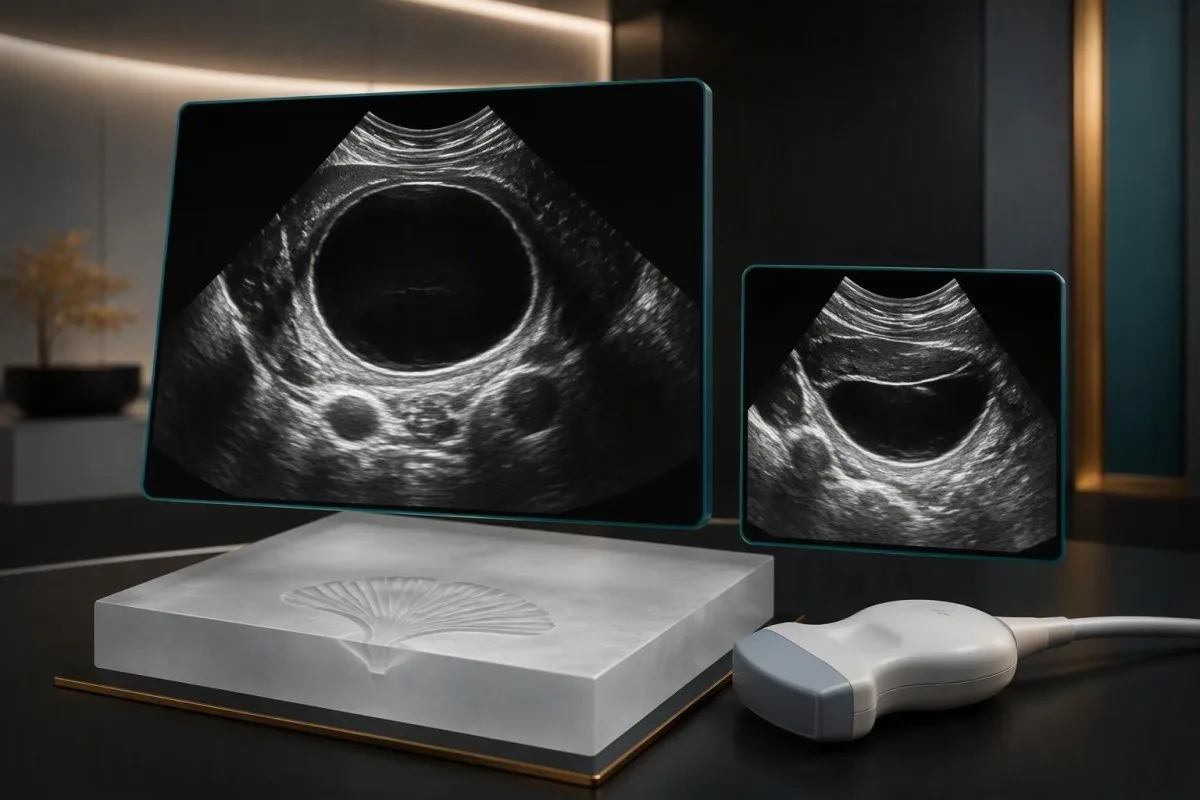
Rupture can release fluid or cause internal bleeding; torsion twists the ovary and threatens its blood supply. Both can cause sudden pelvic pain, so symptoms alone cannot safely tell them apart.


- Ovarian cyst symptoms may include one-sided pelvic aching, pressure, bloating, or pain during sex, but many cysts cause no symptoms.
- Ruptured ovarian cyst symptoms can include sudden pain with little vaginal bleeding; significant bleeding may remain entirely inside the abdomen.
- Ovarian torsion symptoms often include sudden unilateral pain and nausea or vomiting, but pain can fluctuate when twisting is intermittent.
- جىددىي باھالاش is needed for sudden severe pelvic pain, especially with vomiting, faintness, shoulder-tip pain, fever, or possible pregnancy.
- Cyst size above approximately 5 cm increases torsion risk, but a smaller cyst—or no visible cyst—does not exclude torsion.
- ھامىلدارلىقنى تەكشۈرۈش is part of acute pelvic pain assessment whenever pregnancy is biologically possible, even when contraception is used.
- Ultrasound with Doppler helps assess a cyst, pelvic fluid, and circulation, but preserved Doppler flow does not rule out torsion.
- تەرتىپلىك (serial) تەكشۈرۈش may include repeat hemoglobin during suspected bleeding and repeat serum hCG about 48 hours apart in a clinically stable pregnancy of unknown location.
How do cyst rupture and ovarian torsion differ?
Cyst rupture releases cyst contents and sometimes blood into the pelvis; ovarian torsion twists the ovary's supporting tissues and can interrupt its blood supply. Both may cause sudden, one-sided pelvic pain, and neither the pain pattern nor the absence of vaginal bleeding reliably distinguishes them.
Sudden severe pelvic pain needs emergency assessment rather than an attempt to identify the cause at home. Clinicians usually combine vital signs, examination, pregnancy testing, and pelvic ultrasound; suspected torsion can require urgent surgery even when an initial scan is inconclusive.
An ovarian cyst is a fluid-containing structure, not automatically a disease requiring treatment. Many functional cysts resolve over 2–3 menstrual cycles, while endometriomas, dermoid cysts, and other persistent masses behave differently; our ئاياللار ساغلاملىقى يېتەكچىسى explains the cycle-related background.
My clinical priority, writing as Dr. Thomas Klein, is to separate a potentially time-sensitive emergency from a cyst suitable for follow-up—not to label pain from its description alone. Kantesti's organizational background explains our role: Kantesti is an AI blood test analyzer that can explain laboratory findings, but cannot diagnose cyst rupture or exclude ovarian torsion.
Which symptoms can an uncomplicated ovarian cyst cause?
Ovarian cyst symptoms can include a dull pelvic ache, one-sided pressure, bloating, discomfort during sex, or urinary frequency from pressure on nearby structures. Many cysts cause no symptoms, and discovering a cyst on ultrasound does not establish that it explains every symptom.
Pain location is an imperfect map of the underlying problem. A cyst on the right can cause central discomfort, while bowel distension, pelvic floor muscle pain, or a urinary condition may produce similar sensations; the useful question is whether symptoms match the examination and imaging, not just the side.
Cycle timing offers context, not confirmation. Brief midcycle discomfort may accompany ovulation, whereas pain recurring with menstruation can suggest endometriosis; a symptom diary covering 2–3 cycles helps identify patterns once urgent causes have been excluded.
Polycystic ovary syndrome is not the same as having a single large ovarian cyst. The small follicles associated with PCOS are different from an acute painful cyst, and the presence of pelvic pain alone does not establish PCOS; our PCOS diagnostic criteria explain why hormone patterns, menstrual history, and other findings matter.
What do ruptured ovarian cyst symptoms feel like?
Ruptured ovarian cyst symptoms often start as sudden pelvic pain, sometimes during exercise or sex and sometimes without a trigger. Pain may remain localized or become more widespread as fluid or blood irritates the abdominal lining; vaginal bleeding may be absent.
A small amount of released fluid can cause striking pain without dangerous blood loss. The reverse also matters: ongoing internal bleeding may initially produce only moderate discomfort, so pain intensity is not a dependable measurement of bleeding severity.
Shoulder-tip pain, dizziness, fainting, or unusual weakness can accompany significant abdominal bleeding. These symptoms require emergency care, especially with possible pregnancy; a pad count cannot measure internal bleeding, although our heavy menstrual bleeding guidance can help distinguish separate concerns about vaginal blood loss.
After a clinician confirms an uncomplicated rupture and establishes stability, pain often begins improving over the next 24–48 hours, although tenderness can last longer. That timeframe is not permission to wait out an unassessed first episode: a presumed rupture can actually be torsion, ectopic pregnancy, or another abdominal emergency.
Which ovarian torsion symptoms should raise concern?
Ovarian torsion symptoms commonly include sudden one-sided pelvic or lower abdominal pain with nausea or vomiting. Pain can come and go when the adnexa twist and partially untwist, so temporary improvement does not make torsion safe to dismiss.
An enlarged ovary or adnexal mass increases mobility and creates a mechanical opportunity for twisting. Masses around 5 cm or larger are a recognized risk factor, but size is not a diagnostic cutoff; torsion also occurs with smaller masses and without a mass.
ACOG's Committee Opinion No. 783 reports that torsion occurs without an associated mass or cyst in as many as 46% of pediatric and adolescent cases (ACOG, 2019). That adolescent finding should not be applied as an adult prevalence estimate, but it explains why a normal-looking or cyst-free scan cannot end the assessment automatically.
Fertility treatment can enlarge the ovaries and increase torsion risk, including during early pregnancy. Anyone receiving ovarian stimulation should mention the treatment and the date of their last monitoring scan during emergency assessment; our IVF monitoring explanation describes why laboratory results and ultrasound measurements are interpreted together.
Why can't symptoms alone distinguish rupture from torsion?
Rupture and torsion share too many symptoms for a reliable home diagnosis: abrupt pain, tenderness, nausea, and sometimes fluctuating discomfort. Appendicitis, ectopic pregnancy, kidney stones, and pelvic infection can overlap with both, making examination and testing necessary.
Consider a hypothetical 29-year-old with 30 minutes of right-sided pelvic pain and vomiting. A known cyst makes torsion or rupture plausible, but it does not eliminate appendicitis or ectopic pregnancy; anchoring on an old ultrasound report can delay recognition of the actual emergency.
Nausea makes torsion more concerning, but rupture can also provoke nausea through pain and abdominal irritation. Fever is similarly unhelpful as a gatekeeper: early torsion may occur without fever, and fever with pelvic pain broadens the differential rather than identifying one cause.
Normal inflammatory markers do not reliably exclude an early abdominal emergency. Our appendicitis testing limits explain the same principle: a reassuring white cell count is one piece of evidence, not a substitute for a repeat examination when pain persists or changes.
When does sudden pelvic pain require emergency care?
Sudden severe pelvic pain requires emergency assessment, even without fever or vaginal bleeding. Seek urgent help immediately for pain with fainting, marked dizziness, repeated vomiting, shoulder-tip pain, a rigid or increasingly swollen abdomen, or possible pregnancy.
Call your local emergency number if you collapse, feel close to fainting, or cannot travel safely; do not drive yourself while dizzy or impaired by pain. There is no dependable pain-score threshold or minimum duration that makes waiting safe when torsion or internal bleeding is possible.
Anticoagulants and bleeding disorders lower the threshold for urgent assessment because a ruptured cyst may bleed more extensively. Bring the medication name and last dose, and do not stop prescribed anticoagulation without clinician advice; our coagulation test limitations explain why apparently normal clotting results may not capture every medication effect.
New persistent pelvic pain that is not severe still deserves prompt clinical advice, particularly with a known cyst, pregnancy possibility, or recent fertility treatment. Tell the service if pain has improved after a sudden episode: intermittent torsion can produce a misleadingly comfortable interval, and pain relief does not establish the diagnosis.
Why is a pregnancy test needed for ovarian cyst pain?
Pregnancy testing helps identify ectopic pregnancy, a potentially life-threatening cause of pelvic pain that can resemble cyst rupture or torsion. Testing is appropriate whenever pregnancy is biologically possible, regardless of contraception use or whether the pain feels familiar.
A negative home urine test can be misleading very early in pregnancy or when urine is dilute. Many urine assays detect hCG at approximately 20–25 IU/L, but sensitivity varies; our urine pregnancy test guidance explains why the test date and menstrual history matter.
NICE guideline NG126 recommends considering pregnancy testing in reproductive-age patients even when symptoms are nonspecific and emphasizes that ectopic pregnancy can present atypically (NICE, 2019; updated 2023). Pelvic pain with a positive pregnancy test needs prompt assessment, and severe pain or circulatory symptoms require emergency care.
A pregnancy test does not determine where a pregnancy is located. A corpus luteum cyst may be a normal early-pregnancy finding, while an ectopic pregnancy can coexist with an ovarian cyst; clinicians therefore interpret the test alongside ultrasound rather than treating either finding as a complete explanation.
How do serum hCG results guide the next steps?
Serum hCG helps establish pregnancy status and guide follow-up, but a single concentration cannot diagnose ectopic pregnancy or distinguish cyst rupture from torsion. If pregnancy is confirmed but its location is not visible, clinicians may arrange repeat hCG measurements and ultrasound.
Many laboratories report serum hCG below 5 IU/L as negative and 5–25 IU/L as indeterminate, although the assay's own interpretation takes precedence. An indeterminate result may reflect very early pregnancy, a resolving pregnancy, or another explanation; severe symptoms require assessment rather than waiting for the number to cross a threshold.
For a clinically stable pregnancy of unknown location, NICE recommends 2 serum hCG measurements as close as possible to 48 hours apart, but not earlier. Symptoms take priority over the trend, and even a falling concentration does not immediately remove ectopic risk; our hCG decline explanation discusses why follow-up continues until the clinical situation is resolved.
Kantesti is an AI blood test interpretation platform that can explain hCG units and serial laboratory changes, but an algorithm cannot locate a pregnancy. The practical limitation is substantial: the same hCG concentration can accompany different ultrasound findings, so an apparently reassuring result must never overrule new pain, faintness, or a clinician's concern.
What can ultrasound show—and what can it miss?
Pelvic ultrasound can characterize a cyst, assess ovarian size, identify free fluid, and evaluate circulation with Doppler. Transvaginal imaging often provides more detail when appropriate and consented to; transabdominal imaging is an alternative or a complementary examination.
Free pelvic fluid supports several possibilities rather than one diagnosis. A small amount can be physiological, while complex or extensive fluid can raise concern for bleeding; clinicians assess its appearance and amount alongside pregnancy status, vital signs, and hemoglobin rather than calling every fluid collection a rupture.
Preserved Doppler flow does not rule out torsion because the ovary has more than one source of arterial supply and twisting can be intermittent. ACOG states that Doppler findings alone should not guide decision-making and that no clinical or imaging criteria reliably confirm torsion before surgery (ACOG, 2019).
Cyst appearance also helps distinguish a simple functional cyst from a hemorrhagic cyst, endometrioma, or another mass. Our endometriosis diagnostic explanation discusses why imaging carries more diagnostic weight than an isolated biomarker; persistent severe pain after an inconclusive scan still warrants gynecologic reassessment.
Which blood tests help assess rupture or torsion?
Blood tests assess consequences and alternative diagnoses, not torsion itself. A complete blood count can help monitor suspected bleeding, pregnancy testing addresses ectopic risk, and additional tests depend on hydration, medications, infection concerns, and whether an operation may be needed.
Hemoglobin can initially remain normal during acute blood loss because plasma and red cells are lost together. A later fall may reflect ongoing bleeding, fluid redistribution, intravenous fluids, or several factors; our hemoglobin and hematocrit comparison explains why the trend needs clinical context.
An illustrative fall from 12.8 to 10.4 g/dL over 4 hours would prompt careful reassessment, but it is not a universal operation threshold. Clinicians also consider pulse, blood pressure, increasing abdominal tenderness, fluid on imaging, and ongoing symptoms; a stable number cannot make an unstable patient safe.
White cell count and CRP may be normal early or elevated for nonspecific reasons, including physiological stress. Our WBC and CRP interpretation explains these disagreements; the examination still matters, particularly guarding, focal tenderness, and a change between the first assessment and a repeat assessment.
How is a confirmed ruptured ovarian cyst treated?
A stable patient with a confirmed uncomplicated cyst rupture may be treated with observation and pain relief, while ongoing bleeding or clinical instability may require hospital care or surgery. The decision depends on the whole assessment, not simply whether ultrasound shows free fluid.
Kim and colleagues reported conservative management in 80.8% of 78 healthy reproductive-age women with ruptured cysts and hemoperitoneum; 19.2% underwent surgery (Kim et al., 2014). This retrospective cohort excluded important higher-risk situations and is not a guarantee that any individual patient can safely be managed at home.
Observation may involve repeat vital signs, abdominal examinations, hemoglobin measurements, and sometimes repeat imaging. Increasing pain, worsening circulatory signs, or evidence of continuing blood loss can change the plan quickly; receiving fluids or pain medicine is supportive care, not proof that the underlying problem has resolved.
After discharge, instructions should specify whom to contact, which symptoms require immediate return, and whether another scan is needed. Iron testing is useful later if blood loss or heavy periods have depleted stores—not as the first test for sudden internal bleeding; our تۆمۈر تەتقىقاتى نەتىجىسىنى قانداق ئوقۇش explains that follow-up distinction.
Why does suspected torsion need urgent gynecologic review?
Suspected ovarian torsion needs urgent gynecologic assessment because delayed treatment can compromise ovarian function. Definitive diagnosis usually occurs during laparoscopy, and treatment generally aims to untwist the adnexa and preserve the ovary whenever clinically appropriate.
There is no validated 6-hour or 12-hour deadline that guarantees whether an ovary will recover. Earlier treatment is preferred, but a longer symptom history is not a reason to abandon assessment or assume preservation is impossible; ACOG's adolescent guidance favors detorsion and preservation regardless of the ovary's appearance when feasible.
Fertility concerns should inform follow-up without delaying emergency treatment. AMH does not diagnose torsion and cannot predict the outcome of an acute episode; our AMH after ovarian surgery discussion explains why age, procedure type, and test timing affect later interpretation.
Persistent or complex cysts, particularly after menopause, require a different risk assessment from a transient functional cyst. CA-125 is often interpreted around a laboratory cutoff of 35 U/mL but is not a rupture or torsion test; our CA-125 limits and warnings explains benign elevations, while our HE4 interpretation guidance explains why kidney function can complicate another tumor-marker result.
What should follow-up cover after ovarian cyst pain?
Follow-up should confirm symptom improvement, clarify the cyst type, and provide a specific return plan. A repeat ultrasound is sometimes arranged in approximately 6–12 weeks for selected presumed functional or hemorrhagic cysts, but timing depends on the scan, age, symptoms, and local guidance.
A planned scan weeks away does not cover a new emergency today. Return for reassessment if pain becomes sudden or severe, vomiting develops, or dizziness and weakness appear; improving discomfort is reassuring only within the context of an established diagnosis and an appropriate discharge plan.
Kantesti is an AI-powered blood test analysis tool that can help explain a CBC or iron panel after clinician-directed follow-up, not provide real-time pelvic triage. Before sharing laboratory reports, review our privacy and data handling; ultrasound access, an examination, and symptom reassessment remain outside a blood-report interpretation workflow.
My advice as Dr. Thomas Klein is to keep 3 items together: the ultrasound report, the relevant laboratory results, and the discharge instructions. Kantesti's AI تېخنىكىسى يېتەكچىسى describes our interpretation approach, but neither an AI explanation nor a normal-looking panel should persuade someone to ignore recurrent symptoms suggestive of torsion or internal bleeding.
Research publications and clinical evidence: what applies?
Clinical guidance on torsion and ectopic pregnancy—not AI performance reports—supports the emergency recommendations in this article. As of October 13, 2026, the cited evidence includes ACOG's 2019 torsion opinion, NICE guideline NG126, and Kim and colleagues' 2014 observational rupture-management study.
The 3 external references have different scopes: ACOG addresses adolescents, NICE addresses early-pregnancy complications, and Kim et al. studied selected healthy patients with confirmed rupture. Applying them responsibly means preserving those boundaries; an adolescent recommendation or a small retrospective cohort should not be presented as a universal diagnostic rule.
The 2 Kantesti publications listed below describe a clinical validation framework and a global blood-test report, respectively. They are platform publications hosted on Zenodo, not trials validating AI diagnosis of ovarian torsion, cyst rupture, or ectopic pregnancy; the ResearchGate and Academia.edu links are discovery searches rather than verified copies of those records.
Readers assessing our methodology can consult Kantesti's كلىنىكىلىق دەلىللەش ئۇچۇرى alongside the independently published medical references. This article provides education rather than an individual diagnosis: sudden severe pelvic pain warrants emergency assessment, and an online explanation should never delay ultrasound, pregnancy testing, or urgent gynecologic review.
دائىم سورايدىغان سوئاللار
تۇخۇمدان خالتىلىق ئىششىقىنىڭ ئەڭ كۆپ ئۇچرايدىغان ئالامەتلىرى قايسىلار؟
تۇخۇمدان خالتىلىق ئىششىقىنىڭ ئالامەتلىرى بىر تەرەپلىك داس بوشلۇقى سىرقىراش ئاغرىقى، بېسىم، قورساق كۆپۈش، جىنسىي مۇناسىۋەت جەريانىدا ئاغرىش ياكى سۈيدۈك چىقىرىش قېتىم سانىنىڭ كۆپىيىشىنى ئۆز ئىچىگە ئېلىشى مۇمكىن، ئەمما نۇرغۇن خالتىلىق ئىششىقلار ھېچقانداق ئالامەت پەيدا قىلمايدۇ. ئىقتىدارلىق خالتىلىق ئىششىقلار ئادەتتە 2–3 ھەيز دەۋرى ئىچىدە يوقىلىدۇ، باشقا تۈردىكى خالتىلىق ئىششىقلار بولسا ساقلىنىپ قېلىشى مۇمكىن. ئىلگىرىكى تەكشۈرۈشتە خالتىلىق ئىششىق بايقالغان تەقدىردىمۇ، ئالامەتلەر ئۇنىڭ سەۋەبچى ئىكەنلىكىنى ئىسپاتلىمايدۇ. تۇيۇقسىز پەيدا بولغان قاتتىق ئاغرىق ئادەتتىكى خالتىلىق ئىششىقنى كۆزىتىپ داۋالاشنى ئەمەس، جىددىي باھالاشنى تەلەپ قىلىدۇ.
يېرىلغان تۇخۇمدان خالتىلىق ئىششىقىنى تۇخۇمداننىڭ بۇرۇلۇپ قېلىشىدىن قانداق پەرقلەندۈرەلەيمەن؟
0 سىز پەقەت ئالامەتلەرگىلا قاراپ يېرىلغان تۇخۇمدان خالتىسىنى تۇخۇمداننىڭ بۇرىلىپ قېلىشىدىن ئىشەنچلىك پەرقلەندۈرەلمەيسىز. ھەر ئىككىسى تۇيۇقسىز پەيدا بولغان بىر تەرەپلىك ئاغرىق ۋە كۆڭلى ئېلىشىشنى كەلتۈرۈپ چىقىرىشى مۇمكىن، ئەگەر بۇرىلىش قىسمەن يېشىلسە، بۇرىلىش ئارىلاپ-ئارىلاپ كۆرۈلىدىغان تۇتقاقلارنى كەلتۈرۈپ چىقىرىشى مۇمكىن. چوڭلۇقى تەخمىنەن 5 cm ياكى ئۇنىڭدىن چوڭ بولغان ماسسا تۇخۇمداننىڭ بۇرىلىپ قېلىش خەۋپىنى ئاشۇرىدۇ، ئەمما كىچىكرەك ماسسالار ۋە خالتىسىز تۇخۇمدانلارمۇ بۇرىلىپ قېلىشى مۇمكىن. ھامىلىدارلىق تەكشۈرۈشى، كۆرۈپ تەكشۈرۈش ۋە ئۇلترا ئاۋازلىق تەكشۈرۈش باھالاشقا يېتەكچىلىك قىلىدۇ؛ گەرچە تەسۋىرلەش تەكشۈرۈشى ئېنىق بولمىسىمۇ، تۇخۇمداننىڭ بۇرىلىپ قالغانلىقىدىن گۇمان قىلىنسا ئوپېراتسىيە قىلىشقا توغرا كېلىشى مۇمكىن.
0) تخمدان خالتىسى جىنسىي يولدىن قان كەتمەي يېرىلىپ كېتەمدۇ؟
تۇخۇمدان خالتىسى يېرىلىپ كەتسىمۇ، ھېچقانداق جىنسىي يول قاناش بولماسلىقى مۇمكىن، چۈنكى چىقىپ كەتكەن سۇيۇقلۇق ياكى قان قورساق بوشلۇقىنىڭ ئىچىدە قېلىشى مۇمكىن. شۇڭا جىنسىي يولدىن قاناش مىقدارى خالتىنىڭ يېرىلىش ئېغىرلىقىنى كۆرسەتمەيدۇ. دوختۇر مۇرەككەپلىشىشسىز يېرىلىشنى جەزملەشتۈرگەندىن كېيىن، ئاغرىق كۆپىنچە 24–48 سائەت ئىچىدە يېنىكلەشكە باشلايدۇ، ئەمما بۇ تېببىي باھالاشتىن ئۆتمىگەن ئەھۋالدا كۈتۈپ تۇرۇشقا بولىدىغان بىخەتەر ۋاقىت ئەمەس. ھوشىدىن كېتىش، ئېغىر باش قېيىش، مۈرە ئۇچى ئاغرىش ياكى ئاغرىقنىڭ كۈچىيىشى جىددىي داۋالاشنى تەلەپ قىلىدۇ.
نورمال دوپلېر قان ئېقىمى تۇخۇمداننىڭ بۇرۇلۇپ قېلىشىنى يوققا چىقارامدۇ؟
Normal Doppler blood flow does not rule out ovarian torsion. The ovary has 2 principal sources of arterial supply, and intermittent or incomplete twisting may preserve detectable flow. ACOG's 2019 guidance advises against making decisions from Doppler findings alone. Persistent clinical concern requires urgent gynecologic assessment even when the ultrasound report appears reassuring.
Why do doctors check pregnancy when they suspect an ovarian cyst?
Doctors check pregnancy because ectopic pregnancy can resemble cyst rupture or torsion and may cause dangerous internal bleeding. Many urine pregnancy assays detect hCG at approximately 20–25 IU/L, so an early or dilute urine sample can produce a false-negative result. A positive test does not identify the pregnancy's location; ultrasound and sometimes serial serum hCG are needed. Severe pelvic pain with possible pregnancy warrants emergency assessment even after a negative home test.
Can normal blood tests exclude a ruptured cyst or torsion?
Normal blood tests cannot exclude ovarian torsion or an early bleeding cyst rupture. Hemoglobin may initially remain normal during acute blood loss, and white cell count or CRP may be normal early or rise for nonspecific reasons. In a clinically stable pregnancy of unknown location, serum hCG is commonly repeated approximately 48 hours apart, but worsening symptoms require earlier reassessment. Examination, imaging, vital signs, and laboratory trends must be interpreted together.
How long can I wait if I think I have ovarian torsion?
Suspected ovarian torsion requires emergency assessment rather than a period of home observation. There is no validated 6-hour or 12-hour window that guarantees ovarian recovery or establishes that waiting is safe. Sudden severe one-sided pain, particularly with nausea or vomiting, is concerning even if the pain later improves. Prompt gynecologic assessment offers the best opportunity to identify torsion and preserve ovarian function when possible.
بۈگۈنلا AI بىلەن قان تەكشۈرۈش تەھلىلى ئېلىڭ
دۇنيادىكى 2 مىليوندىن ئارتۇق ئىشلەتكۈچى Kantesti نى دەرھال، توغرا تەجرىبىخانا تەھلىلى ئۈچۈن ئىشەنچ قىلىدۇ. قان تەكشۈرۈش نەتىجىڭىزنى يوللاپ، 15,000+ بىئوماركىرلىرىنىڭ تولۇق چۈشەندۈرۈشىنى بىر نەچچە سېكۇنتتا ئېلىڭ.
📚 پايدىلىنىلغان تەتقىقات ئېلانلىرى
Kantesti (2026). كلىنىكىلىق دەلىللەش رامكىسى v2.0 (مېدىتسىنا دەلىللەش بېتى). Kantesti AI Medical Research.
Kantesti (2026). AI قان تەكشۈرۈش ئانالىزلىغۇچىسى: 2.5M تەكشۈرۈش تەھلىل قىلىندى | دۇنيا ساغلاملىق دوكلاتى 2026. Kantesti AI Medical Research.
📖 تاشقى داۋالاش پايدىلىنىش ماتېرىياللىرى
ئامېرىكا بالىيات-كېسەللىك دوختۇرلىرى ۋە ئاياللار كېسەللىكلىرى جەمئىيىتى (2019). Adnexal Torsion in Adolescents: ACOG Committee Opinion No. 783. Obstetrics & Gynecology, 134(2), e56–e63.
دۆلەتلىك ساغلاملىق ۋە پەرۋىش مۇكەممەللەشتۈرۈش ئىنستىتۇتى (NICE) (2019). تۇخۇمدان سىرتىدىكى (ectopic) ھامىلىدارلىق ۋە چۈشۈپ كېتىش: دىئاگنوز ۋە دەسلەپكى باشقۇرۇش. NICE guideline NG126; updated 2023.
Kim JH et al. (2014). Successful Conservative Management of Ruptured Ovarian Cysts with Hemoperitoneum in Healthy Women. PLOS ONE, 9(3), e91171.
⚕️ تېببىي ئەسكەرتىش
بۇ ماقالە پەقەت تەربىيە-ئوقۇتۇش مەقسىتى ئۈچۈن بولۇپ، داۋالاش مەسلىھەتىنى تەشكىل قىلمايدۇ. دىئاگنوز قويۇش ۋە داۋالاش قارارلىرى ئۈچۈن ھەمىشە لاياقەتلىك ساغلاملىق مۇلازىمىتى تەمىنلىگۈچى بىلەن مەسلىھەتلىشىڭ.
E-E-A-T ئىشەنچ سىگناللىرى
تەجرىبە
دوختۇر رەھبەرلىكىدىكى لابوراتورىيە تەبىرىنى چۈشەندۈرۈش خىزمەت ئېقىملىرىنى بالىياتقۇچلۇق تەكشۈرۈش.
مۇتەخەسسىسلىك
بىئوماركىرلارنىڭ كىلىنىكىلىق مۇھىتتا قانداق ھەرىكەت قىلىدىغانلىقىغا مەركەزلەشكەن لابوراتورىيە تېبابىتى.
ھوقۇقدارلىق
دوكتور توماس كلېين تەرىپىدىن يېزىلغان، دوكتور سارا ميتچېل ۋە پروف. دوكتور ھانس ۋېبېر تەرىپىدىن تەكشۈرۈلگەن.
ئىشەنچلىكلىك
ئاگاھلاندۇرۇشنى ئازايتىش ئۈچۈن ئېنىق كېيىنكى قەدەملەر بىلەن ئىسپات-ئاساسلىق تەبىر.