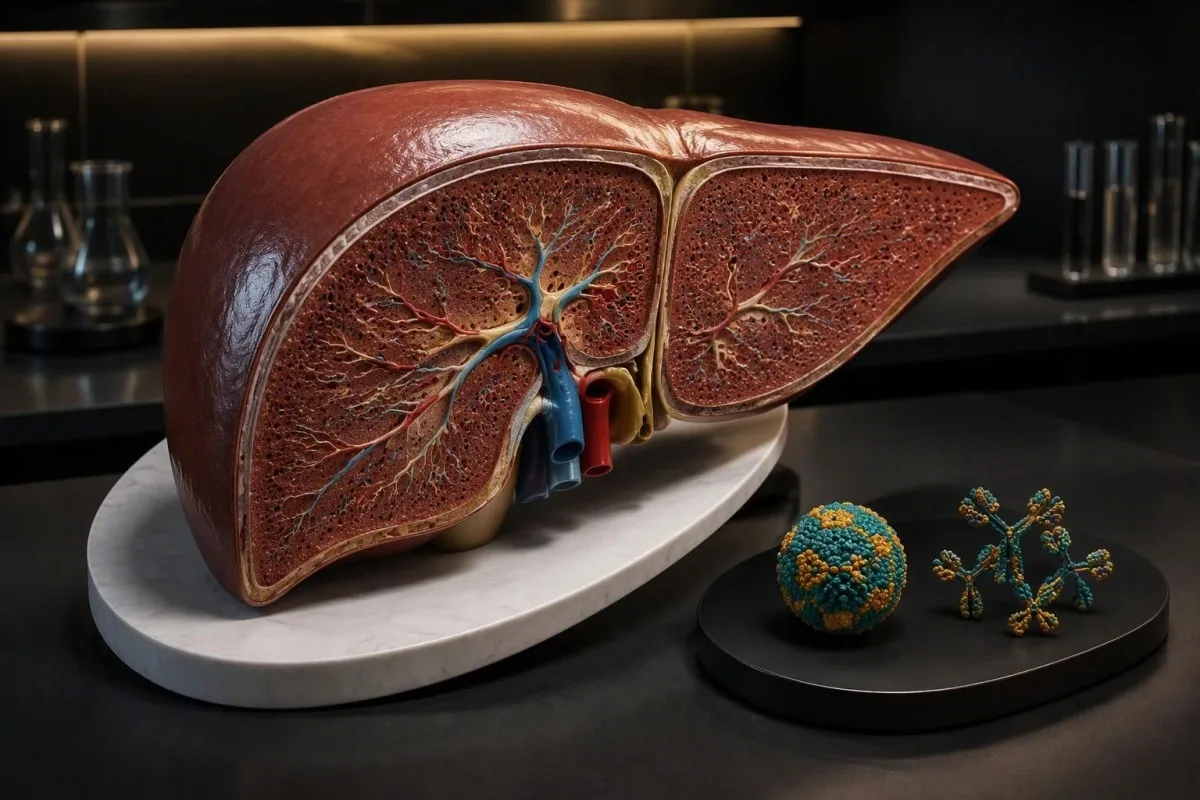
Оң антитән нәтиҗәсе генә диагноз булып тормый. Алга таба нәрсә эшләргә кирәклеген симптомнар, бавыр биохимиясе, йоктыру вакыты һәм төгәл анализ билгели.


- Гепатит A IgM уңай туры килә торган симптомнар, бавыр ферментларының күтәрелүе һәм ихтимал йоктыру очрагы бергә булганда, күптән түгел инфекция йоктыруны аеруча ышанычлы күрсәтә.
- IgM вакыт аралыгы гадәттә симптомнар башланыр алдыннан ук башлана һәм аннан соң якынча 6 ай дәвам итә; кайчак озаграк саклануы инфекция вакытын төгәл билгеләргә комачаулый.
- HAV-га гомуми антитәннәр IgM һәм IgG-ны үз эченә ала. Гомуми антитәннәргә уңай нәтиҗә генә кискен инфекцияне вакцинациядән яки элек кичерелгән инфекциядән аера алмый.
- Көтелмәгән уңай нәтиҗә табиб җитәкчелегендә бәяләнергә тиеш, бигрәк тә ALT нормаль булганда, симптомнар булмаганда яки анализ киң сайлап алынмаган скрининг кысаларында үткәрелгәндә.
- ALT 1,000 U/L-дан югары кискен гепатит A вакытында булырга мөмкин, әмма мондый дәрәҗә дару агулануы, бавырга кан килү кимүе һәм башка сәбәпләр аркасында да була.
- Раслыйм яңа үрнәк алуны, башка лаборатория анализын һәм мөмкин булганда HAV RNA тестын үткәрүне үз эченә алырга мөмкин; бер үк тестны кабатлау һәрвакыт җитми.
- Якын элемтәдә булганнарны саклау экспозициядән соң 14 көн эчендә иң нәтиҗәле була. Тиешле критерийларга туры килгән контактларга гепатит А вакцинасы, иммуноглобулин яки икесе дә кирәк булырга мөмкин.
- Ашыгыч кисәтү билгеләре буталчыклыкны, гадәттән тыш йокымсырауны, туктаусыз косуны һәм INR артуын үз эченә ала; энцефалопатия белән бергә INR кимендә 1,5 булу кискен бавыр җитешсезлеген күрсәтергә мөмкин.
- Савыгу барышы симптомнар, ALT, билирубин һәм кайчак INR күрсәткечләре буенча күзәтелергә тиеш — IgM тискәре булганчы аны кабат-кабат тикшерү кирәкми.
Гепатит A IgM уңай нәтиҗәсе нәрсәне аңлата?
A гепатит А IgM уңай нәтиҗә симптомнар, бавыр ферментларының күтәрелүе һәм экспозиция вакыты туры килгәндә күптән түгел булган гепатит Аны раслый. Көтелмәгән уңай нәтиҗә — аеруча симптомнар яки бавыр күрсәткечләрендә тайпылышлар булмаганда — антитәнчекләрнең озак саклануыннан, күптән түгел ясалган вакцинациядән яки ялган нәтиҗәдән булырга мөмкин һәм табиб җитәкчелегендә раслауны таләп итә. IgM нәтиҗәсенә генә таянып, актив инфекция бар дип тә, бу ялгыш нәтиҗә генә дип тә уйламагыз.
HAV IgM вирусның күпме булуын үлчәү түгел, ә антитәнчекләргә җавапны күрсәтә. Ышанычлы экспозициядән соң 4 атна узгач, күңел болгану, сидекнең караюы һәм ALT-ның кискен күтәрелүе булган кешедә кискен гепатит А ихтималы башка сәбәп белән үткәрелгән гомуми сәламәтлек тикшерүе вакытында тест тапшырган кешенекеннән бөтенләй башка.
Мин — Kantesti баш медицина хезмәткәре доктор Томас Кляйн; монда минем алымым 3 сорауны аеруга нигезләнә: инфекция булганмы, бавыр функциясенә куркыныч яныймы һәм контактта булганнарны сакларга кирәкме. Бу сораулар үзара бәйле, әмма бер генә уңай антитәнчек нәтиҗәсе аларның барысына да җавап бирә алмый.
Тестның ни өчен билгеләнүе мөһим. Бер-берсенә бәйле булмаган 20 маркерны үз эченә алган киң панель клиник яктан шикләнелмәгән нәтиҗәне ачыкларга мөмкин, ә безнең аңлатмабыз уңай антитела нәтиҗәләре экспозиция маркерларын хәзерге авыру билгеләреннән аерырга ярдәм итә.
Kantesti — AI қан талдауын жүргізетін анализатор HAV серологиясен ALT, билирубин һәм үрнәк алынган даталар белән бергә карарга ярдәм итә ала; ул 1 антитәнчек нәтиҗәсенә генә нигезләнеп йогышлылыкны билгели алмый. Безнең оешма һәм клиник максат укыту-аңлату материаллары аңлатманы куллану урынлы булган очракларны — һәм турыдан-туры медицина бәяләве кирәк булган чикне аңлата.
Уңай HAV IgM нәтиҗәсе кайчан кискен гепатит A диагнозын раслый?
HAV IgM уңай булу, гадәттә кискен башланган яраклы клиник күренеш һәм биохимик гепатит булганда, кискен гепатит Аны иң нык раслый. Инкубация чоры гадәттә 15–50 көн дәвам итә, уртача якынча 28 көн була, шуңа күрә табиблар кичәге ризык белән генә чикләнмичә, берничә атна элек булган вакыйгаларны да ачыклый.
Кискен гепатит А сары авыруы күренгәнче арыганлыктан, бизгәк, аппетит югалудан, күңел болганудан яки корсакта уңайсызлык булудан башланырга мөмкин. 3–5 атна элек булган экспозиция пычранган ризык, сәяхәт, бергә яшәүче кеше белән контакт яки нәҗес тәэсире булган сексуаль контакт белән бәйле булырга мөмкин; истә калырлык экспозиция булмау инфекцияне кире какмый.
Кискен гепатит А вакытында ALT 1,000 U/L-дан артырга мөмкин, әмма бу күрсәткеч HAV өчен генә хас түгел. Әгәр лабораториядәге норманың югары чиге 40 U/L булса, ALT 1,200 U/L булу шул чиктән 30 тапкыр югары дигән сүз; безнең ALT терминнары буенча белешмә моның бавырның калган эшләү сәләтен түгел, ә зарарлануын үлчәү икәнен аңлата.
Consider a hypothetical 38-year-old with nausea, dark urine, ALT 1,450 U/L, bilirubin 4.0 mg/dL, and positive HAV IgM after an outbreak exposure. That combination strongly supports acute infection, but clinicians would still assess INR, medication use, and hydration because identifying the cause does not establish the severity.
The pattern across the panel is more useful than the highest number: ALT and AST commonly dominate early, while bilirubin can remain elevated as symptoms evolve. Our бавыр панеле аңлатмасына separates these measurements so that 1 improving enzyme does not create false reassurance.
Гепатит A IgM һәм IgG: гомуми антитәннәр нәрсәне күрсәтә?
HAV IgM generally indicates recent immune activity, while HAV IgG usually indicates immunity from past infection or vaccination. Total anti-HAV detects both antibody classes, so 1 positive total-antibody result cannot establish acute hepatitis A unless the IgM component and clinical circumstances are also known.
Total anti-HAV positive with IgM negative usually means past infection or vaccine-related immunity, not acute hepatitis A. HAV IgG generally persists long term, often for life after natural infection; this is why a positive total result years later should not be interpreted as a new contagious episode.
Total anti-HAV positive with IgM positive is compatible with current or recent infection, but it can also occur with recent vaccination or misleading IgM reactivity. Both tests being positive does not provide 2 independent confirmations, because the total assay includes the very antibody class under question.
IgM positive with total anti-HAV negative is an unusual discordant pattern that deserves laboratory discussion rather than automatic diagnosis. Differences in analytical sensitivity can contribute, but a fresh specimen and another method may help distinguish early seroconversion from an isolated false signal; 1 laboratory contradiction should not be ignored.
HAV-specific IgM is not the same as total serum IgM, which is often reported in mg/dL. The distinction between antibody class and target also appears in CMV антитела үрнәкләре, although CMV and HAV have different biology and their confirmation pathways are not interchangeable.
Гепатит A IgM күпме вакыт уңай булып кала ала?
HAV IgM usually becomes detectable around symptom onset, sometimes 5–10 days earlier, and commonly remains detectable for approximately 6 months. Occasional persistence beyond 1 year means a positive result cannot precisely date an infection or prove that a recovering person remains contagious.
The IgM window is not a stopwatch. Two people recovering from the same outbreak may become negative at different times, and a result obtained 7 months after documented hepatitis A can reflect residual immune activity rather than a second infection; previous reports are therefore clinically valuable.
An early negative IgM does not always exclude hepatitis A. If characteristic symptoms started only 1–2 days before sampling and exposure is convincing, a clinician may arrange repeat serology after several days or consider HAV RNA, rather than concluding that the liver injury must have another cause.
Persistent IgM should not be used as a return-to-work test. Requiring a negative antibody at 3 or 6 months can unnecessarily prolong restrictions after the clinically relevant infectious period, while symptoms and public-health criteria provide a more appropriate basis for decisions.
Antibody duration varies between infections, so the general problem of persistent IgM is discussed in our chikungunya IgM timing guide. The practical point is the same, but HAV-specific timing must be used: an antibody can outlast the event that produced it.
Ни өчен гепатит A IgM буенча ялган уңай нәтиҗә булырга мөмкин?
A hepatitis A IgM false positive can arise from nonspecific immune activation, cross-reactive antibodies, or assay interference. The concern is greatest when there are 0 compatible symptoms, normal liver chemistry, no plausible exposure, and an isolated result near the assay’s positivity threshold.
Epstein–Barr virus and other illnesses can complicate antibody interpretation through broad immune activation or cross-reactivity, and autoimmune disease can occasionally contribute. A clinician should investigate these possibilities selectively—not order 10 additional antibody tests simply because one assay was positive; our EBV serology explanation illustrates pattern-based reasoning.
Low pretest probability reduces a positive result’s reliability. In an illustrative population where 1% truly have the target illness, a hypothetical test with 99% sensitivity and 99% specificity produces about 99 true positives and 99 false positives per 10,000 people; these are teaching assumptions, not published HAV assay performance estimates.
CDC documented this diagnostic problem in an investigation of unexpected positive HAV IgM results among people without a recent history of acute hepatitis (CDC, 2005). Its recommendation against indiscriminate IgM screening follows the same reasoning: testing people unlikely to have acute disease increases the proportion of misleading positives.
A second positive result is not automatically independent proof. If the same interfering antibody reacts again on the same system 48 hours later, repetition may simply reproduce the problem; the distinction between persistence and confirmation also appears in our West Nile IgM discussion, although HAV requires its own laboratory approach.
Анализ күрсәткечен һәм вакцина алу тарихын ничек бәяләргә?
Read the exact test name, laboratory cutoff, collection date, and recent vaccination history before interpreting HAV IgM. A value such as 1.2 index units is usually a method-specific signal, not a viral load, antibody concentration, or universal measure of disease severity.
HAV IgM assays do not share one universal numerical cutoff. One laboratory may report an index while another reports a signal-to-cutoff ratio or simply reactive/nonreactive; an index of 1.2 cannot be compared directly with 1.2 from a different method unless the laboratory confirms equivalence.
A weakly reactive result deserves attention, not dismissal. Near-cutoff reactivity can occur in early infection as well as false positivity, so 2 different patients with the same index may need different follow-up; our сыйфатлы һәм санлы җитәкчелек explains why numerical-looking reports are not always true concentrations.
Recent hepatitis A vaccination can transiently produce detectable IgM, so clinicians need the vaccination date and product, especially when testing occurred within the following few weeks. The vaccine is inactivated and cannot cause hepatitis A infection; vaccine-related reactivity should not be mislabeled as a laboratory mistake without assessment.
Supplement-related interference depends on the assay design. Tell the clinician and laboratory about high-dose biotin—for example, 5–10 mg daily—and immunomodulating treatment, but do not assume biotin necessarily causes a positive HAV result; Kantesti can organize 2 reports by method and date, while only the laboratory can investigate its analytical interference.
Көтелмәгән уңай нәтиҗәне нинди өстәмә анализлар раслый ала?
Confirmation starts with clinical reassessment and the original laboratory report, followed when appropriate by a fresh specimen, another assay method, and HAV RNA testing. There is no single mandatory confirmation sequence for every positive result; 1 symptomatic outbreak-associated case differs from an incidental screening result.
The first follow-up is often a conversation, not another tube. A clinician should establish symptom onset, exposures during the preceding 15–50 days, vaccination dates, previous HAV results, and medication history; these details determine whether immediate public-health action is justified while additional testing is arranged.
Repeat IgM on a fresh sample can check reproducibility, particularly if identification or sample handling is uncertain. Depending on timing, a repeat after several days may reveal evolving serology, but 1 immediate repeat on the same method does less to exclude method-specific interference than testing through a different validated assay.
HAV RNA detection provides direct evidence of viral genetic material, and public-health or reference laboratories may offer testing of serum or stool. A negative RNA result does not invariably exclude a resolving infection because specimen timing and assay sensitivity matter; RNA is not routinely necessary in every clinically convincing case (Nelson et al., 2020).
Kantesti — ул AI кан анализы нәтиҗәсе платформасы that can place 3 elements—serology, liver chemistry, and timing—into one reviewable summary, without claiming to confirm infection. Our клиник валидация фреймворкы бар describes why uncertainty and clinician escalation belong in interpretation rather than being hidden behind a confident label.
Күрсәткечләр туры килмәгәндә, табиблар тагын нәрсәне исәпкә алырга тиеш?
An unexpected positive HAV IgM should not stop evaluation for other causes of liver injury. Hepatitis B or E, medication toxicity, autoimmune hepatitis, impaired liver blood flow, and bile duct problems can require different treatment—even when 1 HAV antibody assay is reactive.
Markedly elevated ALT is not unique to hepatitis A. An ALT of 2,000 U/L with recent acetaminophen excess or a hypotensive episode requires urgent investigation of those causes, because anchoring on positive IgM can delay time-sensitive treatment; 2 processes can occasionally coexist as well.
Hepatitis E deserves consideration when exposure, travel, pregnancy, or immune status fits. Its testing may involve IgM and RNA, with interpretation influenced by timing and immune suppression; our гепатит Е сынавы буенча кулланма explains why a positive HAV screen should not close that diagnostic door.
Hepatitis B requires its own marker combination, commonly including HBsAg, anti-HBc, and sometimes HBV DNA. A patient with 2 weeks of fatigue but no jaundice can still have clinically significant hepatitis, as our гепатит B симптомнары буенча кулланма explains; symptom absence cannot distinguish the viruses reliably.
A predominantly cholestatic pattern changes the next step. If alkaline phosphatase is 4 times the upper limit while ALT is only mildly elevated, imaging may be needed to assess bile drainage; autoimmune testing or other investigations should follow the pattern, not a blanket panel triggered by one unexpected antibody.
Бавыр күрсәткечләренең кайсылары һәм нинди симптомнар ашыгыч медицина ярдәме таләп итә?
Confusion, unusual drowsiness, persistent vomiting, dehydration, or worsening coagulation require urgent medical assessment in suspected hepatitis A. An INR of at least 1.5 together with hepatic encephalopathy can meet the definition of acute liver failure in a person without pre-existing cirrhosis.
INR assesses clotting and can reveal impaired liver synthetic function, although warfarin, vitamin K deficiency, and other conditions affect it too. An INR rising from 1.1 to 1.6 during acute hepatitis needs prompt assessment even without confusion; our INR нәтиҗәсен аңлату helps explain this distinction.
ALT is an injury marker, not a liver-failure score. Falling ALT from 2,000 to 900 U/L may represent recovery, but it is not reassuring if INR is rising or mental status is changing; clinicians interpret at least these 3 domains together rather than judging safety from the enzyme trend alone.
Bilirubin reflects processing and excretion, not severity by itself. A bilirubin of 4.0 mg/dL is approximately 68 µmol/L and can explain jaundice and dark urine, but its cause requires context; our туры билирубин үрнәге җитәкчелеге distinguishes hepatitis from impaired bile drainage.
New disorientation or inability to keep fluids down should not wait for repeat serology. Older adults and people with chronic liver disease warrant a lower threshold for assessment, and an unexpected positive with normal ALT and 0 symptoms is usually a confirmation problem rather than an emergency by itself.
Кискен гепатит A һәм савыгу чорында гадәттә ничек дәвалыйлар?
Uncomplicated hepatitis A is usually managed with hydration, adequate nutrition, symptom relief, and clinician-directed monitoring; no specific antiviral is routinely used. Hepatitis A does not become chronic, although approximately 10–15% of symptomatic patients can have prolonged or relapsing illness lasting up to 6 months.
Monitoring should follow symptoms and liver chemistry, with INR added when illness is significant or function is uncertain. A clinician might repeat tests within several days for a deteriorating patient or after 1–2 weeks for stable outpatient recovery; those intervals are examples, not a universal schedule.
Medication review is part of treatment. Ask specifically about acetaminophen, combination cold remedies, herbal mixtures, and supplements rather than adding a liver-detox product; our liver-supporting food discussion explains why nutrition support is different from a promised cure.
Small, frequent meals can be easier than large meals during nausea, and oral rehydration may help when intake is poor. There is no established vitamin dose that makes HAV IgM disappear faster; a 500 mg supplement claim should not substitute for hydration assessment, medication safety, or follow-up.
Relapse does not mean chronic infection. Renewed symptoms or worsening ALT over the following 6 months still need reassessment, including consideration of other causes and renewed public-health advice; persistent IgM alone, without a clinical change, is not evidence that treatment failed (Nelson et al., 2020).
Сез йоктыручы булып торасызмы, якыннарыгызны саклау өчен нинди чаралар күрергә кирәк?
Hepatitis A spreads mainly through fecal–oral exposure, and infectiousness is usually greatest during the 2 weeks before jaundice or symptom onset. Most people become substantially less infectious about 1 week after onset, but IgM positivity alone cannot determine an individual’s transmission risk.
Soap-and-water handwashing is central, particularly after toileting, changing diapers, and before handling food. Household bathrooms and frequently touched surfaces should be cleaned according to local public-health advice; washing hands for at least 20 seconds is more useful than trying to monitor contagiousness through repeated IgM tests.
Household members and sexual contacts may need prompt exposure assessment, while ordinary workplace conversation or sharing air does not usually constitute an HAV exposure. Public-health teams assess childcare, food handling, and shared living arrangements individually; 1 positive result does not automatically justify vaccinating an entire office.
Avoid preparing food for others while potentially infectious, and discuss sexual practices that can involve fecal exposure with the treating clinician. Return-to-school or work restrictions commonly depend on onset dates and local rules rather than antibody negativity at 6 months; food handlers may face additional requirements.
Contact protection should not wait for symptoms, because post-exposure prophylaxis has a 14-day window. Our travel vaccine antibody guide explains how immunization records can be more useful than indiscriminate testing, but an actual household exposure calls for direct clinical or public-health advice.
Йоктырудан соң кемгә вакцина яки иммуноглобулин кирәк?
Eligible close contacts should receive hepatitis A post-exposure prophylaxis as soon as possible, ideally within 14 days of exposure. U.S. ACIP guidance generally recommends a single-antigen hepatitis A vaccine for unvaccinated people aged at least 12 months, with immune globulin added or substituted in selected groups.
Under U.S. guidance, infants younger than 12 months receive immune globulin rather than routine hepatitis A vaccine for post-exposure protection. The recommended intramuscular immune-globulin dose is 0.1 mL/kg, and people with a vaccine contraindication may also need immune globulin; clinicians must use the locally licensed product and guidance.
Unvaccinated people aged at least 12 months who are immunocompromised or have chronic liver disease generally need both vaccine and immune globulin, administered at different anatomical sites. For adults older than 40 years, adding immune globulin depends on risk assessment rather than age alone (Nelson et al., 2020).
Previous complete vaccination usually removes the need for additional post-exposure prophylaxis, although immune suppression and uncertain records deserve individual assessment. Do not delay the 14-day window while searching for an antibody result; a dose given for immediate protection also needs the appropriate later schedule for durable immunity.
Children and pregnancy require individualized advice, not automatic avoidance of vaccination. Hepatitis A vaccine is inactivated, and pregnancy is not itself a contraindication when vaccination is indicated; our children’s laboratory safety guide reinforces why age-specific clinical decisions should not be delegated to 1 automated result.
Табибка кабат күренгәндә үзегез белән нәрсәләр алып килергә?
Bring the complete laboratory report, symptom dates, vaccination records, exposure details, and a medication list to follow-up. As of October 18, 2026, the safest interpretation still combines 3 domains—clinical illness, laboratory evidence, and exposure probability—rather than treating a positive flag as a diagnosis.
The original report contains details a cropped positive flag can hide. Include the assay name, reference threshold, whether the result is equivocal, and any laboratory comments; a collection date 2 days before symptoms means something different from a report obtained 8 months after documented hepatitis A.
Write a short timeline rather than relying on memory. List vaccination, symptom onset, travel, household illnesses, food-related alerts, and test dates over the preceding 50 days; also mention older confirmed hepatitis A, because a past infection can explain persistent IgM without proving a new event.
Kantesti — AI белән эшләнгән кан анализы нәтиҗәләрен аңлату коралы that can help organize uploaded reports and trends in approximately 60 seconds, but it cannot determine whether 1 exposed contact should receive immune globulin. Our AI технологиясе буенча кулланма explains the interpretation workflow without replacing clinical examination or laboratory confirmation.
Ask 4 specific questions: Does this fit acute hepatitis A, should the laboratory confirm it differently, what liver tests need repeating, and do contacts need protection today? If exposure occurred 12 days ago, mention that immediately—the remaining prevention window may matter more than waiting for a neatly resolved diagnostic label.
Фәнни басмалар һәм автоматлаштырылган бәяләүнең чикләре
HAV-specific guidance should drive diagnosis and contact protection; broader biomarker publications provide context, not proof of acute hepatitis A. The 2 related Zenodo publications below concern kidney chemistry and urinalysis, and neither should be treated as a HAV diagnostic validation study.
Source quality depends on the clinical question. CDC’s 2005 investigation directly addresses unexpected HAV IgM positivity, while Nelson and colleagues’ 2020 ACIP recommendations address prevention and post-exposure management; 2 general laboratory guides cannot replace either source when deciding whether a contact needs protection.
Kidney chemistry can become relevant during vomiting or poor intake, because dehydration may alter urea and creatinine independently of hepatitis severity. Our BUN һәм креатинин буенча кулланма provides that supporting context, but a high ratio should not be interpreted as confirming HAV or grading liver failure from 1 number.
Urinalysis can help investigate dark urine, although bilirubin, urobilinogen, concentration, and medicines contribute differently to its appearance. Our сидек анализын аңлату буенча кулланма complements the accompanying Zenodo material; neither urine marker can replace HAV serology and clinical assessment after a 15–50-day exposure interval.
Thomas Klein’s clinical framework for this article prioritizes uncertainty disclosure and timely escalation, especially when a 14-day contact-protection window is closing. Kantesti’s educational interpretation is not a confirmed diagnosis, and our медицина консультатив советы describes the physician expertise supporting clinical governance; named review of this particular article should be verified before publication.
Еш бирелә торган сораулар
Гепатит Ага каршы IgM уңай булу һәрвакыт миндә кискен гепатит А бар дигәнне аңлатамы?
А гепатиты IgM уңай нәтиҗәсе һәрвакыт кискен А гепатитын аңлатмый. Ул туры килә торган симптомнар, ALT күтәрелү һәм гадәти 15–50 көнлек инкубация чоры эчендәге йогынты бергә туры килгәндә иң ышандырырлык була. Антитәнчекләрнең озак саклануы, күптән түгел ясалган вакцинация һәм ялган реактивлык көтелмәгән нәтиҗәне аңлата ала. Кирәк булганда, клиницист бавыр биохимиясен тикшерергә һәм яңа үрнәк алырга, башка анализ ясарга яки HAV RNA тесты үткәрергә мөмкин.
Мин савыккач та, А гепатитының IgM антитәнчекләре уңай булып кала аламы?
0 HAV IgM гадәттә якынча 6 ай дәвамында ачыклануын саклый, кайвакыт 1 елдан артык та саклана. Савыгу чорындагы уңай нәтиҗә инфекциянең төгәл вакытын билгели алмый һәм йогышлылыкның дәвам итүен дә исбатламый. Табиблар IgM тискәре нәтиҗәгә әйләнүен көтү урынына симптомнарны, ALT, билирубинны һәм кайвакыт INR күрсәткечен күзәтәләр. Яңа симптомнар барлыкка килсә яки бавыр биохимиясе начарайса, кабат бәяләү кирәк.
А гепатитының IgM, IgG һәм гомуми антитәнчекләре арасында нинди аерма бар?
0 HAV IgM гадәттә күптән түгел булган иммун активлыкны күрсәтә, ә HAV IgG гадәттә вакцинациядән яки элек кичерелгән инфекциядән соң барлыкка килгән иммунитетны күрсәтә. Гомуми anti-HAV ике сыйныфны да үз эченә ала, шуңа күрә гомуми антитәнчеккә 1 уңай нәтиҗә кискен инфекцияне иммунитеттан аера алмый. Гомуми anti-HAV уңай, ә IgM тискәре булу гадәттә элек кичерелгән инфекцияне яки вакцинацияне күрсәтә. Гомуми anti-HAV уңай һәм IgM уңай булганда да симптомнар, контакт һәм лаборатор тикшеренү нәтиҗәләре контексты исәпкә алынырга тиеш.
Әгәр гепатит А буенча IgM анализым уңай, ләкин бавыр ферментлары нормаль булса, нишләргә?
0 Позитив HAV IgM, бавыр ферментлары нормаль булганда һәм симптомнар булмаганда, очраклы ялган яки озак сакланган нәтиҗә булу ихтималын арттыра, әмма һәрбер иртә стадиядәге яки симптомсыз инфекцияне дә кире какмый. 6 яшькә җитмәгән балаларда инфекциянең ачык симптомнарсыз узуы аеруча еш очрый. Табиб инфекция йоктыру мөмкинлеге булган көннәрне, элек HAV белән авыруны, вакцинацияне һәм анализ нәтиҗәсен карап чыгарга тиеш. Позитив билгегә генә нигезләнеп кискен гепатит диагнозы кую урынына, яңа үрнәк алу яки башка ысул куллану урынлы булырга мөмкин.
0. А гепатитына каршы вакцина IgM тестын уңай нәтиҗәле итә аламы?
0 Соңгы вакытта А гепатитына каршы вакцинация кайбер кешеләрдә HAV IgM вакытлыча ачыклануга китерергә мөмкин. Шуңа күрә алдагы берничә атнада үткәрелгән тикшерү нәтиҗәләрен вакцинация датасын, симптомнарны һәм бавырның биохимик күрсәткечләрен исәпкә алып аңлатырга кирәк. Инактивлаштырылган вакцина А гепатиты инфекциясен китереп чыгара алмый. ALT 1,000 U/L яки аннан югары булса һәм кешедә туры килә торган авыру билгеләре күзәтелсә, күптән түгел ясалган вакцина дозасы нәтиҗәне автоматик рәвештә аңлатмый.
Гаилә әгъзаларына С гепатиты белән бәйләнештән соң А гепатитына каршы вакцина кирәкме?
Йогышлы тәэсиргә дучар булган гаилә әгъзаларына һәм җенси партнерларга тәэсирдән соң 14 көн эчендә А гепатитына каршы экспозициядән соң профилактика кирәк булырга мөмкин. АКШ ACIP күрсәтмәләре буенча, 12 айга җиткән яки аннан өлкәнрәк, прививка ясатмаган кешеләргә, гадәттә, А гепатитына каршы бер антигенлы вакцина бирелә, ә кайбер контактларга иммуноглобулин да кирәк. 12 айдан кечерәк сабыйларга, гадәттә, экспозициядән соңгы планлы прививка урынына иммуноглобулин бирелә. Симптомнарны яисә антитәнчекләр нәтиҗәләренең кабат тикшерелүен көтмичә, тиз арада табибка яки җәмәгать сәламәтлеге хезмәтенә мөрәҗәгать итегез.
А гепатиты нәтиҗәсе кайчан ашыгыч ярдәм таләп итә?
Антителаларга анализның уңай нәтиҗәсе генә гадәттә ашыгыч хәл булып саналмый, ләкин аң буталу, гадәттән тыш йокымсырау, өзлексез косу, каты сусызлану яки кан оешуның начарлануы кичекмәстән тикшерүне таләп итә. Элегрәк циррозы булмаган кешедә бавыр энцефалопатиясе белән бергә INR 1,5 яки аннан югары булу кискен бавыр җитешсезлеген күрсәтергә мөмкин. INR артуы аң буталганчы ук тиз арада бәяләүне таләп итә. Акыл хәле яки бавыр функциясе начарайса, ALT кимүе савыгуны расламый.
Бүген үк AI белән эшләнгән кан анализы тикшерүе
Дөнья буенча 2 миллионнан артык кулланучы кушылыгыз: алар Kantestiны тиз һәм төгәл лаборатория анализы өчен ышана. Кан анализы нәтиҗәләрегезне йөкләгез һәм 15,000+ биомаркерларын секундлар эчендә тулы аңлатма белән алыгыз.
📚 Сылтама бирелгән тикшеренү басмалары
Klein, T., Mitchell, S., & Weber, H. (2026). BUN/креатинин нисбәте аңлатмасы: бөер функциясен тикшерү өчен кулланма. Kantesti AI медицина тикшеренүе.
Klein, T., Mitchell, S., & Weber, H. (2026). Сидектә уробилиноген: Тулы сидек анализы буенча кулланма 2026. Kantesti AI медицина тикшеренүе.
📖 Тышкы медицина белешмәләре
Centers for Disease Control and Prevention (2005). Positive Test Results for Acute Hepatitis A Virus Infection Among Persons With No Recent History of Acute Hepatitis — United States, 2002–2004. MMWR Morbidity and Mortality Weekly Report, 54(18), 453–456.
⚕️ Медицина кисәтүе
Бу мәкалә бары тик белем бирү максатларында гына һәм медицина киңәше булып тормый. Диагноз һәм дәвалау карарлары өчен һәрвакыт квалификацияле сәламәтлек саклау белгеченә мөрәҗәгать итегез.
E-E-A-T ышаныч сигналлары
Тәҗрибә
Табиб җитәкчелегендә лаборатория нәтиҗәләрен аңлату эш процессларын клиник тикшерү.
Белгечлек
Лаборатория медицинасы: биомаркерларның клиник контекстта үз-үзләрен тотышын аңлау.
Авторититет
Доктор Томас Кляйн тарафыннан язылган, доктор Сара Митчелл һәм профессор доктор Ханс Вебер тарафыннан тикшерелгән.
Ышанычлылык
Ачык күзәтү юллары белән куркуны киметү өчен дәлилләргә нигезләнгән аңлату.