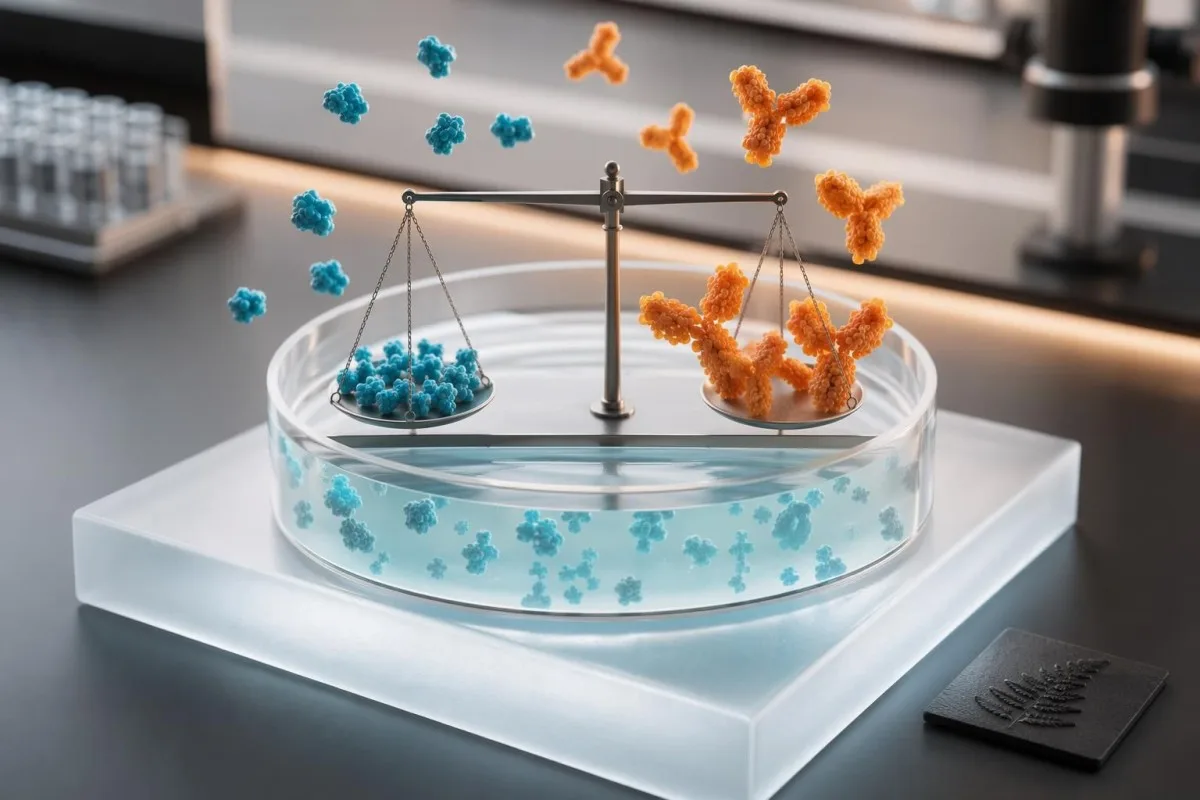
Ang nakataas na resulta ng globulin ay bihirang bigyang-kahulugan nang mag-isa. Inihahambing ito ng mga doktor sa albumin, kabuuang protina, mga enzyme sa atay, mga marker sa bato, mga pagsusuri sa pamamaga, at minsan ay mga pattern ng immunoglobulin.


- Globulin karaniwang kinakalkula bilang kabuuang protina minus albumin; maraming adult labs ang tumitingin sa humigit-kumulang 2.0-3.5 g/dL na karaniwan.
- ratio ng A/G karaniwang nasa paligid ng 1.1-2.2; ang ratio na mas mababa sa 1.0 ay madalas nangangahulugang mataas ang globulin, mababa ang albumin, o pareho.
- Pattern ng dehydration karaniwang nagpapataas ng albumin at globulin nang magkasama, habang ang tunay na labis na immune globulin ay kadalasang mas nagpapataas ng globulin kaysa albumin.
- Mga sanhi ng mataas na kabuuang protina kabilang ang dehydration, talamak na pamamaga, sakit sa atay, sakit na autoimmune, at monoclonal proteins.
- Pagtaas ng polyclonal globulin kadalasang nangangahulugang maraming immune proteins ang sabay na tumataas, madalas dahil sa impeksiyon, pamamaga, sakit na autoimmune, o talamak na sakit sa atay.
- Pagsubaybay sa monoclonal protein kadalasang nangangahulugang serum protein electrophoresis, immunofixation, at serum free light chains, hindi panic dahil sa isang CMP result.
- Mga sintomas ng mataas na globulin kadalasang nagmumula sa pinagbabatayang kondisyon, gaya ng pagkapagod, lagnat, pananakit ng kasukasuan, pagpapawis sa gabi, namamagang mga glandula, pangangati, pamamaga, o pagbaba ng timbang.
- Antas ng panganib nakadepende sa pattern; ang globulin na higit sa mga 4.5 g/dL o ang kabuuang protina na higit sa 9.0 g/dL ay nararapat na magpatingin sa clinician, lalo na kung may anemia, pagbabago sa bato, mataas na calcium, o pananakit ng buto.
Ano ang ibig sabihin ng mataas na globulin kapag nagbabago ang A/G ratio
Mga sanhi ng mataas na globulin ay nakaayos ayon sa pattern: ang mataas na albumin kasama ang mataas na globulin ay madalas na tumutukoy sa dehydration, ang mataas na globulin na may normal o mababang albumin ay nagmumungkahi ng pamamaga, sakit sa atay o pag-activate ng immune system, at ang sobrang baba ng A/G ratio ay maaaring mag-udyok ng follow-up para sa monoclonal protein. Ako si Thomas Klein, MD, at binabasa ko ang resultang ito bilang isang ugnayan, hindi bilang iisang numero.
Ang globulin ay karaniwang kinakalkula bilang kabuuang protina minus albumin sa comprehensive metabolic panel. Karaniwang sangguniang hanay para sa adult ay kabuuang protina 6.0-8.3 g/dL, albumin 3.5-5.0 g/dL at globulin mga 2.0-3.5 g/dL, bagama’t ang ilang laboratoryo sa Europa ay nag-uulat ng bahagyang magkakaibang pagitan.
Ang ratio ng A/G inihahambing ang albumin sa globulin, at maraming laboratoryo ang nagmamarka ng mga halagang mas mababa sa 1.0 o mas mataas sa 2.2. Ang Kantesti ay isang AI blood test analyzer na tinatrato ang mataas na globulin bilang problemang pang-pattern sa pamamagitan ng pag-check sa albumin, kabuuang protina, mga marker sa atay, mga marker sa bato at mga palatandaan ng pamamaga nang magkakasama.
Ang isang beses na globulin na 3.8 g/dL na may albumin 4.8 g/dL pagkatapos ng mahabang biyahe sa eroplano ay binabasa nang iba kaysa sa globulin 5.2 g/dL na may albumin 3.1 g/dL, anemia at isang ESR na 82 mm/hr. Para sa mas malalim na background tungkol sa mismong protein fractions, ang aming gabay sa mga serum protein ay nagpapaliwanag ng terminolohiya sa laboratoryo nang hindi binabalewala ang klinikal na nuance.
Kumpirmahin ang bilang ng globulin bago pangalanan ang isang sakit
Ang mataas na resulta ng globulin ay dapat munang kumpirmahin nang matematika at biyolohikal. Tinitingnan ng mga doktor kung ang globulin ay direktang sinukat o kinalkula, kung tama ang albumin, at kung ang oras ng pagkuha ng sample ay maaaring magpaliwanag ng 0.2-0.5 g/dL na pagbabago.
Karamihan sa mga routine panel ay hindi direktang sumusukat sa bawat fraction ng globulin. Sinusukat nila ang kabuuang protina at albumin, pagkatapos ay kinakalkula ang globulin sa pamamagitan ng pagbabawas; kung magbago ang albumin ng 0.3 g/dL, nagbabago rin ang pagtatantya ng globulin.
Nakita ko na ang mga malulusog na endurance athlete ay bumabalik na may total protein na 8.6 g/dL, albumin na 5.1 g/dL at calculated globulin na 3.5 g/dL matapos ang pagsasanay sa mainit na panahon. Iyon ay hindi kaparehong klinikal na kuwento gaya ng albumin na 3.0 g/dL at globulin na 5.6 g/dL sa isang taong may pagkapagod at pagbaba ng timbang.
Ang praktikal na unang hakbang ay ihambing ang resulta sa mga hydration marker, lalo na ang BUN, creatinine, sodium at konsentrasyon ng ihi kung magagamit. Kung mataas din ang albumin, ang aming artikulo sa mga pattern na mataas ang albumin ay kapaki-pakinabang na kasabay dahil ipinapakita nito kung bakit ang mga epekto ng konsentrasyon ay maaaring magmukhang labis sa protina.
Paano binabago ng dehydration ang kabuuang protina at globulin
Karaniwang itataas ng dehydration ang total protein sa pamamagitan ng pagkoncentrate ng dugo, kaya madalas na sabay na tumataas ang albumin at globulin. Ang tunay na immune globulin excess ay mas madalas na nagpapataas ng globulin nang hindi proporsyonal, na ibinababa ang A/G ratio sa ibaba nang humigit-kumulang 1.0.
Kapag bumababa ang tubig sa plasma, maaaring mukhang mas mataas din ang albumin, globulin, calcium at hematocrit. Ang pattern na albumin 5.2 g/dL, globulin 3.8 g/dL at hematocrit 52% pagkatapos ng pagsusuka o mabigat na ehersisyo ay madalas na nararapat sa rehydration at muling pagsusuri bago ang mas malawak na work-up.
Ang totoo, ang dehydration ay hindi karaniwang lumilikha ng napakababang A/G ratio nang mag-isa. Kung ang albumin ay 4.4 g/dL at ang globulin ay 5.1 g/dL, ang A/G ratio ay 0.86; ang pattern na iyon ay mas mahirap ipaliwanag sa fluid loss lamang.
Para sa mga pasyenteng nag-aalala kapag nakita ang ilang red flags sa portal, iminumungkahi kong ulitin ang panel pagkatapos ng 24-48 oras ng normal na fluids at walang mabigat na workout kung sang-ayon ang clinician. Ang aming gabay sa ay nagpapakita kung bakit mahalaga ang albumin, sodium, at konteksto. ay nagpapaliwanag kung bakit maaaring sabay na tumaas ang ilang marker na tila walang kaugnayan kapag ang sample ay naikonsentra.
Mataas na globulin na may mga marker ng pamamaga
Ang mataas na globulin na may mataas na CRP, ESR, platelets o pagbabago sa white cell ay madalas na tumuturo sa talamak na pamamaga o impeksiyon. Ang pagtaas ng globulin ay kadalasang polyclonal, ibig sabihin maraming immune proteins ang tumataas nang sabay-sabay kaysa isang abnormal na protina ang nangingibabaw.
Ang CRP na higit sa 10 mg/L ay karaniwang nagpapahiwatig ng aktibong pamamaga, bagama’t maraming laboratoryo ang tumatawag na abnormal ang anumang nasa itaas ng 3-5 mg/L depende sa assay. Ang ESR ay mas mabagal at hindi gaanong tiyak; ang ESR na 60 mm/hr ay maaaring manatiling mataas matapos ang impeksiyon, autoimmune flares o ilang kanser.
Sa aming pagsusuri ng 2M+ blood tests, ang pattern na madalas kong makita ay banayad na pagtaas ng globulin na nasa paligid ng 3.7-4.2 g/dL na may pagkapagod, kamakailang respiratory illness at CRP na hindi pa ganap na na-normalize. Iyon ay ibang-iba na pattern mula sa globulin 5.8 g/dL na may hindi maipaliwanag na anemia.
Tinitingnan din ng mga doktor ang platelets na higit sa 450 x 10^9/L, paglilipat ng lymphocyte o mababang hemoglobin dahil madalas na nag-iiwan ng bakas ang inflammation sa CBC. Para sa mas malawak na paghahambing ng CRP, ESR at CBC clues, tingnan ang aming gabay sa mga blood test para sa pamamaga.
Mga pahiwatig ng sakit sa atay kapag bumababa ang albumin at tumataas ang globulin
Ang mababang albumin na may mataas na globulin ay maaaring magpahiwatig ng talamak na sakit sa atay, lalo na kapag AST, ALT, bilirubin, ALP, GGT, INR o platelets ay abnormal din. Ang atay ang gumagawa ng albumin, habang ang immune globulins ay maaaring tumaas sa panahon ng talamak na hepatic immune stimulation.
Ang albumin na mas mababa sa 3.5 g/dL ay hindi awtomatikong liver failure; ang pagkawala sa kidney, pagkawala sa gut, inflammation at mahinang intake ay maaari ring magpababa nito. Gayunman, ang albumin na 2.9 g/dL na may globulin 4.8 g/dL at platelets 95 x 10^9/L ay nagpapapansin sa akin sa mga chronic liver patterns.
Ang autoimmune hepatitis ay isa sa mga kondisyon sa atay kung saan ang IgG ay maaaring kapansin-pansing mataas. Kasama sa EASL 2015 autoimmune hepatitis guideline ang elevated IgG at autoantibodies bilang ilan sa mga pangunahing diagnostic clues, ngunit ang diagnosis ay nakadepende pa rin sa buong larawan at madalas sa pagtatasa ng espesyalista (EASL, 2015).
Ang AST/ALT ratio na higit sa 1 ay maaaring lumitaw sa advanced fibrosis, pinsalang may kaugnayan sa alkohol sa atay at ilang muscle patterns, kaya hindi ko ito binabasa nang mag-isa. Ang aming ay isa sa mga kapaki-pakinabang na piraso ng palaisipang iyon. gabay ay nagpapaliwanag kung bakit nagiging mas makabuluhan ang isang protein pattern kapag ipinares sa mga enzyme, bilirubin at bilang ng platelet.
Mga pahiwatig ng autoimmune na nakatago sa bahagi ng globulin
Madalas na nagpapakita ang mga autoimmune patterns ng mataas na globulin dahil tumataas ang immunoglobulins, lalo na ang IgG sa ilang systemic at liver-related autoimmune diseases. Inihihiwalay ng mga doktor ito sa mga IgE patterns na hinihimok ng allergy at sa mga monoclonal protein patterns.
Ang tipikal na mga hanay ng immunoglobulin sa karaniwang nasa hustong gulang ay humigit-kumulang IgG 700-1600 mg/dL, IgA 70-400 mg/dL at IgM 40-230 mg/dL, bagama’t nag-iiba ang mga reference interval ayon sa pamamaraan at edad. Ang IgG na lampas sa upper limit ng laboratoryo, lalo na kung higit sa 1.1 beses ang upper limit, ay mas nakakahikayat kapag tumutugma ang mga sintomas sa ANA, ENA, RF, anti-CCP o mga autoantibody sa atay.
Ang Kantesti ay isang AI biomarker interpretation platform na inihahambing ang globulin sa ANA status, complement C3/C4, ESR, CRP, CBC shifts at mga natuklasan sa ihi kapag ang mga resultang iyon ay na-upload nang magkakasama. Ang mababang C3 o C4 na may mataas na globulin ay naiibang klinikal na pahiwatig kaysa sa mataas na globulin na may normal na complements at normal na ihi.
Ang tuyong mata, pagkatuyo ng bibig, pamamaga ng kasukasuan, mga pantal, hindi maipaliwanag na lagnat at mga pagbabagong kulay na parang Raynaud ay ang mga detalye na hinihiling ko kapag mababa ang A/G ratio. Para sa partikular na papel ng mga complement marker at ANA patterns, ang aming Gabay sa C3 C4 ay nagbibigay ng mas detalyadong autoimmune framework.
Kapag sinusuri ng mga doktor ang monoclonal proteins
Isinasaalang-alang ng mga doktor ang follow-up para sa monoclonal protein kapag ang globulin ay paulit-ulit na mataas, mababa ang A/G ratio, mataas ang total protein, o kapag ang mga sintomas ay nagpapahiwatig ng plasma cell o lymphoid disease. Ang karaniwang susunod na mga pagsusuri ay SPEP, immunofixation at serum free light chains.
A polyclonal ang pattern ay nangangahulugang maraming pamilya ng antibody ang nadaragdagan; ang talamak na impeksiyon, autoimmune disease at sakit sa atay ay karaniwang mga paliwanag. Ang isang monoclonal ang pattern ay nangangahulugang isang clone ang gumagawa ng isang nangingibabaw na protina, at maaari itong maging benign, premalignant o malignant depende sa dami at epekto sa organ.
Ang karaniwang serum free light chain ratio ay madalas na iniulat na humigit-kumulang 0.26-1.65 sa mga nasa hustong gulang, at naaapektuhan ng paggana ng bato ang interpretasyon. Binibigyang-diin sa 2022 review ni Rajkumar sa American Journal of Hematology na ang diagnosis ng myeloma ay nakadepende sa clonal protein kasama ang bone marrow o organ-defining criteria, hindi lamang sa isang globulin number (Rajkumar, 2022).
Ang MGUS ay hindi bihira sa edad: natuklasan nina Kyle et al. ang prevalence na humigit-kumulang 3.2% sa mga taong may edad na 50 taon o higit pa sa isang malaking pag-aaral (Kyle et al., 2006). Kung ang iyong report ay partikular na nagpapakita ng mataas na IgG, ang aming artikulo tungkol sa kahulugan ng mataas na IgG ay tumutulong na paghiwalayin ang mga landas ng immune, atay at monoclonal follow-up.
Mga sintomas ng mataas na globulin na nagbabago sa antas ng panganib
Mga sintomas ng mataas na globulin kadalasan ay nagmumula sa pinagbabatayang kondisyon, hindi mismo sa globulin na molekula. Ang pagkapagod, lagnat, pagpapawis sa gabi, namamagang mga glandula, pananakit ng buto, pananakit ng kasukasuan, paulit-ulit na impeksiyon, pangangati, o pagbaba ng timbang ay nagpapabigat sa parehong bilang ng lab.
Ang isang taong may globulin na 4.1 g/dL, normal na CBC at walang sintomas ay maaaring kailangan lang ng paulit-ulit na panel sa loob ng 2-8 linggo. Ang parehong antas ng globulin na may 6 kg na hindi sinasadyang pagbaba ng timbang, pagbabad sa pagpapawis sa gabi o mga lymph node na mas malaki sa 2 cm ay nararapat sa mas mabilis na klinikal na pagsusuri.
Mahalaga ang pananakit ng buto dahil ang mga monoclonal plasma cell disorder ay maaaring makaapekto sa buto, kaltsyum at paggana ng bato. Ang mataas na kaltsyum na lampas sa mga 10.5 mg/dL, pagtaas ng creatinine mula sa baseline, o hemoglobin na mas mababa sa 10 g/dL ay agad na nagbabago sa pagtataya ng panganib.
Karaniwan ang namamagang lymph node pagkatapos ng viral illness, ngunit ang pagpatuloy lampas sa 3-4 na linggo, matigas na texture, mabilis na paglaki o kasamang mga lagnat ay nagbabago sa usapan. Ang aming gabay sa mga pagsusuri sa namamagang lymph node ay nagpapaliwanag kung paano nakatutulong ang CBC, LDH at mga inflammatory marker upang paghiwalayin ang mga hindi nakababahala mula sa mga nakababahala na pattern.
Mga pahiwatig sa bato at ihi na pinapares ng mga doktor sa mataas na globulin
Mahalaga ang mga marker sa bato dahil ang mataas na globulin ay maaaring kasabay ng dehydration, pamamaga ng bato, pagkawala ng protina o mga epekto ng monoclonal light chain. Inihahambing ng mga doktor ang creatinine, eGFR, BUN, kaltsyum, urine albumin-creatinine ratio at minsan ay urine protein electrophoresis.
Ang urine albumin-creatinine ratio na mas mababa sa 30 mg/g ay karaniwang itinuturing na normal, ang 30-300 mg/g ay nagpapahiwatig ng katamtamang pagtaas ng albuminuria, at ang higit sa 300 mg/g ay mataas. Ang albuminuria ay hindi sumusukat sa lahat ng light chain, kaya ang normal na ACR ay hindi palaging nagbubukod ng mga isyu sa monoclonal light chain kung ang natitirang pattern ay nakababahala.
Maaaring tumaas ang BUN dahil sa dehydration, mataas na paggamit ng protina, pagdurugo sa gastrointestinal at kapansanan sa bato. Ang BUN/creatinine ratio na higit sa mga 20:1 ay madalas nagtutulak sa mga clinician na isipin ang dehydration o prerenal na pisyolohiya, ngunit hindi ito diagnostic sa sarili nito.
Kapag mataas ang globulin at bumaba ang eGFR sa mas mababa sa 60 mL/min/1.73 m² sa loob ng higit sa 3 buwan, bumababa ang threshold para sa follow-up. Ang aming gabay sa BUN creatinine ay mas detalyadong tumatalakay sa panig ng bato sa pattern na ito.
Mga lab artifact at timing ng pag-uulit na isinasaalang-alang
Ang bahagyang mataas na globulin ay madalas na dapat ulitin muna bago ikabit ang panghabambuhay na label. Ang paraan ng lab, hydration, oras ng tourniquet, kamakailang karamdaman, pagbabakuna, ehersisyo at maging ang reference interval ay maaaring magpalipat ng total protein o albumin nang sapat upang baguhin ang kinakalkulang globulin.
Karaniwan ang interval na 2-8 linggo para sa banayad na nakahiwalay na pagtaas ng globulin, kung ipagpapalagay na walang red flags. Kung ang total protein ay higit sa 9.0 g/dL o ang globulin ay higit sa 4.5 g/dL, madalas na inuulit ng mga clinician nang mas maaga at nagdaragdag ng mga naka-target na pagsusuri kaysa maghintay ng ilang buwan.
Ang kamakailang pagbabakuna o impeksiyon ay maaaring magpataas ng mga immune protein sa loob ng ilang linggo, at maaaring bumalik sa normal ang CRP nang mas mabilis kaysa sa ESR. Hindi ko tinatanggal ang kasaysayang iyon, ngunit hindi ko rin ito ginagamit upang ipaliwanag ang globulin na 5.5 g/dL nang hindi muna tinitingnan kung nagpapatuloy ang resulta.
Iba-iba ang ginagamit na paraan ng mga lab para sa albumin—bromocresol green o bromocresol purple—at ang maliliit na pagkakaiba sa paraan ay maaaring maglipat ng albumin nang mga 0.2-0.4 g/dL. Ang aming artikulo sa pagkakaiba-iba ng blood test ay nagpapaliwanag kung bakit madalas na mas kapaki-pakinabang ang direksyon ng trend kaysa sa isang halagang may flag.
Ano ang karaniwang ipinapagawa ng mga doktor pagkatapos ng mataas na globulin
Ang karaniwang susunod na mga pagsusuri pagkatapos ng paulit-ulit na mataas na globulin ay isang repeat CMP, CBC na may differential, ESR, CRP, quantitative immunoglobulins at pagsusuri sa atay at bato. Kung nananatiling mababa ang A/G ratio o nananatiling mataas ang total protein, karaniwang follow-up tests ang SPEP, immunofixation at serum free light chains.
Ang isang basic follow-up bundle ay madalas na kinabibilangan ng albumin, total protein, AST, ALT, ALP, bilirubin, creatinine, calcium at CBC. Kung ang hemoglobin ay mas mababa sa saklaw ng lab, abnormal ang platelets o ang calcium ay higit sa 10.5 mg/dL, mas nagiging kagyat ang follow-up.
Tinutulungan ng quantitative immunoglobulins na paghiwalayin ang mga pattern ng IgG, IgA at IgM. Ang pagtaas na nangingibabaw sa IgA ay maaaring ituro ang clinician sa mucosal inflammation, sakit sa atay o isang partikular na monoclonal pattern, habang ang mga pattern na nangingibabaw sa IgM ay nagbubukas ng ibang hanay ng mga tanong.
Ang Kantesti AI ay nagbibigay-kahulugan sa mga resulta ng globulin sa pamamagitan ng pagmamapa sa mga ito laban sa higit sa isang CMP line item, kabilang ang mga trend at mga kaugnay na biomarker kapag available. Ang gabay sa mga biomarker ay naglilista ng mas malalawak na pamilya ng marker na kayang makilala ng aming sistema sa mga karaniwang panel ng lab.
Paano nakakatulong ang pagsusuri ng AI nang hindi pinapalitan ang pangangalaga
Kapaki-pakinabang ang pagsusuri ng AI pattern kapag ipinapakita nito kung bakit na-flag ang resulta ng globulin at kung aling mga kaugnay na resulta ang dapat suriin sa susunod. Hindi ito dapat mag-diagnose ng myeloma, autoimmune hepatitis, o chronic infection mula sa iisang kalkuladong numero.
Ang Kantesti ay isang AI lab test interpretation service na nagbabasa ng mataas na globulin kasabay ng albumin, A/G ratio, liver enzymes, kidney function, CBC at mga marker ng pamamaga. Sa praktika, nangangahulugan iyon na ang globulin na 4.2 g/dL ay hindi ginagamot sa parehong paraan sa isang dehydrated na runner kumpara sa isang pasyenteng may anemia at mataas na calcium.
Inihahambing din ng aming platform ang kasalukuyan at nakaraang mga ulat kapag nag-upload ang mga pasyente ng higit sa isang file. Ang mabagal na pag-akyat mula 3.2 hanggang 4.4 g/dL sa loob ng 18 buwan ay mas makabuluhan kaysa sa iisang resulta na bumabalik sa 3.4 g/dL sa paulit-ulit na pagsusuri.
Mahalaga ang teknikal na panig dahil nag-iiba ang mga unit ng laboratoryo, reference intervals, at mga layout ng PDF sa bawat bansa. Inilalarawan namin ang quality-control approach sa likod ng mga pattern check na iyon sa aming gabay sa teknolohiya.
Delikado ba ang mataas na globulin o bandila lang?
Mapanganib ba ang mataas na globulin? Minsan, ngunit ang panganib ay nagmumula sa sanhi at sa nakapaligid na pattern ng laboratoryo. Ang mataas na globulin na may normal na albumin, normal na CBC, normal na kidney function, at walang sintomas ay kadalasang hindi gaanong kagyat kaysa sa mataas na globulin na may anemia, mataas na calcium, pagbaba ng kidney function, o mga systemic na sintomas.
Makatuwiran ang same-day o urgent care kung ang mataas na globulin ay lumilitaw kasama ng pagkalito, matinding panghihina, dehydration na hindi naitataas, bagong pinsala sa kidney, o ang calcium ay malinaw na lampas sa range. Ang sobrang taas na monoclonal proteins ay bihirang makapagdulot ng mga sintomas ng hyperviscosity gaya ng pananakit ng ulo, mga pagbabago sa paningin, o pagdurugo ng ilong, lalo na sa mga karamdaman na kaugnay ng IgM.
Dapat suriin ng isang clinician ang paulit-ulit na globulin na lampas sa humigit-kumulang 4.5 g/dL kahit sa tingin mo ay maayos ka. Simple ang dahilan: ang chronic inflammation, autoimmune liver disease, at monoclonal gammopathy ay maaaring tahimik sa klinika sa unang yugto.
Kung ang iyong ulat ay nagpapakita rin ng critical potassium, creatinine, calcium, hemoglobin, o white cell na resulta, huwag maghintay para sa routine wellness follow-up. Ang aming gabay sa critical blood values ay nagpapaliwanag kung aling mga kombinasyon ng lab ang karaniwang nangangailangan ng mas mabilis na aksyon.
Pananaliksik, medikal na pagsusuri, at mga limitasyon ng interpretasyon
Ang interpretasyon ng mataas na globulin ay pinakaligtas kapag makikita ang medikal na pangangatwiran, nai-publish na ebidensya, at malinaw na mga limitasyon. Noong Hunyo 12, 2026, ang approach ko sa Kantesti ay i-flag ang mga pattern na nararapat sa follow-up habang iniiwasan ang mga label ng sakit na nangangailangan ng pagsusuri, history, at minsan ay specialist testing.
Ang proseso ng medical review ng Kantesti ay pinangungunahan ng mga clinician na nauunawaan na ang kalkuladong globulin ay hindi diagnosis. Ang A/G ratio interpretation ay eksaktong uri ng lugar kung saan ang sobrang kumpiyansa ay maaaring makapinsala sa mga pasyente, dahil ang dehydration, chronic infection, autoimmune disease, liver disease, at monoclonal proteins ay maaaring mag-overlap nang numerikal.
Kasama sa aming seksyon ng pananaliksik ang mga publikasyong naka-archive sa DOI tungkol sa mga paraan ng blood test interpretation, kabilang ang mga gabay sa RDW at BUN/creatinine ratio na nagpapakita kung paano naililipat ang pangangatwirang nakabatay sa pattern sa iba pang biomarkers. Sinusuri ni Thomas Klein, MD ang mga balangkas na ito nang may parehong pag-iingat na ginagamit ko sa klinika: ang mga threshold ay gabay sa mga tanong, hindi panghuling sagot.
Para sa governance, ang aming mga doktor at tagapayo ay nakalista sa Medical Advisory Board. Inilalathala rin namin ang aming mga clinical standards at benchmark approach sa pamamagitan ng medikal na pagpapatunay, dahil nararapat sa mga pasyente na malaman kung saan nagtatapos ang AI interpretation at nagsisimula ang pangangalaga ng clinician.
Mga Madalas Itanong
Ano ang pinakakaraniwang sanhi ng mataas na globulin?
Ang pinakakaraniwang sanhi ng mataas na globulin ay dehydration, talamak na pamamaga, talamak na impeksiyon, sakit sa atay, autoimmune na sakit, at mga karamdaman sa monoclonal na protina. Hinahati-hati ito ng mga doktor sa pamamagitan ng pag-check ng albumin, kabuuang protina, A/G ratio, CBC, CRP, ESR, mga enzyme sa atay, mga marker sa bato, at minsan ay mga immunoglobulin. Ang resulta ng globulin na nasa paligid ng 3.6–4.0 g/dL ay madalas na banayad, samantalang ang mga patuloy na halagang higit sa mga 4.5 g/dL ay nangangailangan ng mas organisadong follow-up.
Anong A/G ratio ang nakababahala?
Maraming mga pagsusuri sa dugo ng mga nasa hustong gulang ang itinuturing na ang A/G ratio na nasa paligid ng 1.1-2.2 ay karaniwan, bagaman nag-iiba ang mga saklaw. Ang A/G ratio na mas mababa sa 1.0 ay mas nakababahala kapag ito ay sumasalamin sa mataas na globulin, mababang albumin, o pareho, lalo na kung may anemia, mga pagbabago sa bato, mataas na calcium, abnormal na mga pagsusuri sa atay, o mga sintomas. Ang mababang ratio sa sarili nito ay hindi nagdidiyagnose ng kanser o autoimmune disease, ngunit ito ay dahilan upang suriin ang buong pattern.
Ang dehydration ba ay maaaring magdulot ng mataas na globulin?
Oo, ang dehydration ay maaaring magdulot ng mataas na globulin sa pamamagitan ng pag-concentrate ng mga protina sa dugo, at kadalasang tumataas din ang albumin sa parehong oras. Ang pattern na parang dehydration ay maaaring magpakita ng albumin na higit sa humigit-kumulang 5.0 g/dL, bahagyang mataas na kabuuang protina, at iba pang mga palatandaan ng pag-concentrate gaya ng mataas na BUN o mataas na hematocrit. Kung mataas ang globulin habang normal o mababa ang albumin, ang dehydration lamang ay nagiging hindi gaanong kapani-paniwala na paliwanag.
Ano ang mga sintomas ng mataas na globulin?
Ang mga sintomas ng mataas na globulin ay kadalasang nagmumula sa pinagbabatayang sanhi kaysa sa mismong globulin. Kasama sa mga sintomas na nagbabago sa antas ng panganib ang hindi maipaliwanag na pagkapagod, lagnat, pagpapawis sa gabi, pagbaba ng timbang, pananakit ng buto, pamamaga ng kasukasuan, paulit-ulit na impeksiyon, pangangati, pamamaga o mga lymph node na mas malaki sa humigit-kumulang 2 cm. Ang isang taong walang sintomas at may banayad na pagtaas ng globulin na isang beses lang ay maaaring kailangan lamang ng paulit-ulit na pagsusuri, ngunit ang pagkakaroon ng sintomas ay nagpapadali at nagpapadagdag ng pagkaapurahan ng follow-up.
Mapanganib ba ang mataas na globulin?
Ang mataas na globulin ay maaaring hindi nakapipinsala, pansamantala, o klinikal na makabuluhan depende sa pattern. Mas nakababahala kapag ang globulin ay tuloy-tuloy na higit sa humigit-kumulang 4.5 g/dL, ang kabuuang protina ay higit sa 9.0 g/dL, ang ratio na A/G ay mas mababa sa 1.0, o may mga “red flags” gaya ng anemia, mataas na calcium, paglala ng kidney, o pananakit ng buto. Ang pinakaligtas na susunod na hakbang ay hindi hulaan ang diagnosis, kundi ulitin at palawakin ang mga kaugnay na pagsusuri sa laboratoryo kasama ang isang clinician.
Ang mataas na kabuuang protina ba ay nangangahulugang kanser?
Ang mataas na kabuuang protina ay hindi awtomatikong nangangahulugan ng kanser. Ang mga sanhi ng mataas na kabuuang protina ay maaaring dehydration, pamamaga, impeksiyon, sakit sa atay, autoimmune disease at monoclonal proteins, at maraming kaso ang hindi naman malignant. Isinasaalang-alang ng mga doktor ang serum protein electrophoresis, immunofixation at serum free light chains kapag ang mataas na kabuuang protina ay nagpapatuloy o lumilitaw kasama ng mababang A/G ratio, anemia, mga pagbabago sa bato o mataas na calcium.
Anong mga pagsusuri ang iniutos pagkatapos ng mataas na globulin?
Mga karaniwang follow-up na pagsusuri pagkatapos ng mataas na globulin ay kinabibilangan ng paulit-ulit na komprehensibong metabolic panel, CBC na may differential, ESR, CRP, quantitative na IgG, IgA at IgM, mga enzyme sa atay, paggana ng bato at calcium. Kung nananatiling mababa ang A/G ratio o nananatiling mataas ang kabuuang protina, madalas nagdaragdag ang mga clinician ng serum protein electrophoresis, immunofixation at serum free light chains. Maaaring idagdag ang pagsusuri sa ihi kapag may mga alalahanin sa mga marker ng bato, proteinuria o light chain.
Maaari bang makaapekto ang isang IVIG infusion sa aking resulta ng globulin?
Oo. Ang intravenous immunoglobulin ay maaaring pansamantalang magpataas ng sinusukat na globulin at total protein dahil nagdadagdag ito ng mga antibody sa daluyan ng dugo; sabihin sa ordering clinician ang petsa ng infusion upang ang pagsusuri ay ma-time at maipakahulugan nang naaangkop.
Kumuha ng AI-Powered Blood Test Analysis Ngayon
Sumali sa mahigit 2 milyong user sa buong mundo na nagtitiwala sa Kantesti para sa agarang at tumpak na pagsusuri ng lab test. I-upload ang iyong resulta ng blood test at makakuha ng komprehensibong interpretasyon ng mga biomarker ng 15,000+ sa loob ng ilang segundo.
📚 Mga Sanggunian na Publikasyon sa Pananaliksik
Klein, T., Mitchell, S., & Weber, H. (2026). RDW Blood Test: Kumpletong Gabay sa RDW-CV, MCV & MCHC. Kantesti AI Medical Research.
Klein, T., Mitchell, S., & Weber, H. (2026). Paliwanag sa Ratio ng BUN/Creatinine: Gabay sa Pagsusuri sa Tungkulin ng Bato. Kantesti AI Medical Research.
📖 Mga Panlabas na Sanggunian sa Medikal
Rajkumar SV (2022). Multiple myeloma: 2022 update sa diagnosis, risk-stratification, at management. American Journal of Hematology.
⚕️ Pagtatanggi sa Medikal
Ang artikulong ito ay para sa mga layuning pang-edukasyon lamang at hindi ito bumubuo ng medikal na payo. Palaging kumonsulta sa isang kwalipikadong tagapagbigay ng pangangalagang pangkalusugan para sa mga desisyon sa diagnosis at paggamot.
Mga Signal ng Tiwala ng E-E-A-T
Karanasan
Pinamumunuan ng manggagamot na klinikal na pagsusuri ng mga daloy ng interpretasyon ng mga pagsusuri sa laboratoryo.
Kadalubhasaan
Pokus sa laboratoryong medisina kung paano kumikilos ang mga biomarker sa kontekstong klinikal.
Pagka-awtoridad
Isinulat ni Dr. Thomas Klein na may pagsusuri ni Dr. Sarah Mitchell at Prof. Dr. Hans Weber.
Pagiging Mapagkakatiwalaan
Interpretasyong nakabatay sa ebidensya na may malinaw na mga susunod na hakbang upang mabawasan ang pag-aalarma.